How to Folk with Web 2.0The Sharing of Culture & The Culture of SharingMiddle Atlantic Folklorists AssociationJune 5, 2009David DombroskyCenter for Arts Management and Technology
AgendaThe Culture of Sharing
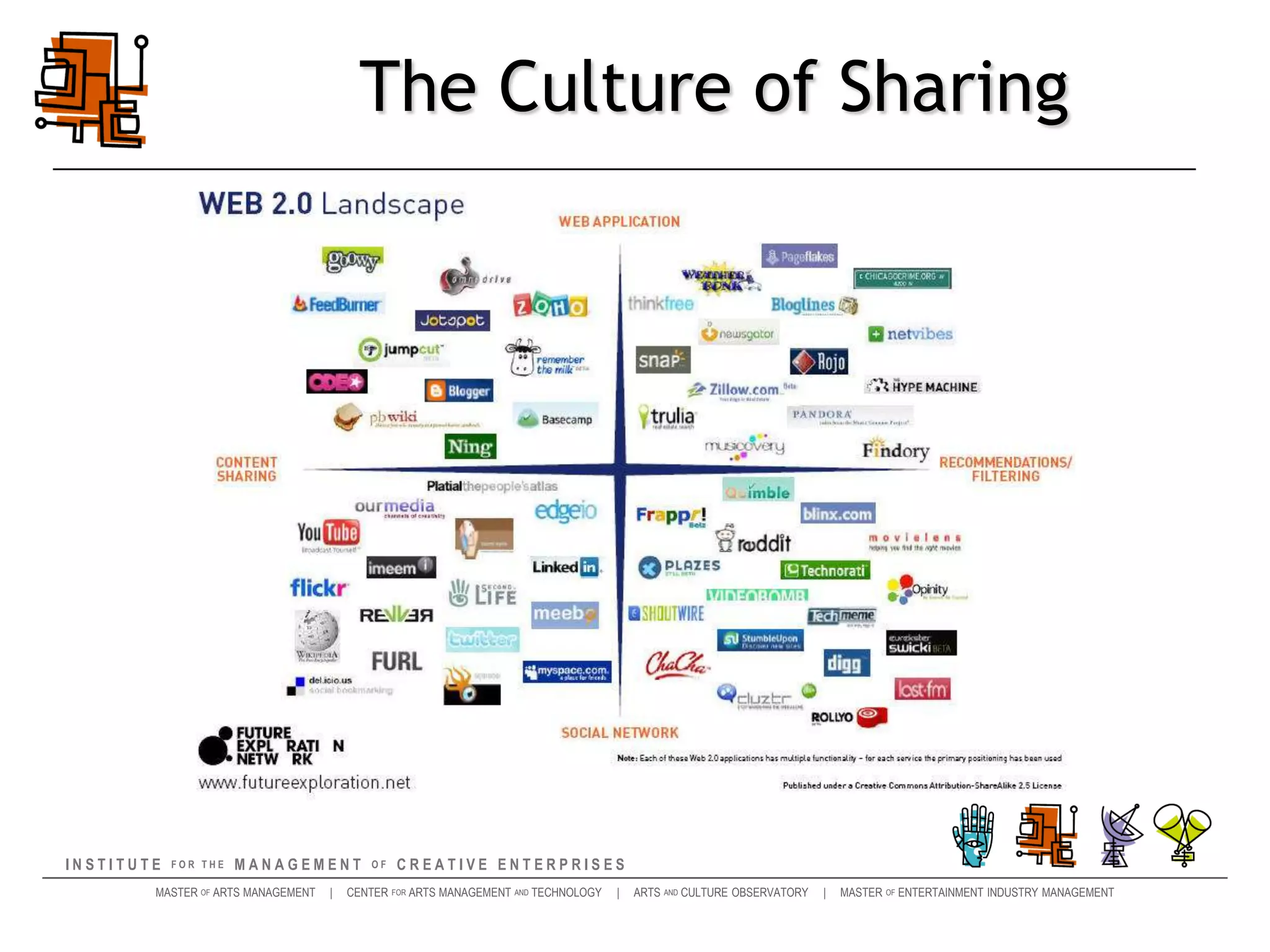
What is Web 2.0?
What impact has it had on contemporary culture?
The Sharing of Culture
How can Web 2.0 tools help to connect contemporary audiences with traditional culture?
How else can Web 2.0 tools assist folklorists in their work?
Q & AThe Culture of Sharing
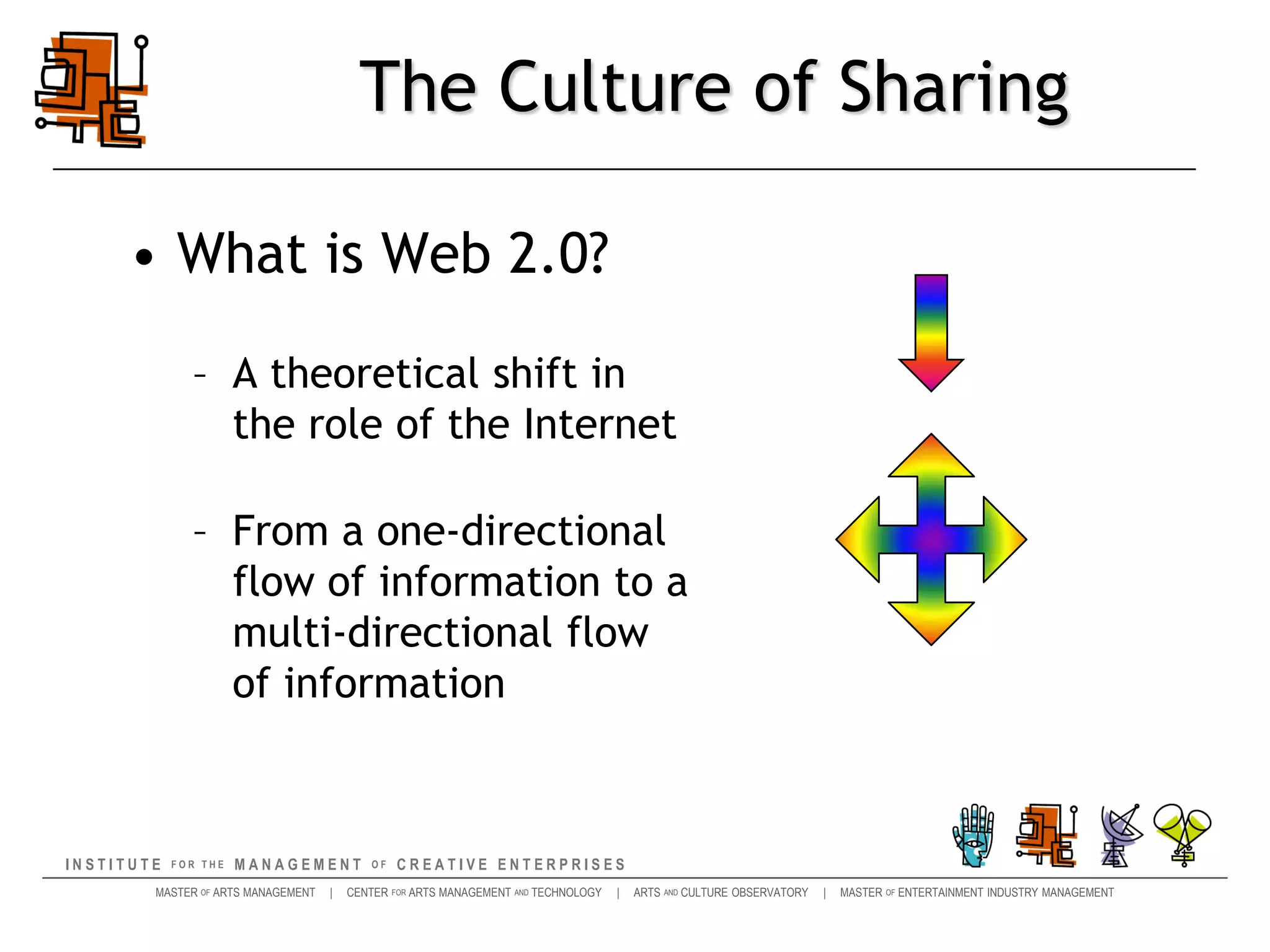
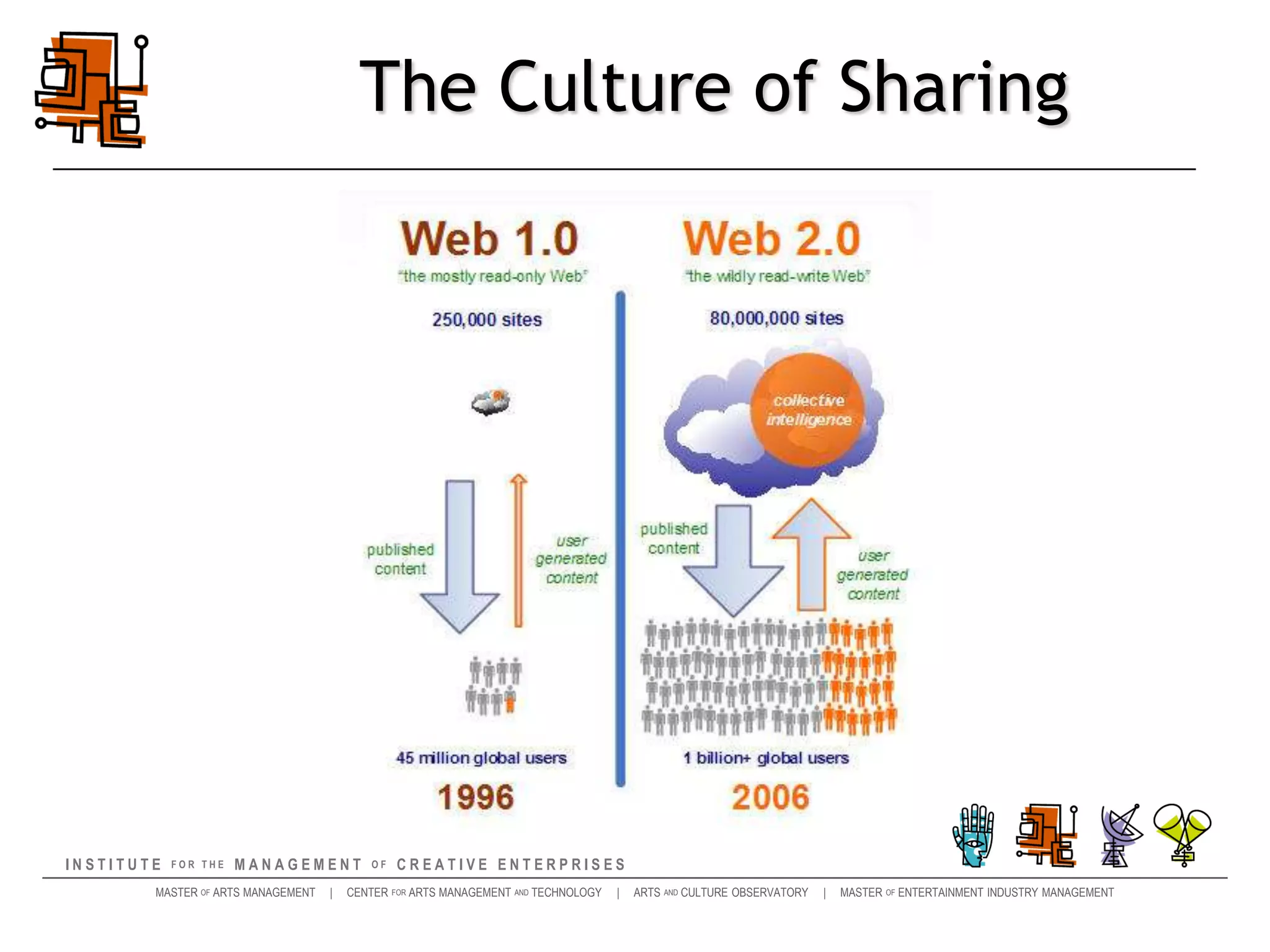
The Culture of SharingWhat is Web 2.0?A theoretical shift in the role of the InternetFrom a one-directional flow of information to a multi-directional flow of information
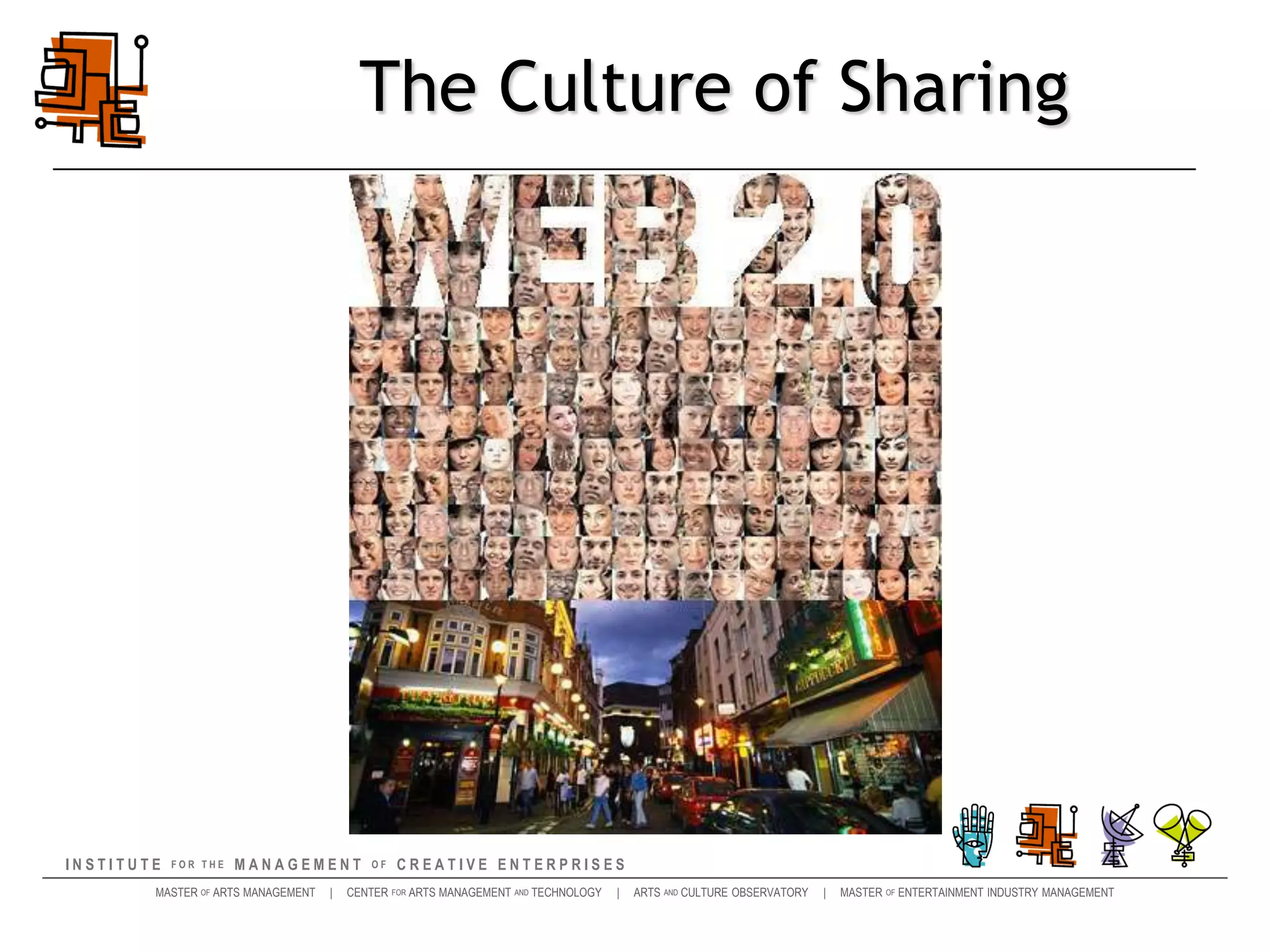
The Culture of Sharing
The Culture of SharingWhat impact has Web 2.0 had on contemporary culture?
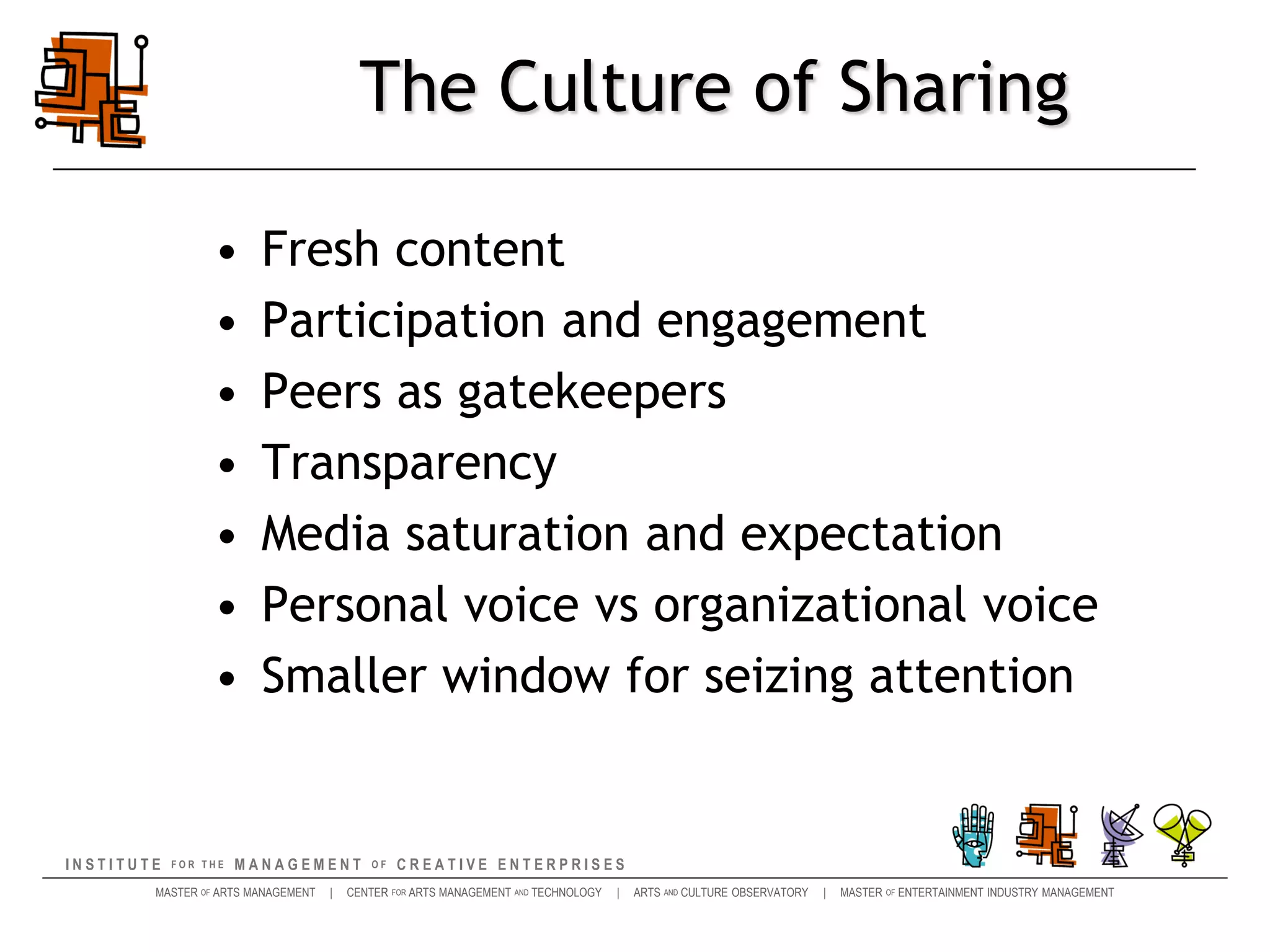
The Culture of SharingFresh contentParticipation and engagementPeers as gatekeepersTransparencyMedia saturation and expectationPersonal voice vs organizational voiceSmaller window for seizing attention
The Sharing of CultureSo how can Web 2.0 tools help to connect contemporary audiences with traditional culture?
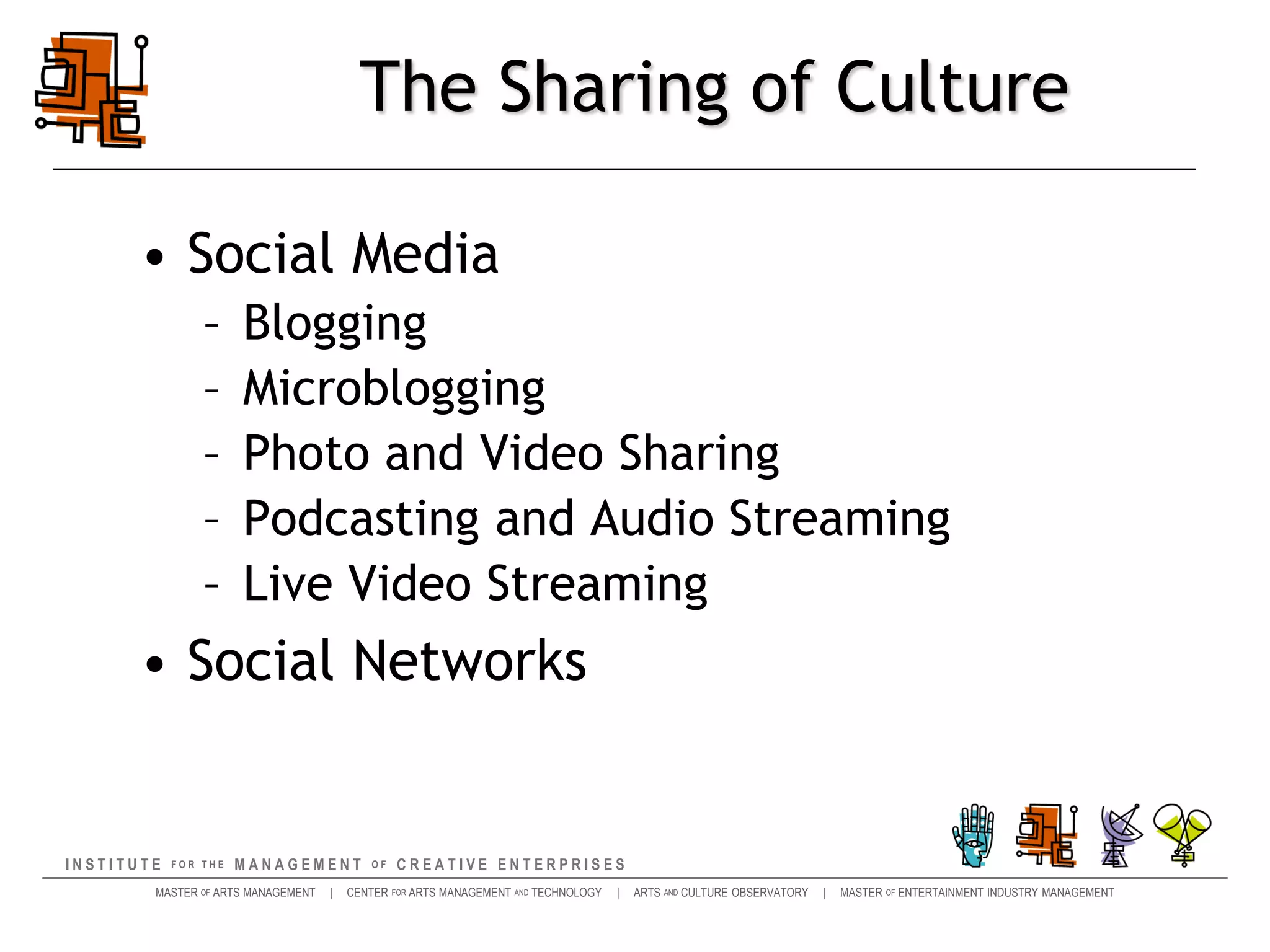
The Sharing of CultureSocial MediaBloggingMicrobloggingPhoto and Video SharingPodcasting and Audio StreamingLive Video StreamingSocial Networks
The Sharing of CultureHow else can Web 2.0 tools assist folklorists in doing their work?
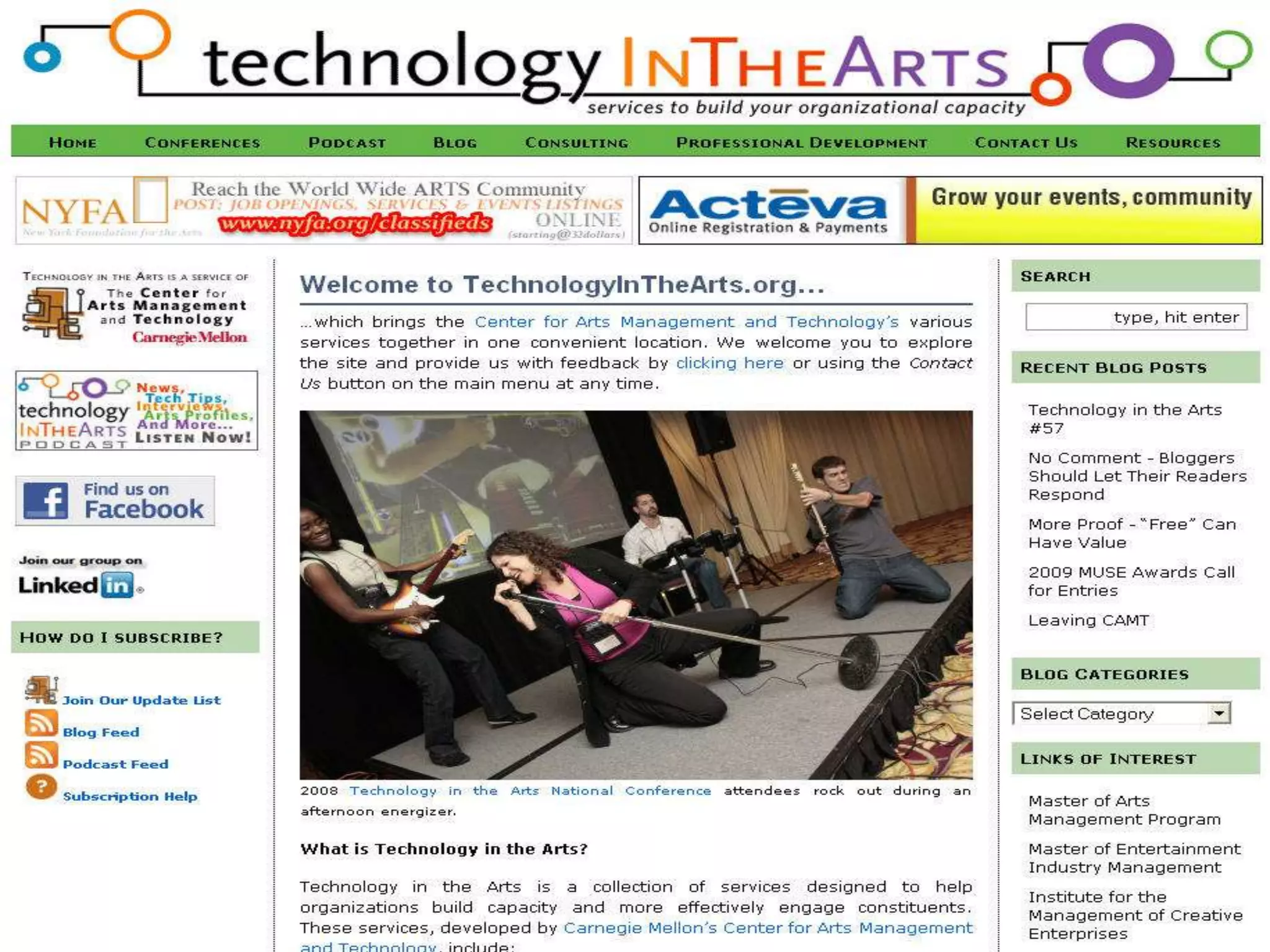
The Sharing of CultureContent Management SystemsDemystifying RSS
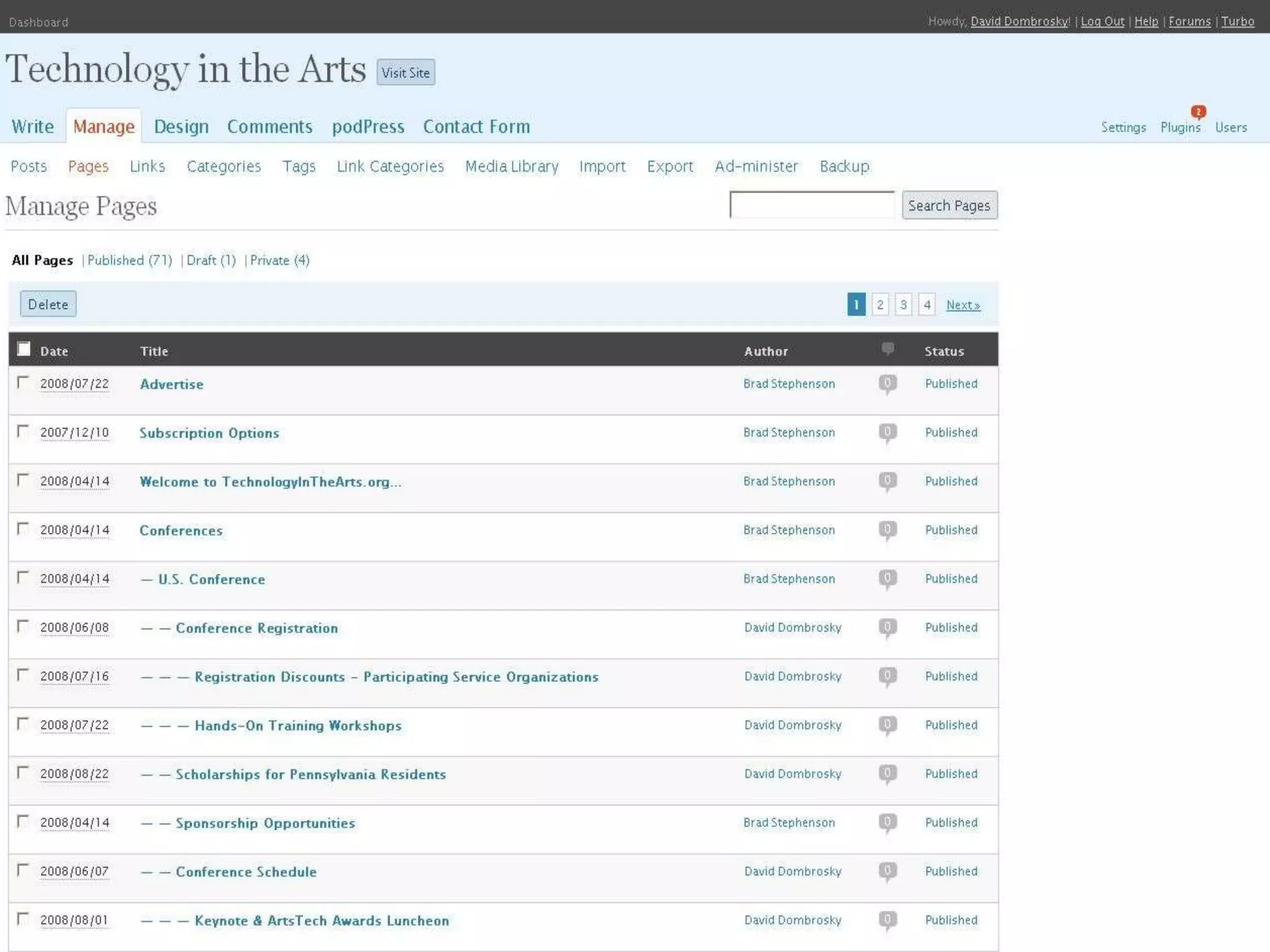
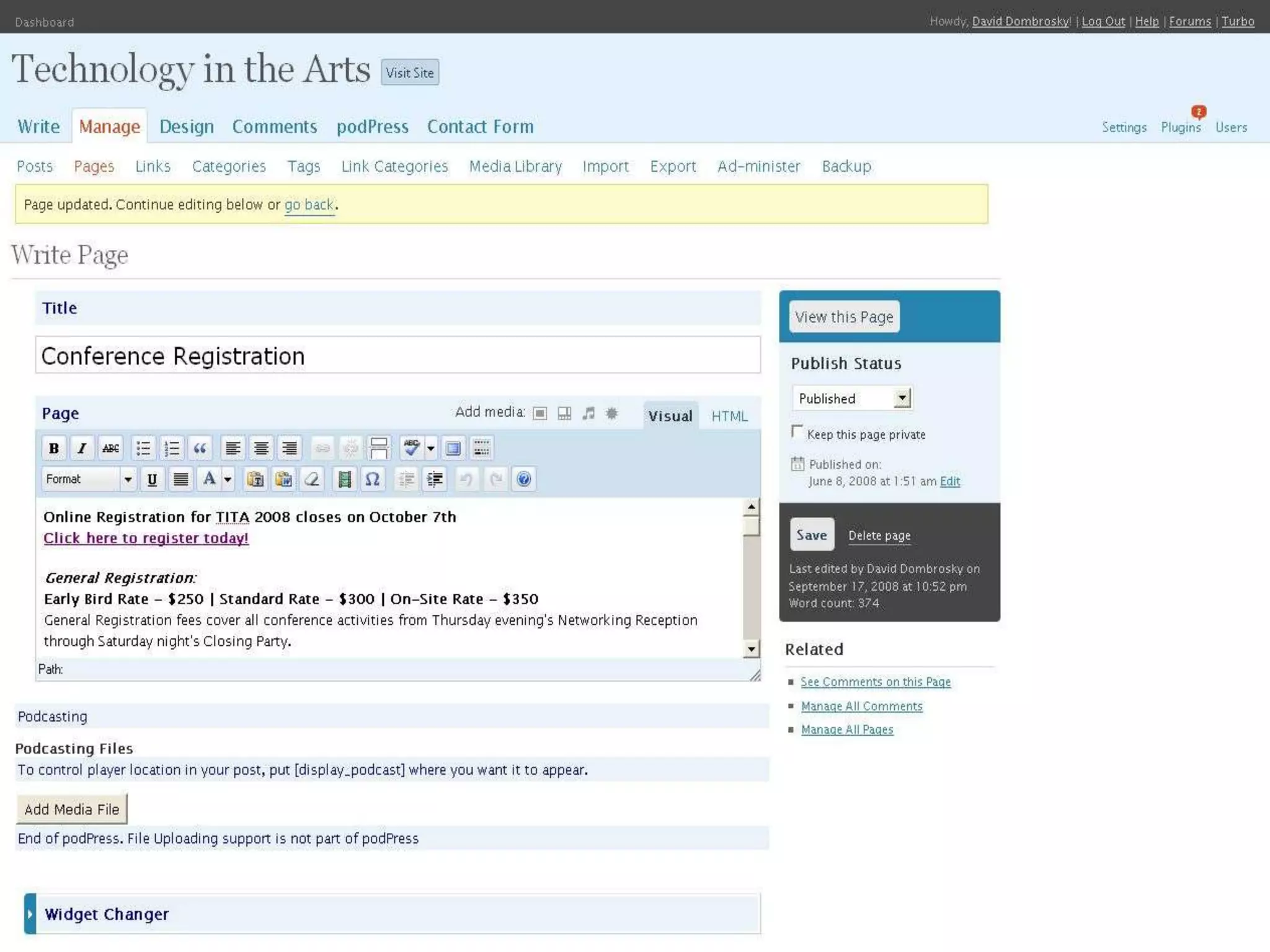
Content Management Systems (CMS)What it is:Web-based software that allows you to maintain your Web site.			(WYSIWYG vs. Database driven)
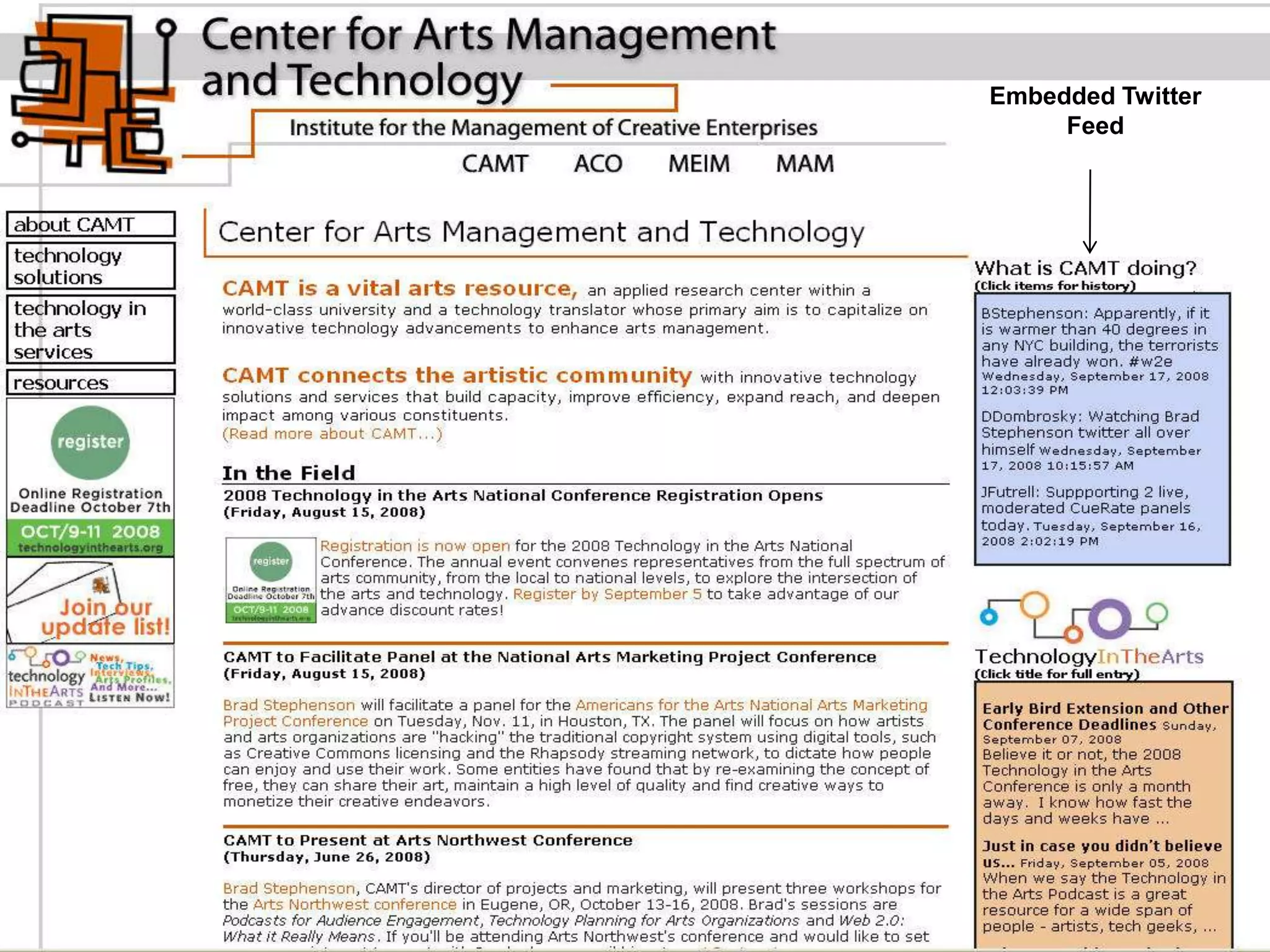
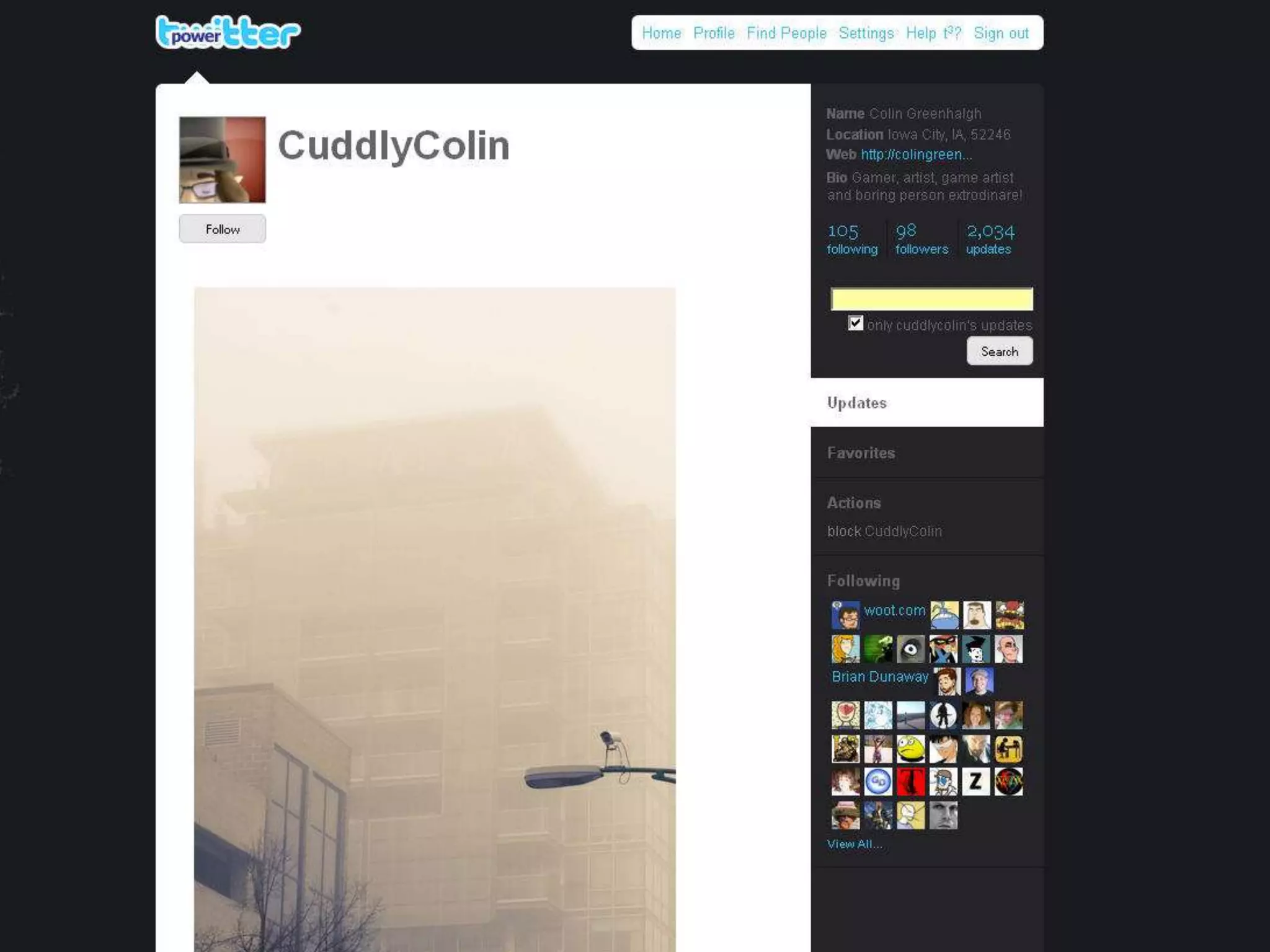
Embedded Twitter Feed
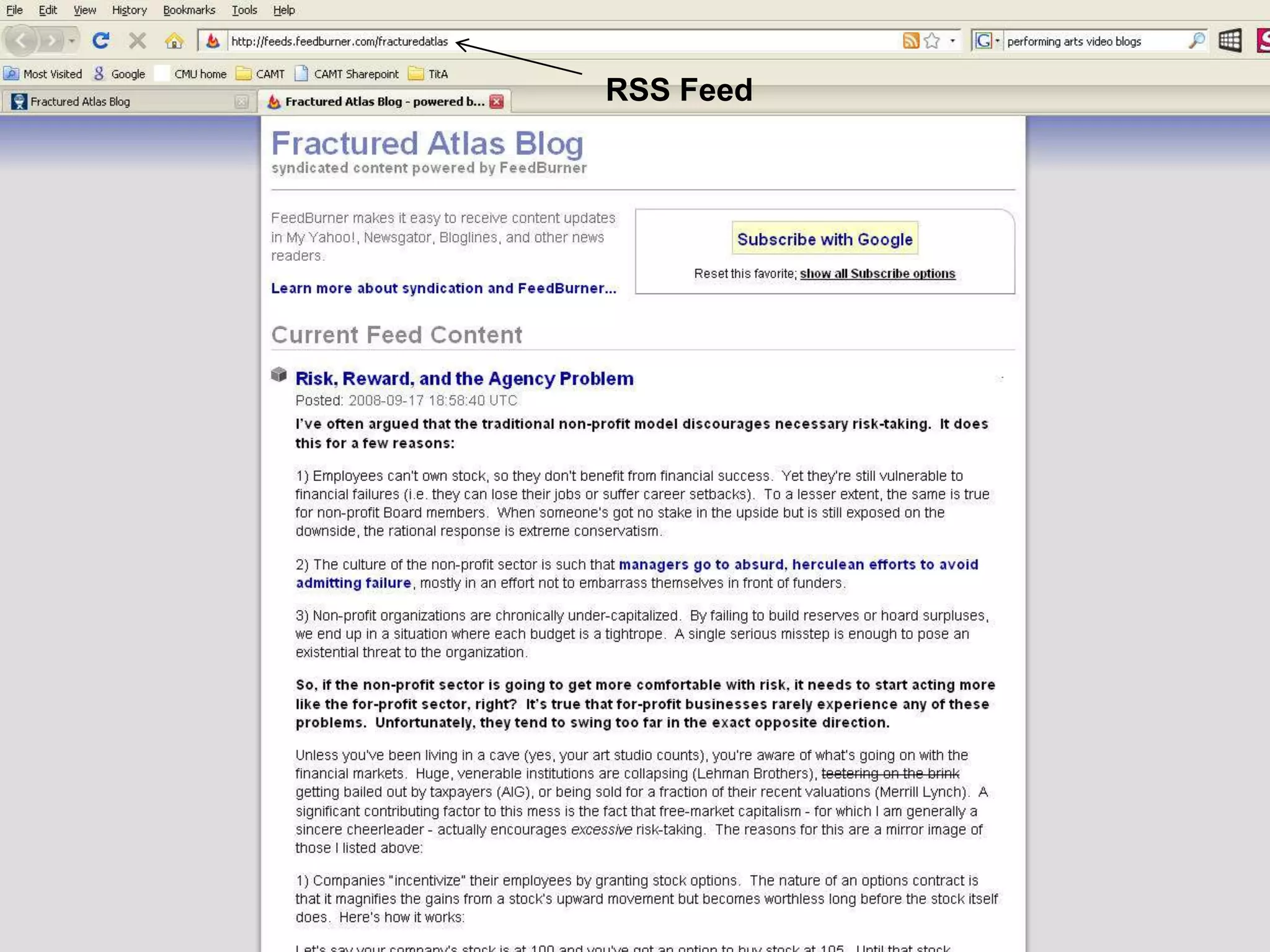
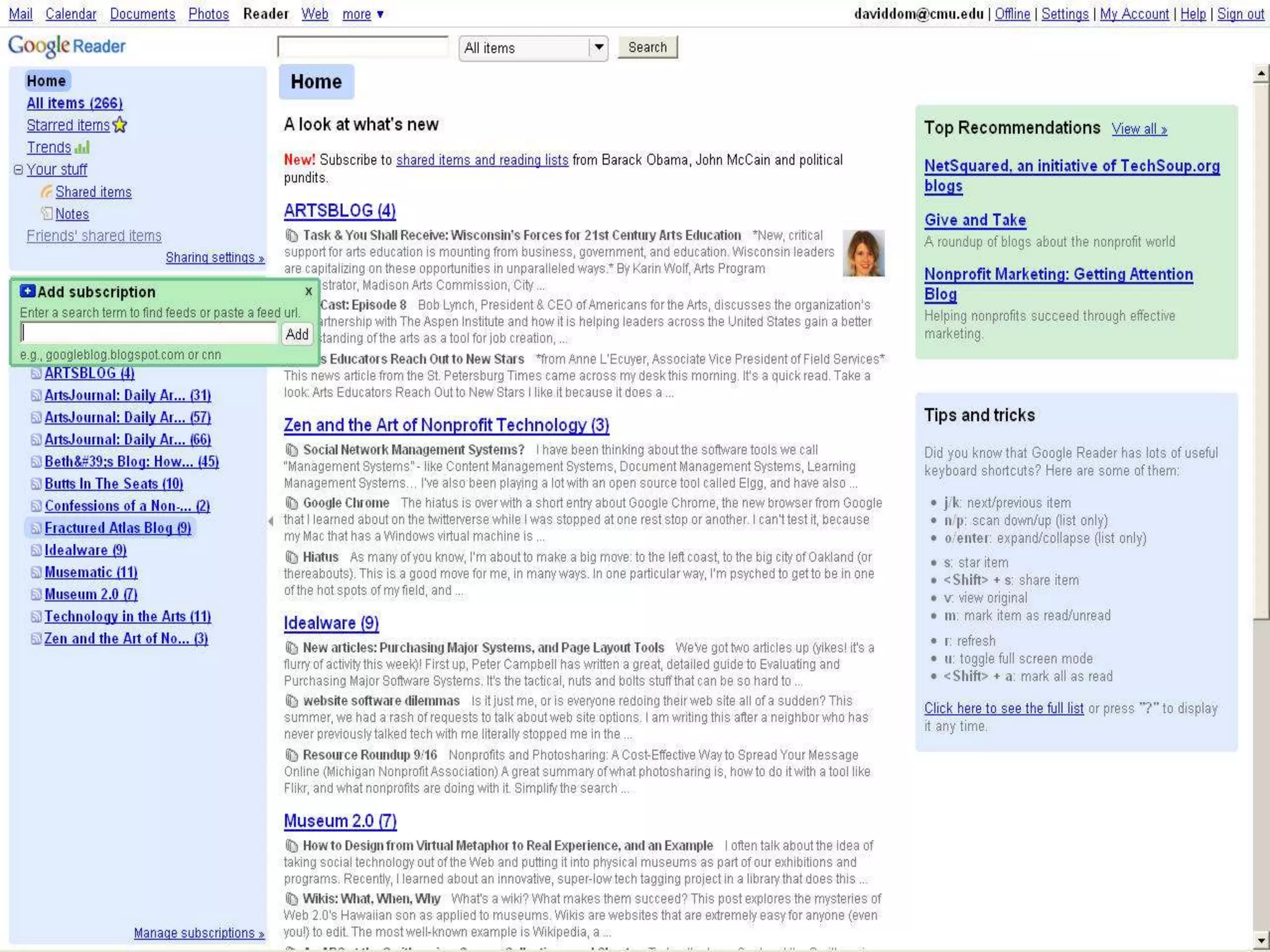
RSSWhat it is:“Really Simple Syndication”XML feeds of Web content that is pulled together with an “aggregator” or “reader” so you can stay up-to-date with frequently changing content.
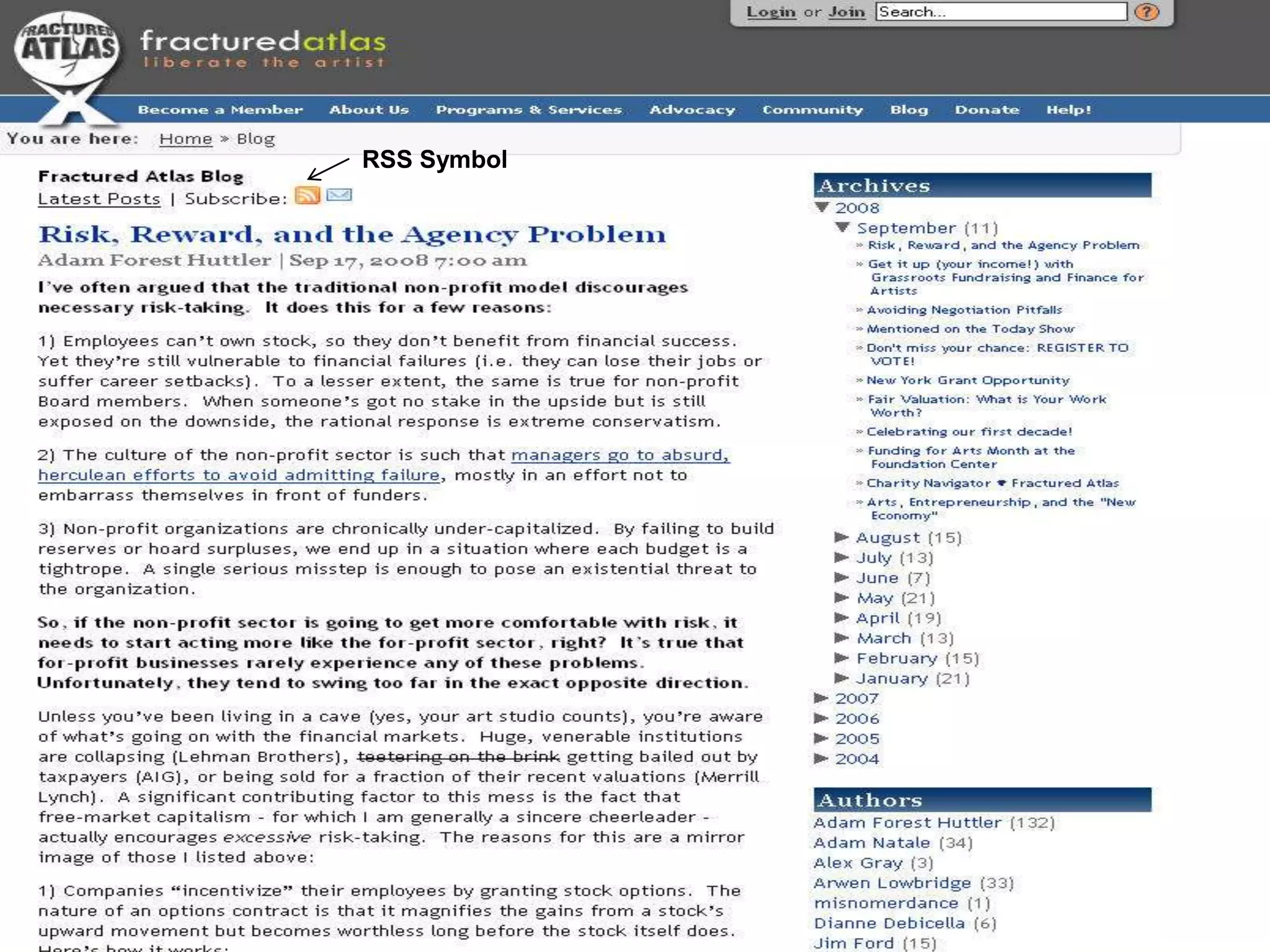
RSS Symbol
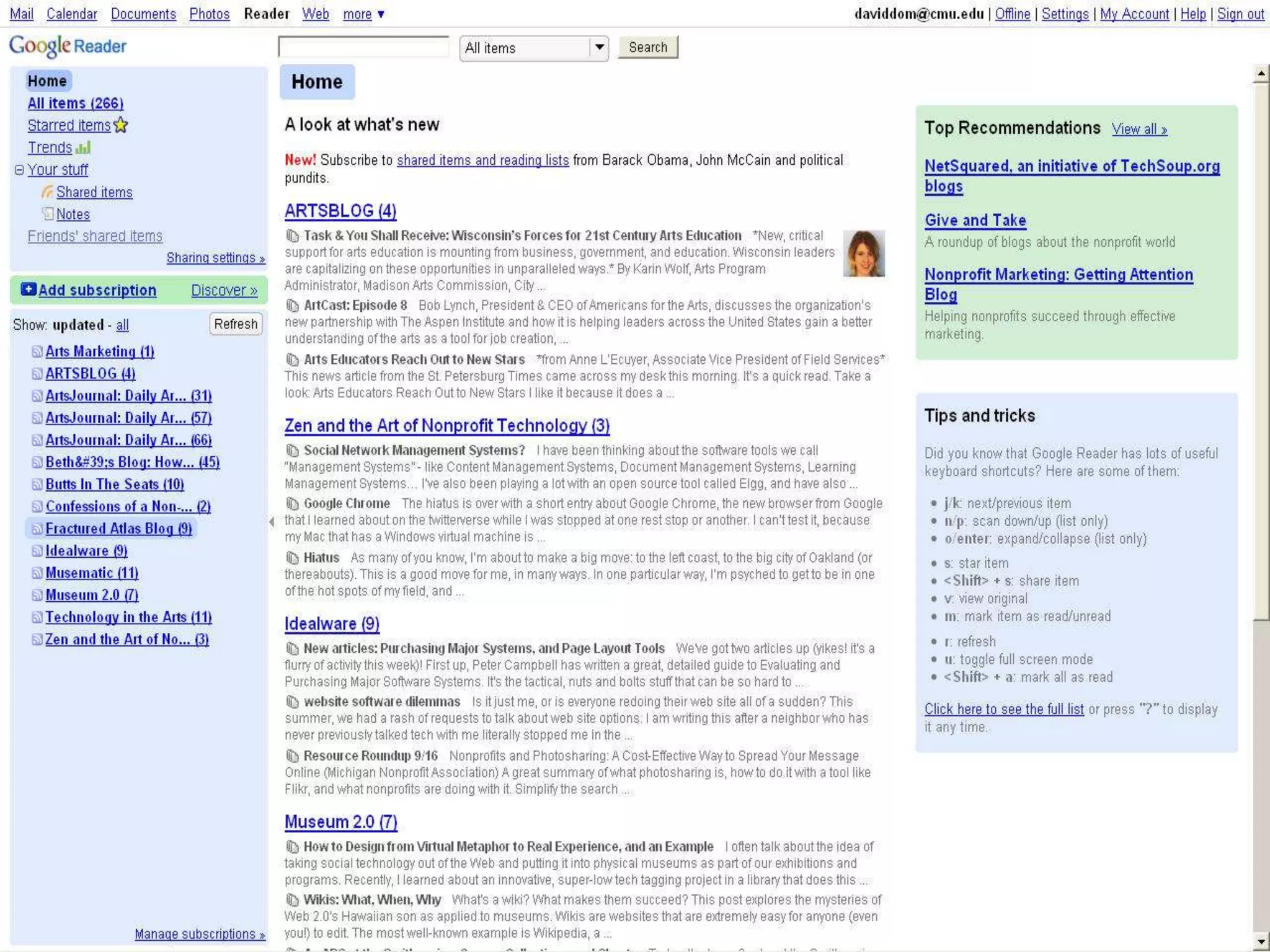
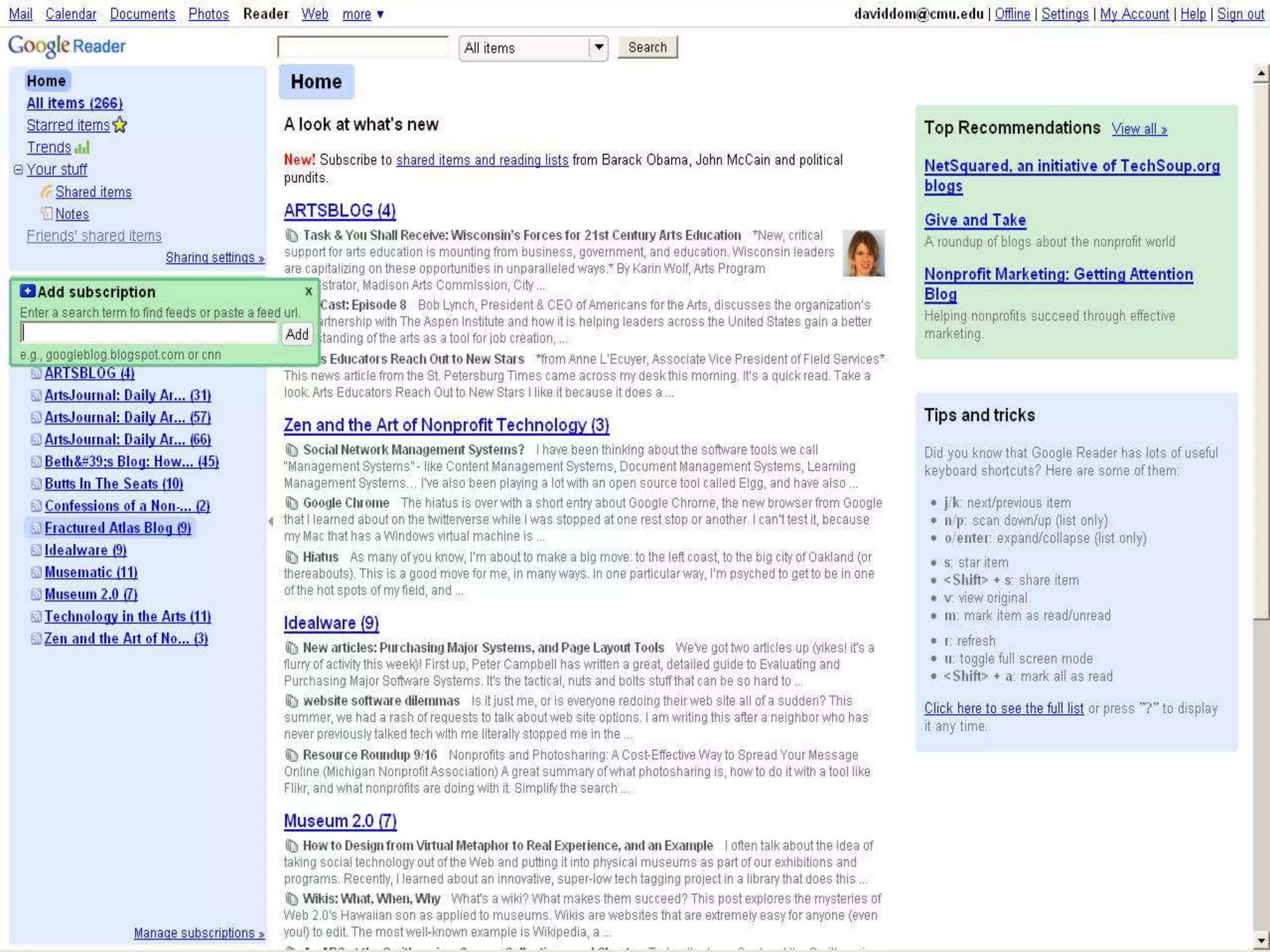
RSS Feed
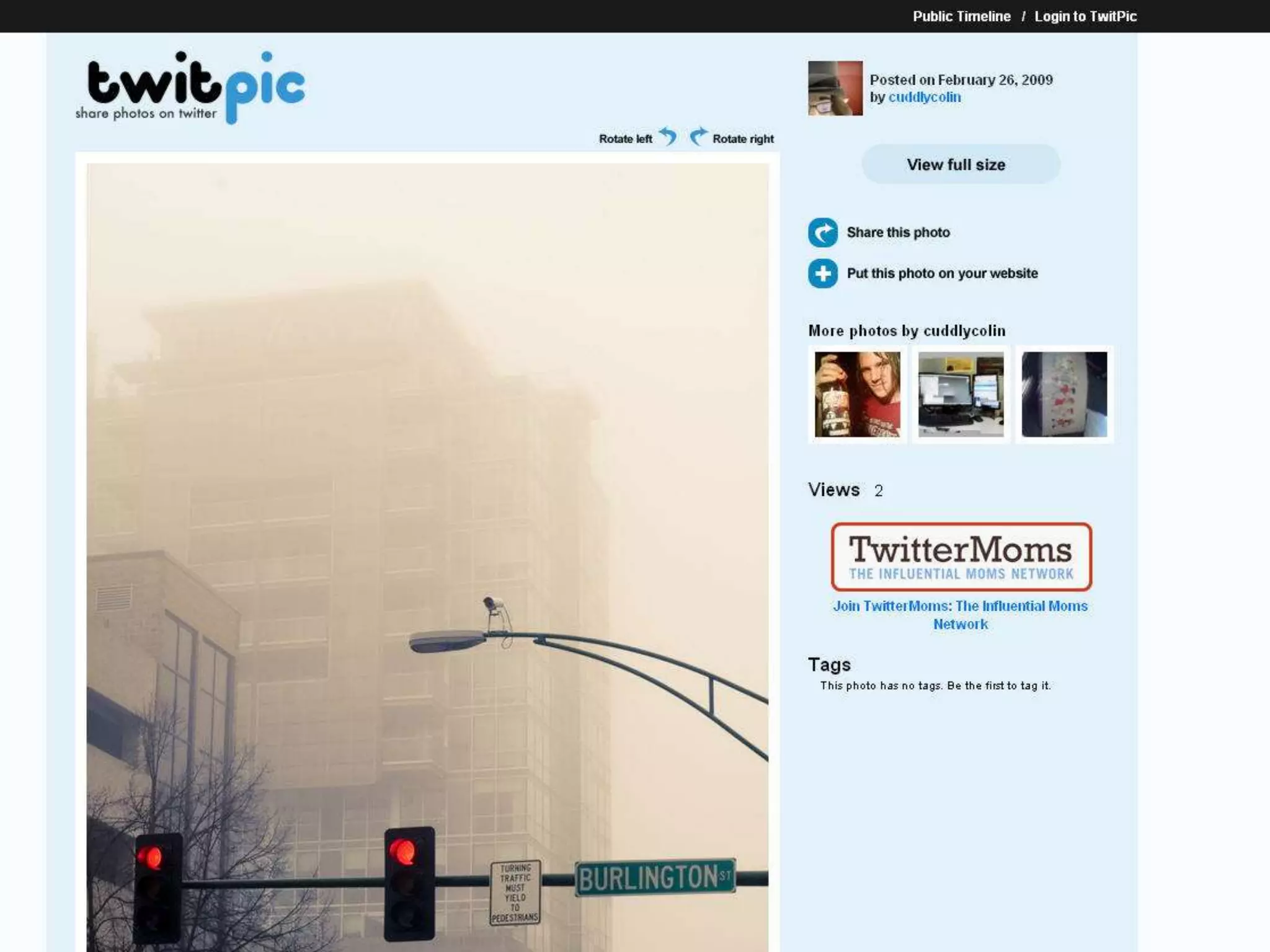
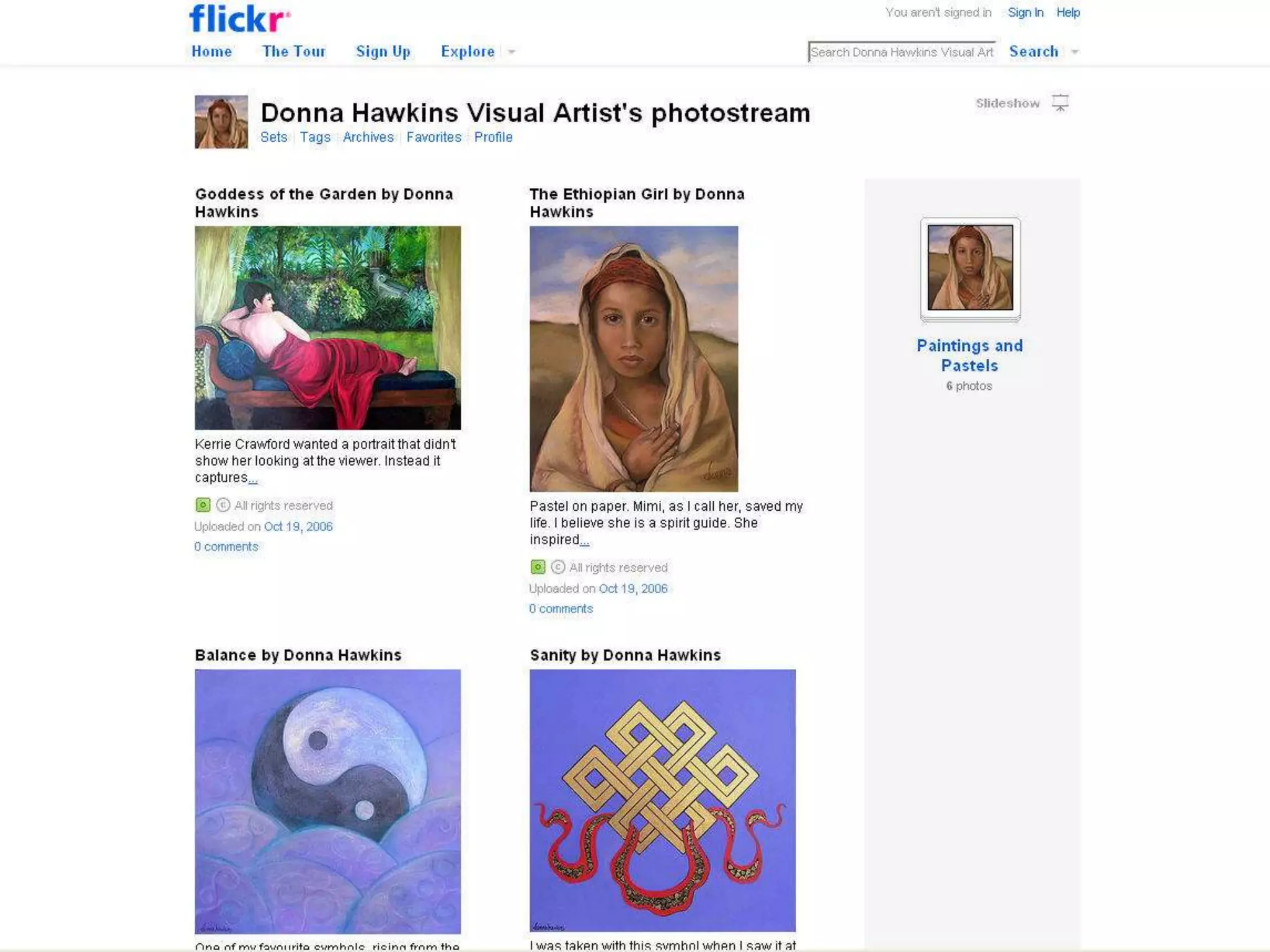
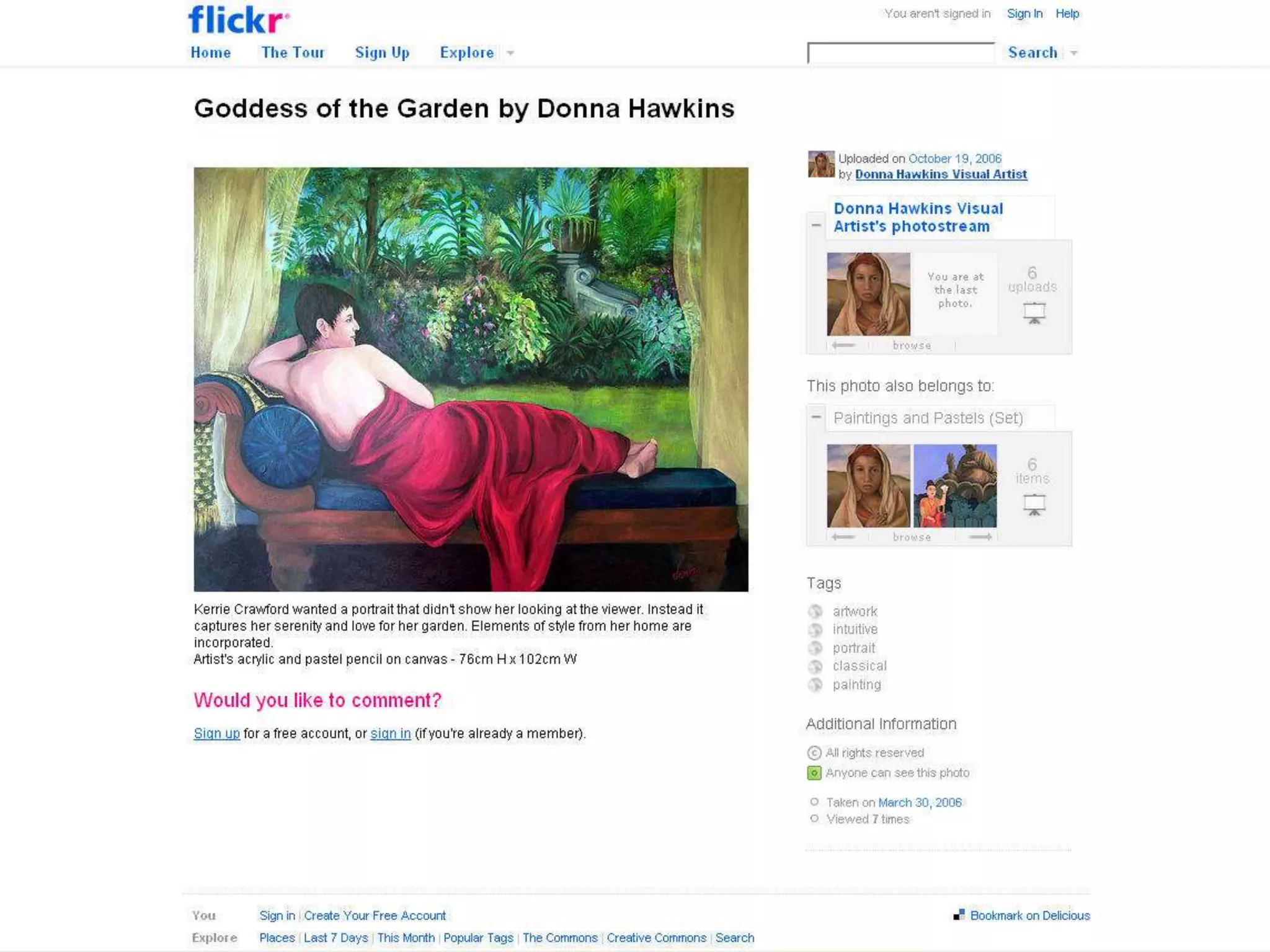
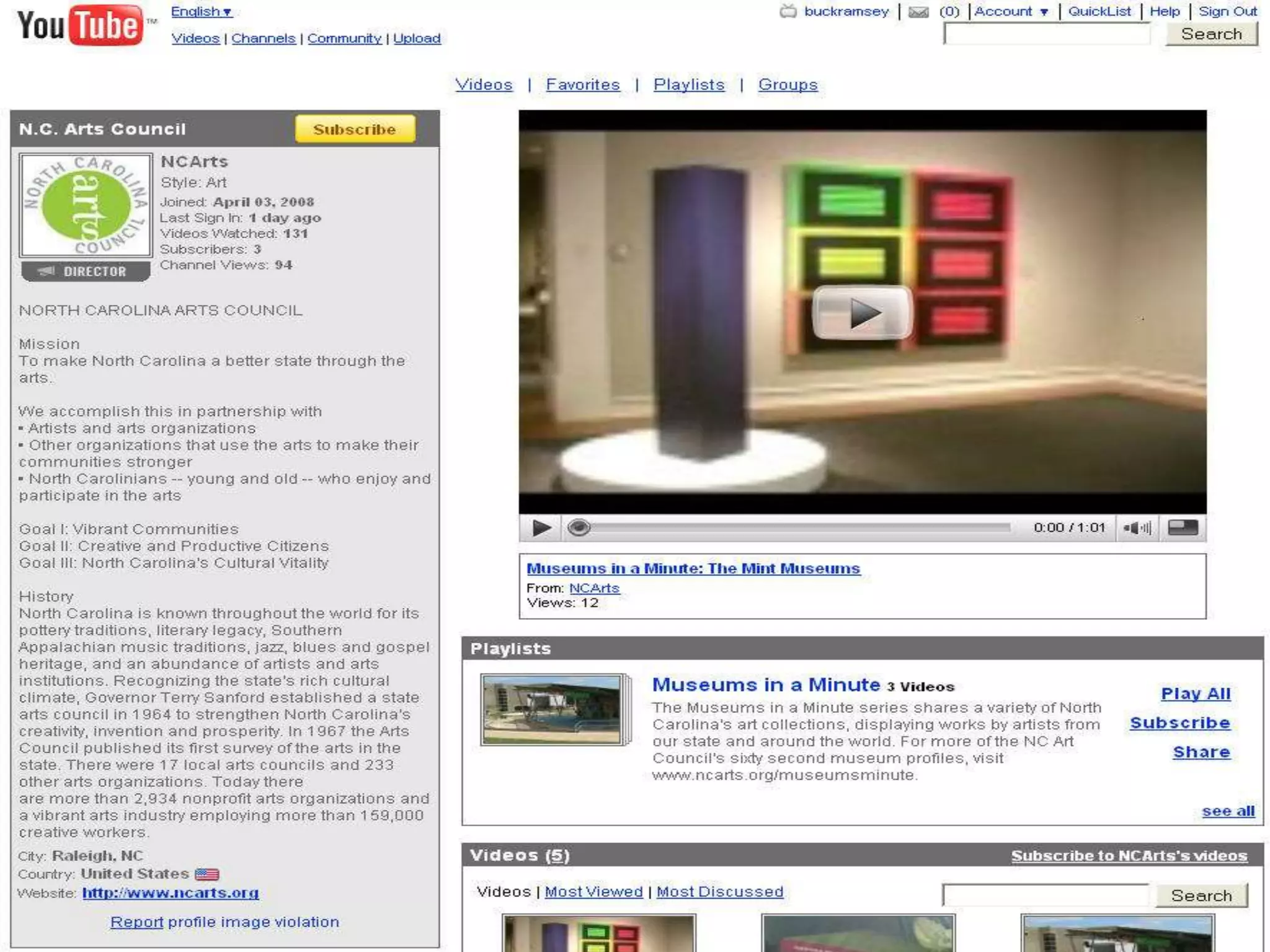
Media Sharing SitesWhat do they do?Allow users to upload their videos and still images to the internet and share them with the worldWhy is this useful for artists?No local media hosting necessary
Players may be embedded on sites
Broaden reach to new audiences
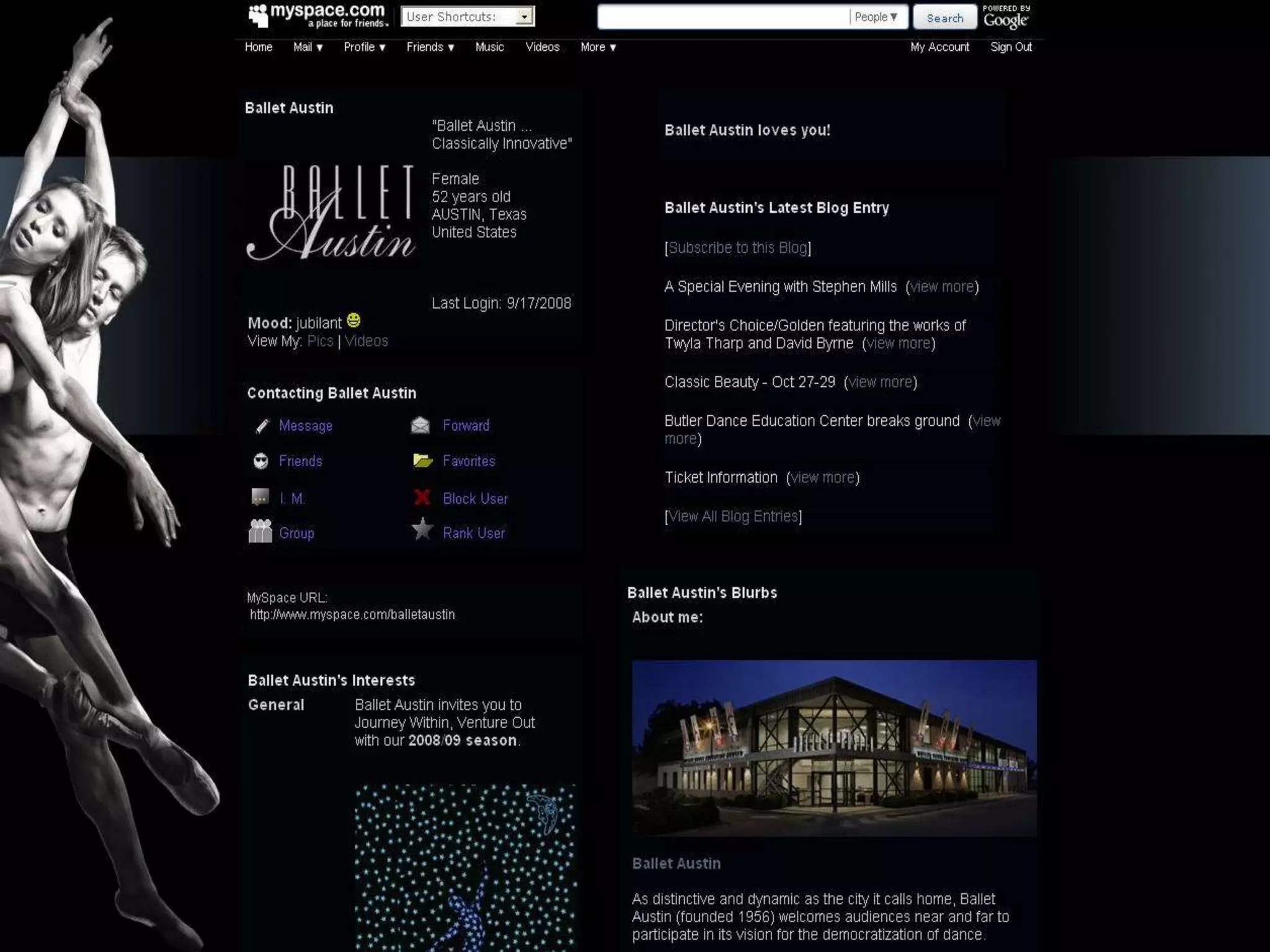
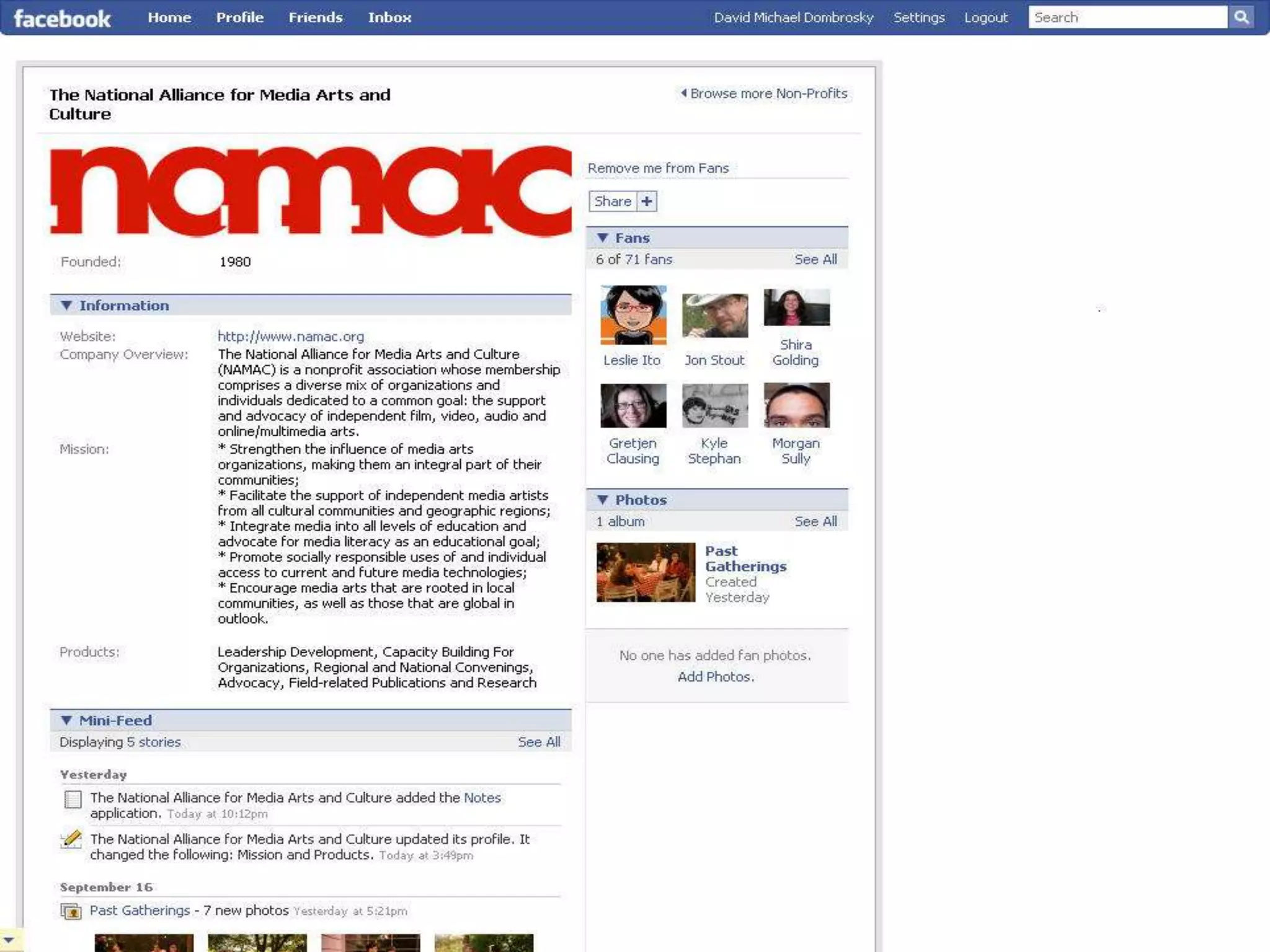
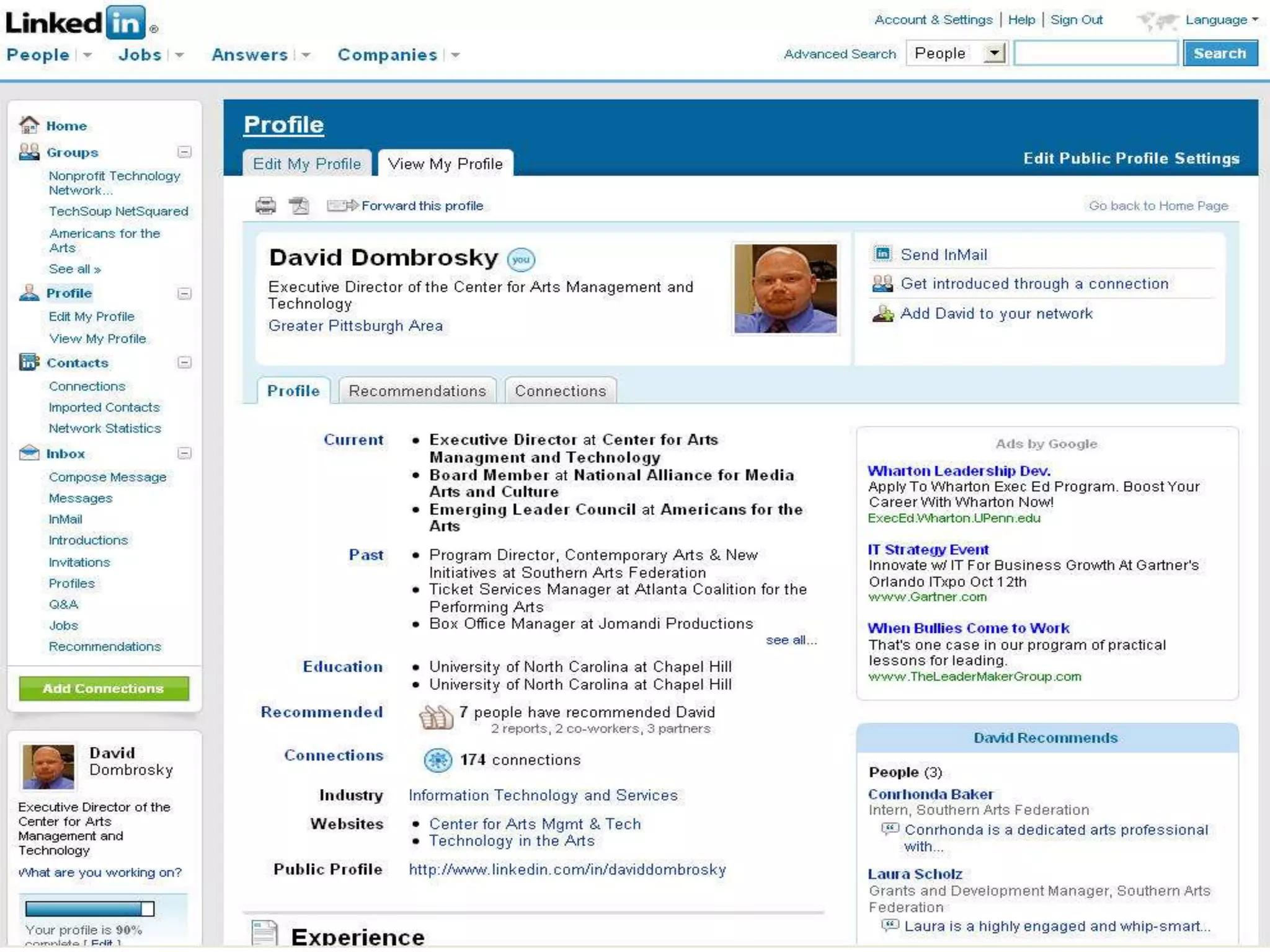
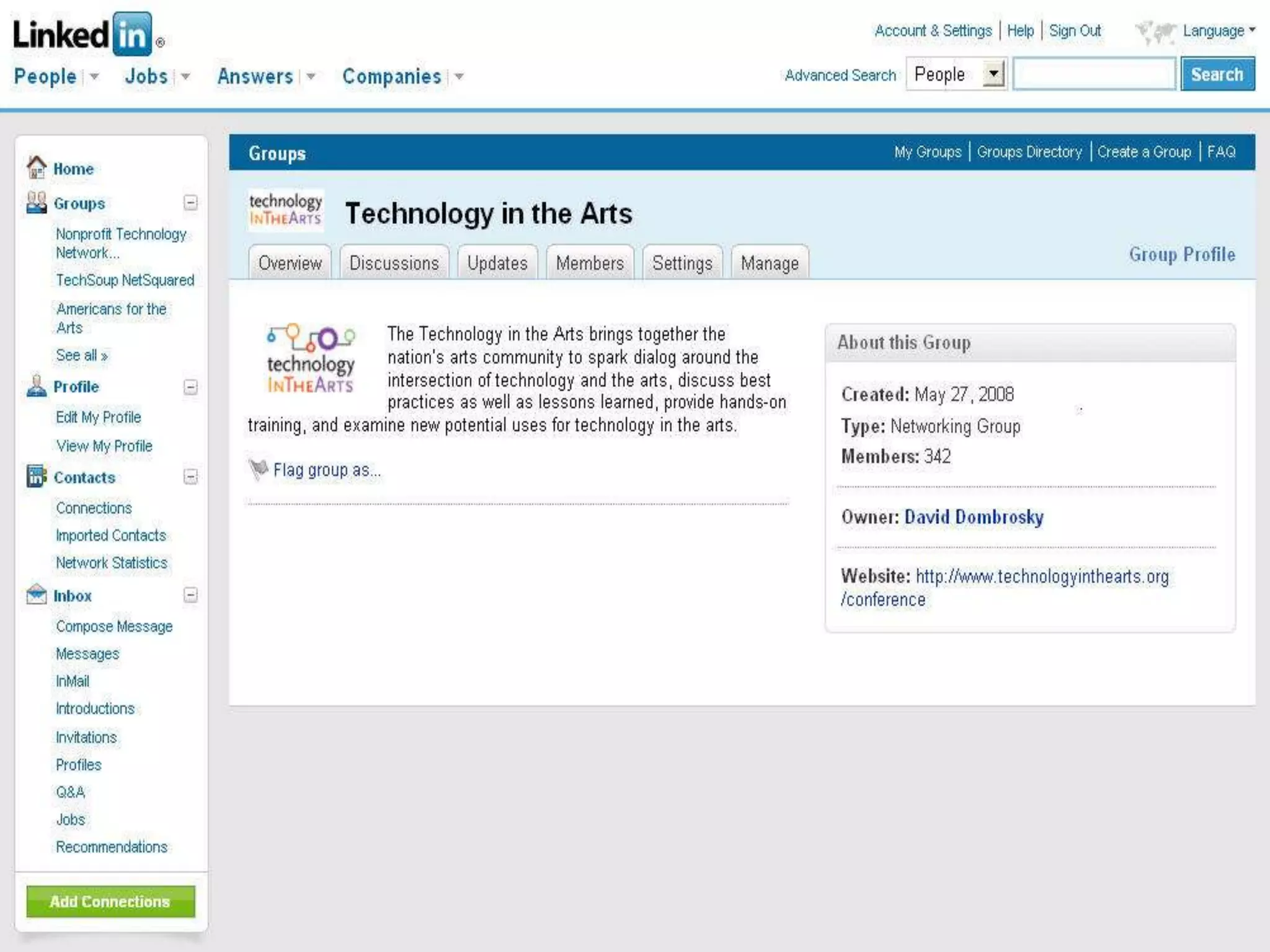
Social NetworkingWhat it is:User-populated Web sites that allow people to connect to each other, and share personal or professional information online
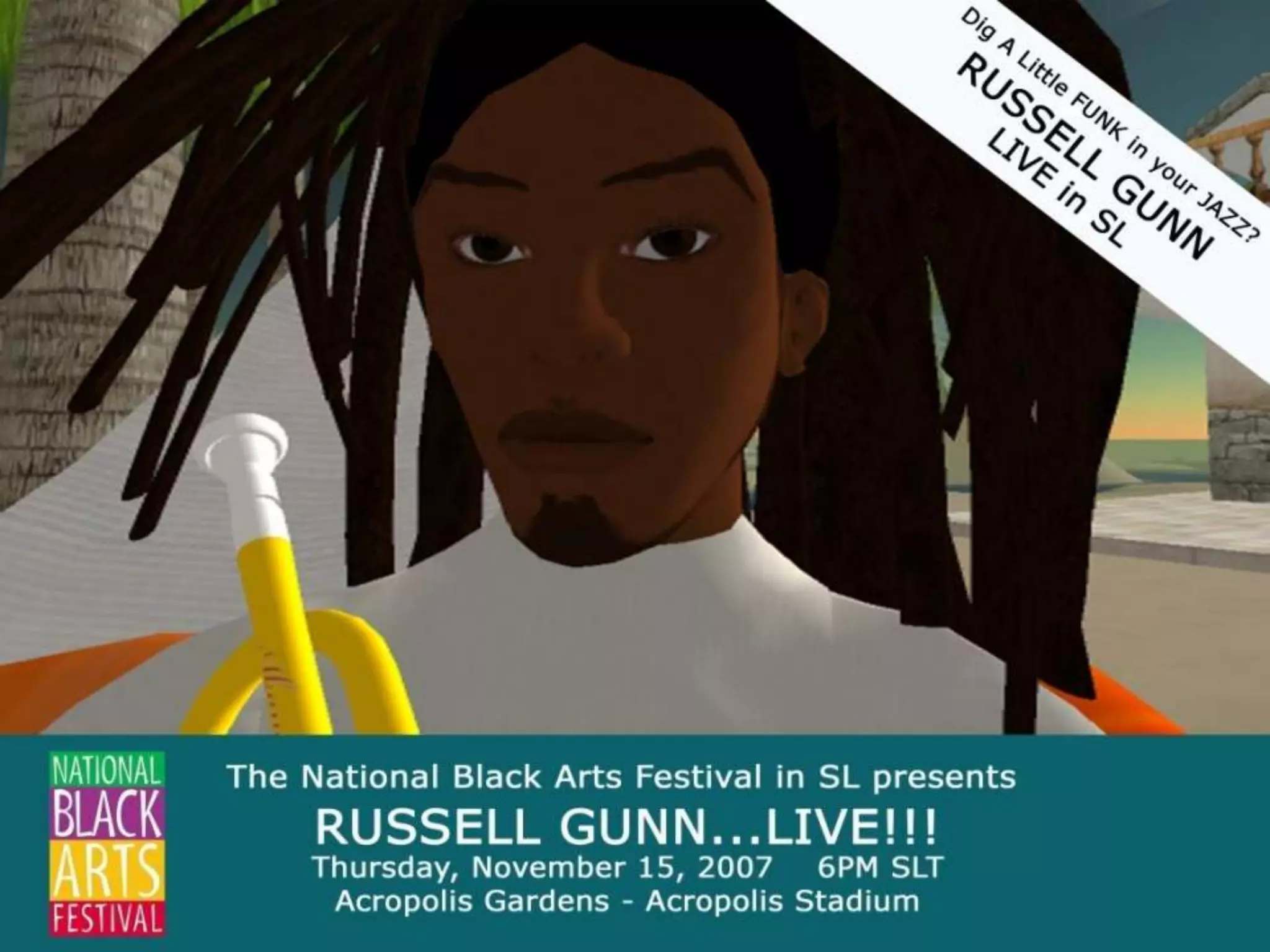
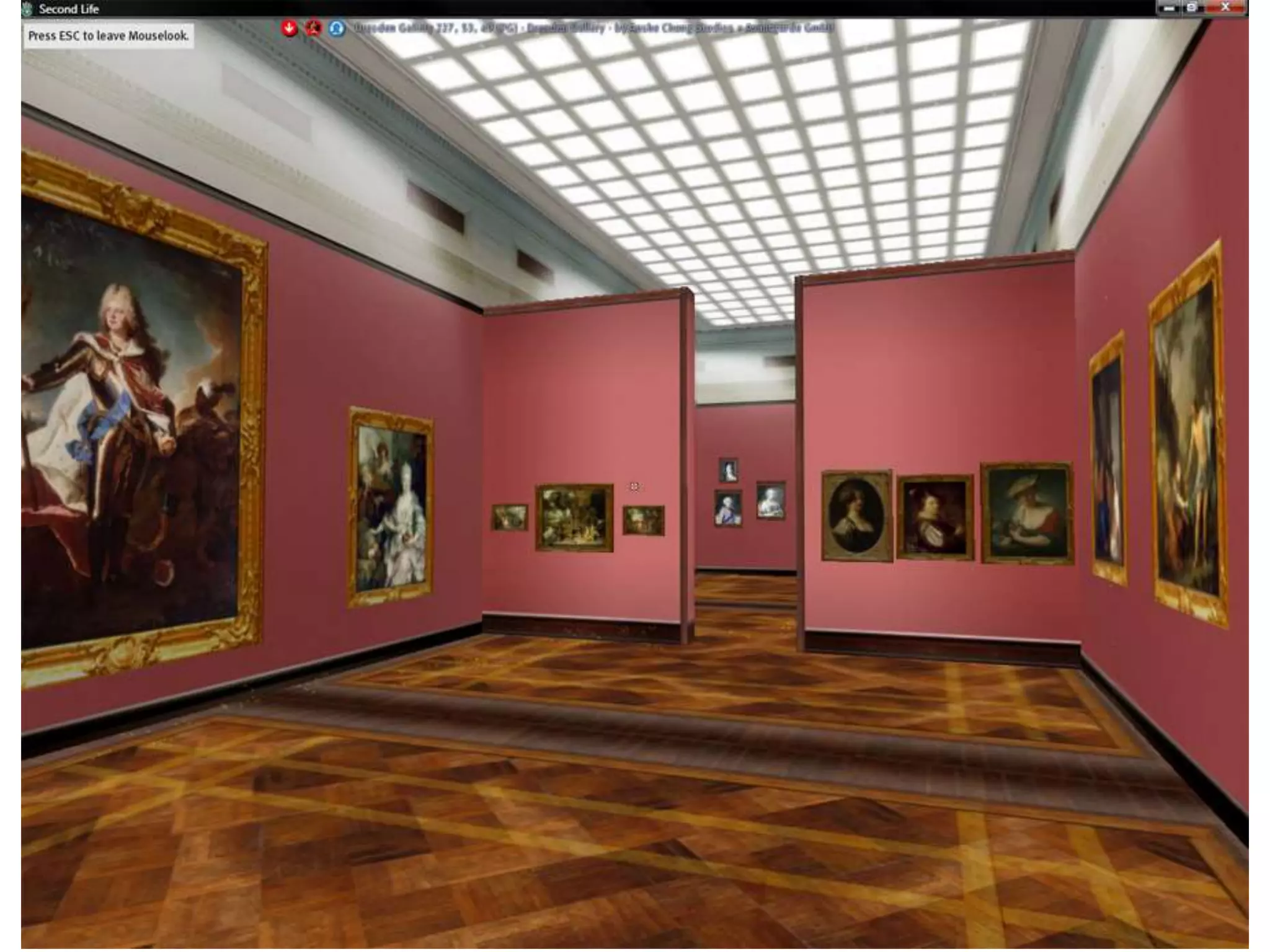
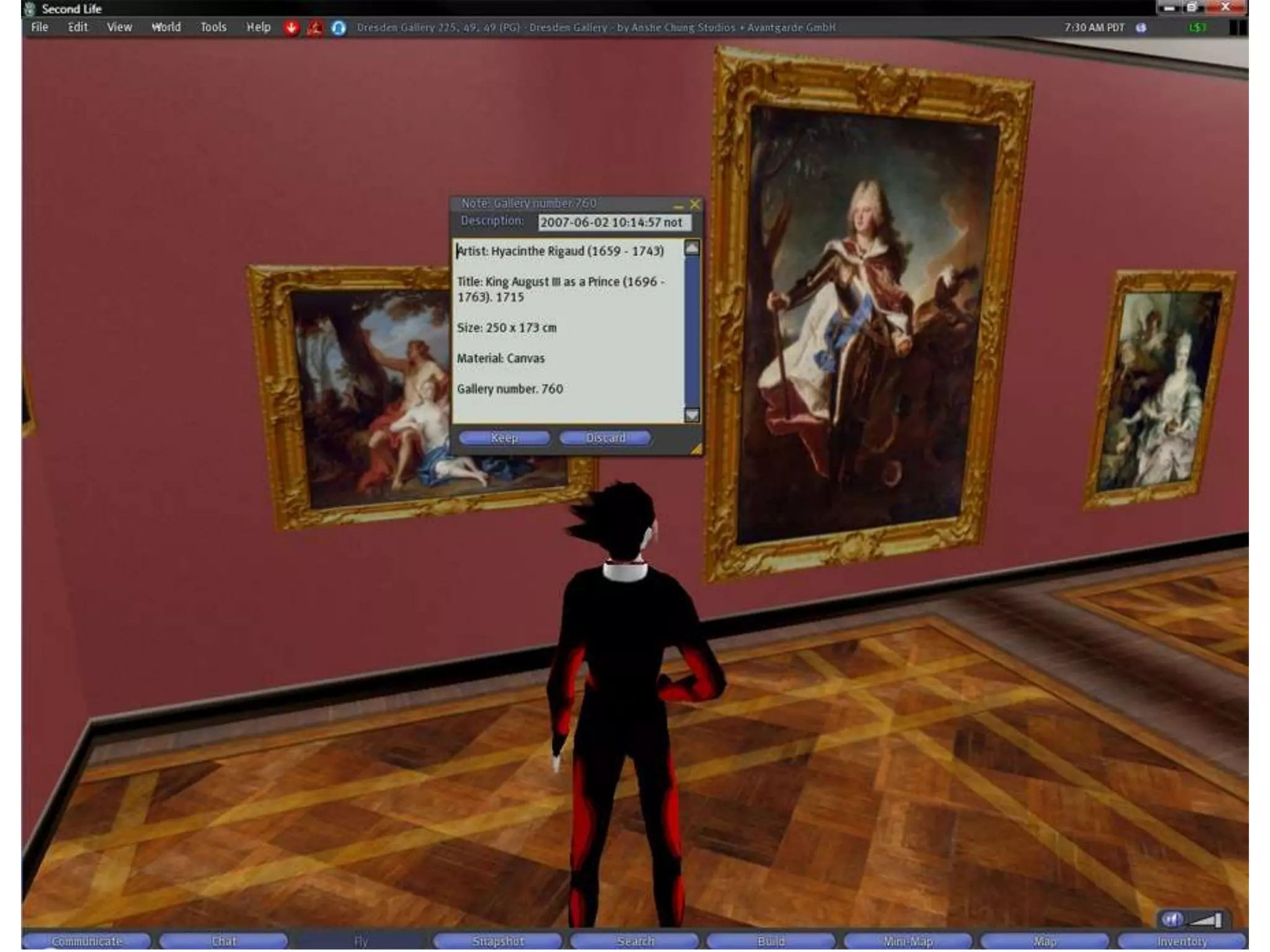
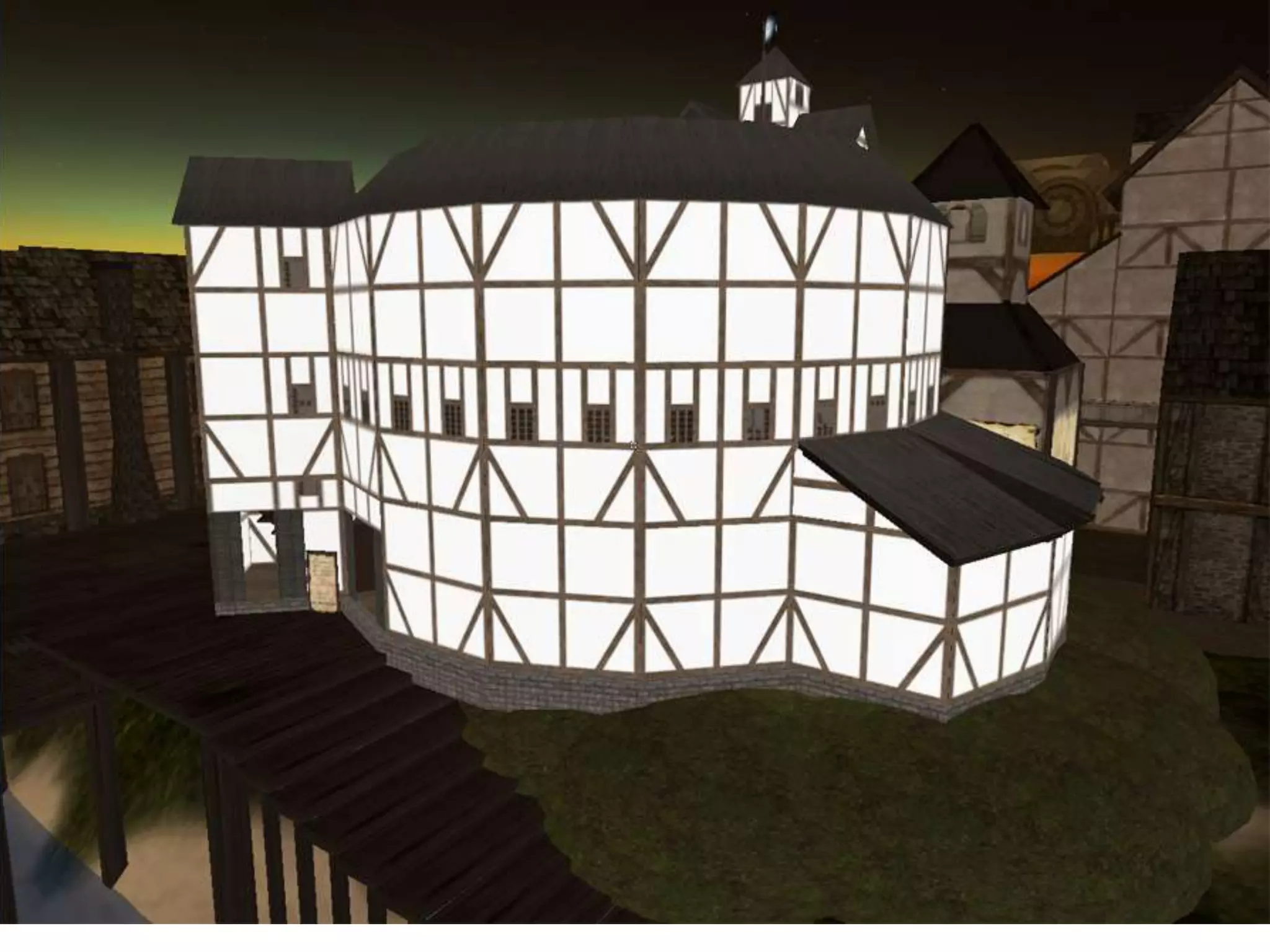
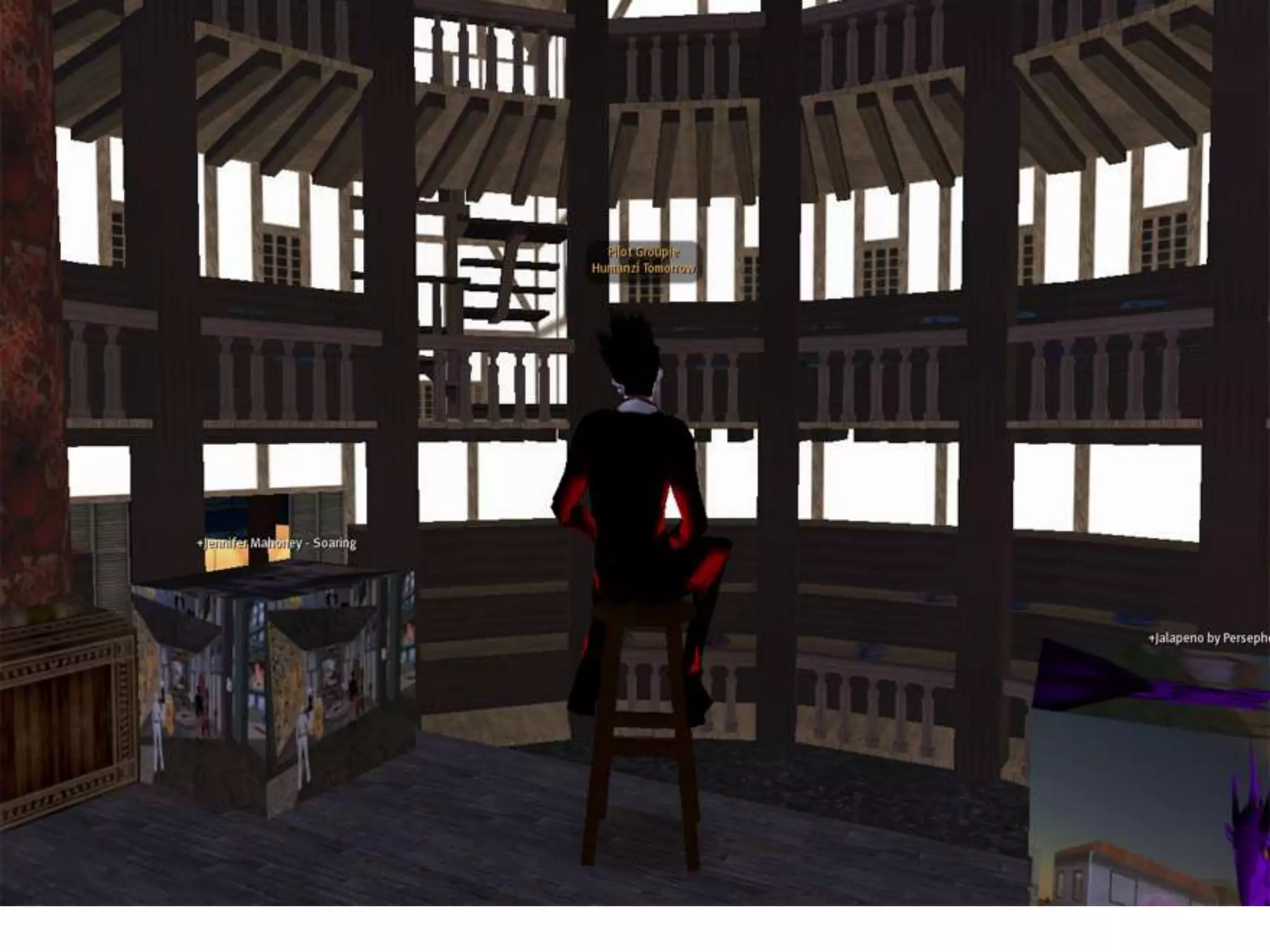
Second LifeWhat it is:A “virtual world” online. 3D, spatially-oriented, user-built.  Over 15M users.Free to download, real currency buys Linden Dollars, which can be used to buy “virtual land” and other business-based commoditiesTo interact, you create an “Avatar” who travels through the time-space of Second Life.

How To Folk With Web 2.0

  • 1.
    How to Folkwith Web 2.0The Sharing of Culture & The Culture of SharingMiddle Atlantic Folklorists AssociationJune 5, 2009David DombroskyCenter for Arts Management and Technology
  • 2.
  • 3.
  • 4.
    What impact hasit had on contemporary culture?
  • 5.
  • 6.
    How can Web2.0 tools help to connect contemporary audiences with traditional culture?
  • 7.
    How else canWeb 2.0 tools assist folklorists in their work?
  • 8.
    Q & ATheCulture of Sharing
  • 9.
    The Culture ofSharingWhat is Web 2.0?A theoretical shift in the role of the InternetFrom a one-directional flow of information to a multi-directional flow of information
  • 10.
  • 11.
  • 12.
    The Culture ofSharingWhat impact has Web 2.0 had on contemporary culture?
  • 13.
    The Culture ofSharingFresh contentParticipation and engagementPeers as gatekeepersTransparencyMedia saturation and expectationPersonal voice vs organizational voiceSmaller window for seizing attention
  • 14.
    The Sharing ofCultureSo how can Web 2.0 tools help to connect contemporary audiences with traditional culture?
  • 15.
    The Sharing ofCultureSocial MediaBloggingMicrobloggingPhoto and Video SharingPodcasting and Audio StreamingLive Video StreamingSocial Networks
  • 16.
    The Sharing ofCultureHow else can Web 2.0 tools assist folklorists in doing their work?
  • 17.
    The Sharing ofCultureContent Management SystemsDemystifying RSS
  • 18.
    Content Management Systems(CMS)What it is:Web-based software that allows you to maintain your Web site. (WYSIWYG vs. Database driven)
  • 25.
  • 30.
    RSSWhat it is:“ReallySimple Syndication”XML feeds of Web content that is pulled together with an “aggregator” or “reader” so you can stay up-to-date with frequently changing content.
  • 33.
  • 34.
  • 36.
    Media Sharing SitesWhatdo they do?Allow users to upload their videos and still images to the internet and share them with the worldWhy is this useful for artists?No local media hosting necessary
  • 37.
    Players may beembedded on sites
  • 38.
    Broaden reach tonew audiences
  • 41.
    Social NetworkingWhat itis:User-populated Web sites that allow people to connect to each other, and share personal or professional information online
  • 46.
    Second LifeWhat itis:A “virtual world” online. 3D, spatially-oriented, user-built. Over 15M users.Free to download, real currency buys Linden Dollars, which can be used to buy “virtual land” and other business-based commoditiesTo interact, you create an “Avatar” who travels through the time-space of Second Life.
  • 51.
  • 52.
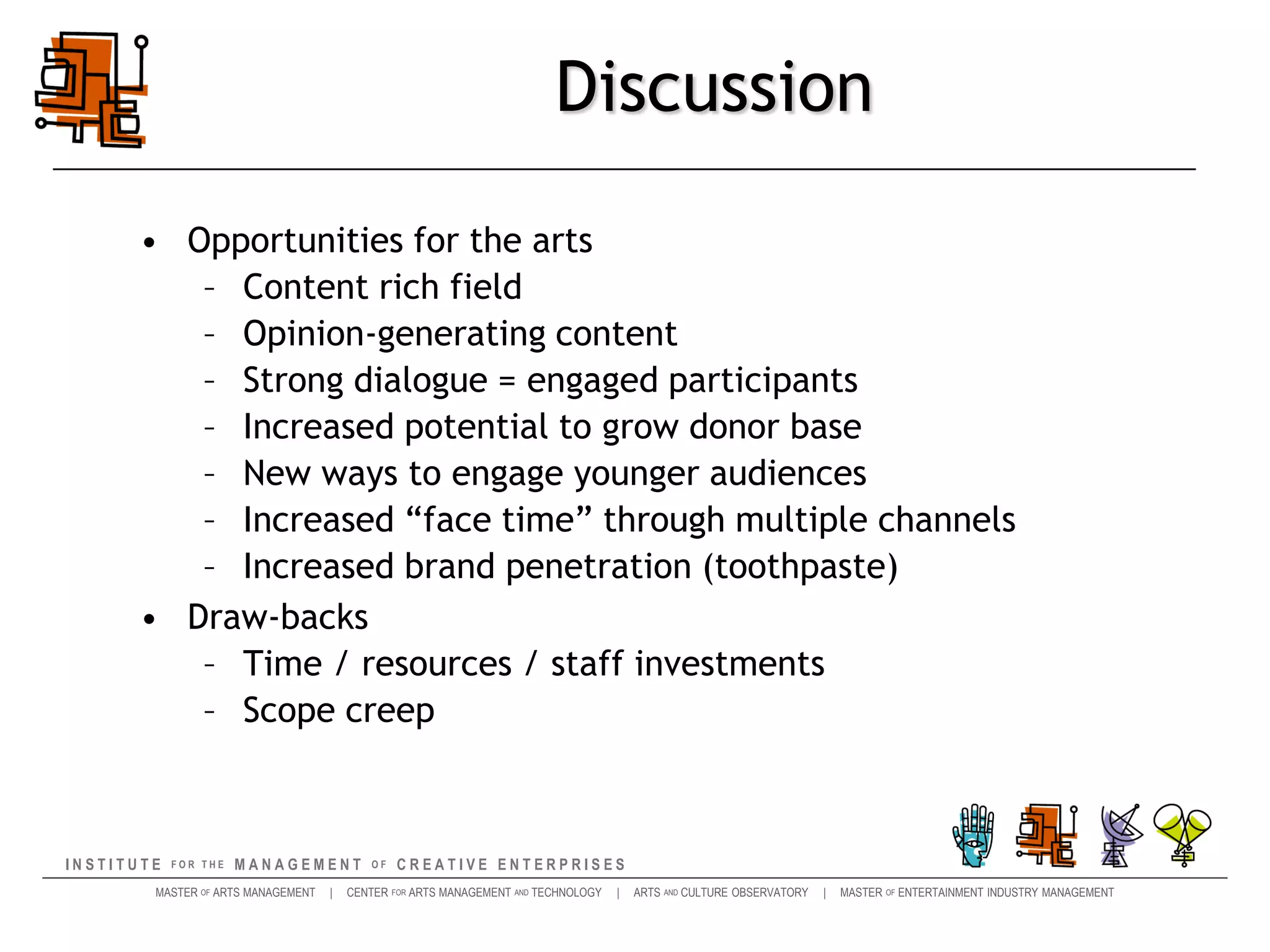
    DiscussionOpportunities for thearts Content rich fieldOpinion-generating contentStrong dialogue = engaged participantsIncreased potential to grow donor baseNew ways to engage younger audiencesIncreased “face time” through multiple channelsIncreased brand penetration (toothpaste)Draw-backsTime / resources / staff investmentsScope creep
  • 53.
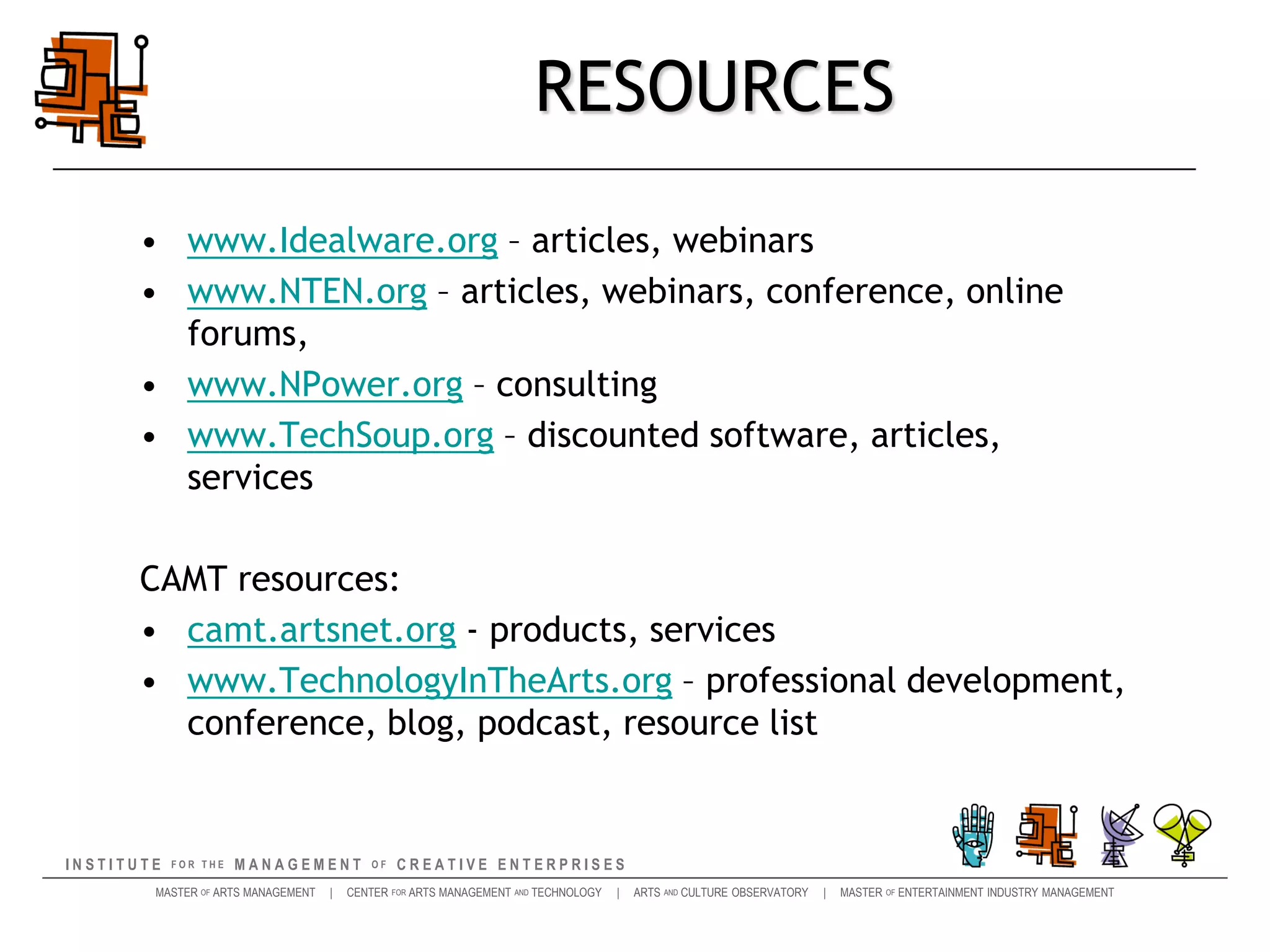
    RESOURCESwww.Idealware.org – articles,webinarswww.NTEN.org – articles, webinars, conference, online forums, www.NPower.org – consultingwww.TechSoup.org – discounted software, articles, servicesCAMT resources:camt.artsnet.org - products, serviceswww.TechnologyInTheArts.org – professional development, conference, blog, podcast, resource list
Editor's Notes

  • #14 Streamlined way to keep Web content fresh. Provides the ability to distribute content generation and upkeep, and tools that allow users to interact with an organization online.
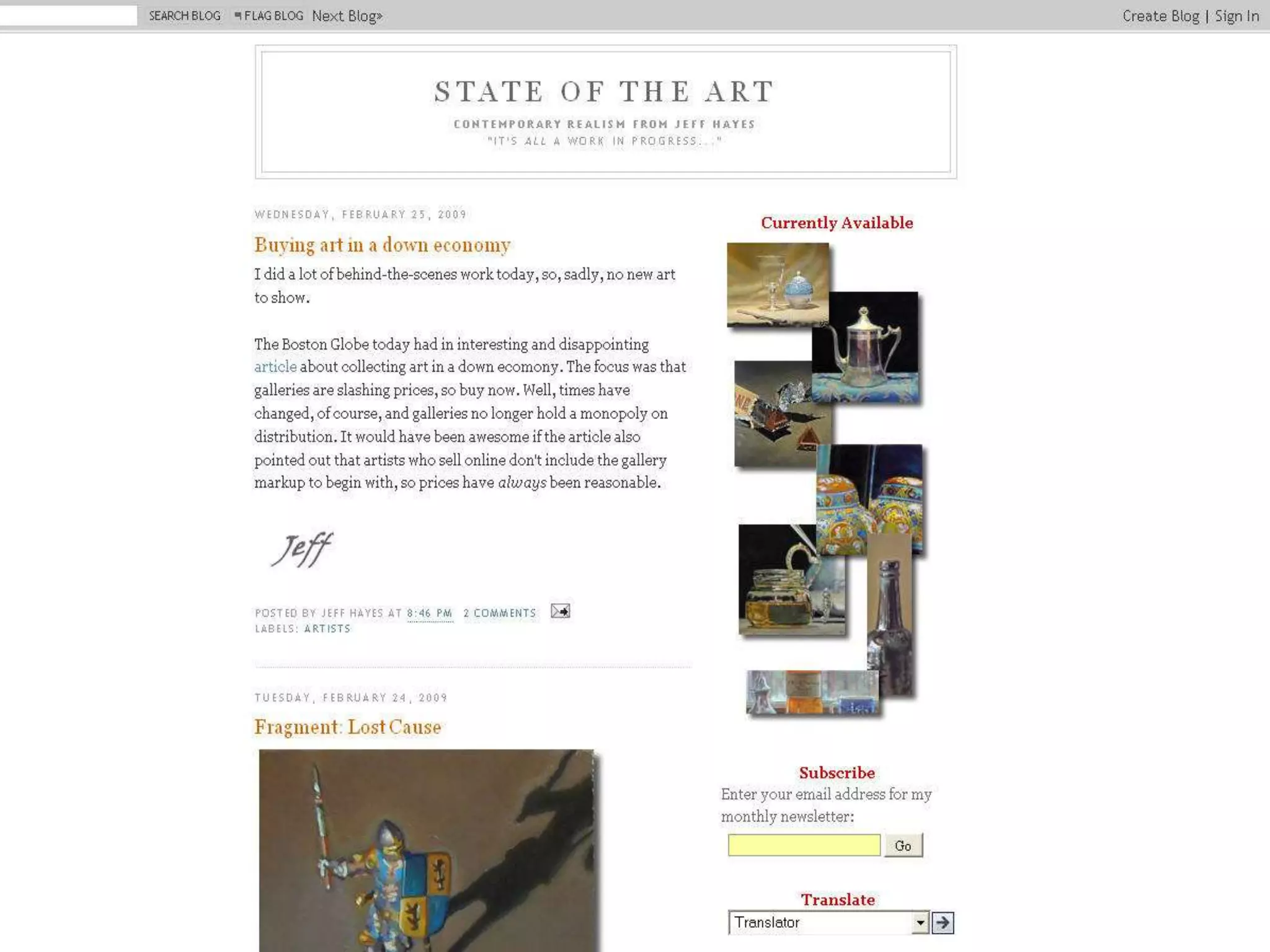
  • #18 Blog: short for web-log. Started as diaries online, has become a diverse genre of Web site. Posts are added regularly and displayed in chronilogical order. A blog is usually associated with a particular theme.
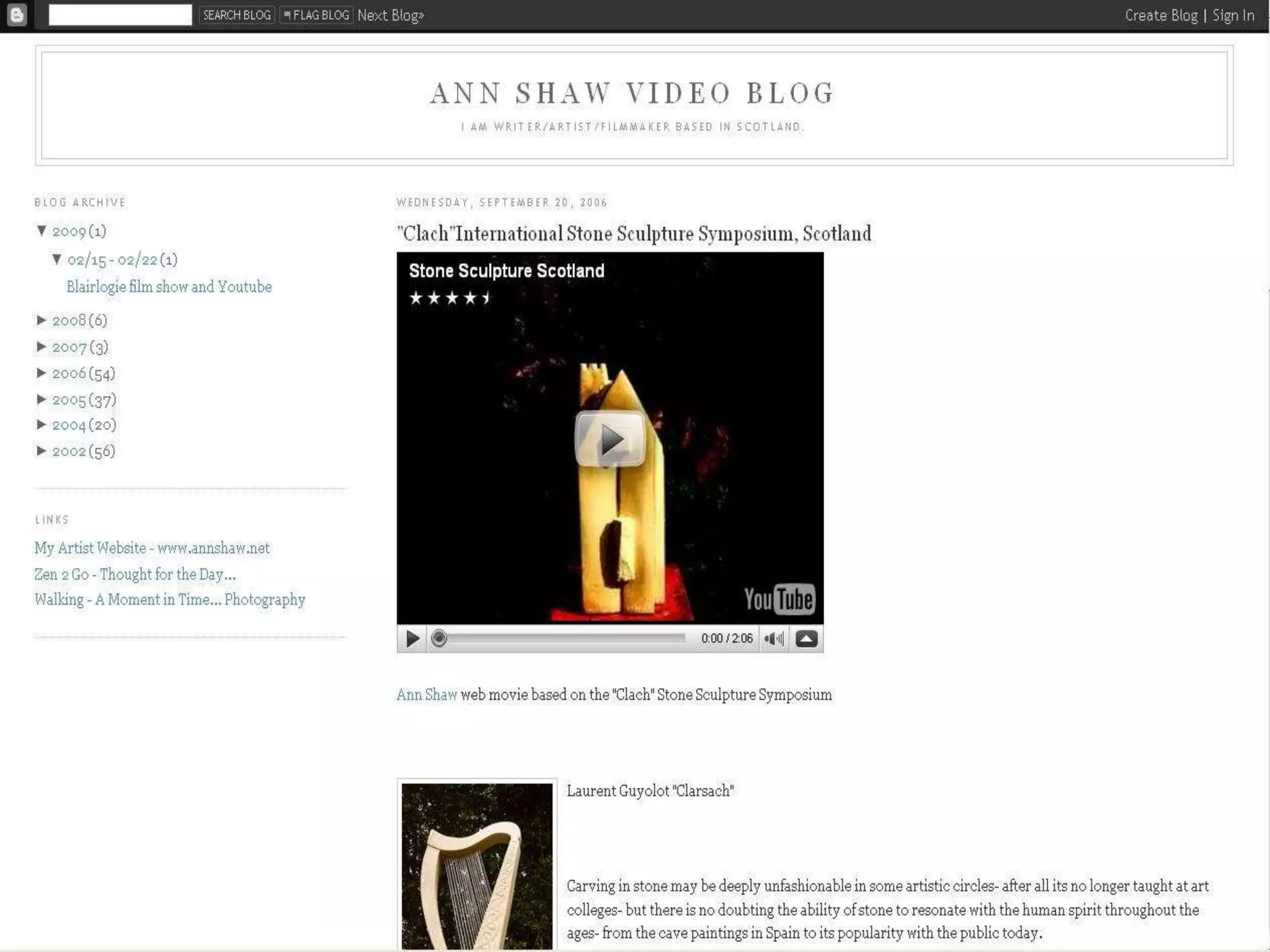
  • #19 Vlog: Video web log. Same concept as a blog, but with video. Many people maintain their vlogs by uploading video to YouTube, then embedding video into a traditional blog software
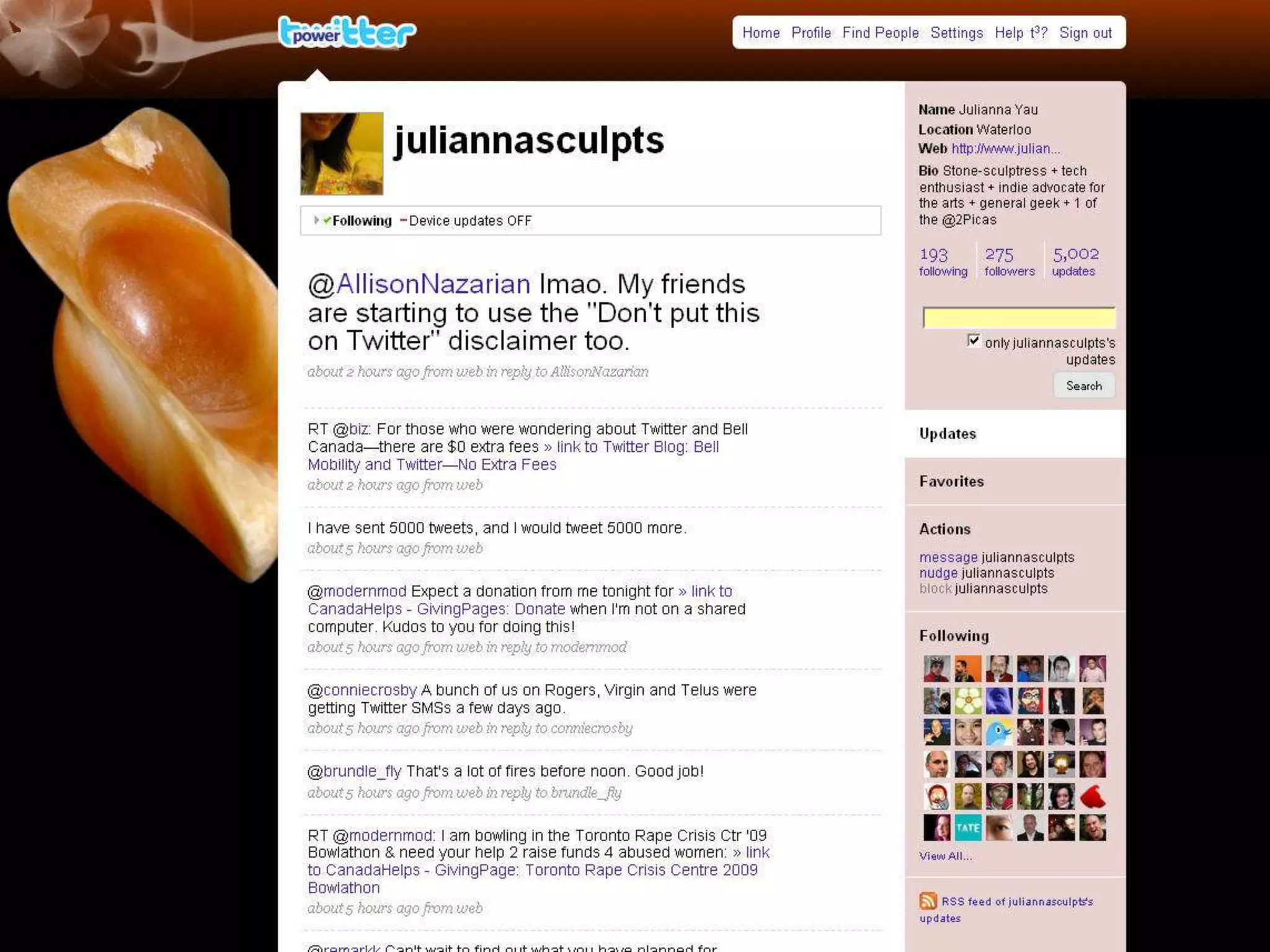
  • #20 Microblogging: a form of blogging that allows users to write brief text updates
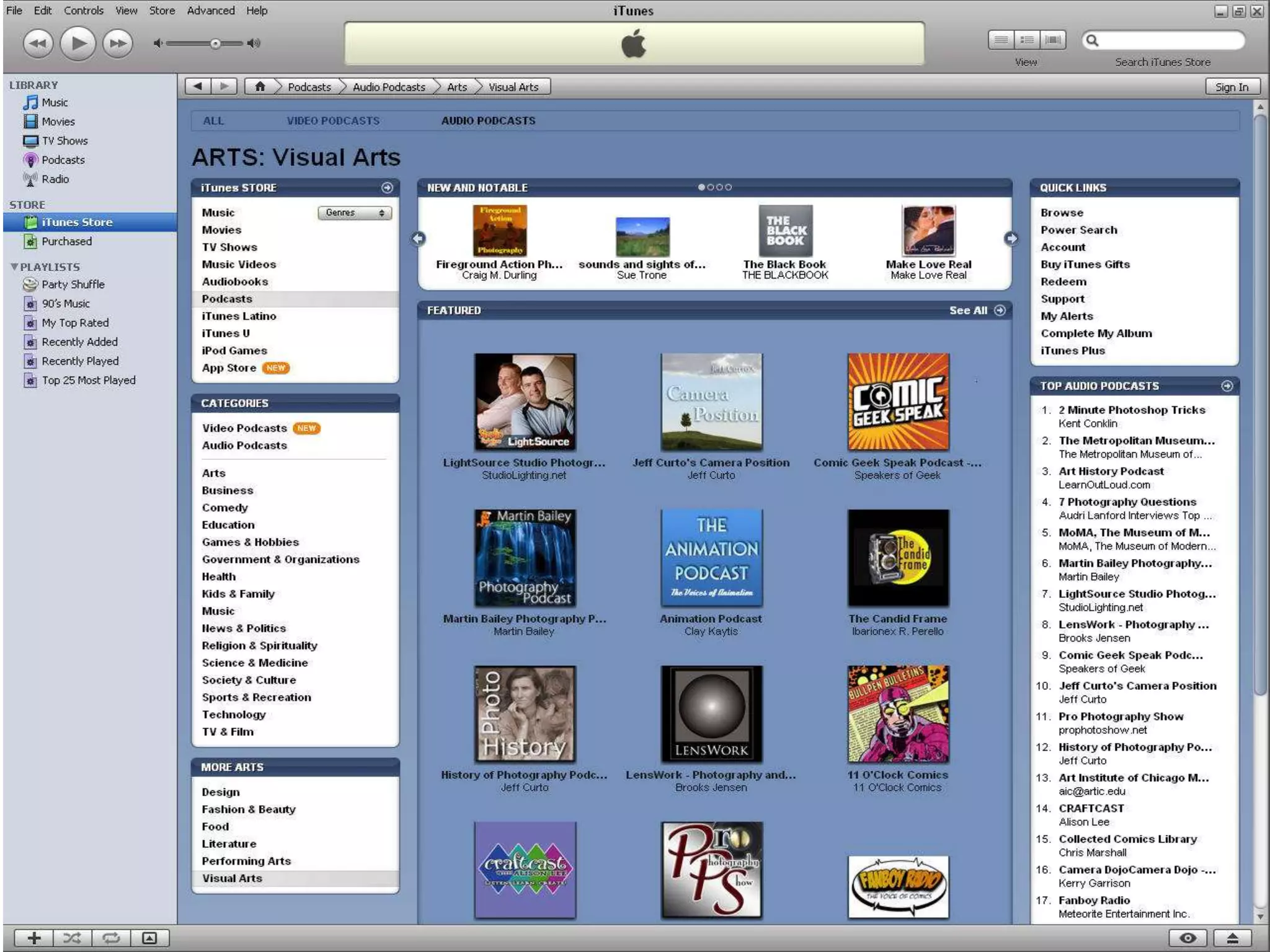
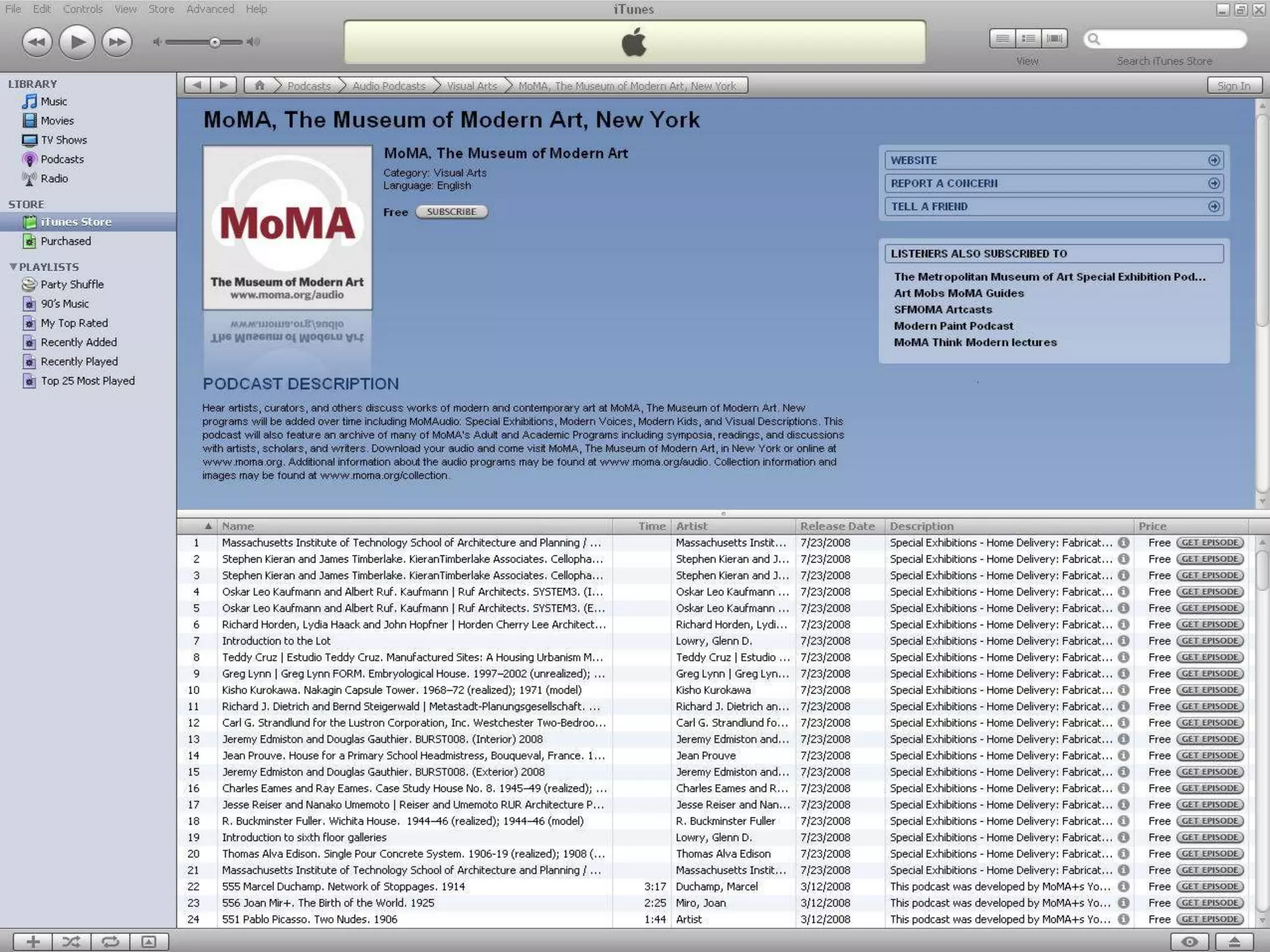
  • #24 Podcasting: a series of audio or video digital-media files distributed over the Internet by syndicated download, through Web feeds, to portable media players and personal computers.