Presenting Today
Lezlie Stephens
Director of People Operations
BizLibrary
lstephens@bizlibrary.com
Follow along on Twitter: #BizWebinar @BizLibrary
Erin Boettge
Content Marketing Manager,
BizLibrary
eboettge@bizlibrary.com
BizLibrary helps organizations succeed by improving the way
employees learn.
www.bizlibrary.com/free-trial
?
Are you currently
using competencies in
your training
program?
Does competency-based
training (CBT) remain
relevant in today’s evolving
workplace?
“[T]he most successful
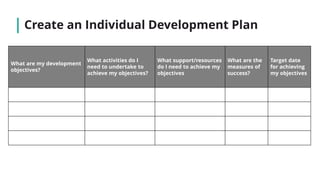
strategies are those
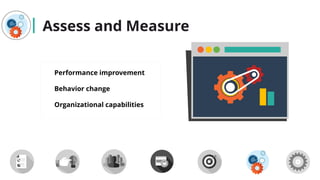
that make learning a
continuous process,
hardwired into a
company's
metabolism.“
Meghan Biro, The New
Rules of Leadership
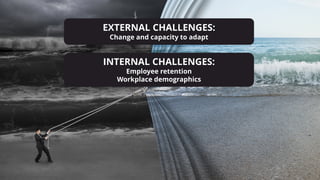
EXTERNAL CHALLENGES:
Change and capacity to adapt
INTERNAL CHALLENGES:
Employee retention
Workplace demographics
Competency-based training focuses on
identified workplace behaviors essential to
achieve organizational strategic goals.
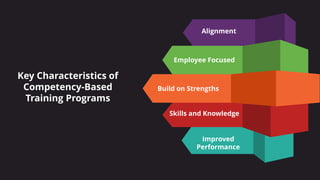
Alignment
Employee Focused
Build on Strengths
Skills and Knowledge
Improved
Performance
Key Characteristics of
Competency-Based
Training Programs
Managers have unique opportunities in their daily interactions with
employees to empower them to discover and develop their strengths,
and they have the ability to position employees in roles where they can
do what they do best every day…
…Employees who feel engaged at work and who are able to use their
strengths in their jobs are more productive and profitable and have
higher quality work.
Source: Gallup Study, 2013 State Of The
American Workplace
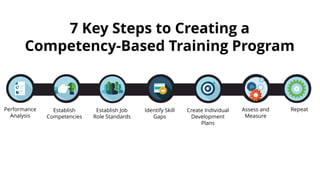
7 Key Steps to Creating a
Competency-Based Training Program
Performance
Analysis
Establish
Competencies
Establish Job
Role Standards
Identify Skill
Gaps
Create Individual
Development
Plans
Assess and
Measure
Repeat
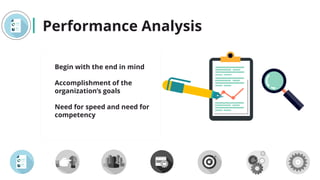
Performance Analysis
Begin with the end in mind
Accomplishment of the
organization’s goals
Need for speed and need for
competency
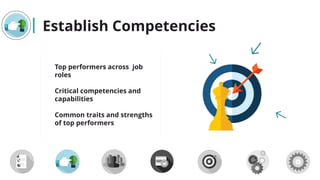
Establish Competencies
Top performers across job
roles
Critical competencies and
capabilities
Common traits and strengths
of top performers
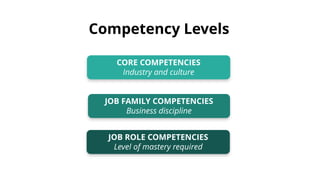
Competency Levels
CORE COMPETENCIES
Industry and culture
JOB FAMILY COMPETENCIES
Business discipline
JOB ROLE COMPETENCIES
Level of mastery required
What about new and emerging competencies?
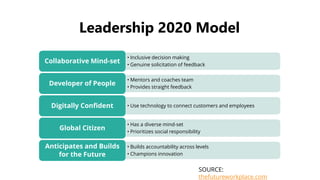
SOURCE:
thefutureworkplace.com
• Inclusive decision making
• Genuine solicitation of feedback
Collaborative Mind-set
• Mentors and coaches team
• Provides straight feedback
Developer of People
• Use technology to connect customers and employeesDigitally Confident
• Has a diverse mind-set
• Prioritizes social responsibility
Global Citizen
• Builds accountability across levels
• Champions innovation
Anticipates and Builds
for the Future
Leadership 2020 Model
Learning Agility Defined:
The willingness and ability to learn from
experience and the ability to apply what
you’ve learned for effective performance in
new or unfamiliar conditions.
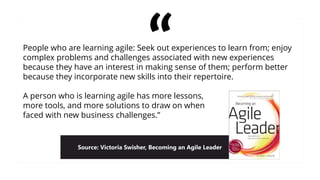
People who are learning agile: Seek out experiences to learn from; enjoy
complex problems and challenges associated with new experiences
because they have an interest in making sense of them; perform better
because they incorporate new skills into their repertoire.
A person who is learning agile has more lessons,
more tools, and more solutions to draw on when
faced with new business challenges.”
Source: Victoria Swisher, Becoming an Agile Leader
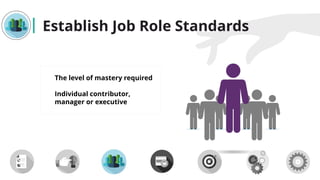
Establish Job Role Standards
The level of mastery required
Individual contributor,
manager or executive
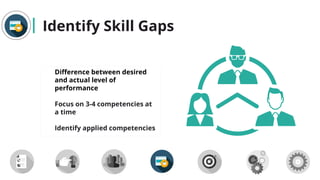
Identify Skill Gaps
Difference between desired
and actual level of
performance
Focus on 3-4 competencies at
a time
Identify applied competencies
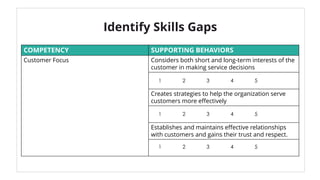
COMPETENCY SUPPORTING BEHAVIORS
Customer Focus Considers both short and long-term interests of the
customer in making service decisions
Creates strategies to help the organization serve
customers more effectively
Establishes and maintains effective relationships
with customers and gains their trust and respect.
Identify Skills Gaps
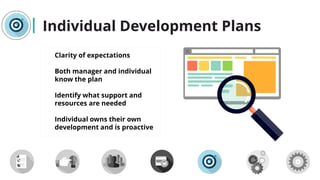
Individual Development Plans
Clarity of expectations
Both manager and individual
know the plan
Identify what support and
resources are needed
Individual owns their own
development and is proactive
What are my development
objectives?
What activities do I
need to undertake to
achieve my objectives?
What support/resources
do I need to achieve my
objectives
What are the
measures of
success?
Target date
for achieving
my objectives
Create an Individual Development Plan
Assess and Measure
Performance improvement
Behavior change
Organizational capabilities
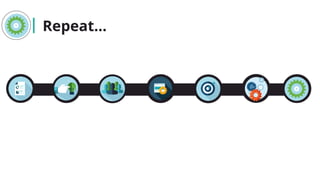
Repeat…
KEY TAKE-AWAYS
Take time to understand what competencies are important to your
organization and employees.
Only focus on a few at time to be most effective.
Competency-based training focuses your training efforts based on
business needs and performance improvement.
QUESTIONS
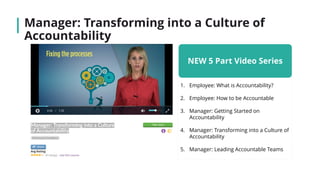
Manager: Transforming into a Culture of
Accountability
NEW 5 Part Video Series
1. Employee: What is Accountability?
2. Employee: How to be Accountable
3. Manager: Getting Started on
Accountability
4. Manager: Transforming into a Culture of
Accountability
5. Manager: Leading Accountable Teams
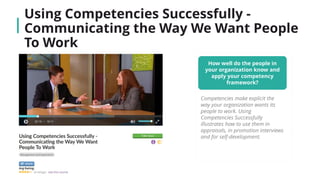
Using Competencies Successfully -
Communicating the Way We Want People
To Work
How well do the people in
your organization know and
apply your competency
framework?
Competencies make explicit the
way your organization wants its
people to work. Using
Competencies Successfully
illustrates how to use them in
appraisals, in promotion interviews
and for self-development.
Try out these video lessons
and more!
Thousands of videos and unlimited access for
your employees.
www.bizlibrary.com/free-trial

7 Steps to Create a Competency-Based Training Program

  • 2.
    Presenting Today Lezlie Stephens Directorof People Operations BizLibrary lstephens@bizlibrary.com Follow along on Twitter: #BizWebinar @BizLibrary Erin Boettge Content Marketing Manager, BizLibrary eboettge@bizlibrary.com
  • 3.
    BizLibrary helps organizationssucceed by improving the way employees learn. www.bizlibrary.com/free-trial
  • 4.
    ? Are you currently usingcompetencies in your training program?
  • 5.
    Does competency-based training (CBT)remain relevant in today’s evolving workplace?
  • 6.
    “[T]he most successful strategiesare those that make learning a continuous process, hardwired into a company's metabolism.“ Meghan Biro, The New Rules of Leadership
  • 7.
    EXTERNAL CHALLENGES: Change andcapacity to adapt INTERNAL CHALLENGES: Employee retention Workplace demographics
  • 8.
    Competency-based training focuseson identified workplace behaviors essential to achieve organizational strategic goals.
  • 9.
    Alignment Employee Focused Build onStrengths Skills and Knowledge Improved Performance Key Characteristics of Competency-Based Training Programs
  • 10.
    Managers have uniqueopportunities in their daily interactions with employees to empower them to discover and develop their strengths, and they have the ability to position employees in roles where they can do what they do best every day… …Employees who feel engaged at work and who are able to use their strengths in their jobs are more productive and profitable and have higher quality work. Source: Gallup Study, 2013 State Of The American Workplace
  • 11.
    7 Key Stepsto Creating a Competency-Based Training Program Performance Analysis Establish Competencies Establish Job Role Standards Identify Skill Gaps Create Individual Development Plans Assess and Measure Repeat
  • 12.
    Performance Analysis Begin withthe end in mind Accomplishment of the organization’s goals Need for speed and need for competency
  • 13.
    Establish Competencies Top performersacross job roles Critical competencies and capabilities Common traits and strengths of top performers
  • 14.
    Competency Levels CORE COMPETENCIES Industryand culture JOB FAMILY COMPETENCIES Business discipline JOB ROLE COMPETENCIES Level of mastery required
  • 15.
    What about newand emerging competencies?
  • 16.
    SOURCE: thefutureworkplace.com • Inclusive decisionmaking • Genuine solicitation of feedback Collaborative Mind-set • Mentors and coaches team • Provides straight feedback Developer of People • Use technology to connect customers and employeesDigitally Confident • Has a diverse mind-set • Prioritizes social responsibility Global Citizen • Builds accountability across levels • Champions innovation Anticipates and Builds for the Future Leadership 2020 Model
  • 17.
    Learning Agility Defined: Thewillingness and ability to learn from experience and the ability to apply what you’ve learned for effective performance in new or unfamiliar conditions.
  • 18.
    People who arelearning agile: Seek out experiences to learn from; enjoy complex problems and challenges associated with new experiences because they have an interest in making sense of them; perform better because they incorporate new skills into their repertoire. A person who is learning agile has more lessons, more tools, and more solutions to draw on when faced with new business challenges.” Source: Victoria Swisher, Becoming an Agile Leader
  • 19.
    Establish Job RoleStandards The level of mastery required Individual contributor, manager or executive
  • 20.
    Identify Skill Gaps Differencebetween desired and actual level of performance Focus on 3-4 competencies at a time Identify applied competencies
  • 21.
    COMPETENCY SUPPORTING BEHAVIORS CustomerFocus Considers both short and long-term interests of the customer in making service decisions Creates strategies to help the organization serve customers more effectively Establishes and maintains effective relationships with customers and gains their trust and respect. Identify Skills Gaps
  • 22.
    Individual Development Plans Clarityof expectations Both manager and individual know the plan Identify what support and resources are needed Individual owns their own development and is proactive
  • 23.
    What are mydevelopment objectives? What activities do I need to undertake to achieve my objectives? What support/resources do I need to achieve my objectives What are the measures of success? Target date for achieving my objectives Create an Individual Development Plan
  • 24.
    Assess and Measure Performanceimprovement Behavior change Organizational capabilities
  • 25.
  • 26.
    KEY TAKE-AWAYS Take timeto understand what competencies are important to your organization and employees. Only focus on a few at time to be most effective. Competency-based training focuses your training efforts based on business needs and performance improvement.
  • 27.
  • 28.
    Manager: Transforming intoa Culture of Accountability NEW 5 Part Video Series 1. Employee: What is Accountability? 2. Employee: How to be Accountable 3. Manager: Getting Started on Accountability 4. Manager: Transforming into a Culture of Accountability 5. Manager: Leading Accountable Teams
  • 29.
    Using Competencies Successfully- Communicating the Way We Want People To Work How well do the people in your organization know and apply your competency framework? Competencies make explicit the way your organization wants its people to work. Using Competencies Successfully illustrates how to use them in appraisals, in promotion interviews and for self-development.
  • 30.
    Try out thesevideo lessons and more! Thousands of videos and unlimited access for your employees. www.bizlibrary.com/free-trial