How to conduct effective performance appraisals by Toronto Training and HR April 2011
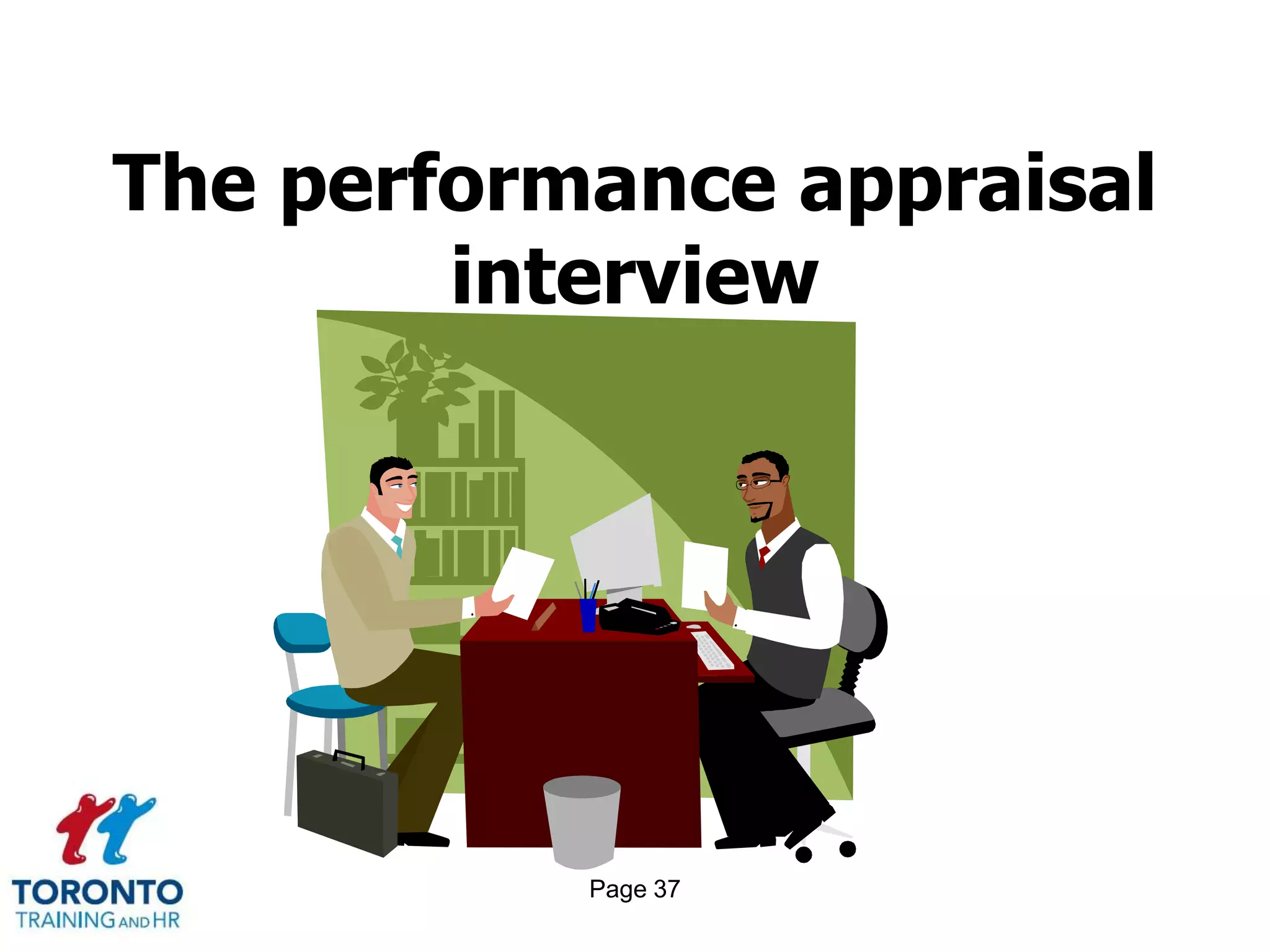
Contents	3-4 Introduction to Toronto Training and HR	5-6	Definition	7-8	Drill A9-15	Aims of regular performance 			appraisals		16-19	Case studies A & B	20-21	Goals and standards for performance22-23	Designing a performance appraisal 		system24-27	Different methods to evaluate 			performance28-29	Golden cycle of performance 			management30-31	Types of performance appraisal32-34	Problems with performance appraisal35-36	Areas to improve; collaborate don’t 		assassinate37-39	The performance appraisal interview	40-41	Drill B	42-46	Points to bear in mind47-50	Case studies C & D51-52	Conclusion and questionsPage 2
Page 3Introduction
Page 4Introduction to Toronto Training and HRToronto Training and HRis a specialist training and human resources consultancy headed by Timothy Holden 10 years in banking10 years in training and human resourcesFreelance practitioner since 2006The core services provided by Toronto Training and HR are:Training course design
Training course delivery-  Reducing costsSaving time
Improving employee engagement & morale
Services for job seekersPage 5Definition
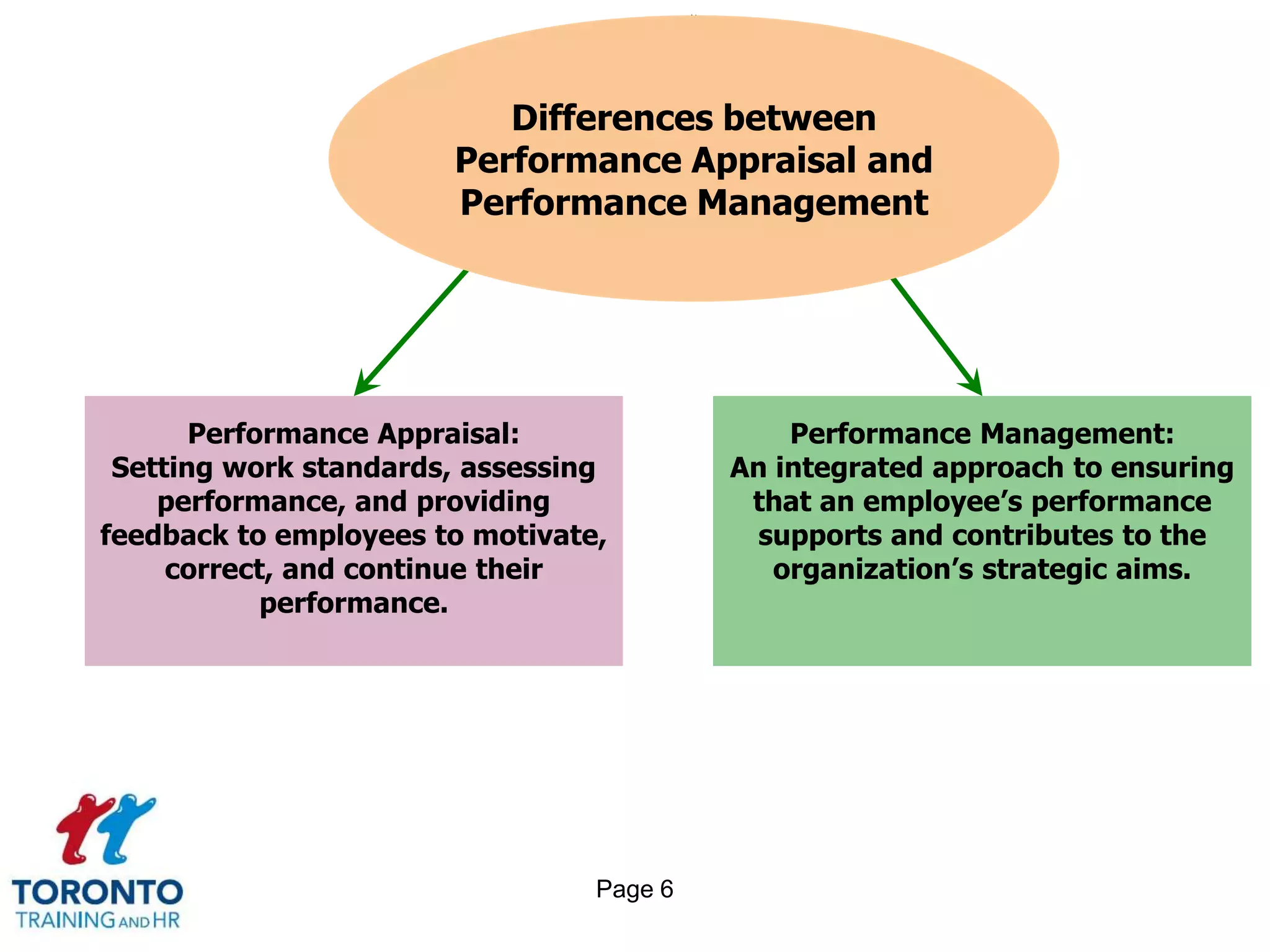
Differences betweenPerformance Appraisal and Performance ManagementPerformance Appraisal:Setting work standards, assessing performance, and providing feedback to employees to motivate, correct, and continue their performance.Performance Management:An integrated approach to ensuring that an employee’s performance supports and contributes to the organization’s strategic aims.Page 6
Page 7Drill A
Page 8Drill A
Page 9Aims of regular performance appraisals
Page 10Aims of regular performance appraisals 1 of 6Check that the needs of the employee and employer are being metConfirm the employee’s understanding of company expectationsIncrease the employee’s knowledge of his or her personal strengthsProvide an opportunity to discuss areas for improvementFoster a spirit of co-operation and teamwork
Page 11Aims of regular performance appraisals 2 of 6WHAT CAN THEY ACHIEVEperformance measurement - transparent, short, medium and long term clarifying, defining, redefining priorities & objectives motivation through agreeing helpful aims and targets
Page 12Aims of regular performance appraisals 3 of 6WHAT CAN THEY ACHIEVEmotivation though achievement and feedback training needs and learning desires - assessment and agreement identification of personal strengths and direction - including unused hidden strengths career and succession planning - personal and organizational team roles clarification and team building
Page 13Aims of regular performance appraisals 4 of 6WHAT CAN THEY ACHIEVEorganizational training needs assessment and analysis appraisee and manager mutual awareness, understanding and relationship resolving confusions and misunderstandings reinforcing and cascading organizational philosophies, values, aims, strategies, priorities, etc
Page 14Aims of regular performance appraisals 5 of 6WHAT CAN THEY ACHIEVEdelegation, additional responsibilities, employee growth and development counselling and feedback manager development - all good managers should be able to conduct appraisals well - it's a fundamental process
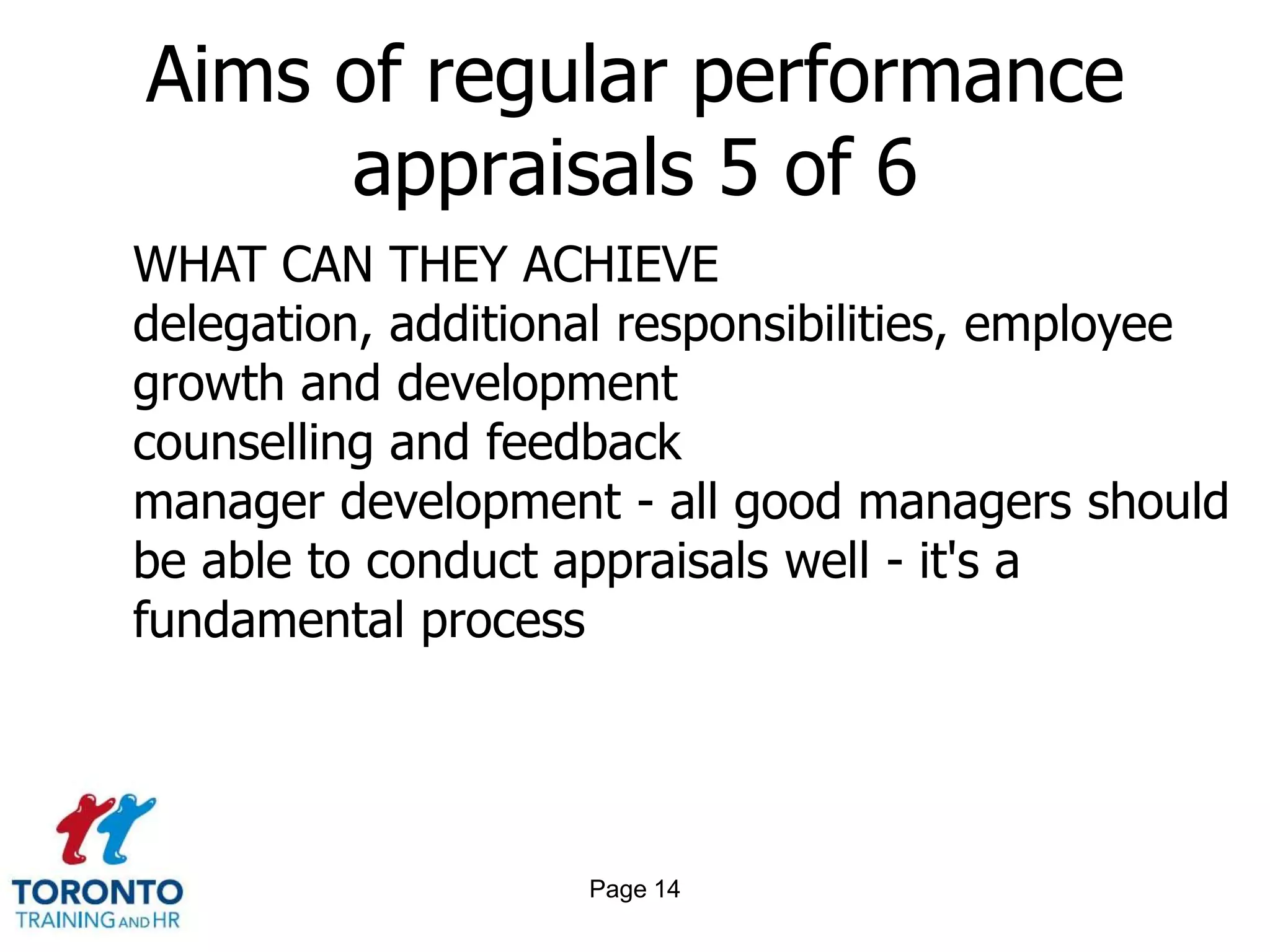
Aims of regular performance appraisals 6 of 6Satisfactory—PromotableSatisfactory—Not PromotableOutcomes of Appraisal InterviewsUnsatisfactory—CorrectableUnsatisfactory—UncorrectablePage 15
Page 16Case study A
Page 17Case study A
Page 18Case study B
Page 19Case study B
Page 20Goals and standards for performance
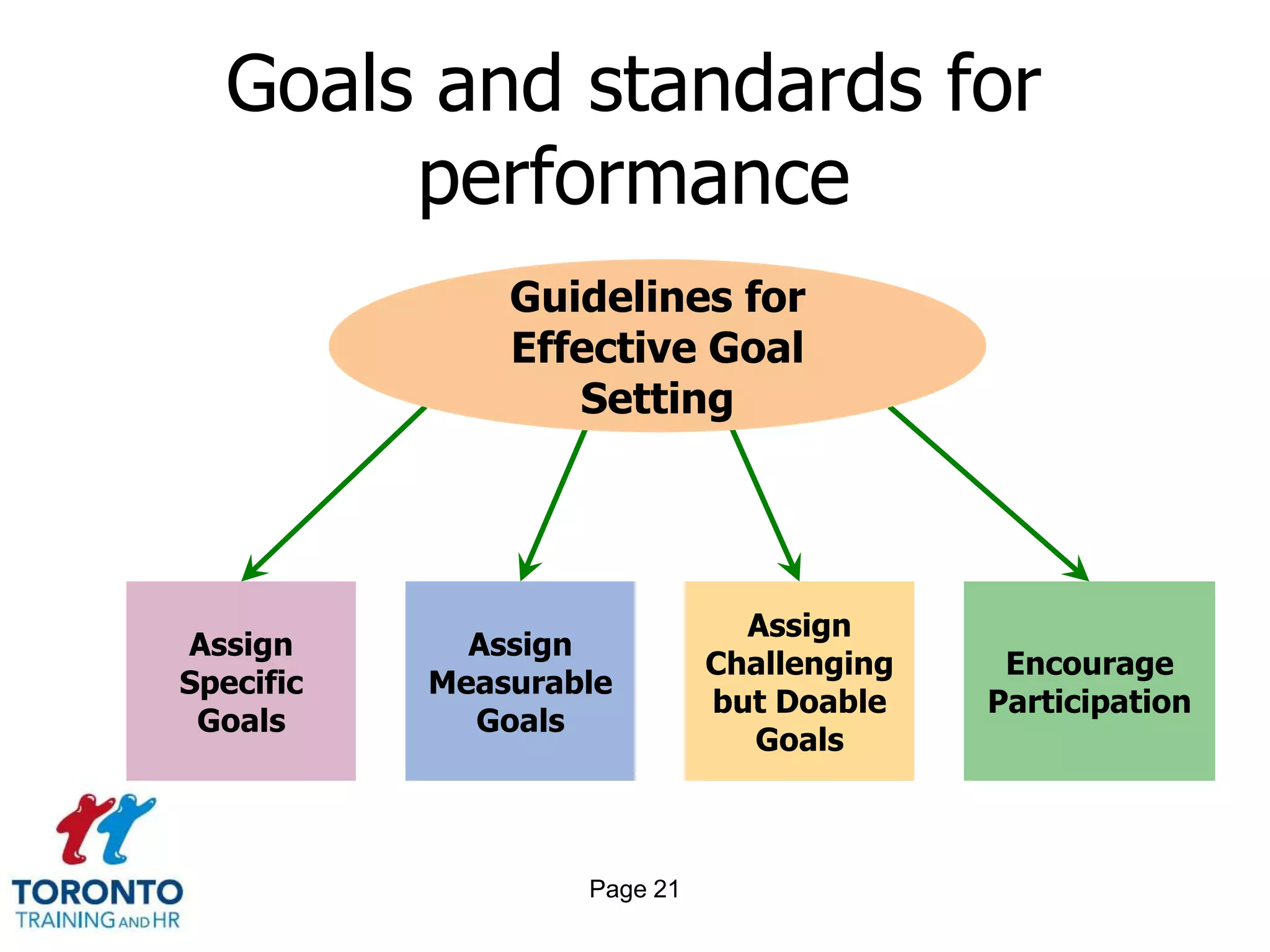
Guidelines for Effective Goal SettingAssign Specific GoalsEncourage ParticipationAssign Measurable GoalsAssign Challenging but Doable GoalsGoals and standards for performancePage 21
Page 22Designing a performance appraisal system
Page 23Designing a performance appraisal systemGaining support for the systemChoosing an appropriate rating instrumentSelecting ratersDetermining timingEnsuring fairness
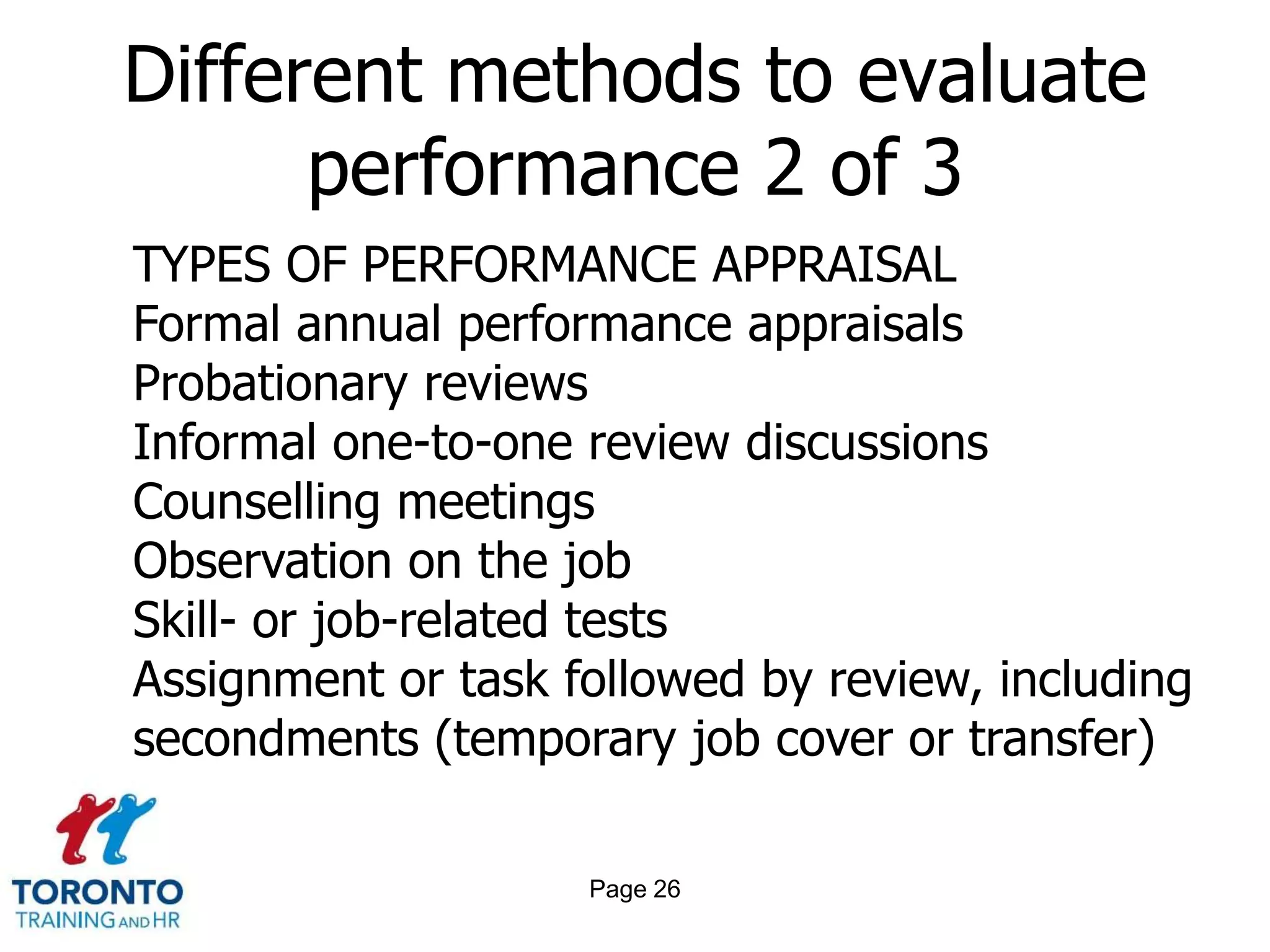
Page 24Different methods to evaluate performance
Page 25Different methods to evaluate performance 1 of 3Peer reviewsSelf evaluationUpward appraisals
Page 26Different methods to evaluate performance 2 of 3TYPES OF PERFORMANCE APPRAISALFormal annual performance appraisals Probationary reviews Informal one-to-one review discussions Counselling meetings Observation on the job Skill- or job-related tests Assignment or task followed by review, including secondments (temporary job cover or transfer)
Page 27Different methods to evaluate performance 3 of 3TYPES OF PERFORMANCE APPRAISALAssessment centres, including observed group exercises, tests presentations, etc. Survey of opinion of others who have dealings with the individual Psychometric tests and other behaviouralassessments Graphology (handwriting analysis)
Page 28Golden cycle of performance management
Page 29Golden cycle of performance managementGoal setting and planningOngoing feedback and coachingAppraisal and reward
Page 30Types of performance appraisal
Page 31Types of performance appraisalGraphic rating scaleBARS( Behaviourally Anchored Rating Scales)Alternation rankingForced distribution methodCritical incident method Narrative FormsPaired comparisonMBO (Management by Objectives)
Page 32Problems with performance appraisal
Page 33Problems with performance appraisal 1 of 2Unclear standardsHalo effectCentral tendencyLeniency or strictnessBiasHorns EffectRecency ErrorFirst ImpressionFixed Impression
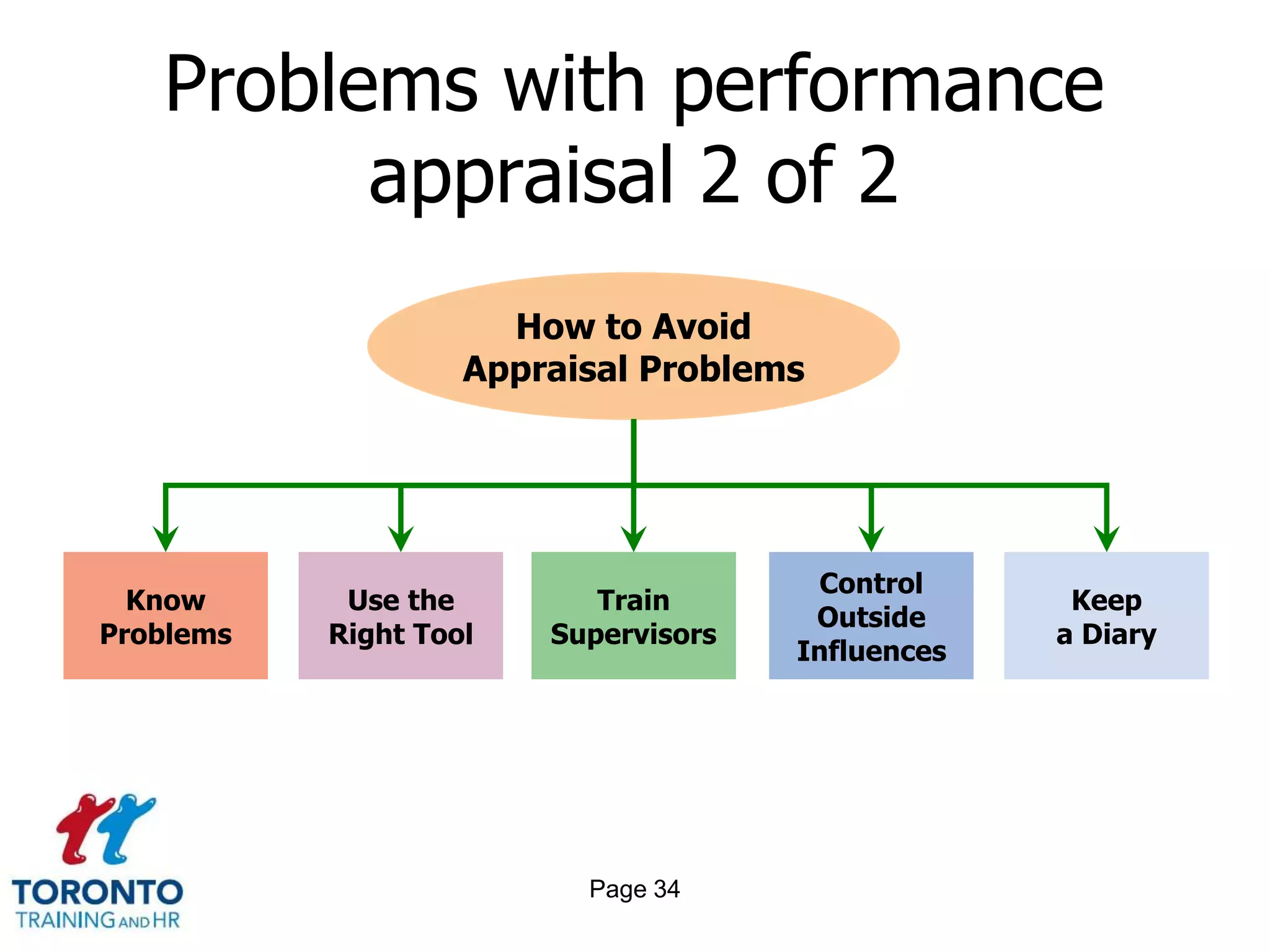
How to Avoid Appraisal ProblemsKnow ProblemsControl Outside InfluencesUse the Right ToolTrain SupervisorsKeep a DiaryProblems with performance appraisal 2 of 2Page 34
Page 35Areas to improve; collaborate don’t assassinate
Page 36Areas to improve; collaborate don’t assassinateEmphasize the positive with the negativeCouch your criticism in terms of the shared greater good rather than framing it as a personal indictmentEnlist your employee as an ally in troubleshooting a vexing issueOffer the employee flexible options in resolving a shortcoming
Page 37The performance appraisal interview
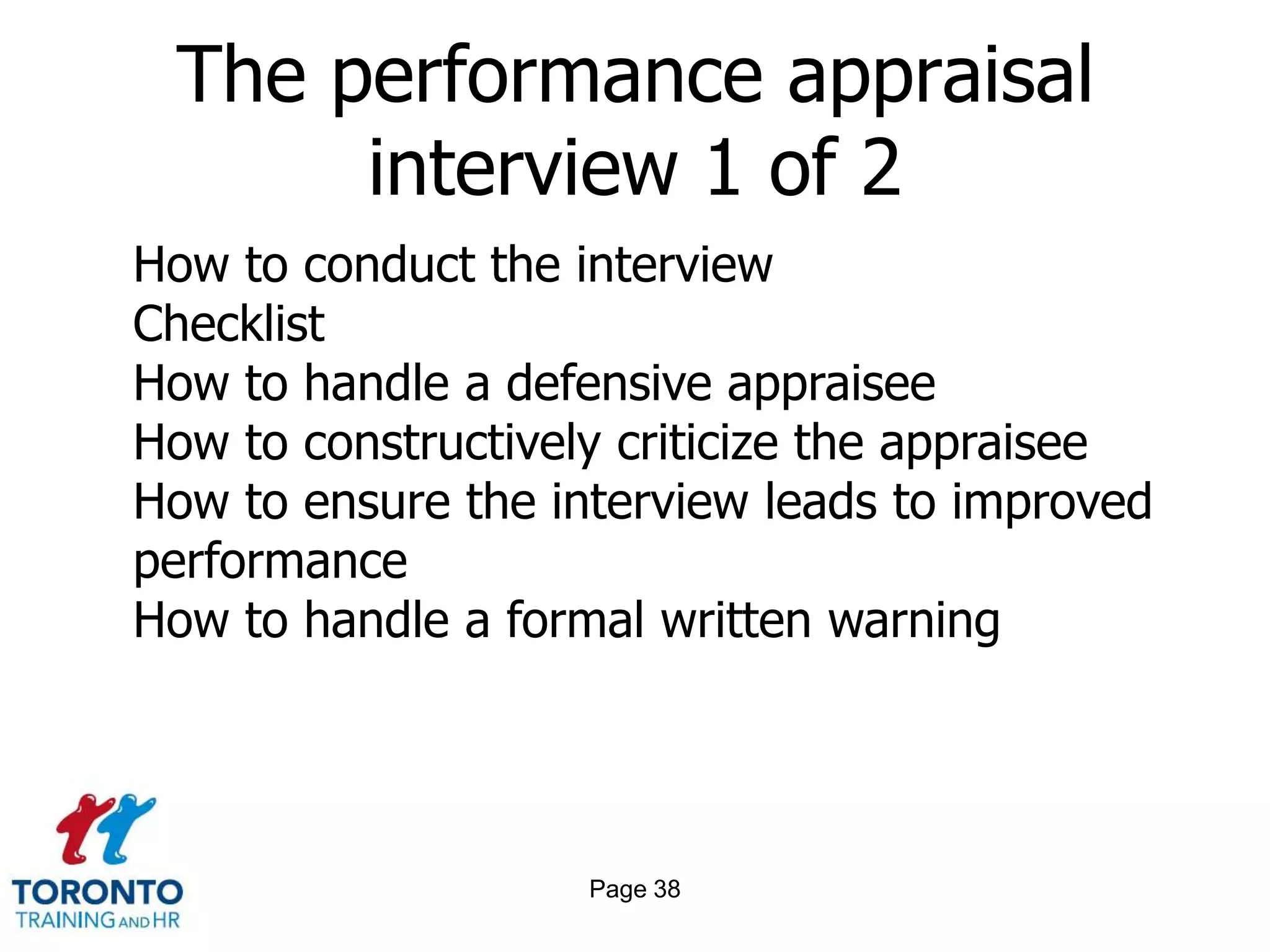
Page 38The performance appraisal interview 1 of 2How to conduct the interviewChecklistHow to handle a defensive appraiseeHow to constructively criticize the appraiseeHow to ensure the interview leads to improved performanceHow to handle a formal written warning
Page 39The performance appraisal interview 2 of 2GIVING NEGATIVE FEEDBACKWhy candour is importantThe importance of documentationThe importance of the correct wordingEncouraging employee feedbackEnding on a positive note
Page 40Drill B
Page 41Drill B
Page 42Points to bear in mind
Page 43Points to bear in mind 1 of 4Reduce surprisesLook back before you look aheadKnow the effects of documentationAvoid extremesGet employees involvedSeparate performance and pay increase discussionsKnow how to use the performance review for disciplinary purposes
Page 44Points to bear in mind 2 of 4SELF-EVALUATIONAddress your overall performance/track record for the review periodIn what areas do you need additional support, structure and direction?What are your goals for the next year or next review period?
Page 45Points to bear in mind 3 of 4WATCH YOUR LANGUAGEAvoid discriminatory referencesAvoid the term “attitude”Use “for example” frequentlyDocument how the supervisor has tried to help the employee meet performance standards
Page 46Points to bear in mind 4 of 4REVIEW TIMELINEOne month beforeTwo weeks beforeOne week beforeOn the dayThree to five days after the review
Page 47Case study C
Page 48Case study C
Page 49Case study D
Page 50Case study D

How to conduct effective performance appraisals April 2011

  • 1.
    How to conducteffective performance appraisals by Toronto Training and HR April 2011
  • 2.
    Contents 3-4 Introduction toToronto Training and HR 5-6 Definition 7-8 Drill A9-15 Aims of regular performance appraisals 16-19 Case studies A & B 20-21 Goals and standards for performance22-23 Designing a performance appraisal system24-27 Different methods to evaluate performance28-29 Golden cycle of performance management30-31 Types of performance appraisal32-34 Problems with performance appraisal35-36 Areas to improve; collaborate don’t assassinate37-39 The performance appraisal interview 40-41 Drill B 42-46 Points to bear in mind47-50 Case studies C & D51-52 Conclusion and questionsPage 2
  • 3.
  • 4.
    Page 4Introduction toToronto Training and HRToronto Training and HRis a specialist training and human resources consultancy headed by Timothy Holden 10 years in banking10 years in training and human resourcesFreelance practitioner since 2006The core services provided by Toronto Training and HR are:Training course design
  • 5.
    Training course delivery- Reducing costsSaving time
  • 6.
  • 7.
    Services for jobseekersPage 5Definition
  • 8.
    Differences betweenPerformance Appraisaland Performance ManagementPerformance Appraisal:Setting work standards, assessing performance, and providing feedback to employees to motivate, correct, and continue their performance.Performance Management:An integrated approach to ensuring that an employee’s performance supports and contributes to the organization’s strategic aims.Page 6
  • 9.
  • 10.
  • 11.
    Page 9Aims ofregular performance appraisals
  • 12.
    Page 10Aims ofregular performance appraisals 1 of 6Check that the needs of the employee and employer are being metConfirm the employee’s understanding of company expectationsIncrease the employee’s knowledge of his or her personal strengthsProvide an opportunity to discuss areas for improvementFoster a spirit of co-operation and teamwork
  • 13.
    Page 11Aims ofregular performance appraisals 2 of 6WHAT CAN THEY ACHIEVEperformance measurement - transparent, short, medium and long term clarifying, defining, redefining priorities & objectives motivation through agreeing helpful aims and targets
  • 14.
    Page 12Aims ofregular performance appraisals 3 of 6WHAT CAN THEY ACHIEVEmotivation though achievement and feedback training needs and learning desires - assessment and agreement identification of personal strengths and direction - including unused hidden strengths career and succession planning - personal and organizational team roles clarification and team building
  • 15.
    Page 13Aims ofregular performance appraisals 4 of 6WHAT CAN THEY ACHIEVEorganizational training needs assessment and analysis appraisee and manager mutual awareness, understanding and relationship resolving confusions and misunderstandings reinforcing and cascading organizational philosophies, values, aims, strategies, priorities, etc
  • 16.
    Page 14Aims ofregular performance appraisals 5 of 6WHAT CAN THEY ACHIEVEdelegation, additional responsibilities, employee growth and development counselling and feedback manager development - all good managers should be able to conduct appraisals well - it's a fundamental process
  • 17.
    Aims of regularperformance appraisals 6 of 6Satisfactory—PromotableSatisfactory—Not PromotableOutcomes of Appraisal InterviewsUnsatisfactory—CorrectableUnsatisfactory—UncorrectablePage 15
  • 18.
  • 19.
  • 20.
  • 21.
  • 22.
    Page 20Goals andstandards for performance
  • 23.
    Guidelines for EffectiveGoal SettingAssign Specific GoalsEncourage ParticipationAssign Measurable GoalsAssign Challenging but Doable GoalsGoals and standards for performancePage 21
  • 24.
    Page 22Designing aperformance appraisal system
  • 25.
    Page 23Designing aperformance appraisal systemGaining support for the systemChoosing an appropriate rating instrumentSelecting ratersDetermining timingEnsuring fairness
  • 26.
    Page 24Different methodsto evaluate performance
  • 27.
    Page 25Different methodsto evaluate performance 1 of 3Peer reviewsSelf evaluationUpward appraisals
  • 28.
    Page 26Different methodsto evaluate performance 2 of 3TYPES OF PERFORMANCE APPRAISALFormal annual performance appraisals Probationary reviews Informal one-to-one review discussions Counselling meetings Observation on the job Skill- or job-related tests Assignment or task followed by review, including secondments (temporary job cover or transfer)
  • 29.
    Page 27Different methodsto evaluate performance 3 of 3TYPES OF PERFORMANCE APPRAISALAssessment centres, including observed group exercises, tests presentations, etc. Survey of opinion of others who have dealings with the individual Psychometric tests and other behaviouralassessments Graphology (handwriting analysis)
  • 30.
    Page 28Golden cycleof performance management
  • 31.
    Page 29Golden cycleof performance managementGoal setting and planningOngoing feedback and coachingAppraisal and reward
  • 32.
    Page 30Types ofperformance appraisal
  • 33.
    Page 31Types ofperformance appraisalGraphic rating scaleBARS( Behaviourally Anchored Rating Scales)Alternation rankingForced distribution methodCritical incident method Narrative FormsPaired comparisonMBO (Management by Objectives)
  • 34.
    Page 32Problems withperformance appraisal
  • 35.
    Page 33Problems withperformance appraisal 1 of 2Unclear standardsHalo effectCentral tendencyLeniency or strictnessBiasHorns EffectRecency ErrorFirst ImpressionFixed Impression
  • 36.
    How to AvoidAppraisal ProblemsKnow ProblemsControl Outside InfluencesUse the Right ToolTrain SupervisorsKeep a DiaryProblems with performance appraisal 2 of 2Page 34
  • 37.
    Page 35Areas toimprove; collaborate don’t assassinate
  • 38.
    Page 36Areas toimprove; collaborate don’t assassinateEmphasize the positive with the negativeCouch your criticism in terms of the shared greater good rather than framing it as a personal indictmentEnlist your employee as an ally in troubleshooting a vexing issueOffer the employee flexible options in resolving a shortcoming
  • 39.
    Page 37The performanceappraisal interview
  • 40.
    Page 38The performanceappraisal interview 1 of 2How to conduct the interviewChecklistHow to handle a defensive appraiseeHow to constructively criticize the appraiseeHow to ensure the interview leads to improved performanceHow to handle a formal written warning
  • 41.
    Page 39The performanceappraisal interview 2 of 2GIVING NEGATIVE FEEDBACKWhy candour is importantThe importance of documentationThe importance of the correct wordingEncouraging employee feedbackEnding on a positive note
  • 42.
  • 43.
  • 44.
    Page 42Points tobear in mind
  • 45.
    Page 43Points tobear in mind 1 of 4Reduce surprisesLook back before you look aheadKnow the effects of documentationAvoid extremesGet employees involvedSeparate performance and pay increase discussionsKnow how to use the performance review for disciplinary purposes
  • 46.
    Page 44Points tobear in mind 2 of 4SELF-EVALUATIONAddress your overall performance/track record for the review periodIn what areas do you need additional support, structure and direction?What are your goals for the next year or next review period?
  • 47.
    Page 45Points tobear in mind 3 of 4WATCH YOUR LANGUAGEAvoid discriminatory referencesAvoid the term “attitude”Use “for example” frequentlyDocument how the supervisor has tried to help the employee meet performance standards
  • 48.
    Page 46Points tobear in mind 4 of 4REVIEW TIMELINEOne month beforeTwo weeks beforeOne week beforeOn the dayThree to five days after the review
  • 49.
  • 50.
  • 51.
  • 52.
  • 53.
  • 54.