Appraisal Method
Presented By
Nikki Shrestha (IMB2010001)
Pratima Tripathi (IMB2010012)
Manupriya (IMB2010044)
Appraisal Method
 An appraisal means the act or process
of estimating value and method
means way of doing something in a
systematic manner.
 Performance appraisal refers to all
those procedure that are use to
evaluate the personality, performance,
potential of its group members.
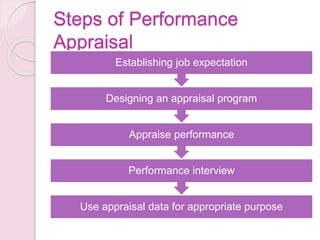
Steps of Performance
Appraisal
Use appraisal data for appropriate purpose
Performance interview
Appraise performance
Designing an appraisal program
Establishing job expectation
Process of Performance
Appraisal
Setting
performance
standards
Communicating
standards
Measuring
standards
Comparing
standards
Discussing results
Taking corrective
standards
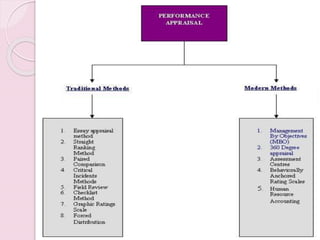
Traditional Methods
 Essay Evaluation Method
This method asked managers / supervisors to
describe strengths and weaknesses of an
employee’s behavior. Essay evaluation is a non-
quantitative technique. This method usually use
with the graphic rating scale method.
Straight Ranking Method
 This is one of the oldest and simplest techniques
of performance appraisal. In this method, the
appraiser ranks the employees from the best to the
poorest on the basis of their overall performance. It
is quite useful for a comparative evaluation.
Paired Comparison
 A better technique of comparison than the
straight ranking method, this method compares
each employee with all others in the group, one at
a time. After all the comparisons on the basis of the
overall comparisons, the employees are given the
final rankings.
Critical incident method
 In this method of Performance appraisal, the
evaluator rates the employee on the basis of
critical events and how the employee behaved
during those incidents. It includes both negative
and positive points. The drawback of this method is
that the supervisor has to note down the critical
incidents and the employee behavior as and when
they occur.
Checklist Method
 The rater is given a checklist of the descriptions
of the behavior of the employees on job. The
checklist contains a list of statements on the basis
of which the rater describes the on the job
performance of the employees.
Graphics Rating Scale
 In this method, an employee’s quality and
quantity of work is assessed in a graphic scale
indicating different degrees of a particular trait
Forced Distribution
To eliminate the element of bias from the rater’s
ratings, the evaluator is asked to distribute the
employees in some fixed categories of ratings like
on a normal distribution curve. The rater chooses
the appropriate fit for the categories on his own
discretion.
Field Review
 In this method, a senior member of the HR
department or a training officer discusses and
interviews the supervisors to evaluate and rate
their respective subordinates. A major drawback of
this method is that it is a very time consuming
method.
Modern Methods
 Management By Objectives
MBO is a process of defining objectives within an
organization so that management and employees
agree to the objectives and understand what they
are in the organization.
360 degree performance
appraisal
 360 degree feedback is the most comprehensive
appraisal where the feedback about the
employees’ performance comes from all the
sources that come in contact with the employee on
his job.
Assessment centers
 An assessment centre is usually an all day event
(or longer) which forms part of later stages of a
company`s recruitment procedure. Employer want
to find out how you perform in different situations.
Behaviorally Anchored Rating Scales
 BEHAVIORALLY ANCHORED RATING SCALES is
a relatively new technique which combines the
graphic rating scale and critical incidents method.
It consists of predetermined critical areas of job
performance or sets of behavioral statements
describing important job performance qualities as
good or bad (for eg. the qualities like inter personal
relationships, adaptability and reliability, job
knowledge etc). These statements are developed
from critical incidents.
Human Resource Accounting Method
 Human resources are valuable assets for every
organization. Human resource accounting method
tries to find the relative worth of these assets in the
terms of money. In this method the Performance
appraisal of the employees is judged in terms of
cost and contribution of the employees.
THANK
YOU…

Appraisal method

  • 1.
    Appraisal Method Presented By NikkiShrestha (IMB2010001) Pratima Tripathi (IMB2010012) Manupriya (IMB2010044)
  • 2.
    Appraisal Method  Anappraisal means the act or process of estimating value and method means way of doing something in a systematic manner.  Performance appraisal refers to all those procedure that are use to evaluate the personality, performance, potential of its group members.
  • 3.
    Steps of Performance Appraisal Useappraisal data for appropriate purpose Performance interview Appraise performance Designing an appraisal program Establishing job expectation
  • 4.
  • 6.
    Traditional Methods  EssayEvaluation Method This method asked managers / supervisors to describe strengths and weaknesses of an employee’s behavior. Essay evaluation is a non- quantitative technique. This method usually use with the graphic rating scale method.
  • 7.
    Straight Ranking Method This is one of the oldest and simplest techniques of performance appraisal. In this method, the appraiser ranks the employees from the best to the poorest on the basis of their overall performance. It is quite useful for a comparative evaluation.
  • 8.
    Paired Comparison  Abetter technique of comparison than the straight ranking method, this method compares each employee with all others in the group, one at a time. After all the comparisons on the basis of the overall comparisons, the employees are given the final rankings.
  • 9.
    Critical incident method In this method of Performance appraisal, the evaluator rates the employee on the basis of critical events and how the employee behaved during those incidents. It includes both negative and positive points. The drawback of this method is that the supervisor has to note down the critical incidents and the employee behavior as and when they occur.
  • 10.
    Checklist Method  Therater is given a checklist of the descriptions of the behavior of the employees on job. The checklist contains a list of statements on the basis of which the rater describes the on the job performance of the employees.
  • 11.
    Graphics Rating Scale In this method, an employee’s quality and quantity of work is assessed in a graphic scale indicating different degrees of a particular trait
  • 12.
    Forced Distribution To eliminatethe element of bias from the rater’s ratings, the evaluator is asked to distribute the employees in some fixed categories of ratings like on a normal distribution curve. The rater chooses the appropriate fit for the categories on his own discretion.
  • 13.
    Field Review  Inthis method, a senior member of the HR department or a training officer discusses and interviews the supervisors to evaluate and rate their respective subordinates. A major drawback of this method is that it is a very time consuming method.
  • 14.
    Modern Methods  ManagementBy Objectives MBO is a process of defining objectives within an organization so that management and employees agree to the objectives and understand what they are in the organization.
  • 15.
    360 degree performance appraisal 360 degree feedback is the most comprehensive appraisal where the feedback about the employees’ performance comes from all the sources that come in contact with the employee on his job.
  • 16.
    Assessment centers  Anassessment centre is usually an all day event (or longer) which forms part of later stages of a company`s recruitment procedure. Employer want to find out how you perform in different situations.
  • 17.
    Behaviorally Anchored RatingScales  BEHAVIORALLY ANCHORED RATING SCALES is a relatively new technique which combines the graphic rating scale and critical incidents method. It consists of predetermined critical areas of job performance or sets of behavioral statements describing important job performance qualities as good or bad (for eg. the qualities like inter personal relationships, adaptability and reliability, job knowledge etc). These statements are developed from critical incidents.
  • 18.
    Human Resource AccountingMethod  Human resources are valuable assets for every organization. Human resource accounting method tries to find the relative worth of these assets in the terms of money. In this method the Performance appraisal of the employees is judged in terms of cost and contribution of the employees.
  • 19.