How to Build
Innovative Products
with Facebook Topic Data
Tim Budden
VP, Data Science
DATASIFT
Jay Krall
Director of Product Management
DATASIFT
Dary Hsu
Product Marketing Manager
DATASIFT
Intro to Facebook topic data
Agenda
1
2
3
4
5
Evolution of social data
Philosophy of Facebook topic data
Product Differentiation
Q&A
Intro to Facebook Topic Data
For years, companies struggled to get a complete view of their
audience on Facebook and turn that information into useful insights
until….
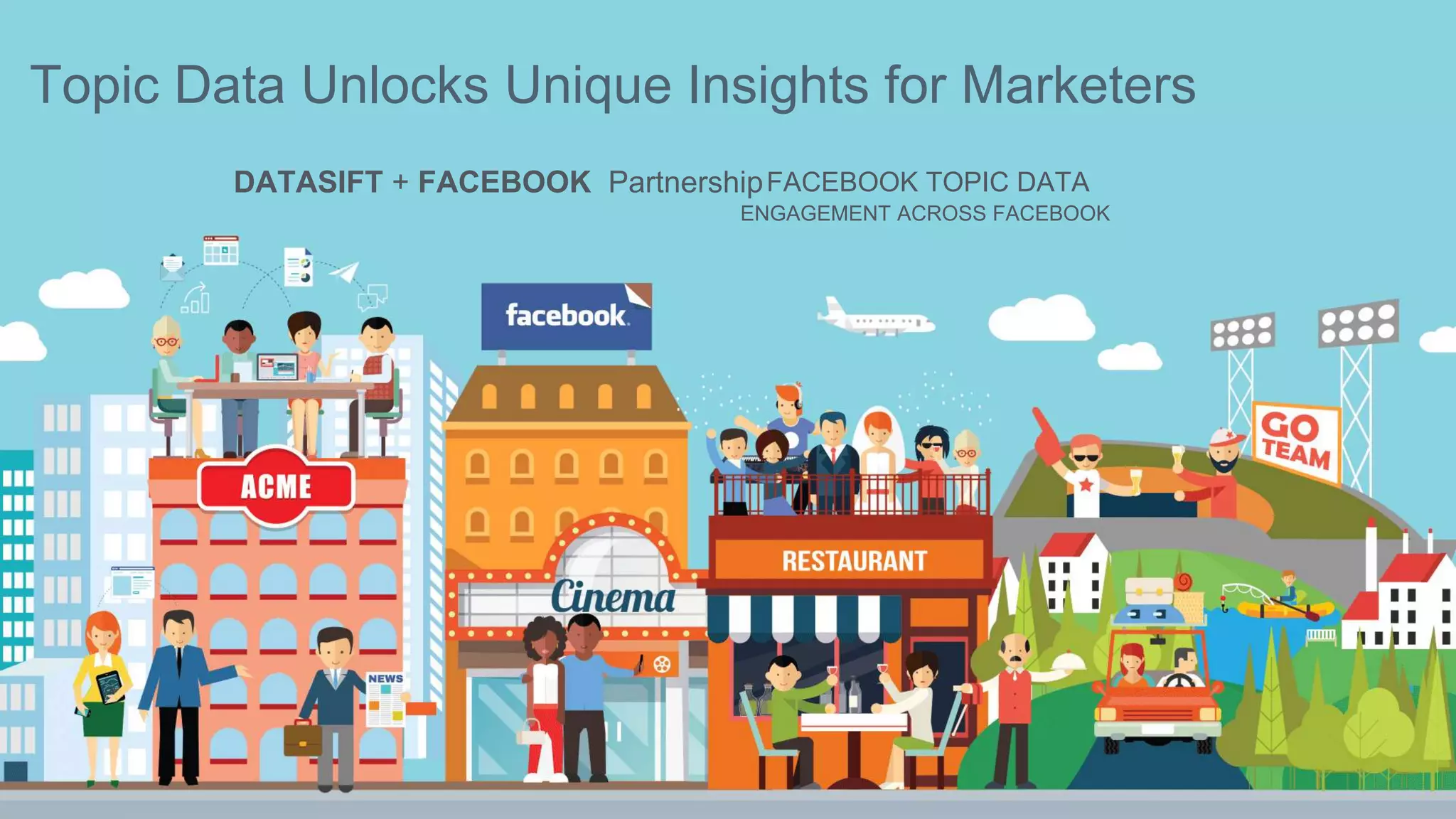
DATASIFT + FACEBOOK Partnership
ENGAGEMENT ACROSS FACEBOOK
FACEBOOK TOPIC DATA
Topic Data Unlocks Unique Insights for Marketers
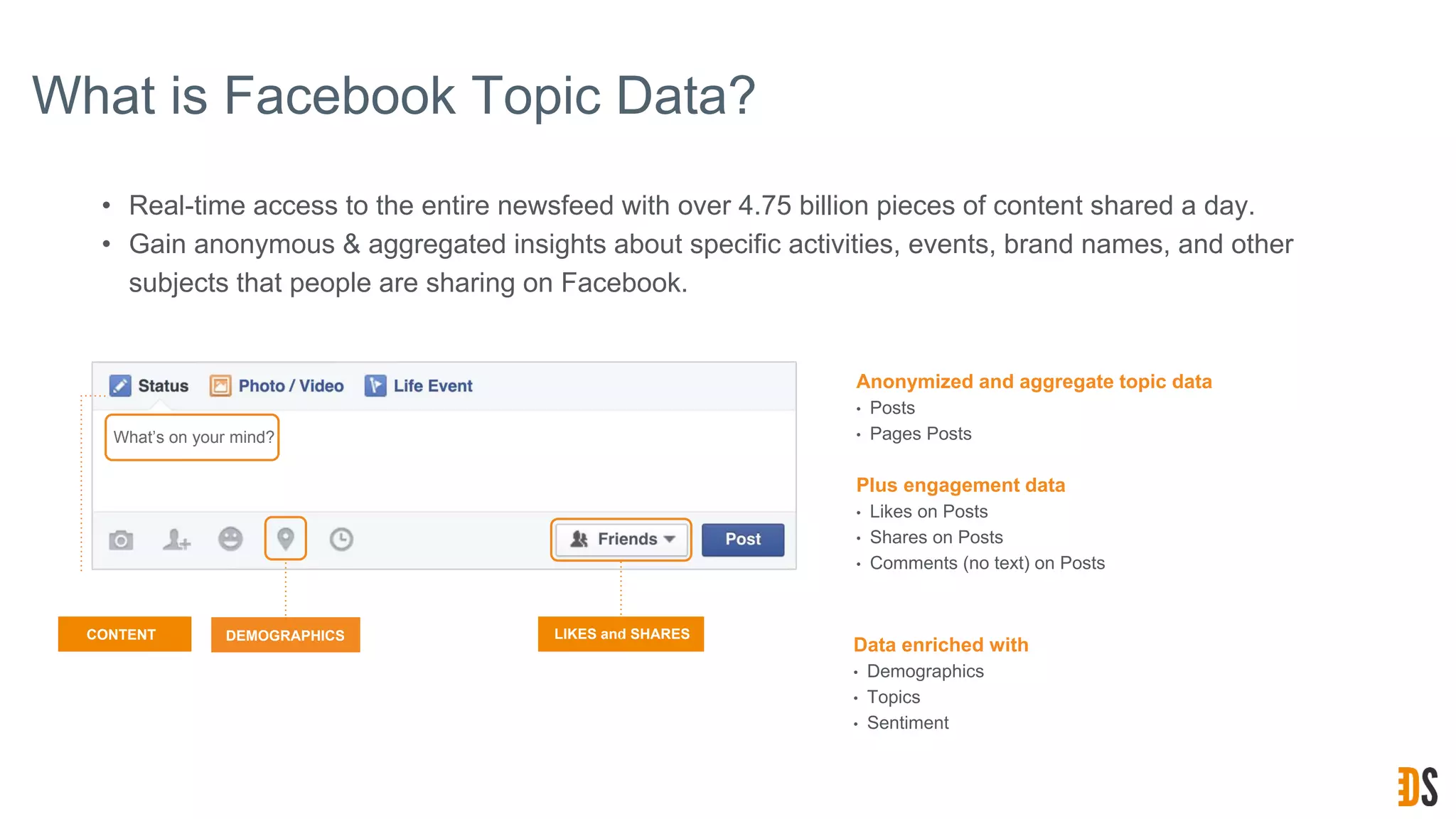
What is Facebook Topic Data?
What’s on your mind?
CONTENT DEMOGRAPHICS LIKES and SHARES
Anonymized and aggregate topic data
• Posts
• Pages Posts
Plus engagement data
• Likes on Posts
• Shares on Posts
• Comments (no text) on Posts
Data enriched with
• Demographics
• Topics
• Sentiment
• Real-time access to the entire newsfeed with over 4.75 billion pieces of content shared a day.
• Gain anonymous & aggregated insights about specific activities, events, brand names, and other
subjects that people are sharing on Facebook.
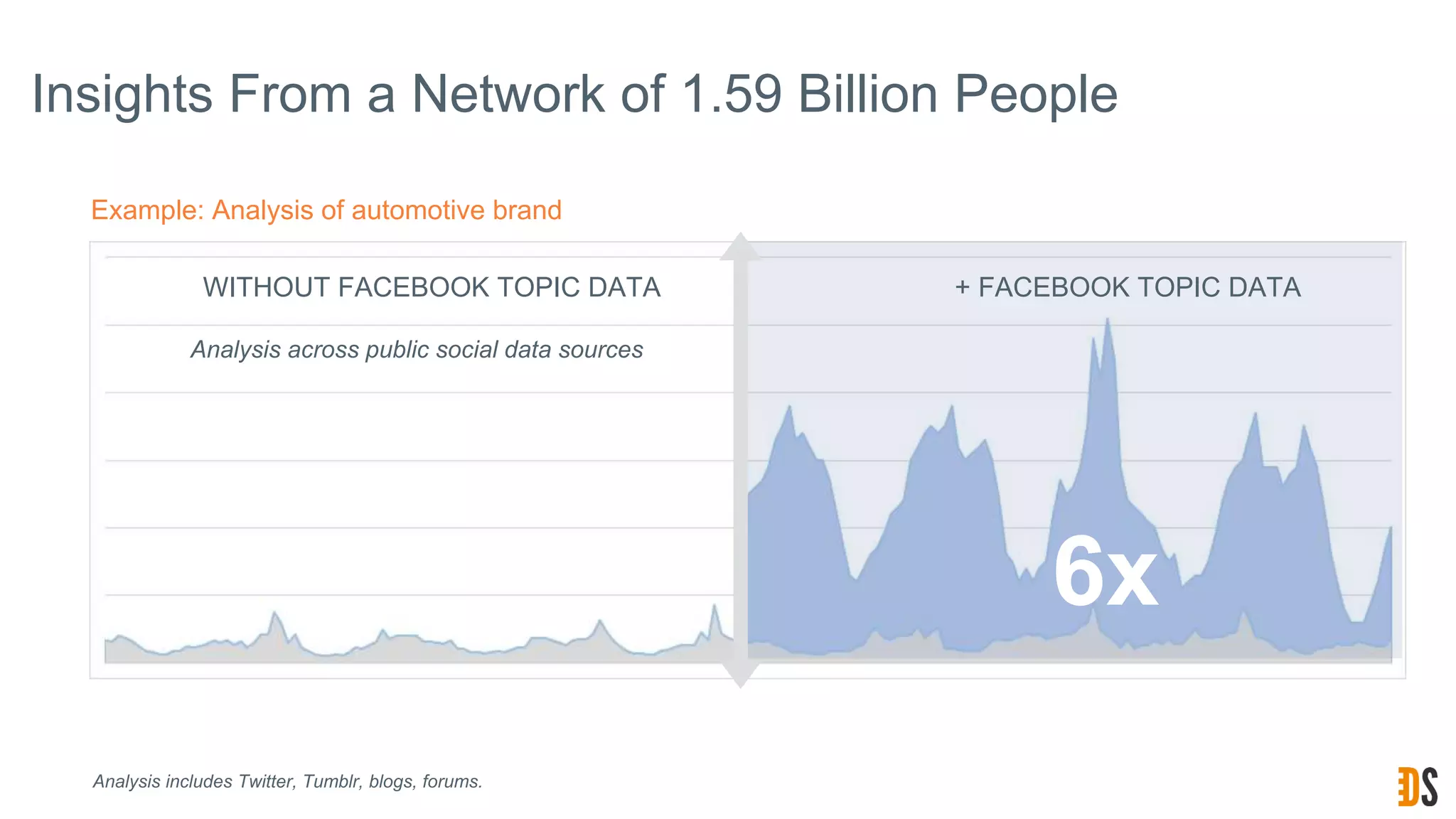
Insights From a Network of 1.59 Billion People
WITHOUT FACEBOOK TOPIC DATA + FACEBOOK TOPIC DATA
Analysis across public social data sources
Example: Analysis of automotive brand
6x
Analysis includes Twitter, Tumblr, blogs, forums.
Evolution of social data
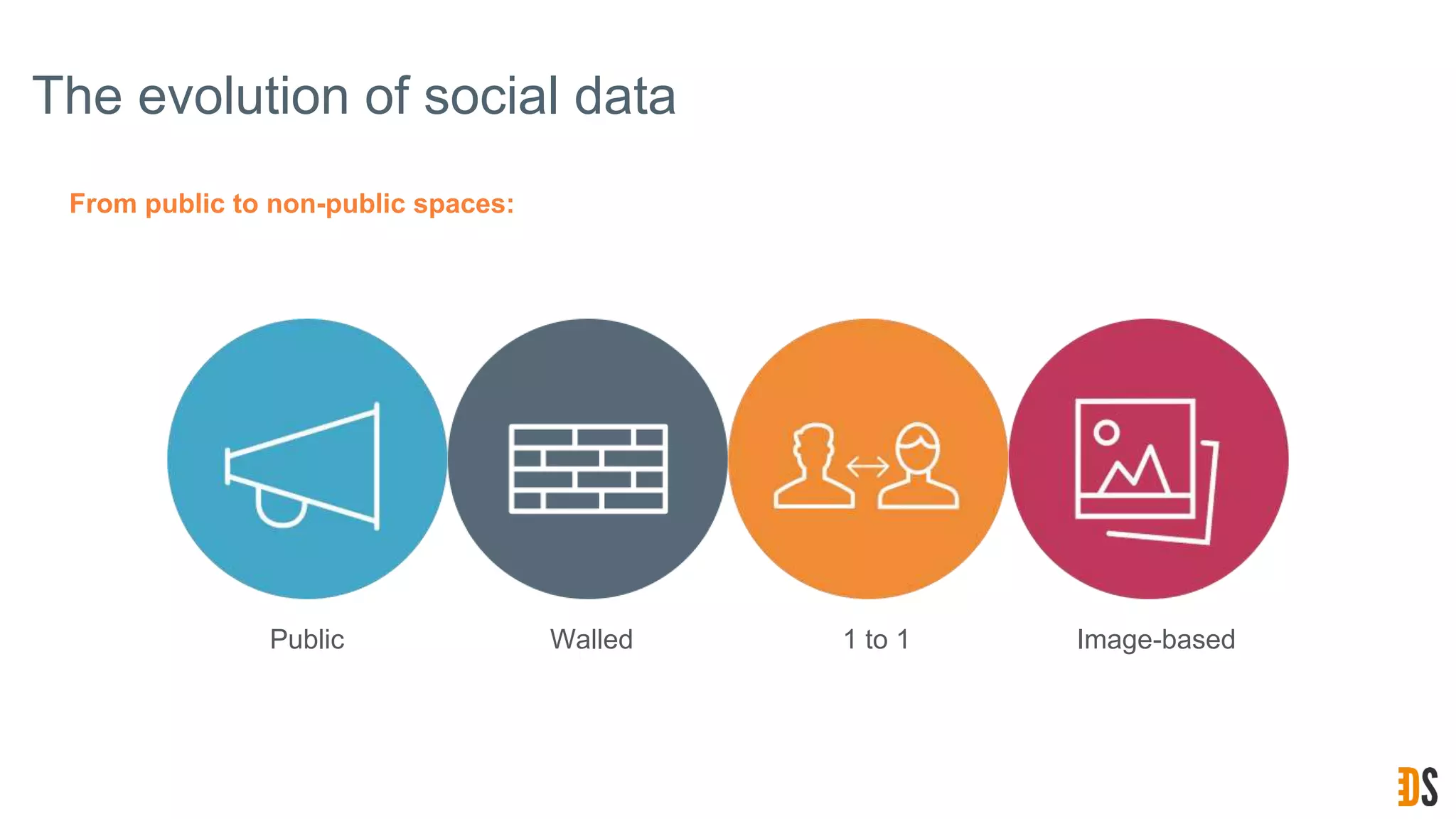
The evolution of social data
From public to non-public spaces:
Public Walled 1 to 1 Image-based
Public
Where brands and consumers most commonly engage
directly. This is where customer support and brand
perception can be addressed directly by a brand.
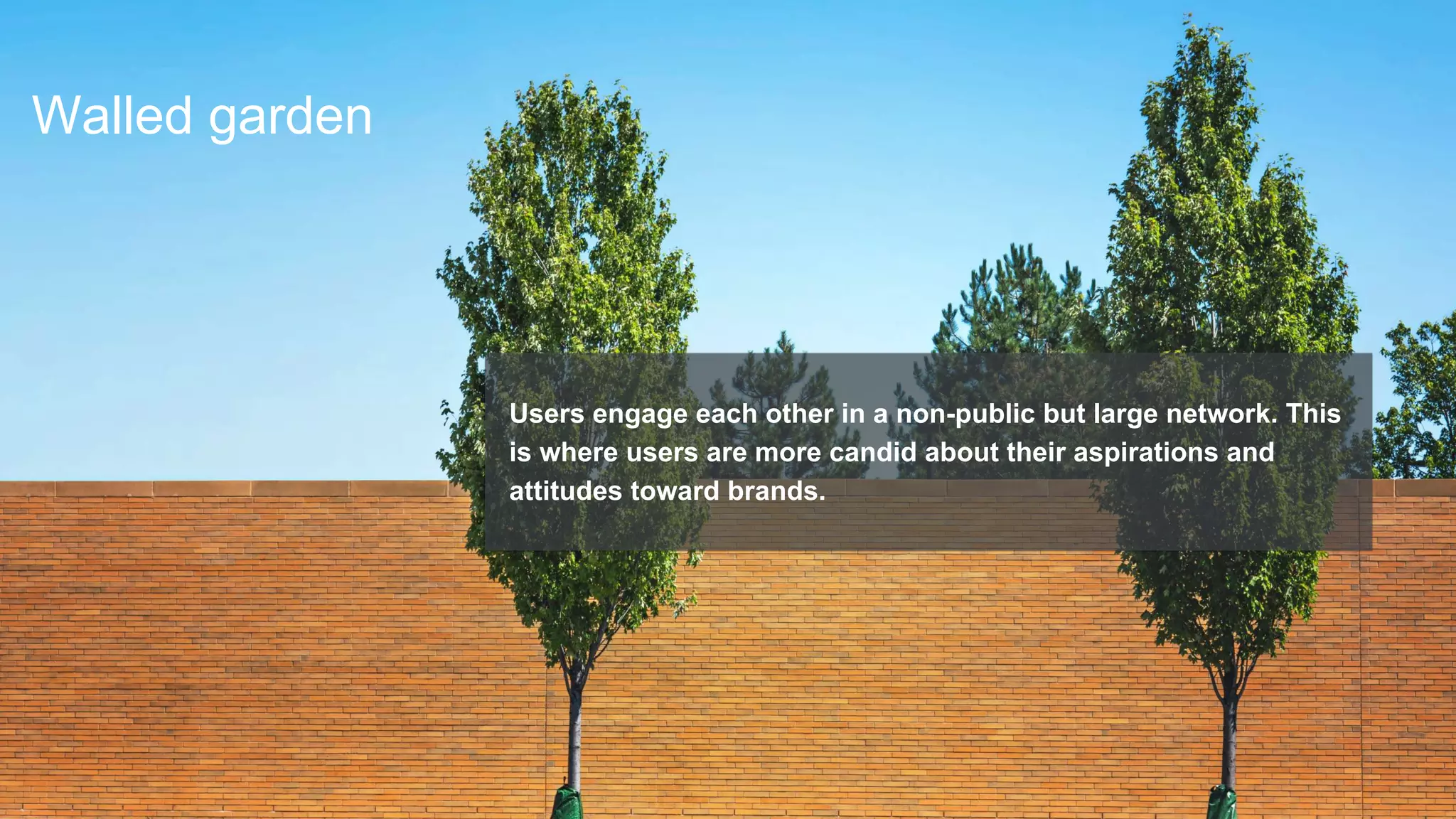
Walled garden
Users engage each other in a non-public but large network. This
is where users are more candid about their aspirations and
attitudes toward brands.
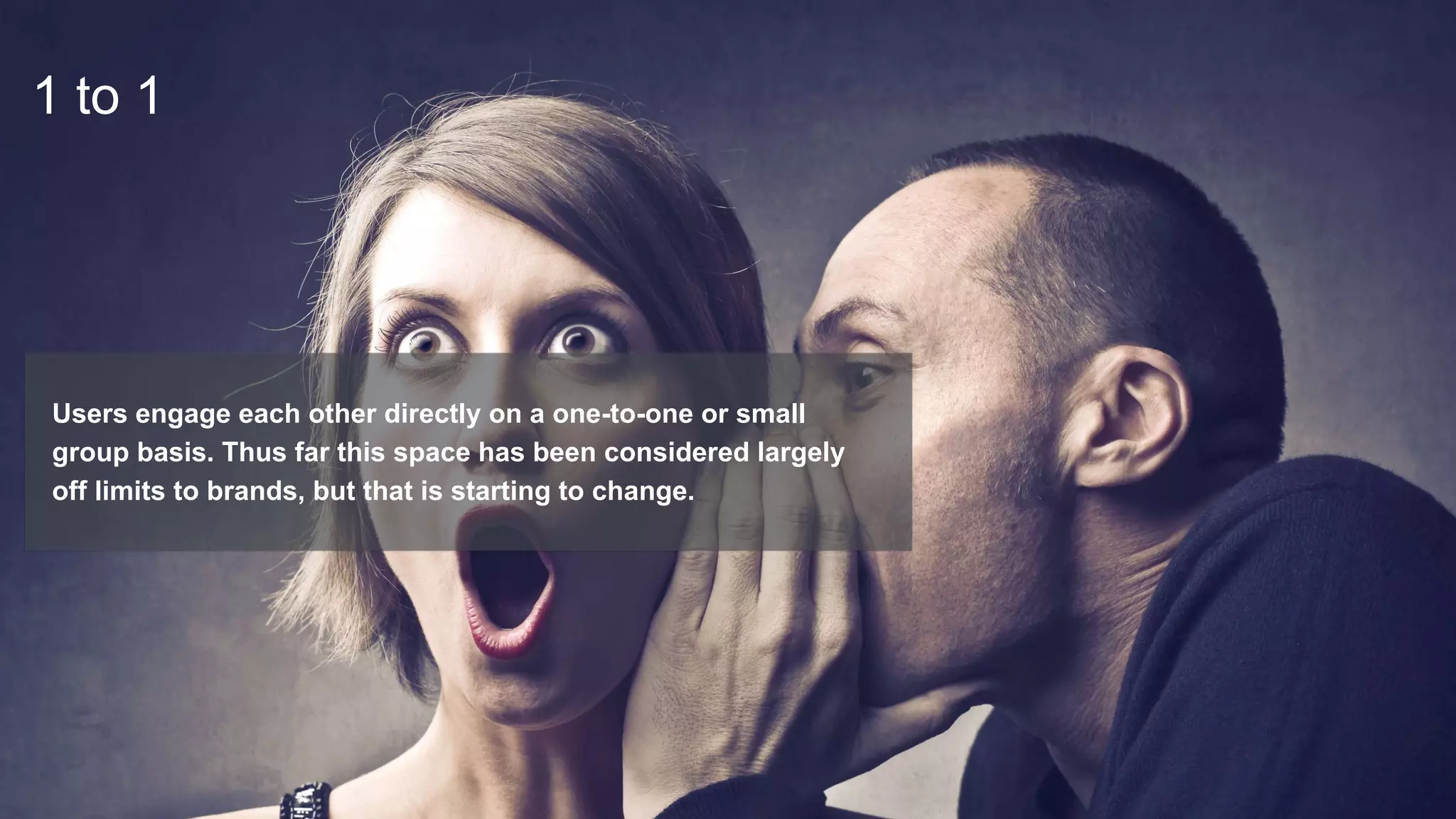
1 to 1
Users engage each other directly on a one-to-one or small
group basis. Thus far this space has been considered largely
off limits to brands, but that is starting to change.
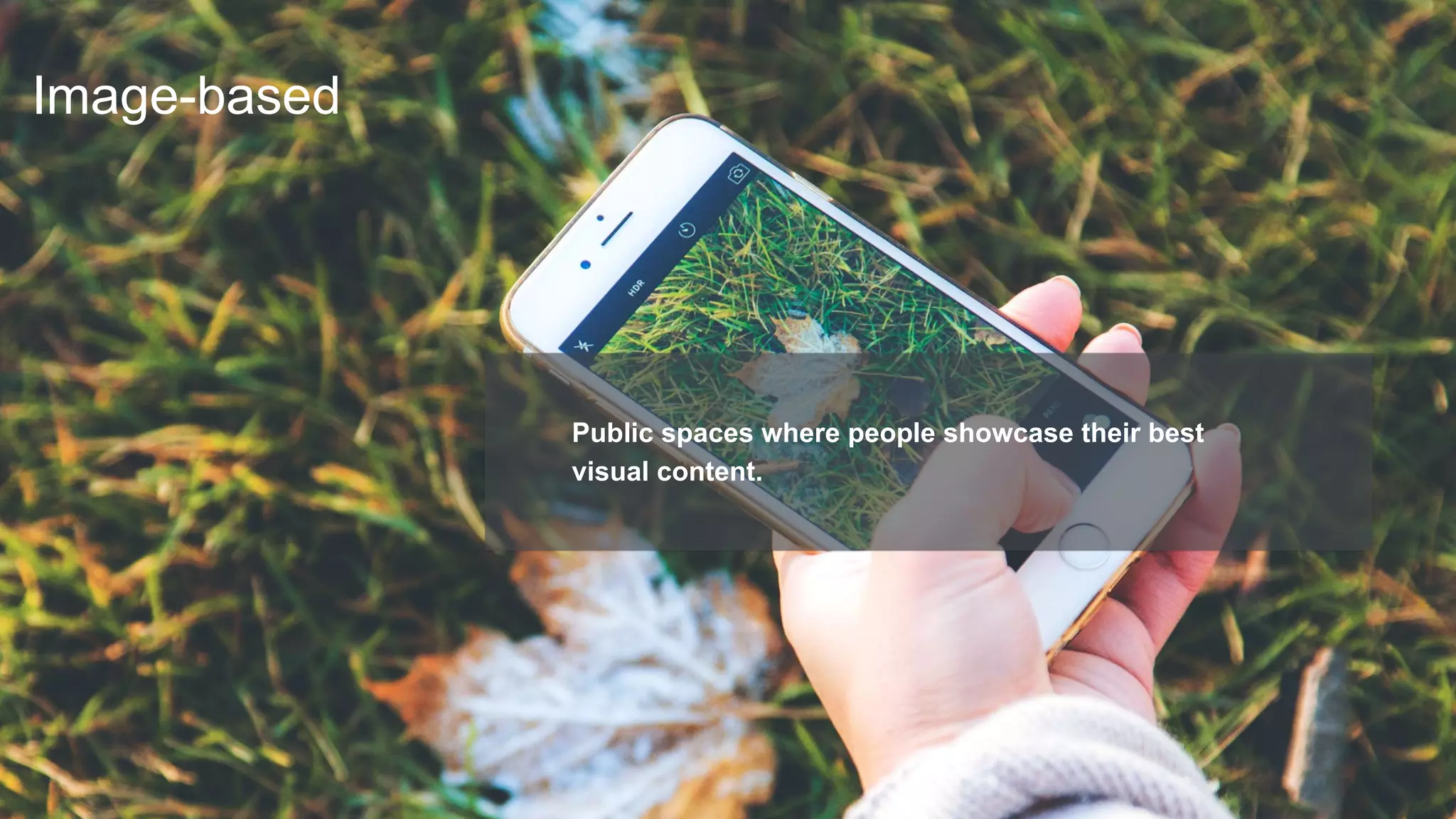
Image-based
Public spaces where people showcase their best
visual content.
Philosophy of PYLON
How can information useful for businesses be extracted from
these non-public spaces, while wholeheartedly respecting
people’s privacy?
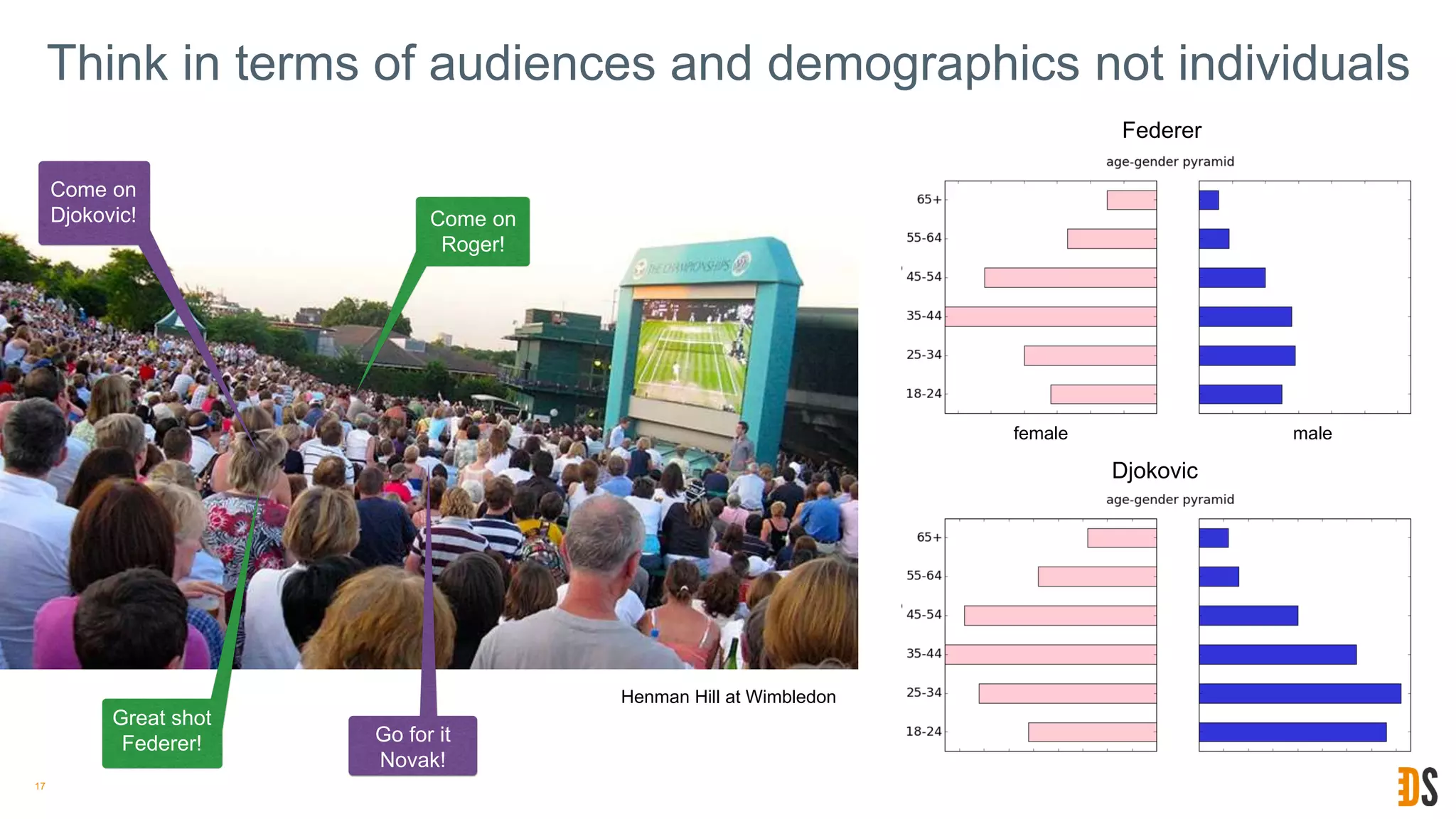
Think in terms of audiences and demographics not individuals
17
Djokovic
Federer
female male
Henman Hill at Wimbledon
Come on
Djokovic! Come on
Roger!
Great shot
Federer! Go for it
Novak!
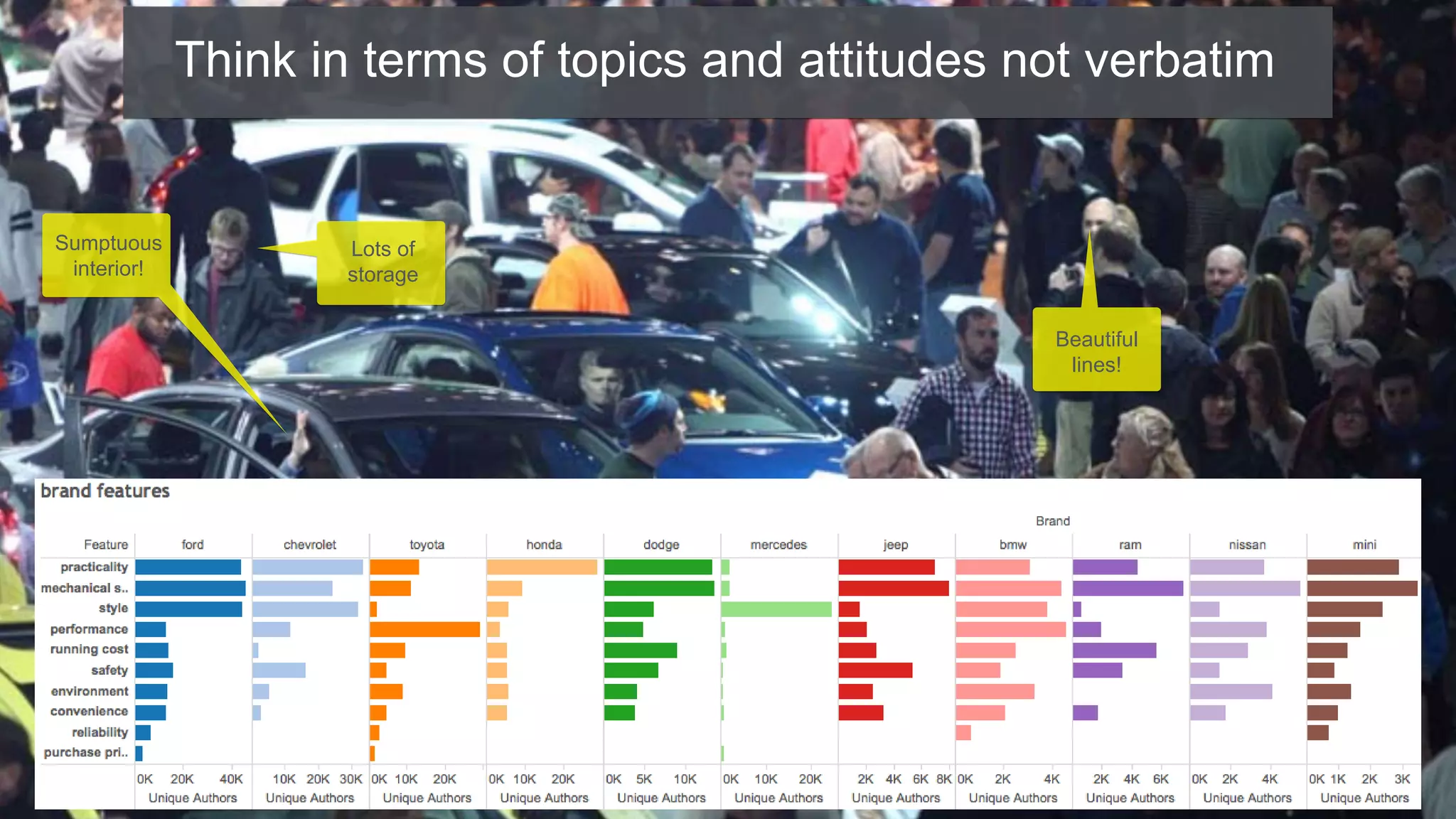
Think in terms of topics and attitudes not verbatim
Sumptuous
interior!
Lots of
storage
Beautiful
lines!
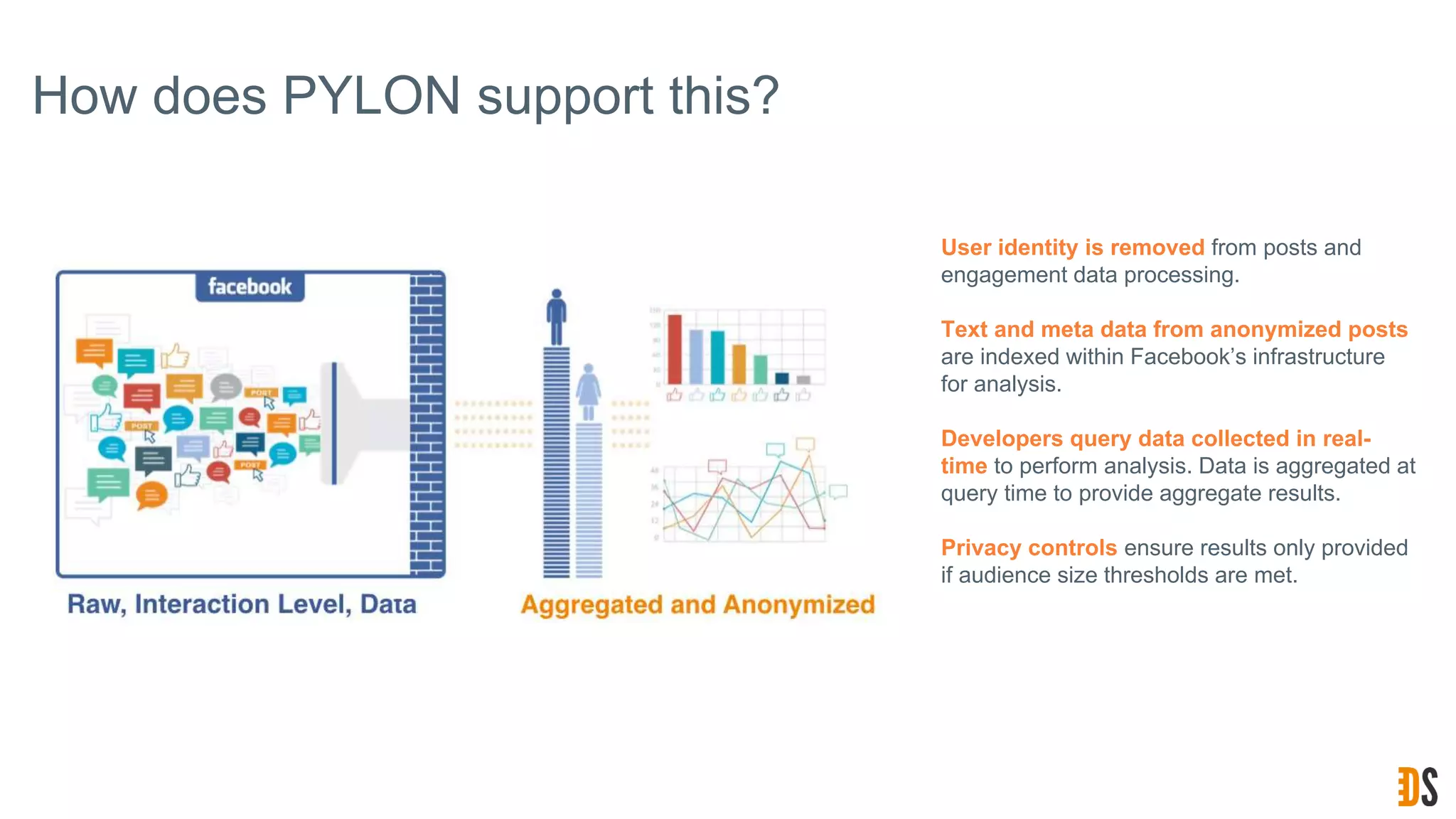
How does PYLON support this?
User identity is removed from posts and
engagement data processing.
Text and meta data from anonymized posts
are indexed within Facebook’s infrastructure
for analysis.
Developers query data collected in real-
time to perform analysis. Data is aggregated at
query time to provide aggregate results.
Privacy controls ensure results only provided
if audience size thresholds are met.
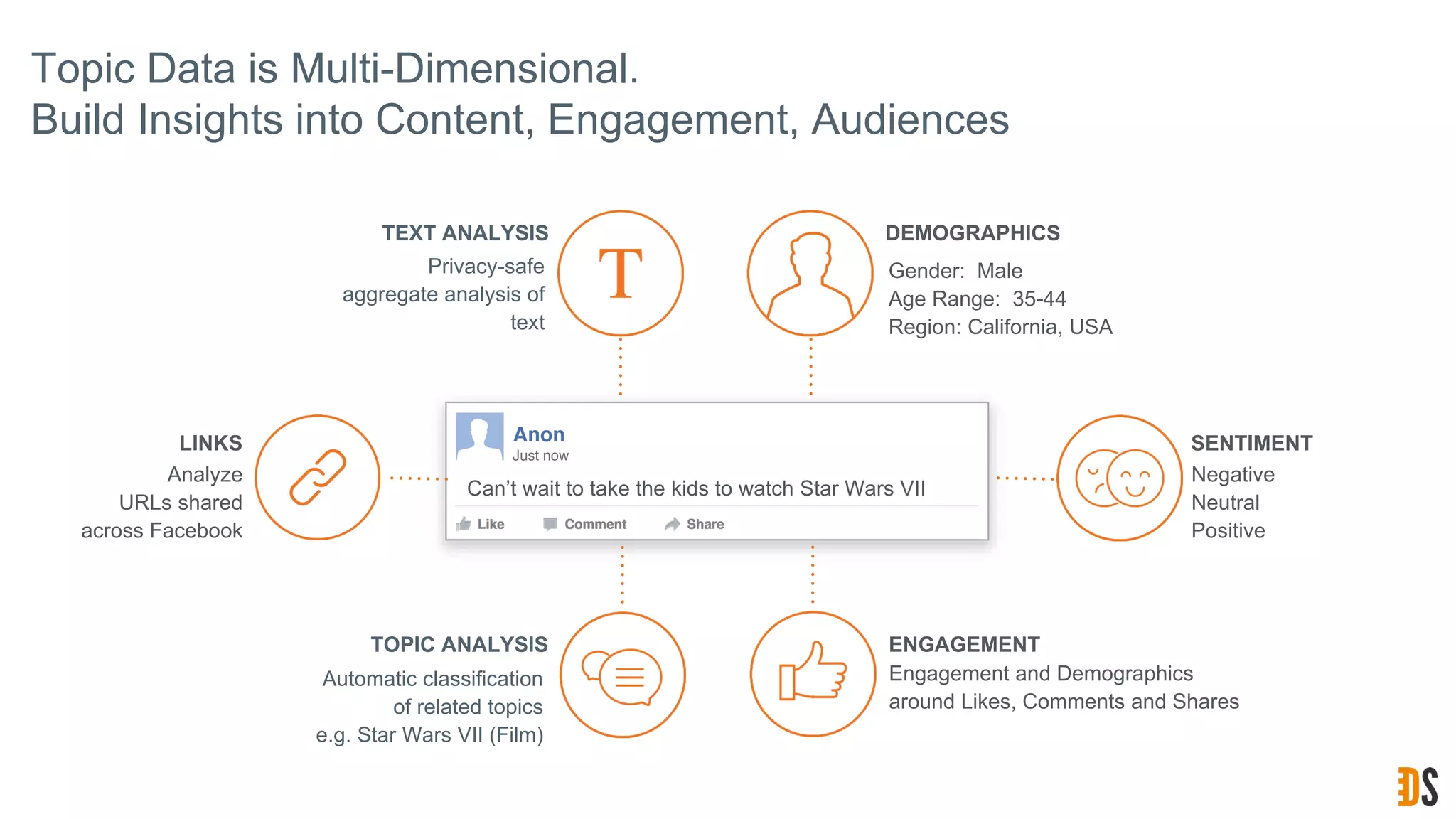
CONTENT
Gender: Male
Age Range: 35-44
Region: California, USA
CONTENT
Negative
Neutral
Positive
DEMOGRAPHICS
SENTIMENT
Automatic classification
of related topics
e.g. Star Wars VII (Film)
TOPIC ANALYSIS
CONTENT
LINKS
Analyze
URLs shared
across Facebook
Engagement and Demographics
around Likes, Comments and Shares
ENGAGEMENT
Can’t wait to take the kids to watch Star Wars VII
CONTENT
Privacy-safe
aggregate analysis of
text
TEXT ANALYSIS
Topic Data is Multi-Dimensional.
Build Insights into Content, Engagement, Audiences
Product differentiation
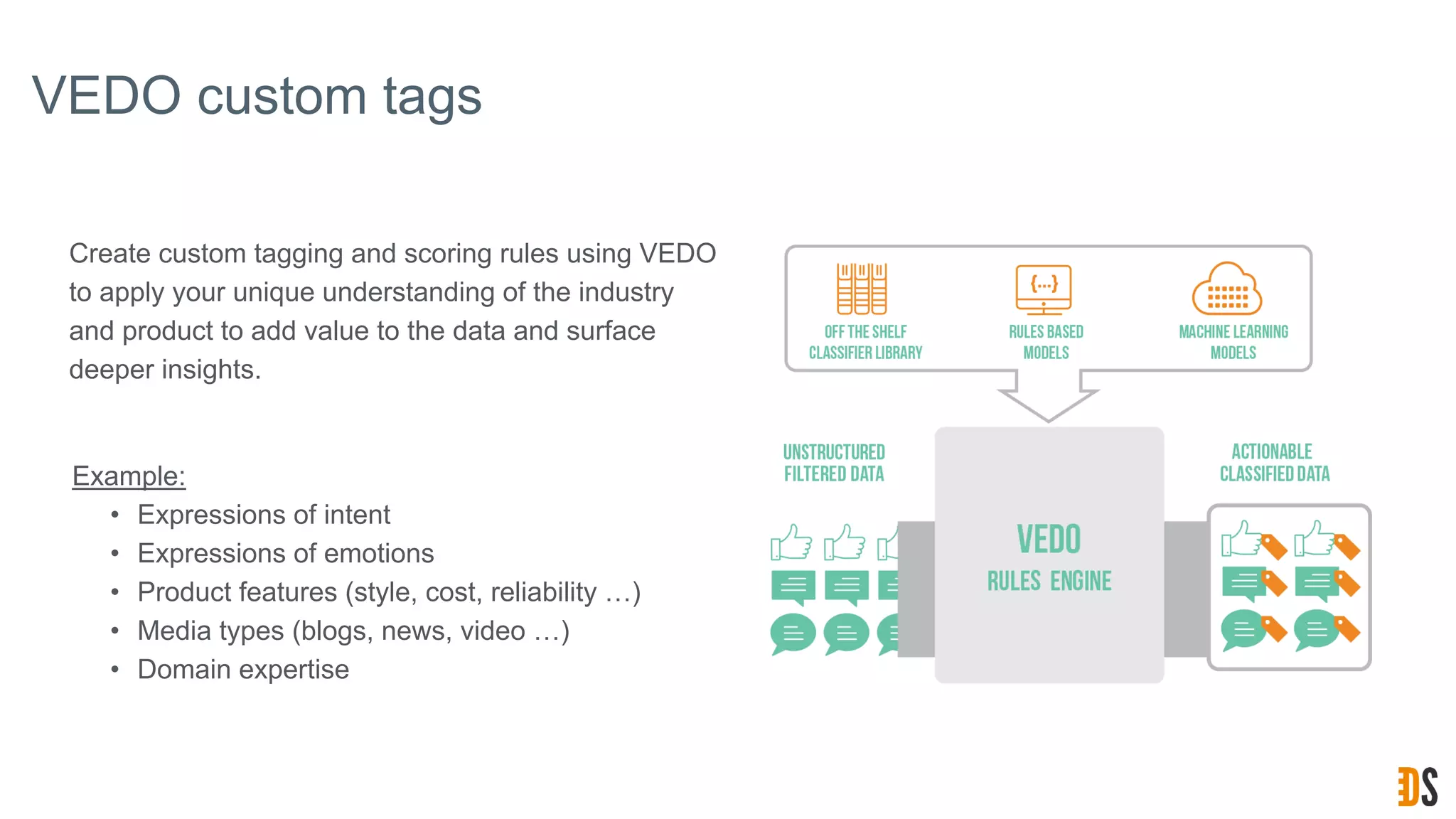
VEDO custom tags
Create custom tagging and scoring rules using VEDO
to apply your unique understanding of the industry
and product to add value to the data and surface
deeper insights.
Example:
• Expressions of intent
• Expressions of emotions
• Product features (style, cost, reliability …)
• Media types (blogs, news, video …)
• Domain expertise
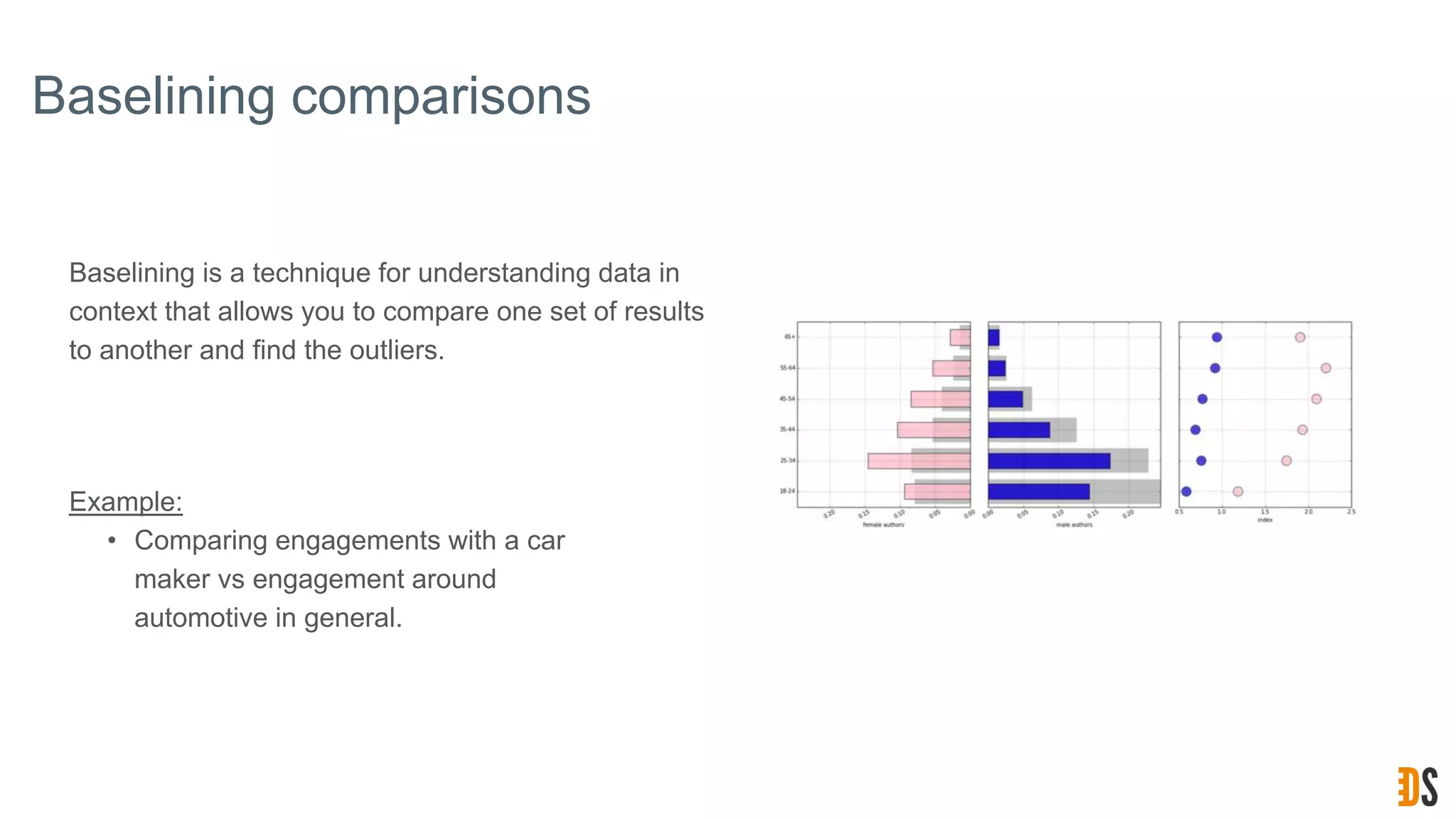
Baselining comparisons
Example:
• Comparing engagements with a car
maker vs engagement around
automotive in general.
Baselining is a technique for understanding data in
context that allows you to compare one set of results
to another and find the outliers.
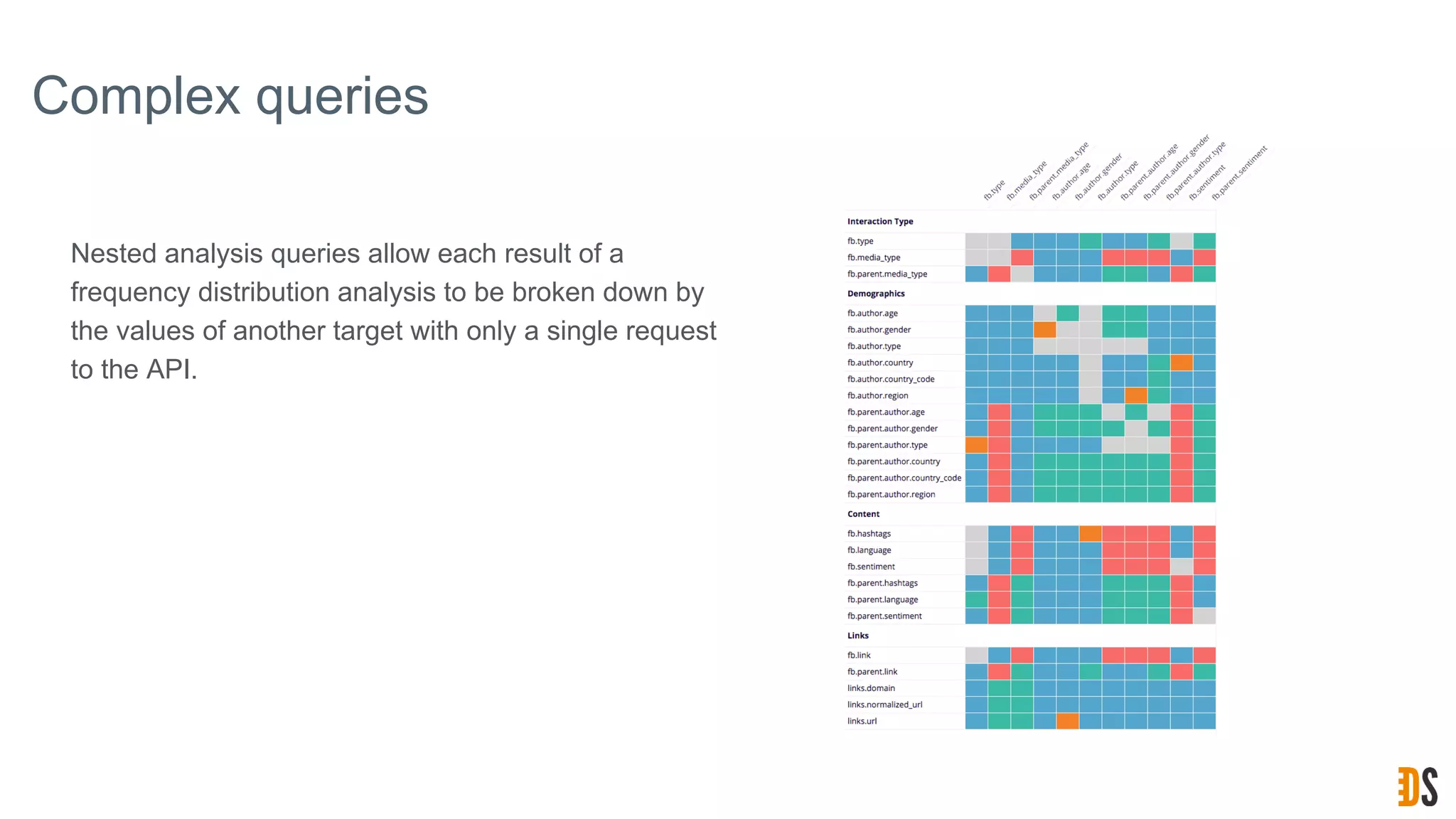
Complex queries
Nested analysis queries allow each result of a
frequency distribution analysis to be broken down by
the values of another target with only a single request
to the API.
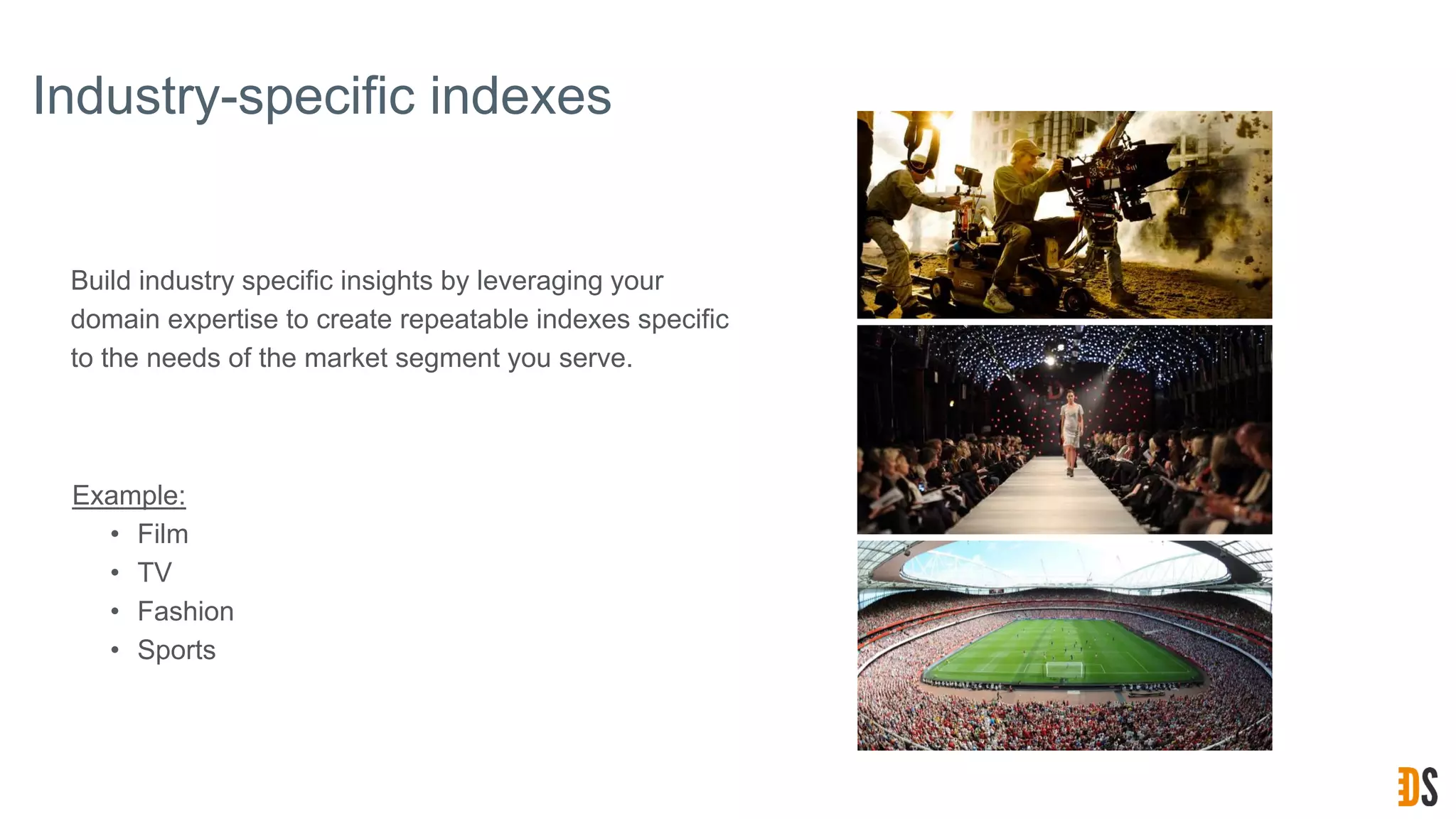
Industry-specific indexes
Build industry specific insights by leveraging your
domain expertise to create repeatable indexes specific
to the needs of the market segment you serve.
Example:
• Film
• TV
• Fashion
• Sports
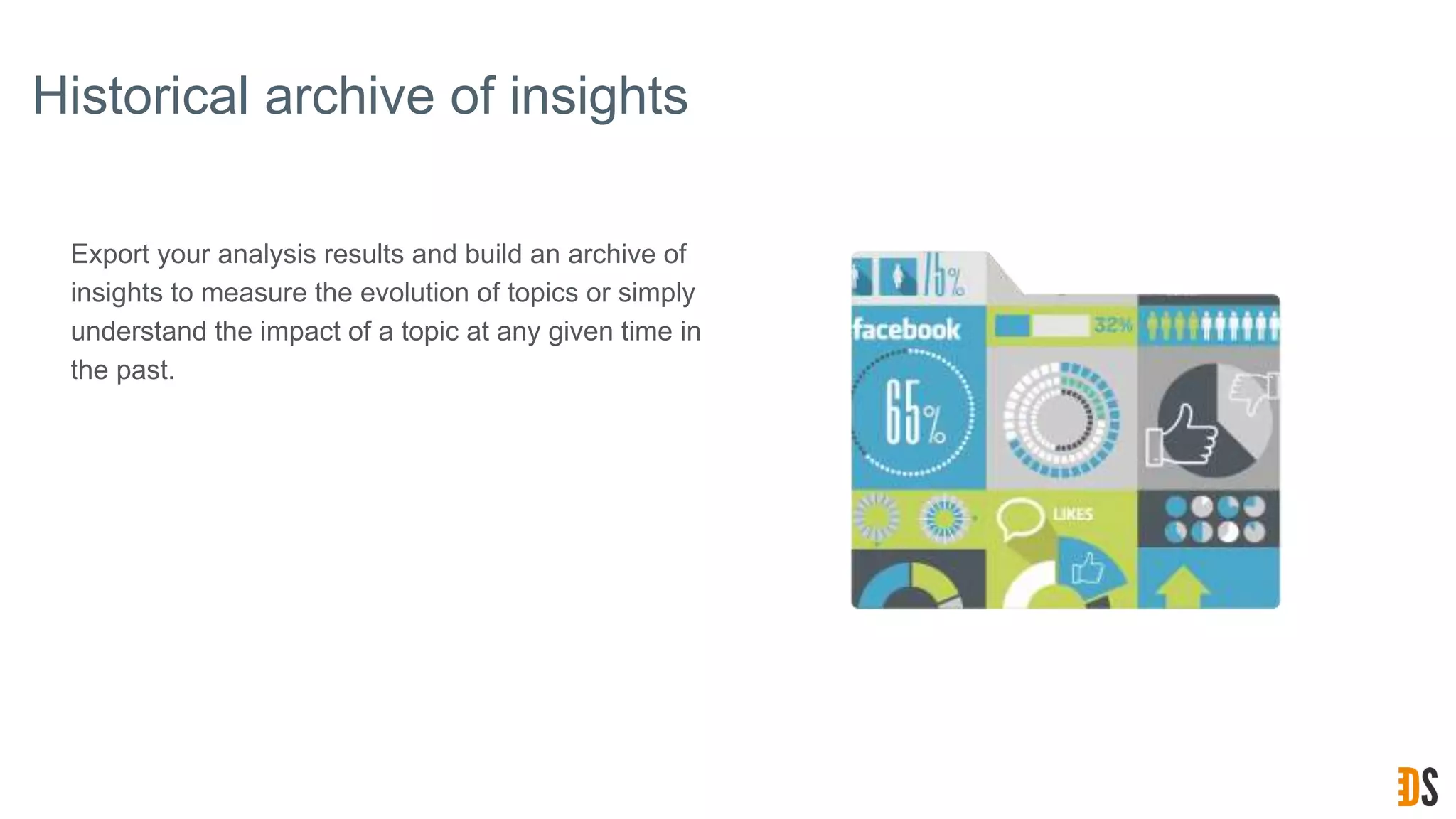
Historical archive of insights
Export your analysis results and build an archive of
insights to measure the evolution of topics or simply
understand the impact of a topic at any given time in
the past.
Q&A
THANK YOU

How to Build Innovative Products with Facebook Topic Data

  • 1.
    How to Build InnovativeProducts with Facebook Topic Data
  • 2.
    Tim Budden VP, DataScience DATASIFT Jay Krall Director of Product Management DATASIFT Dary Hsu Product Marketing Manager DATASIFT
  • 3.
    Intro to Facebooktopic data Agenda 1 2 3 4 5 Evolution of social data Philosophy of Facebook topic data Product Differentiation Q&A
  • 4.
  • 5.
    For years, companiesstruggled to get a complete view of their audience on Facebook and turn that information into useful insights until….
  • 6.
    DATASIFT + FACEBOOKPartnership ENGAGEMENT ACROSS FACEBOOK FACEBOOK TOPIC DATA Topic Data Unlocks Unique Insights for Marketers
  • 7.
    What is FacebookTopic Data? What’s on your mind? CONTENT DEMOGRAPHICS LIKES and SHARES Anonymized and aggregate topic data • Posts • Pages Posts Plus engagement data • Likes on Posts • Shares on Posts • Comments (no text) on Posts Data enriched with • Demographics • Topics • Sentiment • Real-time access to the entire newsfeed with over 4.75 billion pieces of content shared a day. • Gain anonymous & aggregated insights about specific activities, events, brand names, and other subjects that people are sharing on Facebook.
  • 8.
    Insights From aNetwork of 1.59 Billion People WITHOUT FACEBOOK TOPIC DATA + FACEBOOK TOPIC DATA Analysis across public social data sources Example: Analysis of automotive brand 6x Analysis includes Twitter, Tumblr, blogs, forums.
  • 9.
  • 10.
    The evolution ofsocial data From public to non-public spaces: Public Walled 1 to 1 Image-based
  • 11.
    Public Where brands andconsumers most commonly engage directly. This is where customer support and brand perception can be addressed directly by a brand.
  • 12.
    Walled garden Users engageeach other in a non-public but large network. This is where users are more candid about their aspirations and attitudes toward brands.
  • 13.
    1 to 1 Usersengage each other directly on a one-to-one or small group basis. Thus far this space has been considered largely off limits to brands, but that is starting to change.
  • 14.
    Image-based Public spaces wherepeople showcase their best visual content.
  • 15.
  • 16.
    How can informationuseful for businesses be extracted from these non-public spaces, while wholeheartedly respecting people’s privacy?
  • 17.
    Think in termsof audiences and demographics not individuals 17 Djokovic Federer female male Henman Hill at Wimbledon Come on Djokovic! Come on Roger! Great shot Federer! Go for it Novak!
  • 18.
    Think in termsof topics and attitudes not verbatim Sumptuous interior! Lots of storage Beautiful lines!
  • 19.
    How does PYLONsupport this? User identity is removed from posts and engagement data processing. Text and meta data from anonymized posts are indexed within Facebook’s infrastructure for analysis. Developers query data collected in real- time to perform analysis. Data is aggregated at query time to provide aggregate results. Privacy controls ensure results only provided if audience size thresholds are met.
  • 20.
    CONTENT Gender: Male Age Range:35-44 Region: California, USA CONTENT Negative Neutral Positive DEMOGRAPHICS SENTIMENT Automatic classification of related topics e.g. Star Wars VII (Film) TOPIC ANALYSIS CONTENT LINKS Analyze URLs shared across Facebook Engagement and Demographics around Likes, Comments and Shares ENGAGEMENT Can’t wait to take the kids to watch Star Wars VII CONTENT Privacy-safe aggregate analysis of text TEXT ANALYSIS Topic Data is Multi-Dimensional. Build Insights into Content, Engagement, Audiences
  • 21.
  • 22.
    VEDO custom tags Createcustom tagging and scoring rules using VEDO to apply your unique understanding of the industry and product to add value to the data and surface deeper insights. Example: • Expressions of intent • Expressions of emotions • Product features (style, cost, reliability …) • Media types (blogs, news, video …) • Domain expertise
  • 23.
    Baselining comparisons Example: • Comparingengagements with a car maker vs engagement around automotive in general. Baselining is a technique for understanding data in context that allows you to compare one set of results to another and find the outliers.
  • 24.
    Complex queries Nested analysisqueries allow each result of a frequency distribution analysis to be broken down by the values of another target with only a single request to the API.
  • 25.
    Industry-specific indexes Build industryspecific insights by leveraging your domain expertise to create repeatable indexes specific to the needs of the market segment you serve. Example: • Film • TV • Fashion • Sports
  • 26.
    Historical archive ofinsights Export your analysis results and build an archive of insights to measure the evolution of topics or simply understand the impact of a topic at any given time in the past.
  • 27.
  • 28.