Myth and Language Skills
                            Babu Appat
                   babuappat@gmail.com
                www.appadan.blogspot.com
What is Mythology?

The term "mythology" can refer either to
          the study of myths (e.g.,
   comparative mythology), or to abody or
    collection of myths (a mythos, e.g.,
Inca mythology). In folkloristics, a myth is a
 sacrednarrative usually explaining how the
world or humankind came to be in its present
 form, although, in a very broad sense, the
   word can refer to any traditional story.
What is Mythology?

 Bruce Lincoln defines myth as "ideology in
                 narrative form".
      Myths may arise as either truthful
   depictions or over-elaborated accounts of
        historical events, as allegory for
or personification of natural phenomena, or as
an explanation of ritual. They are transmitted to
  convey religious or idealized experience, to
  establish behavioral models, and to teach.
What is Mythology?

a. A body or collection of myths belonging to
     a people and addressing their origin,
    history, deities, ancestors, and heroes.

   b. A body of myths associated with an
        event, individual, or institution:
Great Mythologies of the World


Greek Mythology

Roman Mythology

Indian Mythology
Greek Mythology


The body of traditional tales concerning the
   gods, heroes, and rituals of the ancient
                   Greeks.
Critical Greeks, such as Plato in the 5th-4th
 century BCE, recognized the considerable
 element of fiction in the myths, although in
  general the Greeks viewed them as true
                  accounts
Roman Mythology

 Roman mythology is the body of traditional
 stories pertaining to ancient Rome's legendary
 origins and religious system, as represented in
   the literature and visual arts of the Romans.
     "Roman mythology" may also refer to the
 modern study of these representations, and to
      the subject matter as represented in the
literature and art of other cultures in any period
Indian Mythology

Indian epic poetry
Vedic mythology
Hindu mythology
Buddhist mythology
Jaina Philosophy
Native American mythology
Hindu Mythology

Hindu mythology is a large body of traditional
narratives related to Hinduism, notably as
contained in Sanskrit literature, (such as the
Sanskrit epics and the Puranas) and other
religious regional literature of South Asia.
Vedic Mythology

Vedic mythology refers to the mythological
aspects of the historical Vedic
religion and Vedic literature, most notably
alluded to in the hymns of the Rigveda
I will tell you a STORY
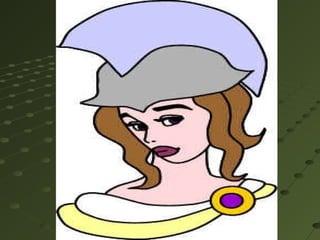
Once upon a time, a long time ago there
lived a beautiful maiden named Medusa.
Medusa lived in the city of Athens in a
country named Greece -- and although
there were many pretty girls in the city,
Medusa was considered the loveliest
Unfortunately, Medusa was very proud of
her beauty and thought or spoke of little
else. Each day she boasted of how pretty
she was and each day her boasts became
more outrageous
On Sunday, Medusa bragged to the
   miller that her skin was more
 beautiful than fresh fallen snow
On Monday, she told the cobbler
that her hair glowed brighter than
             the sun.
On Tuesday, she commented to the
blacksmith’s son that her eyes were
   greener than the Aegean Sea.
On Wednesday, she boasted to
everyone at the public gardens
 that her lips were redder than
       the reddest rose
When she wasn’t busy sharing
 her thoughts about her beauty
with all who passed by, Medusa
   would gaze lovingly at her
     reflection in the mirror
She admired herself in her hand
mirror for an hour each morning
 as she brushed her hair. She
admired herself in her darkened
window for an hour each evening
   as she got ready for bed.
She even stopped to admire
     herself in the well each
afternoon as she drew water for
   her father's horses -- often
 forgetting to fetch the water in
         her distraction.
On and on Medusa went about
  her beauty to anyone and
 everyone who stopped long
enough to hear her -- until one
 day when she made her first
visit to the Parthenon with her
             friends
The Parthenon was the largest
temple to the goddess Athena in
  all the land. It was decorated
  with amazing sculptures and
             paintings.
. Everyone who entered was awed
   by the beauty of the place and
    couldn’t help but think of how
    grateful they were to Athena,
  goddess of wisdom, for inspiring
  them and for watching over their
           city of Athens.

Everyone, that is, except Medusa.
When Medusa saw the sculptures,
she whispered that she would have
made a much better subject for the
    sculptor than Athena had.
When Medusa saw the artwork, she
commented that the artist had done
a fine job considering the goddess's
 thick eyebrows -- but imagine how
 much more wonderful the painting
  would be if it was of someone as
         delicate as Medusa.
And when Medusa reached the
altar she sighed happily and said,
“My this is a beautiful temple. It is
a shame it was wasted on Athena
for I am so much prettier than she
is – perhaps some day people will
  build an even grander temple to
             my beauty
Medusa’s friends grew pale.
The priestesses who overheard
       Medusa gasped
Whispers ran through all the people
in the temple who quickly began to
  leave -- for everyone knew that
 Athena enjoyed watching over the
 people of Athens and feared what
 might happen if the goddess had
overheard Medusa’s rash remarks
Before long the temple was empty
 of everyone except Medusa, who
was so busy gazing proudly at her
reflection in the large bronze doors
  that she hadn't noticed the swift
    departure of everyone else
The image she was gazing at
 wavered and suddenly, instead
 of her own features, it was the
face of Athena that Medusa saw
      reflected back at her
“Vain and foolish girl,” Athena
 said angrily, “You think you are
  prettier than I am! I doubt it to
   be true, but even if it were --
there is more to life than beauty
  alone. While others work and
 play and learn, you do little but
    boast and admire yourself
Medusa tried to point out that
her beauty was an inspiration to
 those around her and that she
made their lives better by simply
  looking so lovely, but Athena
  silenced her with a frustrated
              wave
Nonsense,” Athena retorted,
   “Beauty fades swiftly in all
mortals. It does not comfort the
sick, teach the unskilled or feed
the hungry. And by my powers,
your loveliness shall be stripped
  away completely. Your fate
  shall serve as a reminder to
  others to control their pride
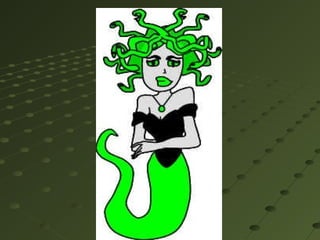
And with those words Medusa’s
    face changed to that of a
   hideous monster. Her hair
   twisted and thickened into
 horrible snakes that hissed and
fought each other atop her head
Medusa, for your pride this has
been done. Your face is now so
 terrible to behold that the mere
   sight of it will turn a man to
stone,” proclaimed the goddess,
“Even you, Medusa, should you
  seek your reflection, shall turn
to rock the instant you see your
                face
And with that, Athena sent
 Medusa with her hair of snakes
to live with the blind monsters --
the gorgon sisters -- at the ends
      of the earth, so that no
innocents would be accidentally
  turned to stone at the sight of
                her
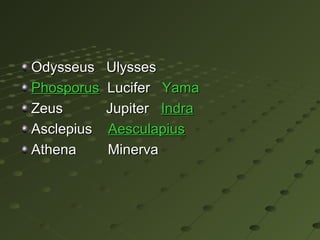
Odysseus    Ulysses
Phosporus   Lucifer Yama
Zeus        Jupiter Indra
Asclepius   Aesculapius
Athena      Minerva
THANK YOU


     BABU APPAT

Myth and language Skills

  • 1.
    Myth and LanguageSkills Babu Appat babuappat@gmail.com www.appadan.blogspot.com
  • 2.
    What is Mythology? Theterm "mythology" can refer either to the study of myths (e.g., comparative mythology), or to abody or collection of myths (a mythos, e.g., Inca mythology). In folkloristics, a myth is a sacrednarrative usually explaining how the world or humankind came to be in its present form, although, in a very broad sense, the word can refer to any traditional story.
  • 3.
    What is Mythology? Bruce Lincoln defines myth as "ideology in narrative form". Myths may arise as either truthful depictions or over-elaborated accounts of historical events, as allegory for or personification of natural phenomena, or as an explanation of ritual. They are transmitted to convey religious or idealized experience, to establish behavioral models, and to teach.
  • 4.
    What is Mythology? a.A body or collection of myths belonging to a people and addressing their origin, history, deities, ancestors, and heroes. b. A body of myths associated with an event, individual, or institution:
  • 5.
    Great Mythologies ofthe World Greek Mythology Roman Mythology Indian Mythology
  • 6.
    Greek Mythology The bodyof traditional tales concerning the gods, heroes, and rituals of the ancient Greeks. Critical Greeks, such as Plato in the 5th-4th century BCE, recognized the considerable element of fiction in the myths, although in general the Greeks viewed them as true accounts
  • 7.
    Roman Mythology Romanmythology is the body of traditional stories pertaining to ancient Rome's legendary origins and religious system, as represented in the literature and visual arts of the Romans. "Roman mythology" may also refer to the modern study of these representations, and to the subject matter as represented in the literature and art of other cultures in any period
  • 8.
    Indian Mythology Indian epicpoetry Vedic mythology Hindu mythology Buddhist mythology Jaina Philosophy Native American mythology
  • 9.
    Hindu Mythology Hindu mythologyis a large body of traditional narratives related to Hinduism, notably as contained in Sanskrit literature, (such as the Sanskrit epics and the Puranas) and other religious regional literature of South Asia.
  • 10.
    Vedic Mythology Vedic mythologyrefers to the mythological aspects of the historical Vedic religion and Vedic literature, most notably alluded to in the hymns of the Rigveda
  • 12.
    I will tellyou a STORY Once upon a time, a long time ago there lived a beautiful maiden named Medusa. Medusa lived in the city of Athens in a country named Greece -- and although there were many pretty girls in the city, Medusa was considered the loveliest
  • 13.
    Unfortunately, Medusa wasvery proud of her beauty and thought or spoke of little else. Each day she boasted of how pretty she was and each day her boasts became more outrageous
  • 14.
    On Sunday, Medusabragged to the miller that her skin was more beautiful than fresh fallen snow
  • 15.
    On Monday, shetold the cobbler that her hair glowed brighter than the sun.
  • 16.
    On Tuesday, shecommented to the blacksmith’s son that her eyes were greener than the Aegean Sea.
  • 17.
    On Wednesday, sheboasted to everyone at the public gardens that her lips were redder than the reddest rose
  • 18.
    When she wasn’tbusy sharing her thoughts about her beauty with all who passed by, Medusa would gaze lovingly at her reflection in the mirror
  • 19.
    She admired herselfin her hand mirror for an hour each morning as she brushed her hair. She admired herself in her darkened window for an hour each evening as she got ready for bed.
  • 20.
    She even stoppedto admire herself in the well each afternoon as she drew water for her father's horses -- often forgetting to fetch the water in her distraction.
  • 21.
    On and onMedusa went about her beauty to anyone and everyone who stopped long enough to hear her -- until one day when she made her first visit to the Parthenon with her friends
  • 22.
    The Parthenon wasthe largest temple to the goddess Athena in all the land. It was decorated with amazing sculptures and paintings.
  • 23.
    . Everyone whoentered was awed by the beauty of the place and couldn’t help but think of how grateful they were to Athena, goddess of wisdom, for inspiring them and for watching over their city of Athens. Everyone, that is, except Medusa.
  • 24.
    When Medusa sawthe sculptures, she whispered that she would have made a much better subject for the sculptor than Athena had.
  • 25.
    When Medusa sawthe artwork, she commented that the artist had done a fine job considering the goddess's thick eyebrows -- but imagine how much more wonderful the painting would be if it was of someone as delicate as Medusa.
  • 26.
    And when Medusareached the altar she sighed happily and said, “My this is a beautiful temple. It is a shame it was wasted on Athena for I am so much prettier than she is – perhaps some day people will build an even grander temple to my beauty
  • 27.
    Medusa’s friends grewpale. The priestesses who overheard Medusa gasped
  • 28.
    Whispers ran throughall the people in the temple who quickly began to leave -- for everyone knew that Athena enjoyed watching over the people of Athens and feared what might happen if the goddess had overheard Medusa’s rash remarks
  • 29.
    Before long thetemple was empty of everyone except Medusa, who was so busy gazing proudly at her reflection in the large bronze doors that she hadn't noticed the swift departure of everyone else
  • 30.
    The image shewas gazing at wavered and suddenly, instead of her own features, it was the face of Athena that Medusa saw reflected back at her
  • 31.
    “Vain and foolishgirl,” Athena said angrily, “You think you are prettier than I am! I doubt it to be true, but even if it were -- there is more to life than beauty alone. While others work and play and learn, you do little but boast and admire yourself
  • 32.
    Medusa tried topoint out that her beauty was an inspiration to those around her and that she made their lives better by simply looking so lovely, but Athena silenced her with a frustrated wave
  • 34.
    Nonsense,” Athena retorted, “Beauty fades swiftly in all mortals. It does not comfort the sick, teach the unskilled or feed the hungry. And by my powers, your loveliness shall be stripped away completely. Your fate shall serve as a reminder to others to control their pride
  • 35.
    And with thosewords Medusa’s face changed to that of a hideous monster. Her hair twisted and thickened into horrible snakes that hissed and fought each other atop her head
  • 36.
    Medusa, for yourpride this has been done. Your face is now so terrible to behold that the mere sight of it will turn a man to stone,” proclaimed the goddess, “Even you, Medusa, should you seek your reflection, shall turn to rock the instant you see your face
  • 37.
    And with that,Athena sent Medusa with her hair of snakes to live with the blind monsters -- the gorgon sisters -- at the ends of the earth, so that no innocents would be accidentally turned to stone at the sight of her
  • 38.
    Odysseus Ulysses Phosporus Lucifer Yama Zeus Jupiter Indra Asclepius Aesculapius Athena Minerva
  • 39.
    THANK YOU BABU APPAT