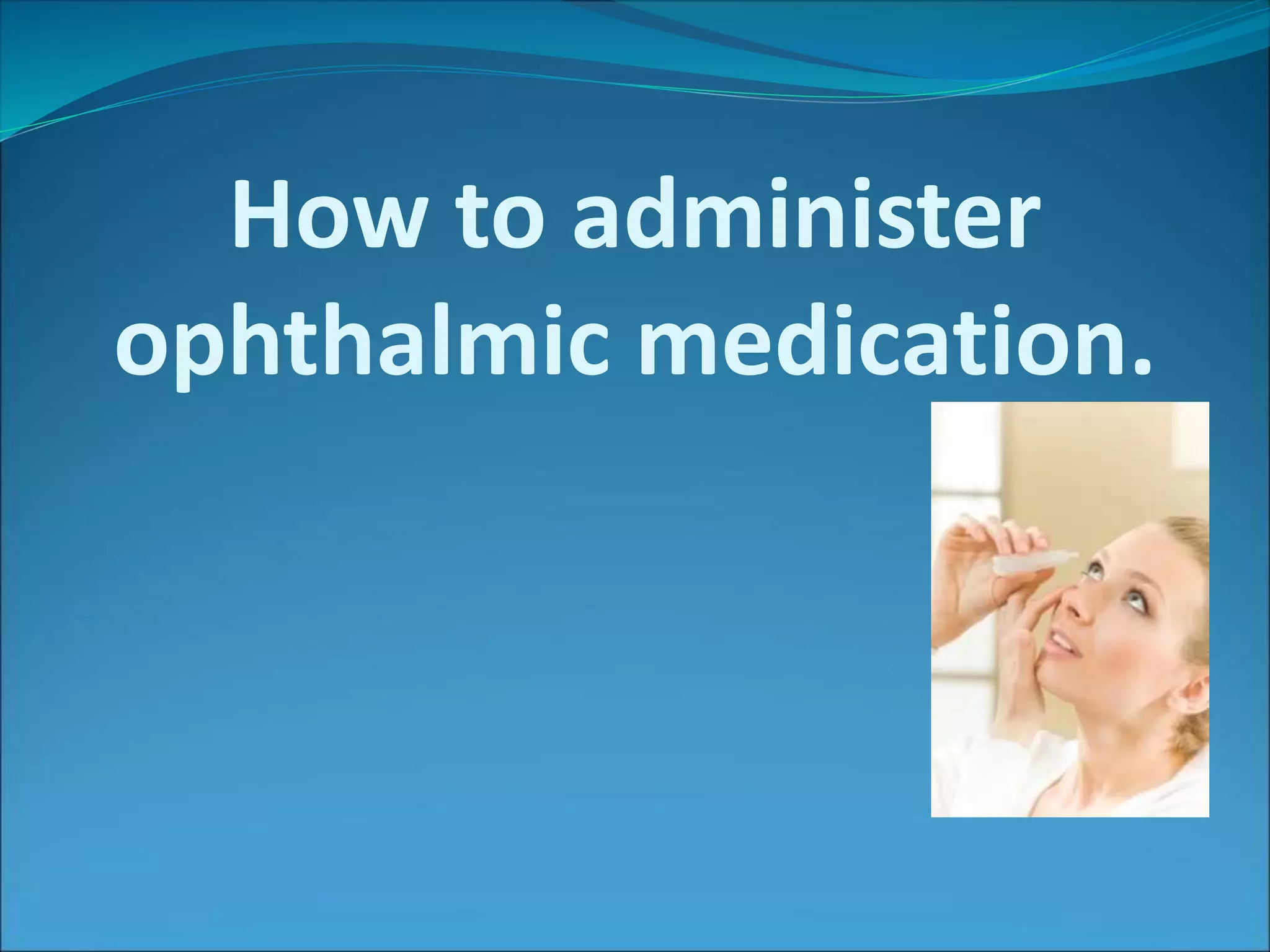
How to administer
ophthalmic medication.
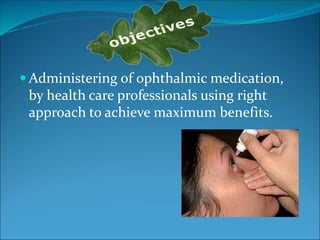
 Administering of ophthalmic medication,
by health care professionals using right
approach to achieve maximum benefits.
Delegate consideration.
The skill of administering
ophthalmic medication can’t be
delegated.
STEPS OF ADMINISTRING
OPHTHALMIC MEDICATION.
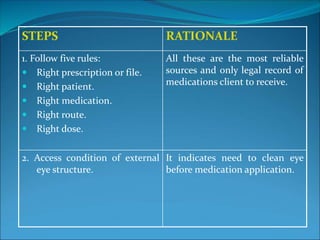
STEPS RATIONALE
1. Follow five rules:
 Right prescription or file.
 Right patient.
 Right medication.
 Right route.
 Right dose.
All these are the most reliable
sources and only legal record of
medications client to receive.
2. Access condition of external
eye structure.
It indicates need to clean eye
before medication application.
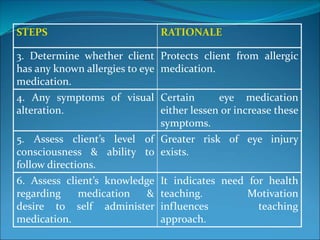
STEPS RATIONALE
3. Determine whether client
has any known allergies to eye
medication.
Protects client from allergic
medication.
4. Any symptoms of visual
alteration.
Certain eye medication
either lessen or increase these
symptoms.
5. Assess client’s level of
consciousness & ability to
follow directions.
Greater risk of eye injury
exists.
6. Assess client’s knowledge
regarding medication &
desire to self administer
medication.
It indicates need for health
teaching. Motivation
influences teaching
approach.
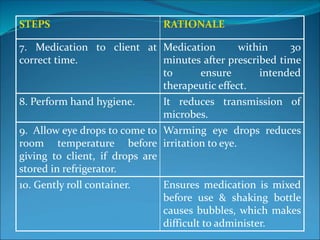
STEPS RATIONALE
7. Medication to client at
correct time.
Medication within 30
minutes after prescribed time
to ensure intended
therapeutic effect.
8. Perform hand hygiene. It reduces transmission of
microbes.
9. Allow eye drops to come to
room temperature before
giving to client, if drops are
stored in refrigerator.
Warming eye drops reduces
irritation to eye.
10. Gently roll container. Ensures medication is mixed
before use & shaking bottle
causes bubbles, which makes
difficult to administer.
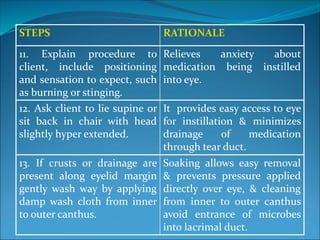
STEPS RATIONALE
11. Explain procedure to
client, include positioning
and sensation to expect, such
as burning or stinging.
Relieves anxiety about
medication being instilled
into eye.
12. Ask client to lie supine or
sit back in chair with head
slightly hyper extended.
It provides easy access to eye
for instillation & minimizes
drainage of medication
through tear duct.
13. If crusts or drainage are
present along eyelid margin
gently wash way by applying
damp wash cloth from inner
to outer canthus.
Soaking allows easy removal
& prevents pressure applied
directly over eye, & cleaning
from inner to outer canthus
avoid entrance of microbes
into lacrimal duct.
STEPS RATIONALE
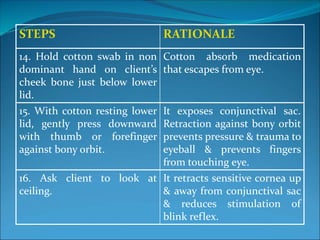
14. Hold cotton swab in non
dominant hand on client’s
cheek bone just below lower
lid.
Cotton absorb medication
that escapes from eye.
15. With cotton resting lower
lid, gently press downward
with thumb or forefinger
against bony orbit.
It exposes conjunctival sac.
Retraction against bony orbit
prevents pressure & trauma to
eyeball & prevents fingers
from touching eye.
16. Ask client to look at
ceiling.
It retracts sensitive cornea up
& away from conjunctival sac
& reduces stimulation of
blink reflex.
STEPS RATIONALE
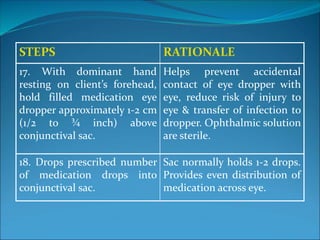
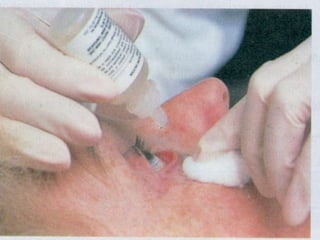
17. With dominant hand
resting on client’s forehead,
hold filled medication eye
dropper approximately 1-2 cm
(1/2 to ¾ inch) above
conjunctival sac.
Helps prevent accidental
contact of eye dropper with
eye, reduce risk of injury to
eye & transfer of infection to
dropper. Ophthalmic solution
are sterile.
18. Drops prescribed number
of medication drops into
conjunctival sac.
Sac normally holds 1-2 drops.
Provides even distribution of
medication across eye.
STEPS RATIONALE
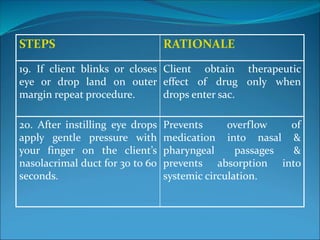
19. If client blinks or closes
eye or drop land on outer
margin repeat procedure.
Client obtain therapeutic
effect of drug only when
drops enter sac.
20. After instilling eye drops
apply gentle pressure with
your finger on the client’s
nasolacrimal duct for 30 to 60
seconds.
Prevents overflow of
medication into nasal &
pharyngeal passages &
prevents absorption into
systemic circulation.
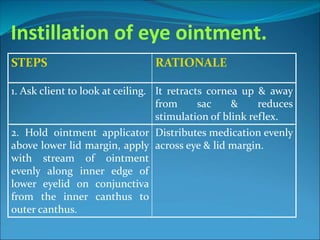
Instillation of eye ointment.
STEPS RATIONALE
1. Ask client to look at ceiling. It retracts cornea up & away
from sac & reduces
stimulation of blink reflex.
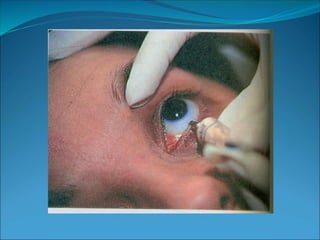
2. Hold ointment applicator
above lower lid margin, apply
with stream of ointment
evenly along inner edge of
lower eyelid on conjunctiva
from the inner canthus to
outer canthus.
Distributes medication evenly
across eye & lid margin.
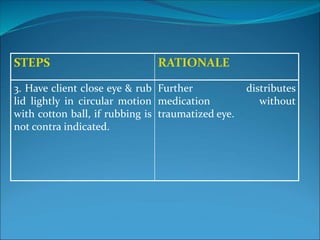
STEPS RATIONALE
3. Have client close eye & rub
lid lightly in circular motion
with cotton ball, if rubbing is
not contra indicated.
Further distributes
medication without
traumatized eye.
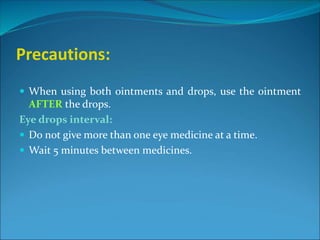
Precautions:
 When using both ointments and drops, use the ointment
AFTER the drops.
Eye drops interval:
 Do not give more than one eye medicine at a time.
 Wait 5 minutes between medicines.

How to administer ophthalmic medication.pptx

  • 1.
  • 2.
     Administering ofophthalmic medication, by health care professionals using right approach to achieve maximum benefits.
  • 3.
    Delegate consideration. The skillof administering ophthalmic medication can’t be delegated.
  • 4.
  • 5.
    STEPS RATIONALE 1. Followfive rules:  Right prescription or file.  Right patient.  Right medication.  Right route.  Right dose. All these are the most reliable sources and only legal record of medications client to receive. 2. Access condition of external eye structure. It indicates need to clean eye before medication application.
  • 6.
    STEPS RATIONALE 3. Determinewhether client has any known allergies to eye medication. Protects client from allergic medication. 4. Any symptoms of visual alteration. Certain eye medication either lessen or increase these symptoms. 5. Assess client’s level of consciousness & ability to follow directions. Greater risk of eye injury exists. 6. Assess client’s knowledge regarding medication & desire to self administer medication. It indicates need for health teaching. Motivation influences teaching approach.
  • 7.
    STEPS RATIONALE 7. Medicationto client at correct time. Medication within 30 minutes after prescribed time to ensure intended therapeutic effect. 8. Perform hand hygiene. It reduces transmission of microbes. 9. Allow eye drops to come to room temperature before giving to client, if drops are stored in refrigerator. Warming eye drops reduces irritation to eye. 10. Gently roll container. Ensures medication is mixed before use & shaking bottle causes bubbles, which makes difficult to administer.
  • 8.
    STEPS RATIONALE 11. Explainprocedure to client, include positioning and sensation to expect, such as burning or stinging. Relieves anxiety about medication being instilled into eye. 12. Ask client to lie supine or sit back in chair with head slightly hyper extended. It provides easy access to eye for instillation & minimizes drainage of medication through tear duct. 13. If crusts or drainage are present along eyelid margin gently wash way by applying damp wash cloth from inner to outer canthus. Soaking allows easy removal & prevents pressure applied directly over eye, & cleaning from inner to outer canthus avoid entrance of microbes into lacrimal duct.
  • 9.
    STEPS RATIONALE 14. Holdcotton swab in non dominant hand on client’s cheek bone just below lower lid. Cotton absorb medication that escapes from eye. 15. With cotton resting lower lid, gently press downward with thumb or forefinger against bony orbit. It exposes conjunctival sac. Retraction against bony orbit prevents pressure & trauma to eyeball & prevents fingers from touching eye. 16. Ask client to look at ceiling. It retracts sensitive cornea up & away from conjunctival sac & reduces stimulation of blink reflex.
  • 10.
    STEPS RATIONALE 17. Withdominant hand resting on client’s forehead, hold filled medication eye dropper approximately 1-2 cm (1/2 to ¾ inch) above conjunctival sac. Helps prevent accidental contact of eye dropper with eye, reduce risk of injury to eye & transfer of infection to dropper. Ophthalmic solution are sterile. 18. Drops prescribed number of medication drops into conjunctival sac. Sac normally holds 1-2 drops. Provides even distribution of medication across eye.
  • 11.
    STEPS RATIONALE 19. Ifclient blinks or closes eye or drop land on outer margin repeat procedure. Client obtain therapeutic effect of drug only when drops enter sac. 20. After instilling eye drops apply gentle pressure with your finger on the client’s nasolacrimal duct for 30 to 60 seconds. Prevents overflow of medication into nasal & pharyngeal passages & prevents absorption into systemic circulation.
  • 13.
    Instillation of eyeointment. STEPS RATIONALE 1. Ask client to look at ceiling. It retracts cornea up & away from sac & reduces stimulation of blink reflex. 2. Hold ointment applicator above lower lid margin, apply with stream of ointment evenly along inner edge of lower eyelid on conjunctiva from the inner canthus to outer canthus. Distributes medication evenly across eye & lid margin.
  • 14.
    STEPS RATIONALE 3. Haveclient close eye & rub lid lightly in circular motion with cotton ball, if rubbing is not contra indicated. Further distributes medication without traumatized eye.
  • 16.
    Precautions:  When usingboth ointments and drops, use the ointment AFTER the drops. Eye drops interval:  Do not give more than one eye medicine at a time.  Wait 5 minutes between medicines.