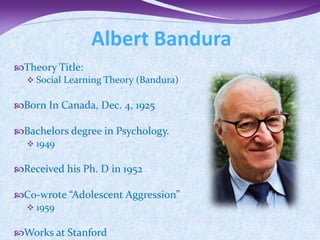
Albert Bandura
Theory Title:
  Social Learning Theory (Bandura)


Born In Canada, Dec. 4, 1925

Bachelors degree in Psychology.
  1949


Received his Ph. D in 1952

Co-wrote “Adolescent Aggression”
  1959


Works at Stanford
Key Points about the Social
         Cognitive Theory…
How people learn
  Observation of attitudes and
   behaviors.


Explanation of Human behavior
  Interaction between different
   influences.


“Reciprocal determinism”
  The environment effects one’s
   behavior, and vice versa.
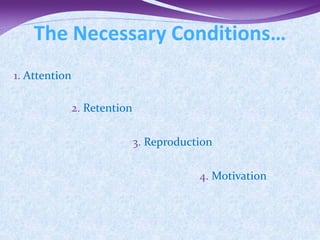
The Necessary Conditions…
1. Attention

               2. Retention

                              3. Reproduction

                                          4. Motivation
As a teacher, how can I use
    Bandura’s theory?
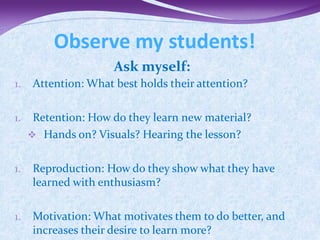
Observe my students!
                     Ask myself:
1.   Attention: What best holds their attention?

1.    Retention: How do they learn new material?
      Hands on? Visuals? Hearing the lesson?


1.   Reproduction: How do they show what they have
     learned with enthusiasm?

1.   Motivation: What motivates them to do better, and
     increases their desire to learn more?
Then APPLY it!!
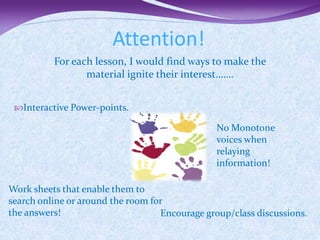
Attention!
          For each lesson, I would find ways to make the
                 material ignite their interest…….


 Interactive Power-points.

                                                No Monotone
                                                voices when
                                                relaying
                                                information!

Work sheets that enable them to
search online or around the room for
the answers!                       Encourage group/class discussions.
Retention!
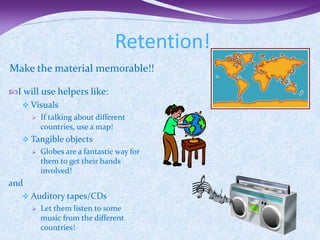
Make the material memorable!!

I will use helpers like:
   Visuals
         If talking about different
          countries, use a map!
    Tangible objects
         Globes are a fantastic way for
          them to get their hands
          involved!
and
    Auditory tapes/CDs
         Let them listen to some
          music from the different
          countries!
Reproduction!
Let them SHOW what
  they learned:


                  (creative
      one)
Just to name a few!
LET THEM BE CREATIVE!!
Motivate!!
I will encourage them to:
   Find more information about something enjoy learning
    about…
   Be creative…
   Learn more about what they are passionate about….
   Exceed their own expectations!
How does this theory
 affect students??
Get excited!
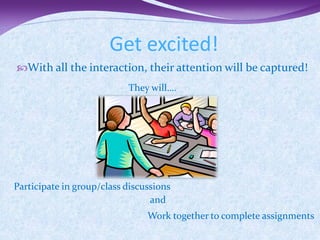
With all the interaction, their attention will be captured!
                           They will….


Participate in group/class discussions
                                 and
                                Work together to complete assignments
Remember!
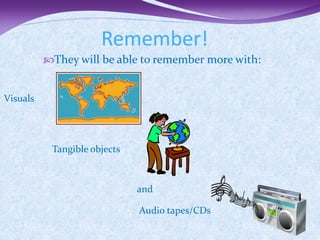
          They will be able to remember more with:


Visuals


           Tangible objects


                              and

                              Audio tapes/CDs
Get Creative!
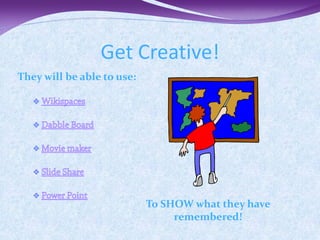
They will be able to use:


                            To SHOW what they have
                                 remembered!
Yes I can!
                 They will feel motivated to…

Pay attention during new lessons


Remember what they have learned (because it interests them!)


Be Creative when showing how well they remembered.


Be motivated to learn again!
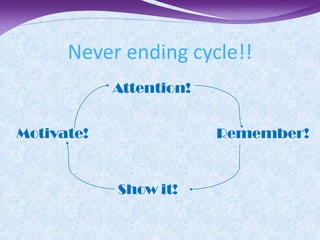
Never ending cycle!!
            Attention!


Motivate!                Remember!


            Show it!
What I used to make this
         presentation…
All clipart was downloaded using:


Additional information on Albert Bandura (not
 including textbook used in class) was received from:
                                     (Albert’s picture was
    also downloaded from here)
How students learn best

How students learn best

  • 2.
    Albert Bandura Theory Title:  Social Learning Theory (Bandura) Born In Canada, Dec. 4, 1925 Bachelors degree in Psychology.  1949 Received his Ph. D in 1952 Co-wrote “Adolescent Aggression”  1959 Works at Stanford
  • 3.
    Key Points aboutthe Social Cognitive Theory… How people learn  Observation of attitudes and behaviors. Explanation of Human behavior  Interaction between different influences. “Reciprocal determinism”  The environment effects one’s behavior, and vice versa.
  • 4.
    The Necessary Conditions… 1.Attention 2. Retention 3. Reproduction 4. Motivation
  • 5.
    As a teacher,how can I use Bandura’s theory?
  • 6.
    Observe my students! Ask myself: 1. Attention: What best holds their attention? 1. Retention: How do they learn new material?  Hands on? Visuals? Hearing the lesson? 1. Reproduction: How do they show what they have learned with enthusiasm? 1. Motivation: What motivates them to do better, and increases their desire to learn more?
  • 7.
  • 8.
    Attention! For each lesson, I would find ways to make the material ignite their interest……. Interactive Power-points. No Monotone voices when relaying information! Work sheets that enable them to search online or around the room for the answers! Encourage group/class discussions.
  • 9.
    Retention! Make the materialmemorable!! I will use helpers like:  Visuals  If talking about different countries, use a map!  Tangible objects  Globes are a fantastic way for them to get their hands involved! and  Auditory tapes/CDs  Let them listen to some music from the different countries!
  • 10.
    Reproduction! Let them SHOWwhat they learned: (creative one) Just to name a few! LET THEM BE CREATIVE!!
  • 11.
    Motivate!! I will encouragethem to:  Find more information about something enjoy learning about…  Be creative…  Learn more about what they are passionate about….  Exceed their own expectations!
  • 12.
    How does thistheory affect students??
  • 13.
    Get excited! With allthe interaction, their attention will be captured! They will…. Participate in group/class discussions and Work together to complete assignments
  • 14.
    Remember! They will be able to remember more with: Visuals Tangible objects and Audio tapes/CDs
  • 15.
    Get Creative! They willbe able to use: To SHOW what they have remembered!
  • 16.
    Yes I can! They will feel motivated to… Pay attention during new lessons Remember what they have learned (because it interests them!) Be Creative when showing how well they remembered. Be motivated to learn again!
  • 17.
    Never ending cycle!! Attention! Motivate! Remember! Show it!
  • 18.
    What I usedto make this presentation… All clipart was downloaded using: Additional information on Albert Bandura (not including textbook used in class) was received from: (Albert’s picture was also downloaded from here)