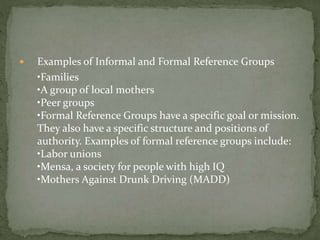
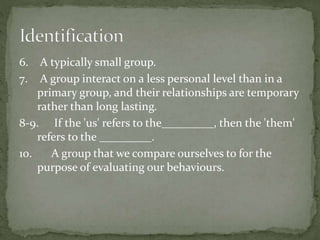
The document discusses different types of social groups, including primary groups, secondary groups, in-groups, out-groups, and reference groups. Primary groups are typically small and involve close personal relationships. Secondary groups are less personal and involve more temporary relationships centered around interests or activities. In-groups distinguish themselves from out-groups based on membership criteria. Reference groups are groups that individuals compare themselves to in order to evaluate their own behaviors and attitudes. Examples of informal reference groups include families and peer groups, while formal reference groups have specific goals and structures, such as labor unions.