Presentation
of Software
Engineering
Muhammad Fahad
Faizan Amjad
BS-IT 4th Semester
Software
Engineering
Course Instructor
Sir Obaid
Ullah
Introduction
 “HOSTEL MANAGEMENT SYSTEM” is software
developed for managing various activities in the
hostel.
 For the past few years the number of educational
institutions is increasing rapidly. Thereby the
number of hostels is also increasing for the
accommodation of the students studying in this
institution.
 This particular project deals with the problems on
managing a hostel and avoids the problems which
occur when carried manually.
Objective & Concentration
 To deal with Hostel Management System in
an easy way and an efficient mannered.
 Create strong and secrete data base that
allow for any connection in a secret way, to
prevent any outside or inside attacks.
Scope and Limitation
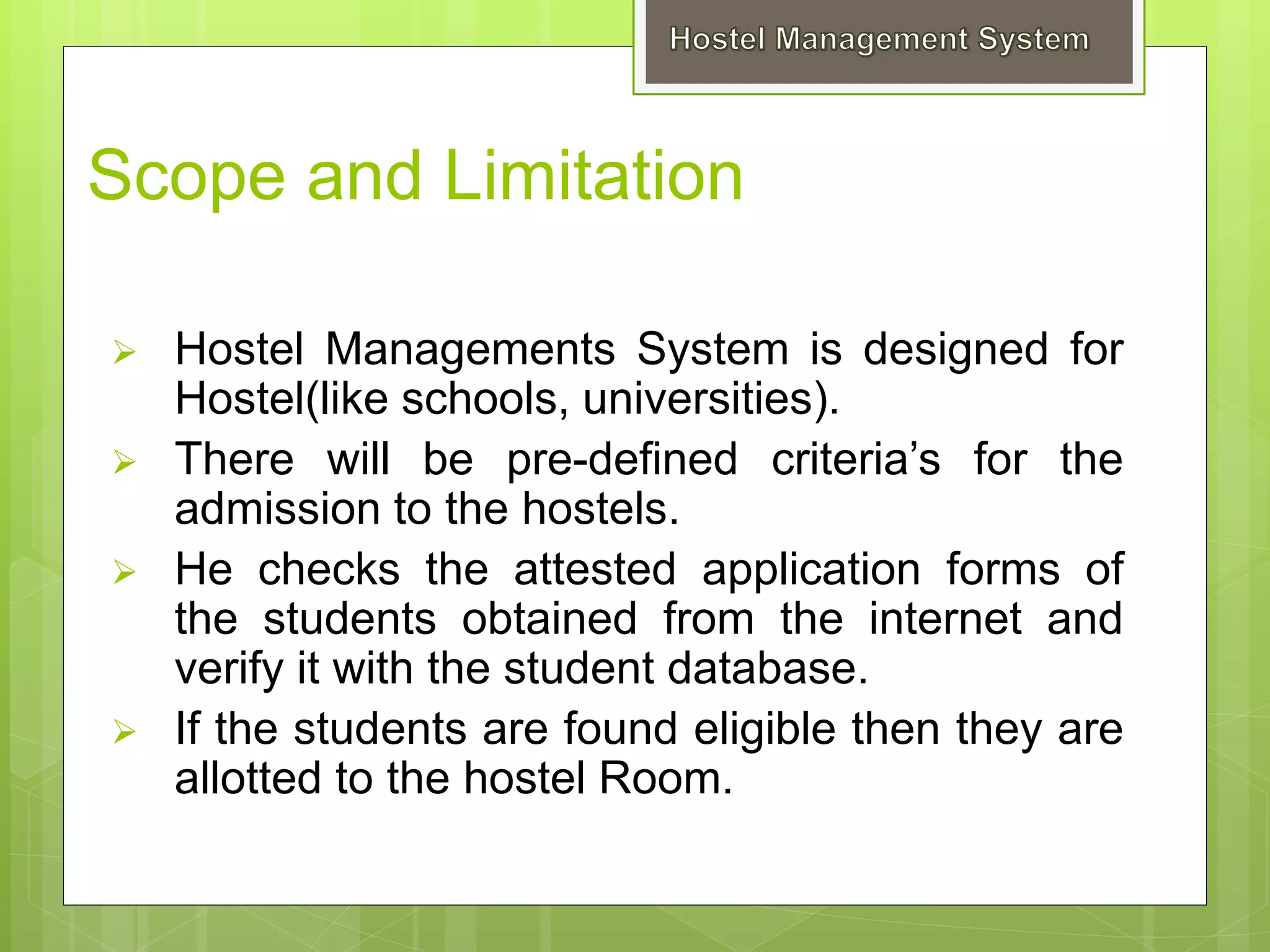
 Hostel Managements System is designed for
Hostel(like schools, universities).
 There will be pre-defined criteria’s for the
admission to the hostels.
 He checks the attested application forms of
the students obtained from the internet and
verify it with the student database.
 If the students are found eligible then they are
allotted to the hostel Room.
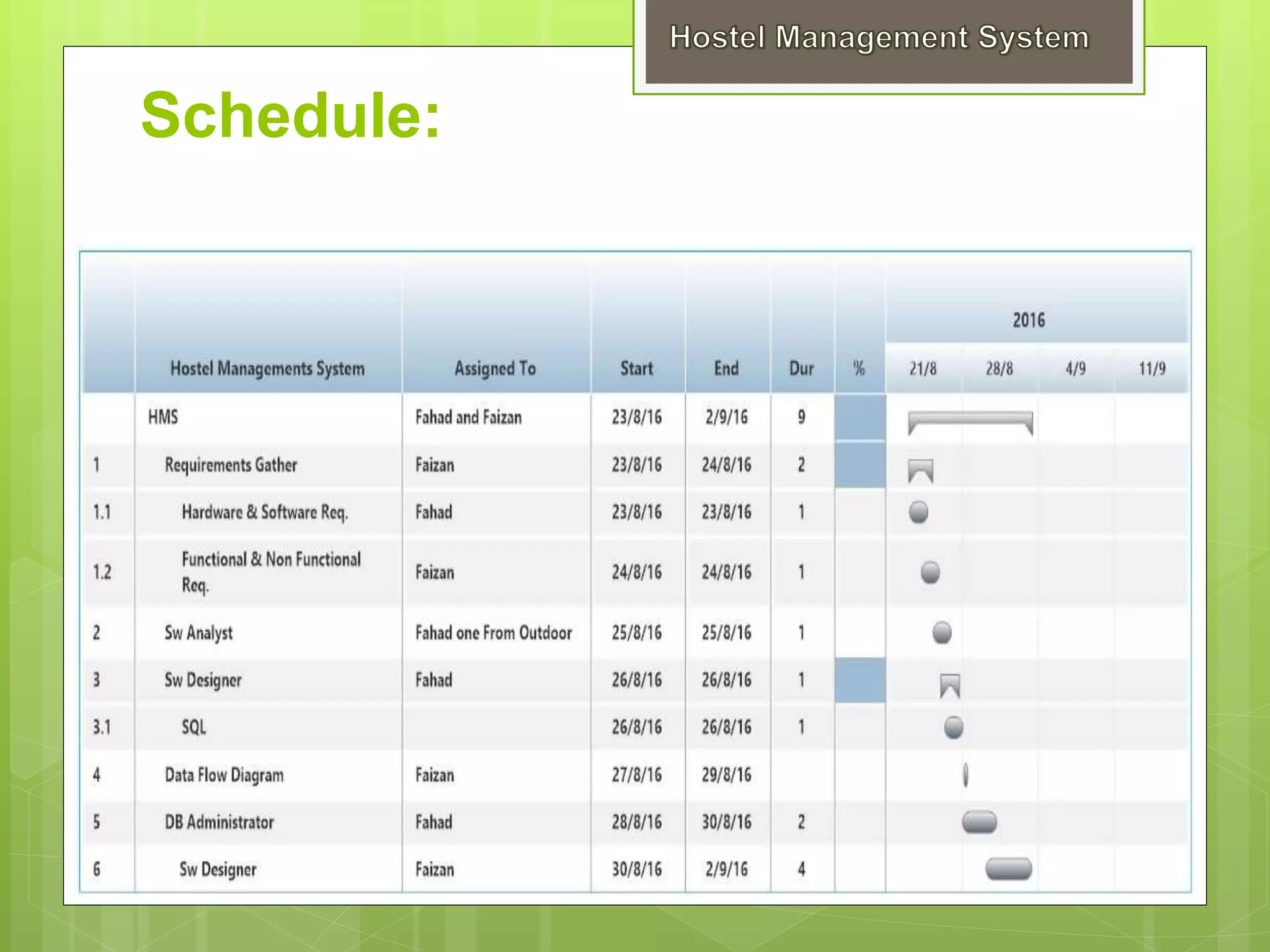
Schedule:
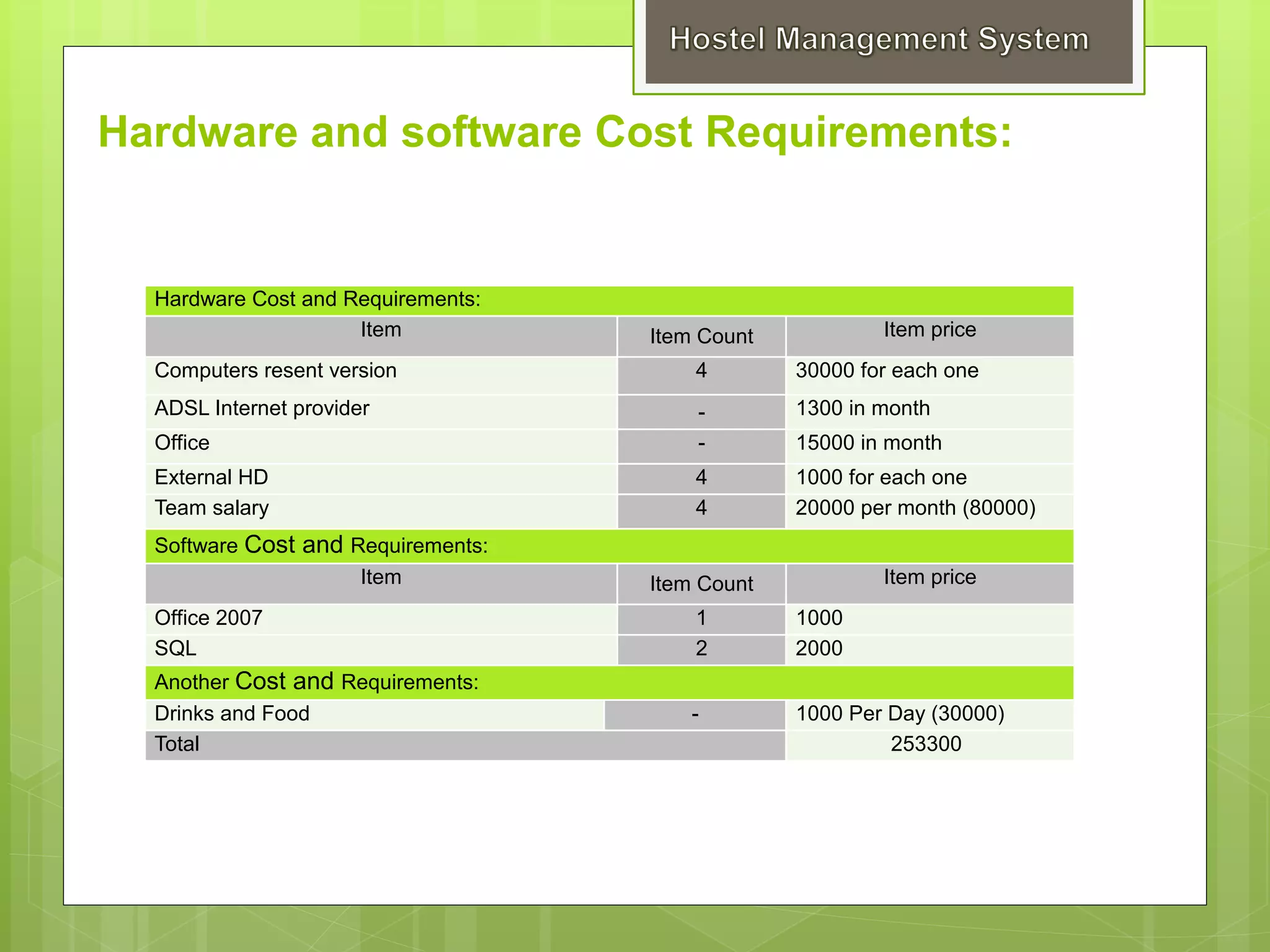
Hardware and software Cost Requirements:
Hardware Cost and Requirements:
Item Item Count Item price
Computers resent version 4 30000 for each one
ADSL Internet provider - 1300 in month
Office - 15000 in month
External HD 4 1000 for each one
Team salary 4 20000 per month (80000)
Software Cost and Requirements:
Item Item Count Item price
Office 2007 1 1000
SQL 2 2000
Another Cost and Requirements:
Drinks and Food - 1000 Per Day (30000)
Total 253300
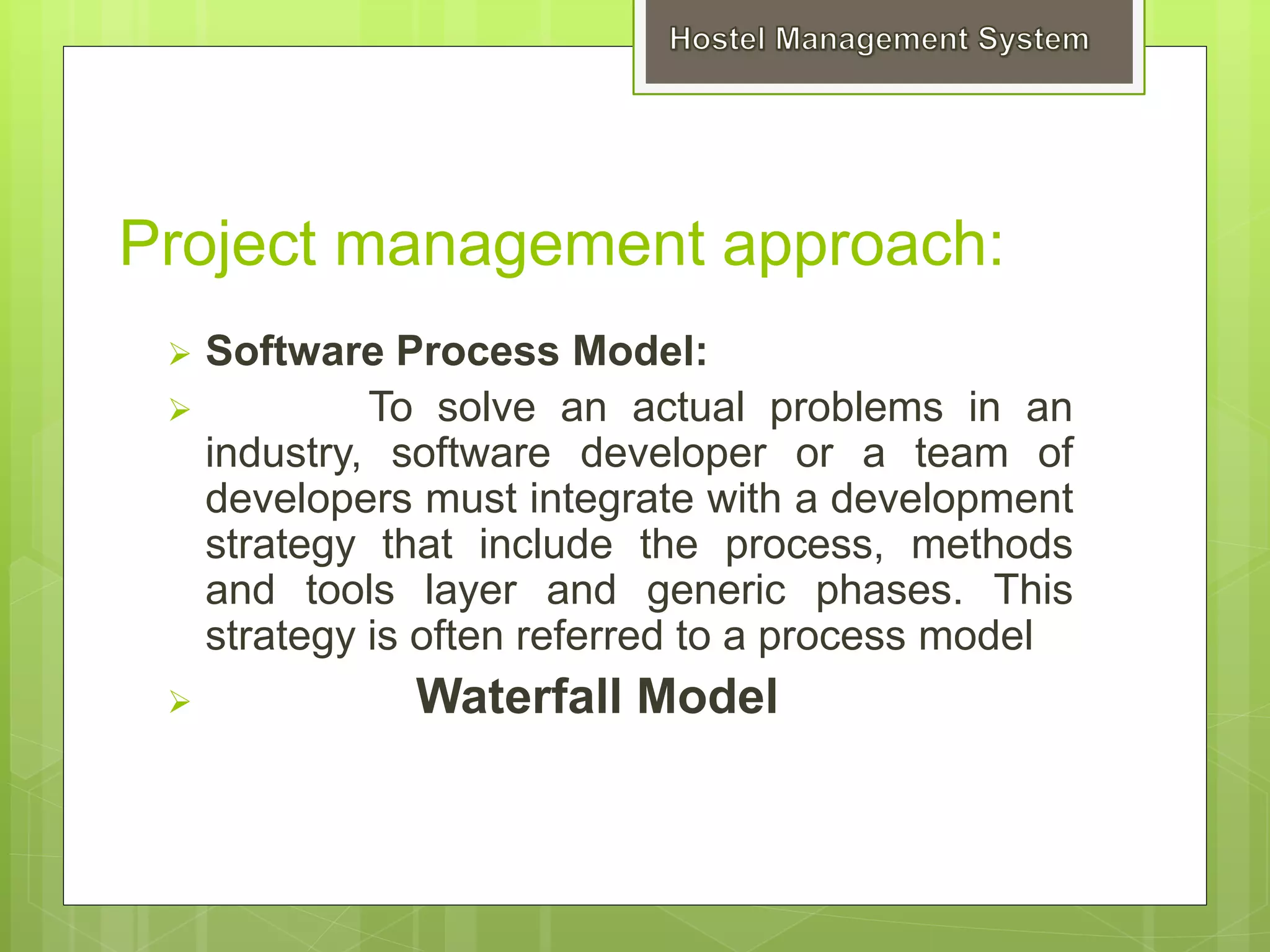
 Software Process Model:
 To solve an actual problems in an
industry, software developer or a team of
developers must integrate with a development
strategy that include the process, methods
and tools layer and generic phases. This
strategy is often referred to a process model
 Waterfall Model
Project management approach:
Software Requirement Specification
Introduction:
 The purpose of this SRS document is to write
the functional and non-functional user or
system requirements that represent the
characteristics of Hostel Managements
System.
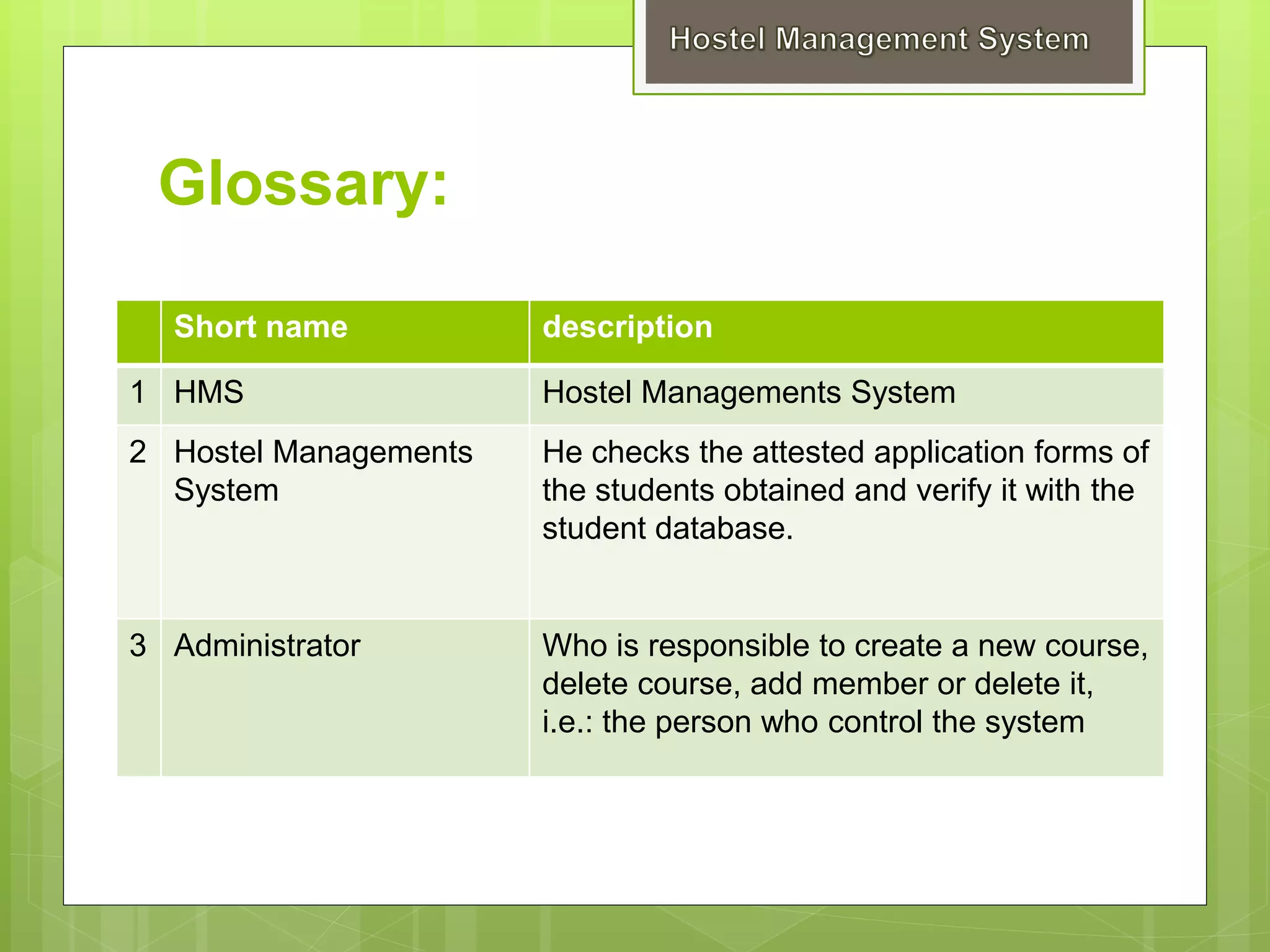
Glossary:
Short name description
1 HMS Hostel Managements System
2 Hostel Managements
System
He checks the attested application forms of
the students obtained and verify it with the
student database.
3 Administrator Who is responsible to create a new course,
delete course, add member or delete it,
i.e.: the person who control the system
User Requirements Definition:
 The user requirement for this system is to
make the system fast, flexible, less prone to
error, reduce expenses and save the time.
 Less human error
 Data consistency
 Easy to handle
 Easy data updating
 Easy record keeping
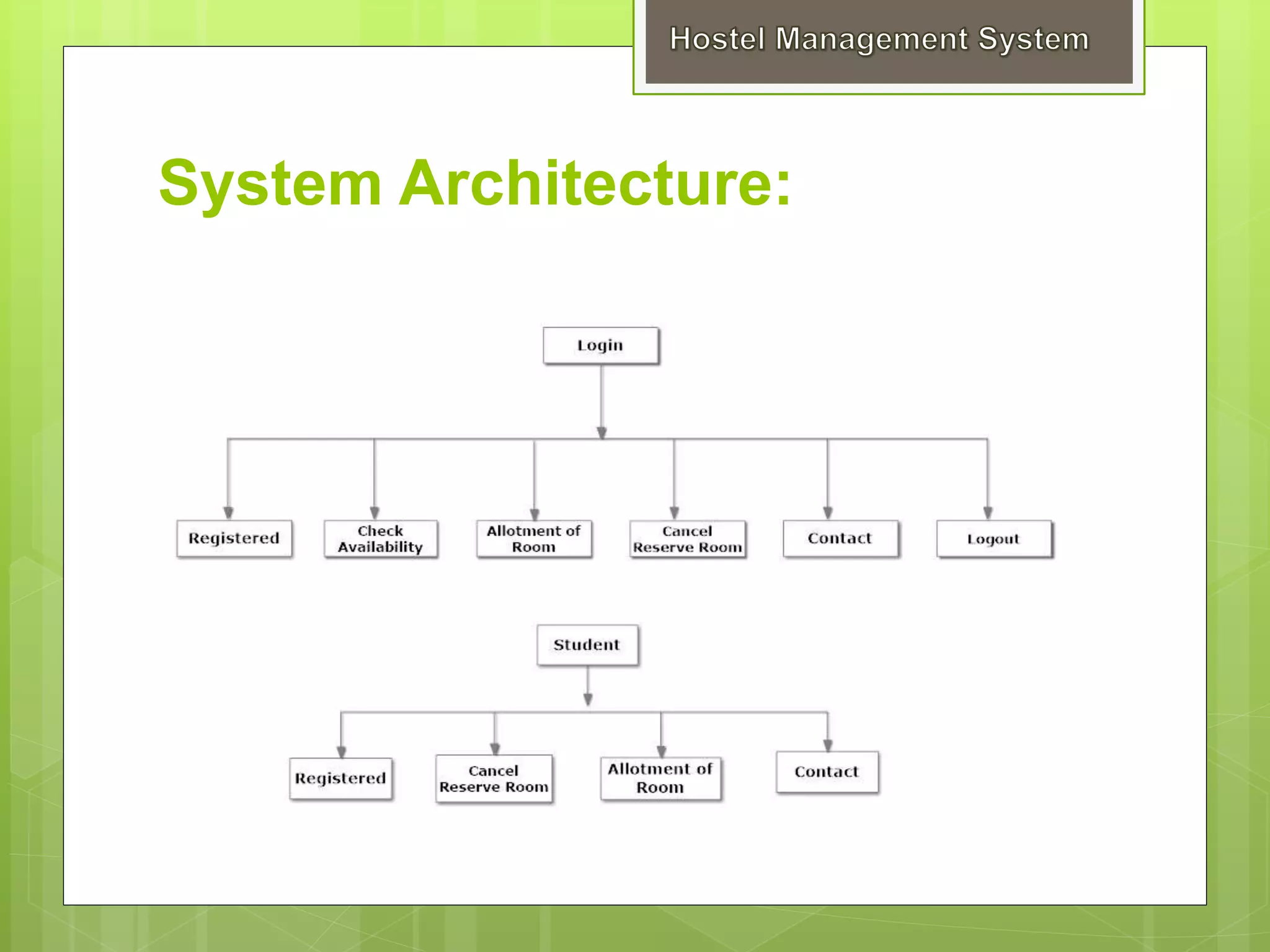
System Architecture:
System Requirement Specification:
 Functional System Requirement:
This section gives a functional
requirement that applicable to the HMS.
 These are sub modules in this phase.
 Administrator module.
 User Module
 Hostel Module
 Registration Module
Non-Functional System Requirements:
 Performance Requirements
 Safety Requirements
 Security Requirements
System Requirement Specification:
Hardware Requirements:
 Processor: Pentium or Greater
 RAM: 512MB
 Hard Disk:1GB
 Keyboard
 Monitor or LCD
Software Requirements
 Tool : Command Prompt
 Database: SQL
 Operating System: Microsoft Window
System Design
Context Diagram:
 This diagram represents what are the
bounders and scope of Hostel
managements System project. It describes
the main objective of the system and its
entities involved.
Use Case Diagram:
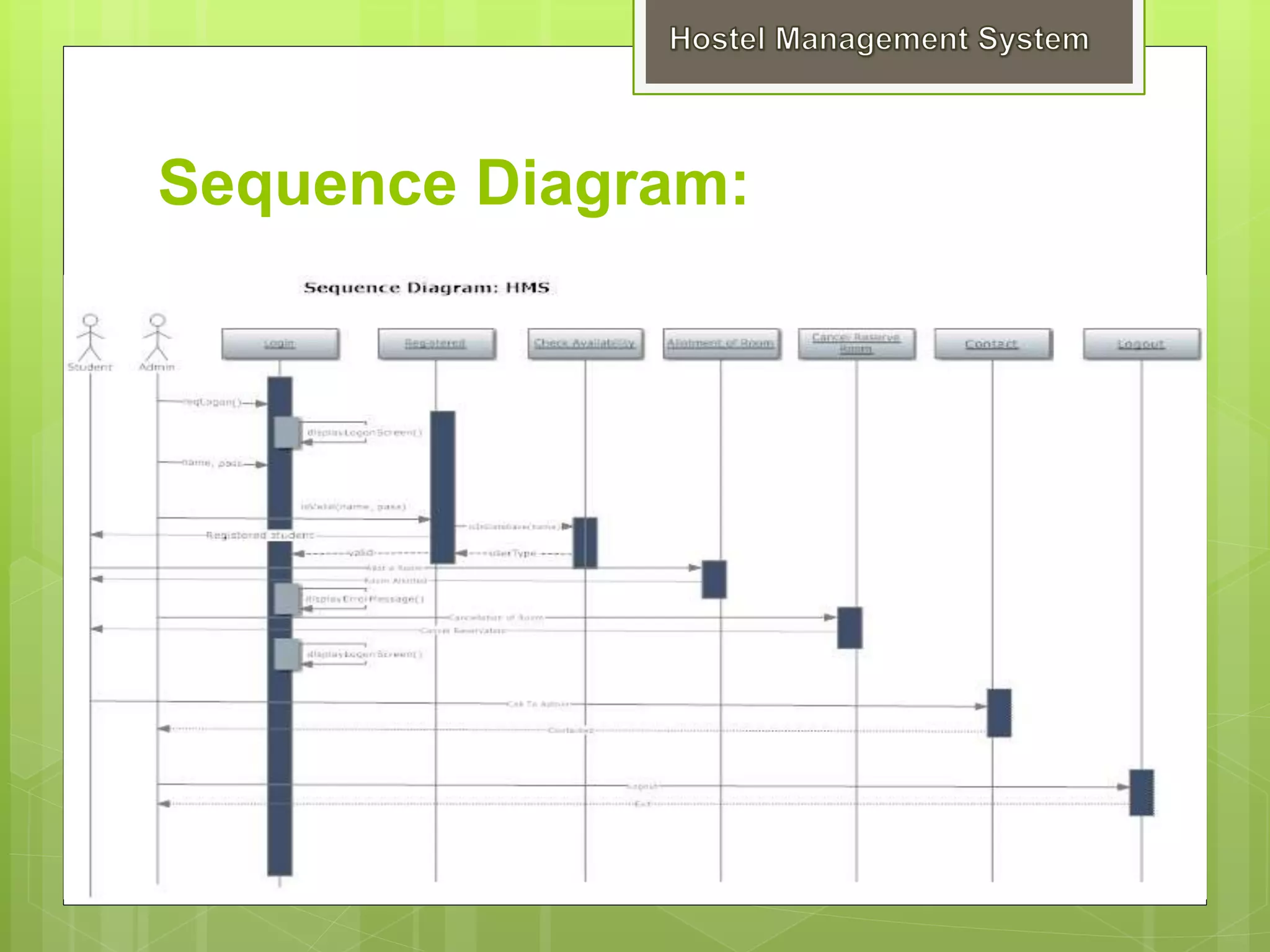
Sequence Diagram:
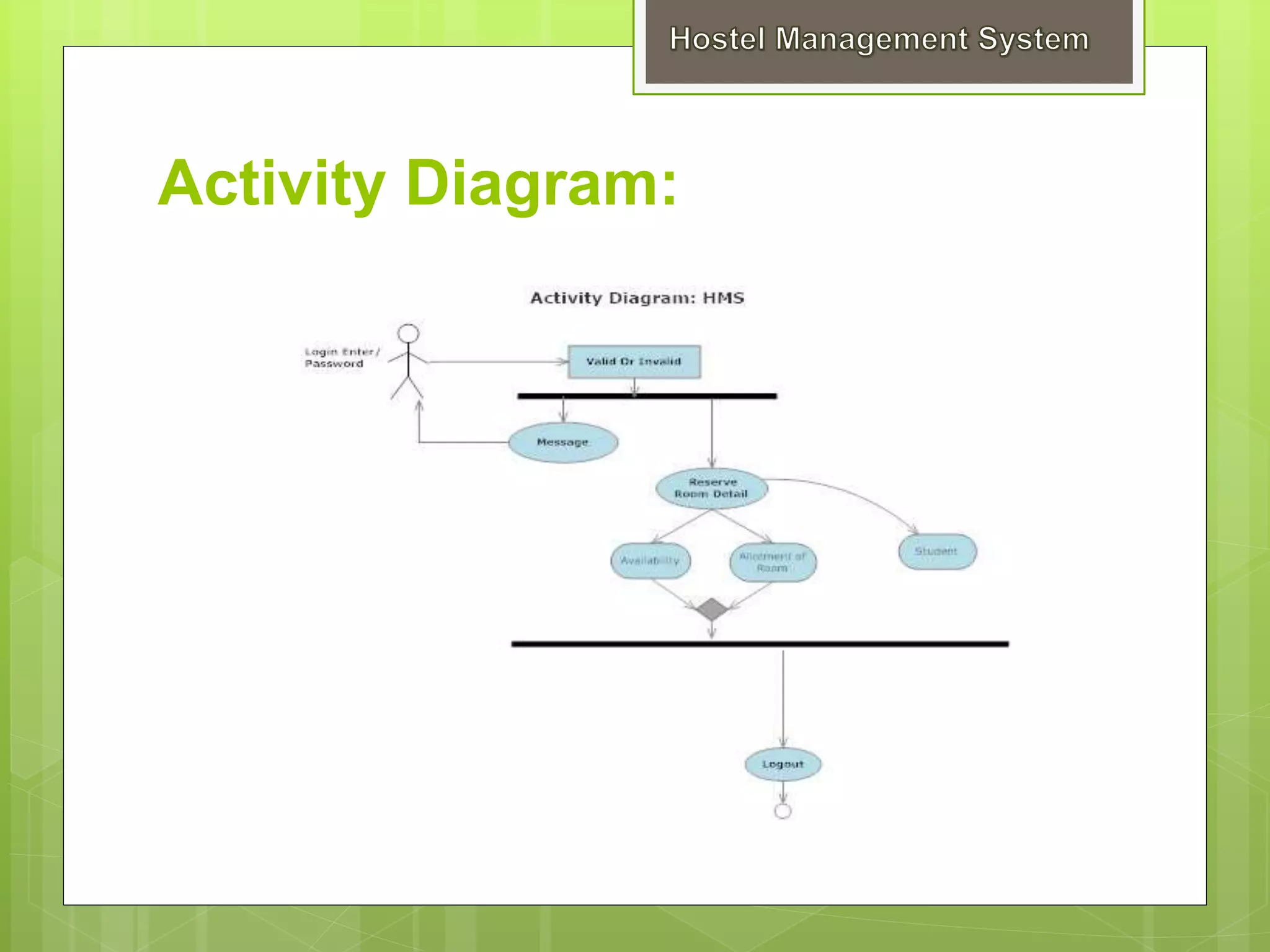
Activity Diagram:
Testing
Introduction of Testing
 Software testing is a process of executing a
program or application with the intent of
finding the software bugs.
 It can also be stated as the process of
validating and verifying that a software
program or application.
White box testing:
 White Box Testing is applied in HMS system Design.
 It is also called as STRUCTURAL TESTING or GLASS
BOX TESTING.
 Testers use the knowledge of internal logic of the
system.
 Mostly verification techniques are used.
 It does not ensure that the user requirement had been
met.
 Cost is very high since expert testers are required.
 Example: feasibility review, designer review.
Black box testing:
 Black Box Testing applied on HMS Requirements
(Functional).
 It is also called as FUNCTIONAL TESTING. These
tests are conducted at interface.
 Testers do not have information about the internal
functionality of the system.
 Mostly validation techniques are used.
 It stimulates the actual system usage.
 They have potential of not detecting the logical errors.
 Example: unit testing, integration testing, system
testing, and acceptance testing.
Unit testing:
 Testing of individual software components or
modules. Typically done by the programmer
and not by testers as it requires detailed
knowledge of the internal program design and
code. May requires developing test driver
modules or test harnesses.
System testing
 Entire system is tested as per the
requirements. Black-box type testing that is
based on overall requirements specifications,
covers all combined parts of a system.
Hostel managements system

Hostel managements system

  • 2.
  • 3.
  • 5.
    Introduction  “HOSTEL MANAGEMENTSYSTEM” is software developed for managing various activities in the hostel.  For the past few years the number of educational institutions is increasing rapidly. Thereby the number of hostels is also increasing for the accommodation of the students studying in this institution.  This particular project deals with the problems on managing a hostel and avoids the problems which occur when carried manually.
  • 6.
    Objective & Concentration To deal with Hostel Management System in an easy way and an efficient mannered.  Create strong and secrete data base that allow for any connection in a secret way, to prevent any outside or inside attacks.
  • 7.
    Scope and Limitation Hostel Managements System is designed for Hostel(like schools, universities).  There will be pre-defined criteria’s for the admission to the hostels.  He checks the attested application forms of the students obtained from the internet and verify it with the student database.  If the students are found eligible then they are allotted to the hostel Room.
  • 8.
  • 9.
    Hardware and softwareCost Requirements: Hardware Cost and Requirements: Item Item Count Item price Computers resent version 4 30000 for each one ADSL Internet provider - 1300 in month Office - 15000 in month External HD 4 1000 for each one Team salary 4 20000 per month (80000) Software Cost and Requirements: Item Item Count Item price Office 2007 1 1000 SQL 2 2000 Another Cost and Requirements: Drinks and Food - 1000 Per Day (30000) Total 253300
  • 10.
     Software ProcessModel:  To solve an actual problems in an industry, software developer or a team of developers must integrate with a development strategy that include the process, methods and tools layer and generic phases. This strategy is often referred to a process model  Waterfall Model Project management approach:
  • 11.
  • 12.
    Introduction:  The purposeof this SRS document is to write the functional and non-functional user or system requirements that represent the characteristics of Hostel Managements System.
  • 13.
    Glossary: Short name description 1HMS Hostel Managements System 2 Hostel Managements System He checks the attested application forms of the students obtained and verify it with the student database. 3 Administrator Who is responsible to create a new course, delete course, add member or delete it, i.e.: the person who control the system
  • 14.
    User Requirements Definition: The user requirement for this system is to make the system fast, flexible, less prone to error, reduce expenses and save the time.  Less human error  Data consistency  Easy to handle  Easy data updating  Easy record keeping
  • 15.
  • 16.
    System Requirement Specification: Functional System Requirement: This section gives a functional requirement that applicable to the HMS.  These are sub modules in this phase.  Administrator module.  User Module  Hostel Module  Registration Module
  • 17.
    Non-Functional System Requirements: Performance Requirements  Safety Requirements  Security Requirements
  • 18.
    System Requirement Specification: HardwareRequirements:  Processor: Pentium or Greater  RAM: 512MB  Hard Disk:1GB  Keyboard  Monitor or LCD
  • 19.
    Software Requirements  Tool: Command Prompt  Database: SQL  Operating System: Microsoft Window
  • 20.
  • 21.
    Context Diagram:  Thisdiagram represents what are the bounders and scope of Hostel managements System project. It describes the main objective of the system and its entities involved.
  • 22.
  • 23.
  • 24.
  • 25.
  • 26.
    Introduction of Testing Software testing is a process of executing a program or application with the intent of finding the software bugs.  It can also be stated as the process of validating and verifying that a software program or application.
  • 27.
    White box testing: White Box Testing is applied in HMS system Design.  It is also called as STRUCTURAL TESTING or GLASS BOX TESTING.  Testers use the knowledge of internal logic of the system.  Mostly verification techniques are used.  It does not ensure that the user requirement had been met.  Cost is very high since expert testers are required.  Example: feasibility review, designer review.
  • 28.
    Black box testing: Black Box Testing applied on HMS Requirements (Functional).  It is also called as FUNCTIONAL TESTING. These tests are conducted at interface.  Testers do not have information about the internal functionality of the system.  Mostly validation techniques are used.  It stimulates the actual system usage.  They have potential of not detecting the logical errors.  Example: unit testing, integration testing, system testing, and acceptance testing.
  • 29.
    Unit testing:  Testingof individual software components or modules. Typically done by the programmer and not by testers as it requires detailed knowledge of the internal program design and code. May requires developing test driver modules or test harnesses.
  • 30.
    System testing  Entiresystem is tested as per the requirements. Black-box type testing that is based on overall requirements specifications, covers all combined parts of a system.