Meaningful Homework &
Effective Study Skills
For Every Subject

Date
What do you know?


✤   There are ten questions about Australian history on your table

✤   Scan through them: Put a tick next to the ones you know for certain, a
    circle next to the ones you know something about, a question mark
    next to the ones you don’t really know anything about
Four Types of Homework / Study
Skills


✤   Pre-learning

✤   Checking for understanding

✤   Practice & Application

✤   Processing / Reflection
Four Types of Homework / Study
Skills


✤   What category did the first task belong to?
Pre-learning


✤   What does the student already know?

✤   What can the student already do?

✤   What can the student do to prepare for what they need to know and
    do?
Pre-Learning


✤   Skill / Content Continuums
Pre-Learning

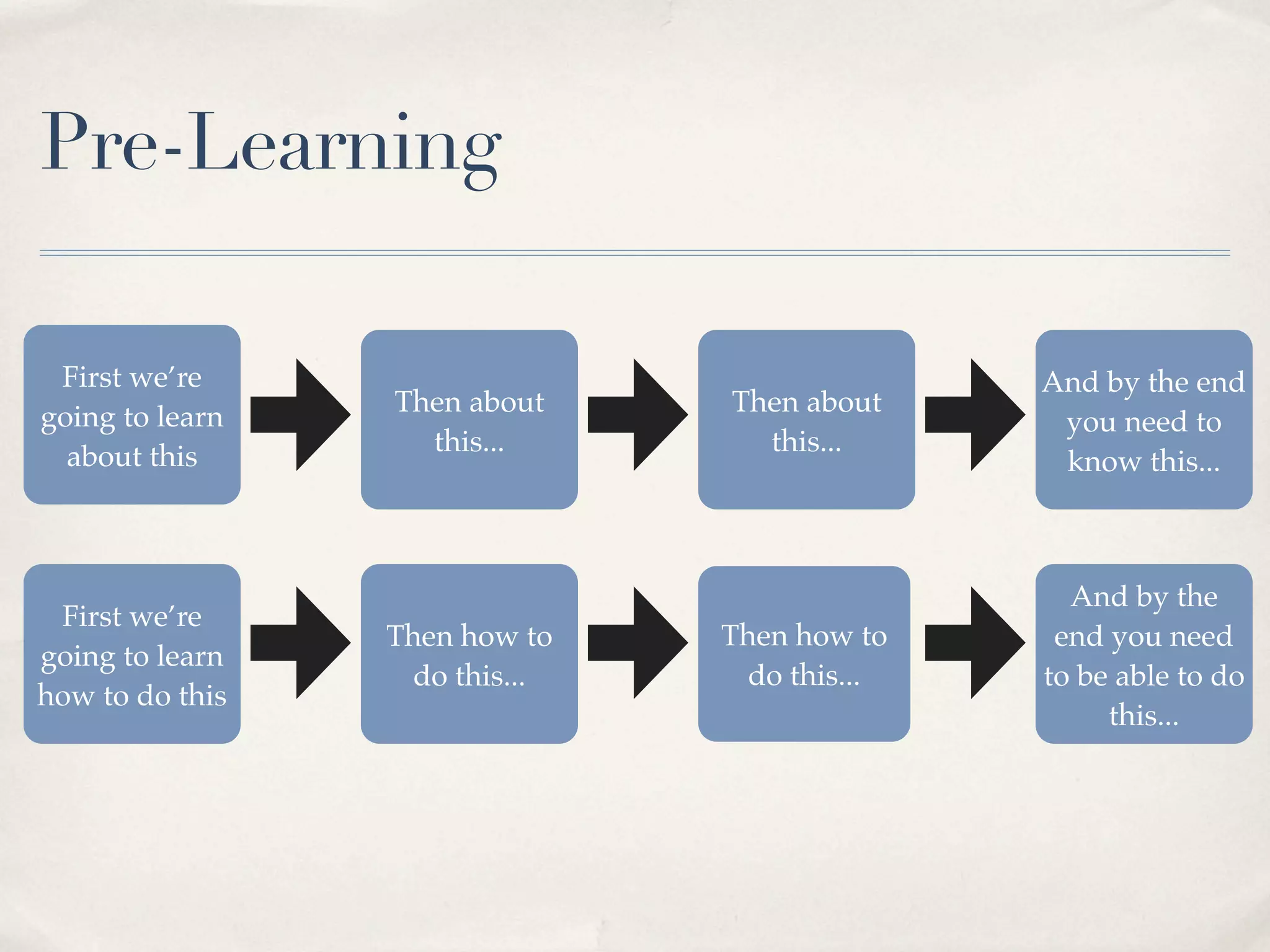
 First we’re                                   And by the end
                 Then about     Then about
going to learn                                  you need to
                   this...        this...
  about this                                    know this...


                                                 And by the
 First we’re
                 Then how to    Then how to     end you need
going to learn
                   do this...     do this...   to be able to do
how to do this
                                                    this...
Pre-Learning


✤   Students who learn effectively independently have specific goals
    about what they want to be able to know and do

✤   If we want students to have specific goals, we need to articulate
    specific stages of learning to them
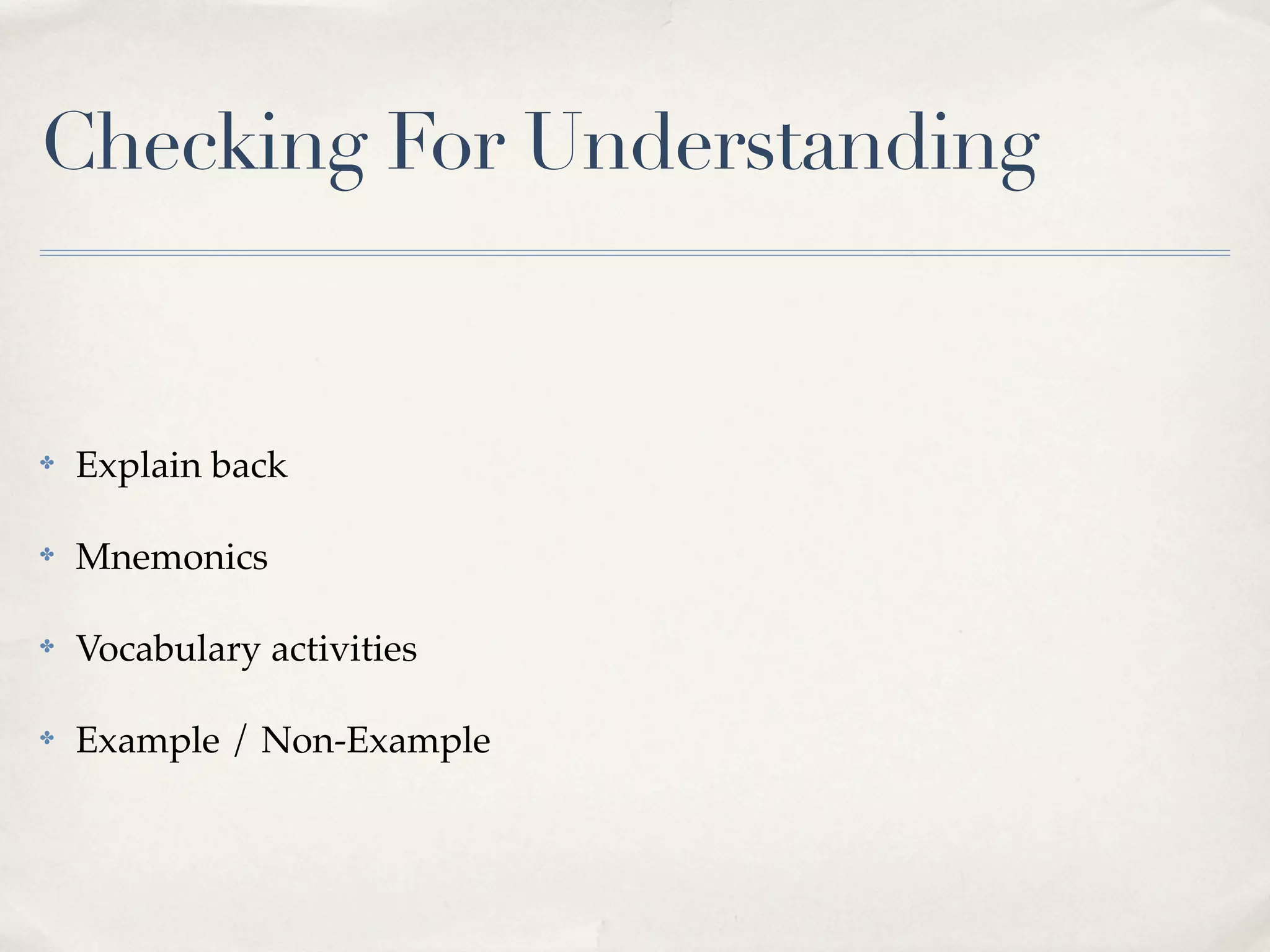
Checking For Understanding


✤   Explain back

✤   Mnemonics

✤   Vocabulary activities

✤   Example / Non-Example
Checking For Understanding

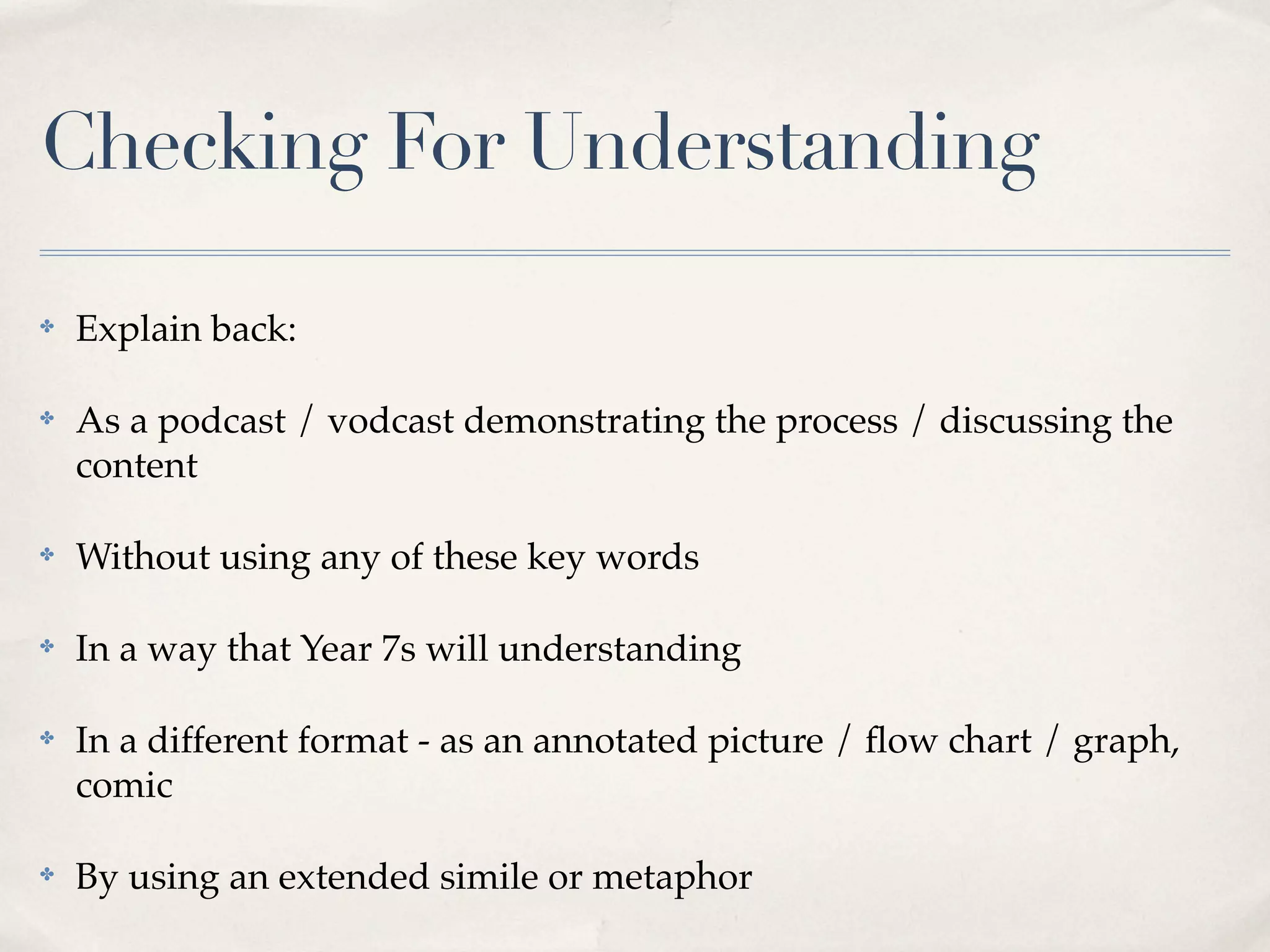
✤   Explain back:

✤   As a podcast / vodcast demonstrating the process / discussing the
    content

✤   Without using any of these key words

✤   In a way that Year 7s will understanding

✤   In a different format - as an annotated picture / flow chart / graph,
    comic

✤   By using an extended simile or metaphor
Checking For Understanding

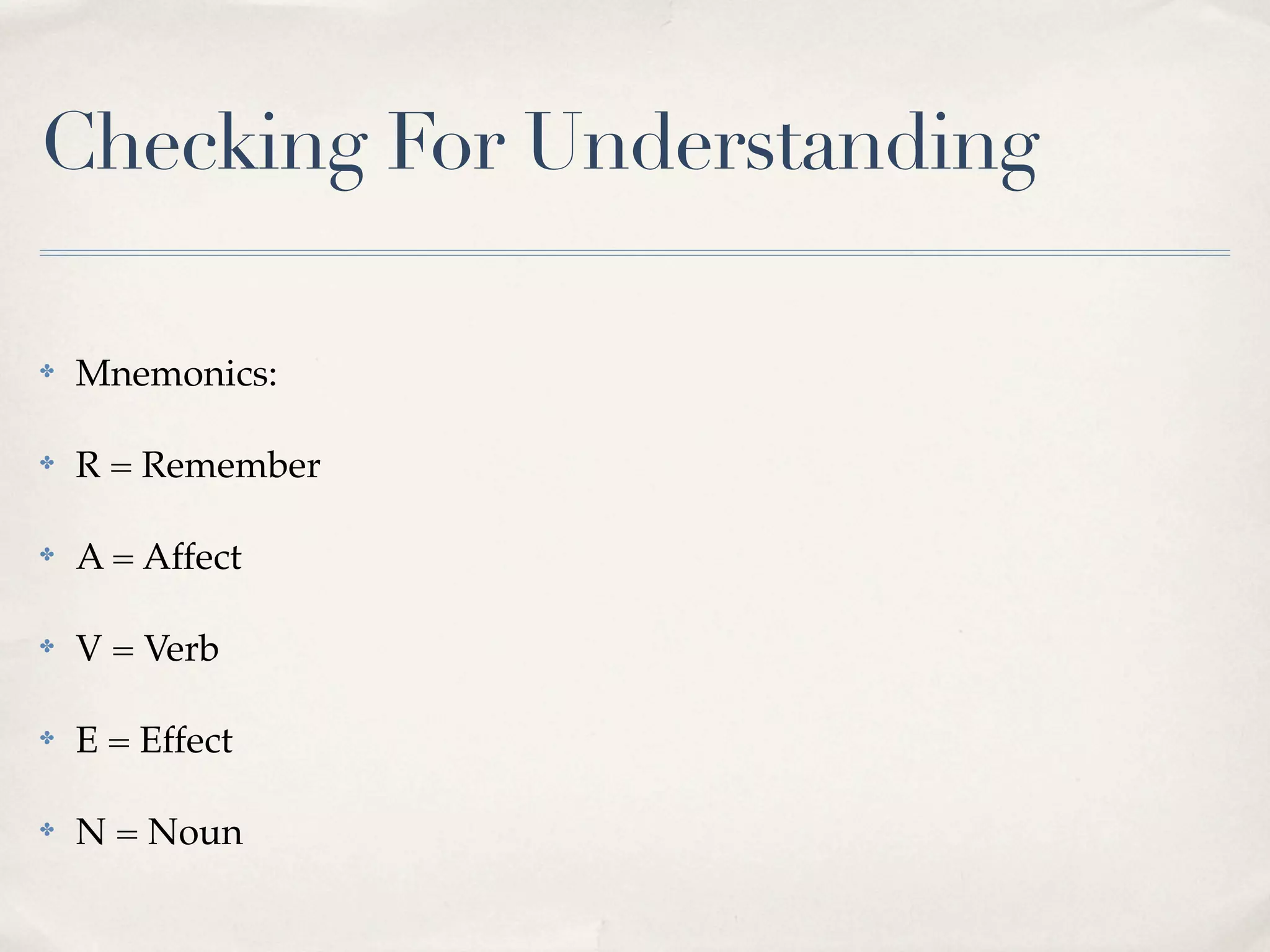
✤   Mnemonics:

✤   R = Remember

✤   A = Affect

✤   V = Verb

✤   E = Effect

✤   N = Noun
Checking For Understanding

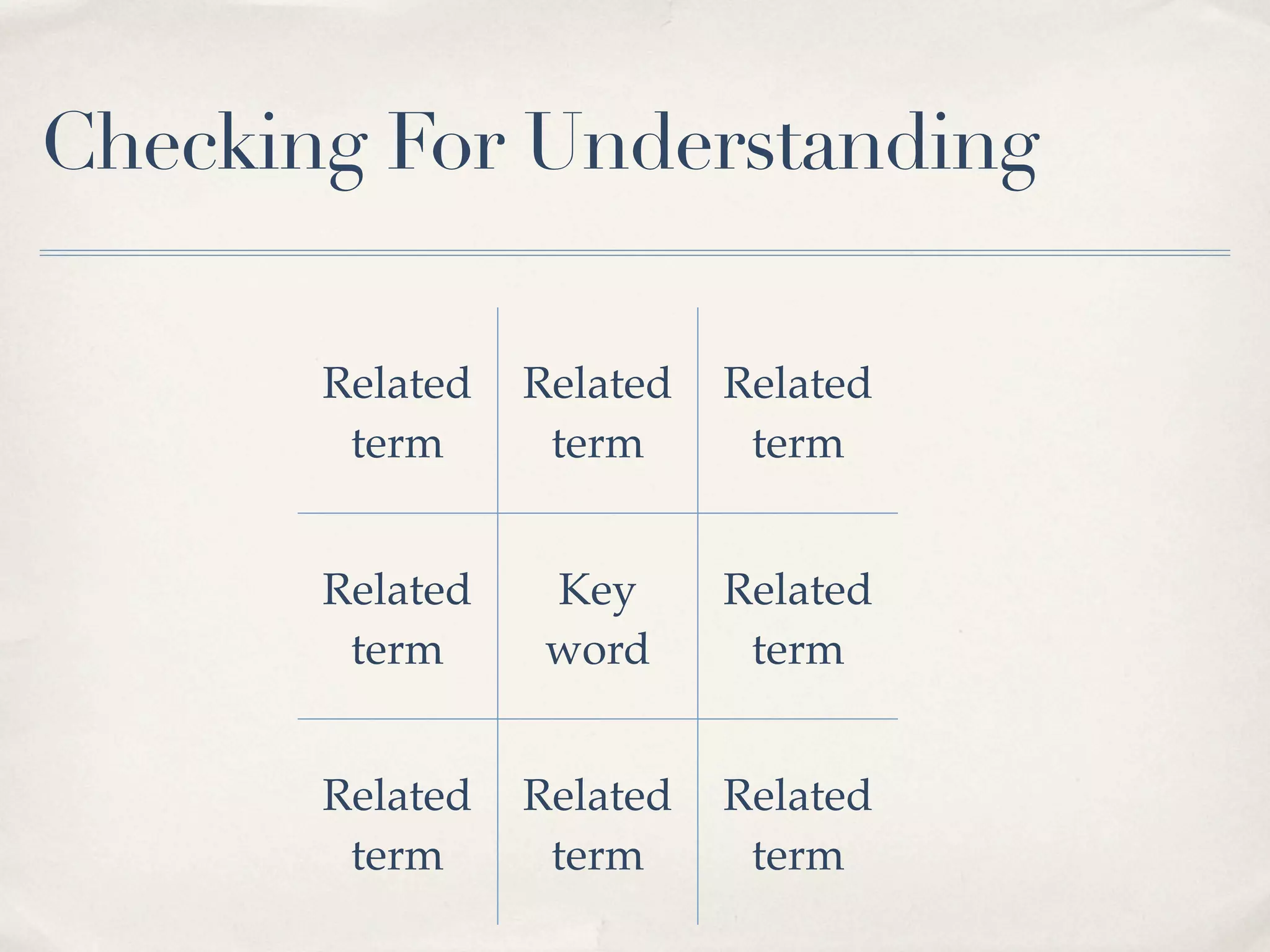
       Related   Related   Related
        term      term      term


       Related    Key      Related
        term      word      term


       Related   Related   Related
        term      term      term
Checking For Understanding


✤   Example & Non Example:

✤   What is an example of legislation? What could be mistaken for an
    example of legislation, but isn’t legislation?
Practice & Application


✤   Quality Learning Tasks

✤   Strength Training
Practice & Application

✤   Quality Learning Tasks

✤   In this upcoming SAC in English you need to write a text response
    essay. As practice tasks we will do the following things:

✤   Just practicing: procedures for understanding the essay topic,
    procedures for planning, writing introductions, writing topic
    sentences, writing body paragraphs focusing on using evidence,
    writing body paragraphs using certain types of evidence, writing
    body paragraphs focusing on analysis, using meta language in our
    body paragraphs.
Practice & Application

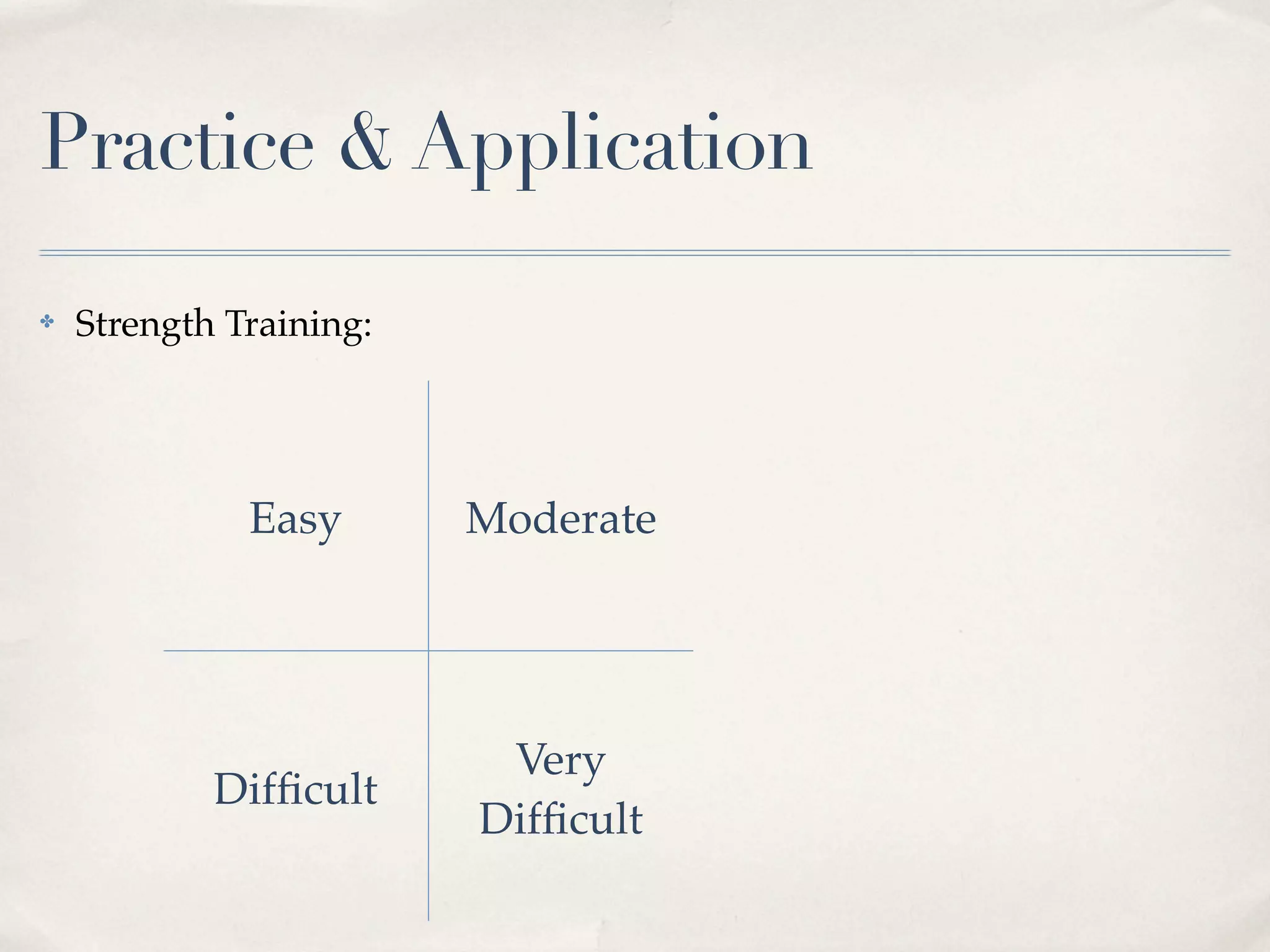
✤   Strength Training:


              Easy       Moderate


                          Very
            Difficult
                         Difficult
Processing & Reflection


✤   Concept charting

✤   Summarising

✤   What questions go with these answers
Processing & Reflection

✤   Concept Charting:

✤   Establish a list of ten key words on a topic

✤   What is the most important word?

✤   What is the word you link most with this first word?

✤   What is the word you link most with the second word?

✤   Repeat process, then explain links between words
Processing & Reflection


✤   Summarise Content:

✤   As a picture

✤   As a flow chart

✤   By highlighting key words and changing them
Processing & Reflection


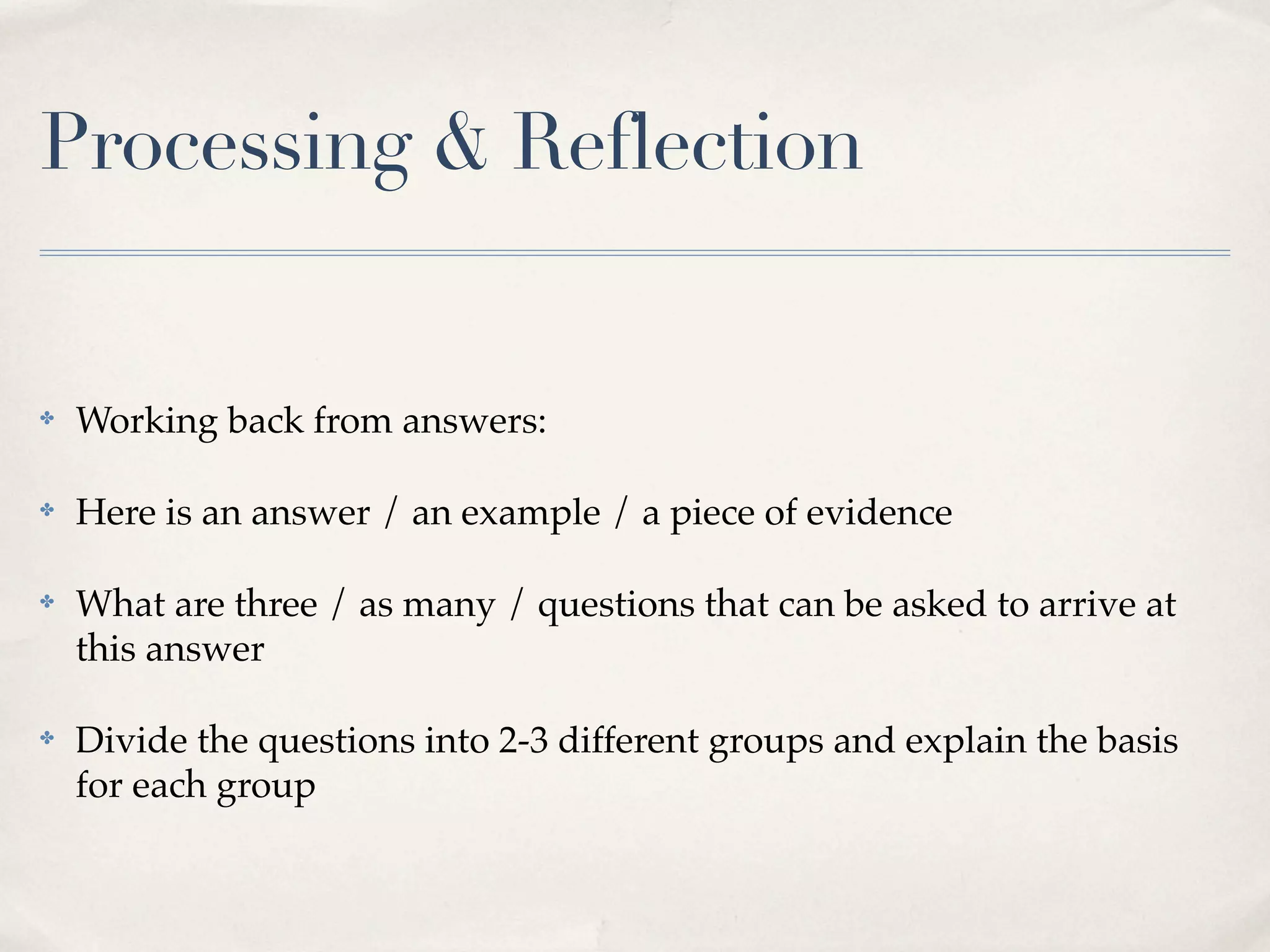
✤   Working back from answers:

✤   Here is an answer / an example / a piece of evidence

✤   What are three / as many / questions that can be asked to arrive at
    this answer

✤   Divide the questions into 2-3 different groups and explain the basis
    for each group
Processing & Reflection

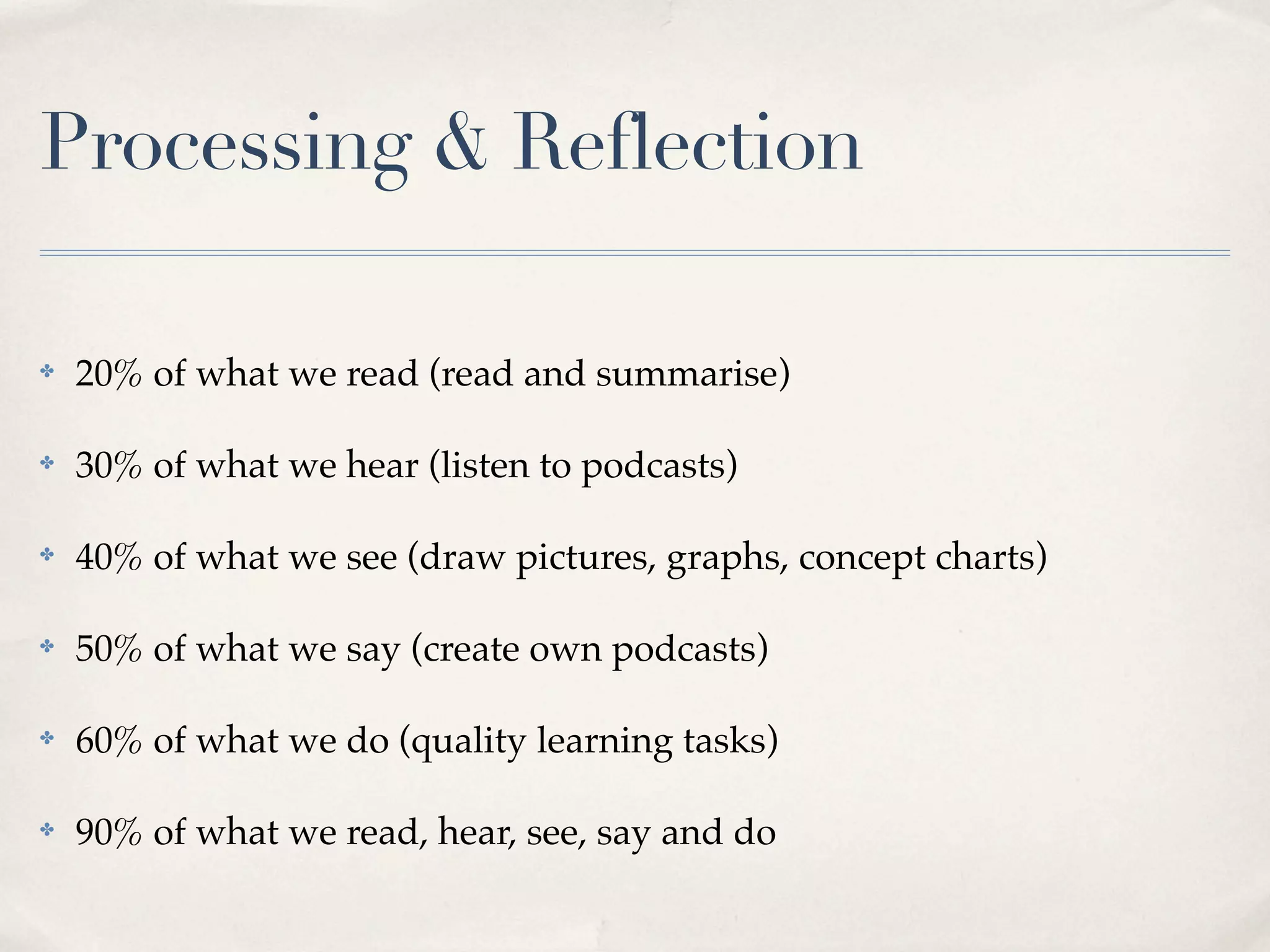
✤   20% of what we read (read and summarise)

✤   30% of what we hear (listen to podcasts)

✤   40% of what we see (draw pictures, graphs, concept charts)

✤   50% of what we say (create own podcasts)

✤   60% of what we do (quality learning tasks)

✤   90% of what we read, hear, see, say and do
Processing & Reflection


✤   When will you do this homework?

✤   Where will you do this homework?

✤   How will you do this homework?
Thank you...

Homework study strategies for every classroom

  • 1.
    Meaningful Homework & EffectiveStudy Skills For Every Subject Date
  • 3.
    What do youknow? ✤ There are ten questions about Australian history on your table ✤ Scan through them: Put a tick next to the ones you know for certain, a circle next to the ones you know something about, a question mark next to the ones you don’t really know anything about
  • 4.
    Four Types ofHomework / Study Skills ✤ Pre-learning ✤ Checking for understanding ✤ Practice & Application ✤ Processing / Reflection
  • 5.
    Four Types ofHomework / Study Skills ✤ What category did the first task belong to?
  • 6.
    Pre-learning ✤ What does the student already know? ✤ What can the student already do? ✤ What can the student do to prepare for what they need to know and do?
  • 7.
    Pre-Learning ✤ Skill / Content Continuums
  • 8.
    Pre-Learning First we’re And by the end Then about Then about going to learn you need to this... this... about this know this... And by the First we’re Then how to Then how to end you need going to learn do this... do this... to be able to do how to do this this...
  • 9.
    Pre-Learning ✤ Students who learn effectively independently have specific goals about what they want to be able to know and do ✤ If we want students to have specific goals, we need to articulate specific stages of learning to them
  • 11.
    Checking For Understanding ✤ Explain back ✤ Mnemonics ✤ Vocabulary activities ✤ Example / Non-Example
  • 12.
    Checking For Understanding ✤ Explain back: ✤ As a podcast / vodcast demonstrating the process / discussing the content ✤ Without using any of these key words ✤ In a way that Year 7s will understanding ✤ In a different format - as an annotated picture / flow chart / graph, comic ✤ By using an extended simile or metaphor
  • 13.
    Checking For Understanding ✤ Mnemonics: ✤ R = Remember ✤ A = Affect ✤ V = Verb ✤ E = Effect ✤ N = Noun
  • 14.
    Checking For Understanding Related Related Related term term term Related Key Related term word term Related Related Related term term term
  • 15.
    Checking For Understanding ✤ Example & Non Example: ✤ What is an example of legislation? What could be mistaken for an example of legislation, but isn’t legislation?
  • 17.
    Practice & Application ✤ Quality Learning Tasks ✤ Strength Training
  • 18.
    Practice & Application ✤ Quality Learning Tasks ✤ In this upcoming SAC in English you need to write a text response essay. As practice tasks we will do the following things: ✤ Just practicing: procedures for understanding the essay topic, procedures for planning, writing introductions, writing topic sentences, writing body paragraphs focusing on using evidence, writing body paragraphs using certain types of evidence, writing body paragraphs focusing on analysis, using meta language in our body paragraphs.
  • 19.
    Practice & Application ✤ Strength Training: Easy Moderate Very Difficult Difficult
  • 21.
    Processing & Reflection ✤ Concept charting ✤ Summarising ✤ What questions go with these answers
  • 22.
    Processing & Reflection ✤ Concept Charting: ✤ Establish a list of ten key words on a topic ✤ What is the most important word? ✤ What is the word you link most with this first word? ✤ What is the word you link most with the second word? ✤ Repeat process, then explain links between words
  • 23.
    Processing & Reflection ✤ Summarise Content: ✤ As a picture ✤ As a flow chart ✤ By highlighting key words and changing them
  • 24.
    Processing & Reflection ✤ Working back from answers: ✤ Here is an answer / an example / a piece of evidence ✤ What are three / as many / questions that can be asked to arrive at this answer ✤ Divide the questions into 2-3 different groups and explain the basis for each group
  • 25.
    Processing & Reflection ✤ 20% of what we read (read and summarise) ✤ 30% of what we hear (listen to podcasts) ✤ 40% of what we see (draw pictures, graphs, concept charts) ✤ 50% of what we say (create own podcasts) ✤ 60% of what we do (quality learning tasks) ✤ 90% of what we read, hear, see, say and do
  • 26.
    Processing & Reflection ✤ When will you do this homework? ✤ Where will you do this homework? ✤ How will you do this homework?
  • 27.