HIV
-Burden, Pathogenesis & Management
DR IORHEN E. AKASE
INFECTIOUS DISEASES UNIT
COLLEGE OF MEDICINE, UNIVERSITY OF LAGOS.
Lecture objectives
Review the background & virology of HIV
Discuss the burden of HIV
Discuss the pathogenesis, natural history & clinical progression of HIV
Review the principles of management of HIV
Introduction I
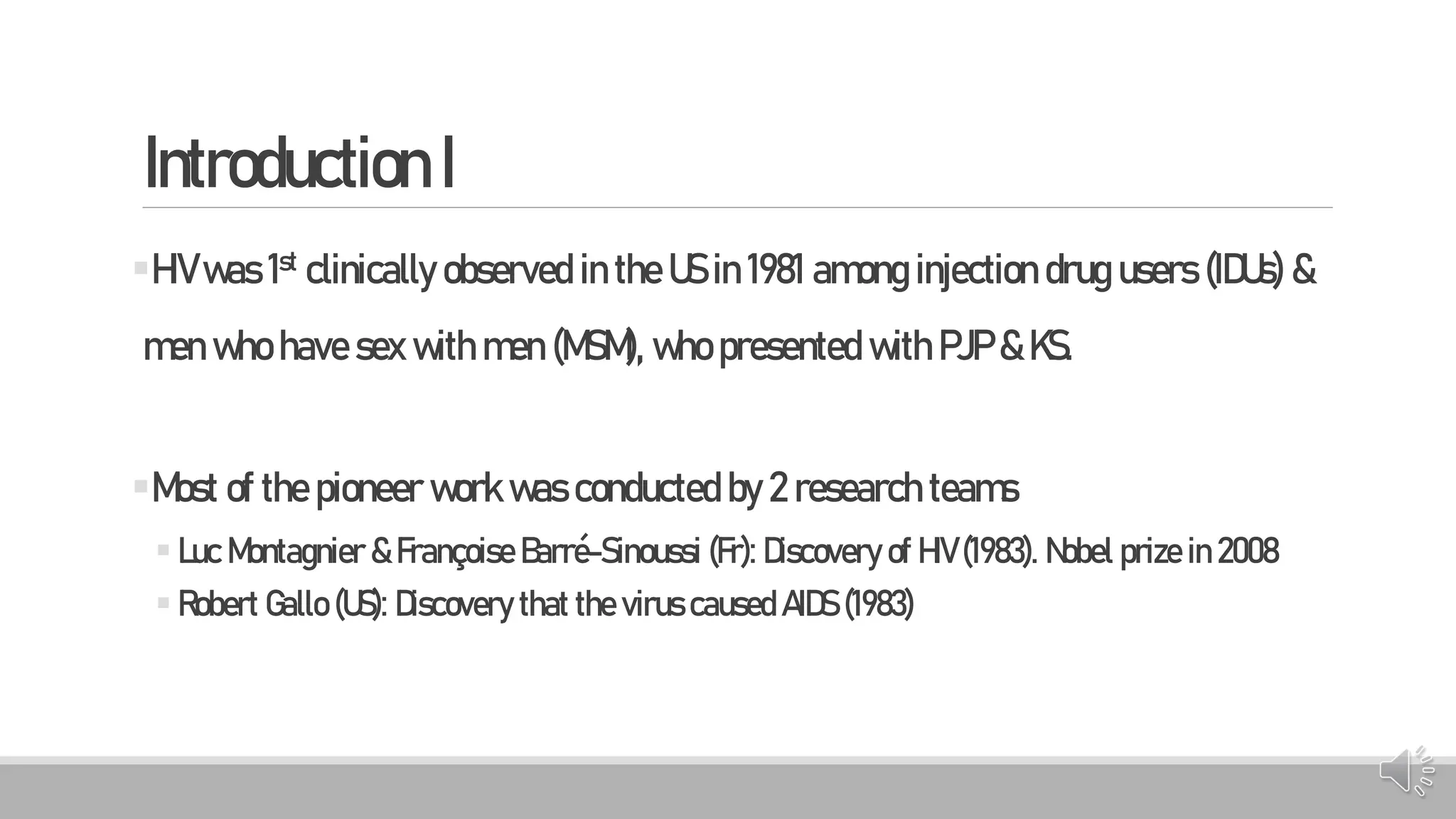
▪HIV was 1st clinically observed in the US in 1981 among injection drug users (IDUs) &
men who have sex with men (MSM), who presented with PJP & KS.
▪Most of the pioneer work was conducted by 2 research teams
▪Luc Montagnier & Françoise Barré-Sinoussi (Fr): Discovery of HIV (1983). Nobel prize in 2008
▪Robert Gallo (US): Discovery that the virus caused AIDS (1983)
Introduction II
Robert Charles Gallo
Luc Montagnier
Françoise Barré-Sinoussi
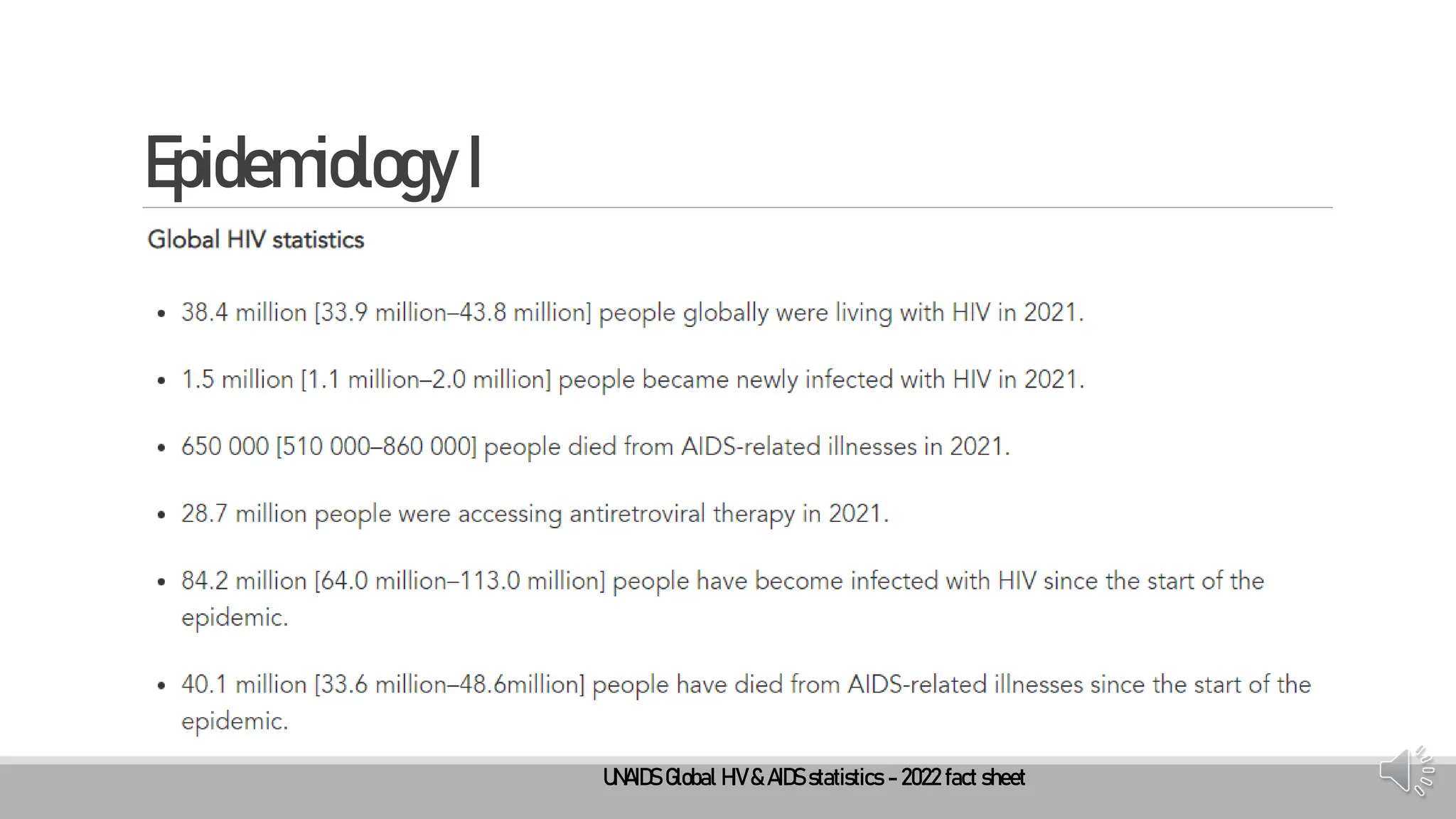
Epidemiology I
UNAIDS Global HIV & AIDS statistics - 2022 fact sheet
Epidemiology II
Epidemiology III
▪ HIV prevalence among adults in Nigeria has
been dropping, from 5.14% to 3.2%; then
2.8%.
▪ Now it is 1.4% (2019 report).
▪ The high risk groups involving female sex
workers, men who have sex with men and
injecting drug users contribute
substantially to new infections.
Virology
HIV is a RNA virus, a member of the Lentivirus genus, and of the family Retroviridae.
◦ The hallmark is the error prone reverse-transcription!
2 types of HIV have been described:
◦ HIV-1: Causes majority of world-wide infections, more infectious and virulent. From the common
chimpanzee & gorillas.
◦ HIV-2: Lower infectivity & virulence, linked to W/Africa. From the sooty mangabey monkeys.
HIV structure I
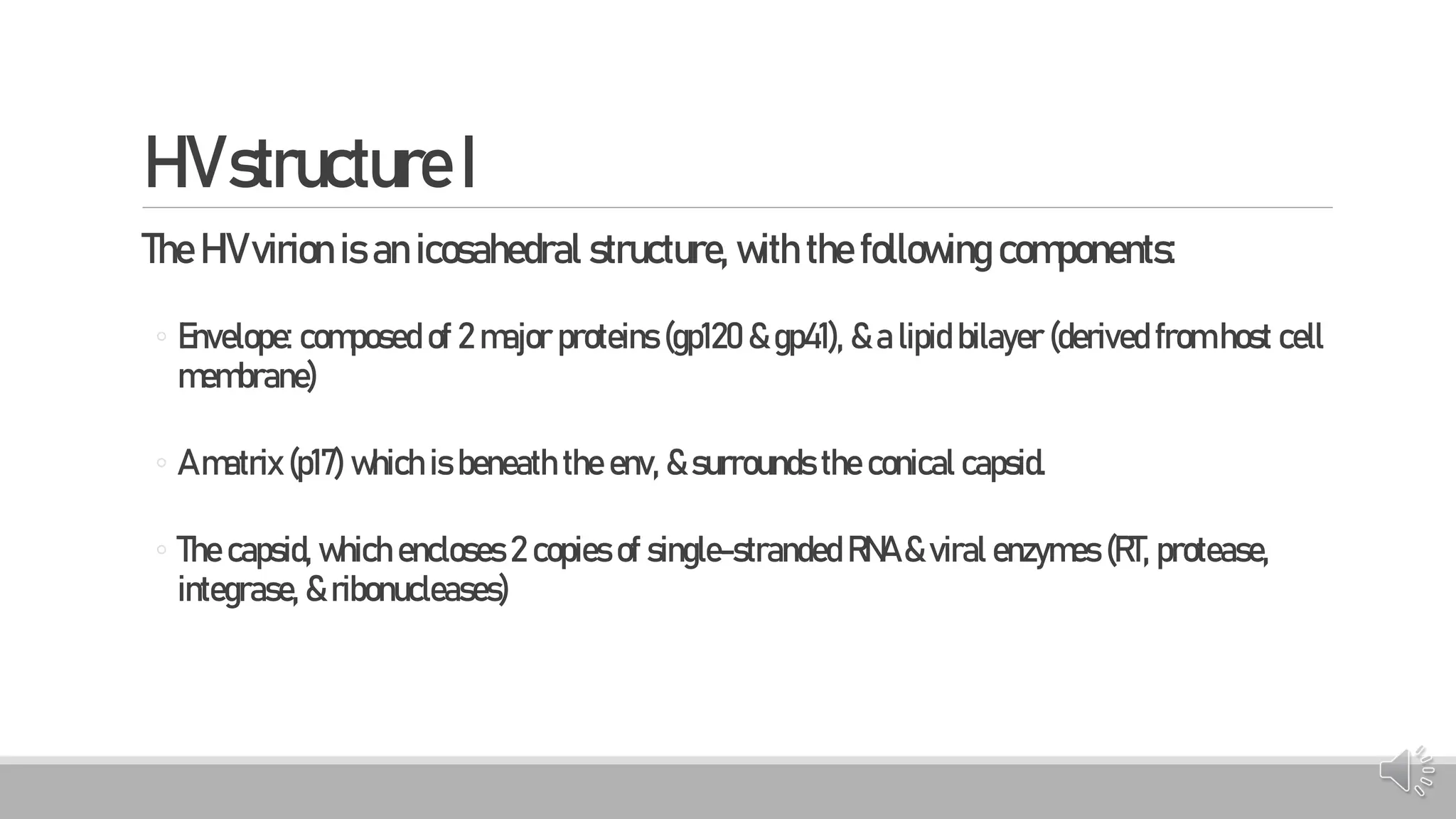
The HIV virion is an icosahedral structure, with the following components:
◦ Envelope: composed of 2 major proteins (gp120 & gp41), & a lipid bilayer (derived from host cell
membrane)
◦ A matrix (p17) which is beneath the env, & surrounds the conical capsid.
◦ The capsid, which encloses 2 copies of single-stranded RNA & viral enzymes (RT, protease,
integrase, & ribonucleases)
HIV structure II
Fanales-Belasio et al. Ann Ist Super Sanità 2010
HIV genetic variability I
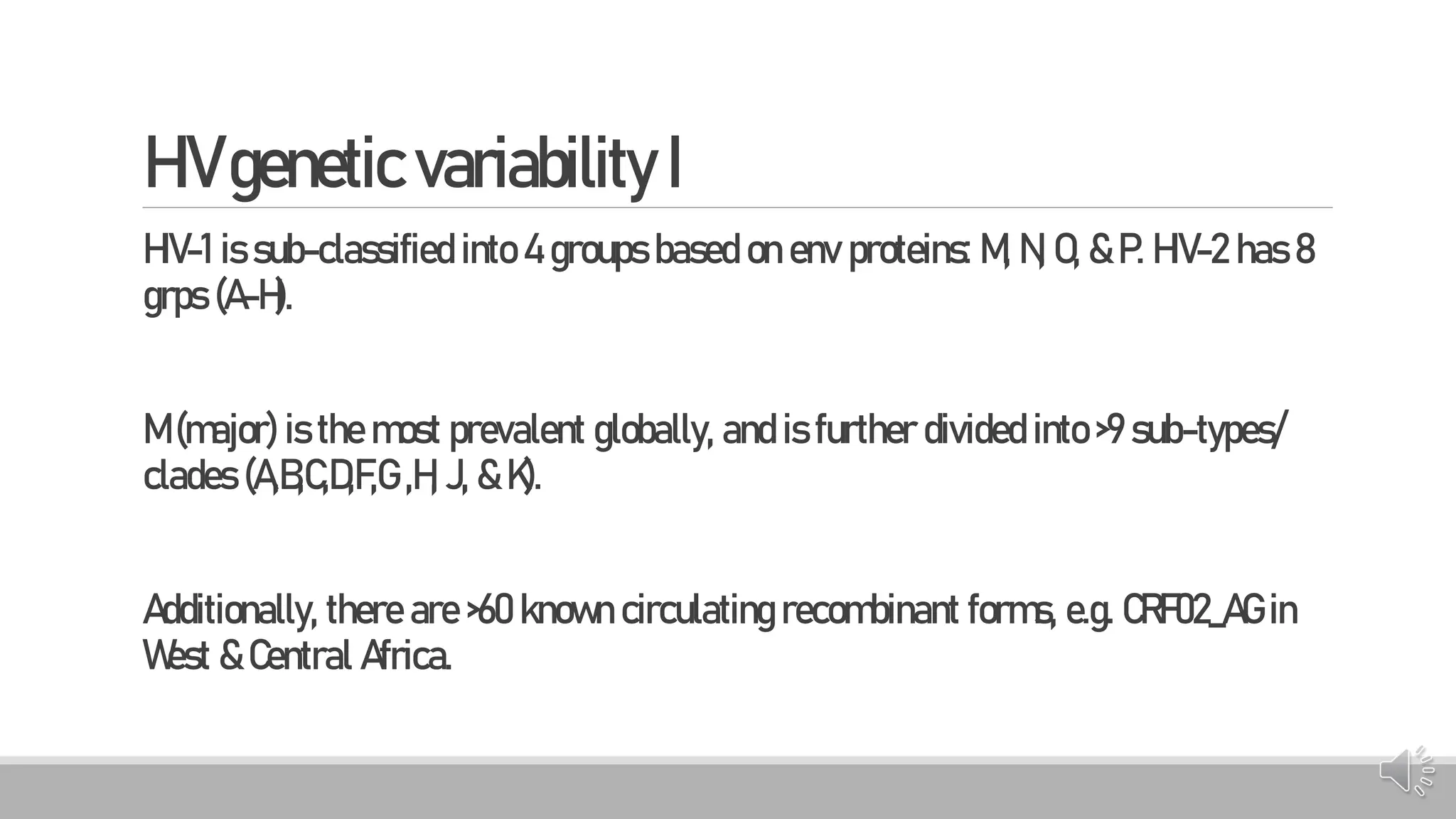
HIV-1 is sub-classified into 4 groups based on env proteins: M, N, O, & P. HIV-2 has 8
grps (A-H).
M (major) is the most prevalent globally, and is further divided into >9 sub-types/
clades (A,B,C,D,F,G ,H, J, & K).
Additionally, there are >60 known circulating recombinant forms, e.g. CRF02_AG in
West & Central Africa.
HIV genetic variability II
IAVI Report, 2003.
47% of global
infections are
from subtype C,
26.7% from
CRF02_AG.
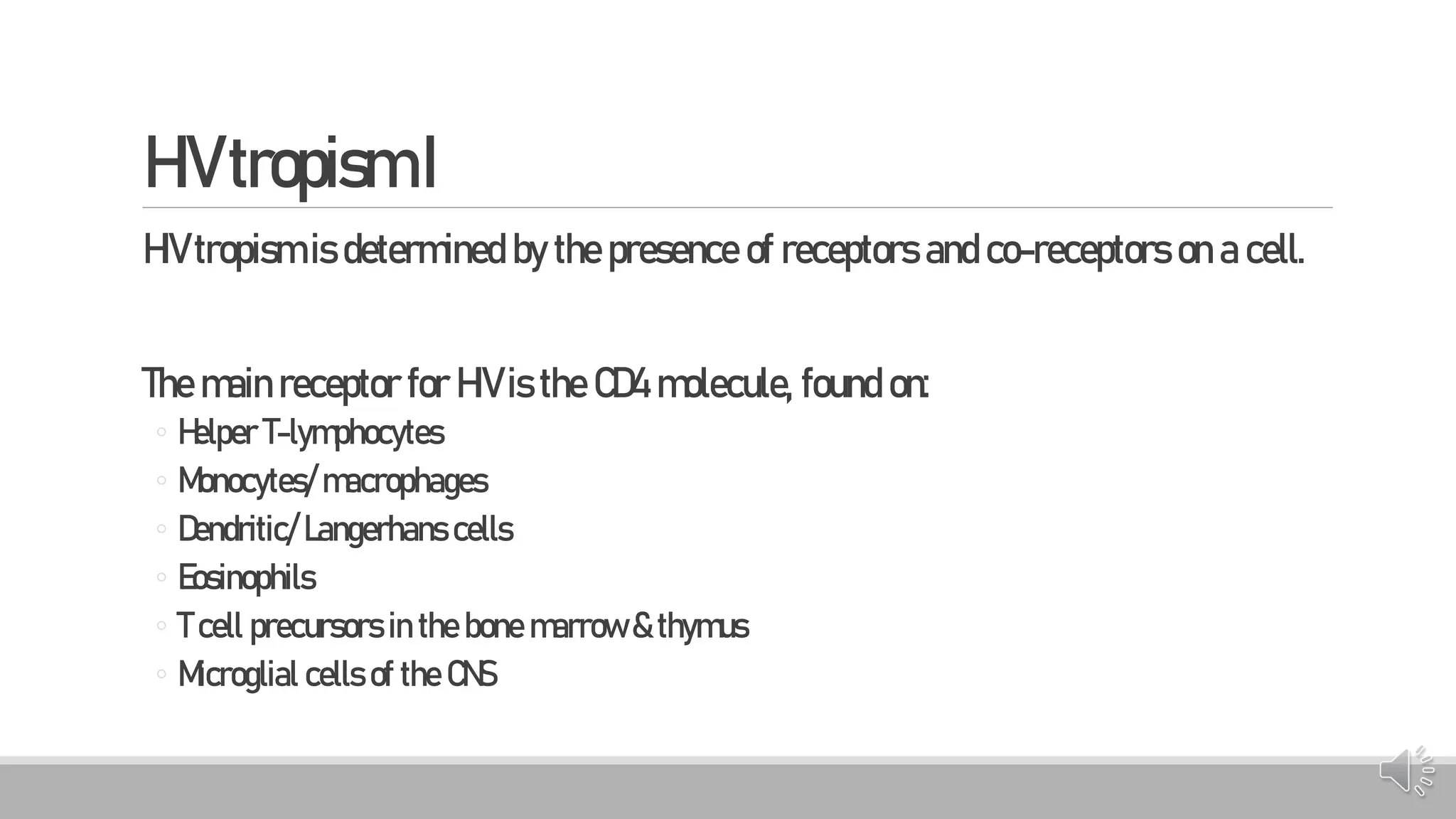
HIV tropism I
HIV tropism is determined by the presence of receptors and co-receptors on a cell.
The main receptor for HIV is the CD4 molecule, found on:
◦ Helper T-lymphocytes
◦ Monocytes/ macrophages
◦ Dendritic/ Langerhans cells
◦ Eosinophils
◦ T cell precursors in the bone marrow & thymus
◦ Microglial cells of the CNS
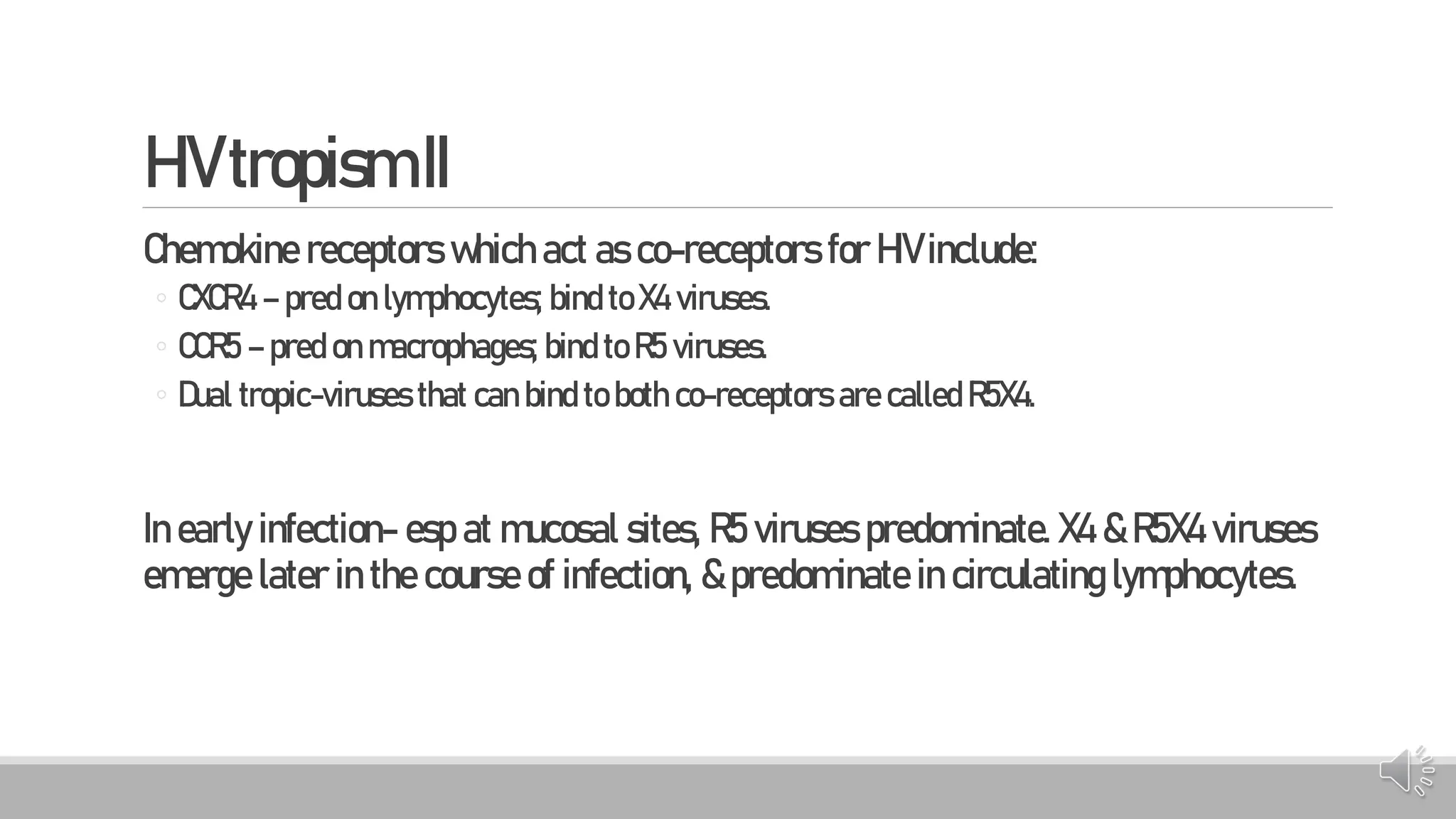
HIV tropism II
Chemokine receptors which act as co-receptors for HIV include:
◦ CXCR4 – pred on lymphocytes; bind to X4 viruses.
◦ CCR5 – pred on macrophages; bind to R5 viruses.
◦ Dual tropic-viruses that can bind to both co-receptors are called R5X4.
In early infection- esp at mucosal sites, R5 viruses predominate. X4 & R5X4 viruses
emerge later in the course of infection, & predominate in circulating lymphocytes.
HIV cellular tropism
Fanales-Belasio et al. Ann Ist Super Sanità 2010
HIV Tropism
Joseph et al. Nature Reviews Microbiology. 2015; 13: 414–425
HIV replication cycle
Fanales-Belasio et al. Ann Ist Super Sanità 2010
Infection Risk per exposure I
Patel et al. AIDS. 2014;28: 1509-1519
Infection Risk per exposure II
Sultan et al. HIV/AIDS–Research and Palliative Care 2014:6
Pathophysiology I
The hallmark of HIV is progressive quantitative & qualitative loss of the CD+ T cell,
despite polyclonal immune activation.
CD4+ T-cell depletion is thought to be due to
◦ Direct infection & destruction by HIV
◦ Immune clearance of infected CD4 cells
◦ Cell death associated with aberrant immune activation
◦ Immune exhaustion due to aberrant cellular activation
Pathophysiology II
Virions are transported across mucosal barriers by Langerhans-type DCs, usu
facilitated by mucosal disruptions (e.g. STDs, trauma, etc).
Submocosal CD4 cells disseminate the virus to LNs & other lymphoid tissue (e.g.
GALT), where large no of CD4 cells → burst of high viremia
Rate of disease progression is not determined by initial viremia, but by the viral set
point after ≈ 1 yr.
Pathophysiology
III
Sequence of events
The sequence of events in
untreated HIV infection:-
◦ Primary infection
◦ Serologic latency
◦ Sero-conversion
◦ Clinical latency
◦ Early symptomatic HIV infection
◦ Advanced HIV infection
Clinical course of HIV I
Fanales-Belasio et al. Ann Ist Super Sanità 2010
Clinical course III
Deeks et al. Nature Reviews Disease Primers: 15035 (2015)
CDC classification of HIV
CDC . MMWR Recomm Rep. 2014;63:1-10.
WHO classification of HIV
Stage Features
Primary HIV infection Asymptomatic, acute retroviral
syndrome
Stage 1 Asymptomatic, PGL
Stage 2 Skin & mucous membrane disease
Stage 3 Invasive, non-AIDS defining
Stage 4 AIDS defining conditions
Immunology of HIV
1. Non-specific inflammation & persistence of immune-activation
2. Polyclonal Ab production (HIV-binding & HIV-neutralizing)
3. Progressive decline in CD4+ T-cells, with ↓ CD4/CD8 ration
4. Shift in CD4 response from Th1 → Th2
Immune evasion by HIV
Generation of viral diversity by mutation & recombination
◦ Error prone RT
◦ High rates of replication & turn over (1010 – 1011/day)
Immune exhaustion
Down-regulation of HLA-1 on HIV-infected cells
Preferential elimination of CD4+ T-cells
Sequestration of infected cells in immunologically privileged sites, like the CNS &
latent CD4/ Macs
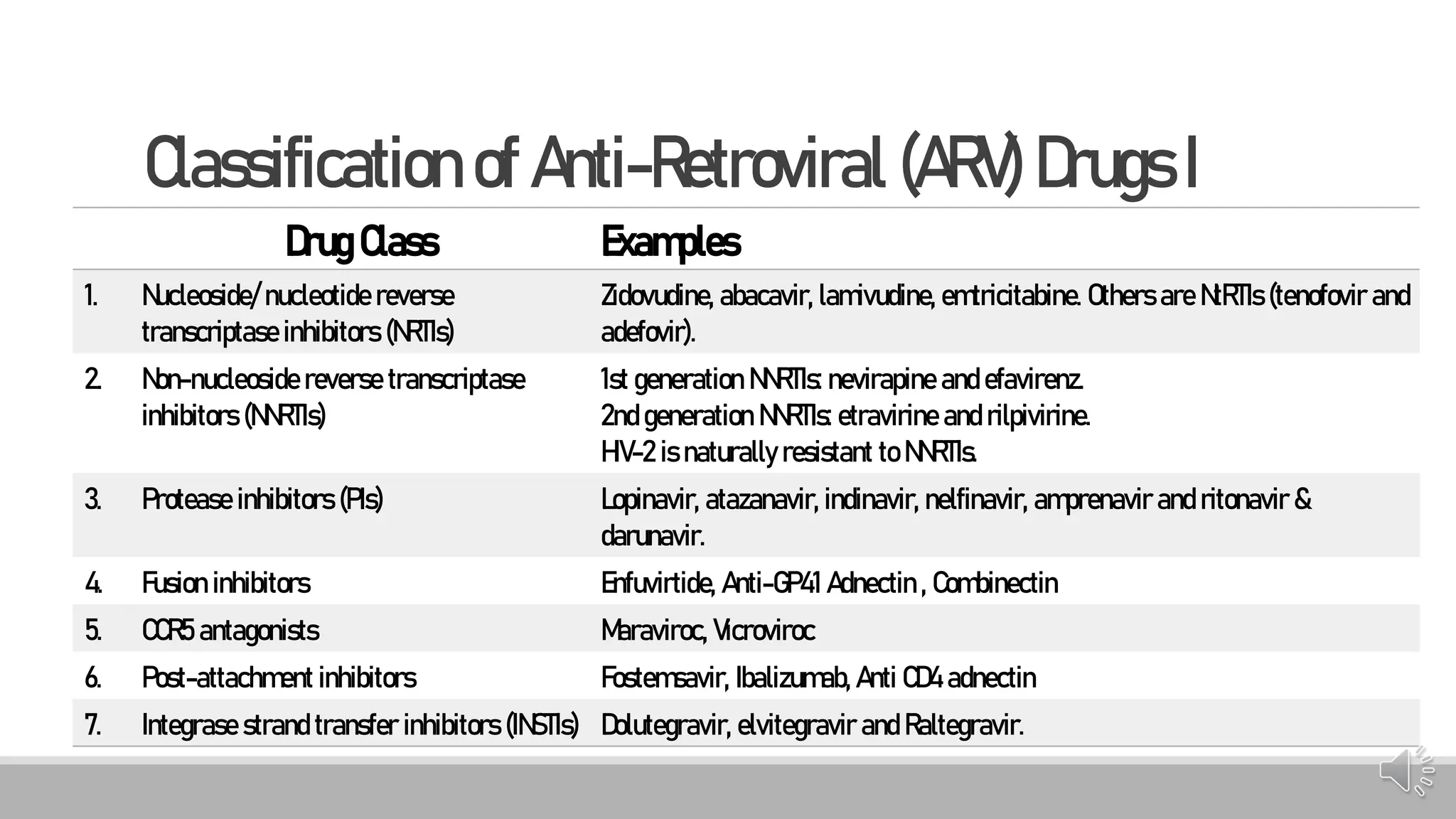
Classification of Anti-Retroviral (ARV) Drugs I
Drug Class Examples
1. Nucleoside/ nucleotide reverse
transcriptase inhibitors (NRTIs)
Zidovudine, abacavir, lamivudine, emtricitabine. Others are NtRTIs (tenofovir and
adefovir).
2. Non-nucleoside reverse transcriptase
inhibitors (NNRTIs)
1st generation NNRTIs: nevirapine and efavirenz.
2nd generation NNRTIs: etravirine and rilpivirine.
HIV-2 is naturally resistant to NNRTIs.
3. Protease inhibitors (PIs) Lopinavir, atazanavir, indinavir, nelfinavir, amprenavir and ritonavir &
darunavir.
4. Fusion inhibitors Enfuvirtide, Anti-GP41 Adnectin , Combinectin
5. CCR5 antagonists Maraviroc, Vicroviroc
6. Post-attachment inhibitors Fostemsavir, Ibalizumab, Anti CD4 adnectin
7. Integrase strand transfer inhibitors (INSTIs) Dolutegravir, elvitegravir and Raltegravir.
Classification of Anti-Retroviral (ARV) Drugs II
Pharmacokinetic enhancers
▪ These are drugs used in HIV treatment to increase the effectiveness of certain
classes of ARV drugs (e.g Pis – which are easily metabolized by CYP450
enzymes)
▪ In HIV therapy, two pharmacokinetic enhancers or boosting agents are used:
ritonavir and cobicistat.
▪ Both agents inhibit CYP3A4, with cobicistat being a more specific CYP inhibitor
than ritonavir.
▪ Unlike ritonavir, cobicistat does not have antiretroviral activity.
Objectives of Drug Treatment in HIV
▪ The primary goal of HIV treatment is to reduce a person's viral load to an
undetectable level, and to maintain maximal suppression of the viral load (i.e.,
fewer than 20 copies per mL).
▪ Others are:
i. To restore or preserve immunologic function
ii. To improve quality of life
iii. To reduce HIV-related morbidity and mortality.
iv. Reduce the risk of transmission to others
Initiating Anti-Retroviral Therapy (ART) I
▪ ART should be initiated in all
adults, adolescents, pregnant
and breast feeding women,
and children with a diagnosis
of HIV regardless of WHO
clinical stage and regardless
of CD4+ cell count.
Initiating Anti-Retroviral Therapy (ART) II
▪ However as a priority, health care workers should initiate ART in the following:
i. All Adults and adolescents with severe or advanced HIV clinical disease (WHO stage
3 or 4)
ii. All patients with HIV and CD4+ cell count of less than 350 cells/mm3
iii. All HIV positive pregnant and breastfeeding women
iv. All HIV positive children less than 5 years of age, especially with CD4+ cell count of
less than 750 cells/mm3 or CD4 percentage less than 25%
Baseline Evaluation for ART
▪ The baseline assessment and preparation of patients for ART should include:
– Retesting for HIV to verify HIV status
– Assessment of patient’s readiness for initiation of ART (counselling).
– Complete history and physical examination: Anthropometric assessment, previous medical
history, social hx (alcohol/ tobacco/ IV drug use), sexual partners.
– Baseline CD4+ cell count estimation
– Screening for TB and Hepatitis (B and C), Cryptococcus, toxoplasmosis, etc.
– Determination of WHO clinical stage of disease
– Pregnancy assessment, family planning and counselling services, where required.
– Conducting baseline laboratory assessments
HAART & ART Regimens I
▪ HAART/ cART = combinations of a minimum of three drugs from at least two
different classes of ARVs be used for ART. These ARVs are expected to act at
different points of the HIV life cycle.
▪ Typically, a backbone of 2 NRTIs combined with an NNRTI or a PI is used.
▪ Monotherapy or dual ARV therapy for HIV infection is not recommended for
treatment because of the increased risk of development of drug resistance.
HAART & ART Regimens II
Regimen
First line regimen
(Usu 2 NRTIs + INsTI/ NNRTI)
This is given for patients who are treatment naïve and are
commencing ART for the first time; or recommencing treatment
after default without evidence of resistance.
-These are the most effective, and have the least side effects
Second line regimen
(Usu 2 NRTIs + PI)
These are usually given when patients have failed treatment
with the first line regimens
Third line or salvage regimen These are given to those who have failed treatment with the 1st
and 2nd line regimens.
-They are the least effective, and may have side effects.
-They are based on results of resistance testing.
First Line Regimens
▪ Preferred first-line regimen in Nigeria now is:
▪ Tenofovir + lamivudine/ emtricitabine + dolutegravir
▪ Alternative regimens include:
▪ Abacavir + lamivudine + doltegravir (renal impairment)
▪ Tenofovir + lamivudine/ emtricitabine + efivarenz
▪ Zidovudine + lamivudine + efivarenz
▪ Abacavir + lamivudine + efivarenz
Injectable HIV Treatment Approved
▪CABENUVA = cabotegravir + rilpivirine
▪Given monthly or 2-monthly
▪Cabotegravir (INsTI)
▪Rilpivirine (NNRTI)
▪Approved in January 2021 by the FDA
Treatment Failure I
▪ ARV treatment failure may be defined as sub-optimal treatment outcomes
following initiation of ART. It can be classified as;
– Virologic failure
– Immunologic failure
– Clinical failure
▪ This assessment can be done for patients who have been on ART for at least 6
months, and who have been regular on their medications for the previous 3
months.
Treatment Failure II
Failure Definition
Clinical New or recurrent clinical event indicating severe immunodeficiency (WHO
clinical stage 3 or 4 condition) after 6 months of effective treatment.
Immunologic CD4+ cell count falls to the baseline (or below)
Or Persistent CD4+ cell count below 100 cells/mm3
Or 50% decline from on-therapy CD4+ cell count peak level
Virologic Plasma viral load above 1000 copies/ml based on two consecutive viral
load measurements in 3 months, with adherence support following the
first viral load test
Treatment Failure III
▪ Viral factors
▪ Acquired drug resistance. Patients may develop drug resistant mutations while on ART if
maximal adherence (>95%) is not maintained.
▪ Transmitted drug resistance. Patients may be infected with drug resistant virus during
their initial exposure or be re-infected with drug resistant virus while on ART.
▪ Non-viral Factors
▪ Host factors: poor adherence to ART, malnutrition and malabsorption of drugs,
▪ Inappropriate therapy: choice of initial ART regimen, poor potency or improper dosing
▪ Drug-drug interactions
Follow-up of patients
▪ Clinical history including:
– Assessment of adherence to medication
– Evidence of ART side effects; features of opportunistic infections, etc.
▪ Physical examination:
– Weight, Blood pressure
– Full blood count, Urinalysis (if taking tenofovir), Liver and renal function
– Fasting lipid profile (if on PIs), Fasting blood glucose
▪ Labs
– HIV viral load, CD4 T cell levels
Preventive Therapies in HIV
Therapy Benefit Comment
Co-trimoxazole • Toxoplasmosis
• Pneumocystis jirovecii Pneumonia
• Malaria
• Invasive bacterial infections
• Opportunistic GI infections
• 960mg daily till CD4 > 500 cells/mL
• Alternatives: dapsone, clindamycin,
atovaquone, etc.
Isoniazid ▪ Latent TB infection
• No cough
• No weight loss
• No excessive sweats
• No fever
• Normal CXR
• 300mg daily for 6 months
PMTCT • Prevent maternal infections
• Commence ART if pregnant
woman infected
• Safe delivery/ infant feeding.
IRIS I
▪ IRIS = Immune reconstitution inflammatory syndrome
▪ This occurs usually in people who have been profoundly immunosuppressed and
begin therapy. As their immune system recovers, they are able to mount an
inflammatory response to a range of pathogens, which can include exacerbation
of symptoms with new or worsening of clinical signs.
▪ This is often due to inadequate baseline evaluation before commencement of
ART.
▪ Infections most commonly associated with IRIS include Mycobacterium
tuberculosis and cryptococcal meningitis.
IRIS II
▪ Usually occurs between 3 weeks – 6 months following commencement of ART.
▪ Risk factors for IRIS include:
▪ CD4 count less than 200 cells/ mm3
▪ Very high viral loads
▪ Treatment naïve individuals
▪ HIV patients with opportunistic CNS infections
▪ Rapid improvement in CD4 counts
▪ Poor baseline evaluation for opportunistic infections.
IRIS III
▪ Approach to management of IRIS:
– Rule out new onset infection, as diagnosis is based on clinical presentation and exclusion
of alternative causes for deterioration.
– Do not discontinue ART
– Evaluate the patient for other new/ concomitant infections
– Treat symptomatically
– Treat underlying cause of the IRIS
– Consider anti-inflammatory agents in severe disease (NSAIDs or even steroids) in addition
to the treatment of underlying infection.
Adverse Drug
Reactions in
ART
Drug-Drug
Interactions
Summary
Questions?!

HIV- AIDs, Pathogenesis and Management.pdf

  • 1.
    HIV -Burden, Pathogenesis &Management DR IORHEN E. AKASE INFECTIOUS DISEASES UNIT COLLEGE OF MEDICINE, UNIVERSITY OF LAGOS.
  • 2.
    Lecture objectives Review thebackground & virology of HIV Discuss the burden of HIV Discuss the pathogenesis, natural history & clinical progression of HIV Review the principles of management of HIV
  • 3.
    Introduction I ▪HIV was1st clinically observed in the US in 1981 among injection drug users (IDUs) & men who have sex with men (MSM), who presented with PJP & KS. ▪Most of the pioneer work was conducted by 2 research teams ▪Luc Montagnier & Françoise Barré-Sinoussi (Fr): Discovery of HIV (1983). Nobel prize in 2008 ▪Robert Gallo (US): Discovery that the virus caused AIDS (1983)
  • 4.
    Introduction II Robert CharlesGallo Luc Montagnier Françoise Barré-Sinoussi
  • 5.
    Epidemiology I UNAIDS GlobalHIV & AIDS statistics - 2022 fact sheet
  • 6.
  • 7.
    Epidemiology III ▪ HIVprevalence among adults in Nigeria has been dropping, from 5.14% to 3.2%; then 2.8%. ▪ Now it is 1.4% (2019 report). ▪ The high risk groups involving female sex workers, men who have sex with men and injecting drug users contribute substantially to new infections.
  • 8.
    Virology HIV is aRNA virus, a member of the Lentivirus genus, and of the family Retroviridae. ◦ The hallmark is the error prone reverse-transcription! 2 types of HIV have been described: ◦ HIV-1: Causes majority of world-wide infections, more infectious and virulent. From the common chimpanzee & gorillas. ◦ HIV-2: Lower infectivity & virulence, linked to W/Africa. From the sooty mangabey monkeys.
  • 9.
    HIV structure I TheHIV virion is an icosahedral structure, with the following components: ◦ Envelope: composed of 2 major proteins (gp120 & gp41), & a lipid bilayer (derived from host cell membrane) ◦ A matrix (p17) which is beneath the env, & surrounds the conical capsid. ◦ The capsid, which encloses 2 copies of single-stranded RNA & viral enzymes (RT, protease, integrase, & ribonucleases)
  • 10.
    HIV structure II Fanales-Belasioet al. Ann Ist Super Sanità 2010
  • 11.
    HIV genetic variabilityI HIV-1 is sub-classified into 4 groups based on env proteins: M, N, O, & P. HIV-2 has 8 grps (A-H). M (major) is the most prevalent globally, and is further divided into >9 sub-types/ clades (A,B,C,D,F,G ,H, J, & K). Additionally, there are >60 known circulating recombinant forms, e.g. CRF02_AG in West & Central Africa.
  • 12.
    HIV genetic variabilityII IAVI Report, 2003. 47% of global infections are from subtype C, 26.7% from CRF02_AG.
  • 13.
    HIV tropism I HIVtropism is determined by the presence of receptors and co-receptors on a cell. The main receptor for HIV is the CD4 molecule, found on: ◦ Helper T-lymphocytes ◦ Monocytes/ macrophages ◦ Dendritic/ Langerhans cells ◦ Eosinophils ◦ T cell precursors in the bone marrow & thymus ◦ Microglial cells of the CNS
  • 14.
    HIV tropism II Chemokinereceptors which act as co-receptors for HIV include: ◦ CXCR4 – pred on lymphocytes; bind to X4 viruses. ◦ CCR5 – pred on macrophages; bind to R5 viruses. ◦ Dual tropic-viruses that can bind to both co-receptors are called R5X4. In early infection- esp at mucosal sites, R5 viruses predominate. X4 & R5X4 viruses emerge later in the course of infection, & predominate in circulating lymphocytes.
  • 15.
    HIV cellular tropism Fanales-Belasioet al. Ann Ist Super Sanità 2010
  • 16.
    HIV Tropism Joseph etal. Nature Reviews Microbiology. 2015; 13: 414–425
  • 17.
    HIV replication cycle Fanales-Belasioet al. Ann Ist Super Sanità 2010
  • 18.
    Infection Risk perexposure I Patel et al. AIDS. 2014;28: 1509-1519
  • 19.
    Infection Risk perexposure II Sultan et al. HIV/AIDS–Research and Palliative Care 2014:6
  • 20.
    Pathophysiology I The hallmarkof HIV is progressive quantitative & qualitative loss of the CD+ T cell, despite polyclonal immune activation. CD4+ T-cell depletion is thought to be due to ◦ Direct infection & destruction by HIV ◦ Immune clearance of infected CD4 cells ◦ Cell death associated with aberrant immune activation ◦ Immune exhaustion due to aberrant cellular activation
  • 21.
    Pathophysiology II Virions aretransported across mucosal barriers by Langerhans-type DCs, usu facilitated by mucosal disruptions (e.g. STDs, trauma, etc). Submocosal CD4 cells disseminate the virus to LNs & other lymphoid tissue (e.g. GALT), where large no of CD4 cells → burst of high viremia Rate of disease progression is not determined by initial viremia, but by the viral set point after ≈ 1 yr.
  • 22.
  • 23.
    Sequence of events Thesequence of events in untreated HIV infection:- ◦ Primary infection ◦ Serologic latency ◦ Sero-conversion ◦ Clinical latency ◦ Early symptomatic HIV infection ◦ Advanced HIV infection
  • 24.
    Clinical course ofHIV I Fanales-Belasio et al. Ann Ist Super Sanità 2010
  • 25.
    Clinical course III Deekset al. Nature Reviews Disease Primers: 15035 (2015)
  • 26.
    CDC classification ofHIV CDC . MMWR Recomm Rep. 2014;63:1-10.
  • 27.
    WHO classification ofHIV Stage Features Primary HIV infection Asymptomatic, acute retroviral syndrome Stage 1 Asymptomatic, PGL Stage 2 Skin & mucous membrane disease Stage 3 Invasive, non-AIDS defining Stage 4 AIDS defining conditions
  • 29.
    Immunology of HIV 1.Non-specific inflammation & persistence of immune-activation 2. Polyclonal Ab production (HIV-binding & HIV-neutralizing) 3. Progressive decline in CD4+ T-cells, with ↓ CD4/CD8 ration 4. Shift in CD4 response from Th1 → Th2
  • 30.
    Immune evasion byHIV Generation of viral diversity by mutation & recombination ◦ Error prone RT ◦ High rates of replication & turn over (1010 – 1011/day) Immune exhaustion Down-regulation of HLA-1 on HIV-infected cells Preferential elimination of CD4+ T-cells Sequestration of infected cells in immunologically privileged sites, like the CNS & latent CD4/ Macs
  • 31.
    Classification of Anti-Retroviral(ARV) Drugs I Drug Class Examples 1. Nucleoside/ nucleotide reverse transcriptase inhibitors (NRTIs) Zidovudine, abacavir, lamivudine, emtricitabine. Others are NtRTIs (tenofovir and adefovir). 2. Non-nucleoside reverse transcriptase inhibitors (NNRTIs) 1st generation NNRTIs: nevirapine and efavirenz. 2nd generation NNRTIs: etravirine and rilpivirine. HIV-2 is naturally resistant to NNRTIs. 3. Protease inhibitors (PIs) Lopinavir, atazanavir, indinavir, nelfinavir, amprenavir and ritonavir & darunavir. 4. Fusion inhibitors Enfuvirtide, Anti-GP41 Adnectin , Combinectin 5. CCR5 antagonists Maraviroc, Vicroviroc 6. Post-attachment inhibitors Fostemsavir, Ibalizumab, Anti CD4 adnectin 7. Integrase strand transfer inhibitors (INSTIs) Dolutegravir, elvitegravir and Raltegravir.
  • 32.
  • 33.
    Pharmacokinetic enhancers ▪ Theseare drugs used in HIV treatment to increase the effectiveness of certain classes of ARV drugs (e.g Pis – which are easily metabolized by CYP450 enzymes) ▪ In HIV therapy, two pharmacokinetic enhancers or boosting agents are used: ritonavir and cobicistat. ▪ Both agents inhibit CYP3A4, with cobicistat being a more specific CYP inhibitor than ritonavir. ▪ Unlike ritonavir, cobicistat does not have antiretroviral activity.
  • 34.
    Objectives of DrugTreatment in HIV ▪ The primary goal of HIV treatment is to reduce a person's viral load to an undetectable level, and to maintain maximal suppression of the viral load (i.e., fewer than 20 copies per mL). ▪ Others are: i. To restore or preserve immunologic function ii. To improve quality of life iii. To reduce HIV-related morbidity and mortality. iv. Reduce the risk of transmission to others
  • 35.
    Initiating Anti-Retroviral Therapy(ART) I ▪ ART should be initiated in all adults, adolescents, pregnant and breast feeding women, and children with a diagnosis of HIV regardless of WHO clinical stage and regardless of CD4+ cell count.
  • 36.
    Initiating Anti-Retroviral Therapy(ART) II ▪ However as a priority, health care workers should initiate ART in the following: i. All Adults and adolescents with severe or advanced HIV clinical disease (WHO stage 3 or 4) ii. All patients with HIV and CD4+ cell count of less than 350 cells/mm3 iii. All HIV positive pregnant and breastfeeding women iv. All HIV positive children less than 5 years of age, especially with CD4+ cell count of less than 750 cells/mm3 or CD4 percentage less than 25%
  • 37.
    Baseline Evaluation forART ▪ The baseline assessment and preparation of patients for ART should include: – Retesting for HIV to verify HIV status – Assessment of patient’s readiness for initiation of ART (counselling). – Complete history and physical examination: Anthropometric assessment, previous medical history, social hx (alcohol/ tobacco/ IV drug use), sexual partners. – Baseline CD4+ cell count estimation – Screening for TB and Hepatitis (B and C), Cryptococcus, toxoplasmosis, etc. – Determination of WHO clinical stage of disease – Pregnancy assessment, family planning and counselling services, where required. – Conducting baseline laboratory assessments
  • 38.
    HAART & ARTRegimens I ▪ HAART/ cART = combinations of a minimum of three drugs from at least two different classes of ARVs be used for ART. These ARVs are expected to act at different points of the HIV life cycle. ▪ Typically, a backbone of 2 NRTIs combined with an NNRTI or a PI is used. ▪ Monotherapy or dual ARV therapy for HIV infection is not recommended for treatment because of the increased risk of development of drug resistance.
  • 39.
    HAART & ARTRegimens II Regimen First line regimen (Usu 2 NRTIs + INsTI/ NNRTI) This is given for patients who are treatment naïve and are commencing ART for the first time; or recommencing treatment after default without evidence of resistance. -These are the most effective, and have the least side effects Second line regimen (Usu 2 NRTIs + PI) These are usually given when patients have failed treatment with the first line regimens Third line or salvage regimen These are given to those who have failed treatment with the 1st and 2nd line regimens. -They are the least effective, and may have side effects. -They are based on results of resistance testing.
  • 40.
    First Line Regimens ▪Preferred first-line regimen in Nigeria now is: ▪ Tenofovir + lamivudine/ emtricitabine + dolutegravir ▪ Alternative regimens include: ▪ Abacavir + lamivudine + doltegravir (renal impairment) ▪ Tenofovir + lamivudine/ emtricitabine + efivarenz ▪ Zidovudine + lamivudine + efivarenz ▪ Abacavir + lamivudine + efivarenz
  • 41.
    Injectable HIV TreatmentApproved ▪CABENUVA = cabotegravir + rilpivirine ▪Given monthly or 2-monthly ▪Cabotegravir (INsTI) ▪Rilpivirine (NNRTI) ▪Approved in January 2021 by the FDA
  • 42.
    Treatment Failure I ▪ARV treatment failure may be defined as sub-optimal treatment outcomes following initiation of ART. It can be classified as; – Virologic failure – Immunologic failure – Clinical failure ▪ This assessment can be done for patients who have been on ART for at least 6 months, and who have been regular on their medications for the previous 3 months.
  • 43.
    Treatment Failure II FailureDefinition Clinical New or recurrent clinical event indicating severe immunodeficiency (WHO clinical stage 3 or 4 condition) after 6 months of effective treatment. Immunologic CD4+ cell count falls to the baseline (or below) Or Persistent CD4+ cell count below 100 cells/mm3 Or 50% decline from on-therapy CD4+ cell count peak level Virologic Plasma viral load above 1000 copies/ml based on two consecutive viral load measurements in 3 months, with adherence support following the first viral load test
  • 44.
    Treatment Failure III ▪Viral factors ▪ Acquired drug resistance. Patients may develop drug resistant mutations while on ART if maximal adherence (>95%) is not maintained. ▪ Transmitted drug resistance. Patients may be infected with drug resistant virus during their initial exposure or be re-infected with drug resistant virus while on ART. ▪ Non-viral Factors ▪ Host factors: poor adherence to ART, malnutrition and malabsorption of drugs, ▪ Inappropriate therapy: choice of initial ART regimen, poor potency or improper dosing ▪ Drug-drug interactions
  • 45.
    Follow-up of patients ▪Clinical history including: – Assessment of adherence to medication – Evidence of ART side effects; features of opportunistic infections, etc. ▪ Physical examination: – Weight, Blood pressure – Full blood count, Urinalysis (if taking tenofovir), Liver and renal function – Fasting lipid profile (if on PIs), Fasting blood glucose ▪ Labs – HIV viral load, CD4 T cell levels
  • 46.
    Preventive Therapies inHIV Therapy Benefit Comment Co-trimoxazole • Toxoplasmosis • Pneumocystis jirovecii Pneumonia • Malaria • Invasive bacterial infections • Opportunistic GI infections • 960mg daily till CD4 > 500 cells/mL • Alternatives: dapsone, clindamycin, atovaquone, etc. Isoniazid ▪ Latent TB infection • No cough • No weight loss • No excessive sweats • No fever • Normal CXR • 300mg daily for 6 months PMTCT • Prevent maternal infections • Commence ART if pregnant woman infected • Safe delivery/ infant feeding.
  • 47.
    IRIS I ▪ IRIS= Immune reconstitution inflammatory syndrome ▪ This occurs usually in people who have been profoundly immunosuppressed and begin therapy. As their immune system recovers, they are able to mount an inflammatory response to a range of pathogens, which can include exacerbation of symptoms with new or worsening of clinical signs. ▪ This is often due to inadequate baseline evaluation before commencement of ART. ▪ Infections most commonly associated with IRIS include Mycobacterium tuberculosis and cryptococcal meningitis.
  • 48.
    IRIS II ▪ Usuallyoccurs between 3 weeks – 6 months following commencement of ART. ▪ Risk factors for IRIS include: ▪ CD4 count less than 200 cells/ mm3 ▪ Very high viral loads ▪ Treatment naïve individuals ▪ HIV patients with opportunistic CNS infections ▪ Rapid improvement in CD4 counts ▪ Poor baseline evaluation for opportunistic infections.
  • 49.
    IRIS III ▪ Approachto management of IRIS: – Rule out new onset infection, as diagnosis is based on clinical presentation and exclusion of alternative causes for deterioration. – Do not discontinue ART – Evaluate the patient for other new/ concomitant infections – Treat symptomatically – Treat underlying cause of the IRIS – Consider anti-inflammatory agents in severe disease (NSAIDs or even steroids) in addition to the treatment of underlying infection.
  • 50.
  • 51.
  • 52.
  • 53.