What is computer?
• IT IS A PROGRAMABLE MACHINE.
The two principal characteristics
of a computer are:
1. It responds to a specific set of instructions
in a well-defined manner.
2. It can execute a prerecorded list of
instructions (a program)
What is computer?
A computer is a programmable
machine that receives input,
stores and manipulates data,
and provides output in a useful
format.
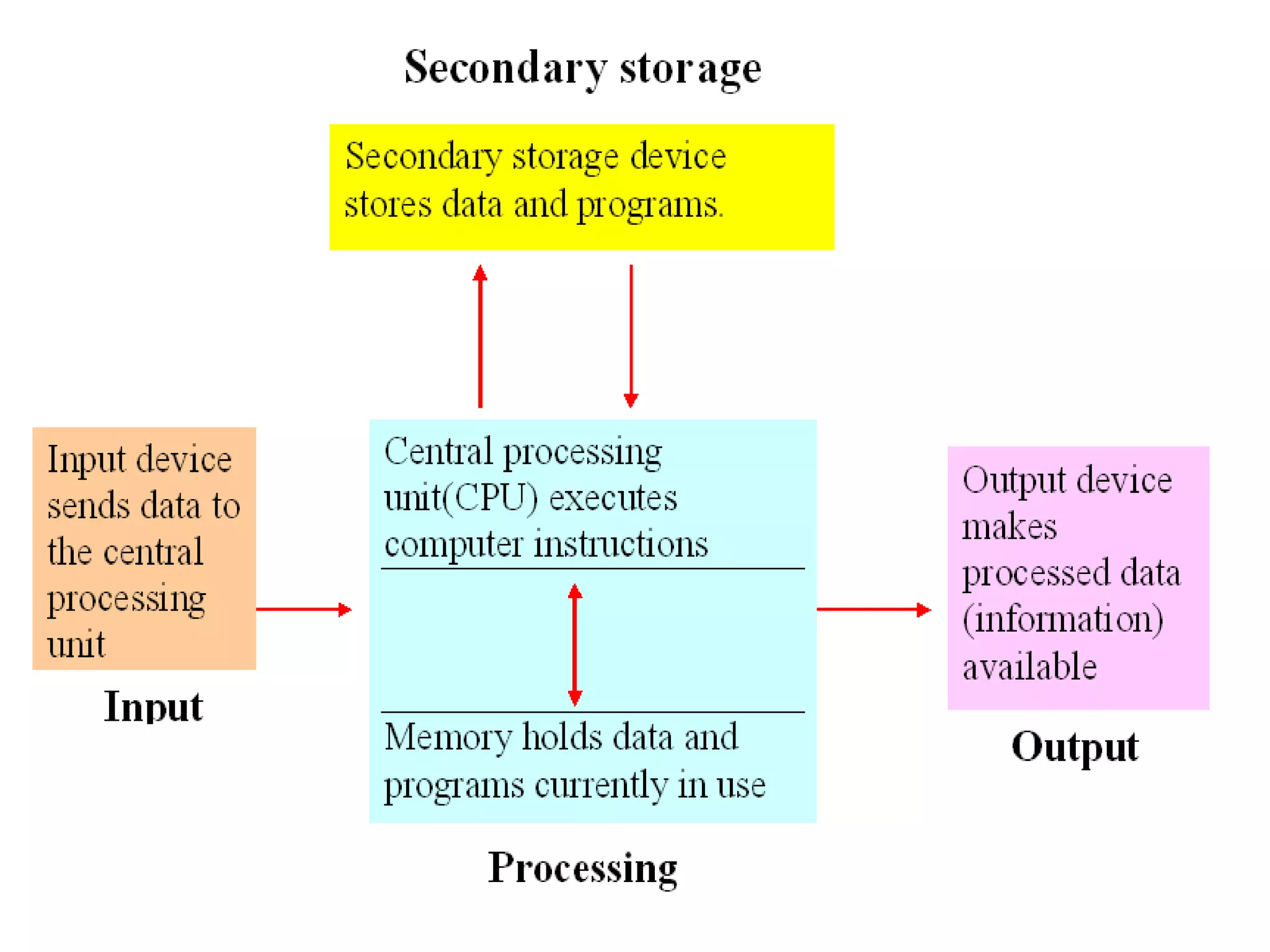
All general-purpose computers require
the following hardware components:
• memory : Enables a computer to store, at least
temporarily, data and programs.
• mass storage device : Allows a computer to permanently
retain large amounts of data. Common mass
storage devicesinclude disk drives and tape drives.
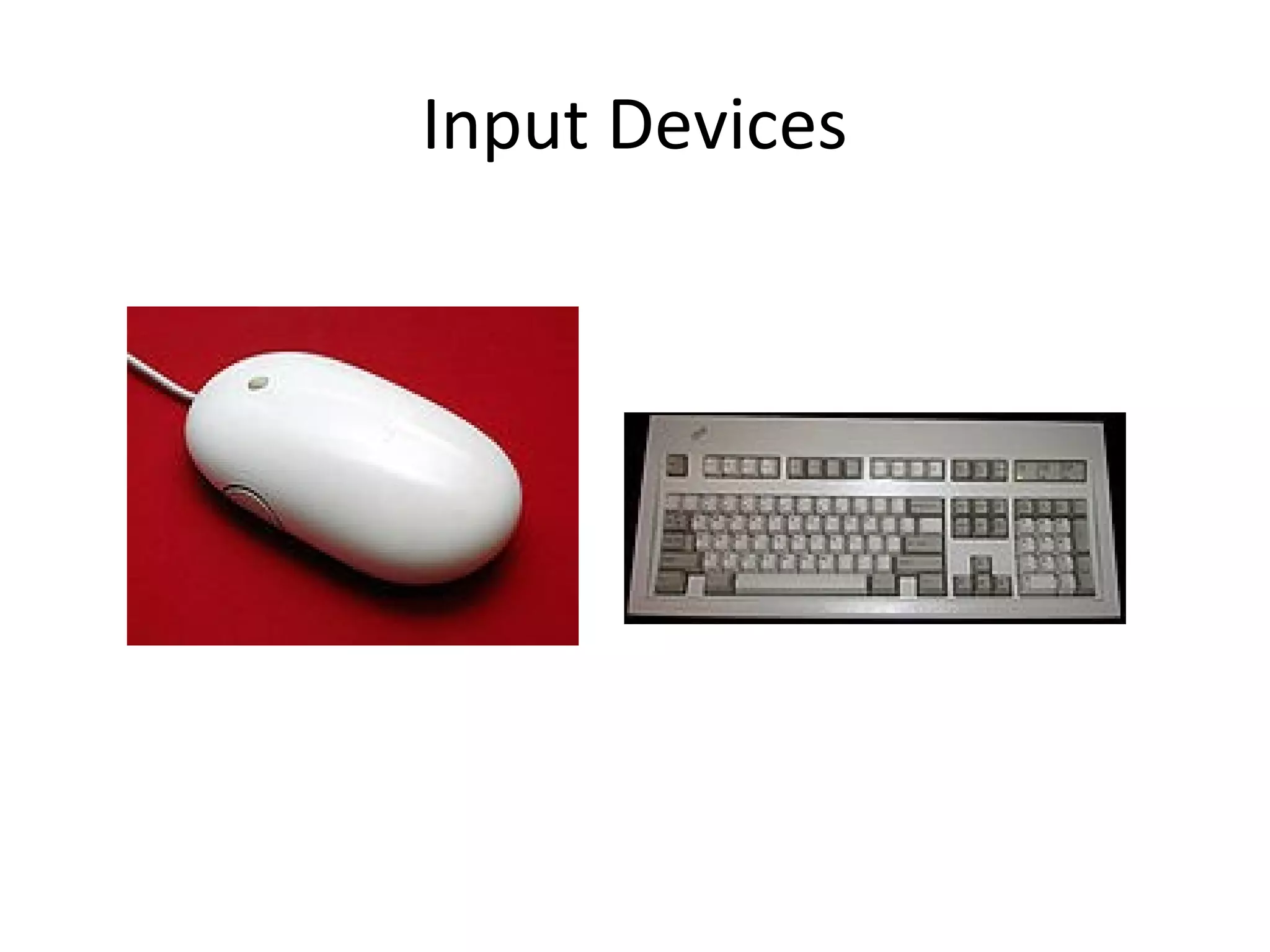
• input device : Usually a keyboard and mouse, the input
device is the conduit through which data and instructions
enter a computer.
• output device : A display screen, printer, or other device
that lets you see what the computer has accomplished.
• central processing unit (CPU): The heart of the computer,
this is the component that actually executes instructions.
Synthesis
• Computers can be classified according to
their capacity. They can be classified as
Personal Computers (PCs), Portable
Computers, Servers, Embedded Computers
and Supercomputers & Mainframes.
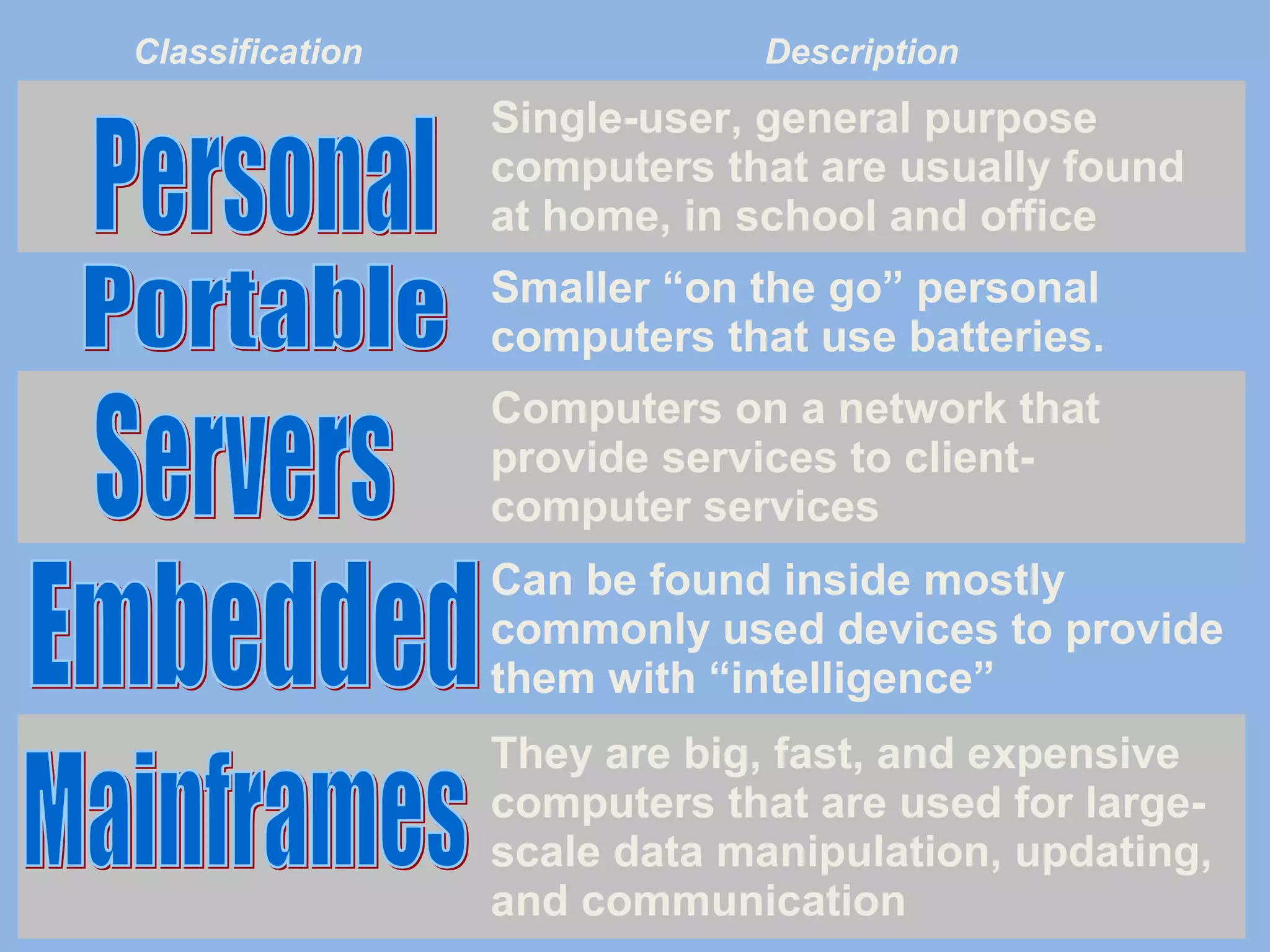
Classification Description
Single-user, general purpose
computers that are usually found
at home, in school and office
Smaller “on the go” personal
computers that use batteries.
Computers on a network that
provide services to client-
computer services
Can be found inside mostly
commonly used devices to provide
them with “intelligence”
They are big, fast, and expensive
computers that are used for large-
scale data manipulation, updating,
and communication
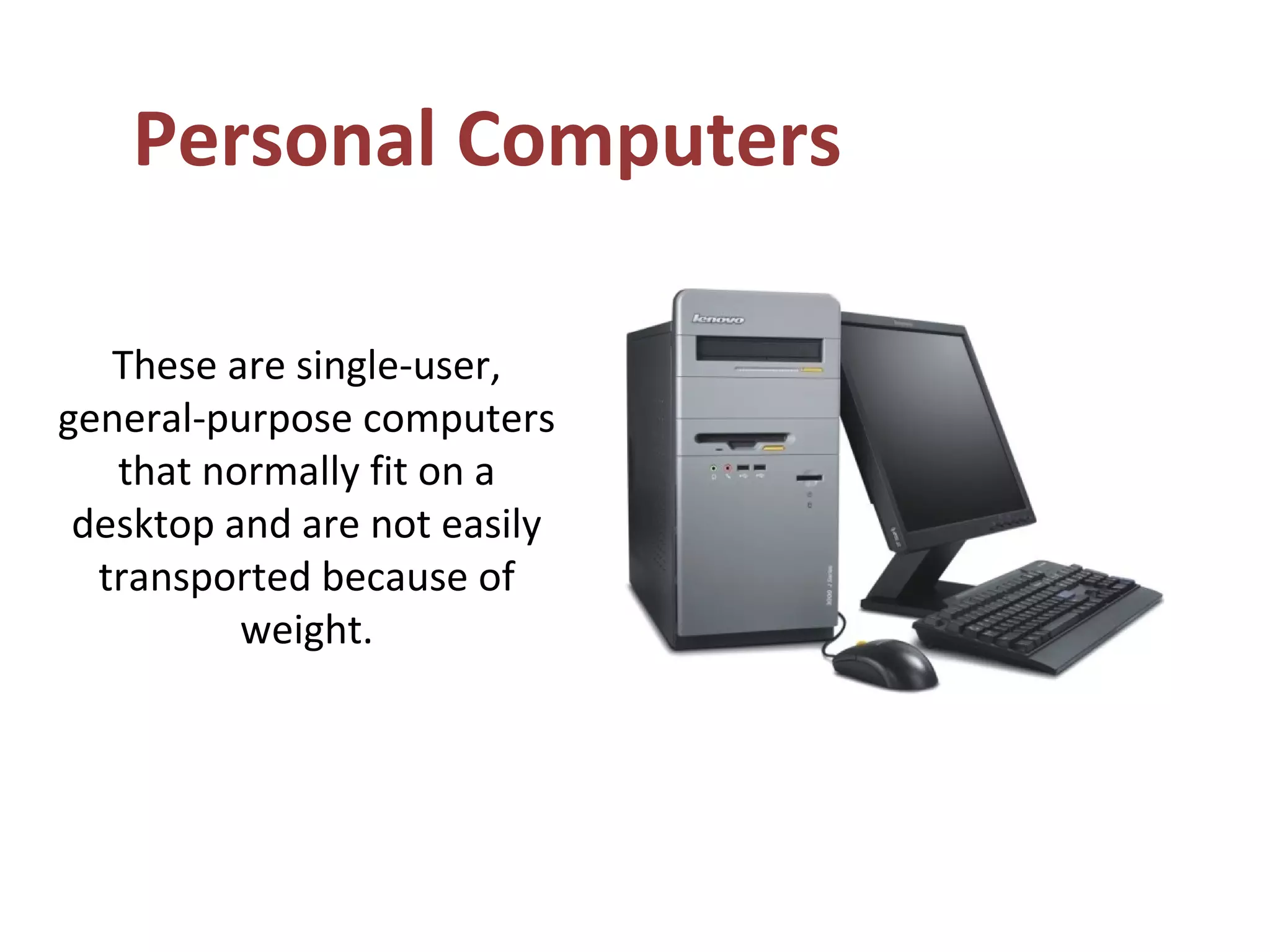
These are single-user,
general-purpose computers
that normally fit on a
desktop and are not easily
transported because of
weight.
Personal Computers
Portable Computers
• These are smaller, “on
the go” personal
computers that run on
batteries, such as
laptops, notebooks,
and
palmtops/handhelds.
is a computer that is designed to be moved from
one place to another and includes a display and
keyboard. Portable computers, by their nature, are
microcomputers.
Server
• These are computers
on a network that
provide services to
client computer-
service such as web,
mail, file archives.
Embedded Computers
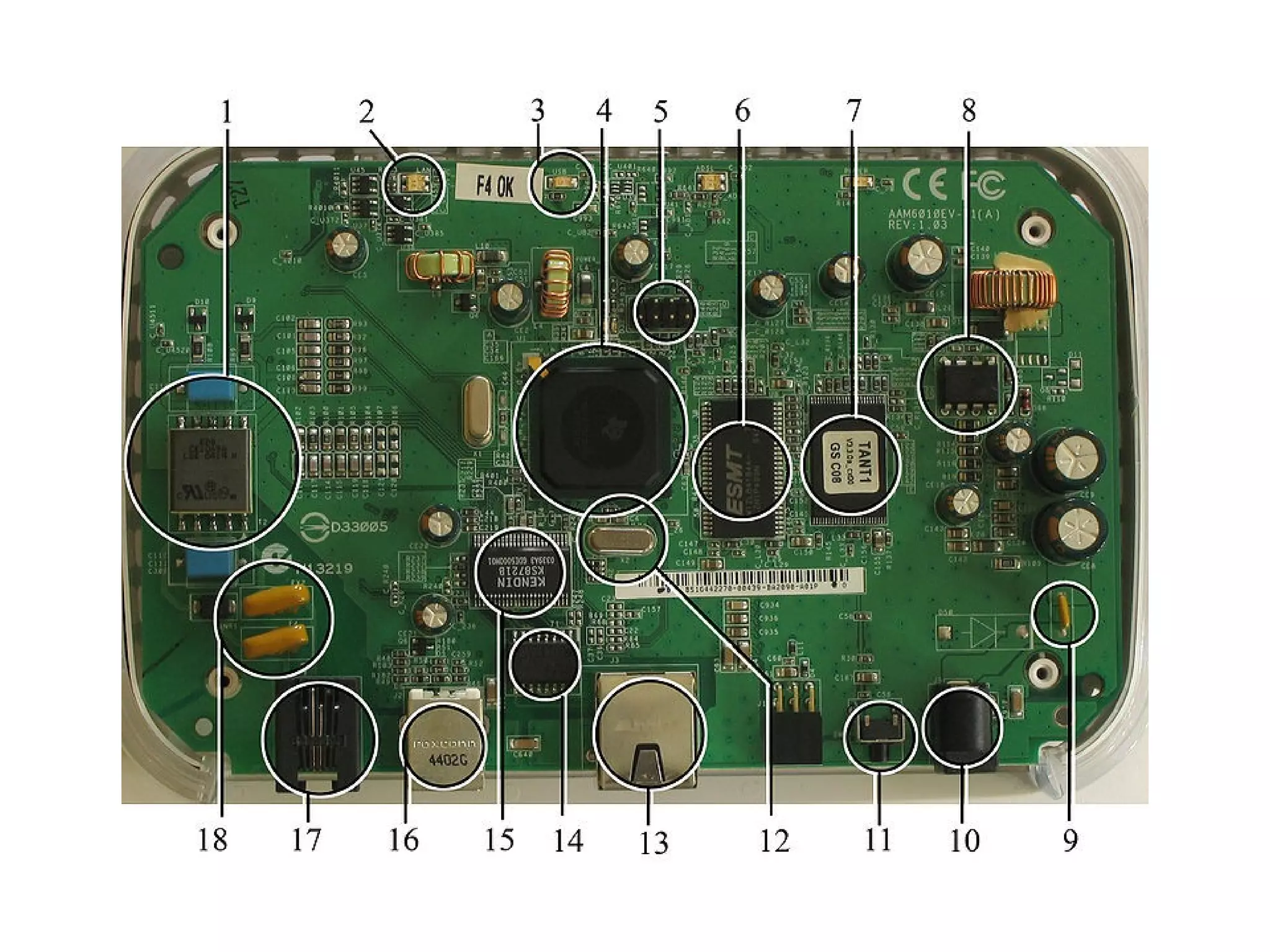
• Embedded computers can be compared to
"computers on a chip". All in one so to speak.
You will find them in all kind of devices that
surround us. Washing machines,
ticketmachines at the subway, cellphones,
camera's, cars, motors, sewing machines,
clocks. Everywhere needing something to
regulate, control of check something.
Supercomputers and mainframes
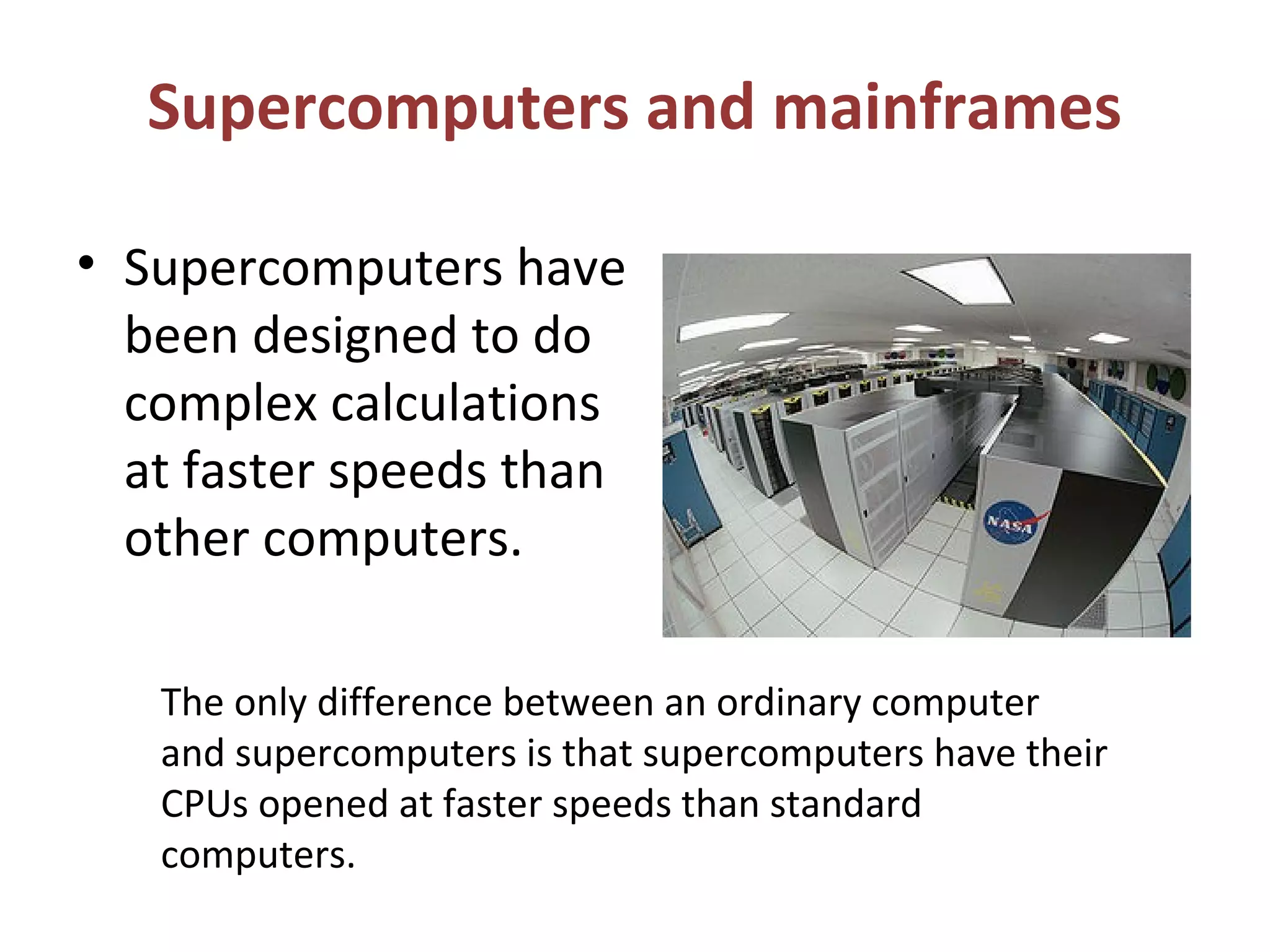
• Supercomputers have
been designed to do
complex calculations
at faster speeds than
other computers.
The only difference between an ordinary computer
and supercomputers is that supercomputers have their
CPUs opened at faster speeds than standard
computers.
Can you beat
lola Techie?
All general-purpose computers require
the following hardware components:
• memory : Enables a computer to store, at least
temporarily, data and programs.
• mass storage device : Allows a computer to permanently
retain large amounts of data. Common mass
storage devicesinclude disk drives and tape drives.
• input device : Usually a keyboard and mouse, the input
device is the conduit through which data and instructions
enter a computer.
• output device : A display screen, printer, or other device
that lets you see what the computer has accomplished.
• central processing unit (CPU): The heart of the computer,
this is the component that actually executes instructions.
Components of the Computer System
1. Hardware
2. Software
3. Peopleware
Input Devices
Output Devices
Storage Devices
Network Devices
CPU
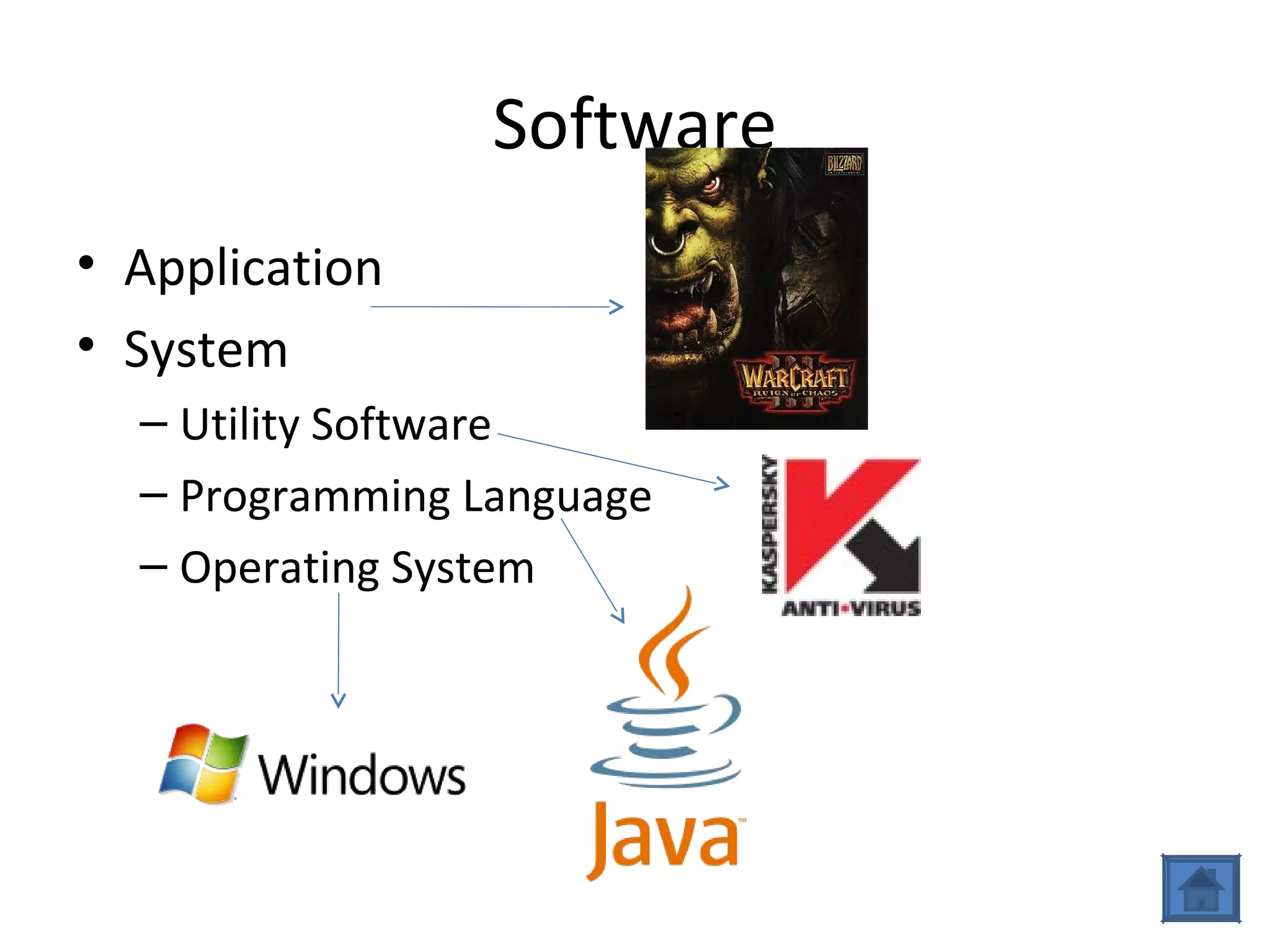
Software
• Application
• System
– Utility Software
– Programming Language
– Operating System
History, classification and components of computers

History, classification and components of computers

  • 1.
    What is computer? •IT IS A PROGRAMABLE MACHINE. The two principal characteristics of a computer are: 1. It responds to a specific set of instructions in a well-defined manner. 2. It can execute a prerecorded list of instructions (a program)
  • 2.
    What is computer? Acomputer is a programmable machine that receives input, stores and manipulates data, and provides output in a useful format.
  • 3.
    All general-purpose computersrequire the following hardware components: • memory : Enables a computer to store, at least temporarily, data and programs. • mass storage device : Allows a computer to permanently retain large amounts of data. Common mass storage devicesinclude disk drives and tape drives. • input device : Usually a keyboard and mouse, the input device is the conduit through which data and instructions enter a computer. • output device : A display screen, printer, or other device that lets you see what the computer has accomplished. • central processing unit (CPU): The heart of the computer, this is the component that actually executes instructions.
  • 4.
    Synthesis • Computers canbe classified according to their capacity. They can be classified as Personal Computers (PCs), Portable Computers, Servers, Embedded Computers and Supercomputers & Mainframes.
  • 5.
    Classification Description Single-user, generalpurpose computers that are usually found at home, in school and office Smaller “on the go” personal computers that use batteries. Computers on a network that provide services to client- computer services Can be found inside mostly commonly used devices to provide them with “intelligence” They are big, fast, and expensive computers that are used for large- scale data manipulation, updating, and communication
  • 6.
    These are single-user, general-purposecomputers that normally fit on a desktop and are not easily transported because of weight. Personal Computers
  • 7.
    Portable Computers • Theseare smaller, “on the go” personal computers that run on batteries, such as laptops, notebooks, and palmtops/handhelds. is a computer that is designed to be moved from one place to another and includes a display and keyboard. Portable computers, by their nature, are microcomputers.
  • 8.
    Server • These arecomputers on a network that provide services to client computer- service such as web, mail, file archives.
  • 9.
    Embedded Computers • Embeddedcomputers can be compared to "computers on a chip". All in one so to speak. You will find them in all kind of devices that surround us. Washing machines, ticketmachines at the subway, cellphones, camera's, cars, motors, sewing machines, clocks. Everywhere needing something to regulate, control of check something.
  • 11.
    Supercomputers and mainframes •Supercomputers have been designed to do complex calculations at faster speeds than other computers. The only difference between an ordinary computer and supercomputers is that supercomputers have their CPUs opened at faster speeds than standard computers.
  • 12.
  • 17.
    All general-purpose computersrequire the following hardware components: • memory : Enables a computer to store, at least temporarily, data and programs. • mass storage device : Allows a computer to permanently retain large amounts of data. Common mass storage devicesinclude disk drives and tape drives. • input device : Usually a keyboard and mouse, the input device is the conduit through which data and instructions enter a computer. • output device : A display screen, printer, or other device that lets you see what the computer has accomplished. • central processing unit (CPU): The heart of the computer, this is the component that actually executes instructions.
  • 18.
    Components of theComputer System 1. Hardware 2. Software 3. Peopleware
  • 19.
  • 20.
  • 21.
  • 22.
  • 23.
  • 24.
    Software • Application • System –Utility Software – Programming Language – Operating System