1
2
CONTENTS
1. INTRODUCTION.
2. CLINICAL FEATURES.
3. ORAL MANIFESTATIONS.
4. HISTOLOGIC FEATURES.
5. LABORATORY DIAGNOSIS.
6. TREATMENT.
3
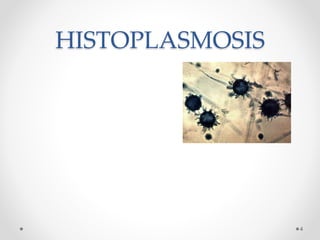
HISTOPLASMOSIS
4
INTRODUCTION.
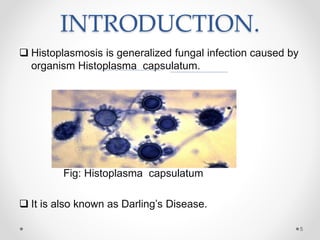
 Histoplasmosis is generalized fungal infection caused by
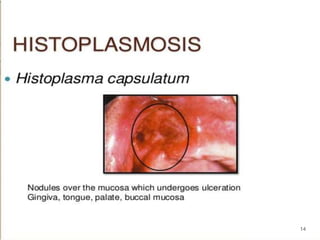
organism Histoplasma capsulatum.
Fig: Histoplasma capsulatum
 It is also known as Darling’s Disease.
5
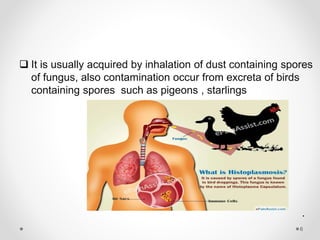
 It is usually acquired by inhalation of dust containing spores
of fungus, also contamination occur from excreta of birds
containing spores such as pigeons , starlings
.
6
Clinical Features
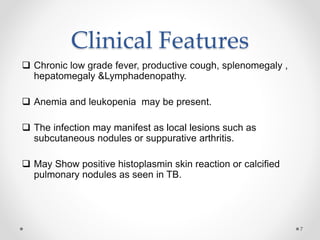
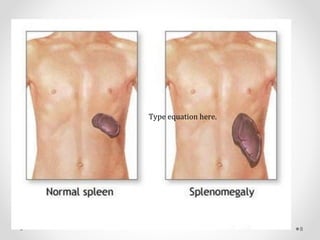
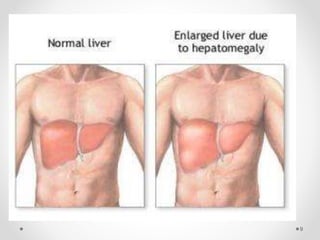
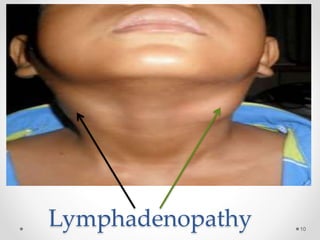
 Chronic low grade fever, productive cough, splenomegaly ,
hepatomegaly &Lymphadenopathy.
 Anemia and leukopenia may be present.
 The infection may manifest as local lesions such as
subcutaneous nodules or suppurative arthritis.
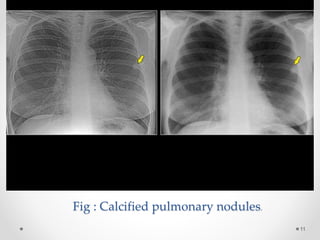
 May Show positive histoplasmin skin reaction or calcified
pulmonary nodules as seen in TB.
7
Type equation here.
8
9
Lymphadenopathy 10
Fig : Calcified pulmonary nodules.
11
Oral Manifestation.
 They appear as nodular , ulcerated , or vegetative
lesions on buccal mucosa, gingiva , tongue , palate or
lips.
 The ulcerated areas are usually covered by non-specific
gray membrane which is indurated with raised and rolled
out borders resembling carcinoma.
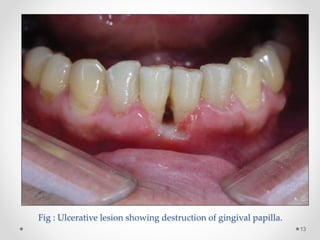
 Granulomatous lesion often cause alveolar bone
destruction.
12
Fig : Ulcerative lesion showing destruction of gingival papilla.
13
14
Histologic Features.
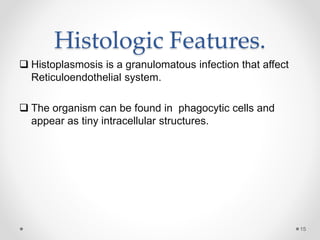
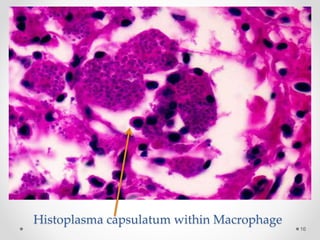
 Histoplasmosis is a granulomatous infection that affect
Reticuloendothelial system.
 The organism can be found in phagocytic cells and
appear as tiny intracellular structures.
15
Histoplasma capsulatum within Macrophage
16
LABORATORY
DIAGNOSIS
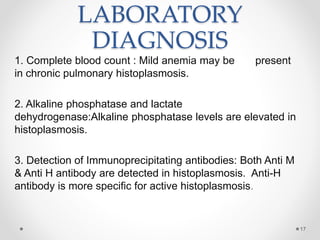
1. Complete blood count : Mild anemia may be present
in chronic pulmonary histoplasmosis.
2. Alkaline phosphatase and lactate
dehydrogenase:Alkaline phosphatase levels are elevated in
histoplasmosis.
3. Detection of Immunoprecipitating antibodies: Both Anti M
& Anti H antibody are detected in histoplasmosis. Anti-H
antibody is more specific for active histoplasmosis.
17
Treatment.
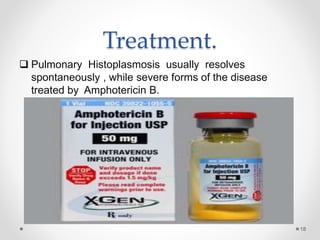
 Pulmonary Histoplasmosis usually resolves
spontaneously , while severe forms of the disease
treated by Amphotericin B.
18
THANK
YOU .
19

Histoplasmosis

  • 1.
  • 2.
  • 3.
    CONTENTS 1. INTRODUCTION. 2. CLINICALFEATURES. 3. ORAL MANIFESTATIONS. 4. HISTOLOGIC FEATURES. 5. LABORATORY DIAGNOSIS. 6. TREATMENT. 3
  • 4.
  • 5.
    INTRODUCTION.  Histoplasmosis isgeneralized fungal infection caused by organism Histoplasma capsulatum. Fig: Histoplasma capsulatum  It is also known as Darling’s Disease. 5
  • 6.
     It isusually acquired by inhalation of dust containing spores of fungus, also contamination occur from excreta of birds containing spores such as pigeons , starlings . 6
  • 7.
    Clinical Features  Chroniclow grade fever, productive cough, splenomegaly , hepatomegaly &Lymphadenopathy.  Anemia and leukopenia may be present.  The infection may manifest as local lesions such as subcutaneous nodules or suppurative arthritis.  May Show positive histoplasmin skin reaction or calcified pulmonary nodules as seen in TB. 7
  • 8.
  • 9.
  • 10.
  • 11.
    Fig : Calcifiedpulmonary nodules. 11
  • 12.
    Oral Manifestation.  Theyappear as nodular , ulcerated , or vegetative lesions on buccal mucosa, gingiva , tongue , palate or lips.  The ulcerated areas are usually covered by non-specific gray membrane which is indurated with raised and rolled out borders resembling carcinoma.  Granulomatous lesion often cause alveolar bone destruction. 12
  • 13.
    Fig : Ulcerativelesion showing destruction of gingival papilla. 13
  • 14.
  • 15.
    Histologic Features.  Histoplasmosisis a granulomatous infection that affect Reticuloendothelial system.  The organism can be found in phagocytic cells and appear as tiny intracellular structures. 15
  • 16.
  • 17.
    LABORATORY DIAGNOSIS 1. Complete bloodcount : Mild anemia may be present in chronic pulmonary histoplasmosis. 2. Alkaline phosphatase and lactate dehydrogenase:Alkaline phosphatase levels are elevated in histoplasmosis. 3. Detection of Immunoprecipitating antibodies: Both Anti M & Anti H antibody are detected in histoplasmosis. Anti-H antibody is more specific for active histoplasmosis. 17
  • 18.
    Treatment.  Pulmonary Histoplasmosisusually resolves spontaneously , while severe forms of the disease treated by Amphotericin B. 18
  • 19.