D. J. Sanghvi College of Engineering
Rushabh Savla
Vivek Sanghvi Jain
Nayan Seth
1
D. J. Sanghvi College of Engineering
Why Processing?
1920 x 1080
1920 x 1080 x 3
1920 x 1080 x 3 x 25
1920 x 1080 x 3 x 25 x 60
1920 x 1080 x 3 x 25 x 60 x 60
A very very big number!
2
D. J. Sanghvi College of Engineering
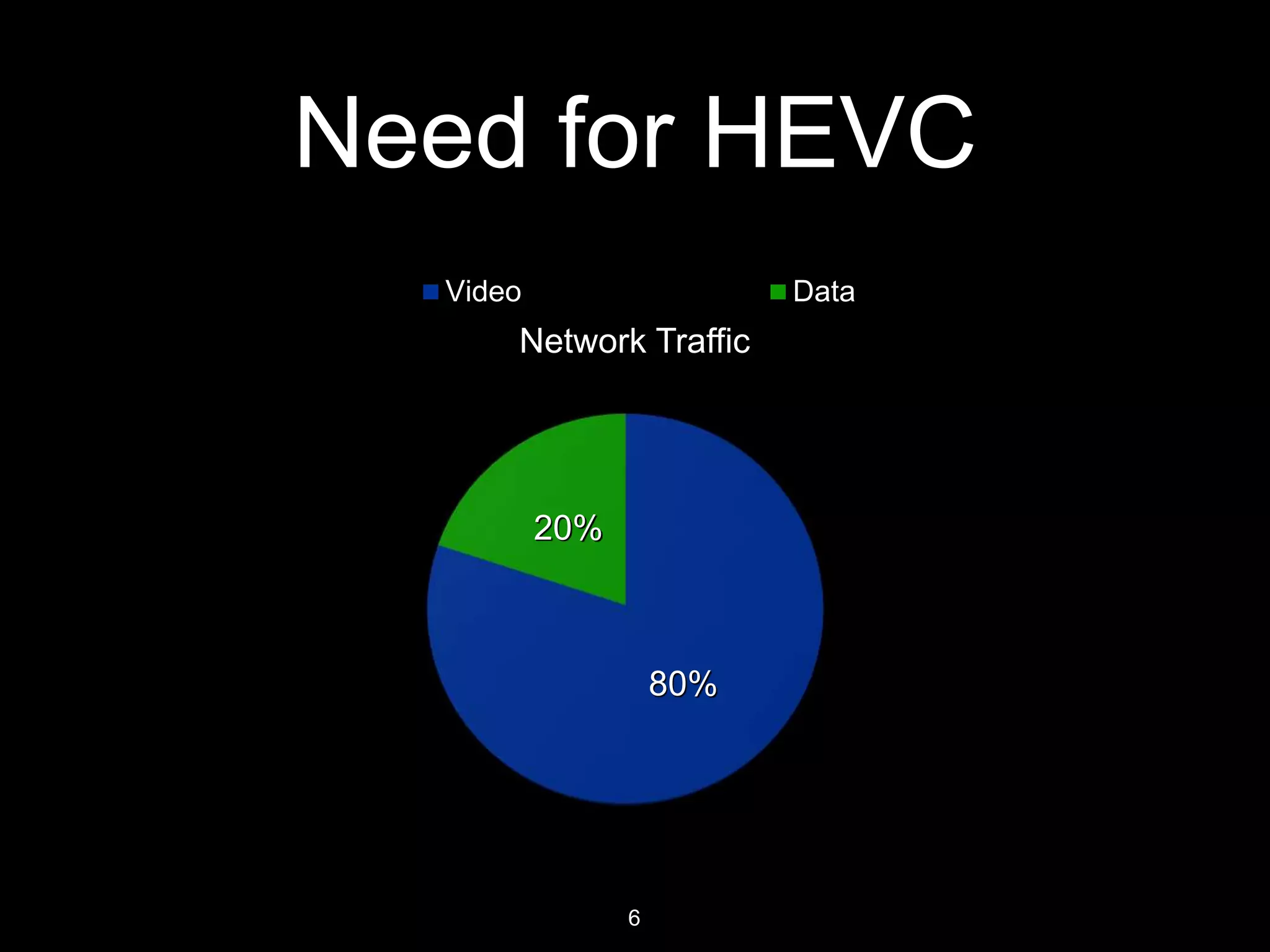
Effect on Network Traffic
Video Data
3
D. J. Sanghvi College of Engineering
Computational Complexity
Figure 1.1 Tradeoffs
4
D. J. Sanghvi College of Engineering
Computational Complexity (Contd)
5
Figure 1.2 Comparison of Different H/W
D. J. Sanghvi College of Engineering
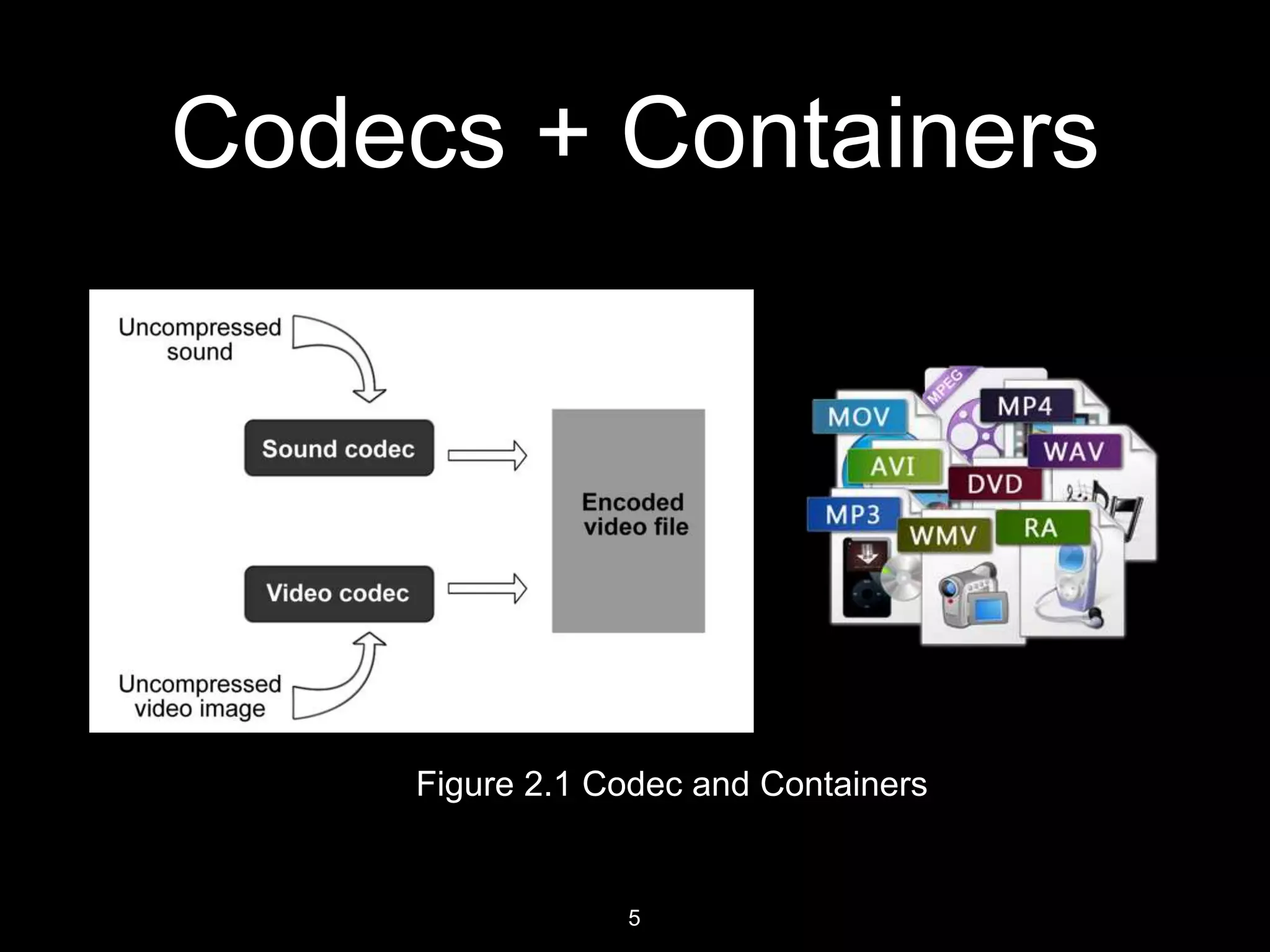
Codecs + Containers
Figure 2.1 Codec and Containers
6
D. J. Sanghvi College of Engineering
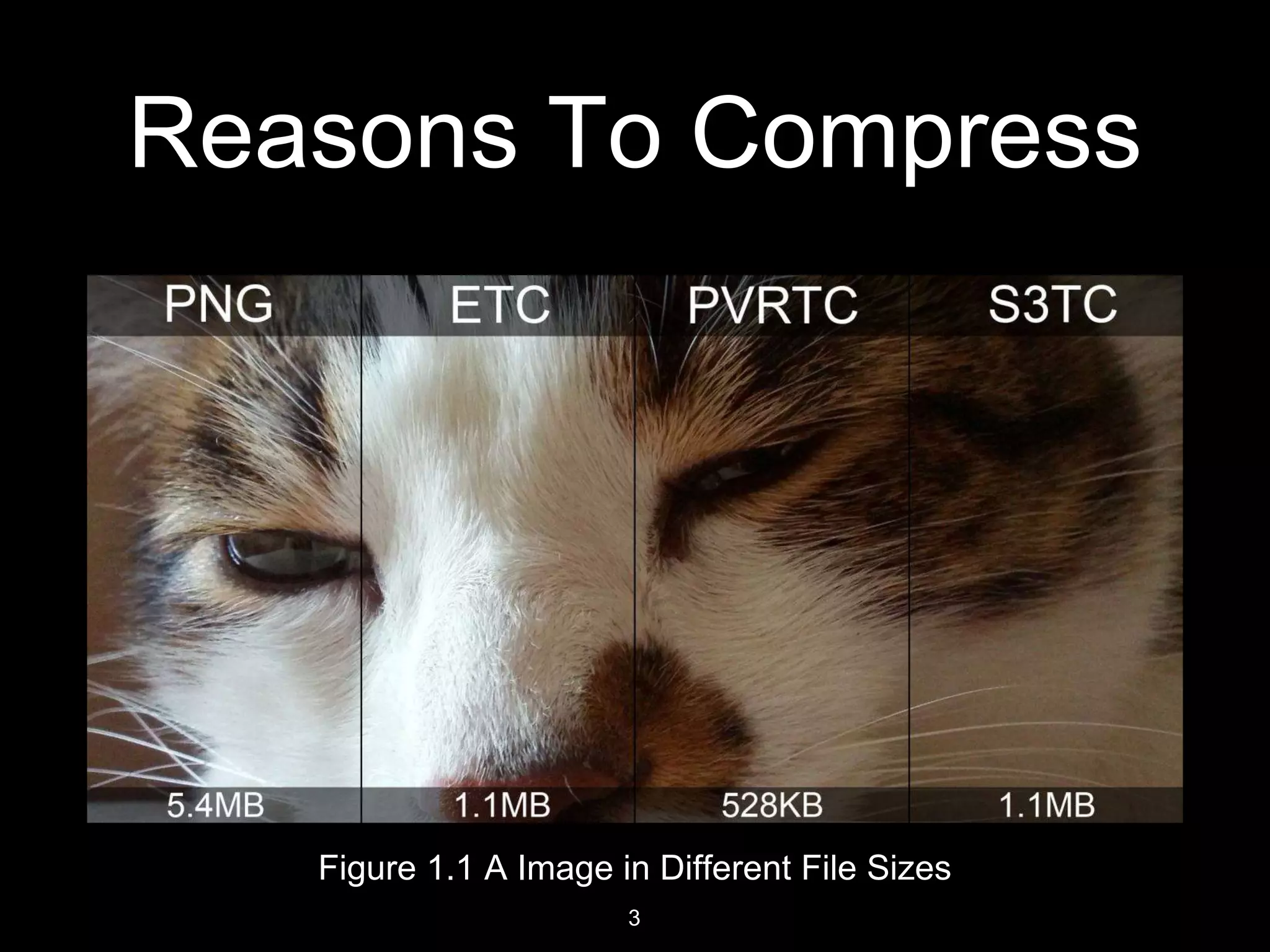
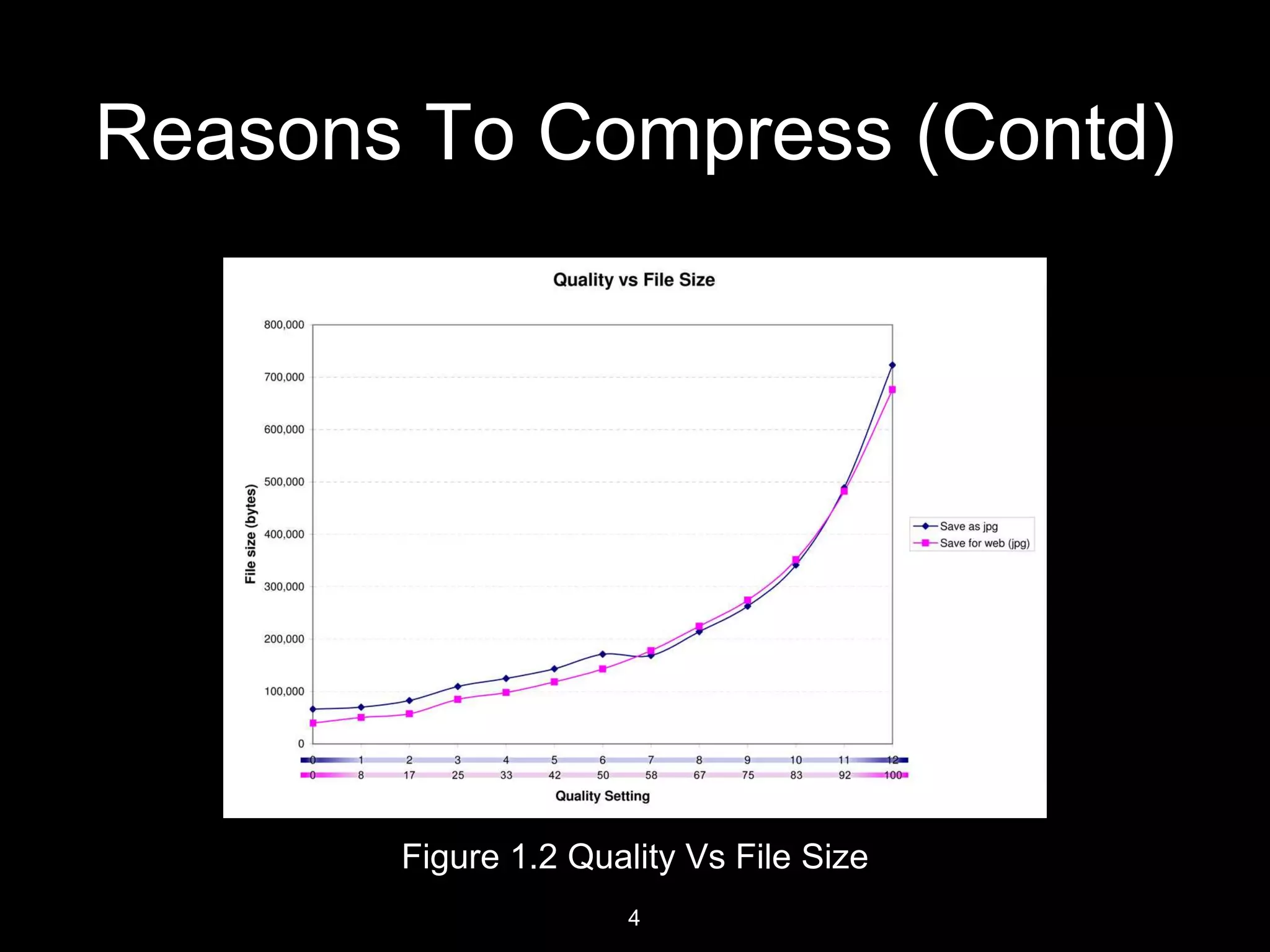
Reasons To Compress
7
Figure 3.1 A Image in Different File Sizes
D. J. Sanghvi College of Engineering
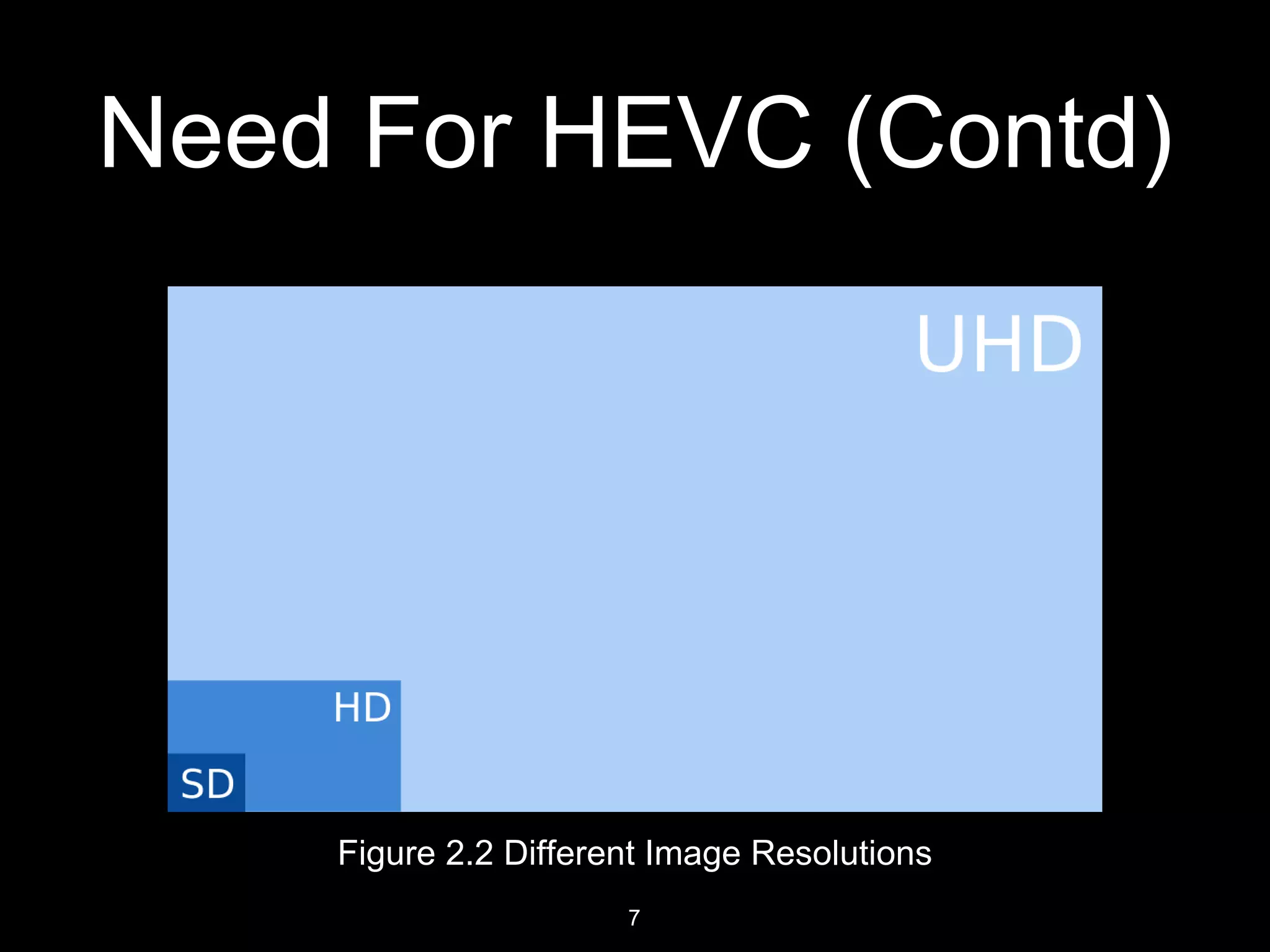
Need For HEVC
Figure 4.1 Image Resolution
8
• Support for latest UHD.
• Reduced Network Traffic
• Storing smaller files is easier.
D. J. Sanghvi College of Engineering
Uses
9
• Netflix, Amazon Youtube, Any other streaming Media
• Blu-Ray , Digital Cinema with nearly lossless coding
• HDTV broadcast on HEVC supported televisions like the
SONY, LG, Samsung TV's
D. J. Sanghvi College of Engineering
Limitations
10
• New Technology, slower adaptation.
• Dedicated hardware integration only recently declared.
• Software Decoder, Horsepower ambiguity problem.
• Patent troubles
D. J. Sanghvi College of Engineering
Similar Coding Techniques
• H.264
• VP9
• VP8
• Daala
11
D. J. Sanghvi College of Engineering
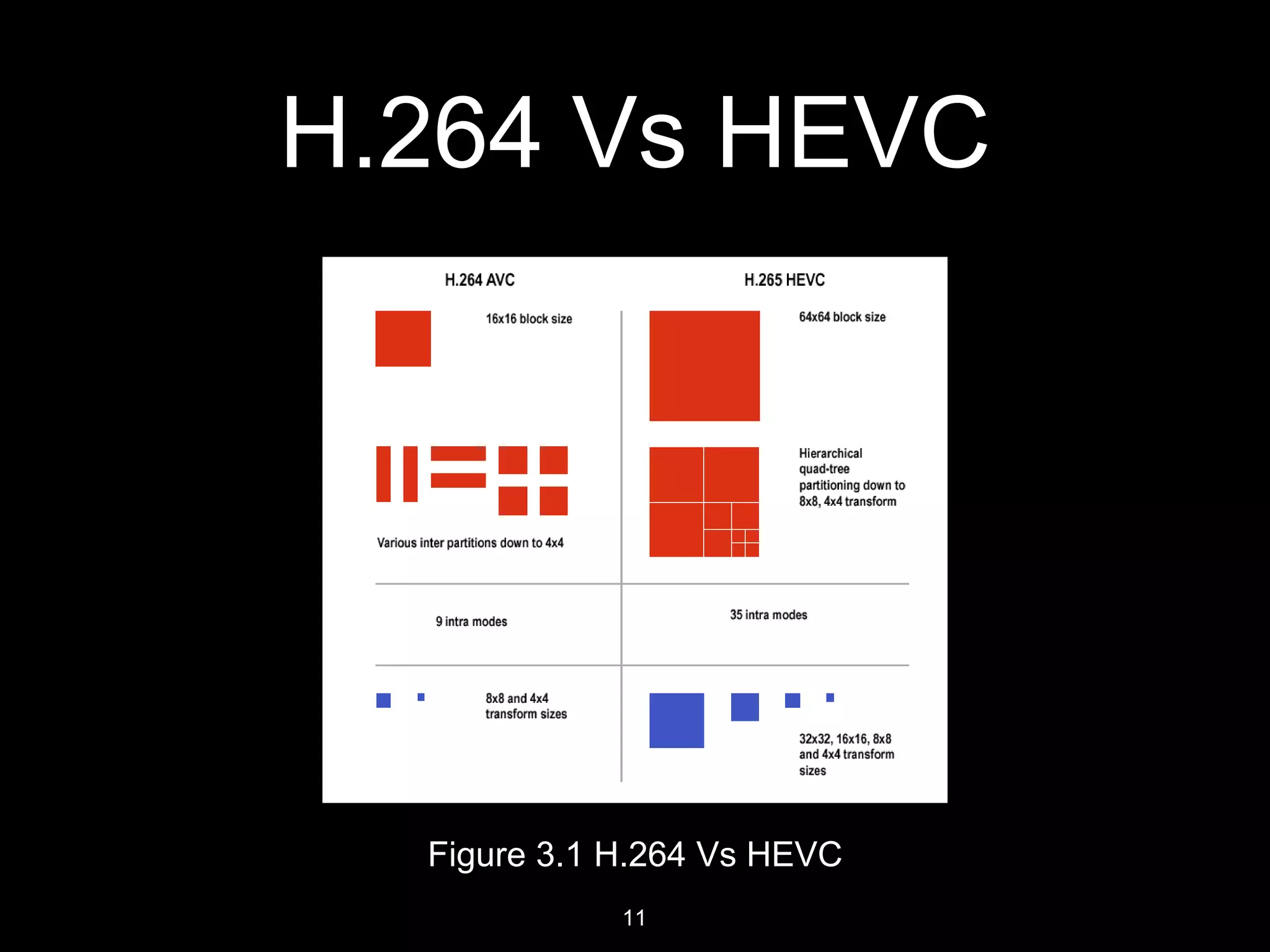
H.264 Vs HEVC
Figure 5.1 H.264 Vs HEVC
12
D. J. Sanghvi College of Engineering
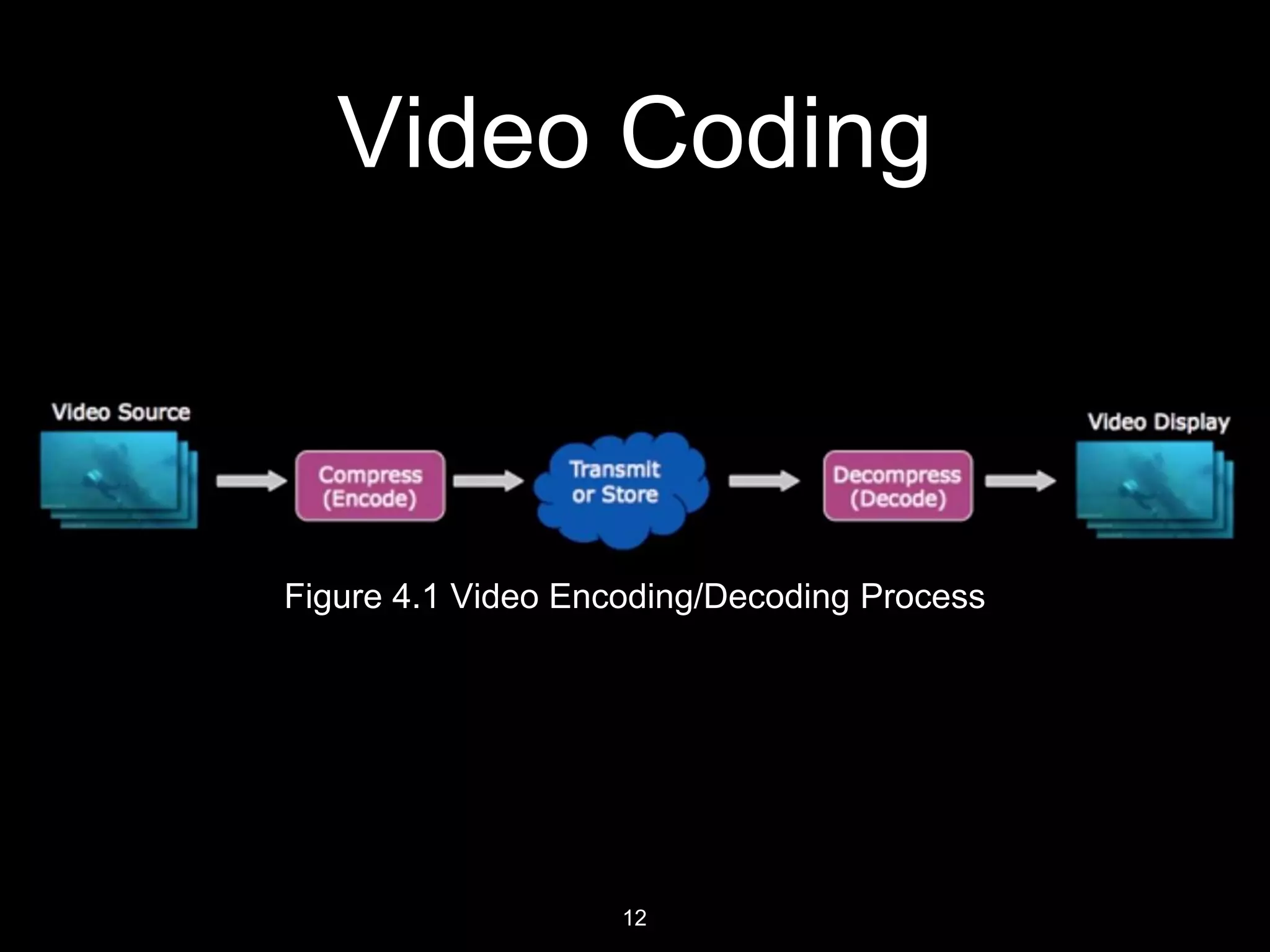
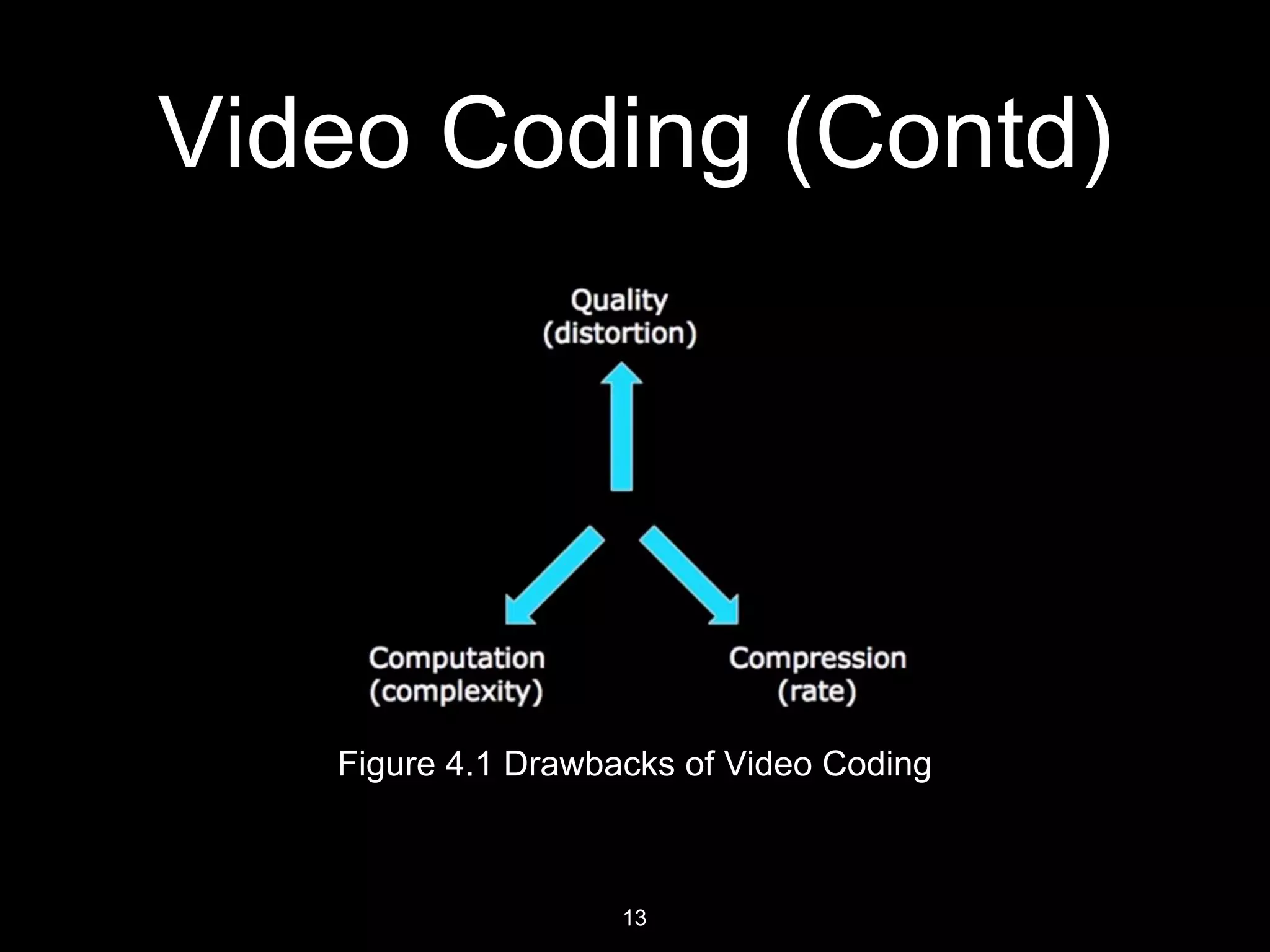
Video Coding
Figure 6.1 Video Encoding/Decoding Process
13
D. J. Sanghvi College of Engineering
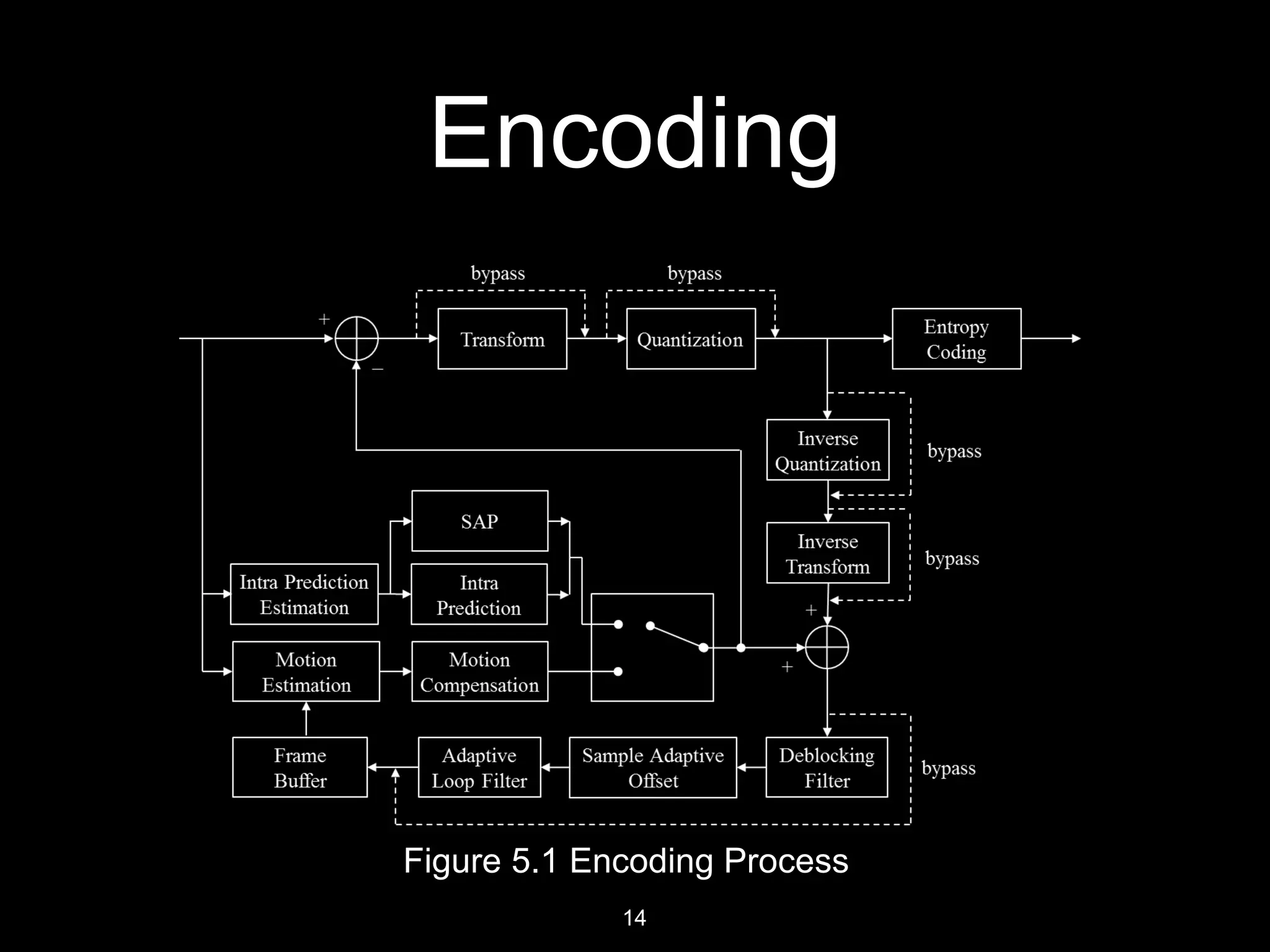
Encoding
Figure 7.1 Encoding Process
14
D. J. Sanghvi College of Engineering
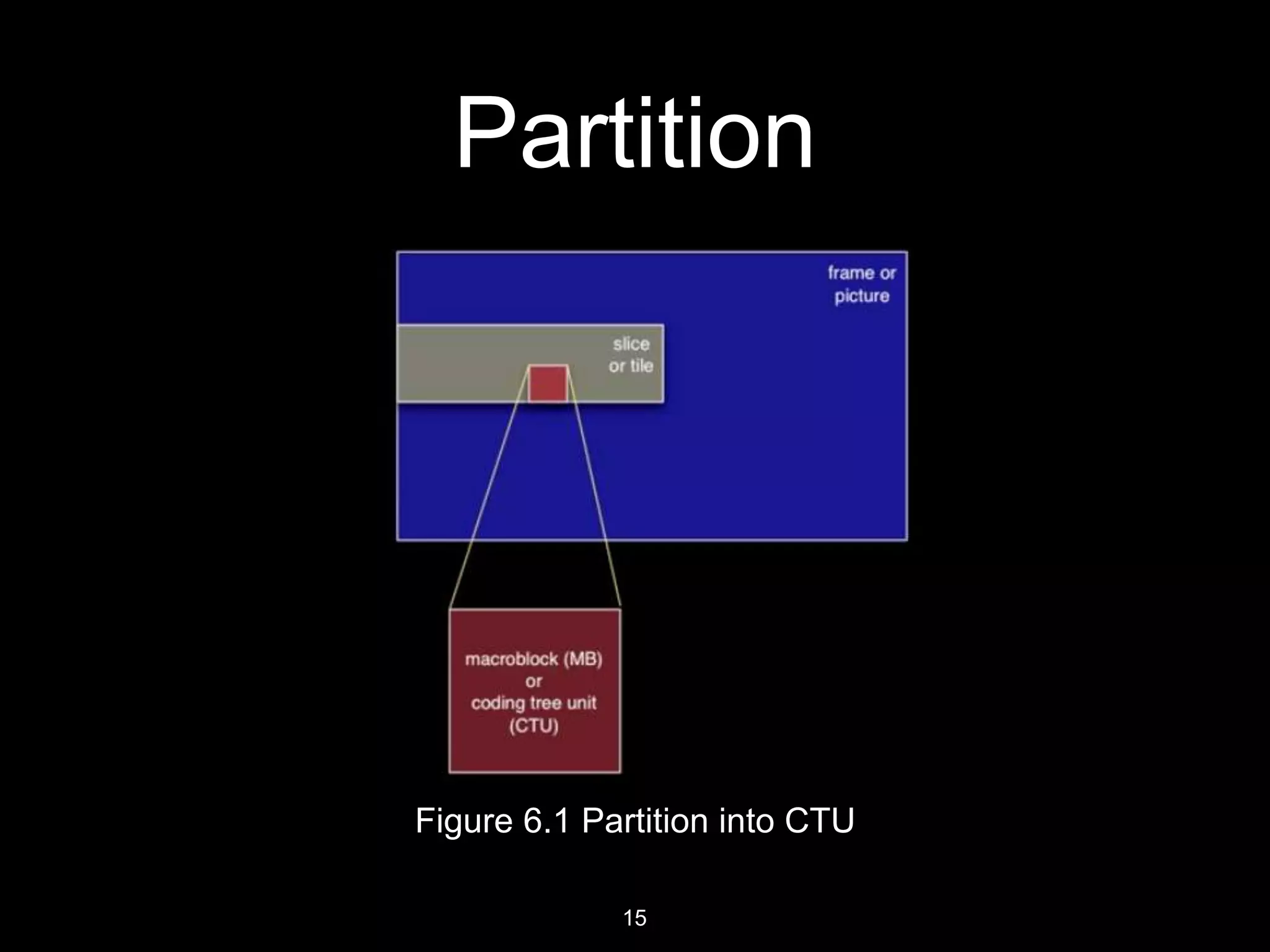
Partition
Figure 8.1 Partition into CTU
15
D. J. Sanghvi College of Engineering
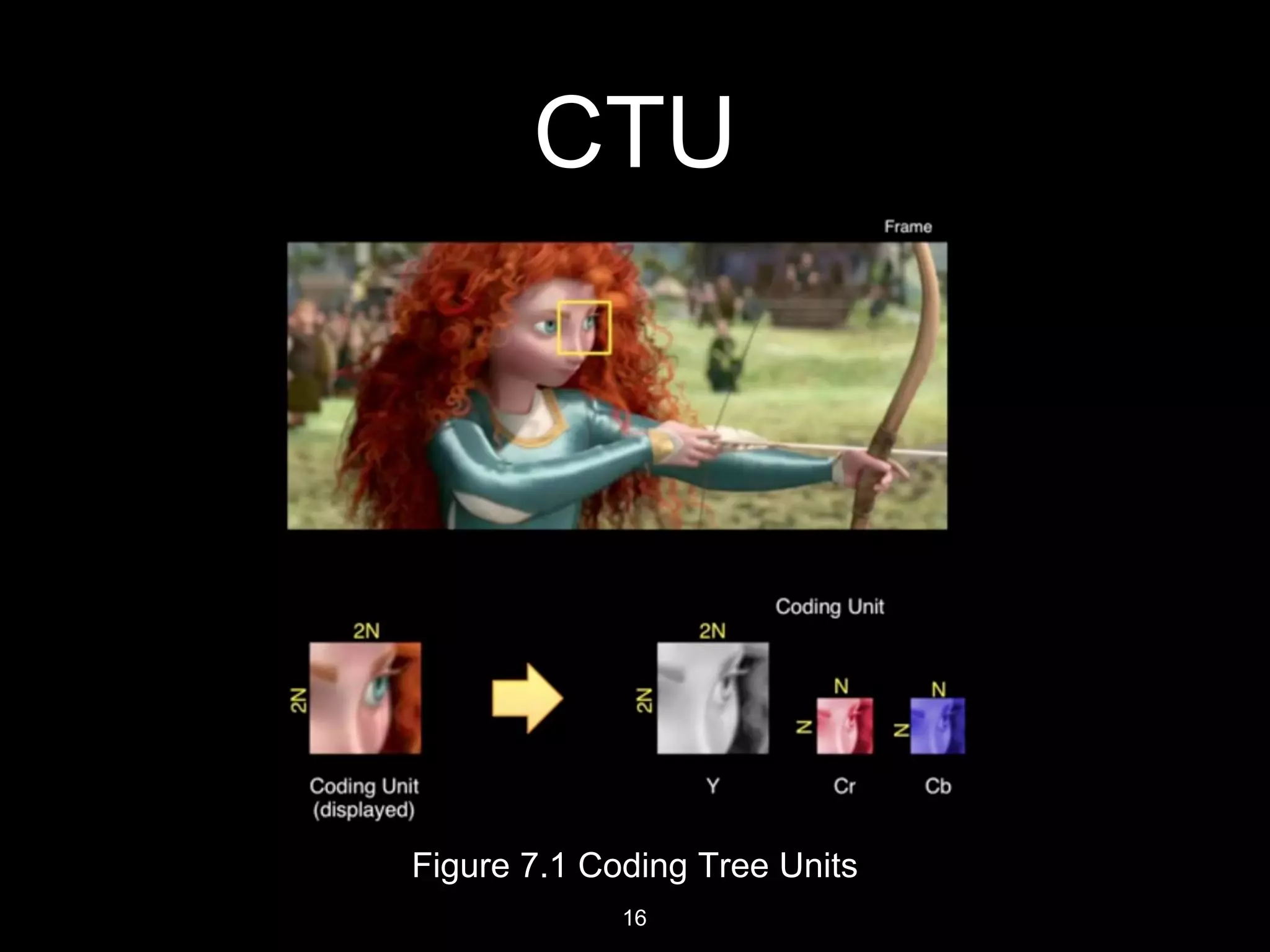
CTU
Figure 9.1 Coding Tree Units
16
D. J. Sanghvi College of Engineering
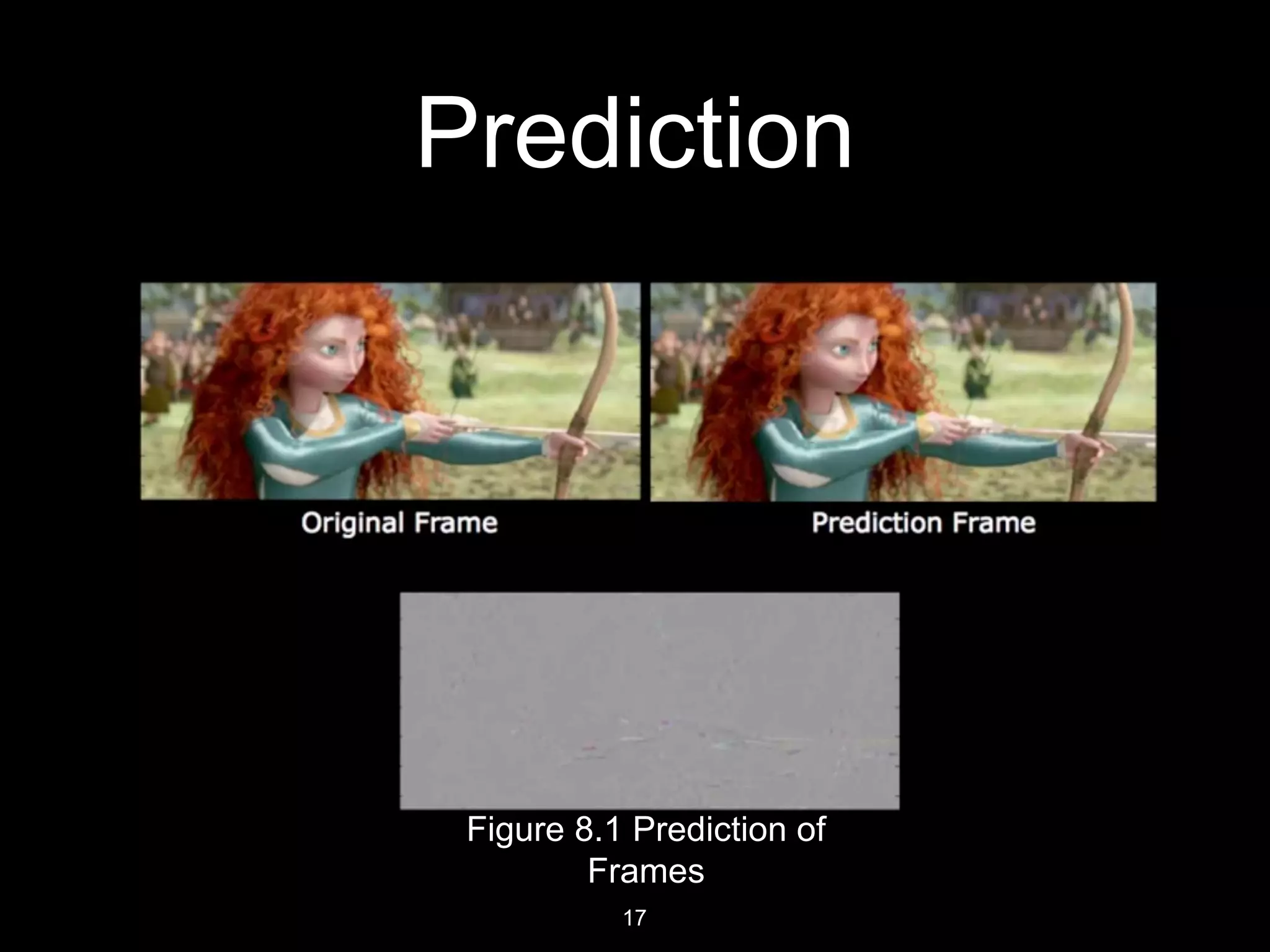
Prediction
Figure 10.1 Prediction of Frames
17
D. J. Sanghvi College of Engineering
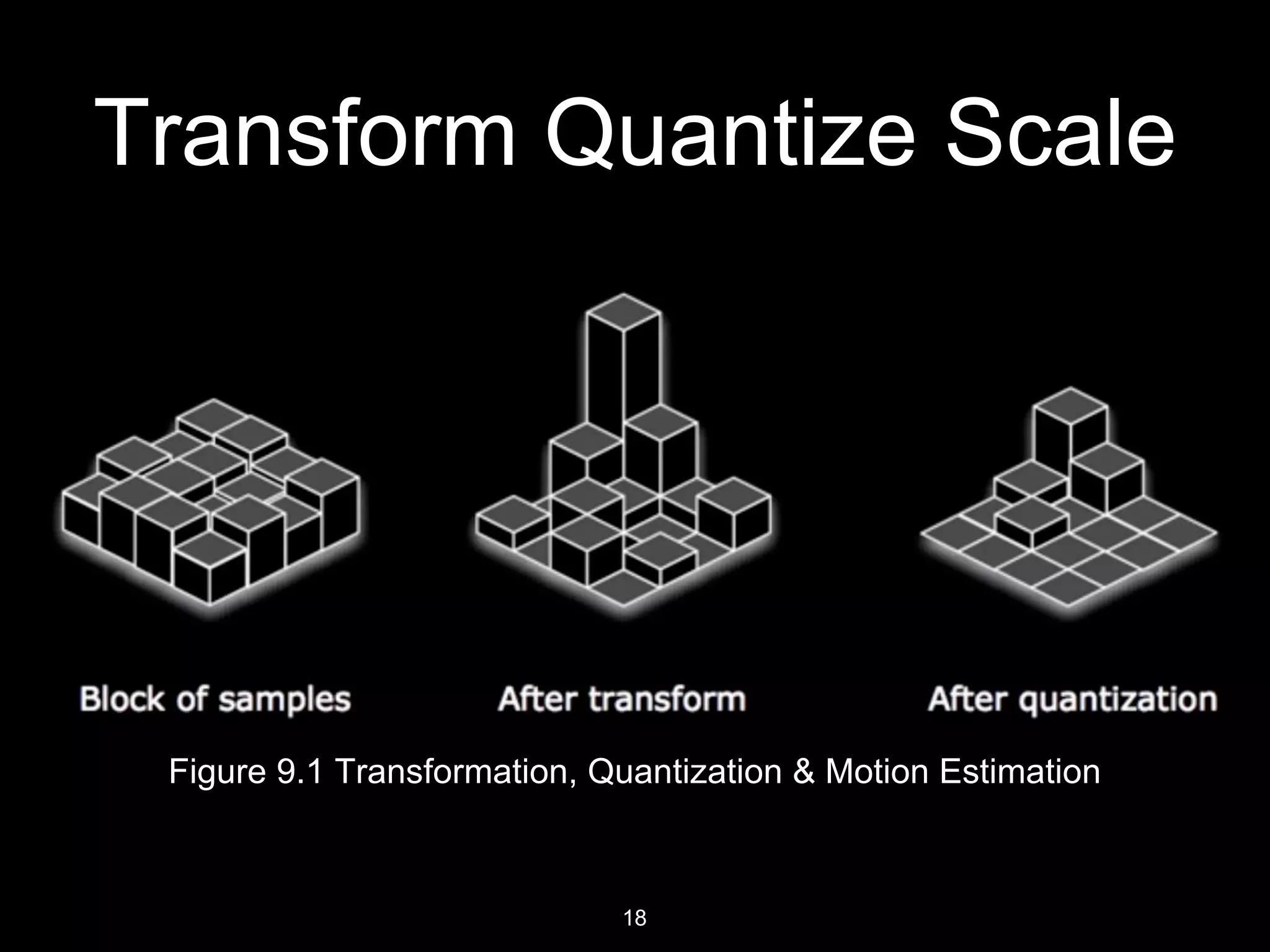
Transform Quantize Scale
Figure 11.1 Transformation, Quantization and Scaling
18
D. J. Sanghvi College of Engineering
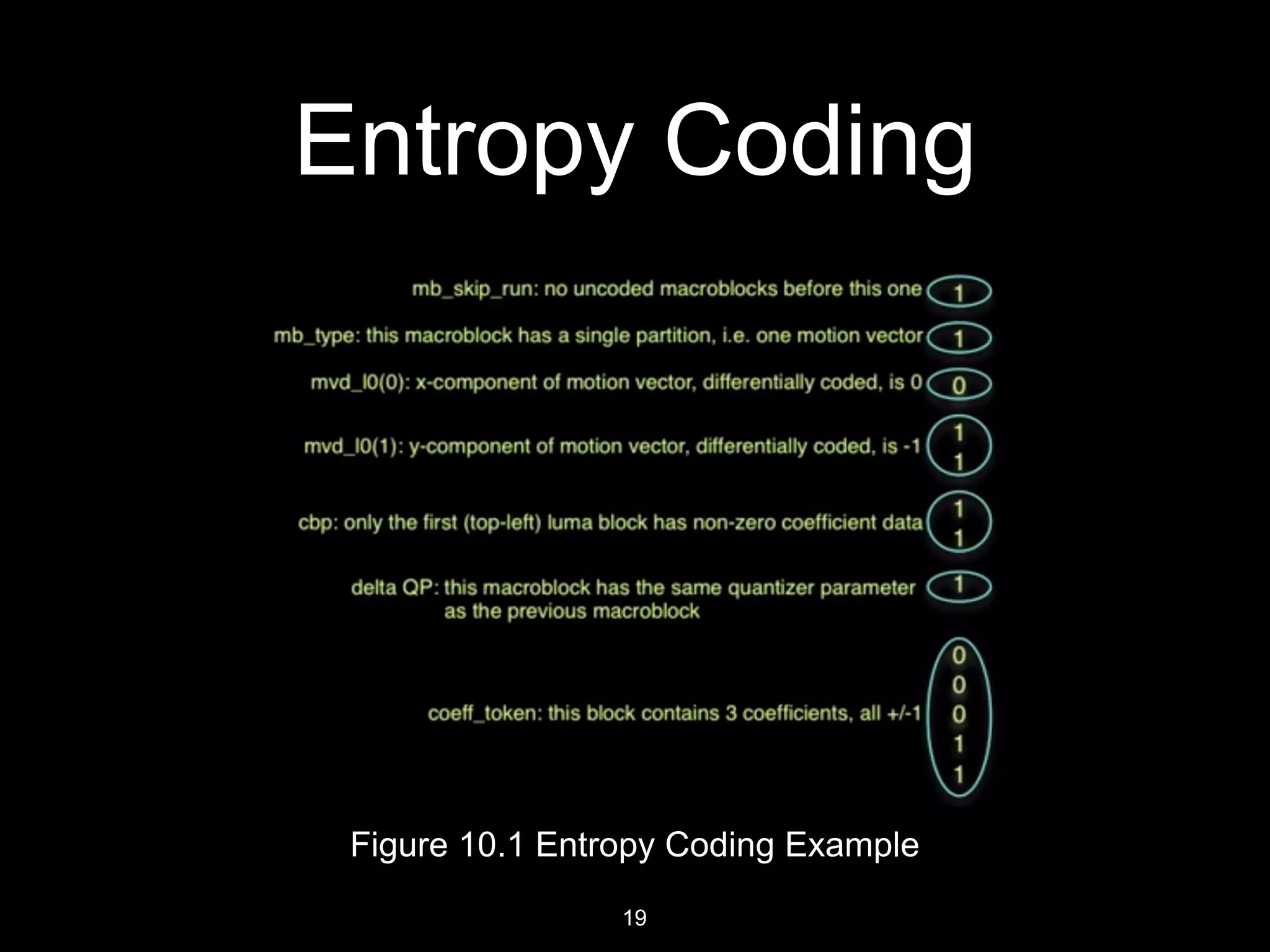
Entropy Coding
Figure 12.1 Entropy Coding Example
19
D. J. Sanghvi College of Engineering
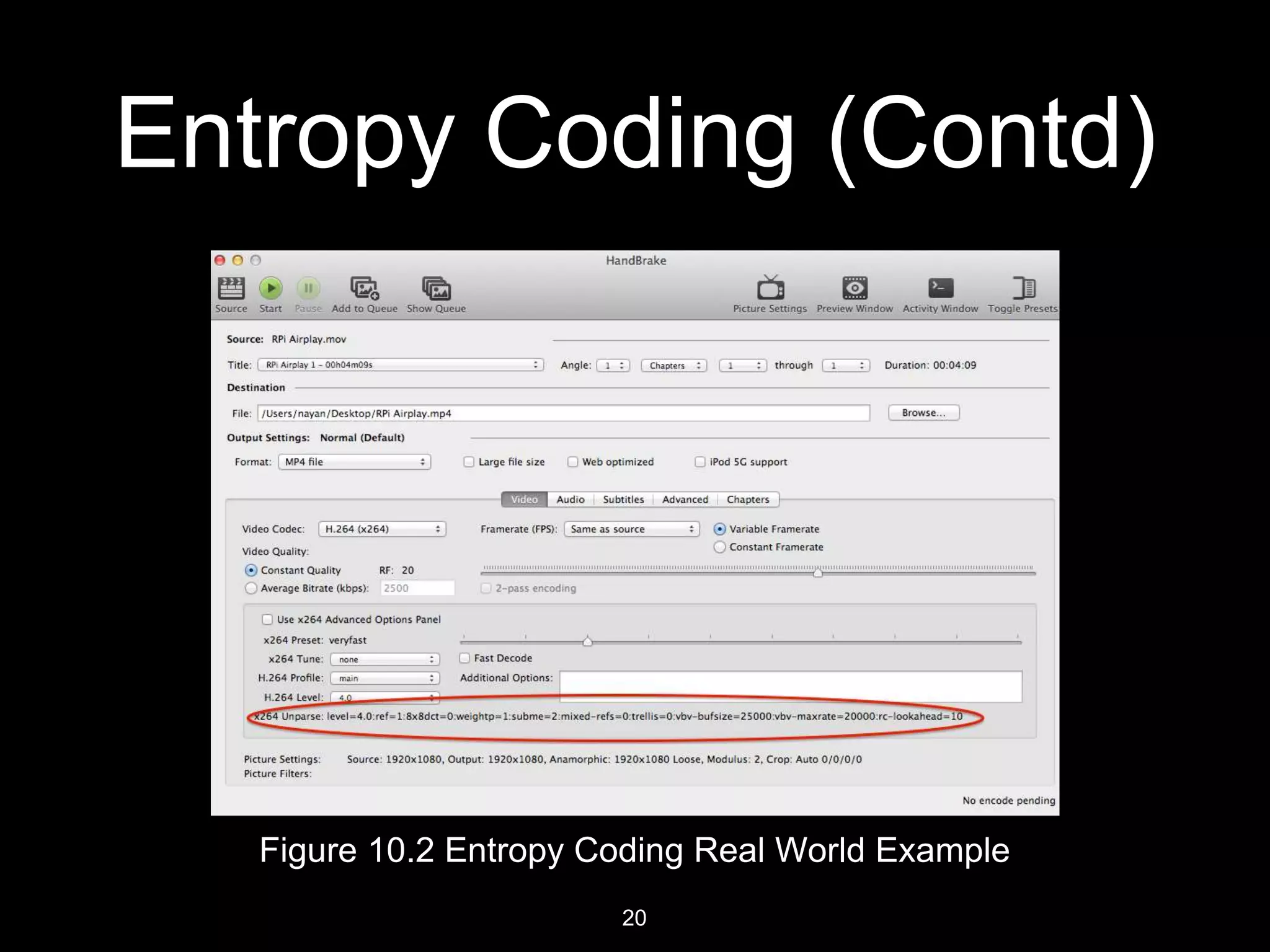
Entropy Coding (Contd)
Figure 12.2 Entropy Coding Real World Example
20
D. J. Sanghvi College of Engineering
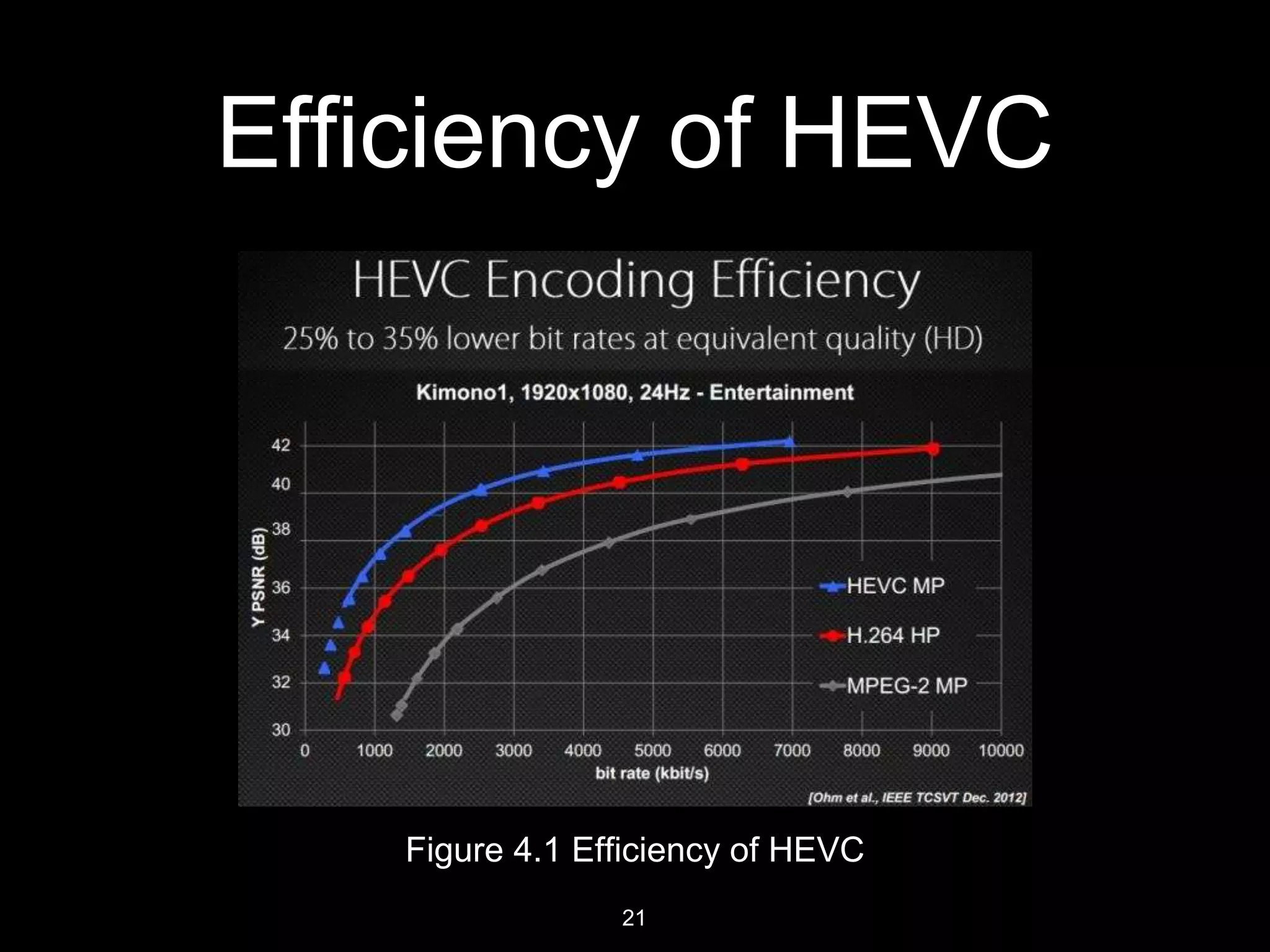
Efficiency of HEVC
Figure 13.1 Efficiency of HEVC
21
D. J. Sanghvi College of Engineering
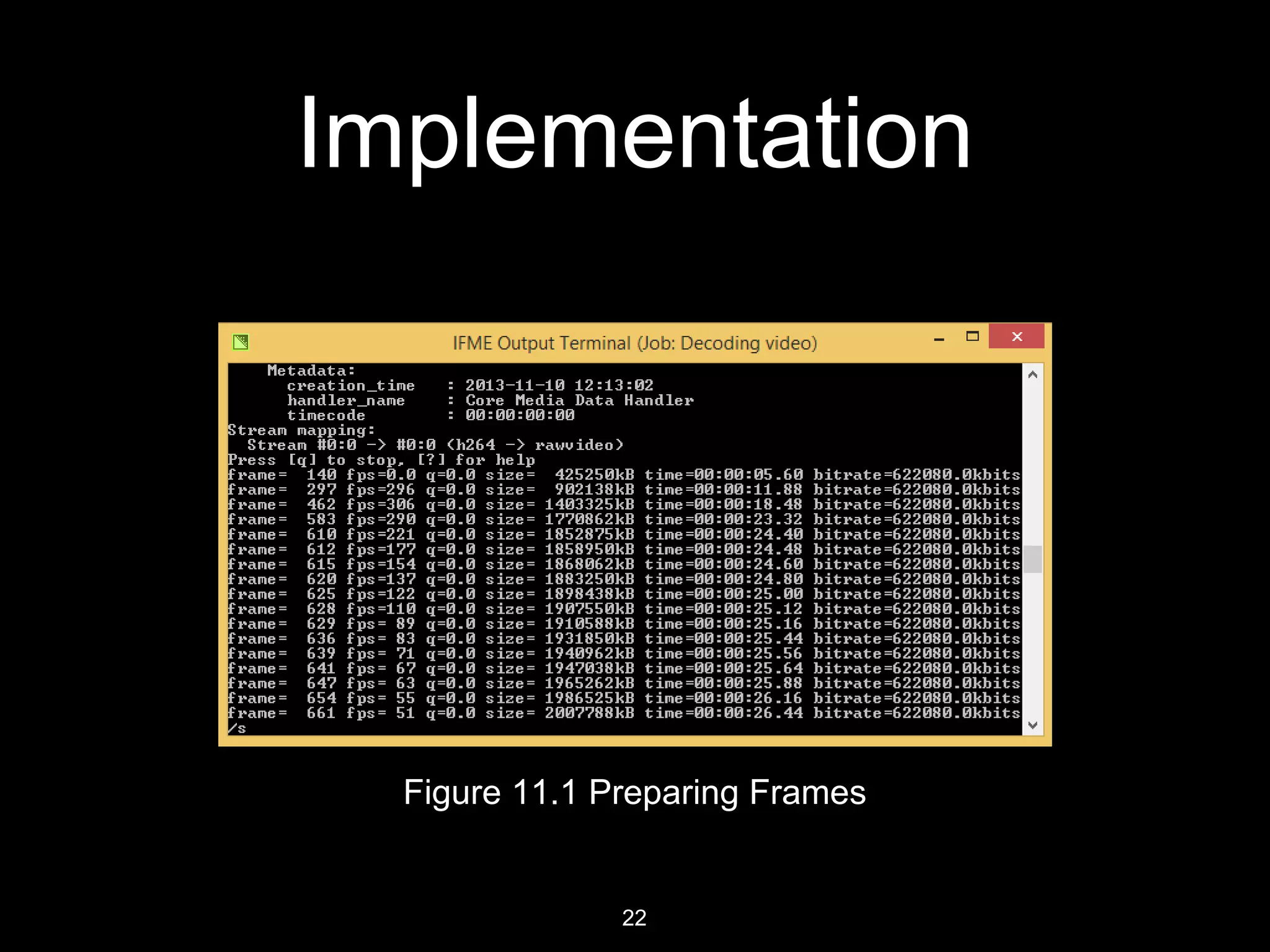
Implementation
Figure 14.1 Preparing Frames
22
D. J. Sanghvi College of Engineering
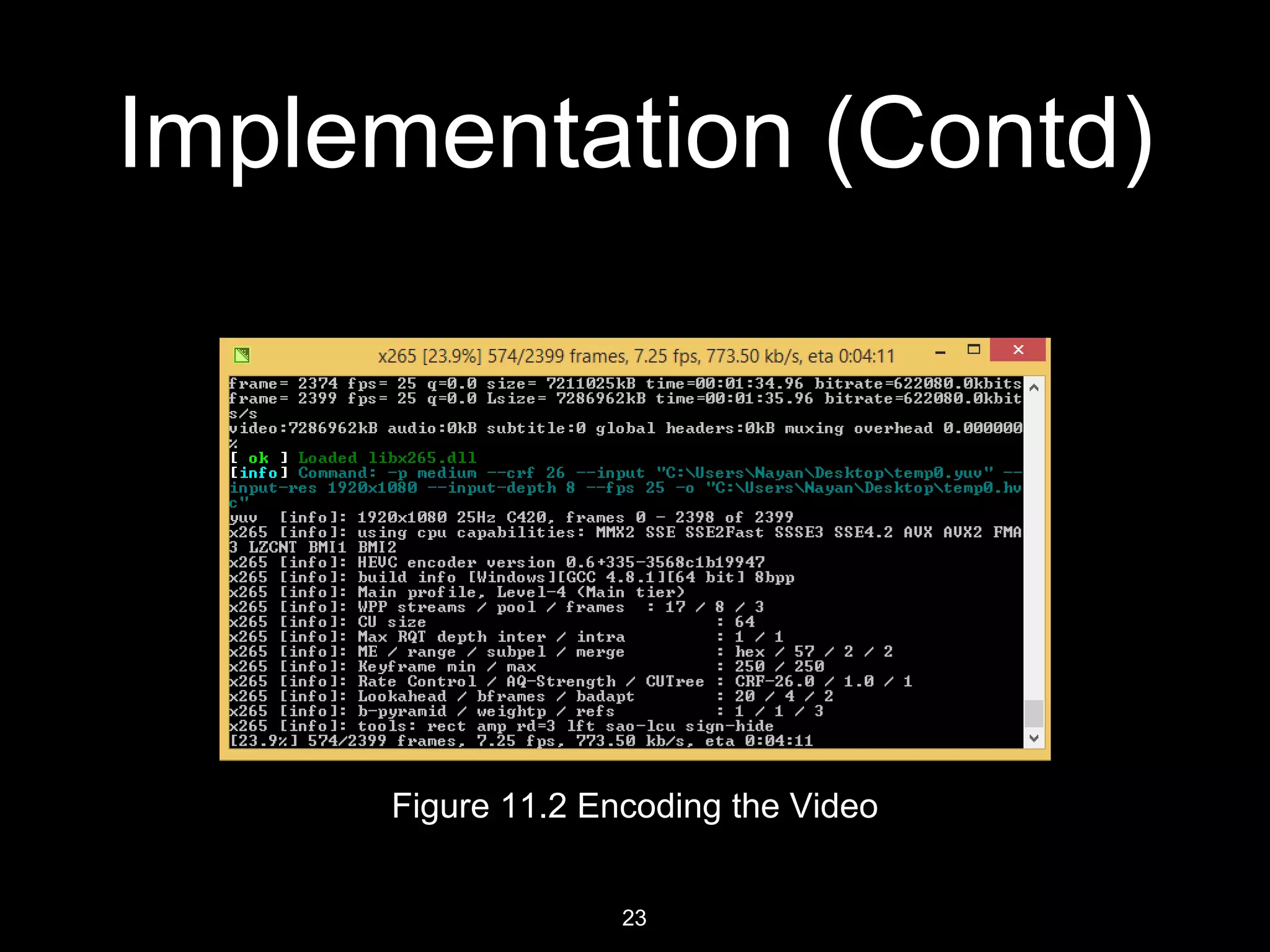
Implementation (Contd)
Figure 14.2 Encoding the Video
23
D. J. Sanghvi College of Engineering
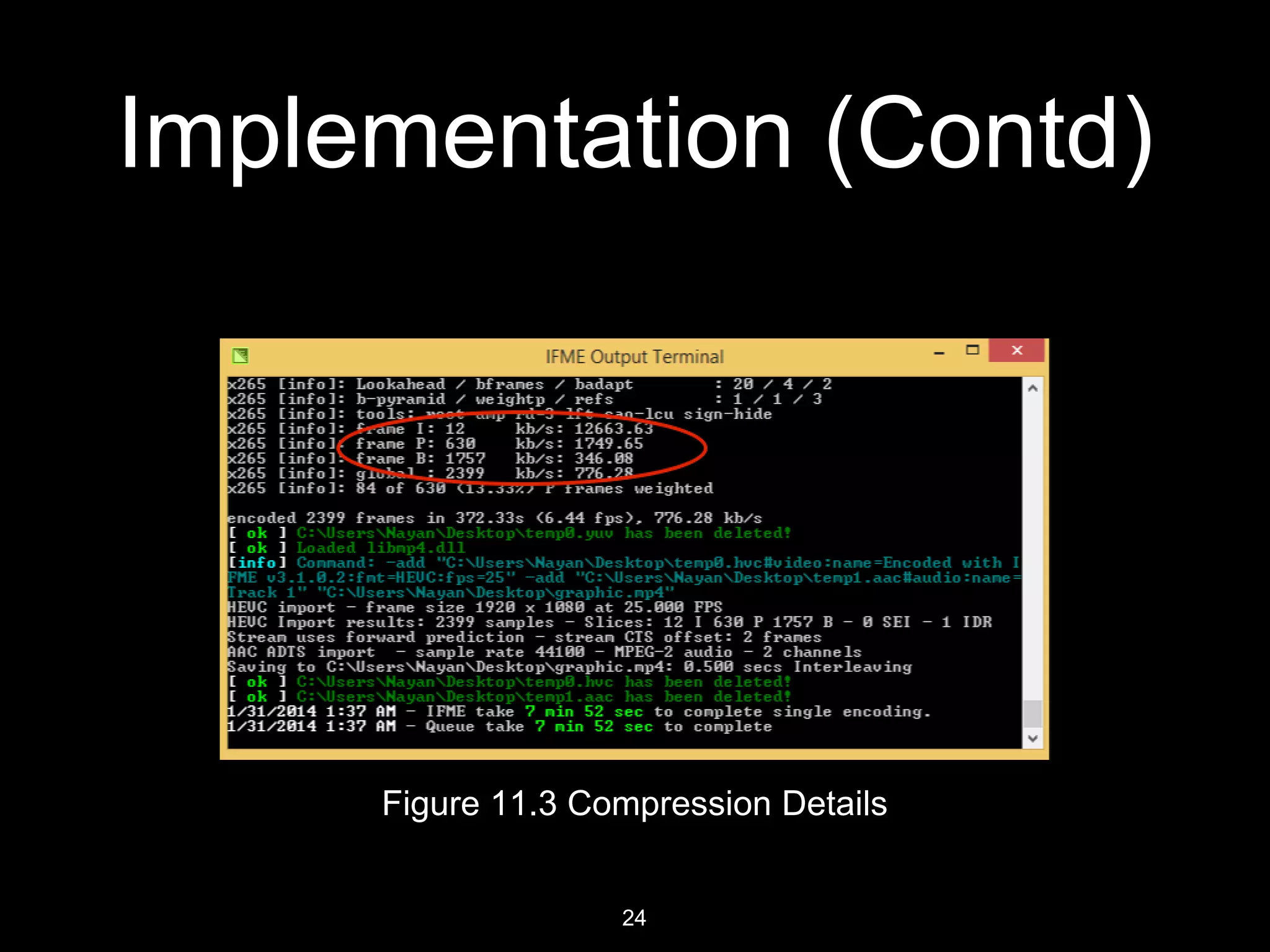
Implementation (Contd)
Figure 14.3 Compression Details
24
D. J. Sanghvi College of Engineering
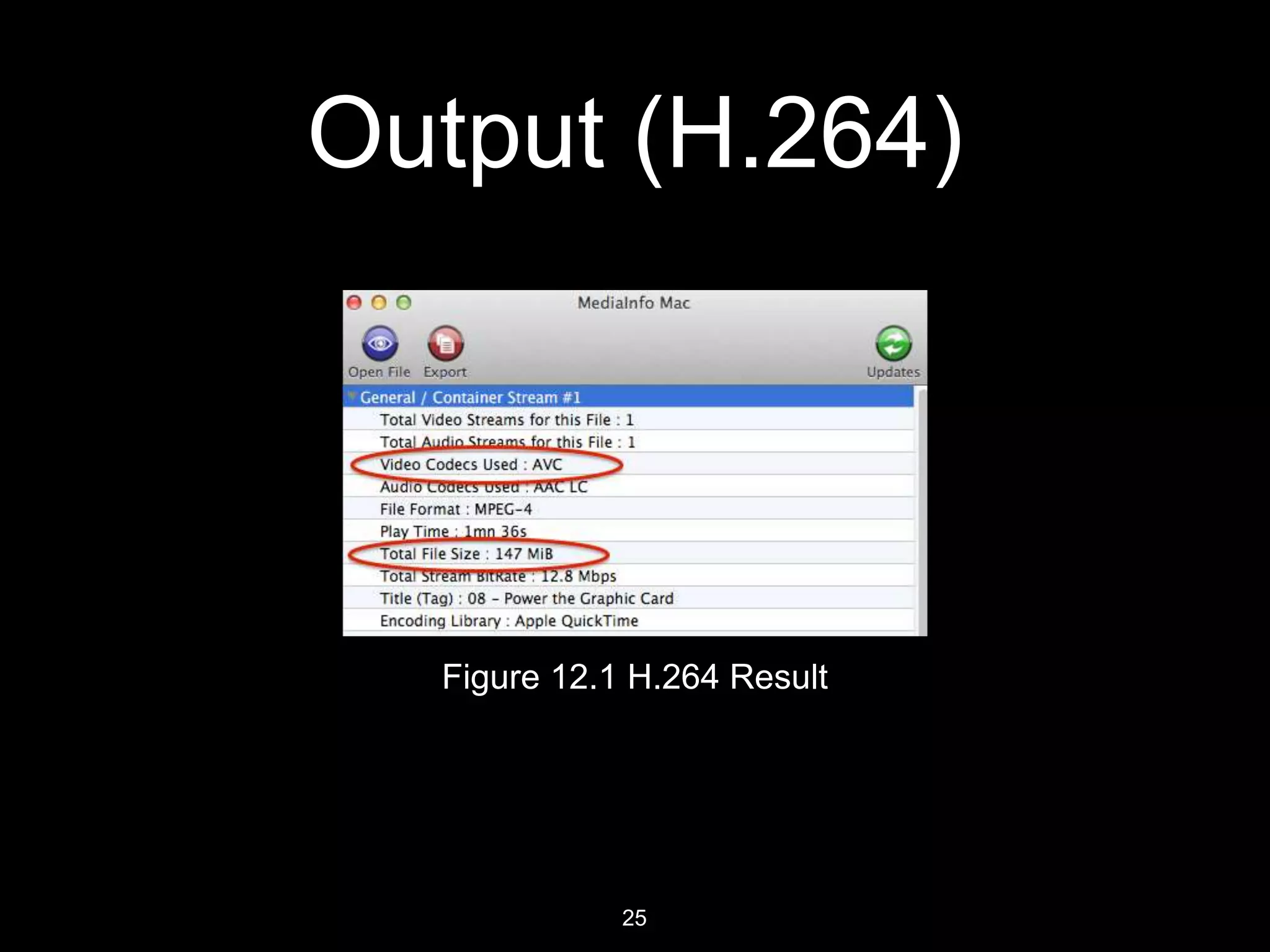
Output (H.264)
Figure 15.1 H.264 Result
25
D. J. Sanghvi College of Engineering
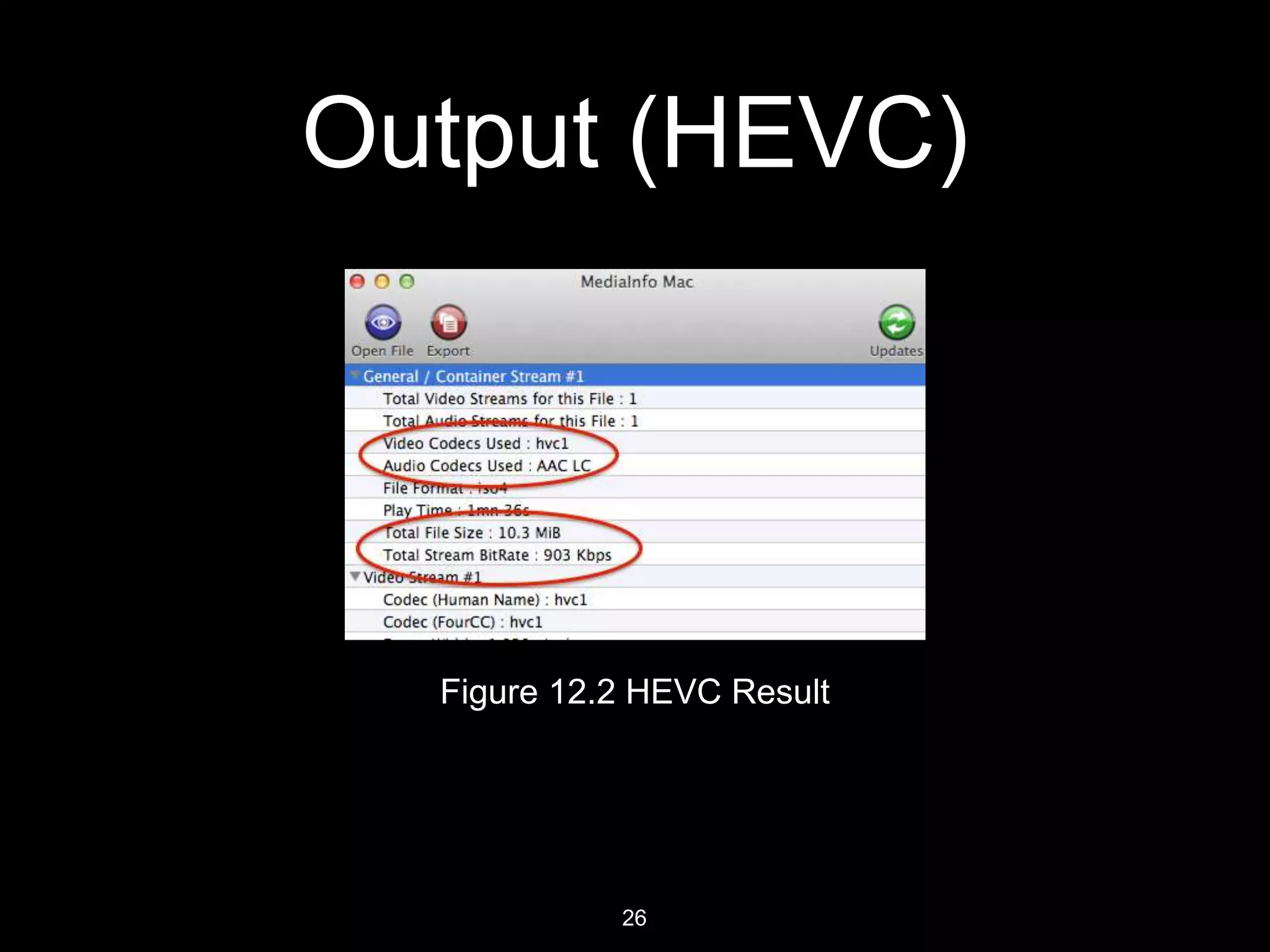
Output (HEVC)
Figure 15.2 HEVC Result
26
D. J. Sanghvi College of Engineering
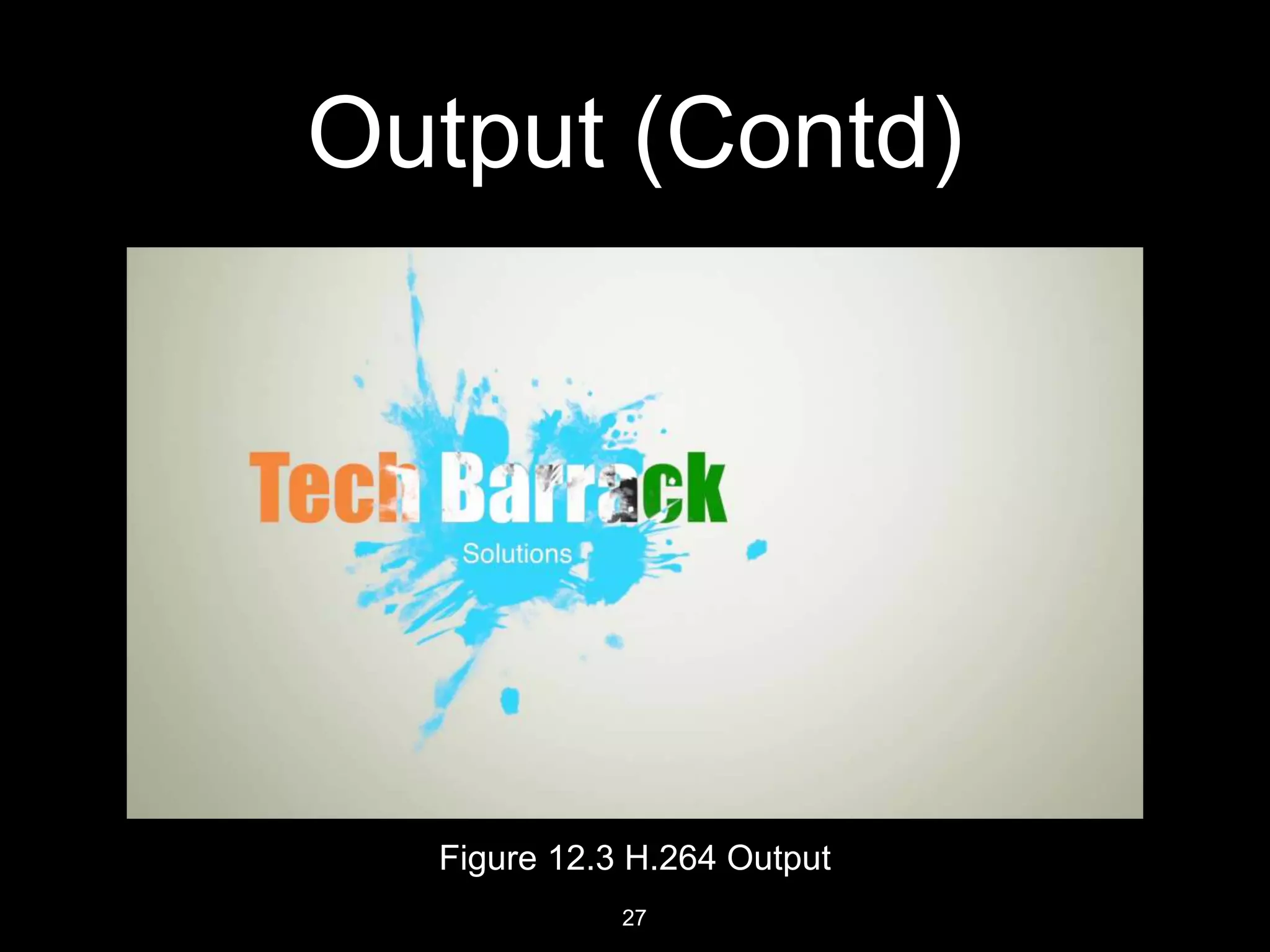
Output (Contd)
Figure 15.3 H.264 Output
27
D. J. Sanghvi College of Engineering
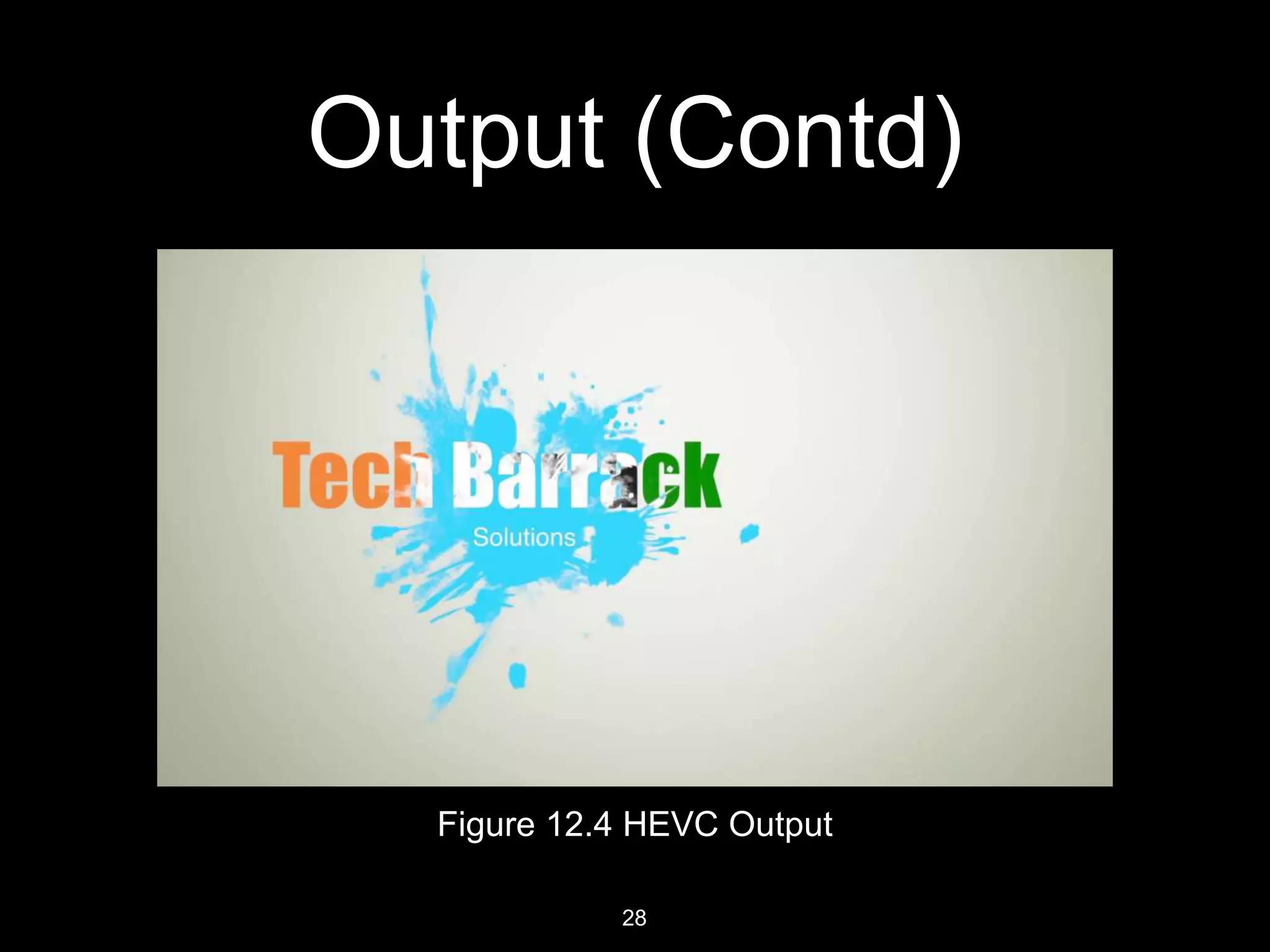
Output (Contd)
Figure 15.4 HEVC Output
28
D. J. Sanghvi College of Engineering
Proposed Solution
• HEVC provides far better results
• Proprietary but stable
• Daala still in development
• Being backed by all major companies
• Encoders & Decoders already on their way
29
D. J. Sanghvi College of Engineering
Conclusion
• 100 hours of video uploaded every minute to
YouTube
• Developing new networking technologies is a
tedious task.
• Future is 8K and beyond.
30
D. J. Sanghvi College of Engineering
Thank You

High Efficiency Video Coding

  • 1.
    D. J. SanghviCollege of Engineering Rushabh Savla Vivek Sanghvi Jain Nayan Seth 1
  • 2.
    D. J. SanghviCollege of Engineering Why Processing? 1920 x 1080 1920 x 1080 x 3 1920 x 1080 x 3 x 25 1920 x 1080 x 3 x 25 x 60 1920 x 1080 x 3 x 25 x 60 x 60 A very very big number! 2
  • 3.
    D. J. SanghviCollege of Engineering Effect on Network Traffic Video Data 3
  • 4.
    D. J. SanghviCollege of Engineering Computational Complexity Figure 1.1 Tradeoffs 4
  • 5.
    D. J. SanghviCollege of Engineering Computational Complexity (Contd) 5 Figure 1.2 Comparison of Different H/W
  • 6.
    D. J. SanghviCollege of Engineering Codecs + Containers Figure 2.1 Codec and Containers 6
  • 7.
    D. J. SanghviCollege of Engineering Reasons To Compress 7 Figure 3.1 A Image in Different File Sizes
  • 8.
    D. J. SanghviCollege of Engineering Need For HEVC Figure 4.1 Image Resolution 8 • Support for latest UHD. • Reduced Network Traffic • Storing smaller files is easier.
  • 9.
    D. J. SanghviCollege of Engineering Uses 9 • Netflix, Amazon Youtube, Any other streaming Media • Blu-Ray , Digital Cinema with nearly lossless coding • HDTV broadcast on HEVC supported televisions like the SONY, LG, Samsung TV's
  • 10.
    D. J. SanghviCollege of Engineering Limitations 10 • New Technology, slower adaptation. • Dedicated hardware integration only recently declared. • Software Decoder, Horsepower ambiguity problem. • Patent troubles
  • 11.
    D. J. SanghviCollege of Engineering Similar Coding Techniques • H.264 • VP9 • VP8 • Daala 11
  • 12.
    D. J. SanghviCollege of Engineering H.264 Vs HEVC Figure 5.1 H.264 Vs HEVC 12
  • 13.
    D. J. SanghviCollege of Engineering Video Coding Figure 6.1 Video Encoding/Decoding Process 13
  • 14.
    D. J. SanghviCollege of Engineering Encoding Figure 7.1 Encoding Process 14
  • 15.
    D. J. SanghviCollege of Engineering Partition Figure 8.1 Partition into CTU 15
  • 16.
    D. J. SanghviCollege of Engineering CTU Figure 9.1 Coding Tree Units 16
  • 17.
    D. J. SanghviCollege of Engineering Prediction Figure 10.1 Prediction of Frames 17
  • 18.
    D. J. SanghviCollege of Engineering Transform Quantize Scale Figure 11.1 Transformation, Quantization and Scaling 18
  • 19.
    D. J. SanghviCollege of Engineering Entropy Coding Figure 12.1 Entropy Coding Example 19
  • 20.
    D. J. SanghviCollege of Engineering Entropy Coding (Contd) Figure 12.2 Entropy Coding Real World Example 20
  • 21.
    D. J. SanghviCollege of Engineering Efficiency of HEVC Figure 13.1 Efficiency of HEVC 21
  • 22.
    D. J. SanghviCollege of Engineering Implementation Figure 14.1 Preparing Frames 22
  • 23.
    D. J. SanghviCollege of Engineering Implementation (Contd) Figure 14.2 Encoding the Video 23
  • 24.
    D. J. SanghviCollege of Engineering Implementation (Contd) Figure 14.3 Compression Details 24
  • 25.
    D. J. SanghviCollege of Engineering Output (H.264) Figure 15.1 H.264 Result 25
  • 26.
    D. J. SanghviCollege of Engineering Output (HEVC) Figure 15.2 HEVC Result 26
  • 27.
    D. J. SanghviCollege of Engineering Output (Contd) Figure 15.3 H.264 Output 27
  • 28.
    D. J. SanghviCollege of Engineering Output (Contd) Figure 15.4 HEVC Output 28
  • 29.
    D. J. SanghviCollege of Engineering Proposed Solution • HEVC provides far better results • Proprietary but stable • Daala still in development • Being backed by all major companies • Encoders & Decoders already on their way 29
  • 30.
    D. J. SanghviCollege of Engineering Conclusion • 100 hours of video uploaded every minute to YouTube • Developing new networking technologies is a tedious task. • Future is 8K and beyond. 30
  • 31.
    D. J. SanghviCollege of Engineering Thank You