Ecosystem impacts of invasive species


              HON 305V
             Dr. Andersen
Why do invasives become so abundant?

●   Competitive release: Kept in check by co-
    adapted competitors in native habitat
●   Release from natural enemies: Kept in check by
    “the 3 P's” (predators, parasites, pathogens) in
    native habitat
●   Facilitation: Alter habitat to make it more
    favorable for themselves
    ●   Allelopathy: Poison your neighbors
    ●   Fire regimes: Burn your neighbors' homes down
Competitive release vs. natural
           enemy release
●   Ecologists have been debating the relative
    importance of competition vs. the 3 P's since
    the 1950's

●   Still an active topic of research

●   Real answer seems to be “it depends”
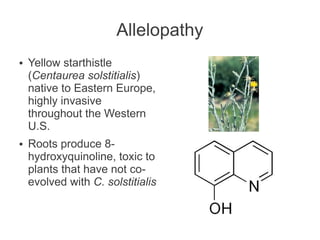
Allelopathy
●   Yellow starthistle
    (Centaurea solstitialis)
    native to Eastern Europe,
    highly invasive
    throughout the Western
    U.S.
●   Roots produce 8-
    hydroxyquinoline, toxic to
    plants that have not co-
    evolved with C. solstitialis
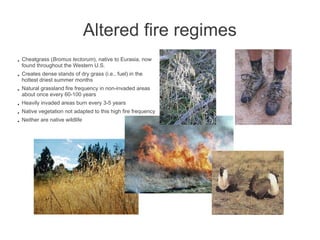
Altered fire regimes
●   Cheatgrass (Bromus tectorum), native to Eurasia, now
    found throughout the Western U.S.
●   Creates dense stands of dry grass (i.e., fuel) in the
    hottest driest summer months
●   Natural grassland fire frequency in non-invaded areas
    about once every 60-100 years
●   Heavily invaded areas burn every 3-5 years
●   Native vegetation not adapted to this high fire frequency
●   Neither are native wildlife
Effects on invaded habitats
●   The worst invasive
    plants can establish
    near-monocultures
    that displace native
    vegetation, and
    reduce habitat quality
    for native wildlife
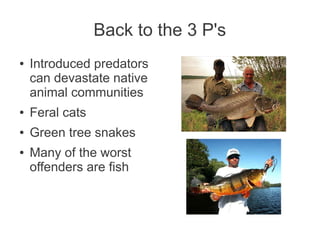
Back to the 3 P's
●   Introduced predators
    can devastate native
    animal communities
●   Feral cats
●   Green tree snakes
●   Many of the worst
    offenders are fish
Integrated strategy for combating invasive species

●   Prevent additional introductions through
    effective quarantine and regulation
●   Early detection and rapid response to new
    outbreaks
●   Control and management of established
    problem species through multiple means
●   Restoration and recovery of natural ecosystems
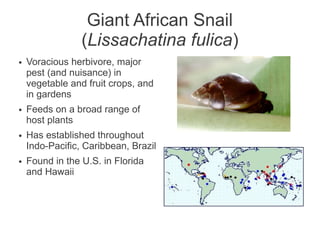
Giant African Snail
                 (Lissachatina fulica)
●   Voracious herbivore, major
    pest (and nuisance) in
    vegetable and fruit crops, and
    in gardens
●   Feeds on a broad range of
    host plants
●   Has established throughout
    Indo-Pacific, Caribbean, Brazil
●   Found in the U.S. in Florida
    and Hawaii
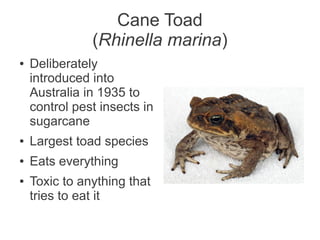
Cane Toad
               (Rhinella marina)
●   Deliberately
    introduced into
    Australia in 1935 to
    control pest insects in
    sugarcane
●   Largest toad species
●   Eats everything
●   Toxic to anything that
    tries to eat it
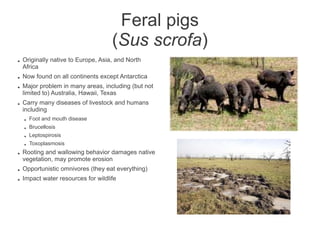
Feral pigs
                                     (Sus scrofa)
●   Originally native to Europe, Asia, and North
    Africa
●   Now found on all continents except Antarctica
●   Major problem in many areas, including (but not
    limited to) Australia, Hawaii, Texas
●   Carry many diseases of livestock and humans
    including
    ●   Foot and mouth disease
    ●   Brucellosis
    ●   Leptospirosis
    ●   Toxoplasmosis
●   Rooting and wallowing behavior damages native
    vegetation, may promote erosion
●   Opportunistic omnivores (they eat everything)
●   Impact water resources for wildlife
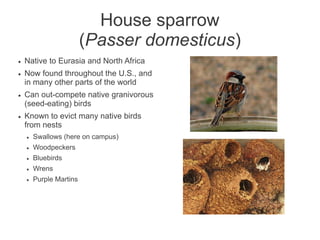
House sparrow
                         (Passer domesticus)
●   Native to Eurasia and North Africa
●   Now found throughout the U.S., and
    in many other parts of the world
●   Can out-compete native granivorous
    (seed-eating) birds
●   Known to evict many native birds
    from nests
    ●   Swallows (here on campus)
    ●   Woodpeckers
    ●   Bluebirds
    ●   Wrens
    ●   Purple Martins
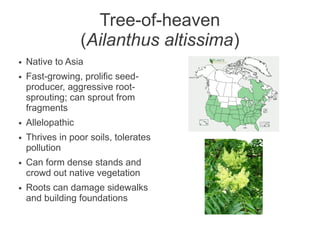
Tree-of-heaven
                   (Ailanthus altissima)
●   Native to Asia
●   Fast-growing, prolific seed-
    producer, aggressive root-
    sprouting; can sprout from
    fragments
●   Allelopathic
●   Thrives in poor soils, tolerates
    pollution
●   Can form dense stands and
    crowd out native vegetation
●   Roots can damage sidewalks
    and building foundations
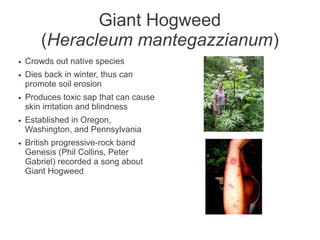
Giant Hogweed
        (Heracleum mantegazzianum)
●   Crowds out native species
●   Dies back in winter, thus can
    promote soil erosion
●   Produces toxic sap that can cause
    skin irritation and blindness
●   Established in Oregon,
    Washington, and Pennsylvania
●   British progressive-rock band
    Genesis (Phil Collins, Peter
    Gabriel) recorded a song about
    Giant Hogweed
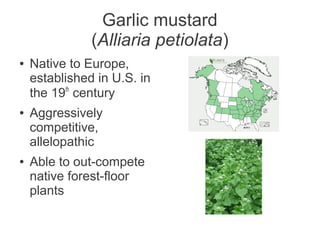
Garlic mustard
               (Alliaria petiolata)
●   Native to Europe,
    established in U.S. in
           th
    the 19 century
●   Aggressively
    competitive,
    allelopathic
●   Able to out-compete
    native forest-floor
    plants
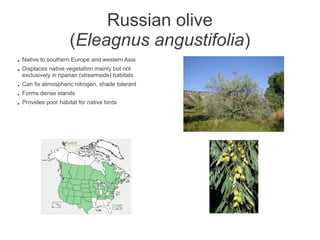
Russian olive
                       (Eleagnus angustifolia)
●   Native to southern Europe and western Asia
●   Displaces native vegetation mainly but not
    exclusively in riparian (streamside) habitats
●   Can fix atmospheric nitrogen, shade tolerant
●   Forms dense stands
●   Provides poor habitat for native birds
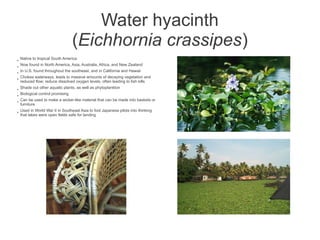
Water hyacinth
                                   (Eichhornia crassipes)
●
    Native to tropical South America
●
    Now found in North America, Asia, Australia, Africa, and New Zealand
●
    In U.S. found throughout the southeast, and in California and Hawaii
●
    Chokes waterways, leads to massive amounts of decaying vegetation and
    reduced flow; reduce dissolved oxygen levels, often leading to fish kills
●
    Shade out other aquatic plants, as well as phytoplankton
●
    Biological control promising
●
    Can be used to make a wicker-like material that can be made into baskets or
    furniture
●
    Used in World War II in Southeast Asia to fool Japanese pilots into thinking
    that lakes were open fields safe for landing
●   Questions on the material?
●   Questions on any of the examples?
●   Remember competitive release, the 3 P's, and
    facilitation. What are the implications of these three
    mechanisms for control of invasive species?
●   What kinds of adaptations might species have to cope
    with really high fire frequencies?
●   Invasive predators and herbivores can be especially
    devastating on islands. Can you think of reasons why
    this might be true?
●   What are the implications of so many widespread
    invasive species for our concept of “pristine nature”?
●   Observations on invasive species you've encountered?

IS ecosystem effects

  • 1.
    Ecosystem impacts ofinvasive species HON 305V Dr. Andersen
  • 2.
    Why do invasivesbecome so abundant? ● Competitive release: Kept in check by co- adapted competitors in native habitat ● Release from natural enemies: Kept in check by “the 3 P's” (predators, parasites, pathogens) in native habitat ● Facilitation: Alter habitat to make it more favorable for themselves ● Allelopathy: Poison your neighbors ● Fire regimes: Burn your neighbors' homes down
  • 3.
    Competitive release vs.natural enemy release ● Ecologists have been debating the relative importance of competition vs. the 3 P's since the 1950's ● Still an active topic of research ● Real answer seems to be “it depends”
  • 4.
    Allelopathy ● Yellow starthistle (Centaurea solstitialis) native to Eastern Europe, highly invasive throughout the Western U.S. ● Roots produce 8- hydroxyquinoline, toxic to plants that have not co- evolved with C. solstitialis
  • 5.
    Altered fire regimes ● Cheatgrass (Bromus tectorum), native to Eurasia, now found throughout the Western U.S. ● Creates dense stands of dry grass (i.e., fuel) in the hottest driest summer months ● Natural grassland fire frequency in non-invaded areas about once every 60-100 years ● Heavily invaded areas burn every 3-5 years ● Native vegetation not adapted to this high fire frequency ● Neither are native wildlife
  • 6.
    Effects on invadedhabitats ● The worst invasive plants can establish near-monocultures that displace native vegetation, and reduce habitat quality for native wildlife
  • 7.
    Back to the3 P's ● Introduced predators can devastate native animal communities ● Feral cats ● Green tree snakes ● Many of the worst offenders are fish
  • 8.
    Integrated strategy forcombating invasive species ● Prevent additional introductions through effective quarantine and regulation ● Early detection and rapid response to new outbreaks ● Control and management of established problem species through multiple means ● Restoration and recovery of natural ecosystems
  • 9.
    Giant African Snail (Lissachatina fulica) ● Voracious herbivore, major pest (and nuisance) in vegetable and fruit crops, and in gardens ● Feeds on a broad range of host plants ● Has established throughout Indo-Pacific, Caribbean, Brazil ● Found in the U.S. in Florida and Hawaii
  • 10.
    Cane Toad (Rhinella marina) ● Deliberately introduced into Australia in 1935 to control pest insects in sugarcane ● Largest toad species ● Eats everything ● Toxic to anything that tries to eat it
  • 11.
    Feral pigs (Sus scrofa) ● Originally native to Europe, Asia, and North Africa ● Now found on all continents except Antarctica ● Major problem in many areas, including (but not limited to) Australia, Hawaii, Texas ● Carry many diseases of livestock and humans including ● Foot and mouth disease ● Brucellosis ● Leptospirosis ● Toxoplasmosis ● Rooting and wallowing behavior damages native vegetation, may promote erosion ● Opportunistic omnivores (they eat everything) ● Impact water resources for wildlife
  • 12.
    House sparrow (Passer domesticus) ● Native to Eurasia and North Africa ● Now found throughout the U.S., and in many other parts of the world ● Can out-compete native granivorous (seed-eating) birds ● Known to evict many native birds from nests ● Swallows (here on campus) ● Woodpeckers ● Bluebirds ● Wrens ● Purple Martins
  • 13.
    Tree-of-heaven (Ailanthus altissima) ● Native to Asia ● Fast-growing, prolific seed- producer, aggressive root- sprouting; can sprout from fragments ● Allelopathic ● Thrives in poor soils, tolerates pollution ● Can form dense stands and crowd out native vegetation ● Roots can damage sidewalks and building foundations
  • 14.
    Giant Hogweed (Heracleum mantegazzianum) ● Crowds out native species ● Dies back in winter, thus can promote soil erosion ● Produces toxic sap that can cause skin irritation and blindness ● Established in Oregon, Washington, and Pennsylvania ● British progressive-rock band Genesis (Phil Collins, Peter Gabriel) recorded a song about Giant Hogweed
  • 15.
    Garlic mustard (Alliaria petiolata) ● Native to Europe, established in U.S. in th the 19 century ● Aggressively competitive, allelopathic ● Able to out-compete native forest-floor plants
  • 16.
    Russian olive (Eleagnus angustifolia) ● Native to southern Europe and western Asia ● Displaces native vegetation mainly but not exclusively in riparian (streamside) habitats ● Can fix atmospheric nitrogen, shade tolerant ● Forms dense stands ● Provides poor habitat for native birds
  • 17.
    Water hyacinth (Eichhornia crassipes) ● Native to tropical South America ● Now found in North America, Asia, Australia, Africa, and New Zealand ● In U.S. found throughout the southeast, and in California and Hawaii ● Chokes waterways, leads to massive amounts of decaying vegetation and reduced flow; reduce dissolved oxygen levels, often leading to fish kills ● Shade out other aquatic plants, as well as phytoplankton ● Biological control promising ● Can be used to make a wicker-like material that can be made into baskets or furniture ● Used in World War II in Southeast Asia to fool Japanese pilots into thinking that lakes were open fields safe for landing
  • 18.
    Questions on the material? ● Questions on any of the examples? ● Remember competitive release, the 3 P's, and facilitation. What are the implications of these three mechanisms for control of invasive species? ● What kinds of adaptations might species have to cope with really high fire frequencies? ● Invasive predators and herbivores can be especially devastating on islands. Can you think of reasons why this might be true? ● What are the implications of so many widespread invasive species for our concept of “pristine nature”? ● Observations on invasive species you've encountered?