HHCJ AMUMARA
COMPUTER STUDIES LECTURE NOTE –SS1
(NOTE 003)
HHCJ- COMPUTER STUDIES LECTURE NOTE
TOPIC: COMMUNICATIONS SYSTEMS
WHAT IS: Information and Communication
Technology
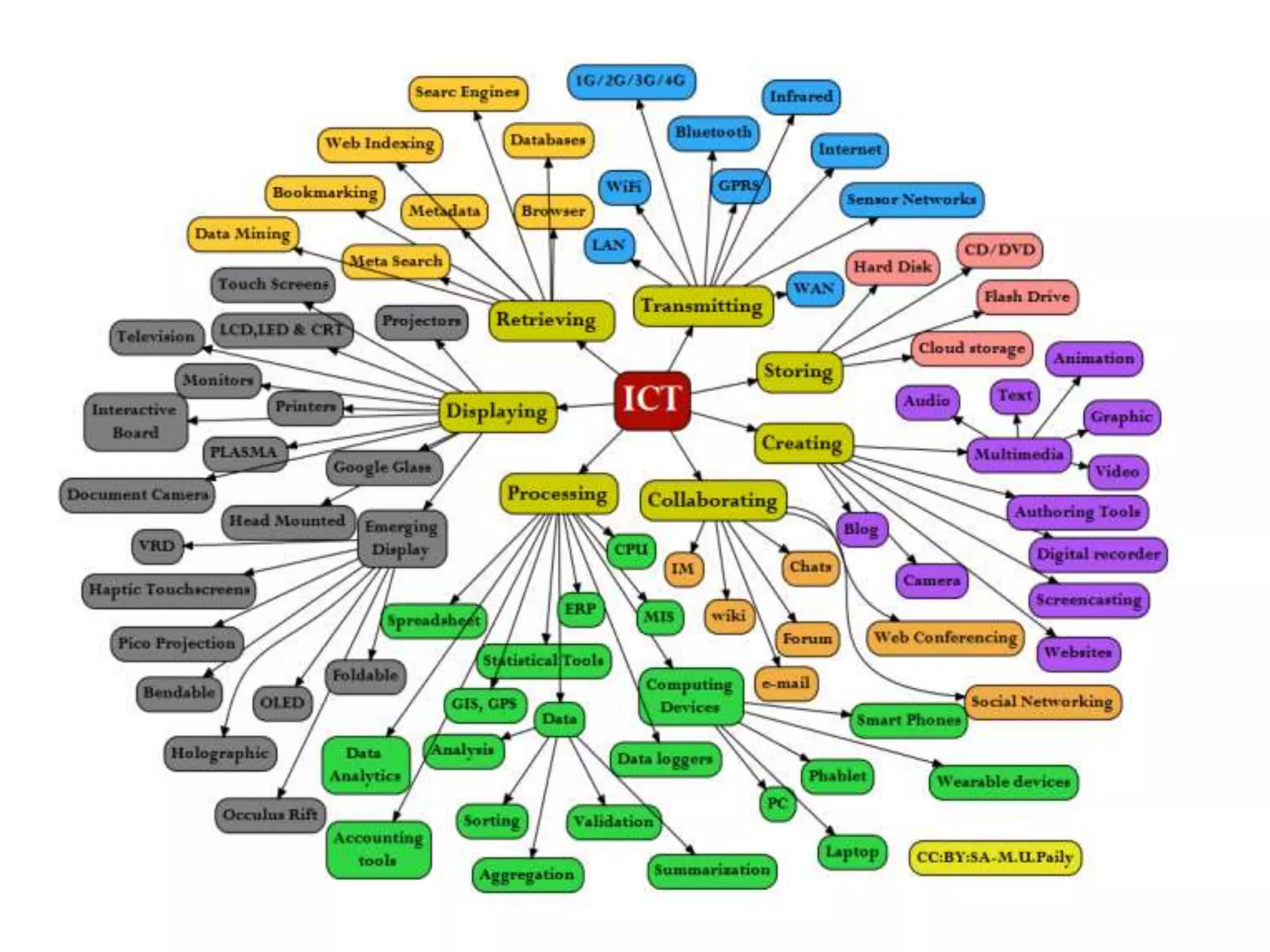
ICT is an acronym of Information and
Communication Technologies. The set of
technologies developed to manage information
and send it from one place to another.
TYPES OF ICT
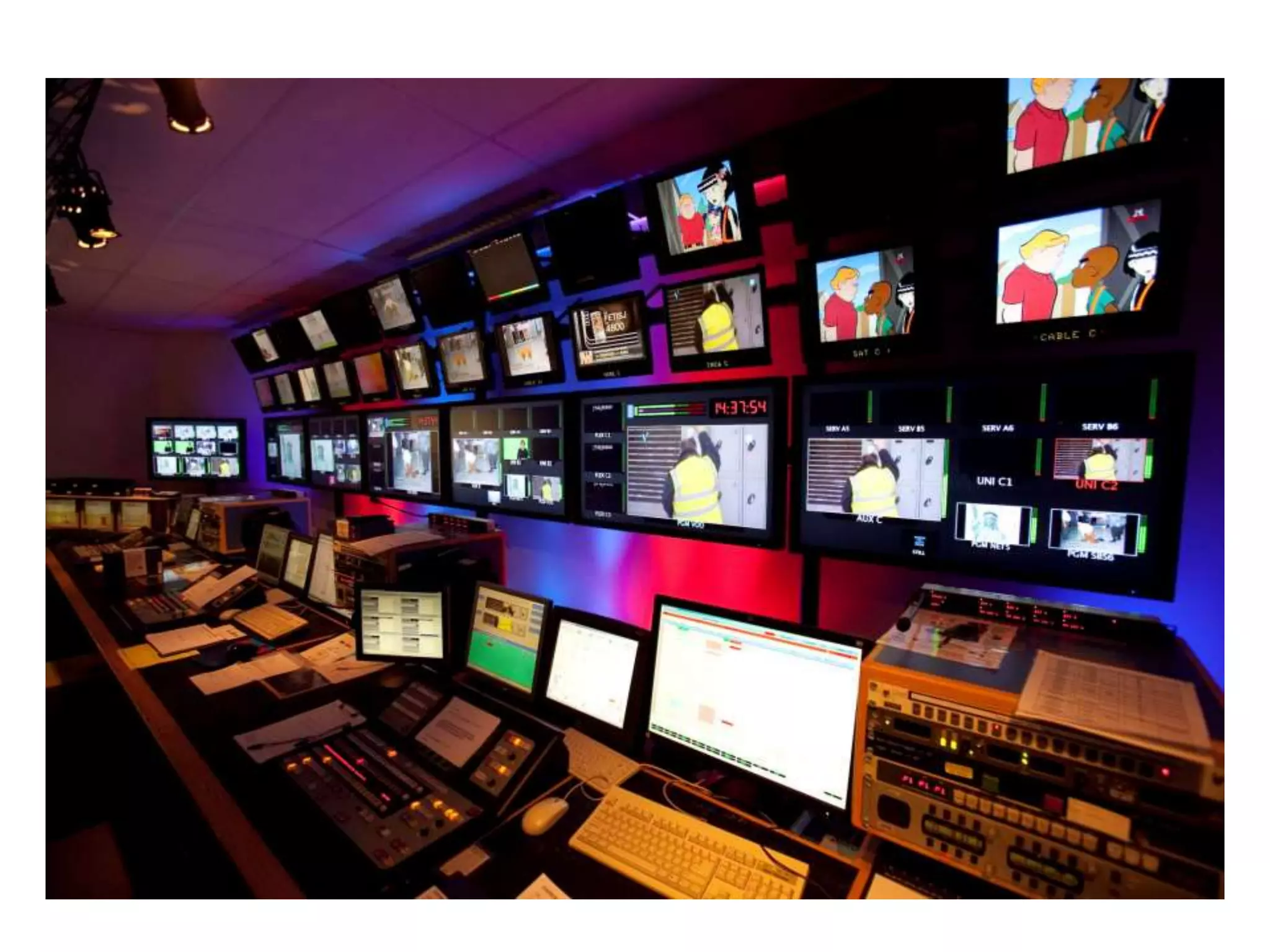
Broadcasting: is the distribution of audio or video
content to a wider audience via any electronic mass
communications medium.
Broadcasting: electronic transmission of radio and
television signals that are intended for general public.
Broadcasting: is the distribution of audio and/or video
signals (programs) to a number of recipients ("listeers"
or "viewers")
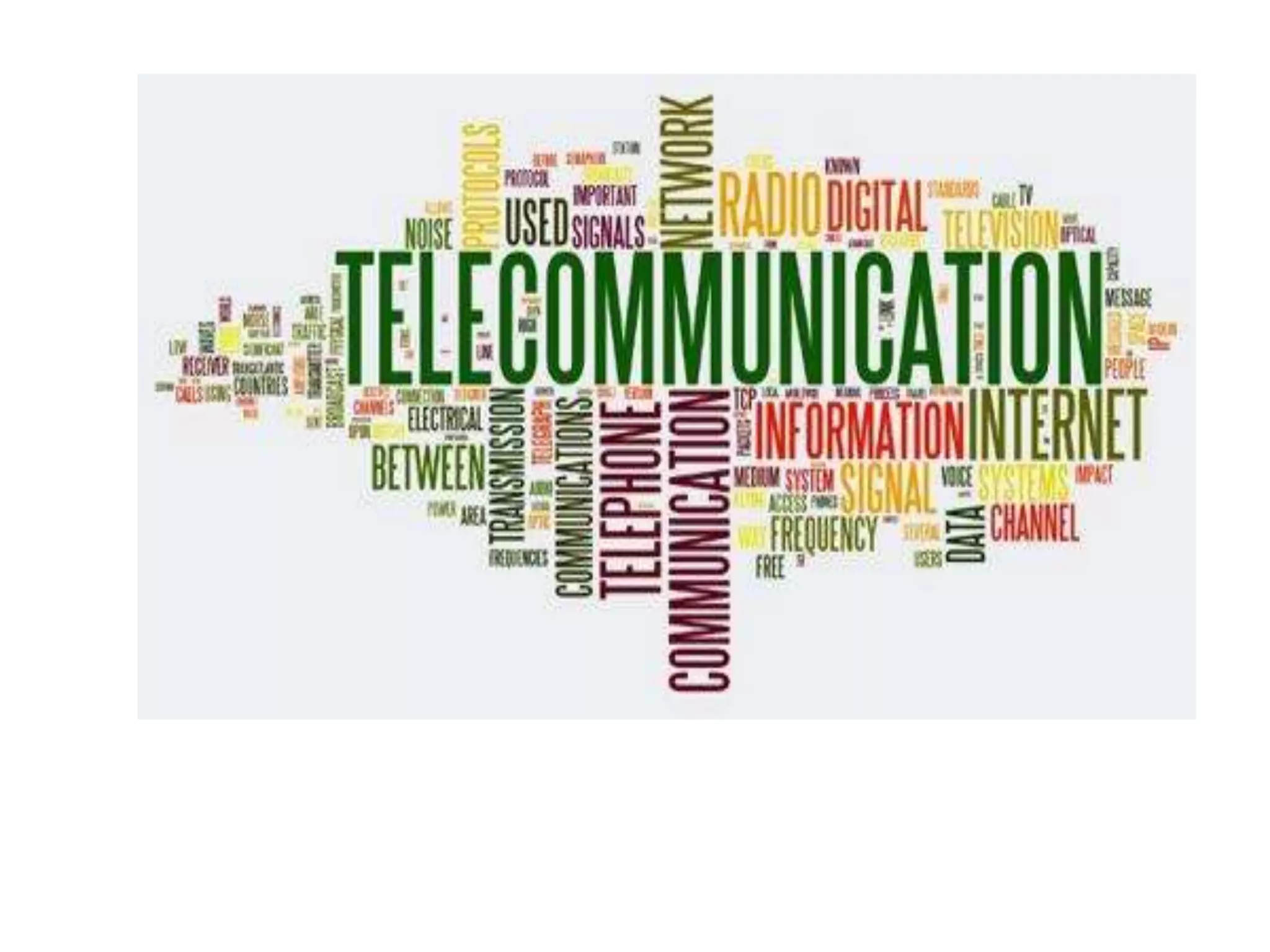
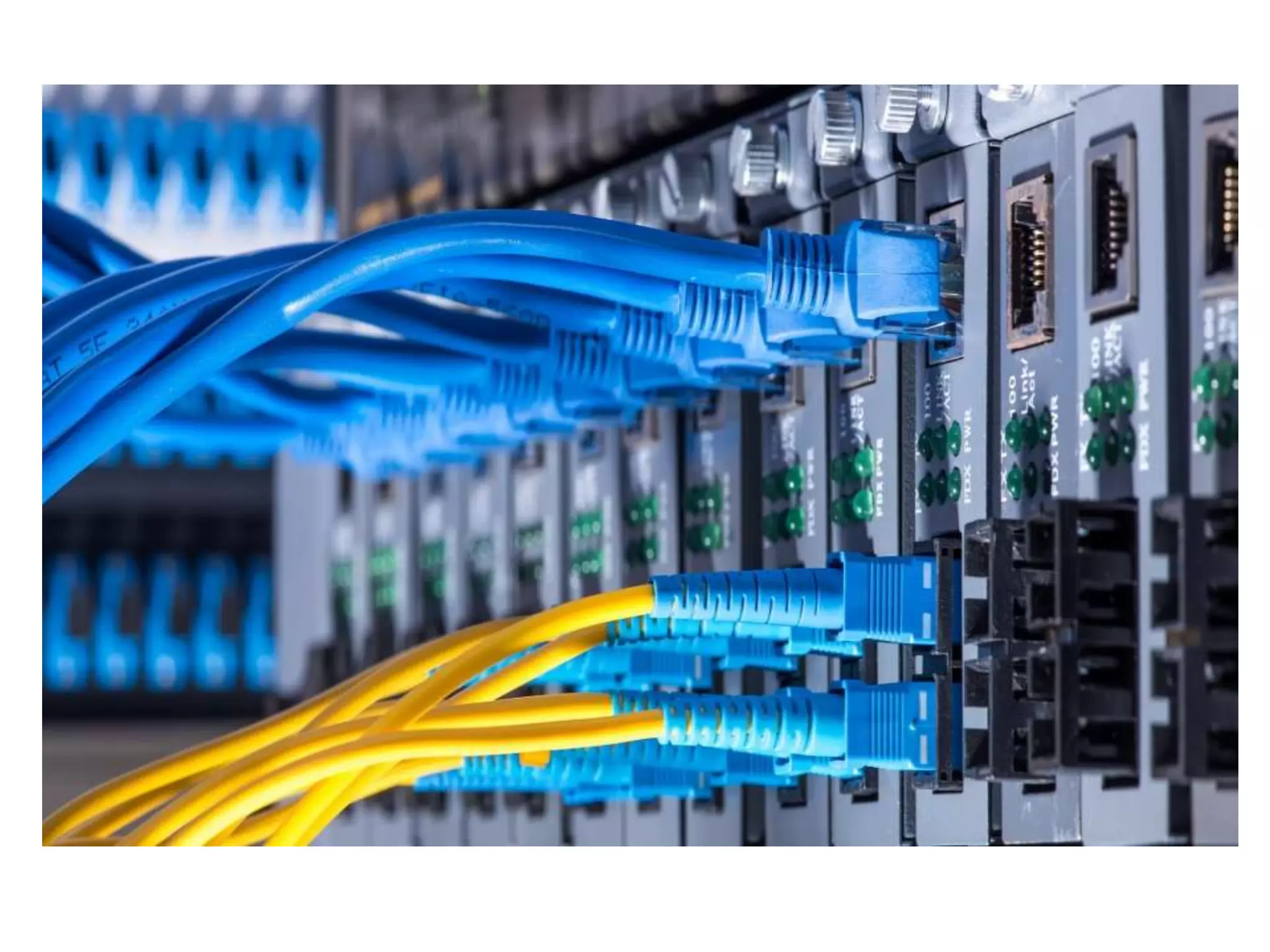
• Telecommunication OR or Telecom: is the
exchange of signs, signals, messages, words,
writings, images and sounds or information of
any nature by wire, radio, optical or other
electromagnetic systems.
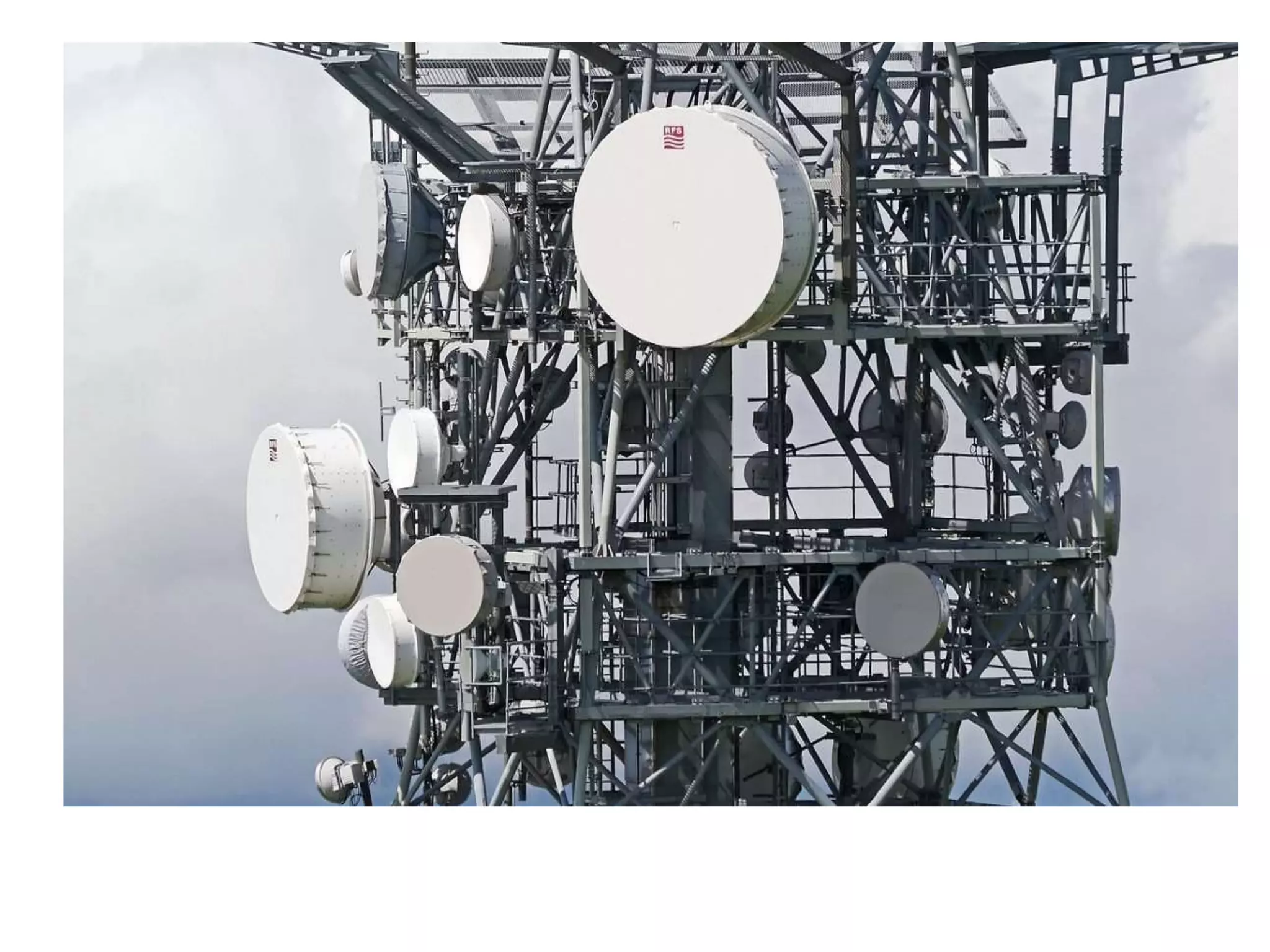
• Telecommunications:refer to the process of
exchanging information such as voice, data and
video transmissions via electronic technologies
like telephones (wired and wireless), microwave
communications, fiber optics, satellites, radio
and television broadcasting, and the internet.
• data network :A communication network that
is devoted to carrying computer information, as
opposed to voice, video, etc. It consists of a
number of nodes, or stations, connected by
various communication channels.
• Data networks: comprised of two or more
computers that are connected to share
information, hardware, programs and so forth.
A DATA NETWORK: is an electronic
communications process that allowsfor the
orderly transmission and receptive of data
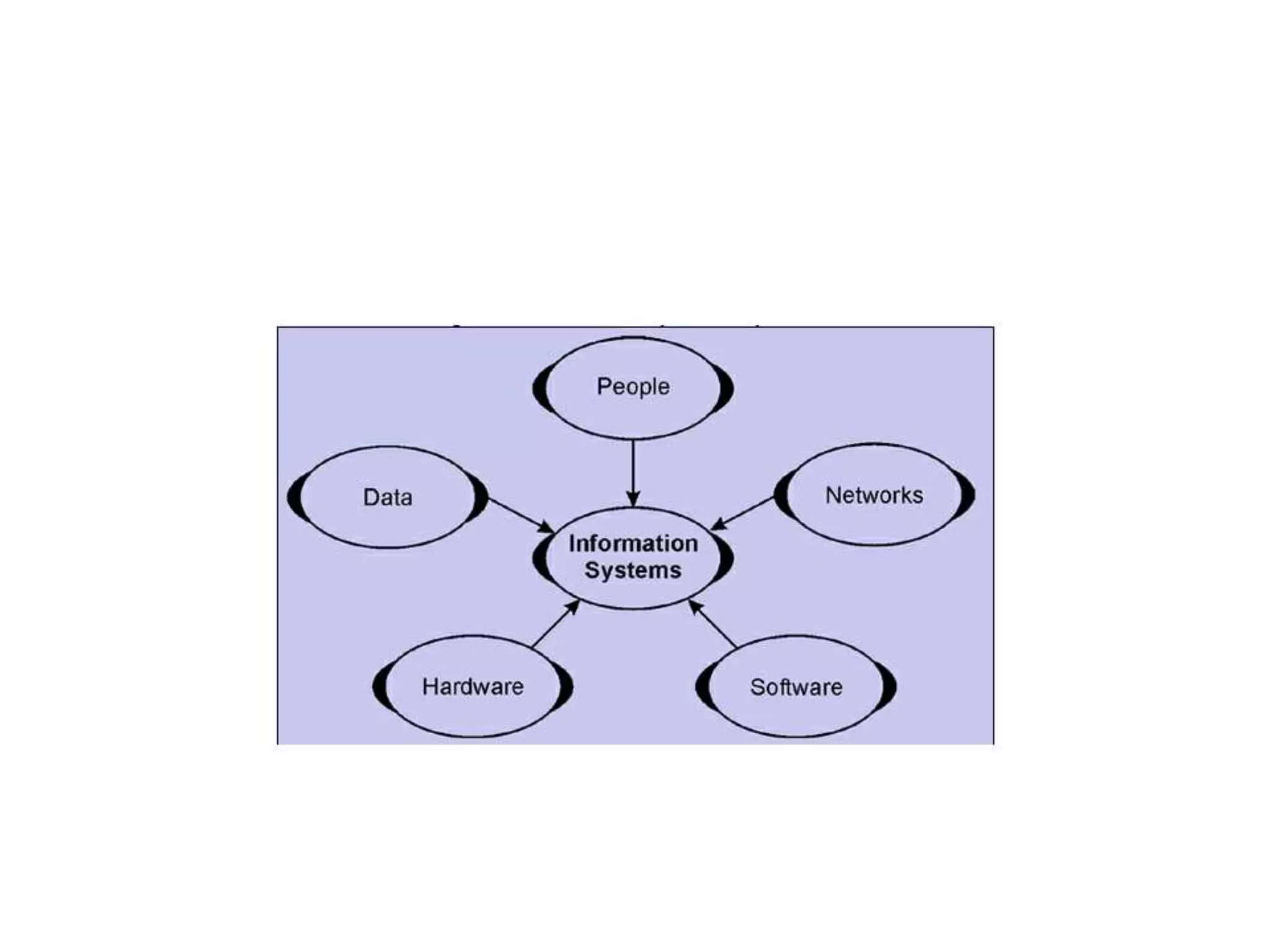
• Information system:A system is a group of
interacting or interrelated entities that form a
unified whole.
• Information: is data that have been converted
into a meaningful and useful context for
specific end users.. So you should view
information as processed data placed in a
context that gives it value for specific end
users.
• Information system:an integrated set of
components for collecting, storing, and
processing data and for providing information,
knowledge, and digital products.
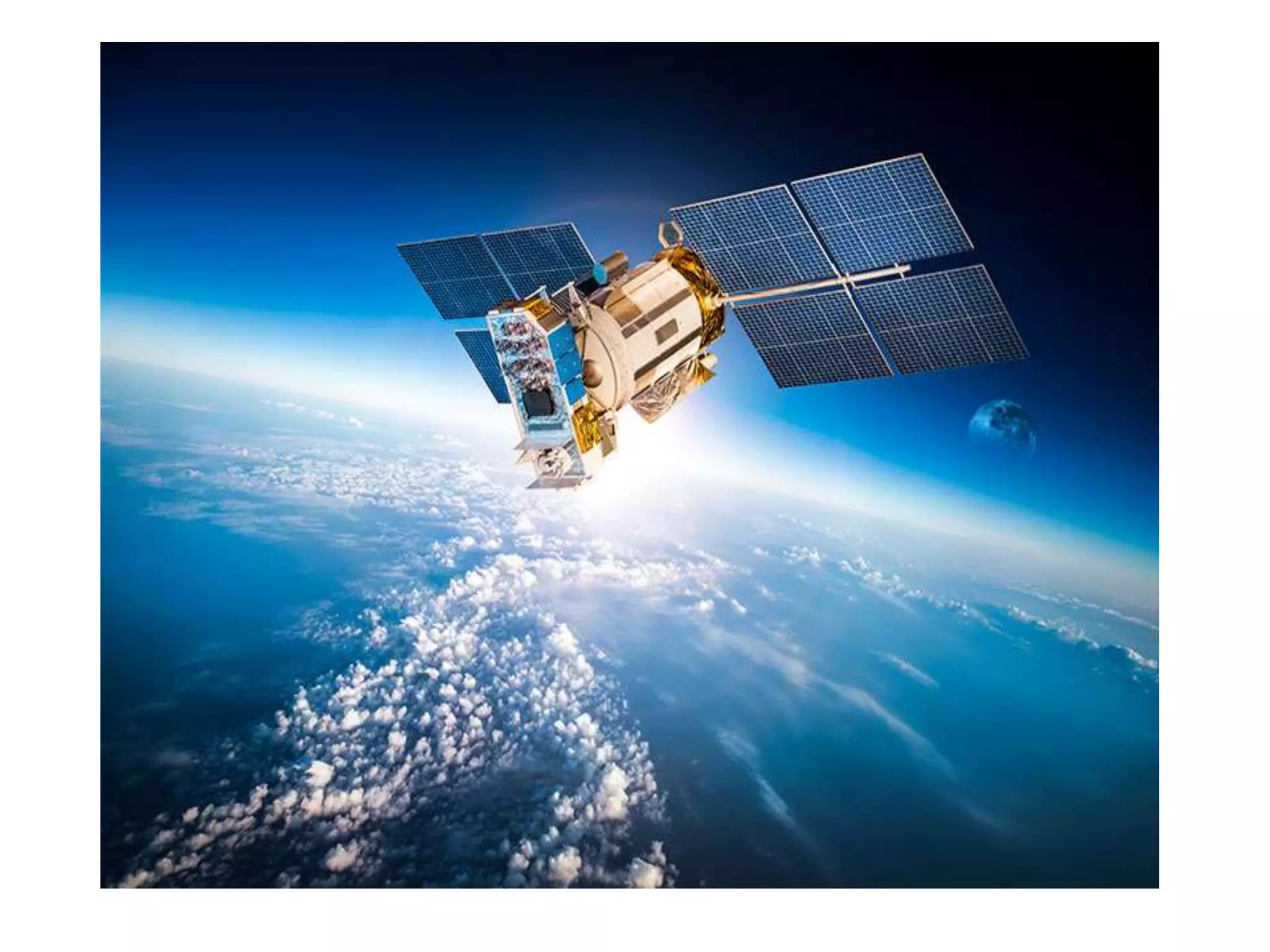
• Satellite communication: in
telecommunications, the use of artificial
satellites to provide communication links
between various points on Earth. Satellite
communications play a vital role in the global
telecommunications syste.
• A communications: system based on
geostationary satellitesm.
• Communications satellites are commonly used
for mobile phone signals, weather tracking, or
broadcasting television programs
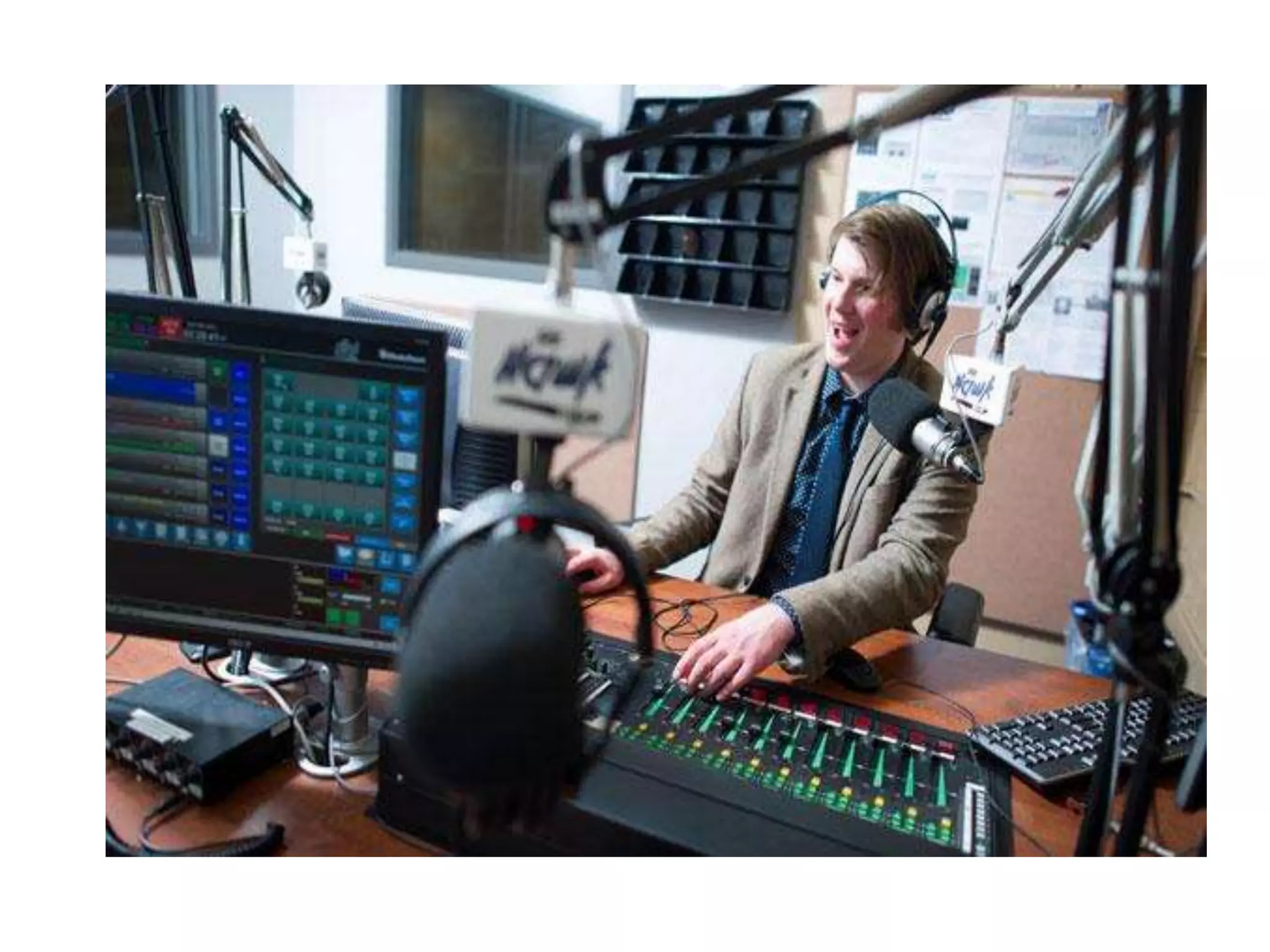
• EXAMPLES OF BROACASTING
RADIO BROADCASTING: Radio broadcasting is transmission
of audioby radio waves intended to reach a wide audience.
Radio broadcasting refers to using radio waves to send signals to
large groups of listeners
Radio broadcasting is a one-way wireless transmission over radio
waves intended to reach a wide audience
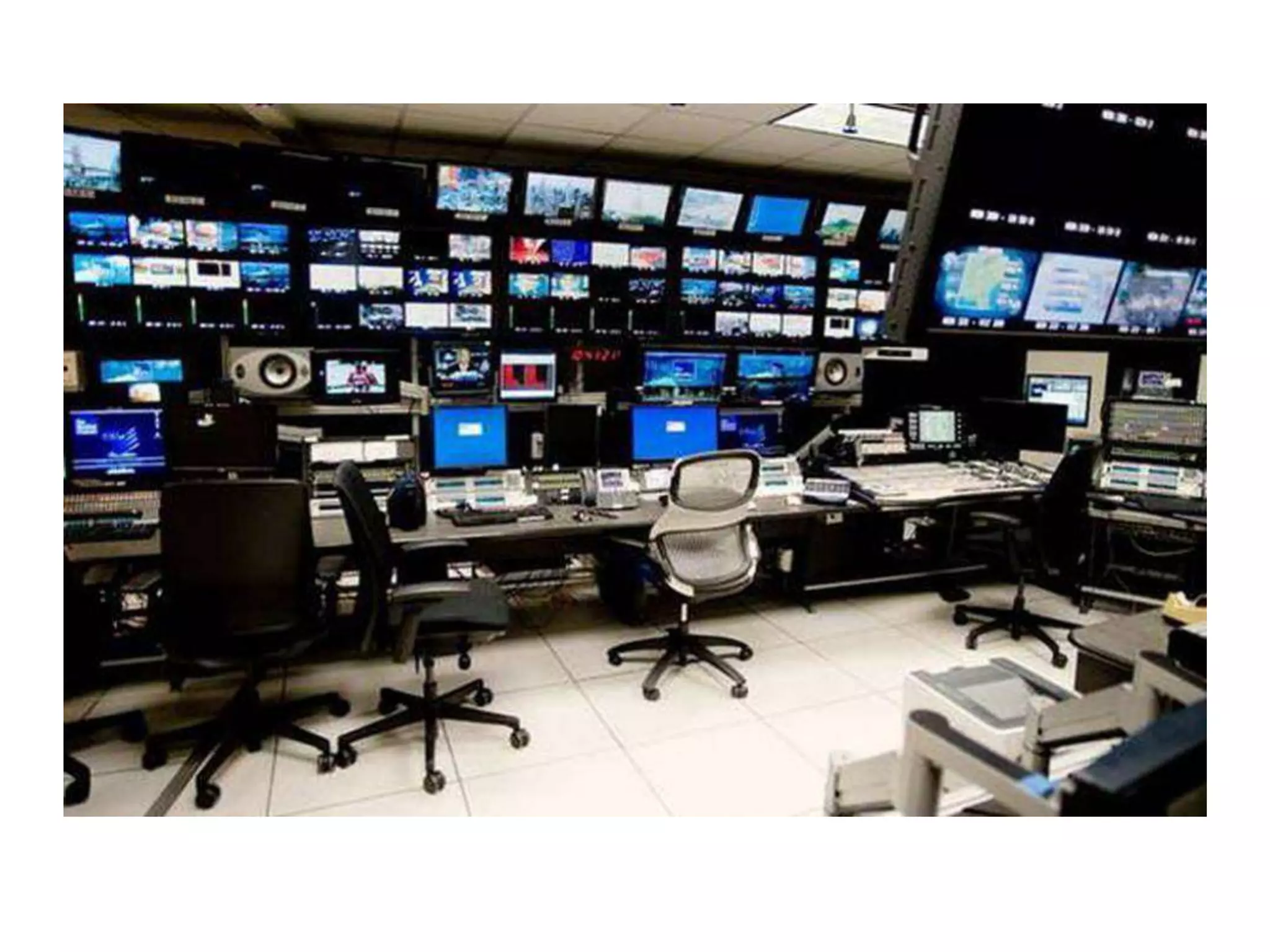
• Television broadcasting: form of broadcasting
in which a television signal is transmitted by
radio waves from a terrestrial (Earth based)
transmitter of a television station to TV
receivers having an antenna.
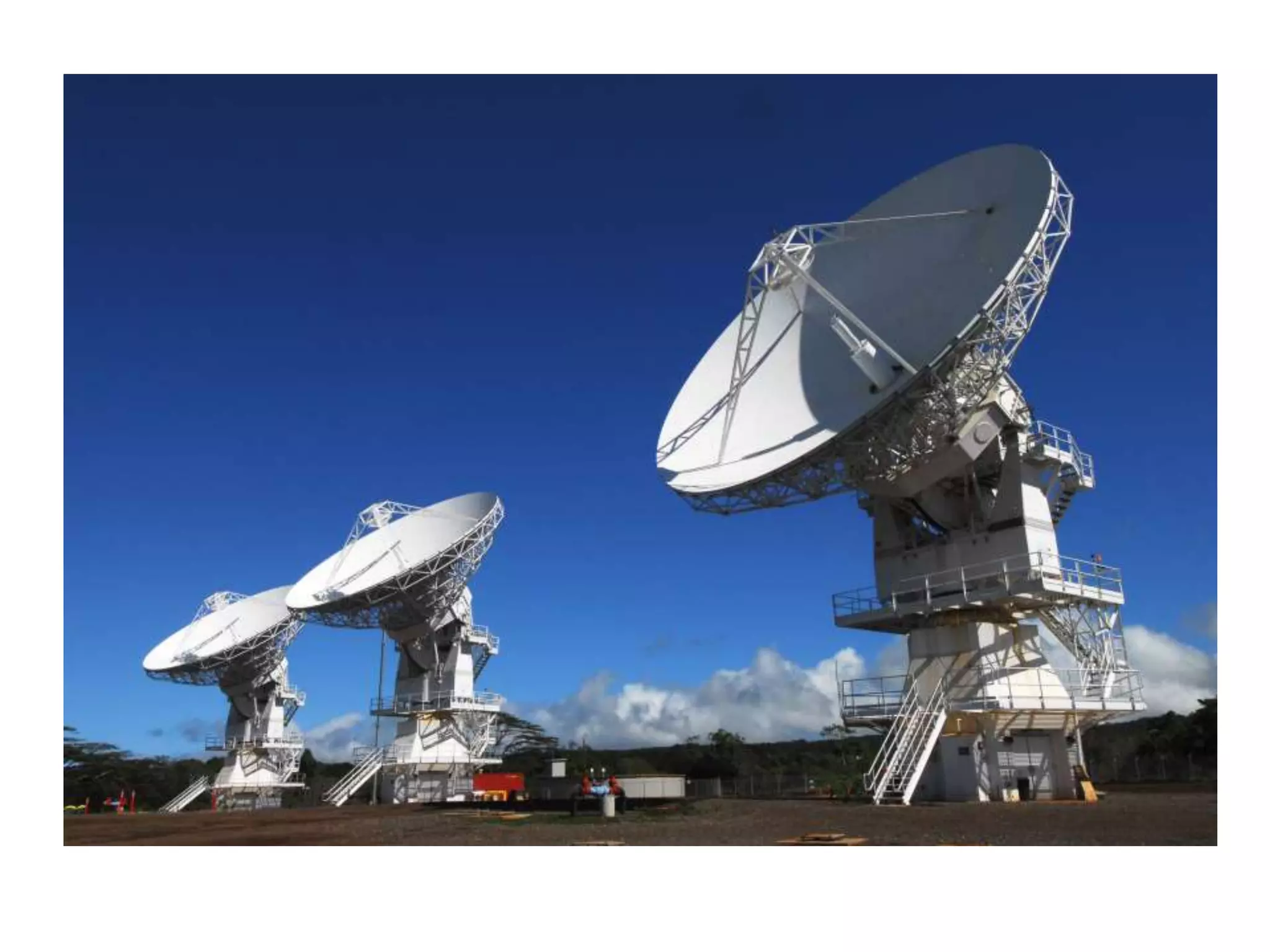
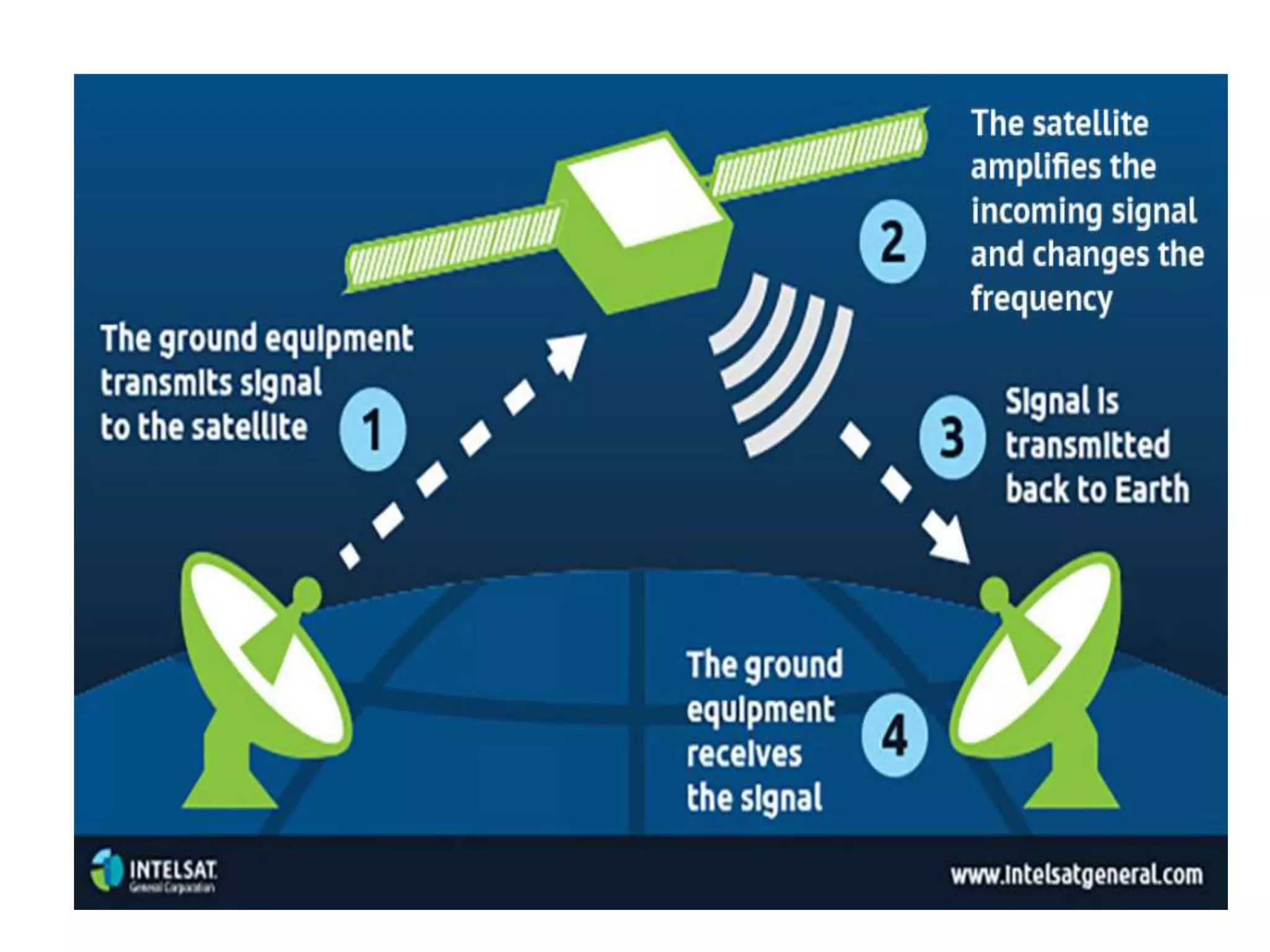
• Satellite communications involves four steps:
• An uplink Earth station or other ground
equipment transmits the desired signal to the
satellite.
• The satellite amplifies the incoming signal and
changes the frequency.
• The satellite transmits the signal back to
Earth.
• The ground equipment receives the signal.
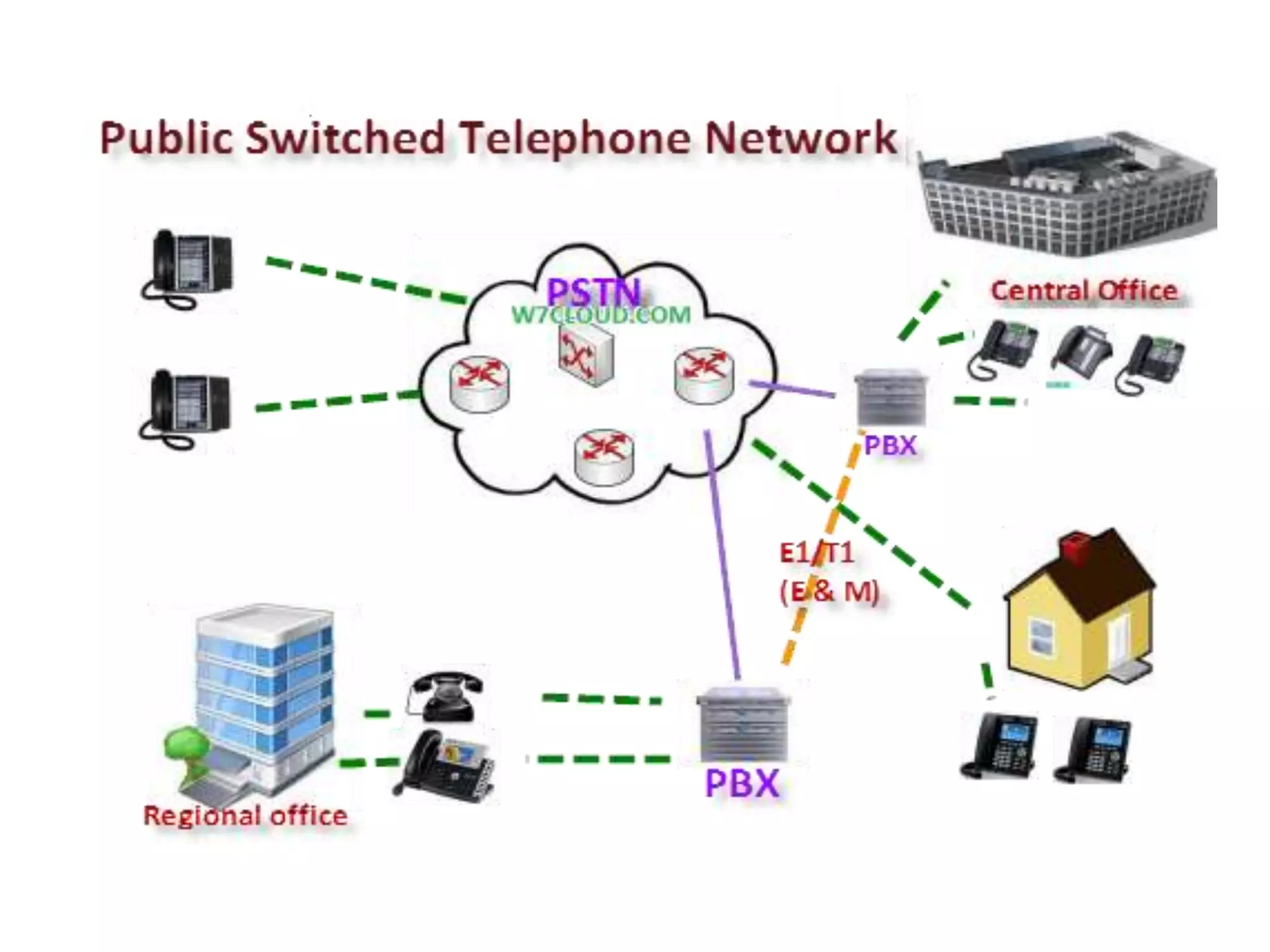
• A Public Switched Telephone Network, or
PSTN for short, refers to a telecommunications
network which allows subscribers at different
sites to communicate by voice.
• A public switched telephone network: is a
combination of telephone networks used
worldwide, including telephone lines, fiber
optic cables, switching centers, cellular
networks, satellites and cable systems.
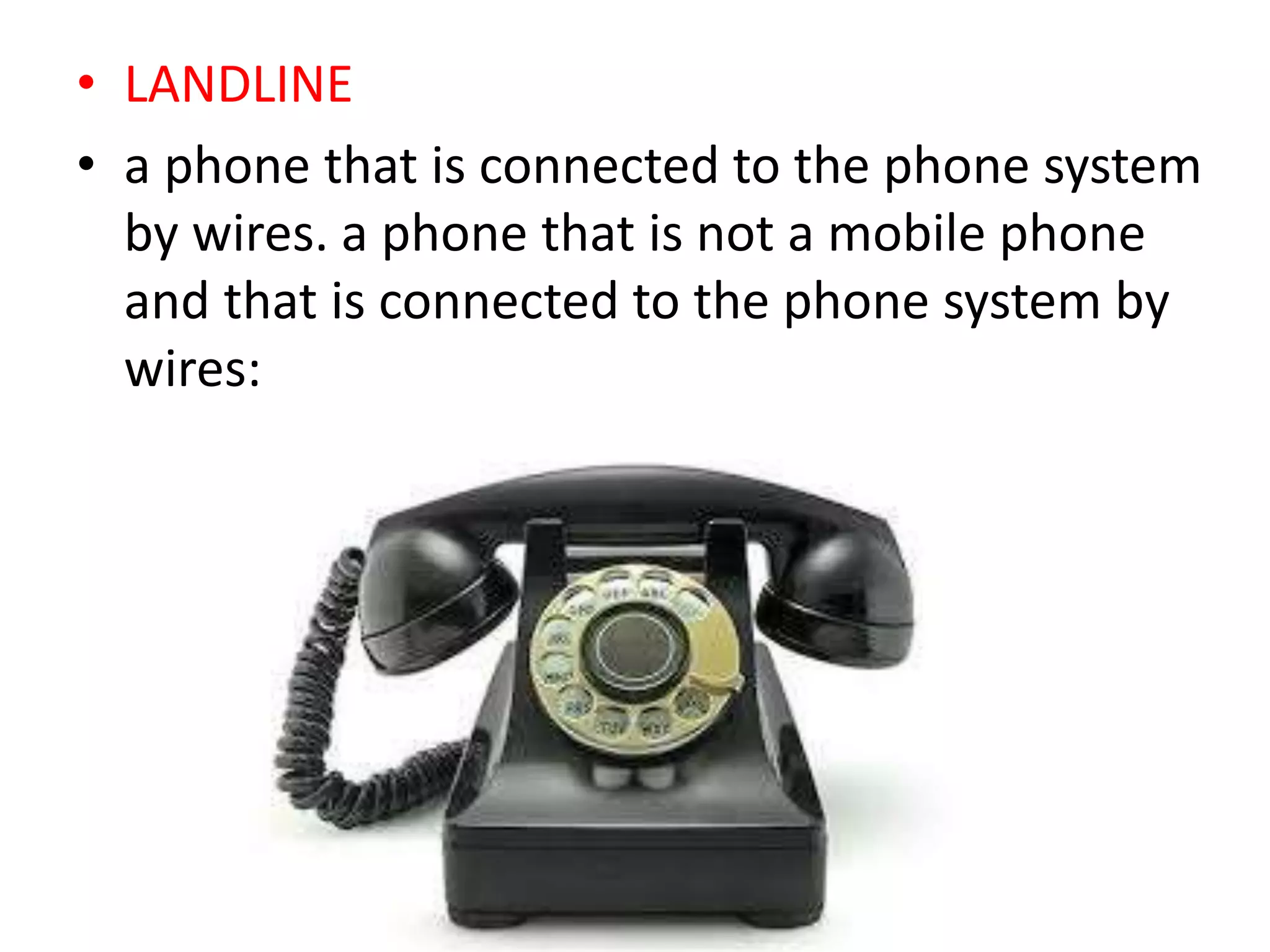
• LANDLINE
• a phone that is connected to the phone system
by wires. a phone that is not a mobile phone
and that is connected to the phone system by
wires:
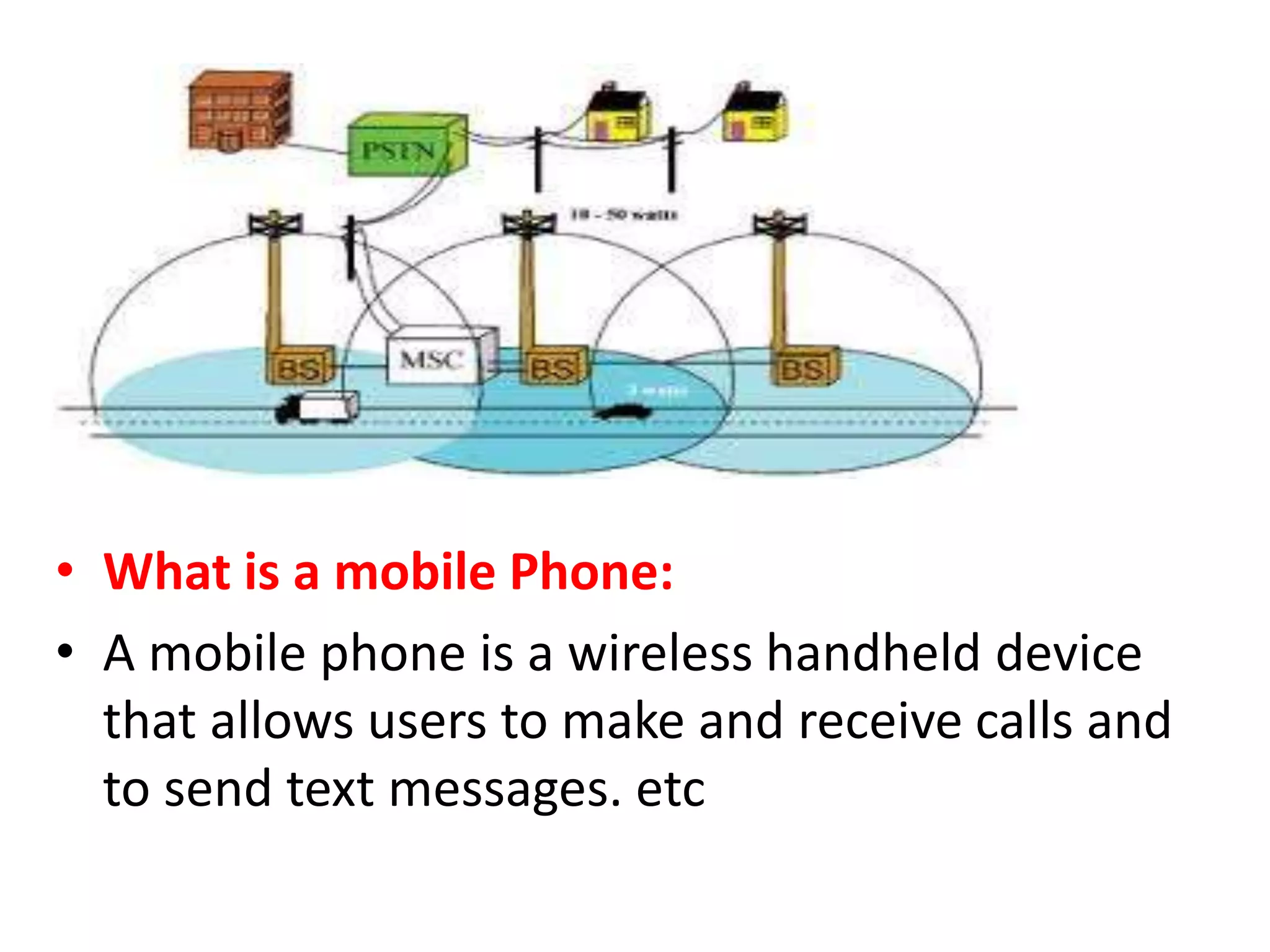
• The Mobile Telephone System
• Mobile telephone service (MTS) connects mobile radio
telephones with other networks like public switched
telephone networks (PSTN), other mobile telephones
and communication systems like Internet.
• Basic Mobile Communications System
• Mobile phones and other mobile devices, called mobile
stations are connected to base stations. Communication
between the mobile stations and the base stations are
done by wireless radio signals, which may be both data
signals and voice signals. Each base station has a
coverage area around it, such that mobile stations within
this area can connect provided they have access
permissions.
• Generations of Mobile Phone Systems
• 1G (First Generation) − They were standards for
analog voice mobile phone communications.
• 2G(Second Generation) − They were standards
for digital voice mobile phone communications.
• 3G(Third Generation) − These standards were for
communications in form of both digital voice as
well as digital data.
• 4G(Fourth Generation) − 4G standards provide
mobile broadband internet access in addition to
digital voice and data.
• 5G(Fifth Generation) − It is the next step of
mobile communication standards beyond 4G
which currently under development.
• What is a mobile Phone:
• A mobile phone is a wireless handheld device
that allows users to make and receive calls and
to send text messages. etc
STAY AT HOME, STAY SAFE , BE
POSITIVE. 13/07/2020

HHCJAMUMARA-Information and communication tech-SS1- 003

  • 1.
    HHCJ AMUMARA COMPUTER STUDIESLECTURE NOTE –SS1 (NOTE 003)
  • 2.
    HHCJ- COMPUTER STUDIESLECTURE NOTE TOPIC: COMMUNICATIONS SYSTEMS WHAT IS: Information and Communication Technology ICT is an acronym of Information and Communication Technologies. The set of technologies developed to manage information and send it from one place to another.
  • 4.
    TYPES OF ICT Broadcasting:is the distribution of audio or video content to a wider audience via any electronic mass communications medium. Broadcasting: electronic transmission of radio and television signals that are intended for general public. Broadcasting: is the distribution of audio and/or video signals (programs) to a number of recipients ("listeers" or "viewers")
  • 6.
    • Telecommunication ORor Telecom: is the exchange of signs, signals, messages, words, writings, images and sounds or information of any nature by wire, radio, optical or other electromagnetic systems. • Telecommunications:refer to the process of exchanging information such as voice, data and video transmissions via electronic technologies like telephones (wired and wireless), microwave communications, fiber optics, satellites, radio and television broadcasting, and the internet.
  • 9.
    • data network:A communication network that is devoted to carrying computer information, as opposed to voice, video, etc. It consists of a number of nodes, or stations, connected by various communication channels. • Data networks: comprised of two or more computers that are connected to share information, hardware, programs and so forth. A DATA NETWORK: is an electronic communications process that allowsfor the orderly transmission and receptive of data
  • 11.
    • Information system:Asystem is a group of interacting or interrelated entities that form a unified whole. • Information: is data that have been converted into a meaningful and useful context for specific end users.. So you should view information as processed data placed in a context that gives it value for specific end users. • Information system:an integrated set of components for collecting, storing, and processing data and for providing information, knowledge, and digital products.
  • 13.
    • Satellite communication:in telecommunications, the use of artificial satellites to provide communication links between various points on Earth. Satellite communications play a vital role in the global telecommunications syste. • A communications: system based on geostationary satellitesm. • Communications satellites are commonly used for mobile phone signals, weather tracking, or broadcasting television programs
  • 16.
    • EXAMPLES OFBROACASTING RADIO BROADCASTING: Radio broadcasting is transmission of audioby radio waves intended to reach a wide audience. Radio broadcasting refers to using radio waves to send signals to large groups of listeners Radio broadcasting is a one-way wireless transmission over radio waves intended to reach a wide audience
  • 18.
    • Television broadcasting:form of broadcasting in which a television signal is transmitted by radio waves from a terrestrial (Earth based) transmitter of a television station to TV receivers having an antenna.
  • 20.
    • Satellite communicationsinvolves four steps: • An uplink Earth station or other ground equipment transmits the desired signal to the satellite. • The satellite amplifies the incoming signal and changes the frequency. • The satellite transmits the signal back to Earth. • The ground equipment receives the signal.
  • 22.
    • A PublicSwitched Telephone Network, or PSTN for short, refers to a telecommunications network which allows subscribers at different sites to communicate by voice. • A public switched telephone network: is a combination of telephone networks used worldwide, including telephone lines, fiber optic cables, switching centers, cellular networks, satellites and cable systems.
  • 24.
    • LANDLINE • aphone that is connected to the phone system by wires. a phone that is not a mobile phone and that is connected to the phone system by wires:
  • 25.
    • The MobileTelephone System • Mobile telephone service (MTS) connects mobile radio telephones with other networks like public switched telephone networks (PSTN), other mobile telephones and communication systems like Internet. • Basic Mobile Communications System • Mobile phones and other mobile devices, called mobile stations are connected to base stations. Communication between the mobile stations and the base stations are done by wireless radio signals, which may be both data signals and voice signals. Each base station has a coverage area around it, such that mobile stations within this area can connect provided they have access permissions.
  • 26.
    • Generations ofMobile Phone Systems • 1G (First Generation) − They were standards for analog voice mobile phone communications. • 2G(Second Generation) − They were standards for digital voice mobile phone communications. • 3G(Third Generation) − These standards were for communications in form of both digital voice as well as digital data. • 4G(Fourth Generation) − 4G standards provide mobile broadband internet access in addition to digital voice and data. • 5G(Fifth Generation) − It is the next step of mobile communication standards beyond 4G which currently under development.
  • 27.
    • What isa mobile Phone: • A mobile phone is a wireless handheld device that allows users to make and receive calls and to send text messages. etc
  • 28.
    STAY AT HOME,STAY SAFE , BE POSITIVE. 13/07/2020