HHCJ AMUMARA
COMPUTER STUDIES LECTURE NOTE –SS3
(NOTE 003)
Telecommunication and Networking
• Telecommunication is the process of sending and
receiving electrical signal over a large distance by
electronic means. A single telecommunications
circuit consist of two stations, each equipped with a
transmitter and a receiver. There are certain
mediums of telecommunication systems such as
coaxial cables, fiber optics, radio frequency and air
etc. a telecommunication network is a network of
nodes and links and the communication signal passes
through one link to another.
APPLICATION AREAS OF ICT
• Information AND communication technology
(IT) is the use of computers to store, retrieve,
transmit, and manipulate data or information.
IT is typically used within the context of
business operations as opposed to personal or
entertainment technologies.
• APPLICATION AREAS OF ICT INCLUDE THE
FOLLOWING:
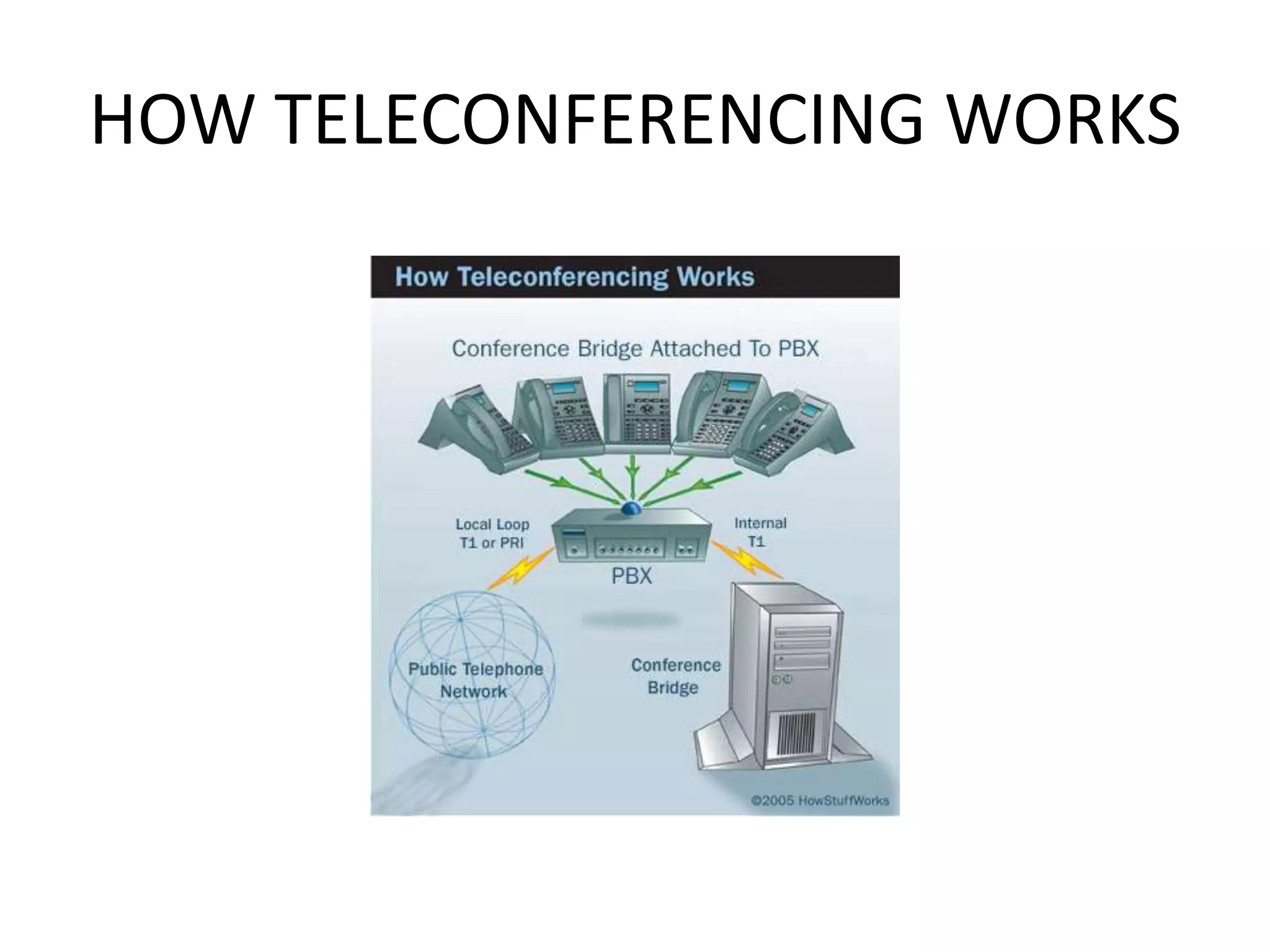
TELECONFERENCING
• The word tele means distance or over a distance. The
word conference means discussion. Teleconference is the
use of telecommunication devices to hold discussions
between participants in different locations. It the process
of holding conference via telephone or network
connection.
• A teleconference or teleseminar is the live exchange and
mass articulation of information among several persons
and machines remote from one another.
• Teleconferencing means meeting through a
telecommunications medium.
HOW TELECONFERENCING WORKS
VIDEO CONFERECING
• THIS IS ALSO KNOWN AS --Videotelephony
• Videoconferencing (or video conference) means to
conduct a conference between two or more
participants at different sites by using computer
networks to transmit audio and video data.
This is a conference between two or more participants at
different sites by using computer networks to transmit
audio and video data.
With videoconferencing people can interact as if they
were talking face to face with both images and sound
relay in real time. Thus far video conferencing has been
used in the following fields; Business, Distance
learning, Home offices, Legal environment and
Telemedicine.
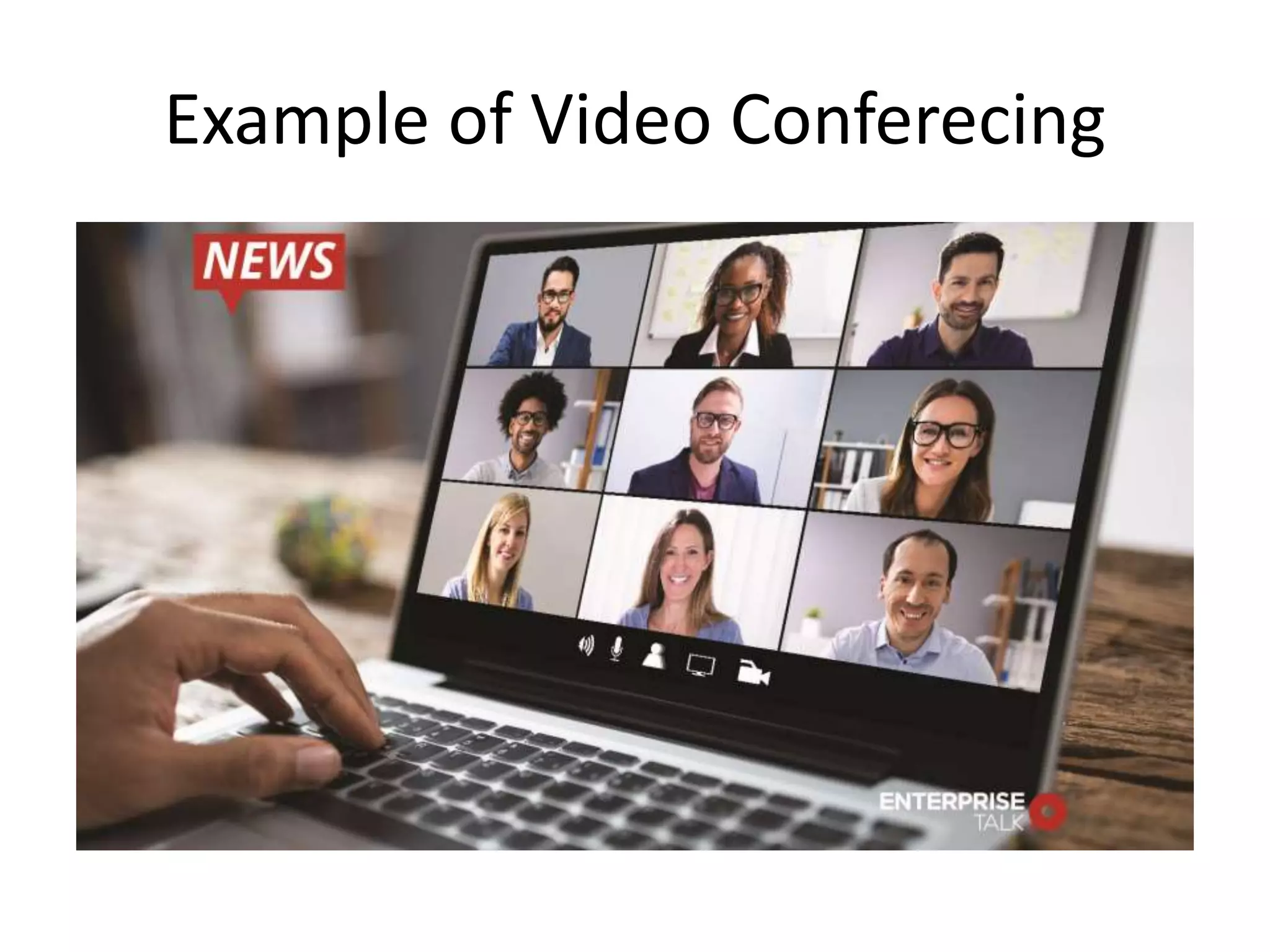
Example of Video Conferecing
TELEPRESENCE
• Telepresence
• Telepresence is also called virtual presence, is
a technique to create a sense of physical
presence at a remote location using
multimedia such as sound, vision and touch.
TELECOMMUTING
• Telecommuting—also known as working from
home (WFH), working remotely, or e-
commuting—is a work arrangement in which the
employee works outside the office.
• Telecommuting, IS also called telework,
teleworking, working from home, mobile work,
remote work, and flexible workplace, is a work
arrangement in which employees do not
commute or travel to a central place of work,
such as an office building, warehouse, or store
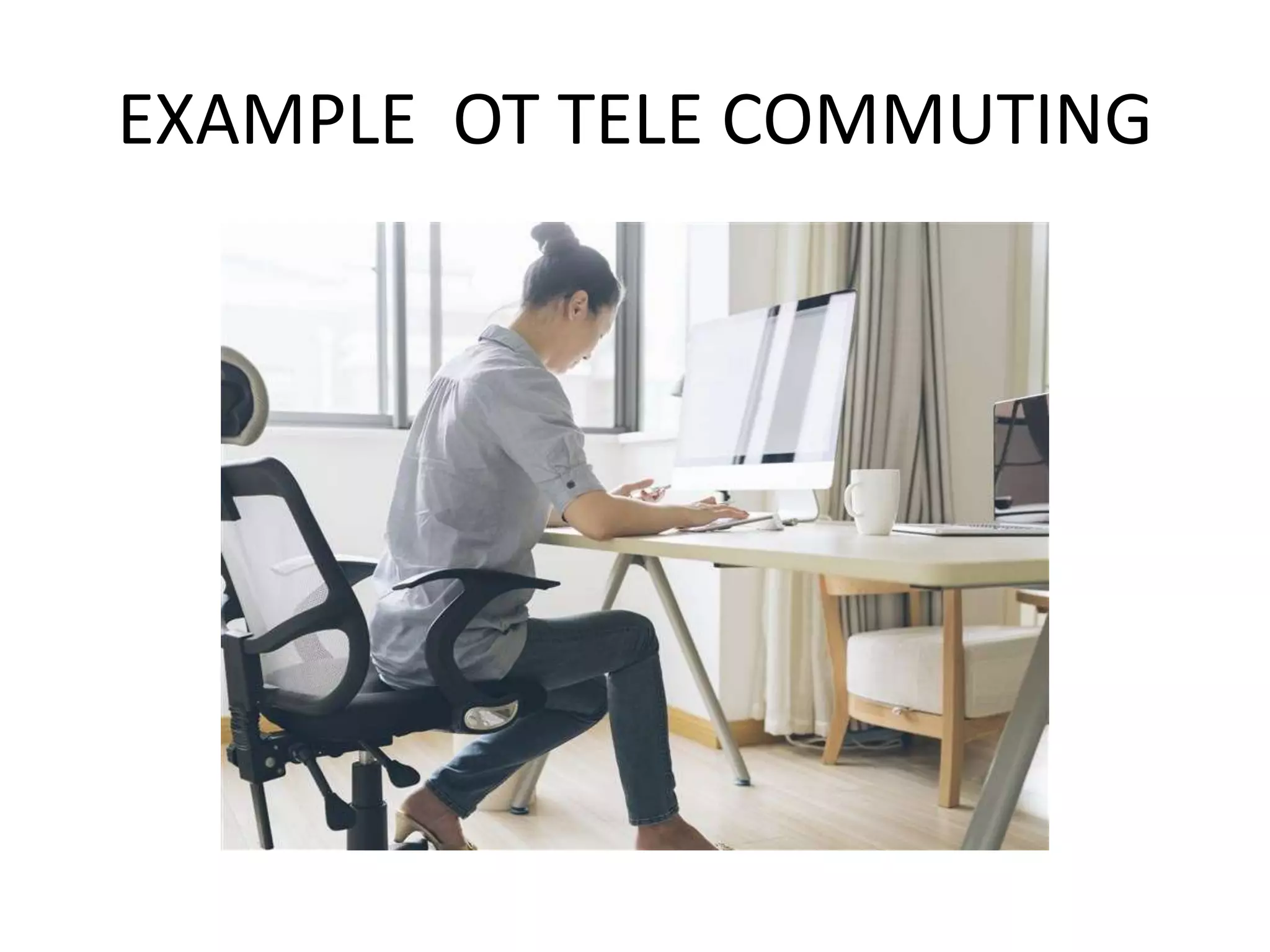
EXAMPLE OT TELE COMMUTING
TELE COMPUTING
• It is a term referring to the use of computers for
communication. The term includes communication
using computers linked either one-to-one or in
networks of interlinked computers.
• The most common use of interlinked computers now is
by the way of the internet and Intranet. Intranet is a
private network which serves a single organization,
such as a corporation.
• Computing that utilises a large network such that
distant users can communicate with each other.
MESSAGING
• The most common forms of messaging are
emails, paging, Short Message Service (SMS),
Enhanced Message Service (EMS), Multimedia
Message (MMS) and instant Messaging.
INFORMATION SEARCH,
RETRIEVAL AND ARCHIVAL
• Information Retrieval is the science of searching
for documents, information within documents,
and metadata about document, as well as that
of searching relational databases and the World
Wide Web.
• An Archival Information System consists of an
organization of people and systems that has
accepted the responsibility to preserve
information and make it available for a
designated community or users.
ICT-BASED GADGETS AND THEIR
OPERATIONS
• A gadget is a small technological device or an
appliance that has a particular function.
Examples of ICT gadgets include Computer,
Automated teller machine (ATM), Dispensing
machine, Radio sets, Television set, Fax
machine, Telephone, GSM, etc.
Mobile Phone
Cell phones, also known as mobile phones or wireless phones, are
hand-held phones with built-in antennas. Unlike home phones, cell
phones can be carried from place to place with minimum fuss.
Computer
A computer is a programmable machine that inputs, processes and
outputs data. A computer system refers to the computer and all its
equipment.
Fax Machine
Fax machine is a short form for facsimile machine. It is a device
that can send or receives text and pictures (graphics) over a radio
broadcast or a telephone line.
Automated Teller Machine (ATM).
Automated Teller Machine is also known as automated banking
machine (ABM) or cash machine is a computerized
telecommunication device that provides the client of financial
institution with access to financial transactions in public space
without the need for a cashier, human clerk or a bank teller.
Dispensing machine
A dispensing machine is a machine that gives items to customers
automatically, after the customer inserts currency or credit into the
machine.
Point of sale machine
Electronic retail payment device which reads a customer's bank's
name and account number when a bank card or credit card is
swiped through a magnetic stripe reader, contacts the bank and if
funds are available transfers the customer approved amount to
the seller's account, and prints a receipt.
• Radio Set
A radio receiver (commonly also called a radio) is an electronic device that
receives radio wave and converts the information carried by them to a
useable form. It is used with an antenna.
• Television
Television or TV is a telecommunication medium used for transmitting sound
with moving images in monochrome (black and white), or in color, and in
two or three dimensions
STAY AT HOME, STAY SAFE , BE
POSITIVE. (MAY 12,2020)

HHCJ AMUMARA: COMPUTER STUDIES LECTURE NOTE FOR SS3-003

  • 1.
    HHCJ AMUMARA COMPUTER STUDIESLECTURE NOTE –SS3 (NOTE 003)
  • 2.
    Telecommunication and Networking •Telecommunication is the process of sending and receiving electrical signal over a large distance by electronic means. A single telecommunications circuit consist of two stations, each equipped with a transmitter and a receiver. There are certain mediums of telecommunication systems such as coaxial cables, fiber optics, radio frequency and air etc. a telecommunication network is a network of nodes and links and the communication signal passes through one link to another.
  • 3.
    APPLICATION AREAS OFICT • Information AND communication technology (IT) is the use of computers to store, retrieve, transmit, and manipulate data or information. IT is typically used within the context of business operations as opposed to personal or entertainment technologies. • APPLICATION AREAS OF ICT INCLUDE THE FOLLOWING:
  • 4.
    TELECONFERENCING • The wordtele means distance or over a distance. The word conference means discussion. Teleconference is the use of telecommunication devices to hold discussions between participants in different locations. It the process of holding conference via telephone or network connection. • A teleconference or teleseminar is the live exchange and mass articulation of information among several persons and machines remote from one another. • Teleconferencing means meeting through a telecommunications medium.
  • 5.
  • 6.
    VIDEO CONFERECING • THISIS ALSO KNOWN AS --Videotelephony • Videoconferencing (or video conference) means to conduct a conference between two or more participants at different sites by using computer networks to transmit audio and video data. This is a conference between two or more participants at different sites by using computer networks to transmit audio and video data. With videoconferencing people can interact as if they were talking face to face with both images and sound relay in real time. Thus far video conferencing has been used in the following fields; Business, Distance learning, Home offices, Legal environment and Telemedicine.
  • 7.
    Example of VideoConferecing
  • 8.
    TELEPRESENCE • Telepresence • Telepresenceis also called virtual presence, is a technique to create a sense of physical presence at a remote location using multimedia such as sound, vision and touch.
  • 9.
    TELECOMMUTING • Telecommuting—also knownas working from home (WFH), working remotely, or e- commuting—is a work arrangement in which the employee works outside the office. • Telecommuting, IS also called telework, teleworking, working from home, mobile work, remote work, and flexible workplace, is a work arrangement in which employees do not commute or travel to a central place of work, such as an office building, warehouse, or store
  • 10.
    EXAMPLE OT TELECOMMUTING
  • 11.
    TELE COMPUTING • Itis a term referring to the use of computers for communication. The term includes communication using computers linked either one-to-one or in networks of interlinked computers. • The most common use of interlinked computers now is by the way of the internet and Intranet. Intranet is a private network which serves a single organization, such as a corporation. • Computing that utilises a large network such that distant users can communicate with each other.
  • 12.
    MESSAGING • The mostcommon forms of messaging are emails, paging, Short Message Service (SMS), Enhanced Message Service (EMS), Multimedia Message (MMS) and instant Messaging.
  • 13.
    INFORMATION SEARCH, RETRIEVAL ANDARCHIVAL • Information Retrieval is the science of searching for documents, information within documents, and metadata about document, as well as that of searching relational databases and the World Wide Web. • An Archival Information System consists of an organization of people and systems that has accepted the responsibility to preserve information and make it available for a designated community or users.
  • 14.
    ICT-BASED GADGETS ANDTHEIR OPERATIONS • A gadget is a small technological device or an appliance that has a particular function. Examples of ICT gadgets include Computer, Automated teller machine (ATM), Dispensing machine, Radio sets, Television set, Fax machine, Telephone, GSM, etc.
  • 15.
    Mobile Phone Cell phones,also known as mobile phones or wireless phones, are hand-held phones with built-in antennas. Unlike home phones, cell phones can be carried from place to place with minimum fuss. Computer A computer is a programmable machine that inputs, processes and outputs data. A computer system refers to the computer and all its equipment. Fax Machine Fax machine is a short form for facsimile machine. It is a device that can send or receives text and pictures (graphics) over a radio broadcast or a telephone line. Automated Teller Machine (ATM). Automated Teller Machine is also known as automated banking machine (ABM) or cash machine is a computerized telecommunication device that provides the client of financial institution with access to financial transactions in public space without the need for a cashier, human clerk or a bank teller.
  • 16.
    Dispensing machine A dispensingmachine is a machine that gives items to customers automatically, after the customer inserts currency or credit into the machine. Point of sale machine Electronic retail payment device which reads a customer's bank's name and account number when a bank card or credit card is swiped through a magnetic stripe reader, contacts the bank and if funds are available transfers the customer approved amount to the seller's account, and prints a receipt. • Radio Set A radio receiver (commonly also called a radio) is an electronic device that receives radio wave and converts the information carried by them to a useable form. It is used with an antenna. • Television Television or TV is a telecommunication medium used for transmitting sound with moving images in monochrome (black and white), or in color, and in two or three dimensions
  • 17.
    STAY AT HOME,STAY SAFE , BE POSITIVE. (MAY 12,2020)