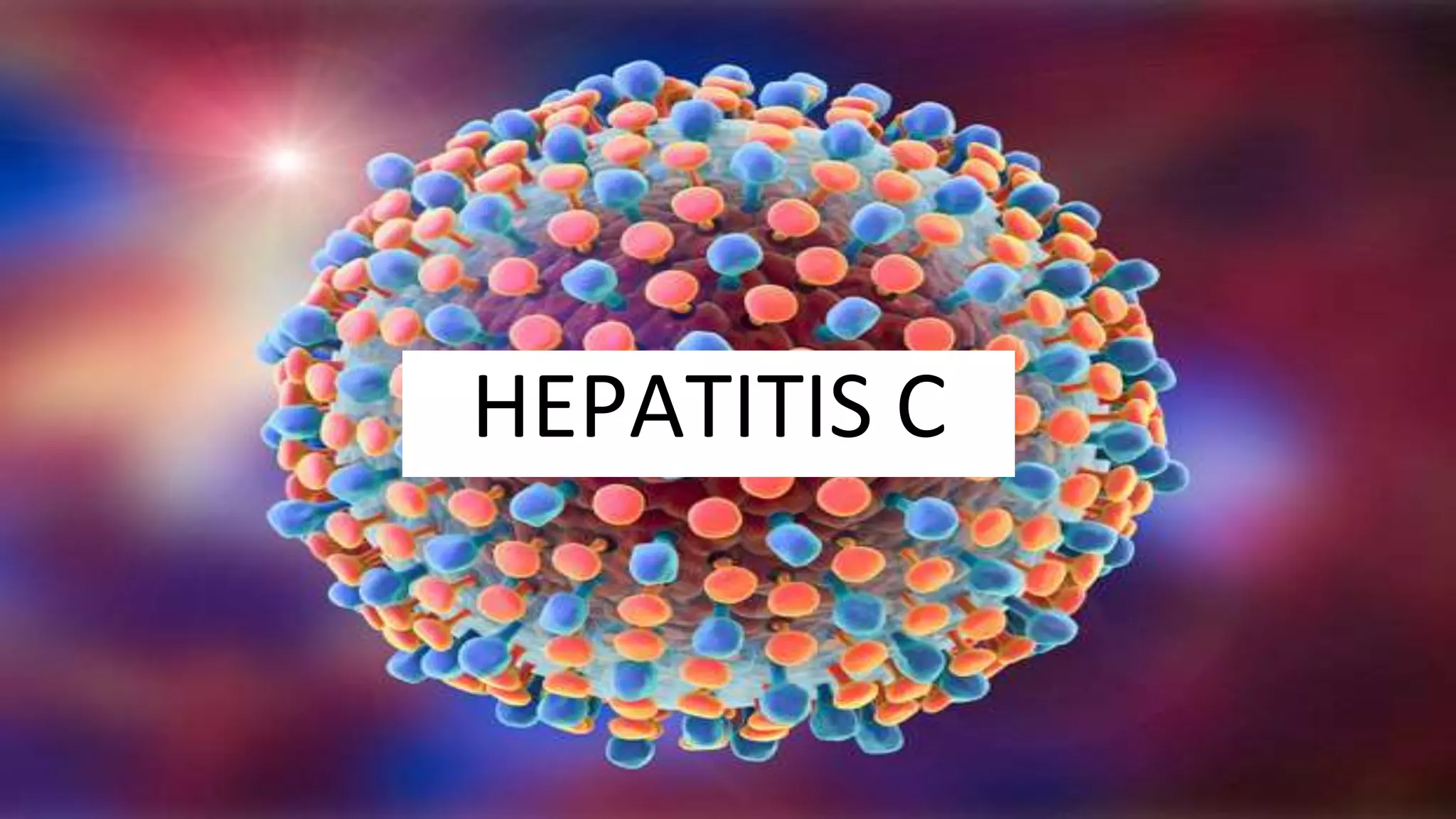
HEPATITIS C
Etiology
Pathogen - Hepatitis C virus (HCV: RNA virus, flavivirus)
Transmission
1. Parenteral
○ Needle sharing among IV drug users
○ Needlestick injury (e.g., health care workers)
○ Organ transplantation, dialysis, blood transfusion
2. Sexual: rare (in contrast to HBV and HIV)
3. Perinatal (vertical)
High-risk groups for HCV infection
● IV drug users (especially long-time users)
● Hepatitis B virus (HBV) or HIV-positive individuals
● Recipients of blood transfusions or organ transplants
Clinical features
● Most people remain asymptomatic until progression to cirrhosis occurs, fatigue can complicate chronic
infection and is unrelated to the degree of liver damage.
● If hepatitis C infection is left untreated, progression from chronic hepatitis to cirrhosis occurs over 20–
40 years.
● Risk factors for progression include
○ male gender,
○ immunosuppression (such as co-infection with HIV),
○ prothrombotic states and
○ heavy alcohol misuse.
● Once cirrhosis is present, 2–5% per year will develop primary hepatocellular carcinoma.
● Symptoms
❖ Malaise, fever, myalgias, arthralgias
❖ RUQ pain, tender hepatomegaly
❖ Nausea, vomiting, diarrhea
❖ Jaundice, possibly pruritus
Extrahepatic features
● Hematological: mixed cryoglobulinemia, monoclonal gammopathies, lymphoma
● Rheumatological: membranoproliferative glomerulonephritis, polyarteritis nodosa,
Sjögren syndrome
● Dermatological: porphyria cutanea tarda, lichen planus
● Others: diabetes mellitus, thyroiditis, sialadenitis
Investigation
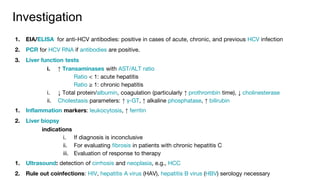
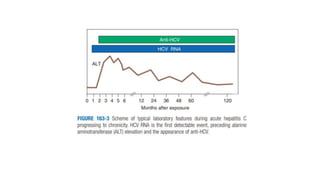
1. EIA/ELISA for anti-HCV antibodies: positive in cases of acute, chronic, and previous HCV infection
2. PCR for HCV RNA if antibodies are positive.
3. Liver function tests
i. ↑ Transaminases with AST/ALT ratio
Ratio < 1: acute hepatitis
Ratio ≥ 1: chronic hepatitis
i. ↓ Total protein/albumin, coagulation (particularly ↑ prothrombin time), ↓ cholinesterase
ii. Cholestasis parameters: ↑ γ-GT, ↑ alkaline phosphatase, ↑ bilirubin
1. Inflammation markers: leukocytosis, ↑ ferritin
2. Liver biopsy
indications
i. If diagnosis is inconclusive
ii. For evaluating fibrosis in patients with chronic hepatitis C
iii. Evaluation of response to therapy
1. Ultrasound: detection of cirrhosis and neoplasia, e.g., HCC
2. Rule out coinfections: HIV, hepatitis A virus (HAV), hepatitis B virus (HBV) serology necessary
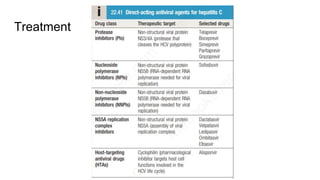
Treatment

Hepatitis C virus

  • 1.
  • 2.
    Etiology Pathogen - HepatitisC virus (HCV: RNA virus, flavivirus) Transmission 1. Parenteral ○ Needle sharing among IV drug users ○ Needlestick injury (e.g., health care workers) ○ Organ transplantation, dialysis, blood transfusion 2. Sexual: rare (in contrast to HBV and HIV) 3. Perinatal (vertical) High-risk groups for HCV infection ● IV drug users (especially long-time users) ● Hepatitis B virus (HBV) or HIV-positive individuals ● Recipients of blood transfusions or organ transplants
  • 3.
    Clinical features ● Mostpeople remain asymptomatic until progression to cirrhosis occurs, fatigue can complicate chronic infection and is unrelated to the degree of liver damage. ● If hepatitis C infection is left untreated, progression from chronic hepatitis to cirrhosis occurs over 20– 40 years. ● Risk factors for progression include ○ male gender, ○ immunosuppression (such as co-infection with HIV), ○ prothrombotic states and ○ heavy alcohol misuse. ● Once cirrhosis is present, 2–5% per year will develop primary hepatocellular carcinoma. ● Symptoms ❖ Malaise, fever, myalgias, arthralgias ❖ RUQ pain, tender hepatomegaly ❖ Nausea, vomiting, diarrhea ❖ Jaundice, possibly pruritus
  • 4.
    Extrahepatic features ● Hematological:mixed cryoglobulinemia, monoclonal gammopathies, lymphoma ● Rheumatological: membranoproliferative glomerulonephritis, polyarteritis nodosa, Sjögren syndrome ● Dermatological: porphyria cutanea tarda, lichen planus ● Others: diabetes mellitus, thyroiditis, sialadenitis
  • 5.
    Investigation 1. EIA/ELISA foranti-HCV antibodies: positive in cases of acute, chronic, and previous HCV infection 2. PCR for HCV RNA if antibodies are positive. 3. Liver function tests i. ↑ Transaminases with AST/ALT ratio Ratio < 1: acute hepatitis Ratio ≥ 1: chronic hepatitis i. ↓ Total protein/albumin, coagulation (particularly ↑ prothrombin time), ↓ cholinesterase ii. Cholestasis parameters: ↑ γ-GT, ↑ alkaline phosphatase, ↑ bilirubin 1. Inflammation markers: leukocytosis, ↑ ferritin 2. Liver biopsy indications i. If diagnosis is inconclusive ii. For evaluating fibrosis in patients with chronic hepatitis C iii. Evaluation of response to therapy 1. Ultrasound: detection of cirrhosis and neoplasia, e.g., HCC 2. Rule out coinfections: HIV, hepatitis A virus (HAV), hepatitis B virus (HBV) serology necessary
  • 7.