Functional Hemodynamic
Monitoring
NEANA Spring Meeting
April 2016
Donna Adkisson, R.N., M.S.N.
Clinical Educator
LiDCO, Limited
Functional Hemodynamic
Monitoring
Objectives
Describe the physiology of heart lung
interactions that cause hemodynamic
changes throughout respiration.
List 3 parameters used to predict
patient response to volume.
Explain normal parameters and
intraoperative application of
functional hemodynamic monitoring
Define afterload and contractility of
the heart.
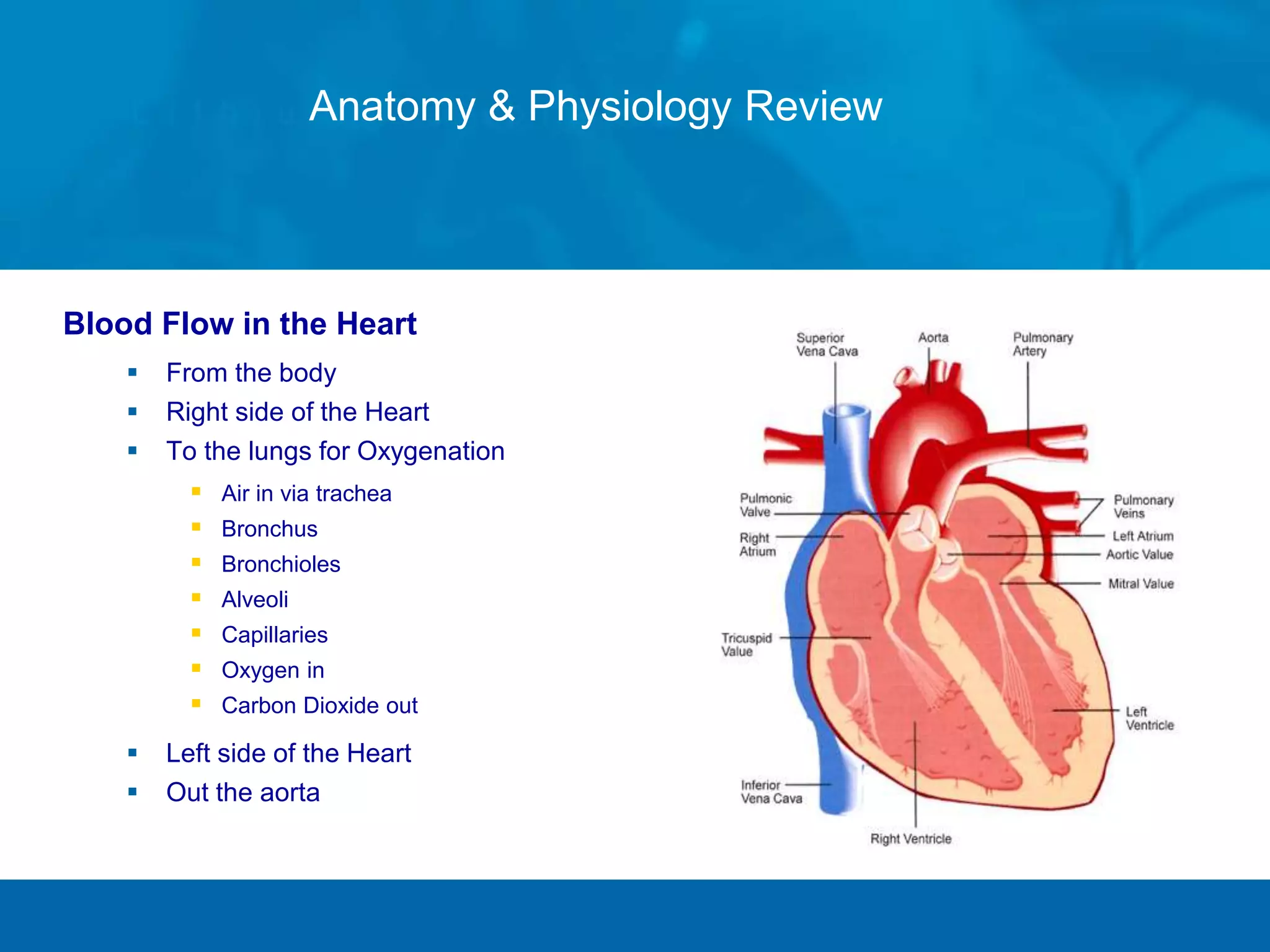
Blood Flow in the Heart
 From the body
 Right side of the Heart
 To the lungs for Oxygenation
 Air in via trachea
 Bronchus
 Bronchioles
 Alveoli
 Capillaries
 Oxygen in
 Carbon Dioxide out
 Left side of the Heart
 Out the aorta
Anatomy & Physiology Review
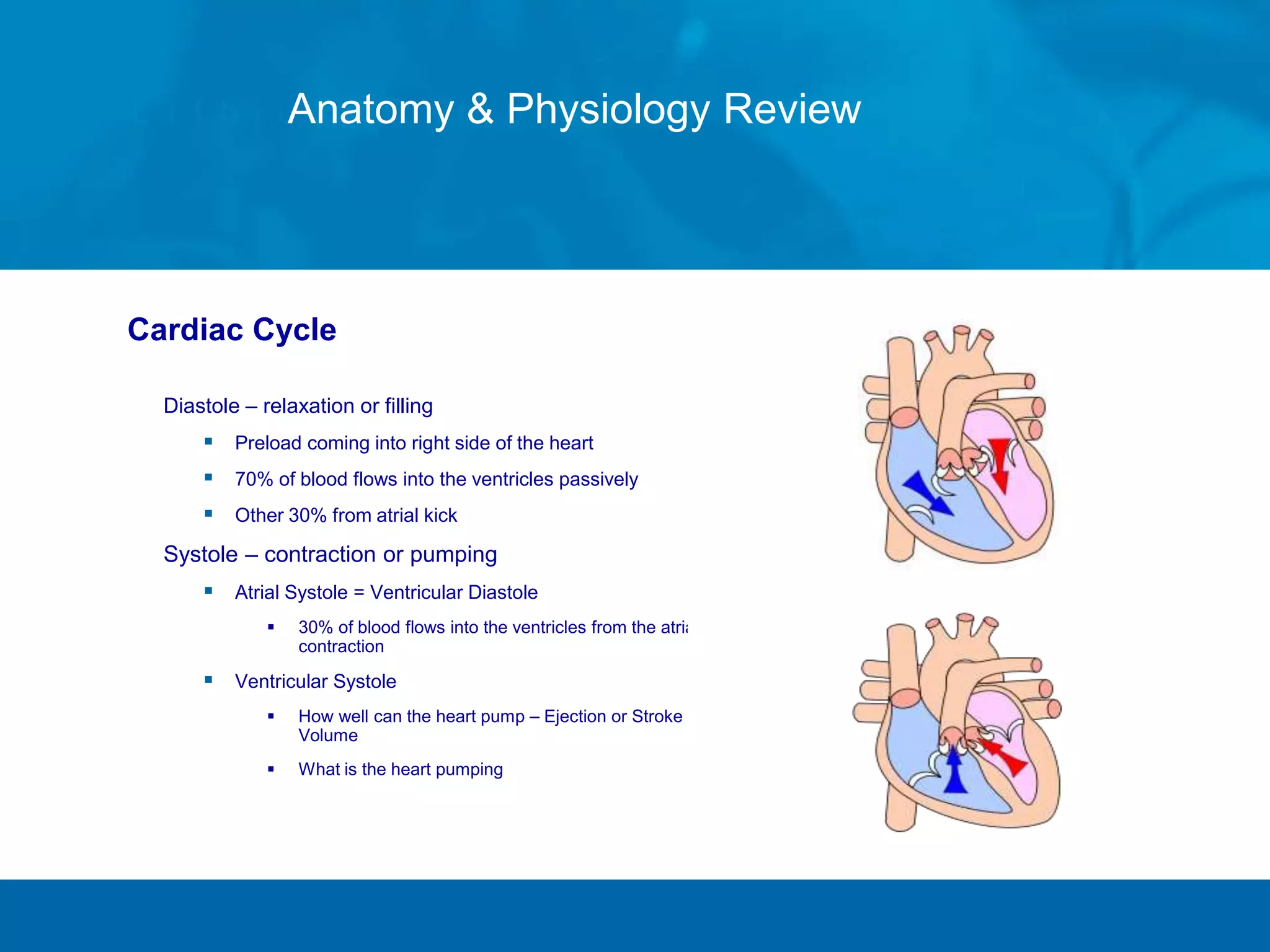
Cardiac Cycle
Diastole – relaxation or filling
 Preload coming into right side of the heart
 70% of blood flows into the ventricles passively
 Other 30% from atrial kick
Systole – contraction or pumping
 Atrial Systole = Ventricular Diastole
 30% of blood flows into the ventricles from the atrial
contraction
 Ventricular Systole
 How well can the heart pump – Ejection or Stroke
Volume
 What is the heart pumping against - SVR
Anatomy & Physiology Review
Cardiac Output
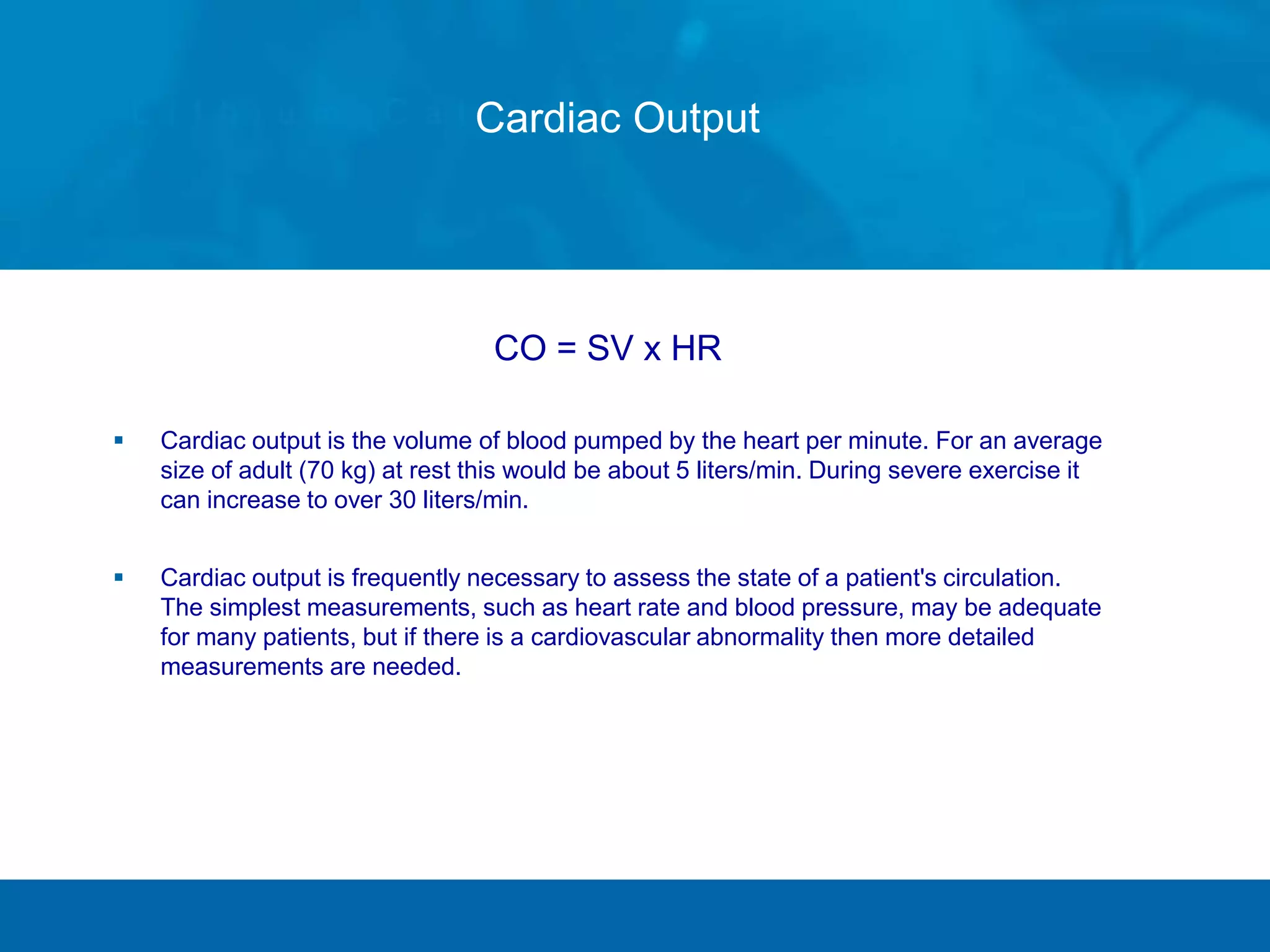
CO = SV x HR
 Cardiac output is the volume of blood pumped by the heart per minute. For an average
size of adult (70 kg) at rest this would be about 5 liters/min. During severe exercise it
can increase to over 30 liters/min.
 Cardiac output is frequently necessary to assess the state of a patient's circulation.
The simplest measurements, such as heart rate and blood pressure, may be adequate
for many patients, but if there is a cardiovascular abnormality then more detailed
measurements are needed.
Cardiac Output
Ways to clinically determine Cardiac Output:
 Dilution method
 Thermodilution
 Green Dye
 Lithium Dilution
 Arterial Wave Form Analysis
 Blood sample to calculate the Fick equation
 Continuous Cardiac Output
 TEE/EsopheagealDoppler
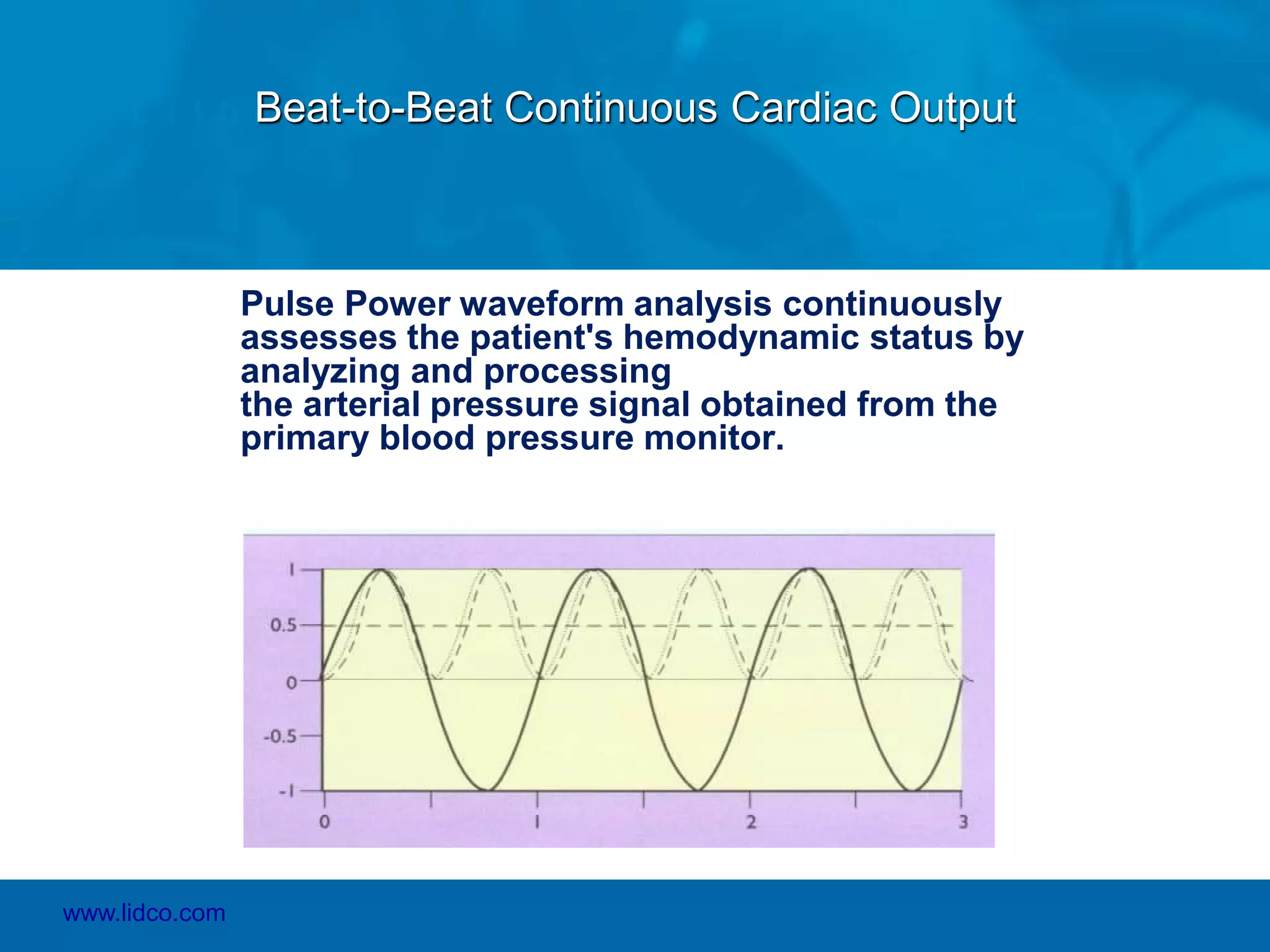
Beat-to-Beat Continuous Cardiac Output
Pulse Power waveform analysis continuously
assesses the patient's hemodynamic status by
analyzing and processing
the arterial pressure signal obtained from the
primary blood pressure monitor.
www.lidco.com
CO = SV x HR
Stroke Volume
The volume of blood from the LV per beat/cycle of the heart
Effected by:
Amount of Blood coming into the heart – Preload
How well the heart works – Contractility
How much pressure or resistance the heart has to work against - Afterload
Q: What do you expect to happen to the below during induction in some if not most
of your cases?
Stroke Volume
Heart Rate
Cardiac Output
Systemic Vascular Resistance
Mean Arterial Pressure
Functional Hemodynamic Monitoring
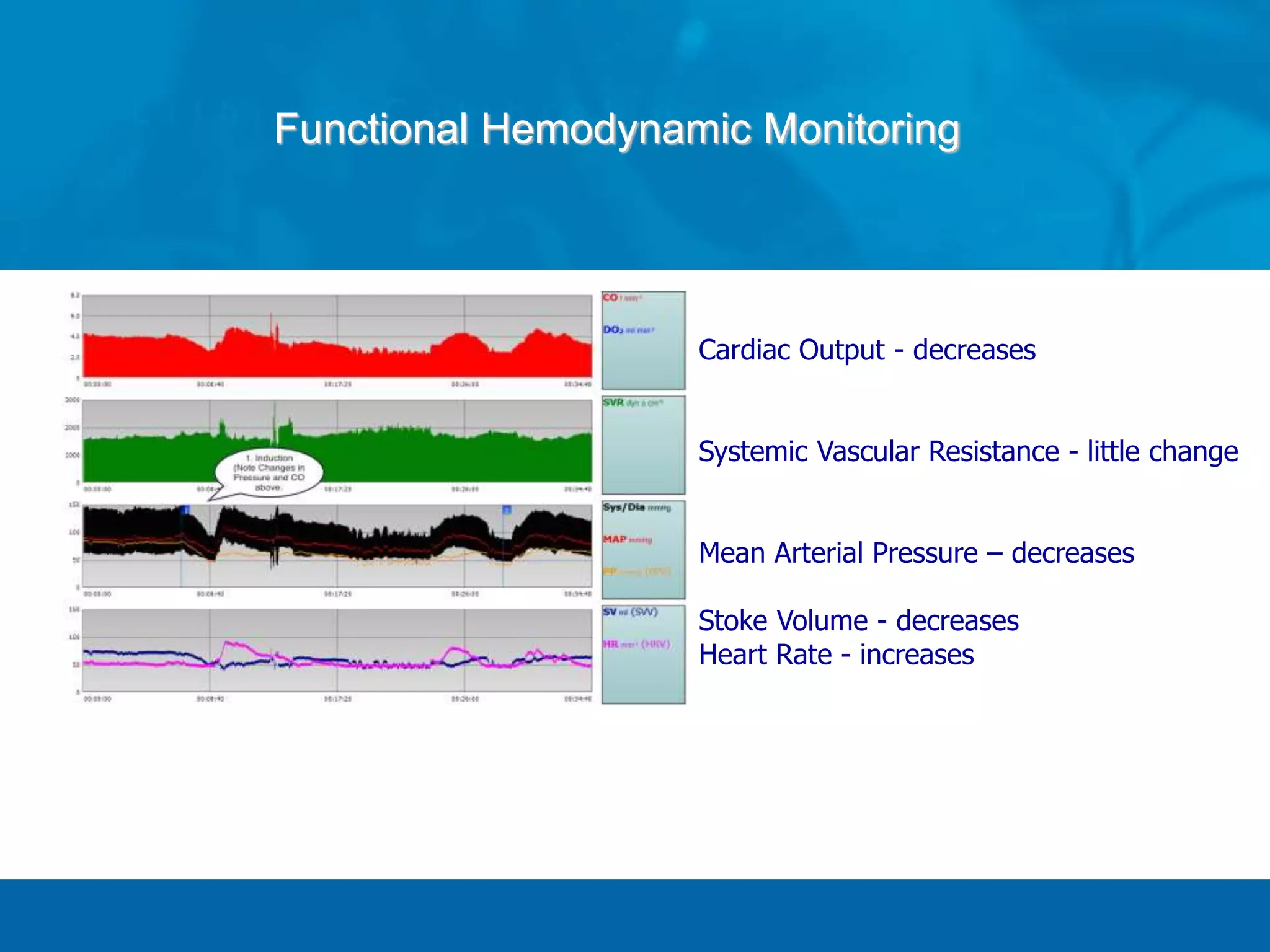
Cardiac Output - decreases
Systemic Vascular Resistance - little change
Mean Arterial Pressure – decreases
Stoke Volume - decreases
Heart Rate - increases
Ventricular Preload and Fluid Responsiveness
 Fluid Resuscitation is not without risk
 Less than 50% of patients respond to a fluid bolus.
 The heart performs more efficiently when appropriately filled.
 The term preload refers to maximum stretch on the heart's
muscle fibers at the end of diastolic filling. The degree of stretch
is determined by the volume of blood contained in the ventricle
at that time.
 Fluid Resuscitation is the primary treatment of many shock states
Ventricular Preload and Fluid Responsiveness
Functional Hemodynamic Indices are predictors of fluid responsiveness
 Reflect the effect of positive pressure ventilation on preload and SV
 Pulse Pressure Variation
 Stroke Volume Variation
 Systolic Pressure Variation
Commonly used static preload measurement are not sensitive or specific
predictors of a patient's ability to respond to fluid bolus
 CVP
 PAOP
Michard F., Boussat S, Chemla D, et al.
Relation between respiratory changes in
arterial pulse pressure and fluid
responsiveness in septic patients with
acute circulatory failure. American Journal
of Respiratory and Critical Care Medicine.
Jul 2000;162(1):134-138
Best Preload Responsiveness - PPV
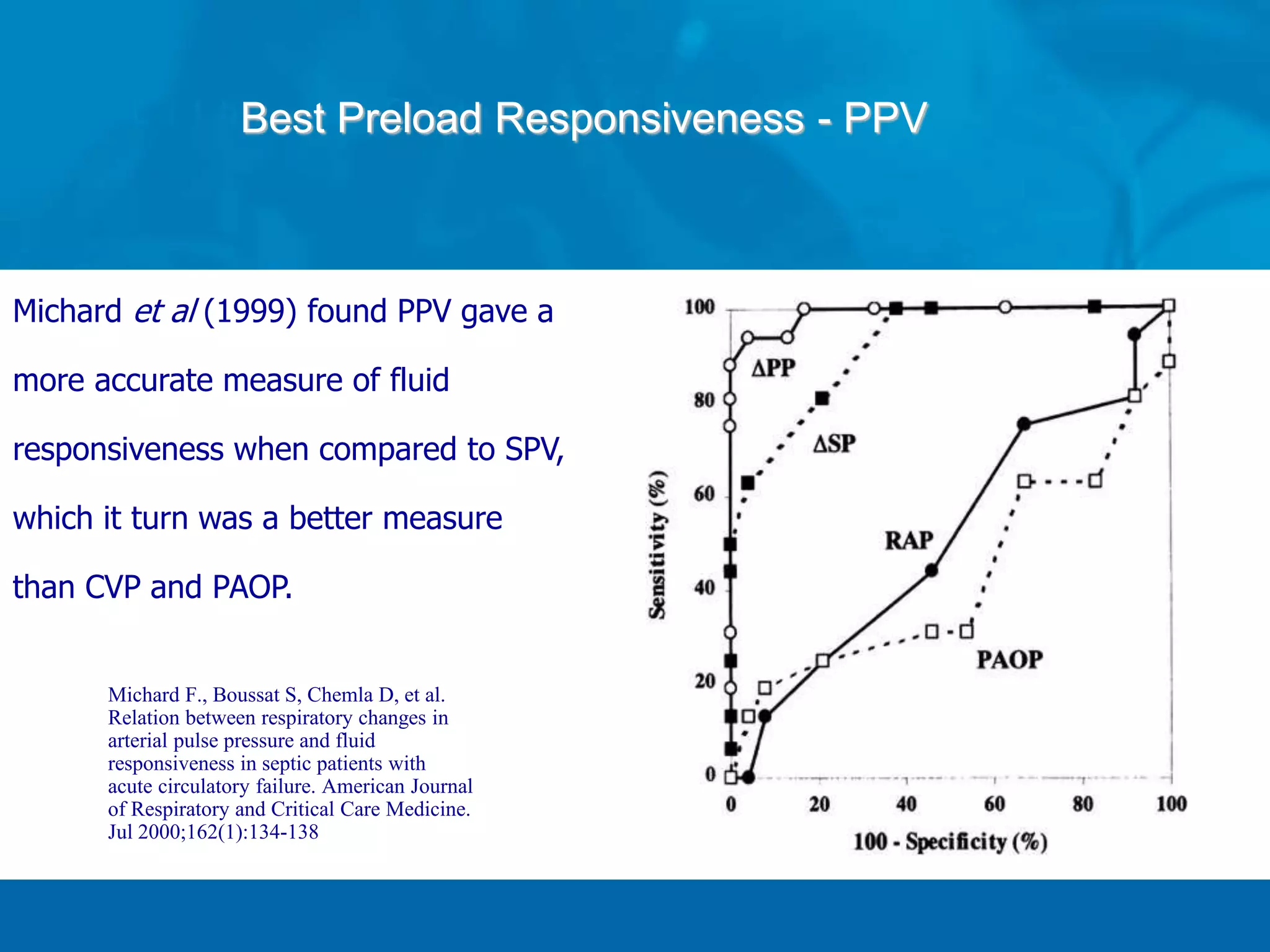
Michard et al (1999) found PPV gave a
more accurate measure of fluid
responsiveness when compared to SPV,
which it turn was a better measure
than CVP and PAOP.
PPV, SVV & PLR
The main limitations to the use of dynamic parameters in patients have
been summarized as ‘SOS’.
The first ‘S’ stands for: Small tidal volume or Spontaneous breathing
activity. The ‘O’ stands for Open chest and the last ‘S’ stands for: not in
Sinus rhythm.
PLR – Passive Leg Raise (when appropriate) can be used when PPV or SVV
can not. PLR is reversible and equated to a positive Fluid Challenge when
observing an increase of 10%+ in Stroke Volume during the maneuver.
Arterial Waveform Analysis
Preload indicator - looks at the variation from inspiration
to expiration of the patient
 PPV - Pulse Pressure Variation
» Greater than 13% patient
preload responsive
 SVV - Stroke Volume Variation
Greater than 10% patient
preload responsive
 SPV - Systolic Pressure Variation
» Greater than 5mmHg patient
preload responsive
Hemodynamic Monitoring
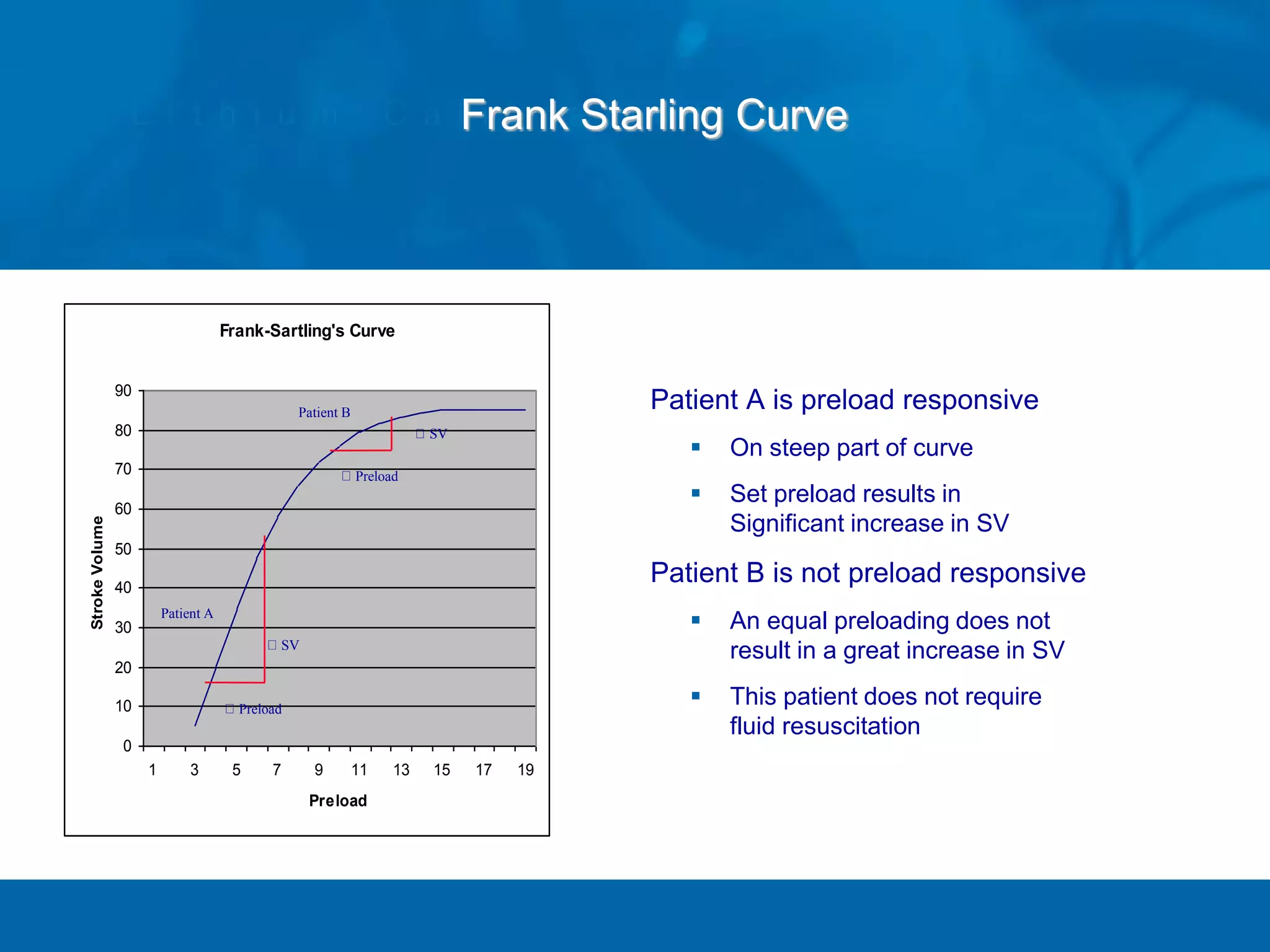
 The greater the ventricle is filled during diastole, the
more the muscle fibres are stretched, the greater is
the force of contraction.
 This is true to a defined point of stretch above which
point contraction force will not increase further.
Frank Starling’s Law
SV
Patient A is preload responsive
 On steep part of curve
 Set preload results in
Significant increase in SV
Patient B is not preload responsive
 An equal preloading does not
result in a great increase in SV
 This patient does not require
fluid resuscitation
Frank-Sartling's Curve
0
10
20
30
40
50
60
70
80
90
1 3 5 7 9 11 13 15 17 19
Preload
Stroke
Volume
Preload
Preload
SV
SV
Patient B
Patient A
Frank Starling Curve
Functional Hemodynamic Monitoring
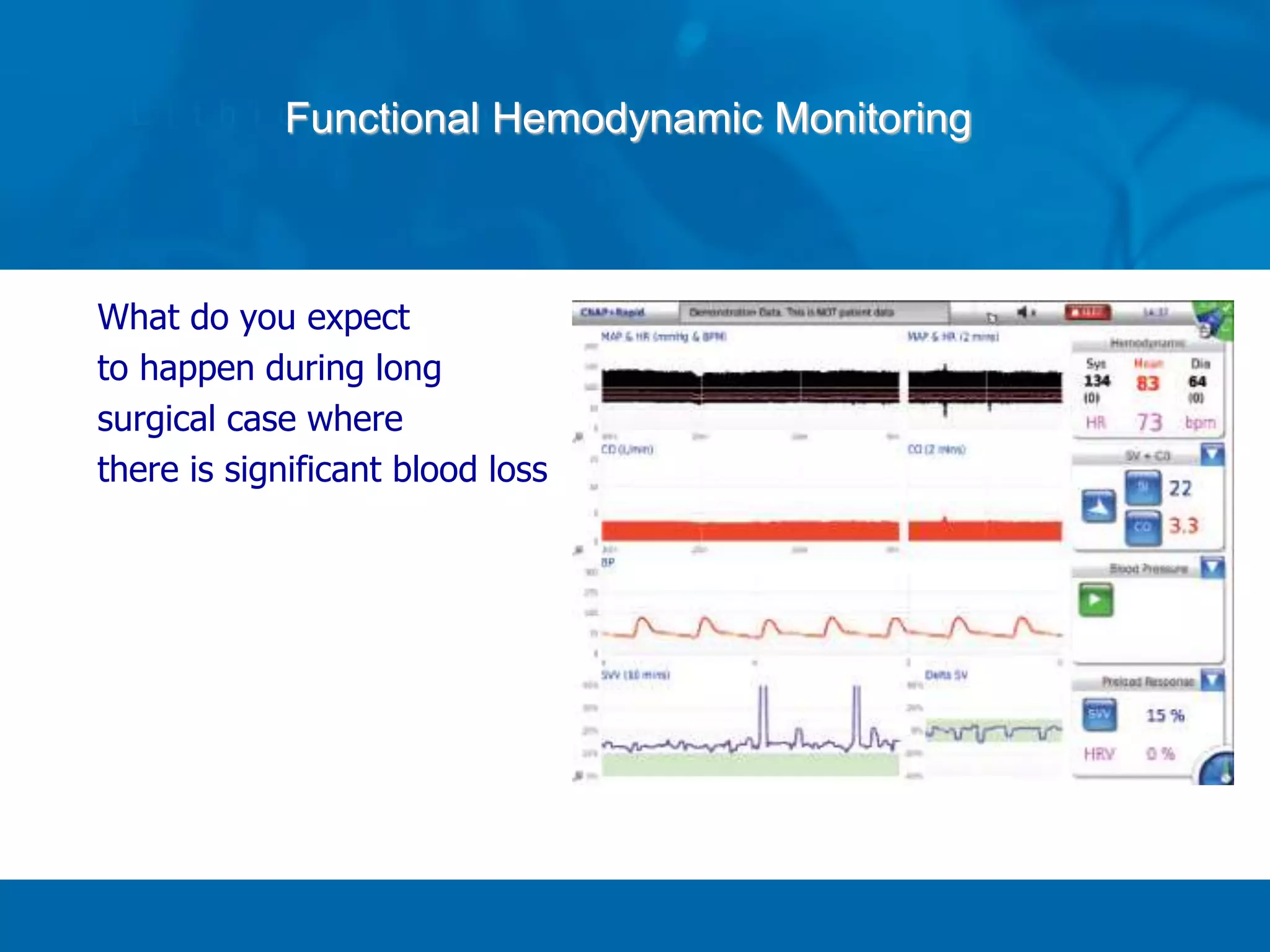
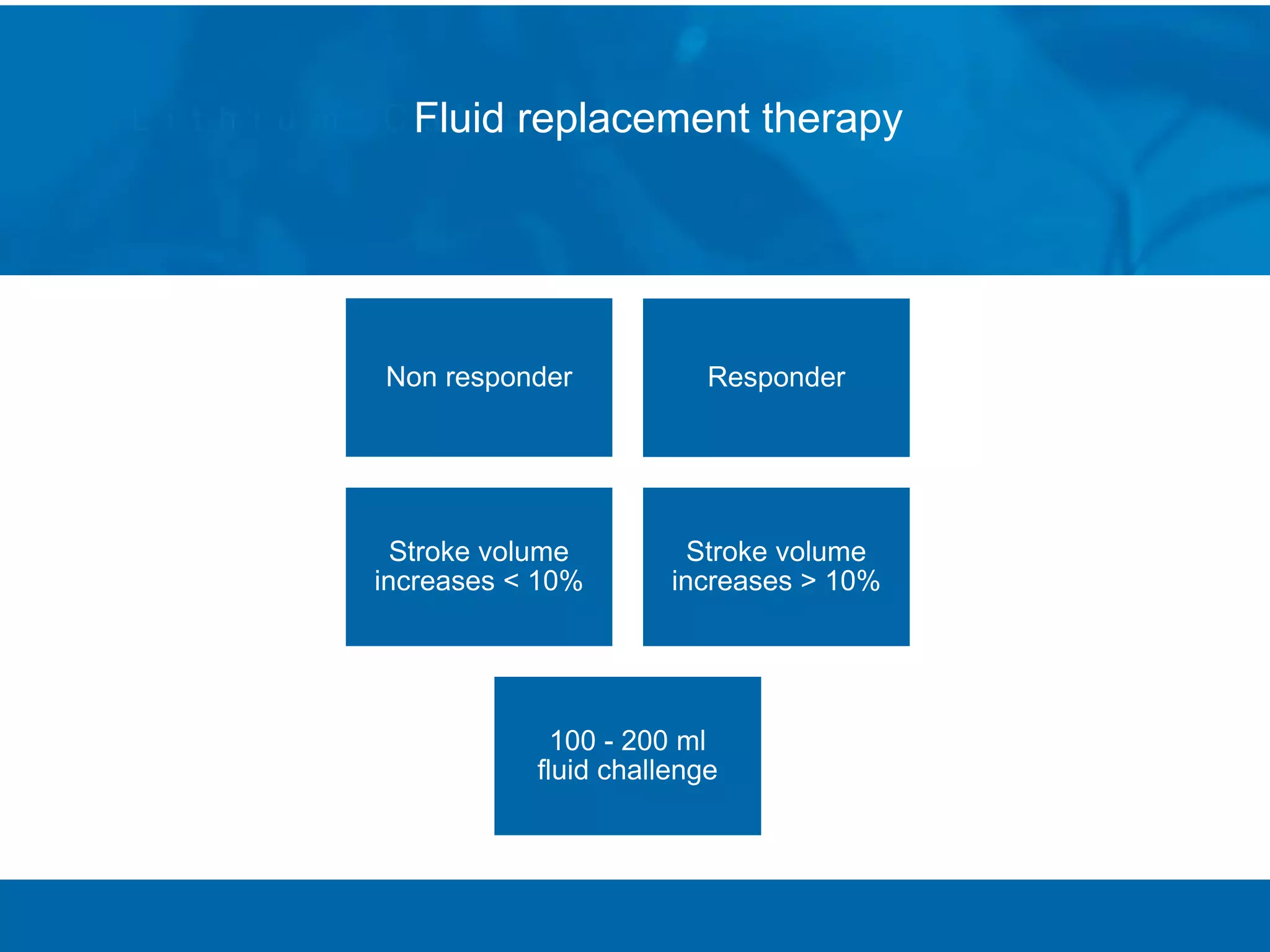
What do you expect
to happen during long
surgical case where
there is significant blood loss
Responder
Non responder
Stroke volume
increases > 10%
Stroke volume
increases < 10%
100 - 200 ml
fluid challenge
Fluid replacement therapy
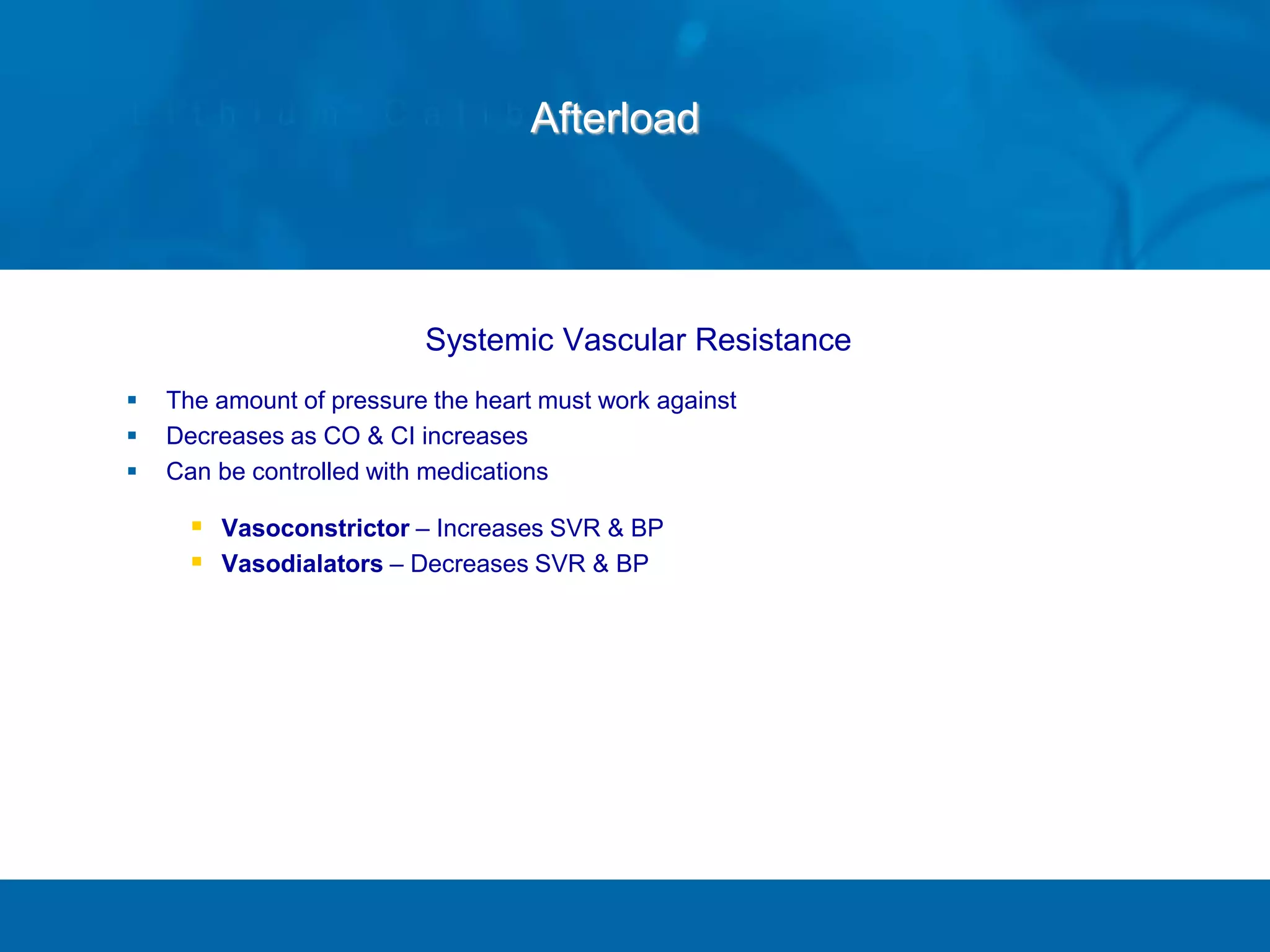
Afterload
Systemic Vascular Resistance
 The amount of pressure the heart must work against
 Decreases as CO & CI increases
 Can be controlled with medications
 Vasoconstrictor – Increases SVR & BP
 Vasodialators – Decreases SVR & BP
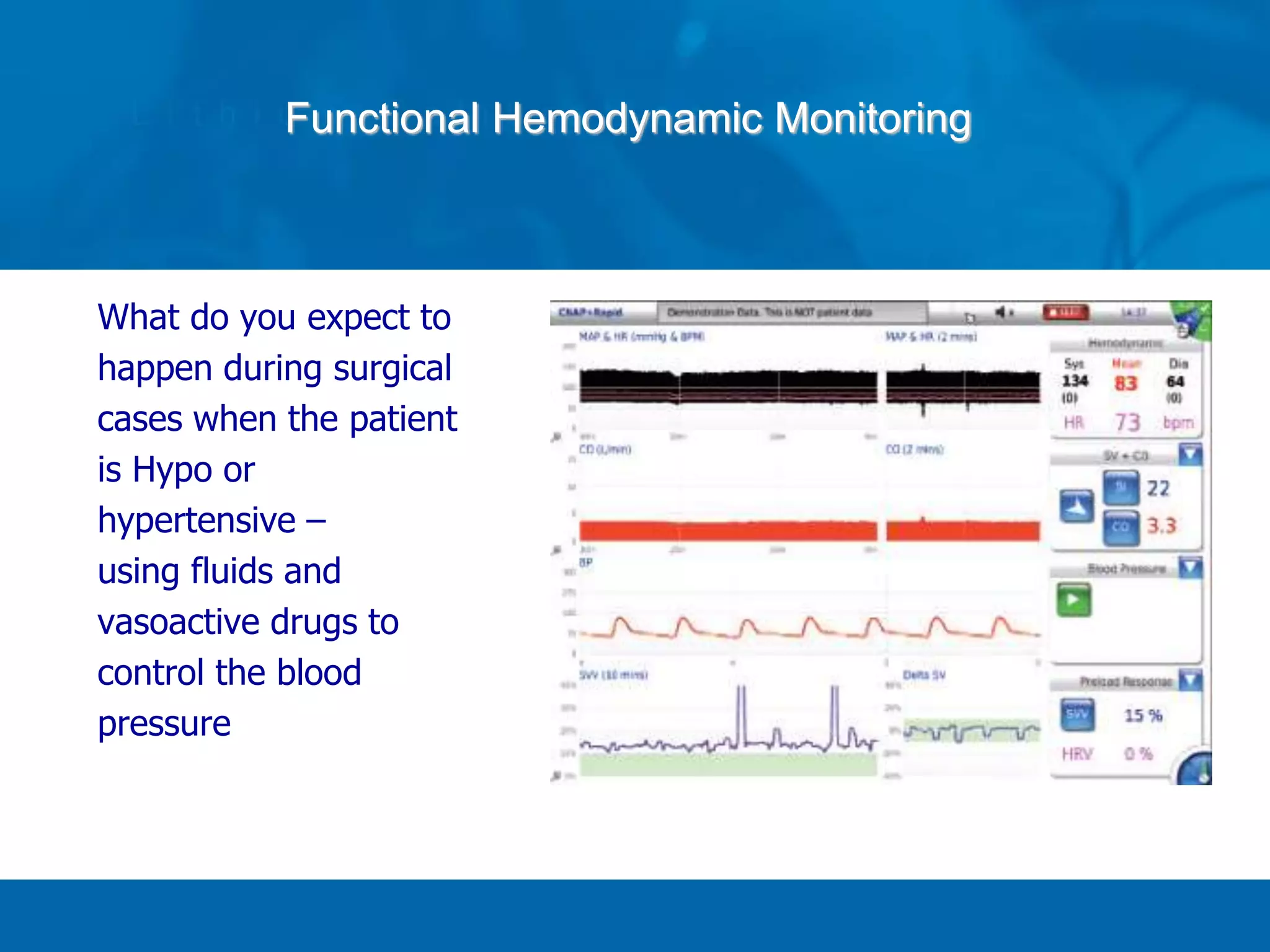
Functional Hemodynamic Monitoring
What do you expect to
happen during surgical
cases when the patient
is Hypo or
hypertensive –
using fluids and
vasoactive drugs to
control the blood
pressure
Contractility
Muscle Compliance (EF)
 The ability of the muscle fiber to stretch and contract
Myocardial Contractility
 Is the power of contraction
 Is independent of preload or afterload
 At a constant preload
 positive inotropic agents > contractility > SV
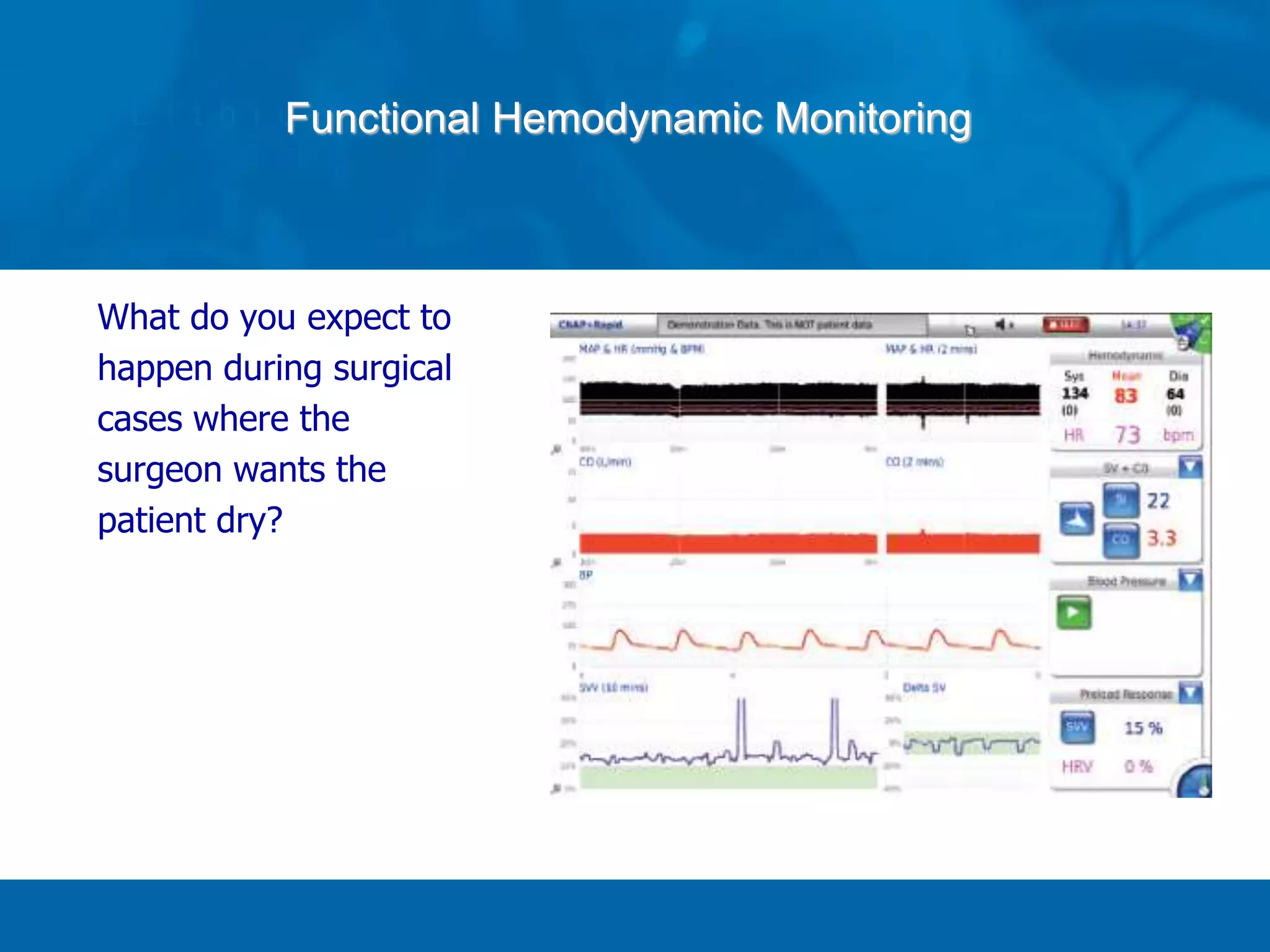
Functional Hemodynamic Monitoring
What do you expect to
happen during surgical
cases where the
surgeon wants the
patient dry?
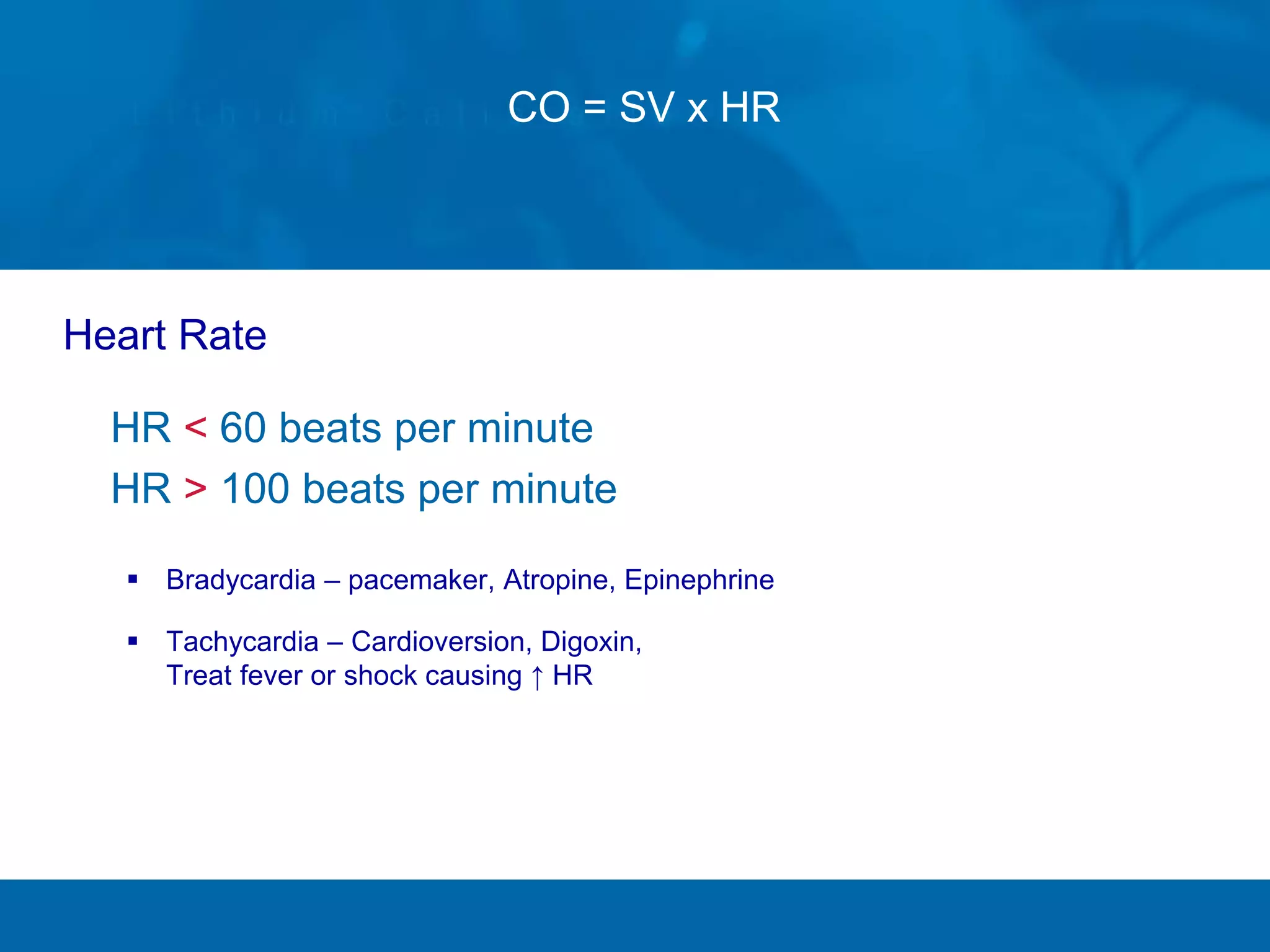
CO = SV x HR
Heart Rate
HR < 60 beats per minute
HR > 100 beats per minute
 Bradycardia – pacemaker, Atropine, Epinephrine
 Tachycardia – Cardioversion, Digoxin,
Treat fever or shock causing ↑ HR
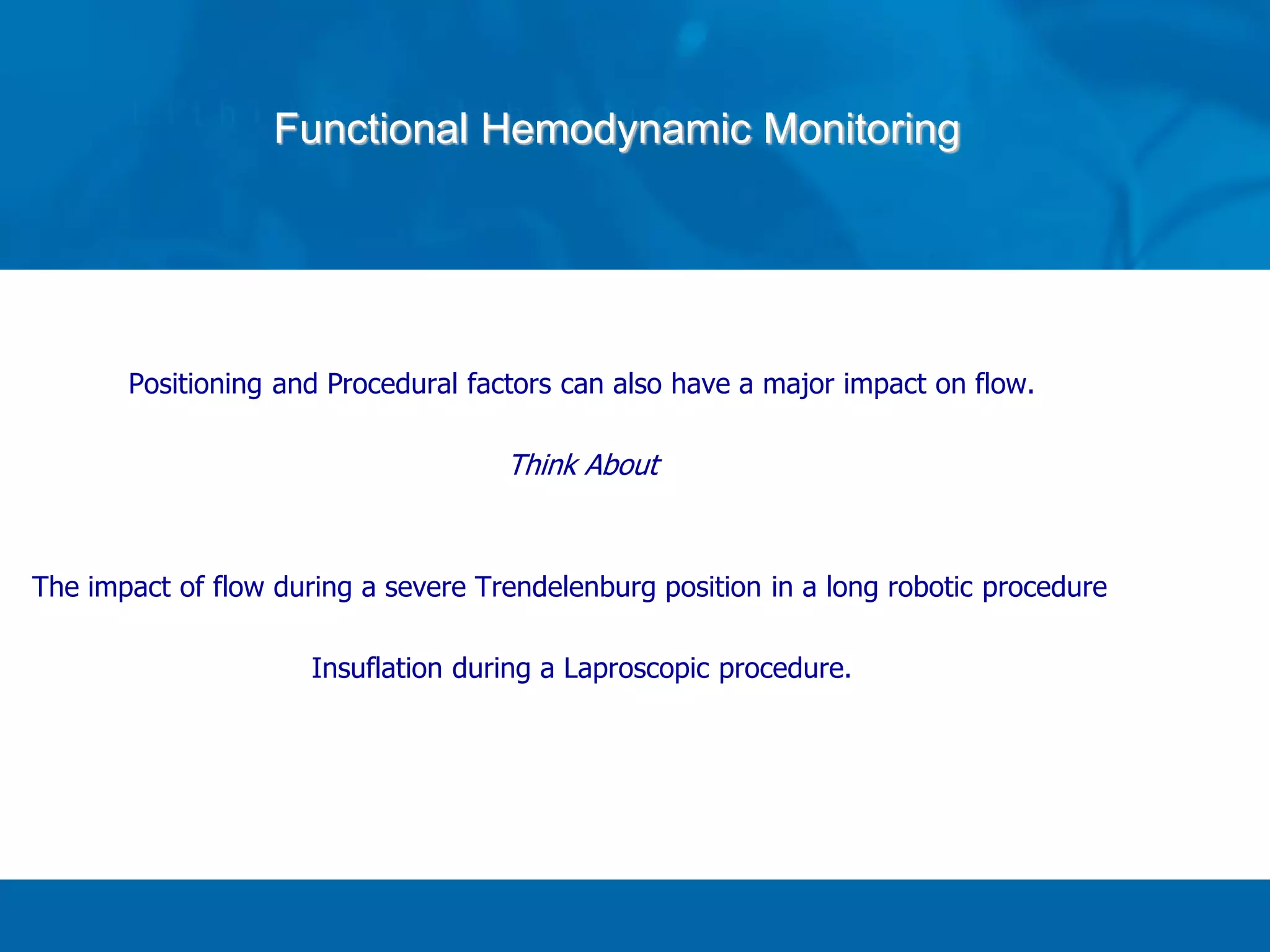
Positioning and Procedural factors can also have a major impact on flow.
Think About
The impact of flow during a severe Trendelenburg position in a long robotic procedure
Insuflation during a Laproscopic procedure.
Functional Hemodynamic Monitoring
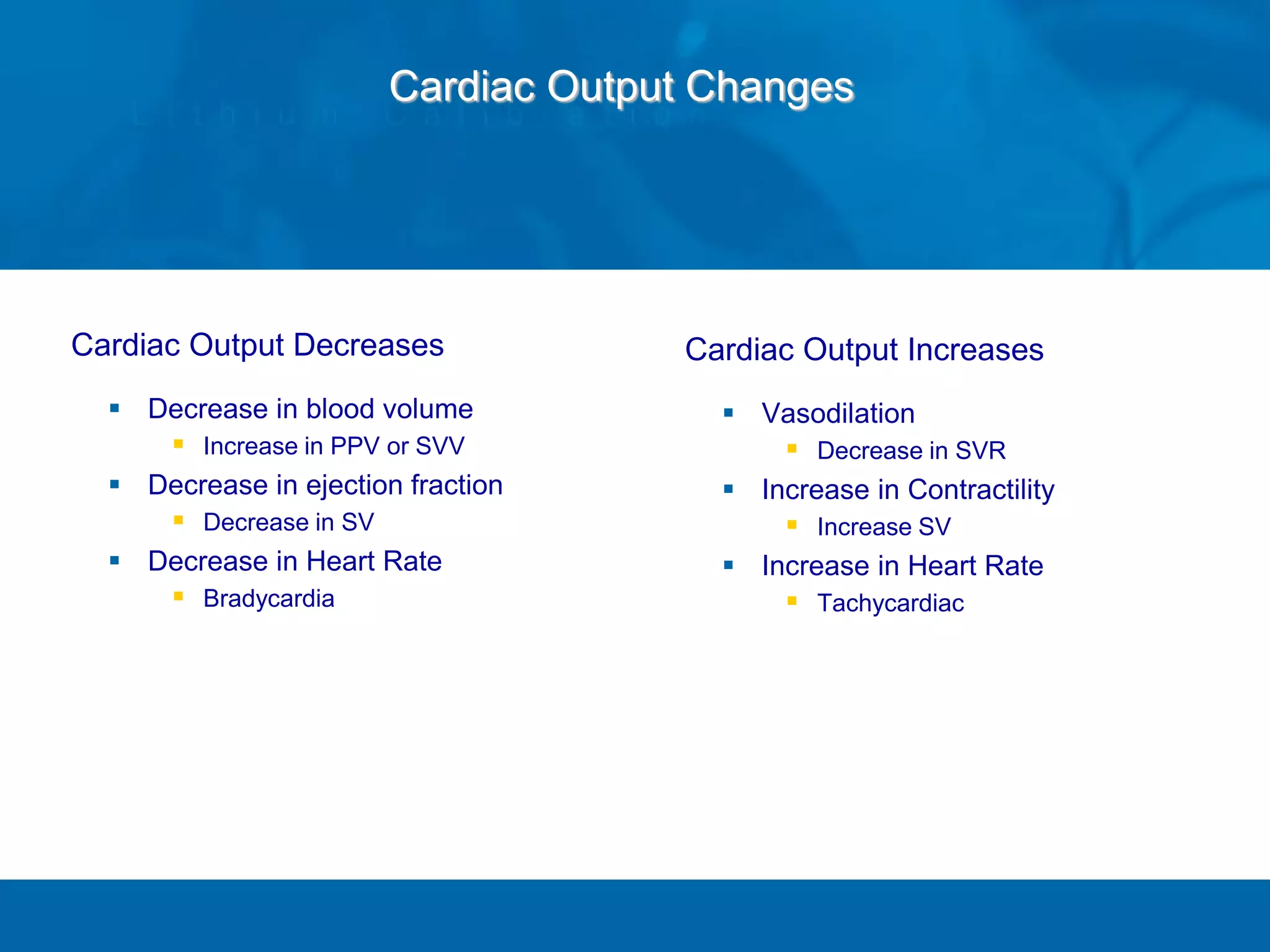
Cardiac Output Decreases
 Decrease in blood volume
 Increase in PPV or SVV
 Decrease in ejection fraction
 Decrease in SV
 Decrease in Heart Rate
 Bradycardia
Cardiac Output Increases
 Vasodilation
 Decrease in SVR
 Increase in Contractility
 Increase SV
 Increase in Heart Rate
 Tachycardiac
Cardiac Output Changes
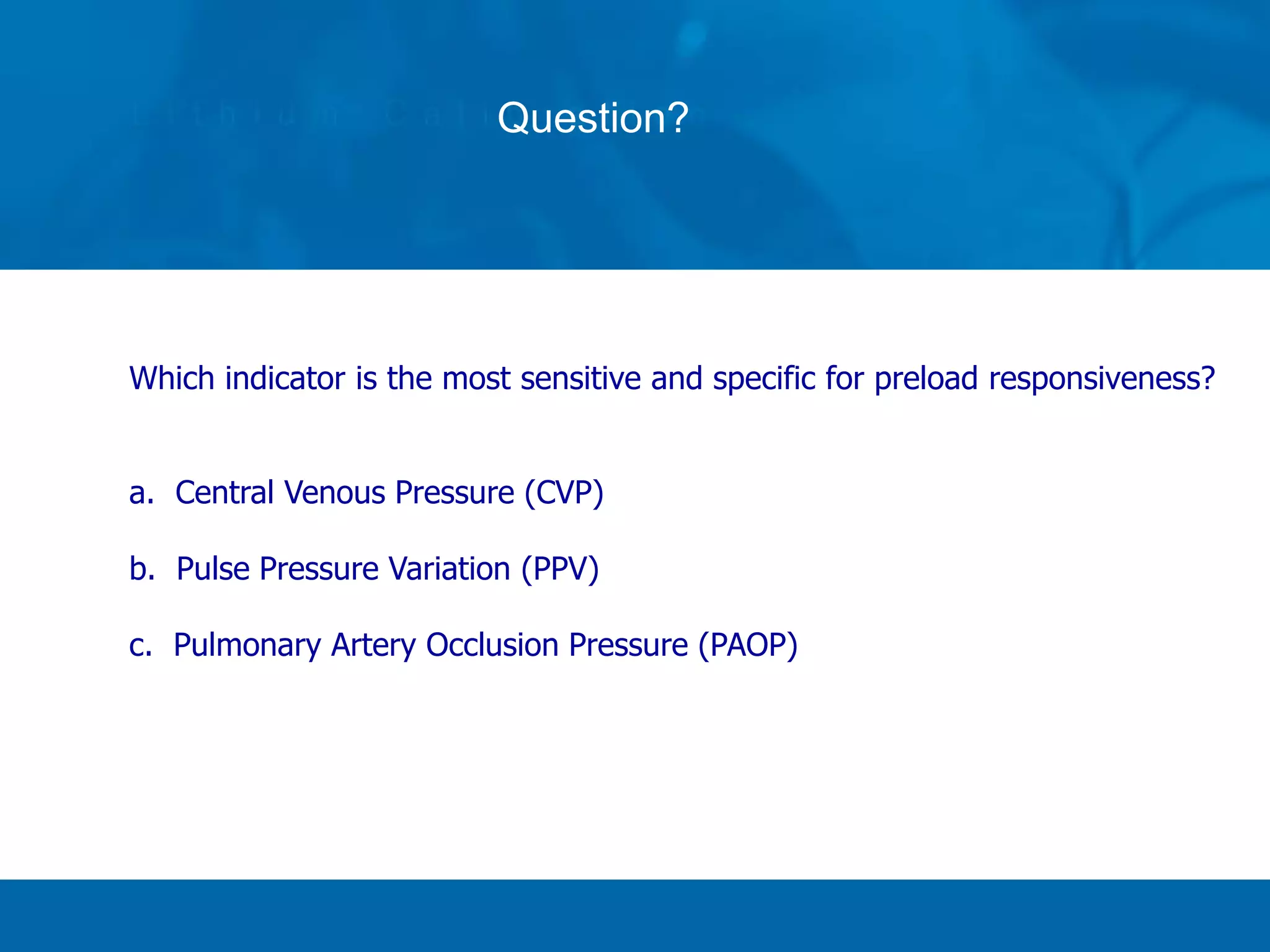
Which indicator is the most sensitive and specific for preload responsiveness?
a. Central Venous Pressure (CVP)
b. Pulse Pressure Variation (PPV)
c. Pulmonary Artery Occlusion Pressure (PAOP)
Question?
Question?
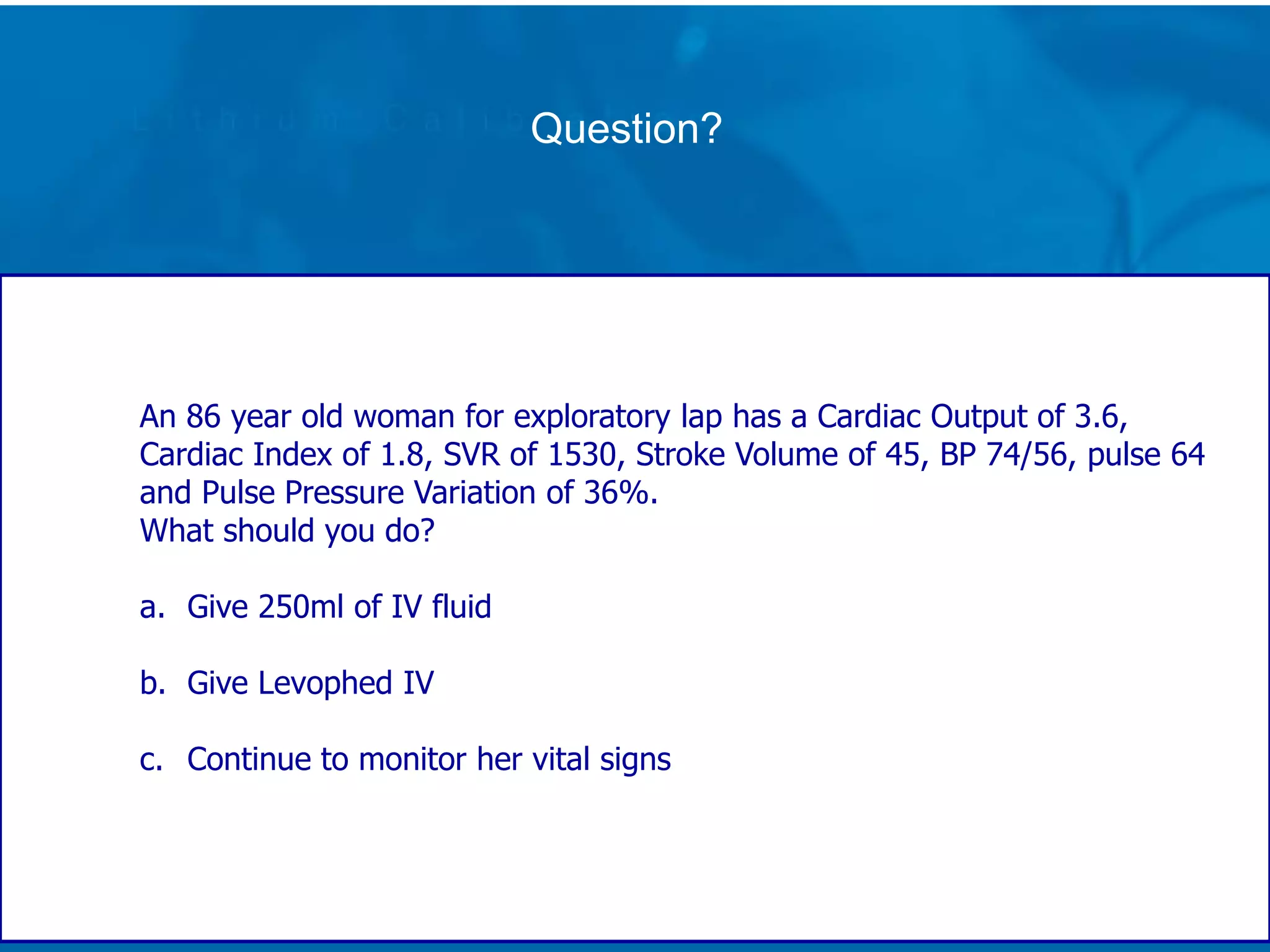
An 86 year old woman for exploratory lap has a Cardiac Output of 3.6,
Cardiac Index of 1.8, SVR of 1530, Stroke Volume of 45, BP 74/56, pulse 64
and Pulse Pressure Variation of 36%.
What should you do?
a. Give 250ml of IV fluid
b. Give Levophed IV
c. Continue to monitor her vital signs
Question?
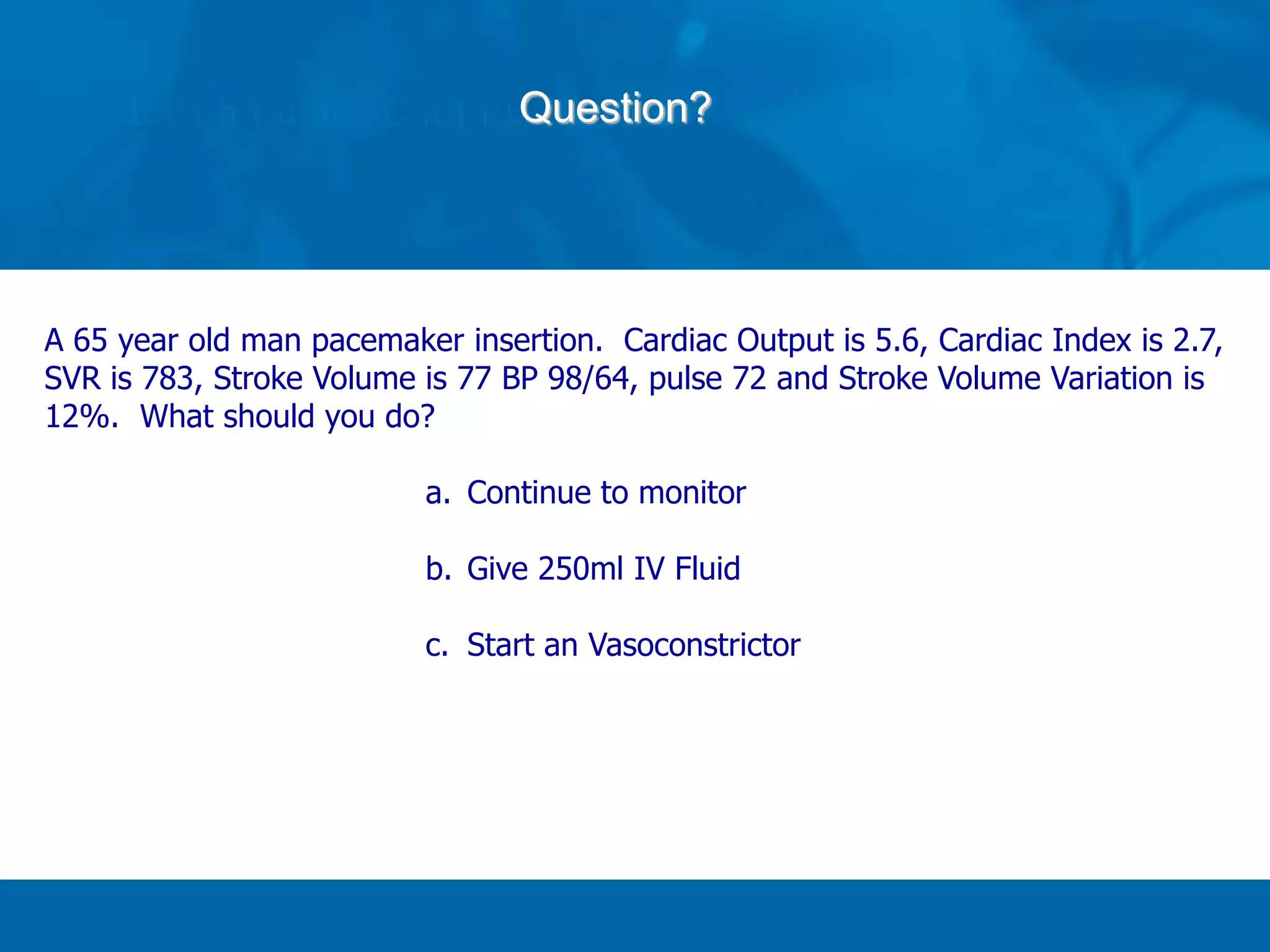
A 65 year old man pacemaker insertion. Cardiac Output is 5.6, Cardiac Index is 2.7,
SVR is 783, Stroke Volume is 77 BP 98/64, pulse 72 and Stroke Volume Variation is
12%. What should you do?
a. Continue to monitor
b. Give 250ml IV Fluid
c. Start an Vasoconstrictor
Hemodynamic monitoring has traditionally involved the
placement of a pulmonary artery catheter
Minimally invasive/non-invasive Cardiac Output Monitoring eliminates
the complications of the pulmonary artery catheter
Which includes:
Complications Related to Catheter
Vascular Complications
Functional Hemodynamic Monitoring
.
Thank You for the invitation!
NEANA

Functional-Hemodynamic-Monitoring-for-CRNA-handout.ppt

  • 1.
    Functional Hemodynamic Monitoring NEANA SpringMeeting April 2016 Donna Adkisson, R.N., M.S.N. Clinical Educator LiDCO, Limited
  • 2.
    Functional Hemodynamic Monitoring Objectives Describe thephysiology of heart lung interactions that cause hemodynamic changes throughout respiration. List 3 parameters used to predict patient response to volume. Explain normal parameters and intraoperative application of functional hemodynamic monitoring Define afterload and contractility of the heart.
  • 3.
    Blood Flow inthe Heart  From the body  Right side of the Heart  To the lungs for Oxygenation  Air in via trachea  Bronchus  Bronchioles  Alveoli  Capillaries  Oxygen in  Carbon Dioxide out  Left side of the Heart  Out the aorta Anatomy & Physiology Review
  • 4.
    Cardiac Cycle Diastole –relaxation or filling  Preload coming into right side of the heart  70% of blood flows into the ventricles passively  Other 30% from atrial kick Systole – contraction or pumping  Atrial Systole = Ventricular Diastole  30% of blood flows into the ventricles from the atrial contraction  Ventricular Systole  How well can the heart pump – Ejection or Stroke Volume  What is the heart pumping against - SVR Anatomy & Physiology Review
  • 5.
    Cardiac Output CO =SV x HR  Cardiac output is the volume of blood pumped by the heart per minute. For an average size of adult (70 kg) at rest this would be about 5 liters/min. During severe exercise it can increase to over 30 liters/min.  Cardiac output is frequently necessary to assess the state of a patient's circulation. The simplest measurements, such as heart rate and blood pressure, may be adequate for many patients, but if there is a cardiovascular abnormality then more detailed measurements are needed.
  • 6.
    Cardiac Output Ways toclinically determine Cardiac Output:  Dilution method  Thermodilution  Green Dye  Lithium Dilution  Arterial Wave Form Analysis  Blood sample to calculate the Fick equation  Continuous Cardiac Output  TEE/EsopheagealDoppler
  • 7.
    Beat-to-Beat Continuous CardiacOutput Pulse Power waveform analysis continuously assesses the patient's hemodynamic status by analyzing and processing the arterial pressure signal obtained from the primary blood pressure monitor. www.lidco.com
  • 8.
    CO = SVx HR Stroke Volume The volume of blood from the LV per beat/cycle of the heart Effected by: Amount of Blood coming into the heart – Preload How well the heart works – Contractility How much pressure or resistance the heart has to work against - Afterload
  • 9.
    Q: What doyou expect to happen to the below during induction in some if not most of your cases? Stroke Volume Heart Rate Cardiac Output Systemic Vascular Resistance Mean Arterial Pressure Functional Hemodynamic Monitoring
  • 10.
    Functional Hemodynamic Monitoring CardiacOutput - decreases Systemic Vascular Resistance - little change Mean Arterial Pressure – decreases Stoke Volume - decreases Heart Rate - increases
  • 11.
    Ventricular Preload andFluid Responsiveness  Fluid Resuscitation is not without risk  Less than 50% of patients respond to a fluid bolus.  The heart performs more efficiently when appropriately filled.  The term preload refers to maximum stretch on the heart's muscle fibers at the end of diastolic filling. The degree of stretch is determined by the volume of blood contained in the ventricle at that time.  Fluid Resuscitation is the primary treatment of many shock states
  • 12.
    Ventricular Preload andFluid Responsiveness Functional Hemodynamic Indices are predictors of fluid responsiveness  Reflect the effect of positive pressure ventilation on preload and SV  Pulse Pressure Variation  Stroke Volume Variation  Systolic Pressure Variation Commonly used static preload measurement are not sensitive or specific predictors of a patient's ability to respond to fluid bolus  CVP  PAOP
  • 13.
    Michard F., BoussatS, Chemla D, et al. Relation between respiratory changes in arterial pulse pressure and fluid responsiveness in septic patients with acute circulatory failure. American Journal of Respiratory and Critical Care Medicine. Jul 2000;162(1):134-138 Best Preload Responsiveness - PPV Michard et al (1999) found PPV gave a more accurate measure of fluid responsiveness when compared to SPV, which it turn was a better measure than CVP and PAOP.
  • 14.
    PPV, SVV &PLR The main limitations to the use of dynamic parameters in patients have been summarized as ‘SOS’. The first ‘S’ stands for: Small tidal volume or Spontaneous breathing activity. The ‘O’ stands for Open chest and the last ‘S’ stands for: not in Sinus rhythm. PLR – Passive Leg Raise (when appropriate) can be used when PPV or SVV can not. PLR is reversible and equated to a positive Fluid Challenge when observing an increase of 10%+ in Stroke Volume during the maneuver.
  • 15.
    Arterial Waveform Analysis Preloadindicator - looks at the variation from inspiration to expiration of the patient  PPV - Pulse Pressure Variation » Greater than 13% patient preload responsive  SVV - Stroke Volume Variation Greater than 10% patient preload responsive  SPV - Systolic Pressure Variation » Greater than 5mmHg patient preload responsive Hemodynamic Monitoring
  • 16.
     The greaterthe ventricle is filled during diastole, the more the muscle fibres are stretched, the greater is the force of contraction.  This is true to a defined point of stretch above which point contraction force will not increase further. Frank Starling’s Law
  • 17.
    SV Patient A ispreload responsive  On steep part of curve  Set preload results in Significant increase in SV Patient B is not preload responsive  An equal preloading does not result in a great increase in SV  This patient does not require fluid resuscitation Frank-Sartling's Curve 0 10 20 30 40 50 60 70 80 90 1 3 5 7 9 11 13 15 17 19 Preload Stroke Volume Preload Preload SV SV Patient B Patient A Frank Starling Curve
  • 18.
    Functional Hemodynamic Monitoring Whatdo you expect to happen during long surgical case where there is significant blood loss
  • 19.
    Responder Non responder Stroke volume increases> 10% Stroke volume increases < 10% 100 - 200 ml fluid challenge Fluid replacement therapy
  • 20.
    Afterload Systemic Vascular Resistance The amount of pressure the heart must work against  Decreases as CO & CI increases  Can be controlled with medications  Vasoconstrictor – Increases SVR & BP  Vasodialators – Decreases SVR & BP
  • 21.
    Functional Hemodynamic Monitoring Whatdo you expect to happen during surgical cases when the patient is Hypo or hypertensive – using fluids and vasoactive drugs to control the blood pressure
  • 22.
    Contractility Muscle Compliance (EF) The ability of the muscle fiber to stretch and contract Myocardial Contractility  Is the power of contraction  Is independent of preload or afterload  At a constant preload  positive inotropic agents > contractility > SV
  • 23.
    Functional Hemodynamic Monitoring Whatdo you expect to happen during surgical cases where the surgeon wants the patient dry?
  • 24.
    CO = SVx HR Heart Rate HR < 60 beats per minute HR > 100 beats per minute  Bradycardia – pacemaker, Atropine, Epinephrine  Tachycardia – Cardioversion, Digoxin, Treat fever or shock causing ↑ HR
  • 25.
    Positioning and Proceduralfactors can also have a major impact on flow. Think About The impact of flow during a severe Trendelenburg position in a long robotic procedure Insuflation during a Laproscopic procedure. Functional Hemodynamic Monitoring
  • 26.
    Cardiac Output Decreases Decrease in blood volume  Increase in PPV or SVV  Decrease in ejection fraction  Decrease in SV  Decrease in Heart Rate  Bradycardia Cardiac Output Increases  Vasodilation  Decrease in SVR  Increase in Contractility  Increase SV  Increase in Heart Rate  Tachycardiac Cardiac Output Changes
  • 27.
    Which indicator isthe most sensitive and specific for preload responsiveness? a. Central Venous Pressure (CVP) b. Pulse Pressure Variation (PPV) c. Pulmonary Artery Occlusion Pressure (PAOP) Question?
  • 28.
    Question? An 86 yearold woman for exploratory lap has a Cardiac Output of 3.6, Cardiac Index of 1.8, SVR of 1530, Stroke Volume of 45, BP 74/56, pulse 64 and Pulse Pressure Variation of 36%. What should you do? a. Give 250ml of IV fluid b. Give Levophed IV c. Continue to monitor her vital signs
  • 29.
    Question? A 65 yearold man pacemaker insertion. Cardiac Output is 5.6, Cardiac Index is 2.7, SVR is 783, Stroke Volume is 77 BP 98/64, pulse 72 and Stroke Volume Variation is 12%. What should you do? a. Continue to monitor b. Give 250ml IV Fluid c. Start an Vasoconstrictor
  • 30.
    Hemodynamic monitoring hastraditionally involved the placement of a pulmonary artery catheter Minimally invasive/non-invasive Cardiac Output Monitoring eliminates the complications of the pulmonary artery catheter Which includes: Complications Related to Catheter Vascular Complications Functional Hemodynamic Monitoring
  • 31.
    . Thank You forthe invitation! NEANA

Editor's Notes