Healthy, Wealthy and Wise
Achieving your best Health in 2018
Stephan Esser MD, USPTA
“Early to bed and early to rise,
makes a man healthy and
wealthy and wise; wise, healthy
and wealthy!”
Esser’s Health
Ranch
Dr William Esser ND, DC 1911-2003
• Your Personal Choices may just be the most
powerful influences of your health, today,
tomorrow and for years to come
Goals
• Explore the Health of America Today
• Learn why what you do matters
• Develop a plan of health for your life
A Paradigm Shift
“A global response to a
global problem: the epidemic
of overnutrition.” WHO
It is estimated that by 2020 2/3rds
of the global
burden of disease will be attributable to chronic
non-communicable diseases, most of them
strongly associated with diet. The nutrition
transition towards refined foods, foods of animal
origin, and increased fats plays a major role in
the current global epidemics of obesity, diabetes
and cardiovascular diseases, among other non-
communicable conditions. Sedentary lifestyles and the
use of tobacco are also significant risk factors. …….. A
concerted multi-sectoral approach, involving the use of
policy, education and trade mechanisms, is necessary
to address these matters.
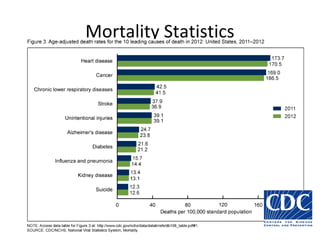
Mortality Statistics
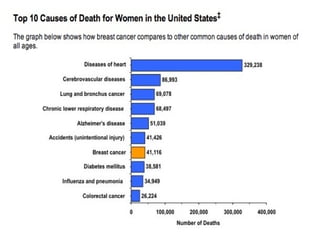
Leading Causes of Death in US
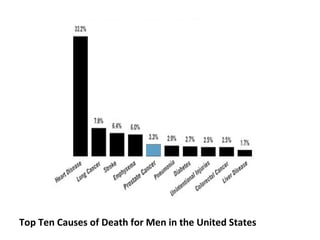
Top Ten Causes of Death for Men in the United States
“A global response to a
global problem: the epidemic
of overnutrition.” WHO
It is estimated that by 2020 2/3rds
of the global
burden of disease will be attributable to chronic
non-communicable diseases, most of them
strongly associated with diet. The nutrition
transition towards refined foods, foods of animal
origin, and increased fats plays a major role in
the current global epidemics of obesity, diabetes
and cardiovascular diseases, among other non-
communicable conditions. Sedentary lifestyles and the
use of tobacco are also significant risk factors. …….. A
concerted multi-sectoral approach, involving the use of
policy, education and trade mechanisms, is necessary
to address these matters.
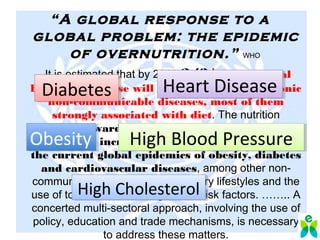
DiabetesDiabetes
High Blood PressureHigh Blood Pressure
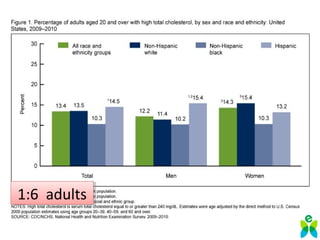
High CholesterolHigh Cholesterol
Heart DiseaseHeart Disease
ObesityObesity
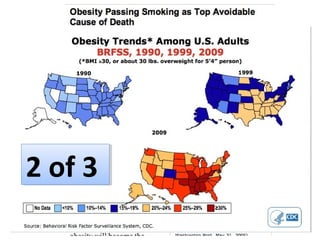
2 of 32 of 3
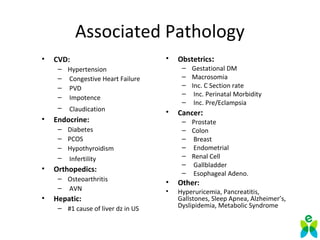
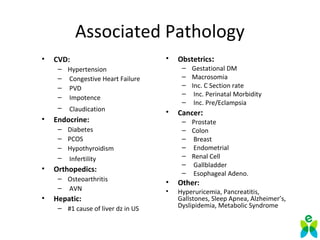
Associated Pathology
• CVD:
– Hypertension
– Congestive Heart Failure
– PVD
– Impotence
– Claudication
• Endocrine:
– Diabetes
– PCOS
– Hypothyroidism
– Infertility
• Orthopedics:
– Osteoarthritis
– AVN
• Hepatic:
– #1 cause of liver dz in US
• Obstetrics:
– Gestational DM
– Macrosomia
– Inc. C Section rate
– Inc. Perinatal Morbidity
– Inc. Pre/Eclampsia
• Cancer:
– Prostate
– Colon
– Breast
– Endometrial
– Renal Cell
– Gallbladder
– Esophageal Adeno.
• Other:
• Hyperuricemia, Pancreatitis,
Gallstones, Sleep Apnea, Alzheimer’s,
Dyslipidemia, Metabolic Syndrome
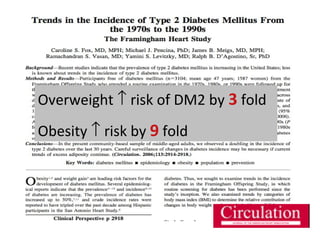
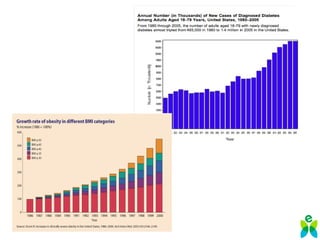
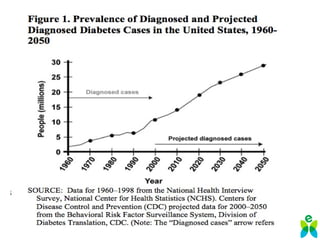
Overweight ↑ risk of DM2 by 3 fold
Obesity ↑ risk by 9 fold
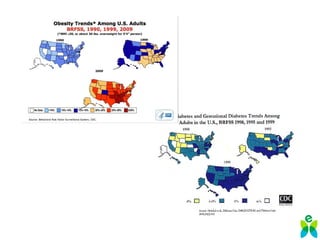
The Problem
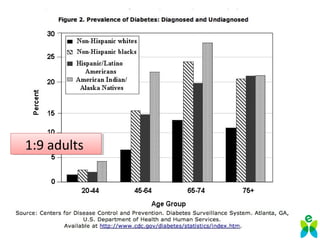
1:9 adults1:9 adults
The Problem
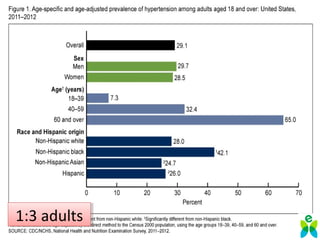
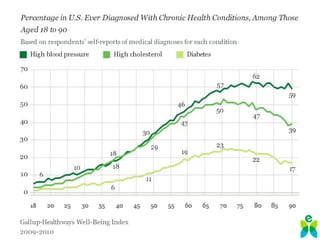
• High Blood Pressure:
– 1 in 3 adults
1:3 adults1:3 adults
1:6 adults1:6 adults
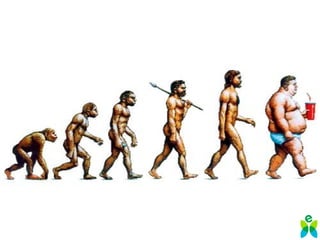
How did this Happen?
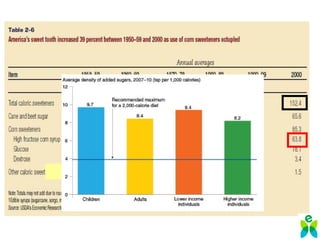
↑39%
Av. of 52 tsp added sugar/person/day
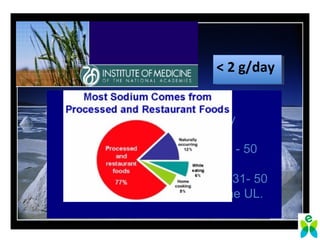
•IOM:
(UL) for salt is 5.8 g/day
> 95 percent US Males 31 - 50
> 75 percent of US females 31- 50
regularly in excess of the UL.
< 2 g/day< 2 g/day
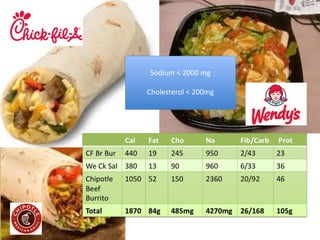
Sodium < 2000 mg
Cholesterol < 200mg
Sodium < 2000 mg
Cholesterol < 200mg
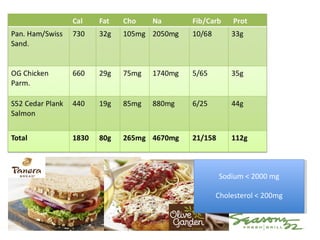
Sodium < 2000 mg
Cholesterol < 200mg
Sodium < 2000 mg
Cholesterol < 200mg
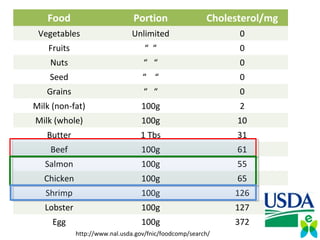
Food Portion Cholesterol/mg
Vegetables Unlimited 0
Fruits “ “ 0
Nuts “ “ 0
Seed “ “ 0
Grains “ “ 0
Milk (non-fat) 100g 2
Milk (whole) 100g 10
Butter 1 Tbs 31
Beef 100g 61
Salmon 100g 55
Chicken 100g 65
Shrimp 100g 126
Lobster 100g 127
Egg 100g 372
http://www.nal.usda.gov/fnic/foodcomp/search/
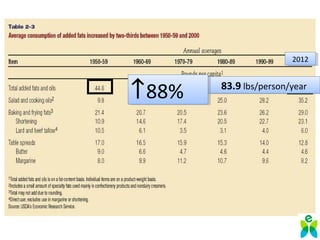
83.9 lbs/person/year83.9 lbs/person/year
↑88%↑88%
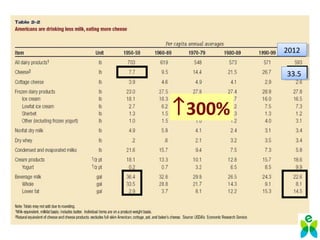
20122012
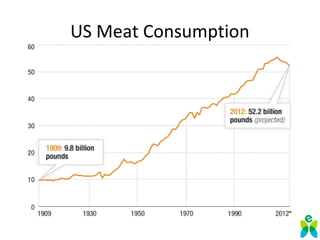
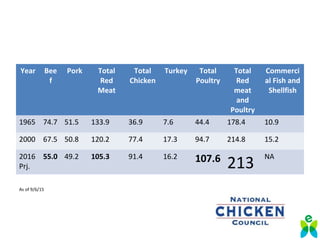
US Meat Consumption
↑57 lb/capita
Year Bee
f
Pork Total
Red
Meat
Total
Chicken
Turkey Total
Poultry
Total
Red
meat
and
Poultry
Commerci
al Fish and
Shellfish
1965 74.7 51.5 133.9 36.9 7.6 44.4 178.4 10.9
2000 67.5 50.8 120.2 77.4 17.3 94.7 214.8 15.2
2016
Prj.
55.0 49.2 105.3 91.4 16.2 107.6
213
NA
As of 9/6/15
↑300%
33.533.5
20122012
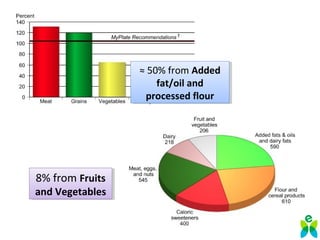
8% from Fruits
and Vegetables
8% from Fruits
and Vegetables
≈ 50% from Added
fat/oil and
processed flour
≈ 50% from Added
fat/oil and
processed flour
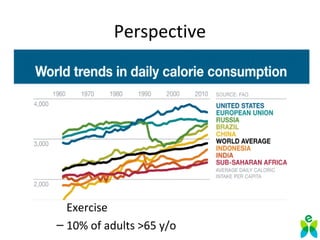
Perspective
• We eat more
– Sugar, Salt, Fat, Meat, Dairy
– 1970-2018:
• ↑ 24.5 % C/day ≈
504K/day
• We get less then ideal Physical Activity
– 18.8% of adults achieved CDC reccs on
Exercise
– 10% of adults >65 y/o
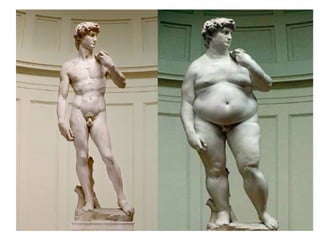
Michelangelo’s David:
12 month 20 city tour of the US
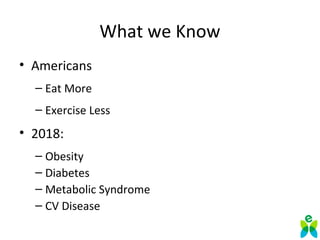
What we Know
• Americans
– Eat More
– Exercise Less
• 2018:
– Obesity
– Diabetes
– Metabolic Syndrome
– CV Disease
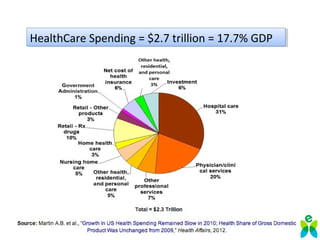
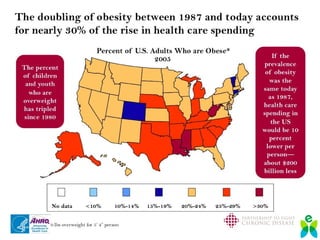
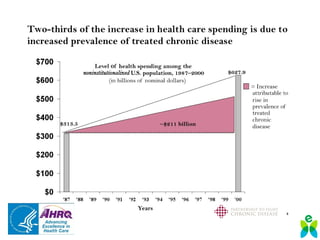
HealthCare Spending = $2.7 trillion = 17.7% GDPHealthCare Spending = $2.7 trillion = 17.7% GDP
Associated Pathology
• CVD:
– Hypertension
– Congestive Heart Failure
– PVD
– Impotence
– Claudication
• Endocrine:
– Diabetes
– PCOS
– Hypothyroidism
– Infertility
• Orthopedics:
– Osteoarthritis
– AVN
• Hepatic:
– #1 cause of liver dz in US
• Obstetrics:
– Gestational DM
– Macrosomia
– Inc. C Section rate
– Inc. Perinatal Morbidity
– Inc. Pre/Eclampsia
• Cancer:
– Prostate
– Colon
– Breast
– Endometrial
– Renal Cell
– Gallbladder
– Esophageal Adeno.
• Other:
• Hyperuricemia, Pancreatitis,
Gallstones, Sleep Apnea, Alzheimer’s,
Dyslipidemia, Metabolic Syndrome
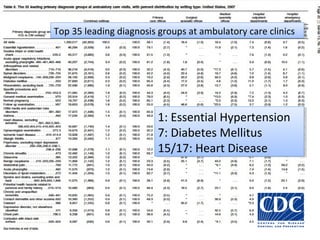
1: Essential Hypertension
7: Diabetes Mellitus
15/17: Heart Disease
1: Essential Hypertension
7: Diabetes Mellitus
15/17: Heart Disease
Top 35 leading diagnosis groups at ambulatory care clinicsTop 35 leading diagnosis groups at ambulatory care clinics
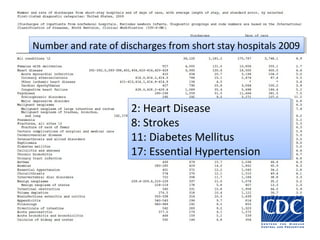
Number and rate of discharges from short stay hospitals 2009Number and rate of discharges from short stay hospitals 2009
2: Heart Disease
8: Strokes
11: Diabetes Mellitus
17: Essential Hypertension
2: Heart Disease
8: Strokes
11: Diabetes Mellitus
17: Essential Hypertension
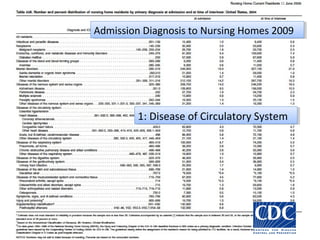
Admission Diagnosis to Nursing Homes 2009Admission Diagnosis to Nursing Homes 2009
1: Disease of Circulatory System1: Disease of Circulatory System
Can WEChange this?
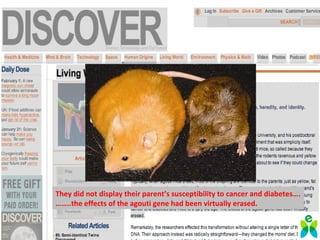
Can we Change Health through Lifestyle
Or are Genetics the end of the story?
They did not display their parent’s susceptibility to cancer and diabetes….
……..the effects of the agouti gene had been virtually erased.
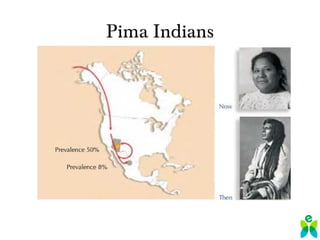
Pima Indians
“A global response to a global
problem: the epidemic of
overnutrition.” WHO
It is estimated that by 2020 2/3rds
of the global burden
of disease will be attributable to chronic
noncommunicable diseases, most of them strongly
associated with diet. The nutrition transition towards
refined foods, foods of animal origin, and increased fats
plays a major role in the current global epidemics of
obesity, diabetes and cardiovascular diseases, among
other noncommunicable conditions. Sedentary
lifestyles and the use of tobacco are also significant
risk factors. …….. A concerted multi-sectoral approach,
involving the use of policy, education and trade
mechanisms, is necessary to address these matters.
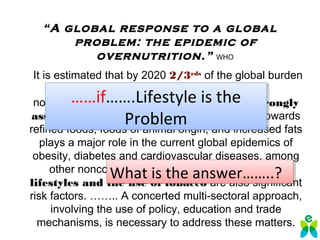
……if…….Lifestyle is the
Problem
……if…….Lifestyle is the
Problem
What is the answer……..?What is the answer……..?
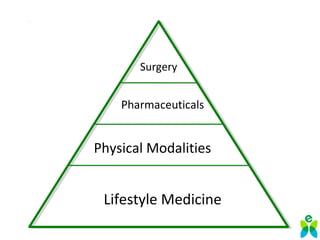
Lifestyle Medicine
Physical Modalities
Pharmaceuticals
Surgery
What HAS worked?
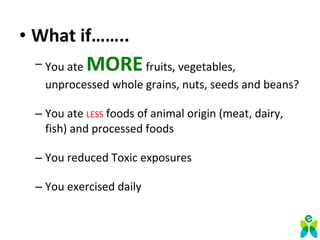
• What if……..
– You ate MOREfruits, vegetables,
unprocessed whole grains, nuts, seeds and beans?
– You ate LESS foods of animal origin (meat, dairy,
fish) and processed foods
– You reduced Toxic exposures
– You exercised daily
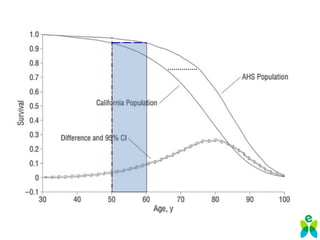
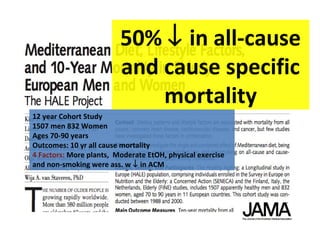
12 year Cohort Study
1507 men 832 Women
Ages 70-90 years
Outcomes: 10 yr all cause mortality
4 Factors: More plants, Moderate EtOH, physical exercise
and non-smoking were ass. w ↓ in ACM
50% ↓ in all-cause
and cause specific
mortality
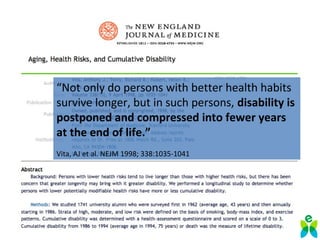
“Not only do persons with better health habits
survive longer, but in such persons, disability is
postponed and compressed into fewer years
at the end of life.”
Vita, AJ et al. NEJM 1998; 338:1035-1041
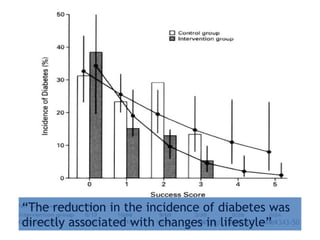
Finnish Diabetes Prevention Trial
Total 522: 172M 350W
Av. age 55
Av. BMI 31
Randomized to standard of care or
individualized lifestyle counseling
Av. f/u 3.2 yrs
Risk of
Diabetes ↓ 58 %
(P<0.001)
N Engl J Med 2001;344:1343-50
“The reduction in the incidence of diabetes was
directly associated with changes in lifestyle”
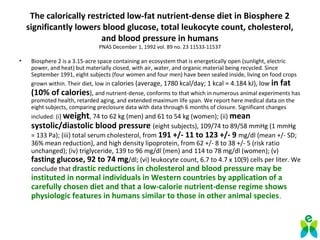
The calorically restricted low-fat nutrient-dense diet in Biosphere 2
significantly lowers blood glucose, total leukocyte count, cholesterol,
and blood pressure in humans
PNAS December 1, 1992 vol. 89 no. 23 11533-11537
• Biosphere 2 is a 3.15-acre space containing an ecosystem that is energetically open (sunlight, electric
power, and heat) but materially closed, with air, water, and organic material being recycled. Since
September 1991, eight subjects (four women and four men) have been sealed inside, living on food crops
grown within. Their diet, low in calories (average, 1780 kcal/day; 1 kcal = 4.184 kJ), low in fat
(10% of calories), and nutrient-dense, conforms to that which in numerous animal experiments has
promoted health, retarded aging, and extended maximum life span. We report here medical data on the
eight subjects, comparing preclosure data with data through 6 months of closure. Significant changes
included: (i) weight, 74 to 62 kg (men) and 61 to 54 kg (women); (ii) mean
systolic/diastolic blood pressure (eight subjects), 109/74 to 89/58 mmHg (1 mmHg
= 133 Pa); (iii) total serum cholesterol, from 191 +/- 11 to 123 +/- 9 mg/dl (mean +/- SD;
36% mean reduction), and high density lipoprotein, from 62 +/- 8 to 38 +/- 5 (risk ratio
unchanged); (iv) triglyceride, 139 to 96 mg/dl (men) and 114 to 78 mg/dl (women); (v)
fasting glucose, 92 to 74 mg/dl; (vi) leukocyte count, 6.7 to 4.7 x 10(9) cells per liter. We
conclude that drastic reductions in cholesterol and blood pressure may be
instituted in normal individuals in Western countries by application of a
carefully chosen diet and that a low-calorie nutrient-dense regime shows
physiologic features in humans similar to those in other animal species.
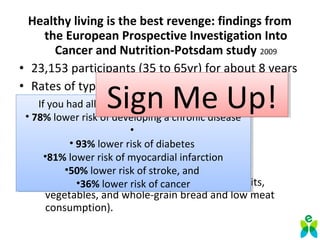
Healthy living is the best revenge: findings from
the European Prospective Investigation Into
Cancer and Nutrition-Potsdam study 2009
• 23,153 participants (35 to 65yr) for about 8 years
• Rates of type 2 diabetes mellitus, myocardial
infarction, stroke, and cancer
• 4 Variables:
– Never smoking
– BMI<30
– 3.5 h/wk or more of physical activity
– healthy dietary principles (high intake of fruits,
vegetables, and whole-grain bread and low meat
consumption).
If you had all 4 factors at baseline you had
• 78% lower risk of developing a chronic disease
•
• 93% lower risk of diabetes
•81% lower risk of myocardial infarction
•50% lower risk of stroke, and
•36% lower risk of cancer
If you had all 4 factors at baseline you had
• 78% lower risk of developing a chronic disease
•
• 93% lower risk of diabetes
•81% lower risk of myocardial infarction
•50% lower risk of stroke, and
•36% lower risk of cancer
Sign Me Up!Sign Me Up!
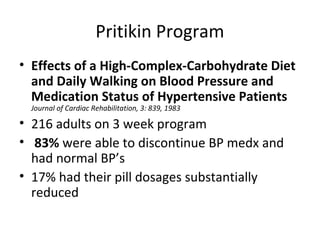
Pritikin Program
• Effects of a High-Complex-Carbohydrate Diet
and Daily Walking on Blood Pressure and
Medication Status of Hypertensive Patients
Journal of Cardiac Rehabilitation, 3: 839, 1983
• 216 adults on 3 week program
• 83% were able to discontinue BP medx and
had normal BP’s
• 17% had their pill dosages substantially
reduced
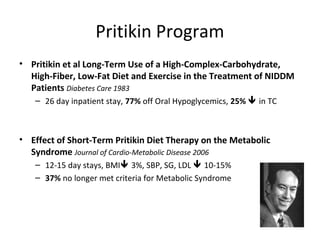
Pritikin Program
• Pritikin et al Long-Term Use of a High-Complex-Carbohydrate,
High-Fiber, Low-Fat Diet and Exercise in the Treatment of NIDDM
Patients Diabetes Care 1983
– 26 day inpatient stay, 77% off Oral Hypoglycemics, 25%  in TC
• Effect of Short-Term Pritikin Diet Therapy on the Metabolic
Syndrome Journal of Cardio-Metabolic Disease 2006
– 12-15 day stays, BMI 3%, SBP, SG, LDL  10-15%
– 37% no longer met criteria for Metabolic Syndrome
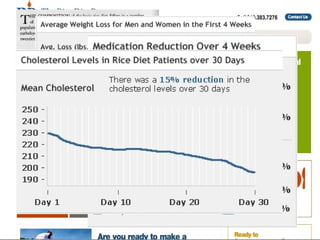
Duke Rice Diet Program
What we Know
Health Comes from
Healthy Living
Health Comes from
Healthy Living
We know
• Health Comes from Healthy Living
–MORE Color
–MORE Movement
– Reduce/Eliminate Toxins
– Spiritual/Emotional Well-Being
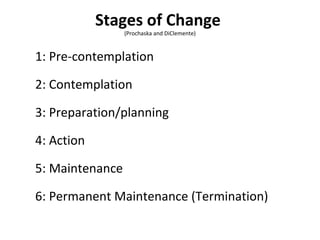
Stages of Change
(Prochaska and DiClemente)
1: Pre-contemplation
2: Contemplation
3: Preparation/planning
4: Action
5: Maintenance
6: Permanent Maintenance (Termination)
GROW
• Goals
• Reality today
• Options
• Will
Disease Prevention
Disease Reversal
Medication Reduction
Functional Improvements
Pain Reduction
Feeling Good
Weight Loss
Improved Energy
Longevity
Sexual Performance
Aesthetics
Disease Prevention
Disease Reversal
Medication Reduction
Functional Improvements
Pain Reduction
Feeling Good
Weight Loss
Improved Energy
Longevity
Sexual Performance
Aesthetics
Setting Goals
•Specific
•Measureable
•Achievable
•Realistic
•Timely
Conclusion
• Personal Choices are powerful Medicine
• Assess YOUR Health Today
• Identify your health goals
• Develop a support team
• Take charge of your health today!
Profound Simplicity
Thank You!
Stephan Esser MD, USPTA
Conclusion
You are the most powerful influence
in your health today, tomorrow and
for years to come!
Fingers
Feet
Forks
the
Master Levers of Health Destiny
Feet
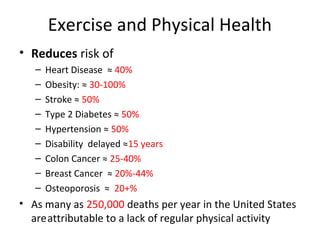
Exercise and Physical Health
• Reduces risk of
– Heart Disease ≈ 40%
– Obesity: ≈ 30-100%
– Stroke ≈ 50%
– Type 2 Diabetes ≈ 50%
– Hypertension ≈ 50%
– Disability delayed ≈15 years
– Colon Cancer ≈ 25-40%
– Breast Cancer ≈ 20%-44%
– Osteoporosis ≈ 20+%
• As many as 250,000 deaths per year in the United States
areattributable to a lack of regular physical activity
Exercise and Mental Health
• Regular Exercise:
– Reduces risk/severity of:
• Depression
• Anxiety
• ADD/ADHD
• Alzheimers Dementia
– Improves:
• Mental Clarity, test scores, focus
Exercise and Emotional Health
• Regular Exercise:
– Increases Self Confidence
– Teaches skills to manage adversity
– Enhances Self Esteem
– Develops Discipline
– Encourages Goal setting and self awareness
Exercise means pink spandex, going to a
gym, sweating with a bunch of people I
don’t even know or like!
Categories
• Leisure time Exercise: organized sports,
running, gym activities, rehabilitation etc.
• Lifestyle Exercise: activity incorporated into our
daily pattern of life
– eg: parking in the distant portion of the parking lot rather then the first
bumper, taking the stairs instead of the elevator etc.
Present Recommendations
• Cardiovascular:
– 150 minutes of moderate-intensity exercise per
week.
– 30-60 minutes of moderate-intensity exercise (five
days per week) or 20-60 minutes of vigorous-
intensity exercise (three days per week).
Present Recommendations
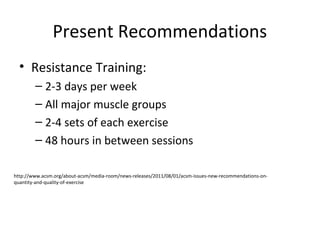
• Resistance Training:
– 2-3 days per week
– All major muscle groups
– 2-4 sets of each exercise
– 48 hours in between sessions
http://www.acsm.org/about-acsm/media-room/news-releases/2011/08/01/acsm-issues-new-recommendations-on-
quantity-and-quality-of-exercise
Present Recommendations
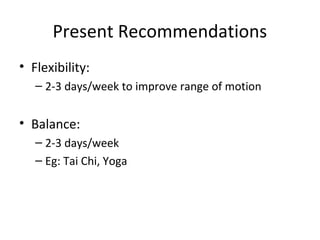
• Flexibility:
– 2-3 days/week to improve range of motion
• Balance:
– 2-3 days/week
– Eg: Tai Chi, Yoga
All Kinds
• People
• Programs
• Locations
• Products: Pedometers, Accelerometers etc
Intensity of Exercise
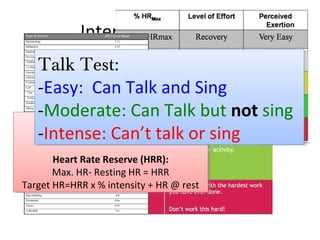
Maximal Heart Rate:
220-Age or 206.9-(0.67x age)
Heart Rate Reserve (HRR):
Max. HR- Resting HR = HRR
Target HR=HRR x % intensity + HR @ rest
Maximal Heart Rate:
220-Age or 206.9-(0.67x age)
Heart Rate Reserve (HRR):
Max. HR- Resting HR = HRR
Target HR=HRR x % intensity + HR @ rest
Talk Test:
-Easy: Can Talk and Sing
-Moderate: Can Talk but not sing
-Intense: Can’t talk or sing
Talk Test:
-Easy: Can Talk and Sing
-Moderate: Can Talk but not sing
-Intense: Can’t talk or sing
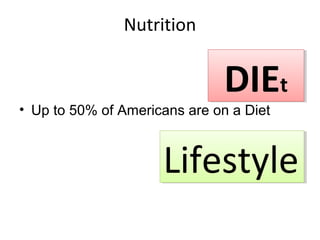
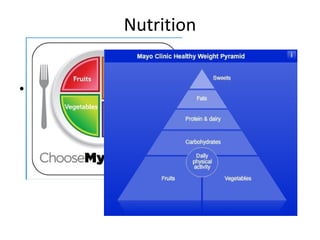
Nutrition
• Up to 50% of Americans are on a Diet
DIEtDIEt
LifestyleLifestyle
Nutrition
• Health Promoting Nutrition:
• Majority of Calories derived from Plant-Based
Sources
• Limited Calories from Refined Foods and
Foods of Animal Origins
Nutrition
Think more about Health and
less about Weight Loss
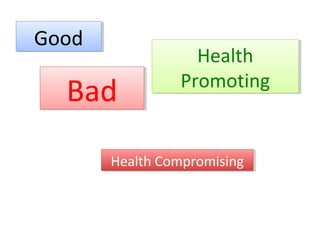
GoodGood
BadBad
Health
Promoting
Health
Promoting
Health CompromisingHealth Compromising
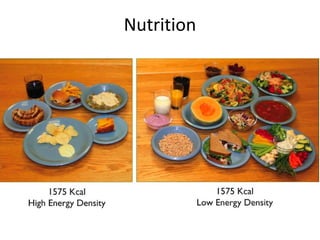
Nutrition
Think about Calorie Density
and less about individual
Calories
Toxins
• Get em’ out
• Get help if you need it
• You can do it
• You deserve it
Basics
• Physical Activity:
– Achieve 150 min of aerobic exercise and 2 sessions of
strength training per week
• Nutrition:
– Eat a high nutrient density program
– Limit/moderate lean meats, limit refined foods, fat,
sodium and cholesterol
• Eliminate Smoking and Limit Alcohol
Consumption
Now What?
Stages of Change
(Prochaska and DiClemente)
1: Pre-contemplation
2: Contemplation
3: Preparation/planning
4: Action
5: Maintenance
6: Permanent Maintenance (Termination)
GROW
• Goals
• Reality today
• Options
• Will
Setting Goals
•Specific
•Measureable
•Achievable
•Realistic
•Timely
Break Out: 4 minutes
• Set YOURSELF a SMART Goal for 1 Lifestyle
Measure and share it with your neighbor!
• Specific
• Measureable
• Achievable
• Realistic
• Timely
Exercise
Nutrition
Toxins
Sleep
Emotional
Poise(Stress)
Exercise
Nutrition
Toxins
Sleep
Emotional
Poise(Stress)
Conclusion
• Personal Choices are powerful Medicine
• Assess YOUR Health Today
• Identify your health goals
• Develop a support team
• Take charge of your health today!

Healthy, Wealthy and Wise 2018

  • 2.
    Healthy, Wealthy andWise Achieving your best Health in 2018 Stephan Esser MD, USPTA
  • 3.
    “Early to bedand early to rise, makes a man healthy and wealthy and wise; wise, healthy and wealthy!”
  • 4.
    Esser’s Health Ranch Dr WilliamEsser ND, DC 1911-2003
  • 6.
    • Your PersonalChoices may just be the most powerful influences of your health, today, tomorrow and for years to come
  • 7.
    Goals • Explore theHealth of America Today • Learn why what you do matters • Develop a plan of health for your life
  • 8.
  • 9.
    “A global responseto a global problem: the epidemic of overnutrition.” WHO It is estimated that by 2020 2/3rds of the global burden of disease will be attributable to chronic non-communicable diseases, most of them strongly associated with diet. The nutrition transition towards refined foods, foods of animal origin, and increased fats plays a major role in the current global epidemics of obesity, diabetes and cardiovascular diseases, among other non- communicable conditions. Sedentary lifestyles and the use of tobacco are also significant risk factors. …….. A concerted multi-sectoral approach, involving the use of policy, education and trade mechanisms, is necessary to address these matters.
  • 10.
  • 11.
    Leading Causes ofDeath in US
  • 12.
    Top Ten Causesof Death for Men in the United States
  • 13.
    “A global responseto a global problem: the epidemic of overnutrition.” WHO It is estimated that by 2020 2/3rds of the global burden of disease will be attributable to chronic non-communicable diseases, most of them strongly associated with diet. The nutrition transition towards refined foods, foods of animal origin, and increased fats plays a major role in the current global epidemics of obesity, diabetes and cardiovascular diseases, among other non- communicable conditions. Sedentary lifestyles and the use of tobacco are also significant risk factors. …….. A concerted multi-sectoral approach, involving the use of policy, education and trade mechanisms, is necessary to address these matters. DiabetesDiabetes High Blood PressureHigh Blood Pressure High CholesterolHigh Cholesterol Heart DiseaseHeart Disease ObesityObesity
  • 14.
    2 of 32of 3
  • 15.
    Associated Pathology • CVD: –Hypertension – Congestive Heart Failure – PVD – Impotence – Claudication • Endocrine: – Diabetes – PCOS – Hypothyroidism – Infertility • Orthopedics: – Osteoarthritis – AVN • Hepatic: – #1 cause of liver dz in US • Obstetrics: – Gestational DM – Macrosomia – Inc. C Section rate – Inc. Perinatal Morbidity – Inc. Pre/Eclampsia • Cancer: – Prostate – Colon – Breast – Endometrial – Renal Cell – Gallbladder – Esophageal Adeno. • Other: • Hyperuricemia, Pancreatitis, Gallstones, Sleep Apnea, Alzheimer’s, Dyslipidemia, Metabolic Syndrome
  • 17.
    Overweight ↑ riskof DM2 by 3 fold Obesity ↑ risk by 9 fold
  • 21.
  • 22.
    The Problem • HighBlood Pressure: – 1 in 3 adults 1:3 adults1:3 adults
  • 23.
  • 25.
    How did thisHappen?
  • 27.
    ↑39% Av. of 52tsp added sugar/person/day
  • 28.
    •IOM: (UL) for saltis 5.8 g/day > 95 percent US Males 31 - 50 > 75 percent of US females 31- 50 regularly in excess of the UL. < 2 g/day< 2 g/day
  • 29.
    Sodium < 2000mg Cholesterol < 200mg Sodium < 2000 mg Cholesterol < 200mg
  • 30.
    Sodium < 2000mg Cholesterol < 200mg Sodium < 2000 mg Cholesterol < 200mg
  • 33.
    Food Portion Cholesterol/mg VegetablesUnlimited 0 Fruits “ “ 0 Nuts “ “ 0 Seed “ “ 0 Grains “ “ 0 Milk (non-fat) 100g 2 Milk (whole) 100g 10 Butter 1 Tbs 31 Beef 100g 61 Salmon 100g 55 Chicken 100g 65 Shrimp 100g 126 Lobster 100g 127 Egg 100g 372 http://www.nal.usda.gov/fnic/foodcomp/search/
  • 34.
  • 35.
  • 36.
    Year Bee f Pork Total Red Meat Total Chicken TurkeyTotal Poultry Total Red meat and Poultry Commerci al Fish and Shellfish 1965 74.7 51.5 133.9 36.9 7.6 44.4 178.4 10.9 2000 67.5 50.8 120.2 77.4 17.3 94.7 214.8 15.2 2016 Prj. 55.0 49.2 105.3 91.4 16.2 107.6 213 NA As of 9/6/15
  • 37.
  • 38.
    8% from Fruits andVegetables 8% from Fruits and Vegetables ≈ 50% from Added fat/oil and processed flour ≈ 50% from Added fat/oil and processed flour
  • 39.
    Perspective • We eatmore – Sugar, Salt, Fat, Meat, Dairy – 1970-2018: • ↑ 24.5 % C/day ≈ 504K/day • We get less then ideal Physical Activity – 18.8% of adults achieved CDC reccs on Exercise – 10% of adults >65 y/o
  • 40.
    Michelangelo’s David: 12 month20 city tour of the US
  • 41.
    What we Know •Americans – Eat More – Exercise Less • 2018: – Obesity – Diabetes – Metabolic Syndrome – CV Disease
  • 42.
    HealthCare Spending =$2.7 trillion = 17.7% GDPHealthCare Spending = $2.7 trillion = 17.7% GDP
  • 44.
    Associated Pathology • CVD: –Hypertension – Congestive Heart Failure – PVD – Impotence – Claudication • Endocrine: – Diabetes – PCOS – Hypothyroidism – Infertility • Orthopedics: – Osteoarthritis – AVN • Hepatic: – #1 cause of liver dz in US • Obstetrics: – Gestational DM – Macrosomia – Inc. C Section rate – Inc. Perinatal Morbidity – Inc. Pre/Eclampsia • Cancer: – Prostate – Colon – Breast – Endometrial – Renal Cell – Gallbladder – Esophageal Adeno. • Other: • Hyperuricemia, Pancreatitis, Gallstones, Sleep Apnea, Alzheimer’s, Dyslipidemia, Metabolic Syndrome
  • 46.
    1: Essential Hypertension 7:Diabetes Mellitus 15/17: Heart Disease 1: Essential Hypertension 7: Diabetes Mellitus 15/17: Heart Disease Top 35 leading diagnosis groups at ambulatory care clinicsTop 35 leading diagnosis groups at ambulatory care clinics
  • 47.
    Number and rateof discharges from short stay hospitals 2009Number and rate of discharges from short stay hospitals 2009 2: Heart Disease 8: Strokes 11: Diabetes Mellitus 17: Essential Hypertension 2: Heart Disease 8: Strokes 11: Diabetes Mellitus 17: Essential Hypertension
  • 48.
    Admission Diagnosis toNursing Homes 2009Admission Diagnosis to Nursing Homes 2009 1: Disease of Circulatory System1: Disease of Circulatory System
  • 49.
  • 50.
    Can we ChangeHealth through Lifestyle Or are Genetics the end of the story?
  • 51.
    They did notdisplay their parent’s susceptibility to cancer and diabetes…. ……..the effects of the agouti gene had been virtually erased.
  • 52.
  • 54.
    “A global responseto a global problem: the epidemic of overnutrition.” WHO It is estimated that by 2020 2/3rds of the global burden of disease will be attributable to chronic noncommunicable diseases, most of them strongly associated with diet. The nutrition transition towards refined foods, foods of animal origin, and increased fats plays a major role in the current global epidemics of obesity, diabetes and cardiovascular diseases, among other noncommunicable conditions. Sedentary lifestyles and the use of tobacco are also significant risk factors. …….. A concerted multi-sectoral approach, involving the use of policy, education and trade mechanisms, is necessary to address these matters. ……if…….Lifestyle is the Problem ……if…….Lifestyle is the Problem What is the answer……..?What is the answer……..?
  • 55.
  • 56.
  • 57.
    • What if…….. –You ate MOREfruits, vegetables, unprocessed whole grains, nuts, seeds and beans? – You ate LESS foods of animal origin (meat, dairy, fish) and processed foods – You reduced Toxic exposures – You exercised daily
  • 59.
    12 year CohortStudy 1507 men 832 Women Ages 70-90 years Outcomes: 10 yr all cause mortality 4 Factors: More plants, Moderate EtOH, physical exercise and non-smoking were ass. w ↓ in ACM 50% ↓ in all-cause and cause specific mortality
  • 60.
    “Not only dopersons with better health habits survive longer, but in such persons, disability is postponed and compressed into fewer years at the end of life.” Vita, AJ et al. NEJM 1998; 338:1035-1041
  • 61.
    Finnish Diabetes PreventionTrial Total 522: 172M 350W Av. age 55 Av. BMI 31 Randomized to standard of care or individualized lifestyle counseling Av. f/u 3.2 yrs Risk of Diabetes ↓ 58 % (P<0.001) N Engl J Med 2001;344:1343-50 “The reduction in the incidence of diabetes was directly associated with changes in lifestyle”
  • 63.
    The calorically restrictedlow-fat nutrient-dense diet in Biosphere 2 significantly lowers blood glucose, total leukocyte count, cholesterol, and blood pressure in humans PNAS December 1, 1992 vol. 89 no. 23 11533-11537 • Biosphere 2 is a 3.15-acre space containing an ecosystem that is energetically open (sunlight, electric power, and heat) but materially closed, with air, water, and organic material being recycled. Since September 1991, eight subjects (four women and four men) have been sealed inside, living on food crops grown within. Their diet, low in calories (average, 1780 kcal/day; 1 kcal = 4.184 kJ), low in fat (10% of calories), and nutrient-dense, conforms to that which in numerous animal experiments has promoted health, retarded aging, and extended maximum life span. We report here medical data on the eight subjects, comparing preclosure data with data through 6 months of closure. Significant changes included: (i) weight, 74 to 62 kg (men) and 61 to 54 kg (women); (ii) mean systolic/diastolic blood pressure (eight subjects), 109/74 to 89/58 mmHg (1 mmHg = 133 Pa); (iii) total serum cholesterol, from 191 +/- 11 to 123 +/- 9 mg/dl (mean +/- SD; 36% mean reduction), and high density lipoprotein, from 62 +/- 8 to 38 +/- 5 (risk ratio unchanged); (iv) triglyceride, 139 to 96 mg/dl (men) and 114 to 78 mg/dl (women); (v) fasting glucose, 92 to 74 mg/dl; (vi) leukocyte count, 6.7 to 4.7 x 10(9) cells per liter. We conclude that drastic reductions in cholesterol and blood pressure may be instituted in normal individuals in Western countries by application of a carefully chosen diet and that a low-calorie nutrient-dense regime shows physiologic features in humans similar to those in other animal species.

  • 64.
    Healthy living isthe best revenge: findings from the European Prospective Investigation Into Cancer and Nutrition-Potsdam study 2009 • 23,153 participants (35 to 65yr) for about 8 years • Rates of type 2 diabetes mellitus, myocardial infarction, stroke, and cancer • 4 Variables: – Never smoking – BMI<30 – 3.5 h/wk or more of physical activity – healthy dietary principles (high intake of fruits, vegetables, and whole-grain bread and low meat consumption). If you had all 4 factors at baseline you had • 78% lower risk of developing a chronic disease • • 93% lower risk of diabetes •81% lower risk of myocardial infarction •50% lower risk of stroke, and •36% lower risk of cancer If you had all 4 factors at baseline you had • 78% lower risk of developing a chronic disease • • 93% lower risk of diabetes •81% lower risk of myocardial infarction •50% lower risk of stroke, and •36% lower risk of cancer Sign Me Up!Sign Me Up!
  • 65.
    Pritikin Program • Effectsof a High-Complex-Carbohydrate Diet and Daily Walking on Blood Pressure and Medication Status of Hypertensive Patients Journal of Cardiac Rehabilitation, 3: 839, 1983 • 216 adults on 3 week program • 83% were able to discontinue BP medx and had normal BP’s • 17% had their pill dosages substantially reduced
  • 66.
    Pritikin Program • Pritikinet al Long-Term Use of a High-Complex-Carbohydrate, High-Fiber, Low-Fat Diet and Exercise in the Treatment of NIDDM Patients Diabetes Care 1983 – 26 day inpatient stay, 77% off Oral Hypoglycemics, 25%  in TC • Effect of Short-Term Pritikin Diet Therapy on the Metabolic Syndrome Journal of Cardio-Metabolic Disease 2006 – 12-15 day stays, BMI 3%, SBP, SG, LDL  10-15% – 37% no longer met criteria for Metabolic Syndrome
  • 67.
  • 68.
    What we Know HealthComes from Healthy Living Health Comes from Healthy Living
  • 69.
    We know • HealthComes from Healthy Living –MORE Color –MORE Movement – Reduce/Eliminate Toxins – Spiritual/Emotional Well-Being
  • 70.
    Stages of Change (Prochaskaand DiClemente) 1: Pre-contemplation 2: Contemplation 3: Preparation/planning 4: Action 5: Maintenance 6: Permanent Maintenance (Termination)
  • 71.
    GROW • Goals • Realitytoday • Options • Will Disease Prevention Disease Reversal Medication Reduction Functional Improvements Pain Reduction Feeling Good Weight Loss Improved Energy Longevity Sexual Performance Aesthetics Disease Prevention Disease Reversal Medication Reduction Functional Improvements Pain Reduction Feeling Good Weight Loss Improved Energy Longevity Sexual Performance Aesthetics
  • 72.
  • 73.
    Conclusion • Personal Choicesare powerful Medicine • Assess YOUR Health Today • Identify your health goals • Develop a support team • Take charge of your health today!
  • 74.
  • 75.
  • 76.
    Conclusion You are themost powerful influence in your health today, tomorrow and for years to come!
  • 77.
  • 78.
  • 79.
    Exercise and PhysicalHealth • Reduces risk of – Heart Disease ≈ 40% – Obesity: ≈ 30-100% – Stroke ≈ 50% – Type 2 Diabetes ≈ 50% – Hypertension ≈ 50% – Disability delayed ≈15 years – Colon Cancer ≈ 25-40% – Breast Cancer ≈ 20%-44% – Osteoporosis ≈ 20+% • As many as 250,000 deaths per year in the United States areattributable to a lack of regular physical activity
  • 80.
    Exercise and MentalHealth • Regular Exercise: – Reduces risk/severity of: • Depression • Anxiety • ADD/ADHD • Alzheimers Dementia – Improves: • Mental Clarity, test scores, focus
  • 81.
    Exercise and EmotionalHealth • Regular Exercise: – Increases Self Confidence – Teaches skills to manage adversity – Enhances Self Esteem – Develops Discipline – Encourages Goal setting and self awareness
  • 82.
    Exercise means pinkspandex, going to a gym, sweating with a bunch of people I don’t even know or like!
  • 84.
    Categories • Leisure timeExercise: organized sports, running, gym activities, rehabilitation etc. • Lifestyle Exercise: activity incorporated into our daily pattern of life – eg: parking in the distant portion of the parking lot rather then the first bumper, taking the stairs instead of the elevator etc.
  • 85.
    Present Recommendations • Cardiovascular: –150 minutes of moderate-intensity exercise per week. – 30-60 minutes of moderate-intensity exercise (five days per week) or 20-60 minutes of vigorous- intensity exercise (three days per week).
  • 86.
    Present Recommendations • ResistanceTraining: – 2-3 days per week – All major muscle groups – 2-4 sets of each exercise – 48 hours in between sessions http://www.acsm.org/about-acsm/media-room/news-releases/2011/08/01/acsm-issues-new-recommendations-on- quantity-and-quality-of-exercise
  • 87.
    Present Recommendations • Flexibility: –2-3 days/week to improve range of motion • Balance: – 2-3 days/week – Eg: Tai Chi, Yoga
  • 88.
    All Kinds • People •Programs • Locations • Products: Pedometers, Accelerometers etc
  • 89.
    Intensity of Exercise MaximalHeart Rate: 220-Age or 206.9-(0.67x age) Heart Rate Reserve (HRR): Max. HR- Resting HR = HRR Target HR=HRR x % intensity + HR @ rest Maximal Heart Rate: 220-Age or 206.9-(0.67x age) Heart Rate Reserve (HRR): Max. HR- Resting HR = HRR Target HR=HRR x % intensity + HR @ rest Talk Test: -Easy: Can Talk and Sing -Moderate: Can Talk but not sing -Intense: Can’t talk or sing Talk Test: -Easy: Can Talk and Sing -Moderate: Can Talk but not sing -Intense: Can’t talk or sing
  • 90.
    Nutrition • Up to50% of Americans are on a Diet DIEtDIEt LifestyleLifestyle
  • 91.
    Nutrition • Health PromotingNutrition: • Majority of Calories derived from Plant-Based Sources • Limited Calories from Refined Foods and Foods of Animal Origins
  • 92.
    Nutrition Think more aboutHealth and less about Weight Loss
  • 93.
  • 94.
    Nutrition Think about CalorieDensity and less about individual Calories
  • 95.
    Toxins • Get em’out • Get help if you need it • You can do it • You deserve it
  • 96.
    Basics • Physical Activity: –Achieve 150 min of aerobic exercise and 2 sessions of strength training per week • Nutrition: – Eat a high nutrient density program – Limit/moderate lean meats, limit refined foods, fat, sodium and cholesterol • Eliminate Smoking and Limit Alcohol Consumption
  • 97.
  • 98.
    Stages of Change (Prochaskaand DiClemente) 1: Pre-contemplation 2: Contemplation 3: Preparation/planning 4: Action 5: Maintenance 6: Permanent Maintenance (Termination)
  • 99.
    GROW • Goals • Realitytoday • Options • Will
  • 100.
  • 101.
    Break Out: 4minutes • Set YOURSELF a SMART Goal for 1 Lifestyle Measure and share it with your neighbor! • Specific • Measureable • Achievable • Realistic • Timely Exercise Nutrition Toxins Sleep Emotional Poise(Stress) Exercise Nutrition Toxins Sleep Emotional Poise(Stress)
  • 102.
    Conclusion • Personal Choicesare powerful Medicine • Assess YOUR Health Today • Identify your health goals • Develop a support team • Take charge of your health today!

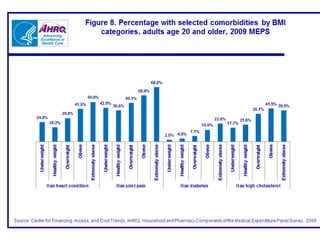
Editor's Notes

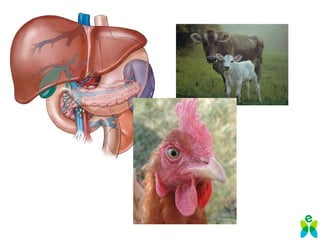
  • #6 http://webmoneymaker.net/wp-content/uploads/2011/11/Make-Money-online.jpg http://www.cosmosmagazine.com/files/imagecache/news/files/news/smoking_090210_0.jpg
  • #10 -- Bull World Health Organ. 2002;80(12):952-8. Epub 2003 Jan 23. Chopra M et al
  • #11 Approx. 1,300,000 new cases per year www.cdc.gov/.../mmwrhtml/ figures/m846qsf.gif www.ncbi.nlm.nih.gov/ bookshelf/picrender.fcgi.. http://www.ctahr.hawaii.edu/CS/blogs/sustainable_agriculture/cdc_logo(2).jpg
  • #12 Modifiable behavioral risk factors are leading causes of mortality in the United States. (JAMA, 2000 Mokdad et al. CDC) www.cdc.gov/cancer/ breast/statistics/ http://www.cdc.gov/cancer/Prostate/publications/decisionguide/
  • #13 www.cdc.gov/cancer/ breast/statistics/ http://www.cdc.gov/cancer/Prostate/publications/decisionguide/
  • #14 -- Bull World Health Organ. 2002;80(12):952-8. Epub 2003 Jan 23. Chopra M et al
  • #15 --http://www.cdc.gov/nccdphp/publications/factsheets/Prevention/pdf/obesity.pdf --http://www.cdc.gov/nccdphp/publications/factsheets/Prevention/obesity.htm
  • #16 --http://www.cdc.gov/nccdphp/publications/factsheets/Prevention/pdf/obesity.pdf
  • #18 Fox, Caroline. Et al. Trends in the Incidence of Type 2 Diabetes Mellitus: Circulation 2006:113;2914-2918.
  • #19 http://health.ucsd.edu/news/images/DPP1.jpg
  • #22 In 2005-2008 11% of adults 20 years of age or older had diabetes. In 2005-2008 the percentage of adults with dm increased with age from 4% of persons 20-44 to 27% of adults 65 years of age or older http://meps.ahrq.gov/mepsweb/ Medical Expenditure Panel survey
  • #23 http://www.heart.org/idc/groups/heart-public/@wcm/@sop/@smd/documents/downloadable/ucm_319587.pdf The prevalence of hypertension (defined as high blood pressure or taking antihypertensive medication) increases with age. In 2005–2008, 33%–34% of men and women 45–54 years of age had hypertension, compared with 67% of men and 80% of women 75 years of age and over (Table 67).
  • #24 http://www.cdc.gov/nchs/data/databriefs/db92_fig1.png
  • #25 http://sas-origin.onstreammedia.com/origin/gallupinc/GallupSpaces/Production/Cms/POLL/yxirhsg6pe-ttjvtlo_uuq.gif These findings are based on 24 months of Gallup-Healthways Well-Being Index daily tracking data from 2009 through 2010, encompassing surveys with more than 650,000 U.S. adults, aged 18 and older. The resulting sample sizes for every age from 18 through 90 -- ranging from roughly 1,500 to 18,000 cases -- allow for age-specific analysis of the data.
  • #28 --http://www.ers.usda.gov/briefing/consumption/Effects.htm now 129.2
  • #29 --IOM rec on Na: AI 1.5g/d UL 2.3g/d --http://www.cspinet.org/ --http://www.ama-assn.org/ama/pub/category/16461.html -- http://www.iom.edu/?id=18495&amp;redirect=0 -- Dr. Heikki Karppanen of the University of Helsinki and Dr. Eero Mervaala of the University of Kuopio report that an average 30-35 % reduction in salt intake during 30 years in Finland was associated with a dramatic 75 % to 80 % decrease in both stroke and coronary heart disease mortality in the population under 65 years. During the same period the life expectancy of both male and female Finns increased by 6 to 7 years.The most powerful explaining factor for the favorable changes was the more than 10 mmHg (&amp;quot;point&amp;quot;) decrease in the average blood pressure of the population. A marked decrease in the average cholesterol levels of the population also remarkably contributed to the decrease of heart diseases. The extensive use of drugs contributed less than 10 % of the observed decreases in blood pressure, cholesterol, and cardiovascular diseases. --http://www.iom.edu/Object.File/Master/20/004/0.pdf http://fnic.nal.usda.gov/nal_display/index.php?info_center=4&amp;tax_level=3&amp;tax_subject=256&amp;topic_id=1342&amp;level3_id=5140
  • #31 Panera Ham, Egg and Cheese Sandwich Olive Garden Chicken Parmigian Season 52 Cedar Plan Salmon
  • #35 USDA Data
  • #36 --http://www.ers.usda.gov/publications/foodreview/jan1996/frjan96a.pdf
  • #37 http://www.nationalchickencouncil.org/about-the-industry/statistics/per-capita-consumption-of-poultry-and-livestock-1965-to-estimated-2012-in-pounds/
  • #38 2012 Data total up to 603 lb of dairy per person per year
  • #39 http://xe9.xanga.com/05df647715d32268783403/m214397325.jpg http://www.ers.usda.gov/Publications/EIB33/EIB33_Reportsummary.pdf Daily calories per capita per food group 2569:
  • #41 http://static.howstuffworks.com/gif/michelangelo-1.jpg
  • #43 http://pnhp.org/blog/2011/07/28/national-health-expenditures-in-2011-and-2020/ http://meps.ahrq.gov/mepsweb/data_files/publications/cb11/cb11.shtml
  • #44 http://meps.ahrq.gov/mepsweb/data_files/publications/st359/stat359.shtml
  • #45 --http://www.cdc.gov/nccdphp/publications/factsheets/Prevention/pdf/obesity.pdf
  • #46 http://meps.ahrq.gov/mepsweb/data_files/publications/st359/stat359.shtml
  • #47 http://www.cdc.gov/nchs/data/series/sr_13/sr13_169.pdf
  • #48 http://www.cdc.gov/nchs/data/nhds/2average/2009ave2_firstlist.pdf Heart Disease misses the #1 spot by 12 births
  • #49 http://www.cdc.gov/nchs/data/nnhsd/Estimates/nnhs/Estimates_Diagnoses_Tables.pdf#Table33b
  • #52 Agouti = defect in alpha melanocyte stimulating hormone a secondary molecule increased by increasing leptin levels. Early nutrition can influence DNA methylation because mammalian one-carbon metabolism, which ultimately provides the methyl groups for all biological methylation reactions, is highly dependent on dietary methyl donors and cofactors.[21] For example, dietary methionine and choline are major sources of one-carbon units, and folic acid, vitamin B12, and pyridoxal phosphate are critical cofactors in methyl metabolism. The genome of the preimplantation mammalian embryo undergoes extensive demethylation, and appropriate patterns of cytosine methylation are re-established after implantation.[4] These DNA methylation patterns must then be maintained over many rounds of rapid cellular proliferation during fetal and early postnatal development. Availability of dietary methyl donors and cofactors during critical ontogenic periods therefore might influence DNA methylation patterns. [10 and 16] Hence, early methyl donor malnutrition (i.e., overnutrition or undernutrition) could effectively lead to premature “epigenetic aging,” [22] thereby contributing to an enhanced susceptibility to chronic disease in later life. Vitamin B12, choline, Vitamin B6
  • #53 Gila Reservation Arizona Maycoba, Mexico
  • #54 Nauru World’s smallest island country just 8.s sq miles 95% are overweight/obese and 50% have diabetes
  • #60 Mediterranean diet, lifestyle factors, and 10-year mortality in elderly European men and women: the HALE project.
  • #61 --compression-of-morbidity hypothesis predicts that the age at the time of initial disability will increase more than the gain in longevity, resulting in fewer years of disability and a lower level of cumulative lifetime disability.
  • #62 --FDDP (N Engl J Med 2001;344:1343-50.) 150 min/wk of exercise, Low fat, low cholesterol plant based diet, high fiber foods
  • #73 SpecificWell definedClear to anyone that has a basic knowledge of the project MeasurableKnow if the goal is obtainable and how far away completion is Know when it has been achievedAgreed UponAgreement with all the stakeholders what the goals should be RealisticWithin the availability of resources, knowledge and time Time BasedEnough time to achieve the goalNot too much time, which can affect project performance
  • #80 (Journal of the American Medical AssociationJAMA: 2000, Vol. 283. No. 22, pp. 2961-2967) http://www.news.harvard.edu/gazette/1999/10.21/diabetes.html http://www.reuters.com/article/healthNews/idUSTRE53E71N20090415?feedType=RSS&amp;feedName=healthNews http://www.nature.com/bjc/index.html http://www.ncbi.nlm.nih.gov/pubmed/18599492?ordinalpos=18&amp;itool=EntrezSystem2.PEntrez.Pubmed.Pubmed_ResultsPanel.Pubmed_DefaultReportPanel.Pubmed_RVDocSum
  • #81 In fact in studies regular exercise has been proven as effective as antidepressants and anxiolytics in controlling mild-moderate depression
  • #90 Must be high enough to actually see gains Studies demonstrate must at least be at 40% of max to see increases in cardiovascular endurance….. Moderate intensity is 64-76% of HR max http://www.mehn.org.au/images/stories/mehn/Ex_RPE_Scale.jpg http://lh4.ggpht.com/_hbZ_aIisSu8/Sj4dT9_2kPI/AAAAAAAAAbo/r-Hmqox_oJs/Table_thumb.jpg http://www.cvtoolbox.com/cvtoolbox1/exercise/supports/Exercise_METS.gif
  • #91 --http://www.cdc.gov/nccdphp/publications/factsheets/Prevention/obesity.htm --http://www.nhlbi.nih.gov/health/prof/heart/hbp/salt_upd.pdf --http://www.nhlbi.nih.gov/health/prof/heart/hbp/salt_upd.pdf --http://www.usatoday.com/news/health/2008-02-10-salt-dangers_N.htm --Intersalt Cooperative Research Group (1988). Intersalt: an international study of electrolyte excretion and blood pressure. Results for 24 hour urinary sodium and potassium excretion. BMJ. 297: 319–328. --The contradictory nature of these findings accords with the unreliability of the methods used in NHANES III and IV (ie, 24-h dietary recall). Twenty-four-hour urinary sodium from complete urine samples is the only accurate way to estimate dietary salt intake, and this was not measured in NHANES III and IV. The large international study—INTERSALT,2 which had 24-h urinary sodium and BP measured, showed that salt intake is directly associated with BP and the increase in BP with age in more than 10,000 individuals including both hypertensives and normotensives. -- --http://www.nhlbi.nih.gov/new/press/nov30a99.htm --Healthy adults living in a temperate climate can maintain a normal sodium balance with as little as 115 mg of dietary sodium per day. In consideration of the wide variation in Americans’ physical activity and climatic exposure, a safe minimum of 500 mg of sodium per day has been recommended.
  • #92 --http://www.cdc.gov/nccdphp/publications/factsheets/Prevention/obesity.htm --http://www.nhlbi.nih.gov/health/prof/heart/hbp/salt_upd.pdf --http://www.nhlbi.nih.gov/health/prof/heart/hbp/salt_upd.pdf --http://www.usatoday.com/news/health/2008-02-10-salt-dangers_N.htm --Intersalt Cooperative Research Group (1988). Intersalt: an international study of electrolyte excretion and blood pressure. Results for 24 hour urinary sodium and potassium excretion. BMJ. 297: 319–328. --The contradictory nature of these findings accords with the unreliability of the methods used in NHANES III and IV (ie, 24-h dietary recall). Twenty-four-hour urinary sodium from complete urine samples is the only accurate way to estimate dietary salt intake, and this was not measured in NHANES III and IV. The large international study—INTERSALT,2 which had 24-h urinary sodium and BP measured, showed that salt intake is directly associated with BP and the increase in BP with age in more than 10,000 individuals including both hypertensives and normotensives. -- --http://www.nhlbi.nih.gov/new/press/nov30a99.htm --Healthy adults living in a temperate climate can maintain a normal sodium balance with as little as 115 mg of dietary sodium per day. In consideration of the wide variation in Americans’ physical activity and climatic exposure, a safe minimum of 500 mg of sodium per day has been recommended.
  • #93 --http://www.cdc.gov/nccdphp/publications/factsheets/Prevention/obesity.htm --http://www.nhlbi.nih.gov/health/prof/heart/hbp/salt_upd.pdf --http://www.nhlbi.nih.gov/health/prof/heart/hbp/salt_upd.pdf --http://www.usatoday.com/news/health/2008-02-10-salt-dangers_N.htm --Intersalt Cooperative Research Group (1988). Intersalt: an international study of electrolyte excretion and blood pressure. Results for 24 hour urinary sodium and potassium excretion. BMJ. 297: 319–328. --The contradictory nature of these findings accords with the unreliability of the methods used in NHANES III and IV (ie, 24-h dietary recall). Twenty-four-hour urinary sodium from complete urine samples is the only accurate way to estimate dietary salt intake, and this was not measured in NHANES III and IV. The large international study—INTERSALT,2 which had 24-h urinary sodium and BP measured, showed that salt intake is directly associated with BP and the increase in BP with age in more than 10,000 individuals including both hypertensives and normotensives. -- --http://www.nhlbi.nih.gov/new/press/nov30a99.htm --Healthy adults living in a temperate climate can maintain a normal sodium balance with as little as 115 mg of dietary sodium per day. In consideration of the wide variation in Americans’ physical activity and climatic exposure, a safe minimum of 500 mg of sodium per day has been recommended.
  • #95 --http://www.cdc.gov/nccdphp/publications/factsheets/Prevention/obesity.htm --http://www.nhlbi.nih.gov/health/prof/heart/hbp/salt_upd.pdf --http://www.nhlbi.nih.gov/health/prof/heart/hbp/salt_upd.pdf --http://www.usatoday.com/news/health/2008-02-10-salt-dangers_N.htm --Intersalt Cooperative Research Group (1988). Intersalt: an international study of electrolyte excretion and blood pressure. Results for 24 hour urinary sodium and potassium excretion. BMJ. 297: 319–328. --The contradictory nature of these findings accords with the unreliability of the methods used in NHANES III and IV (ie, 24-h dietary recall). Twenty-four-hour urinary sodium from complete urine samples is the only accurate way to estimate dietary salt intake, and this was not measured in NHANES III and IV. The large international study—INTERSALT,2 which had 24-h urinary sodium and BP measured, showed that salt intake is directly associated with BP and the increase in BP with age in more than 10,000 individuals including both hypertensives and normotensives. -- --http://www.nhlbi.nih.gov/new/press/nov30a99.htm --Healthy adults living in a temperate climate can maintain a normal sodium balance with as little as 115 mg of dietary sodium per day. In consideration of the wide variation in Americans’ physical activity and climatic exposure, a safe minimum of 500 mg of sodium per day has been recommended.
  • #101 SpecificWell definedClear to anyone that has a basic knowledge of the project MeasurableKnow if the goal is obtainable and how far away completion is Know when it has been achievedAgreed UponAgreement with all the stakeholders what the goals should be RealisticWithin the availability of resources, knowledge and time Time BasedEnough time to achieve the goalNot too much time, which can affect project performance