Health Consumerism
What is a Consumer
• A consumer is
the one that
buys goods,
products or
services
What is Consumer’s Health?
• It is the wise
selection of
products,
agencies and
goods.
Sources of Information
• 1. Family and Friends
• 2. Advertisements and Commercials
• 3. Labels and Directions
• 4. Folklore
• 5. Testimonials
• 6. Mass Media
Types of Advertisement Techniques
• 1. Testimonial Appeal-
Product, services and
goods are endorsed by
popular people
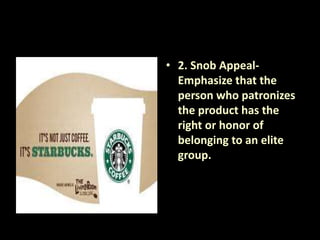
• 2. Snob Appeal-
Emphasize that the
person who patronizes
the product has the
right or honor of
belonging to an elite
group.
• 3. Bandwagon Appeal-
It shows people that
everyone is using a the
product. It drives you
not to be left out.
• 4. False Image Appeal-
An improved lifestyle
and lavishness in life is
achieved if the product
is used.
5. Humor Appeal- Use of
enjoyable songs or jingle,
slogans and pictures that
delivers the message.
• 6. Reward Appeal-
Buying the product
results to a prize or
bonus.
• 7. Scientific Evidence-
The product is a result
of research and
testimonials by people
in the field of medicine.
• 8. Flattery- It tries to
convince you to buy a
product by means of
compliments.
Rights of the Consumer
• 1. Right to Basic Needs-
The consumers have
the right for safety,
sufficient food,
dwelling place, care for
health, education and
cleanliness.
• 2. Right to Safety- It is
the protection against
purchase of products
that are dangerous to
health.
• 3. Right for
Information- It is the
right against deceptive
advertisements.
• 4. Right to Choice- The
consumer has the right
to choose products and
services at fair price
and high quality.
• 5. Right to
Representation- Right
of the consumer to
express interest in
practicing government
regulations.
• 6. Right to Redress-
Right of the consumer
to complain about the
poor quality of the
product.
• 7. Consumer Education-
Right to have
knowledge and skills
needed to be a wise
consumer.
• 8. Healthy
Environment- Right to
live and work in an
environment where
there is no danger.
Responsibility of a Consumer
• 1. Critical Awareness-
responsibility of being
more alert and critical
about prices of goods
and services.
• 2. Action-
Responsilbility to assert
ourselves and act to
ensure that we get a
fair deal.
• 3. Social Concern-
Being aware of the
impact of consumption
on other citizens.
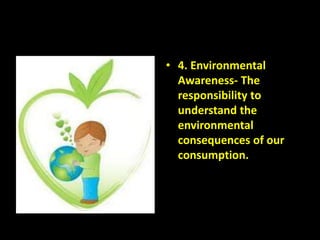
• 4. Environmental
Awareness- The
responsibility to
understand the
environmental
consequences of our
consumption.
• 5. Solidarity-
Responsibility to
organize together as
consumers and develop
strength and influence
to promote and protect
our interest.
Assignment
• Define the following Terms.
• 1. Faddism
• 2. Quackery
• 3. Superstitions
• 4. Fallacy
• 5. Fraud

Health consumerism

  • 1.
  • 2.
    What is aConsumer • A consumer is the one that buys goods, products or services
  • 3.
    What is Consumer’sHealth? • It is the wise selection of products, agencies and goods.
  • 4.
    Sources of Information •1. Family and Friends • 2. Advertisements and Commercials • 3. Labels and Directions • 4. Folklore • 5. Testimonials • 6. Mass Media
  • 5.
    Types of AdvertisementTechniques • 1. Testimonial Appeal- Product, services and goods are endorsed by popular people
  • 6.
    • 2. SnobAppeal- Emphasize that the person who patronizes the product has the right or honor of belonging to an elite group.
  • 7.
    • 3. BandwagonAppeal- It shows people that everyone is using a the product. It drives you not to be left out.
  • 8.
    • 4. FalseImage Appeal- An improved lifestyle and lavishness in life is achieved if the product is used.
  • 9.
    5. Humor Appeal-Use of enjoyable songs or jingle, slogans and pictures that delivers the message.
  • 10.
    • 6. RewardAppeal- Buying the product results to a prize or bonus.
  • 11.
    • 7. ScientificEvidence- The product is a result of research and testimonials by people in the field of medicine.
  • 12.
    • 8. Flattery-It tries to convince you to buy a product by means of compliments.
  • 13.
    Rights of theConsumer
  • 14.
    • 1. Rightto Basic Needs- The consumers have the right for safety, sufficient food, dwelling place, care for health, education and cleanliness.
  • 15.
    • 2. Rightto Safety- It is the protection against purchase of products that are dangerous to health.
  • 16.
    • 3. Rightfor Information- It is the right against deceptive advertisements.
  • 17.
    • 4. Rightto Choice- The consumer has the right to choose products and services at fair price and high quality.
  • 18.
    • 5. Rightto Representation- Right of the consumer to express interest in practicing government regulations.
  • 19.
    • 6. Rightto Redress- Right of the consumer to complain about the poor quality of the product.
  • 20.
    • 7. ConsumerEducation- Right to have knowledge and skills needed to be a wise consumer.
  • 21.
    • 8. Healthy Environment-Right to live and work in an environment where there is no danger.
  • 22.
  • 23.
    • 1. CriticalAwareness- responsibility of being more alert and critical about prices of goods and services.
  • 24.
    • 2. Action- Responsilbilityto assert ourselves and act to ensure that we get a fair deal.
  • 25.
    • 3. SocialConcern- Being aware of the impact of consumption on other citizens.
  • 26.
    • 4. Environmental Awareness-The responsibility to understand the environmental consequences of our consumption.
  • 27.
    • 5. Solidarity- Responsibilityto organize together as consumers and develop strength and influence to promote and protect our interest.
  • 28.
    Assignment • Define thefollowing Terms. • 1. Faddism • 2. Quackery • 3. Superstitions • 4. Fallacy • 5. Fraud