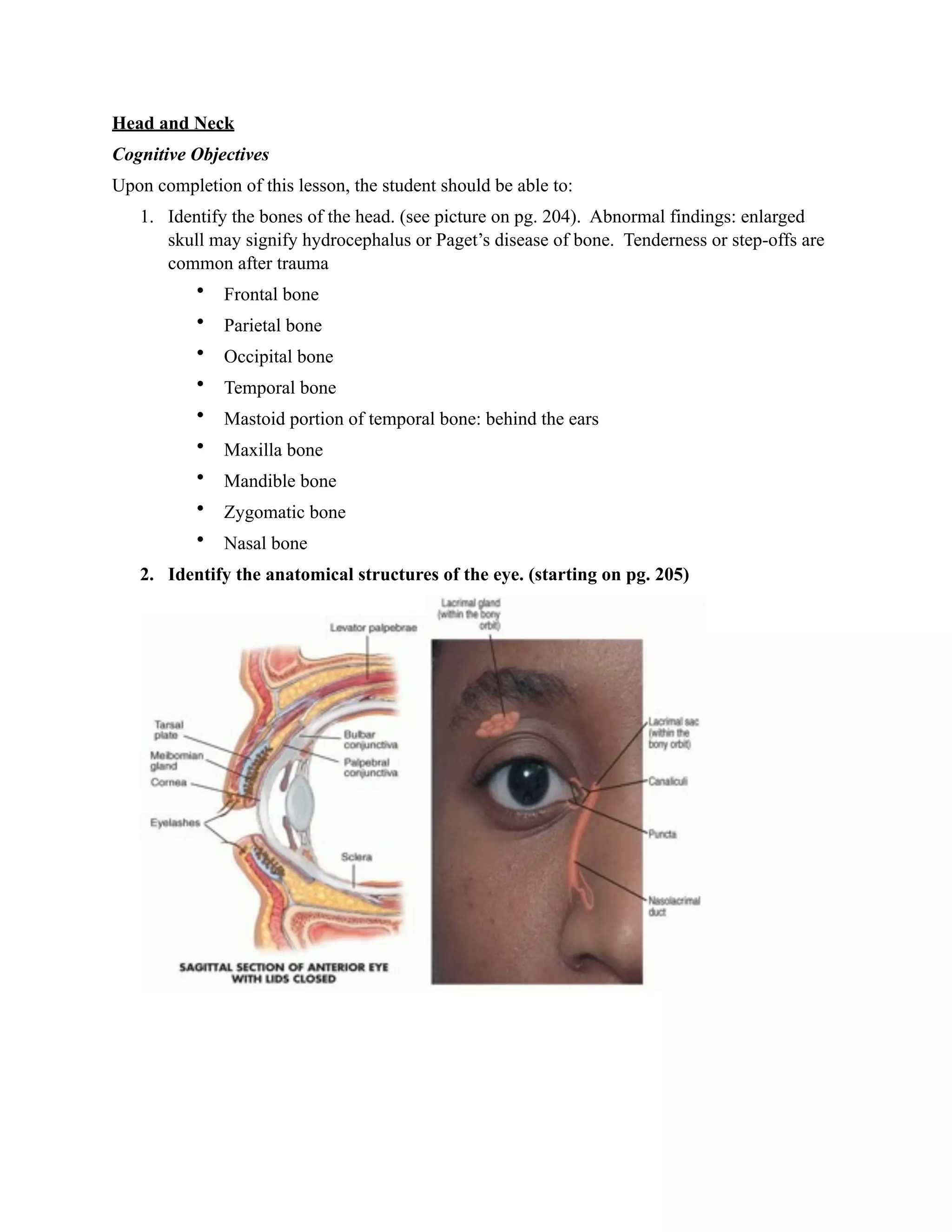
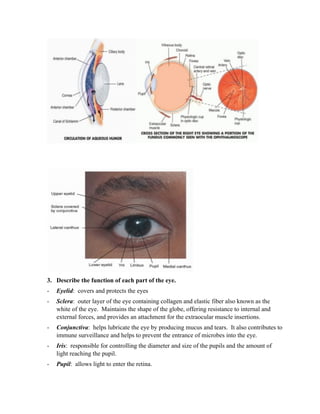
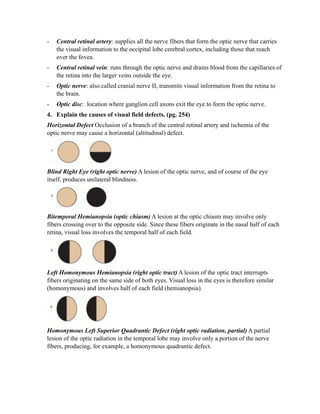
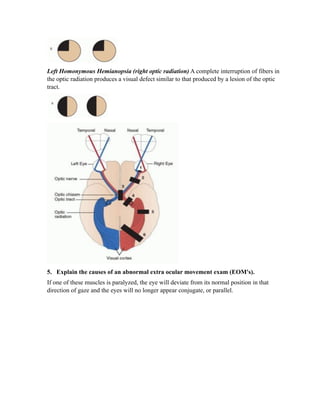
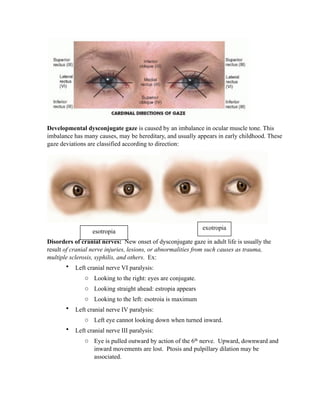
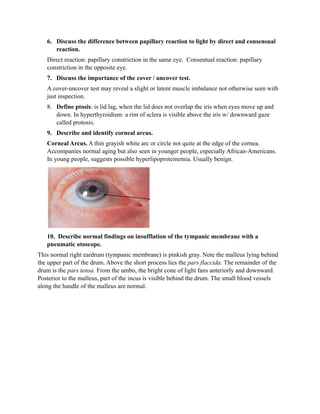
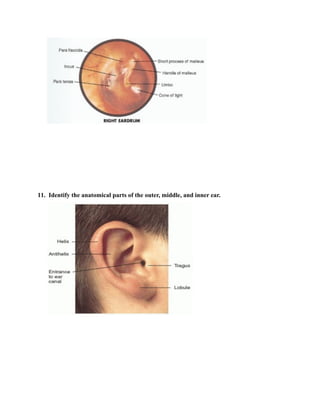
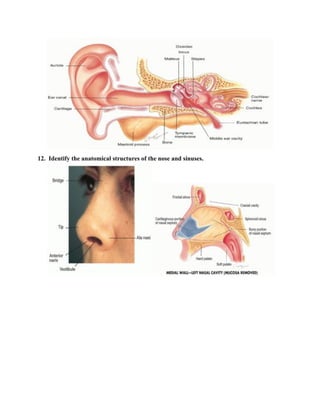
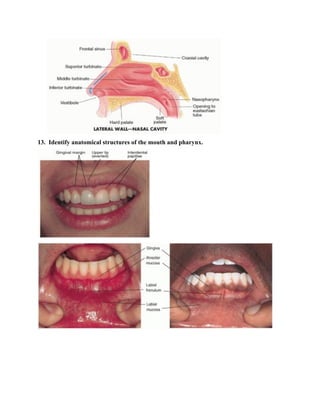
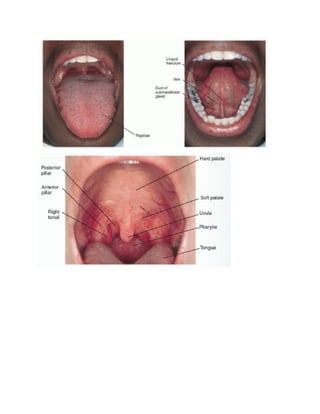
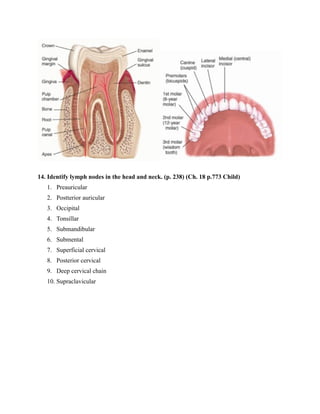
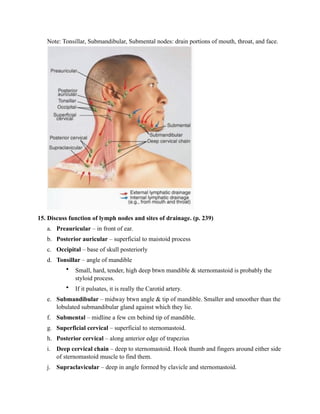
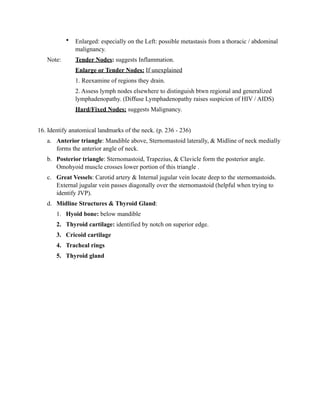
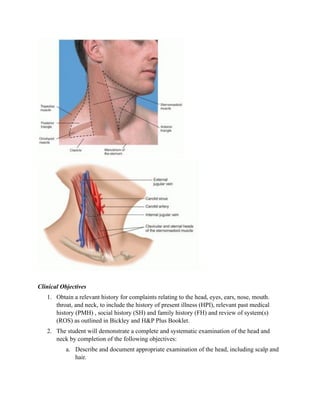
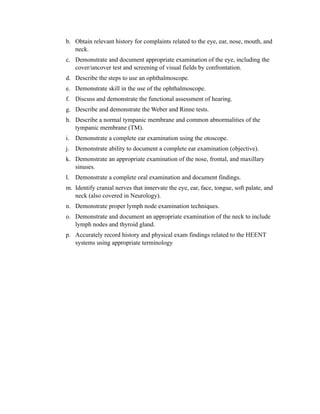
The document outlines the anatomy and examination of the head and neck region. It describes the bones, muscles, nerves, blood vessels and structures of the eyes, ears, nose, mouth, throat and neck. Key points include identifying the cranial nerves involved in vision and hearing, describing visual field defects and causes of abnormal eye movements. Examination techniques are covered such as visual acuity tests, otoscopy, lymph node palpation and assessment of the thyroid gland. The overall goal is to teach students to obtain a relevant history and perform a complete physical exam of the head and neck.