Speaker: Opher Etzion
Did the Internet of Things really
happened?
What the inhibitors are?
“There is no Internet of Things yet”
2
Sarah Rotman Epps
Oct 17, 2013
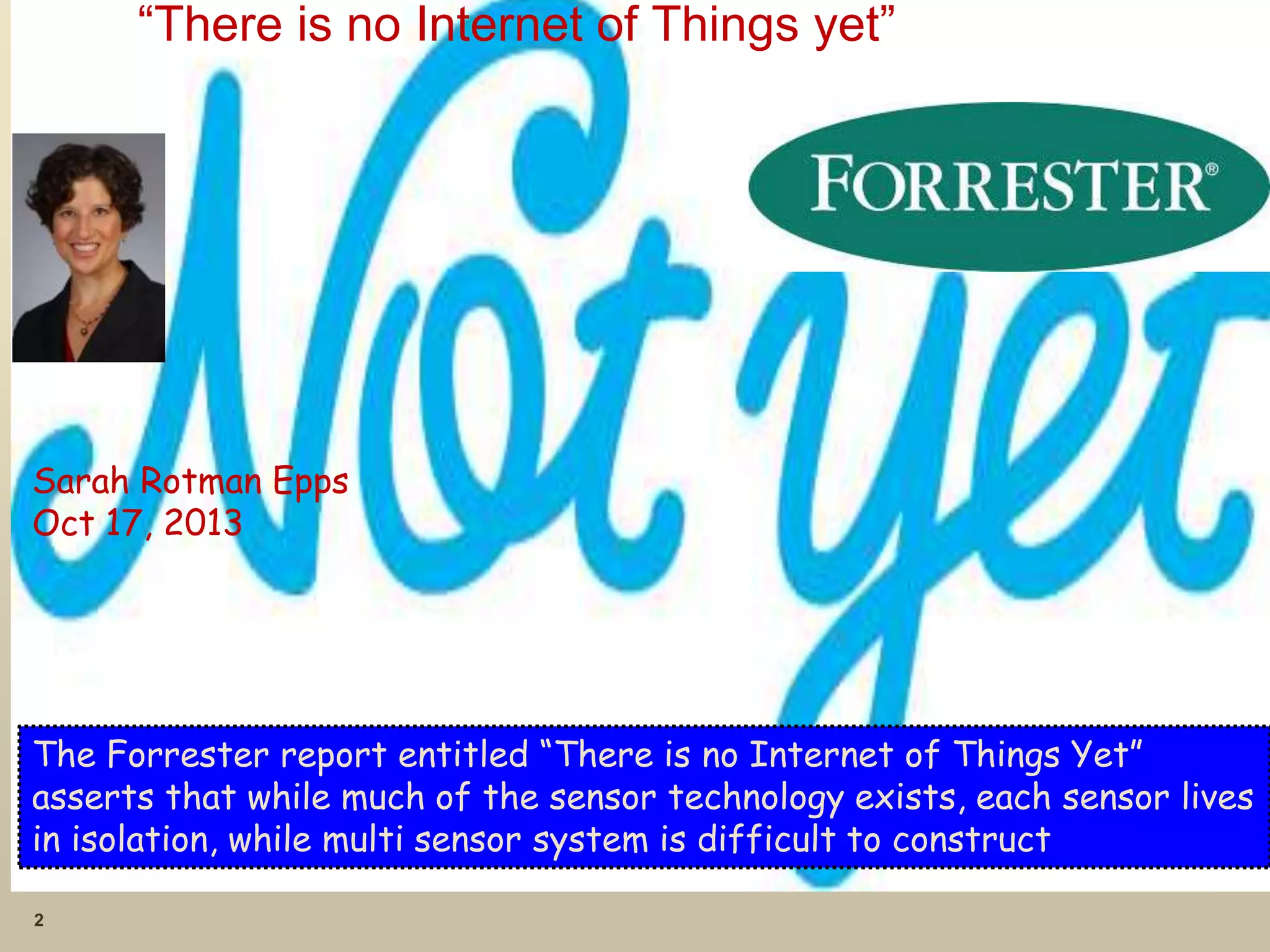
The Forrester report entitled “There is no Internet of Things Yet”
asserts that while much of the sensor technology exists, each sensor lives
in isolation, while multi sensor system is difficult to construct
3
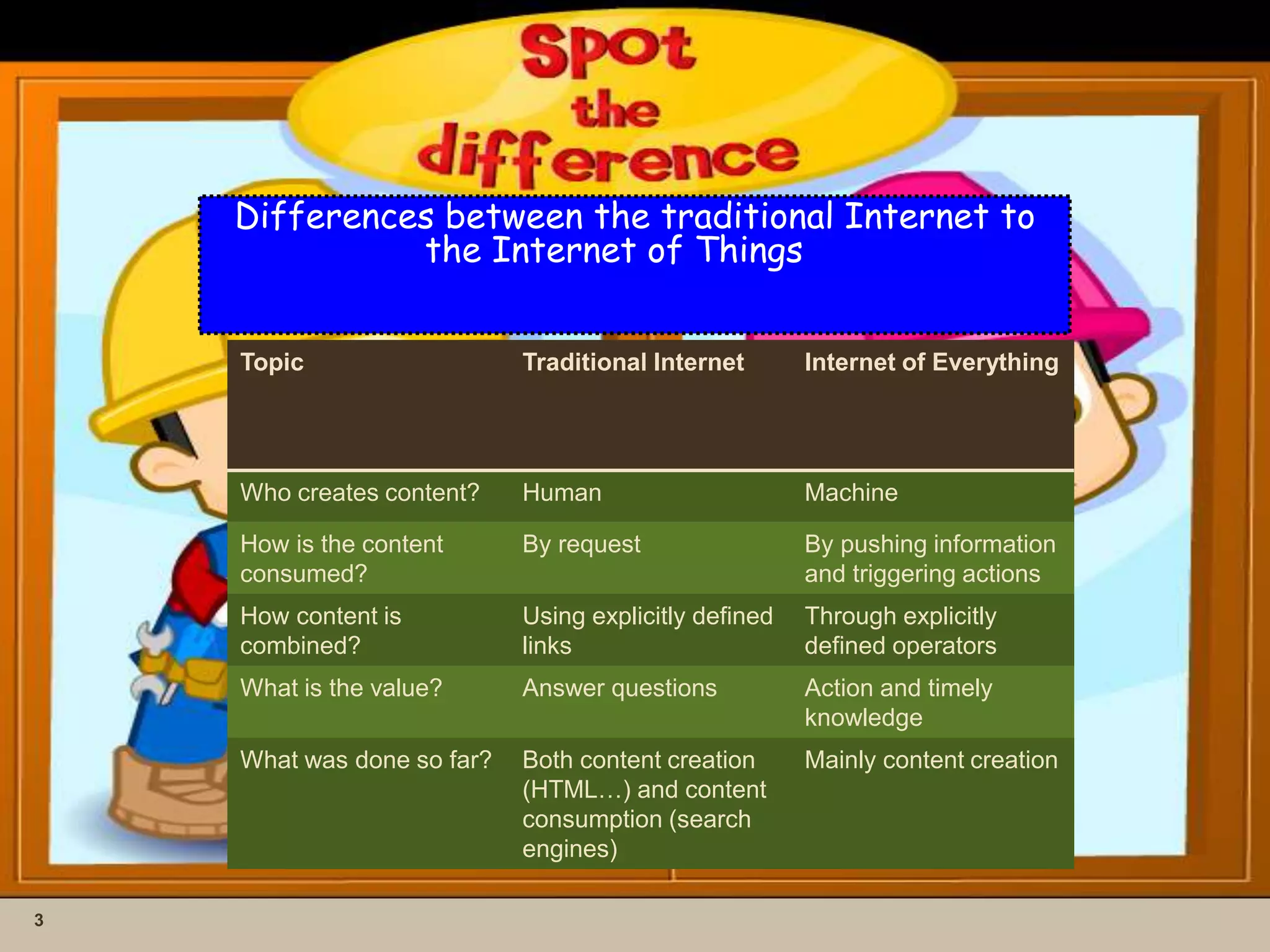
Differences between the traditional Internet to
the Internet of Things
Topic Traditional Internet Internet of Everything
Who creates content? Human Machine
How is the content
consumed?
By request By pushing information
and triggering actions
How content is
combined?
Using explicitly defined
links
Through explicitly
defined operators
What is the value? Answer questions Action and timely
knowledge
What was done so far? Both content creation
(HTML…) and content
consumption (search
engines)
Mainly content creation
4
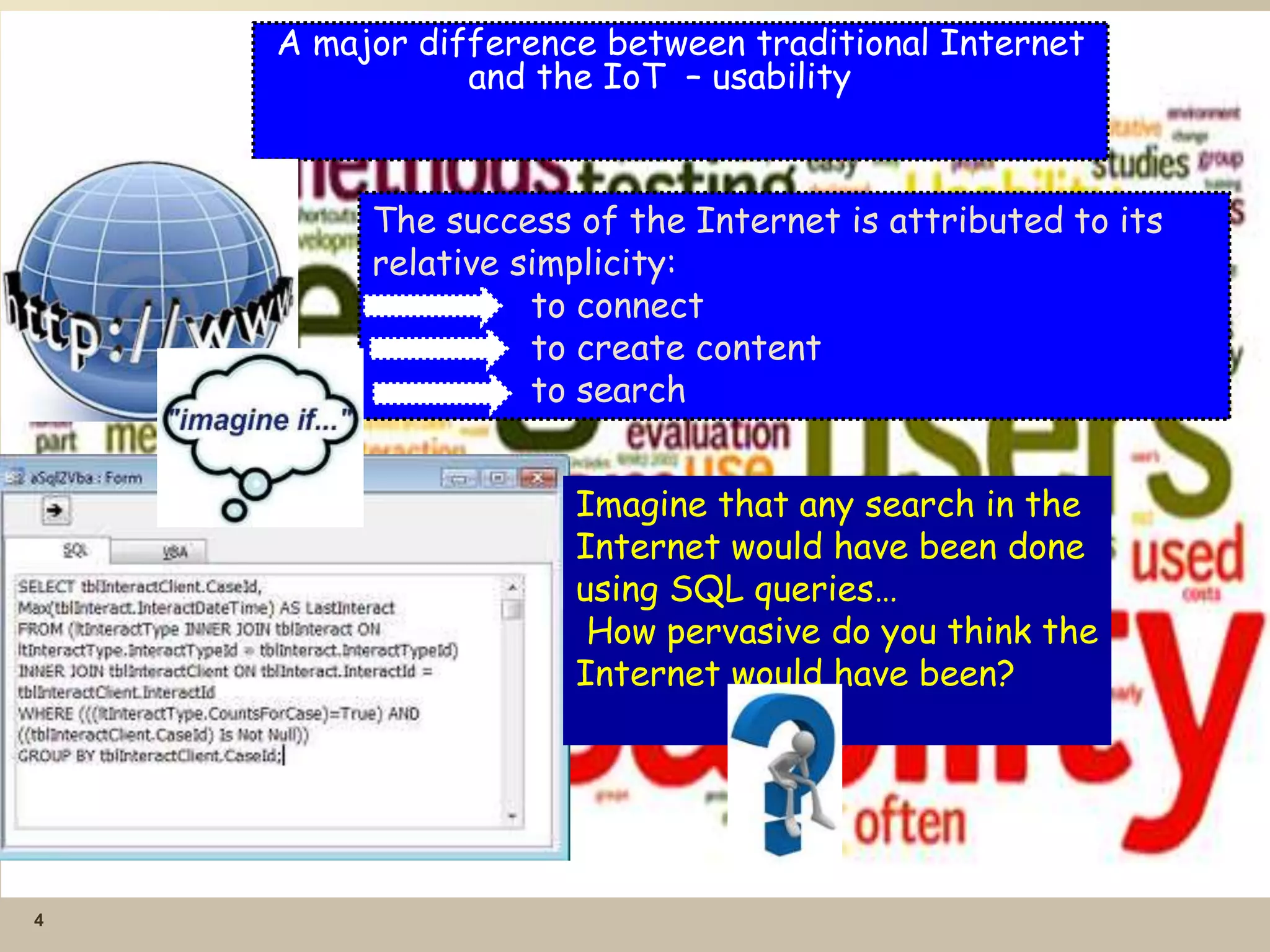
A major difference between traditional Internet
and the IoT – usability
The success of the Internet is attributed to its
relative simplicity:
to connect
to create content
to search
Imagine that any search in the
Internet would have been done
using SQL queries…
How pervasive do you think the
Internet would have been?
For situational awareness….
Languages are actually more complex than
SQL
5
// Large cash deposit
insert into LargeCashDeposit
select * from Cash deposit where amount > 100,000
// Frequent (At least three) large cash deposits
create context AccountID partition by accountId on Cash deposit;
Context AccountID
Insert into FrequentLargeCashDeposits select count(*) from LargeCashDeposit
having count(*)>3;
// Frequent cash deposits followed by transfer abroad
Context AccountID
insert into SuspiciousAccount select * from pattern [
every f=FrequentCashDeposit -> t=TransferAbroad where timer.within(10 days)]
6
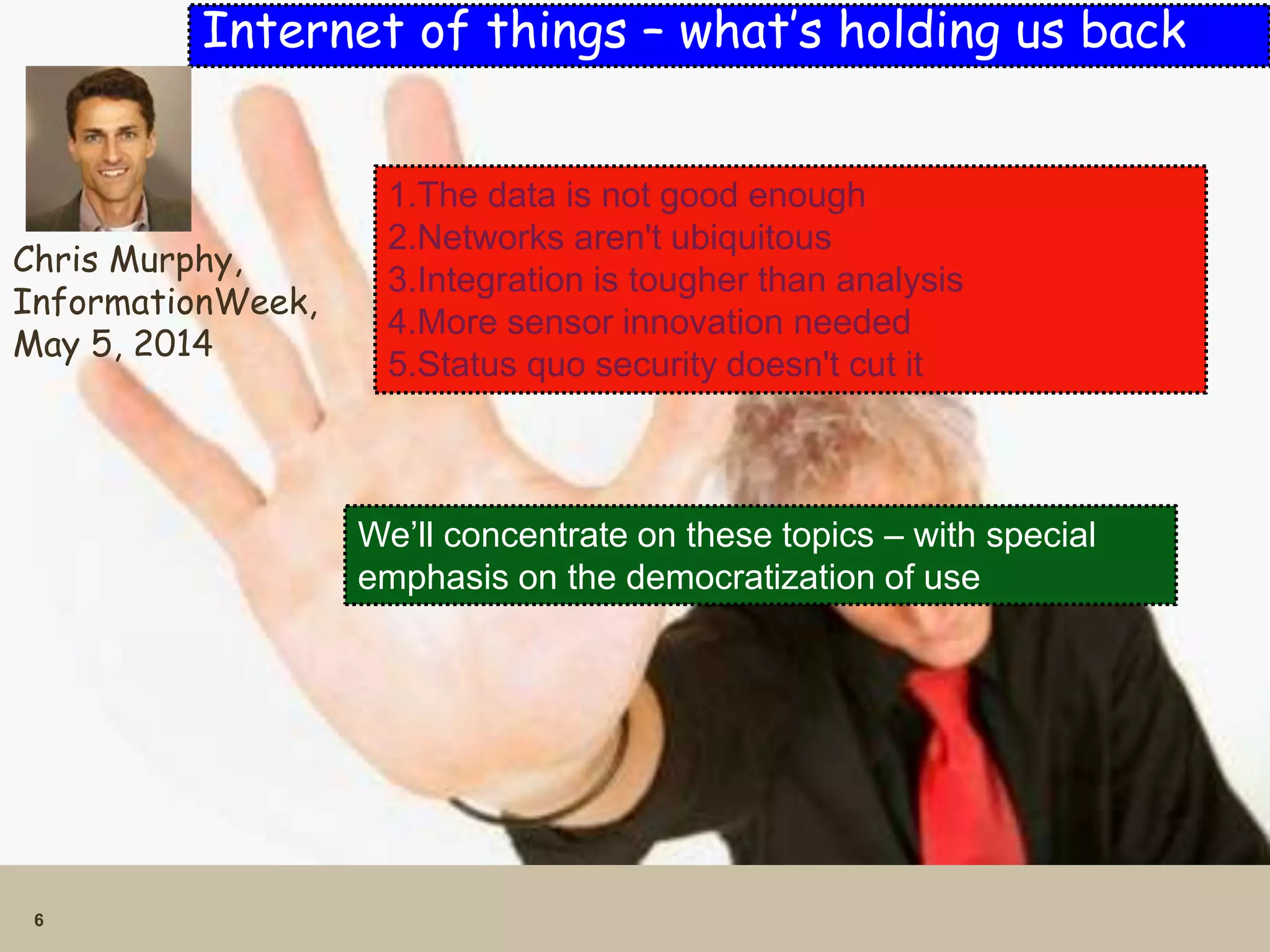
Internet of things – what’s holding us back
Chris Murphy,
InformationWeek,
May 5, 2014
1.The data is not good enough
2.Networks aren't ubiquitous
3.Integration is tougher than analysis
4.More sensor innovation needed
5.Status quo security doesn't cut it
We’ll concentrate on these topics – with special
emphasis on the democratization of use
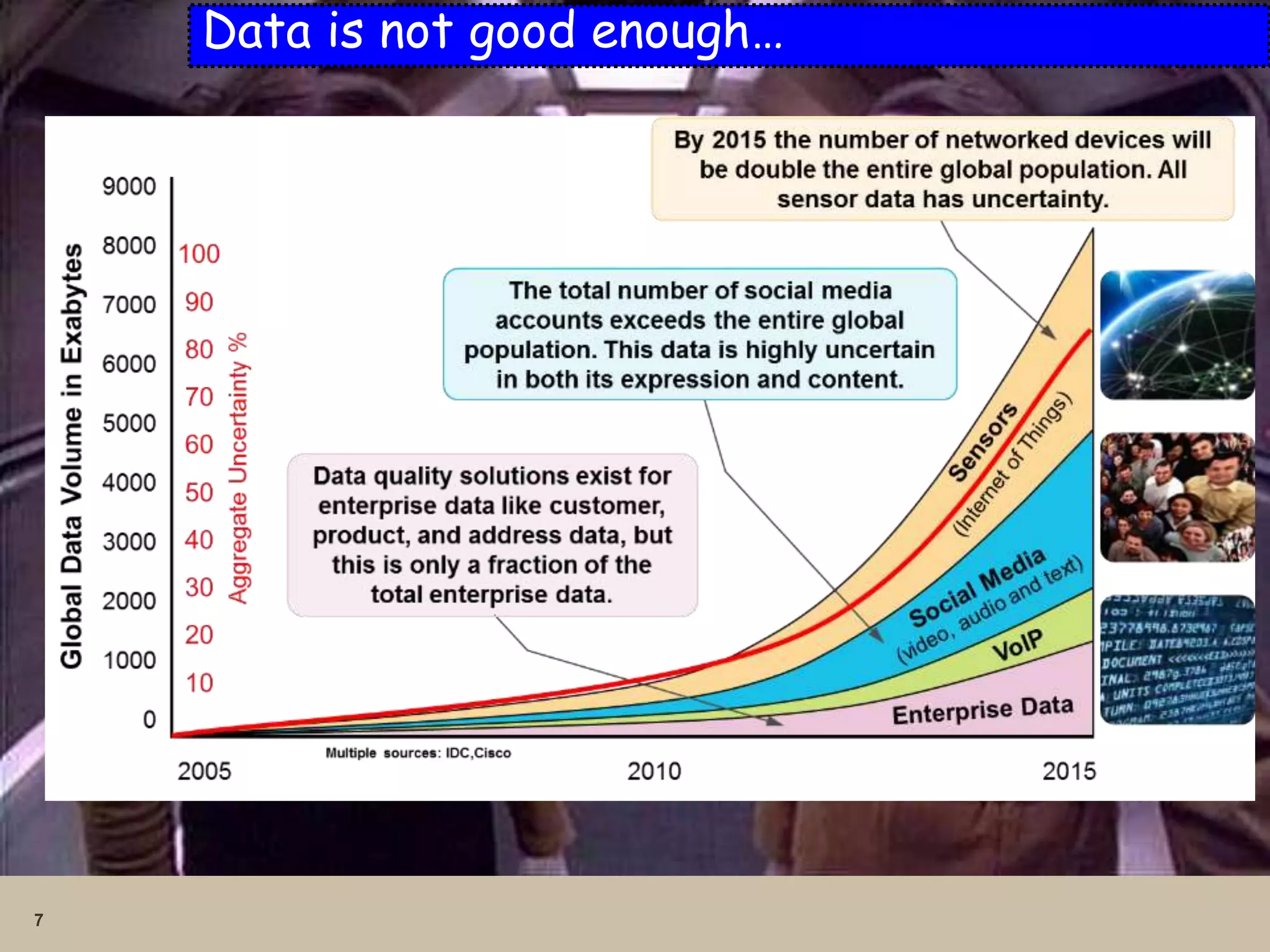
7
Data is not good enough…
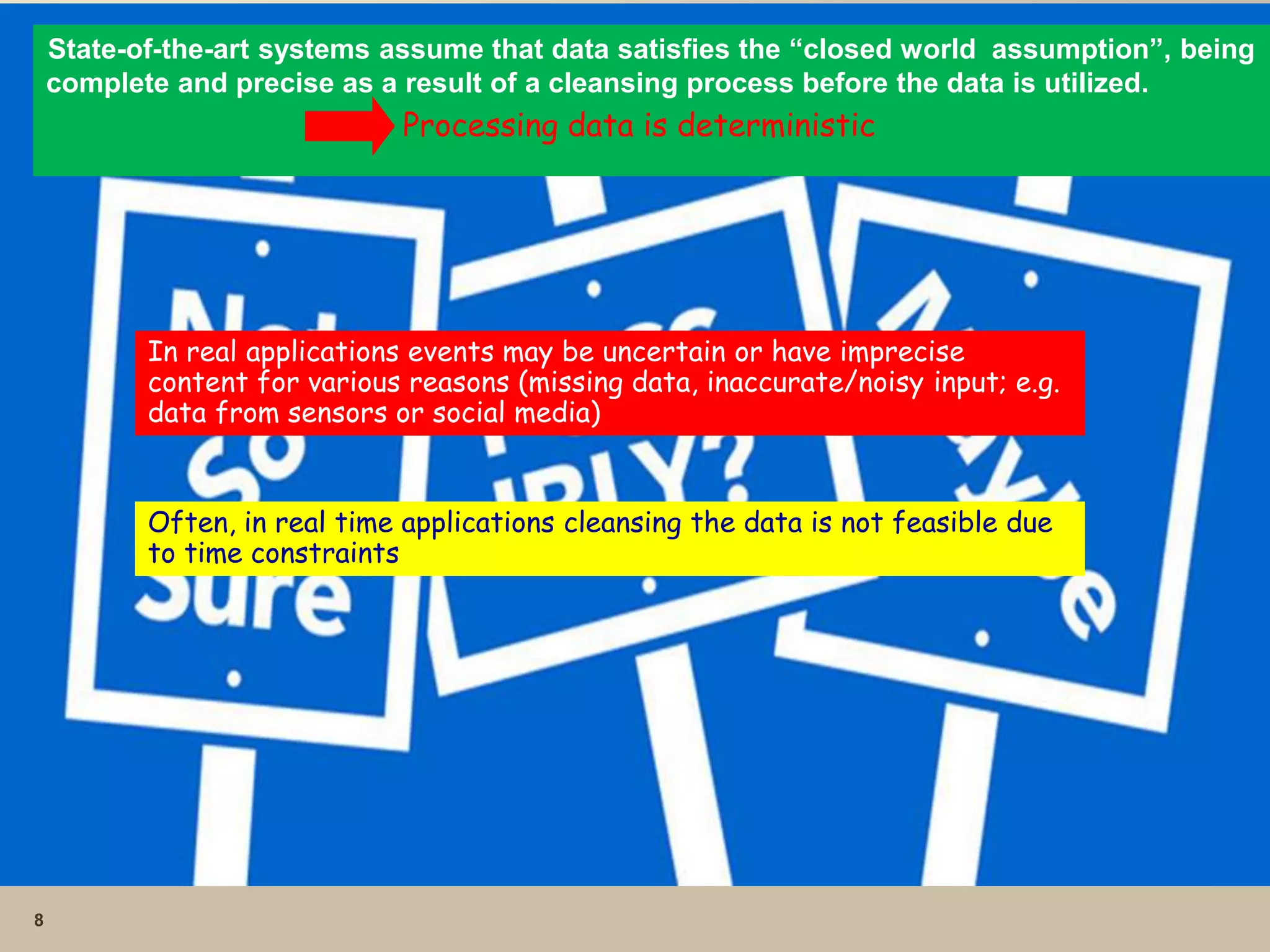
8
State-of-the-art systems assume that data satisfies the “closed world assumption”, being
complete and precise as a result of a cleansing process before the data is utilized.
Processing data is deterministic
In real applications events may be uncertain or have imprecise
content for various reasons (missing data, inaccurate/noisy input; e.g.
data from sensors or social media)
Often, in real time applications cleansing the data is not feasible due
to time constraints
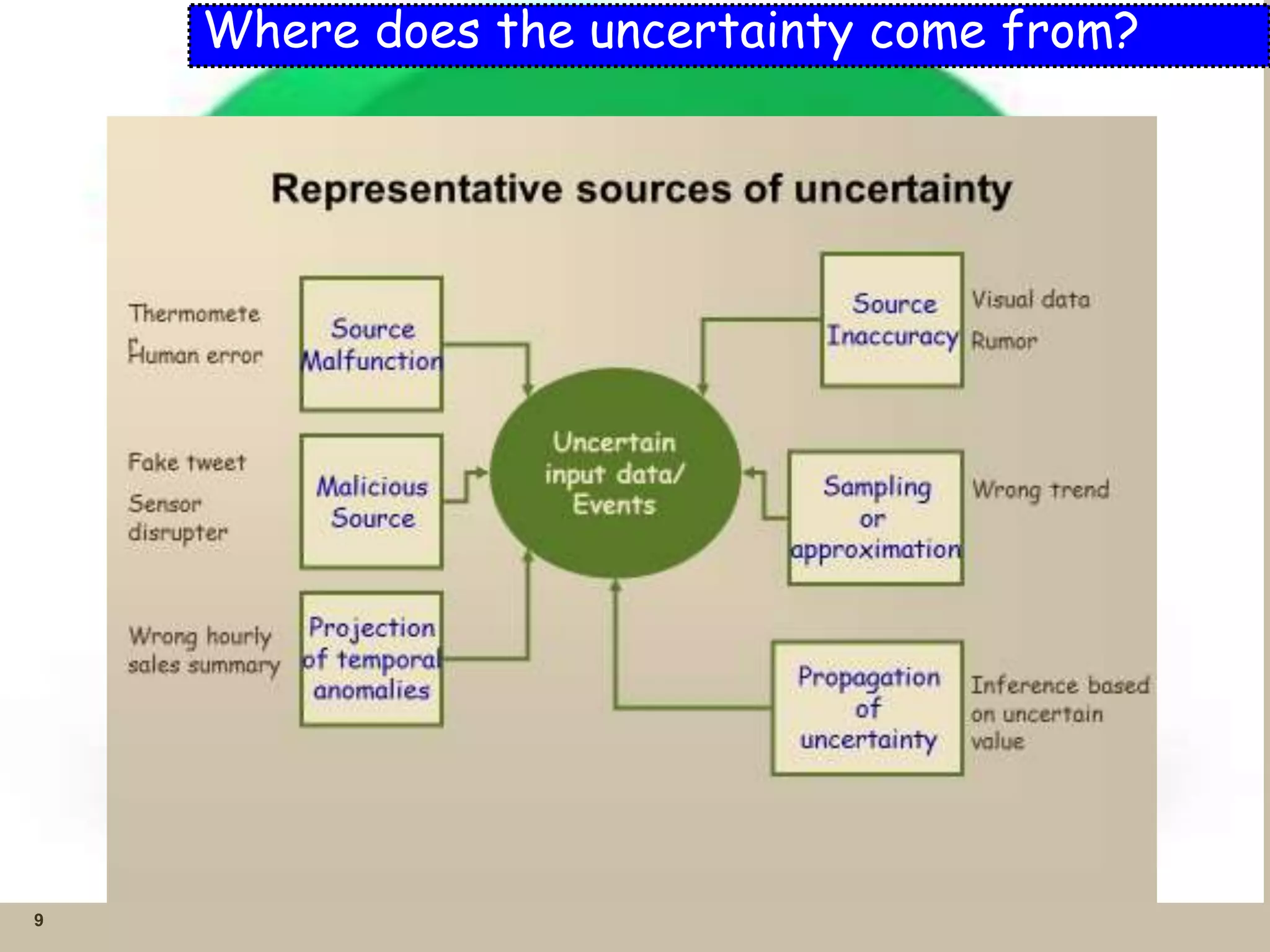
9
Where does the uncertainty come from?
10
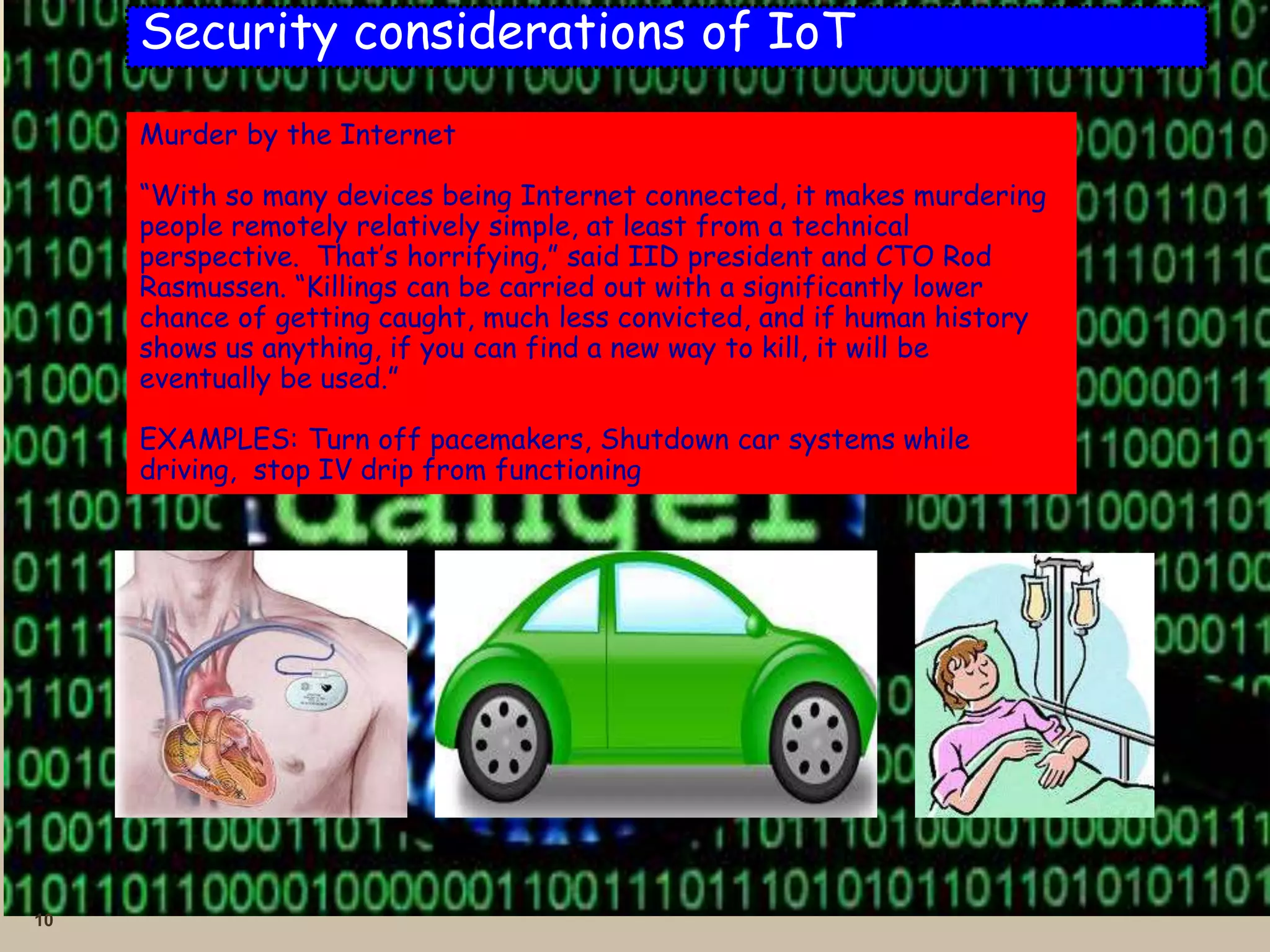
Security considerations of IoT
Murder by the Internet
“With so many devices being Internet connected, it makes murdering
people remotely relatively simple, at least from a technical
perspective. That’s horrifying,” said IID president and CTO Rod
Rasmussen. “Killings can be carried out with a significantly lower
chance of getting caught, much less convicted, and if human history
shows us anything, if you can find a new way to kill, it will be
eventually be used.”
EXAMPLES: Turn off pacemakers, Shutdown car systems while
driving, stop IV drip from functioning
11
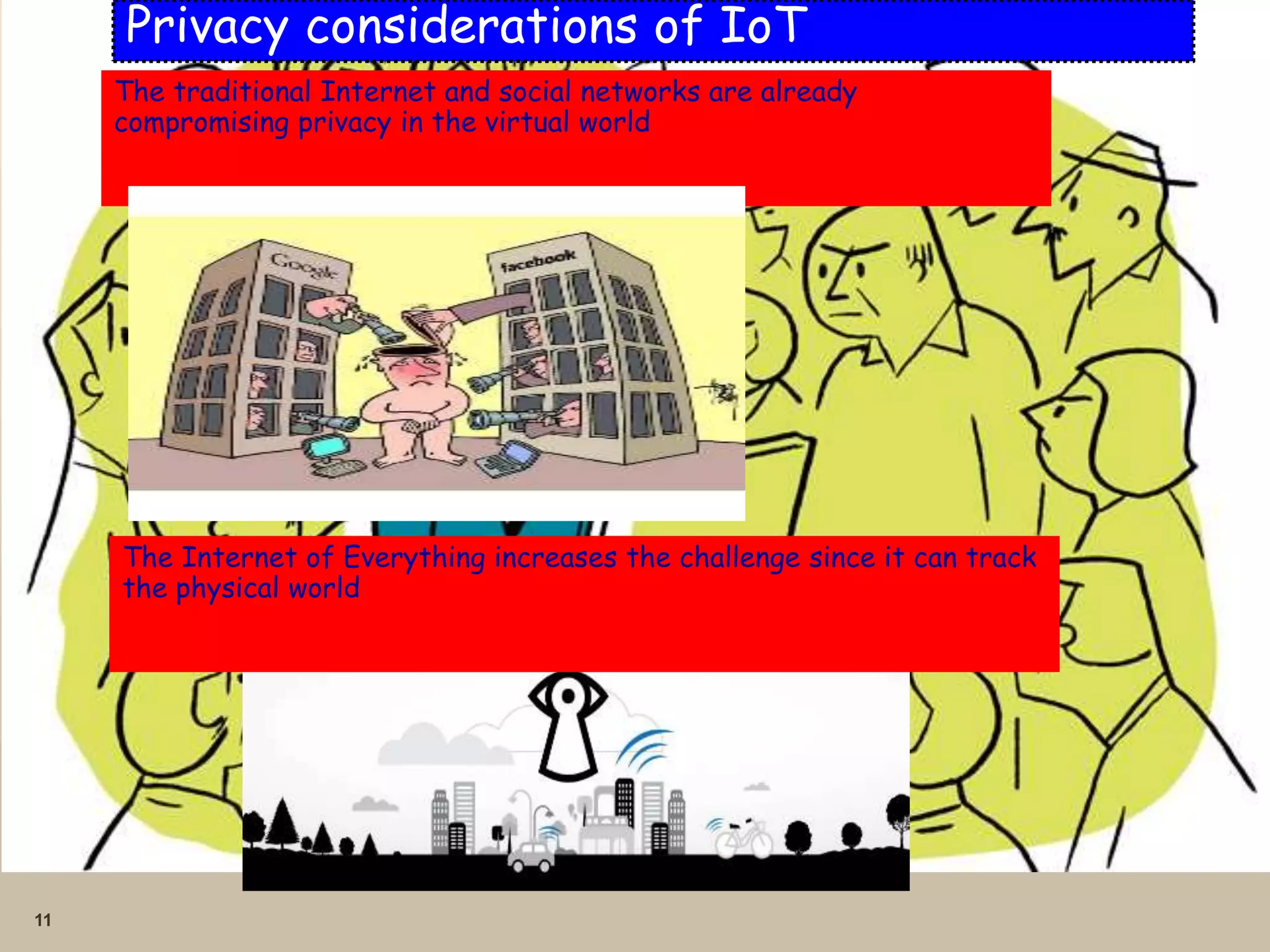
Privacy considerations of IoT
The traditional Internet and social networks are already
compromising privacy in the virtual world
The Internet of Everything increases the challenge since it can track
the physical world
12
Democratization of use in Internet of Things
Challenges:
Integration of sensors and actuators
Personalization of situation detection
Pervasive use
13
Standardization
Standards were crucial to the success of the traditional web
The “Joint Coordinated Activities on IoT” published
in February 2014 standards roadmap:
http://www.itu.int/en/ITU-
T/jca/iot/Pages/default.aspx
With aspects on architecture, format, identification,
sensor network management and more…
AT&T, Cisco, GE, IBM and Intel form Industrial
Internet Consortium for IoT standards in March
2014
http://www.fiercewireless.com/story/att-cisco-ge-
ibm-and-intel-form-industrial-internet-consortium-
iot-standard/2014-03-28#ixzz32F6UB1KE
14
Summary
Much has been done on IoT
There are still challenges ahead in order to
make the use of IoT as pervasive as the
traditional Internet.

Has Internet of Things really happened?

  • 1.
    Speaker: Opher Etzion Didthe Internet of Things really happened? What the inhibitors are?
  • 2.
    “There is noInternet of Things yet” 2 Sarah Rotman Epps Oct 17, 2013 The Forrester report entitled “There is no Internet of Things Yet” asserts that while much of the sensor technology exists, each sensor lives in isolation, while multi sensor system is difficult to construct
  • 3.
    3 Differences between thetraditional Internet to the Internet of Things Topic Traditional Internet Internet of Everything Who creates content? Human Machine How is the content consumed? By request By pushing information and triggering actions How content is combined? Using explicitly defined links Through explicitly defined operators What is the value? Answer questions Action and timely knowledge What was done so far? Both content creation (HTML…) and content consumption (search engines) Mainly content creation
  • 4.
    4 A major differencebetween traditional Internet and the IoT – usability The success of the Internet is attributed to its relative simplicity: to connect to create content to search Imagine that any search in the Internet would have been done using SQL queries… How pervasive do you think the Internet would have been?
  • 5.
    For situational awareness…. Languagesare actually more complex than SQL 5 // Large cash deposit insert into LargeCashDeposit select * from Cash deposit where amount > 100,000 // Frequent (At least three) large cash deposits create context AccountID partition by accountId on Cash deposit; Context AccountID Insert into FrequentLargeCashDeposits select count(*) from LargeCashDeposit having count(*)>3; // Frequent cash deposits followed by transfer abroad Context AccountID insert into SuspiciousAccount select * from pattern [ every f=FrequentCashDeposit -> t=TransferAbroad where timer.within(10 days)]
  • 6.
    6 Internet of things– what’s holding us back Chris Murphy, InformationWeek, May 5, 2014 1.The data is not good enough 2.Networks aren't ubiquitous 3.Integration is tougher than analysis 4.More sensor innovation needed 5.Status quo security doesn't cut it We’ll concentrate on these topics – with special emphasis on the democratization of use
  • 7.
    7 Data is notgood enough…
  • 8.
    8 State-of-the-art systems assumethat data satisfies the “closed world assumption”, being complete and precise as a result of a cleansing process before the data is utilized. Processing data is deterministic In real applications events may be uncertain or have imprecise content for various reasons (missing data, inaccurate/noisy input; e.g. data from sensors or social media) Often, in real time applications cleansing the data is not feasible due to time constraints
  • 9.
    9 Where does theuncertainty come from?
  • 10.
    10 Security considerations ofIoT Murder by the Internet “With so many devices being Internet connected, it makes murdering people remotely relatively simple, at least from a technical perspective. That’s horrifying,” said IID president and CTO Rod Rasmussen. “Killings can be carried out with a significantly lower chance of getting caught, much less convicted, and if human history shows us anything, if you can find a new way to kill, it will be eventually be used.” EXAMPLES: Turn off pacemakers, Shutdown car systems while driving, stop IV drip from functioning
  • 11.
    11 Privacy considerations ofIoT The traditional Internet and social networks are already compromising privacy in the virtual world The Internet of Everything increases the challenge since it can track the physical world
  • 12.
    12 Democratization of usein Internet of Things Challenges: Integration of sensors and actuators Personalization of situation detection Pervasive use
  • 13.
    13 Standardization Standards were crucialto the success of the traditional web The “Joint Coordinated Activities on IoT” published in February 2014 standards roadmap: http://www.itu.int/en/ITU- T/jca/iot/Pages/default.aspx With aspects on architecture, format, identification, sensor network management and more… AT&T, Cisco, GE, IBM and Intel form Industrial Internet Consortium for IoT standards in March 2014 http://www.fiercewireless.com/story/att-cisco-ge- ibm-and-intel-form-industrial-internet-consortium- iot-standard/2014-03-28#ixzz32F6UB1KE
  • 14.
    14 Summary Much has beendone on IoT There are still challenges ahead in order to make the use of IoT as pervasive as the traditional Internet.