Downloaded 187 times
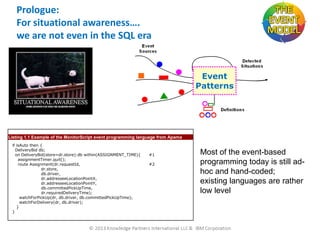
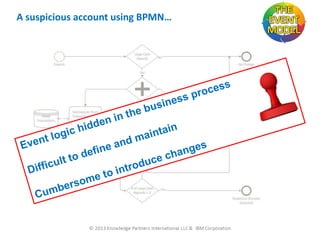
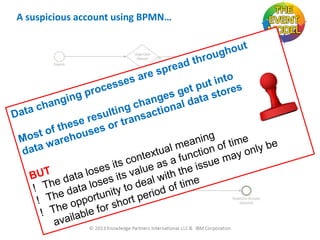
![Event processing applications are a step further…
but is this enough? (2/3)
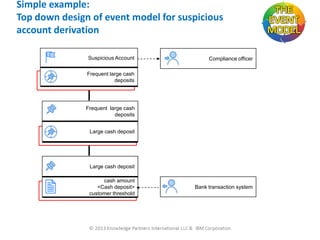
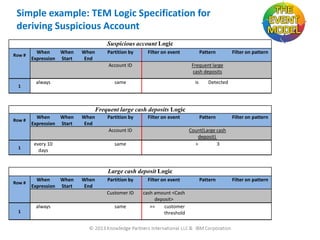
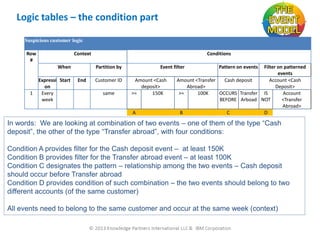
// Large cash deposit
insert into LargeCashDeposit
select * from Cash deposit where amount > 100,000
// Frequent (At least three) large cash deposits
create context AccountID partition by accountId on Cash deposit;
Context AccountID
Insert into FrequentLargeCashDeposits select count(*) from
LargeCashDeposit having count(*)>3;
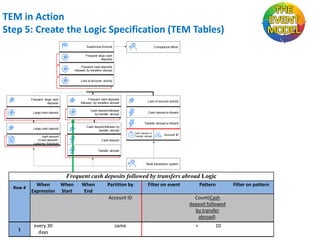
// Frequent cash deposits followed by transfer abroad
Context AccountID
insert into SuspiciousAccount select * from pattern [
every f=FrequentCashDeposit -> t=TransferAbroad where timer.within(10
days)]](https://image.slidesharecdn.com/er2013eventmodelingtutorial-131114121638-phpapp01/85/ER-2013-tutorial-modeling-the-event-driven-world-32-320.jpg)
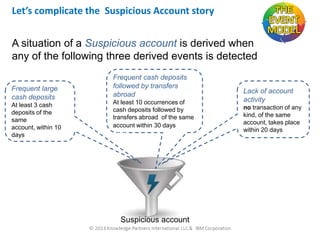
![Event processing applications are a step further…
but is this enough? (3/3)
// Large cash deposit
insert into LargeCashDeposit
select * from Cash deposit where amount > 100,000
// Frequent (At least three) large cash deposits
create context AccountID partition by accountId on Cash deposit;
Context AccountID
Insert into FrequentLargeCashDeposits select count(*) from
LargeCashDeposit having count(*)>3;
// Frequent cash deposits followed by transfer abroad
Context AccountID
insert into SuspiciousAccount select * from pattern [
every f=FrequentCashDeposit -> t=TransferAbroad where timer.within(10
days)]](https://image.slidesharecdn.com/er2013eventmodelingtutorial-131114121638-phpapp01/85/ER-2013-tutorial-modeling-the-event-driven-world-33-320.jpg)
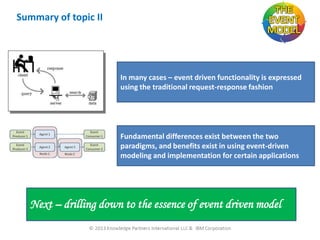
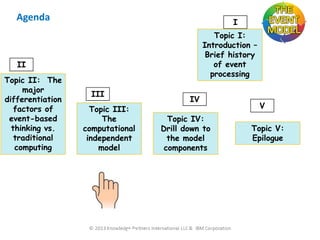
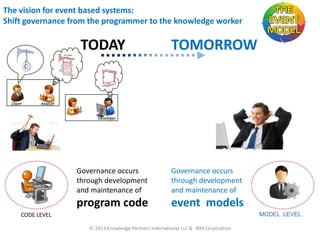
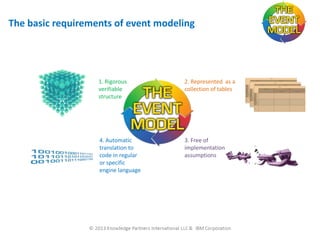
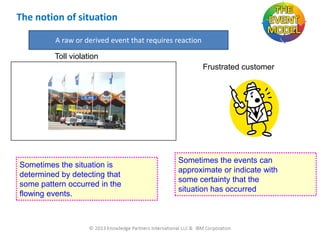
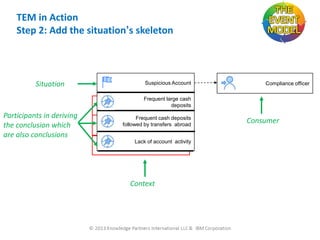
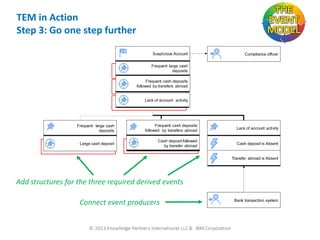
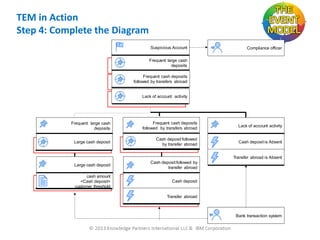
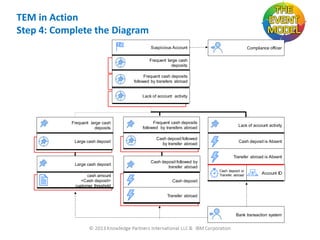
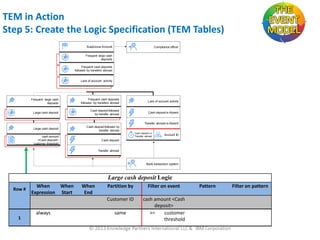
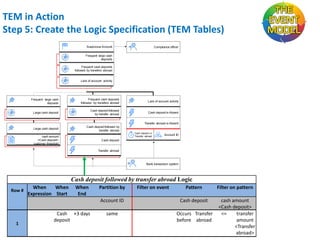
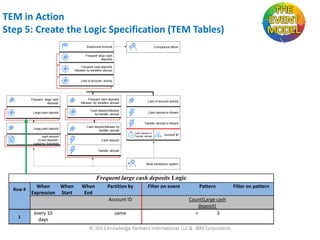
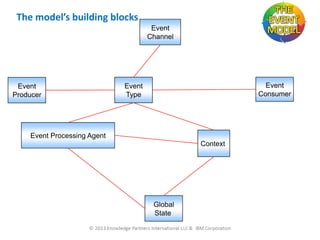
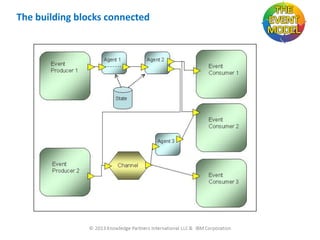
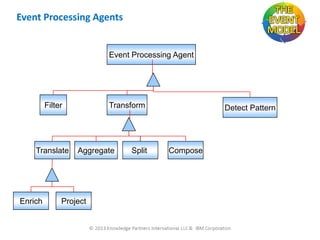
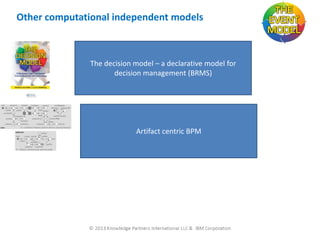

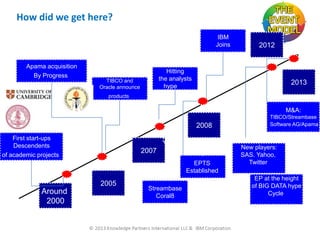
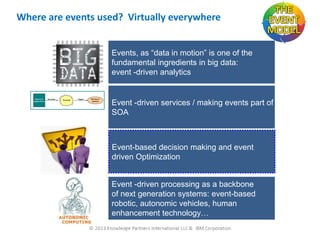
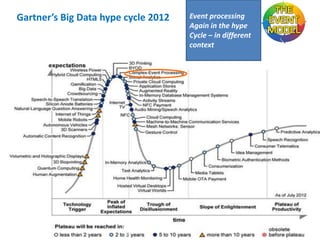
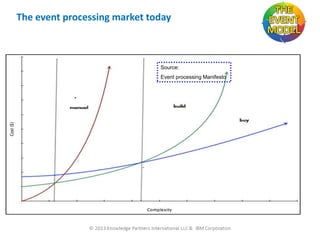
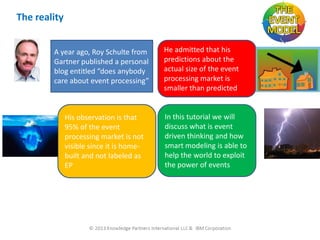
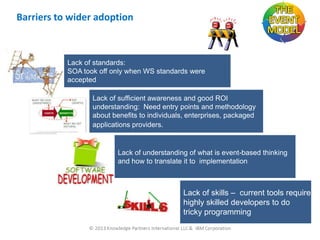
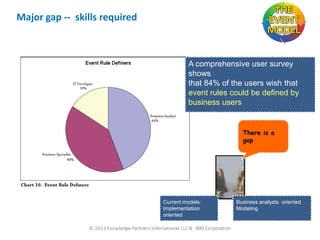
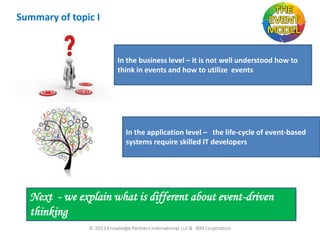
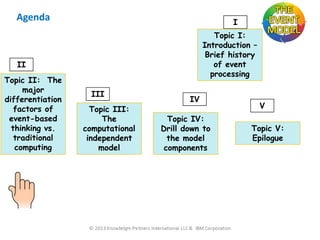
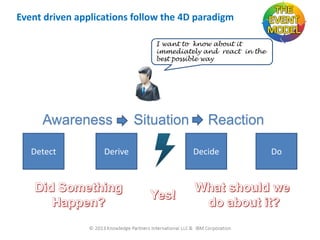
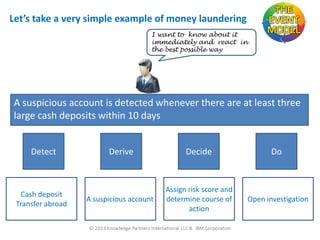
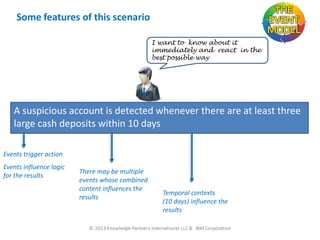
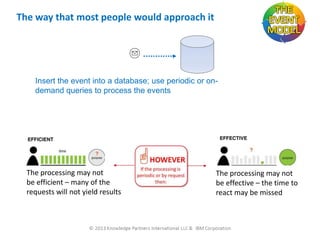
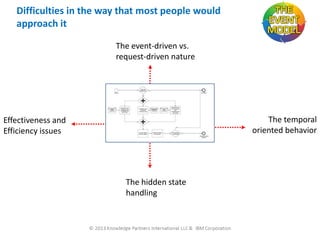
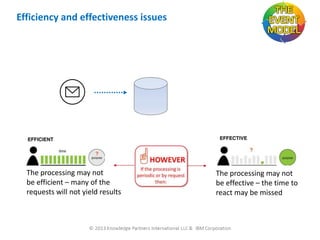
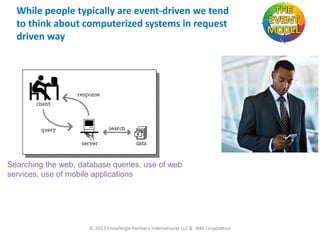
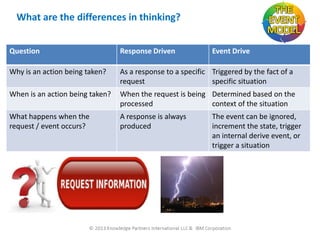
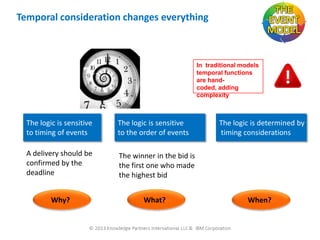
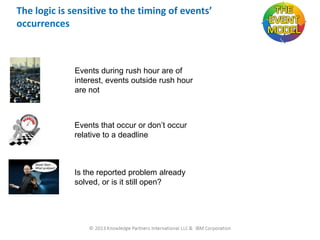
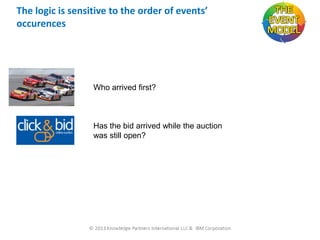
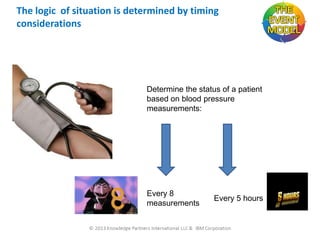
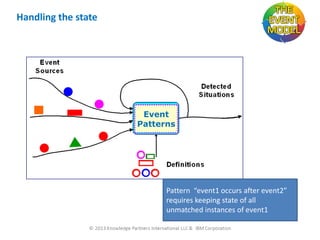
This document discusses event-driven thinking and modeling compared to traditional request-driven computing. Some key points made: 1) Event-driven applications follow the "4D" paradigm of detect, derive, decide, do to achieve awareness and reaction, while traditional systems are more request-driven. 2) Event-driven logic is sensitive to the timing and order of events, rather than just the event occurrence. Temporal considerations are important. 3) State handling is more complex with events, as logic may depend on patterns spanning unmatched past events. Existing event processing languages still require technical skills and do not fully address modeling at the business level in an intuitive way. Purely computational approaches are not enough


