Harry Hess’ Theory, 
Sonar and Plates. 
By Tiara, Evelyn and Katelen
Hess’s Theory 
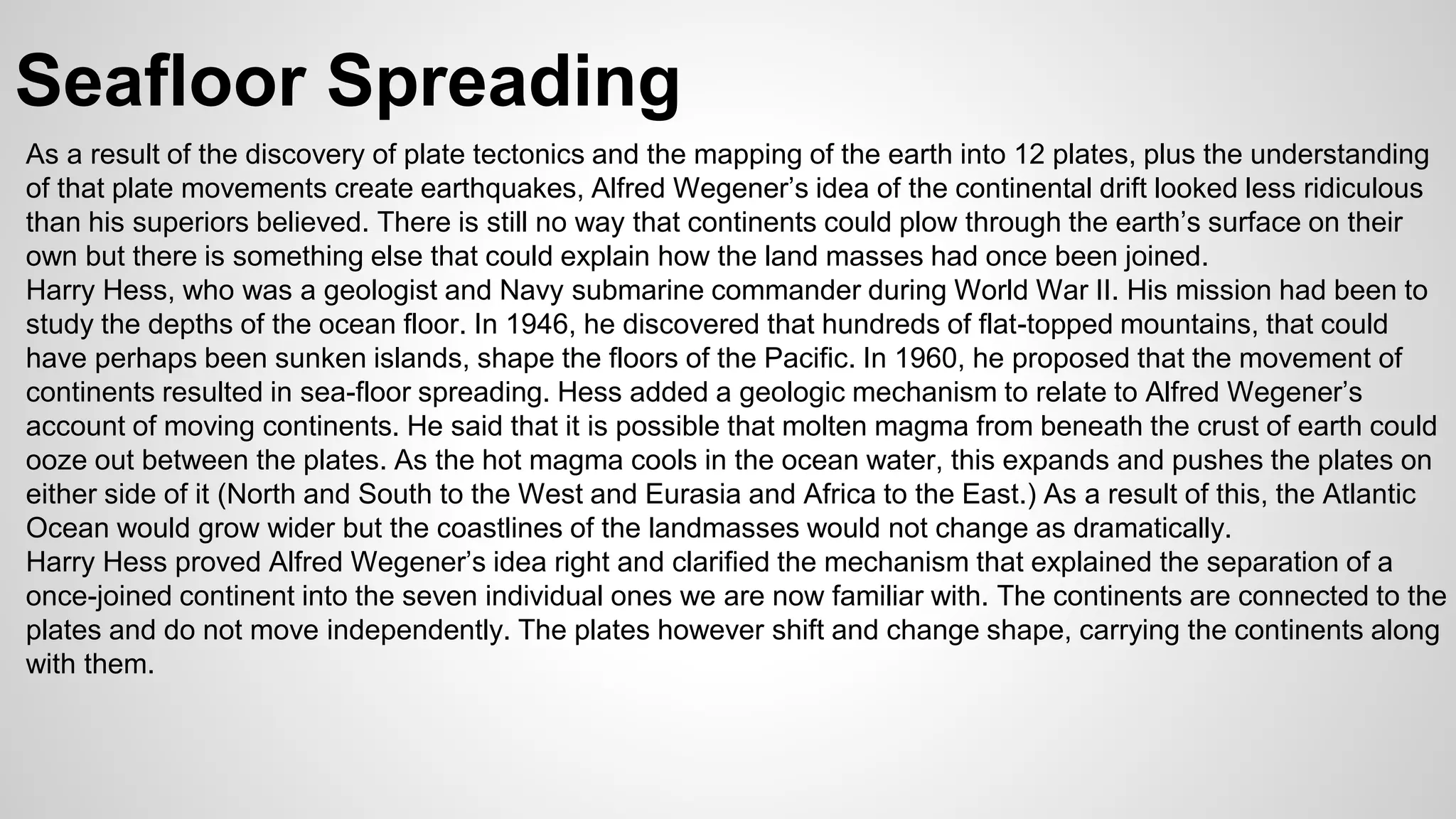
In 1962, as a result of oceanographic research conducted in the 1950's, Harry 
Hammond Hess proposed the theory of seafloor spreading to account for 
continental movement. He suggested that continents do not move across oceanic 
crust, but rather that the continents and oceanic crust move together. He suggested 
that the seafloor separates at oceanic ridges and that new crust is formed by 
upwelling magma.
Seafloor Spreading 
As a result of the discovery of plate tectonics and the mapping of the earth into 12 plates, plus the understanding 
of that plate movements create earthquakes, Alfred Wegener’s idea of the continental drift looked less ridiculous 
than his superiors believed. There is still no way that continents could plow through the earth’s surface on their 
own but there is something else that could explain how the land masses had once been joined. 
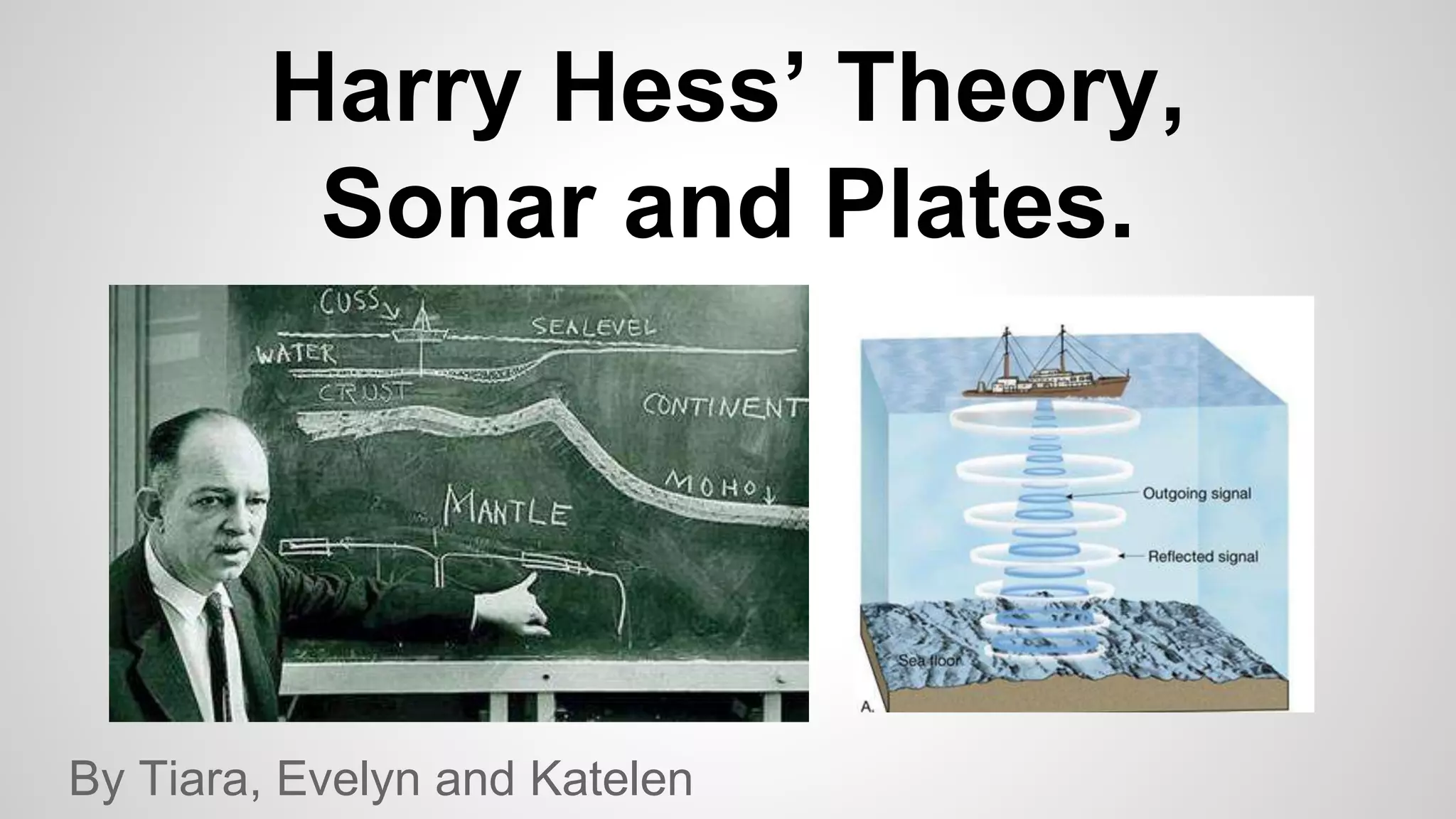
Harry Hess, who was a geologist and Navy submarine commander during World War II. His mission had been to 
study the depths of the ocean floor. In 1946, he discovered that hundreds of flat-topped mountains, that could 
have perhaps been sunken islands, shape the floors of the Pacific. In 1960, he proposed that the movement of 
continents resulted in sea-floor spreading. Hess added a geologic mechanism to relate to Alfred Wegener’s 
account of moving continents. He said that it is possible that molten magma from beneath the crust of earth could 
ooze out between the plates. As the hot magma cools in the ocean water, this expands and pushes the plates on 
either side of it (North and South to the West and Eurasia and Africa to the East.) As a result of this, the Atlantic 
Ocean would grow wider but the coastlines of the landmasses would not change as dramatically. 
Harry Hess proved Alfred Wegener’s idea right and clarified the mechanism that explained the separation of a 
once-joined continent into the seven individual ones we are now familiar with. The continents are connected to the 
plates and do not move independently. The plates however shift and change shape, carrying the continents along 
with them.
Sonar 
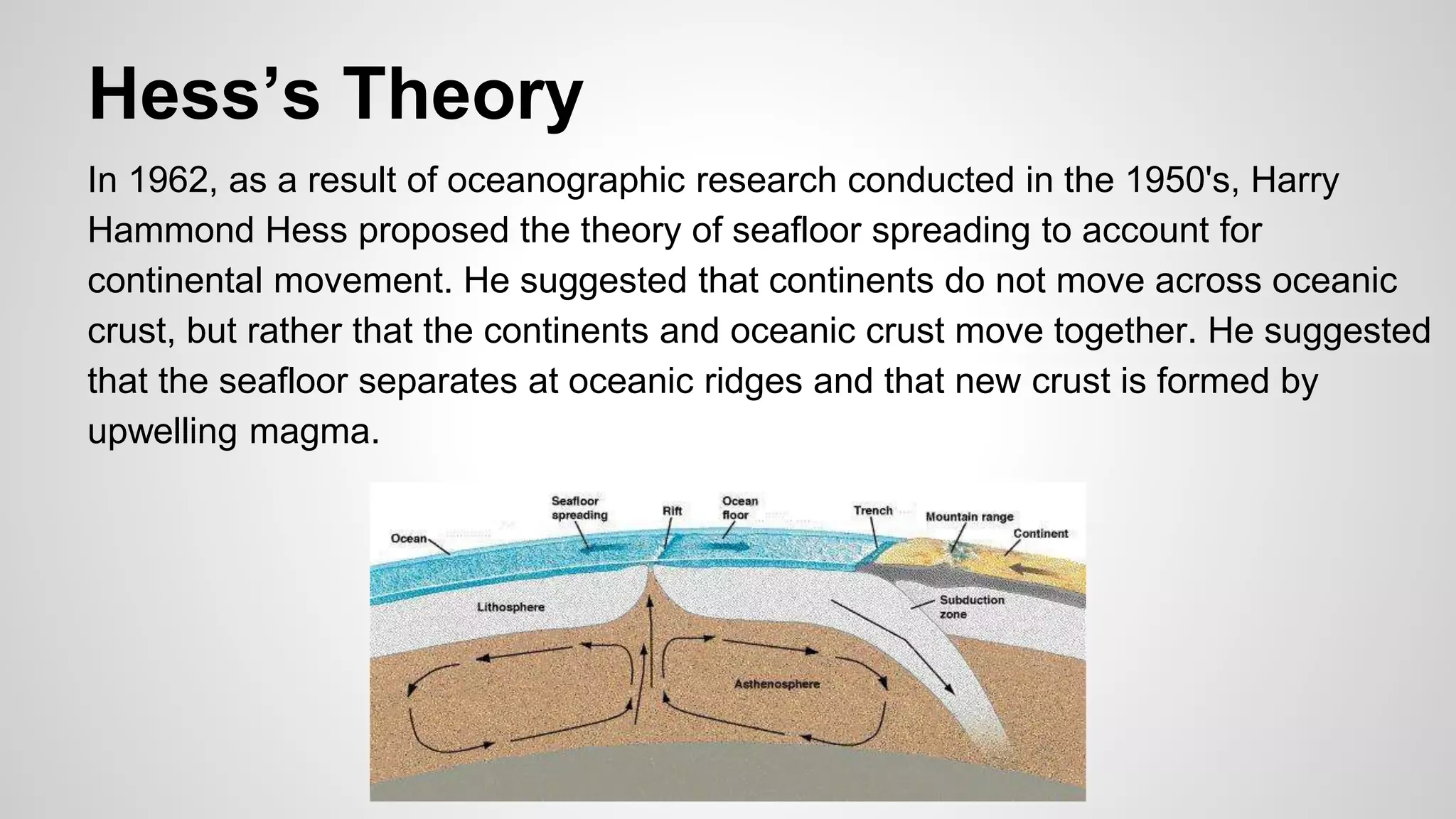
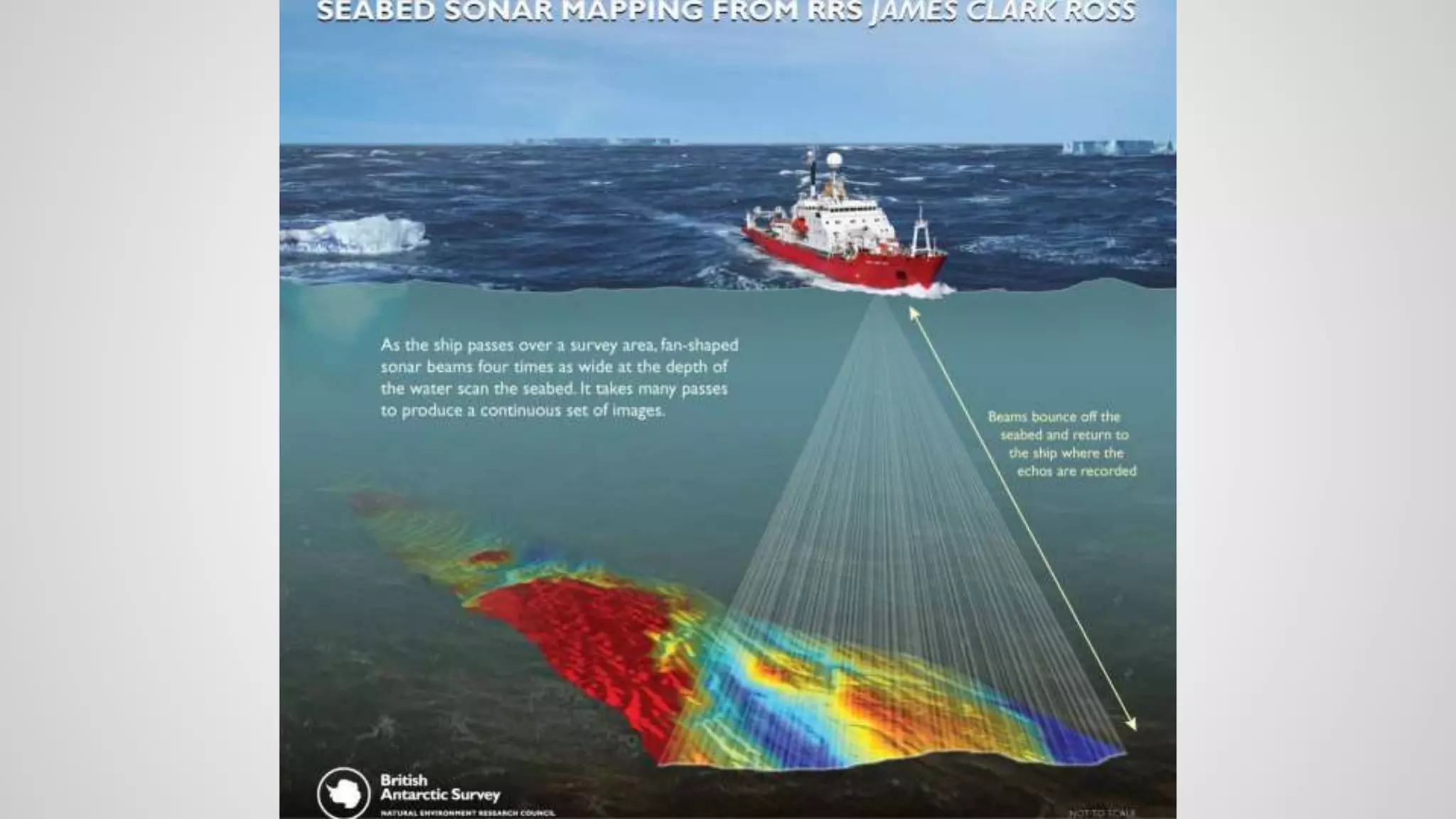
Sonar is a technique that uses sound waves to detect object underwater by 
emitting waves and measuring their return (echo) after being reflected. Sonar 
stands for SOund Navigation And Ranging. 
There are two types of Sonar - 
Passive Sonar : Listening to the sounds of objects or vessels underwater. 
Active Sonar : Emitting pulses of sound and listening for echoes. 
In this situation, Hess uses sonar to calculate the distances using the Active 
Sonar Method.
How did sonar help Hess’ Theory? 
Harry Hess was a geology professor and Navy reservist. So it 
was not long before Hess became a Navy Submarine 
Commander during World War II. Therefore while he was 
travelling from destination to another, Hess would leave the 
sonar system on, so that it can take measures of the sea 
floor. It was at this time that Hess discovered features on the 
floor which led him to conclude a theory of seafloor spreading. 
Without the help of sonar, Hess would have possibly not have 
come up with his theory.
Theory of plate tectonics 
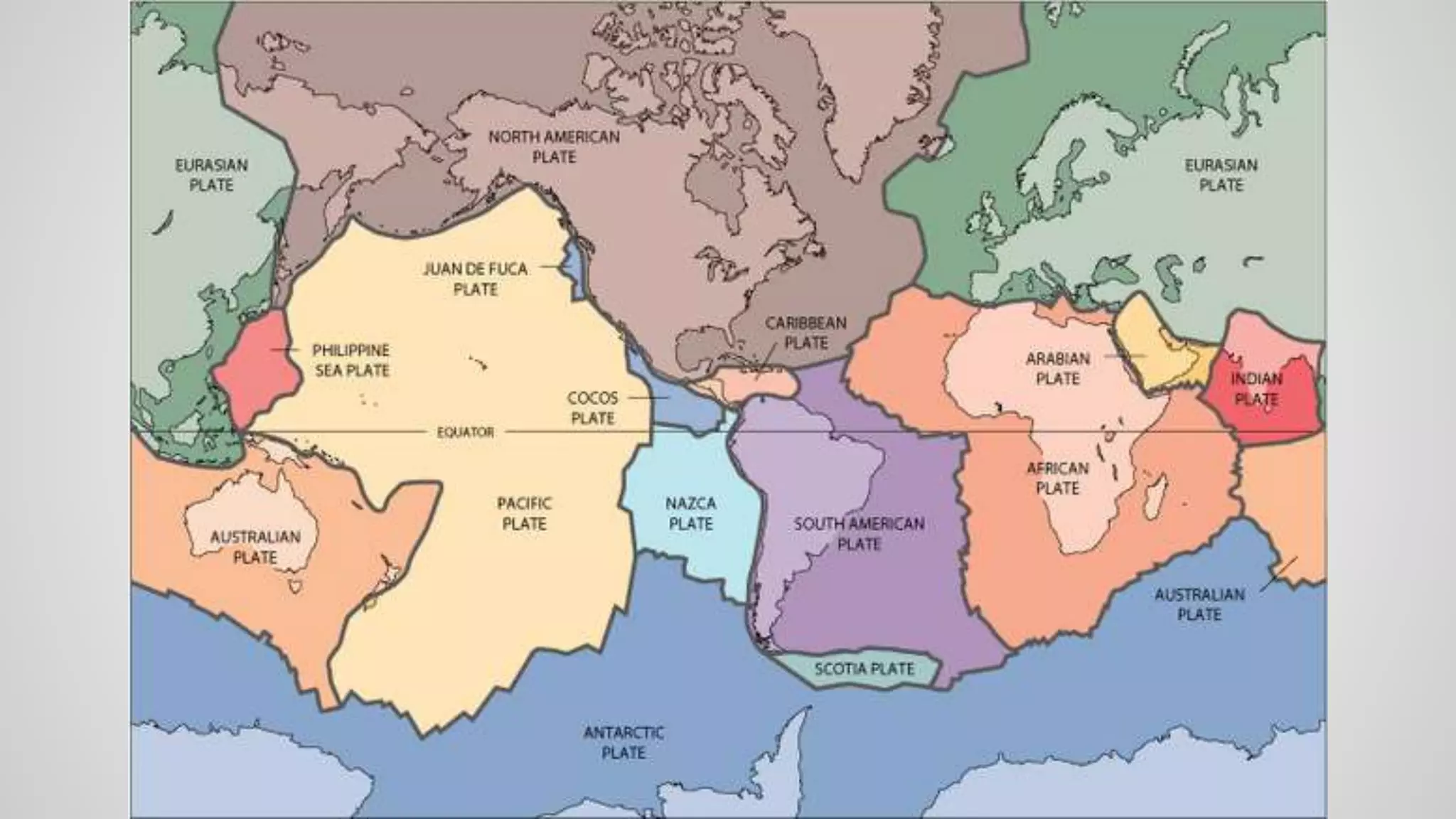
The lithosphere is the firm outer shell of a planet, in this case- Earth. It is 
divided into various tectonic plates. On Earth, there are 7 major tectonic 
plates: 
African plate 
North American plate 
Antarctic plate 
Pacific Plate 
Eurasian plate 
South American Plate 
Indo-Australian Plate 
There are many other minor plates. At the point where plates meet defines 
what type of boundary is formed: convergent, divergent or transform.
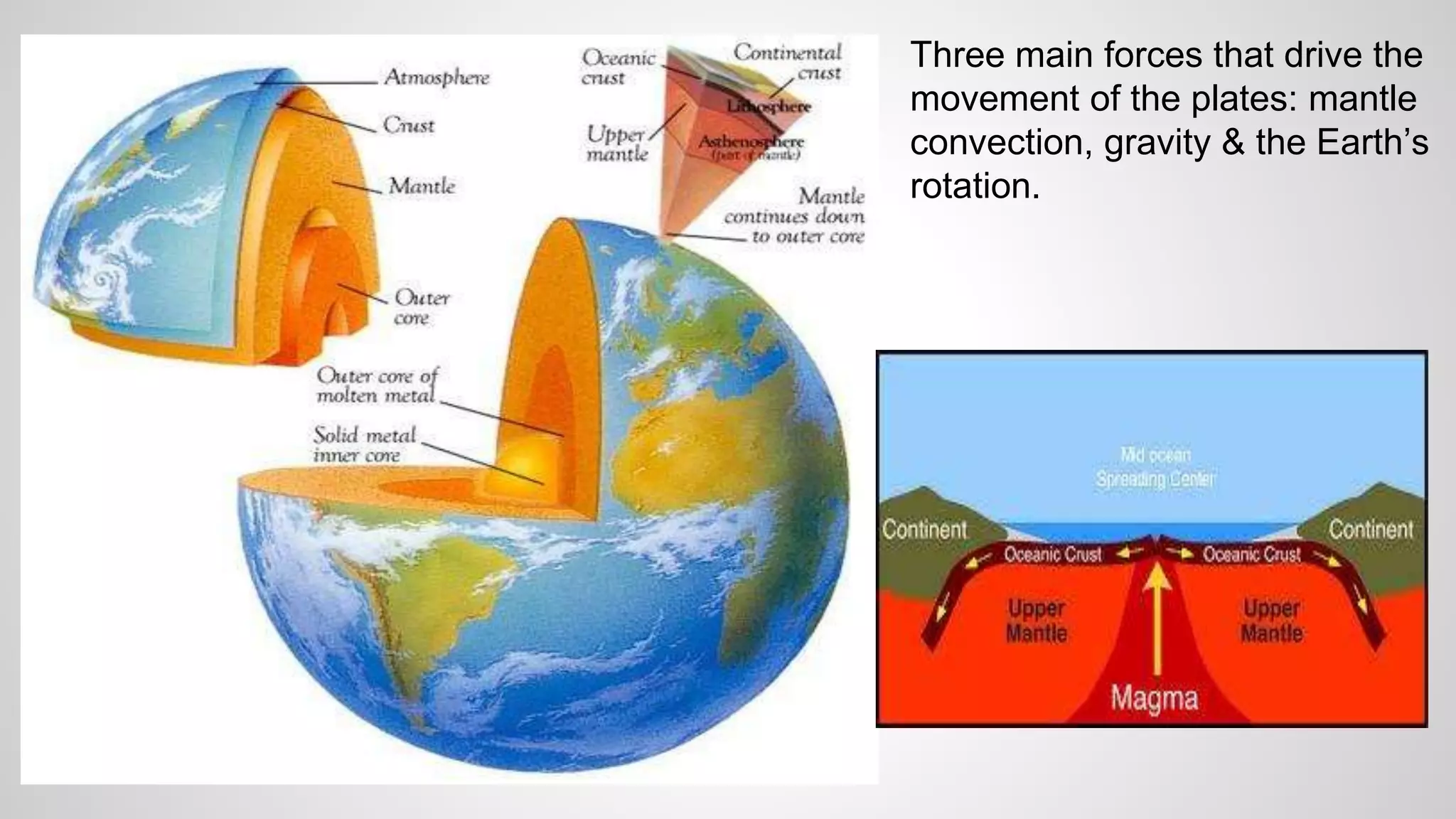
Three main forces that drive the 
movement of the plates: mantle 
convection, gravity & the Earth’s 
rotation.

Harry hess presentation 2

  • 1.
    Harry Hess’ Theory, Sonar and Plates. By Tiara, Evelyn and Katelen
  • 2.
    Hess’s Theory In1962, as a result of oceanographic research conducted in the 1950's, Harry Hammond Hess proposed the theory of seafloor spreading to account for continental movement. He suggested that continents do not move across oceanic crust, but rather that the continents and oceanic crust move together. He suggested that the seafloor separates at oceanic ridges and that new crust is formed by upwelling magma.
  • 3.
    Seafloor Spreading Asa result of the discovery of plate tectonics and the mapping of the earth into 12 plates, plus the understanding of that plate movements create earthquakes, Alfred Wegener’s idea of the continental drift looked less ridiculous than his superiors believed. There is still no way that continents could plow through the earth’s surface on their own but there is something else that could explain how the land masses had once been joined. Harry Hess, who was a geologist and Navy submarine commander during World War II. His mission had been to study the depths of the ocean floor. In 1946, he discovered that hundreds of flat-topped mountains, that could have perhaps been sunken islands, shape the floors of the Pacific. In 1960, he proposed that the movement of continents resulted in sea-floor spreading. Hess added a geologic mechanism to relate to Alfred Wegener’s account of moving continents. He said that it is possible that molten magma from beneath the crust of earth could ooze out between the plates. As the hot magma cools in the ocean water, this expands and pushes the plates on either side of it (North and South to the West and Eurasia and Africa to the East.) As a result of this, the Atlantic Ocean would grow wider but the coastlines of the landmasses would not change as dramatically. Harry Hess proved Alfred Wegener’s idea right and clarified the mechanism that explained the separation of a once-joined continent into the seven individual ones we are now familiar with. The continents are connected to the plates and do not move independently. The plates however shift and change shape, carrying the continents along with them.
  • 4.
    Sonar Sonar isa technique that uses sound waves to detect object underwater by emitting waves and measuring their return (echo) after being reflected. Sonar stands for SOund Navigation And Ranging. There are two types of Sonar - Passive Sonar : Listening to the sounds of objects or vessels underwater. Active Sonar : Emitting pulses of sound and listening for echoes. In this situation, Hess uses sonar to calculate the distances using the Active Sonar Method.
  • 6.
    How did sonarhelp Hess’ Theory? Harry Hess was a geology professor and Navy reservist. So it was not long before Hess became a Navy Submarine Commander during World War II. Therefore while he was travelling from destination to another, Hess would leave the sonar system on, so that it can take measures of the sea floor. It was at this time that Hess discovered features on the floor which led him to conclude a theory of seafloor spreading. Without the help of sonar, Hess would have possibly not have come up with his theory.
  • 7.
    Theory of platetectonics The lithosphere is the firm outer shell of a planet, in this case- Earth. It is divided into various tectonic plates. On Earth, there are 7 major tectonic plates: African plate North American plate Antarctic plate Pacific Plate Eurasian plate South American Plate Indo-Australian Plate There are many other minor plates. At the point where plates meet defines what type of boundary is formed: convergent, divergent or transform.
  • 9.
    Three main forcesthat drive the movement of the plates: mantle convection, gravity & the Earth’s rotation.