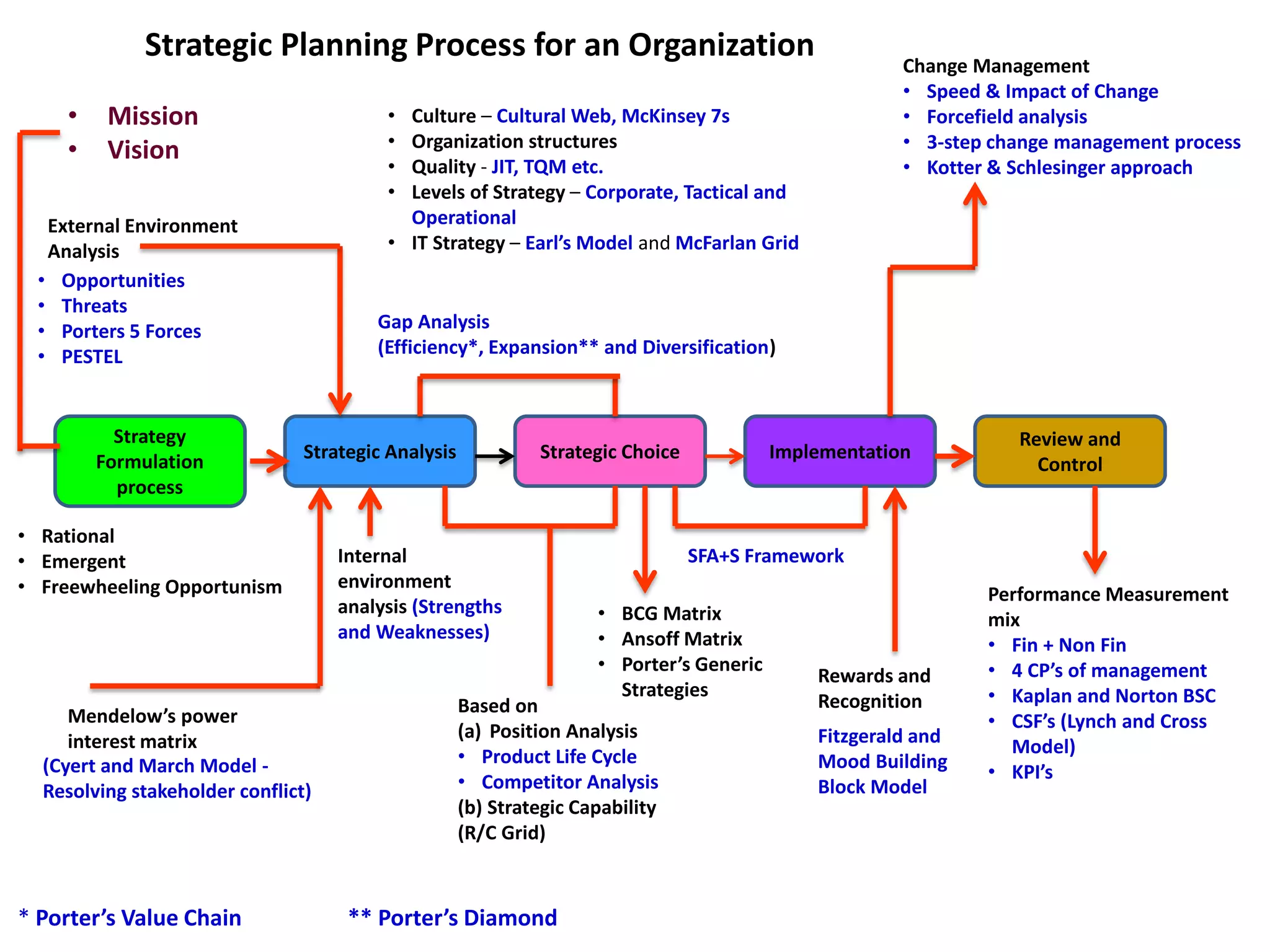
Strategic Planning Process for an Organization
• Culture – Cultural Web, McKinsey 7s
• Organization structures
• Quality - JIT, TQM etc.
• Levels of Strategy – Corporate, Tactical and
Operational
• IT Strategy – Earl’s Model and McFarlan Grid
Strategy
Formulation
process
• Rational
• Emergent
• Freewheeling Opportunism
Strategic Analysis Strategic Choice Implementation
Review and
Control
External Environment
Analysis
• Opportunities
• Threats
• Porters 5 Forces
• PESTEL
Mendelow’s power
interest matrix
(Cyert and March Model -
Resolving stakeholder conflict)
Internal
environment
analysis (Strengths
and Weaknesses)
Gap Analysis
(Efficiency*, Expansion** and Diversification)
Based on
(a) Position Analysis
• Product Life Cycle
• Competitor Analysis
(b) Strategic Capability
(R/C Grid)
SFA+S Framework
Rewards and
Recognition
Change Management
• Speed & Impact of Change
• Forcefield analysis
• 3-step change management process
• Kotter & Schlesinger approach
• BCG Matrix
• Ansoff Matrix
• Porter’s Generic
Strategies
Fitzgerald and
Mood Building
Block Model
Performance Measurement
mix
• Fin + Non Fin
• 4 CP’s of management
• Kaplan and Norton BSC
• CSF’s (Lynch and Cross
Model)
• KPI’s
** Porter’s Diamond* Porter’s Value Chain
• Mission
• Vision
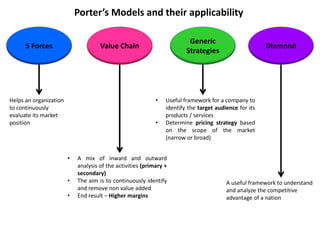
Porter’s Models and their applicability
Value Chain
Generic
Strategies
Diamond5 Forces
Helps an organization
to continuously
evaluate its market
position
• A mix of inward and outward
analysis of the activities (primary +
secondary)
• The aim is to continuously identify
and remove non value added
• End result – Higher margins
• Useful framework for a company to
identify the target audience for its
products / services
• Determine pricing strategy based
on the scope of the market
(narrow or broad)
A useful framework to understand
and analyze the competitive
advantage of a nation

Complete Framework for CIMA E3

  • 1.
    Strategic Planning Processfor an Organization • Culture – Cultural Web, McKinsey 7s • Organization structures • Quality - JIT, TQM etc. • Levels of Strategy – Corporate, Tactical and Operational • IT Strategy – Earl’s Model and McFarlan Grid Strategy Formulation process • Rational • Emergent • Freewheeling Opportunism Strategic Analysis Strategic Choice Implementation Review and Control External Environment Analysis • Opportunities • Threats • Porters 5 Forces • PESTEL Mendelow’s power interest matrix (Cyert and March Model - Resolving stakeholder conflict) Internal environment analysis (Strengths and Weaknesses) Gap Analysis (Efficiency*, Expansion** and Diversification) Based on (a) Position Analysis • Product Life Cycle • Competitor Analysis (b) Strategic Capability (R/C Grid) SFA+S Framework Rewards and Recognition Change Management • Speed & Impact of Change • Forcefield analysis • 3-step change management process • Kotter & Schlesinger approach • BCG Matrix • Ansoff Matrix • Porter’s Generic Strategies Fitzgerald and Mood Building Block Model Performance Measurement mix • Fin + Non Fin • 4 CP’s of management • Kaplan and Norton BSC • CSF’s (Lynch and Cross Model) • KPI’s ** Porter’s Diamond* Porter’s Value Chain • Mission • Vision
  • 2.
    Porter’s Models andtheir applicability Value Chain Generic Strategies Diamond5 Forces Helps an organization to continuously evaluate its market position • A mix of inward and outward analysis of the activities (primary + secondary) • The aim is to continuously identify and remove non value added • End result – Higher margins • Useful framework for a company to identify the target audience for its products / services • Determine pricing strategy based on the scope of the market (narrow or broad) A useful framework to understand and analyze the competitive advantage of a nation