Download to read offline
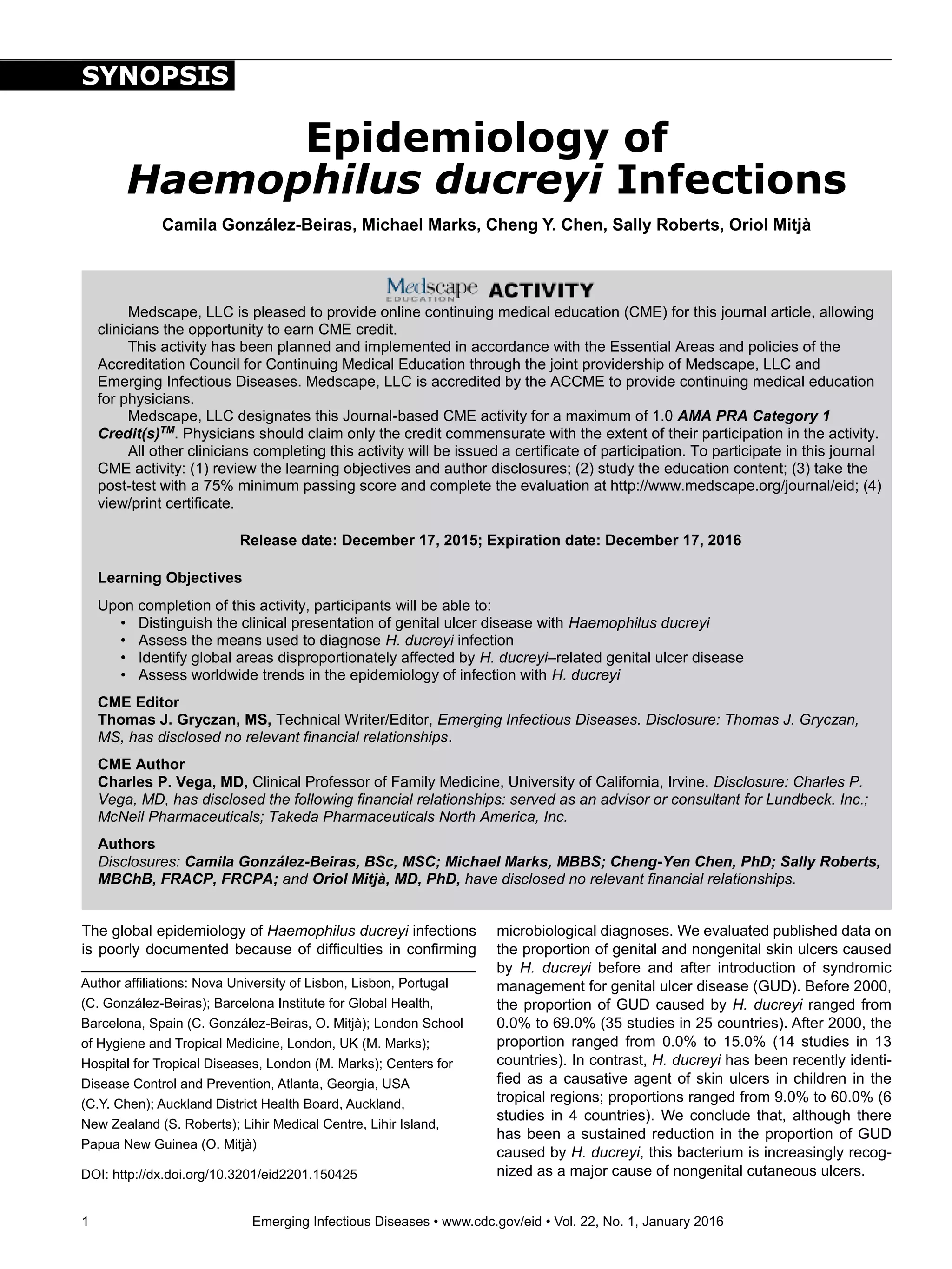


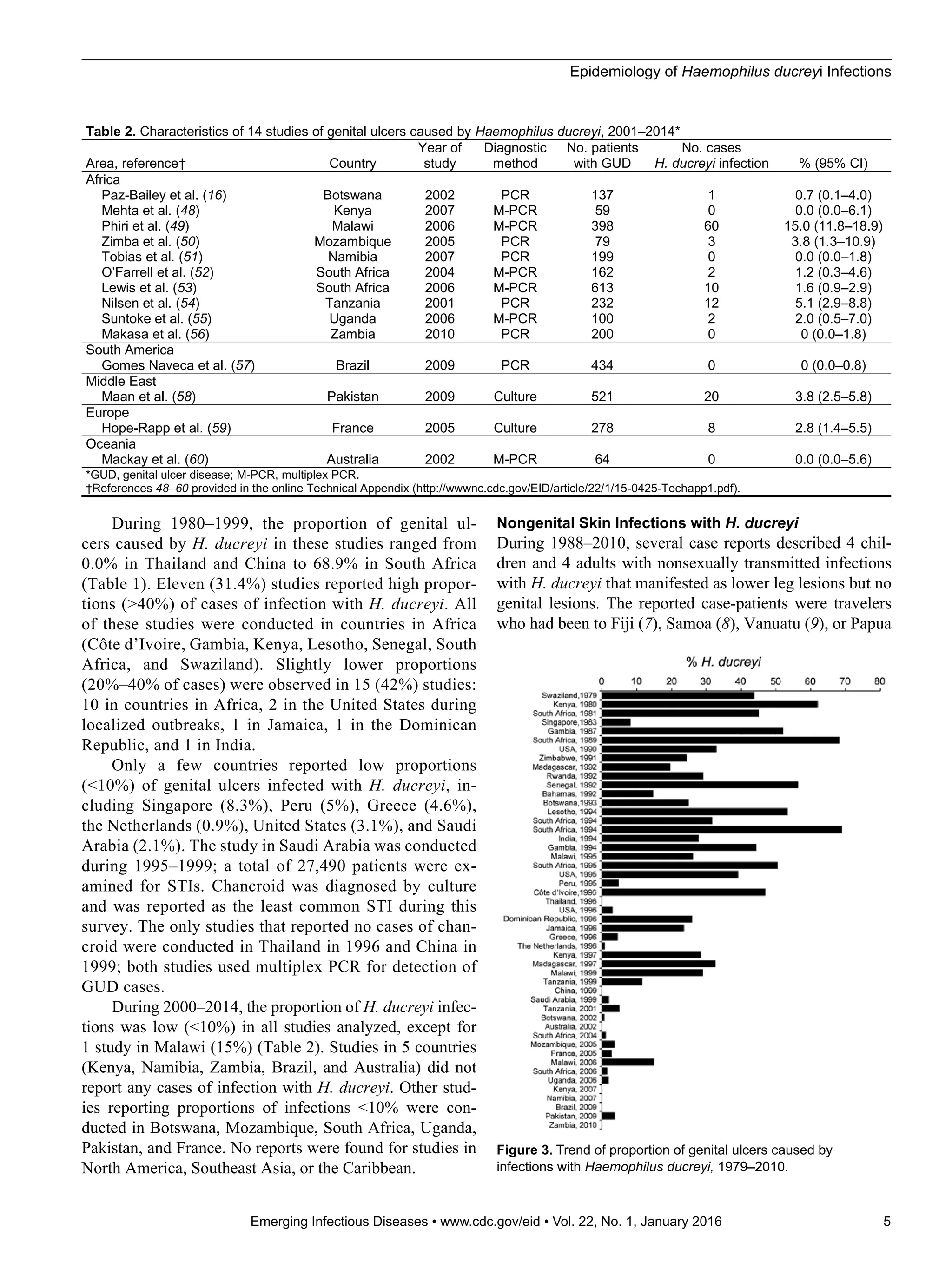
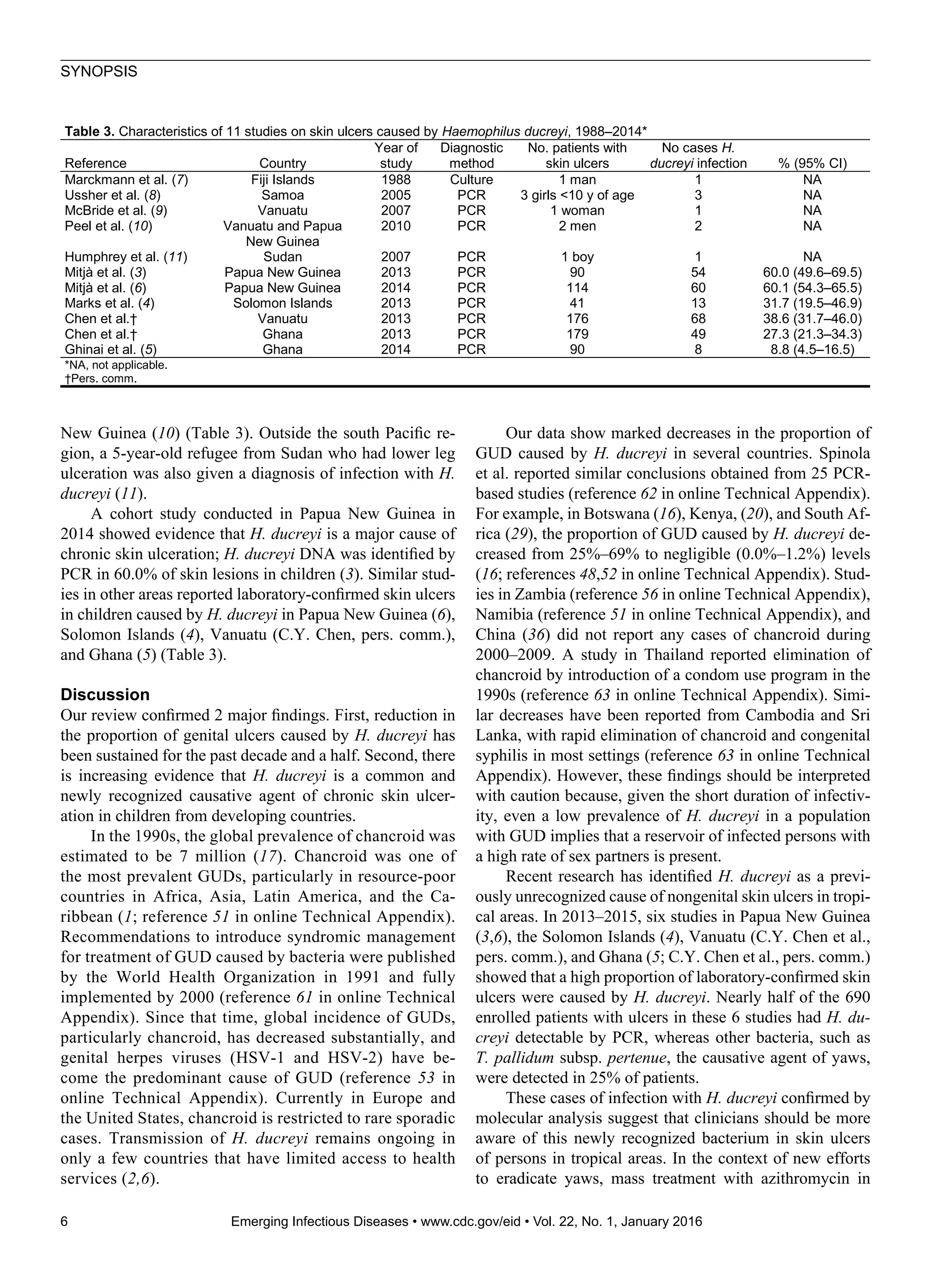


The document evaluates the global epidemiology of Haemophilus ducreyi infections, highlighting the reduction in the proportion of genital ulcer disease (GUD) attributed to this bacterium from 0.0%-69.0% before 2000 to 0.0%-15.0% after the introduction of syndromic management. It contrasts this decline with the rising recognition of H. ducreyi as a significant cause of nongenital skin ulcers in children in tropical regions, where proportions range from 9.0%-60.0%. The study emphasizes the challenges in accurately documenting H. ducreyi infections due to difficulties in laboratory testing and the impact of syndromic treatment practices on incidence reporting.


