HaemolyticUremic Syndrome (HUS)
 Background	A clinical syndromeCharacterized by:Renal failureMiroangiopathic hemolytic anemiaThrombocytopenia
Most common cause of acute renal failure in children and is increasingly recognized in adults.First described by Gasser et al in 1955.
Two main categories of HUS	Shiga-like toxin associated HUS (Stx-HUS)Non-shiga-like toxin associated HUS(non-Stx-HUS)
Stx-HUS: (tHUS)D+ HUSD- HUSNon-StxHUS: (aHUS)SporadicFamilial
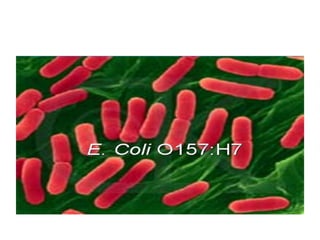
Stx-associated HUSIn developed countries: Escherichia coli serotype O157:H7 (EHEC) most common.In developing countries:Shigella dysenteriae serotype 1.
Source of infectionHuman feco-oral transmission.Milk and animal products (incompletely cooked)Veges, salads,drinking water contaminated by bacteria shed in animal wastes.
PathogenesisDamage to endothelial cells is the primary event.Cardinal lesion composed of arterial and capillary microthrombi (thrombotic microangiopathy) and red blood cell fragmentation.
Histopathological hallmark of HUSThrombotic microangiopathy (TMA)Characterized by:Capillary endothelial damage.Microvascular formation of platelet/fibrin plugs.This induces tissue ischemiaDamage to erythrocytesConsumptive thrombocytopenia.
tHUSOccurs due to bacterial toxin production in colon.EHEC release verotoxinStructurally similar to Shiga toxins released by shigella (Stx1).Stx1 and Stx2 (more severe)
EHECAdheres to and efface intestinal cells and release Stx.Enters blood streamTransported by neutrophils.Stx binds to Gb3 (a glycolipid cell surface receptors) presented on endothelial cells of kidney and other target organs.
Stx1 binds to and detaches easily from Gb3.Stx2 binds and dissociates slowly from Gb3.At these sites, Stx disrupts protein systhesis, causing endothelial cell death and damage.Inflammatory and procoagulant cascade is induced and this promotes microvascular thrombosis.
aHUS (Sporadic)Associated with invasive Streptococcus pneumoniae infection (40% of cases).Renal endothelial cells, erythrocytes and platelets have Thomsen Friedenreich Ag (TAg) on their surface.TAg protected by neuraminic acid.Pneumococci has the enzyme neuramidase that cleaves neuraminic acid from the cell surface.TAg exposed.Anti-TAg IgM.
Leads to antigen-antibody binding.Immune cascade activated.Leading to glomerular endothelial cell damage, hemolytic anemia, platelet aggregation and consumption and fall in GFR.
Other triggersMay occur in association with:HIV, SLE, APS, malignancies, radiation, drugs.Post transplant.Influenza, CMV, EBV, Streptococci and salmonella.
Complement dysregulation (Familial aHUS)Complement gene mutations:Factor H (FH gene).Membrane Co-factor Protein (MCP gene)Factor I Gene (FI gene)Autosomal dominant HUS-adultsAutosomal recessive HUS-childhood.Both associated with poor prognosis.
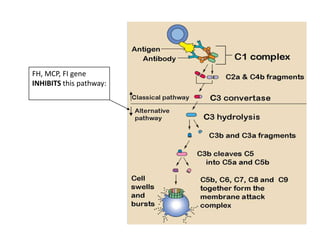
These genes code for proteins that inhibit activity of complement C3b.Deficiency causes unregulated amplification of the alternative pathway.Resulting in activated complement deposition on the surface of invading bacteria or damaged self tissue, such as apoptosed or inflamed renal endothelial cells.
FH, MCP, FI gene INHIBITS this pathway:
ADAMTS-13ADAMTS-13 (ADisintegrin like And Metalloprotease with ThromboSpondin type 1 repeats, number 13.)An enzyme produced by stellate cells in the liver.Located on chromosome 9q34.
Acts as a von Willebrand factor cleaving protease. Degrades large multimeric forms of VWF by cleaving peptide bonds. (In other words, this enzyme cleaves VWF into smaller units)Deficiency of this enzyme, causes formation of ULVWF (Ultra Large) released into plasma.
Circulating platelets preferentially binds to ULVWF strings (rather than to smaller VWF).Platelet aggregation continues leading to thrombotic microangiopathy (Hallmark).Embolisation of ULVWF platelet strings causes tissue ischaemia.
ADAMTS-13 deficiencyFamilial:usually in children.rare.Acquired:more common in adults and older children.Associated with presence of anti-ADAMTS13 antibodies. Manifestation classically of frank TTP.
Management of Stx-HUSSymptomatic therapySpecific therapyPreventionPrognosis
Symptomatic therapyAnemiaThrombocytopeniaFluid and electrolyte disturbancesAcute renal failureHypertensionNeurologic dysfunctionOther organ involvement.
DialysisNo evidence that early dialysis effects clinical outcome.Indications for dialysis:Signs and symptoms of uremiaAzotemia BUN 29-36mmol/L.Severe fluid overloadSevere electrolyte abnormalitiesNeed for nutritional support in a child with oliguria or anuria.
Specific therapyPlasma infusion and plasma exchangeAnti-thrombotic agents-not recommended.Oral shiga toxin binding agent- not recommended.Tissue plasminogen activator.
Plasma exchangeSuccessful in many adults with TTP.No RCT that evaluate efficacy of PEx in children with StxHUS.?shorten duration of acute renal failure.Meta analysis-no clinical benefit.Can be used in children with StxHUS and severe CNS involvement.
The role of plasma exchange in the treatment of severe forms of hemolytic-uremic syndrome in childhood. AUSlavicek J; Puretic Z; Novak M; Sarnavka V; Benjak V; Glavas-Boras S; Thune S SOArtif Organs 1995 Jun;19(6):506-10.Analysis in 9 children from 1983-1993. 3 had GI Sxs, 5 had respiratory prodromes, 1 child developed HUS during the course of varicella.Five children were treated with PEx.Rapid recovery of renal function was observed in 5 patients whereas in 2 oliguric children the recovery of renal function ensued within 1 and 2 months, respectively. We suggest that PEx plays an important role in the early treatment of severe forms of HUS in children.
Escherichia coli O157:H7 and the Hemolytic–Uremic SyndromeThomas G. Boyce, M.D., David L. Swerdlow, M.D., and Patricia M. Griffin, M.DNEJM Volume 333:364-368August 10, 1995No specific therapy has been proved effective in patients with E. coli O157:H7 infection.No proven efficacy of plasmapheresis, FFP and IVIG.
PreventionOnce patient infected with EHEC, attempts to prevent progression from bloody diarrheal phase to postdiarrheal phase of HUS have been unsuccessful.Antibiotics and anti-motility drugs not recommended.Vigorous fluid repletion during diarrheal phase of illness is associated with less severe renal involvement.
PrognosisHematologic manifestation resolve usually within one to two weeks.Mortality rate <5%.Causes of death include hyperkalemia, CHF, pulmonary hemorrhage.
Markers of poor prognosisWCC>20 on presentationPersistent oliguria/anuria.Renal histology showing a glomerular microangiopathy affecting >50% of glomeruli, arterial microangiopathy +/- cortical necrosis.
In summaryHUS is a clinical syndrome characterized by MAHA, ARF and Thrombocytopenia.Thrombotic Microangiopathy (TMA) is the hallmark of disease pathogenesis.Stx or Non-Stx associated HUS.E.coli O157:H7 most common cause for Stx HUS.Strep pneumoniae for non-STx HUS.Familial form of HUS usually associated with complement dysregulation.Treatment of StxHUS mainly supportive with a good prognosis.

Haemolytic Uremic Syndrome

  • 1.
  • 2.
    Background A clinicalsyndromeCharacterized by:Renal failureMiroangiopathic hemolytic anemiaThrombocytopenia
  • 3.
    Most common causeof acute renal failure in children and is increasingly recognized in adults.First described by Gasser et al in 1955.
  • 4.
    Two main categoriesof HUS Shiga-like toxin associated HUS (Stx-HUS)Non-shiga-like toxin associated HUS(non-Stx-HUS)
  • 5.
    Stx-HUS: (tHUS)D+ HUSD-HUSNon-StxHUS: (aHUS)SporadicFamilial
  • 6.
    Stx-associated HUSIn developedcountries: Escherichia coli serotype O157:H7 (EHEC) most common.In developing countries:Shigella dysenteriae serotype 1.
  • 8.
    Source of infectionHumanfeco-oral transmission.Milk and animal products (incompletely cooked)Veges, salads,drinking water contaminated by bacteria shed in animal wastes.
  • 9.
    PathogenesisDamage to endothelialcells is the primary event.Cardinal lesion composed of arterial and capillary microthrombi (thrombotic microangiopathy) and red blood cell fragmentation.
  • 10.
    Histopathological hallmark ofHUSThrombotic microangiopathy (TMA)Characterized by:Capillary endothelial damage.Microvascular formation of platelet/fibrin plugs.This induces tissue ischemiaDamage to erythrocytesConsumptive thrombocytopenia.
  • 11.
    tHUSOccurs due tobacterial toxin production in colon.EHEC release verotoxinStructurally similar to Shiga toxins released by shigella (Stx1).Stx1 and Stx2 (more severe)
  • 12.
    EHECAdheres to andefface intestinal cells and release Stx.Enters blood streamTransported by neutrophils.Stx binds to Gb3 (a glycolipid cell surface receptors) presented on endothelial cells of kidney and other target organs.
  • 13.
    Stx1 binds toand detaches easily from Gb3.Stx2 binds and dissociates slowly from Gb3.At these sites, Stx disrupts protein systhesis, causing endothelial cell death and damage.Inflammatory and procoagulant cascade is induced and this promotes microvascular thrombosis.
  • 14.
    aHUS (Sporadic)Associated withinvasive Streptococcus pneumoniae infection (40% of cases).Renal endothelial cells, erythrocytes and platelets have Thomsen Friedenreich Ag (TAg) on their surface.TAg protected by neuraminic acid.Pneumococci has the enzyme neuramidase that cleaves neuraminic acid from the cell surface.TAg exposed.Anti-TAg IgM.
  • 15.
    Leads to antigen-antibodybinding.Immune cascade activated.Leading to glomerular endothelial cell damage, hemolytic anemia, platelet aggregation and consumption and fall in GFR.
  • 16.
    Other triggersMay occurin association with:HIV, SLE, APS, malignancies, radiation, drugs.Post transplant.Influenza, CMV, EBV, Streptococci and salmonella.
  • 17.
    Complement dysregulation (FamilialaHUS)Complement gene mutations:Factor H (FH gene).Membrane Co-factor Protein (MCP gene)Factor I Gene (FI gene)Autosomal dominant HUS-adultsAutosomal recessive HUS-childhood.Both associated with poor prognosis.
  • 18.
    These genes codefor proteins that inhibit activity of complement C3b.Deficiency causes unregulated amplification of the alternative pathway.Resulting in activated complement deposition on the surface of invading bacteria or damaged self tissue, such as apoptosed or inflamed renal endothelial cells.
  • 19.
    FH, MCP, FIgene INHIBITS this pathway:
  • 20.
    ADAMTS-13ADAMTS-13 (ADisintegrin likeAnd Metalloprotease with ThromboSpondin type 1 repeats, number 13.)An enzyme produced by stellate cells in the liver.Located on chromosome 9q34.
  • 21.
    Acts as avon Willebrand factor cleaving protease. Degrades large multimeric forms of VWF by cleaving peptide bonds. (In other words, this enzyme cleaves VWF into smaller units)Deficiency of this enzyme, causes formation of ULVWF (Ultra Large) released into plasma.
  • 22.
    Circulating platelets preferentiallybinds to ULVWF strings (rather than to smaller VWF).Platelet aggregation continues leading to thrombotic microangiopathy (Hallmark).Embolisation of ULVWF platelet strings causes tissue ischaemia.
  • 23.
    ADAMTS-13 deficiencyFamilial:usually inchildren.rare.Acquired:more common in adults and older children.Associated with presence of anti-ADAMTS13 antibodies. Manifestation classically of frank TTP.
  • 24.
    Management of Stx-HUSSymptomatictherapySpecific therapyPreventionPrognosis
  • 25.
    Symptomatic therapyAnemiaThrombocytopeniaFluid andelectrolyte disturbancesAcute renal failureHypertensionNeurologic dysfunctionOther organ involvement.
  • 26.
    DialysisNo evidence thatearly dialysis effects clinical outcome.Indications for dialysis:Signs and symptoms of uremiaAzotemia BUN 29-36mmol/L.Severe fluid overloadSevere electrolyte abnormalitiesNeed for nutritional support in a child with oliguria or anuria.
  • 27.
    Specific therapyPlasma infusionand plasma exchangeAnti-thrombotic agents-not recommended.Oral shiga toxin binding agent- not recommended.Tissue plasminogen activator.
  • 28.
    Plasma exchangeSuccessful inmany adults with TTP.No RCT that evaluate efficacy of PEx in children with StxHUS.?shorten duration of acute renal failure.Meta analysis-no clinical benefit.Can be used in children with StxHUS and severe CNS involvement.
  • 29.
    The role ofplasma exchange in the treatment of severe forms of hemolytic-uremic syndrome in childhood. AUSlavicek J; Puretic Z; Novak M; Sarnavka V; Benjak V; Glavas-Boras S; Thune S SOArtif Organs 1995 Jun;19(6):506-10.Analysis in 9 children from 1983-1993. 3 had GI Sxs, 5 had respiratory prodromes, 1 child developed HUS during the course of varicella.Five children were treated with PEx.Rapid recovery of renal function was observed in 5 patients whereas in 2 oliguric children the recovery of renal function ensued within 1 and 2 months, respectively. We suggest that PEx plays an important role in the early treatment of severe forms of HUS in children.
  • 30.
    Escherichia coli O157:H7and the Hemolytic–Uremic SyndromeThomas G. Boyce, M.D., David L. Swerdlow, M.D., and Patricia M. Griffin, M.DNEJM Volume 333:364-368August 10, 1995No specific therapy has been proved effective in patients with E. coli O157:H7 infection.No proven efficacy of plasmapheresis, FFP and IVIG.
  • 31.
    PreventionOnce patient infectedwith EHEC, attempts to prevent progression from bloody diarrheal phase to postdiarrheal phase of HUS have been unsuccessful.Antibiotics and anti-motility drugs not recommended.Vigorous fluid repletion during diarrheal phase of illness is associated with less severe renal involvement.
  • 32.
    PrognosisHematologic manifestation resolveusually within one to two weeks.Mortality rate <5%.Causes of death include hyperkalemia, CHF, pulmonary hemorrhage.
  • 33.
    Markers of poorprognosisWCC>20 on presentationPersistent oliguria/anuria.Renal histology showing a glomerular microangiopathy affecting >50% of glomeruli, arterial microangiopathy +/- cortical necrosis.
  • 34.
    In summaryHUS isa clinical syndrome characterized by MAHA, ARF and Thrombocytopenia.Thrombotic Microangiopathy (TMA) is the hallmark of disease pathogenesis.Stx or Non-Stx associated HUS.E.coli O157:H7 most common cause for Stx HUS.Strep pneumoniae for non-STx HUS.Familial form of HUS usually associated with complement dysregulation.Treatment of StxHUS mainly supportive with a good prognosis.