HEMOLYTIC UREMIC SYNDROME
• Presenter- Hassani Bakari
• Facilitator- Dr. Joshua( Pediatrician)
OUTLINE OF THE PRESENTATION
• Background
• Classification of the hemolytic uremic syndrome
• Etiopathogenesis
• Clinical features
• Investigation
• Management
• BACKGROUND
• It is a clinical syndrome characterized by
 macroangiopathic hemolytic anemia.
Thrombocytopenia
Acute kidney failure
• it is the most common cause of AKI in children.
• Predominantly affect children( under 5)
TYPES OF HUS
• Into two broad categories
Typical HUS- diarrhea associated (commonest one
Atypical HUS- non diarrhea associated( infrequent and most
severe)
infection associated Systemic disease
associated
Drug induced Genetic
• Verotoxin/shiga
like toxin
producing E.coli(0
157:H7), Shiga
toxin producing
shigella(STPSD
1)
• Systemic Lupus
Erythematosus
• Quinine(most
common)
• Cytotoxic drugs
such as Cisplatin,
mitomycin C
• Von Willebrand
Factor-cleaving
protease
deficiency(ADAM
TS 13)
• Neuraminidase
producing
S.pneumonia
• Anti phospholipid
syndrome
• Cyclosporine • Complement H
and I deficiency
• HIV
CLASSIFICATION OF HUS BASED ON ETIOLOGY
E.coli
SOURCES OF INFECTION
• Milk and animal products( poorly cooked beef ,pork,
lamb)
• Human feco-oral transmission
• Vegetables ,salads drinking water contaminated with the
bacteria
ETIOPATHOGENESIS –typical HUS
• Typical / Diarrhea associated
• Commonly due to shiga toxin producing shigella dysenteriae type 1(developing nations)
• And Escherichia coli serotype 0157:H7 ( commonly ,In Developed nations)
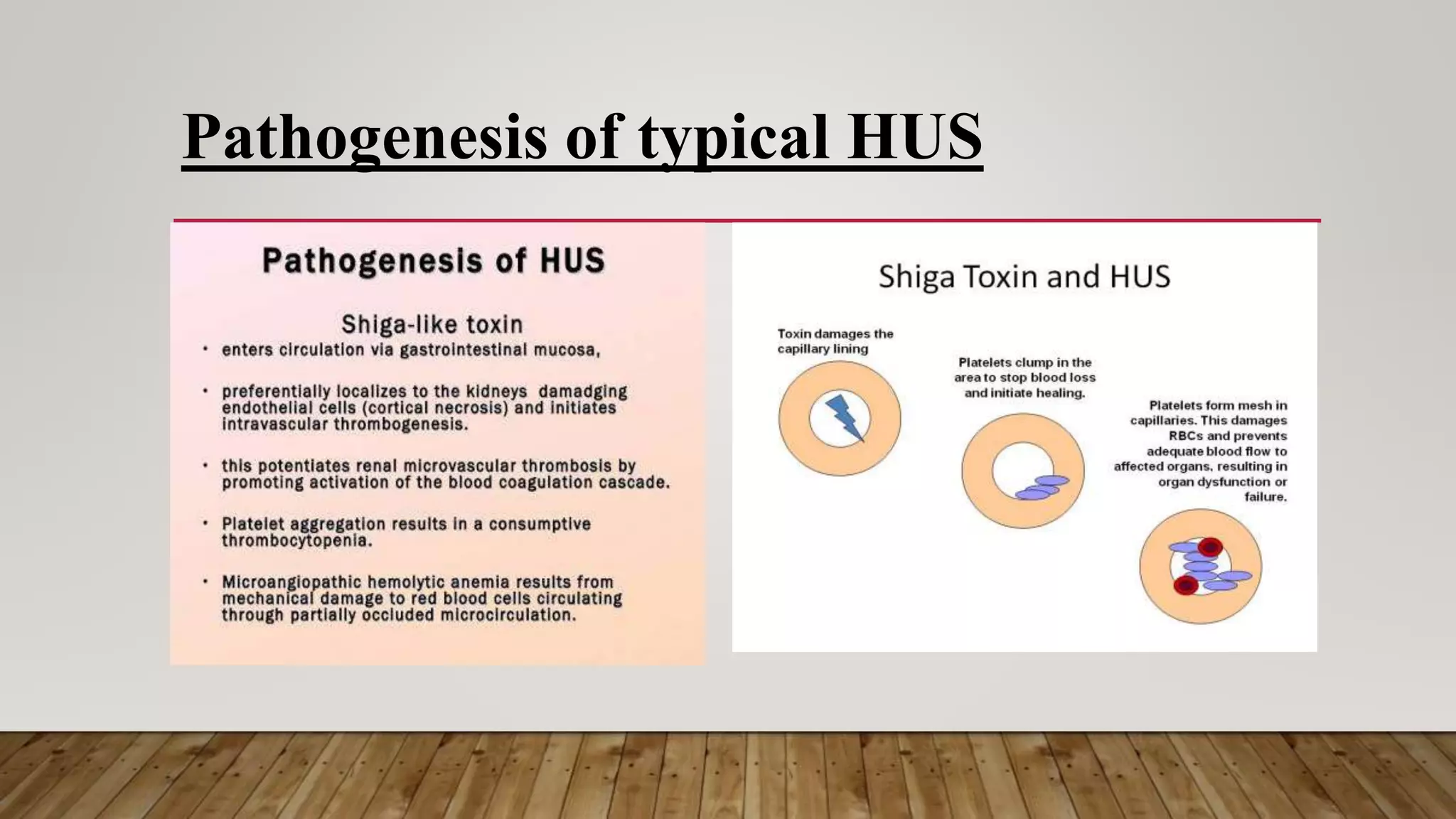
• Shiga toxin or shiga like toxin cause endothelia damage
• Leading to platelets adhesion, aggregation, and activation
• Leading to narrowing of small vessels in glomerular due to formed thrombi
• This cause damage to passing RBC leading to hemolytic anemia
ETIOPATHOGENESIS –typical HUS………….
• Formed thrombi reduce GFR leading to AKI
• Consumptive thrombocytopenia as platelets adhere to damaged endothelial
Pathogenesis of typical HUS
CLINICAL FEATURES
• HUS develops 5-10 days after onset of diarrhea, abdominal pain
and fever
• Then acute anemia(pallor)
• Oliguria
• Hematuria and Hypertension
CLINICAL FEATURES……..
• Complications of fluid overload( Pulmonary edema,
Hypertensive encephalopathy)
• Neurological manifestation such as
 irritability
Seizures
Encephalopathy
• Bleeding manifestation ( possible but rare)
INVESTIGATIONS
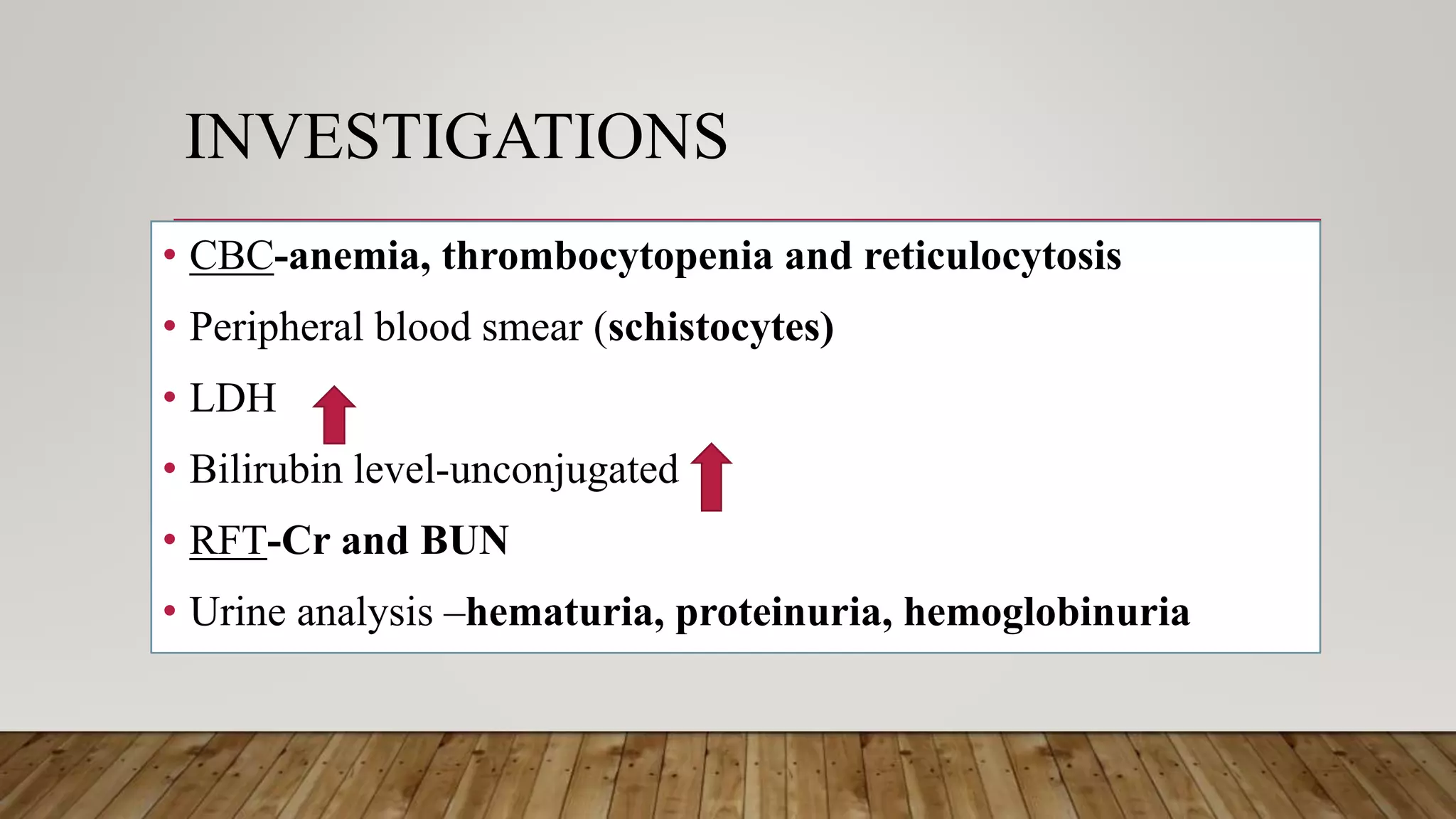
• CBC-anemia, thrombocytopenia and reticulocytosis
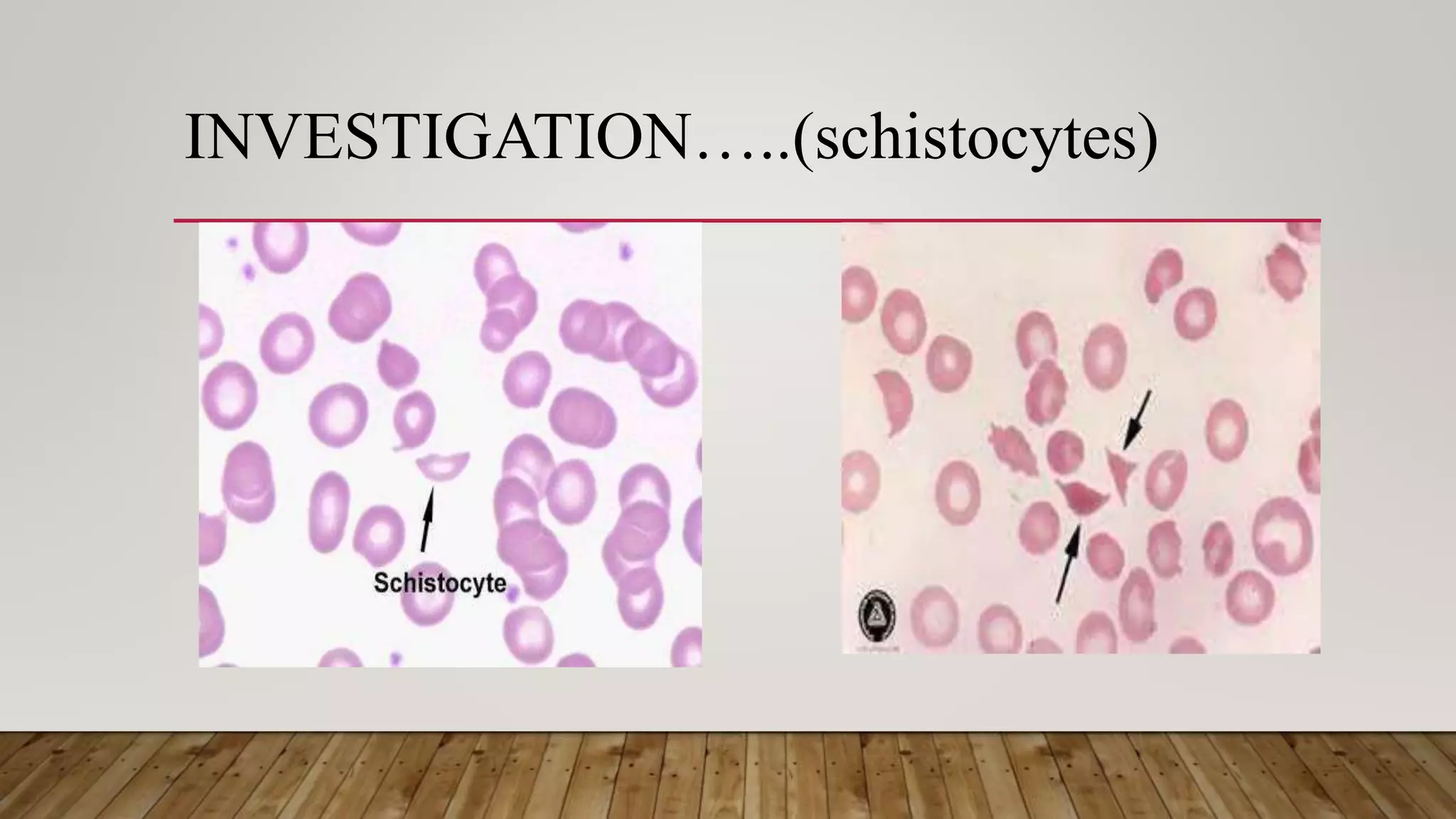
• Peripheral blood smear (schistocytes)
• LDH
• Bilirubin level-unconjugated
• RFT-Cr and BUN
• Urine analysis –hematuria, proteinuria, hemoglobinuria
INVESTIGATION…..(schistocytes)
INVESTIGATION…….
• To check for EHEC or Shigella from stool culture
• From urine culture(Rarely HUS can arise from UTI due to
E.Coli
MANAGEMENT OF HUS
• Supportive
• Antibiotics
• Plasma therapy
a) SUPPORTIVE
• It is cornerstone of primary approach
• If there is fluid deficit-fluid supplementation is of paramount
importance
• If the is fluid overload –fluid restriction
• Correct electrolyte imbalance-hyponatremia, hyperkalemia
a) supportive care…….
• Early initiation of dialysis if –(a ,e ,i, o ,u )
• If significant anemia is present –give PRBCs very carefully
• Platelet transfusion- not generally required( to be considered
only in uncontrolled severe bleeding)
(b) Use of antibiotics
• Use of antimicrobial agent{contradicting)- no evidence of
benefit
• [c] Plasma infusion in severe cases
• Complement replacements
PROGNOSIS OF HUS
• Immediate outcome of classical HUS is relative better than
aHUS
• It has less than 5% mortality with good supportive care
• 10-30% develop CKD
• 5-10% develop ESRD in the next 10yrs
•THANK YOU
REFERENCES
• Journal of nephrology and therapeutic-review of articles on HUS by
Jagabandhu et al
• Current diagnosis and treatment book 22 edition
• Medscape

hemolytic uremic syndrome

  • 1.
    HEMOLYTIC UREMIC SYNDROME •Presenter- Hassani Bakari • Facilitator- Dr. Joshua( Pediatrician)
  • 2.
    OUTLINE OF THEPRESENTATION • Background • Classification of the hemolytic uremic syndrome • Etiopathogenesis • Clinical features • Investigation • Management
  • 3.
    • BACKGROUND • Itis a clinical syndrome characterized by  macroangiopathic hemolytic anemia. Thrombocytopenia Acute kidney failure • it is the most common cause of AKI in children. • Predominantly affect children( under 5)
  • 4.
    TYPES OF HUS •Into two broad categories Typical HUS- diarrhea associated (commonest one Atypical HUS- non diarrhea associated( infrequent and most severe)
  • 5.
    infection associated Systemicdisease associated Drug induced Genetic • Verotoxin/shiga like toxin producing E.coli(0 157:H7), Shiga toxin producing shigella(STPSD 1) • Systemic Lupus Erythematosus • Quinine(most common) • Cytotoxic drugs such as Cisplatin, mitomycin C • Von Willebrand Factor-cleaving protease deficiency(ADAM TS 13) • Neuraminidase producing S.pneumonia • Anti phospholipid syndrome • Cyclosporine • Complement H and I deficiency • HIV CLASSIFICATION OF HUS BASED ON ETIOLOGY
  • 6.
  • 7.
    SOURCES OF INFECTION •Milk and animal products( poorly cooked beef ,pork, lamb) • Human feco-oral transmission • Vegetables ,salads drinking water contaminated with the bacteria
  • 8.
    ETIOPATHOGENESIS –typical HUS •Typical / Diarrhea associated • Commonly due to shiga toxin producing shigella dysenteriae type 1(developing nations) • And Escherichia coli serotype 0157:H7 ( commonly ,In Developed nations) • Shiga toxin or shiga like toxin cause endothelia damage • Leading to platelets adhesion, aggregation, and activation • Leading to narrowing of small vessels in glomerular due to formed thrombi • This cause damage to passing RBC leading to hemolytic anemia
  • 9.
    ETIOPATHOGENESIS –typical HUS…………. •Formed thrombi reduce GFR leading to AKI • Consumptive thrombocytopenia as platelets adhere to damaged endothelial
  • 10.
  • 11.
    CLINICAL FEATURES • HUSdevelops 5-10 days after onset of diarrhea, abdominal pain and fever • Then acute anemia(pallor) • Oliguria • Hematuria and Hypertension
  • 12.
    CLINICAL FEATURES…….. • Complicationsof fluid overload( Pulmonary edema, Hypertensive encephalopathy) • Neurological manifestation such as  irritability Seizures Encephalopathy • Bleeding manifestation ( possible but rare)
  • 13.
    INVESTIGATIONS • CBC-anemia, thrombocytopeniaand reticulocytosis • Peripheral blood smear (schistocytes) • LDH • Bilirubin level-unconjugated • RFT-Cr and BUN • Urine analysis –hematuria, proteinuria, hemoglobinuria
  • 14.
  • 15.
    INVESTIGATION……. • To checkfor EHEC or Shigella from stool culture • From urine culture(Rarely HUS can arise from UTI due to E.Coli
  • 16.
    MANAGEMENT OF HUS •Supportive • Antibiotics • Plasma therapy
  • 17.
    a) SUPPORTIVE • Itis cornerstone of primary approach • If there is fluid deficit-fluid supplementation is of paramount importance • If the is fluid overload –fluid restriction • Correct electrolyte imbalance-hyponatremia, hyperkalemia
  • 18.
    a) supportive care……. •Early initiation of dialysis if –(a ,e ,i, o ,u ) • If significant anemia is present –give PRBCs very carefully • Platelet transfusion- not generally required( to be considered only in uncontrolled severe bleeding)
  • 19.
    (b) Use ofantibiotics • Use of antimicrobial agent{contradicting)- no evidence of benefit • [c] Plasma infusion in severe cases • Complement replacements
  • 20.
    PROGNOSIS OF HUS •Immediate outcome of classical HUS is relative better than aHUS • It has less than 5% mortality with good supportive care • 10-30% develop CKD • 5-10% develop ESRD in the next 10yrs
  • 21.
  • 22.
    REFERENCES • Journal ofnephrology and therapeutic-review of articles on HUS by Jagabandhu et al • Current diagnosis and treatment book 22 edition • Medscape