

Your Name
Class Name
Month day, year
HACCP Implementation
in Fish Processing
Industry
COMPILED BY-
ANUJ JHA
ARUN P.K.
FPE E-52- Food Safety and Quality for Food Processing Industries
Spotlight……..
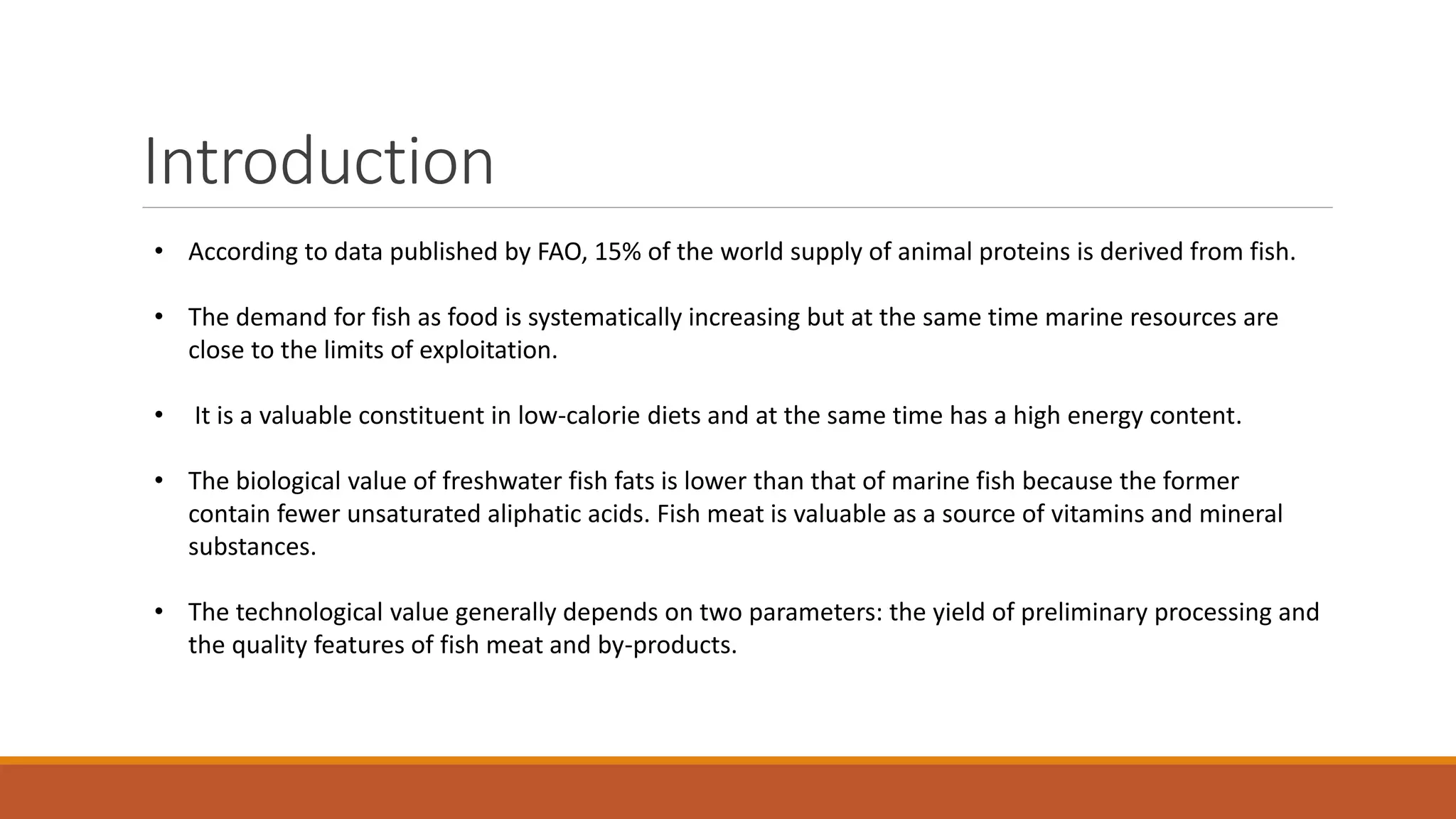
• Introduction
• PRELIMINARY PROCESSING OF FISH
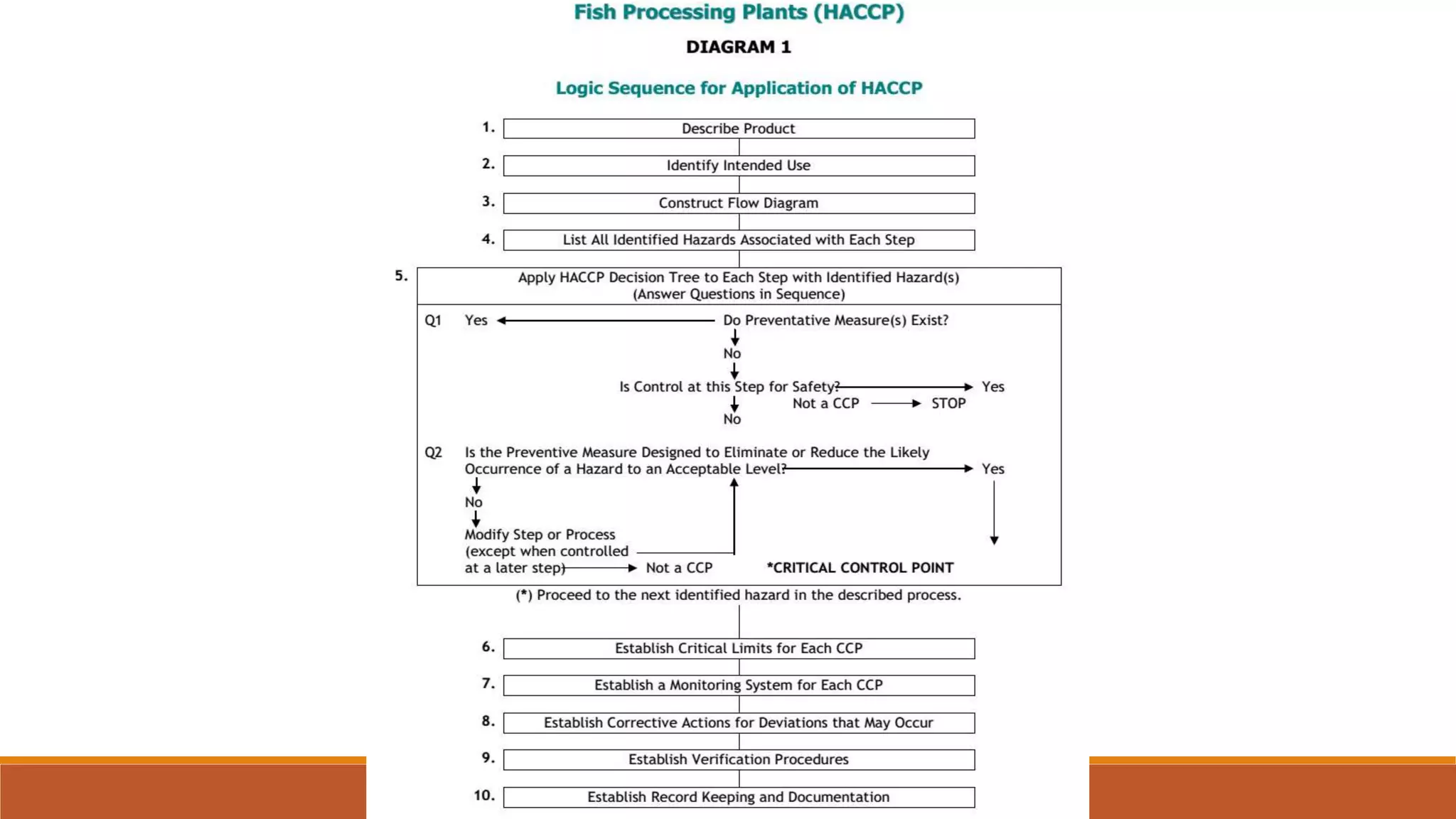
• HACCP Principles
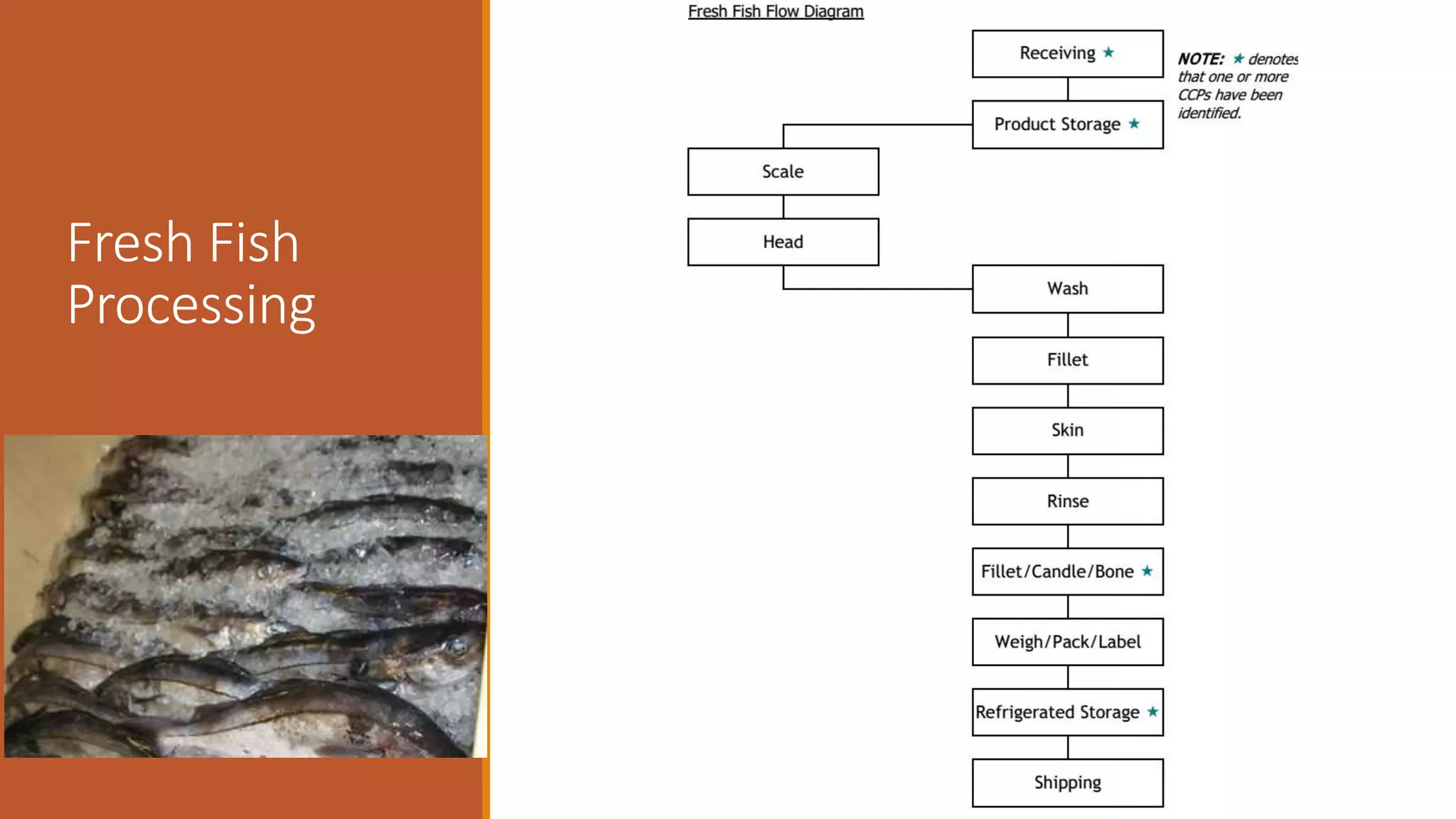
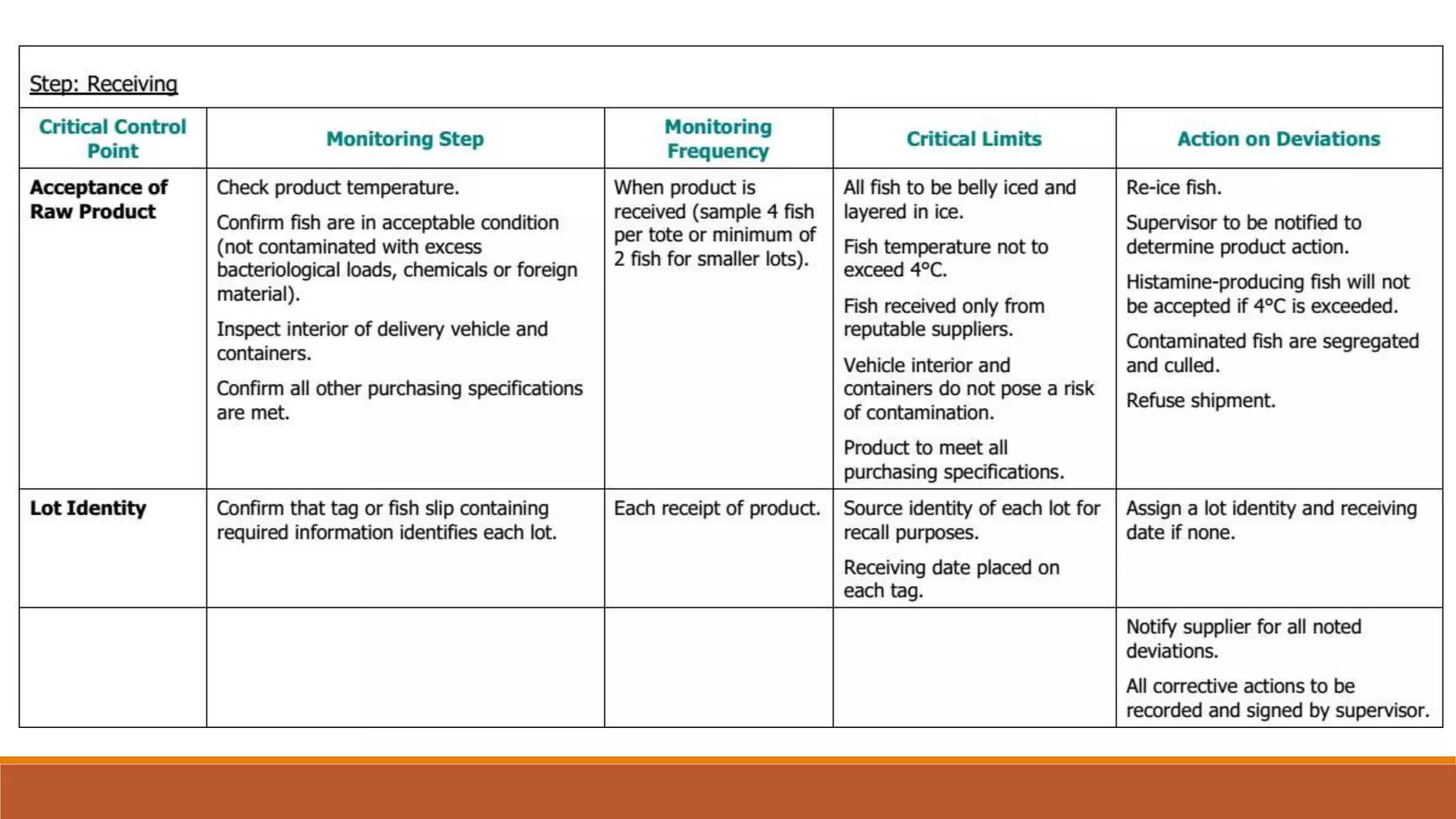
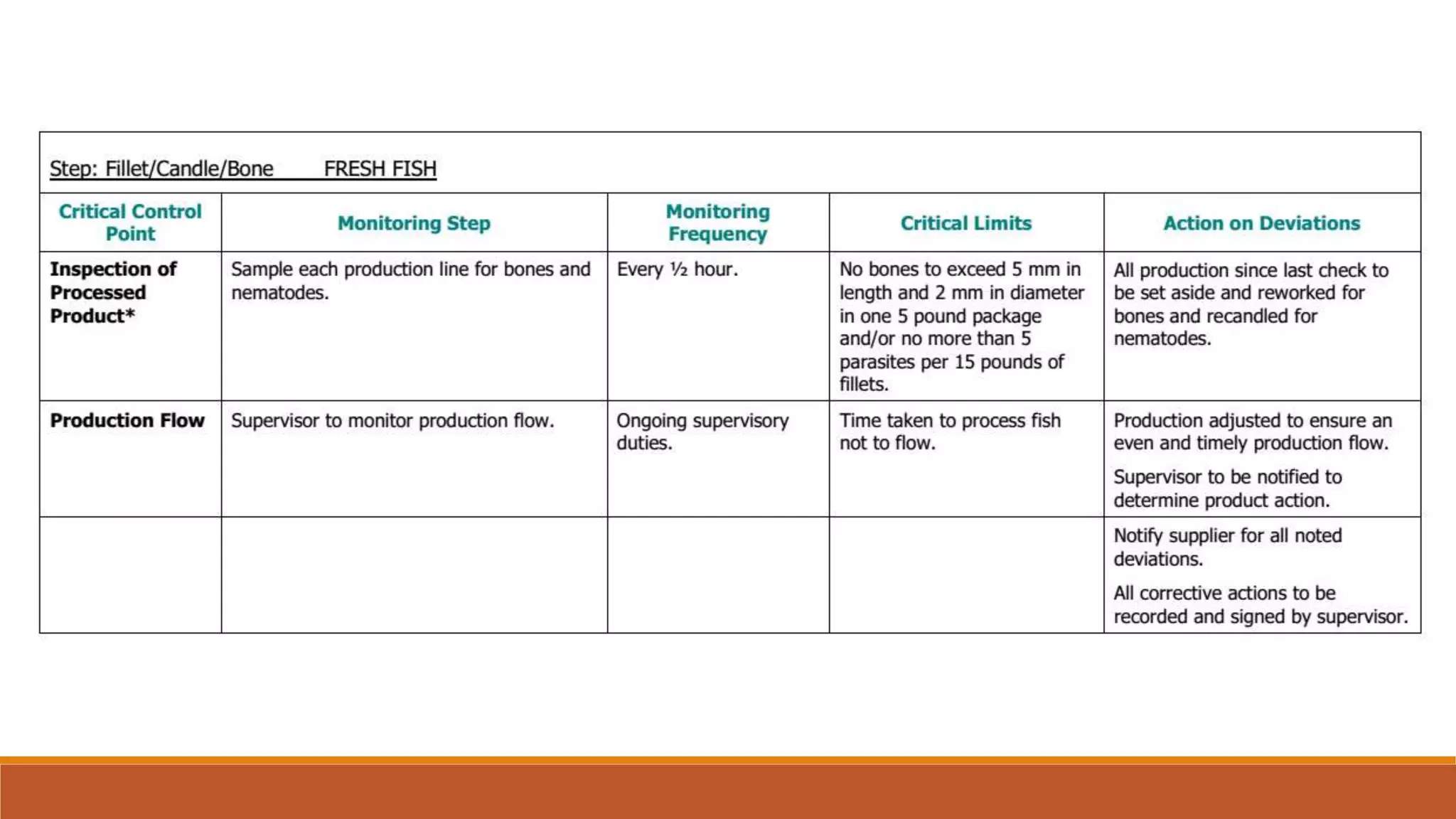
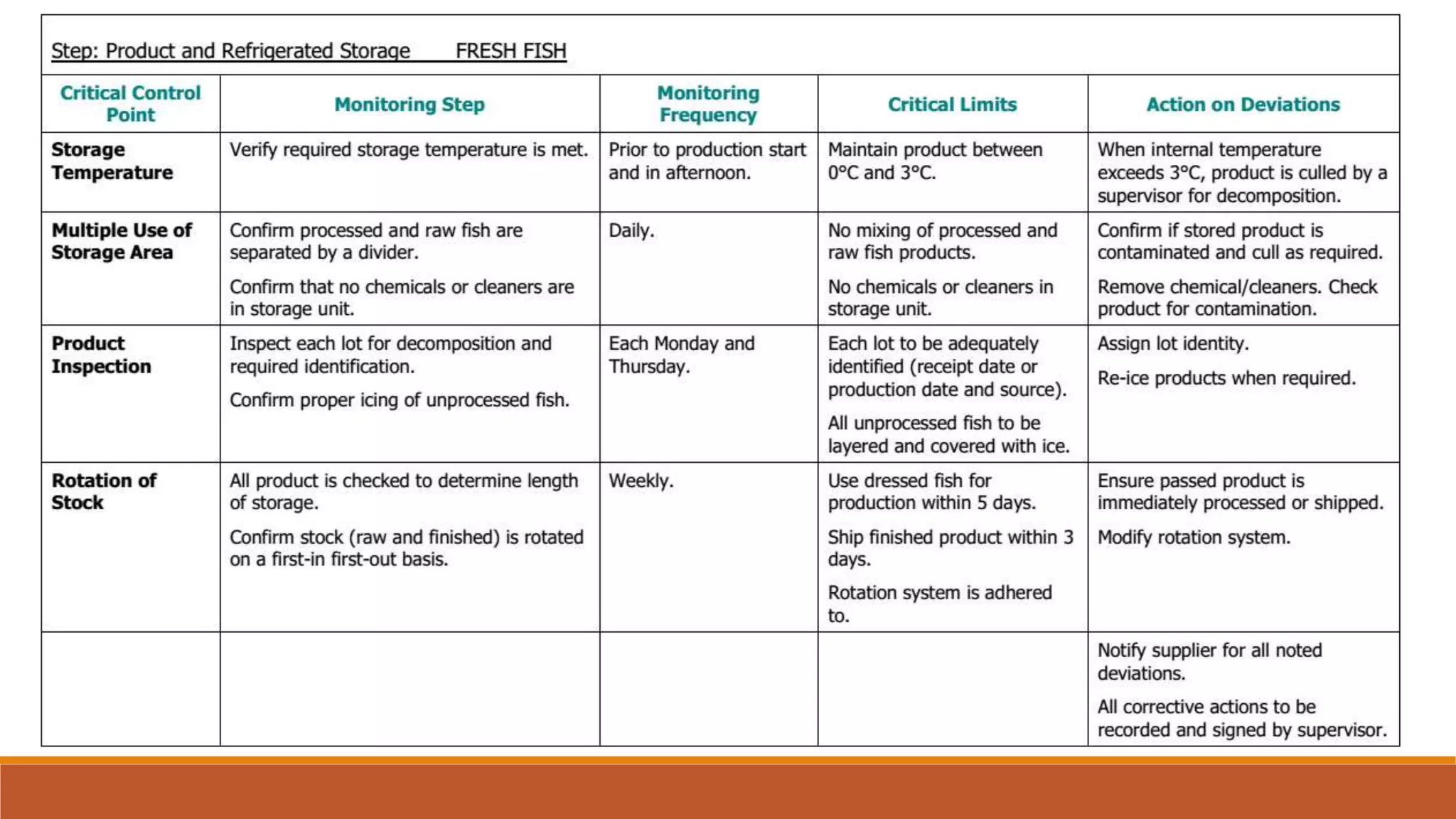
• Fresh Fish Processing
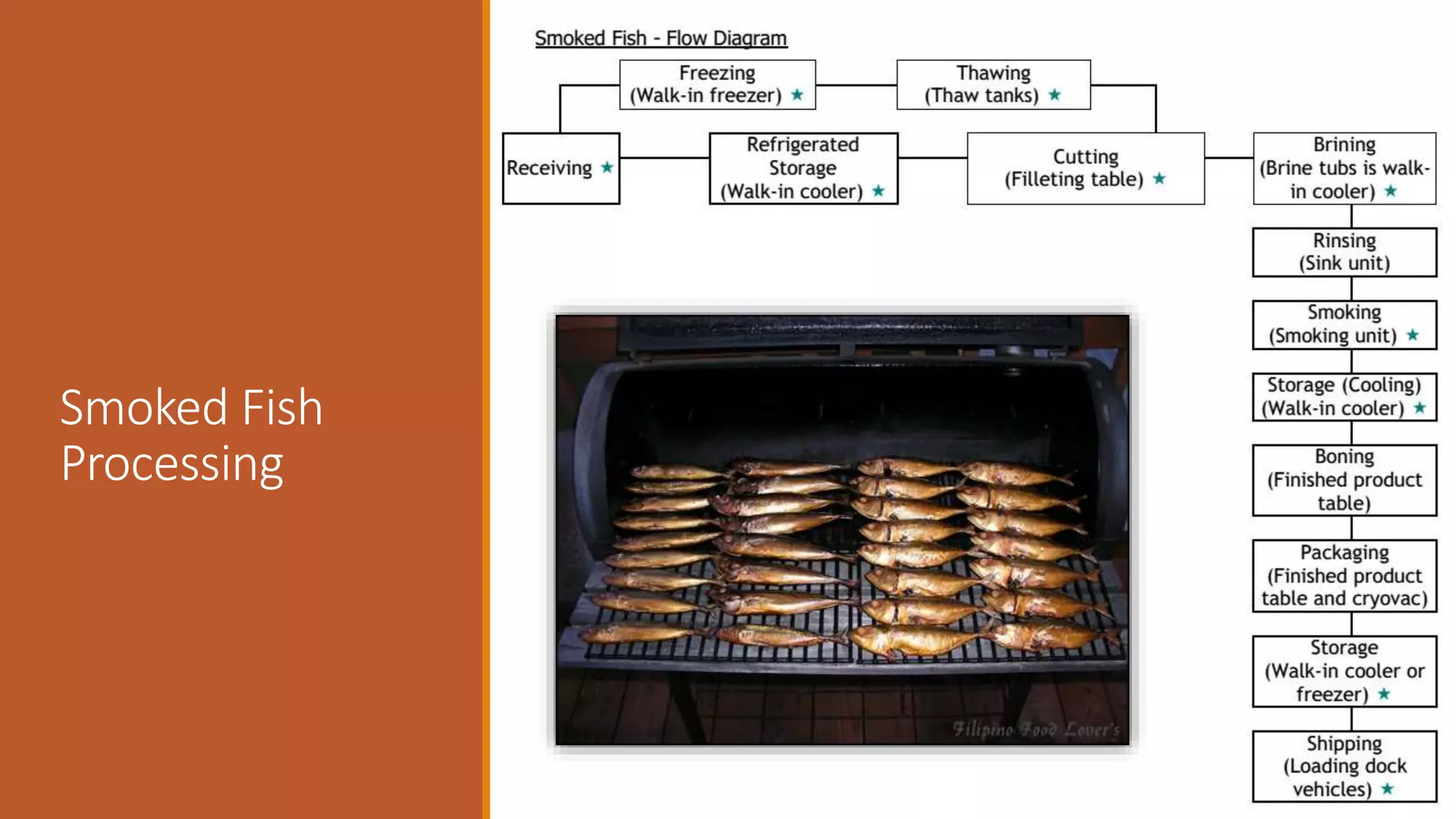
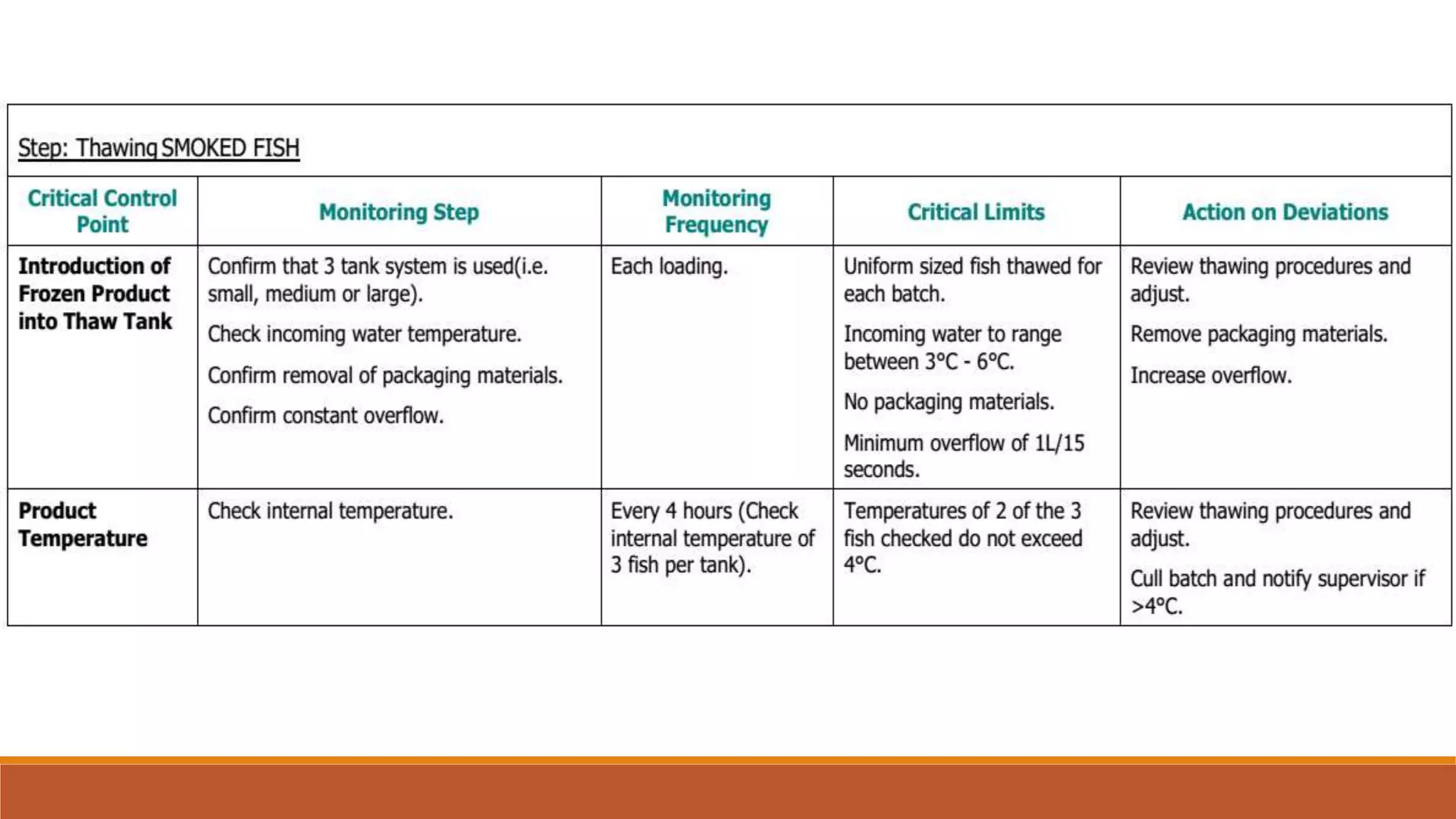
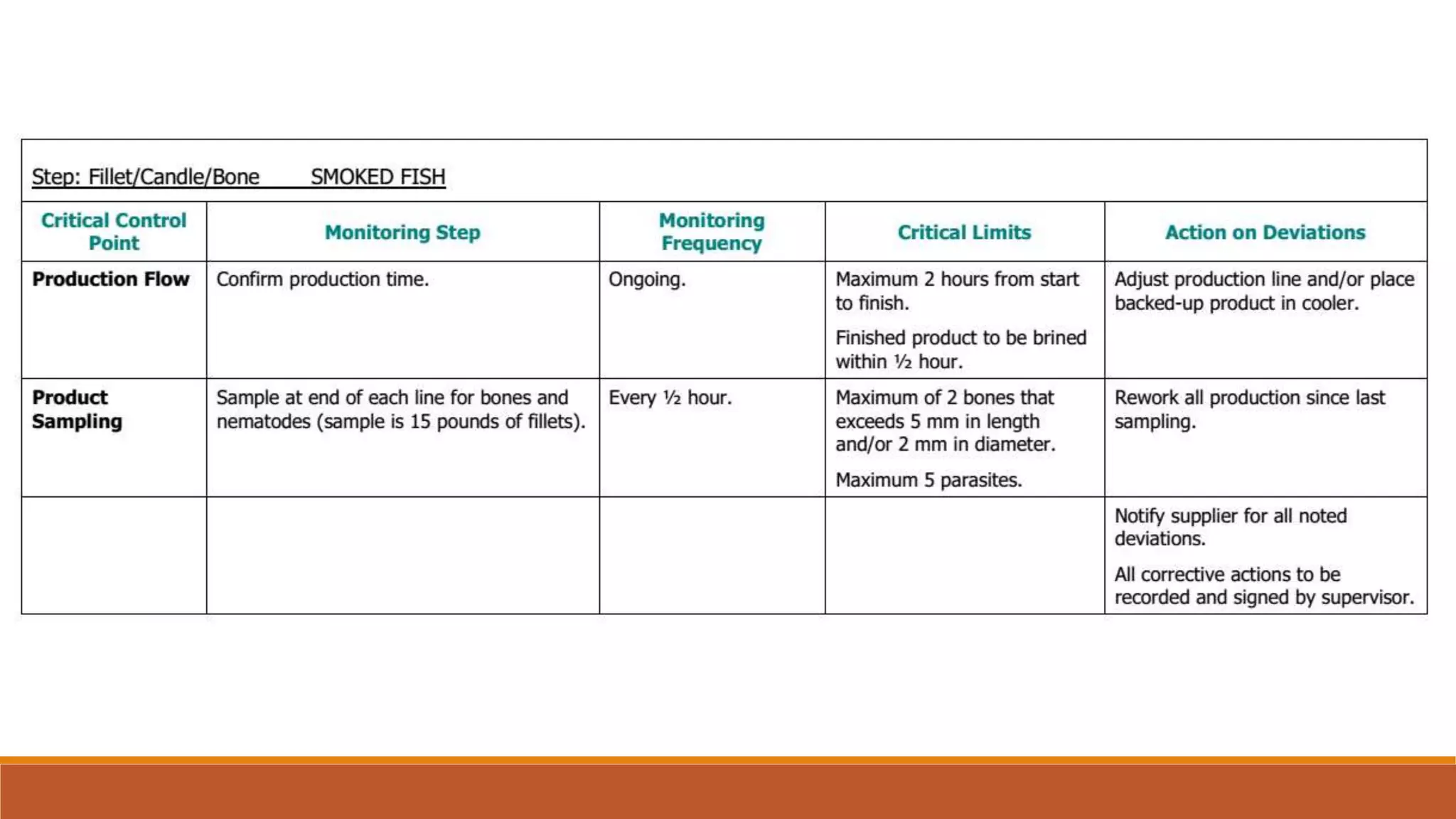
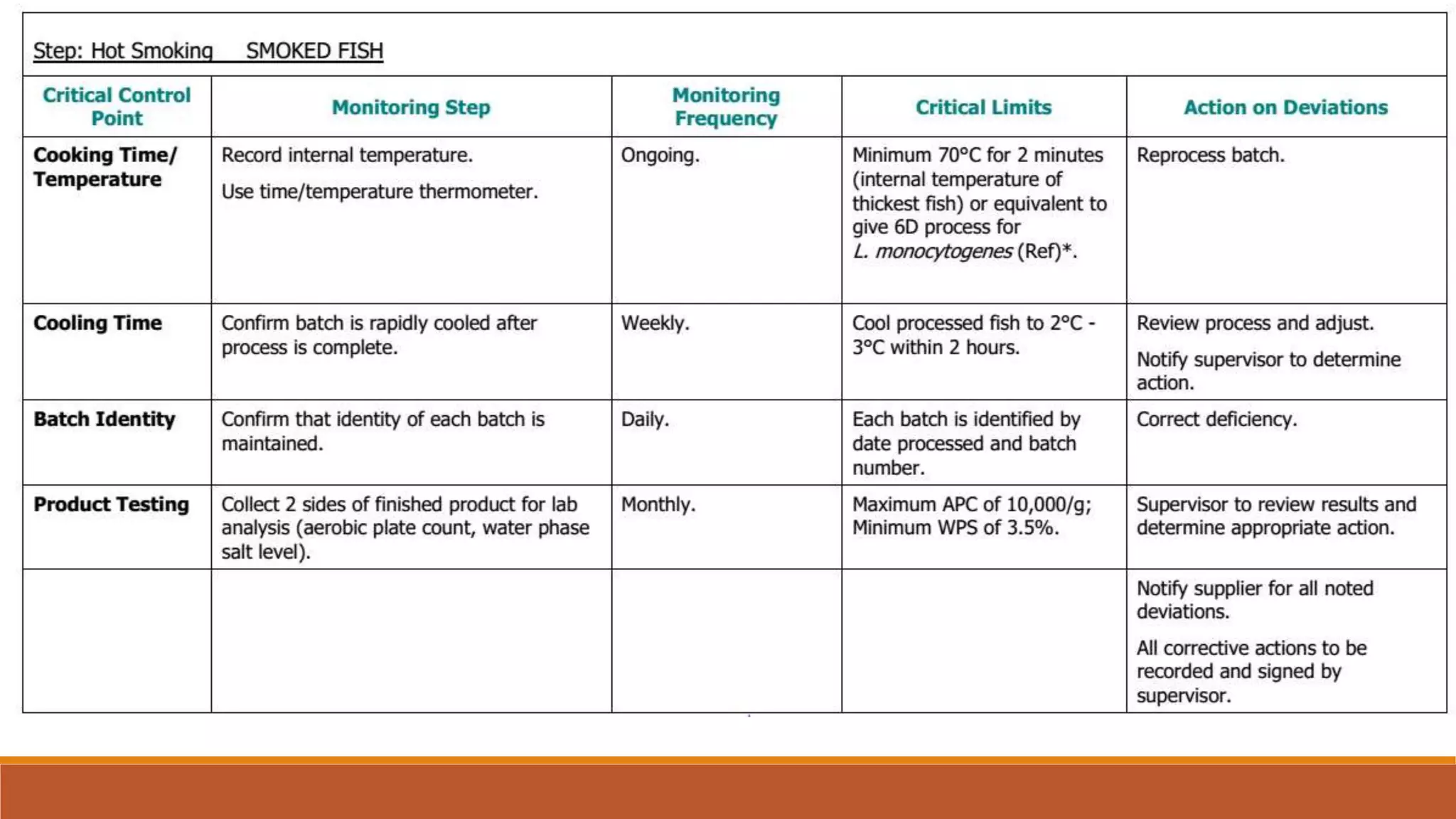
• Smoked Fish Processing
• Sanitation Standard Operating Procedures
• Steps for Cleaning in Fish Processing Plant
• Industrial Setup – Salmon Processing
Introduction
• According to data published by FAO, 15% of the world supply of animal proteins is derived from fish.
• The demand for fish as food is systematically increasing but at the same time marine resources are
close to the limits of exploitation.
• It is a valuable constituent in low-calorie diets and at the same time has a high energy content.
• The biological value of freshwater fish fats is lower than that of marine fish because the former
contain fewer unsaturated aliphatic acids. Fish meat is valuable as a source of vitamins and mineral
substances.
• The technological value generally depends on two parameters: the yield of preliminary processing and
the quality features of fish meat and by-products.
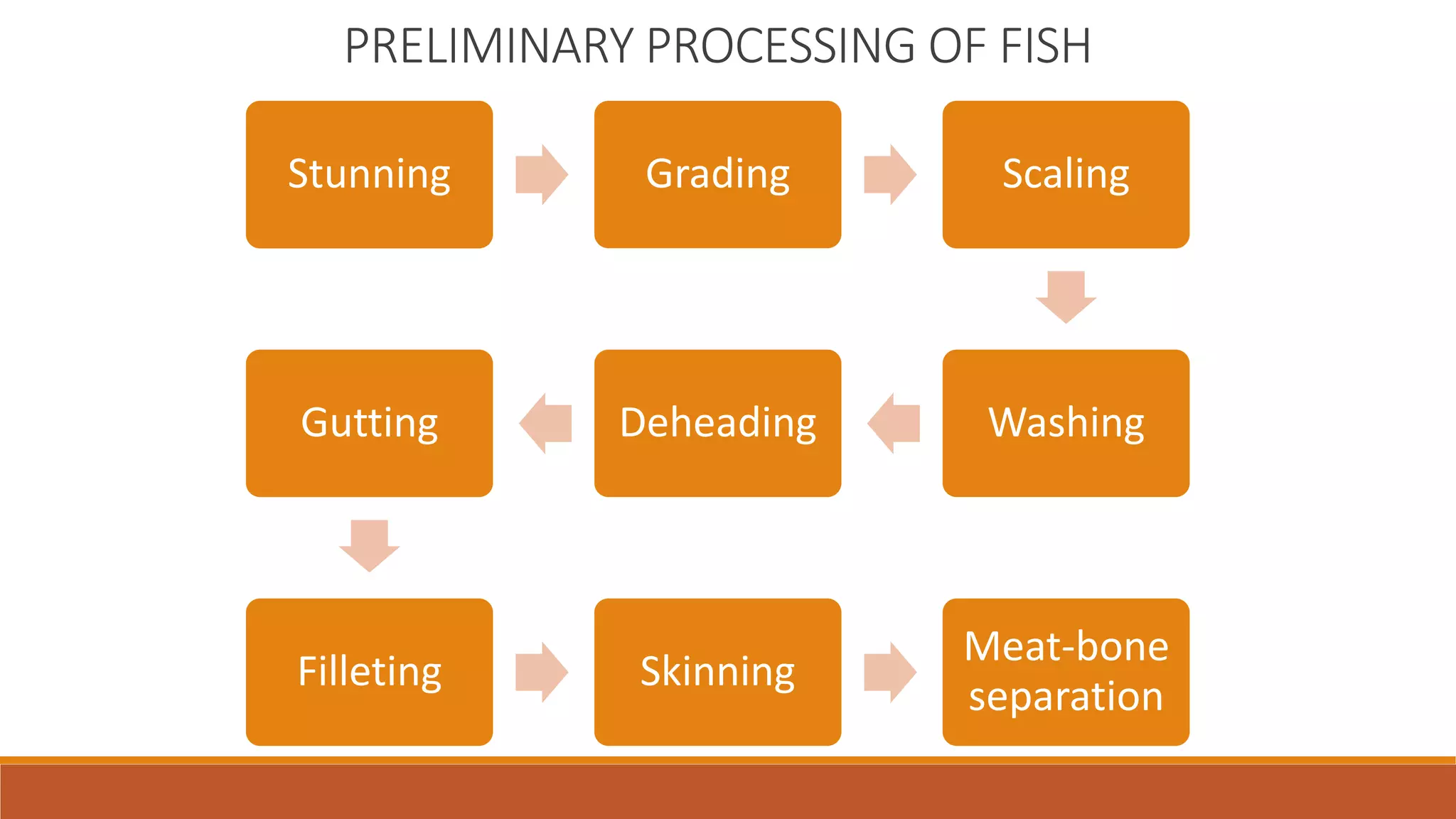
PRELIMINARY PROCESSING OF FISH
Stunning Grading Scaling
WashingDeheadingGutting
Filleting Skinning
Meat-bone
separation
Stunning
• In many freshwater species the method of stunning is
critical for final product quality because prolonged agony of
fish causes production of undesired substances in the
tissue. Oxygen deficiency in blood and muscle tissue results
in accumulation of lactic acid and other reduced products
of catabolic processes and consequently in a paralysis of the
neural system.
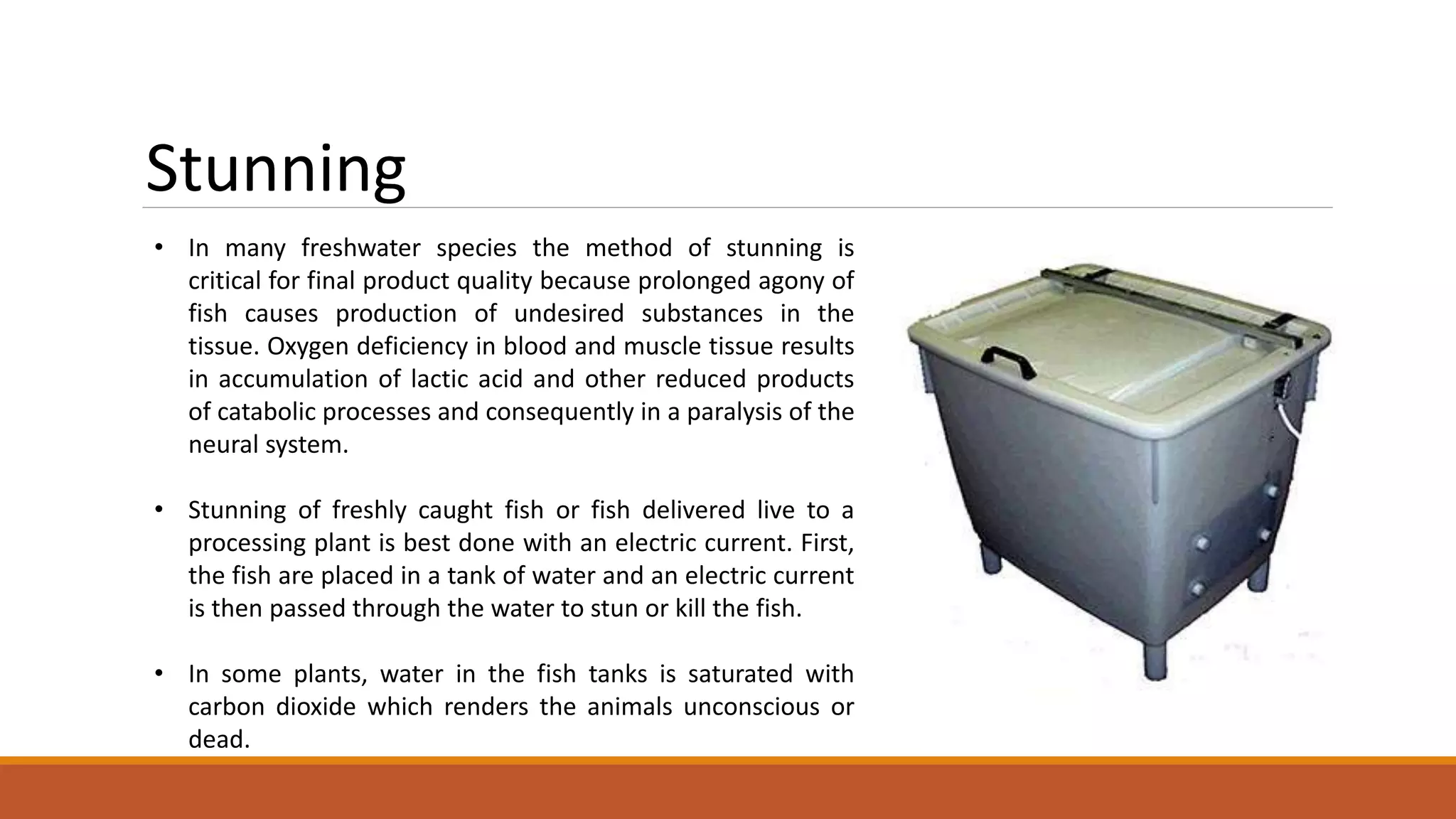
• Stunning of freshly caught fish or fish delivered live to a
processing plant is best done with an electric current. First,
the fish are placed in a tank of water and an electric current
is then passed through the water to stun or kill the fish.
• In some plants, water in the fish tanks is saturated with
carbon dioxide which renders the animals unconscious or
dead.
Grading
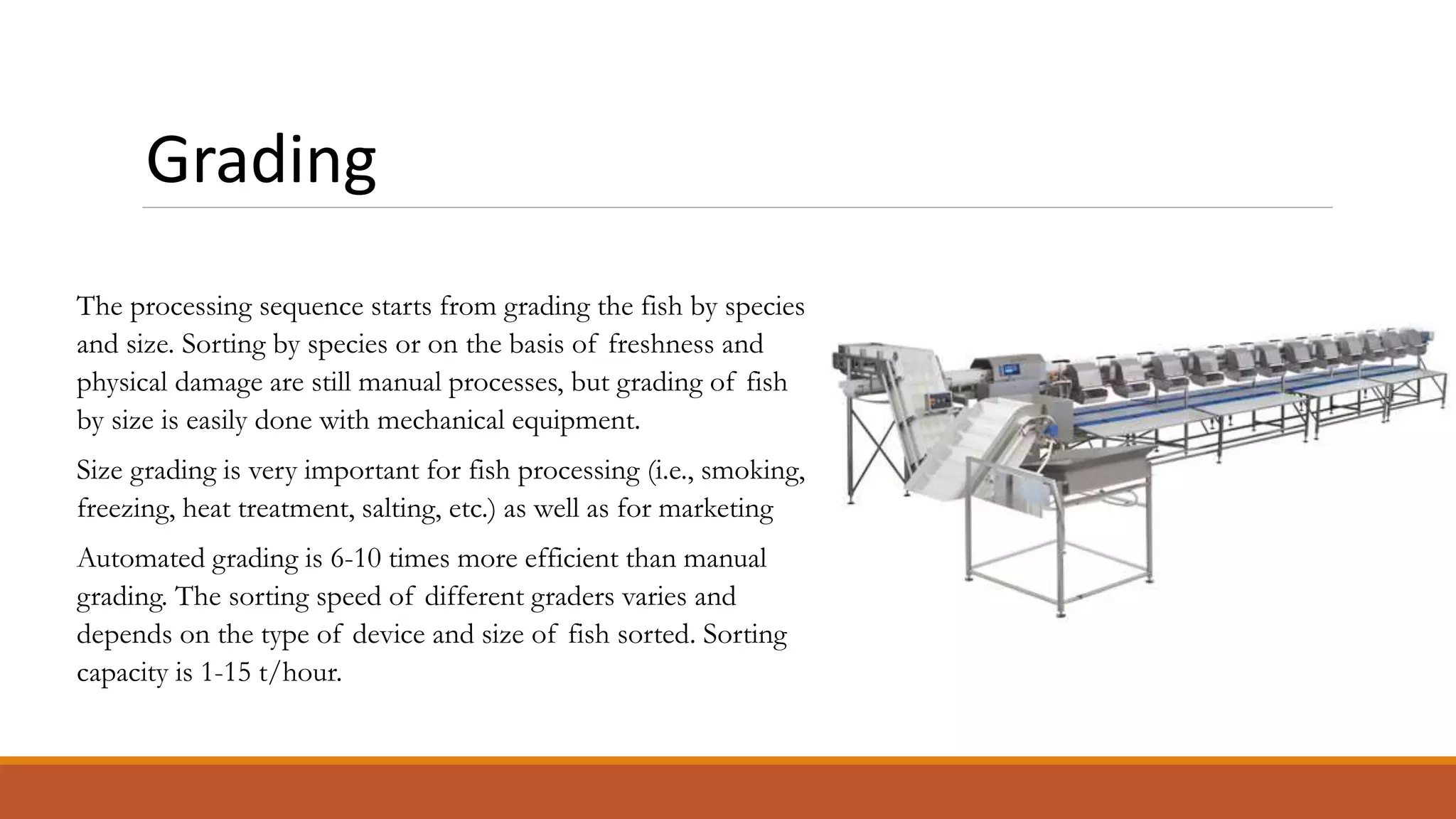
The processing sequence starts from grading the fish by species
and size. Sorting by species or on the basis of freshness and
physical damage are still manual processes, but grading of fish
by size is easily done with mechanical equipment.
Size grading is very important for fish processing (i.e., smoking,
freezing, heat treatment, salting, etc.) as well as for marketing
Automated grading is 6-10 times more efficient than manual
grading. The sorting speed of different graders varies and
depends on the type of device and size of fish sorted. Sorting
capacity is 1-15 t/hour.
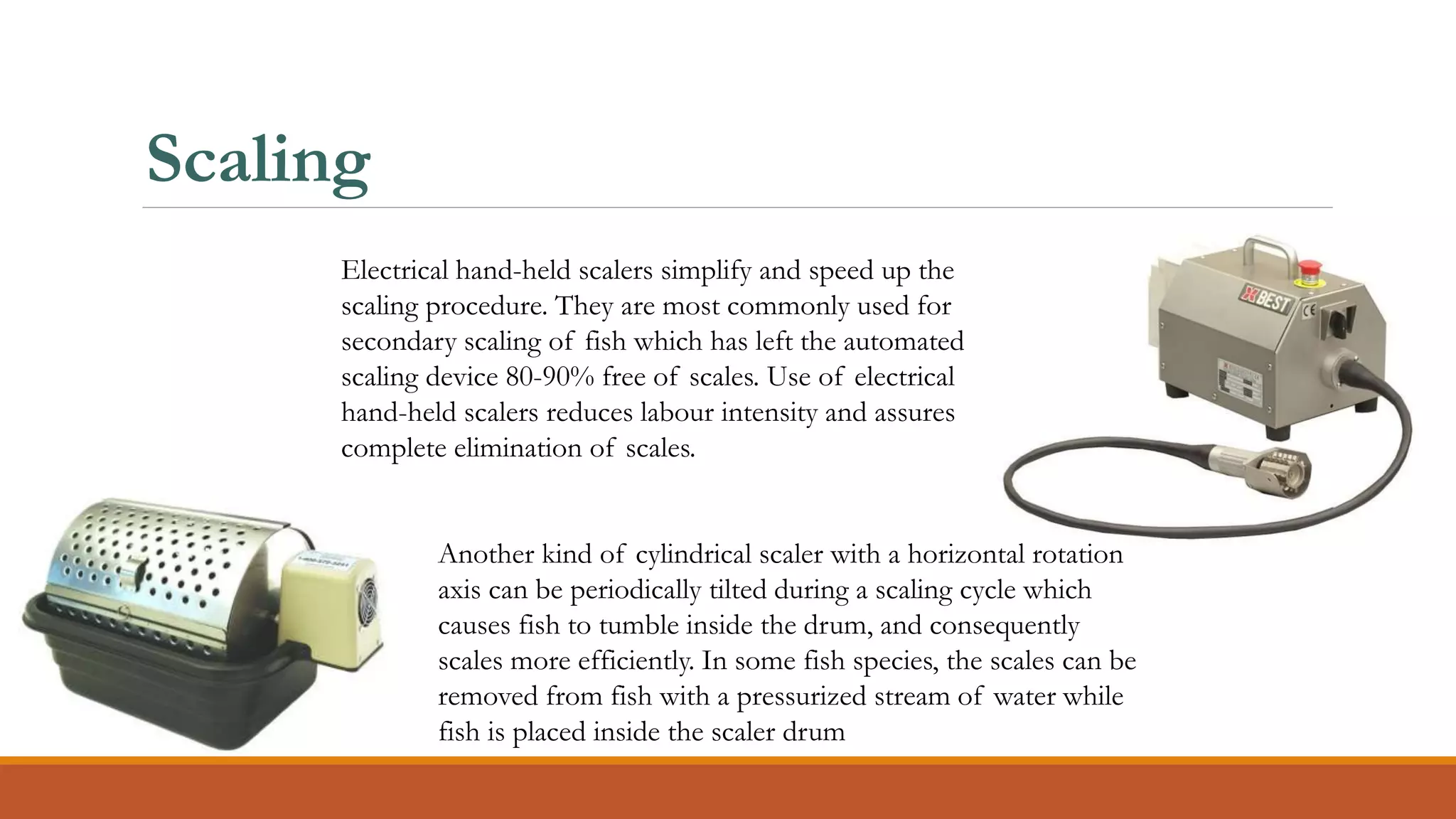
Electrical hand-held scalers simplify and speed up the
scaling procedure. They are most commonly used for
secondary scaling of fish which has left the automated
scaling device 80-90% free of scales. Use of electrical
hand-held scalers reduces labour intensity and assures
complete elimination of scales.
Another kind of cylindrical scaler with a horizontal rotation
axis can be periodically tilted during a scaling cycle which
causes fish to tumble inside the drum, and consequently
scales more efficiently. In some fish species, the scales can be
removed from fish with a pressurized stream of water while
fish is placed inside the scaler drum
Scaling
Washing
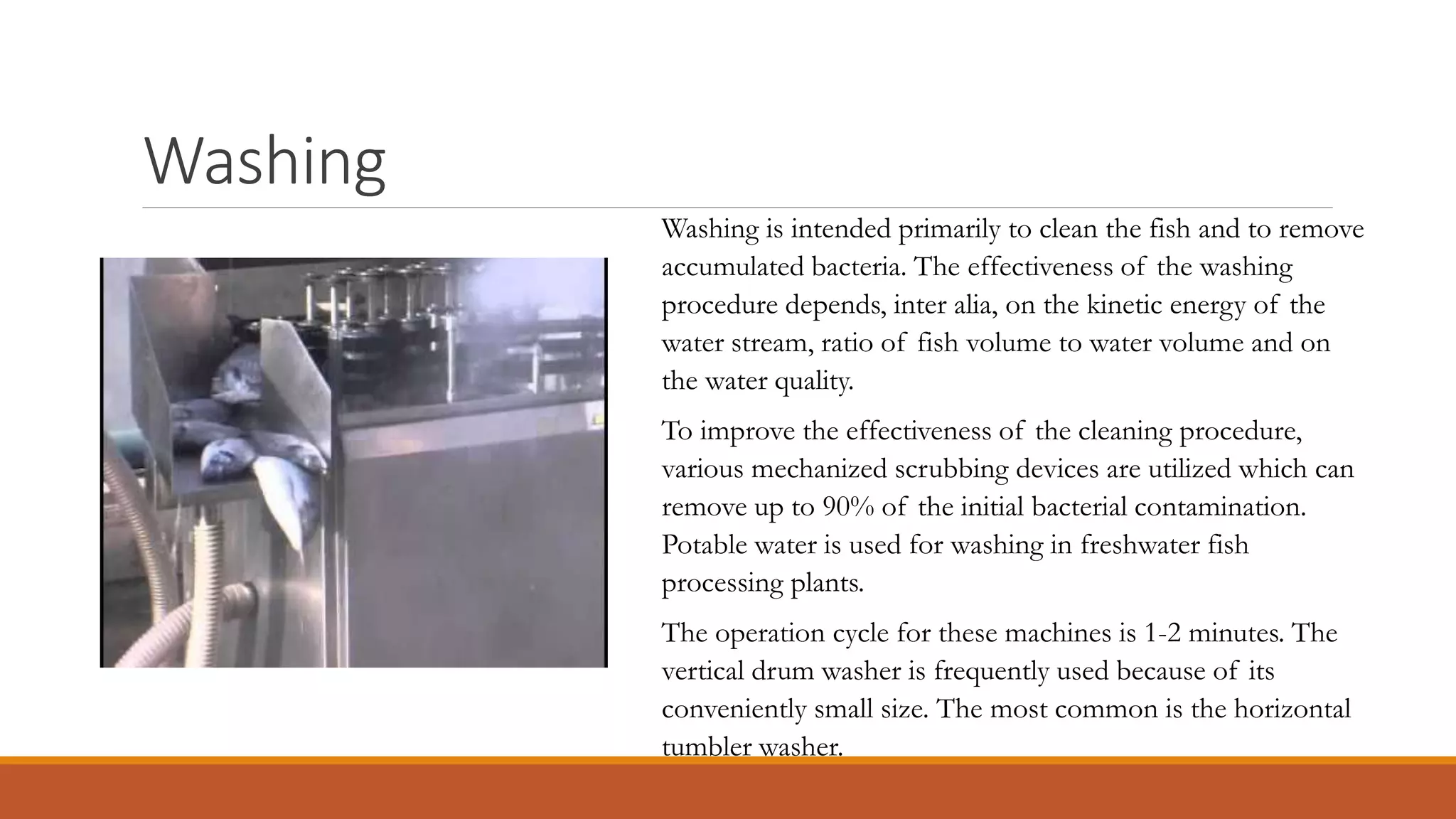
Washing is intended primarily to clean the fish and to remove
accumulated bacteria. The effectiveness of the washing
procedure depends, inter alia, on the kinetic energy of the
water stream, ratio of fish volume to water volume and on
the water quality.
To improve the effectiveness of the cleaning procedure,
various mechanized scrubbing devices are utilized which can
remove up to 90% of the initial bacterial contamination.
Potable water is used for washing in freshwater fish
processing plants.
The operation cycle for these machines is 1-2 minutes. The
vertical drum washer is frequently used because of its
conveniently small size. The most common is the horizontal
tumbler washer.
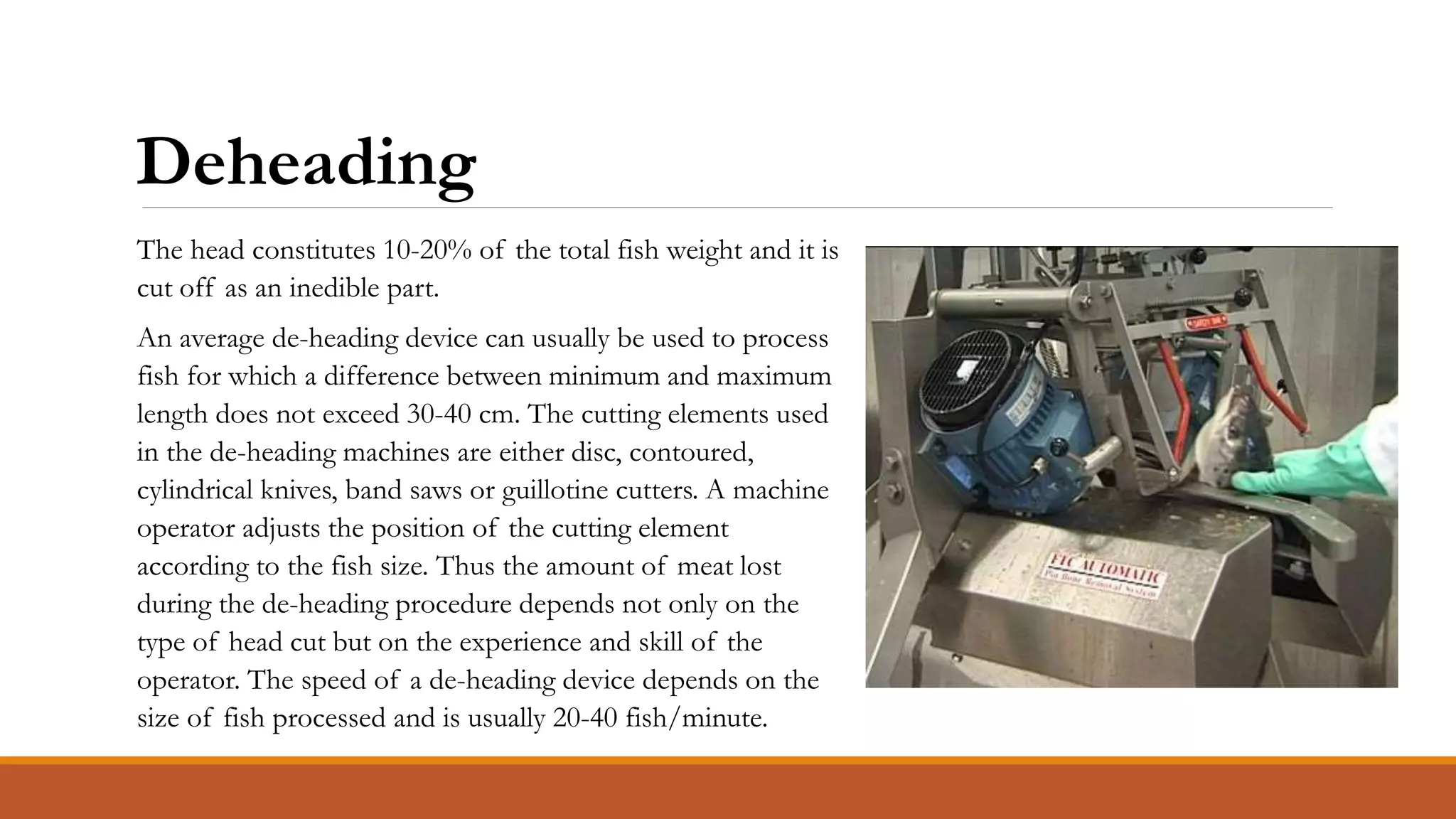
The head constitutes 10-20% of the total fish weight and it is
cut off as an inedible part.
An average de-heading device can usually be used to process
fish for which a difference between minimum and maximum
length does not exceed 30-40 cm. The cutting elements used
in the de-heading machines are either disc, contoured,
cylindrical knives, band saws or guillotine cutters. A machine
operator adjusts the position of the cutting element
according to the fish size. Thus the amount of meat lost
during the de-heading procedure depends not only on the
type of head cut but on the experience and skill of the
operator. The speed of a de-heading device depends on the
size of fish processed and is usually 20-40 fish/minute.
Deheading
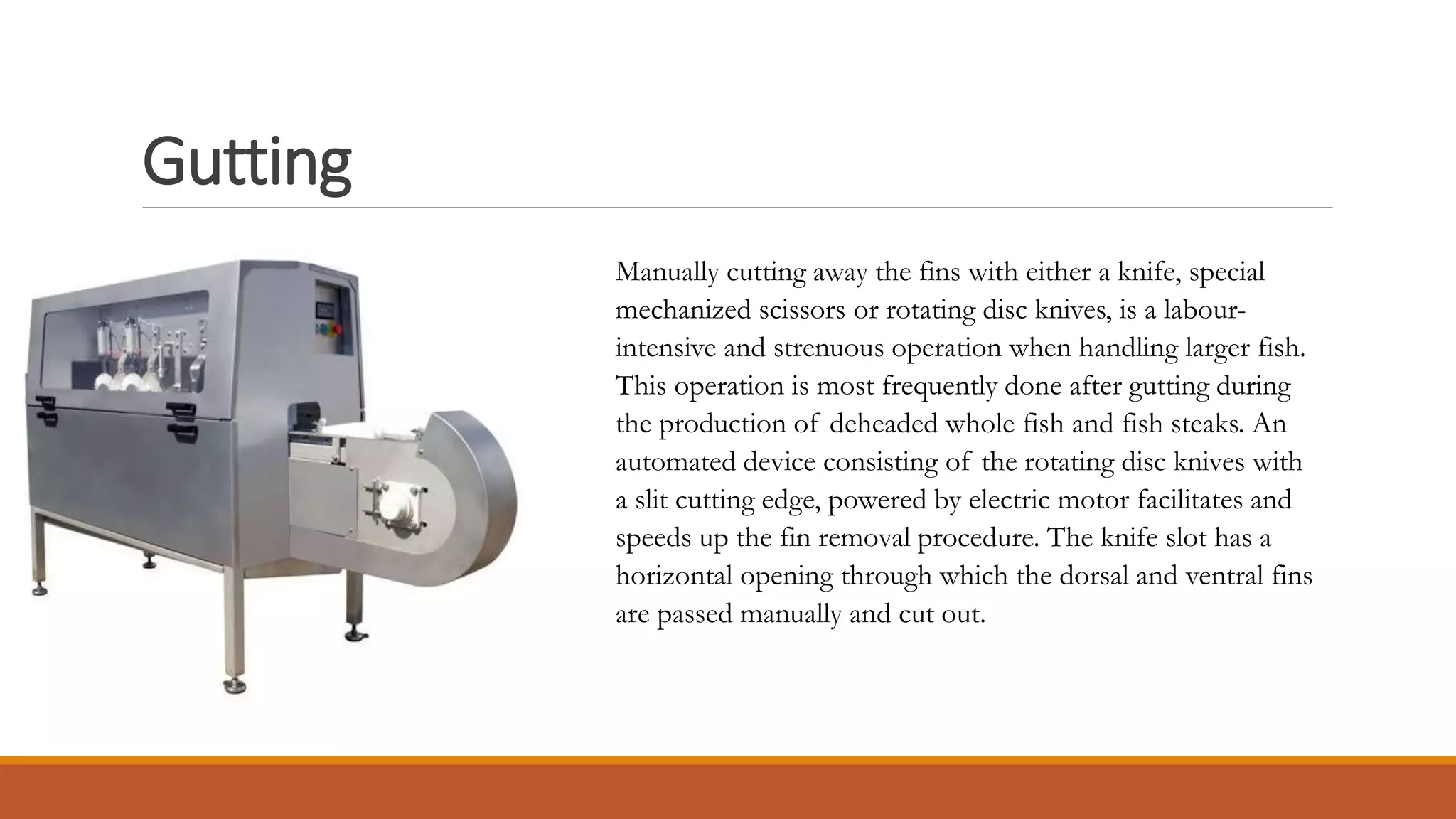
Gutting
Manually cutting away the fins with either a knife, special
mechanized scissors or rotating disc knives, is a labour-
intensive and strenuous operation when handling larger fish.
This operation is most frequently done after gutting during
the production of deheaded whole fish and fish steaks. An
automated device consisting of the rotating disc knives with
a slit cutting edge, powered by electric motor facilitates and
speeds up the fin removal procedure. The knife slot has a
horizontal opening through which the dorsal and ventral fins
are passed manually and cut out.
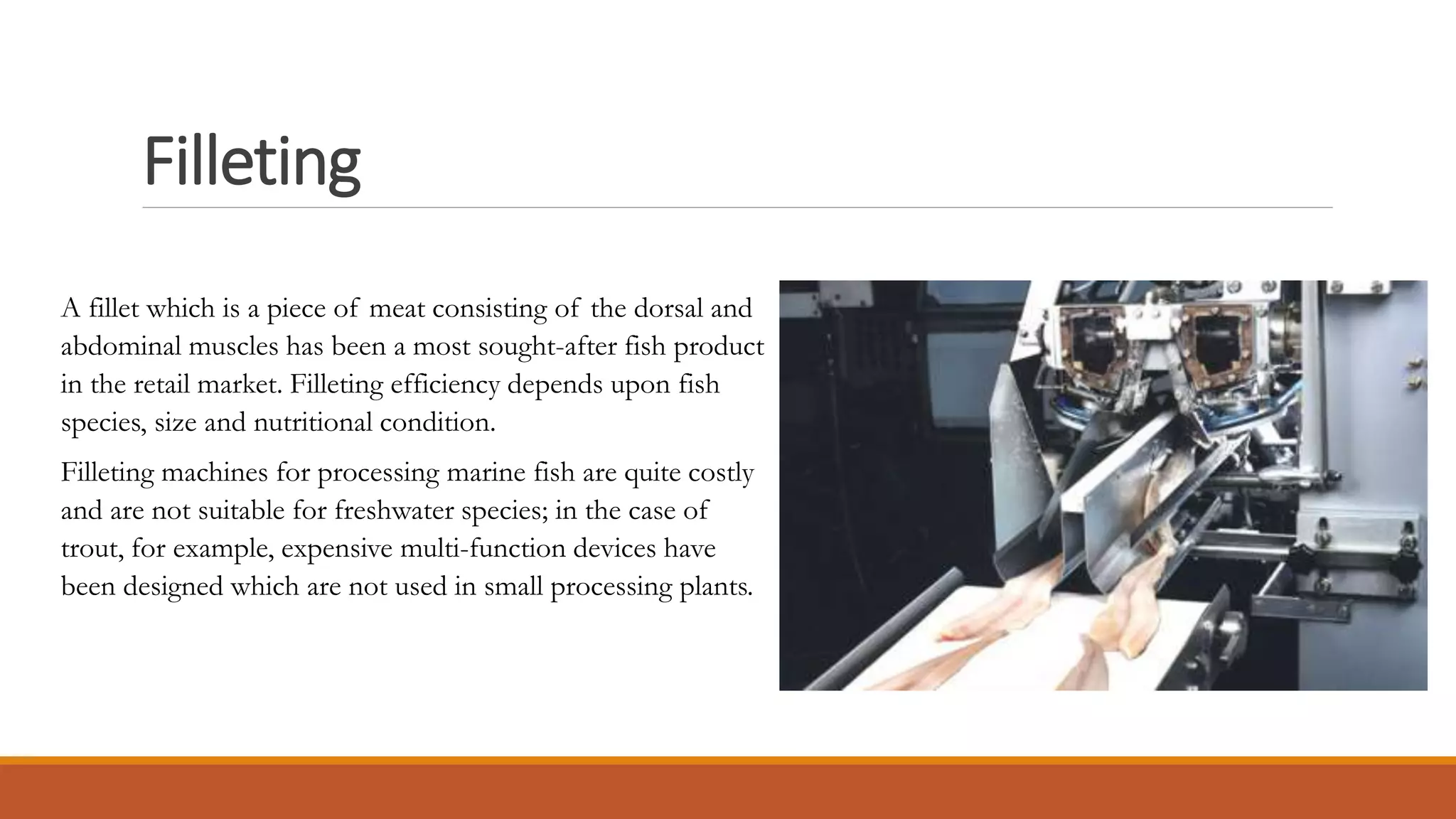
Filleting
A fillet which is a piece of meat consisting of the dorsal and
abdominal muscles has been a most sought-after fish product
in the retail market. Filleting efficiency depends upon fish
species, size and nutritional condition.
Filleting machines for processing marine fish are quite costly
and are not suitable for freshwater species; in the case of
trout, for example, expensive multi-function devices have
been designed which are not used in small processing plants.
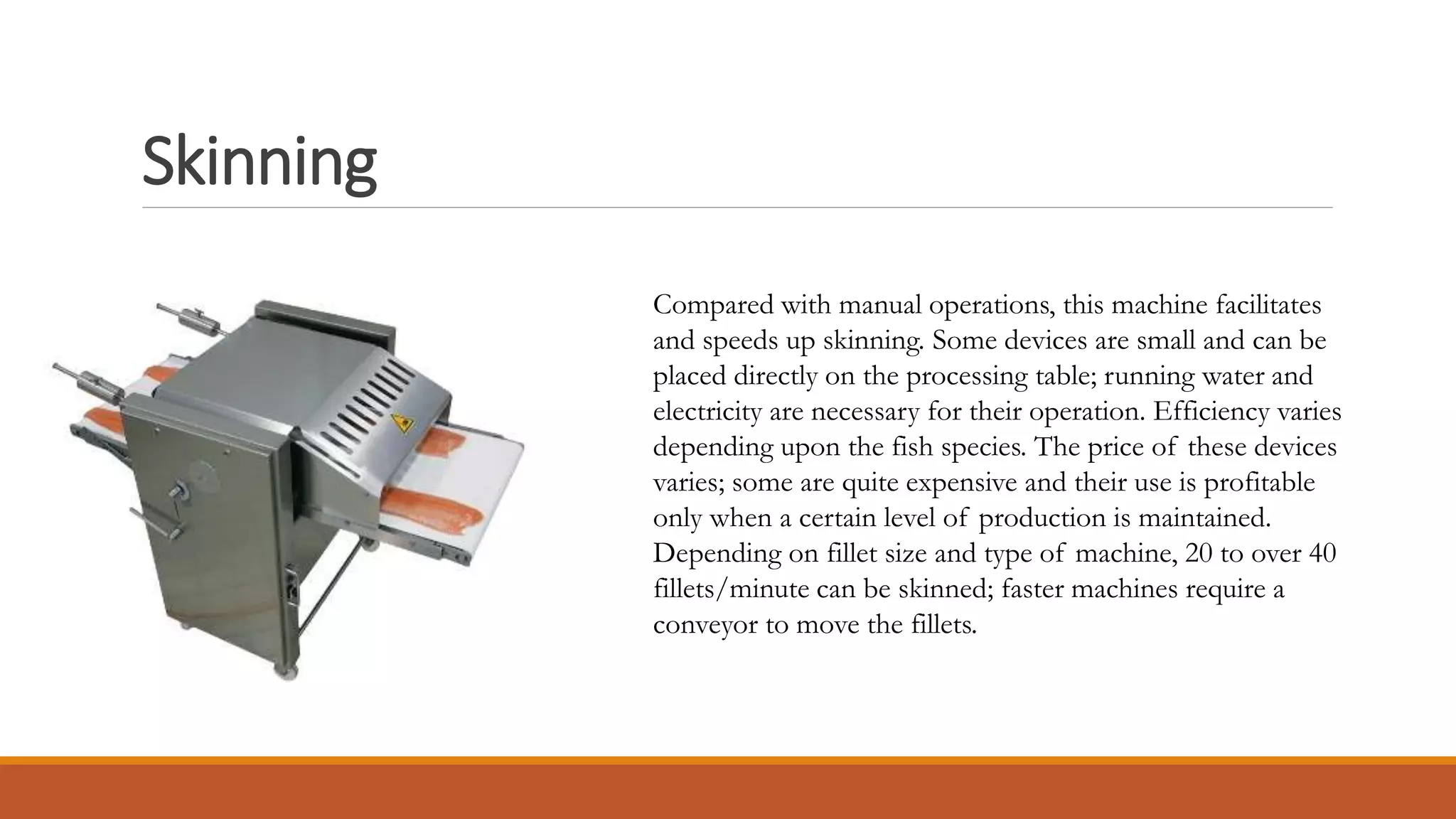
Skinning
Compared with manual operations, this machine facilitates
and speeds up skinning. Some devices are small and can be
placed directly on the processing table; running water and
electricity are necessary for their operation. Efficiency varies
depending upon the fish species. The price of these devices
varies; some are quite expensive and their use is profitable
only when a certain level of production is maintained.
Depending on fillet size and type of machine, 20 to over 40
fillets/minute can be skinned; faster machines require a
conveyor to move the fillets.
Meat-bone separation
Meat is separated from the bones, skin and scales, in
automated devices called separators. In the separator shown
in Figure 3.23, meat is squeezed through holes into the
cylinder under pressure applied by a conveyor belt partially
encircling the cylinder (about 25% of the cylinder's
perimeter). The cylinder rotates slightly faster than the
conveyor.
The smaller the holes, the stronger the grinding action.
Pressure applied by the conveyor to the cylinder can be
regulated depending on the type and size of the raw product
and on the hole diameter.
Fresh Fish
Processing
Smoked Fish
Processing
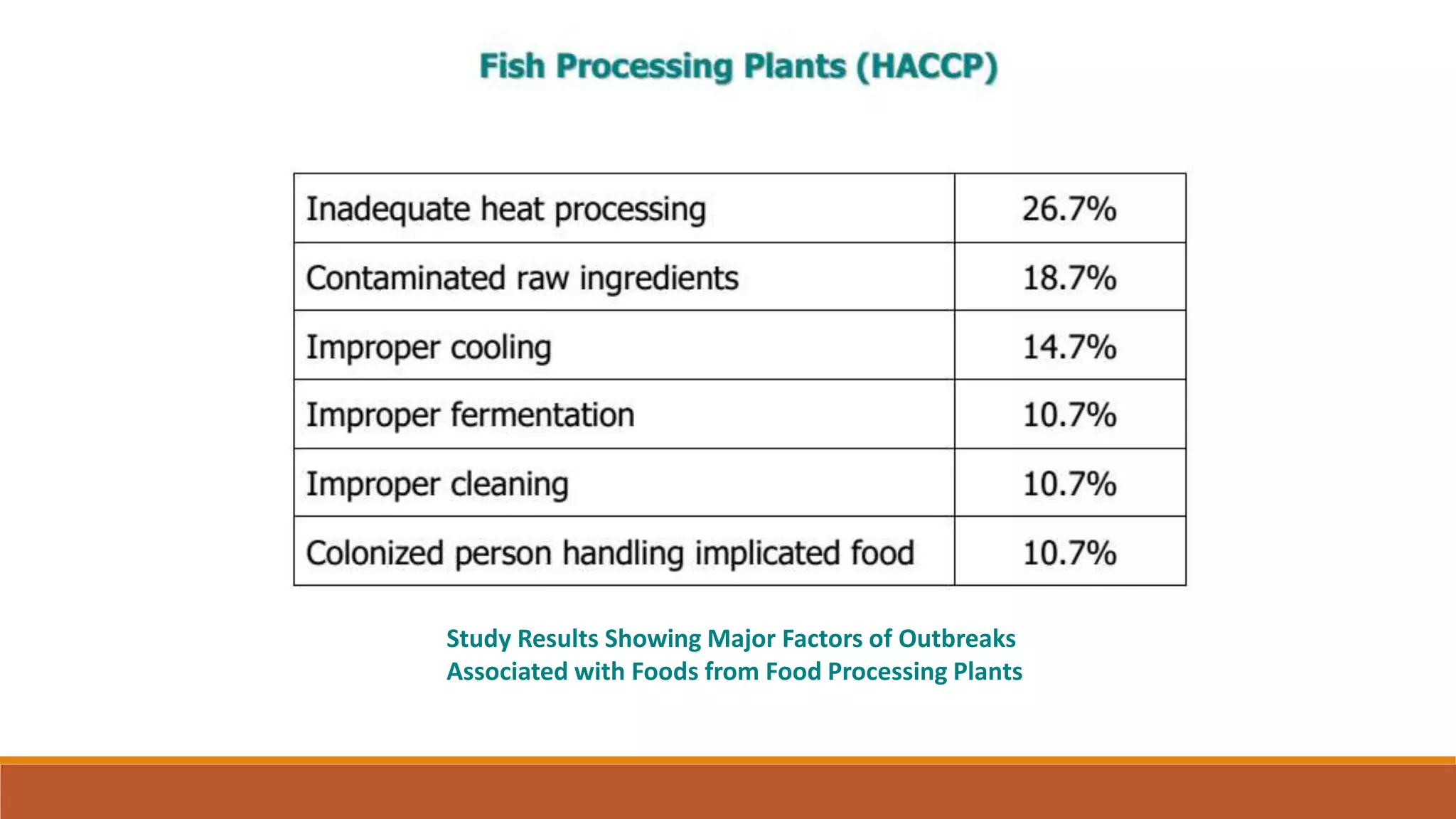
Study Results Showing Major Factors of Outbreaks
Associated with Foods from Food Processing Plants
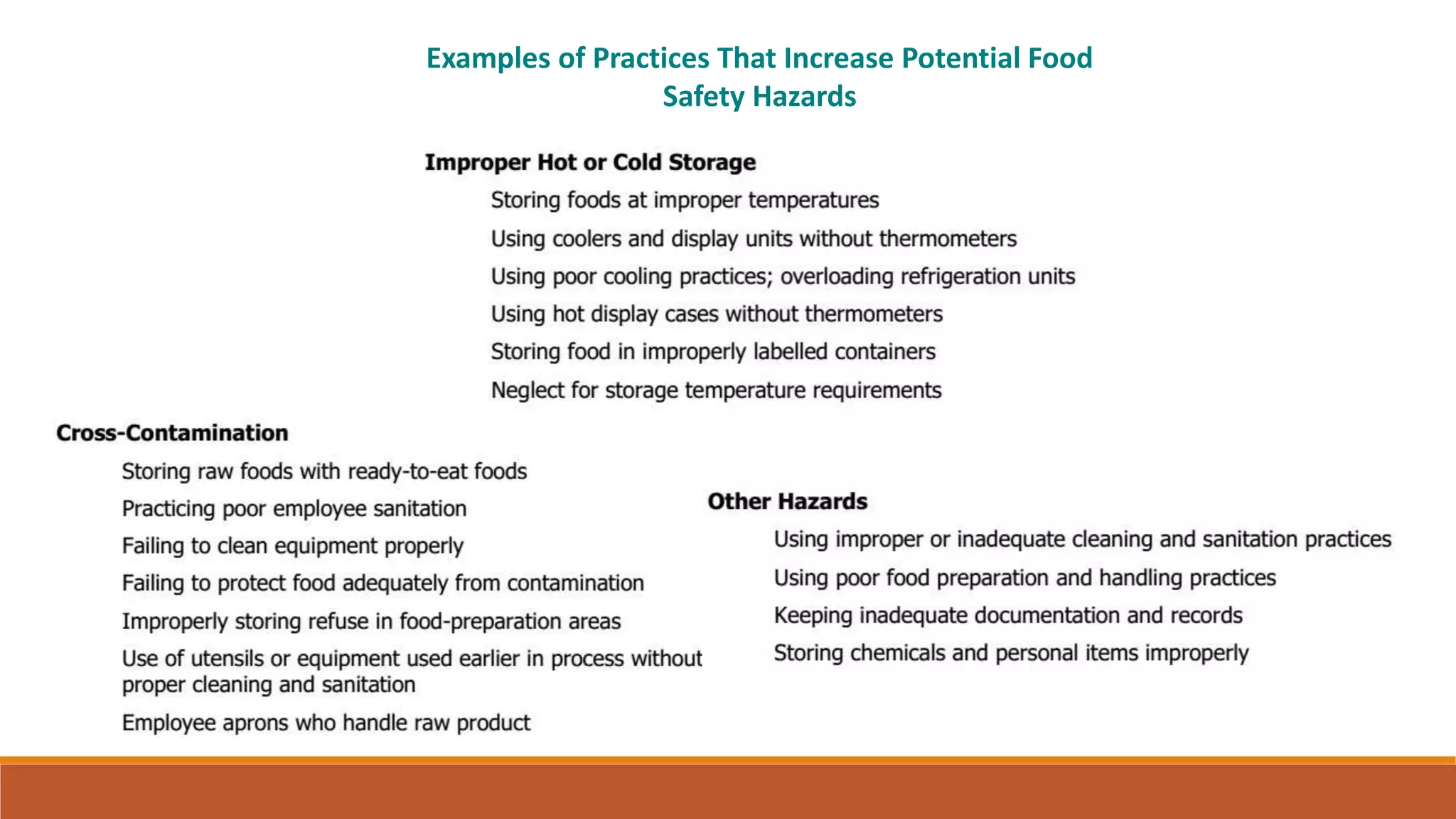
Examples of Practices That Increase Potential Food
Safety Hazards
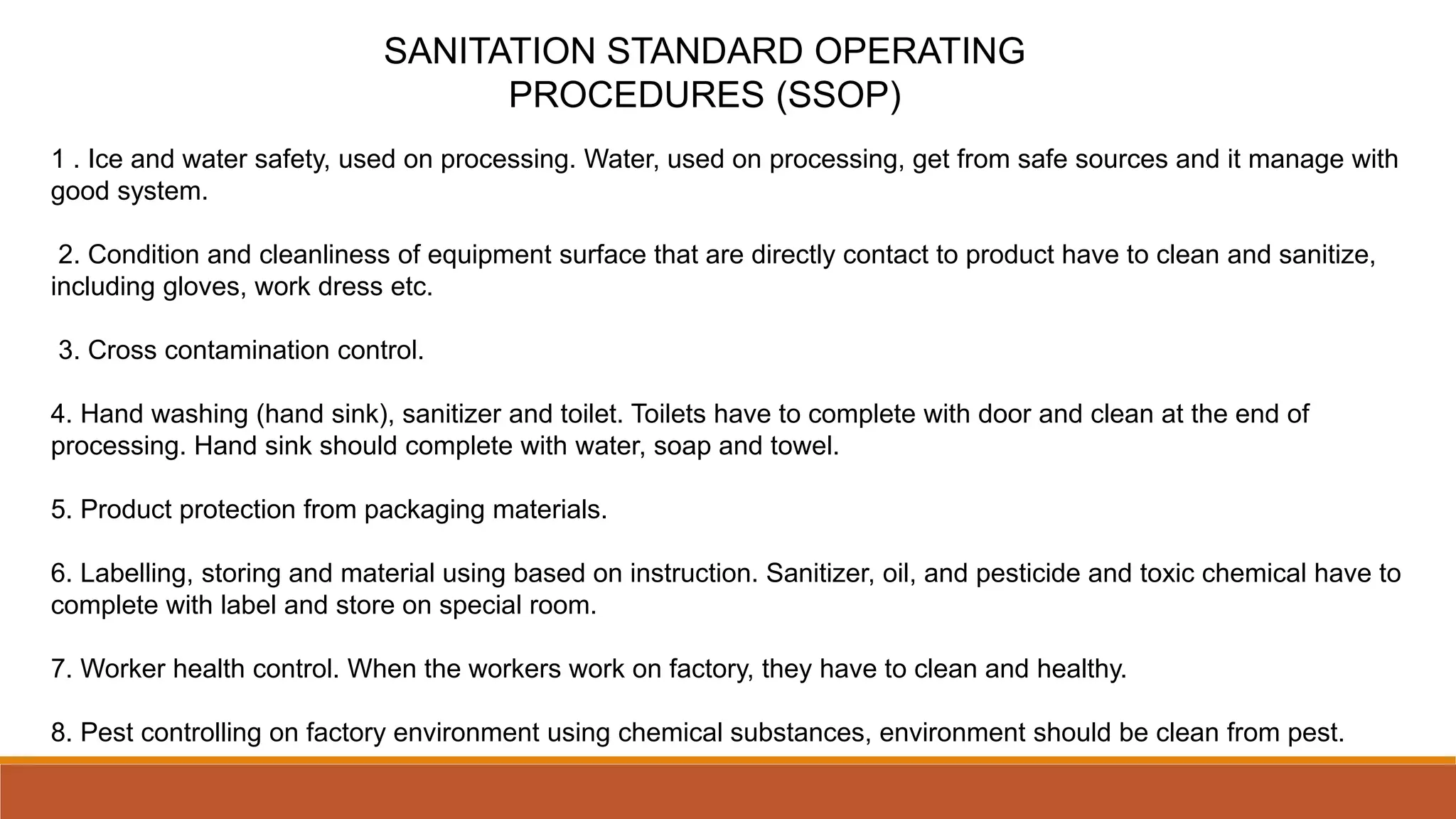
SANITATION STANDARD OPERATING
PROCEDURES (SSOP)
1 . Ice and water safety, used on processing. Water, used on processing, get from safe sources and it manage with
good system.
2. Condition and cleanliness of equipment surface that are directly contact to product have to clean and sanitize,
including gloves, work dress etc.
3. Cross contamination control.
4. Hand washing (hand sink), sanitizer and toilet. Toilets have to complete with door and clean at the end of
processing. Hand sink should complete with water, soap and towel.
5. Product protection from packaging materials.
6. Labelling, storing and material using based on instruction. Sanitizer, oil, and pesticide and toxic chemical have to
complete with label and store on special room.
7. Worker health control. When the workers work on factory, they have to clean and healthy.
8. Pest controlling on factory environment using chemical substances, environment should be clean from pest.
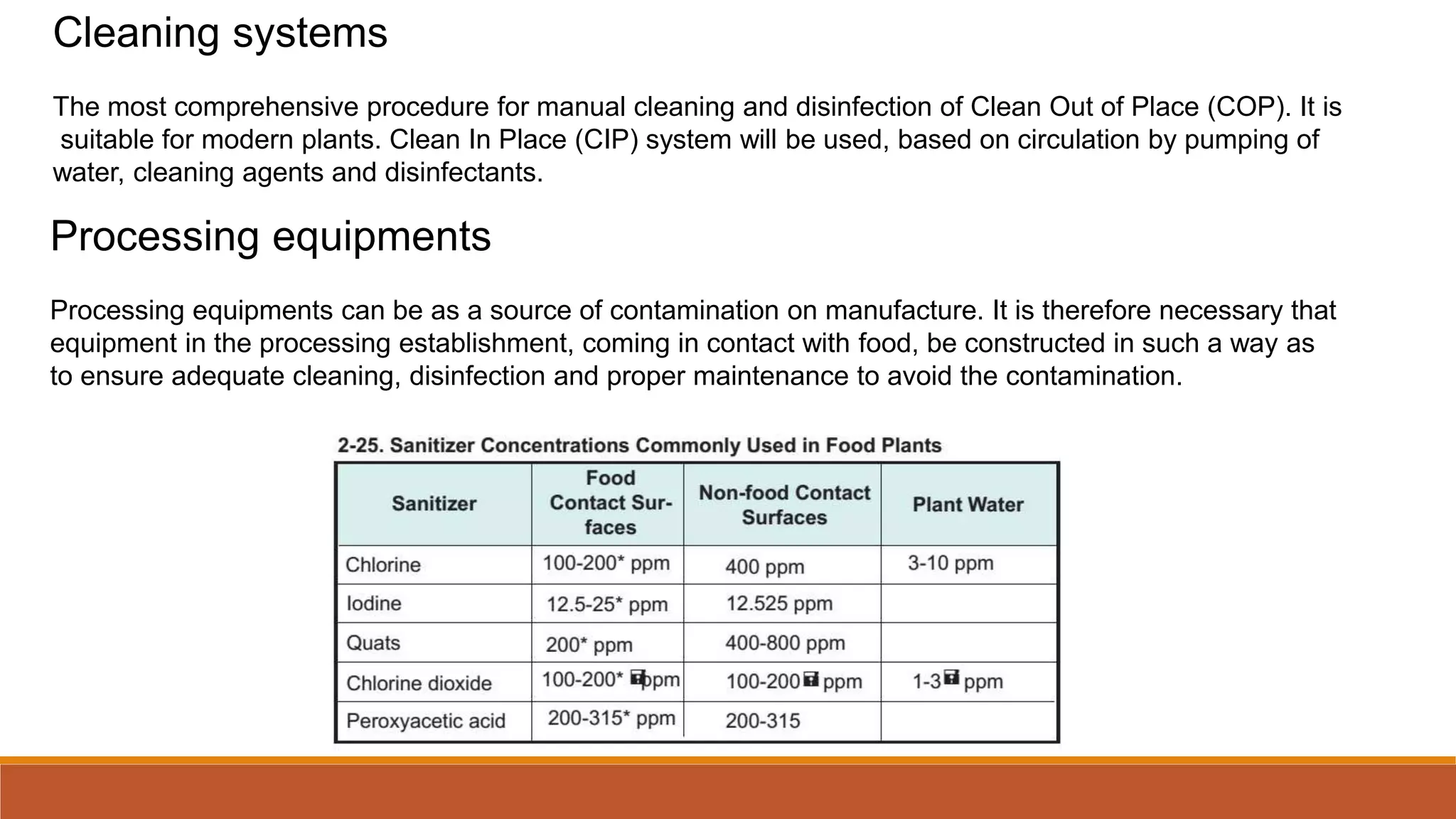
Cleaning systems
The most comprehensive procedure for manual cleaning and disinfection of Clean Out of Place (COP). It is
suitable for modern plants. Clean In Place (CIP) system will be used, based on circulation by pumping of
water, cleaning agents and disinfectants.
Processing equipments
Processing equipments can be as a source of contamination on manufacture. It is therefore necessary that
equipment in the processing establishment, coming in contact with food, be constructed in such a way as
to ensure adequate cleaning, disinfection and proper maintenance to avoid the contamination.
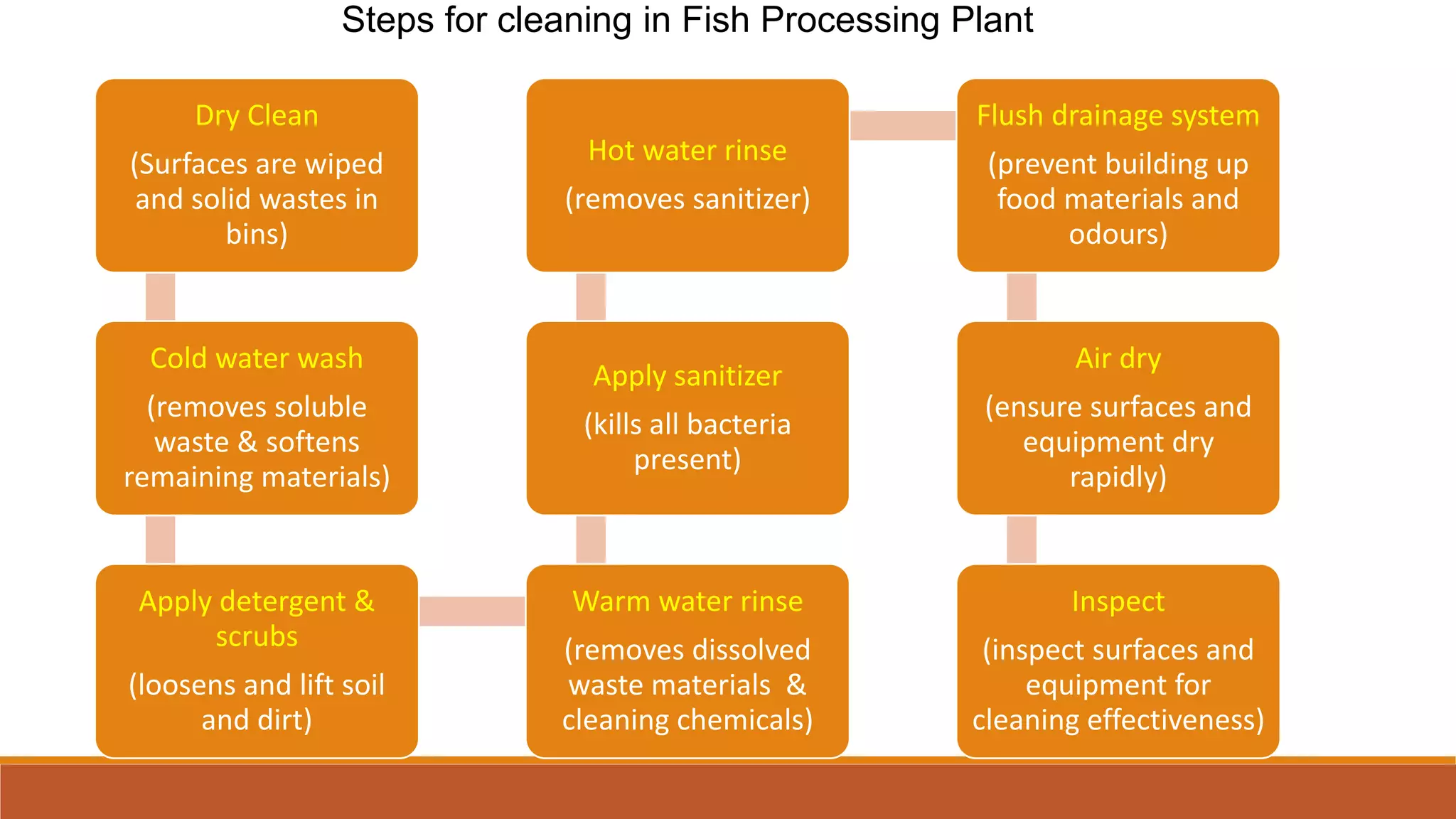
Steps for cleaning in Fish Processing Plant
Dry Clean
(Surfaces are wiped
and solid wastes in
bins)
Cold water wash
(removes soluble
waste & softens
remaining materials)
Apply detergent &
scrubs
(loosens and lift soil
and dirt)
Warm water rinse
(removes dissolved
waste materials &
cleaning chemicals)
Apply sanitizer
(kills all bacteria
present)
Hot water rinse
(removes sanitizer)
Flush drainage system
(prevent building up
food materials and
odours)
Air dry
(ensure surfaces and
equipment dry
rapidly)
Inspect
(inspect surfaces and
equipment for
cleaning effectiveness)
Industrial Setup – Salmon Processing
Discussion Session…..
References:-
• www.fao.org/
• Guidelines for the Application of a Hazard Analysis Critical Control Point (HACCP) Program
by: Food Protection Services
• Sanitation Control Procedures for Processing Fish and Fishery Products
by: the National Seafood HACCP Alliance for Training and Education.

HACCP Implementation in Fish Processing Industry

  • 1.
    Your Name Class Name Monthday, year HACCP Implementation in Fish Processing Industry COMPILED BY- ANUJ JHA ARUN P.K. FPE E-52- Food Safety and Quality for Food Processing Industries
  • 2.
    Spotlight…….. • Introduction • PRELIMINARYPROCESSING OF FISH • HACCP Principles • Fresh Fish Processing • Smoked Fish Processing • Sanitation Standard Operating Procedures • Steps for Cleaning in Fish Processing Plant • Industrial Setup – Salmon Processing
  • 3.
    Introduction • According todata published by FAO, 15% of the world supply of animal proteins is derived from fish. • The demand for fish as food is systematically increasing but at the same time marine resources are close to the limits of exploitation. • It is a valuable constituent in low-calorie diets and at the same time has a high energy content. • The biological value of freshwater fish fats is lower than that of marine fish because the former contain fewer unsaturated aliphatic acids. Fish meat is valuable as a source of vitamins and mineral substances. • The technological value generally depends on two parameters: the yield of preliminary processing and the quality features of fish meat and by-products.
  • 4.
    PRELIMINARY PROCESSING OFFISH Stunning Grading Scaling WashingDeheadingGutting Filleting Skinning Meat-bone separation
  • 5.
    Stunning • In manyfreshwater species the method of stunning is critical for final product quality because prolonged agony of fish causes production of undesired substances in the tissue. Oxygen deficiency in blood and muscle tissue results in accumulation of lactic acid and other reduced products of catabolic processes and consequently in a paralysis of the neural system. • Stunning of freshly caught fish or fish delivered live to a processing plant is best done with an electric current. First, the fish are placed in a tank of water and an electric current is then passed through the water to stun or kill the fish. • In some plants, water in the fish tanks is saturated with carbon dioxide which renders the animals unconscious or dead.
  • 6.
    Grading The processing sequencestarts from grading the fish by species and size. Sorting by species or on the basis of freshness and physical damage are still manual processes, but grading of fish by size is easily done with mechanical equipment. Size grading is very important for fish processing (i.e., smoking, freezing, heat treatment, salting, etc.) as well as for marketing Automated grading is 6-10 times more efficient than manual grading. The sorting speed of different graders varies and depends on the type of device and size of fish sorted. Sorting capacity is 1-15 t/hour.
  • 7.
    Electrical hand-held scalerssimplify and speed up the scaling procedure. They are most commonly used for secondary scaling of fish which has left the automated scaling device 80-90% free of scales. Use of electrical hand-held scalers reduces labour intensity and assures complete elimination of scales. Another kind of cylindrical scaler with a horizontal rotation axis can be periodically tilted during a scaling cycle which causes fish to tumble inside the drum, and consequently scales more efficiently. In some fish species, the scales can be removed from fish with a pressurized stream of water while fish is placed inside the scaler drum Scaling
  • 8.
    Washing Washing is intendedprimarily to clean the fish and to remove accumulated bacteria. The effectiveness of the washing procedure depends, inter alia, on the kinetic energy of the water stream, ratio of fish volume to water volume and on the water quality. To improve the effectiveness of the cleaning procedure, various mechanized scrubbing devices are utilized which can remove up to 90% of the initial bacterial contamination. Potable water is used for washing in freshwater fish processing plants. The operation cycle for these machines is 1-2 minutes. The vertical drum washer is frequently used because of its conveniently small size. The most common is the horizontal tumbler washer.
  • 9.
    The head constitutes10-20% of the total fish weight and it is cut off as an inedible part. An average de-heading device can usually be used to process fish for which a difference between minimum and maximum length does not exceed 30-40 cm. The cutting elements used in the de-heading machines are either disc, contoured, cylindrical knives, band saws or guillotine cutters. A machine operator adjusts the position of the cutting element according to the fish size. Thus the amount of meat lost during the de-heading procedure depends not only on the type of head cut but on the experience and skill of the operator. The speed of a de-heading device depends on the size of fish processed and is usually 20-40 fish/minute. Deheading
  • 10.
    Gutting Manually cutting awaythe fins with either a knife, special mechanized scissors or rotating disc knives, is a labour- intensive and strenuous operation when handling larger fish. This operation is most frequently done after gutting during the production of deheaded whole fish and fish steaks. An automated device consisting of the rotating disc knives with a slit cutting edge, powered by electric motor facilitates and speeds up the fin removal procedure. The knife slot has a horizontal opening through which the dorsal and ventral fins are passed manually and cut out.
  • 11.
    Filleting A fillet whichis a piece of meat consisting of the dorsal and abdominal muscles has been a most sought-after fish product in the retail market. Filleting efficiency depends upon fish species, size and nutritional condition. Filleting machines for processing marine fish are quite costly and are not suitable for freshwater species; in the case of trout, for example, expensive multi-function devices have been designed which are not used in small processing plants.
  • 12.
    Skinning Compared with manualoperations, this machine facilitates and speeds up skinning. Some devices are small and can be placed directly on the processing table; running water and electricity are necessary for their operation. Efficiency varies depending upon the fish species. The price of these devices varies; some are quite expensive and their use is profitable only when a certain level of production is maintained. Depending on fillet size and type of machine, 20 to over 40 fillets/minute can be skinned; faster machines require a conveyor to move the fillets.
  • 13.
    Meat-bone separation Meat isseparated from the bones, skin and scales, in automated devices called separators. In the separator shown in Figure 3.23, meat is squeezed through holes into the cylinder under pressure applied by a conveyor belt partially encircling the cylinder (about 25% of the cylinder's perimeter). The cylinder rotates slightly faster than the conveyor. The smaller the holes, the stronger the grinding action. Pressure applied by the conveyor to the cylinder can be regulated depending on the type and size of the raw product and on the hole diameter.
  • 15.
  • 19.
  • 23.
    Study Results ShowingMajor Factors of Outbreaks Associated with Foods from Food Processing Plants
  • 24.
    Examples of PracticesThat Increase Potential Food Safety Hazards
  • 25.
    SANITATION STANDARD OPERATING PROCEDURES(SSOP) 1 . Ice and water safety, used on processing. Water, used on processing, get from safe sources and it manage with good system. 2. Condition and cleanliness of equipment surface that are directly contact to product have to clean and sanitize, including gloves, work dress etc. 3. Cross contamination control. 4. Hand washing (hand sink), sanitizer and toilet. Toilets have to complete with door and clean at the end of processing. Hand sink should complete with water, soap and towel. 5. Product protection from packaging materials. 6. Labelling, storing and material using based on instruction. Sanitizer, oil, and pesticide and toxic chemical have to complete with label and store on special room. 7. Worker health control. When the workers work on factory, they have to clean and healthy. 8. Pest controlling on factory environment using chemical substances, environment should be clean from pest.
  • 26.
    Cleaning systems The mostcomprehensive procedure for manual cleaning and disinfection of Clean Out of Place (COP). It is suitable for modern plants. Clean In Place (CIP) system will be used, based on circulation by pumping of water, cleaning agents and disinfectants. Processing equipments Processing equipments can be as a source of contamination on manufacture. It is therefore necessary that equipment in the processing establishment, coming in contact with food, be constructed in such a way as to ensure adequate cleaning, disinfection and proper maintenance to avoid the contamination.
  • 27.
    Steps for cleaningin Fish Processing Plant Dry Clean (Surfaces are wiped and solid wastes in bins) Cold water wash (removes soluble waste & softens remaining materials) Apply detergent & scrubs (loosens and lift soil and dirt) Warm water rinse (removes dissolved waste materials & cleaning chemicals) Apply sanitizer (kills all bacteria present) Hot water rinse (removes sanitizer) Flush drainage system (prevent building up food materials and odours) Air dry (ensure surfaces and equipment dry rapidly) Inspect (inspect surfaces and equipment for cleaning effectiveness)
  • 28.
    Industrial Setup –Salmon Processing
  • 29.
  • 30.
    References:- • www.fao.org/ • Guidelinesfor the Application of a Hazard Analysis Critical Control Point (HACCP) Program by: Food Protection Services • Sanitation Control Procedures for Processing Fish and Fishery Products by: the National Seafood HACCP Alliance for Training and Education.