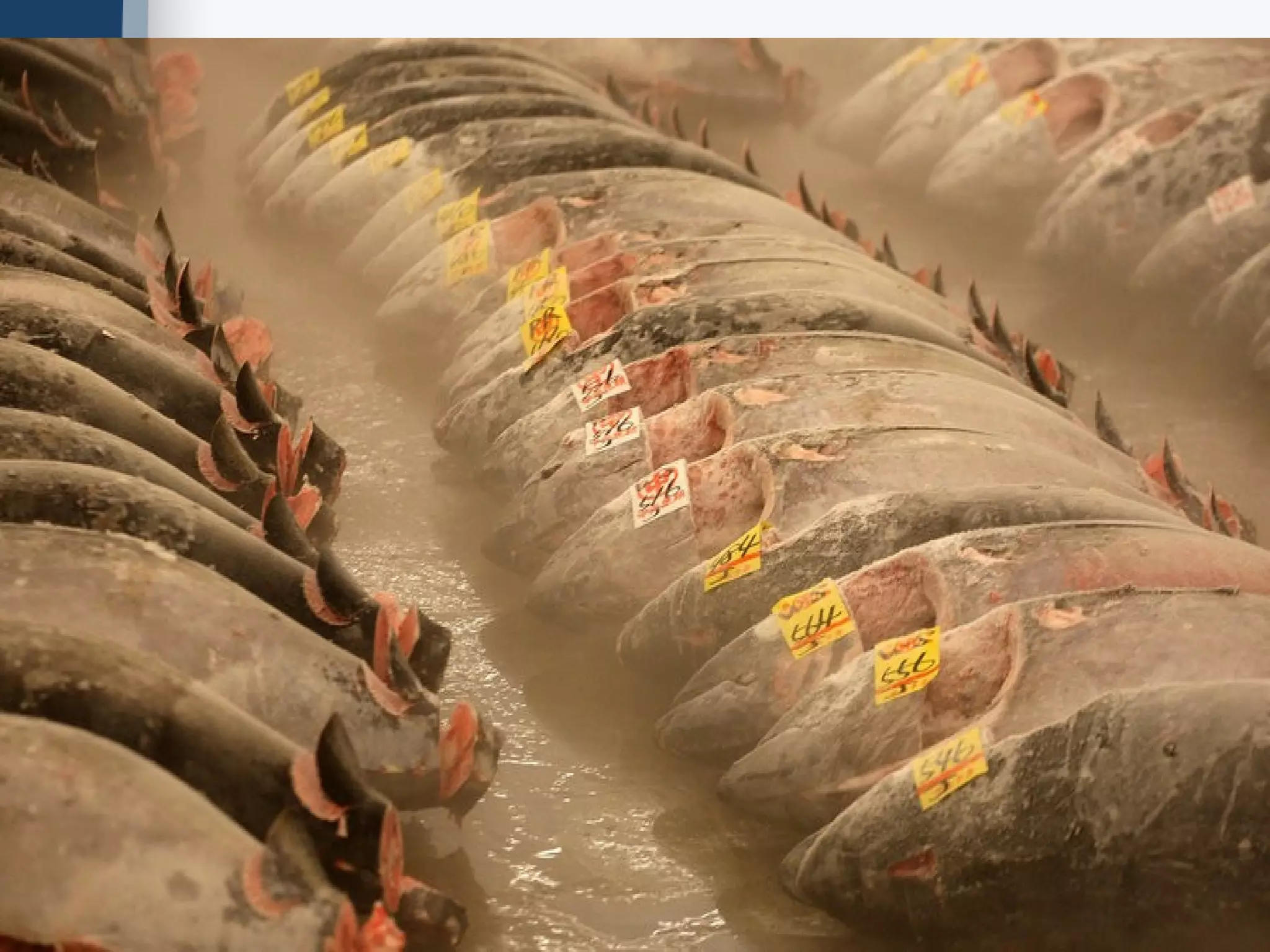
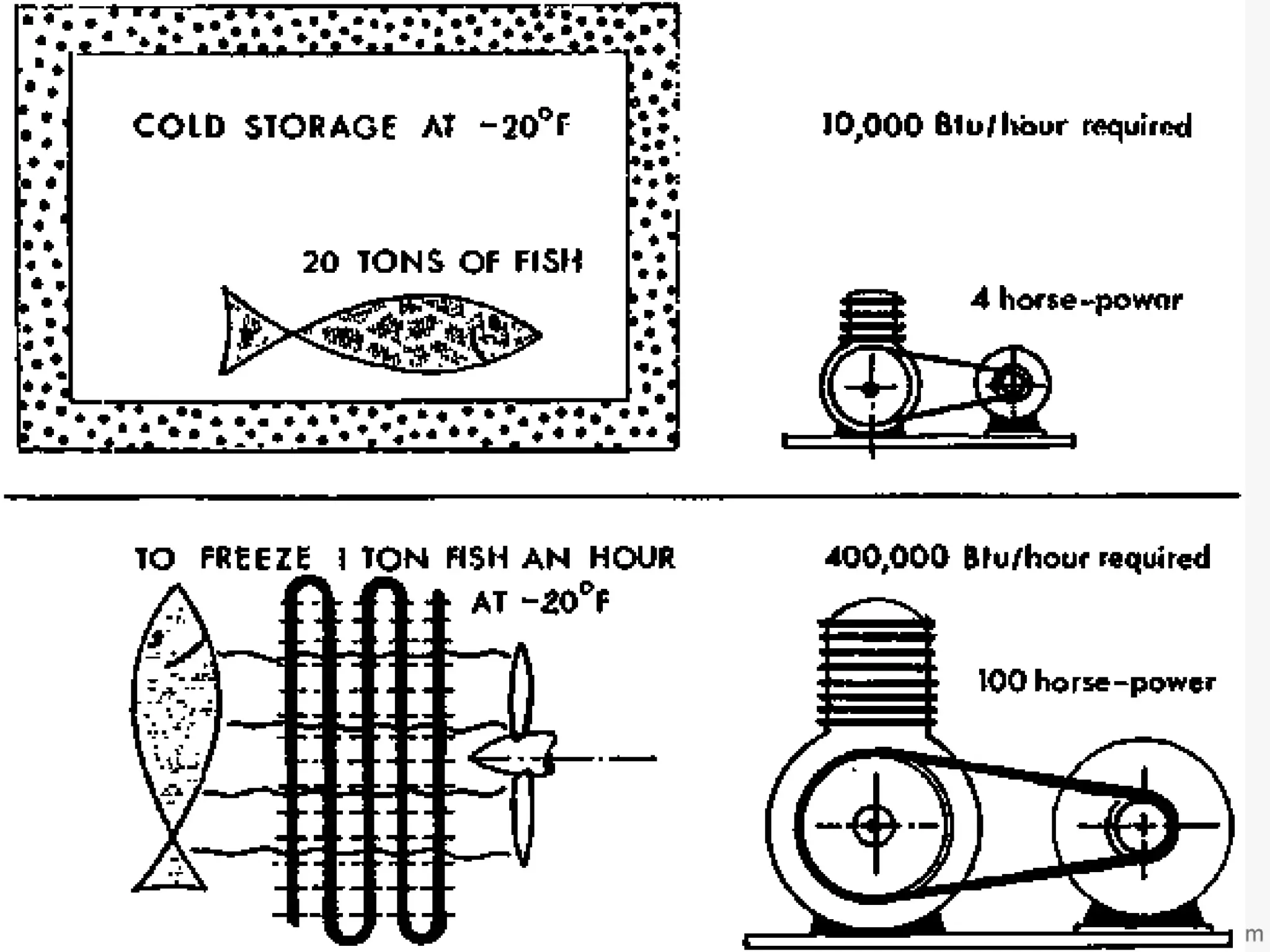
Freezing and chilling
in fish processing
Difference between freezing
and chilling
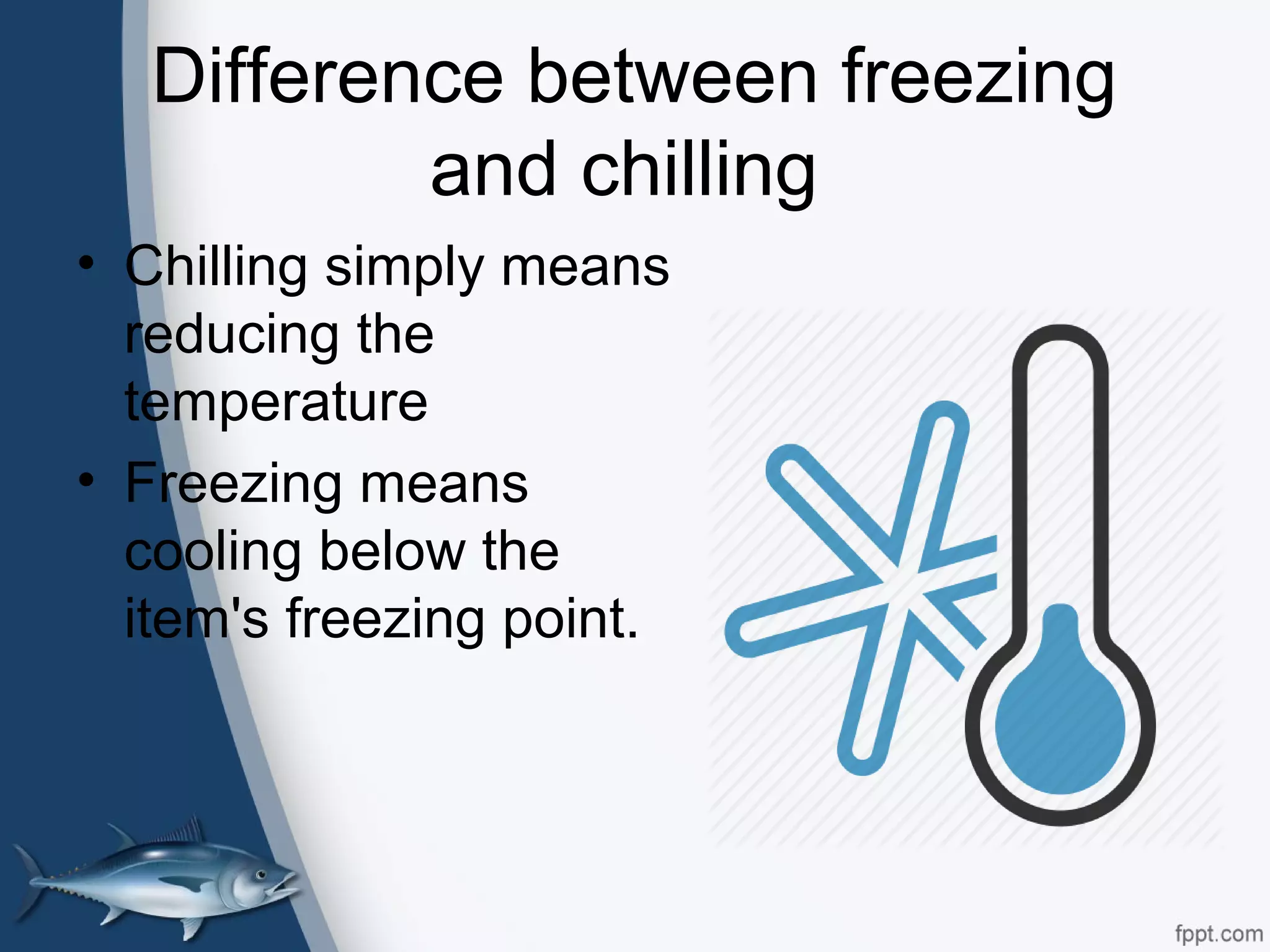
• Chilling simply means
reducing the
temperature
• Freezing means
cooling below the
item's freezing point.
What is fish freezing and
chilling ?
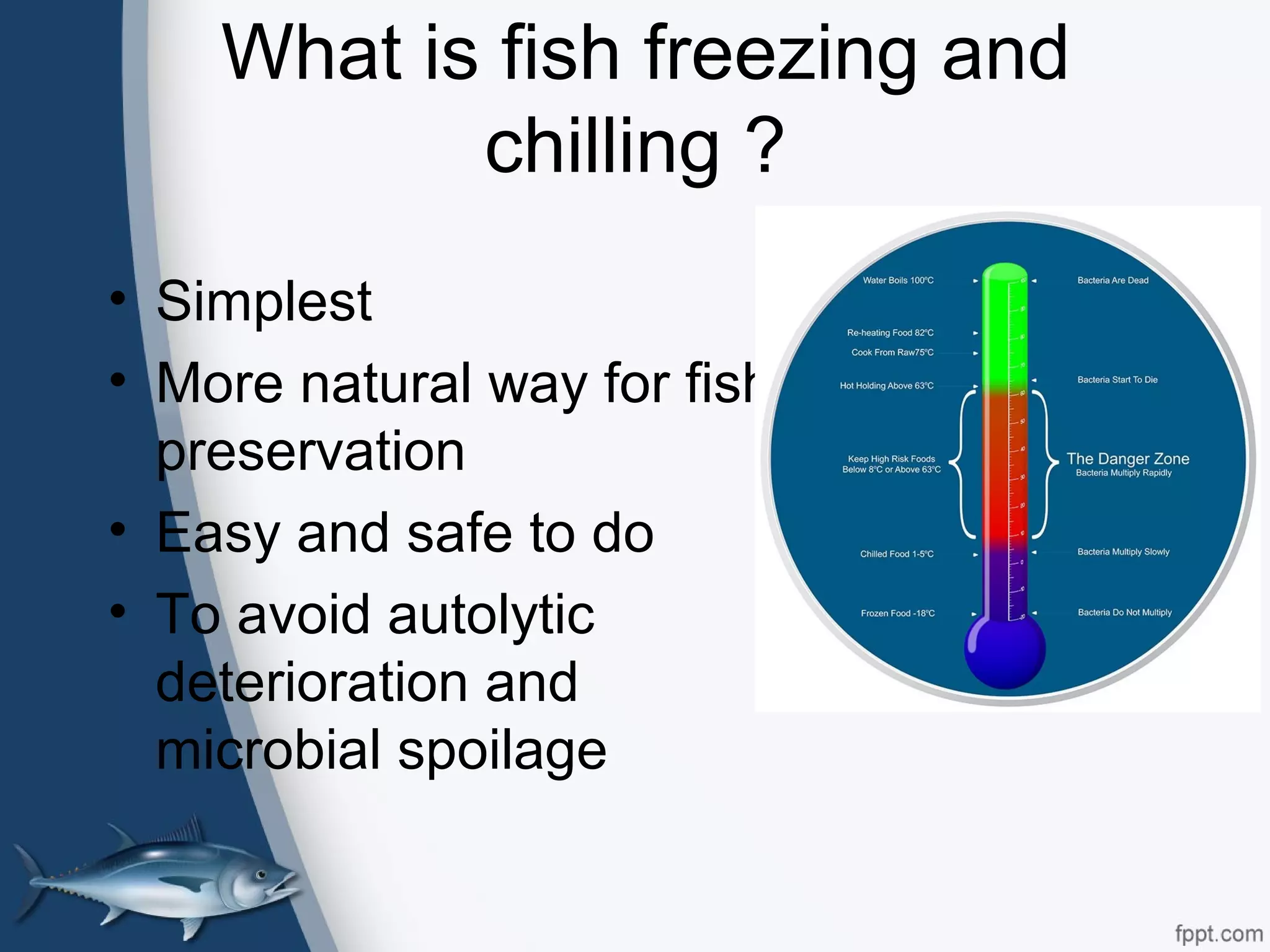
• Simplest
• More natural way for fish
preservation
• Easy and safe to do
• To avoid autolytic
deterioration and
microbial spoilage
Simple steps for freezing and
chilling
1. Select fresh fish for freezing
2. If the fish is small like Dilis, wash and
freeze right away.
3. if the fish is large like Bangus, remove
scales, entails and trim fins and tails and
wash.
4. Wrap fish in plastic wrap or put in a
container packed tightly to eliminate air
Cont.
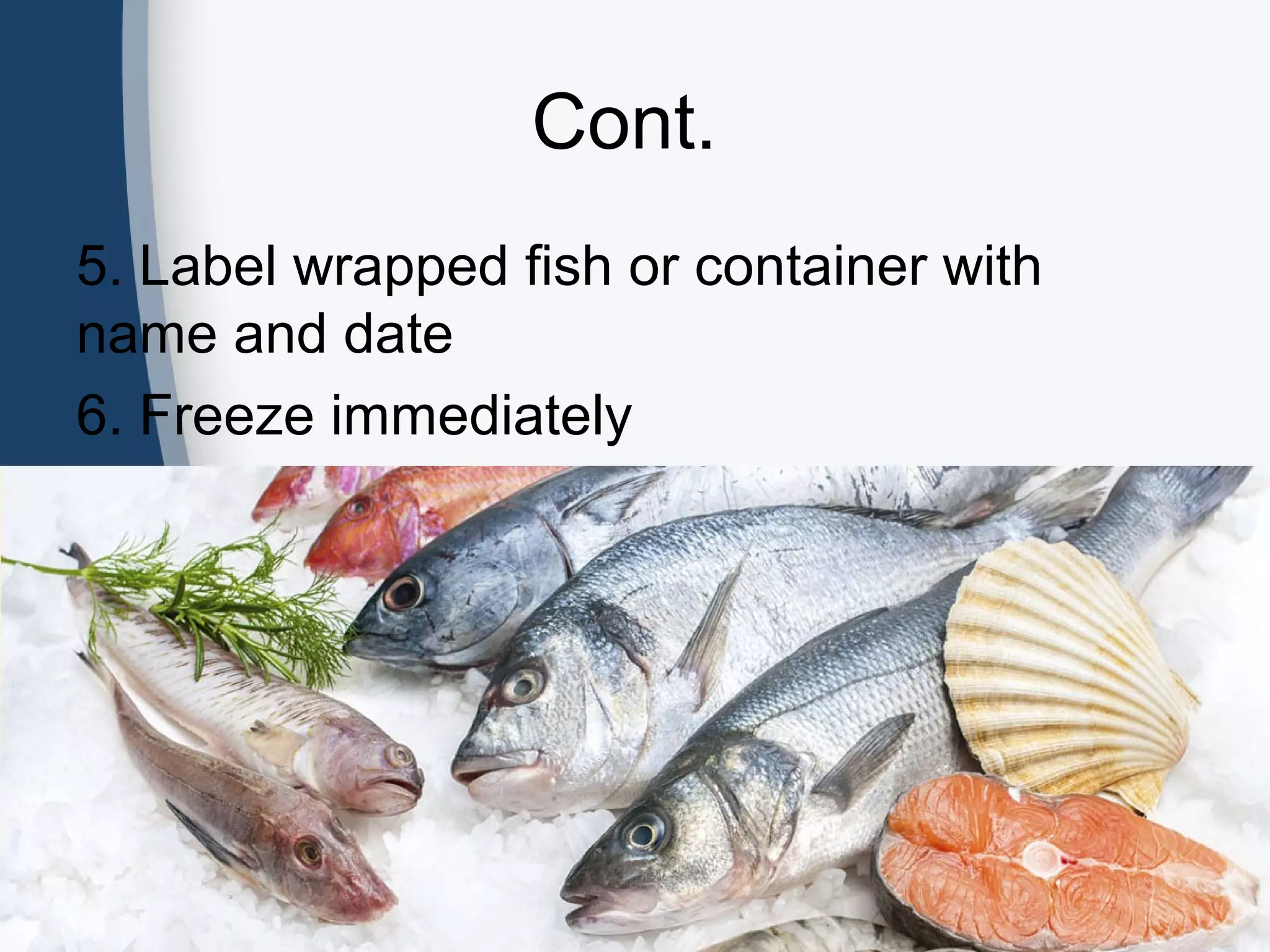
5. Label wrapped fish or container with
name and date
6. Freeze immediately
The purpose of freezing and
chilling
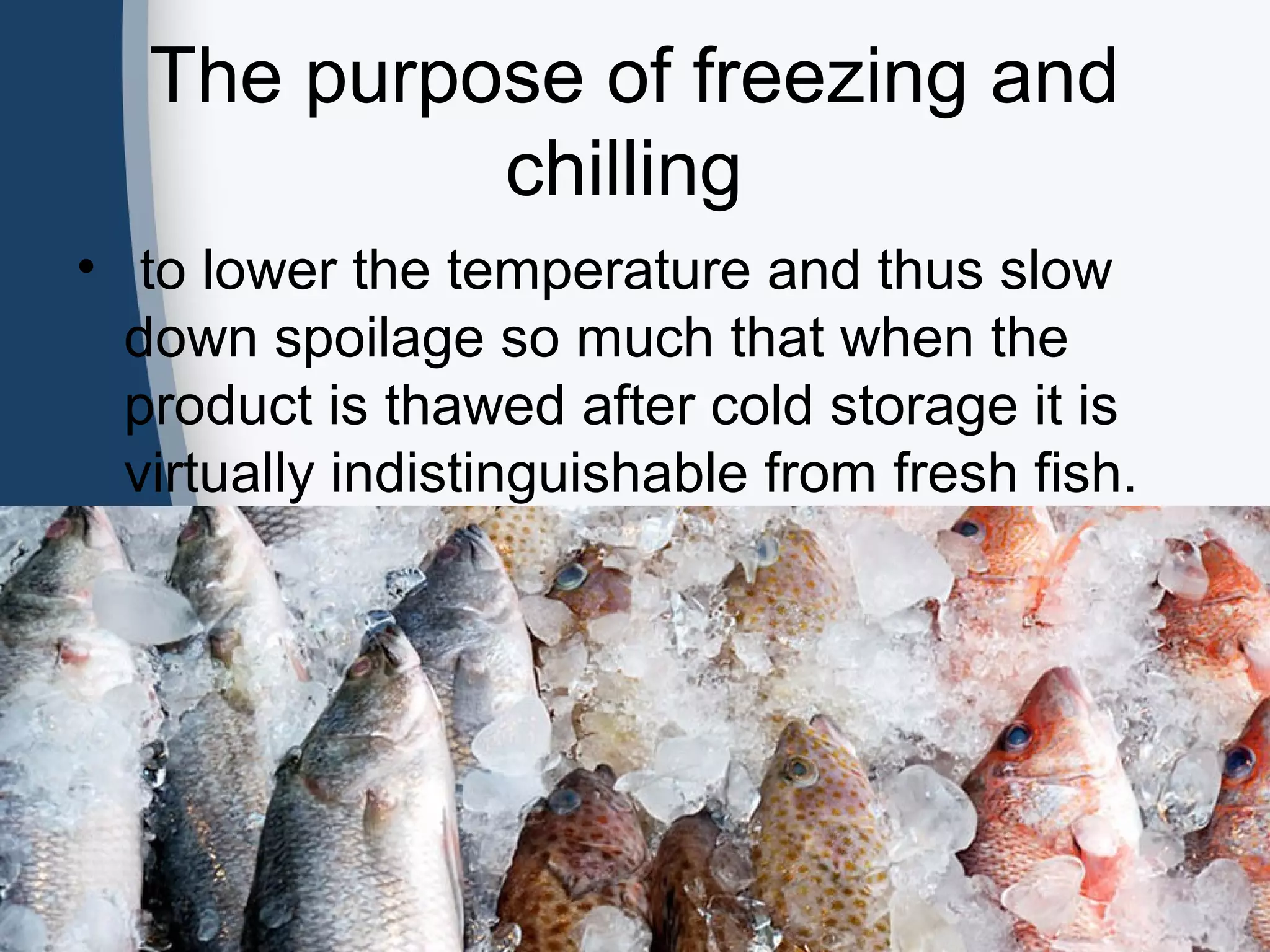
• to lower the temperature and thus slow
down spoilage so much that when the
product is thawed after cold storage it is
virtually indistinguishable from fresh fish.
What happens during freezing?
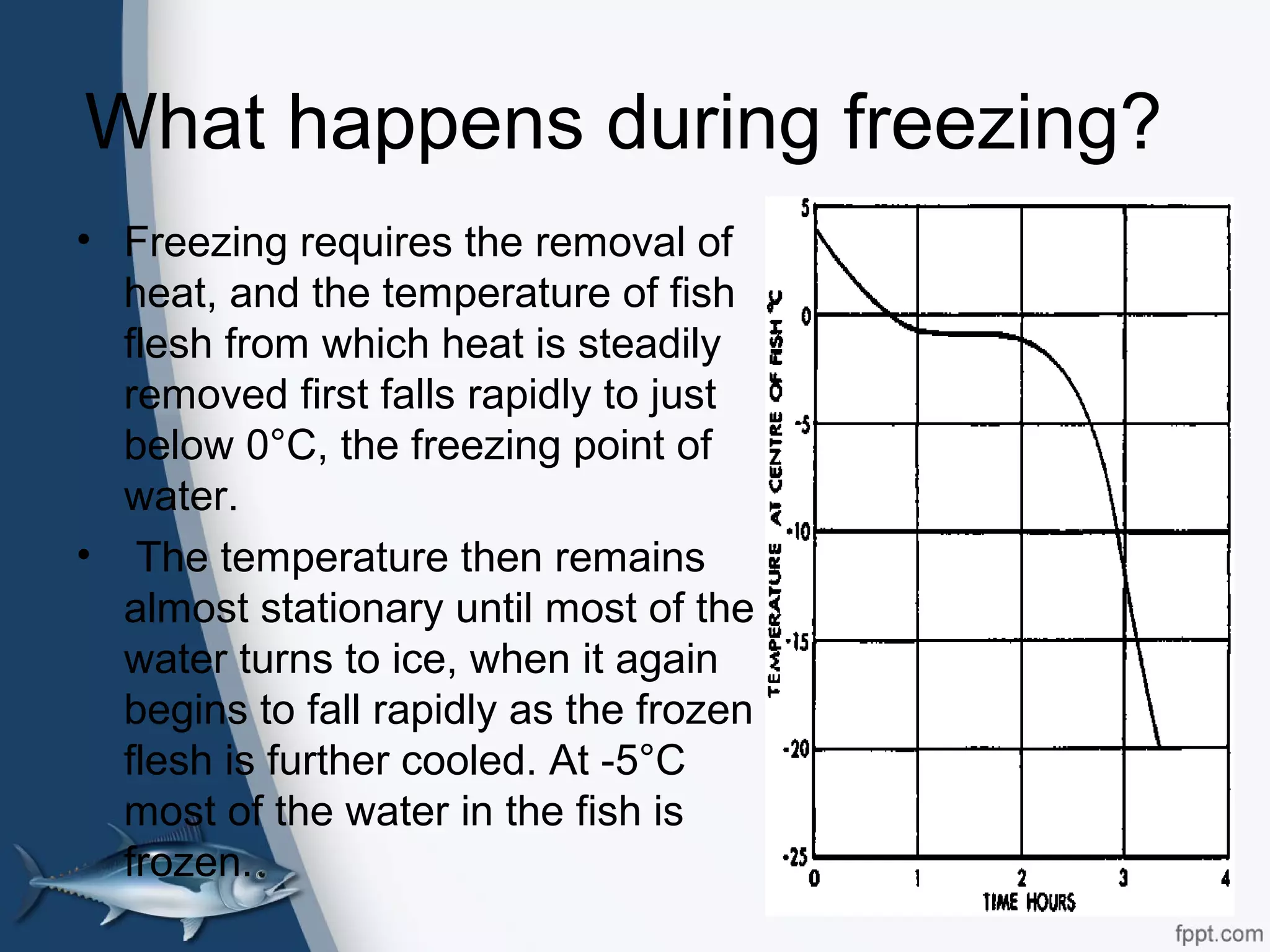
• Freezing requires the removal of
heat, and the temperature of fish
flesh from which heat is steadily
removed first falls rapidly to just
below 0°C, the freezing point of
water.
• The temperature then remains
almost stationary until most of the
water turns to ice, when it again
begins to fall rapidly as the frozen
flesh is further cooled. At -5°C
most of the water in the fish is
frozen.
The quality of ice
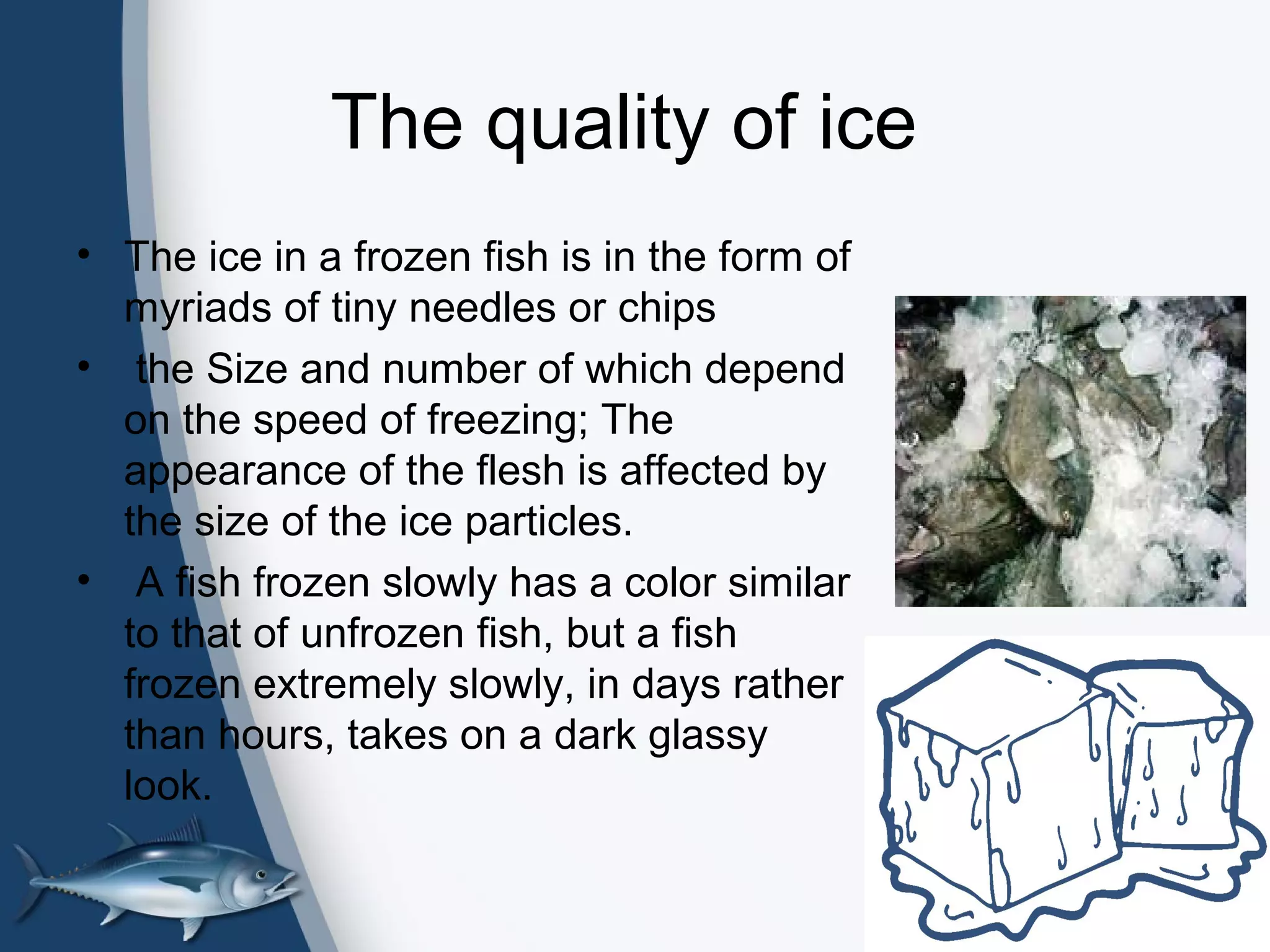
• The ice in a frozen fish is in the form of
myriads of tiny needles or chips
• the Size and number of which depend
on the speed of freezing; The
appearance of the flesh is affected by
the size of the ice particles.
• A fish frozen slowly has a color similar
to that of unfrozen fish, but a fish
frozen extremely slowly, in days rather
than hours, takes on a dark glassy
look.
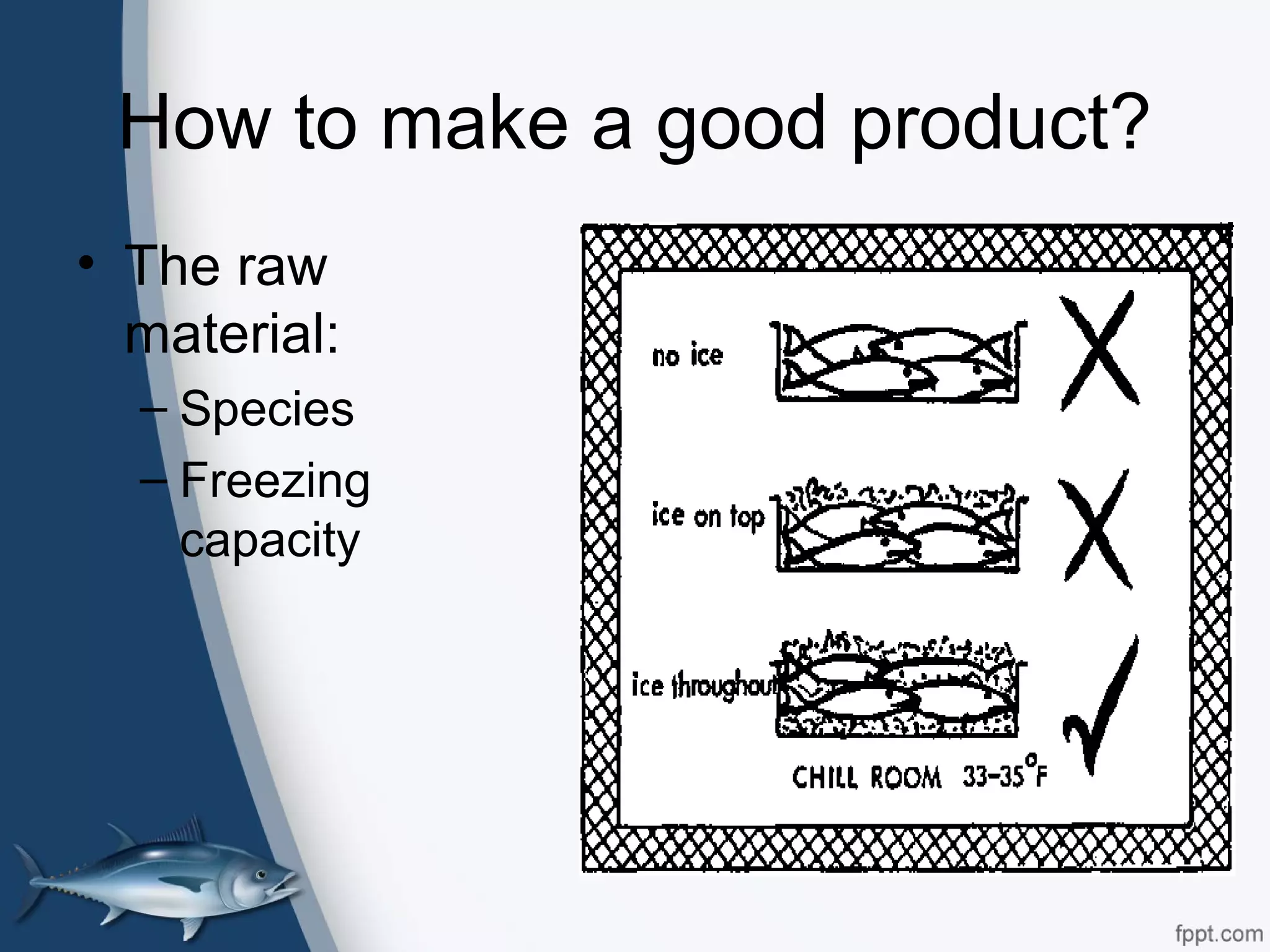
How to make a good product?
• The raw
material:
– Species
– Freezing
capacity
How to make good product?
• Care during filleting:
– The thicker and more elaborate the wrappings
the longer the freezing time will be
– Rate of packing should never exceed freezing
rate
– Interleaving waxed papers or plastic films
between fillets
– Pack tightly to prevent oxidation and drying
How to make good product?
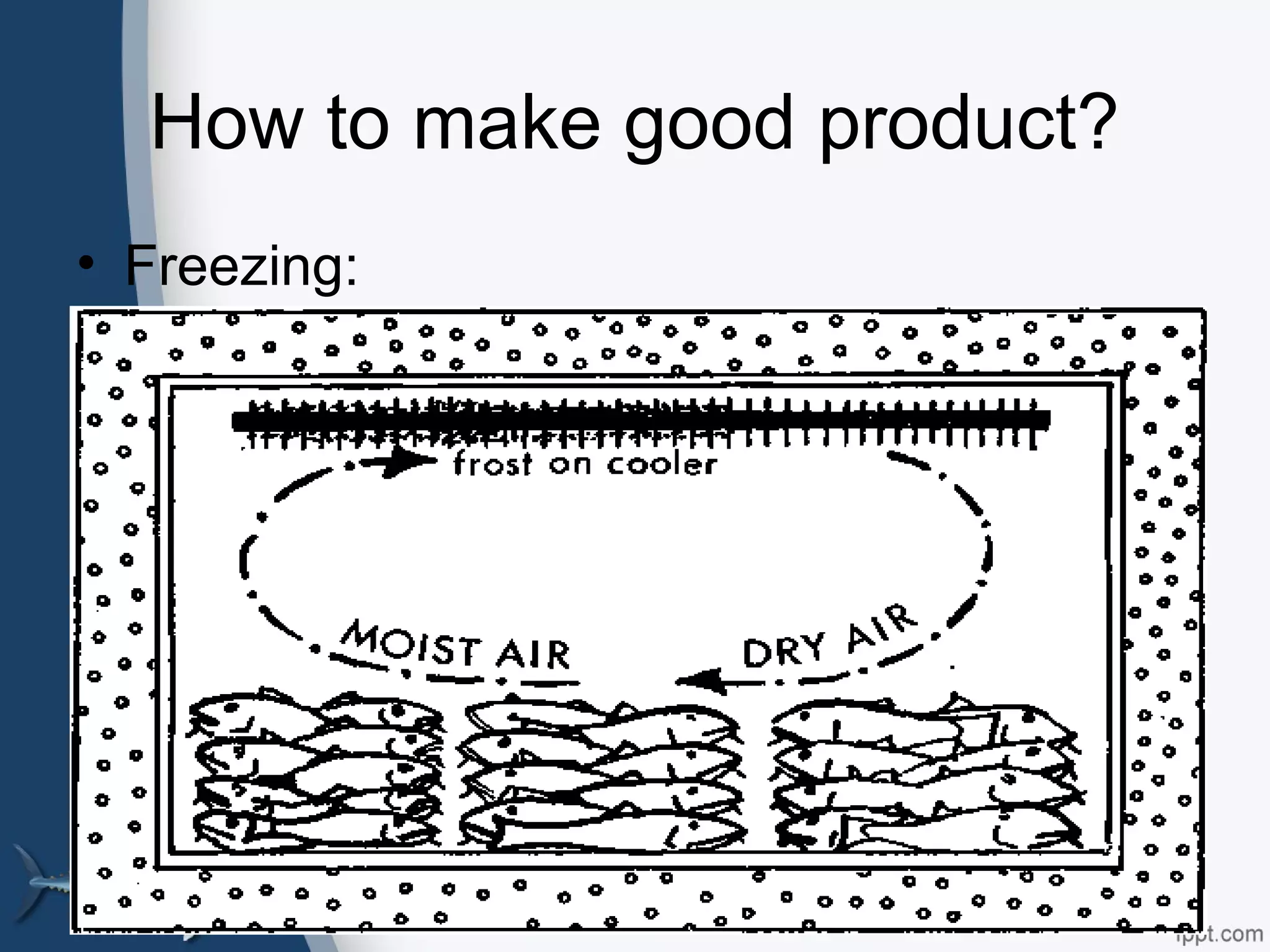
• Freezing:
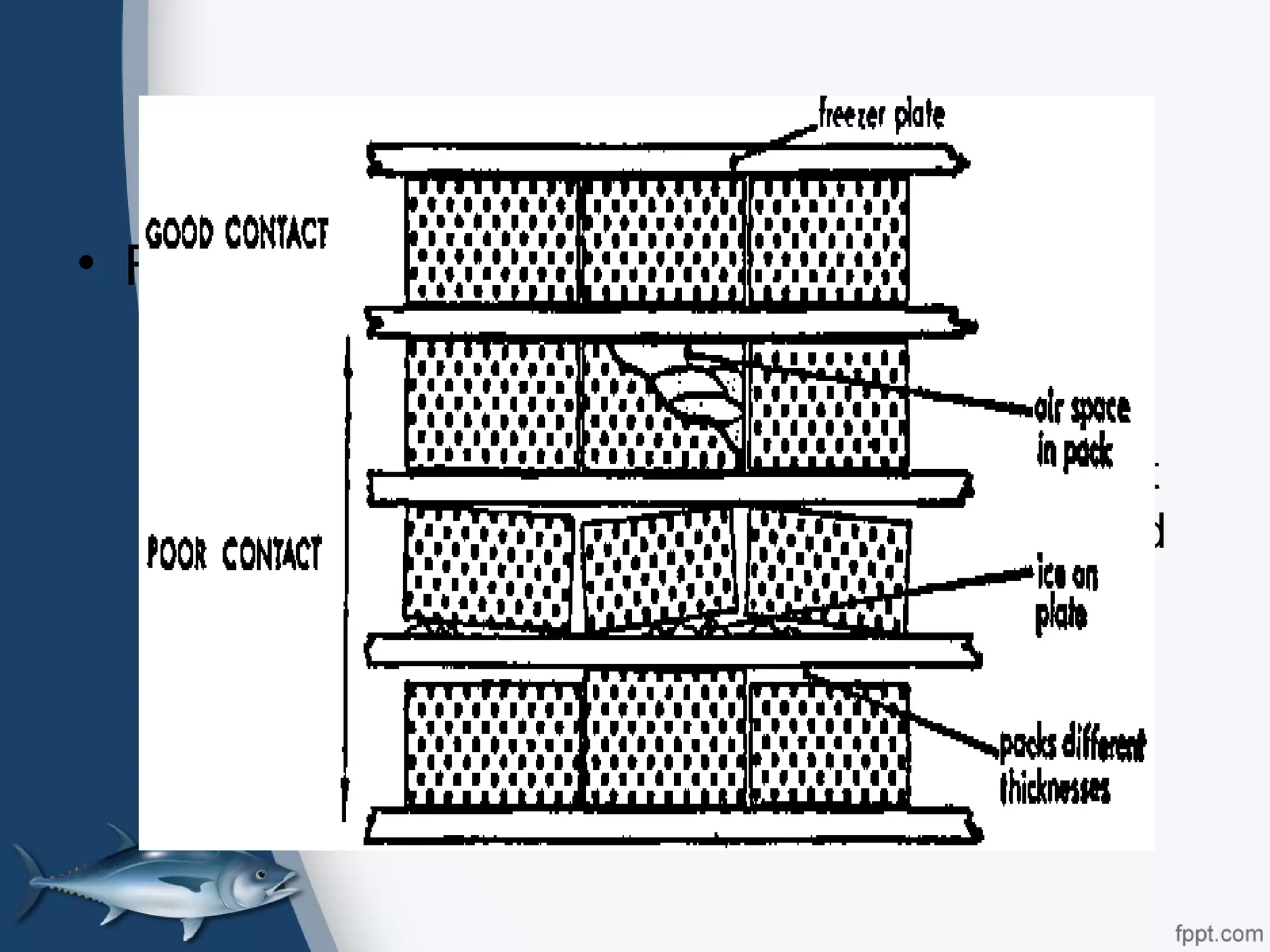
• Freezing: (3kinds)
– Air blast: heat is removed from the fish by
blowing a stream of cold air over them
– The plate: the fish lose heat by direct contact
with hollow metal plates through which a cold
fluid is passed
– The spray freezer: the product is in direct
contact with a refrigerant.
Cold storage
• The recommended temperature for cold
storage of fish and fish products in the UK is
-30°C. Safe storage times for a variety of
fish products, together with advice on
correct cold storage practice, are contained
in Advisory Note 28, Cold Storage of Frozen
Fish.
freezing and chilling in fish processing

freezing and chilling in fish processing

  • 1.
    Freezing and chilling infish processing
  • 2.
    Difference between freezing andchilling • Chilling simply means reducing the temperature • Freezing means cooling below the item's freezing point.
  • 3.
    What is fishfreezing and chilling ? • Simplest • More natural way for fish preservation • Easy and safe to do • To avoid autolytic deterioration and microbial spoilage
  • 5.
    Simple steps forfreezing and chilling 1. Select fresh fish for freezing 2. If the fish is small like Dilis, wash and freeze right away. 3. if the fish is large like Bangus, remove scales, entails and trim fins and tails and wash. 4. Wrap fish in plastic wrap or put in a container packed tightly to eliminate air
  • 6.
    Cont. 5. Label wrappedfish or container with name and date 6. Freeze immediately
  • 7.
    The purpose offreezing and chilling • to lower the temperature and thus slow down spoilage so much that when the product is thawed after cold storage it is virtually indistinguishable from fresh fish.
  • 8.
    What happens duringfreezing? • Freezing requires the removal of heat, and the temperature of fish flesh from which heat is steadily removed first falls rapidly to just below 0°C, the freezing point of water. • The temperature then remains almost stationary until most of the water turns to ice, when it again begins to fall rapidly as the frozen flesh is further cooled. At -5°C most of the water in the fish is frozen.
  • 9.
    The quality ofice • The ice in a frozen fish is in the form of myriads of tiny needles or chips • the Size and number of which depend on the speed of freezing; The appearance of the flesh is affected by the size of the ice particles. • A fish frozen slowly has a color similar to that of unfrozen fish, but a fish frozen extremely slowly, in days rather than hours, takes on a dark glassy look.
  • 10.
    How to makea good product? • The raw material: – Species – Freezing capacity
  • 11.
    How to makegood product? • Care during filleting: – The thicker and more elaborate the wrappings the longer the freezing time will be – Rate of packing should never exceed freezing rate – Interleaving waxed papers or plastic films between fillets – Pack tightly to prevent oxidation and drying
  • 12.
    How to makegood product? • Freezing:
  • 13.
    • Freezing: (3kinds) –Air blast: heat is removed from the fish by blowing a stream of cold air over them – The plate: the fish lose heat by direct contact with hollow metal plates through which a cold fluid is passed – The spray freezer: the product is in direct contact with a refrigerant.
  • 14.
    Cold storage • Therecommended temperature for cold storage of fish and fish products in the UK is -30°C. Safe storage times for a variety of fish products, together with advice on correct cold storage practice, are contained in Advisory Note 28, Cold Storage of Frozen Fish.

Editor's Notes

  • #8 They break down the complex chemical substances of the flesh and produce some simpler objectionable compounds such as ammonia; the spoilage process continues until the flesh becomes putrid and inedible. Bacterial action is. also slowed when the temperature is reduced. Thus, by lowering the temperature of the fish, spoilage can be retarded and, if the temperature is low enough, spoilage can be almost stopped. Freezing is the means of preparing fish for storage at low temperature but is not of itself a method of preservation.
  • #9 Fish are largely water, 60-80 per cent depending on species, and the process of freezing converts most of the water into ice. Quick freezing is nevertheless important. Spoilage changes continue fairly rapidly at temperatures just below 0°C, and it is therefore desirable to remove heat from the fish quickly to avoid loss of quality. The faster the freezing process, the more quickly spoilage is stopped. Furthermore, slow freezing can have an adverse effect on the quality of the thawed product after cold storage, and on the suitability of fish for subsequent smoking. For these reasons, and to maintain a high output from the freezing plant, freezing should be completed quickly. In practice this means that the time to pass through the temperature range 0 to -5°C should be not more than a few hours; most freezers nowadays are capable of achieving a freezing time of 2 or 3 hours. Slow freezing over a day or more causes poor quality in most fish products and should be avoided. Such conditions are obtained when bulk produce is frozen by placing it still unfrozen in a cold store. The temperature of the fish should be lowered to a safe level; the recommended storage temperature for frozen fish is -30°C, for reasons that are fully discussed in Advisory Note 28. It is advisable to lower the average temperature of the fish to this value during the freezing process; in practice, in a freezer operating at about -40°C, this means lowering the temperature of the warmest part of the fish, usually the centre, to -20°C so that the average temperature of the product entering the cold store is then at or below the desired -30°C.
  • #10 when a fish is frozen slowly the particles are comparatively large and few in number, although usually too small to see clearly, perhaps 1 mm across. a thin piece frozen quickly can have a chalky white appearance because the tiny ice particles scatter the light, but this effect, which is indicative of quick freezing, should not be confused with freezer burn, a term used to describe the dull, matt appearance of frozen fish that have dried during cold storage
  • #11 Fresh fish can be prepared, packed and frozen so quickly that there is almost no loss of quality during the process, but carelessness during preparation can turn fresh fish into stale fish even before they reach the freezer. Figure 2 shows some of the points at which loss of quality can occur during preparation. Care must be exercised at each stage from receipt of raw material to deposit of the frozen fish in cold store. when fish are cheap at the port market, processors sometimes buy quantities in excess of a day’s freezing capacity; this means the surplus remains in the factory for a day or two awaiting freezing. Overnight storage causes a measurable amount of spoilage, and fish kept longer than this can deteriorate badly before they are frozen. A shovelful of ice on top of a box or kit of fish in a chillroom is not good enough for overnight storage; plenty of ice should be distributed uniformly throughout the fish. Here is an example of industrial practice that resulted in loss of quality. A processor bought good quality cod for freezing that were stored without ice in a chillroom operating at 2-4°C for 24 hours. These fish spoiled three times as quickly as they would have done had they been properly mixed with ice; in other words they lost the equivalent of 3 days’ storage life, so that when they were finally frozen they were of only moderate quality. The staler the fish to begin with, the worse the effect of bad practice of this kind will be. Whole cod should be frozen within three days of capture, and be kept in ice while awaiting freezing, to give a product that when thawed can be treated like fresh iced fish. Flatfish can be kept longer in ice before they are frozen; for example plaice can be kept 5-6 days after catching and still give a first class product. Haddock on the other hand should be not more than 2 days in ice before they are frozen, and hake are sometimes too soft to stand up to the effects of freezing after only 1 day in ice. Fatty fish such as herring and mackerel are not normally gutted when caught, and as a result the digestive juices in the gut start to break down the belly wall very soon after a fish dies. For this reason fatty fish must be iced immediately and be frozen within 24 hours of capture, preferably even sooner for fish that are full of food.
  • #12 Consumer packs of fish are usually wrapped before they are frozen, but large blocks are sometimes frozen unwrapped. The thicker and more elaborate the wrappings the longer the freezing time will be. Once fish have been packed it is generally not practicable to use ice to cool them; it is therefore especially important to avoid delay at this stage. The rate of packing should never exceed the rate of freezing so much that packed fish have to wait more than an hour before entering the freezer. Interleaving of waxed paper or plastics film between fillets, especially in large blocks, enables the user of the frozen product to remove individual fillets without having to thaw the whole block. Single fish, fillets or portions are also often frozen individually before packing in outer containers, in order to make them more convenient to handle; they are described as individually quick frozen, iqf. Packaging, apart from having sales appeal and keeping the product clean, should protect the contents from deterioration due to drying and oxidation; the ideal material prevents moisture getting out and prevents air getting in. The pack should fit the product tightly to prevent oxidation and drying within the pack. Information on a pack of frozen fish should enable the producer to identify when and where it was made, and should give the purchaser advice on storage time, thawing time and cooking.
  • #14 Three kinds of freezer are used for freezing fish in the UK, the air blast, the plate and the spray freezer. In the first kind, heat is removed from the fish by blowing a stream of cold air over them; in the second, the fish lose heat by direct contact with hollow metal plates through which a cold fluid is passed; in the third, the product is in direct contact with a refrigerant.