OBJECTIVES:
 To understand the concept of ethical management.
 To understand the need for ethical management in business
    and profession.
   To compare and contrast between ethical management and
    strategic management.
   To understand the need and importance for ethical
    incorporation in strategic management process and
    decision making.
   To suggest the model for Ethical Strategic Management
    Process.
   To suggest the model for Ethical Strategic Management
    Decision Making.
What is Ethical Management?
 “Ethical management means, with a positive, subjective
 attitude: observation of corporate ethics; carrying on
 all economical, legal responsibilities of the corporation;
 recognizing personal responsibilities as corporation
 obligations; and first taking ethical aspect into
 consideration when pursuit of personal gains corporate
 ethics.”*1
                    -Korea National Oil Corporation
Need for ethical management in Business:
 Minimizing business risks.
 Long-term survival and success.
 Achieving sustainable development.
 Strengthening of organizational structure.
 Increases public value and market share.
ETHICAL MANAGEMENT vs. STRATEGIC MANAGEMENT

 Strategy can be framed by due intelligence of a person,
  whereas ethics can be framed by fixing moral values and
  standards.

 Strategic management will not help in fixing the standards
  rather it helps in achieving the standards. But ethical
  management helps in fixing the standards. And while fixing
  the standards it considers the achievability, so it fixes the
  achievable standards.

 Strategies differ from organization to organization, but
  ethical practices are universal, it considers the universally
  accepted code of ethics.
ETHICAL MANAGEMENT vs. STRATEGIC MANAGEMENT

 Strategic practices are not questionable, whereas the ethical
  practices are questionable when they are not followed.

 Strategic management is short term –oriented and achieves
  short term objective. Whereas ethical management is long
  term oriented seeking long term success.

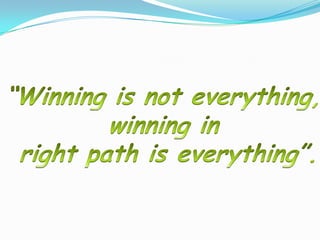
 Strategists find answers to questions like how I can win.
  What I can do to win? It always finds winning mantra to be
  success. And on other hand ethicists find answers to
  questions whether the chosen path is right or not, what is
  its impact on society and environment, how it affects
  corporate image and reputation etc.
ETHICAL MANAGEMENT vs. STRATEGIC MANAGEMENT

 Strategic management is a winning strategy, and
 ethical management is healthy winning strategy.
NEED AND IMPORTANCE FOR ETHICAL INCORPORATION IN
 STRATEGIC MANAGEMENT PROCESS AND DECISION MAKING

 Ethical practices are followed by ethical practices. As
 we say good follows well. Good ethics is good business.
 The modern business organization thinks in framing
 and implementing new strategies to win. But in the
 process of winning the strategists may forget the
 ethical issues. After knowing the need and importance
 of ethical management, there is the serious need to
 incorporate ethics in strategic management process
 and decision making.
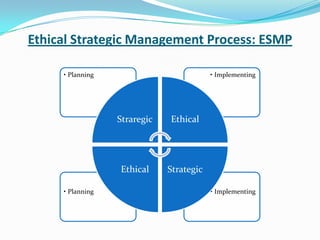
Ethical Strategic Management Process: ESMP

     • Planning                           • Implementing


                  Straregic   Ethical


                  Ethical     Strategic

     • Planning                           • Implementing
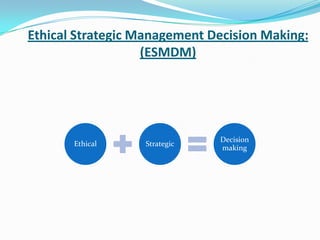
Ethical Strategic Management Decision Making:
                   (ESMDM)


                              Decision
       Ethical    Strategic
                              making
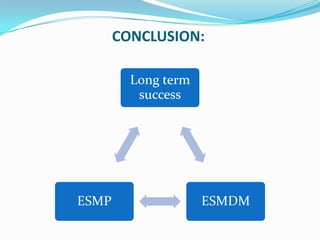
CONCLUSION:

         Long term
          success


ESMP                 ESMDM
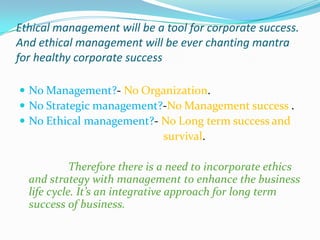
Ethical management will be a tool for corporate success.
And ethical management will be ever chanting mantra
for healthy corporate success

 No Management?- No Organization.
 No Strategic management?-No Management success .
 No Ethical management?- No Long term success and
                              survival.

            Therefore there is a need to incorporate ethics
  and strategy with management to enhance the business
  life cycle. It’s an integrative approach for long term
  success of business.
Ethical strategic management process and decision making

Ethical strategic management process and decision making

  • 3.
    OBJECTIVES:  To understandthe concept of ethical management.  To understand the need for ethical management in business and profession.  To compare and contrast between ethical management and strategic management.  To understand the need and importance for ethical incorporation in strategic management process and decision making.  To suggest the model for Ethical Strategic Management Process.  To suggest the model for Ethical Strategic Management Decision Making.
  • 4.
    What is EthicalManagement?  “Ethical management means, with a positive, subjective attitude: observation of corporate ethics; carrying on all economical, legal responsibilities of the corporation; recognizing personal responsibilities as corporation obligations; and first taking ethical aspect into consideration when pursuit of personal gains corporate ethics.”*1 -Korea National Oil Corporation
  • 8.
    Need for ethicalmanagement in Business:  Minimizing business risks.  Long-term survival and success.  Achieving sustainable development.  Strengthening of organizational structure.  Increases public value and market share.
  • 9.
    ETHICAL MANAGEMENT vs.STRATEGIC MANAGEMENT  Strategy can be framed by due intelligence of a person, whereas ethics can be framed by fixing moral values and standards.  Strategic management will not help in fixing the standards rather it helps in achieving the standards. But ethical management helps in fixing the standards. And while fixing the standards it considers the achievability, so it fixes the achievable standards.  Strategies differ from organization to organization, but ethical practices are universal, it considers the universally accepted code of ethics.
  • 10.
    ETHICAL MANAGEMENT vs.STRATEGIC MANAGEMENT  Strategic practices are not questionable, whereas the ethical practices are questionable when they are not followed.  Strategic management is short term –oriented and achieves short term objective. Whereas ethical management is long term oriented seeking long term success.  Strategists find answers to questions like how I can win. What I can do to win? It always finds winning mantra to be success. And on other hand ethicists find answers to questions whether the chosen path is right or not, what is its impact on society and environment, how it affects corporate image and reputation etc.
  • 11.
    ETHICAL MANAGEMENT vs.STRATEGIC MANAGEMENT  Strategic management is a winning strategy, and ethical management is healthy winning strategy.
  • 12.
    NEED AND IMPORTANCEFOR ETHICAL INCORPORATION IN STRATEGIC MANAGEMENT PROCESS AND DECISION MAKING  Ethical practices are followed by ethical practices. As we say good follows well. Good ethics is good business. The modern business organization thinks in framing and implementing new strategies to win. But in the process of winning the strategists may forget the ethical issues. After knowing the need and importance of ethical management, there is the serious need to incorporate ethics in strategic management process and decision making.
  • 13.
    Ethical Strategic ManagementProcess: ESMP • Planning • Implementing Straregic Ethical Ethical Strategic • Planning • Implementing
  • 14.
    Ethical Strategic ManagementDecision Making: (ESMDM) Decision Ethical Strategic making
  • 15.
    CONCLUSION: Long term success ESMP ESMDM
  • 16.
    Ethical management willbe a tool for corporate success. And ethical management will be ever chanting mantra for healthy corporate success  No Management?- No Organization.  No Strategic management?-No Management success .  No Ethical management?- No Long term success and survival. Therefore there is a need to incorporate ethics and strategy with management to enhance the business life cycle. It’s an integrative approach for long term success of business.