GREEN MANURING
It is a practice of ploughing in the green
plants tissue grown in the field or adding
green plants with tender twigs or leaves
from outside and incorporating them into
the soil for improving the physical
structure as well as fertility of the soil.
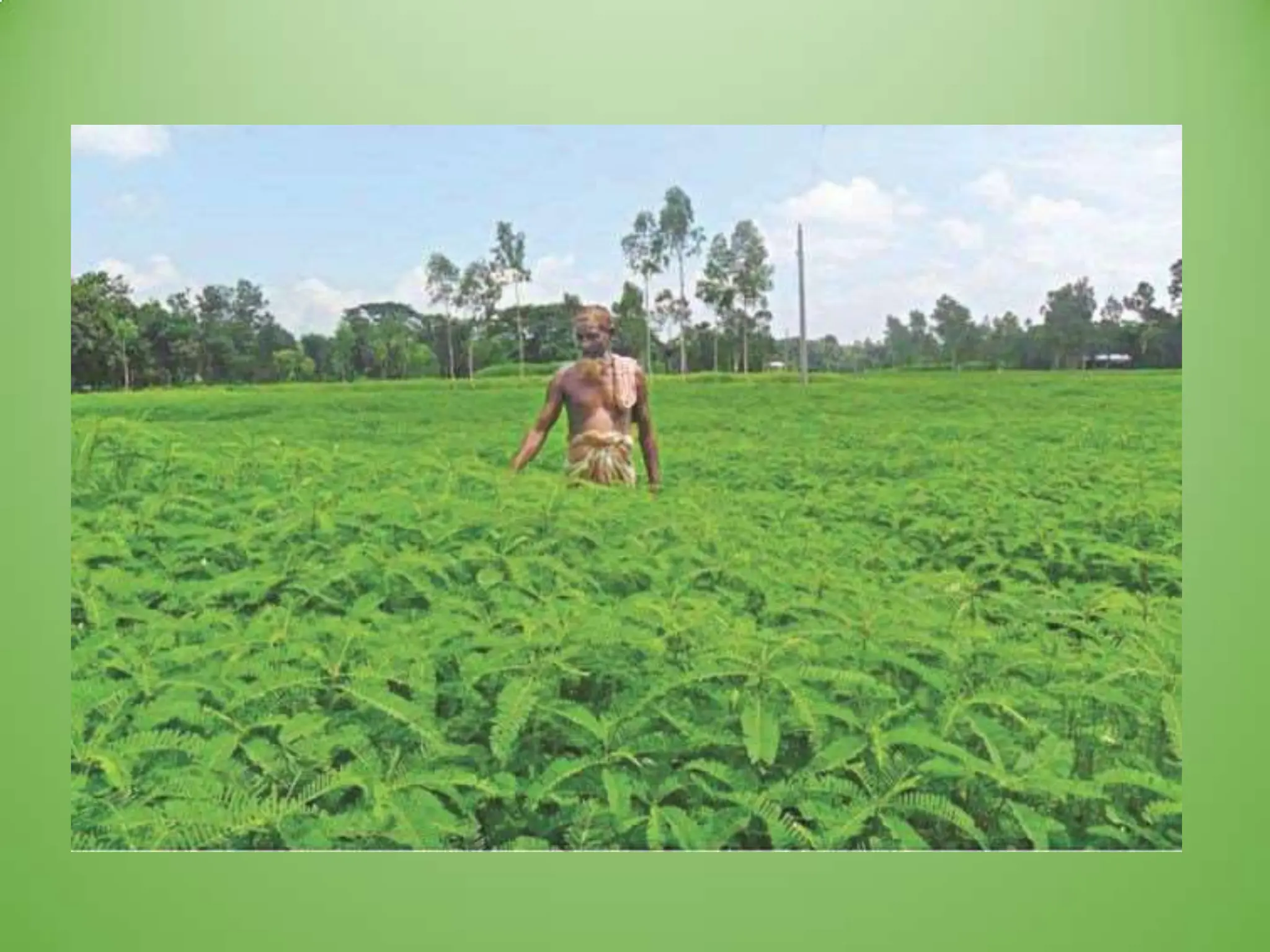
Turning off these crops directly
in the field by ploughing the field
IMPORTANCE OF GREEN
MANURING
• Green manuring contributes 40 to 80 kg nitrogen
per ha.
• Besides supplying nitrogen, it prevents loss of
nitrogen by leaching and erosion.
• Vigorous root system of green manure keeps the
soil particles bound together.
• Green manure reclaims saline and alkaline soils.
• Some green leaf manure crops serve as fodder.
• The growth of green manure crops is very fast.
Green manuring is of two types:
1. Green leaf manuring
2. Green manuring in situ
GREEN LEAF MANURE
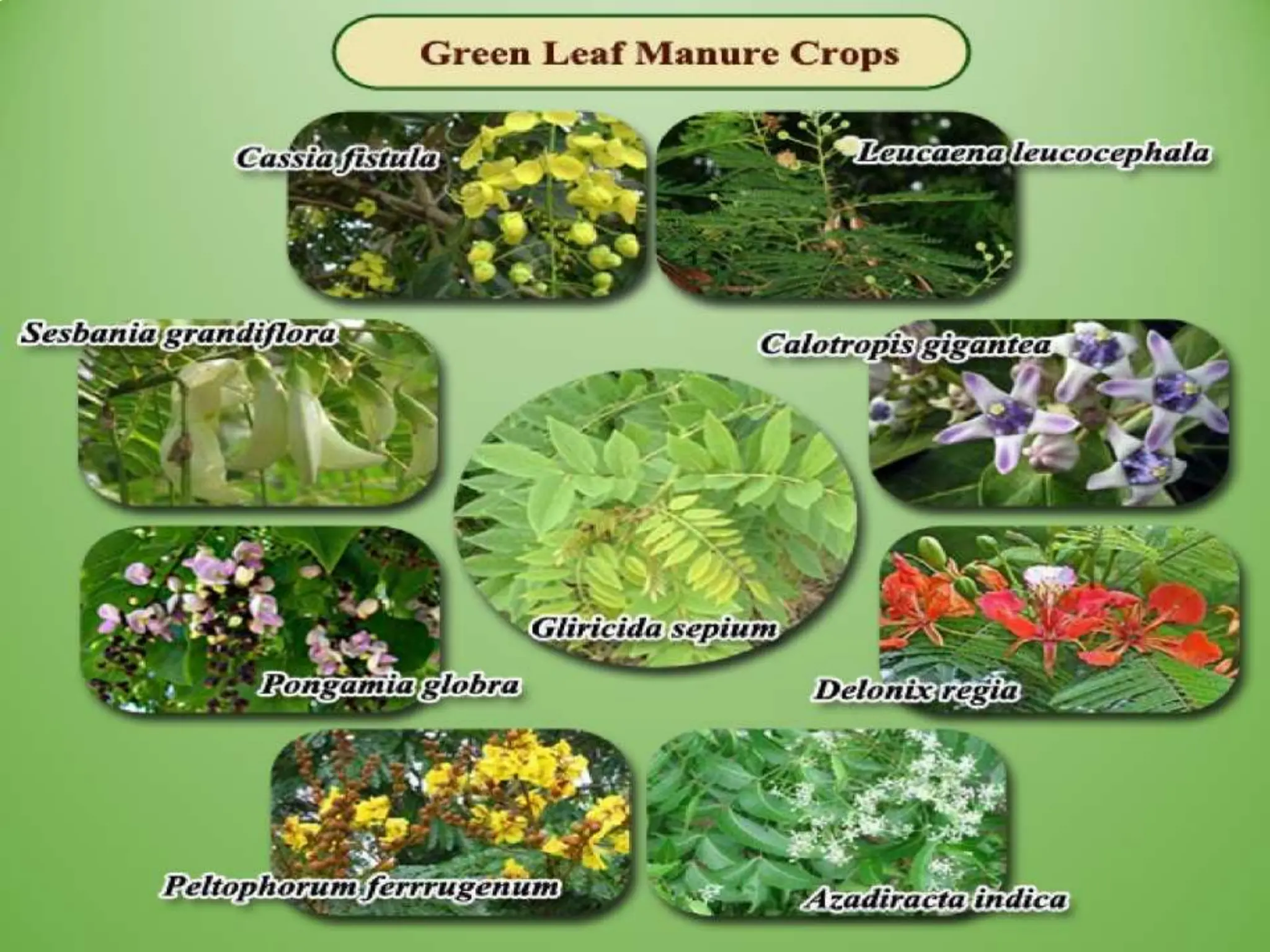
• Application of green leaves and twigs of trees, shrubs
and herbs collected from elsewhere is known as green
leaf manuring.
• Forest tree leaves are the main sources for green leaf
manure.
• Plants growing in wastelands, field bunds etc., are
another source of green leaf manure.
• The important plant species useful for green leaf
manure are neem, mahua, wild indigo, Glyricidia,
Karanji (Pongamia glabra) calotropis, avise(Sesbania
grandiflora), subabul and other shrubs.
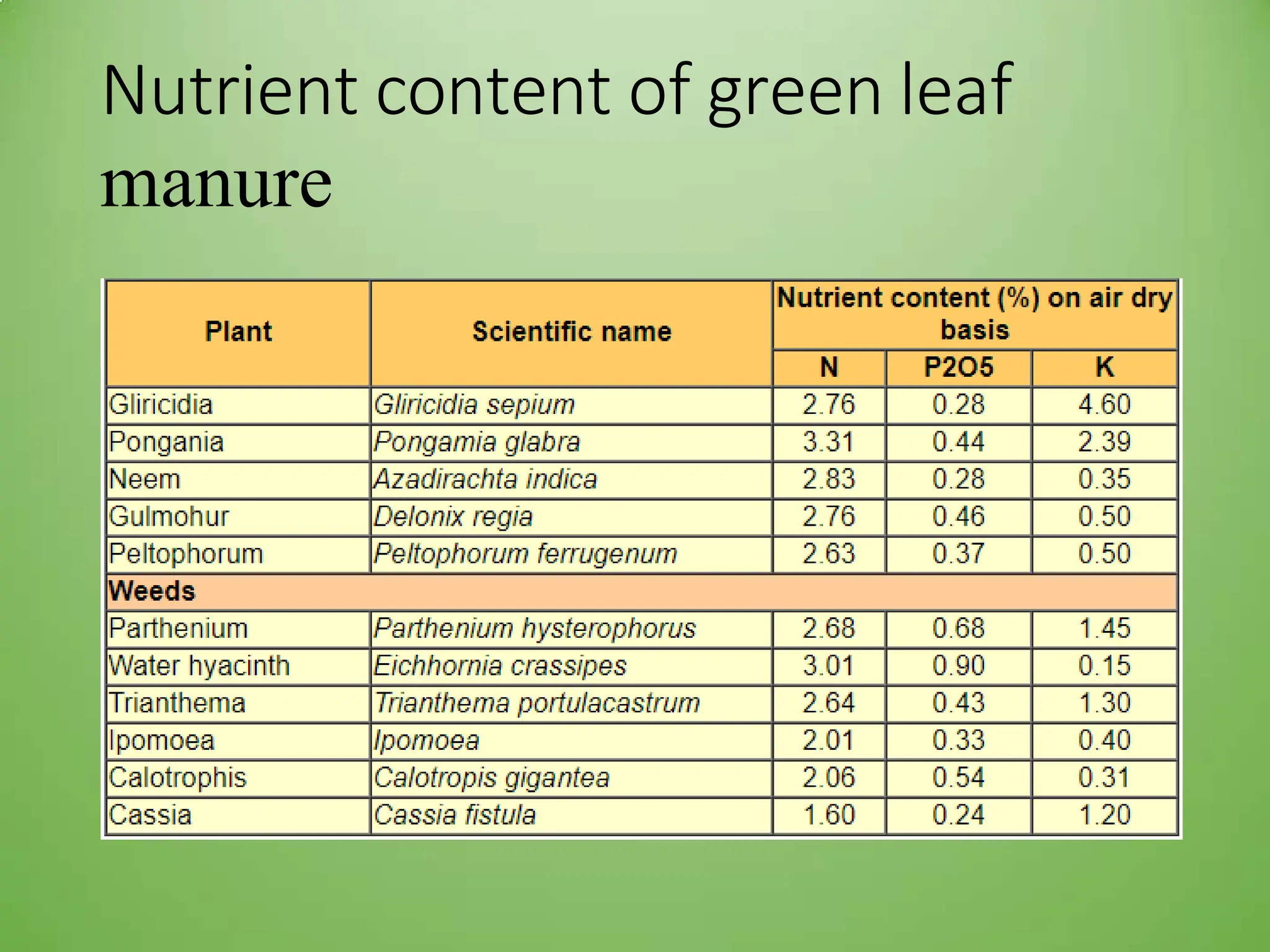
Nutrient content of green leaf
manure
Advantages
• Green manuring improves soil structure, increases
water holding capacity and decreases soil loss by
erosion.
• Growing of green manure crops in the off season
reduces weed proliferation and weed growth.
• Green manuring helps in reclamation of alkaline
soils.
• Root knot nematodes can be controlled by green
manuring.
Green Manure IN SITU
• Green manuring in situ is growing of plants usually
belonging to leguminous family and incorporating
them into the soil after sufficient growth that is at
the time of flowering or before flowering.
• The plants that are grown for green manure known
as green manure crops.
• The most important green manure crops are sun
hemp, Dhaincha, Pillipesara,Clusterbeans
and Sesbania rostrata.
Biomass production and N
accumulation of green manure crops
Crop Age (Days)
Dry matter
(t/ha)
N accumulated
Sesbania aculeata 60 23.2 133
Sunnhemp 60 30.6 134
Cow pea 60 23.2 74
Pillipesara 60 25.0 102
Cluster bean 50 3.2 91
Sesbania rostrata 50 5.0 96
Nutrient content of green
manure crops
Advantages
• Improves soil structure
• Increases water holding capacity and
• Decreases soil loss by erosion
Criteria for selection of green
manures include :-
• plants are fleshy and soft
• fast growing;
• fast to decompose;
• leguminous;
• don't attract pests and diseases;
• don't compete with crops;
• provide nutrients needed in the soil
THANK YOU

green manuring and its importance in field.pptx

  • 1.
    GREEN MANURING It isa practice of ploughing in the green plants tissue grown in the field or adding green plants with tender twigs or leaves from outside and incorporating them into the soil for improving the physical structure as well as fertility of the soil.
  • 3.
    Turning off thesecrops directly in the field by ploughing the field
  • 4.
    IMPORTANCE OF GREEN MANURING •Green manuring contributes 40 to 80 kg nitrogen per ha. • Besides supplying nitrogen, it prevents loss of nitrogen by leaching and erosion. • Vigorous root system of green manure keeps the soil particles bound together. • Green manure reclaims saline and alkaline soils. • Some green leaf manure crops serve as fodder. • The growth of green manure crops is very fast.
  • 5.
    Green manuring isof two types: 1. Green leaf manuring 2. Green manuring in situ
  • 6.
    GREEN LEAF MANURE •Application of green leaves and twigs of trees, shrubs and herbs collected from elsewhere is known as green leaf manuring. • Forest tree leaves are the main sources for green leaf manure. • Plants growing in wastelands, field bunds etc., are another source of green leaf manure. • The important plant species useful for green leaf manure are neem, mahua, wild indigo, Glyricidia, Karanji (Pongamia glabra) calotropis, avise(Sesbania grandiflora), subabul and other shrubs.
  • 7.
    Nutrient content ofgreen leaf manure
  • 9.
    Advantages • Green manuringimproves soil structure, increases water holding capacity and decreases soil loss by erosion. • Growing of green manure crops in the off season reduces weed proliferation and weed growth. • Green manuring helps in reclamation of alkaline soils. • Root knot nematodes can be controlled by green manuring.
  • 10.
    Green Manure INSITU • Green manuring in situ is growing of plants usually belonging to leguminous family and incorporating them into the soil after sufficient growth that is at the time of flowering or before flowering. • The plants that are grown for green manure known as green manure crops. • The most important green manure crops are sun hemp, Dhaincha, Pillipesara,Clusterbeans and Sesbania rostrata.
  • 12.
    Biomass production andN accumulation of green manure crops Crop Age (Days) Dry matter (t/ha) N accumulated Sesbania aculeata 60 23.2 133 Sunnhemp 60 30.6 134 Cow pea 60 23.2 74 Pillipesara 60 25.0 102 Cluster bean 50 3.2 91 Sesbania rostrata 50 5.0 96
  • 13.
    Nutrient content ofgreen manure crops
  • 14.
    Advantages • Improves soilstructure • Increases water holding capacity and • Decreases soil loss by erosion
  • 15.
    Criteria for selectionof green manures include :- • plants are fleshy and soft • fast growing; • fast to decompose; • leguminous; • don't attract pests and diseases; • don't compete with crops; • provide nutrients needed in the soil
  • 16.