Green Building Green Building Business, Society & Environment Professor Hector R Rodriguez School of Business Mount Ida College
Society The Corporation and Its Stakeholders People for the Ethical Treatment of Animals Corporate Citizenship The Social Responsibility of Business The Shareholder Primacy Norm CSR, Citizenship and Sustainability Reporting Responsible Investing The Community and the Corporation Taxation and Corporate Citizenship Corporate Philanthropy Programs Employees and the Corporation Managing a Diverse Workforce Environment A Balanced Look at Climate Change Non-anthropogenic Causes of Climate Change Sulfates, Urban Warming and Permafrost Conventional Energy The Kyoto Protocol Green Building Green Information Technology Transportation, Electric Vehicles and the Environment Geo-Engineering Carbon Capture and Storage Renewable Energy Solid, Toxic and Hazardous Waste Forests, Paper and Carbon Sinks Life Cycle Analysis Water Use and Management Water Pollution Course Map – Topics Covered in Course
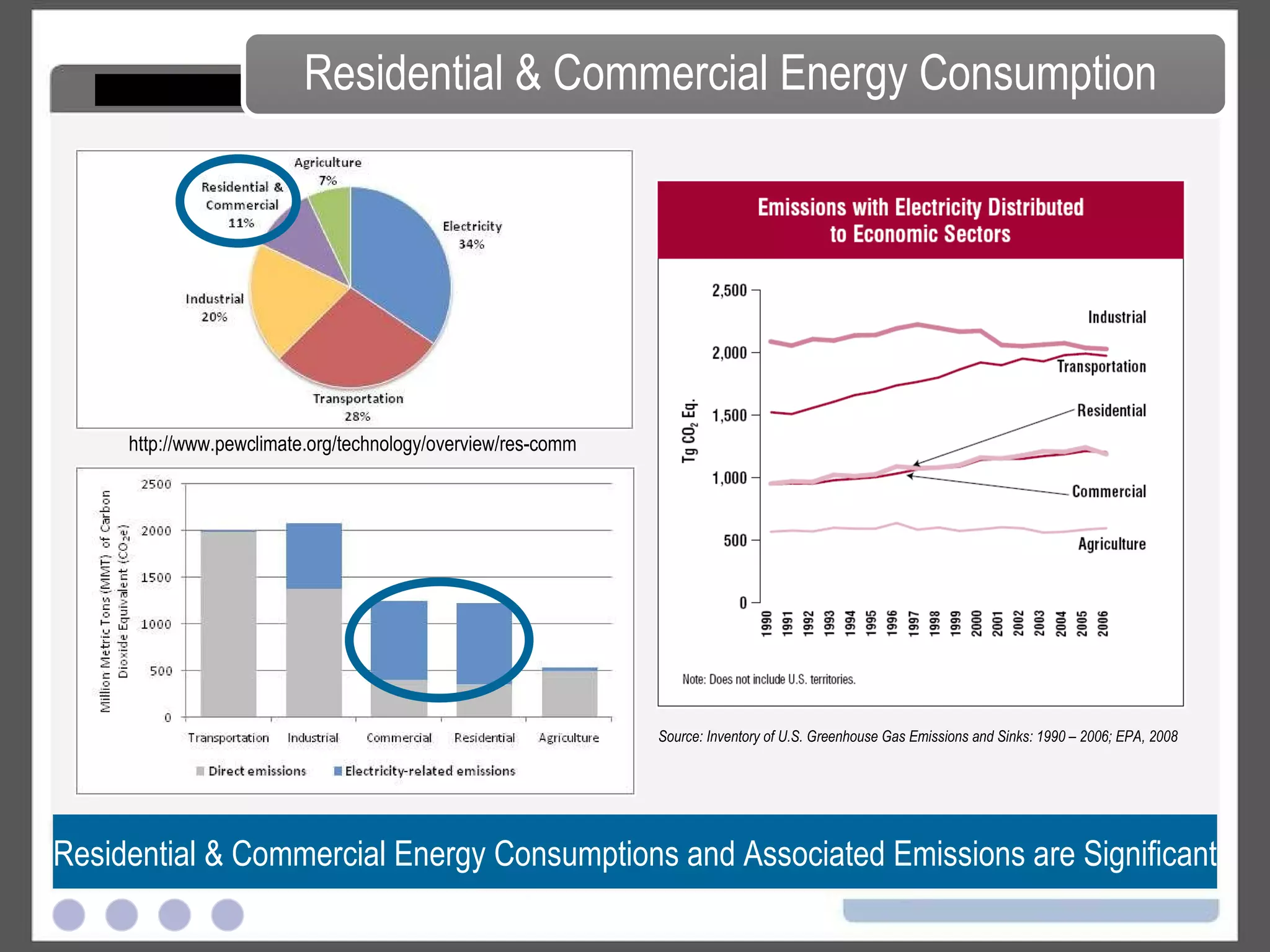
Residential & Commercial Energy Consumption http://www.pewclimate.org/technology/overview/res-comm Source:  Inventory of U.S. Greenhouse Gas Emissions and Sinks: 1990 – 2006; EPA, 2008 Residential & Commercial Energy Consumptions and Associated Emissions are Significant
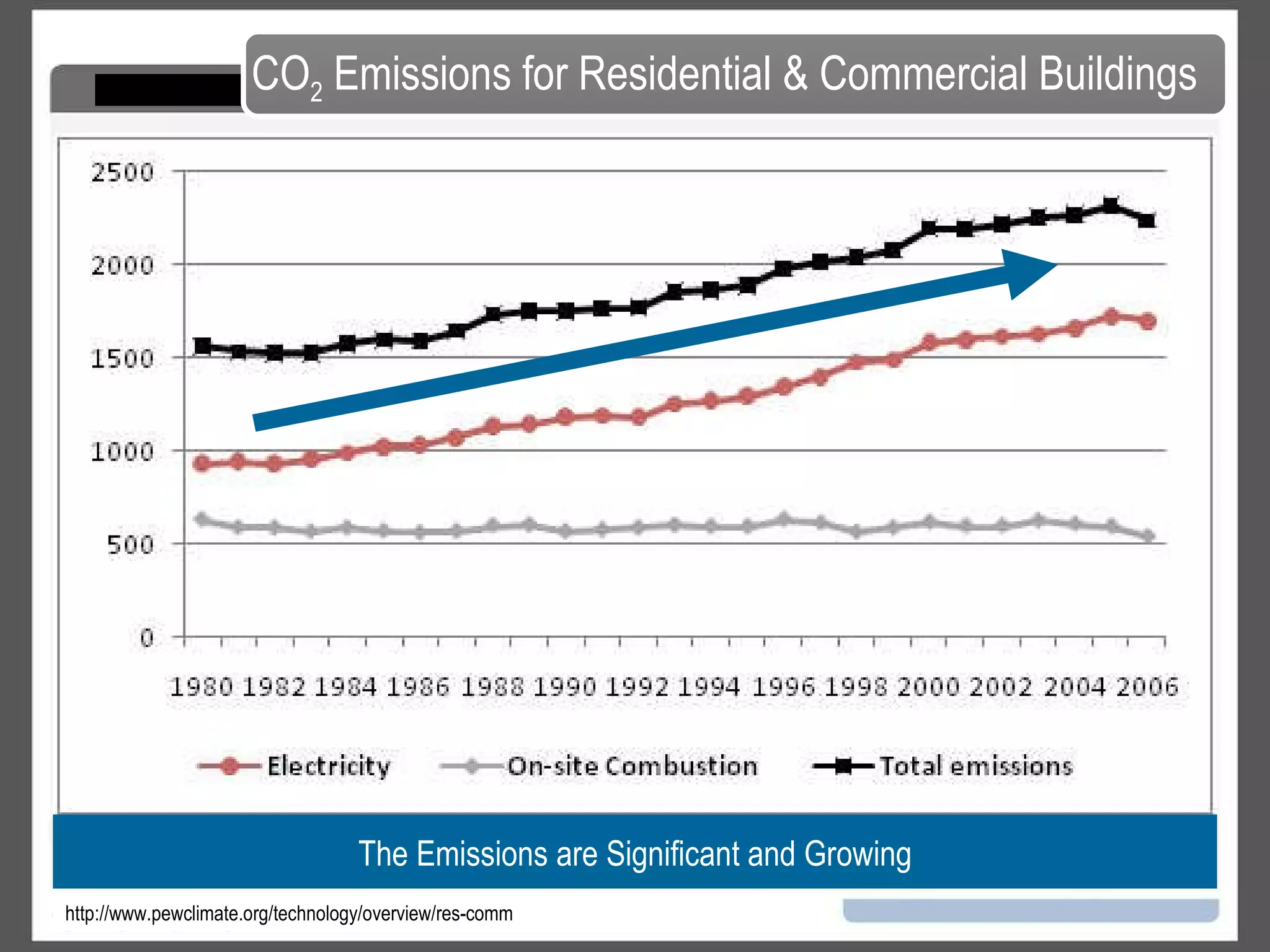
CO 2  Emissions for Residential & Commercial Buildings   http://www.pewclimate.org/technology/overview/res-comm The Emissions are Significant and Growing
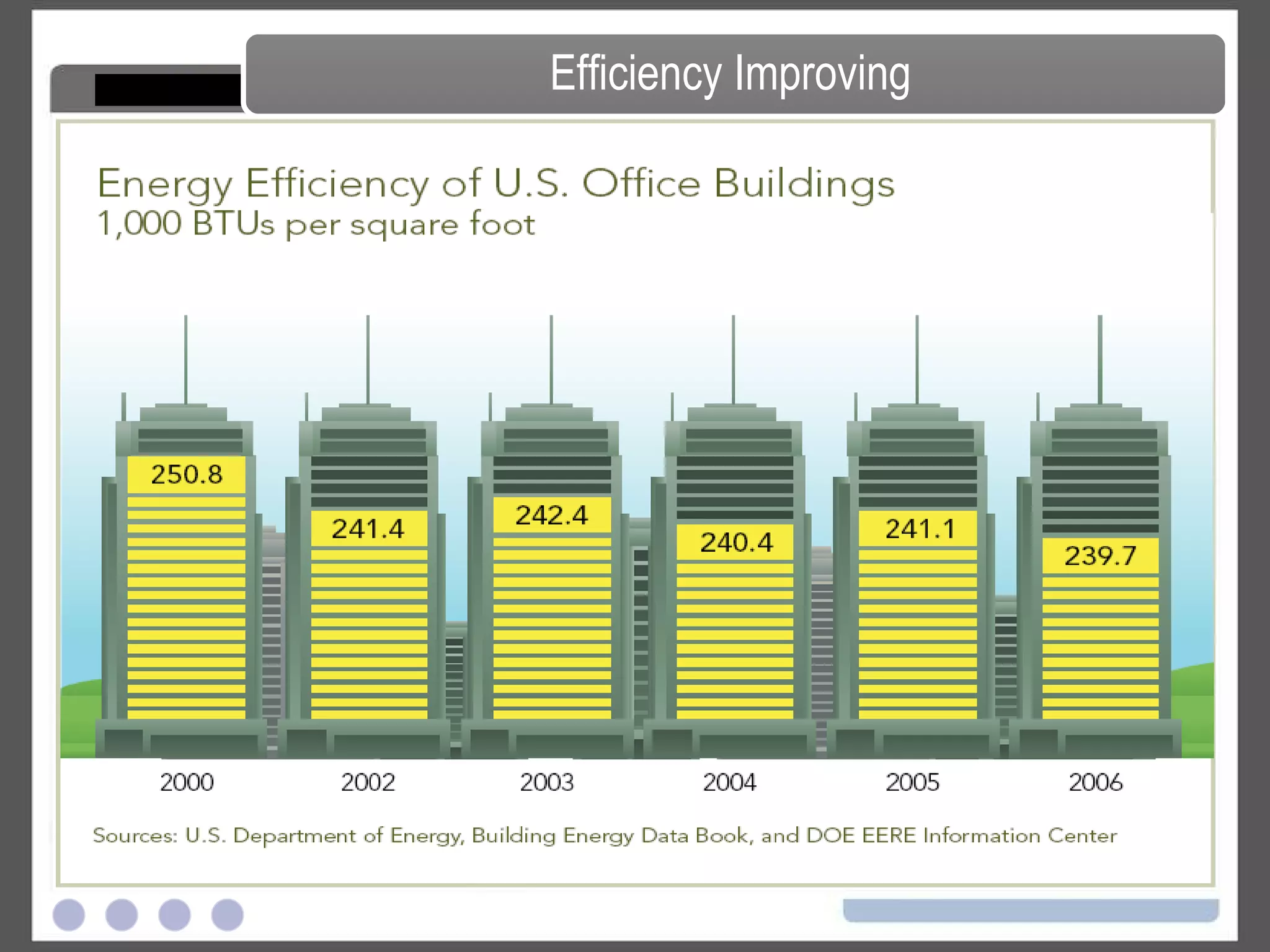
Efficiency Improving
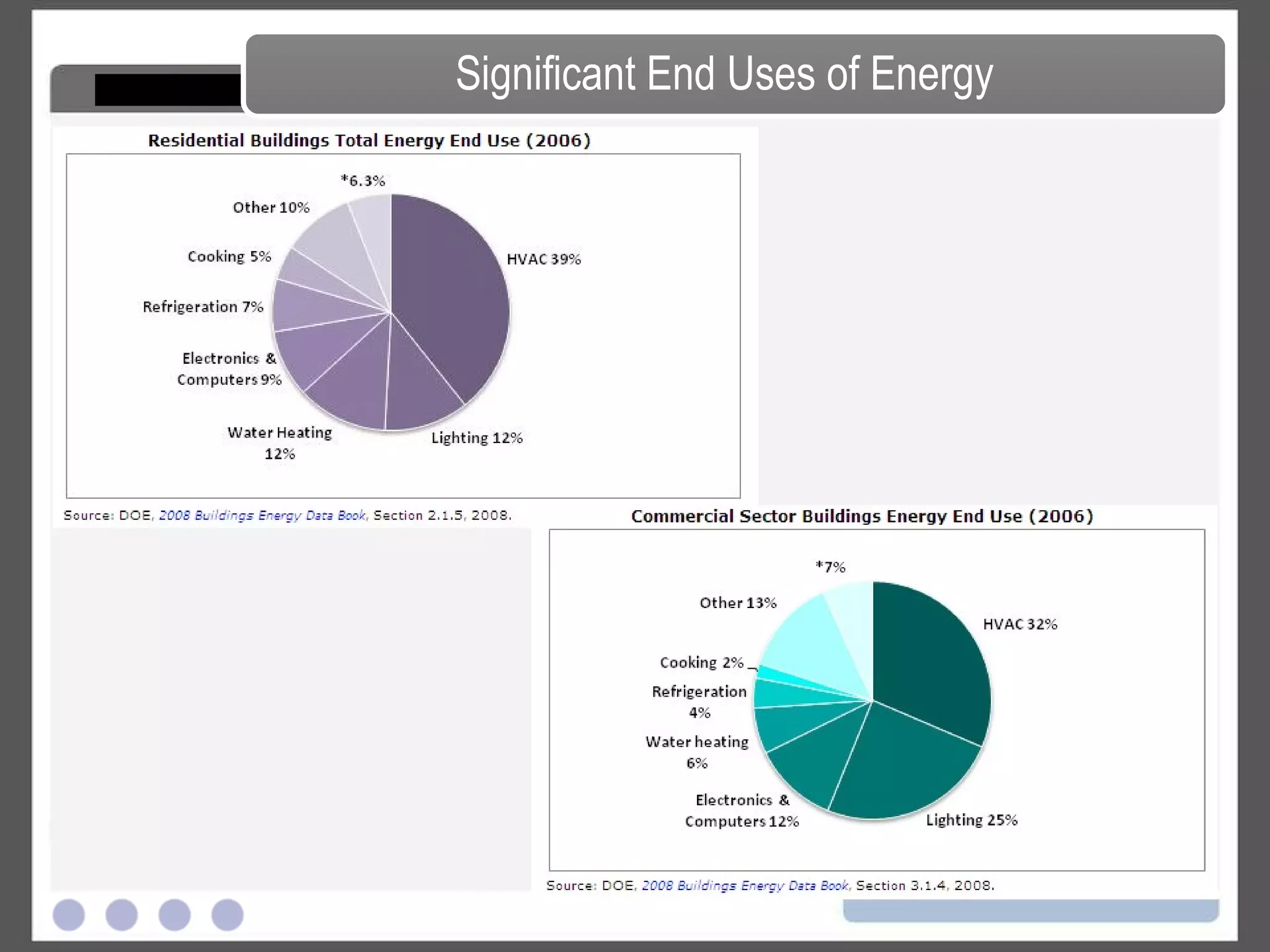
Significant End Uses of Energy
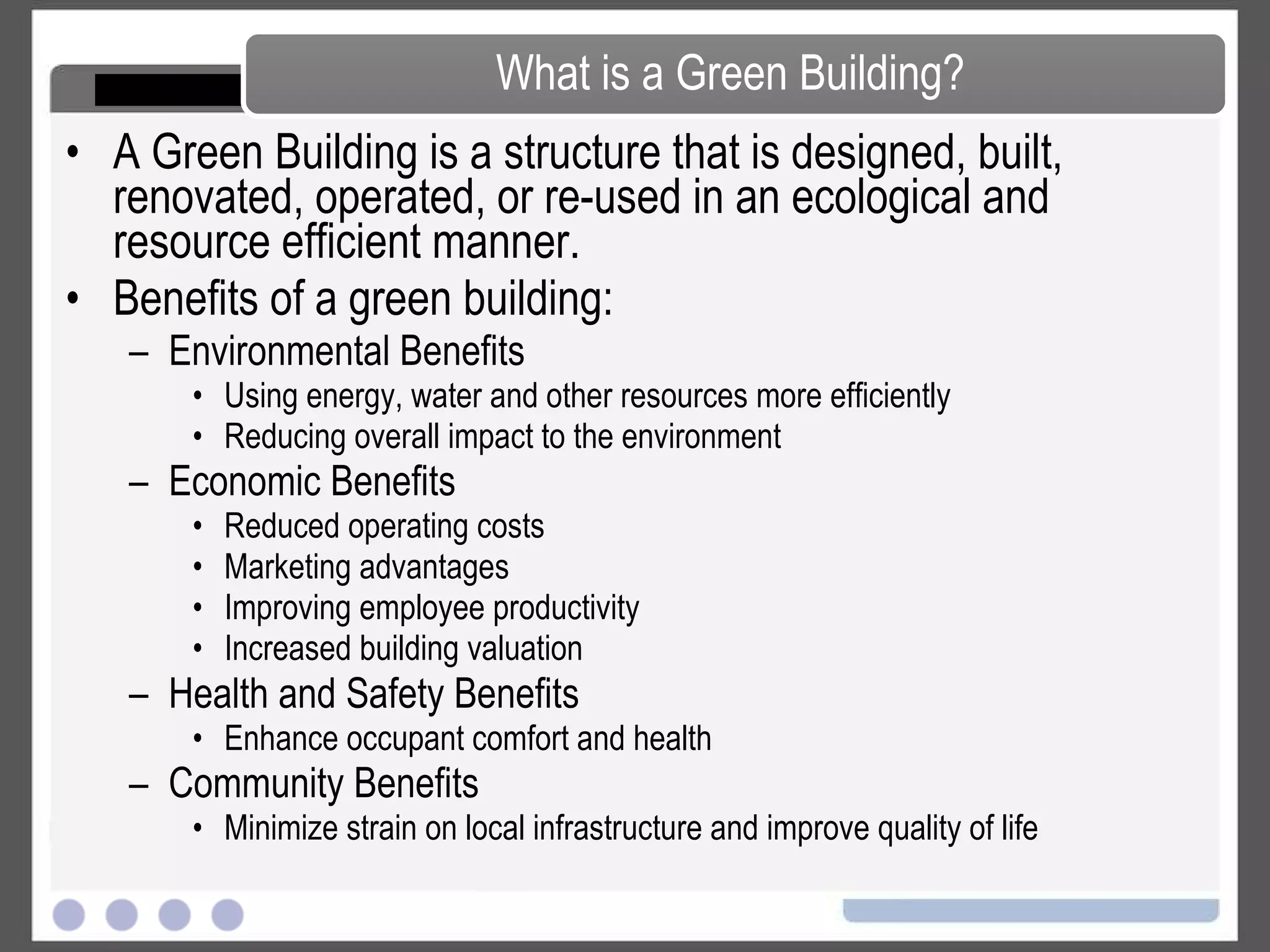
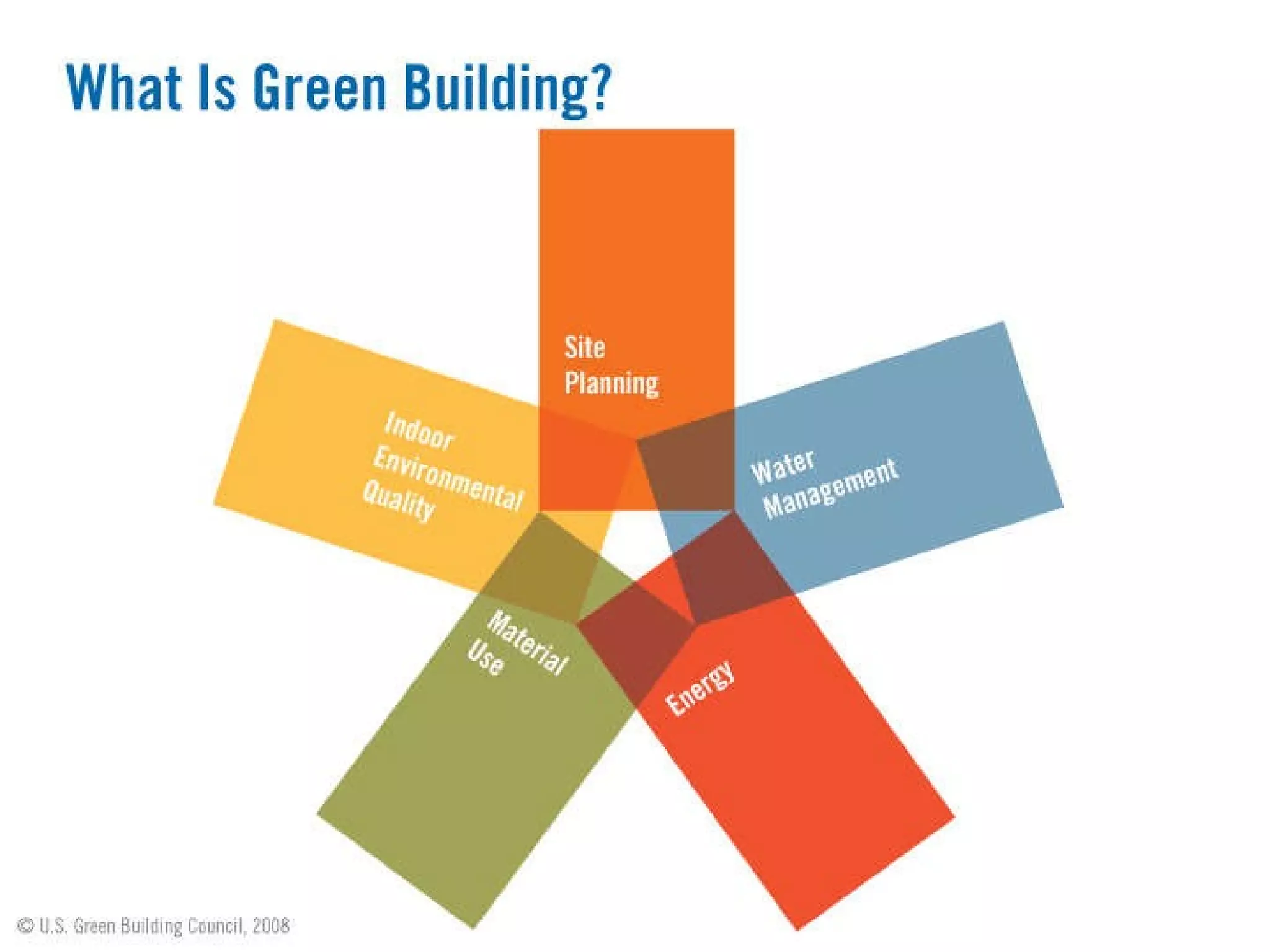
A Green Building is a structure that is designed, built, renovated, operated, or re-used in an ecological and resource efficient manner. Benefits of a green building: Environmental Benefits Using energy, water and other resources more efficiently Reducing overall impact to the environment Economic Benefits Reduced operating costs Marketing advantages Improving employee productivity Increased building valuation Health and Safety Benefits   Enhance occupant comfort and health Community Benefits Minimize strain on local infrastructure and improve quality of life What is a Green Building?
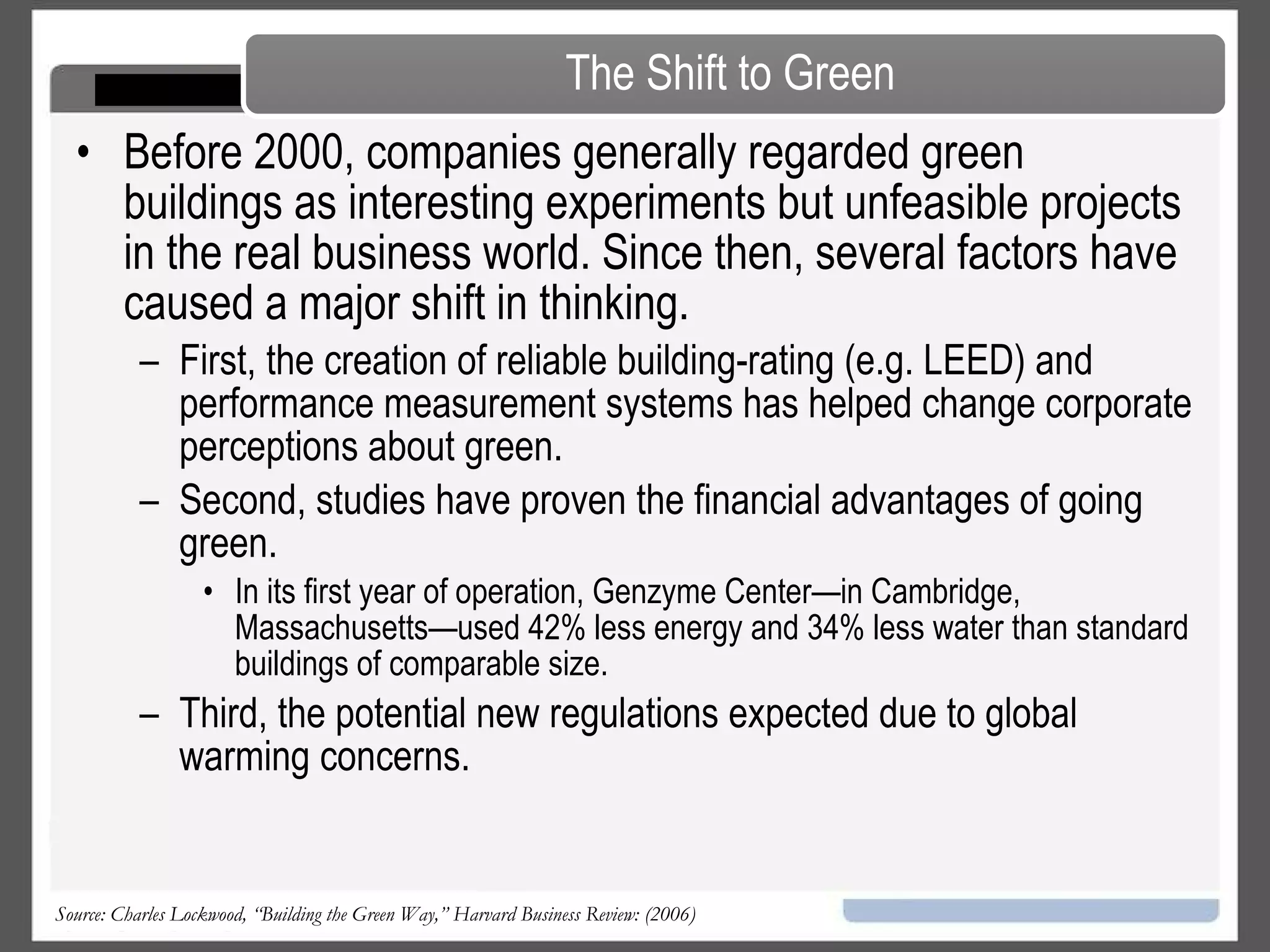
Before 2000, companies generally regarded green buildings as interesting experiments but unfeasible projects in the real business world. Since then, several factors have caused a major shift in thinking. First, the creation of reliable building-rating (e.g. LEED) and performance measurement systems has helped change corporate perceptions about green.  Second, studies have proven the financial advantages of going green.  In its first year of operation, Genzyme Center—in Cambridge, Massachusetts—used 42% less energy and 34% less water than standard buildings of comparable size.  Third, the potential new regulations expected due to global warming concerns. Source: Charles Lockwood, “Building the Green Way,” Harvard Business Review: (2006) The Shift to Green


A LEED Accredited Professional (LEED AP) is an individual who has passed the exam and possesses the knowledge and skills necessary to participate in the design process, to support and encourage integrated design, and to streamline the application and certification process.  Benefits of LEED Professional Accreditation  Individual Benefits: provides a marketable credential to an employer, prospective employer or client,  Employer Benefits: eligible for projects on which owners are mandating the participation of a LEED AP,  Industry Benefits: encourages and promotes a higher understanding of LEED, supports and facilitates transformation of the built environment Source: “LEED AO for New Construction,” GBCI: (2009) Side Note: LEED Accredited Professional
Incorporate solar passive techniques (lighting design) Design energy efficient lighting and HVAC systems Choose construction materials and interior finishes products with zero or low emissions  Design for a gray water system that recovers rain water for site irrigation and a dual plumbing system for use of recycled water for toilet flushing How to Make a Building Green
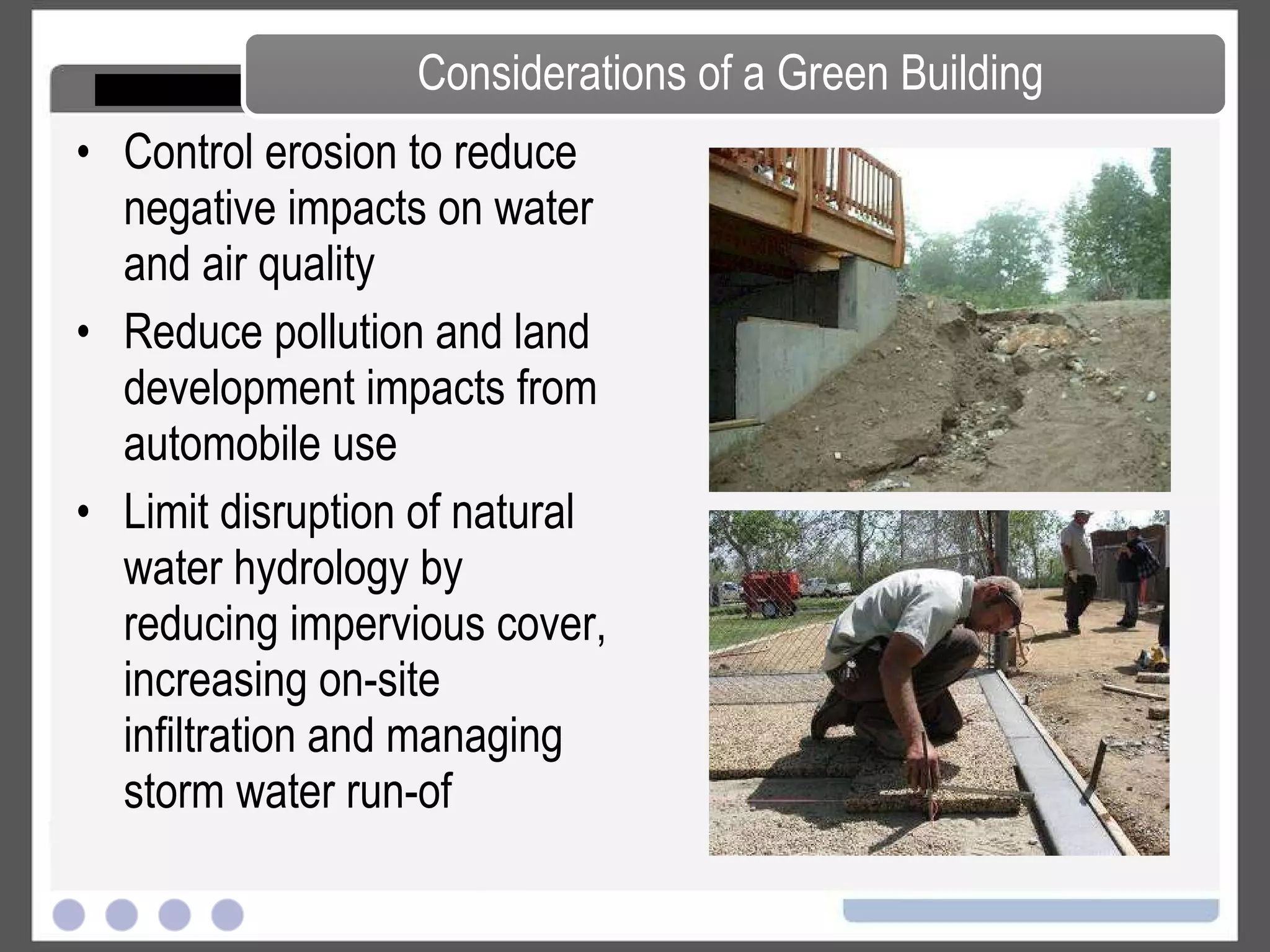
Control erosion to reduce negative impacts on water and air quality Reduce pollution and land development impacts from automobile use Limit disruption of natural water hydrology by reducing impervious cover, increasing on-site infiltration and managing storm water run-of Considerations of a Green Building
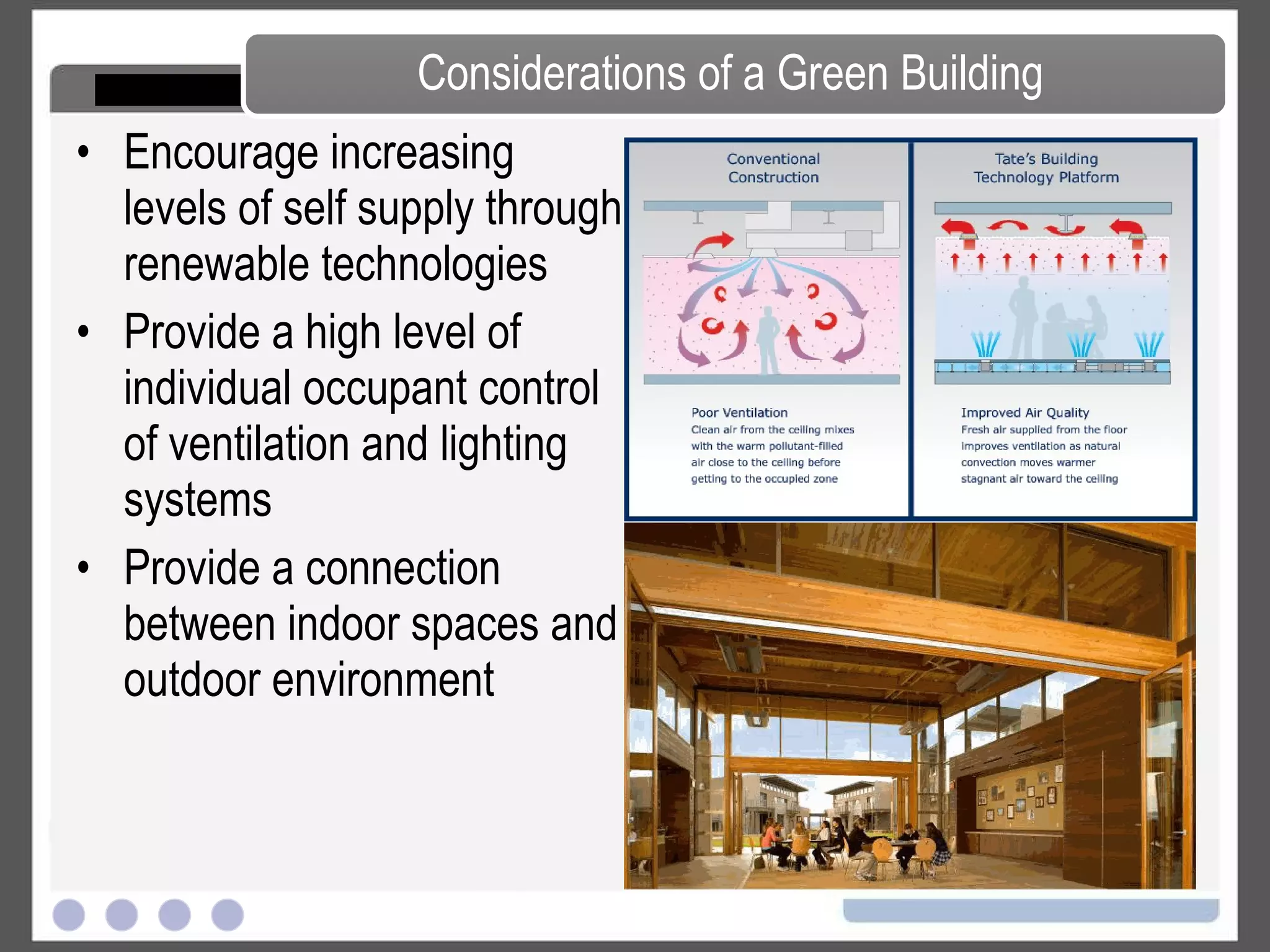
Encourage increasing levels of self supply through renewable technologies  Provide a high level of individual occupant control of ventilation and lighting systems  Provide a connection between indoor spaces and outdoor environment Considerations of a Green Building
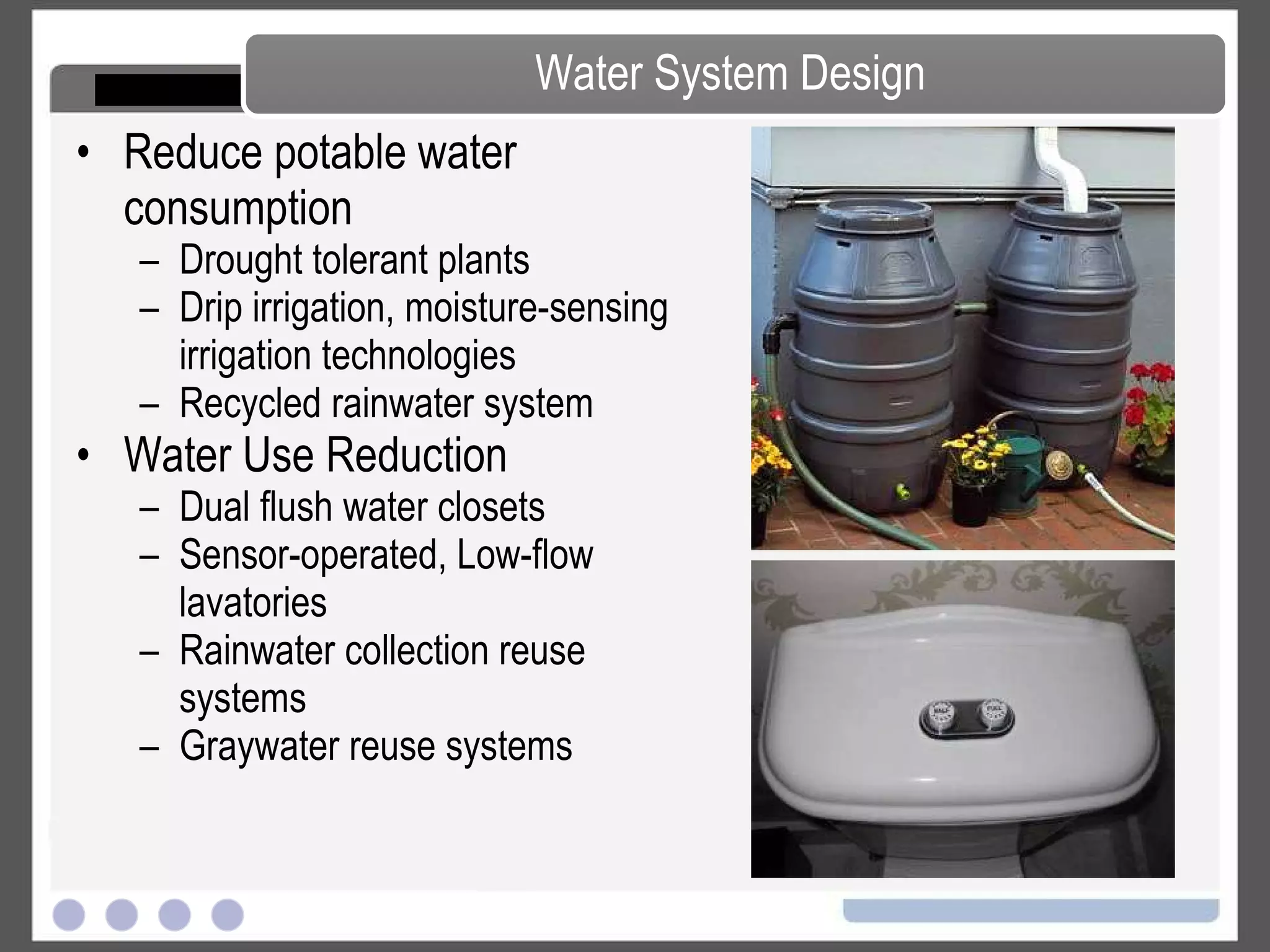
Reduce potable water consumption Drought tolerant plants  Drip irrigation, moisture-sensing irrigation technologies  Recycled rainwater system  Water Use Reduction Dual flush water closets  Sensor-operated, Low-flow lavatories  Rainwater collection reuse systems  Graywater reuse systems  Water System Design
Replace asphalt with concrete Plant trees in vegetation strips around parking lots or sidewalks.  Detention Ponds / Retention Ponds  Pervious paving  Vegetated/Garden Roofs  Energy Star rated roofing systems  High reflectivity coatings  Site Initiatives
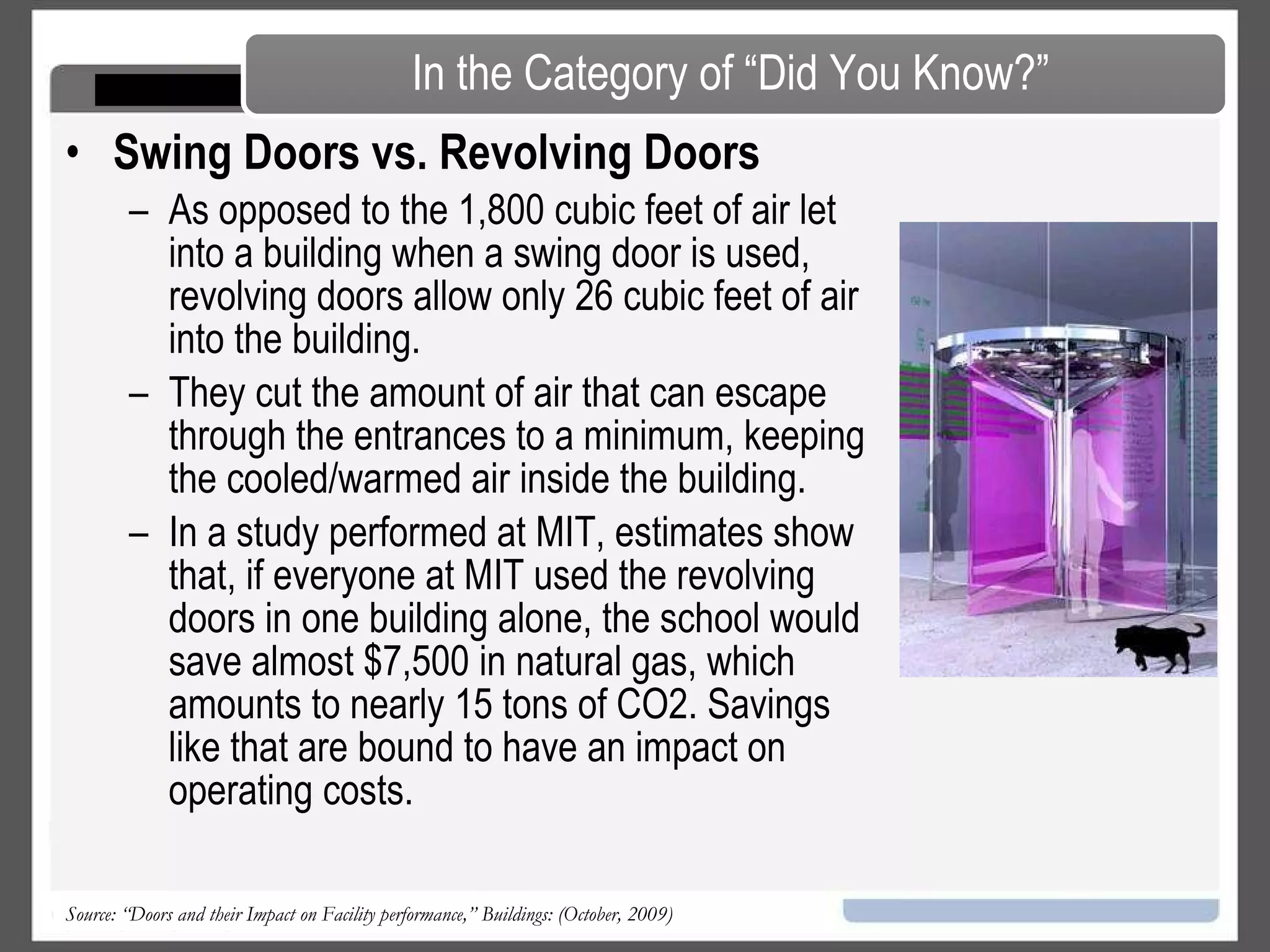
Swing Doors vs. Revolving Doors As opposed to the 1,800 cubic feet of air let into a building when a swing door is used, revolving doors allow only 26 cubic feet of air into the building.  They cut the amount of air that can escape through the entrances to a minimum, keeping the cooled/warmed air inside the building.  In a study performed at MIT, estimates show that, if everyone at MIT used the revolving doors in one building alone, the school would save almost $7,500 in natural gas, which amounts to nearly 15 tons of CO2. Savings like that are bound to have an impact on operating costs. In the Category of “Did You Know?” Source: “Doors and their Impact on Facility performance,” Buildings: (October, 2009)
Public Administration Town, SK (planned)
Energy consumption and associated GHG emissions from buildings comes third after general industry and transportation Consumption and emissions are trending up A Green Building is a structure that is designed, built, renovated, operated, or re-used in an ecological and resource efficient manner. Some of the benefits of a green building include environmental, economic, health and safety, and community benefits LEED Summary

Green Building

  • 1.
    Green Building GreenBuilding Business, Society & Environment Professor Hector R Rodriguez School of Business Mount Ida College
  • 2.
    Society The Corporationand Its Stakeholders People for the Ethical Treatment of Animals Corporate Citizenship The Social Responsibility of Business The Shareholder Primacy Norm CSR, Citizenship and Sustainability Reporting Responsible Investing The Community and the Corporation Taxation and Corporate Citizenship Corporate Philanthropy Programs Employees and the Corporation Managing a Diverse Workforce Environment A Balanced Look at Climate Change Non-anthropogenic Causes of Climate Change Sulfates, Urban Warming and Permafrost Conventional Energy The Kyoto Protocol Green Building Green Information Technology Transportation, Electric Vehicles and the Environment Geo-Engineering Carbon Capture and Storage Renewable Energy Solid, Toxic and Hazardous Waste Forests, Paper and Carbon Sinks Life Cycle Analysis Water Use and Management Water Pollution Course Map – Topics Covered in Course
  • 3.
    Residential & CommercialEnergy Consumption http://www.pewclimate.org/technology/overview/res-comm Source: Inventory of U.S. Greenhouse Gas Emissions and Sinks: 1990 – 2006; EPA, 2008 Residential & Commercial Energy Consumptions and Associated Emissions are Significant
  • 4.
    CO 2 Emissions for Residential & Commercial Buildings http://www.pewclimate.org/technology/overview/res-comm The Emissions are Significant and Growing
  • 5.
  • 6.
  • 7.
    A Green Buildingis a structure that is designed, built, renovated, operated, or re-used in an ecological and resource efficient manner. Benefits of a green building: Environmental Benefits Using energy, water and other resources more efficiently Reducing overall impact to the environment Economic Benefits Reduced operating costs Marketing advantages Improving employee productivity Increased building valuation Health and Safety Benefits Enhance occupant comfort and health Community Benefits Minimize strain on local infrastructure and improve quality of life What is a Green Building?
  • 8.
    Before 2000, companiesgenerally regarded green buildings as interesting experiments but unfeasible projects in the real business world. Since then, several factors have caused a major shift in thinking. First, the creation of reliable building-rating (e.g. LEED) and performance measurement systems has helped change corporate perceptions about green. Second, studies have proven the financial advantages of going green. In its first year of operation, Genzyme Center—in Cambridge, Massachusetts—used 42% less energy and 34% less water than standard buildings of comparable size. Third, the potential new regulations expected due to global warming concerns. Source: Charles Lockwood, “Building the Green Way,” Harvard Business Review: (2006) The Shift to Green
  • 9.
  • 10.
  • 11.
  • 12.
  • 13.
  • 14.
  • 15.
  • 16.
  • 17.
  • 18.
  • 19.
    A LEED AccreditedProfessional (LEED AP) is an individual who has passed the exam and possesses the knowledge and skills necessary to participate in the design process, to support and encourage integrated design, and to streamline the application and certification process. Benefits of LEED Professional Accreditation Individual Benefits: provides a marketable credential to an employer, prospective employer or client, Employer Benefits: eligible for projects on which owners are mandating the participation of a LEED AP, Industry Benefits: encourages and promotes a higher understanding of LEED, supports and facilitates transformation of the built environment Source: “LEED AO for New Construction,” GBCI: (2009) Side Note: LEED Accredited Professional
  • 20.
    Incorporate solar passivetechniques (lighting design) Design energy efficient lighting and HVAC systems Choose construction materials and interior finishes products with zero or low emissions Design for a gray water system that recovers rain water for site irrigation and a dual plumbing system for use of recycled water for toilet flushing How to Make a Building Green
  • 21.
    Control erosion toreduce negative impacts on water and air quality Reduce pollution and land development impacts from automobile use Limit disruption of natural water hydrology by reducing impervious cover, increasing on-site infiltration and managing storm water run-of Considerations of a Green Building
  • 22.
    Encourage increasing levelsof self supply through renewable technologies Provide a high level of individual occupant control of ventilation and lighting systems Provide a connection between indoor spaces and outdoor environment Considerations of a Green Building
  • 23.
    Reduce potable waterconsumption Drought tolerant plants Drip irrigation, moisture-sensing irrigation technologies Recycled rainwater system Water Use Reduction Dual flush water closets Sensor-operated, Low-flow lavatories Rainwater collection reuse systems Graywater reuse systems Water System Design
  • 24.
    Replace asphalt withconcrete Plant trees in vegetation strips around parking lots or sidewalks. Detention Ponds / Retention Ponds Pervious paving Vegetated/Garden Roofs Energy Star rated roofing systems High reflectivity coatings Site Initiatives
  • 25.
    Swing Doors vs.Revolving Doors As opposed to the 1,800 cubic feet of air let into a building when a swing door is used, revolving doors allow only 26 cubic feet of air into the building. They cut the amount of air that can escape through the entrances to a minimum, keeping the cooled/warmed air inside the building. In a study performed at MIT, estimates show that, if everyone at MIT used the revolving doors in one building alone, the school would save almost $7,500 in natural gas, which amounts to nearly 15 tons of CO2. Savings like that are bound to have an impact on operating costs. In the Category of “Did You Know?” Source: “Doors and their Impact on Facility performance,” Buildings: (October, 2009)
  • 26.
  • 27.
    Energy consumption andassociated GHG emissions from buildings comes third after general industry and transportation Consumption and emissions are trending up A Green Building is a structure that is designed, built, renovated, operated, or re-used in an ecological and resource efficient manner. Some of the benefits of a green building include environmental, economic, health and safety, and community benefits LEED Summary