Classical Greece
The Next Stop on our Journey through the Age of
Empires
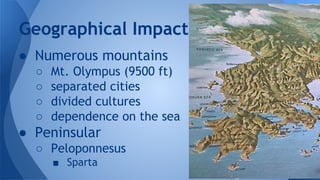
● Numerous mountains
○ Mt. Olympus (9500 ft)
○ separated cities
○ divided cultures
○ dependence on the sea
● Peninsular
○ Peloponnesus
■ Sparta
Geographical Impact
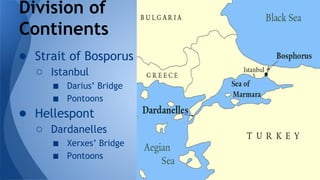
Division of
Continents
● Strait of Bosporus
○ Istanbul
■ Darius’ Bridge
■ Pontoons
● Hellespont
○ Dardanelles
■ Xerxes’ Bridge
■ Pontoons
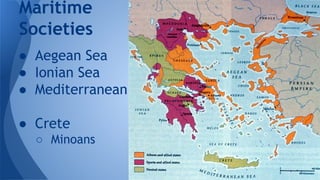
● Aegean Sea
● Ionian Sea
● Mediterranean
● Crete
○ Minoans
Maritime
Societies
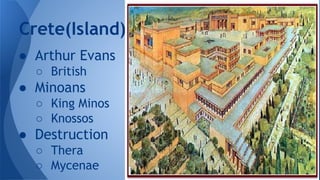
● Arthur Evans
○ British
● Minoans
○ King Minos
○ Knossos
● Destruction
○ Thera
○ Mycenae
Crete(Island)
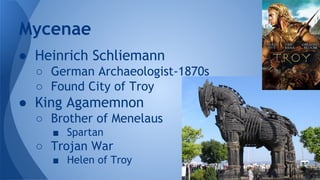
● Heinrich Schliemann
○ German Archaeologist-1870s
○ Found City of Troy
● King Agamemnon
○ Brother of Menelaus
■ Spartan
○ Trojan War
■ Helen of Troy
Mycenae
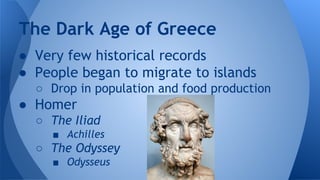
● Very few historical records
● People began to migrate to islands
○ Drop in population and food production
● Homer
○ The Iliad
■ Achilles
○ The Odyssey
■ Odysseus
The Dark Age of Greece
How did epic poems help to establish the
Greek concept of arete?
Check for understanding
● polis (modern English - politics)
○ Citizens with political rights (adult males)
○ Citizens without political rights
(women/children)
○ Non-citizens (slaves and resident aliens)
● Military
○ hoplites
■ phalanx
Greek ‘City-States’
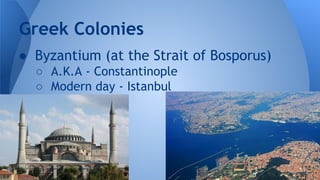
● Byzantium (at the Strait of Bosporus)
○ A.K.A - Constantinople
○ Modern day - Istanbul
Greek Colonies
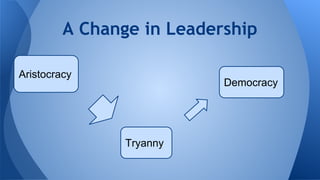
A Change in Leadership
Aristocracy
Tryanny
Democracy
Check for Understanding
How did an aristocracy lead to tyranny and
ultimately to democracy?
● spartan - “highly self-disciplined”
● A Military State
○ Males were trained from the age of 7
○ Remained in the army until age 60
● Women were expected to maintain
physical fitness and culture
○ “Come back carrying your shield; or on it.”
Sparta
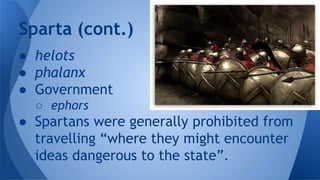
● helots
● phalanx
● Government
○ ephors
● Spartans were generally prohibited from
travelling “where they might encounter
ideas dangerous to the state”.
Sparta (cont.)
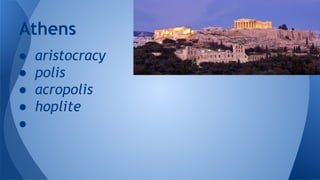
● aristocracy
● polis
● acropolis
● hoplite
●
Athens
● Solon - cancelled all land debts and frees
people who had fallen into slavery
● Pisistratus - gave land to peasants
● Cleisthenes - council of 500
○ created the foundations of democracy
Athens (cont.)
Here comes Persia
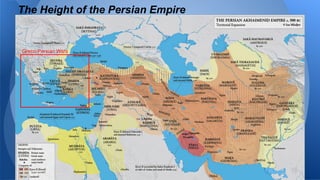
The Height of the Persian Empire
● The Ionian city/states rebelled against
the Persians. Athens gave them aid.
○ Darius wants revenge against Athens
● The Persians attack the Greek mainland
and face the Athenians at Marathon.
○ 26 miles from Athens
○ The Greeks win!
■ A messenger ran the distance to inform Athens
Here Comes Persia
● The Greek city-states united in order to
create a defense against the Persians
○ The Delian League
● Athens emerged as the dominant
member
○ The Age of Pericles
■ Pericles’ Address to Athens (p. 108)
■ The height of Athenian power
● Direct Democracy was created
The Athenian Empire
● After the defeat of Persia (for now)...
● Athens and Sparta began to compete
○ Two conflicting ideologies
● Athens hid behind their walls
○ One-third of them died from plague
○ Athens’ navy was also destroyed
● Greece was in ruins
○ After 66 years-Athens, Sparta, and
Thebes rebuilt to compete again
The Peloponnesian Wars
● Phillip II of Macedon
○ United the Northern tribes and challenged
Athens for control of the peninsula
○ Crushed the Athenians at Chaeronea
● “In the conquered lands, Greeks and
non-Greeks formed a new society in what
is known as the Hellenistic Era (Imitate
Greece).” (p.138)
Hellenistic Greece
● Phillip II assassinated
● His son Alexander took over at 20 years
of age
○ Highly trained in military science and
personally tutored by Aristotle
Alexander - The Great
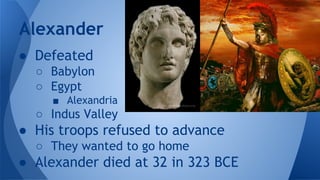
● Defeated
○ Babylon
○ Egypt
■ Alexandria
○ Indus Valley
● His troops refused to advance
○ They wanted to go home
● Alexander died at 32 in 323 BCE
Alexander

Greece

  • 1.
    Classical Greece The NextStop on our Journey through the Age of Empires
  • 2.
    ● Numerous mountains ○Mt. Olympus (9500 ft) ○ separated cities ○ divided cultures ○ dependence on the sea ● Peninsular ○ Peloponnesus ■ Sparta Geographical Impact
  • 3.
    Division of Continents ● Straitof Bosporus ○ Istanbul ■ Darius’ Bridge ■ Pontoons ● Hellespont ○ Dardanelles ■ Xerxes’ Bridge ■ Pontoons
  • 4.
    ● Aegean Sea ●Ionian Sea ● Mediterranean ● Crete ○ Minoans Maritime Societies
  • 5.
    ● Arthur Evans ○British ● Minoans ○ King Minos ○ Knossos ● Destruction ○ Thera ○ Mycenae Crete(Island)
  • 6.
    ● Heinrich Schliemann ○German Archaeologist-1870s ○ Found City of Troy ● King Agamemnon ○ Brother of Menelaus ■ Spartan ○ Trojan War ■ Helen of Troy Mycenae
  • 7.
    ● Very fewhistorical records ● People began to migrate to islands ○ Drop in population and food production ● Homer ○ The Iliad ■ Achilles ○ The Odyssey ■ Odysseus The Dark Age of Greece
  • 8.
    How did epicpoems help to establish the Greek concept of arete? Check for understanding
  • 9.
    ● polis (modernEnglish - politics) ○ Citizens with political rights (adult males) ○ Citizens without political rights (women/children) ○ Non-citizens (slaves and resident aliens) ● Military ○ hoplites ■ phalanx Greek ‘City-States’
  • 10.
    ● Byzantium (atthe Strait of Bosporus) ○ A.K.A - Constantinople ○ Modern day - Istanbul Greek Colonies
  • 11.
    A Change inLeadership Aristocracy Tryanny Democracy
  • 12.
    Check for Understanding Howdid an aristocracy lead to tyranny and ultimately to democracy?
  • 13.
    ● spartan -“highly self-disciplined” ● A Military State ○ Males were trained from the age of 7 ○ Remained in the army until age 60 ● Women were expected to maintain physical fitness and culture ○ “Come back carrying your shield; or on it.” Sparta
  • 14.
    ● helots ● phalanx ●Government ○ ephors ● Spartans were generally prohibited from travelling “where they might encounter ideas dangerous to the state”. Sparta (cont.)
  • 15.
    ● aristocracy ● polis ●acropolis ● hoplite ● Athens
  • 16.
    ● Solon -cancelled all land debts and frees people who had fallen into slavery ● Pisistratus - gave land to peasants ● Cleisthenes - council of 500 ○ created the foundations of democracy Athens (cont.)
  • 17.
    Here comes Persia TheHeight of the Persian Empire
  • 18.
    ● The Ioniancity/states rebelled against the Persians. Athens gave them aid. ○ Darius wants revenge against Athens ● The Persians attack the Greek mainland and face the Athenians at Marathon. ○ 26 miles from Athens ○ The Greeks win! ■ A messenger ran the distance to inform Athens Here Comes Persia
  • 19.
    ● The Greekcity-states united in order to create a defense against the Persians ○ The Delian League ● Athens emerged as the dominant member ○ The Age of Pericles ■ Pericles’ Address to Athens (p. 108) ■ The height of Athenian power ● Direct Democracy was created The Athenian Empire
  • 20.
    ● After thedefeat of Persia (for now)... ● Athens and Sparta began to compete ○ Two conflicting ideologies ● Athens hid behind their walls ○ One-third of them died from plague ○ Athens’ navy was also destroyed ● Greece was in ruins ○ After 66 years-Athens, Sparta, and Thebes rebuilt to compete again The Peloponnesian Wars
  • 21.
    ● Phillip IIof Macedon ○ United the Northern tribes and challenged Athens for control of the peninsula ○ Crushed the Athenians at Chaeronea ● “In the conquered lands, Greeks and non-Greeks formed a new society in what is known as the Hellenistic Era (Imitate Greece).” (p.138) Hellenistic Greece
  • 22.
    ● Phillip IIassassinated ● His son Alexander took over at 20 years of age ○ Highly trained in military science and personally tutored by Aristotle Alexander - The Great
  • 23.
    ● Defeated ○ Babylon ○Egypt ■ Alexandria ○ Indus Valley ● His troops refused to advance ○ They wanted to go home ● Alexander died at 32 in 323 BCE Alexander