CHAPTER 5
Section 3 Notes
The Persian Wars







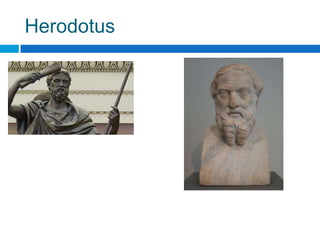
Herodotus---told the story of the Greek’s pride
By 500 B.C., Athens had emerged as the
wealthiest city-state
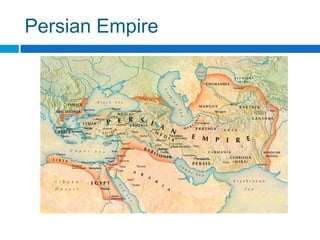
Eventually the Persians conquered the Greek
city-states of Ionia
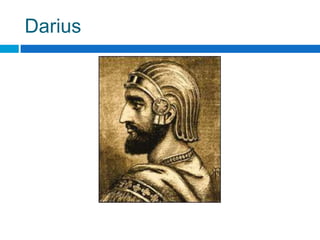
Athens sent ships to help the city-states when
they rebelled and the Persian ruler Darius
resented the help that Athens provided
Persian Empire
Herodotus
Darius
The Persian Wars





Darius sent a huge force to attack Athens
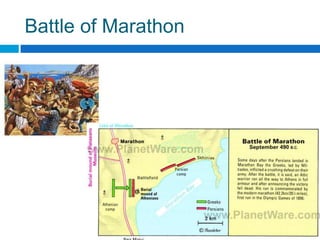
The Athenians and the Persians fought at the
Battle of Marathon in 490 B.C., a battle that
the outnumbered Athenians won
After winning the battle, the Greeks sent
Pheidippides, their fastest runner, to Athens to
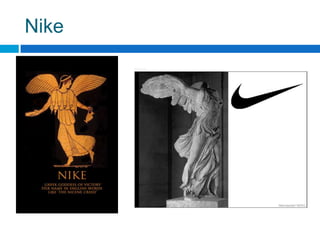
deliver the message of victory (Nike). He
collapsed and died after running the 26.2
miles. This is where we get the modern
marathon from.
Battle of Marathon
Nike
Some of my favorite Nikes
The Persian Wars










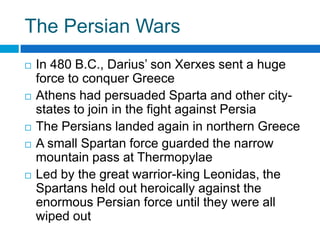
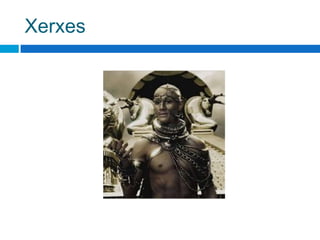
In 480 B.C., Darius’ son Xerxes sent a huge
force to conquer Greece
Athens had persuaded Sparta and other citystates to join in the fight against Persia
The Persians landed again in northern Greece
A small Spartan force guarded the narrow
mountain pass at Thermopylae
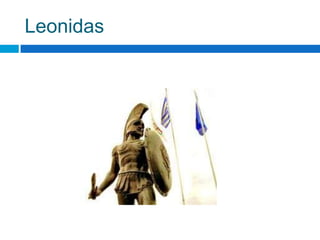
Led by the great warrior-king Leonidas, the
Spartans held out heroically against the
enormous Persian force until they were all
wiped out
Xerxes
Thermopylae
Last Stand of the 300
Leonidas
The Persian Wars








After defeating the Spartans, the Persians
marched south and burned Athens, even though
the city was empty
The Greeks now put their faith in the fleet of ships
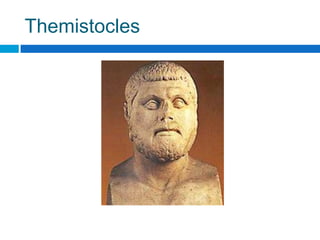
that Themistocles had urged them to build
The Athenians lured the Persian navy into the
narrow strait of Salamis where the Athenian
warships defeated the Persians
The following year the Greeks defeated the
Persians on land in Asia Minor and ended the
Persian invasions
Themistocles
The Persian Wars








Victory in the Persian Wars increased the
Greeks’ sense of their own uniqueness
Athens emerged as the most powerful citystate in Greece
It organized the Delian League, an alliance
with other Greek city-states
Athens angered other members by moving the
treasury and using its money to rebuild the city
of Athens
Athens in the Age of Pericles






The years after the Persian Wars were a
golden age for Athens
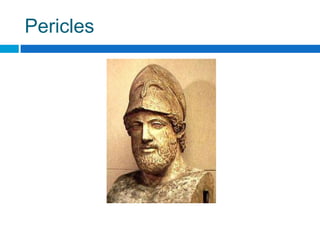
Under the rule of Pericles, the economy
thrived and government became more
democratic
The period from 460 B.C.-429 B.C. is called
the Age of Pericles
Pericles
Athens in the Age of Pericles







Periclean Athens had a direct democracy---a
large number of citizens take direct part in the
day-to-day affairs of government
Today we use a representative democracy
At least 6,000 members had to be present in
order to decide important issues
Pericles believed that all male citizens,
regardless of wealth or social class should
participate in government
Athens in the Age of Pericles







Athens began to pay a stipend to men who
held public office---this enabled poor men to
serve in government
Athenians also served on juries
Athenian juries included hundreds or even
thousands of jurors---far different from our
system today
Male citizens over 30 years of age were
chosen by lot to serve on the jury for a year--jurors also received a stipend
Athens in the Age of Pericles




Athenian citizens could also vote to banish
public figures who they saw as a threat to their
democracy (ostracism)
To ostracize someone, a citizen wrote that
person’s name on a piece of pottery.
Depending on the number of votes cast, an
ostracized individual would have to live outside
the city, usually for a period of 10 years.
Athens in the Age of Pericles






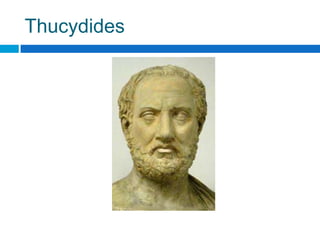
Thucydides, a historian who lived in the Age of
Pericles, recorded a speech given by Pericles at
the funeral of Athenians slain in battle---the
“Funeral Oration”
Pericles said that: power in Athenian government
rested not in the hands of a minority but of the
whole people and stressed the rights and duties of
citizenship
Today the “Funeral Oration” is considered one of
the earliest and greatest expressions of
democratic ideals
Thucydides
Athens in the Age of Pericles





Athens prospered during the Age of Pericles
The best architects and sculptors were hired to
rebuild the Acropolis and other building
projects were undertaken
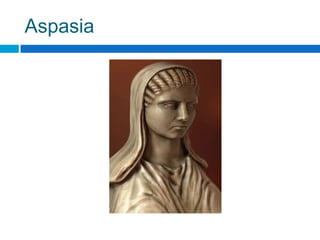
Pericles and Aspasia helped turn Athens into
the cultural center of Greece (more on this in
Section 4)
Aspasia
The Peloponnesian War








Many Greeks outside of Athens resented
Athenian power and money
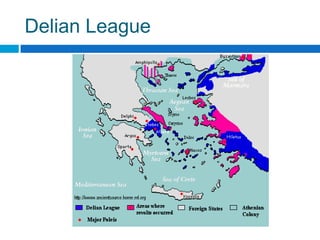
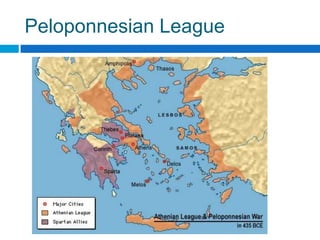
To counter the Delian League of Athens,
Sparta and other enemies of Athens formed
the Peloponnesian League
Sparta encouraged oligarchy, Athens
supported democracy
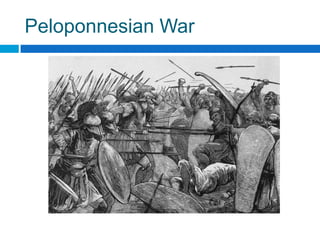
In 431 B.C., war broke out between Athens
and Sparta---it would engulf all of Greece and
last 27 years
Delian League
Peloponnesian League
The Peloponnesian War






Even though they were rich and had a
powerful navy, Athens faced a major
geographic disadvantage---Sparta was located
inland
When Sparta attacked Athens Pericles allowed
people from the surrounding countryside to
move within the city walls---this lead to
overcrowding and the spread of a plague that
killed 1/3 of the population including Pericles
The war drug on and atrocities were carried
out by both sides
Peloponnesian War
The Peloponnesian War




Sparta eventually allied itself with Persia and
in 404 B.C. , with the help of the Persian navy,
Sparta captured Athens (but didn’t destroy the
city)
This may have been due to Athens’ role in the
Persian Wars
Aftermath








The Peloponnesian War ended Athenian
domination of the Greek world
The Athenian economy revived and Athens
remained the cultural center of Greece but its
spirit and vitality declined
Democratic government suffered and corruption
and self-interests replaced service to the city-state
Fighting tore apart the Greek world---Sparta was
eventually defeated by Thebes and eventually
Greece would be taken over by an ambitious ruler
from Macedonia (more on this in Section 5)

WH Chapter 5 Section 3 Notes

  • 1.
  • 2.
    The Persian Wars     Herodotus---toldthe story of the Greek’s pride By 500 B.C., Athens had emerged as the wealthiest city-state Eventually the Persians conquered the Greek city-states of Ionia Athens sent ships to help the city-states when they rebelled and the Persian ruler Darius resented the help that Athens provided
  • 3.
  • 4.
  • 5.
  • 6.
    The Persian Wars    Dariussent a huge force to attack Athens The Athenians and the Persians fought at the Battle of Marathon in 490 B.C., a battle that the outnumbered Athenians won After winning the battle, the Greeks sent Pheidippides, their fastest runner, to Athens to deliver the message of victory (Nike). He collapsed and died after running the 26.2 miles. This is where we get the modern marathon from.
  • 7.
  • 8.
  • 9.
    Some of myfavorite Nikes
  • 10.
    The Persian Wars      In480 B.C., Darius’ son Xerxes sent a huge force to conquer Greece Athens had persuaded Sparta and other citystates to join in the fight against Persia The Persians landed again in northern Greece A small Spartan force guarded the narrow mountain pass at Thermopylae Led by the great warrior-king Leonidas, the Spartans held out heroically against the enormous Persian force until they were all wiped out
  • 11.
  • 12.
  • 13.
  • 14.
  • 15.
    The Persian Wars     Afterdefeating the Spartans, the Persians marched south and burned Athens, even though the city was empty The Greeks now put their faith in the fleet of ships that Themistocles had urged them to build The Athenians lured the Persian navy into the narrow strait of Salamis where the Athenian warships defeated the Persians The following year the Greeks defeated the Persians on land in Asia Minor and ended the Persian invasions
  • 16.
  • 17.
    The Persian Wars     Victoryin the Persian Wars increased the Greeks’ sense of their own uniqueness Athens emerged as the most powerful citystate in Greece It organized the Delian League, an alliance with other Greek city-states Athens angered other members by moving the treasury and using its money to rebuild the city of Athens
  • 18.
    Athens in theAge of Pericles    The years after the Persian Wars were a golden age for Athens Under the rule of Pericles, the economy thrived and government became more democratic The period from 460 B.C.-429 B.C. is called the Age of Pericles
  • 19.
  • 20.
    Athens in theAge of Pericles     Periclean Athens had a direct democracy---a large number of citizens take direct part in the day-to-day affairs of government Today we use a representative democracy At least 6,000 members had to be present in order to decide important issues Pericles believed that all male citizens, regardless of wealth or social class should participate in government
  • 21.
    Athens in theAge of Pericles     Athens began to pay a stipend to men who held public office---this enabled poor men to serve in government Athenians also served on juries Athenian juries included hundreds or even thousands of jurors---far different from our system today Male citizens over 30 years of age were chosen by lot to serve on the jury for a year--jurors also received a stipend
  • 22.
    Athens in theAge of Pericles   Athenian citizens could also vote to banish public figures who they saw as a threat to their democracy (ostracism) To ostracize someone, a citizen wrote that person’s name on a piece of pottery. Depending on the number of votes cast, an ostracized individual would have to live outside the city, usually for a period of 10 years.
  • 23.
    Athens in theAge of Pericles    Thucydides, a historian who lived in the Age of Pericles, recorded a speech given by Pericles at the funeral of Athenians slain in battle---the “Funeral Oration” Pericles said that: power in Athenian government rested not in the hands of a minority but of the whole people and stressed the rights and duties of citizenship Today the “Funeral Oration” is considered one of the earliest and greatest expressions of democratic ideals
  • 24.
  • 25.
    Athens in theAge of Pericles    Athens prospered during the Age of Pericles The best architects and sculptors were hired to rebuild the Acropolis and other building projects were undertaken Pericles and Aspasia helped turn Athens into the cultural center of Greece (more on this in Section 4)
  • 26.
  • 27.
    The Peloponnesian War     ManyGreeks outside of Athens resented Athenian power and money To counter the Delian League of Athens, Sparta and other enemies of Athens formed the Peloponnesian League Sparta encouraged oligarchy, Athens supported democracy In 431 B.C., war broke out between Athens and Sparta---it would engulf all of Greece and last 27 years
  • 28.
  • 29.
  • 30.
    The Peloponnesian War    Eventhough they were rich and had a powerful navy, Athens faced a major geographic disadvantage---Sparta was located inland When Sparta attacked Athens Pericles allowed people from the surrounding countryside to move within the city walls---this lead to overcrowding and the spread of a plague that killed 1/3 of the population including Pericles The war drug on and atrocities were carried out by both sides
  • 31.
  • 32.
    The Peloponnesian War   Spartaeventually allied itself with Persia and in 404 B.C. , with the help of the Persian navy, Sparta captured Athens (but didn’t destroy the city) This may have been due to Athens’ role in the Persian Wars
  • 33.
    Aftermath     The Peloponnesian Warended Athenian domination of the Greek world The Athenian economy revived and Athens remained the cultural center of Greece but its spirit and vitality declined Democratic government suffered and corruption and self-interests replaced service to the city-state Fighting tore apart the Greek world---Sparta was eventually defeated by Thebes and eventually Greece would be taken over by an ambitious ruler from Macedonia (more on this in Section 5)