⦿ Islam , in Arabic, means “submission”. 
• Islam teaches submission to the word of God, called 
“Allah” in Arabic. 
⦿ Muslims, “those who submit”, know God’s word 
primarily through the Quran. 
• Quran – the Arabic book that records the teachings of 
Allah as they were transmitted to the Prophet Muhammad
⦿ Arabs lived in the Arabian 
Peninsula, a desert land 
sorely lacking in rivers and 
lakes. 
• The Arabs were nomads who, 
because of their hostile 
surroundings, moved 
constantly to find water and 
food for their animals.
⦿ Each tribe was ruled by a sheikh who was 
chosen from one of the leading families by a 
council of elders. 
• Although each tribe was independent, all the tribes in the 
region were loosely connected to one another.
⦿ The Arabs lived as farmers and sheepherders on 
the oases and rain-fed areas of the Arabian 
Peninsula. 
• After the camel was domesticated, the Arabs populated 
more of the desert. 
• They also expanded the caravan trade into these regions. 
• Towns developed along the routes as the Arabs became 
major carriers of goods between the Indian Ocean and 
the Mediterranean, where the Silk Road ended.
⦿ Most early Arabs were 
polytheistic. 
• The Arabs trace their 
ancestors to Abraham and 
his son Ishmael, who were 
believed to have built at 
Makkah (Mecca) the 
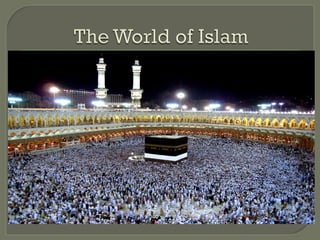
Kaaba, a house of worship 
whose cornerstone was a 
sacred stone, called the 
Black Stone.
⦿ The Arabs recognized a 
supreme god named 
Allah (Arabic for “God”), 
but they also believed in 
other tribal gods. 
• They revered Kaaba for its 
association with Ibrahim 
(Abraham).
⦿ Into this world of tension 
stepped Muhammad. 
• Born in Mecca to a merchant 
family. 
• Became troubled over the 
greedy elite in Mecca, went 
to the hills to meditate where 
he received messages from 
God. 
• Muhammad believed that he 
was receiving the final 
revelations from God (Allah 
had revealed himself to 
Moses and Jesus before him)
⦿ People were surprised at his claims to be a 
prophet. 
• The wealthy feared that his attacks on corrupt society 
would upset the established social and political order. 
• After 3 years of preaching, he had only 30 followers.
⦿ Muhammad became discouraged by the 
persecution of his followers, as well as by the 
failure of the Makkans to accept his message. 
• He and some of his closest supporters left Makkah and 
moved north to Yathrib, later renamed Madinah 
(Medina). 
RECAP: 
Makkah = Mecca 
Madinah = Medina
⦿ Muhammad soon began 
to win support from 
people in Medina, as well 
as Arabs in the desert 
known as Bedouins. 
• From these groups, he 
formed the 1st community 
of practicing Muslims.
⦿ Like Christianity and Judaism, Islam is 
monotheistic. 
• Allah is the all-powerful being who created the universe 
and everything in it. 
• Islam emphasizes salvation and offers the hope of an 
afterlife. 
• Those who desire to achieve life after death must subject 
themselves to the will of Allah.
⦿ Stories of Muhammad’s life, 
words, deeds, and revelations 
were collected over many 
generations, provide Muslims 
with models of the righteous 
life and how to live it.
⦿ Islam is not just a set of religious beliefs but a 
way of life as well. 
• After Muhammad’s death, Muslim scholars developed a 
law code known as the shari’ah. 
⚫ It provides believers with a set of practical laws to regulate 
their daily lives. 
⚫ It is based on scholars’ interpretations of the Quran and the 
example set by Muhammad in his life.
⦿ The death of Muhammad left 
his followers with a problem: 
Muhammad had never named 
a successor. 
• Shortly after Muhammad’s 
death, some of his closest 
followers chose Abu Bakr, a 
wealthy merchant and 
Muhammad’s father-in-law to be 
their leader. 
⚫ He was named caliph, or successor 
to Muhammad.
⦿ Expansion under Abu 
Bakr 
• By 640, Syria. 
• By 642, Egypt and other 
areas of northern Africa had 
been added to the new Arab 
Empire. 
• To the east, the Arabs had 
conquered the entire Persian 
Empire by 650. 
⦿
⦿ After Abu Bakr died, problems arose over who should 
become the next caliph. 
• No clear successors to Abu Bakr 
• The 1st two caliphs to rule after his death were assassinated. 
• In 656, Ali, Muhammad’s son-in-law, was chosen to be caliph, but 
he too was assassinated after ruling for 5 years.
⦿ In 661, the general Mu’ 
awiyah, the governor of 
Syria and one of Ali’s 
chief rivals, became 
caliph. 
• He was known for one 
outstanding virtue: he used 
force only when absolutely 
necessary.
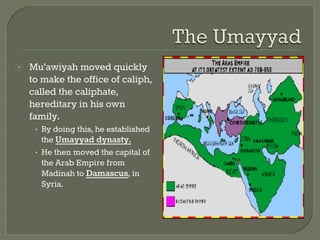
⦿ Mu’awiyah moved quickly 
to make the office of caliph, 
called the caliphate, 
hereditary in his own 
family. 
• By doing this, he established 
the Umayyad dynasty. 
• He then moved the capital of 
the Arab Empire from 
Madinah to Damascus, in 
Syria.
⦿ In spite of the Umayyad successes, internal 
struggles threatened the empire’s stability. 
• Many Muslims of non-Arab background, such as Persians 
and Byzantines, did not like the way local administrators 
favored the Arabs. 
• Revolt led by Hussein, second son of Ali caused a 
political split and a religious split 
•
⦿ The Shiite Muslims accept only the descendants of Ali as the 
true rulers of Islam. 
⦿ (Note that Hussein, the leader of this revolt, was the son 
of Ali. In other words, he felt like he and his 
descendants should rule, NOT Mu’awiyah and his 
descendants) 
⦿ The Sunni Muslims accepted Umayyad rule 
⦿ This political split led to the development of 2 branches of 
Muslim that persist to the present.

Islam

  • 2.
    ⦿ Islam ,in Arabic, means “submission”. • Islam teaches submission to the word of God, called “Allah” in Arabic. ⦿ Muslims, “those who submit”, know God’s word primarily through the Quran. • Quran – the Arabic book that records the teachings of Allah as they were transmitted to the Prophet Muhammad
  • 3.
    ⦿ Arabs livedin the Arabian Peninsula, a desert land sorely lacking in rivers and lakes. • The Arabs were nomads who, because of their hostile surroundings, moved constantly to find water and food for their animals.
  • 4.
    ⦿ Each tribewas ruled by a sheikh who was chosen from one of the leading families by a council of elders. • Although each tribe was independent, all the tribes in the region were loosely connected to one another.
  • 5.
    ⦿ The Arabslived as farmers and sheepherders on the oases and rain-fed areas of the Arabian Peninsula. • After the camel was domesticated, the Arabs populated more of the desert. • They also expanded the caravan trade into these regions. • Towns developed along the routes as the Arabs became major carriers of goods between the Indian Ocean and the Mediterranean, where the Silk Road ended.
  • 7.
    ⦿ Most earlyArabs were polytheistic. • The Arabs trace their ancestors to Abraham and his son Ishmael, who were believed to have built at Makkah (Mecca) the Kaaba, a house of worship whose cornerstone was a sacred stone, called the Black Stone.
  • 8.
    ⦿ The Arabsrecognized a supreme god named Allah (Arabic for “God”), but they also believed in other tribal gods. • They revered Kaaba for its association with Ibrahim (Abraham).
  • 9.
    ⦿ Into thisworld of tension stepped Muhammad. • Born in Mecca to a merchant family. • Became troubled over the greedy elite in Mecca, went to the hills to meditate where he received messages from God. • Muhammad believed that he was receiving the final revelations from God (Allah had revealed himself to Moses and Jesus before him)
  • 10.
    ⦿ People weresurprised at his claims to be a prophet. • The wealthy feared that his attacks on corrupt society would upset the established social and political order. • After 3 years of preaching, he had only 30 followers.
  • 11.
    ⦿ Muhammad becamediscouraged by the persecution of his followers, as well as by the failure of the Makkans to accept his message. • He and some of his closest supporters left Makkah and moved north to Yathrib, later renamed Madinah (Medina). RECAP: Makkah = Mecca Madinah = Medina
  • 12.
    ⦿ Muhammad soonbegan to win support from people in Medina, as well as Arabs in the desert known as Bedouins. • From these groups, he formed the 1st community of practicing Muslims.
  • 13.
    ⦿ Like Christianityand Judaism, Islam is monotheistic. • Allah is the all-powerful being who created the universe and everything in it. • Islam emphasizes salvation and offers the hope of an afterlife. • Those who desire to achieve life after death must subject themselves to the will of Allah.
  • 15.
    ⦿ Stories ofMuhammad’s life, words, deeds, and revelations were collected over many generations, provide Muslims with models of the righteous life and how to live it.
  • 16.
    ⦿ Islam isnot just a set of religious beliefs but a way of life as well. • After Muhammad’s death, Muslim scholars developed a law code known as the shari’ah. ⚫ It provides believers with a set of practical laws to regulate their daily lives. ⚫ It is based on scholars’ interpretations of the Quran and the example set by Muhammad in his life.
  • 17.
    ⦿ The deathof Muhammad left his followers with a problem: Muhammad had never named a successor. • Shortly after Muhammad’s death, some of his closest followers chose Abu Bakr, a wealthy merchant and Muhammad’s father-in-law to be their leader. ⚫ He was named caliph, or successor to Muhammad.
  • 18.
    ⦿ Expansion underAbu Bakr • By 640, Syria. • By 642, Egypt and other areas of northern Africa had been added to the new Arab Empire. • To the east, the Arabs had conquered the entire Persian Empire by 650. ⦿
  • 19.
    ⦿ After AbuBakr died, problems arose over who should become the next caliph. • No clear successors to Abu Bakr • The 1st two caliphs to rule after his death were assassinated. • In 656, Ali, Muhammad’s son-in-law, was chosen to be caliph, but he too was assassinated after ruling for 5 years.
  • 20.
    ⦿ In 661,the general Mu’ awiyah, the governor of Syria and one of Ali’s chief rivals, became caliph. • He was known for one outstanding virtue: he used force only when absolutely necessary.
  • 21.
    ⦿ Mu’awiyah movedquickly to make the office of caliph, called the caliphate, hereditary in his own family. • By doing this, he established the Umayyad dynasty. • He then moved the capital of the Arab Empire from Madinah to Damascus, in Syria.
  • 22.
    ⦿ In spiteof the Umayyad successes, internal struggles threatened the empire’s stability. • Many Muslims of non-Arab background, such as Persians and Byzantines, did not like the way local administrators favored the Arabs. • Revolt led by Hussein, second son of Ali caused a political split and a religious split •
  • 23.
    ⦿ The ShiiteMuslims accept only the descendants of Ali as the true rulers of Islam. ⦿ (Note that Hussein, the leader of this revolt, was the son of Ali. In other words, he felt like he and his descendants should rule, NOT Mu’awiyah and his descendants) ⦿ The Sunni Muslims accepted Umayyad rule ⦿ This political split led to the development of 2 branches of Muslim that persist to the present.