GRAPH
Introduction and representation
By Bharati.C
M.tech
Introduction
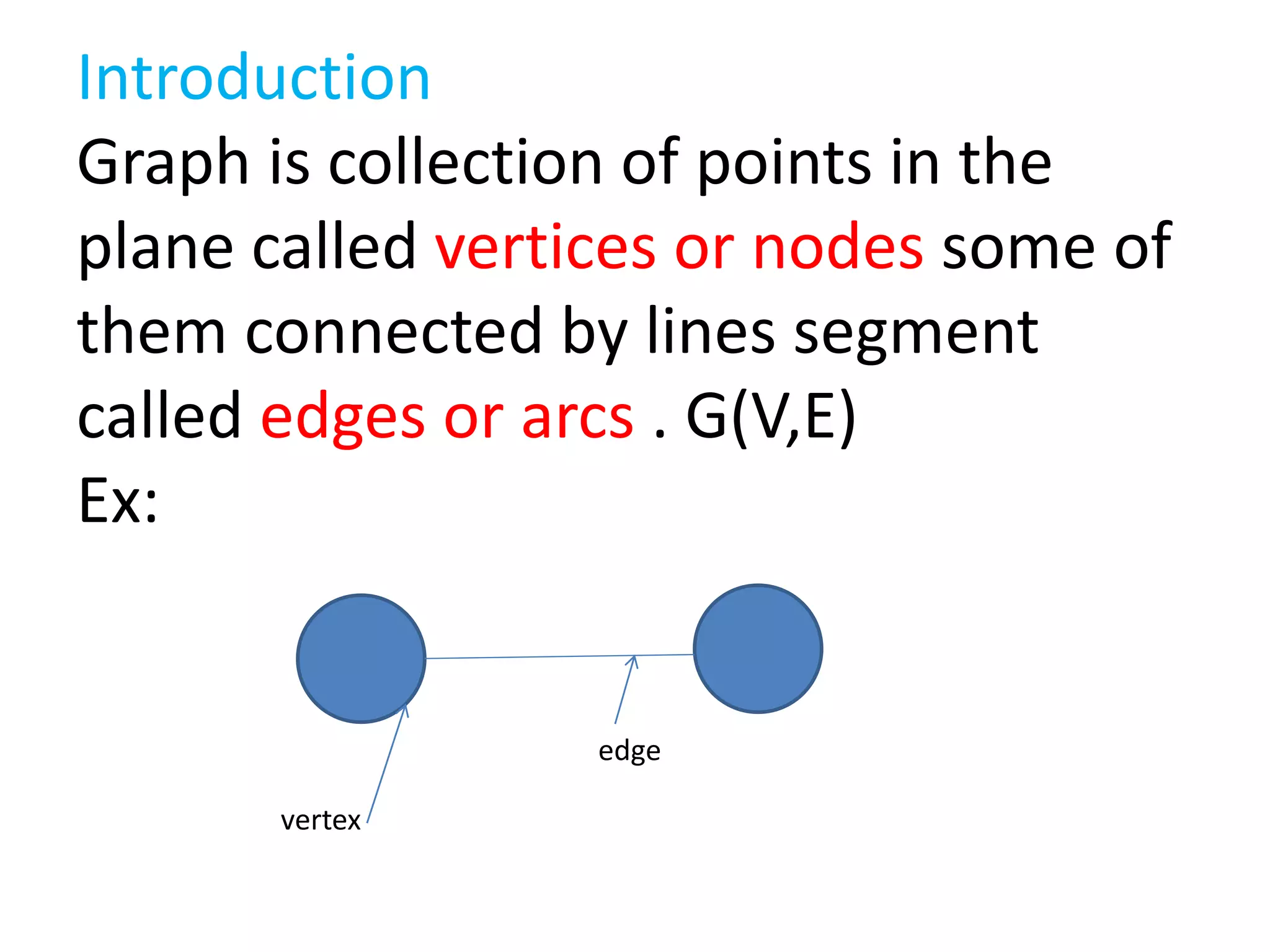
Graph is collection of points in the
plane called vertices or nodes some of
them connected by lines segment
called edges or arcs . G(V,E)
Ex:
edge
vertex
Category of graph
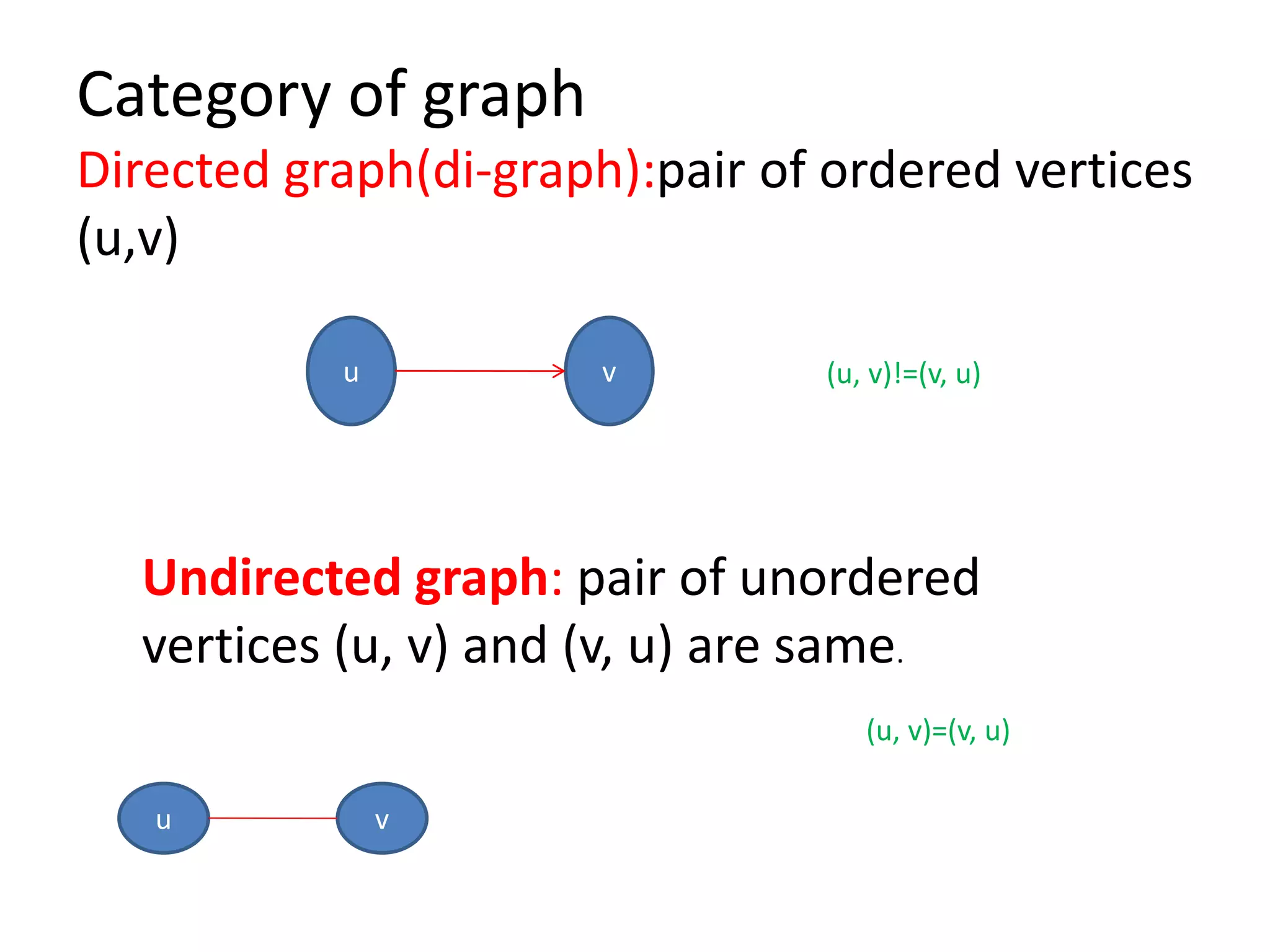
Directed graph(di-graph):pair of ordered vertices
(u,v)
u v
Undirected graph: pair of unordered
vertices (u, v) and (v, u) are same.
(u, v)!=(v, u)
(u, v)=(v, u)
u v
Graph representation
There are generally two ways to
represent a graph data structure.
1. Adjacency matrix.
2. Adjacency list.
Adjacency matrix
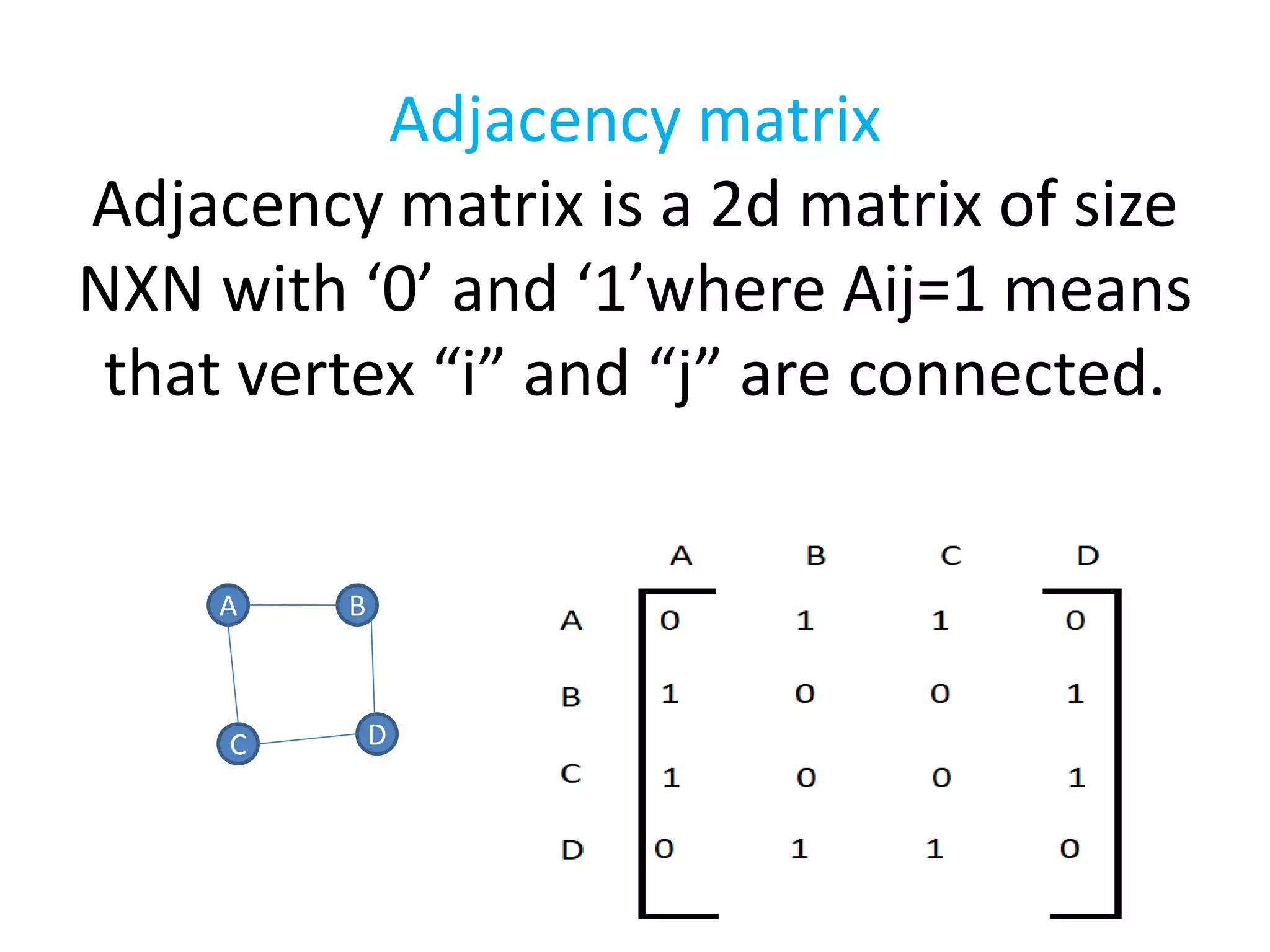
Adjacency matrix is a 2d matrix of size
NXN with ‘0’ and ‘1’where Aij=1 means
that vertex “i” and “j” are connected.
A B
C D
Adjacency list
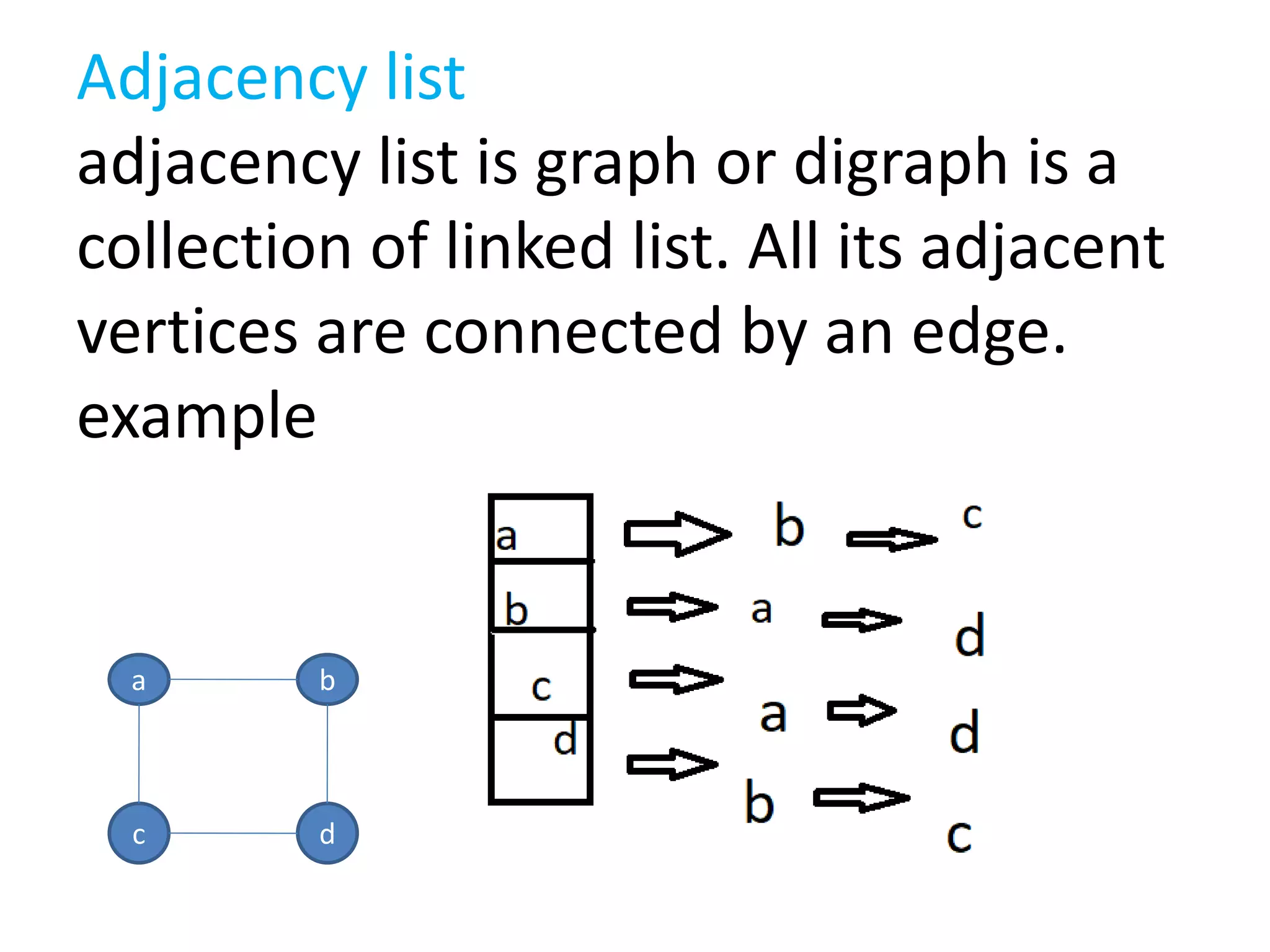
adjacency list is graph or digraph is a
collection of linked list. All its adjacent
vertices are connected by an edge.
example
a b
c d
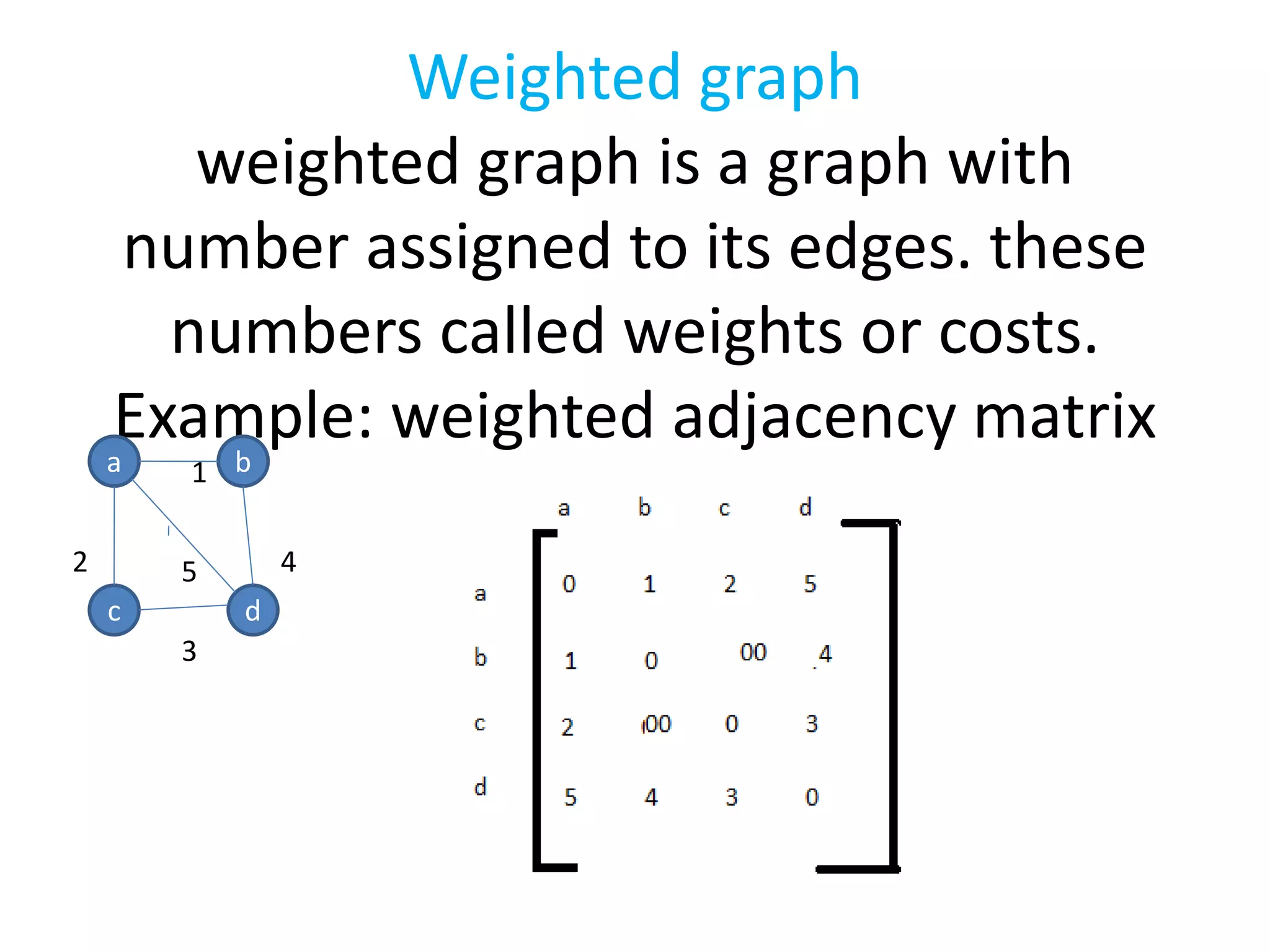
Weighted graph
weighted graph is a graph with
number assigned to its edges. these
numbers called weights or costs.
Example: weighted adjacency matrix
a b
c d
1
2
3
4
5
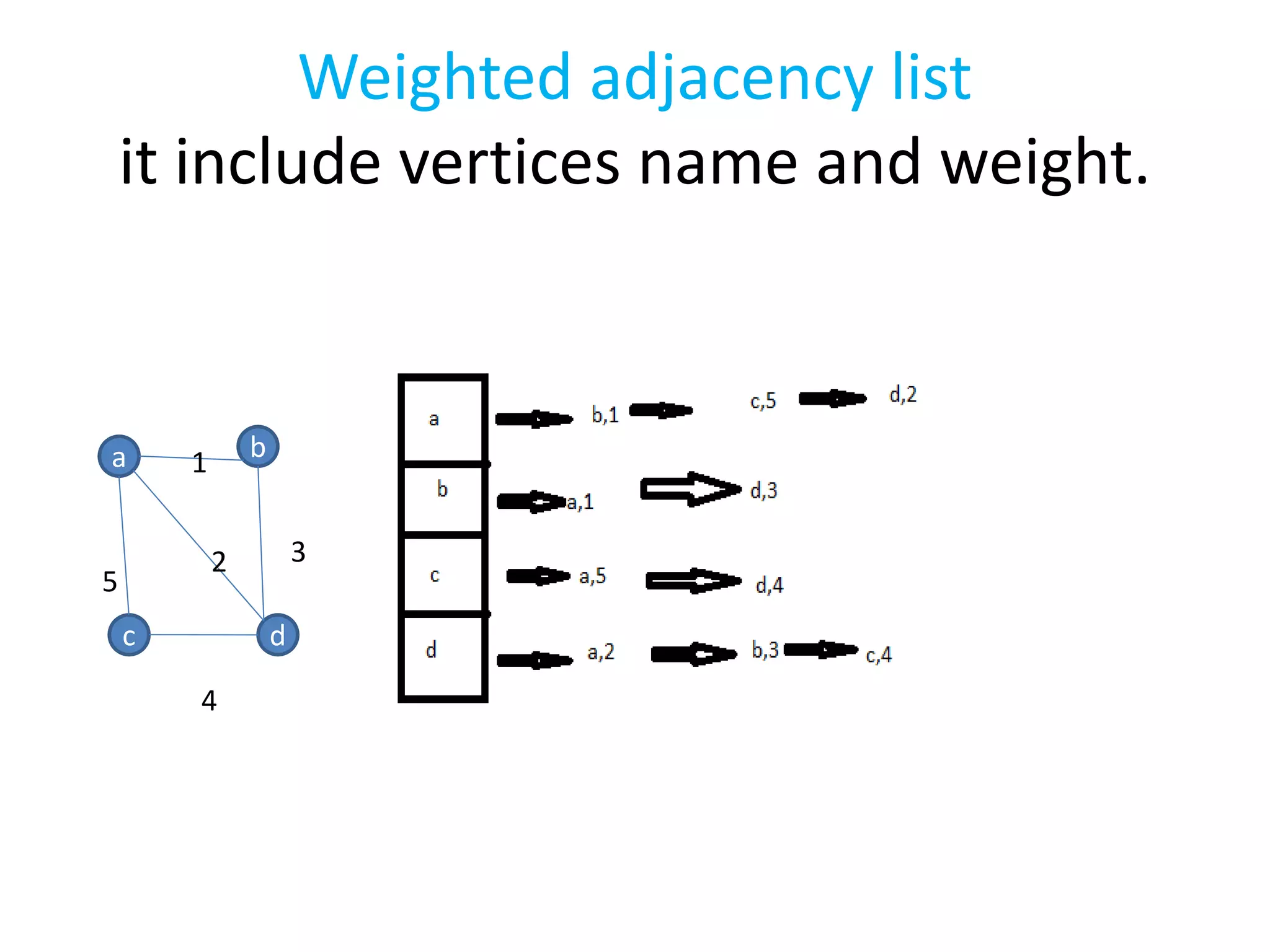
Weighted adjacency list
it include vertices name and weight.
c
b
a
d
1
3
4
5
2
Graph Terminology
Graph terminology
1. node: In a plane collection of point called
vertex.
2. edge: connected a line segment to vertices.
3. adjacent node: which connect near vertices.
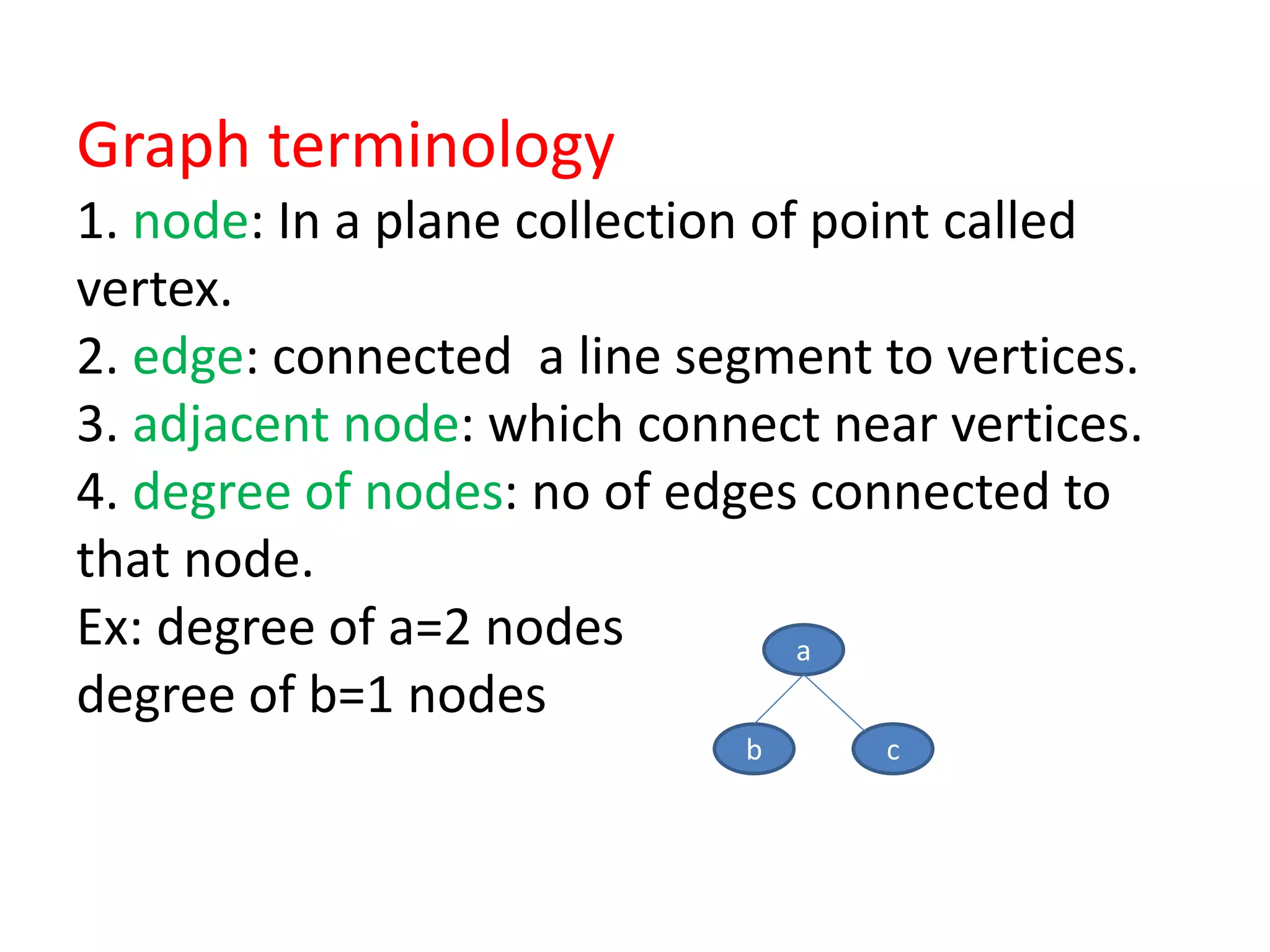
4. degree of nodes: no of edges connected to
that node.
Ex: degree of a=2 nodes
degree of b=1 nodes
a
b c
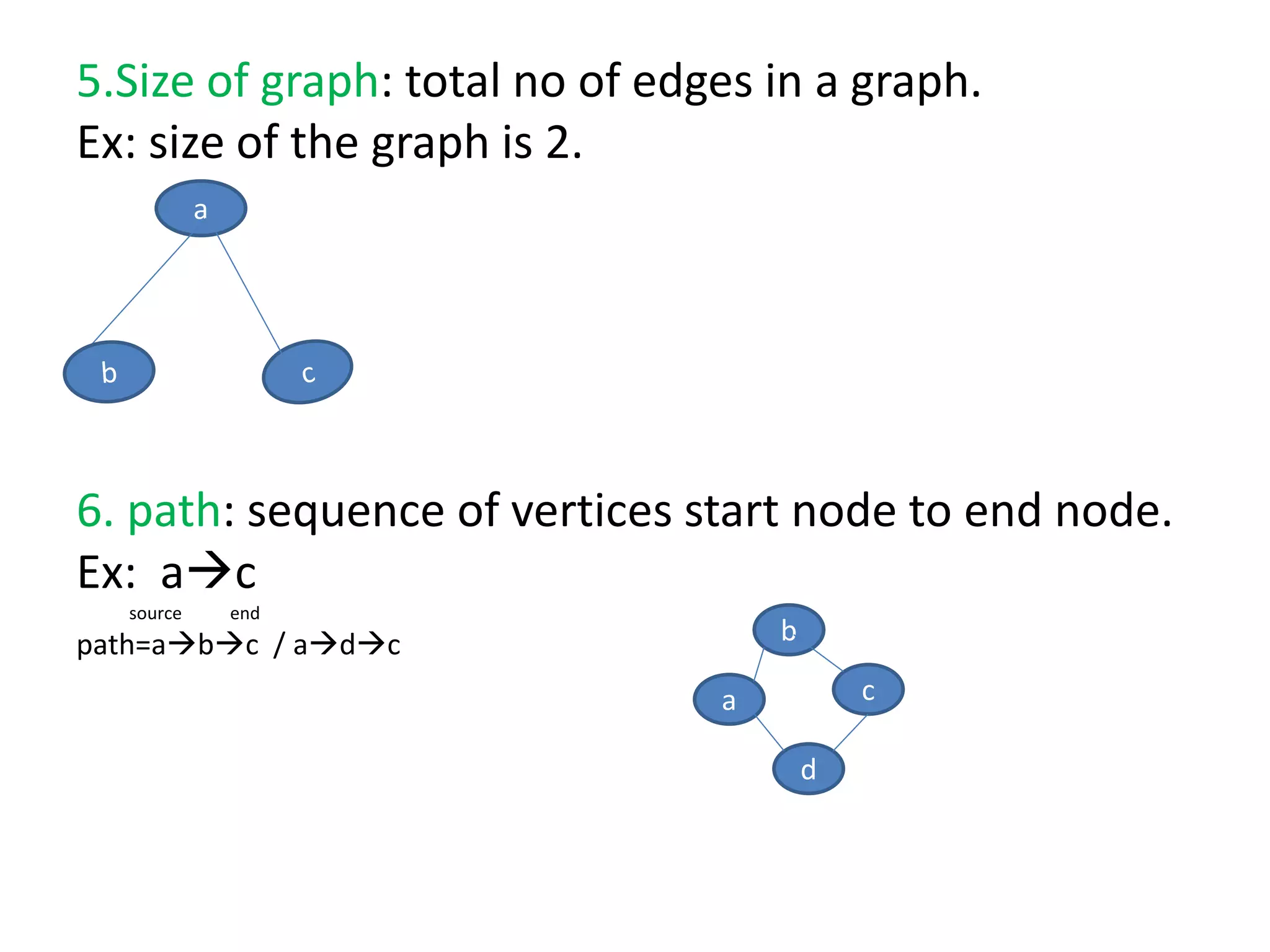
5.Size of graph: total no of edges in a graph.
Ex: size of the graph is 2.
6. path: sequence of vertices start node to end node.
Ex: ac
source end
path=abc / adc
a
b
a c
d
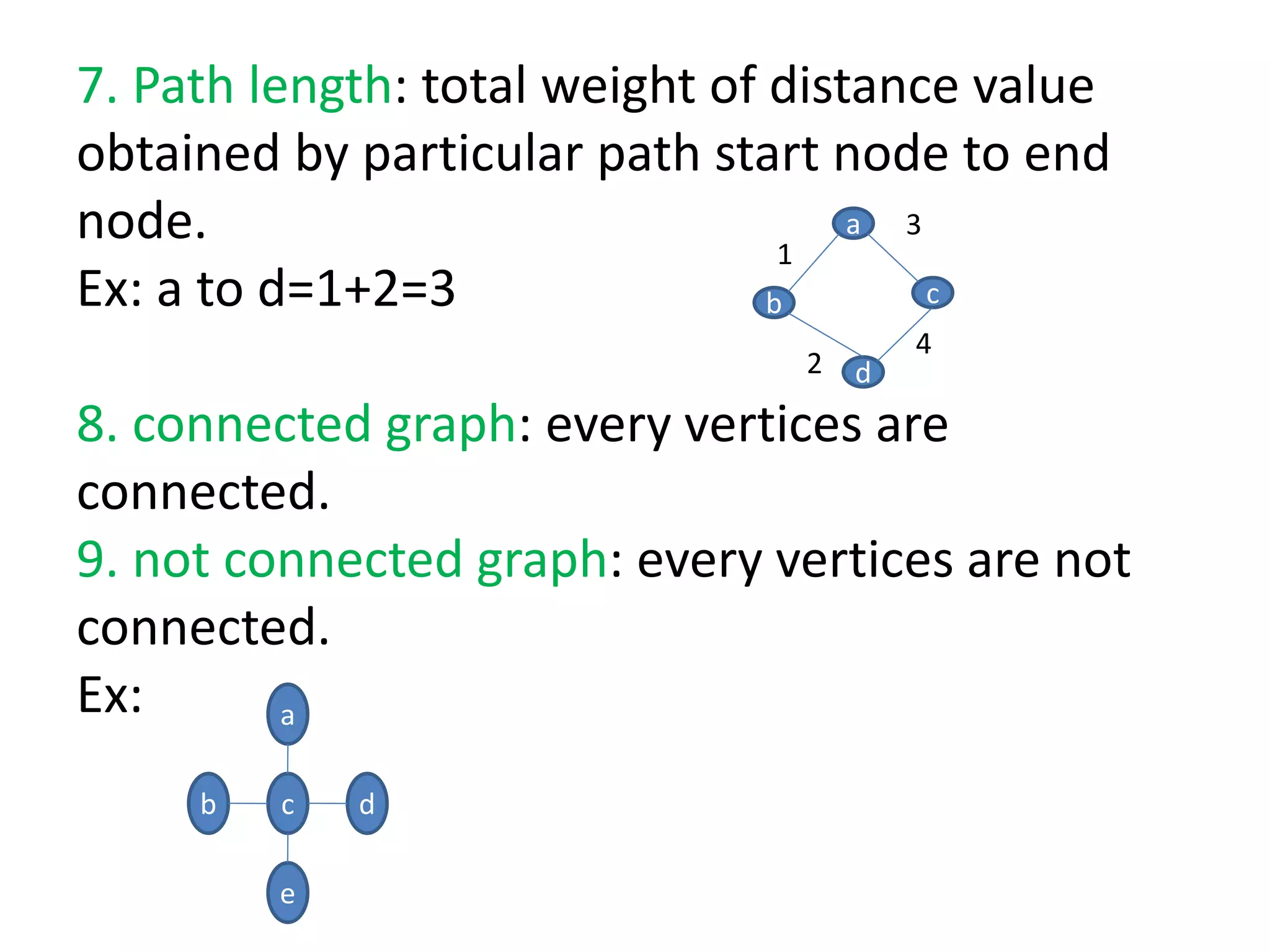
7. Path length: total weight of distance value
obtained by particular path start node to end
node.
Ex: a to d=1+2=3
8. connected graph: every vertices are
connected.
9. not connected graph: every vertices are not
connected.
Ex:
a
b
d
c
1
2
3
4
a
c
e
d
b
10. cycle: a cycle is a path of a source to ends at
same vertex and does not traverse the same
edge more than once. Ex: a—b—c—a
11. acycle: a graph with no cycle is said to be
acycle.
a
b c

Graph therory

  • 1.
  • 2.
    Introduction Graph is collectionof points in the plane called vertices or nodes some of them connected by lines segment called edges or arcs . G(V,E) Ex: edge vertex
  • 3.
    Category of graph Directedgraph(di-graph):pair of ordered vertices (u,v) u v Undirected graph: pair of unordered vertices (u, v) and (v, u) are same. (u, v)!=(v, u) (u, v)=(v, u) u v
  • 4.
    Graph representation There aregenerally two ways to represent a graph data structure. 1. Adjacency matrix. 2. Adjacency list.
  • 5.
    Adjacency matrix Adjacency matrixis a 2d matrix of size NXN with ‘0’ and ‘1’where Aij=1 means that vertex “i” and “j” are connected. A B C D
  • 6.
    Adjacency list adjacency listis graph or digraph is a collection of linked list. All its adjacent vertices are connected by an edge. example a b c d
  • 7.
    Weighted graph weighted graphis a graph with number assigned to its edges. these numbers called weights or costs. Example: weighted adjacency matrix a b c d 1 2 3 4 5
  • 8.
    Weighted adjacency list itinclude vertices name and weight. c b a d 1 3 4 5 2
  • 9.
  • 10.
    Graph terminology 1. node:In a plane collection of point called vertex. 2. edge: connected a line segment to vertices. 3. adjacent node: which connect near vertices. 4. degree of nodes: no of edges connected to that node. Ex: degree of a=2 nodes degree of b=1 nodes a b c
  • 11.
    5.Size of graph:total no of edges in a graph. Ex: size of the graph is 2. 6. path: sequence of vertices start node to end node. Ex: ac source end path=abc / adc a b a c d
  • 12.
    7. Path length:total weight of distance value obtained by particular path start node to end node. Ex: a to d=1+2=3 8. connected graph: every vertices are connected. 9. not connected graph: every vertices are not connected. Ex: a b d c 1 2 3 4 a c e d b
  • 13.
    10. cycle: acycle is a path of a source to ends at same vertex and does not traverse the same edge more than once. Ex: a—b—c—a 11. acycle: a graph with no cycle is said to be acycle. a b c