By: Enrique Matthews
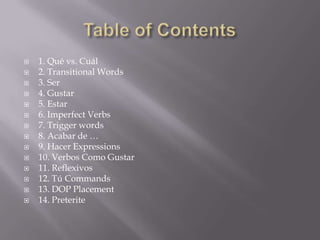
   1. Qué vs. Cuál
   2. Transitional Words
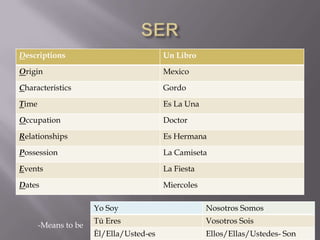
   3. Ser
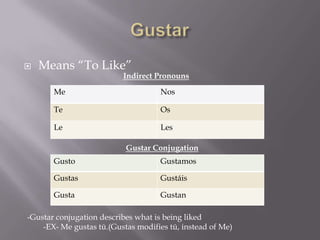
   4. Gustar
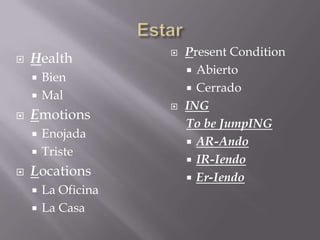
   5. Estar
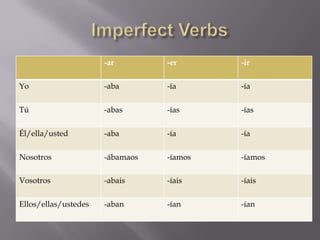
   6. Imperfect Verbs
   7. Trigger words
   8. Acabar de …
   9. Hacer Expressions
   10. Verbos Como Gustar
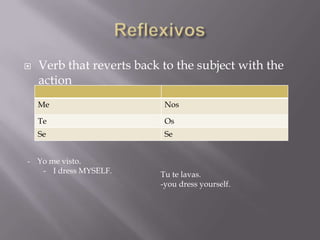
   11. Reflexivos
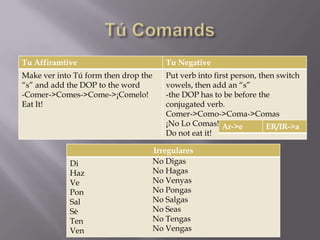
   12. Tú Commands
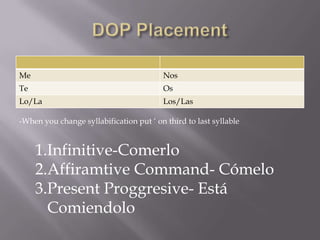
   13. DOP Placement
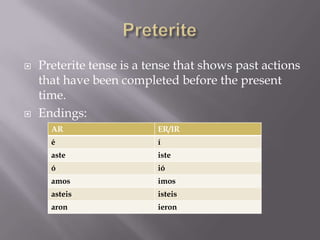
   14. Preterite
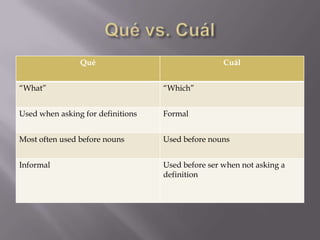
Qué                                Cuál


“What”                             “Which”


Used when asking for definitions   Formal


Most often used before nouns       Used before nouns


Informal                           Used before ser when not asking a
                                   definition
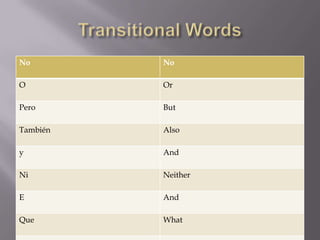
No        No

O         Or

Pero      But

También   Also

y         And

Ni        Neither

E         And

Que       What
Descriptions                             Un Libro

Origin                                   Mexico

Characteristics                          Gordo

Time                                     Es La Una

Occupation                               Doctor

Relationships                            Es Hermana

Possession                               La Camiseta

Events                                   La Fiesta

Dates                                    Miercoles

                      Yo Soy                         Nosotros Somos
                      Tū Eres                        Vosotros Sois
       -Means to be
                      Ēl/Ella/Usted-es               Ellos/Ellas/Ustedes- Son
   Means “To Like”
                          Indirect Pronouns
       Me                            Nos

       Te                            Os

       Le                            Les

                           Gustar Conjugation
       Gusto                         Gustamos

       Gustas                        Gustáis

       Gusta                         Gustan

-Gustar conjugation describes what is being liked
    -EX- Me gustas tū.(Gustas modifies tū, instead of Me)
   Present Condition
   Health
                        Abierto
     Bien
                        Cerrado
     Mal
                      ING
   Emotions
                       To be JumpING
     Enojada
                        AR-Ando
     Triste
                        IR-Iendo
   Locations           Er-Iendo
     La Oficina
     La Casa
-ar        -er      -ir

Yo                    -aba       -ía      -ía

Tú                    -abas      -ías     -ías

Él/ella/usted         -aba       -ía      -ía

Nosotros              -ábamaos   -íamos   -íamos

Vosotros              -abais     -íais    -íais

Ellos/ellas/ustedes   -aban      -ían     -ían
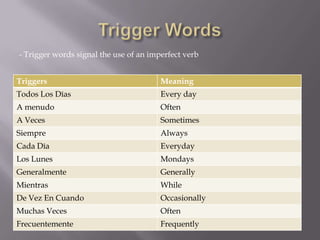
- Trigger words signal the use of an imperfect verb


Triggers                                Meaning
Todos Los Dīas                          Every day
A menudo                                Often
A Veces                                 Sometimes
Siempre                                 Always
Cada Dīa                                Everyday
Los Lunes                               Mondays
Generalmente                            Generally
Mientras                                While
De Vez En Cuando                        Occasionally
Muchas Veces                            Often
Frecuentemente                          Frequently
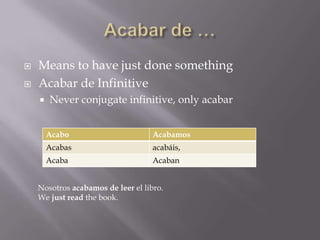
   Means to have just done something
   Acabar de Infinitive
       Never conjugate infinitive, only acabar


        Acabo                       Acabamos
        Acabas                      acabáis,
        Acaba                       Acaban


    Nosotros acabamos de leer el libro.
    We just read the book.
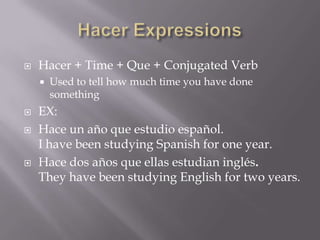
   Hacer + Time + Que + Conjugated Verb
       Used to tell how much time you have done
        something
   EX:
   Hace un año que estudio español.
    I have been studying Spanish for one year.
   Hace dos años que ellas estudian inglés.
    They have been studying English for two years.
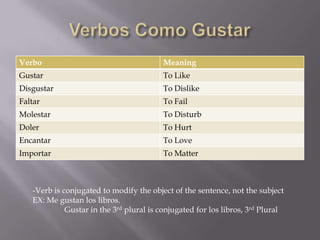
Verbo                                     Meaning
Gustar                                    To Like
Disgustar                                 To Dislike
Faltar                                    To Fail
Molestar                                  To Disturb
Doler                                     To Hurt
Encantar                                  To Love
Importar                                  To Matter


   -Verb is conjugated to modify the object of the sentence, not the subject
   EX: Me gustan los libros.
             Gustar in the 3rd plural is conjugated for los libros, 3rd Plural
   Verb that reverts back to the subject with the
    action
    Me                     Nos

    Te                     Os
    Se                     Se


- Yo me visto.
   - I dress MYSELF.      Tu te lavas.
                          -you dress yourself.
Tu Affiramtive                           Tu Negative
Make ver into Tú form then drop the      Put verb into first person, then switch
“s” and add the DOP to the word          vowels, then add an “s”
-Comer->Comes->Come->¡Comelo!            -the DOP has to be before the
Eat It!                                  conjugated verb.
                                         Comer->Como->Coma->Comas
                                         ¡No Lo Comas! Ar->e           ER/IR->a
                                         Do not eat it!

                                      Irregulares
            Di                        No Digas
            Haz                       No Hagas
            Ve                        No Venyas
            Pon                       No Pongas
            Sal                       No Salgas
            Sè                        No Seas
            Ten                       No Tengas
            Ven                       No Vengas
Me                                       Nos
Te                                       Os
Lo/La                                    Los/Las

-When you change syllabification put „ on third to last syllable


     1.Infinitive-Comerlo
     2.Affiramtive Command- Cómelo
     3.Present Proggresive- Está
       Comiendolo
   Preterite tense is a tense that shows past actions
    that have been completed before the present
    time.
   Endings:
      AR                  ER/IR
      é                   í
      aste                iste
      ó                   ió
      amos                imos
      asteis              isteis
      aron                ieron

Grammer book

  • 1.
  • 2.
    1. Qué vs. Cuál  2. Transitional Words  3. Ser  4. Gustar  5. Estar  6. Imperfect Verbs  7. Trigger words  8. Acabar de …  9. Hacer Expressions  10. Verbos Como Gustar  11. Reflexivos  12. Tú Commands  13. DOP Placement  14. Preterite
  • 3.
    Qué Cuál “What” “Which” Used when asking for definitions Formal Most often used before nouns Used before nouns Informal Used before ser when not asking a definition
  • 4.
    No No O Or Pero But También Also y And Ni Neither E And Que What
  • 5.
    Descriptions Un Libro Origin Mexico Characteristics Gordo Time Es La Una Occupation Doctor Relationships Es Hermana Possession La Camiseta Events La Fiesta Dates Miercoles Yo Soy Nosotros Somos Tū Eres Vosotros Sois -Means to be Ēl/Ella/Usted-es Ellos/Ellas/Ustedes- Son
  • 6.
    Means “To Like” Indirect Pronouns Me Nos Te Os Le Les Gustar Conjugation Gusto Gustamos Gustas Gustáis Gusta Gustan -Gustar conjugation describes what is being liked -EX- Me gustas tū.(Gustas modifies tū, instead of Me)
  • 7.
    Present Condition  Health  Abierto  Bien  Cerrado  Mal  ING  Emotions To be JumpING  Enojada  AR-Ando  Triste  IR-Iendo  Locations  Er-Iendo  La Oficina  La Casa
  • 8.
    -ar -er -ir Yo -aba -ía -ía Tú -abas -ías -ías Él/ella/usted -aba -ía -ía Nosotros -ábamaos -íamos -íamos Vosotros -abais -íais -íais Ellos/ellas/ustedes -aban -ían -ían
  • 9.
    - Trigger wordssignal the use of an imperfect verb Triggers Meaning Todos Los Dīas Every day A menudo Often A Veces Sometimes Siempre Always Cada Dīa Everyday Los Lunes Mondays Generalmente Generally Mientras While De Vez En Cuando Occasionally Muchas Veces Often Frecuentemente Frequently
  • 10.
    Means to have just done something  Acabar de Infinitive  Never conjugate infinitive, only acabar Acabo Acabamos Acabas acabáis, Acaba Acaban Nosotros acabamos de leer el libro. We just read the book.
  • 11.
    Hacer + Time + Que + Conjugated Verb  Used to tell how much time you have done something  EX:  Hace un año que estudio español. I have been studying Spanish for one year.  Hace dos años que ellas estudian inglés. They have been studying English for two years.
  • 12.
    Verbo Meaning Gustar To Like Disgustar To Dislike Faltar To Fail Molestar To Disturb Doler To Hurt Encantar To Love Importar To Matter -Verb is conjugated to modify the object of the sentence, not the subject EX: Me gustan los libros. Gustar in the 3rd plural is conjugated for los libros, 3rd Plural
  • 13.
    Verb that reverts back to the subject with the action Me Nos Te Os Se Se - Yo me visto. - I dress MYSELF. Tu te lavas. -you dress yourself.
  • 14.
    Tu Affiramtive Tu Negative Make ver into Tú form then drop the Put verb into first person, then switch “s” and add the DOP to the word vowels, then add an “s” -Comer->Comes->Come->¡Comelo! -the DOP has to be before the Eat It! conjugated verb. Comer->Como->Coma->Comas ¡No Lo Comas! Ar->e ER/IR->a Do not eat it! Irregulares Di No Digas Haz No Hagas Ve No Venyas Pon No Pongas Sal No Salgas Sè No Seas Ten No Tengas Ven No Vengas
  • 15.
    Me Nos Te Os Lo/La Los/Las -When you change syllabification put „ on third to last syllable 1.Infinitive-Comerlo 2.Affiramtive Command- Cómelo 3.Present Proggresive- Está Comiendolo
  • 16.
    Preterite tense is a tense that shows past actions that have been completed before the present time.  Endings: AR ER/IR é í aste iste ó ió amos imos asteis isteis aron ieron