*
    By : Camila Davis
* 1 . Que vs. Cual
                                 *   9 . Hace Expressions
*   2 . Ser - Doctor Ped
                                 *   10 . Hace + time + que + verb phrase
*   3 . Estar – Helping
                                 *   11 . Verbs like Gustar
*   4 . Gustar
                                 *   12 . Reflexivos
*   5 . Transitions
                                 *   13 . Tu Commands
*   6 . Imperfect
                                 *   14 . DOP Placement
*   7 . Triggers
                                 *   15 . Preterite
*   8 . Acabar de + Infinitive


                             *
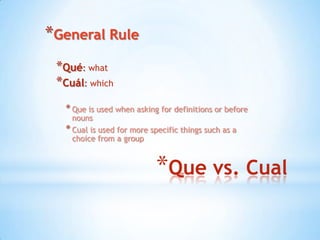
*General Rule
 *Qué: what
 *Cuál: which
   * Que is used when asking for definitions or before
     nouns
   * Cual is used for more specific things such as a
     choice from a group


                            *Que vs. Cual
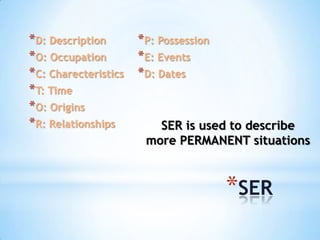
*D: Description     *P: Possession
*O: Occupation      *E: Events
*C: Charecteristics *D: Dates
*T: Time
*O: Origins
*R: Relationships        SER is used to describe
                     more PERMANENT situations


                                   *SER
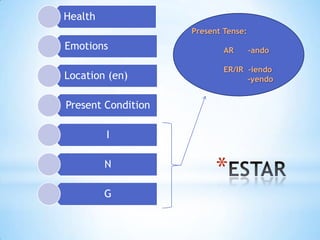
Health
                    Present Tense:
Emotions                    AR       -ando

                            ER/IR -iendo
Location (en)                     -yendo


Present Condition

         I

         N
                          *
         G
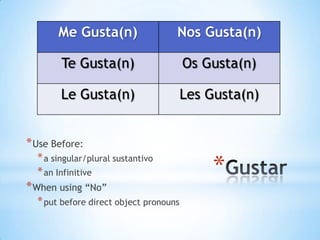
Me Gusta(n)                  Nos Gusta(n)

        Te Gusta(n)                     Os Gusta(n)

        Le Gusta(n)                     Les Gusta(n)


* Use Before:
  * a singular/plural sustantivo
  * an Infinitive                            *
* When using “No”
  * put before direct object pronouns
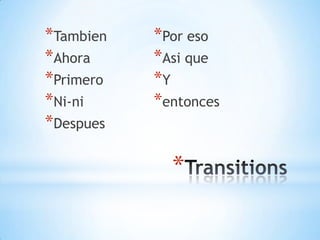
*Tambien   *Por eso
*Ahora     *Asi que
*Primero   *Y
*Ni-ni     *entonces
*Despues

             *
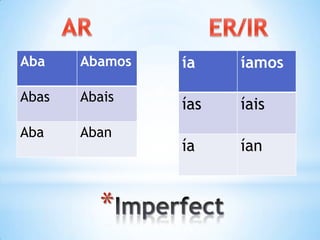
Aba    Abamos   ía    íamos

Abas   Abais
                ías   íais
Aba    Aban
                ía    ían


         *
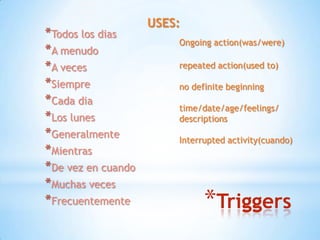
USES:
*Todos los dias
                        Ongoing action(was/were)
*A menudo
*A veces                repeated action(used to)

*Siempre                no definite beginning
*Cada dia               time/date/age/feelings/
*Los lunes              descriptions
*Generalmente           Interrupted activity(cuando)
*Mientras
*De vez en cuando
*Muchas veces
*Frecuentemente               *Triggers
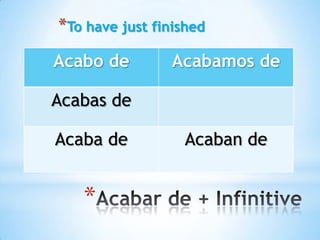
*To have just finished
Acabo de         Acabamos de

Acabas de

Acaba de          Acaban de


   *
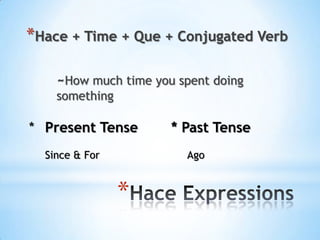
*Hace + Time + Que + Conjugated Verb

    ~How much time you spent doing
    something

* Present Tense       * Past Tense
  Since & For           Ago


                *
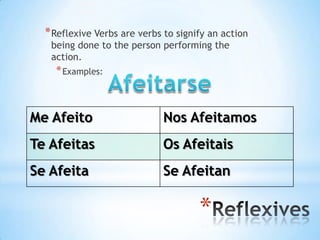
* Reflexive Verbs are verbs to signify an action
   being done to the person performing the
   action.
    * Examples:


Me Afeito                    Nos Afeitamos
Te Afeitas                   Os Afeitais
Se Afeita                    Se Afeitan

                                      *
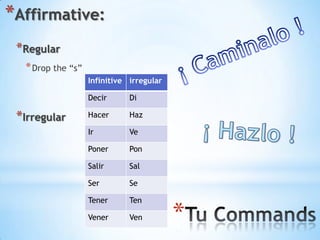
*Affirmative:
 *Regular
  * Drop the “s”
                   Infinitive irregular

                   Decir      Di

 *Irregular        Hacer      Haz

                   Ir         Ve

                   Poner      Pon

                   Salir      Sal

                   Ser        Se

                   Tener      Ten

                   Vener      Ven         *
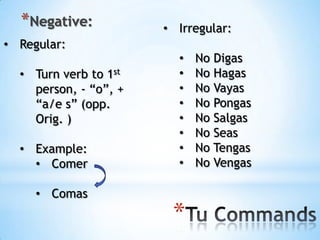
*Negative:           • Irregular:
• Regular:
                         •   No Digas
  • Turn verb to 1st     •   No Hagas
    person, - “o”, +     •   No Vayas
    “a/e s” (opp.        •   No Pongas
    Orig. )              •   No Salgas
                         •   No Seas
  • Example:             •   No Tengas
    • Comer              •   No Vengas

     • Comas
                        *
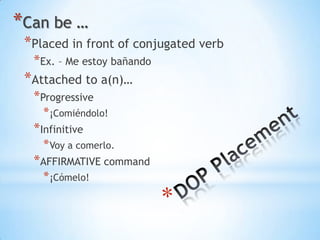
*Can be …
 *Placed in front of conjugated verb
  *Ex. – Me estoy bañando
 *Attached to a(n)…
  *Progressive
    * ¡Comiéndolo!
  *Infinitive
    * Voy a comerlo.
  *AFFIRMATIVE command
    * ¡Cómelo!
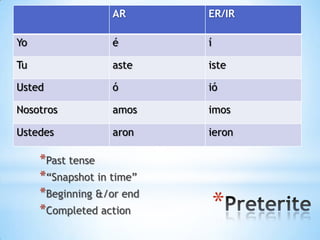
AR       ER/IR

Yo                é        í

Tu                aste     iste

Usted             ó        ió

Nosotros          amos     imos

Ustedes           aron     ieron

     *Past tense
     *“Snapshot in time”
     *Beginning &/or end
     *Completed action         *

Libro gramática 2

  • 1.
    * By : Camila Davis
  • 2.
    * 1 .Que vs. Cual * 9 . Hace Expressions * 2 . Ser - Doctor Ped * 10 . Hace + time + que + verb phrase * 3 . Estar – Helping * 11 . Verbs like Gustar * 4 . Gustar * 12 . Reflexivos * 5 . Transitions * 13 . Tu Commands * 6 . Imperfect * 14 . DOP Placement * 7 . Triggers * 15 . Preterite * 8 . Acabar de + Infinitive *
  • 3.
    *General Rule *Qué:what *Cuál: which * Que is used when asking for definitions or before nouns * Cual is used for more specific things such as a choice from a group *Que vs. Cual
  • 4.
    *D: Description *P: Possession *O: Occupation *E: Events *C: Charecteristics *D: Dates *T: Time *O: Origins *R: Relationships SER is used to describe more PERMANENT situations *SER
  • 5.
    Health Present Tense: Emotions AR -ando ER/IR -iendo Location (en) -yendo Present Condition I N * G
  • 6.
    Me Gusta(n) Nos Gusta(n) Te Gusta(n) Os Gusta(n) Le Gusta(n) Les Gusta(n) * Use Before: * a singular/plural sustantivo * an Infinitive * * When using “No” * put before direct object pronouns
  • 7.
    *Tambien *Por eso *Ahora *Asi que *Primero *Y *Ni-ni *entonces *Despues *
  • 8.
    Aba Abamos ía íamos Abas Abais ías íais Aba Aban ía ían *
  • 9.
    USES: *Todos los dias Ongoing action(was/were) *A menudo *A veces repeated action(used to) *Siempre no definite beginning *Cada dia time/date/age/feelings/ *Los lunes descriptions *Generalmente Interrupted activity(cuando) *Mientras *De vez en cuando *Muchas veces *Frecuentemente *Triggers
  • 10.
    *To have justfinished Acabo de Acabamos de Acabas de Acaba de Acaban de *
  • 11.
    *Hace + Time+ Que + Conjugated Verb ~How much time you spent doing something * Present Tense * Past Tense Since & For Ago *
  • 12.
    * Reflexive Verbsare verbs to signify an action being done to the person performing the action. * Examples: Me Afeito Nos Afeitamos Te Afeitas Os Afeitais Se Afeita Se Afeitan *
  • 13.
    *Affirmative: *Regular * Drop the “s” Infinitive irregular Decir Di *Irregular Hacer Haz Ir Ve Poner Pon Salir Sal Ser Se Tener Ten Vener Ven *
  • 14.
    *Negative: • Irregular: • Regular: • No Digas • Turn verb to 1st • No Hagas person, - “o”, + • No Vayas “a/e s” (opp. • No Pongas Orig. ) • No Salgas • No Seas • Example: • No Tengas • Comer • No Vengas • Comas *
  • 15.
    *Can be … *Placed in front of conjugated verb *Ex. – Me estoy bañando *Attached to a(n)… *Progressive * ¡Comiéndolo! *Infinitive * Voy a comerlo. *AFFIRMATIVE command * ¡Cómelo!
  • 16.
    AR ER/IR Yo é í Tu aste iste Usted ó ió Nosotros amos imos Ustedes aron ieron *Past tense *“Snapshot in time” *Beginning &/or end *Completed action *