GRAMMATICAL CONCEPTS BOOK Elisa Jones Periodo 3 Honors Spanish 3
Table of Contents Preterite Preterite Trigger Words Car-Gar-Zar Spock Verbs Cucaracha Verbs Snake/Snakey Verbs Imperfect Imperfect Trigger Words Imperfect Irregular Preterite vs. Imperfect Ser vs. Estar Verbs Like Gustar Comparatives/ Superlatives Connecting Words Future Future Trigger Future Irregular Por Para Demonstrative adjectives Demonstrative pronouns
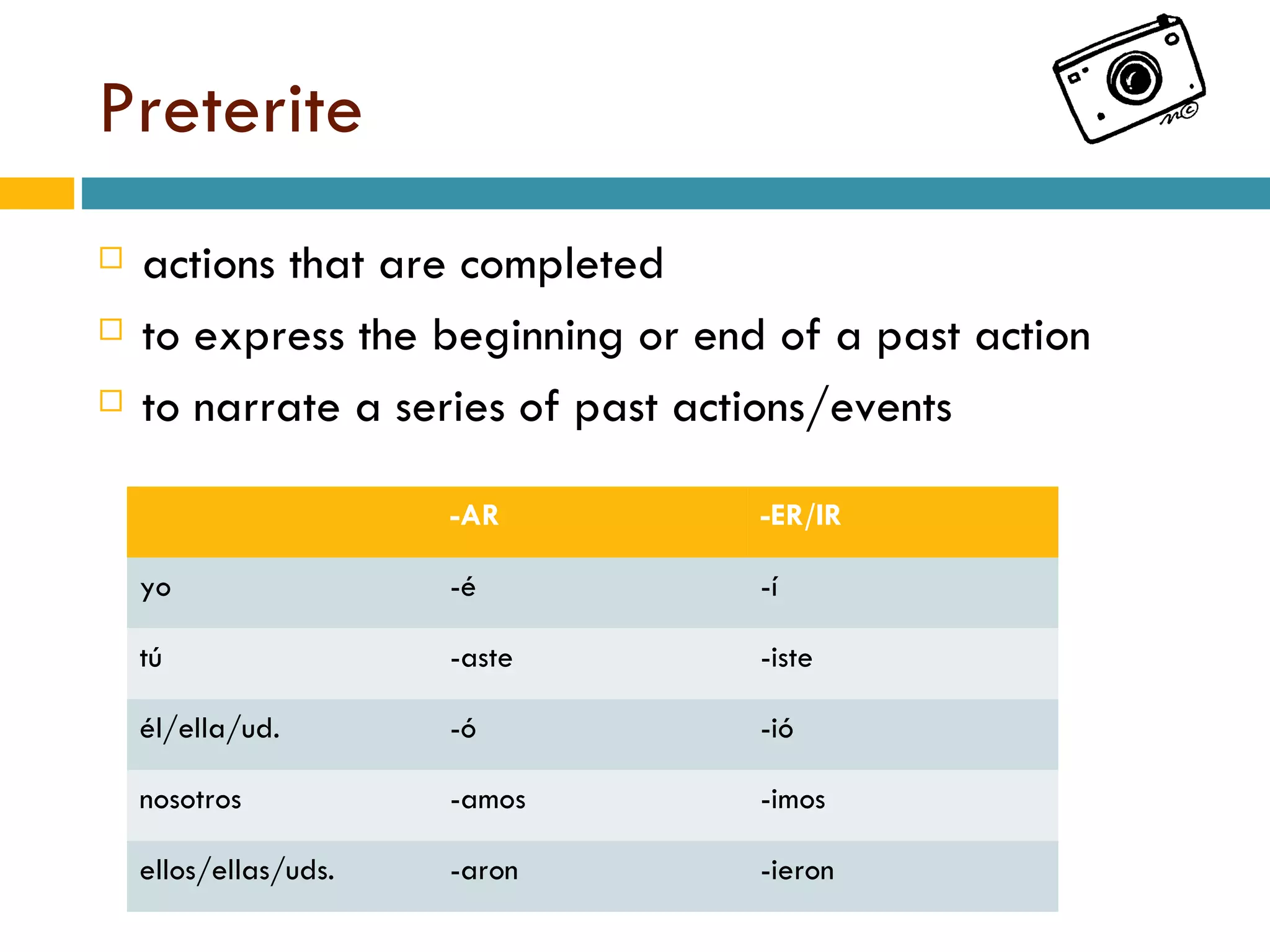
Preterite actions that are completed to express the beginning or end of a past action to narrate a series of past actions/events -AR -ER/IR yo -é -í tú -aste -iste él/ella/ud. -ó -ió nosotros -amos -imos ellos/ellas/uds. -aron -ieron
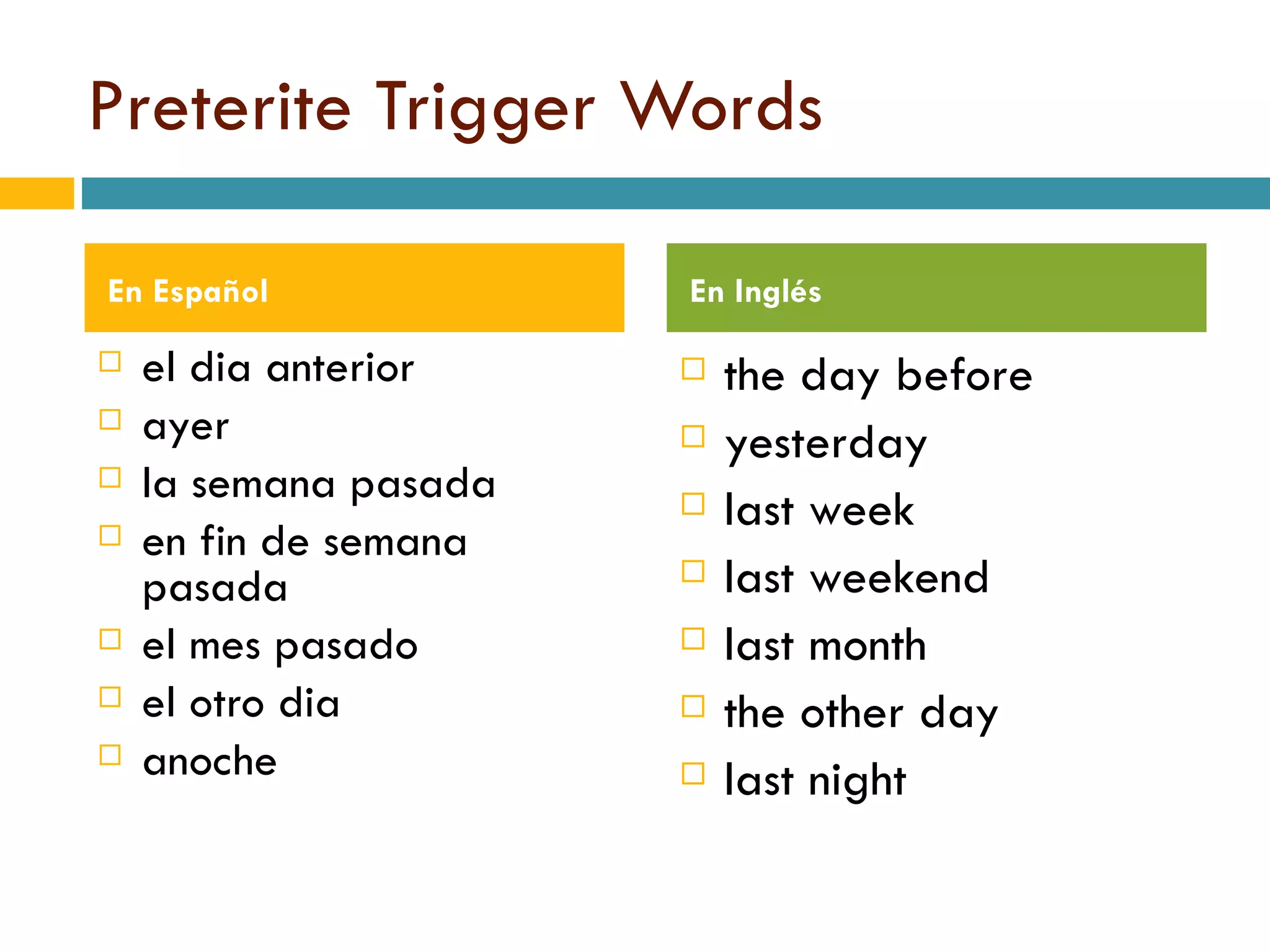
Preterite Trigger Words el dia anterior ayer la semana pasada en fin de semana pasada el mes pasado el otro dia anoche the day before yesterday last week last weekend last month the other day last night En Espa ñol En Inglés
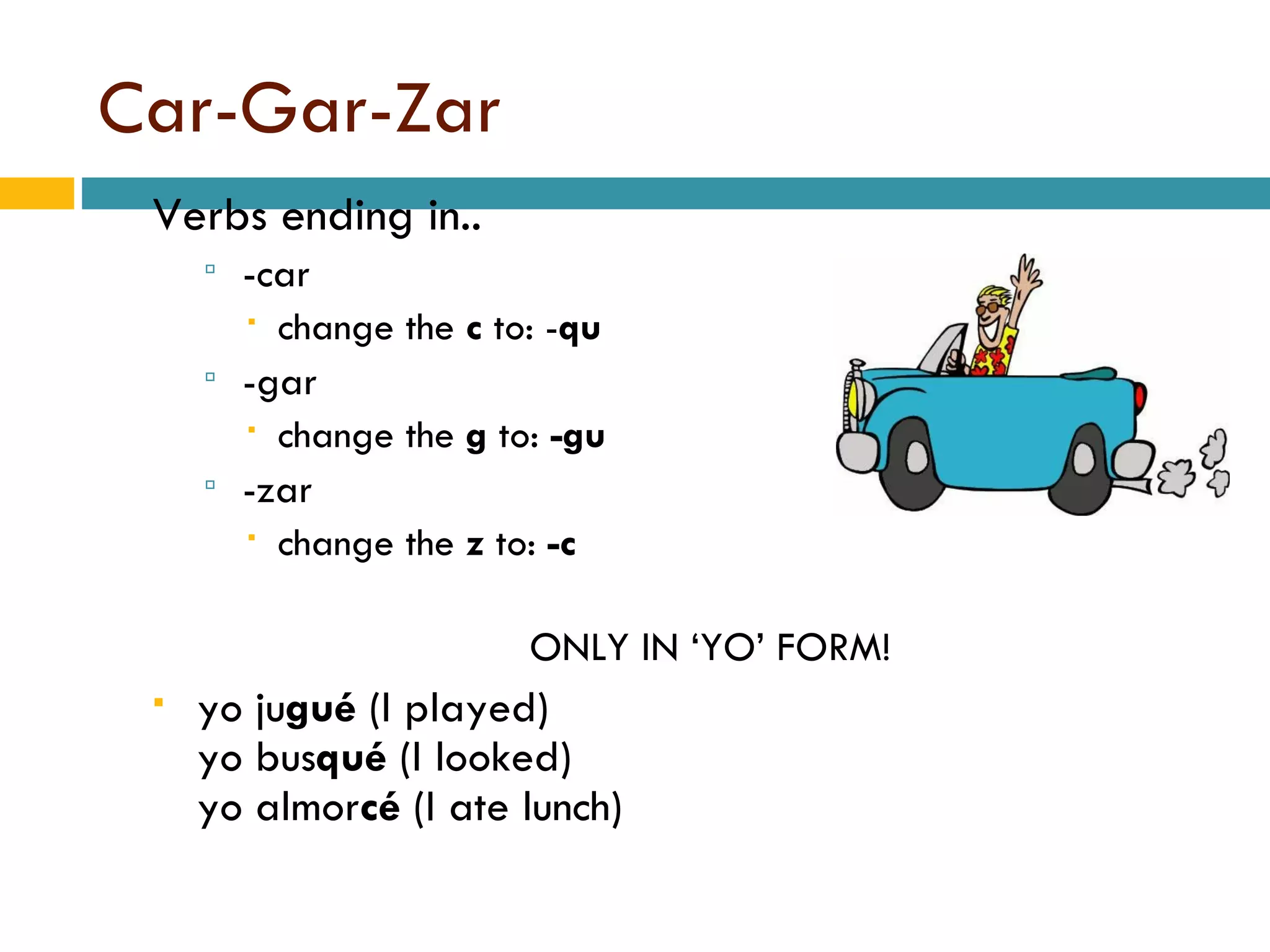
Car-Gar-Zar Verbs ending in.. -car  change the  c  to: - qu -gar change the  g  to:  -gu -zar change the  z  to:  -c ONLY IN ‘YO’ FORM! yo   ju gué  (I played) yo   bus qué  (I looked) yo   almor cé  (I ate lunch)
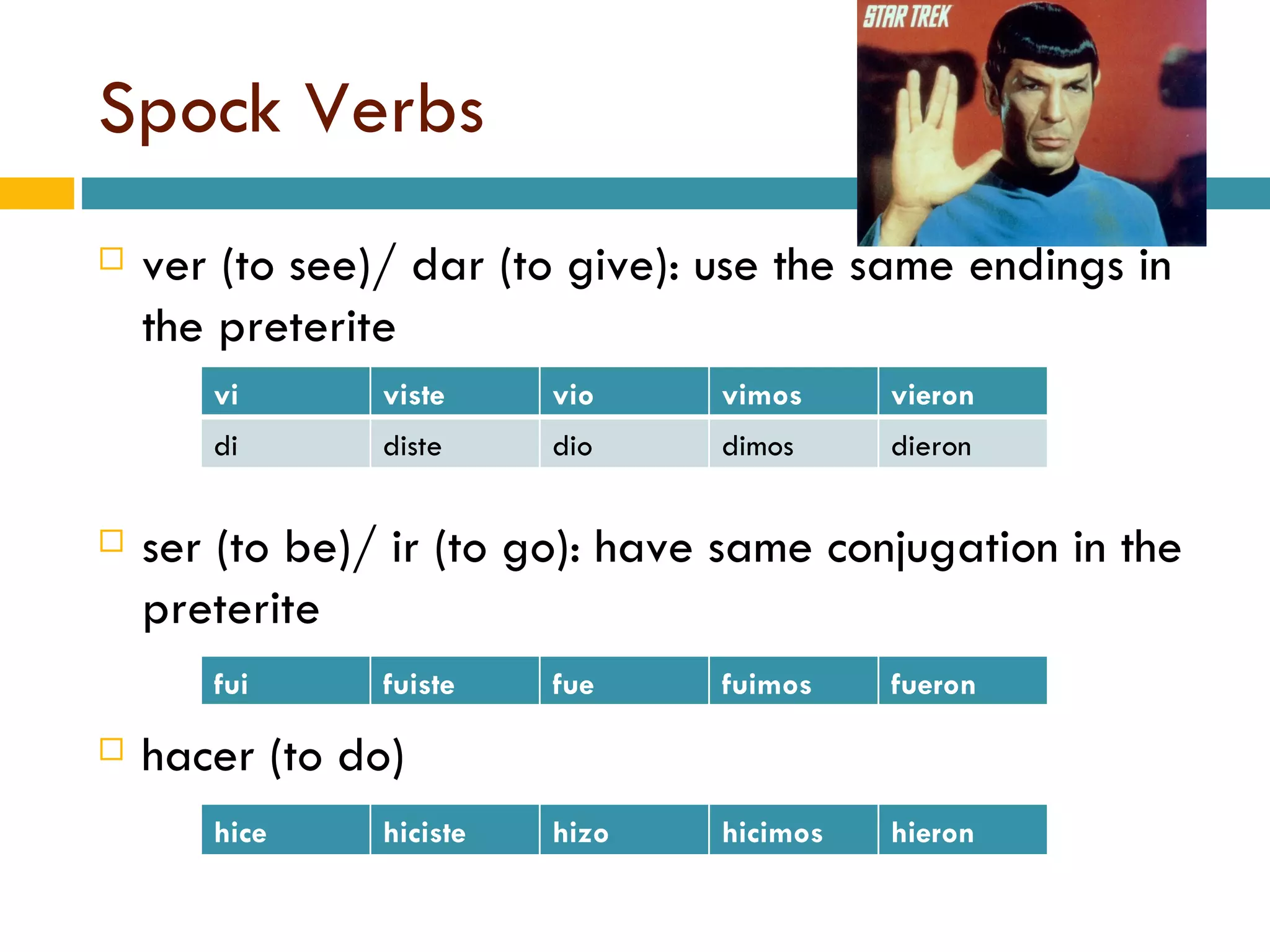
Spock Verbs ver (to see)/ dar (to give): use the same endings in the preterite ser (to be)/ ir (to go): have same conjugation in the preterite hacer (to do) fui fuiste fue fuimos fueron vi viste vio vimos vieron di diste dio dimos dieron hice hiciste hizo hicimos hieron
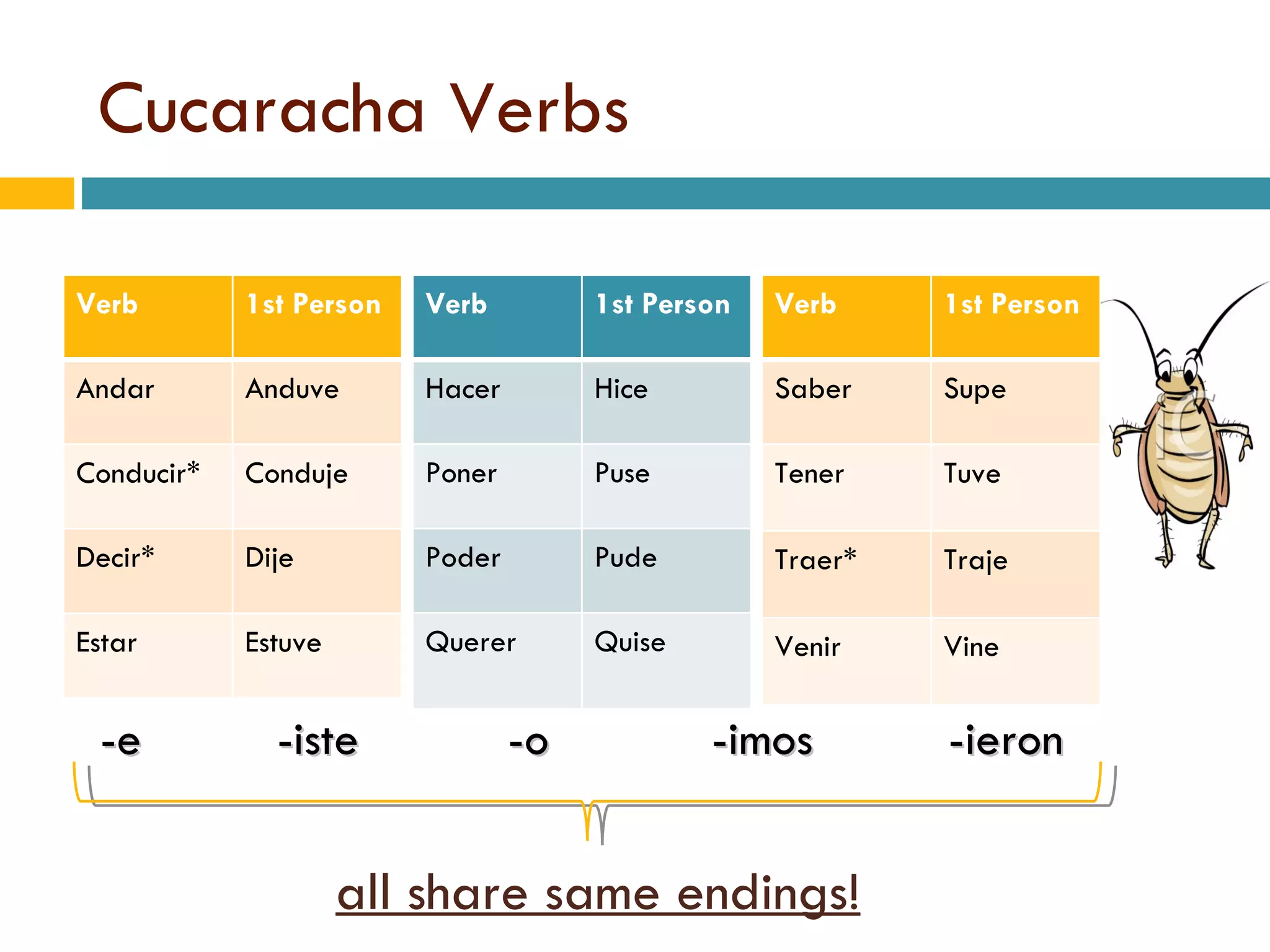
Cucaracha Verbs -e  -iste  -o  -imos  -ieron all share same endings! Verb 1st Person  Andar Anduve Conducir* Conduje Decir* Dije Estar Estuve Verb 1st Person  Hacer Hice Poner Puse Poder Pude Querer Quise Verb 1st Person  Saber Supe Tener Tuve Traer* Traje Venir Vine
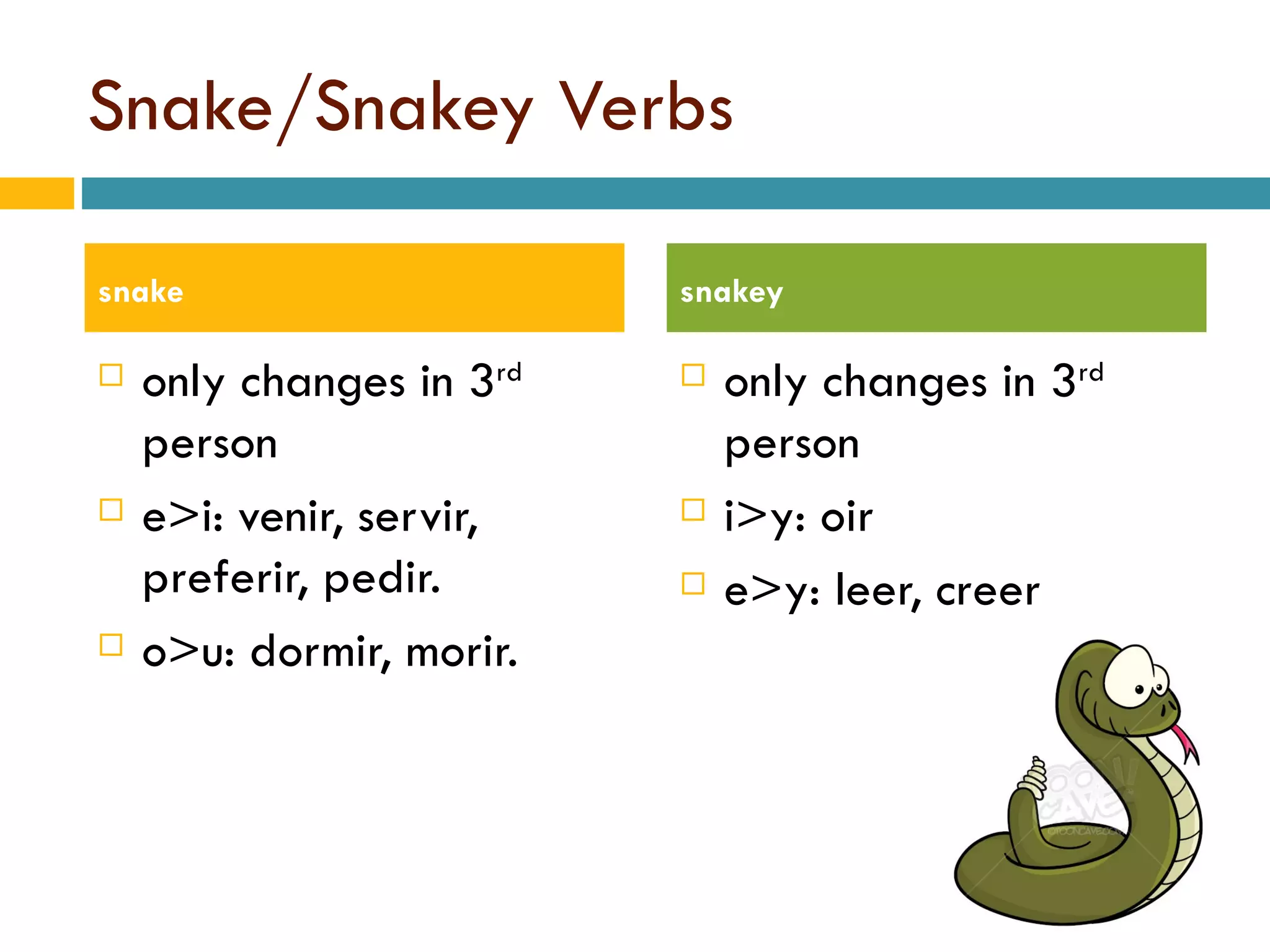
Snake/Snakey Verbs only changes in 3 rd  person e>i: venir, servir, preferir, pedir. o>u: dormir, morir. only changes in 3 rd  person i>y: oir e>y: leer, creer snake snakey
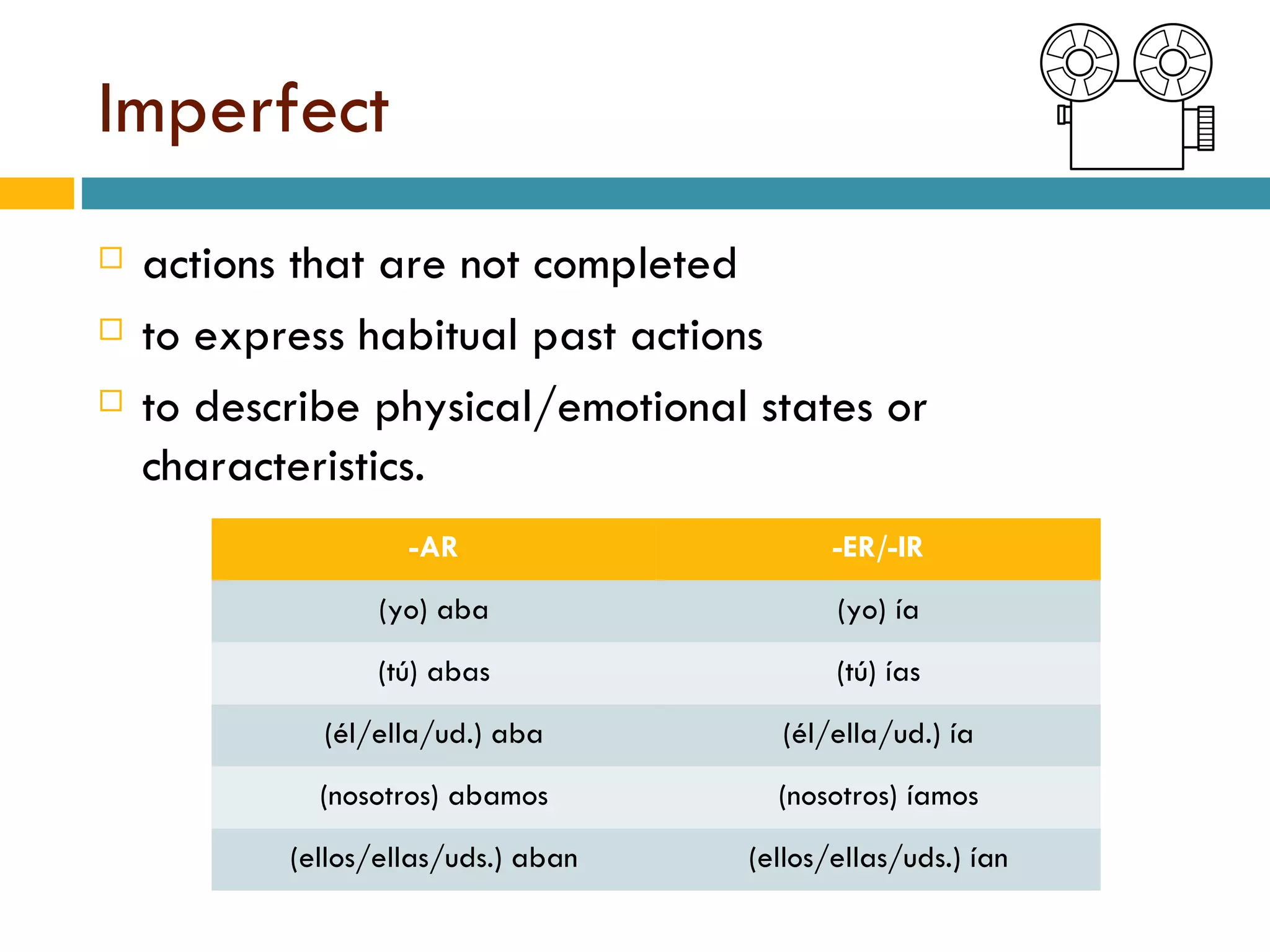
Imperfect actions that are not completed to express habitual past actions to describe physical/emotional states or characteristics. -AR -ER/-IR (yo) aba (yo) ía (t ú ) abas (t ú ) ías (él/ella/ud.) aba (él/ella/ud.) ía (nosotros) abamos (nosotros) íamos (ellos/ellas/uds.) aban (ellos/ellas/uds.) ían
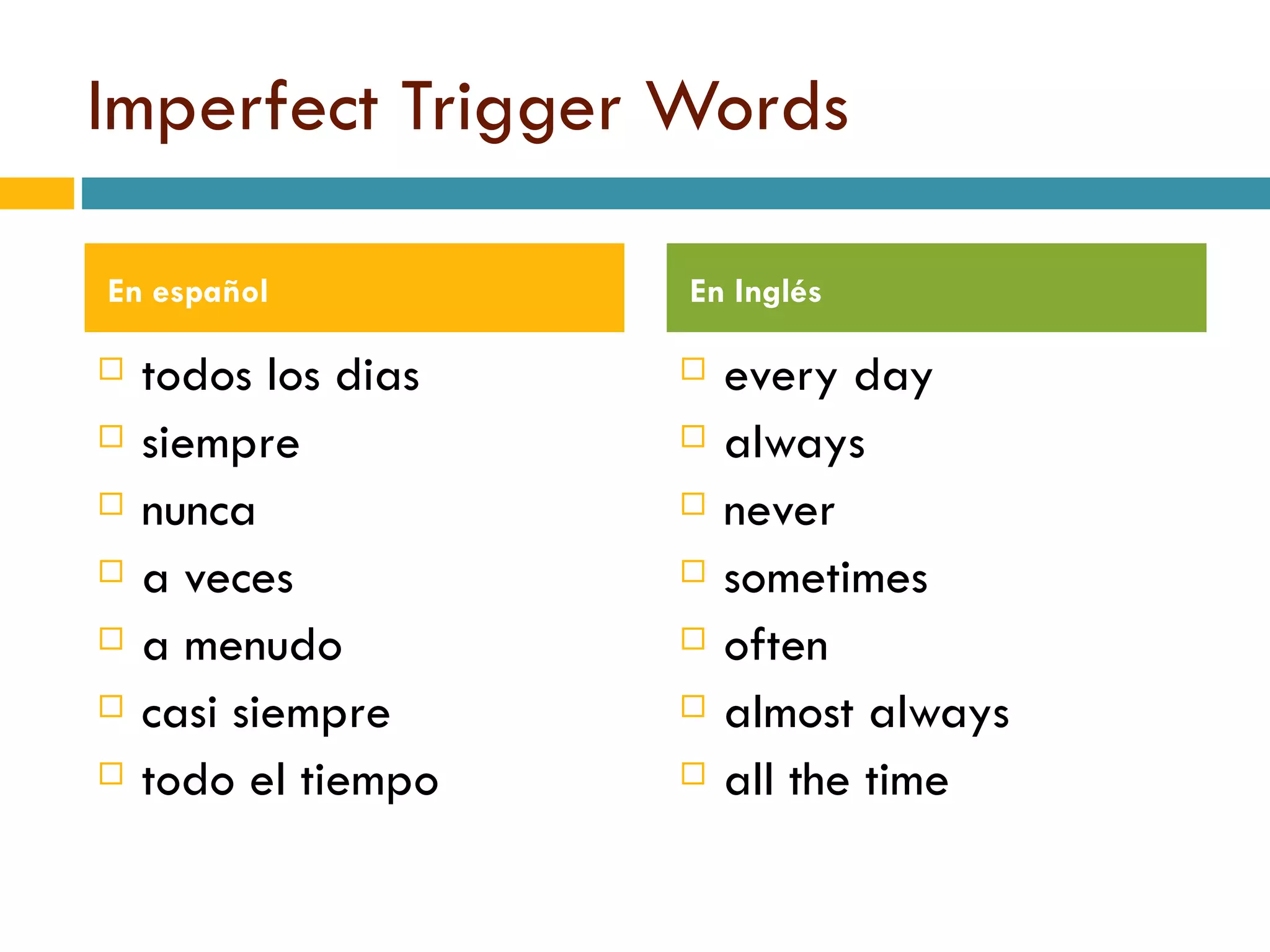
Imperfect Trigger Words todos los dias siempre nunca a veces a menudo casi siempre todo el tiempo every day always never sometimes often almost always all the time En  español En  Inglés
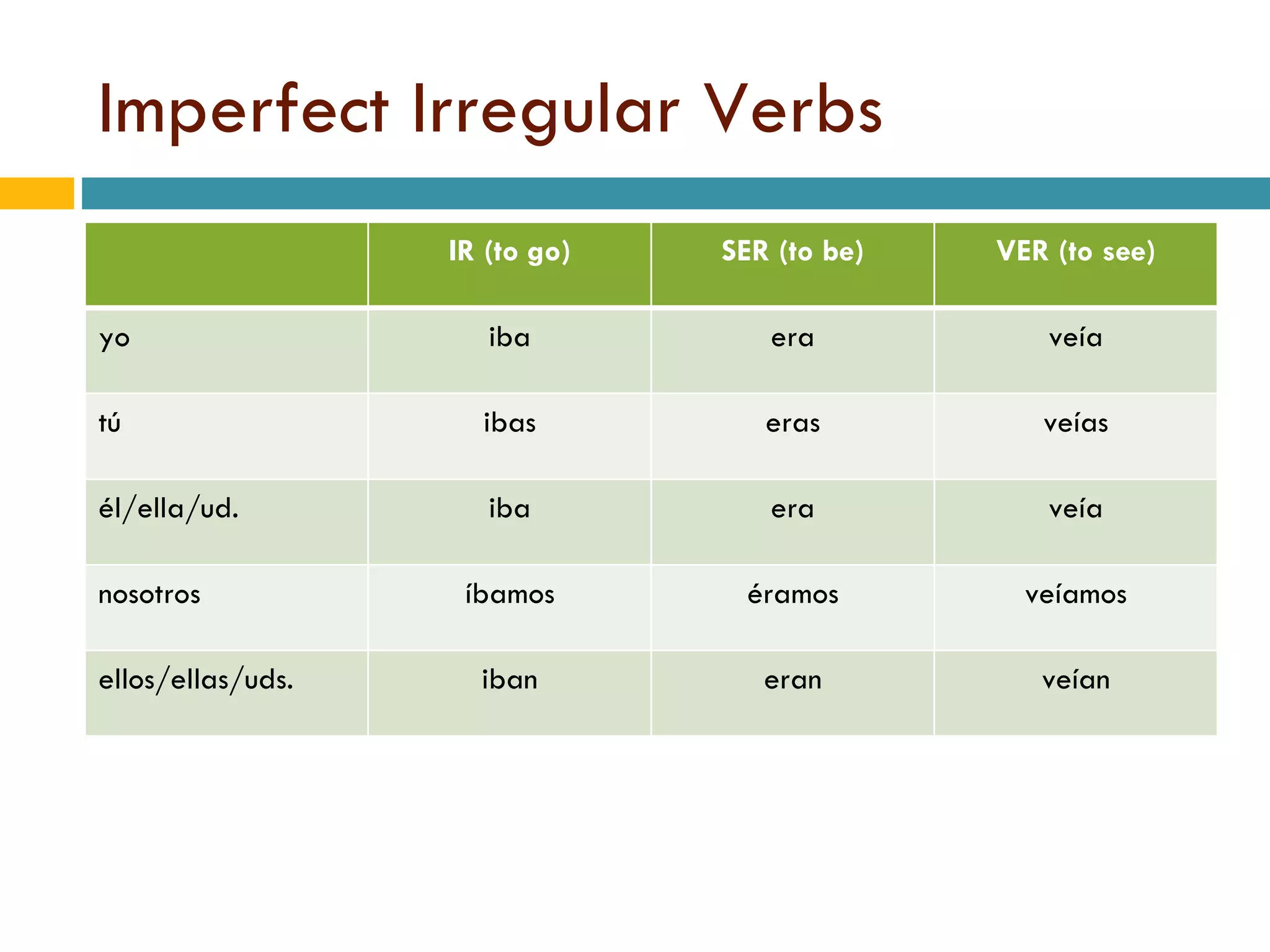
Imperfect Irregular Verbs IR (to go) SER (to be) VER (to see) yo iba era veía tú ibas eras veías él/ella/ud. iba era veía nosotros íbamos éramos veíamos ellos/ellas/uds. iban eran veían
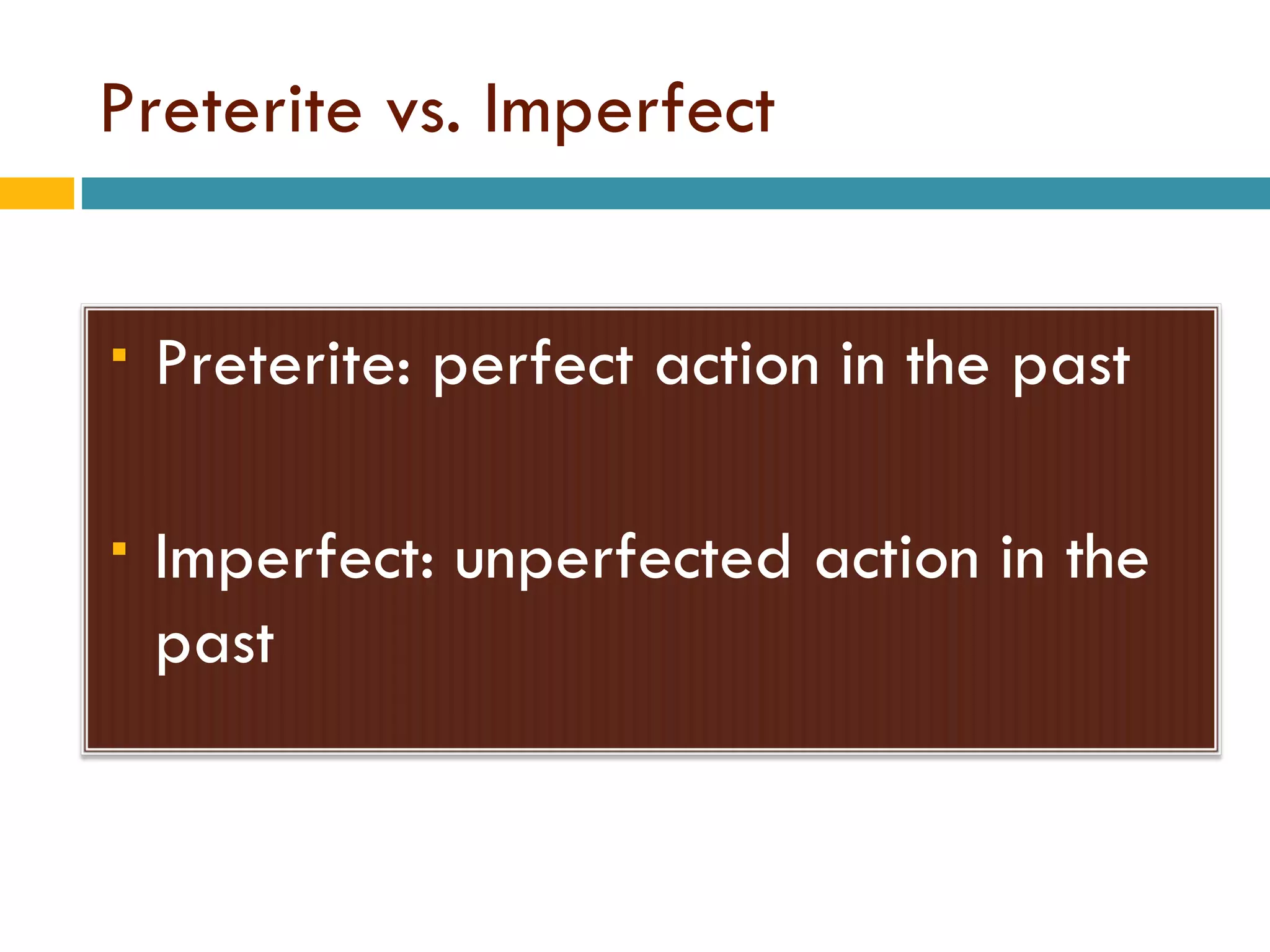
Preterite vs. Imperfect Preterite: perfect action in the past Imperfect: unperfected action in the past
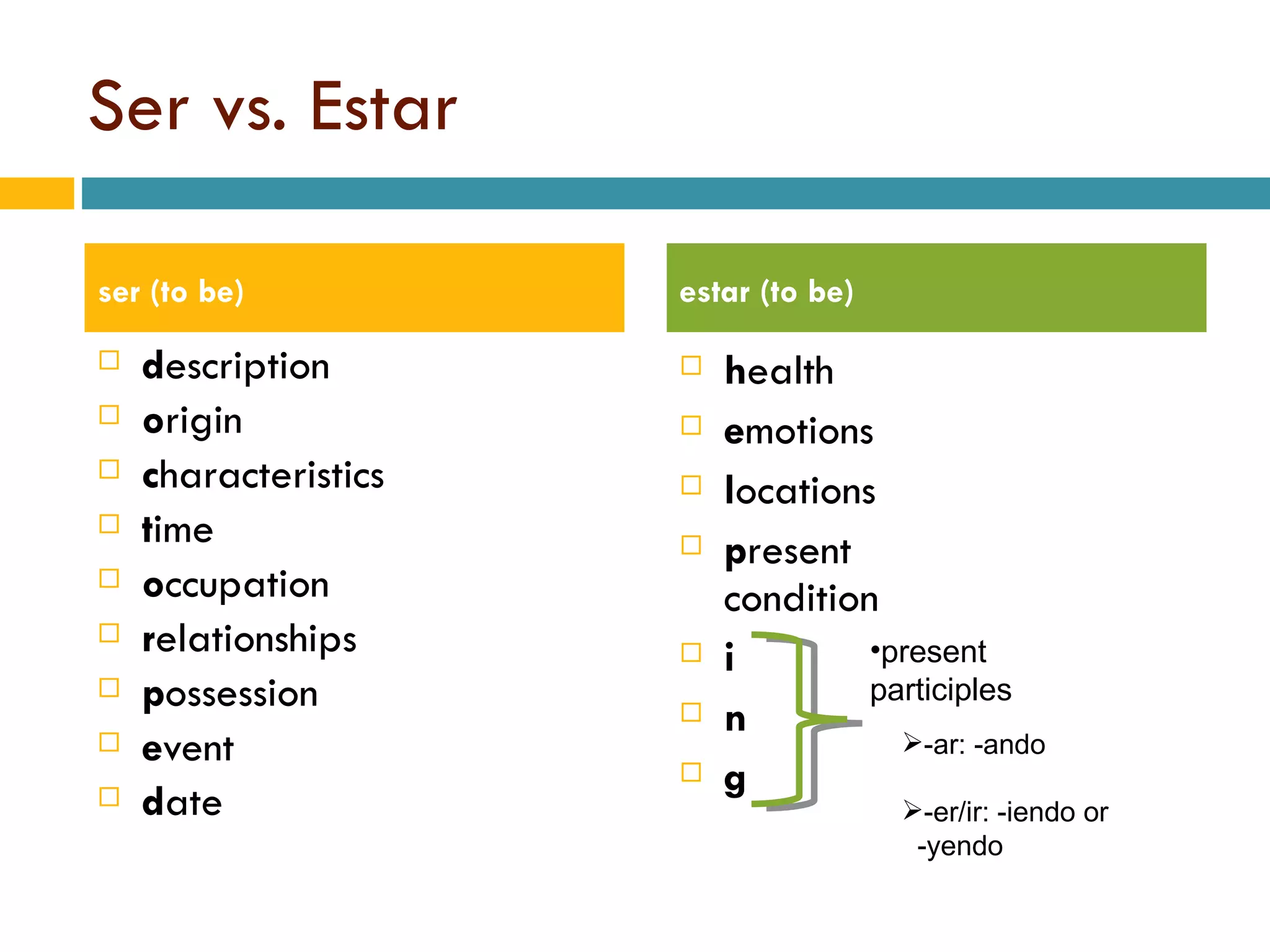
Ser vs. Estar d escription o rigin c haracteristics t ime o ccupation r elationships p ossession e vent d ate h ealth e motions l ocations p resent condition i n g ser (to be) estar (to be) present participles -ar: -ando -er/ir: -iendo or  -yendo
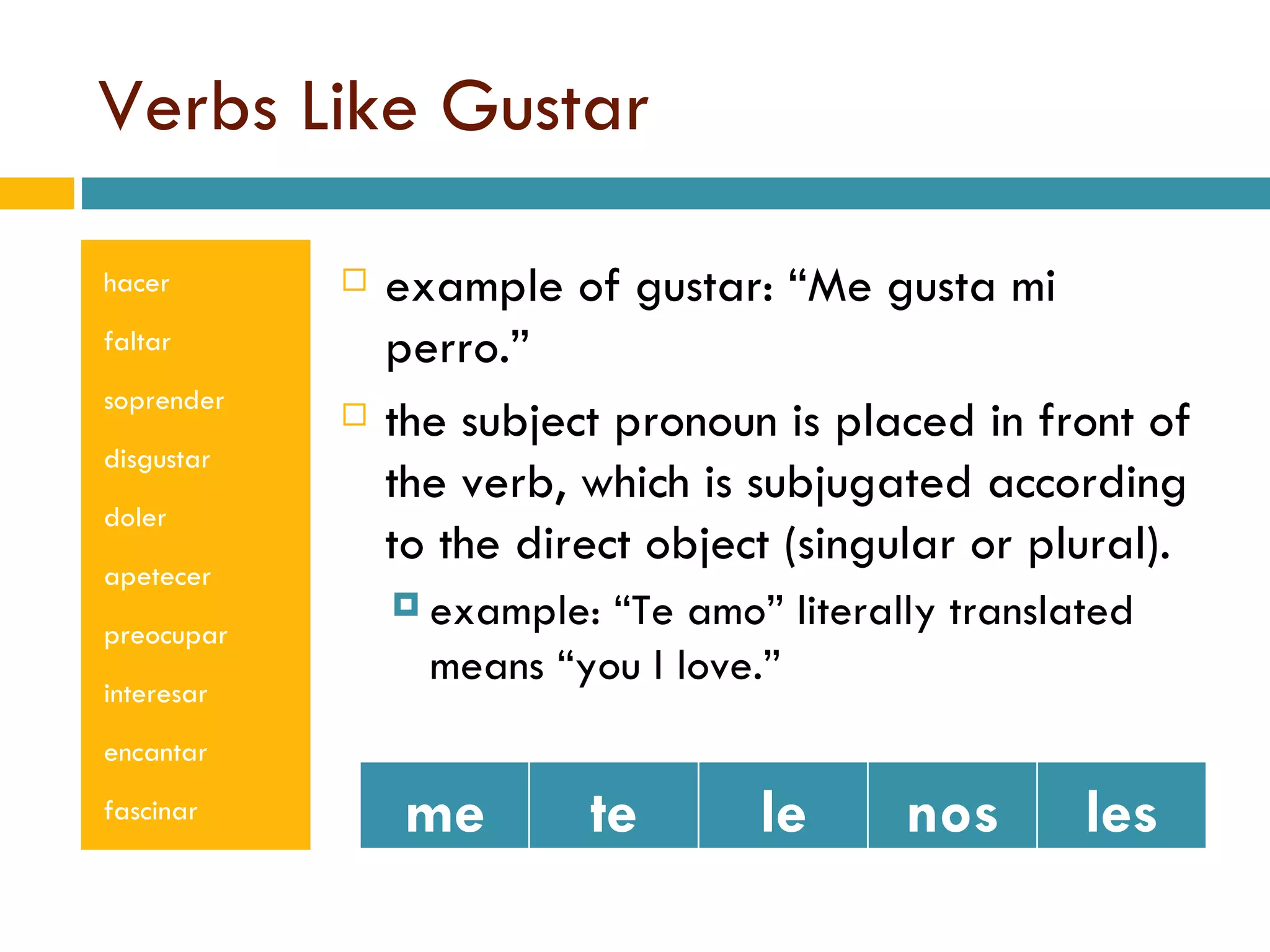
Verbs Like Gustar hacer faltar soprender disgustar doler apetecer preocupar interesar encantar fascinar example of gustar: “Me gusta mi perro.” the subject pronoun is placed in front of the verb, which is subjugated according to the direct object (singular or plural). example: “Te amo” literally translated means “you I love.” me te le nos les
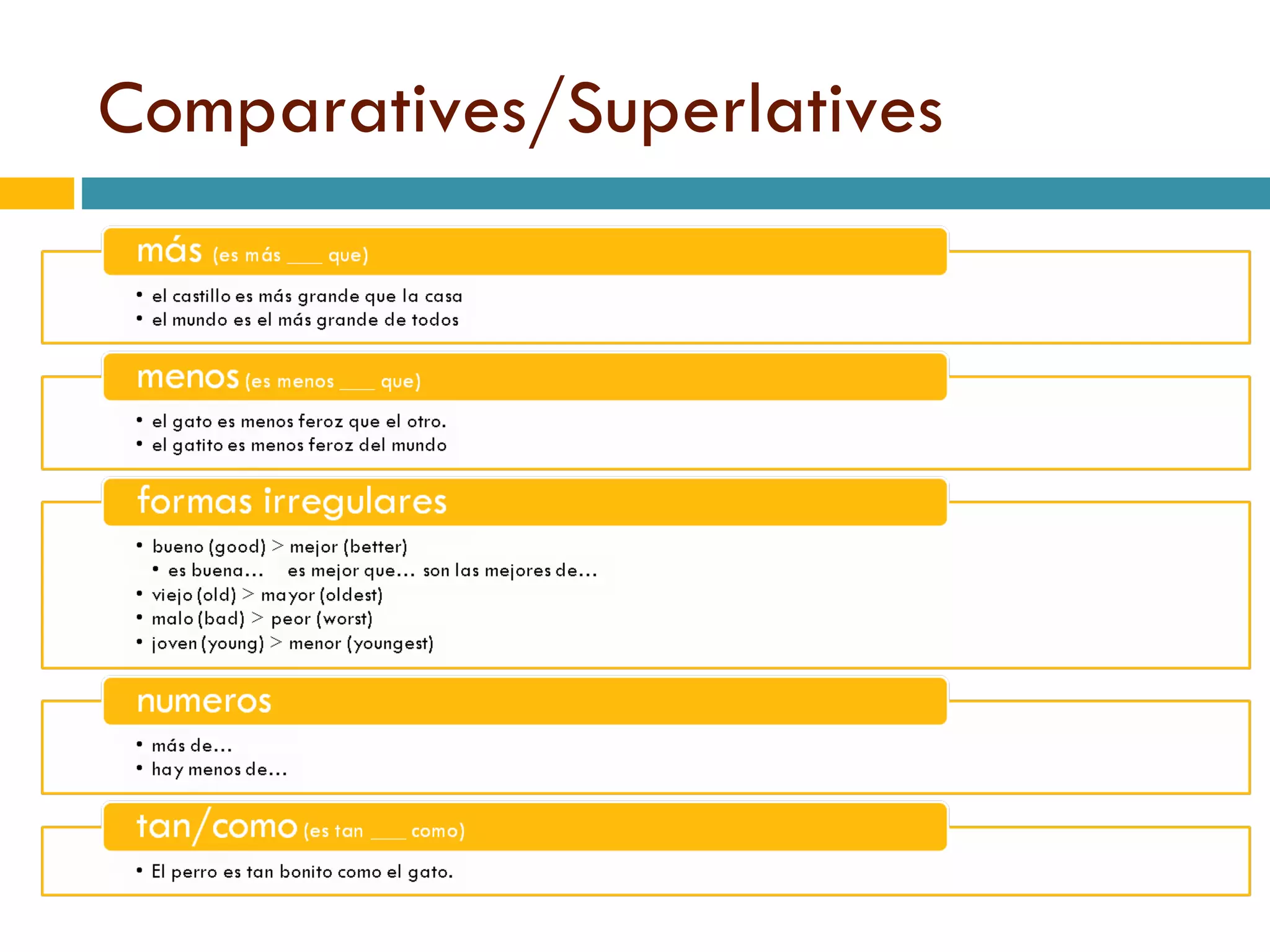
Comparatives/Superlatives
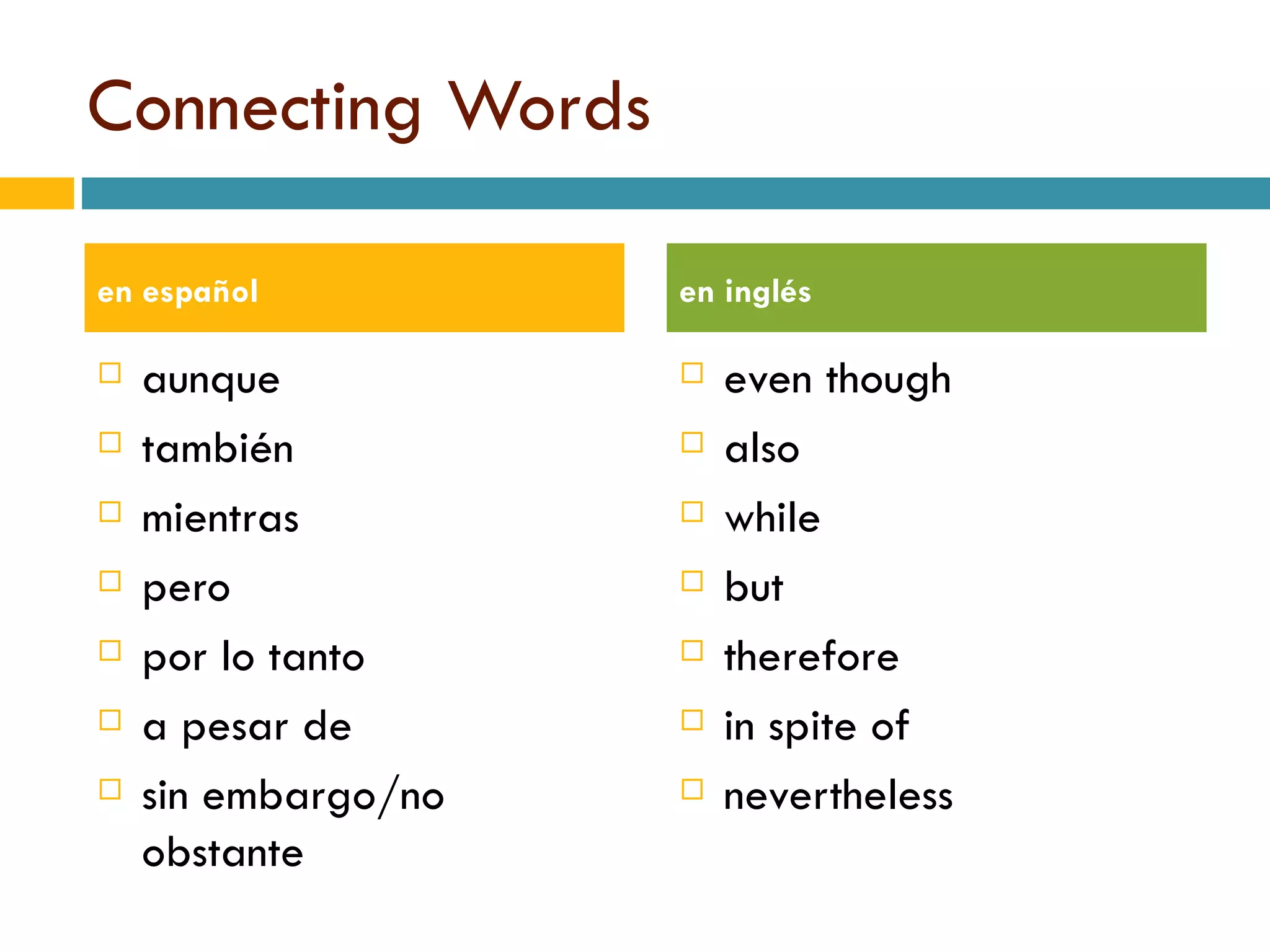
Connecting Words aunque tambi é n mientras pero por lo tanto a pesar de sin embargo/no obstante even though also while but therefore in spite of nevertheless en espa ñol en inglés
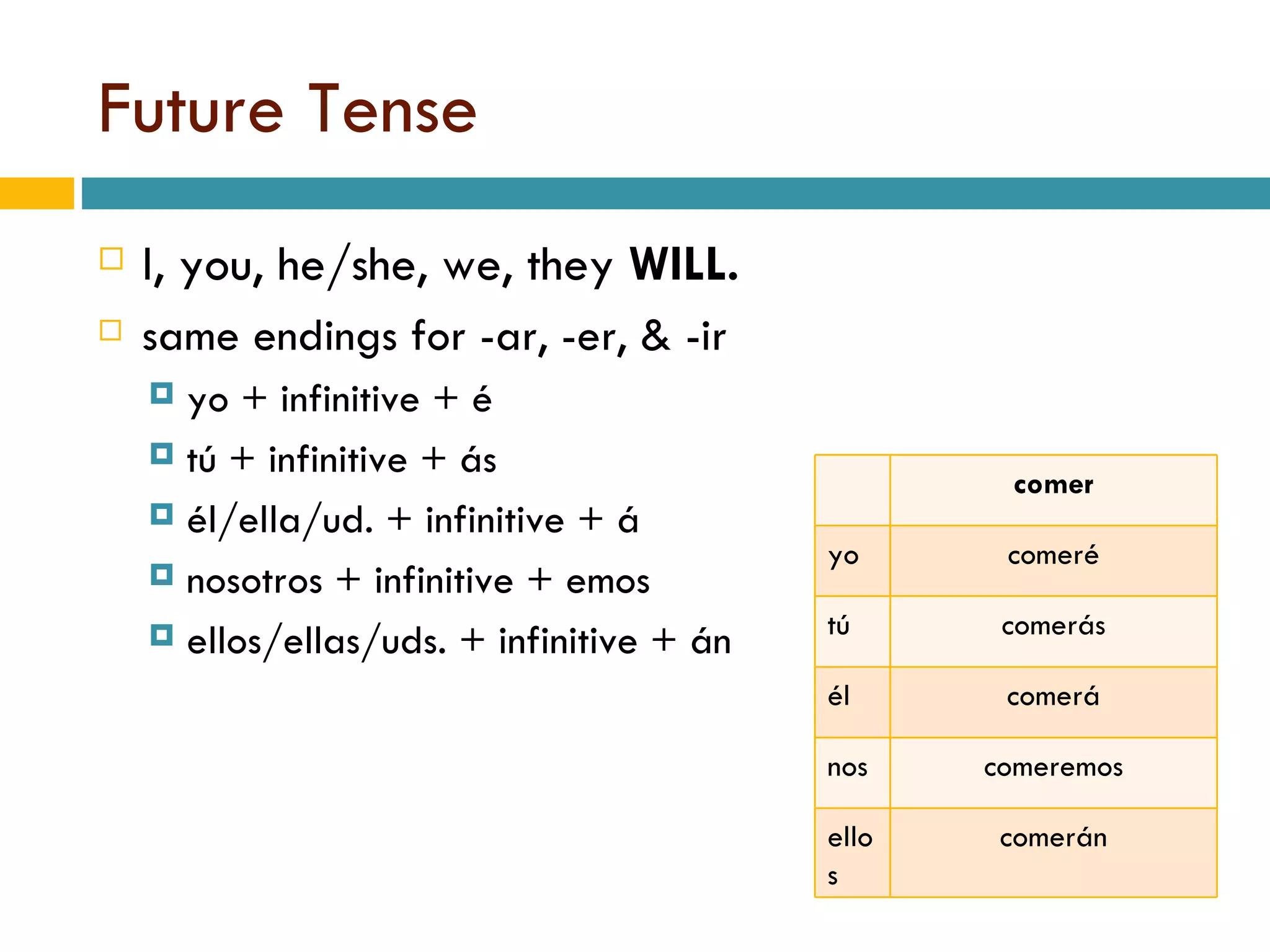
Future Tense I, you, he/she, we, they  WILL. same endings for -ar, -er, & -ir yo + infinitive + é tú + infinitive + ás él/ella/ud. + infinitive + á nosotros + infinitive + emos ellos/ellas/uds. + infinitive + án comer yo comeré tú comerás él comerá nos comeremos ellos comerán
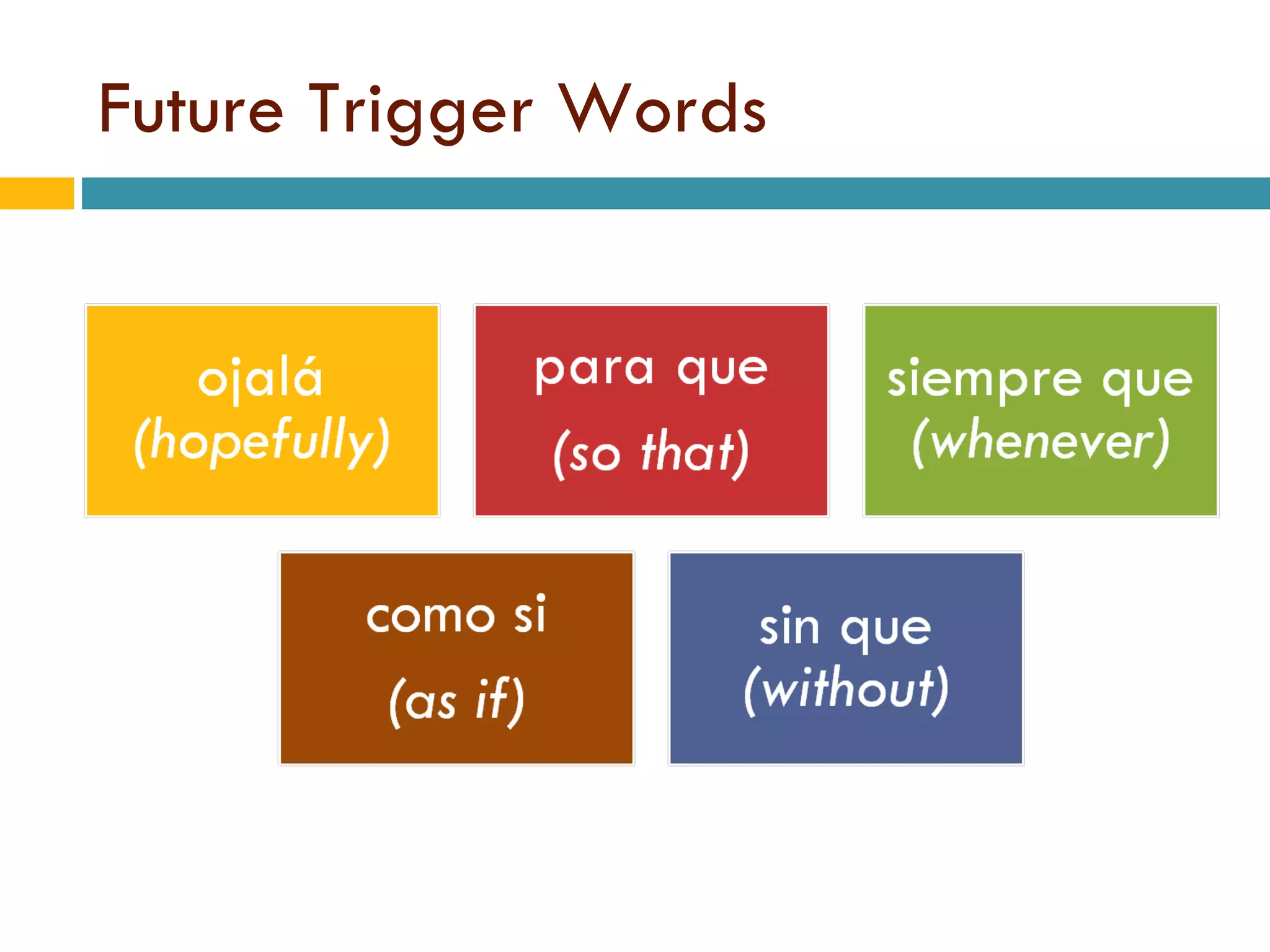
Future Trigger Words
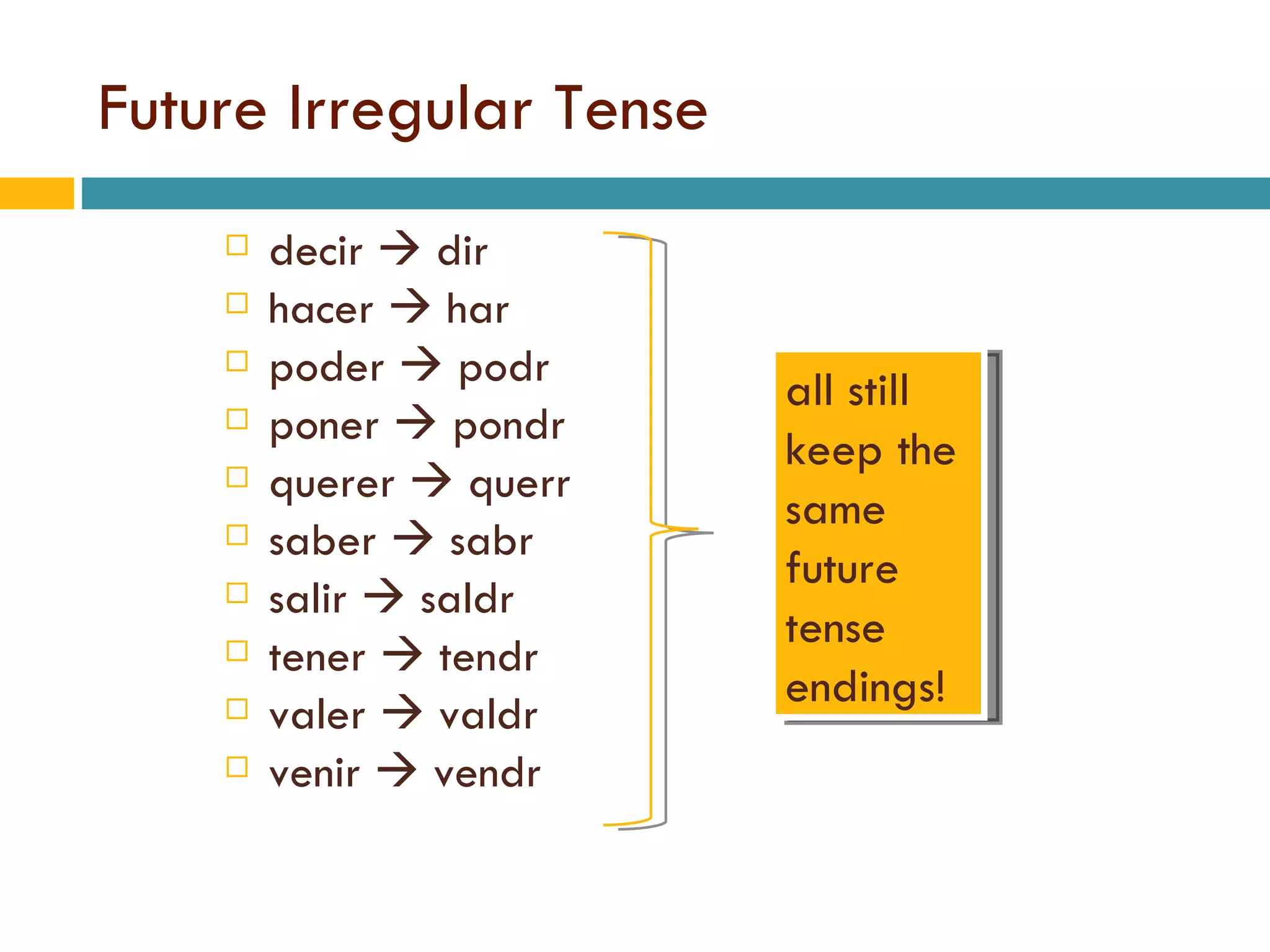
Future Irregular Tense decir    dir hacer    har poder    podr poner    pondr querer    querr saber    sabr salir    saldr tener    tendr valer    valdr venir    vendr all still keep the same future tense endings!
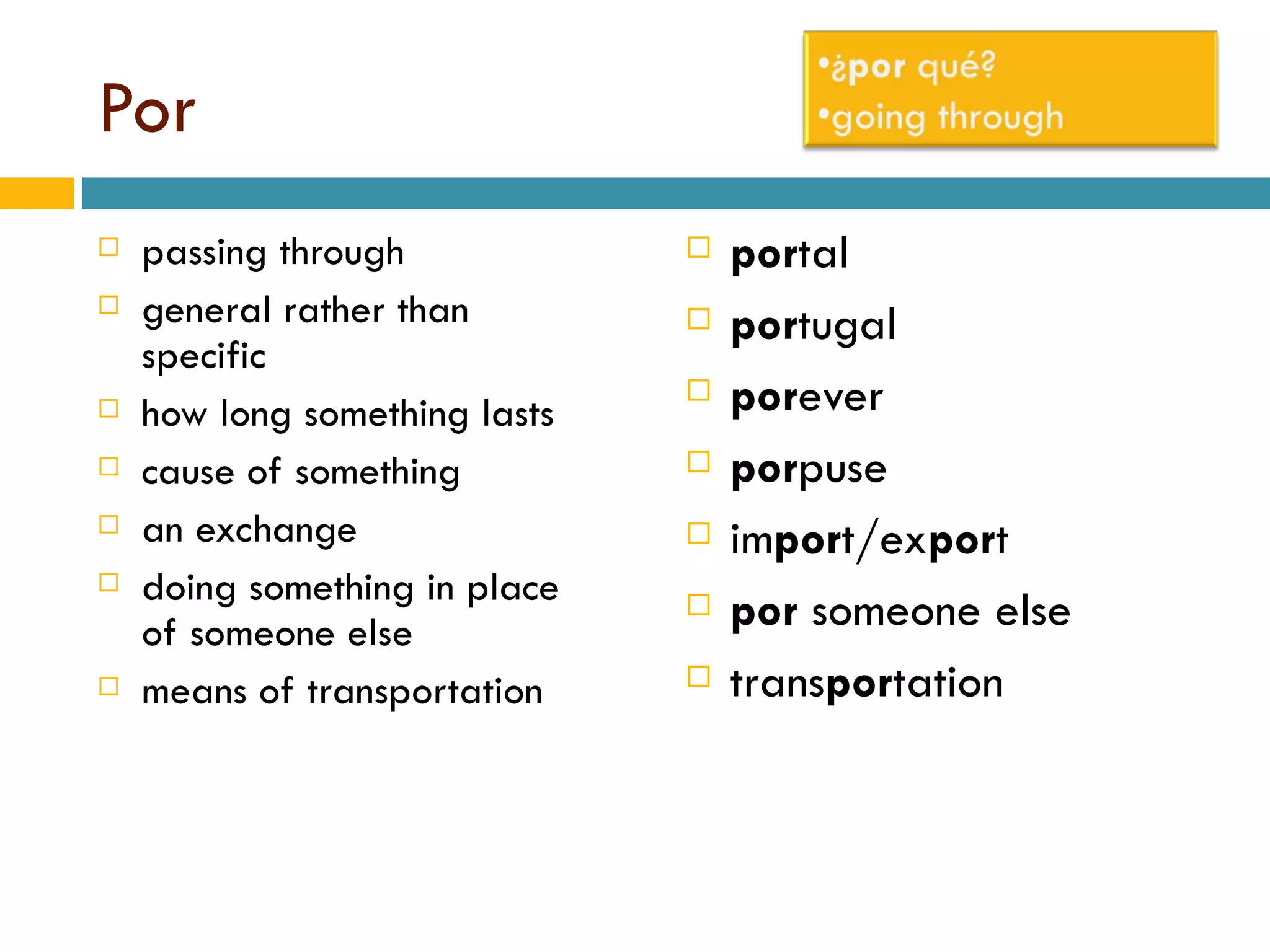
Por passing through general rather than specific how long something lasts cause of something an exchange doing something in place of someone else means of transportation por tal por tugal por ever por puse im por t/ex por t por  someone else trans por tation
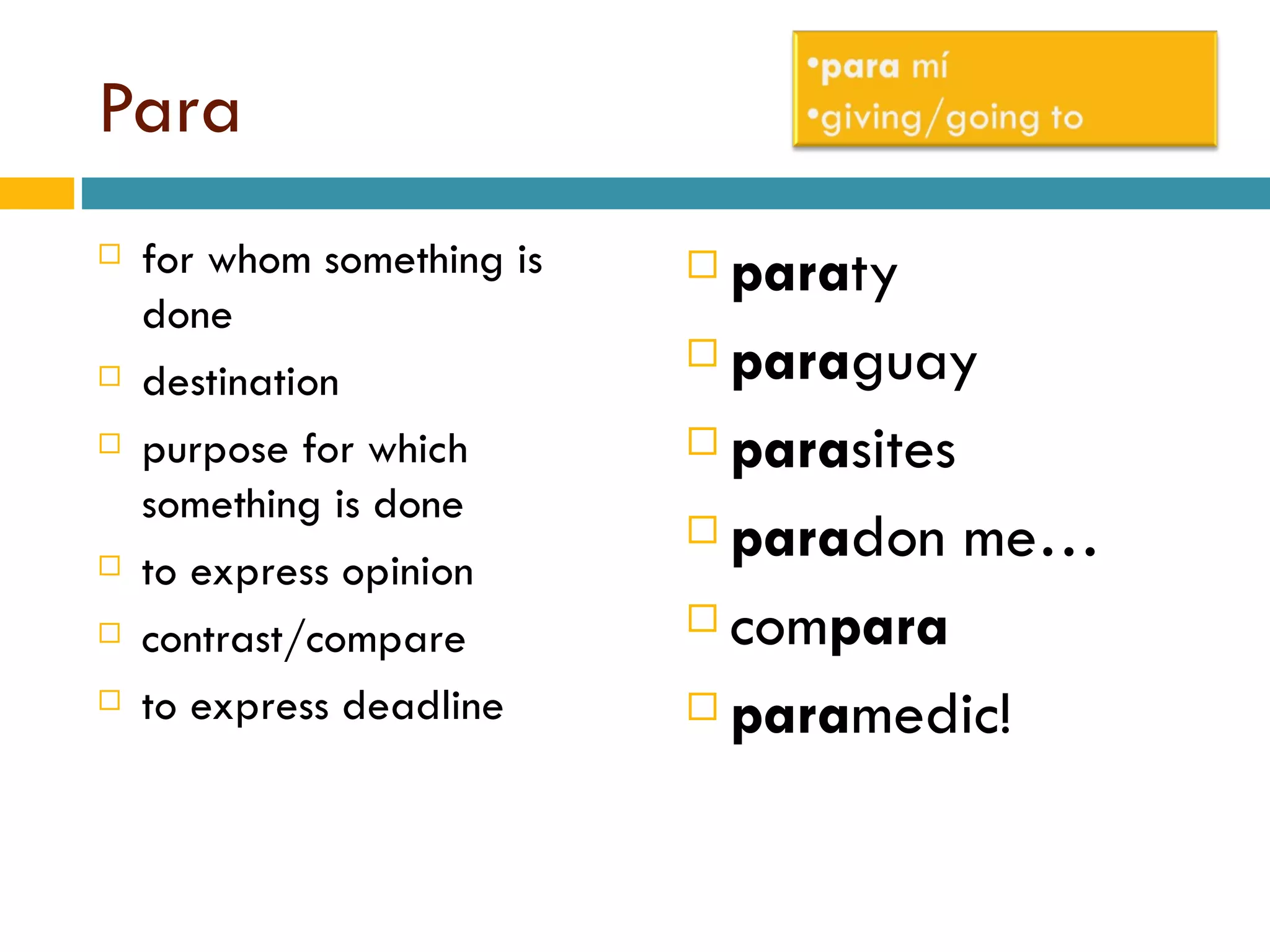
Para for whom something is done destination purpose for which something is done to express opinion contrast/compare to express deadline para ty para guay para sites para don me… com para para medic!
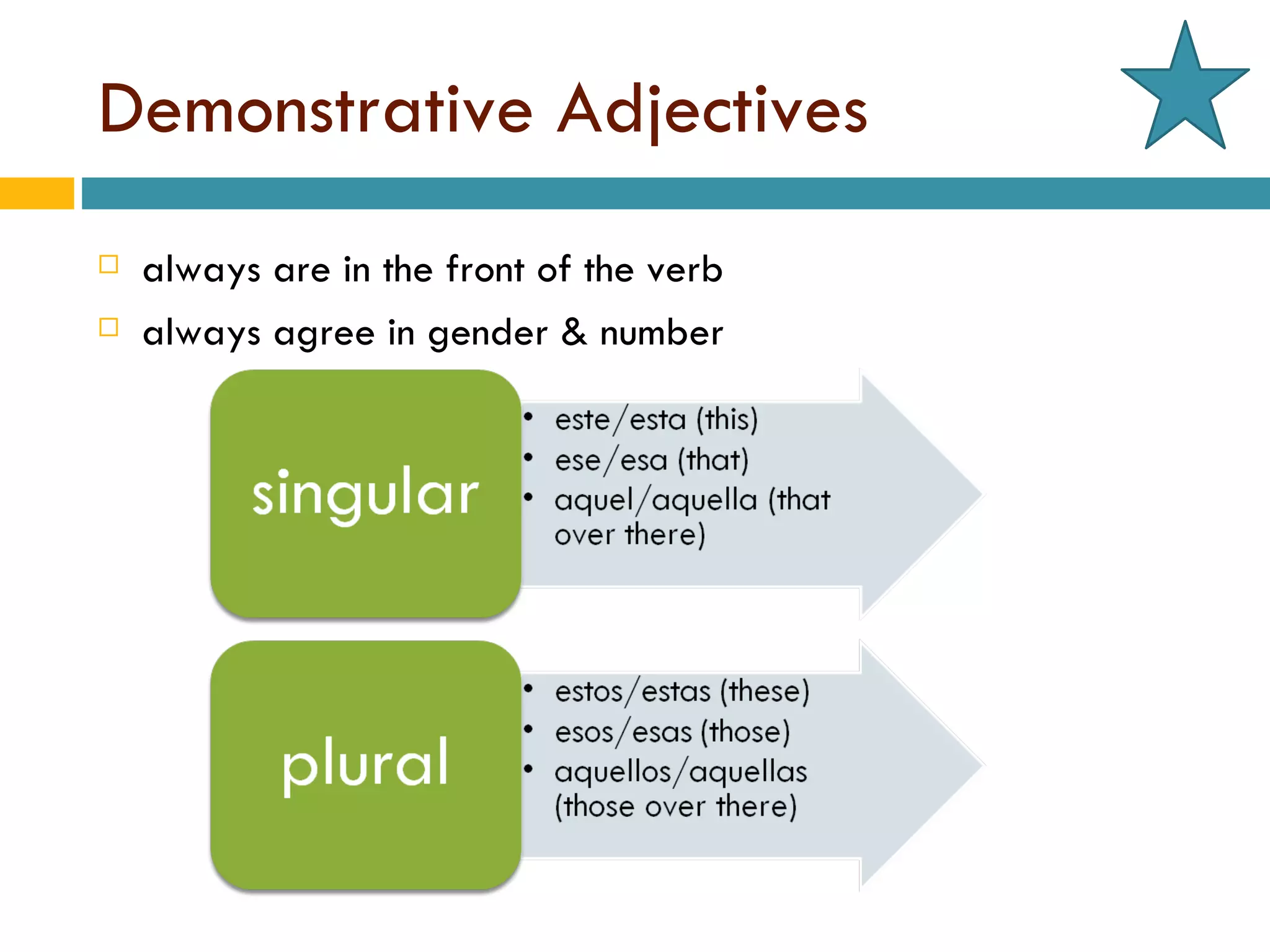
Demonstrative Adjectives always are in the front of the verb  always agree in gender & number
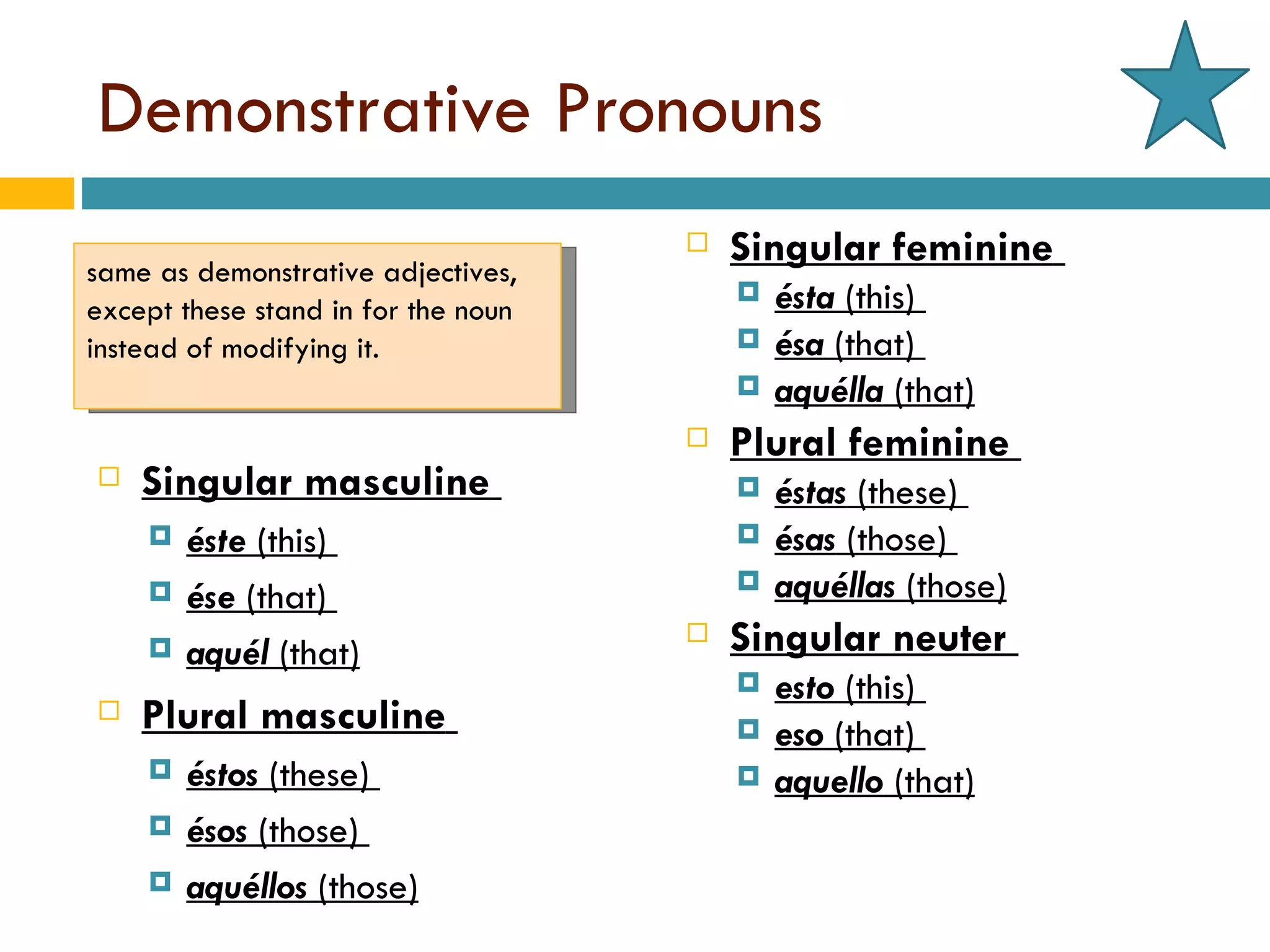
Demonstrative Pronouns Singular masculine   éste  (this)  ése  (that)  aquél  (that) Plural masculine   éstos  (these)  ésos  (those)  aquéllos  (those) Singular feminine   ésta  (this)  ésa  (that)  aquélla  (that) Plural feminine   éstas  (these)  ésas  (those)  aquéllas  (those) Singular neuter   esto  (this)  eso  (that)  aquello  (that) same as demonstrative adjectives, except these stand in for the noun instead of modifying it.

Grammatical concepts book

  • 1.
    GRAMMATICAL CONCEPTS BOOKElisa Jones Periodo 3 Honors Spanish 3
  • 2.
    Table of ContentsPreterite Preterite Trigger Words Car-Gar-Zar Spock Verbs Cucaracha Verbs Snake/Snakey Verbs Imperfect Imperfect Trigger Words Imperfect Irregular Preterite vs. Imperfect Ser vs. Estar Verbs Like Gustar Comparatives/ Superlatives Connecting Words Future Future Trigger Future Irregular Por Para Demonstrative adjectives Demonstrative pronouns
  • 3.
    Preterite actions thatare completed to express the beginning or end of a past action to narrate a series of past actions/events -AR -ER/IR yo -é -í tú -aste -iste él/ella/ud. -ó -ió nosotros -amos -imos ellos/ellas/uds. -aron -ieron
  • 4.
    Preterite Trigger Wordsel dia anterior ayer la semana pasada en fin de semana pasada el mes pasado el otro dia anoche the day before yesterday last week last weekend last month the other day last night En Espa ñol En Inglés
  • 5.
    Car-Gar-Zar Verbs endingin.. -car change the c to: - qu -gar change the g to: -gu -zar change the z to: -c ONLY IN ‘YO’ FORM! yo ju gué (I played) yo bus qué (I looked) yo almor cé (I ate lunch)
  • 6.
    Spock Verbs ver(to see)/ dar (to give): use the same endings in the preterite ser (to be)/ ir (to go): have same conjugation in the preterite hacer (to do) fui fuiste fue fuimos fueron vi viste vio vimos vieron di diste dio dimos dieron hice hiciste hizo hicimos hieron
  • 7.
    Cucaracha Verbs -e -iste -o -imos -ieron all share same endings! Verb 1st Person Andar Anduve Conducir* Conduje Decir* Dije Estar Estuve Verb 1st Person Hacer Hice Poner Puse Poder Pude Querer Quise Verb 1st Person Saber Supe Tener Tuve Traer* Traje Venir Vine
  • 8.
    Snake/Snakey Verbs onlychanges in 3 rd person e>i: venir, servir, preferir, pedir. o>u: dormir, morir. only changes in 3 rd person i>y: oir e>y: leer, creer snake snakey
  • 9.
    Imperfect actions thatare not completed to express habitual past actions to describe physical/emotional states or characteristics. -AR -ER/-IR (yo) aba (yo) ía (t ú ) abas (t ú ) ías (él/ella/ud.) aba (él/ella/ud.) ía (nosotros) abamos (nosotros) íamos (ellos/ellas/uds.) aban (ellos/ellas/uds.) ían
  • 10.
    Imperfect Trigger Wordstodos los dias siempre nunca a veces a menudo casi siempre todo el tiempo every day always never sometimes often almost always all the time En español En Inglés
  • 11.
    Imperfect Irregular VerbsIR (to go) SER (to be) VER (to see) yo iba era veía tú ibas eras veías él/ella/ud. iba era veía nosotros íbamos éramos veíamos ellos/ellas/uds. iban eran veían
  • 12.
    Preterite vs. ImperfectPreterite: perfect action in the past Imperfect: unperfected action in the past
  • 13.
    Ser vs. Estard escription o rigin c haracteristics t ime o ccupation r elationships p ossession e vent d ate h ealth e motions l ocations p resent condition i n g ser (to be) estar (to be) present participles -ar: -ando -er/ir: -iendo or -yendo
  • 14.
    Verbs Like Gustarhacer faltar soprender disgustar doler apetecer preocupar interesar encantar fascinar example of gustar: “Me gusta mi perro.” the subject pronoun is placed in front of the verb, which is subjugated according to the direct object (singular or plural). example: “Te amo” literally translated means “you I love.” me te le nos les
  • 15.
  • 16.
    Connecting Words aunquetambi é n mientras pero por lo tanto a pesar de sin embargo/no obstante even though also while but therefore in spite of nevertheless en espa ñol en inglés
  • 17.
    Future Tense I,you, he/she, we, they WILL. same endings for -ar, -er, & -ir yo + infinitive + é tú + infinitive + ás él/ella/ud. + infinitive + á nosotros + infinitive + emos ellos/ellas/uds. + infinitive + án comer yo comeré tú comerás él comerá nos comeremos ellos comerán
  • 18.
  • 19.
    Future Irregular Tensedecir  dir hacer  har poder  podr poner  pondr querer  querr saber  sabr salir  saldr tener  tendr valer  valdr venir  vendr all still keep the same future tense endings!
  • 20.
    Por passing throughgeneral rather than specific how long something lasts cause of something an exchange doing something in place of someone else means of transportation por tal por tugal por ever por puse im por t/ex por t por someone else trans por tation
  • 21.
    Para for whomsomething is done destination purpose for which something is done to express opinion contrast/compare to express deadline para ty para guay para sites para don me… com para para medic!
  • 22.
    Demonstrative Adjectives alwaysare in the front of the verb always agree in gender & number
  • 23.
    Demonstrative Pronouns Singularmasculine éste (this) ése (that) aquél (that) Plural masculine éstos (these) ésos (those) aquéllos (those) Singular feminine ésta (this) ésa (that) aquélla (that) Plural feminine éstas (these) ésas (those) aquéllas (those) Singular neuter esto (this) eso (that) aquello (that) same as demonstrative adjectives, except these stand in for the noun instead of modifying it.

Editor's Notes