Grammar Handbook

   Zorro Sanchez
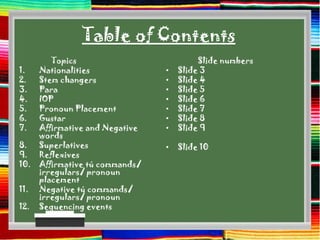
Table of Contents
         Topics                           Slide numbers
1.    Nationalities              •   Slide 3
2.    Stem changers              •   Slide 4
3.    Para                       •   Slide 5
4.    IOP                        •   Slide 6
5.    Pronoun Placement          •   Slide 7
6.    Gustar                     •   Slide 8
7.    Affirmative and Negative   •   Slide 9
      words
8.    Superlatives               •   Slide 10
9.    Reflexives
10.   Affirmative tú commands/
      irregulars/ pronoun
      placement
11.   Negative tú commands/
      irregulars/ pronoun
12.   Sequencing events
Nationalities
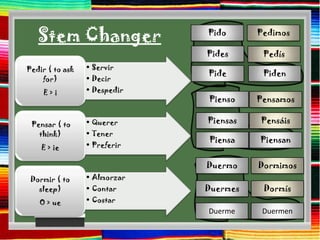
Stem Changer               Pido      Pedimos

                              Pides      Pedís
Pedir ( to ask   • Servir
                              Pide       Piden
    for)         • Decir
    E>i          • Despedir
                              Pienso    Pensamos


 Pensar ( to     • Querer     Piensas   Pensáis
   think)        • Tener
                              Piensa    Piensan
    E > ie       • Preferir

                              Duermo    Dormimos
 Dormir ( to     • Almorzar
   sleep)        • Contar     Duermes    Dormís
   O > ue        • Costar
                              Duerme     Duermen
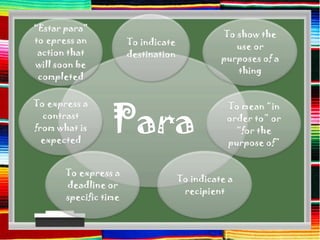
“Estar para”
                                               To show the
to epress an           To indicate                use or
 action that           destination             purposes of a
will soon be
                                                  thing
 completed


                  Para
To express a                                    To mean “in
  contrast                                      order to” or
from what is                                      “for the
  expected                                      purpose of”


       To express a
                                     To indicate a
       deadline or
                                      recipient
       specific time
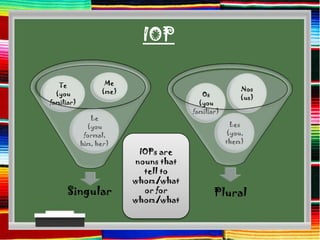
IOP

   Te              Me
                  (me)                               Nos
  (you                                   Os          (us)
familiar)                               (you
                                      familiar)
               Le
              (you                                 Les
             formal,                              (you,
            him, her)                             them)
                          IOPs are
                         nouns that
                           tell to
                         whom/what
      Singular             or for            Plural
                         whom/what
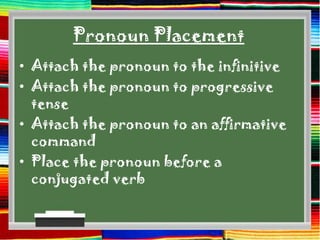
Pronoun Placement
• Attach the pronoun to the infinitive
• Attach the pronoun to progressive
  tense
• Attach the pronoun to an affirmative
  command
• Place the pronoun before a
  conjugated verb
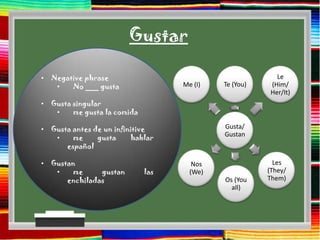
Gustar

•   Negative phrase                                         Le
     •   No ___ gusta                Me (I)   Te (You)    (Him/
                                                          Her/It)
•   Gusta singular
     •    me gusta la comida

•   Gusta antes de un infinitive              Gusta/
                                              Gustan
     •    me     gusta     hablar
        español

•   Gustan                              Nos                Les
     •    me     gustan        las     (We)              (They/
        enchiladas                            Os (You    Them)
                                                all)
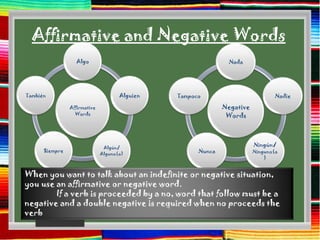
Affirmative and Negative Words
                  Algo                                        Nada


También                              Alguien   Tampoco                          Nadie

                Affirmative                                  Negative
                  Words                                       Words


                               Algún/
                                                                        Ningún/
      Siempre                                        Nunca              Ninguno(a
                              Alguno(a)
                                                                            )


When you want to talk about an indefinite or negative situation,
you use an affirmative or negative word.
        If a verb is proceeded by a no, word that follow must be a
negative and a double negative is required when no proceeds the
verb
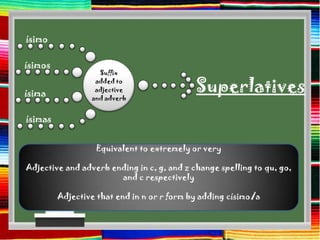
ísimo

ísimos
                   Suffix


ísima
                  added to
                  adjective
                 and adverb
                                            Superlatives
ísimas


                  Equivalent to extremely or very

Adjective and adverb ending in c, g, and z change spelling to qu, go,
                       and c respectively

         Adjective that end in n or r form by adding císimo/a
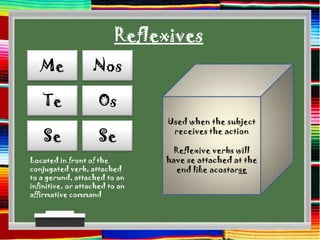
Reflexives
   Me              Nos

    Te              Os
                                Used when the subject

    Se               Se          receives the action

                                  Reflexive verbs will
Located in front of the         have se attached at the
conjugated verb, attached          end like acostarse
to a gerund, attached to an
infinitive, or attached to an
affirmative command
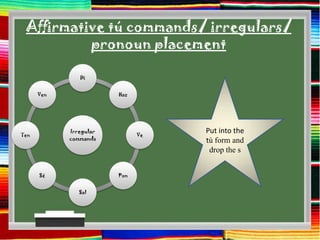
Affirmative tú commands/ irregulars/
          pronoun placement

               Di


      Ven               Haz


Ten
            Irregular
                              Ve
                                   Put into the
            commands               tú form and
                                    drop the s


      Sé                Pon


               Sal
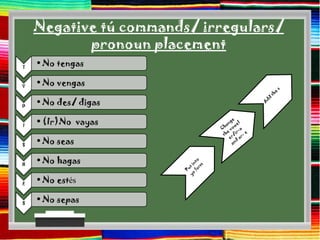
Negative tú commands/ irregulars/
           pronoun placement
T
    • No tengas

V
    • No vengas

D
    • No des/ digas

I
    • (Ir)No vayas

S
    • No seas

H
    • No hagas

E
    • No estés

S
    • No sepas
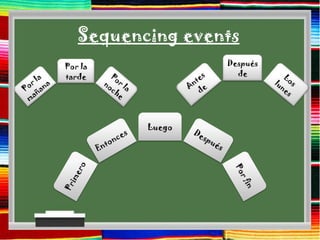
Sequencing events
Por la            Después
tarde               de


          Luego

Grammar handbook

  • 1.
    Grammar Handbook Zorro Sanchez
  • 2.
    Table of Contents Topics Slide numbers 1. Nationalities • Slide 3 2. Stem changers • Slide 4 3. Para • Slide 5 4. IOP • Slide 6 5. Pronoun Placement • Slide 7 6. Gustar • Slide 8 7. Affirmative and Negative • Slide 9 words 8. Superlatives • Slide 10 9. Reflexives 10. Affirmative tú commands/ irregulars/ pronoun placement 11. Negative tú commands/ irregulars/ pronoun 12. Sequencing events
  • 3.
  • 4.
    Stem Changer Pido Pedimos Pides Pedís Pedir ( to ask • Servir Pide Piden for) • Decir E>i • Despedir Pienso Pensamos Pensar ( to • Querer Piensas Pensáis think) • Tener Piensa Piensan E > ie • Preferir Duermo Dormimos Dormir ( to • Almorzar sleep) • Contar Duermes Dormís O > ue • Costar Duerme Duermen
  • 5.
    “Estar para” To show the to epress an To indicate use or action that destination purposes of a will soon be thing completed Para To express a To mean “in contrast order to” or from what is “for the expected purpose of” To express a To indicate a deadline or recipient specific time
  • 6.
    IOP Te Me (me) Nos (you Os (us) familiar) (you familiar) Le (you Les formal, (you, him, her) them) IOPs are nouns that tell to whom/what Singular or for Plural whom/what
  • 7.
    Pronoun Placement • Attachthe pronoun to the infinitive • Attach the pronoun to progressive tense • Attach the pronoun to an affirmative command • Place the pronoun before a conjugated verb
  • 8.
    Gustar • Negative phrase Le • No ___ gusta Me (I) Te (You) (Him/ Her/It) • Gusta singular • me gusta la comida • Gusta antes de un infinitive Gusta/ Gustan • me gusta hablar español • Gustan Nos Les • me gustan las (We) (They/ enchiladas Os (You Them) all)
  • 9.
    Affirmative and NegativeWords Algo Nada También Alguien Tampoco Nadie Affirmative Negative Words Words Algún/ Ningún/ Siempre Nunca Ninguno(a Alguno(a) ) When you want to talk about an indefinite or negative situation, you use an affirmative or negative word. If a verb is proceeded by a no, word that follow must be a negative and a double negative is required when no proceeds the verb
  • 10.
    ísimo ísimos Suffix ísima added to adjective and adverb Superlatives ísimas Equivalent to extremely or very Adjective and adverb ending in c, g, and z change spelling to qu, go, and c respectively Adjective that end in n or r form by adding císimo/a
  • 11.
    Reflexives Me Nos Te Os Used when the subject Se Se receives the action Reflexive verbs will Located in front of the have se attached at the conjugated verb, attached end like acostarse to a gerund, attached to an infinitive, or attached to an affirmative command
  • 12.
    Affirmative tú commands/irregulars/ pronoun placement Di Ven Haz Ten Irregular Ve Put into the commands tú form and drop the s Sé Pon Sal
  • 13.
    Negative tú commands/irregulars/ pronoun placement T • No tengas V • No vengas D • No des/ digas I • (Ir)No vayas S • No seas H • No hagas E • No estés S • No sepas
  • 14.
    Sequencing events Por la Después tarde de Luego