My Grammar NotebookCreated By:Adriano Sharkasi
Part One: The Prederite
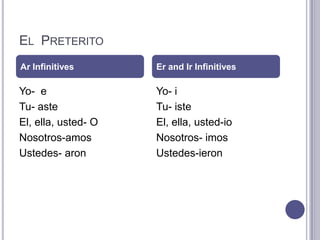
El  PreteritoYo-  eTu- asteEl, ella, usted- ONosotros-amosUstedes- aronYo- iTu- isteEl, ella, usted-ioNosotros- imosUstedes-ieronAr InfinitivesEr and Ir Infinitives
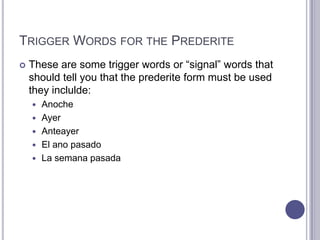
Trigger Words for the PrederiteThese are some trigger words or “signal” words that should tell you that the prederite form must be used they inclulde:AnocheAyerAnteayerEl anopasadoLa semanapasada
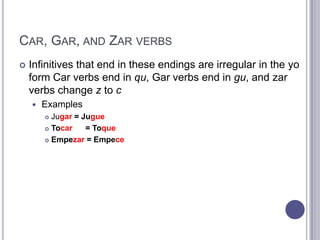
Car, Gar, and Zar verbsInfinitives that end in these endings are irregular in the yo form Car verbs end in qu, Gar verbs end ingu, and zar verbs change z to cExamplesJugar= JugueTocar= ToqueEmpezar = Empece
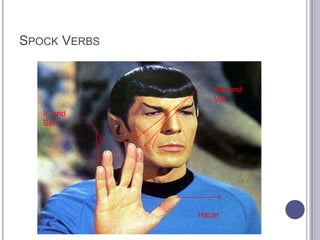
Spock VerbsDar and Ver.Ir  and SerHacer
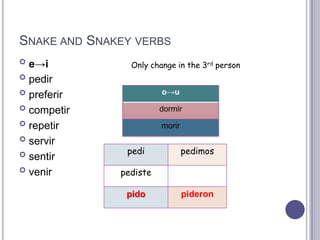
Snake and Snakey verbse->ipedirpreferircompetirrepetirservirsentirvenirOnly change in the 3rd person
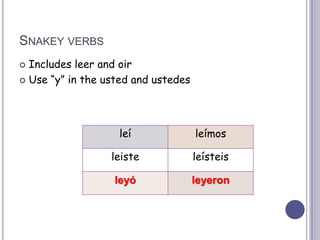
Snakey verbsIncludes leer and oirUse “y” in the usted and ustedes
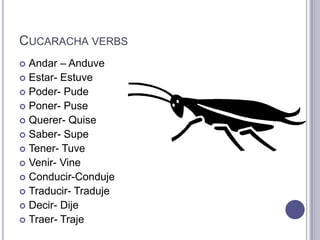
Cucaracha verbsAndar – AnduveEstar- EstuvePoder- PudePoner- PuseQuerer- QuiseSaber- SupeTener- TuveVenir- VineConducir-CondujeTraducir- TradujeDecir- DijeTraer- Traje
Part two: the imperfect
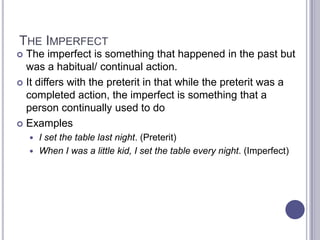
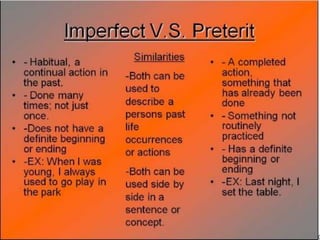
The ImperfectThe imperfect is something that happened in the past but was a habitual/ continual action.It differs with the preterit in that while the preterit was a completed action, the imperfect is something that a person continually used to doExamplesI set the table last night. (Preterit)When I was a little kid, I set the table every night. (Imperfect)
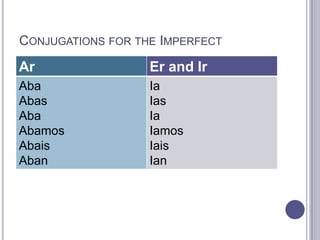
Conjugations for the Imperfect
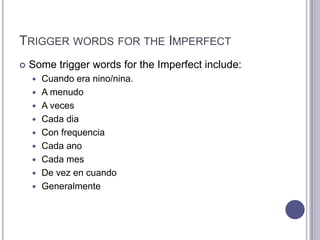
Trigger words for the ImperfectSome trigger words for the Imperfect include:Cuando era nino/nina.A menudoA vecesCadadiaCon frequenciaCadaanoCadamesDe vez en cuandoGeneralmente
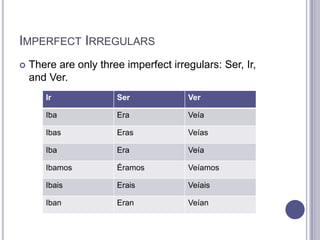
Imperfect IrregularsThere are only three imperfect irregulars: Ser, Ir, and Ver.
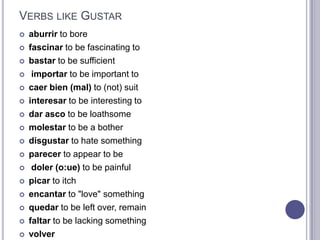
Verbs like Gustaraburrir to bore fascinarto be fascinating to bastarto be sufficientimportarto be important to caerbien (mal) to (not) suit interesarto be interesting to darasco to be loathsome molestarto be a bother disgustarto hate something parecerto appear to bedoler (o:ue) to be painful picarto itch encantarto "love" something quedarto be left over, remain faltarto be lacking something volver
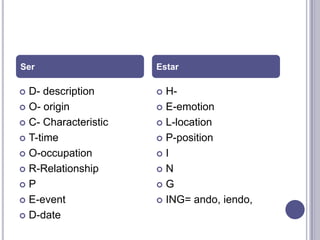
D- descriptionO- originC- CharacteristicT-timeO-occupationR-RelationshipPE-eventD-dateH-E-emotionL-locationP-positionINGING= ando, iendo, SerEstar
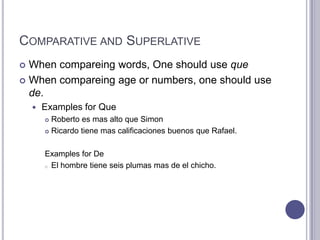
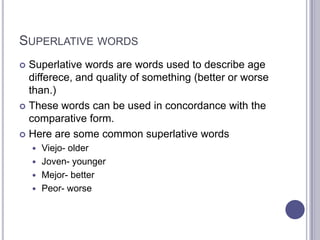
Comparative and SuperlativeWhen compareing words, One should use queWhen compareing age or numbers, one should use de.Examples for QueRoberto esmas alto que SimonRicardo tienemas calificaciones buenos que Rafael.Examples for DeEl hombre tieneseisplumasmas de el chicho.Superlative wordsSuperlative words are words used to describe age differece, and quality of something (better or worse than.)These words can be used in concordance with the comparative form.Here are some common superlative wordsViejo- olderJoven- youngerMejor- betterPeor- worse
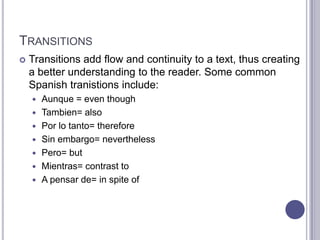
TransitionsTransitions add flow and continuity to a text, thus creating a better understanding to the reader. Some common Spanish tranistions include:Aunque= even thoughTambien= alsoPor lo tanto= thereforeSin embargo= neverthelessPero= butMientras= contrast toA pensar de= in spite of
Part four: the future
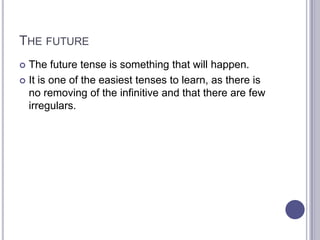
The futureThe future tense is something that will happen.It is one of the easiest tenses to learn, as there is no removing of the infinitive and that there are few irregulars.
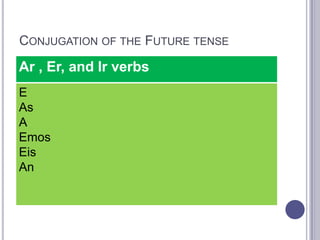
Conjugation of the Future tense
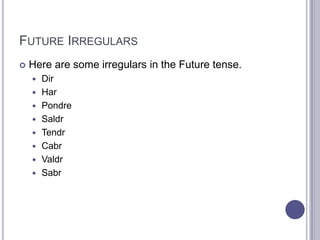
Future IrregularsHere are some irregulars in the Future tense.DirHarPondreSaldrTendrCabrValdrSabr
Trigger words for the futureHere are some signal words for the future tense:MañanaEn el añonuevoEn el mesnuevoEn la semananuevoDespues de manana
Part five: Por and para
PorPor is generally used when Passing through a place; it is more general rather than specific.Location (PORtugal)How long something lasts (PORever)The cause of something (POR’pus)An exchange (imPORt, exPORt)Doing something in place of or instead of someone else TransPORtation
ParaFor whom something is done (PARAty)Destination (PARAguay)The purpose for which something is done (PARAsites)To express an opinion (PARAdon me, but…)To contrast or compareTo express idea of deadline (PARamedic)
My grammar notebook

My grammar notebook

  • 1.
    My Grammar NotebookCreatedBy:Adriano Sharkasi
  • 2.
    Part One: ThePrederite
  • 3.
    El PreteritoYo- eTu- asteEl, ella, usted- ONosotros-amosUstedes- aronYo- iTu- isteEl, ella, usted-ioNosotros- imosUstedes-ieronAr InfinitivesEr and Ir Infinitives
  • 4.
    Trigger Words forthe PrederiteThese are some trigger words or “signal” words that should tell you that the prederite form must be used they inclulde:AnocheAyerAnteayerEl anopasadoLa semanapasada
  • 5.
    Car, Gar, andZar verbsInfinitives that end in these endings are irregular in the yo form Car verbs end in qu, Gar verbs end ingu, and zar verbs change z to cExamplesJugar= JugueTocar= ToqueEmpezar = Empece
  • 6.
    Spock VerbsDar andVer.Ir and SerHacer
  • 7.
    Snake and Snakeyverbse->ipedirpreferircompetirrepetirservirsentirvenirOnly change in the 3rd person
  • 8.
    Snakey verbsIncludes leerand oirUse “y” in the usted and ustedes
  • 9.
    Cucaracha verbsAndar –AnduveEstar- EstuvePoder- PudePoner- PuseQuerer- QuiseSaber- SupeTener- TuveVenir- VineConducir-CondujeTraducir- TradujeDecir- DijeTraer- Traje
  • 10.
    Part two: theimperfect
  • 11.
    The ImperfectThe imperfectis something that happened in the past but was a habitual/ continual action.It differs with the preterit in that while the preterit was a completed action, the imperfect is something that a person continually used to doExamplesI set the table last night. (Preterit)When I was a little kid, I set the table every night. (Imperfect)
  • 12.
  • 13.
    Trigger words forthe ImperfectSome trigger words for the Imperfect include:Cuando era nino/nina.A menudoA vecesCadadiaCon frequenciaCadaanoCadamesDe vez en cuandoGeneralmente
  • 14.
    Imperfect IrregularsThere areonly three imperfect irregulars: Ser, Ir, and Ver.
  • 16.
    Verbs like Gustaraburrirto bore fascinarto be fascinating to bastarto be sufficientimportarto be important to caerbien (mal) to (not) suit interesarto be interesting to darasco to be loathsome molestarto be a bother disgustarto hate something parecerto appear to bedoler (o:ue) to be painful picarto itch encantarto "love" something quedarto be left over, remain faltarto be lacking something volver
  • 17.
    D- descriptionO- originC-CharacteristicT-timeO-occupationR-RelationshipPE-eventD-dateH-E-emotionL-locationP-positionINGING= ando, iendo, SerEstar
  • 18.
    Comparative and SuperlativeWhencompareing words, One should use queWhen compareing age or numbers, one should use de.Examples for QueRoberto esmas alto que SimonRicardo tienemas calificaciones buenos que Rafael.Examples for DeEl hombre tieneseisplumasmas de el chicho.Superlative wordsSuperlative words are words used to describe age differece, and quality of something (better or worse than.)These words can be used in concordance with the comparative form.Here are some common superlative wordsViejo- olderJoven- youngerMejor- betterPeor- worse
  • 19.
    TransitionsTransitions add flowand continuity to a text, thus creating a better understanding to the reader. Some common Spanish tranistions include:Aunque= even thoughTambien= alsoPor lo tanto= thereforeSin embargo= neverthelessPero= butMientras= contrast toA pensar de= in spite of
  • 20.
  • 21.
    The futureThe futuretense is something that will happen.It is one of the easiest tenses to learn, as there is no removing of the infinitive and that there are few irregulars.
  • 22.
    Conjugation of theFuture tense
  • 23.
    Future IrregularsHere aresome irregulars in the Future tense.DirHarPondreSaldrTendrCabrValdrSabr
  • 24.
    Trigger words forthe futureHere are some signal words for the future tense:MañanaEn el añonuevoEn el mesnuevoEn la semananuevoDespues de manana
  • 25.
  • 26.
    PorPor is generallyused when Passing through a place; it is more general rather than specific.Location (PORtugal)How long something lasts (PORever)The cause of something (POR’pus)An exchange (imPORt, exPORt)Doing something in place of or instead of someone else TransPORtation
  • 27.
    ParaFor whom somethingis done (PARAty)Destination (PARAguay)The purpose for which something is done (PARAsites)To express an opinion (PARAdon me, but…)To contrast or compareTo express idea of deadline (PARamedic)