Downloaded 30 times

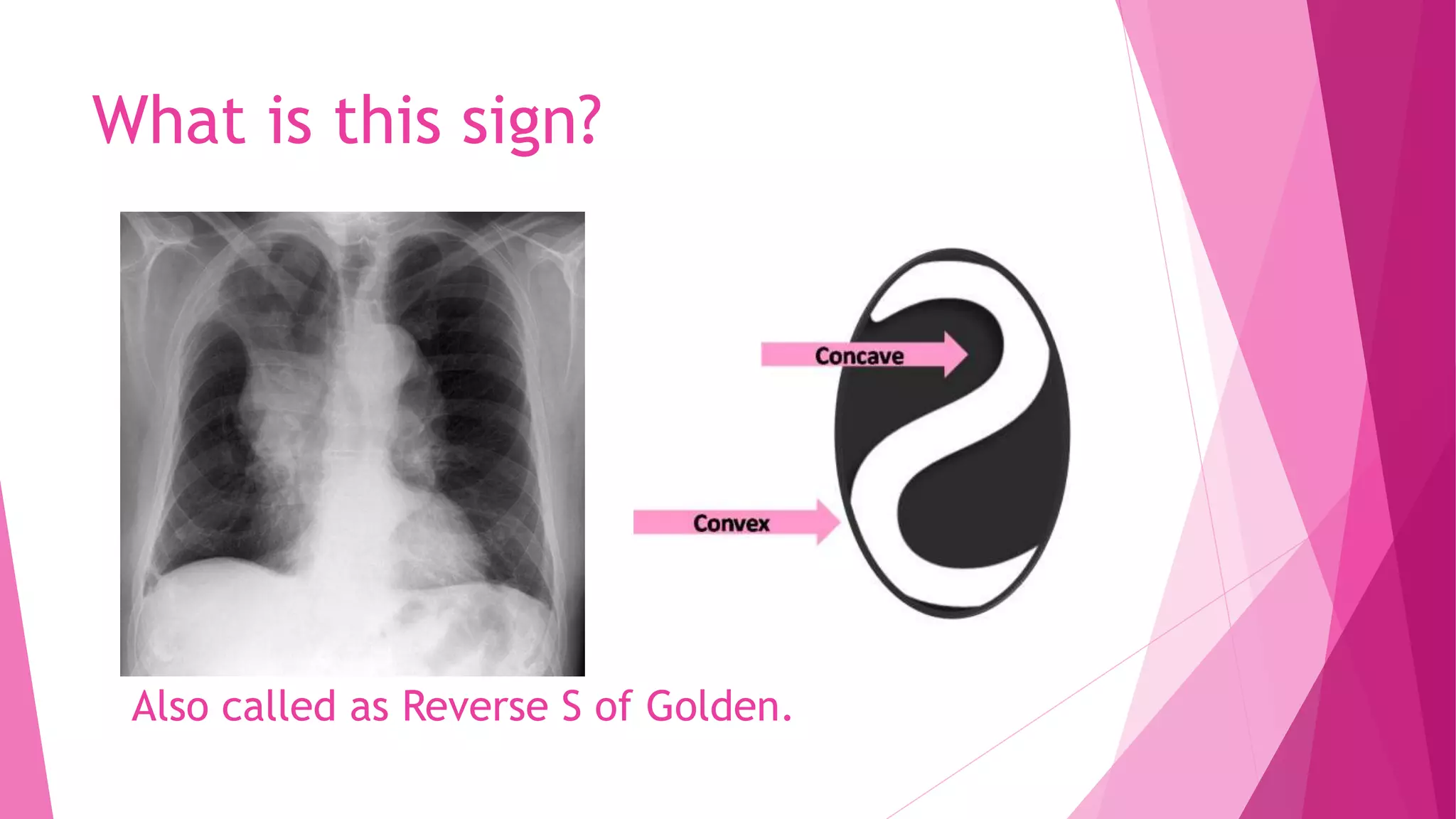
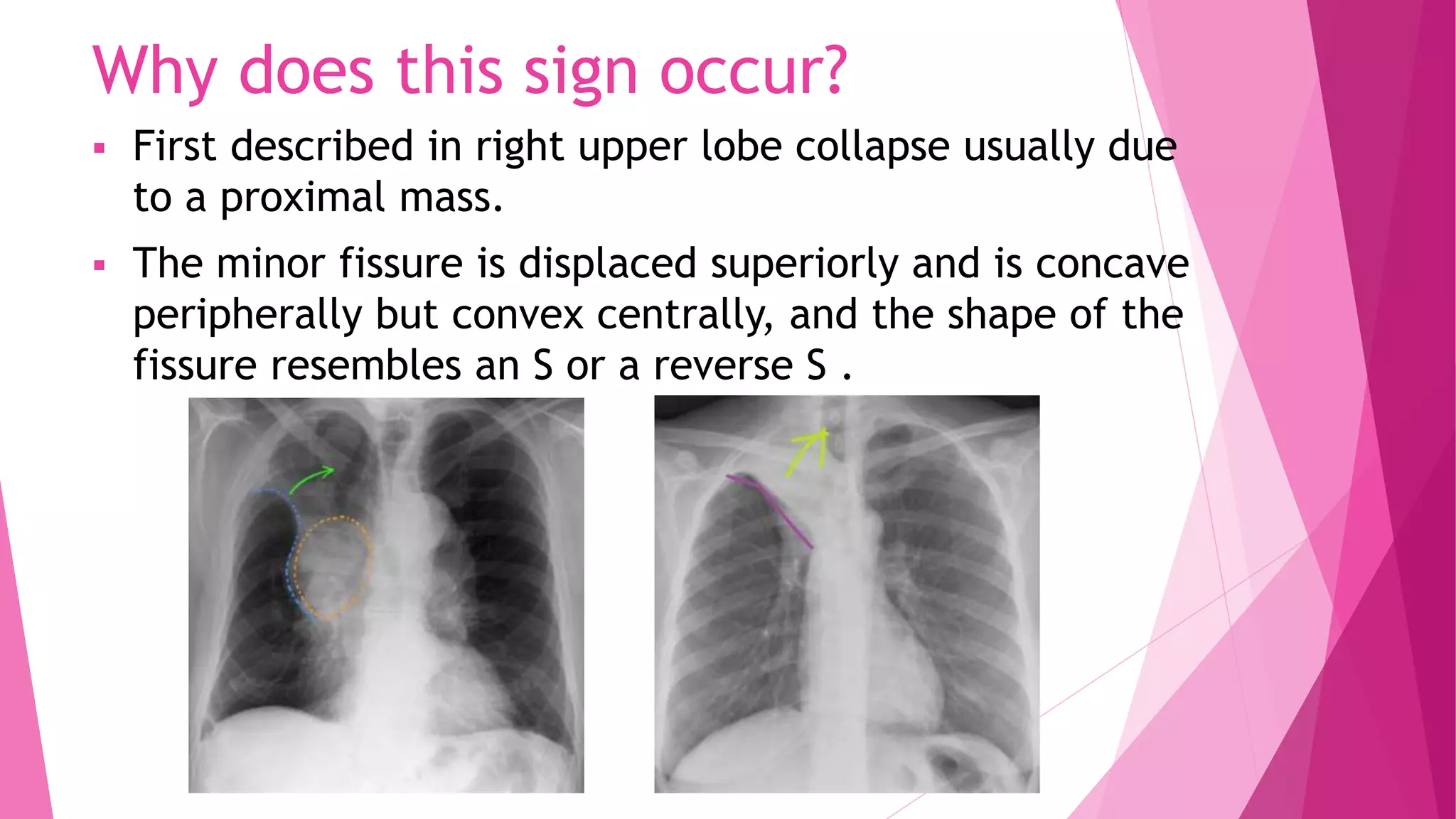
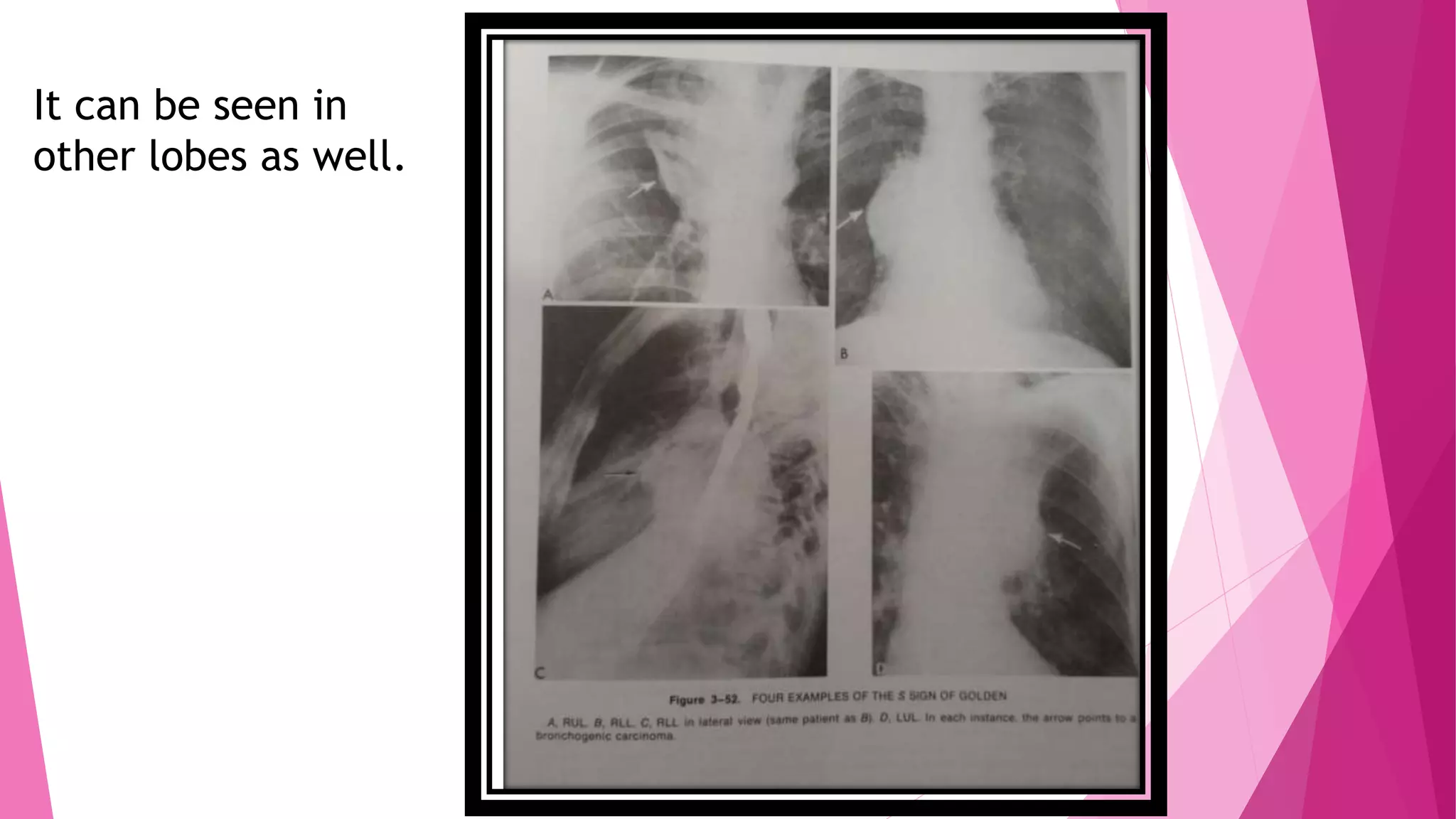


The Golden S sign was first described in 1925 by Golden Ross as occurring when there is a proximal mass causing collapse of the right upper lobe of the lung. This causes the minor fissure to take on an S or reverse S shape that is convex centrally but concave peripherally. The presence of the Golden S sign should raise suspicion for primary bronchial carcinoma in an adult patient, though other causes can include primary mediastinal tumors, metastases, or enlarged lymph nodes. While the sign cannot definitively diagnose bronchogenic carcinoma, it alerts radiologists to consider this possibility.


