Endodontics
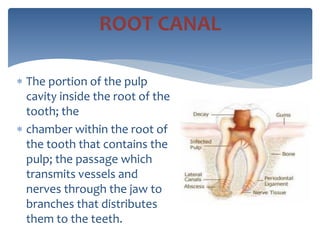
 The portion of the pulp
cavity inside the root of the
tooth; the
 chamber within the root of
the tooth that contains the
pulp; the passage which
transmits vessels and
nerves through the jaw to
branches that distributes
them to the teeth.
ROOT CANAL
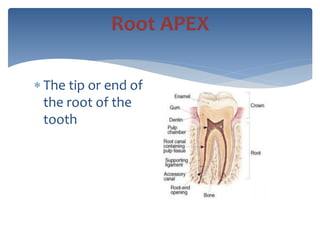
 The tip or end of
the root of the
tooth
Root APEX
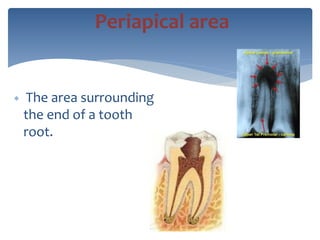
 The area surrounding
the end of a tooth
root.
Periapical area
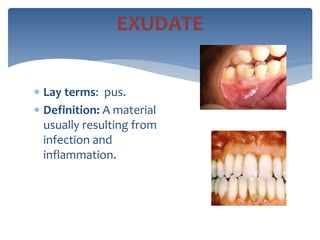
 Lay terms: pus.
 Definition: A material
usually resulting from
infection and
inflammation.
EXUDATE
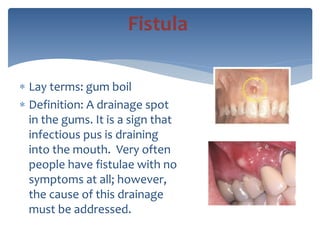
 Lay terms: gum boil
 Definition: A drainage spot
in the gums. It is a sign that
infectious pus is draining
into the mouth. Very often
people have fistulae with no
symptoms at all; however,
the cause of this drainage
must be addressed.
Fistula
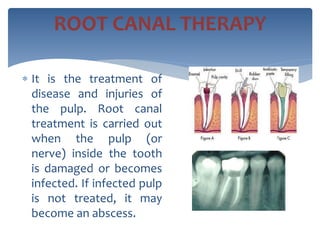
 It is the treatment of
disease and injuries of
the pulp. Root canal
treatment is carried out
when the pulp (or
nerve) inside the tooth
is damaged or becomes
infected. If infected pulp
is not treated, it may
become an abscess.
ROOT CANAL THERAPY
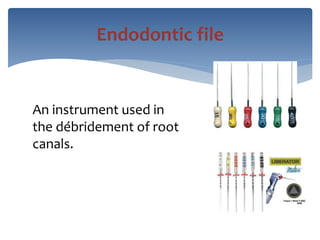
Endodontic file
An instrument used in
the débridement of root
canals.
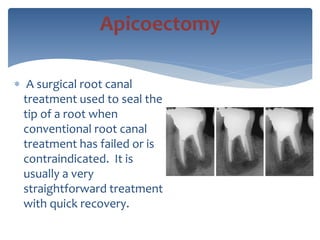
 A surgical root canal
treatment used to seal the
tip of a root when
conventional root canal
treatment has failed or is
contraindicated. It is
usually a very
straightforward treatment
with quick recovery.
Apicoectomy
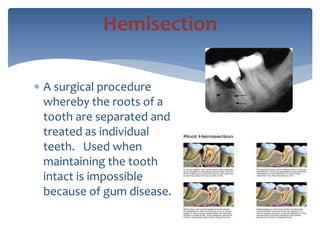
 A surgical procedure
whereby the roots of a
tooth are separated and
treated as individual
teeth. Used when
maintaining the tooth
intact is impossible
because of gum disease.
Hemisection
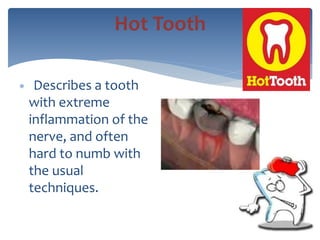
 Describes a tooth
with extreme
inflammation of the
nerve, and often
hard to numb with
the usual
techniques.
Hot Tooth
Periodontics
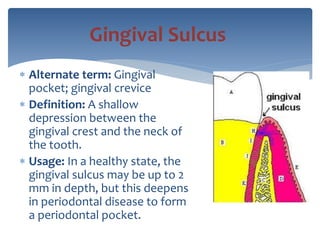
 Alternate term: Gingival
pocket; gingival crevice
 Definition: A shallow
depression between the
gingival crest and the neck of
the tooth.
 Usage: In a healthy state, the
gingival sulcus may be up to 2
mm in depth, but this deepens
in periodontal disease to form
a periodontal pocket.
Gingival Sulcus
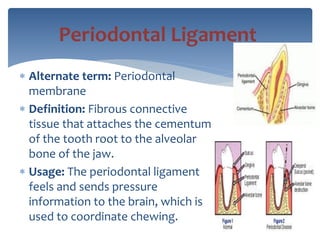
 Alternate term: Periodontal
membrane
 Definition: Fibrous connective
tissue that attaches the cementum
of the tooth root to the alveolar
bone of the jaw.
 Usage: The periodontal ligament
feels and sends pressure
information to the brain, which is
used to coordinate chewing.
Periodontal Ligament
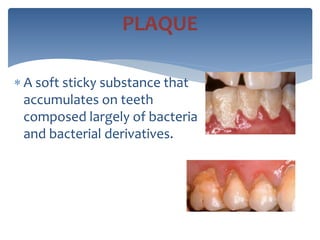
 A soft sticky substance that
accumulates on teeth
composed largely of bacteria
and bacterial derivatives.
PLAQUE
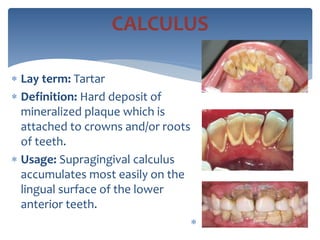
 Lay term: Tartar
 Definition: Hard deposit of
mineralized plaque which is
attached to crowns and/or roots
of teeth.
 Usage: Supragingival calculus
accumulates most easily on the
lingual surface of the lower
anterior teeth.

CALCULUS
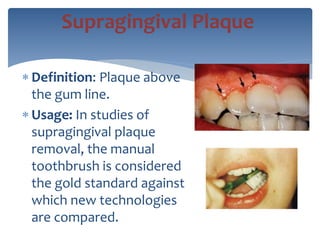
 Definition: Plaque above
the gum line.
 Usage: In studies of
supragingival plaque
removal, the manual
toothbrush is considered
the gold standard against
which new technologies
are compared.
Supragingival Plaque
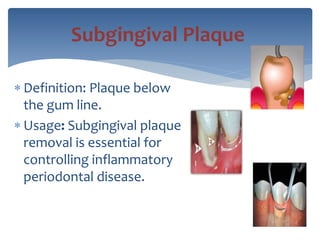
 Definition: Plaque below
the gum line.
 Usage: Subgingival plaque
removal is essential for
controlling inflammatory
periodontal disease.
Subgingival Plaque
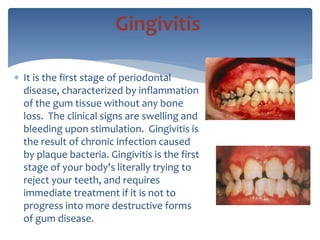
 It is the first stage of periodontal
disease, characterized by inflammation
of the gum tissue without any bone
loss. The clinical signs are swelling and
bleeding upon stimulation. Gingivitis is
the result of chronic infection caused
by plaque bacteria. Gingivitis is the first
stage of your body's literally trying to
reject your teeth, and requires
immediate treatment if it is not to
progress into more destructive forms
of gum disease.
Gingivitis
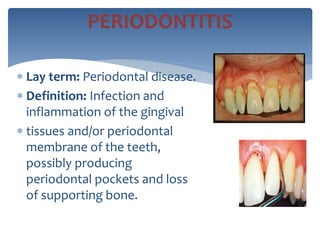
 Lay term: Periodontal disease.
 Definition: Infection and
inflammation of the gingival
 tissues and/or periodontal
membrane of the teeth,
possibly producing
periodontal pockets and loss
of supporting bone.
PERIODONTITIS
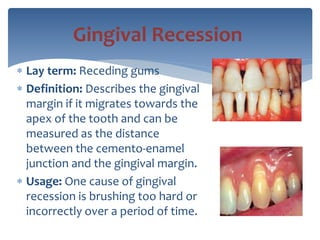
 Lay term: Receding gums
 Definition: Describes the gingival
margin if it migrates towards the
apex of the tooth and can be
measured as the distance
between the cemento-enamel
junction and the gingival margin.
 Usage: One cause of gingival
recession is brushing too hard or
incorrectly over a period of time.
Gingival Recession
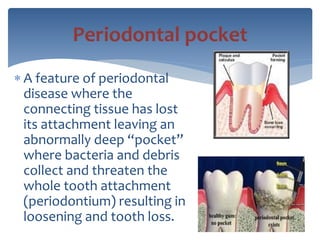
 A feature of periodontal
disease where the
connecting tissue has lost
its attachment leaving an
abnormally deep “pocket”
where bacteria and debris
collect and threaten the
whole tooth attachment
(periodontium) resulting in
loosening and tooth loss.
Periodontal pocket
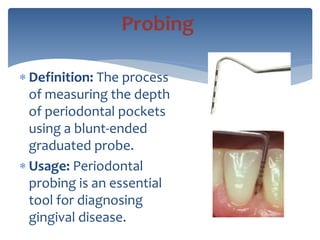
 Definition: The process
of measuring the depth
of periodontal pockets
using a blunt-ended
graduated probe.
 Usage: Periodontal
probing is an essential
tool for diagnosing
gingival disease.
Probing
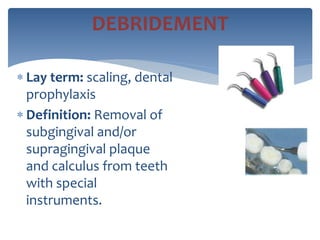
 Lay term: scaling, dental
prophylaxis
 Definition: Removal of
subgingival and/or
supragingival plaque
and calculus from teeth
with special
instruments.
DEBRIDEMENT
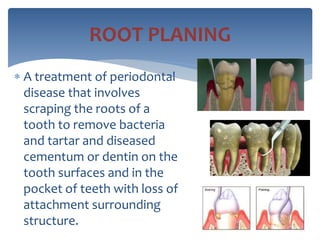
 A treatment of periodontal
disease that involves
scraping the roots of a
tooth to remove bacteria
and tartar and diseased
cementum or dentin on the
tooth surfaces and in the
pocket of teeth with loss of
attachment surrounding
structure.
ROOT PLANING
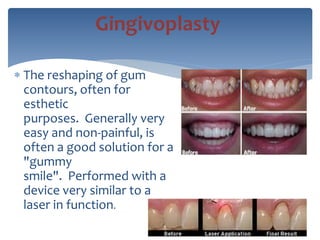
 The reshaping of gum
contours, often for
esthetic
purposes. Generally very
easy and non-painful, is
often a good solution for a
"gummy
smile". Performed with a
device very similar to a
laser in function.
Gingivoplasty
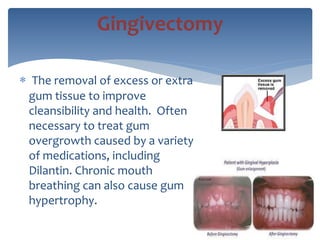
 The removal of excess or extra
gum tissue to improve
cleansibility and health. Often
necessary to treat gum
overgrowth caused by a variety
of medications, including
Dilantin. Chronic mouth
breathing can also cause gum
hypertrophy.
Gingivectomy
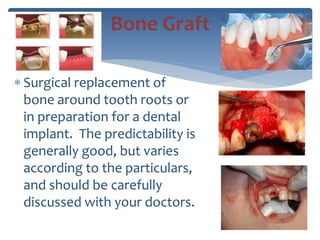
 Surgical replacement of
bone around tooth roots or
in preparation for a dental
implant. The predictability is
generally good, but varies
according to the particulars,
and should be carefully
discussed with your doctors.
Bone Graft

introduction to endodontics

  • 1.
  • 2.
     The portionof the pulp cavity inside the root of the tooth; the  chamber within the root of the tooth that contains the pulp; the passage which transmits vessels and nerves through the jaw to branches that distributes them to the teeth. ROOT CANAL
  • 3.
     The tipor end of the root of the tooth Root APEX
  • 4.
     The areasurrounding the end of a tooth root. Periapical area
  • 5.
     Lay terms:pus.  Definition: A material usually resulting from infection and inflammation. EXUDATE
  • 6.
     Lay terms:gum boil  Definition: A drainage spot in the gums. It is a sign that infectious pus is draining into the mouth. Very often people have fistulae with no symptoms at all; however, the cause of this drainage must be addressed. Fistula
  • 7.
     It isthe treatment of disease and injuries of the pulp. Root canal treatment is carried out when the pulp (or nerve) inside the tooth is damaged or becomes infected. If infected pulp is not treated, it may become an abscess. ROOT CANAL THERAPY
  • 8.
    Endodontic file An instrumentused in the débridement of root canals.
  • 9.
     A surgicalroot canal treatment used to seal the tip of a root when conventional root canal treatment has failed or is contraindicated. It is usually a very straightforward treatment with quick recovery. Apicoectomy
  • 10.
     A surgicalprocedure whereby the roots of a tooth are separated and treated as individual teeth. Used when maintaining the tooth intact is impossible because of gum disease. Hemisection
  • 11.
     Describes atooth with extreme inflammation of the nerve, and often hard to numb with the usual techniques. Hot Tooth
  • 12.
  • 13.
     Alternate term:Gingival pocket; gingival crevice  Definition: A shallow depression between the gingival crest and the neck of the tooth.  Usage: In a healthy state, the gingival sulcus may be up to 2 mm in depth, but this deepens in periodontal disease to form a periodontal pocket. Gingival Sulcus
  • 14.
     Alternate term:Periodontal membrane  Definition: Fibrous connective tissue that attaches the cementum of the tooth root to the alveolar bone of the jaw.  Usage: The periodontal ligament feels and sends pressure information to the brain, which is used to coordinate chewing. Periodontal Ligament
  • 15.
     A softsticky substance that accumulates on teeth composed largely of bacteria and bacterial derivatives. PLAQUE
  • 16.
     Lay term:Tartar  Definition: Hard deposit of mineralized plaque which is attached to crowns and/or roots of teeth.  Usage: Supragingival calculus accumulates most easily on the lingual surface of the lower anterior teeth.  CALCULUS
  • 17.
     Definition: Plaqueabove the gum line.  Usage: In studies of supragingival plaque removal, the manual toothbrush is considered the gold standard against which new technologies are compared. Supragingival Plaque
  • 18.
     Definition: Plaquebelow the gum line.  Usage: Subgingival plaque removal is essential for controlling inflammatory periodontal disease. Subgingival Plaque
  • 19.
     It isthe first stage of periodontal disease, characterized by inflammation of the gum tissue without any bone loss. The clinical signs are swelling and bleeding upon stimulation. Gingivitis is the result of chronic infection caused by plaque bacteria. Gingivitis is the first stage of your body's literally trying to reject your teeth, and requires immediate treatment if it is not to progress into more destructive forms of gum disease. Gingivitis
  • 20.
     Lay term:Periodontal disease.  Definition: Infection and inflammation of the gingival  tissues and/or periodontal membrane of the teeth, possibly producing periodontal pockets and loss of supporting bone. PERIODONTITIS
  • 21.
     Lay term:Receding gums  Definition: Describes the gingival margin if it migrates towards the apex of the tooth and can be measured as the distance between the cemento-enamel junction and the gingival margin.  Usage: One cause of gingival recession is brushing too hard or incorrectly over a period of time. Gingival Recession
  • 22.
     A featureof periodontal disease where the connecting tissue has lost its attachment leaving an abnormally deep “pocket” where bacteria and debris collect and threaten the whole tooth attachment (periodontium) resulting in loosening and tooth loss. Periodontal pocket
  • 23.
     Definition: Theprocess of measuring the depth of periodontal pockets using a blunt-ended graduated probe.  Usage: Periodontal probing is an essential tool for diagnosing gingival disease. Probing
  • 24.
     Lay term:scaling, dental prophylaxis  Definition: Removal of subgingival and/or supragingival plaque and calculus from teeth with special instruments. DEBRIDEMENT
  • 25.
     A treatmentof periodontal disease that involves scraping the roots of a tooth to remove bacteria and tartar and diseased cementum or dentin on the tooth surfaces and in the pocket of teeth with loss of attachment surrounding structure. ROOT PLANING
  • 26.
     The reshapingof gum contours, often for esthetic purposes. Generally very easy and non-painful, is often a good solution for a "gummy smile". Performed with a device very similar to a laser in function. Gingivoplasty
  • 27.
     The removalof excess or extra gum tissue to improve cleansibility and health. Often necessary to treat gum overgrowth caused by a variety of medications, including Dilantin. Chronic mouth breathing can also cause gum hypertrophy. Gingivectomy
  • 28.
     Surgical replacementof bone around tooth roots or in preparation for a dental implant. The predictability is generally good, but varies according to the particulars, and should be carefully discussed with your doctors. Bone Graft