z
DR.SSO
z
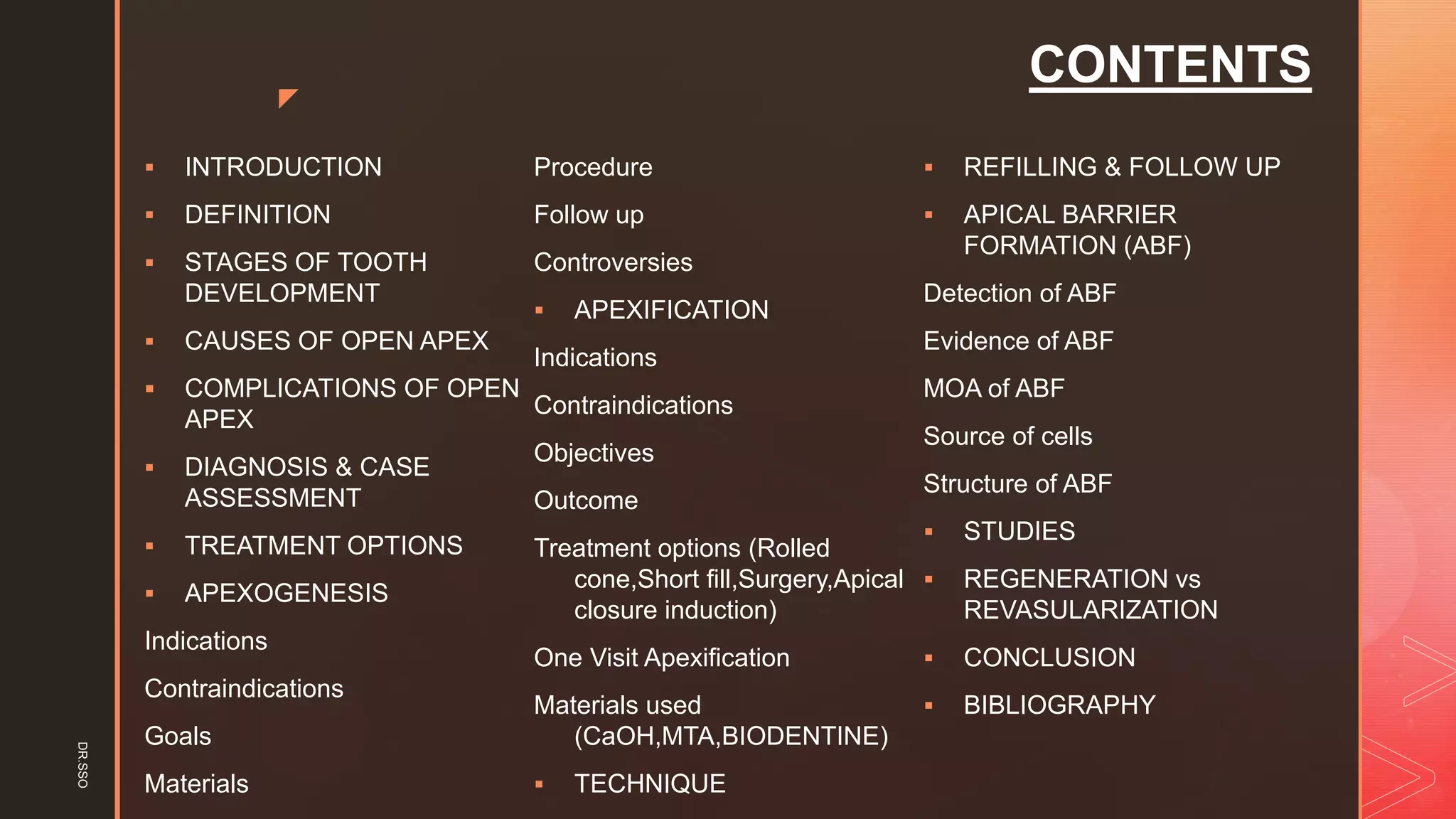
OPEN APEX
&
MANAGEMENT
Prepared by,
Dr.Sachin Sunny Otta
DR.SSO
z
CONTENTS
▪ INTRODUCTION
▪ DEFINITION
▪ STAGES OF TOOTH
DEVELOPMENT
▪ CAUSES OF OPEN APEX
▪ COMPLICATIONS OF OPEN
APEX
▪ DIAGNOSIS & CASE
ASSESSMENT
▪ TREATMENT OPTIONS
▪ APEXOGENESIS
Indications
Contraindications
Goals
Materials
Procedure
Follow up
Controversies
▪ APEXIFICATION
Indications
Contraindications
Objectives
Outcome
Treatment options (Rolled
cone,Short fill,Surgery,Apical
closure induction)
One Visit Apexification
Materials used
(CaOH,MTA,BIODENTINE)
▪ TECHNIQUE
▪ REFILLING & FOLLOW UP
▪ APICAL BARRIER
FORMATION (ABF)
Detection of ABF
Evidence of ABF
MOA of ABF
Source of cells
Structure of ABF
▪ STUDIES
▪ REGENERATION vs
REVASULARIZATION
▪ CONCLUSION
▪ BIBLIOGRAPHY
DR.SSO
z
INTRODUCTION
▪ The anatomy of the apical foramen changes with age as root
formation has yet to be completed when teeth erupt.
▪ The completion of root development and closure of the apex
occurs up to three years after eruption.
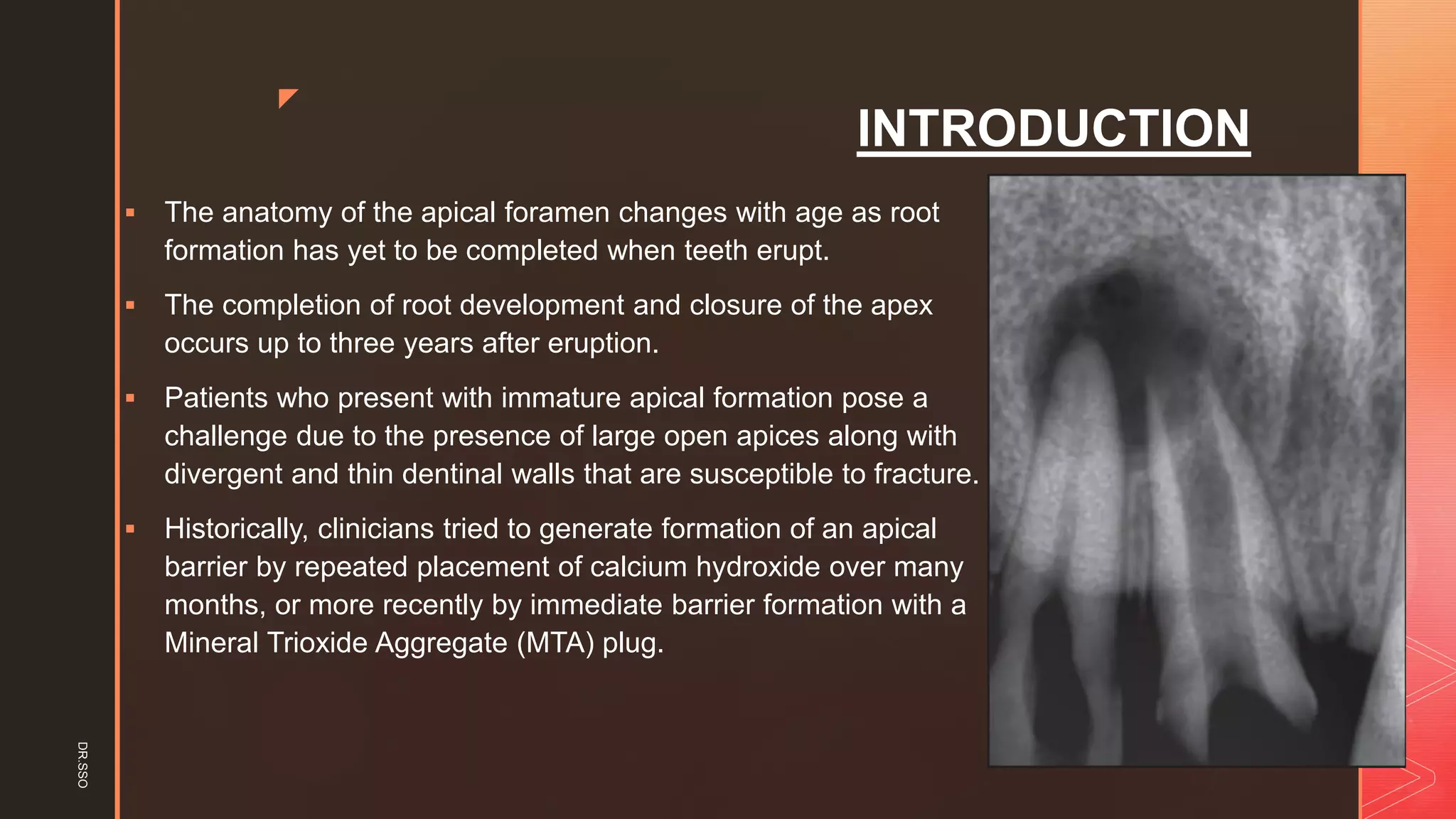
▪ Patients who present with immature apical formation pose a
challenge due to the presence of large open apices along with
divergent and thin dentinal walls that are susceptible to fracture.
▪ Historically, clinicians tried to generate formation of an apical
barrier by repeated placement of calcium hydroxide over many
months, or more recently by immediate barrier formation with a
Mineral Trioxide Aggregate (MTA) plug.
DR.SSO
z
DEFINITION
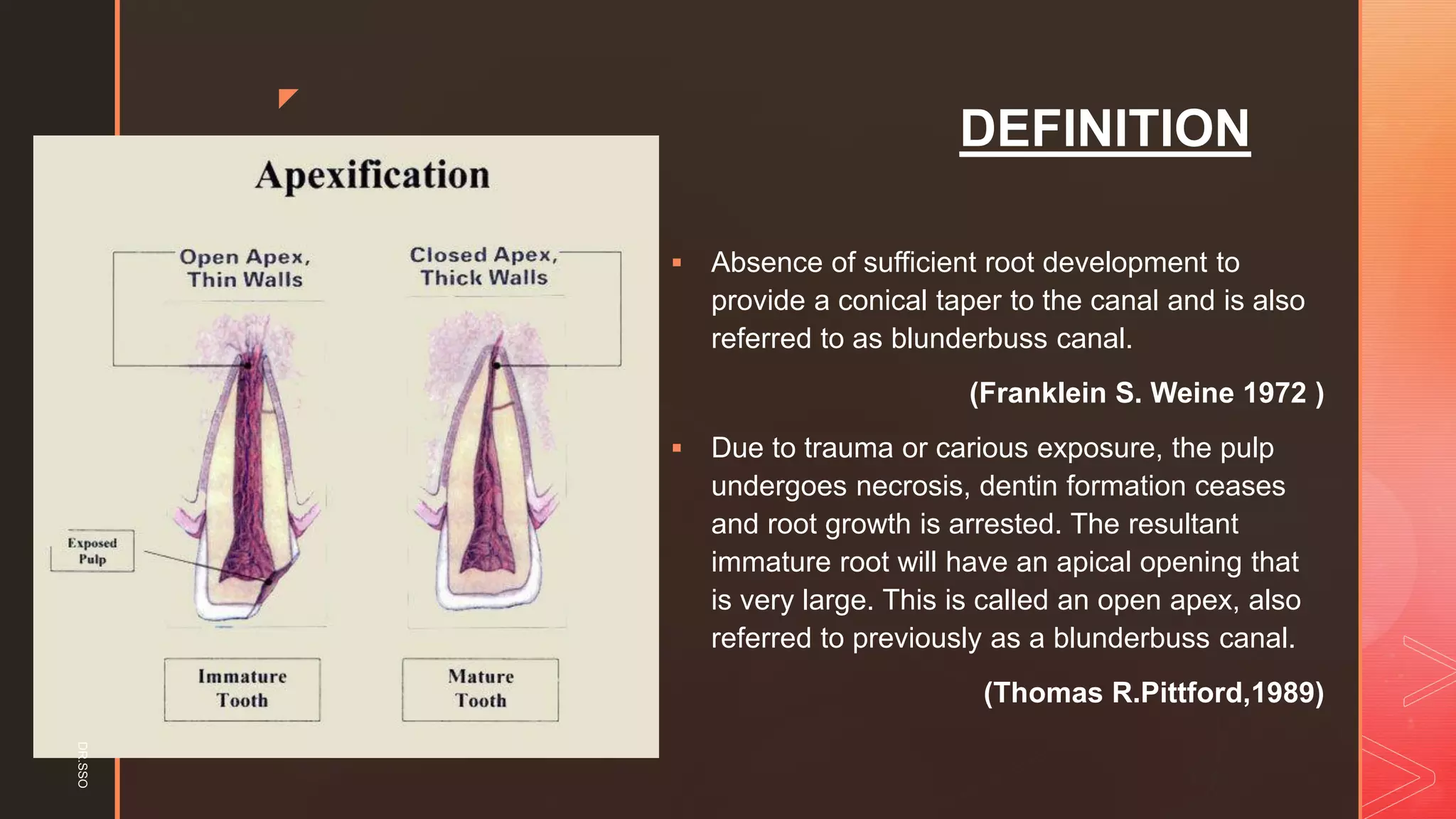
▪ Absence of sufficient root development to
provide a conical taper to the canal and is also
referred to as blunderbuss canal.
(Franklein S. Weine 1972 )
▪ Due to trauma or carious exposure, the pulp
undergoes necrosis, dentin formation ceases
and root growth is arrested. The resultant
immature root will have an apical opening that
is very large. This is called an open apex, also
referred to previously as a blunderbuss canal.
(Thomas R.Pittford,1989)
DR.SSO
z
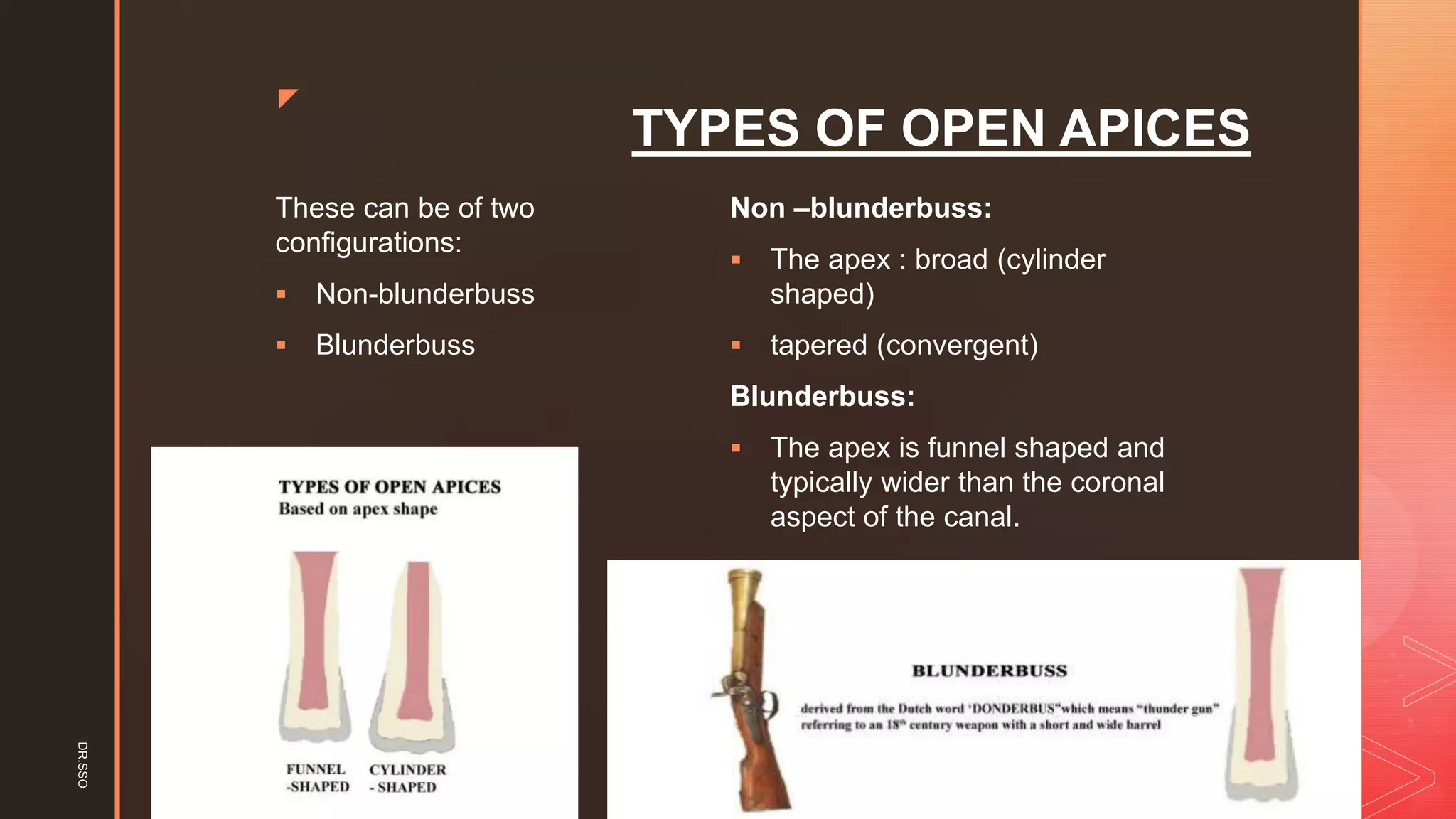
TYPES OF OPEN APICES
These can be of two
configurations:
▪ Non-blunderbuss
▪ Blunderbuss
Non –blunderbuss:
▪ The apex : broad (cylinder
shaped)
▪ tapered (convergent)
Blunderbuss:
▪ The apex is funnel shaped and
typically wider than the coronal
aspect of the canal.
DR.SSO
z
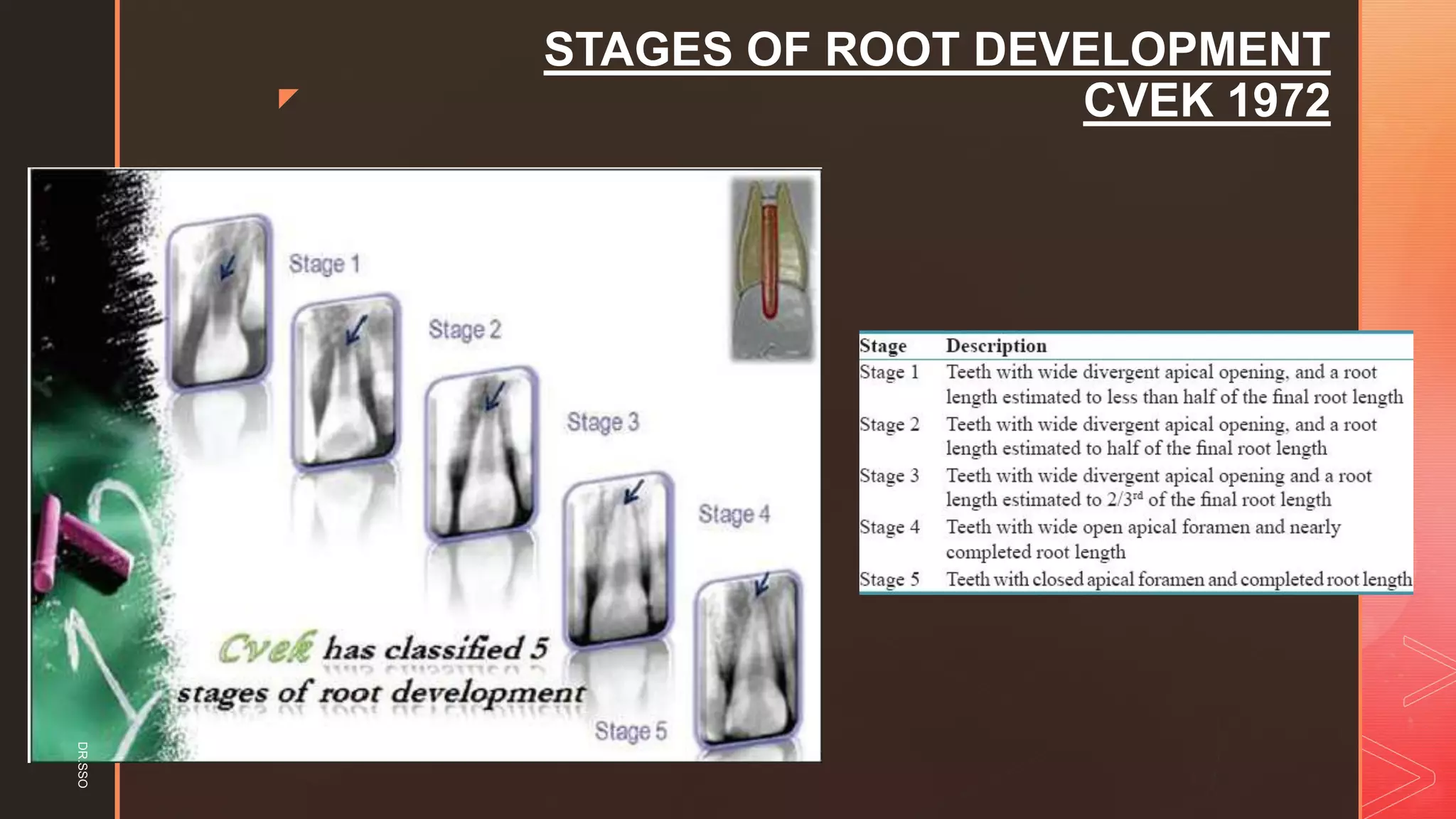
STAGES OF ROOT DEVELOPMENT
CVEK 1972
DR.SSO
z
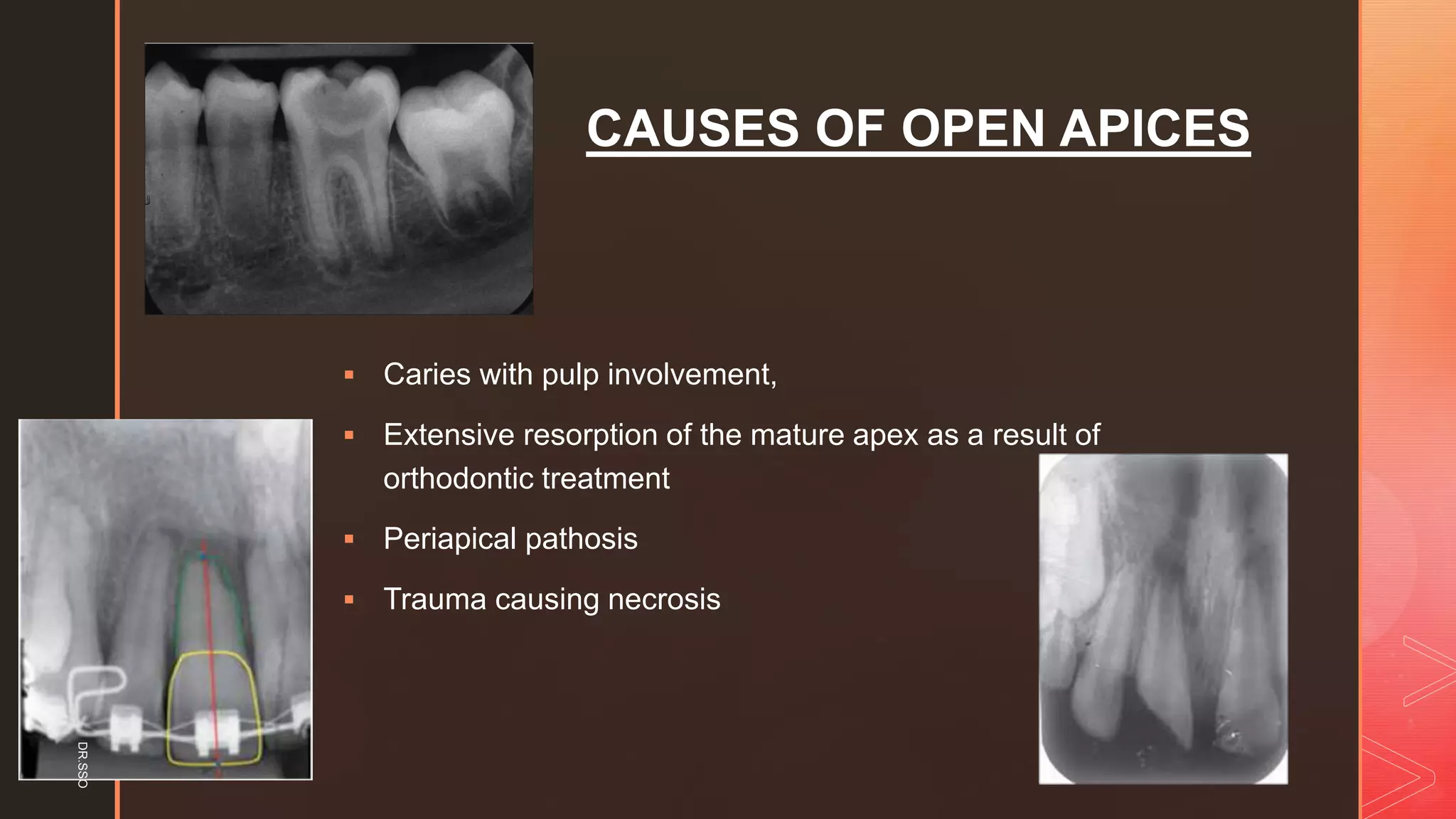
CAUSES OF OPEN APICES
▪ Caries with pulp involvement,
▪ Extensive resorption of the mature apex as a result of
orthodontic treatment
▪ Periapical pathosis
▪ Trauma causing necrosis
DR.SSO
z
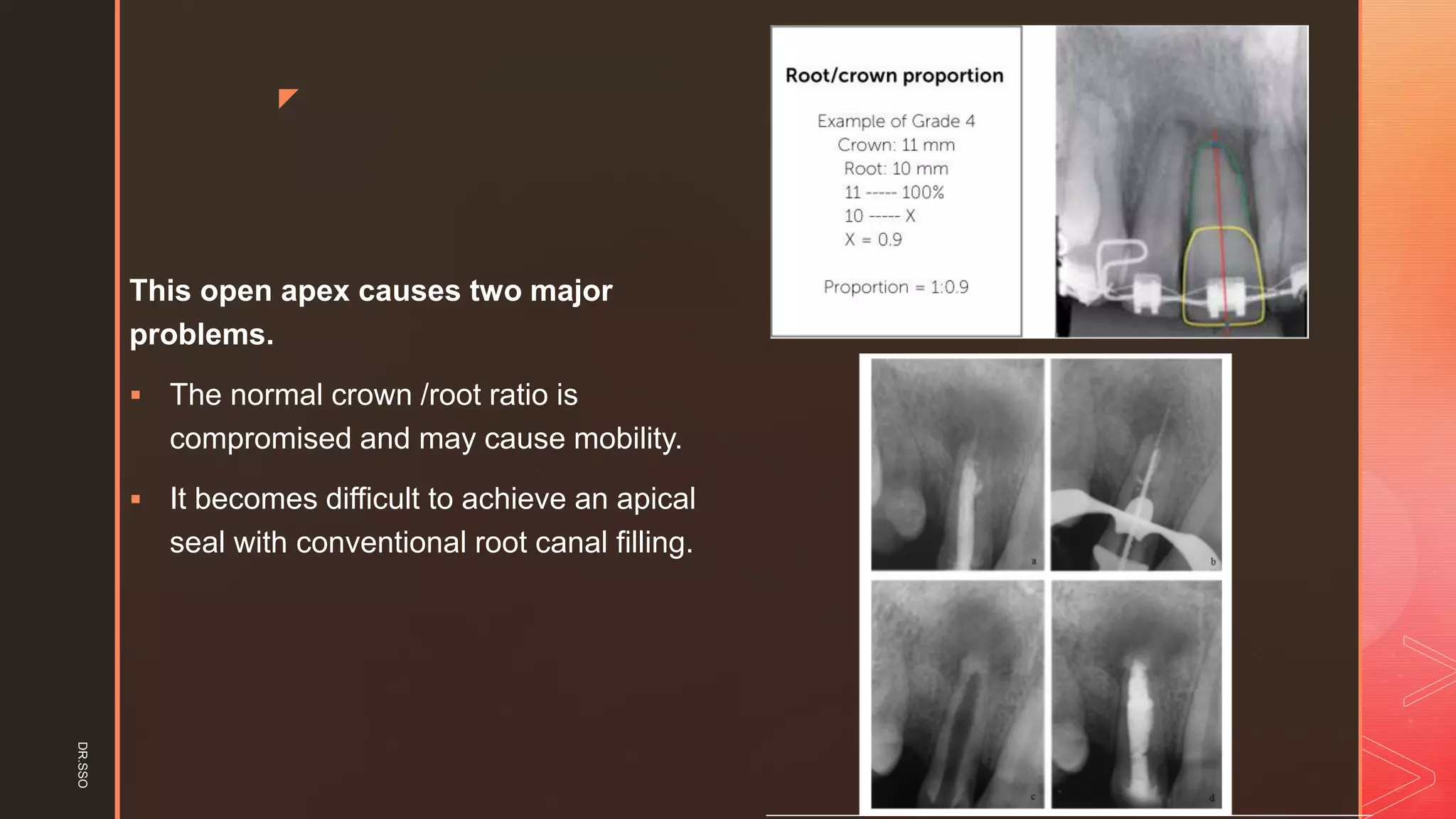
This open apex causes two major
problems.
▪ The normal crown /root ratio is
compromised and may cause mobility.
▪ It becomes difficult to achieve an apical
seal with conventional root canal filling.
DR.SSO
z
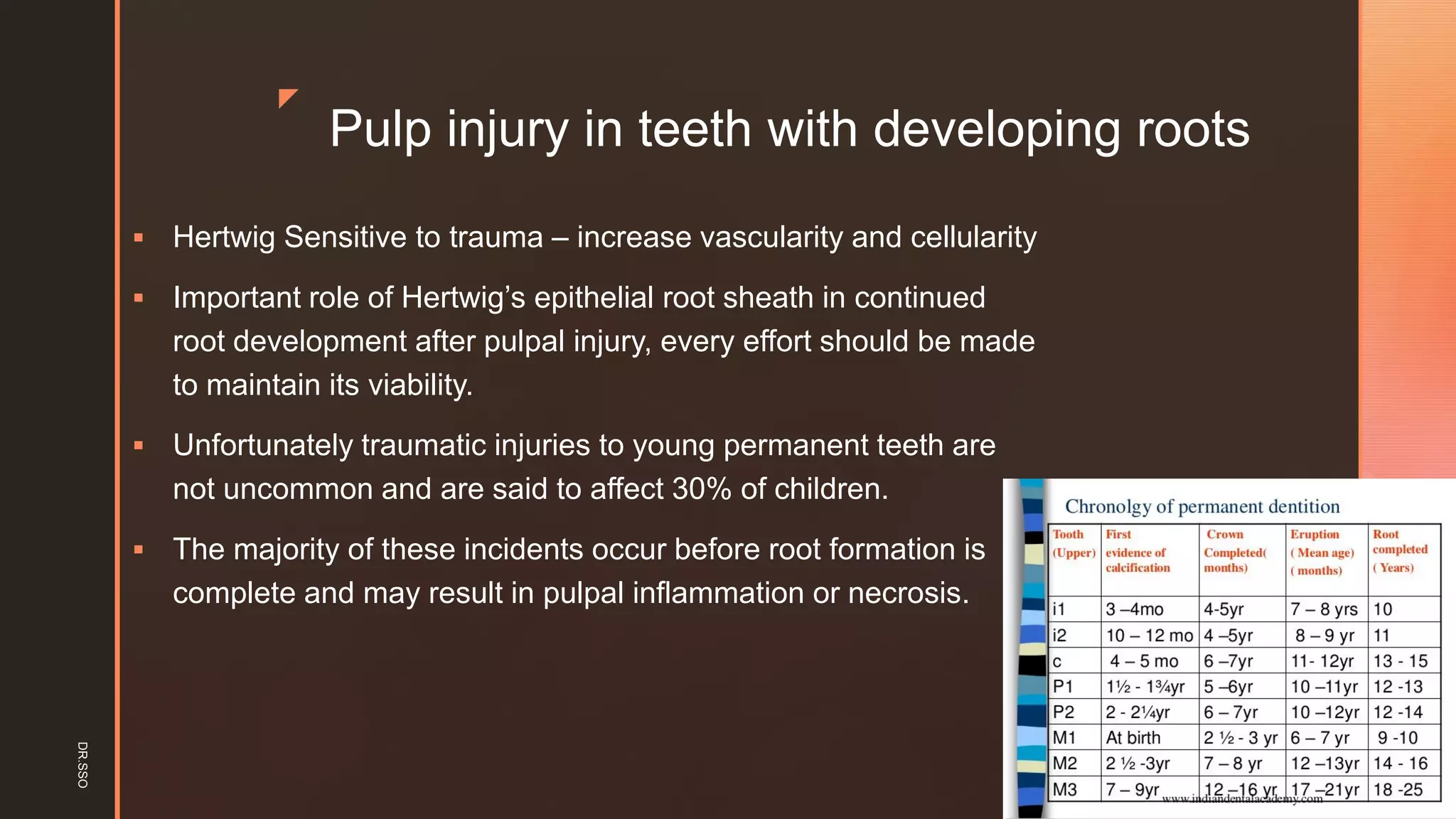
Pulp injury in teeth with developing roots
▪ Hertwig Sensitive to trauma – increase vascularity and cellularity
▪ Important role of Hertwig’s epithelial root sheath in continued
root development after pulpal injury, every effort should be made
to maintain its viability.
▪ Unfortunately traumatic injuries to young permanent teeth are
not uncommon and are said to affect 30% of children.
▪ The majority of these incidents occur before root formation is
complete and may result in pulpal inflammation or necrosis.
DR.SSO
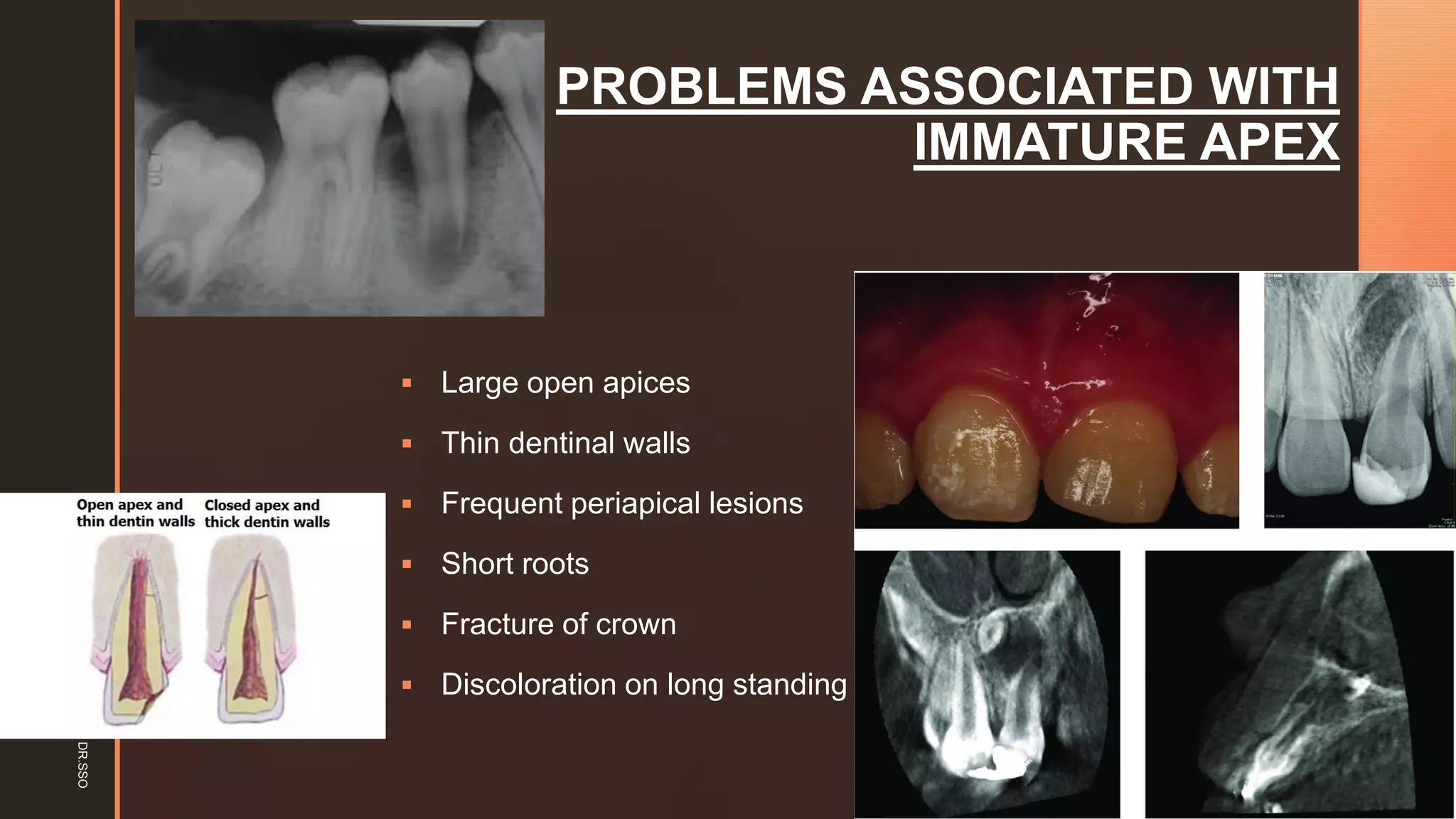
z PROBLEMS ASSOCIATED WITH
IMMATURE APEX
▪ Large open apices
▪ Thin dentinal walls
▪ Frequent periapical lesions
▪ Short roots
▪ Fracture of crown
▪ Discoloration on long standing
DR.SSO
z
DIAGNOSIS AND CASE
ASSESSMENT
1. Clinical assessment of pulp status, clinical & radiographic
examination
2. Subjective symptoms
▪ Pain history – spontaneous, severe, long lasting
▪ Throbbing, tender to touch - pulpal necrosis with apical
periodontitis or acute abscess
▪ Swelling /sinus tract - indicates pulpal necrosis and acute or
chronic abscess respectively
▪ Tenderness to percussion -inflammation in the periapical tissues.
DR.SSO
z
Correlation of clinical & subjective symptoms
▪ Vitality testing
▪ Prior to root formation , the sensory plexus of nerves in the sub
odontoblastic region is not well developed.
▪ Radiographic interpretation
DR.SSO
z
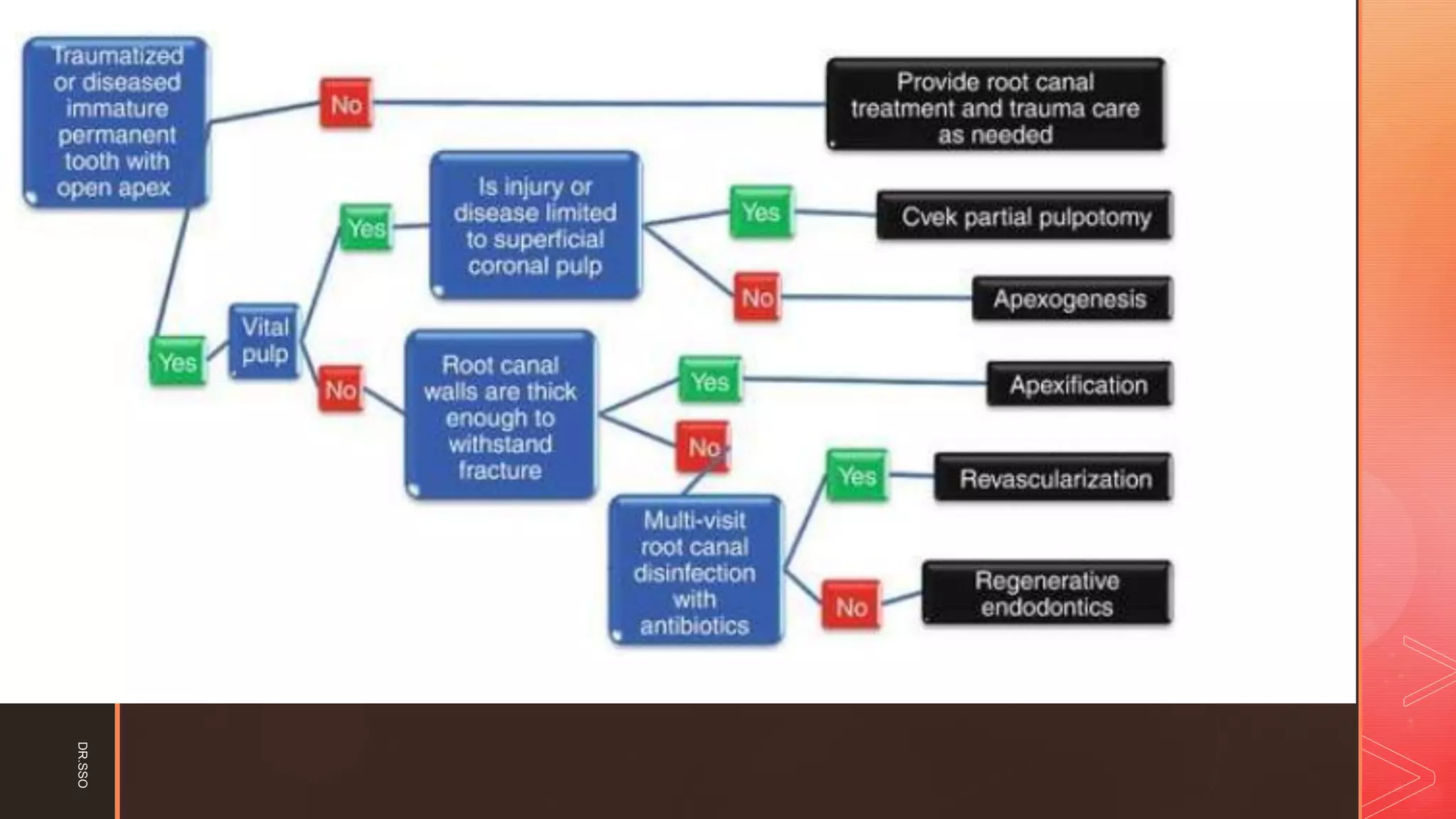
TREATMENT
▪ Treatment is based on the vitality of the
pulp.
▪ If the immature tooth has vital pulp,
exhibiting reversible pulpitis, then
physiological root end development or
apexogenesis is attempted.
▪ On the other hand if irreversible pulpitis is
present or pulp is necrotic, then root end
closure or apexification is induced
DR.SSO
z
DR.SSO
z
APEXOGENESIS/ VITAL PULP
THERAPY
▪ The current terminology is vital pulp therapy (Walton and
Torabinejad)
▪ “Apexogenesis is defined as treatment of a vital pulp in an
immature tooth to permit continued root growth and apical
closure. A vital pulp of an immature tooth may have a small
exposure after trauma.”
Ingle
▪ “Physiologic root end development and formation”
American Association of Endodontists in 1981
DR.SSO
z
▪ Apexogenesis as endodontic treatment of partially developed
permanent teeth that clinically and radiographically displays
evidence of pulp necrosis. Stephen Wei (1988)
▪ Treatment of vital pulp in an immature tooth to permit continued
root growth & apical closure. (Thomas R. Pitt Ford, 1989)
▪ The procedure encourages normal root & apex formation of
pulpally involved, vital permanent teeth with immature root
development. (AAPD Guidelines 1998)
▪ The continued formation of the root in the teeth with vital root
pulpal tissue.(McDonald & Aver, 2000)
DR.SSO
z
INDICATIONS
▪ Immature tooth with incomplete root formation and damage to
the coronal pulp but with a presumed healthy radicular pulp.
▪ Lack of abscess formation, excessive haemorrhage, no foul
odour
▪ Normal radiographic appearance
▪ Absence of sensitivity to percussion
▪ No abnormal responses to thermal stimuli
DR.SSO
z
CONTRAINDICATIONS
▪ Avulsed and replanted or severely luxated tooth
▪ Severe crown root fracture that requires intra radicular retention
for restoration
▪ Tooth with an unfavorable horizontal root fracture (i.e. close to
the gingival margin)
▪ Carious tooth that is unrestorable
DR.SSO
z
GOALS OF APEXOGENESIS :
(WEBER 1984)
▪ Sustaining a viable Hertwigs Sheath, thus allowing continued
development of root length for a more favorable crown to root
ratio.
▪ Maintaining pulpal vitality, thus allowing the remaining
odontoblasts to lay down dentin, producing a thicker root and
decreasing the chance of root fracture.
▪ Promoting root end closure, thus allowing a natural apical
constriction for root canal filling.
▪ Generating a dentinal bridge at the site of pulpotomy
DR.SSO
z
PROCEDURE
▪ Anesthetize and isolate.
▪ After local anesthesia, rubber dam isolation, a conventional
access cavity was made with a high-speed bur using copious
water spray.
▪ Strands of pulp and debris were removed coronal to the
amputation site.
▪ Amputation of the coronal pulp at the cervical level was
performed with a sharp spoon excavator or a large sterile round
bur.
DR.SSO
z
▪ Bleeding of the pulp stump was controlled with
saline on a cotton pellet applied with gentle
pressure.
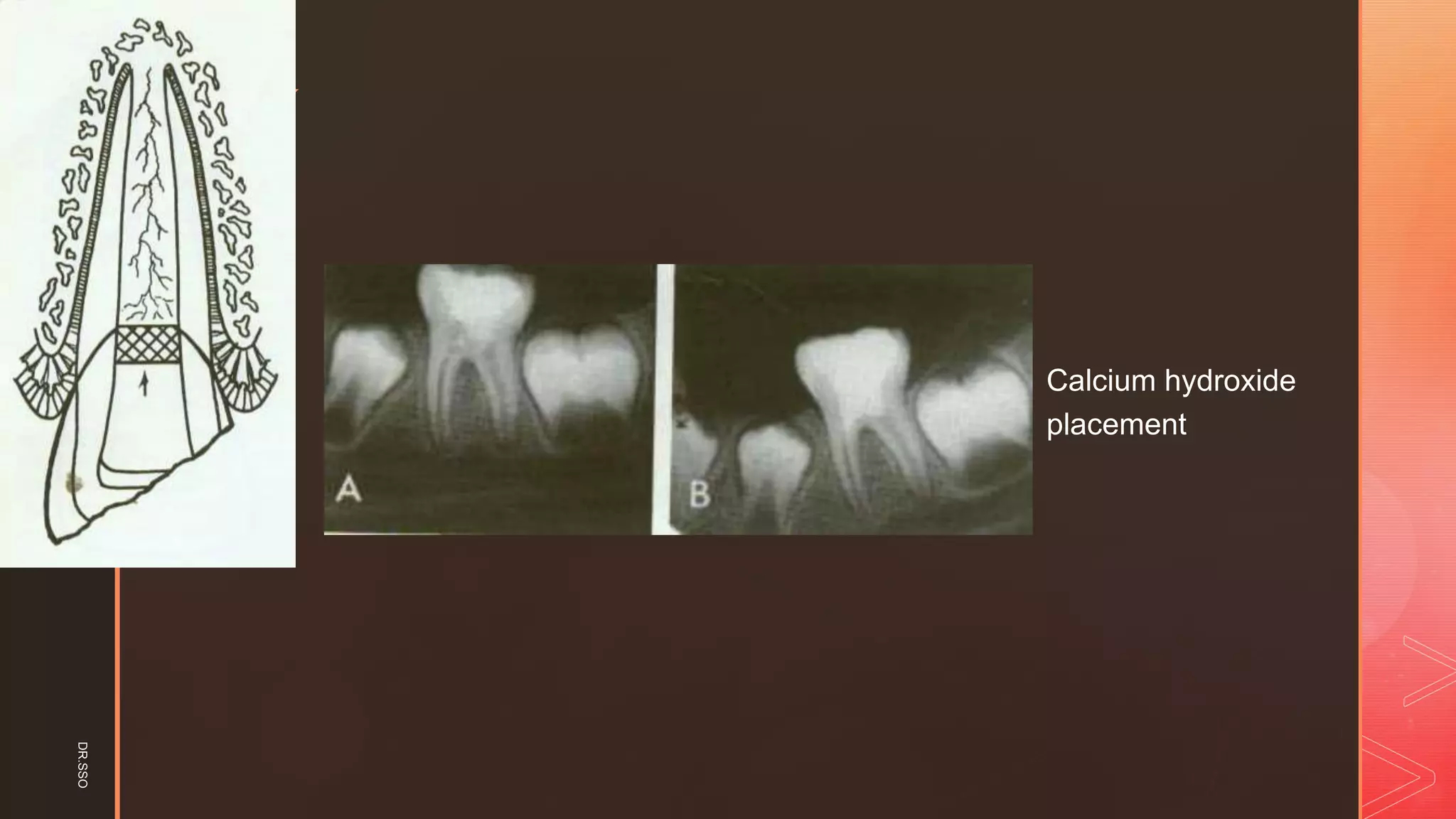
▪ [Ca(OH)2]: Calcium hydroxide powder was
mixed with saline to a thick consistency. The
paste was carefully placed on the pulp stump
surface 1 to 2 mm thick.
Removal of coronal pulp
Haemostasis
DR.SSO
z
▪ Calcium hydroxide
placement
DR.SSO
z
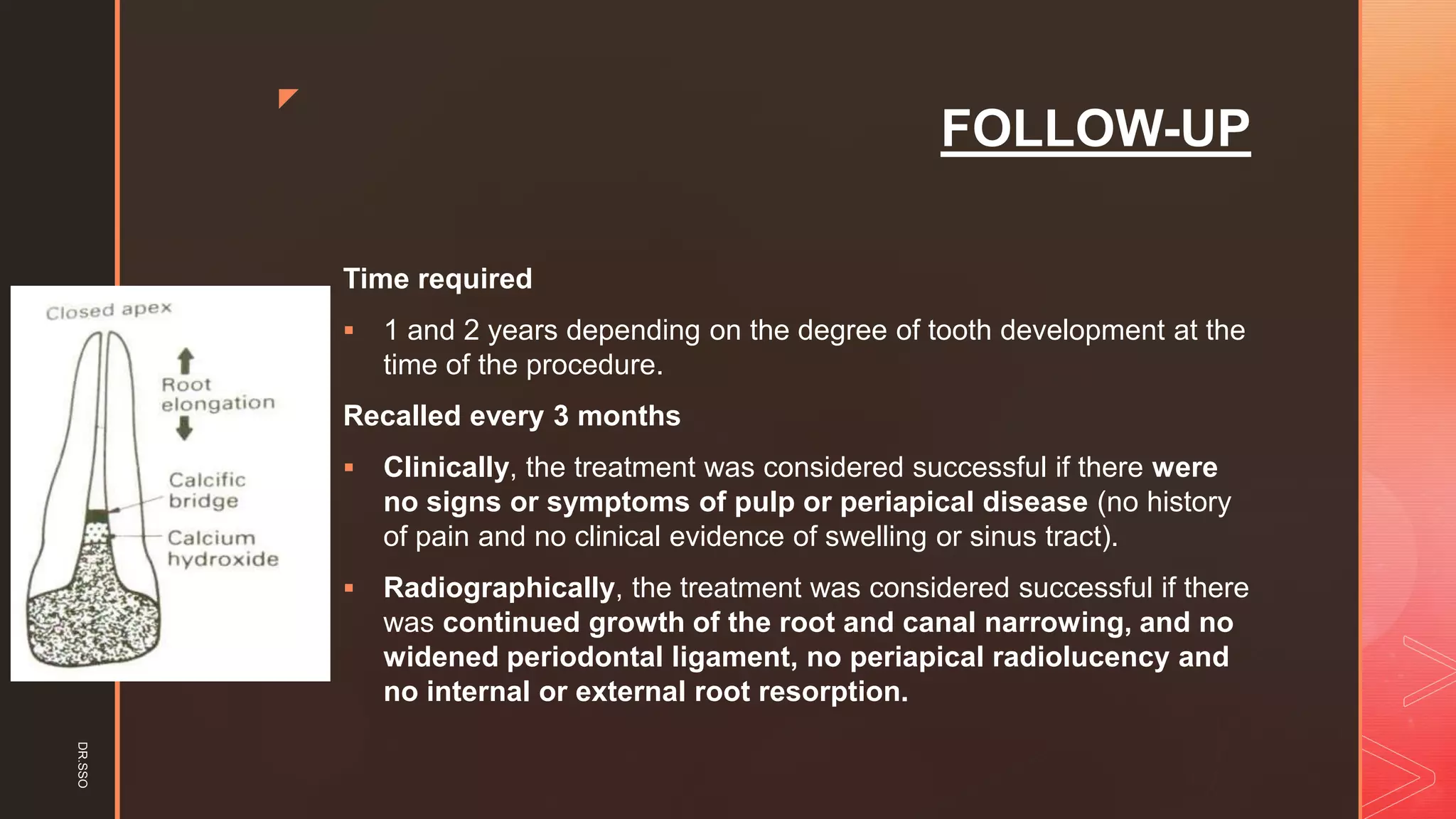
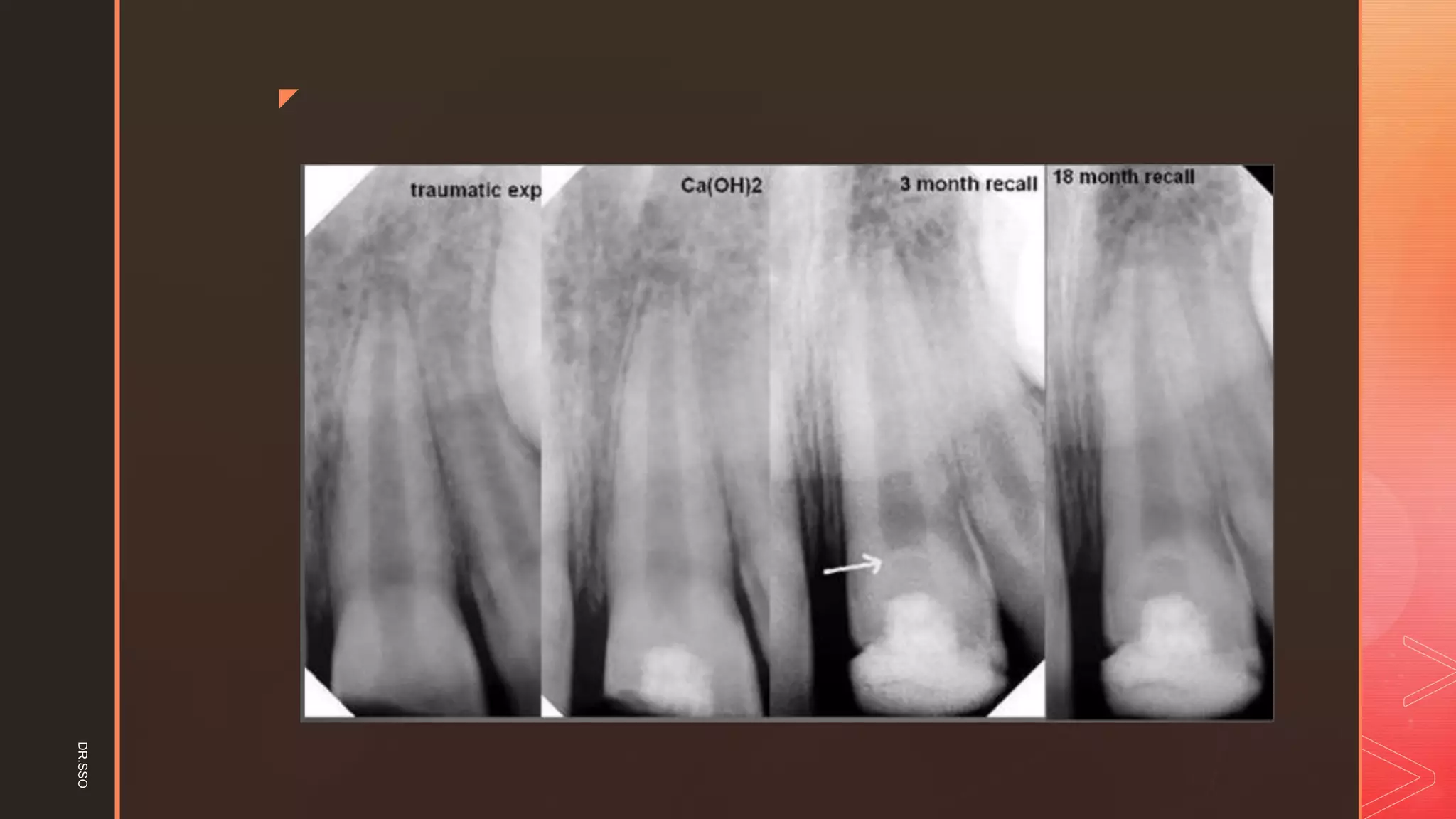
FOLLOW-UP
Time required
▪ 1 and 2 years depending on the degree of tooth development at the
time of the procedure.
Recalled every 3 months
▪ Clinically, the treatment was considered successful if there were
no signs or symptoms of pulp or periapical disease (no history
of pain and no clinical evidence of swelling or sinus tract).
▪ Radiographically, the treatment was considered successful if there
was continued growth of the root and canal narrowing, and no
widened periodontal ligament, no periapical radiolucency and
no internal or external root resorption.
DR.SSO
z
DR.SSO
z
CONTROVERSY EXISTS
▪ As the entire coronal pulp was removed, thermal and electrical
testing of the tooth is no longer possible.
▪ Since it is not possible to determine the pulp vitality or the health
of the remaining pulp tissue, it has been advocated that the
tooth should be reentered and root canal therapy performed.
DR.SSO
z
Mejare & Cvek (1993)
▪ 37 young posterior teeth - deep carious lesions and exposed pulps
▪ Group 1 - 31 teeth with no clinical or radiographic symptoms before
treatment.
▪ Group 2 - 6 teeth with temporary pain, widened periodontal space
periapically
▪ After an observation time of 24 to140 months , healing had
occurred in 29 of 31 teeth in Group 1 (93.5%) and in 4 of 6 teeth in
Group 2.
▪ It was concluded that partial pulpotomy may be an adequate
treatment for young permanent molars with a carious exposure
DR.SSO
z
Mahmood K et al.,(2006)
▪ 32 first permanant molars of 23 patients with age of 10 yrs
▪ Clinically and radiographically within the normal limits
▪ Partial pulpotomy with grey MTA was done
▪ GIC base was given and amalgam/ SS crown restoration was done
▪ Reviewed clinically and radiographically at 3,6,12 & 24 months
▪ 22 teeth – No clinical and radiographic signs
▪ 6 teeth - not responded to vitality tests
DR.SSO
z
Kessar et al.,(2006)
▪ A paradigm shift from apexification to apexogenesis
▪ Apexogenesis can be done even in a non vital teeth
▪ No instrumantation should be done
▪ Copious irrigation with 20 ml of NaOCl, dry with paper points
and IRM restoration
▪ Apexogenesis occurred over a period of 35 months
DR.SSO
z
Ali Nosrat et al., (2006)
▪ 8 yr old boy with complicated crown fracture wrt 21
▪ Cervical pulpotomy done with CEM ( Calcium enriched mixture)
▪ After 6 and 12 months follow up tooth is vital , apex has formed
and calcific bridge underneath the cement was found.
▪ CEM is a new endodontic cement with similar applications as
MTA
▪ Antimicrobial nature comparable to CH and MTA
▪ Composition of set CEM is similar to dentin
DR.SSO
z
APEXIFICATION
▪ Defined as the method of inducing apical closure by the
formation of osteo cementum or a similar hard tissue or the
continued apical development of the root of an incompletely
formed tooth in which the pulp is no longer vital.
American Association of Endodontics
DR.SSO
z
‘Root-End Closure’, introduced by
Torabinejad in 2002
▪ A method of inducing apical closure of the roots of an
incompletely formed, nonvital radicular tissue just short of root
end and placing a suitable biocompatible agent in the canal.
(AAPD Guidelines 1998)
▪ The process of creating an environment within the root canal
and periapical tissues after pulp death that allows a calcified
barrier to form across the open apex. (Thomas R. Pitt Ford,
1989)
▪ Inducement to form a calcified apical barrier in teeth that have
pulpal necrosis. (McDonald &Avery, 2000)
DR.SSO
z
INDICATION
▪ Restorable immature tooth with pulp necrosis.
DR.SSO
z
CONTRAINDICATIONS
▪ All vertical and unfavorable horizontal root fractures.
▪ Very short roots
▪ Periodontal breakdown
DR.SSO
z
OBJECTIVES
▪ Induce root end closure
▪ No evidence of post treatment signs and symptoms
▪ No evidence of calcification
▪ No internal or external resorption
▪ No breakdown of periradicular supporting tissues
DR.SSO
z
FIVE OUTCOMES OF APEXIFICATION
PROCEDURE (WEINE)
1. No radiographic change is apparent; but if instrument is inserted, a
blockage at the apex is encountered.
2. Radiographic evidence of calcified material is seen at or near the
apex.
3. Apex closes without any change in canal space.
4. Apex continues to develop with closure of the canal apace.
5. No radiographic evidence of change is seen, and clinical symptom
and/or development of or the increase in size of periapical lesion
occurs. This would need either retreatment with CaOH2 or
surgery.
DR.SSO
z
TREATMENT OPTIONS
According to Morse et al., (1983) various approaches :
▪ Blunt end or rolled cone (customized cone)
▪ Short fill technique
▪ Periapical surgery (with /without retrograde seal)
▪ Apexification (apical closure induction)
DR.SSO
z
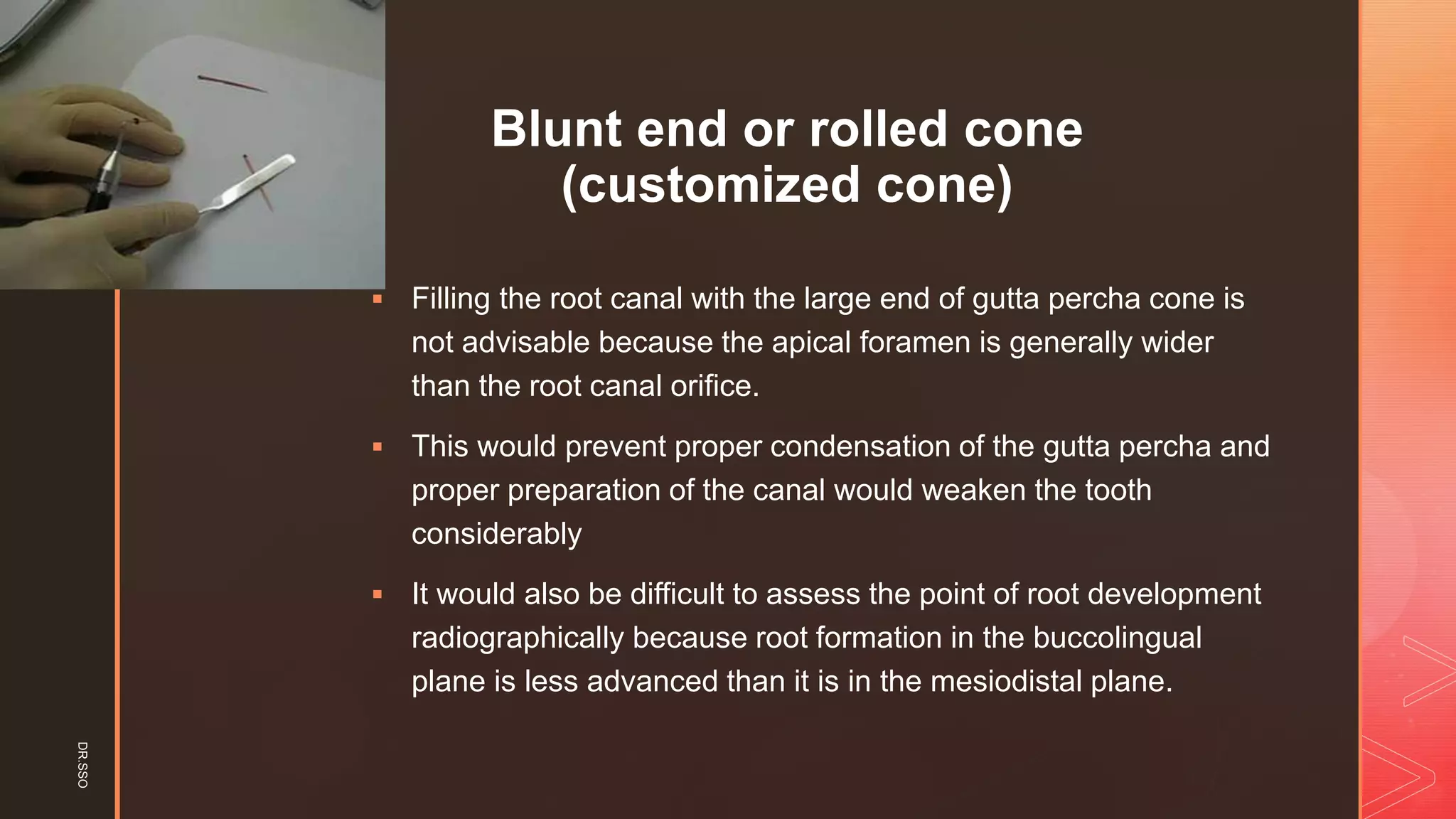
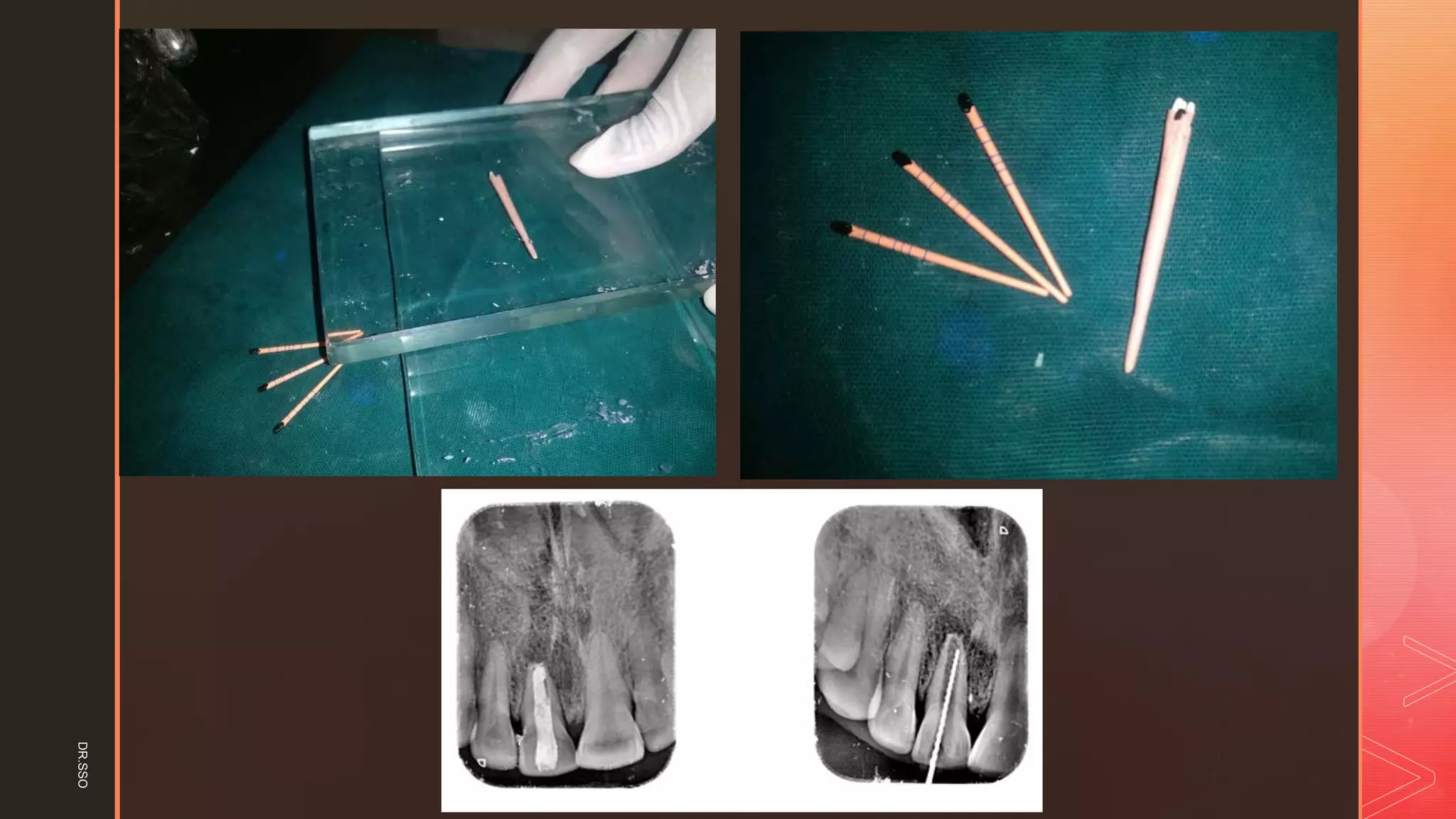
Blunt end or rolled cone
(customized cone)
▪ Filling the root canal with the large end of gutta percha cone is
not advisable because the apical foramen is generally wider
than the root canal orifice.
▪ This would prevent proper condensation of the gutta percha and
proper preparation of the canal would weaken the tooth
considerably
▪ It would also be difficult to assess the point of root development
radiographically because root formation in the buccolingual
plane is less advanced than it is in the mesiodistal plane.
DR.SSO
z
DR.SSO
z
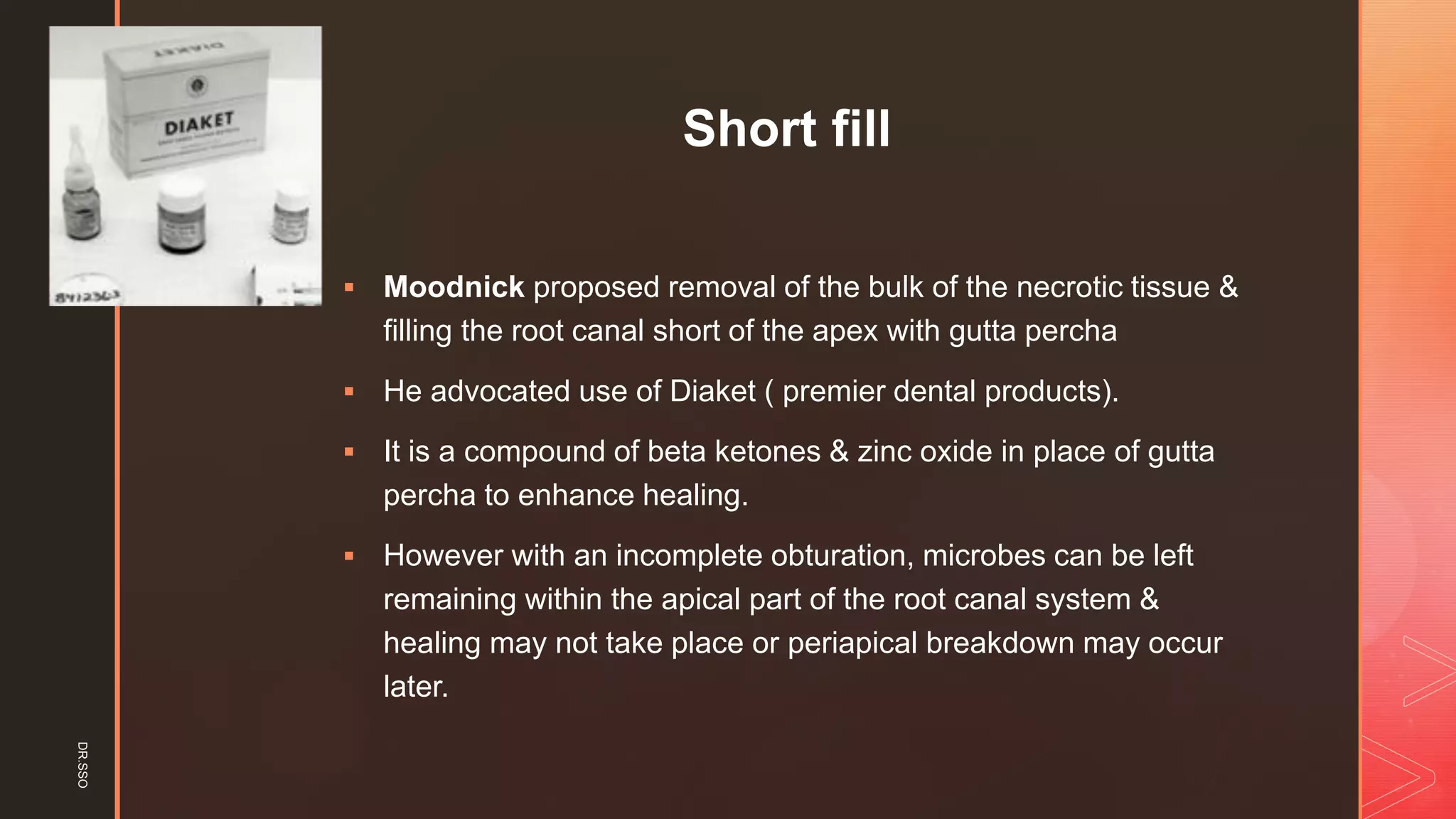
Short fill
▪ Moodnick proposed removal of the bulk of the necrotic tissue &
filling the root canal short of the apex with gutta percha
▪ He advocated use of Diaket ( premier dental products).
▪ It is a compound of beta ketones & zinc oxide in place of gutta
percha to enhance healing.
▪ However with an incomplete obturation, microbes can be left
remaining within the apical part of the root canal system &
healing may not take place or periapical breakdown may occur
later.
DR.SSO
z
Periapical surgery
The gutta percha/ sealer surgical approach has many drawbacks.
Many clinicians do not advocate this method of treatment for one
or more of the following reasons:
▪ Relative to the already shortened roots, further reduction could
result in an inadequate crown to root ratio.
▪ Surgery could be both physically & psychologically traumatic to the
young patient.
▪ The young patient is non cooperative
▪ Surgery would remove the root sheath & prevent the possibility of
further root development
DR.SSO
z
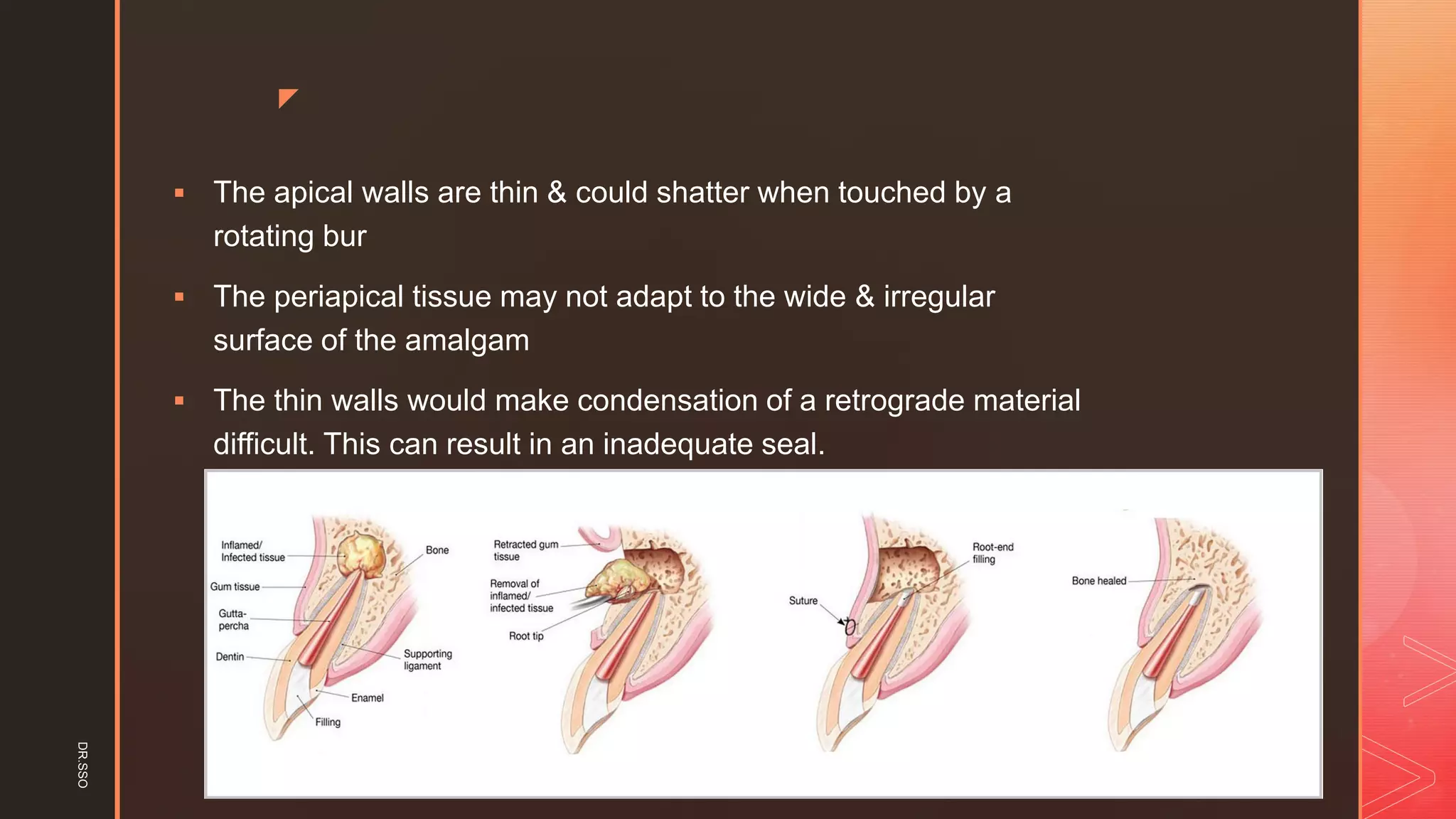
▪ The apical walls are thin & could shatter when touched by a
rotating bur
▪ The periapical tissue may not adapt to the wide & irregular
surface of the amalgam
▪ The thin walls would make condensation of a retrograde material
difficult. This can result in an inadequate seal.
DR.SSO
z
Apical closure induction
▪ Most widely used approach but exact mechanism unknown
▪ It has been considered that treatment of teeth with necrotic pulp
the basic aim should be stimulation & preservation of the
formative activity of the granulation tissue cells in apical
part of the root canal
▪ This should enhance the formation of a calcified callus in the
wide apical opening.
DR.SSO
z
ONE VISIT APEXIFICATION
▪ Induction of apical healing, regardless of the material used, takes at
least 3–4 months and requires multiple appointments
▪ Patient compliance with this regimen may be poor and many fail to
return for scheduled visits
▪ The temporary seal may fail resulting in re-infection and
prolongation or failure of treatment
▪ For these reasons one-visit apexification has been suggested
▪ Morse et al., (1990) define one-visit apexification as the
nonsurgical condensation of a biocompatible material into the
apical end of the root canal
DR.SSO
z
▪ The rationale is to establish an apical stop that would enable the
root canal to be filled immediately
▪ There is no attempt at root end closure. Rather an artificial
apical stop is created
DR.SSO
z
MATERIALS TO INDUCE APEXIFICATION
IN TEETH WITH IMMATURE APICES
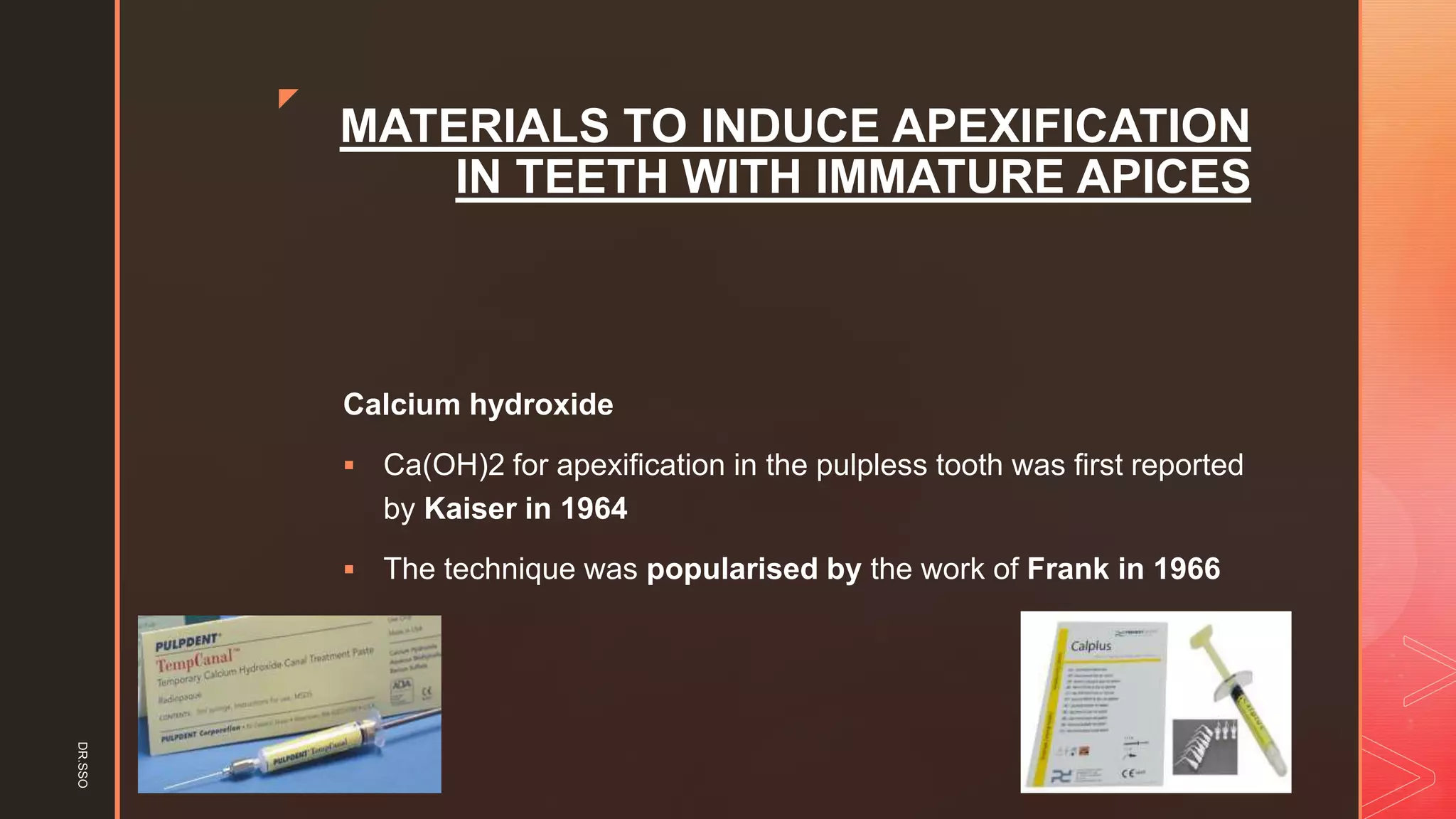
Calcium hydroxide
▪ Ca(OH)2 for apexification in the pulpless tooth was first reported
by Kaiser in 1964
▪ The technique was popularised by the work of Frank in 1966
DR.SSO
z
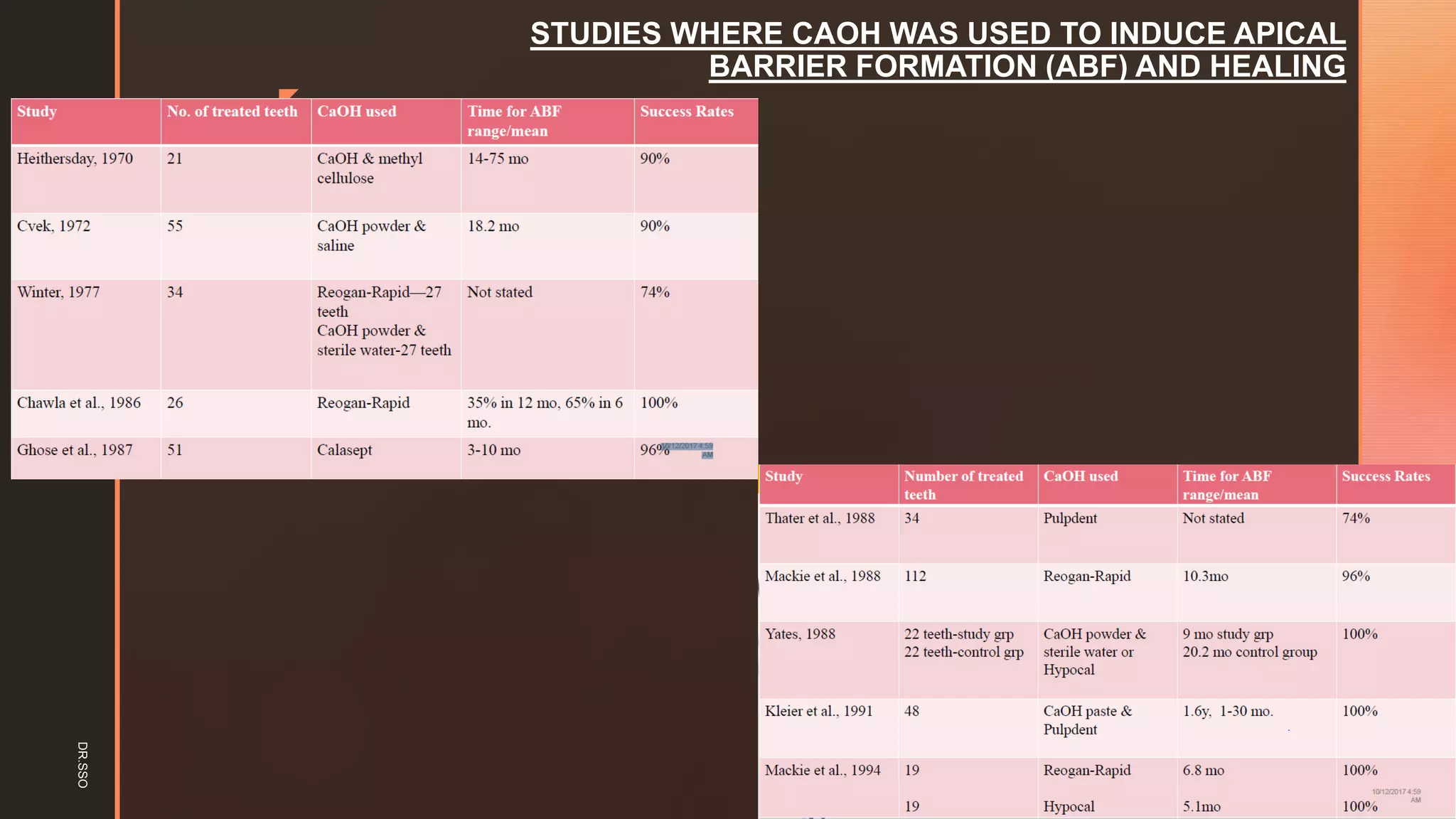
STUDIES WHERE CAOH WAS USED TO INDUCE APICAL
BARRIER FORMATION (ABF) AND HEALINGDR.SSO
z
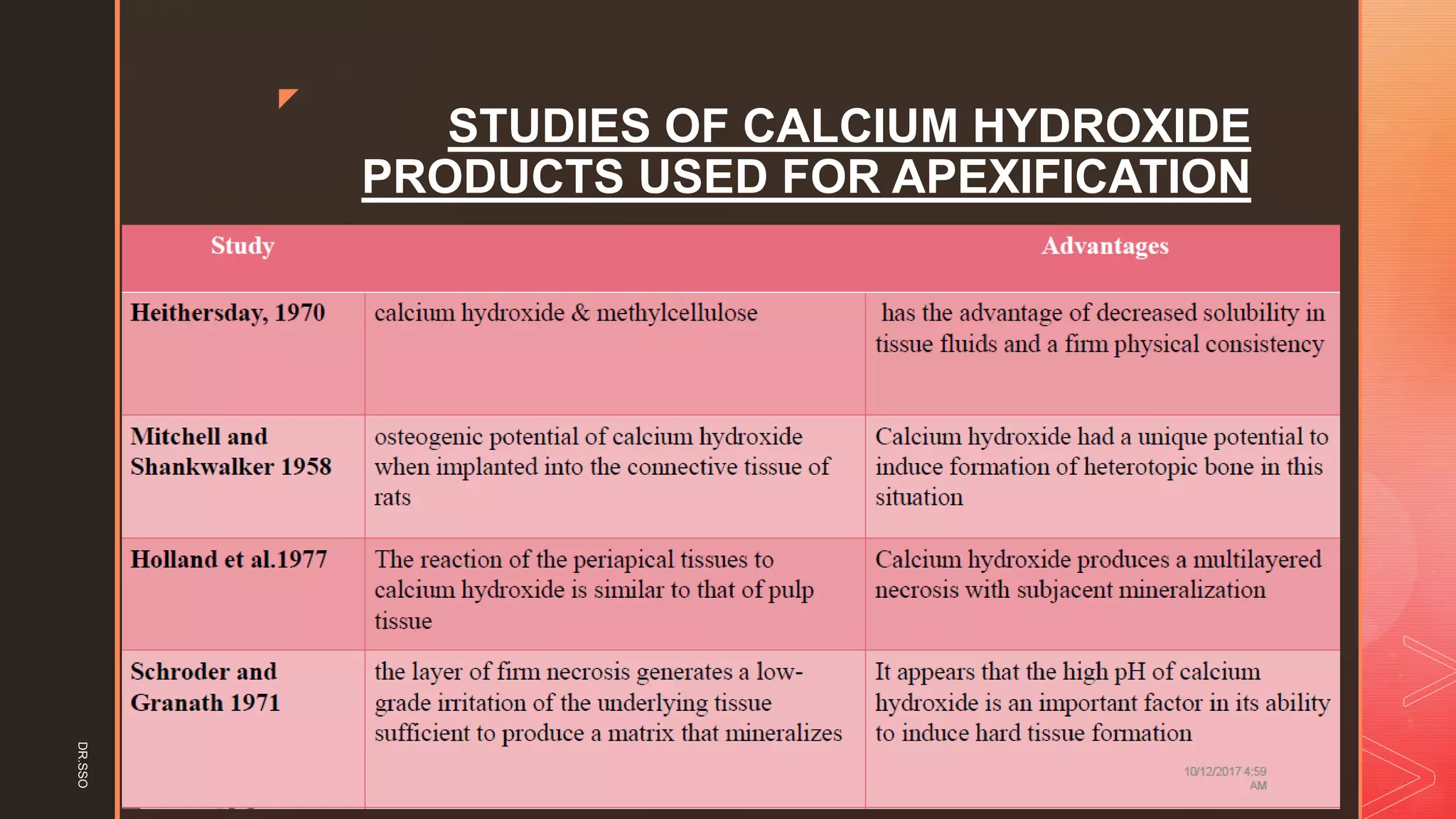
STUDIES OF CALCIUM HYDROXIDE
PRODUCTS USED FOR APEXIFICATION
DR.SSO
z
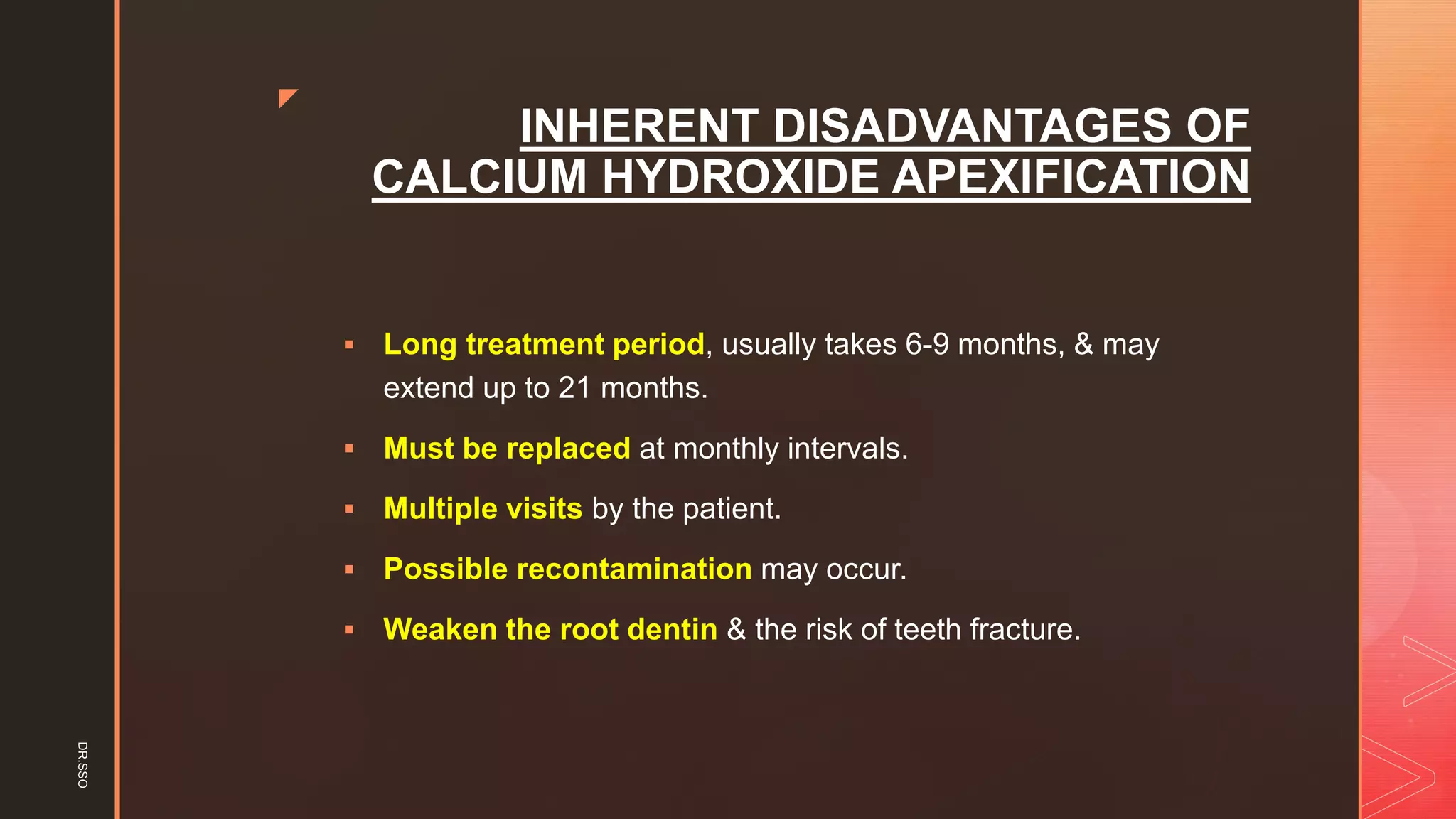
INHERENT DISADVANTAGES OF
CALCIUM HYDROXIDE APEXIFICATION
▪ Long treatment period, usually takes 6-9 months, & may
extend up to 21 months.
▪ Must be replaced at monthly intervals.
▪ Multiple visits by the patient.
▪ Possible recontamination may occur.
▪ Weaken the root dentin & the risk of teeth fracture.
DR.SSO
z
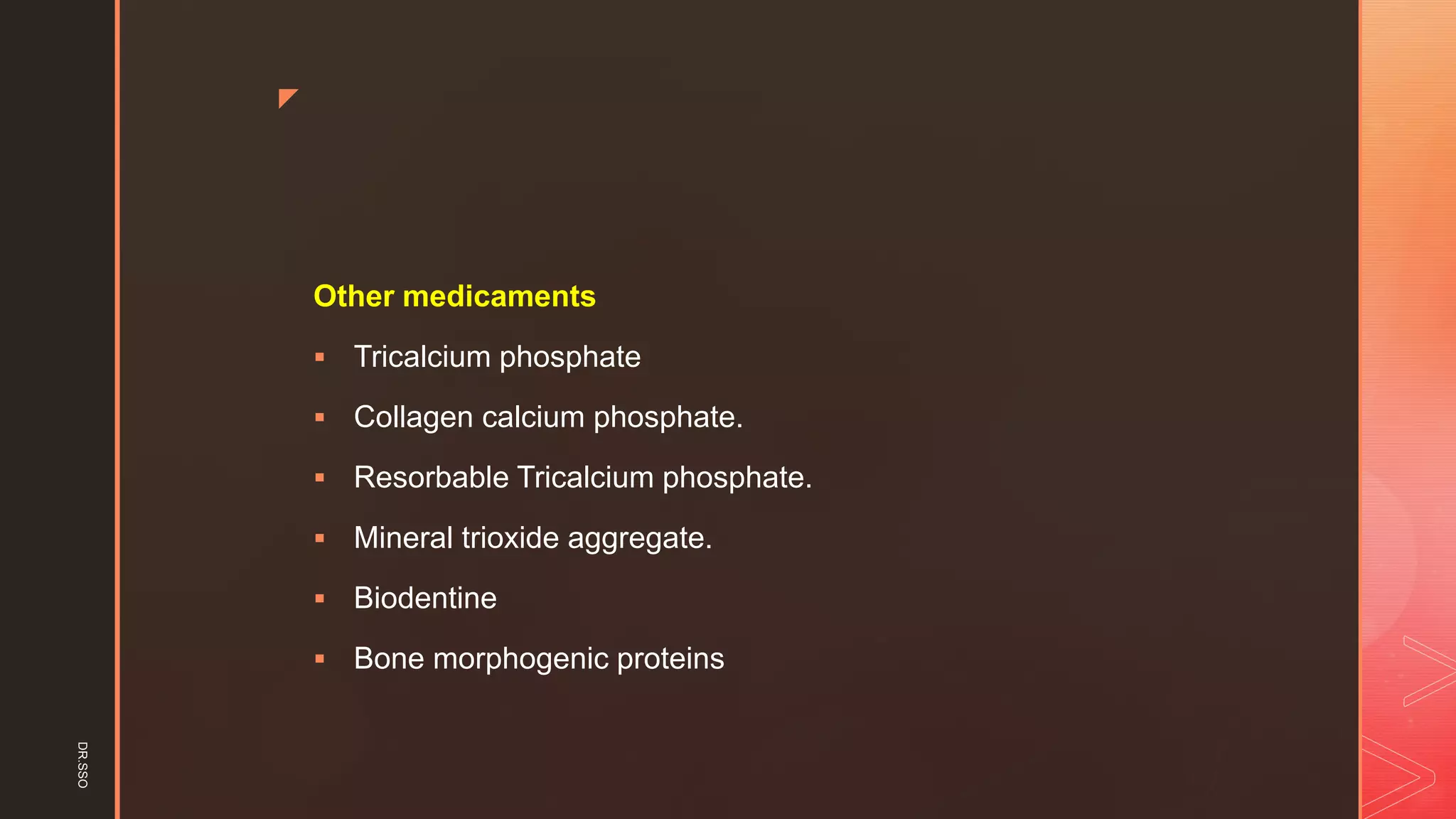
Other medicaments
▪ Tricalcium phosphate
▪ Collagen calcium phosphate.
▪ Resorbable Tricalcium phosphate.
▪ Mineral trioxide aggregate.
▪ Biodentine
▪ Bone morphogenic proteins
DR.SSO
z
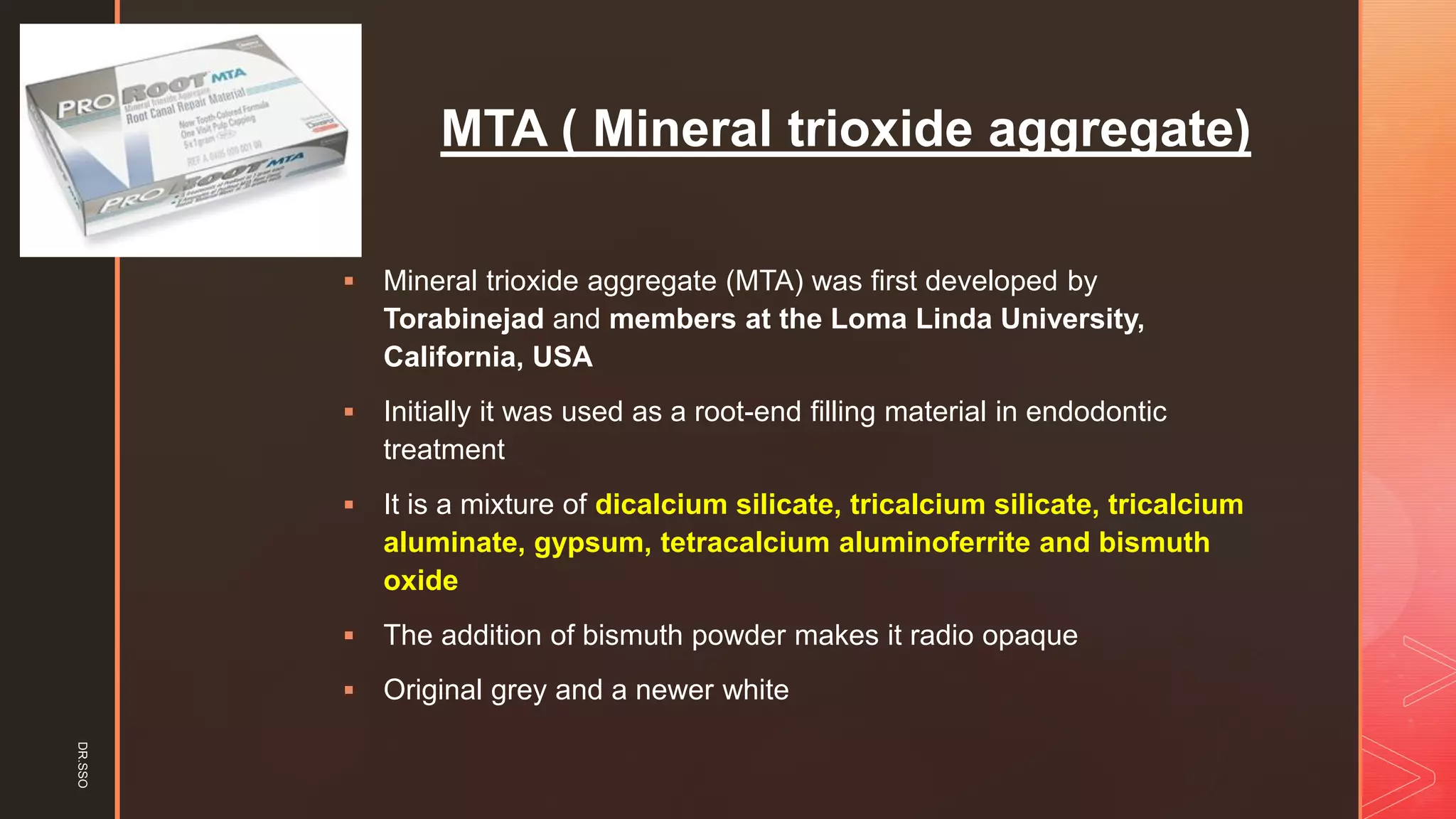
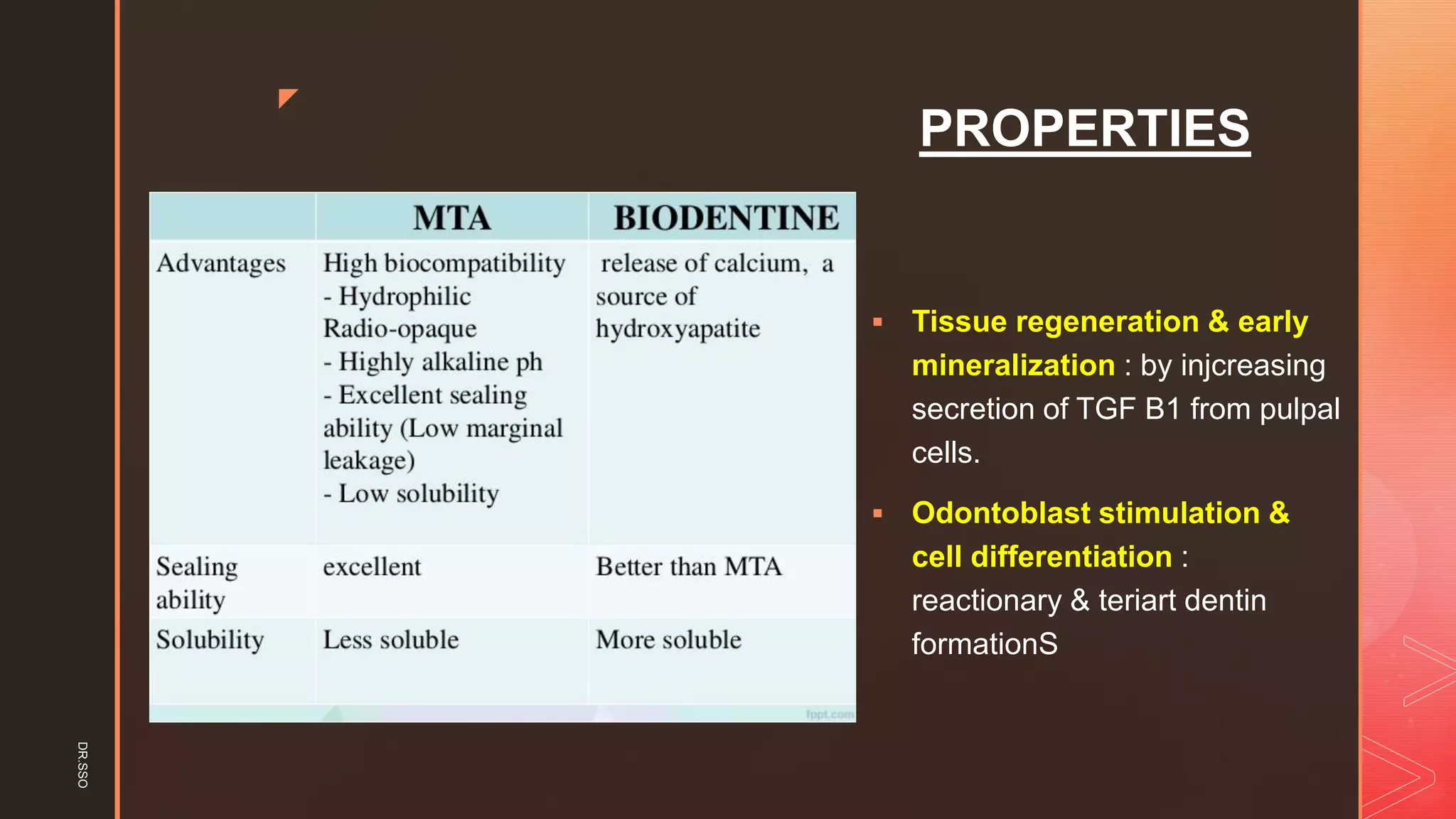
MTA ( Mineral trioxide aggregate)
▪ Mineral trioxide aggregate (MTA) was first developed by
Torabinejad and members at the Loma Linda University,
California, USA
▪ Initially it was used as a root-end filling material in endodontic
treatment
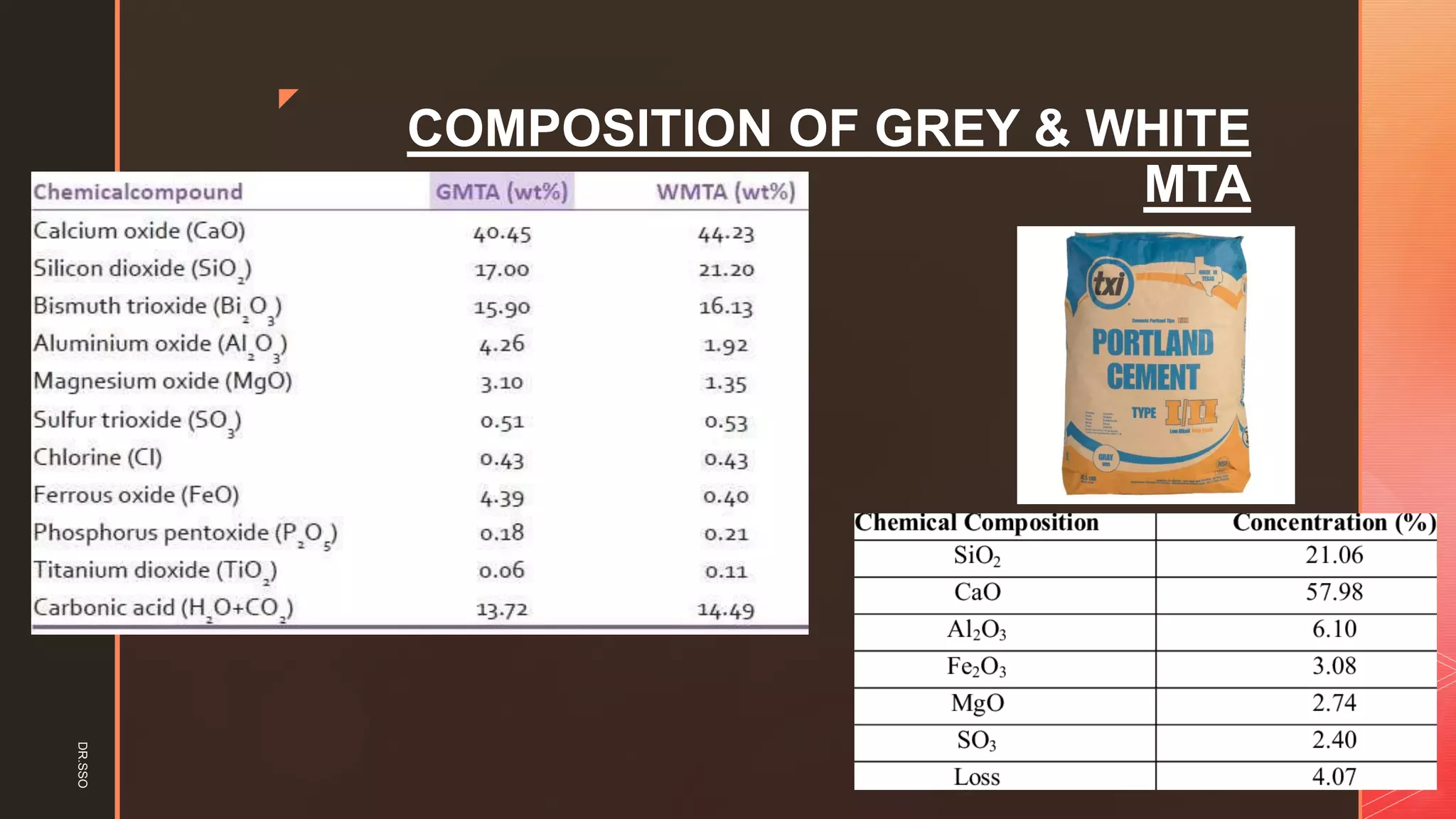
▪ It is a mixture of dicalcium silicate, tricalcium silicate, tricalcium
aluminate, gypsum, tetracalcium aluminoferrite and bismuth
oxide
▪ The addition of bismuth powder makes it radio opaque
▪ Original grey and a newer white
DR.SSO
z
COMPOSITION OF GREY & WHITE
MTA
DR.SSO
z
ADVANTAGES OF MTA
▪ Saves treatment time
▪ Can induce formation (regeneration) of dentin, cementum, bone &
periodontal ligament.
▪ Excellent biocompatibility and appropriate mechanical properties.
▪ Excellent sealing ability.
▪ Produces an artificial barrier, against which an obturating material
can be condensed.
▪ Hardens (sets) in the presence of moisture.
▪ More radiopaque than calcium hydroxide
▪ Vasoconstrictive
DR.SSO
z
PHYSICAL AND CHEMICAL
PROPERTIES OF MTA
Ph
▪ MTA has a pH similar to that of calcium hydroxide of 12.5
▪ This similarity with calcium hydroxide is thought to contribute to
its inductive potential and the resultant hard tissue formation
DR.SSO
z
Sealing ability & marginal adaptation
▪ Less overfills and the superior outcome, with or without blood
contamination of the root cavities
▪ In a study carried out by Fischer et al.1998, using bacterial
leakage model, the time period in which materials began leaking
was 10-63 days for amalgam, 24- 91 days for IRM.
▪ MTA did not begin to leak till day 49.
▪ The superior sealing ability of MTA is thought to be due to the
setting expansion it undergoes in moist environment
DR.SSO
z
Compressive Strength
▪ Low compressive strength; however, this does not compromise
its success as it is used in situations that experience low
compressive forces.
▪ Sluyk et al..(1998) studied setting properties of MTA and found
that MTA reached its maximum resistance level if left
undisturbed for 72 hours before placement of a permanent
restoration
DR.SSO
z
Biocompatibilty
▪ Material analysis of MTA shows the material to be divided into
calcium oxide and calcium phosphate.
▪ The scanning electron microscopic studies revealed that
amorphous calcium phosphate showed maximum ingress and
growth of cells.
▪ They concluded that MTA offers a biological substrate for
osteoblasts and the calcium phosphate phase favored the
change in cell behavior that stimulated growth over MTA
DR.SSO
z
Inductive Potential
▪ Torabinejad et al. and colleagues 1995 used infected premolars
in two-year old beagle dogs, which were prepared to receive gutta-
percha root-fillings
▪ The root fillings were left to contaminate by means of open access
cavities and subsequently underwent root resection and retrograde
fillings with either MTA or amalgam
▪ Although periosteum and new bone formation were found in the
presence of both materials, histologic findings at 10-18 weeks post-
surgery confirmed the formation of cementum exclusively over
the root ends with MTA, which included the MTA itself.
DR.SSO
z
▪ Shabahang et al. 1997 carried out apexification in immature
dog-teeth using Calcium hydroxide osteogenic protein and MTA.
▪ MTA induced hard tissue formation more than any other test
material at 12 weeks, resulting in root end closure
DR.SSO
z
Cytotoxicity
▪ An in vitro study conducted by Osorio et al. in 1998
compared different root canal sealers and root end filling
materials using two assay systems and two different mammalian
fibroblast cell line .
▪ Their conclusions were based on the fact that if a material
exhibits a strong cytotoxicity in cell culture tests, it is very likely
to do so in living tissue. Of the materials tested, MTA was the
least cytotoxic
DR.SSO
z
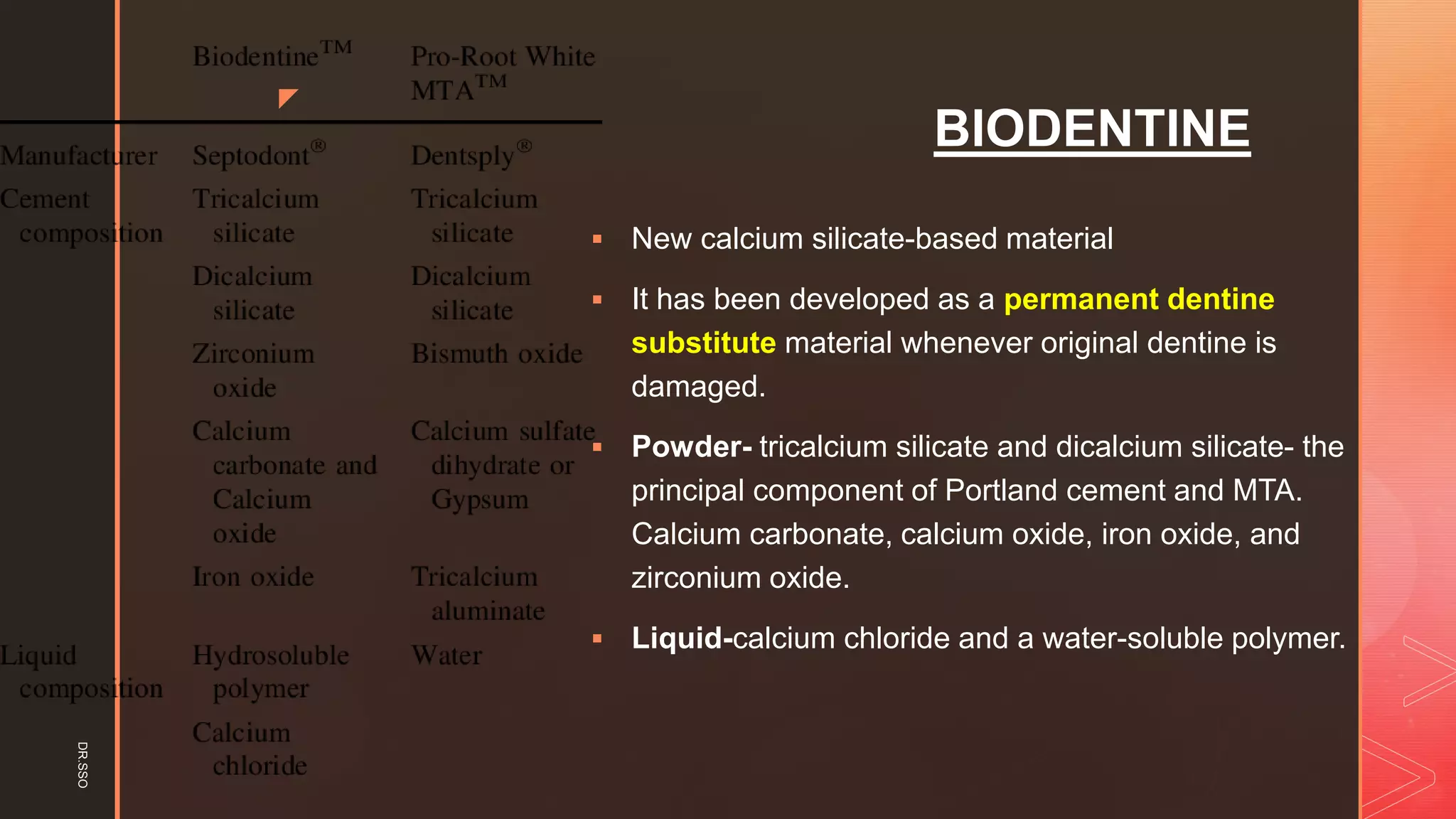
BIODENTINE
▪ New calcium silicate-based material
▪ It has been developed as a permanent dentine
substitute material whenever original dentine is
damaged.
▪ Powder- tricalcium silicate and dicalcium silicate- the
principal component of Portland cement and MTA.
Calcium carbonate, calcium oxide, iron oxide, and
zirconium oxide.
▪ Liquid-calcium chloride and a water-soluble polymer.
DR.SSO
z
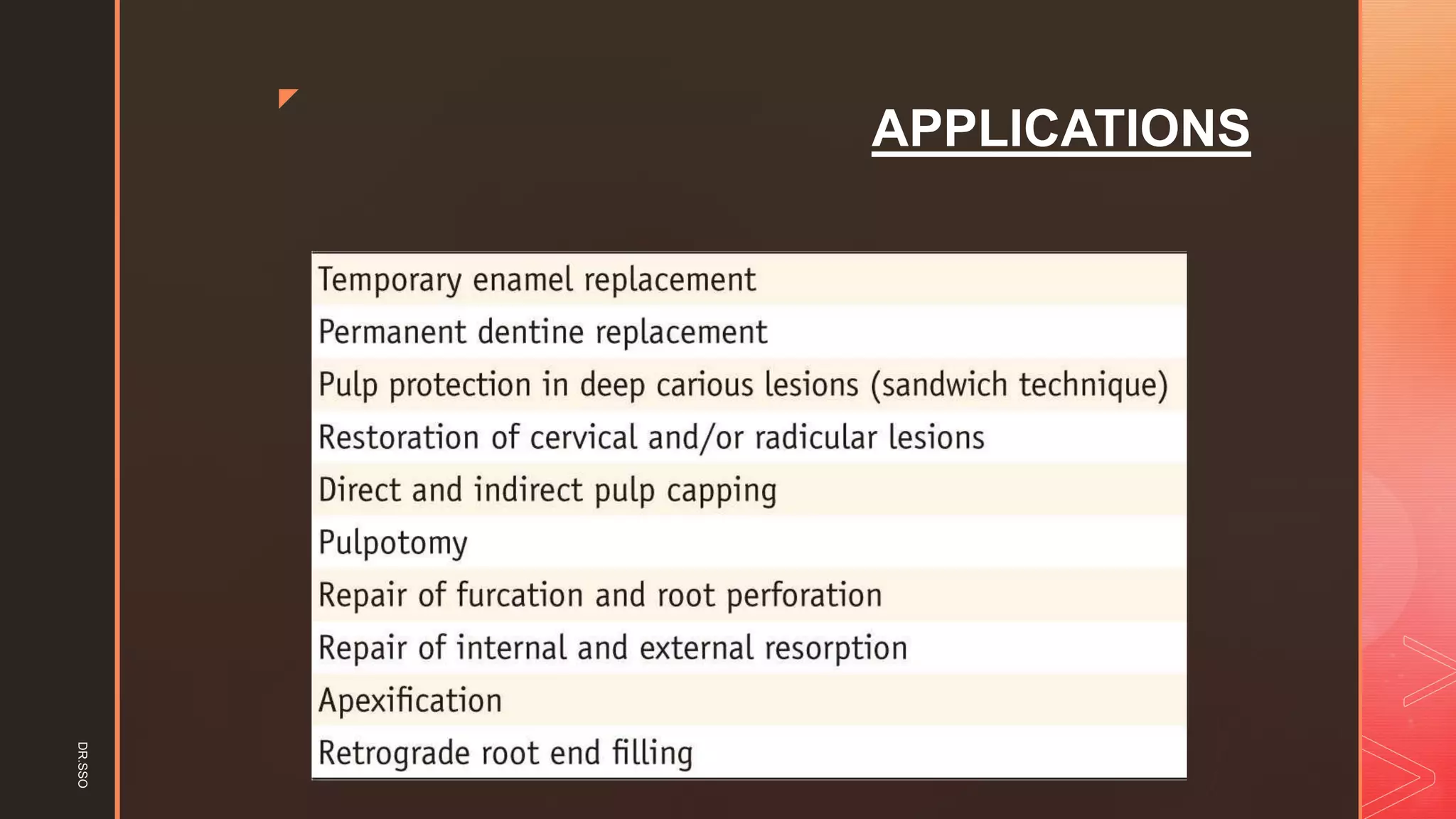
APPLICATIONS
DR.SSO
z
▪ Han and Okiji (2011) compared calcium and silicon uptake by
adjacent root canal dentine in the presence of phosphate buffered
saline using Biodentine and ProRoot MTA.
▪ The results showed that both materials formed a tag-like
structure composed of the material itself or calcium- or phosphate
rich crystalline deposits.
▪ The thickness of the calcium and silicon -rich layers increased over
time, and the thickness of the calcium and silicon -rich layer
was significantly larger in Biodentine compared to MTA after 30
and 90 days, concluding that the dentine element uptake was
greater for Biodentine than for MTA.
DR.SSO
z
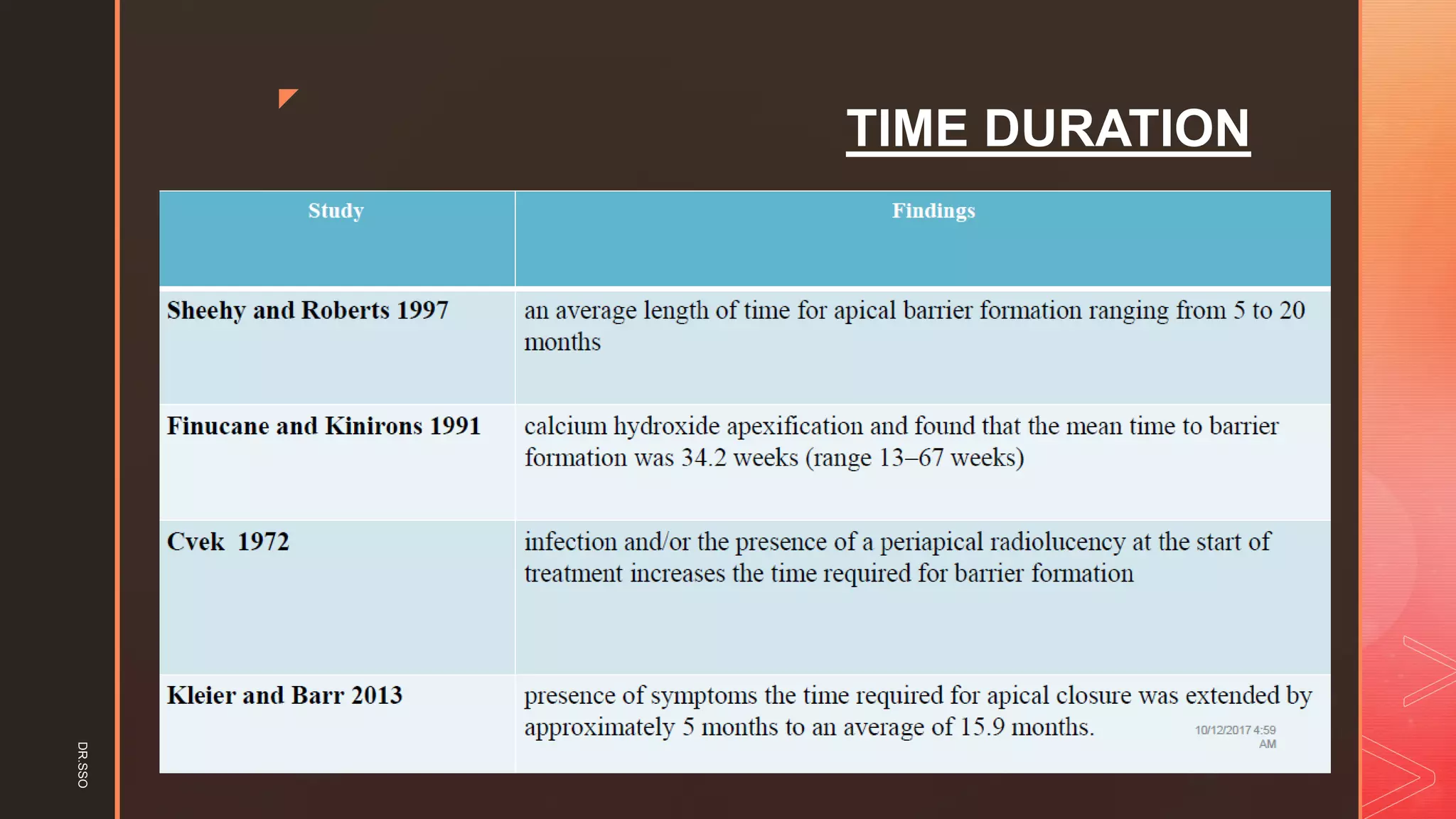
TIME DURATION
DR.SSO
z
PROPERTIES
▪ Tissue regeneration & early
mineralization : by injcreasing
secretion of TGF B1 from pulpal
cells.
▪ Odontoblast stimulation &
cell differentiation :
reactionary & teriart dentin
formationS
DR.SSO
z
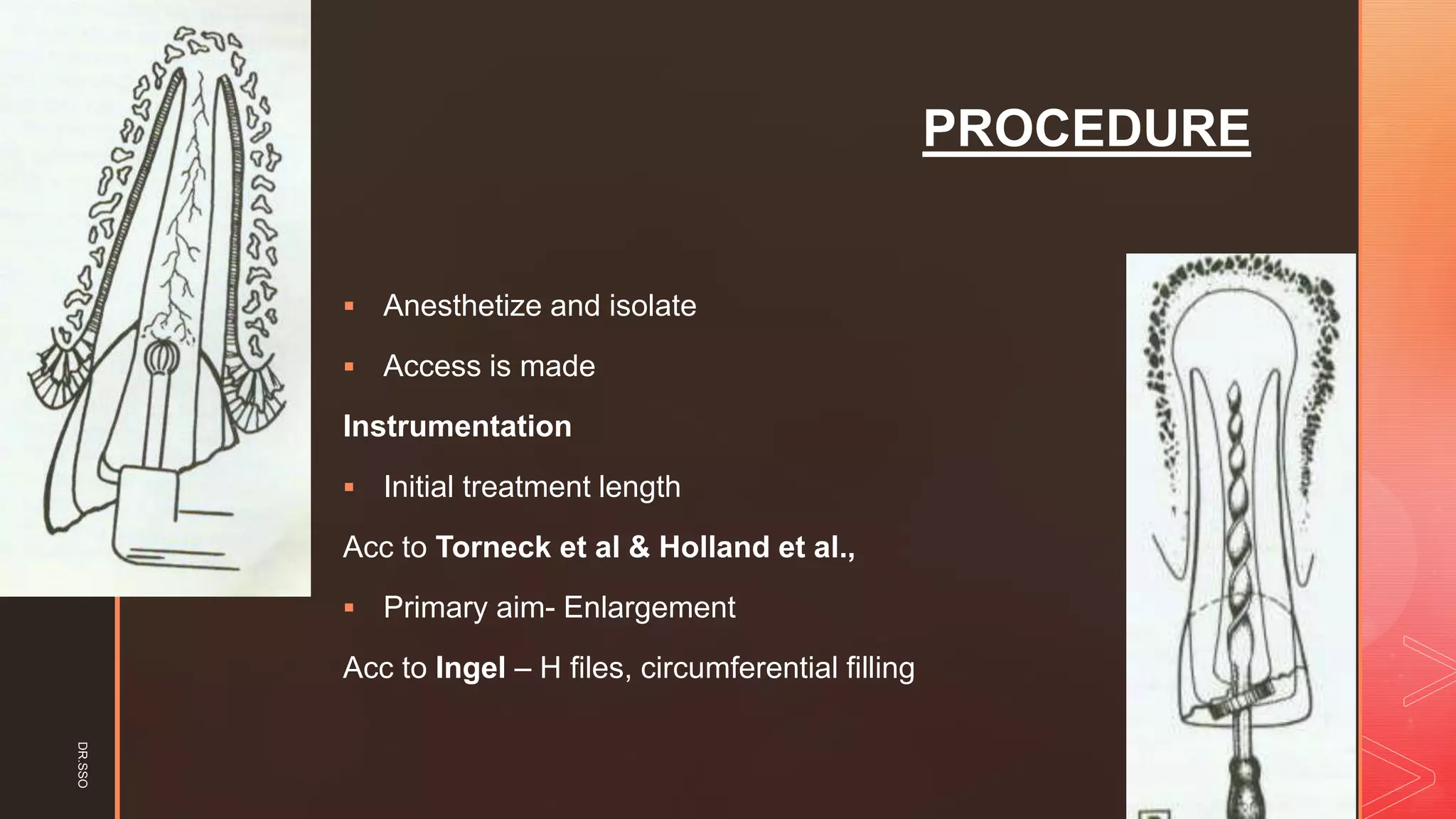
PROCEDURE
▪ Anesthetize and isolate
▪ Access is made
Instrumentation
▪ Initial treatment length
Acc to Torneck et al & Holland et al.,
▪ Primary aim- Enlargement
Acc to Ingel – H files, circumferential filling
DR.SSO
z
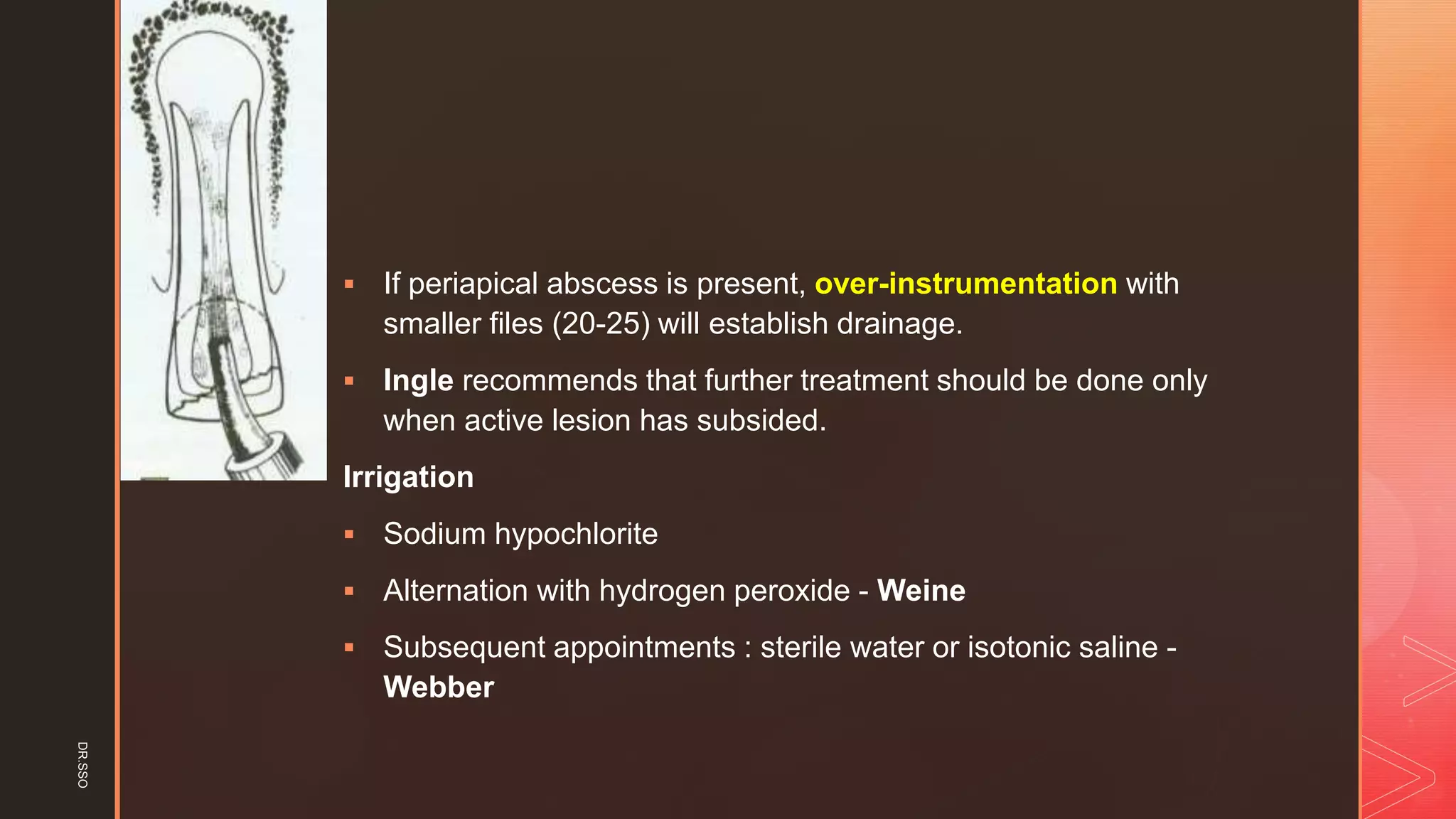
▪ If periapical abscess is present, over-instrumentation with
smaller files (20-25) will establish drainage.
▪ Ingle recommends that further treatment should be done only
when active lesion has subsided.
Irrigation
▪ Sodium hypochlorite
▪ Alternation with hydrogen peroxide - Weine
▪ Subsequent appointments : sterile water or isotonic saline -
Webber
DR.SSO
z
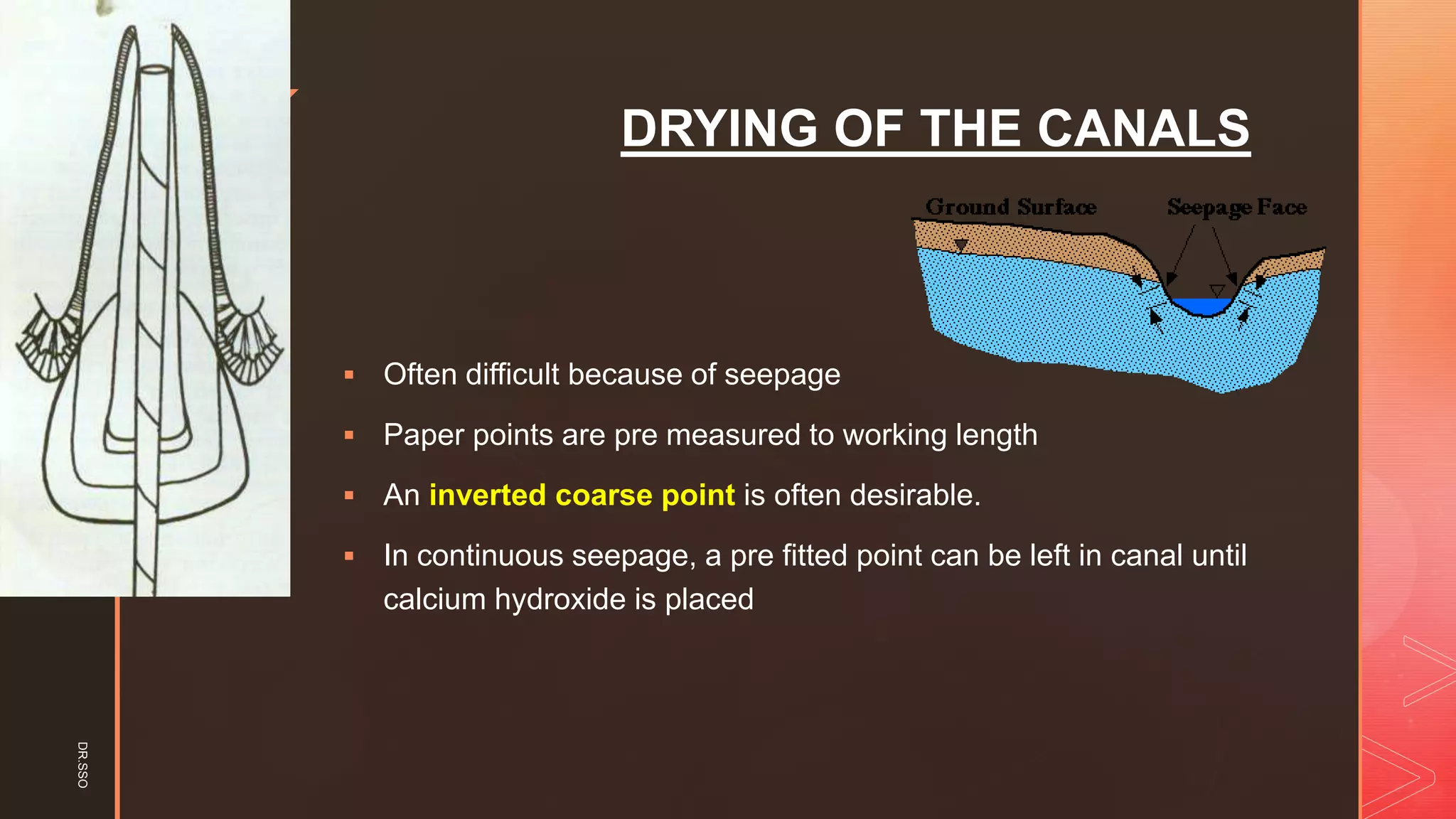
DRYING OF THE CANALS
▪ Often difficult because of seepage
▪ Paper points are pre measured to working length
▪ An inverted coarse point is often desirable.
▪ In continuous seepage, a pre fitted point can be left in canal until
calcium hydroxide is placed
DR.SSO
z
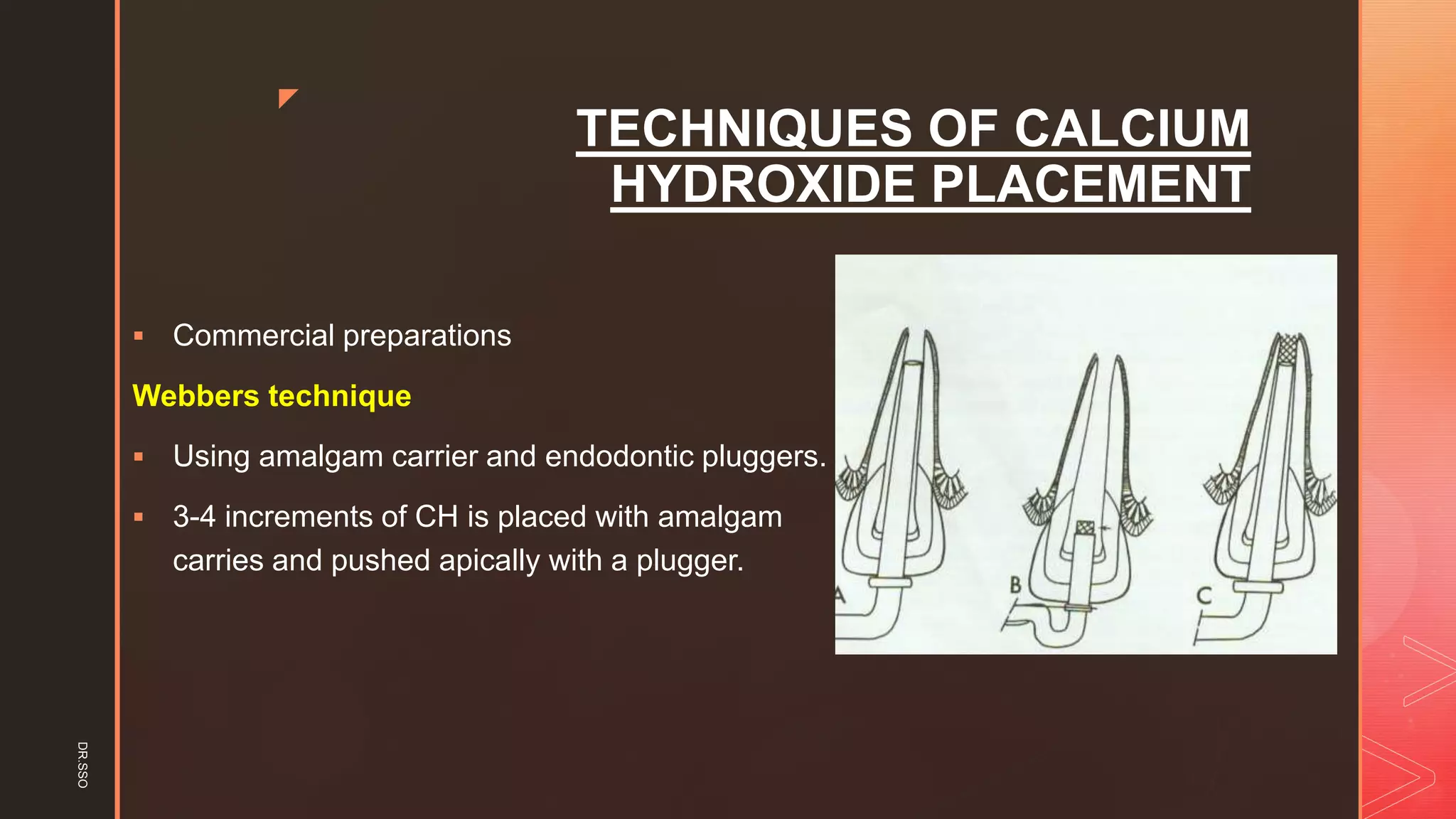
TECHNIQUES OF CALCIUM
HYDROXIDE PLACEMENT
▪ Commercial preparations
Webbers technique
▪ Using amalgam carrier and endodontic pluggers.
▪ 3-4 increments of CH is placed with amalgam
carries and pushed apically with a plugger.
DR.SSO
z
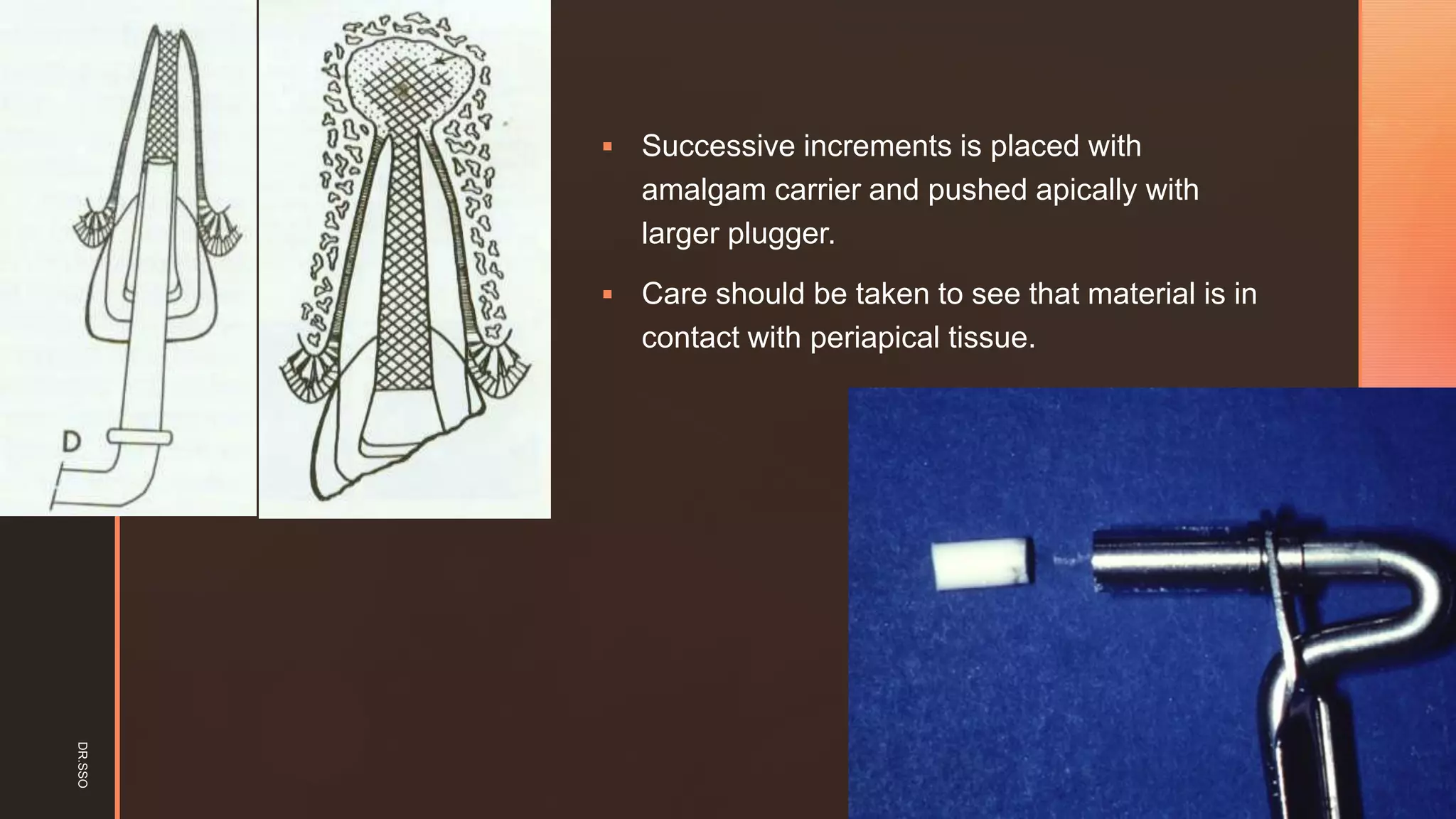
▪ Successive increments is placed with
amalgam carrier and pushed apically with
larger plugger.
▪ Care should be taken to see that material is in
contact with periapical tissue.
DR.SSO
z
TEMPORARY RESTORATION
ZOE /IRM
▪ Material is vertically condensed to make 4-5 mm of space in
access.
▪ Break of occlusal seal leads to, contamination and dilution of
paste, also exposure of healing tissues to microorganisms.
DR.SSO
z
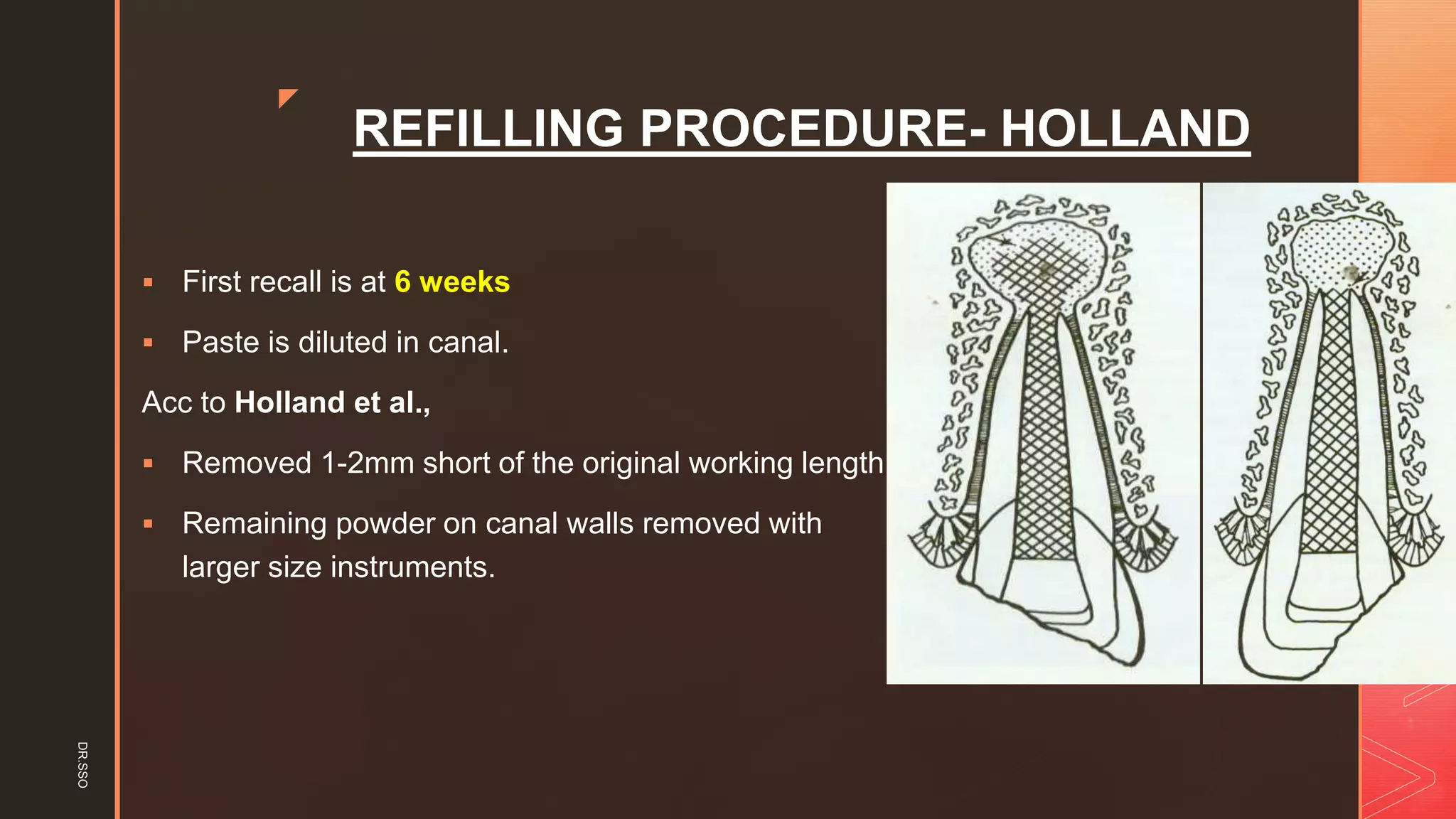
REFILLING PROCEDURE- HOLLAND
▪ First recall is at 6 weeks
▪ Paste is diluted in canal.
Acc to Holland et al.,
▪ Removed 1-2mm short of the original working length
▪ Remaining powder on canal walls removed with
larger size instruments.
DR.SSO
z
RECALL
▪ Recalled 6 wks after second replacement, later 2-3 months
there after until calcific barrier is formed radiographically.
▪ Total time 12 – 18 months.
▪ Subsequent replacement depends upon radiographic
examination.
▪ If any symptoms develop refilling is necessary.
DR.SSO
z
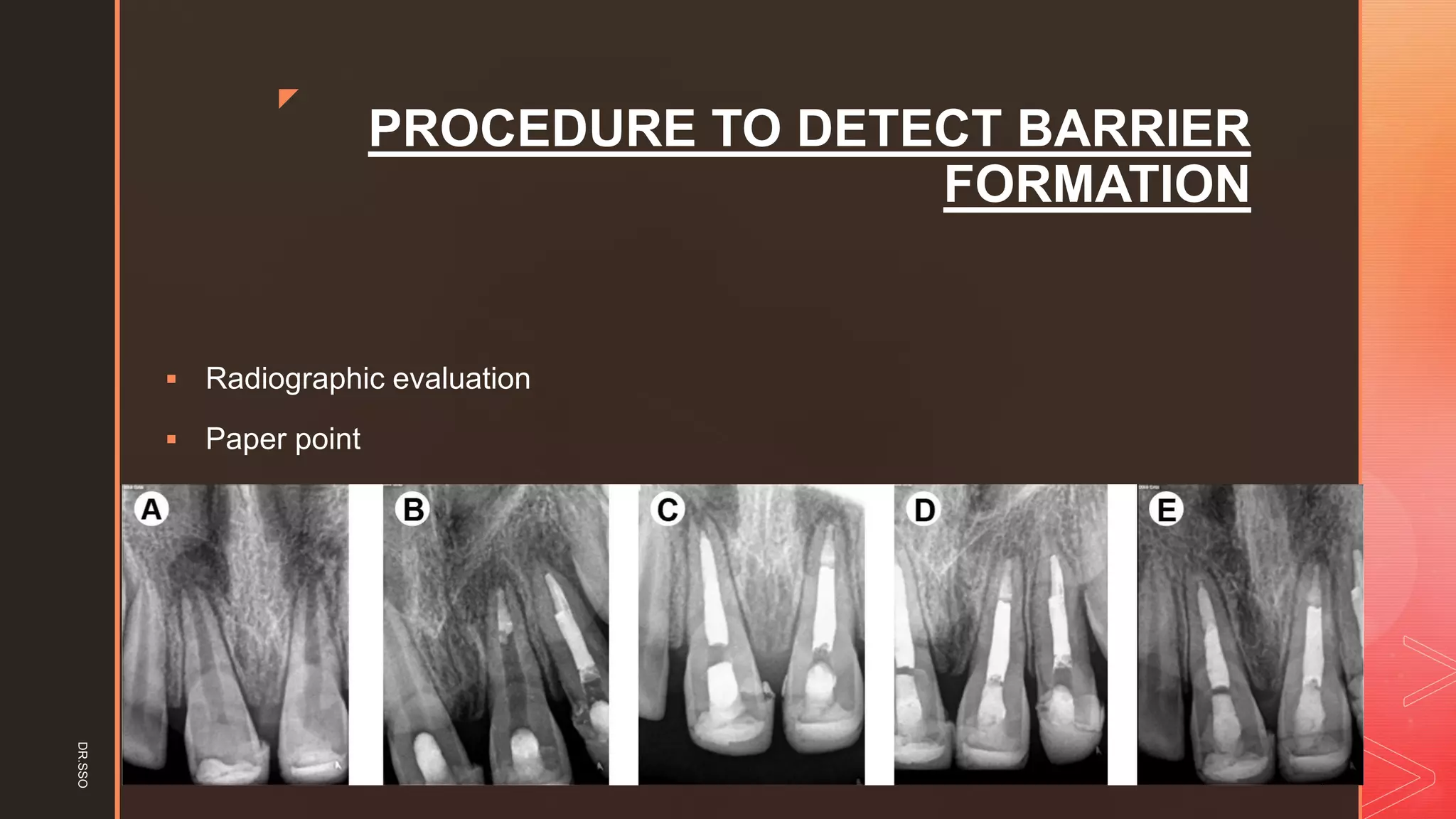
PROCEDURE TO DETECT BARRIER
FORMATION
▪ Radiographic evaluation
▪ Paper point
DR.SSO
z
EVIDENCE OF ABF
Frank has described four successful results of apexification
treatments:
I. Continued closure of the canal and apex to a normal
appearance
II. A dome shaped apical closure with the canal retaining a
blunderbuss appearance
III. No apparent radiographic change but a positive stop in the
apical area
IV. Positive stop and radiographic evidence of a barrier coronal to
the anatomic apex of the tooth.
DR.SSO
z
DR.SSO
z
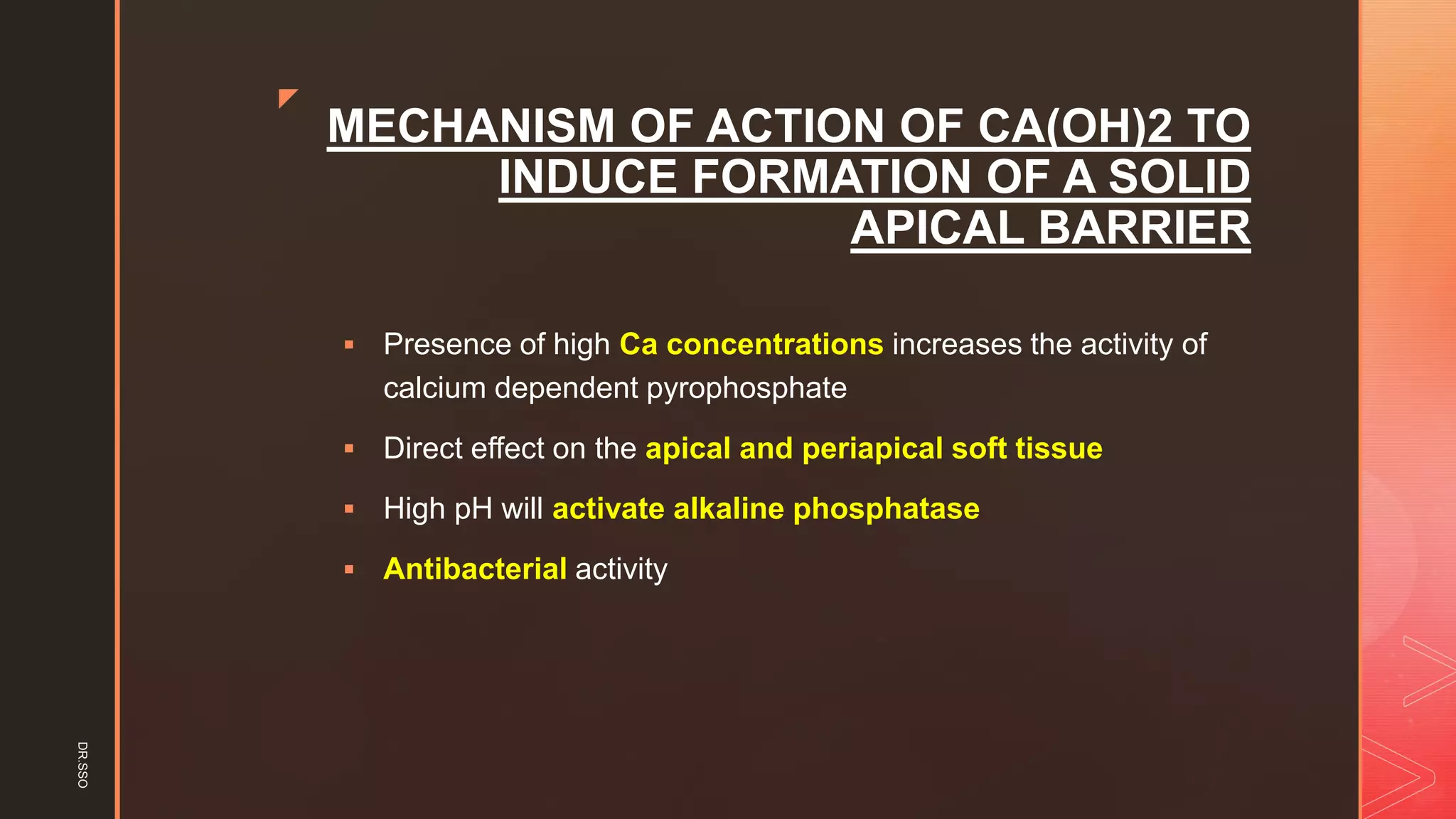
MECHANISM OF ACTION OF CA(OH)2 TO
INDUCE FORMATION OF A SOLID
APICAL BARRIER
▪ Presence of high Ca concentrations increases the activity of
calcium dependent pyrophosphate
▪ Direct effect on the apical and periapical soft tissue
▪ High pH will activate alkaline phosphatase
▪ Antibacterial activity
DR.SSO
z
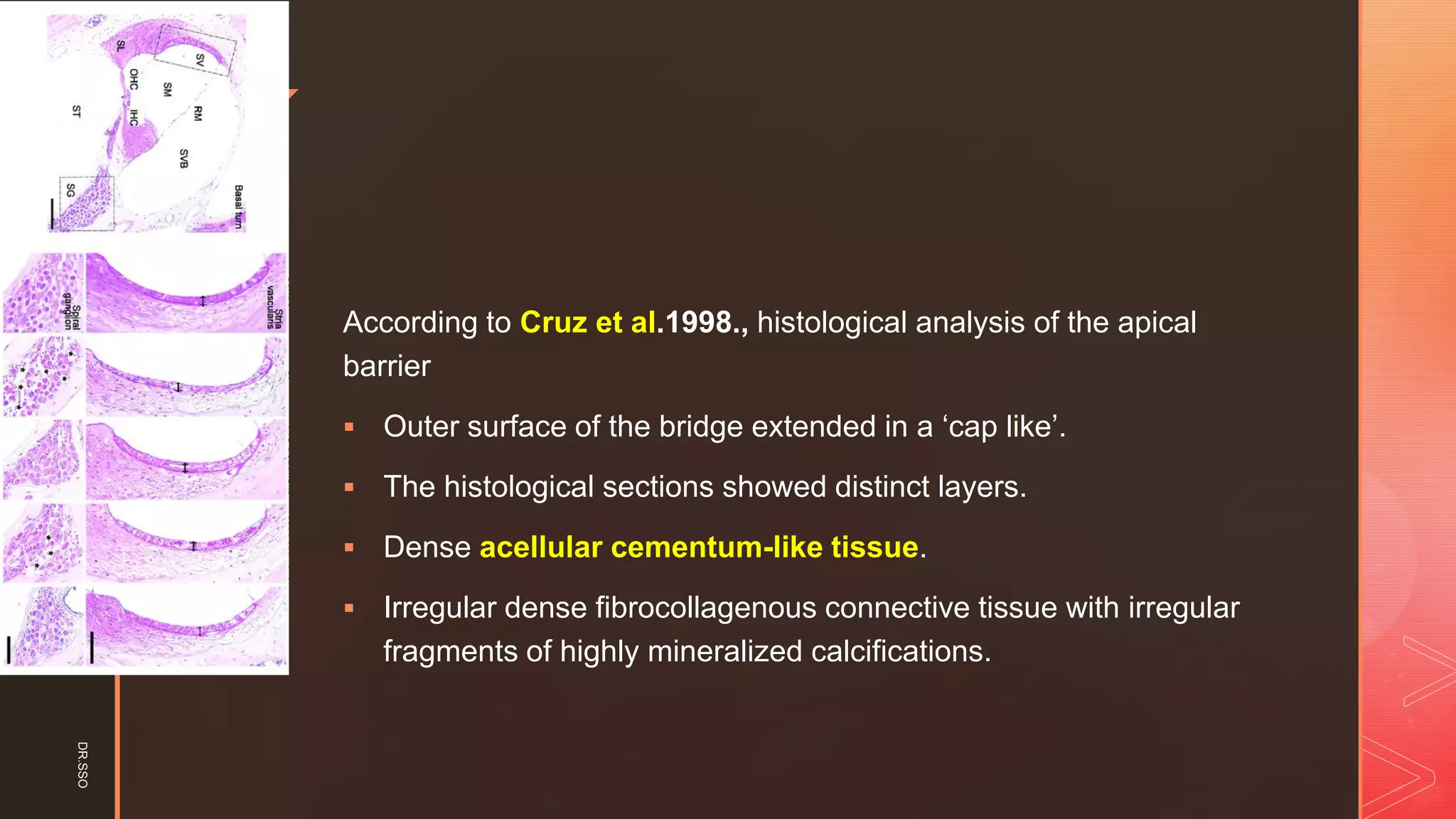
According to Cruz et al.1998., histological analysis of the apical
barrier
▪ Outer surface of the bridge extended in a ‘cap like’.
▪ The histological sections showed distinct layers.
▪ Dense acellular cementum-like tissue.
▪ Irregular dense fibrocollagenous connective tissue with irregular
fragments of highly mineralized calcifications.
DR.SSO
z
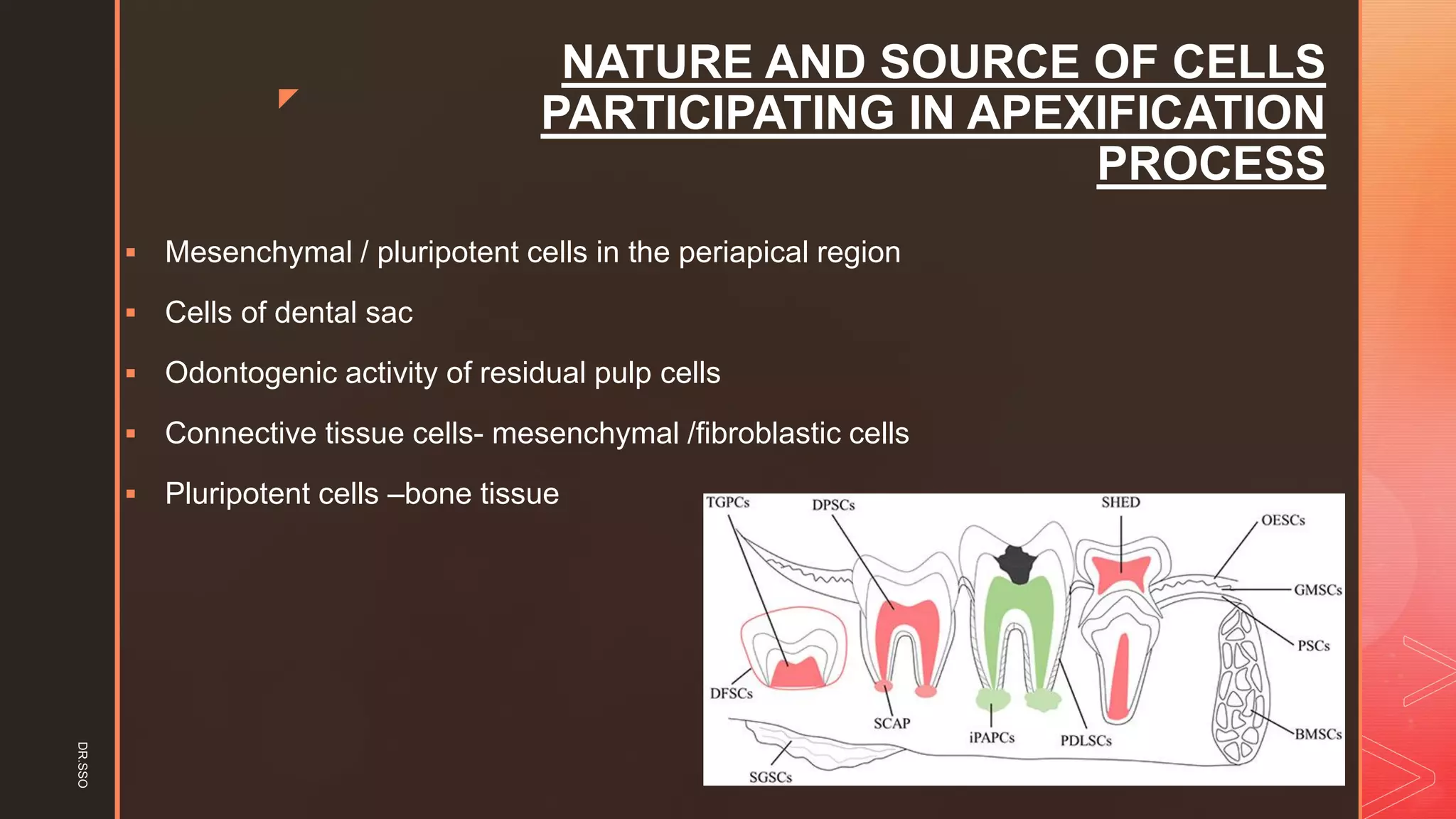
NATURE AND SOURCE OF CELLS
PARTICIPATING IN APEXIFICATION
PROCESS
▪ Mesenchymal / pluripotent cells in the periapical region
▪ Cells of dental sac
▪ Odontogenic activity of residual pulp cells
▪ Connective tissue cells- mesenchymal /fibroblastic cells
▪ Pluripotent cells –bone tissue
DR.SSO
z
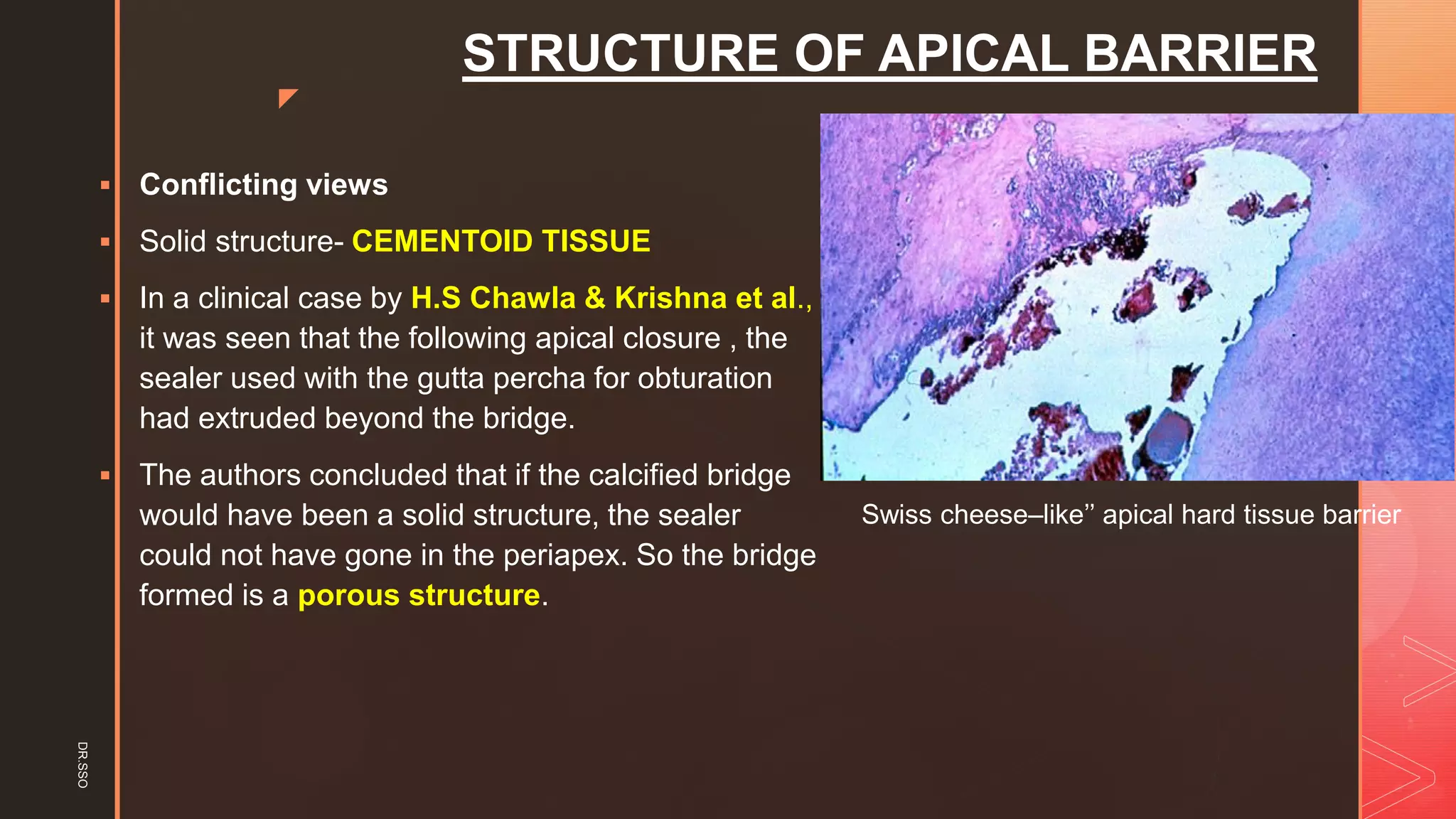
STRUCTURE OF APICAL BARRIER
▪ Conflicting views
▪ Solid structure- CEMENTOID TISSUE
▪ In a clinical case by H.S Chawla & Krishna et al.,
it was seen that the following apical closure , the
sealer used with the gutta percha for obturation
had extruded beyond the bridge.
▪ The authors concluded that if the calcified bridge
would have been a solid structure, the sealer
could not have gone in the periapex. So the bridge
formed is a porous structure.
Swiss cheese–like’’ apical hard tissue barrier
DR.SSO
z
Final obturation only if;
1. Absence of any symptoms
2. Absence of any fistula or sinus
3. Absence or decrease in mobility
4. Evidence of firm stop clinically as well as radiographically
DR.SSO
z
Regeneration vs Revascularisation
▪ Pulp revascularization = induction of angiogenesis in
endodontically treated tooth
▪ Pulp regeneration = pulp revascularization + restoration of
functional odontoblast & or nerve fibers (restoration of PDC)
Regeneration cannot occur without revascularization but
Revascularisation occur without regeneration (of
odontoblasts)
DR.SSO
z
DR.SSO
z
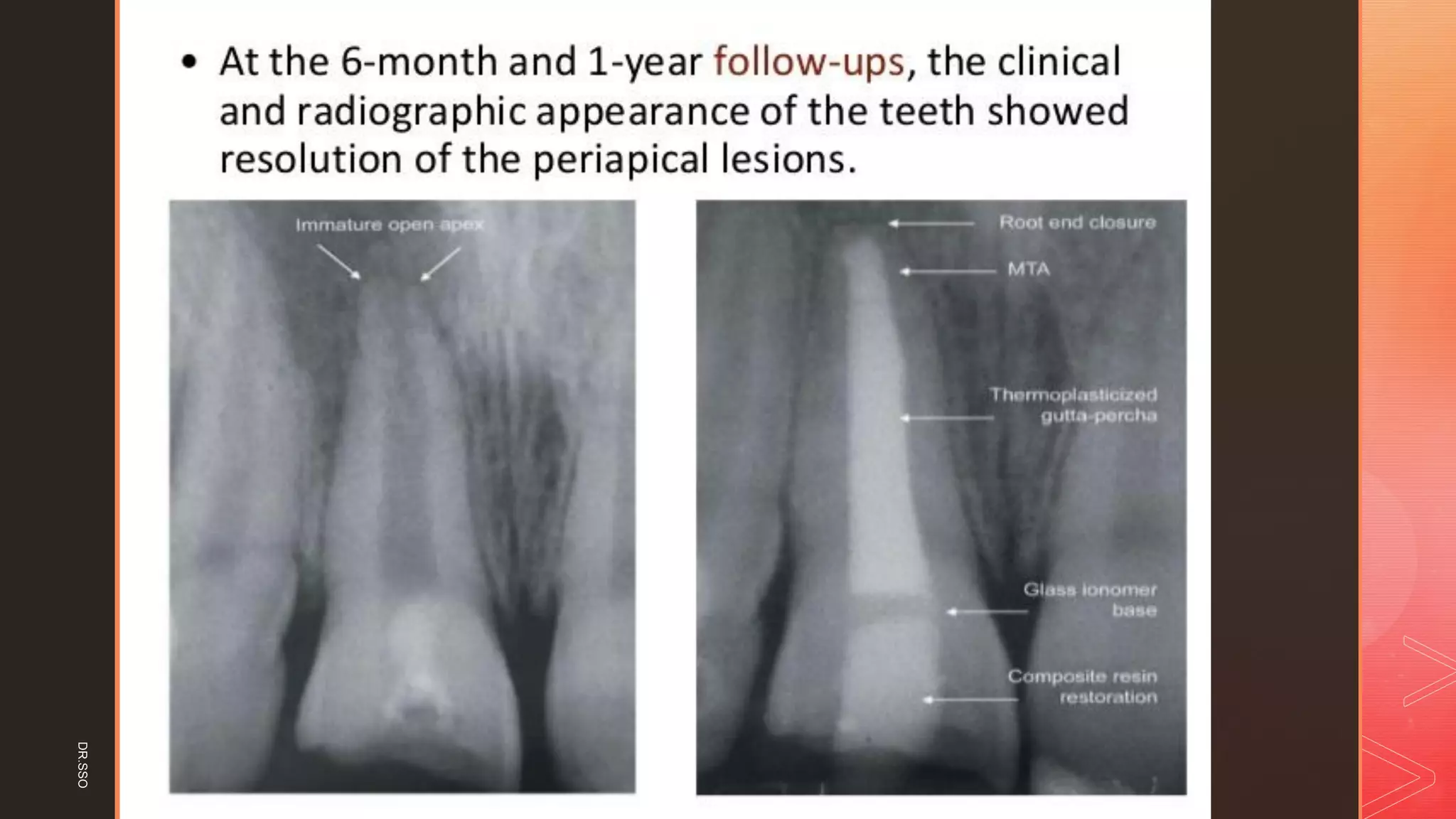
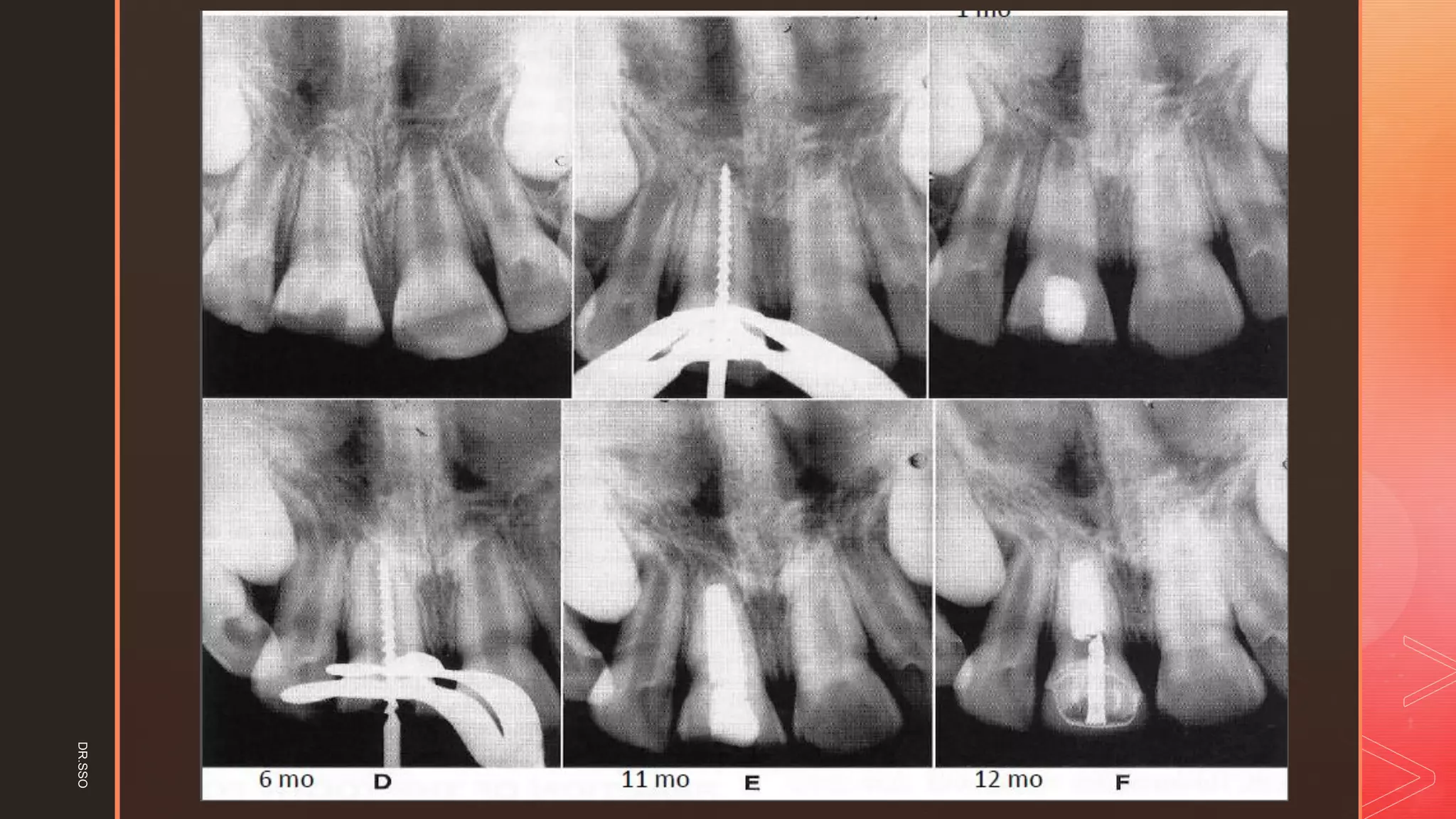
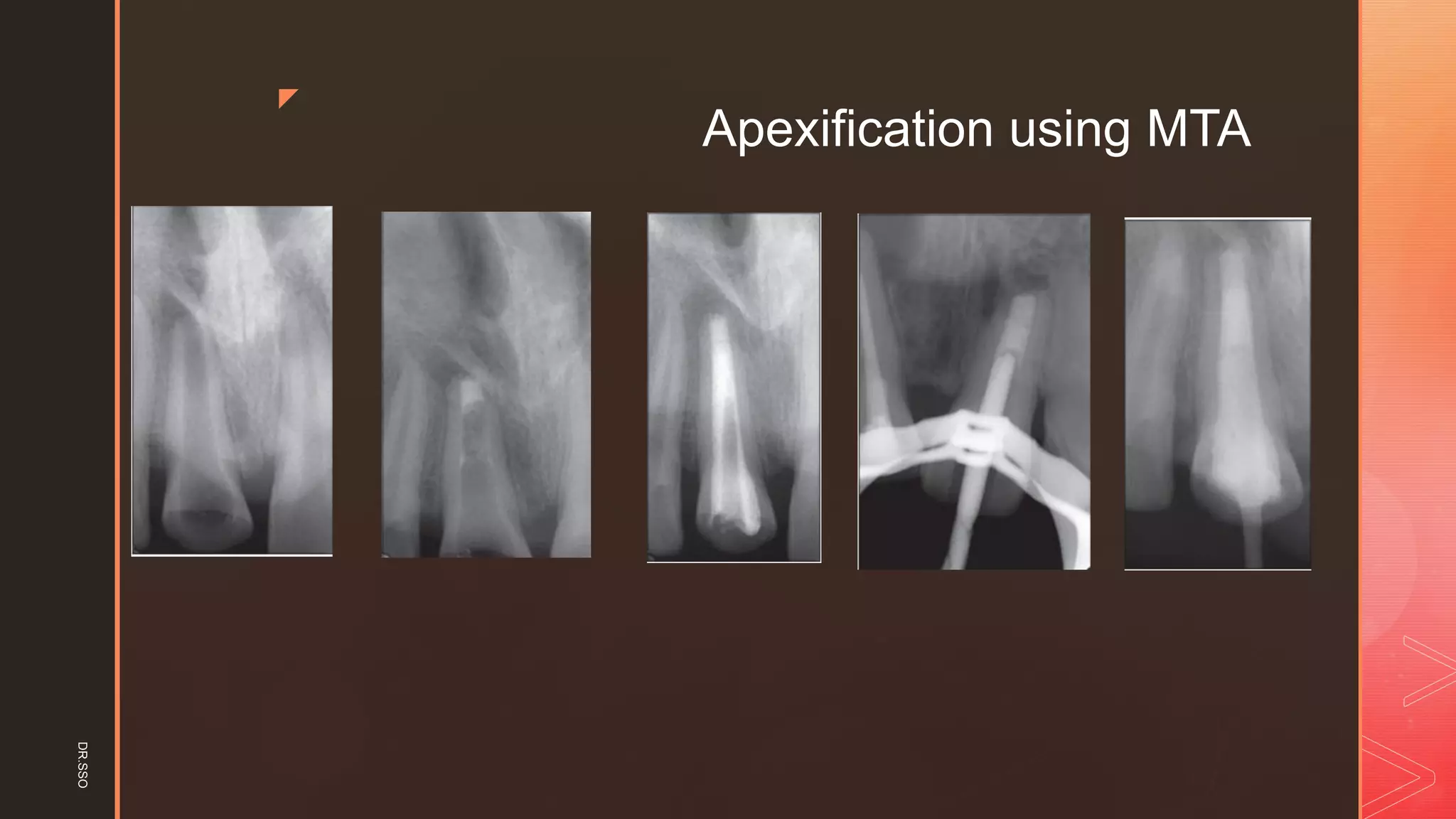
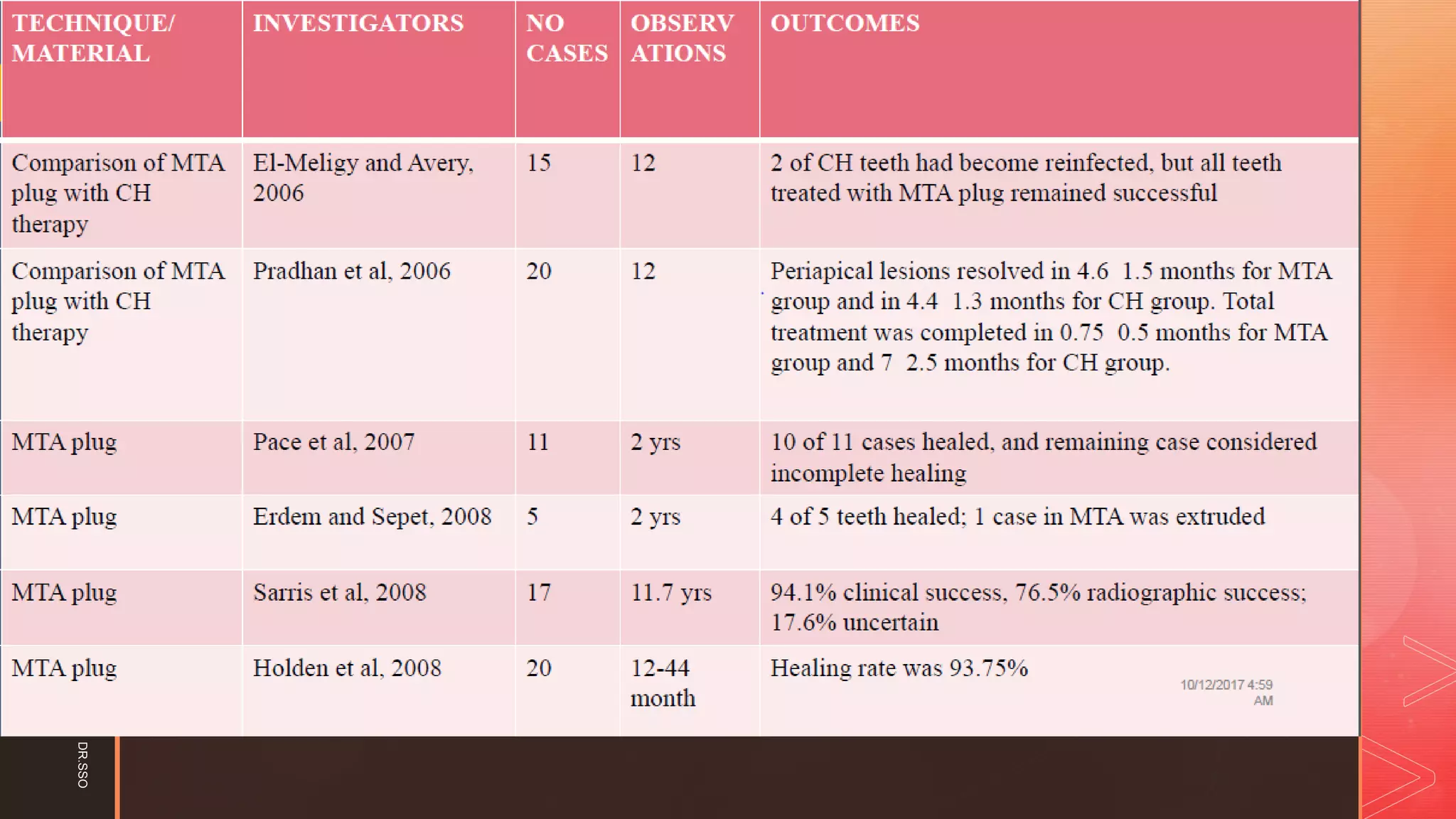
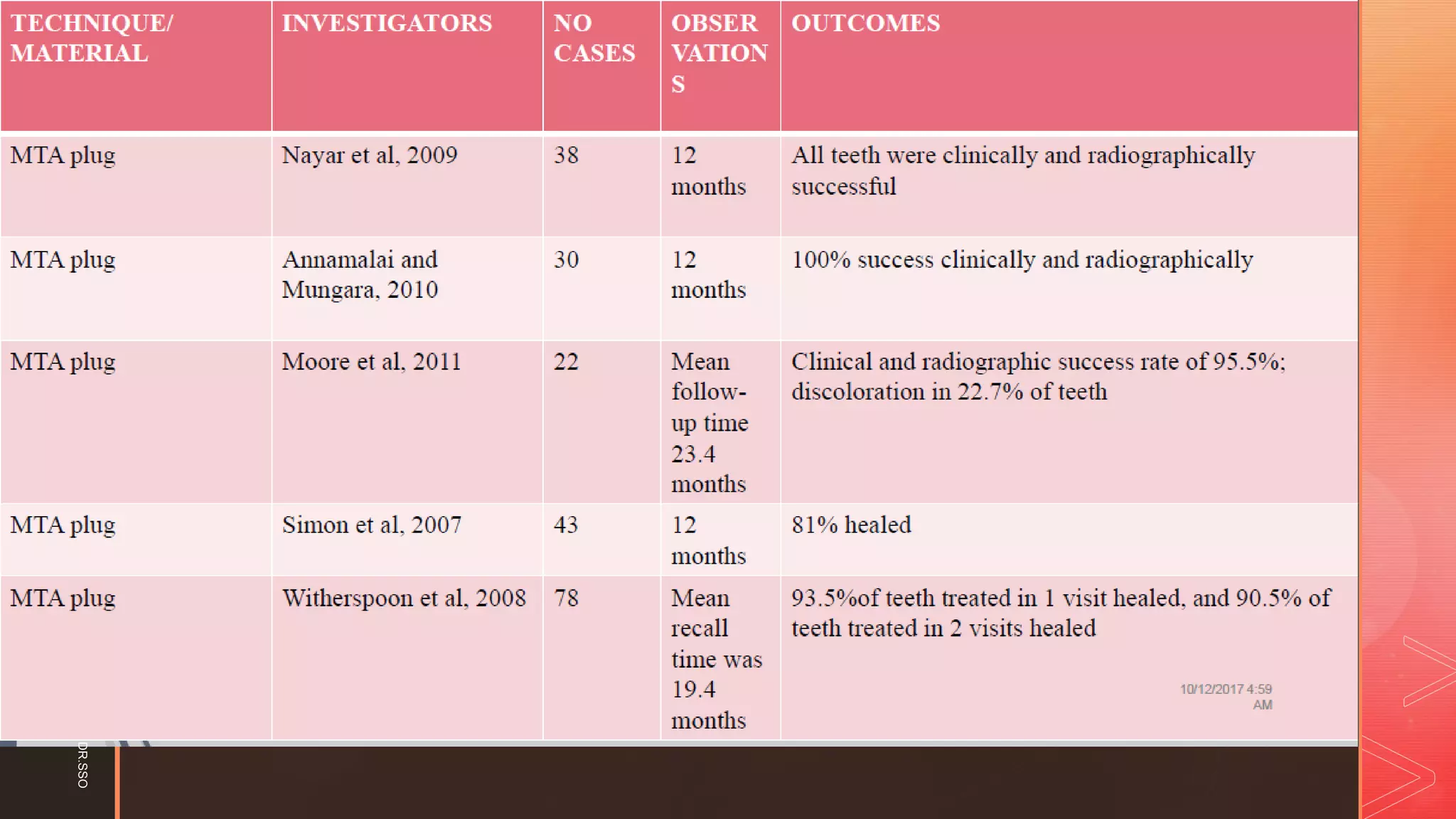
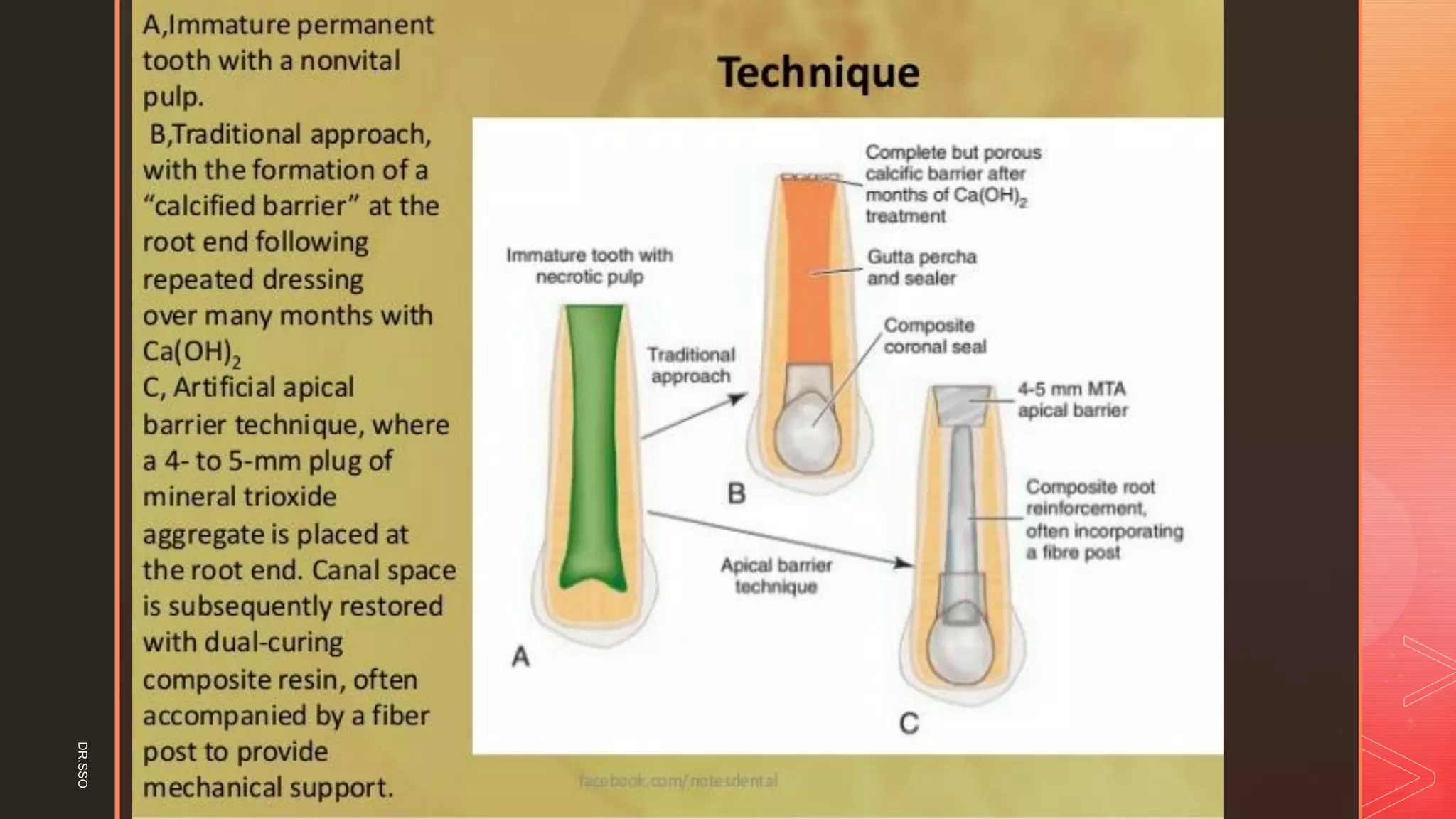
Apexification using MTA
DR.SSO
z
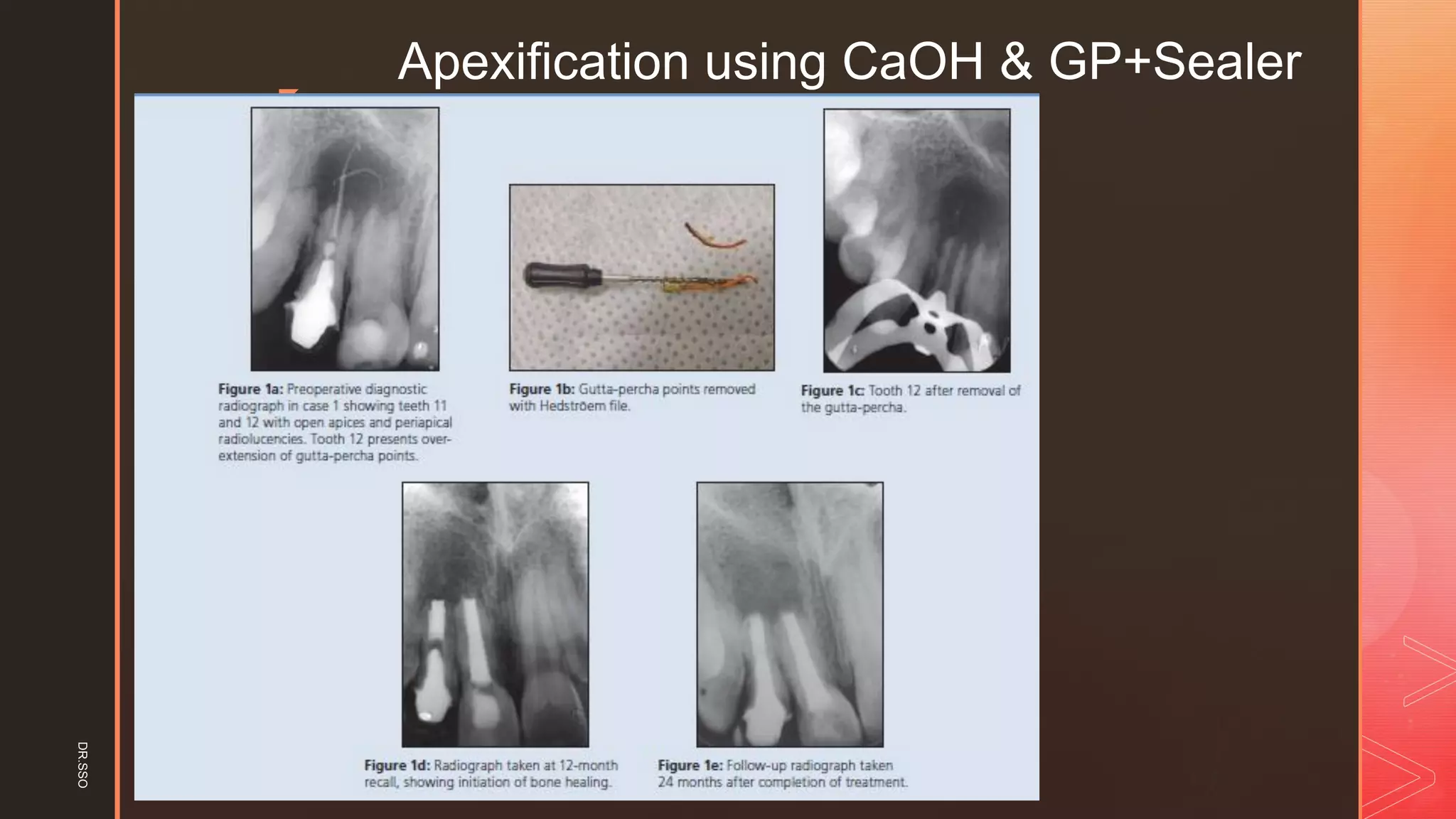
Apexification using CaOH & GP+SealerDR.SSO
z
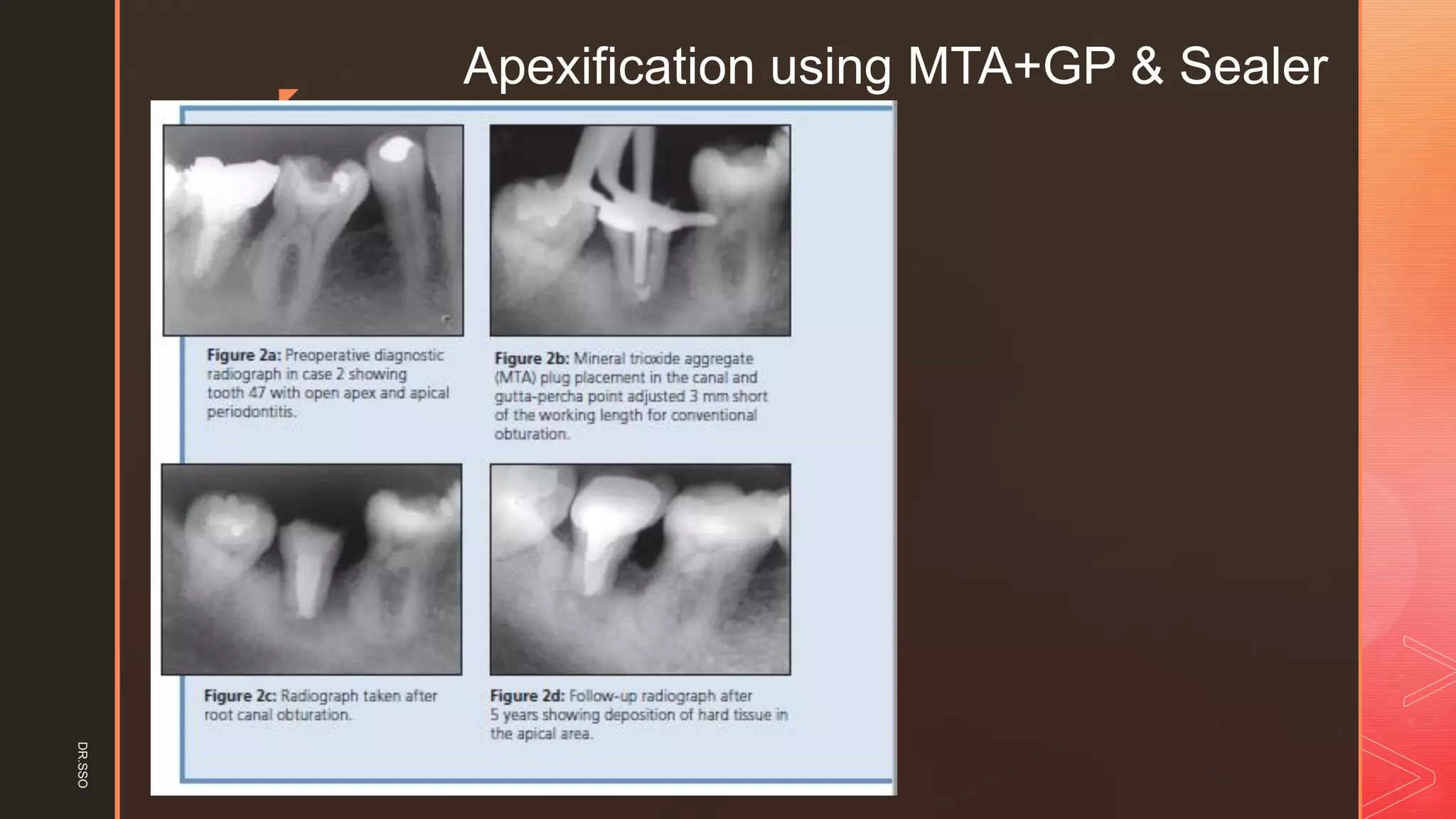
Apexification using MTA+GP & SealerDR.SSO
z
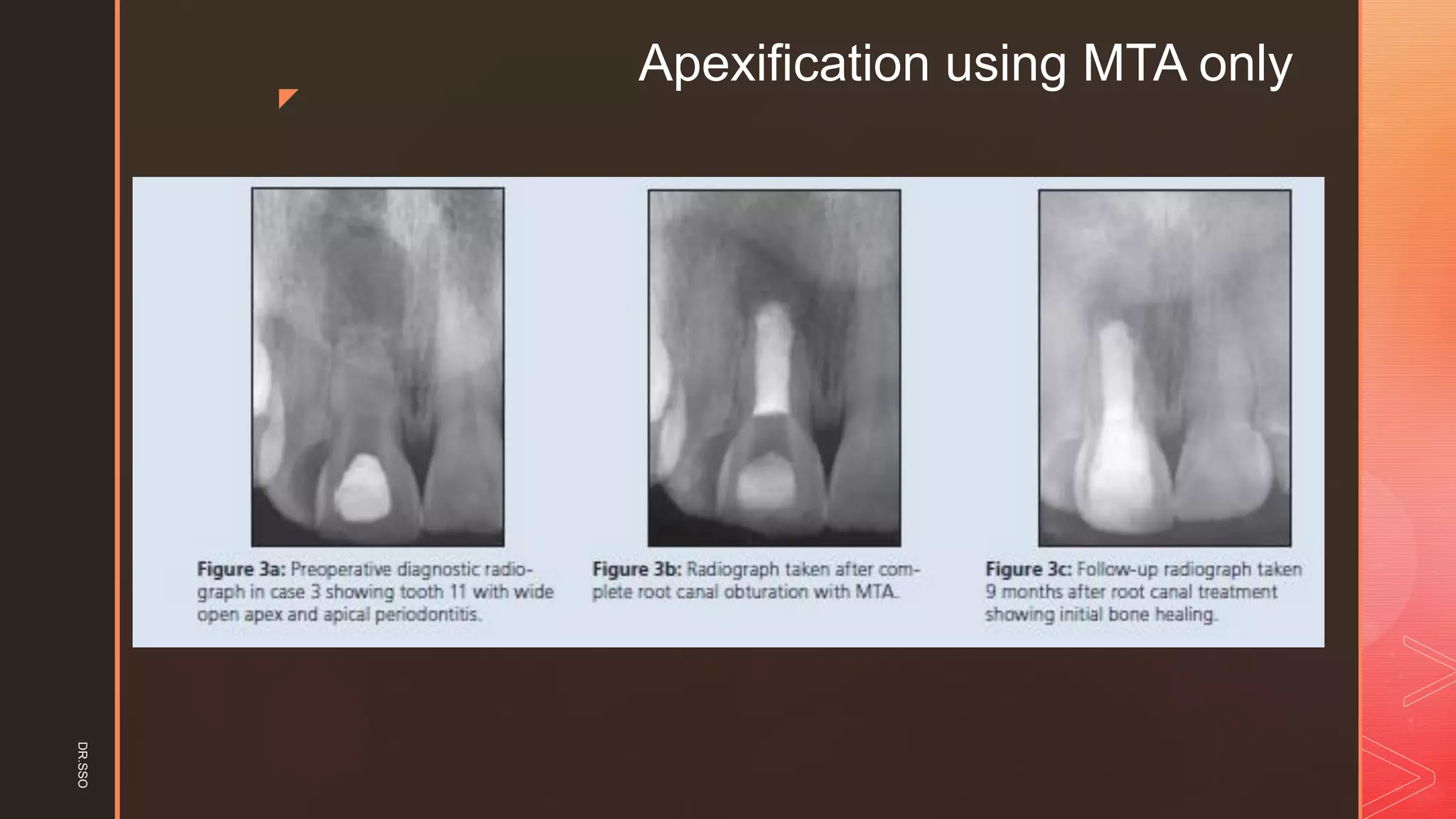
Apexification using MTA onlyDR.SSO
z
DR.SSO
z
DR.SSO
z
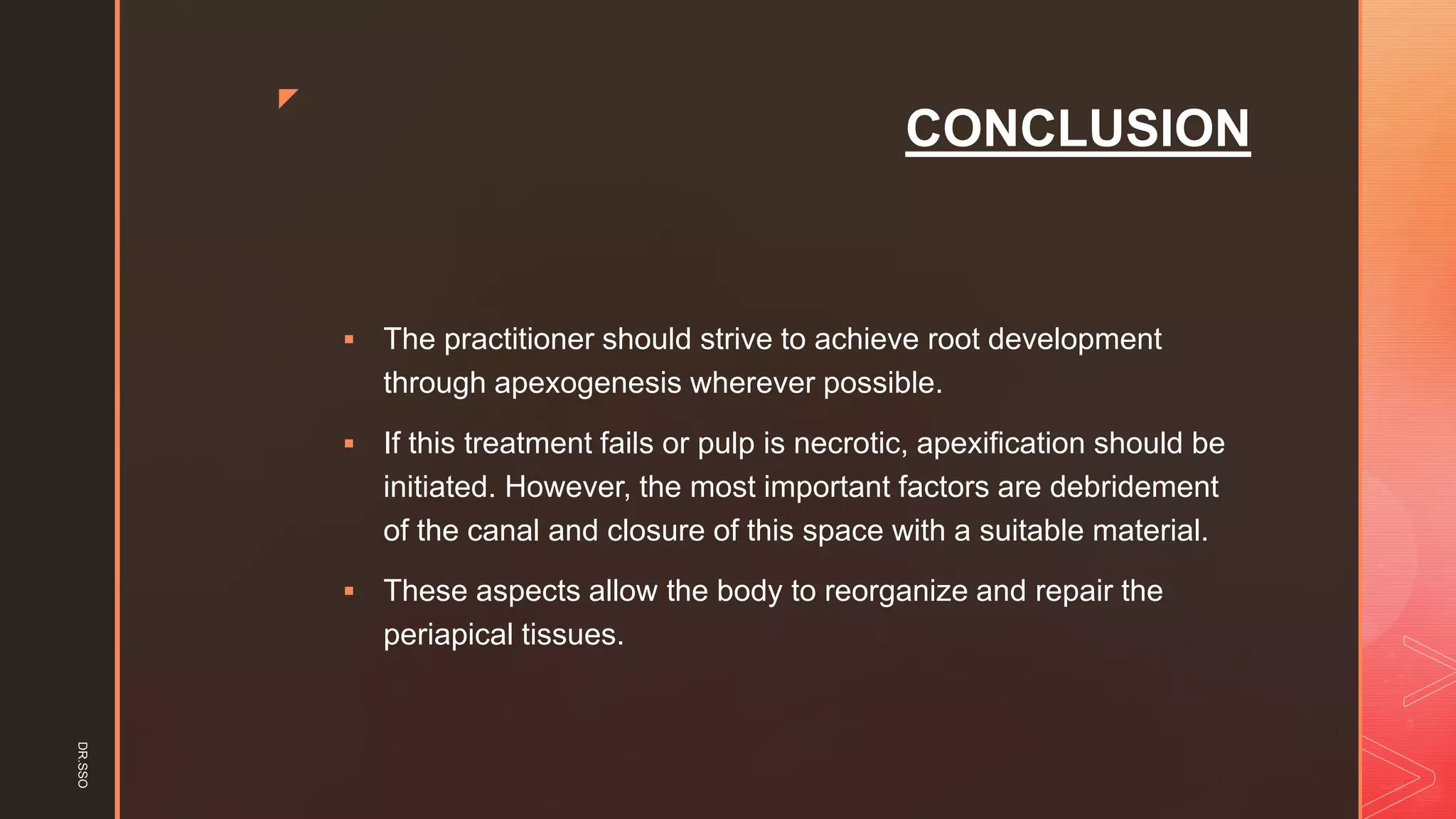
CONCLUSION
▪ The practitioner should strive to achieve root development
through apexogenesis wherever possible.
▪ If this treatment fails or pulp is necrotic, apexification should be
initiated. However, the most important factors are debridement
of the canal and closure of this space with a suitable material.
▪ These aspects allow the body to reorganize and repair the
periapical tissues.
DR.SSO
z
DR.SSO
z
REFERENCES
1. Grossman LI: Endodontic practice, 10 edition, Philadelphia. 1981, Lea & Febiger
2. Dentistry for Child and Adolescent. 6th Edition McDonald R.E. and Avery D.R.
3. Textbook of pediatric dentistry 3rd edition. Marwah Tandon S. Textbook of Pedodontics. 2nd ed. Delhi:
Para; 2008.
4. Principles and Practice of Pedodontics. Arathi Rao. 2nd edition.
5. Pediatric dentistry in children & adolescent, 8th edit, McDonald, Avery & Dean, Elsevier pub.
6. Camp JH, Barrett EJ, Pulver F. Pediatric endodontics. In: Cohen S, Burns RC, eds. Pathways of the pulp.
8th ed. St Louis: Mosby; 2002. pp. 797–844. Ingle: Endodontics 6th edition.
7. A paradigm shift in endodontic management of immature teeth: Conservation of stem cells for
regeneration. George T.-J. Huang. Journal of Dentistry 2008
8. Apexification: Case report. Peter Parashos. Australian Dental Journal 1997;42:(1):43-6
9. Camilleri J, Pitt Ford TR. Mineral trioxide aggregate: a review of the constituents and biological properties
of the material. International Endodontic Journal, 39, 747–754, 2006.
10. Endodontics, ingle & Bakland, 5th edit, Mosby pub.
11. Bhasker SN. Orbans oral histology & embryology, 11th edn. St. louis: Mosby- year book. 1991
DR.SSO
z
DR.SSO

Open apex & its Management

  • 1.
  • 2.
  • 3.
    z CONTENTS ▪ INTRODUCTION ▪ DEFINITION ▪STAGES OF TOOTH DEVELOPMENT ▪ CAUSES OF OPEN APEX ▪ COMPLICATIONS OF OPEN APEX ▪ DIAGNOSIS & CASE ASSESSMENT ▪ TREATMENT OPTIONS ▪ APEXOGENESIS Indications Contraindications Goals Materials Procedure Follow up Controversies ▪ APEXIFICATION Indications Contraindications Objectives Outcome Treatment options (Rolled cone,Short fill,Surgery,Apical closure induction) One Visit Apexification Materials used (CaOH,MTA,BIODENTINE) ▪ TECHNIQUE ▪ REFILLING & FOLLOW UP ▪ APICAL BARRIER FORMATION (ABF) Detection of ABF Evidence of ABF MOA of ABF Source of cells Structure of ABF ▪ STUDIES ▪ REGENERATION vs REVASULARIZATION ▪ CONCLUSION ▪ BIBLIOGRAPHY DR.SSO
  • 4.
    z INTRODUCTION ▪ The anatomyof the apical foramen changes with age as root formation has yet to be completed when teeth erupt. ▪ The completion of root development and closure of the apex occurs up to three years after eruption. ▪ Patients who present with immature apical formation pose a challenge due to the presence of large open apices along with divergent and thin dentinal walls that are susceptible to fracture. ▪ Historically, clinicians tried to generate formation of an apical barrier by repeated placement of calcium hydroxide over many months, or more recently by immediate barrier formation with a Mineral Trioxide Aggregate (MTA) plug. DR.SSO
  • 5.
    z DEFINITION ▪ Absence ofsufficient root development to provide a conical taper to the canal and is also referred to as blunderbuss canal. (Franklein S. Weine 1972 ) ▪ Due to trauma or carious exposure, the pulp undergoes necrosis, dentin formation ceases and root growth is arrested. The resultant immature root will have an apical opening that is very large. This is called an open apex, also referred to previously as a blunderbuss canal. (Thomas R.Pittford,1989) DR.SSO
  • 6.
    z TYPES OF OPENAPICES These can be of two configurations: ▪ Non-blunderbuss ▪ Blunderbuss Non –blunderbuss: ▪ The apex : broad (cylinder shaped) ▪ tapered (convergent) Blunderbuss: ▪ The apex is funnel shaped and typically wider than the coronal aspect of the canal. DR.SSO
  • 7.
    z STAGES OF ROOTDEVELOPMENT CVEK 1972 DR.SSO
  • 8.
    z CAUSES OF OPENAPICES ▪ Caries with pulp involvement, ▪ Extensive resorption of the mature apex as a result of orthodontic treatment ▪ Periapical pathosis ▪ Trauma causing necrosis DR.SSO
  • 9.
    z This open apexcauses two major problems. ▪ The normal crown /root ratio is compromised and may cause mobility. ▪ It becomes difficult to achieve an apical seal with conventional root canal filling. DR.SSO
  • 10.
    z Pulp injury inteeth with developing roots ▪ Hertwig Sensitive to trauma – increase vascularity and cellularity ▪ Important role of Hertwig’s epithelial root sheath in continued root development after pulpal injury, every effort should be made to maintain its viability. ▪ Unfortunately traumatic injuries to young permanent teeth are not uncommon and are said to affect 30% of children. ▪ The majority of these incidents occur before root formation is complete and may result in pulpal inflammation or necrosis. DR.SSO
  • 11.
    z PROBLEMS ASSOCIATEDWITH IMMATURE APEX ▪ Large open apices ▪ Thin dentinal walls ▪ Frequent periapical lesions ▪ Short roots ▪ Fracture of crown ▪ Discoloration on long standing DR.SSO
  • 12.
    z DIAGNOSIS AND CASE ASSESSMENT 1.Clinical assessment of pulp status, clinical & radiographic examination 2. Subjective symptoms ▪ Pain history – spontaneous, severe, long lasting ▪ Throbbing, tender to touch - pulpal necrosis with apical periodontitis or acute abscess ▪ Swelling /sinus tract - indicates pulpal necrosis and acute or chronic abscess respectively ▪ Tenderness to percussion -inflammation in the periapical tissues. DR.SSO
  • 13.
    z Correlation of clinical& subjective symptoms ▪ Vitality testing ▪ Prior to root formation , the sensory plexus of nerves in the sub odontoblastic region is not well developed. ▪ Radiographic interpretation DR.SSO
  • 14.
    z TREATMENT ▪ Treatment isbased on the vitality of the pulp. ▪ If the immature tooth has vital pulp, exhibiting reversible pulpitis, then physiological root end development or apexogenesis is attempted. ▪ On the other hand if irreversible pulpitis is present or pulp is necrotic, then root end closure or apexification is induced DR.SSO
  • 15.
  • 16.
    z APEXOGENESIS/ VITAL PULP THERAPY ▪The current terminology is vital pulp therapy (Walton and Torabinejad) ▪ “Apexogenesis is defined as treatment of a vital pulp in an immature tooth to permit continued root growth and apical closure. A vital pulp of an immature tooth may have a small exposure after trauma.” Ingle ▪ “Physiologic root end development and formation” American Association of Endodontists in 1981 DR.SSO
  • 17.
    z ▪ Apexogenesis asendodontic treatment of partially developed permanent teeth that clinically and radiographically displays evidence of pulp necrosis. Stephen Wei (1988) ▪ Treatment of vital pulp in an immature tooth to permit continued root growth & apical closure. (Thomas R. Pitt Ford, 1989) ▪ The procedure encourages normal root & apex formation of pulpally involved, vital permanent teeth with immature root development. (AAPD Guidelines 1998) ▪ The continued formation of the root in the teeth with vital root pulpal tissue.(McDonald & Aver, 2000) DR.SSO
  • 18.
    z INDICATIONS ▪ Immature toothwith incomplete root formation and damage to the coronal pulp but with a presumed healthy radicular pulp. ▪ Lack of abscess formation, excessive haemorrhage, no foul odour ▪ Normal radiographic appearance ▪ Absence of sensitivity to percussion ▪ No abnormal responses to thermal stimuli DR.SSO
  • 19.
    z CONTRAINDICATIONS ▪ Avulsed andreplanted or severely luxated tooth ▪ Severe crown root fracture that requires intra radicular retention for restoration ▪ Tooth with an unfavorable horizontal root fracture (i.e. close to the gingival margin) ▪ Carious tooth that is unrestorable DR.SSO
  • 20.
    z GOALS OF APEXOGENESIS: (WEBER 1984) ▪ Sustaining a viable Hertwigs Sheath, thus allowing continued development of root length for a more favorable crown to root ratio. ▪ Maintaining pulpal vitality, thus allowing the remaining odontoblasts to lay down dentin, producing a thicker root and decreasing the chance of root fracture. ▪ Promoting root end closure, thus allowing a natural apical constriction for root canal filling. ▪ Generating a dentinal bridge at the site of pulpotomy DR.SSO
  • 21.
    z PROCEDURE ▪ Anesthetize andisolate. ▪ After local anesthesia, rubber dam isolation, a conventional access cavity was made with a high-speed bur using copious water spray. ▪ Strands of pulp and debris were removed coronal to the amputation site. ▪ Amputation of the coronal pulp at the cervical level was performed with a sharp spoon excavator or a large sterile round bur. DR.SSO
  • 22.
    z ▪ Bleeding ofthe pulp stump was controlled with saline on a cotton pellet applied with gentle pressure. ▪ [Ca(OH)2]: Calcium hydroxide powder was mixed with saline to a thick consistency. The paste was carefully placed on the pulp stump surface 1 to 2 mm thick. Removal of coronal pulp Haemostasis DR.SSO
  • 23.
  • 24.
    z FOLLOW-UP Time required ▪ 1and 2 years depending on the degree of tooth development at the time of the procedure. Recalled every 3 months ▪ Clinically, the treatment was considered successful if there were no signs or symptoms of pulp or periapical disease (no history of pain and no clinical evidence of swelling or sinus tract). ▪ Radiographically, the treatment was considered successful if there was continued growth of the root and canal narrowing, and no widened periodontal ligament, no periapical radiolucency and no internal or external root resorption. DR.SSO
  • 25.
  • 26.
    z CONTROVERSY EXISTS ▪ Asthe entire coronal pulp was removed, thermal and electrical testing of the tooth is no longer possible. ▪ Since it is not possible to determine the pulp vitality or the health of the remaining pulp tissue, it has been advocated that the tooth should be reentered and root canal therapy performed. DR.SSO
  • 27.
    z Mejare & Cvek(1993) ▪ 37 young posterior teeth - deep carious lesions and exposed pulps ▪ Group 1 - 31 teeth with no clinical or radiographic symptoms before treatment. ▪ Group 2 - 6 teeth with temporary pain, widened periodontal space periapically ▪ After an observation time of 24 to140 months , healing had occurred in 29 of 31 teeth in Group 1 (93.5%) and in 4 of 6 teeth in Group 2. ▪ It was concluded that partial pulpotomy may be an adequate treatment for young permanent molars with a carious exposure DR.SSO
  • 28.
    z Mahmood K etal.,(2006) ▪ 32 first permanant molars of 23 patients with age of 10 yrs ▪ Clinically and radiographically within the normal limits ▪ Partial pulpotomy with grey MTA was done ▪ GIC base was given and amalgam/ SS crown restoration was done ▪ Reviewed clinically and radiographically at 3,6,12 & 24 months ▪ 22 teeth – No clinical and radiographic signs ▪ 6 teeth - not responded to vitality tests DR.SSO
  • 29.
    z Kessar et al.,(2006) ▪A paradigm shift from apexification to apexogenesis ▪ Apexogenesis can be done even in a non vital teeth ▪ No instrumantation should be done ▪ Copious irrigation with 20 ml of NaOCl, dry with paper points and IRM restoration ▪ Apexogenesis occurred over a period of 35 months DR.SSO
  • 30.
    z Ali Nosrat etal., (2006) ▪ 8 yr old boy with complicated crown fracture wrt 21 ▪ Cervical pulpotomy done with CEM ( Calcium enriched mixture) ▪ After 6 and 12 months follow up tooth is vital , apex has formed and calcific bridge underneath the cement was found. ▪ CEM is a new endodontic cement with similar applications as MTA ▪ Antimicrobial nature comparable to CH and MTA ▪ Composition of set CEM is similar to dentin DR.SSO
  • 31.
    z APEXIFICATION ▪ Defined asthe method of inducing apical closure by the formation of osteo cementum or a similar hard tissue or the continued apical development of the root of an incompletely formed tooth in which the pulp is no longer vital. American Association of Endodontics DR.SSO
  • 32.
    z ‘Root-End Closure’, introducedby Torabinejad in 2002 ▪ A method of inducing apical closure of the roots of an incompletely formed, nonvital radicular tissue just short of root end and placing a suitable biocompatible agent in the canal. (AAPD Guidelines 1998) ▪ The process of creating an environment within the root canal and periapical tissues after pulp death that allows a calcified barrier to form across the open apex. (Thomas R. Pitt Ford, 1989) ▪ Inducement to form a calcified apical barrier in teeth that have pulpal necrosis. (McDonald &Avery, 2000) DR.SSO
  • 33.
    z INDICATION ▪ Restorable immaturetooth with pulp necrosis. DR.SSO
  • 34.
    z CONTRAINDICATIONS ▪ All verticaland unfavorable horizontal root fractures. ▪ Very short roots ▪ Periodontal breakdown DR.SSO
  • 35.
    z OBJECTIVES ▪ Induce rootend closure ▪ No evidence of post treatment signs and symptoms ▪ No evidence of calcification ▪ No internal or external resorption ▪ No breakdown of periradicular supporting tissues DR.SSO
  • 36.
    z FIVE OUTCOMES OFAPEXIFICATION PROCEDURE (WEINE) 1. No radiographic change is apparent; but if instrument is inserted, a blockage at the apex is encountered. 2. Radiographic evidence of calcified material is seen at or near the apex. 3. Apex closes without any change in canal space. 4. Apex continues to develop with closure of the canal apace. 5. No radiographic evidence of change is seen, and clinical symptom and/or development of or the increase in size of periapical lesion occurs. This would need either retreatment with CaOH2 or surgery. DR.SSO
  • 37.
    z TREATMENT OPTIONS According toMorse et al., (1983) various approaches : ▪ Blunt end or rolled cone (customized cone) ▪ Short fill technique ▪ Periapical surgery (with /without retrograde seal) ▪ Apexification (apical closure induction) DR.SSO
  • 38.
    z Blunt end orrolled cone (customized cone) ▪ Filling the root canal with the large end of gutta percha cone is not advisable because the apical foramen is generally wider than the root canal orifice. ▪ This would prevent proper condensation of the gutta percha and proper preparation of the canal would weaken the tooth considerably ▪ It would also be difficult to assess the point of root development radiographically because root formation in the buccolingual plane is less advanced than it is in the mesiodistal plane. DR.SSO
  • 39.
  • 40.
    z Short fill ▪ Moodnickproposed removal of the bulk of the necrotic tissue & filling the root canal short of the apex with gutta percha ▪ He advocated use of Diaket ( premier dental products). ▪ It is a compound of beta ketones & zinc oxide in place of gutta percha to enhance healing. ▪ However with an incomplete obturation, microbes can be left remaining within the apical part of the root canal system & healing may not take place or periapical breakdown may occur later. DR.SSO
  • 41.
    z Periapical surgery The guttapercha/ sealer surgical approach has many drawbacks. Many clinicians do not advocate this method of treatment for one or more of the following reasons: ▪ Relative to the already shortened roots, further reduction could result in an inadequate crown to root ratio. ▪ Surgery could be both physically & psychologically traumatic to the young patient. ▪ The young patient is non cooperative ▪ Surgery would remove the root sheath & prevent the possibility of further root development DR.SSO
  • 42.
    z ▪ The apicalwalls are thin & could shatter when touched by a rotating bur ▪ The periapical tissue may not adapt to the wide & irregular surface of the amalgam ▪ The thin walls would make condensation of a retrograde material difficult. This can result in an inadequate seal. DR.SSO
  • 43.
    z Apical closure induction ▪Most widely used approach but exact mechanism unknown ▪ It has been considered that treatment of teeth with necrotic pulp the basic aim should be stimulation & preservation of the formative activity of the granulation tissue cells in apical part of the root canal ▪ This should enhance the formation of a calcified callus in the wide apical opening. DR.SSO
  • 44.
    z ONE VISIT APEXIFICATION ▪Induction of apical healing, regardless of the material used, takes at least 3–4 months and requires multiple appointments ▪ Patient compliance with this regimen may be poor and many fail to return for scheduled visits ▪ The temporary seal may fail resulting in re-infection and prolongation or failure of treatment ▪ For these reasons one-visit apexification has been suggested ▪ Morse et al., (1990) define one-visit apexification as the nonsurgical condensation of a biocompatible material into the apical end of the root canal DR.SSO
  • 45.
    z ▪ The rationaleis to establish an apical stop that would enable the root canal to be filled immediately ▪ There is no attempt at root end closure. Rather an artificial apical stop is created DR.SSO
  • 46.
    z MATERIALS TO INDUCEAPEXIFICATION IN TEETH WITH IMMATURE APICES Calcium hydroxide ▪ Ca(OH)2 for apexification in the pulpless tooth was first reported by Kaiser in 1964 ▪ The technique was popularised by the work of Frank in 1966 DR.SSO
  • 47.
    z STUDIES WHERE CAOHWAS USED TO INDUCE APICAL BARRIER FORMATION (ABF) AND HEALINGDR.SSO
  • 48.
    z STUDIES OF CALCIUMHYDROXIDE PRODUCTS USED FOR APEXIFICATION DR.SSO
  • 49.
    z INHERENT DISADVANTAGES OF CALCIUMHYDROXIDE APEXIFICATION ▪ Long treatment period, usually takes 6-9 months, & may extend up to 21 months. ▪ Must be replaced at monthly intervals. ▪ Multiple visits by the patient. ▪ Possible recontamination may occur. ▪ Weaken the root dentin & the risk of teeth fracture. DR.SSO
  • 50.
    z Other medicaments ▪ Tricalciumphosphate ▪ Collagen calcium phosphate. ▪ Resorbable Tricalcium phosphate. ▪ Mineral trioxide aggregate. ▪ Biodentine ▪ Bone morphogenic proteins DR.SSO
  • 51.
    z MTA ( Mineraltrioxide aggregate) ▪ Mineral trioxide aggregate (MTA) was first developed by Torabinejad and members at the Loma Linda University, California, USA ▪ Initially it was used as a root-end filling material in endodontic treatment ▪ It is a mixture of dicalcium silicate, tricalcium silicate, tricalcium aluminate, gypsum, tetracalcium aluminoferrite and bismuth oxide ▪ The addition of bismuth powder makes it radio opaque ▪ Original grey and a newer white DR.SSO
  • 52.
    z COMPOSITION OF GREY& WHITE MTA DR.SSO
  • 53.
    z ADVANTAGES OF MTA ▪Saves treatment time ▪ Can induce formation (regeneration) of dentin, cementum, bone & periodontal ligament. ▪ Excellent biocompatibility and appropriate mechanical properties. ▪ Excellent sealing ability. ▪ Produces an artificial barrier, against which an obturating material can be condensed. ▪ Hardens (sets) in the presence of moisture. ▪ More radiopaque than calcium hydroxide ▪ Vasoconstrictive DR.SSO
  • 54.
    z PHYSICAL AND CHEMICAL PROPERTIESOF MTA Ph ▪ MTA has a pH similar to that of calcium hydroxide of 12.5 ▪ This similarity with calcium hydroxide is thought to contribute to its inductive potential and the resultant hard tissue formation DR.SSO
  • 55.
    z Sealing ability &marginal adaptation ▪ Less overfills and the superior outcome, with or without blood contamination of the root cavities ▪ In a study carried out by Fischer et al.1998, using bacterial leakage model, the time period in which materials began leaking was 10-63 days for amalgam, 24- 91 days for IRM. ▪ MTA did not begin to leak till day 49. ▪ The superior sealing ability of MTA is thought to be due to the setting expansion it undergoes in moist environment DR.SSO
  • 56.
    z Compressive Strength ▪ Lowcompressive strength; however, this does not compromise its success as it is used in situations that experience low compressive forces. ▪ Sluyk et al..(1998) studied setting properties of MTA and found that MTA reached its maximum resistance level if left undisturbed for 72 hours before placement of a permanent restoration DR.SSO
  • 57.
    z Biocompatibilty ▪ Material analysisof MTA shows the material to be divided into calcium oxide and calcium phosphate. ▪ The scanning electron microscopic studies revealed that amorphous calcium phosphate showed maximum ingress and growth of cells. ▪ They concluded that MTA offers a biological substrate for osteoblasts and the calcium phosphate phase favored the change in cell behavior that stimulated growth over MTA DR.SSO
  • 58.
    z Inductive Potential ▪ Torabinejadet al. and colleagues 1995 used infected premolars in two-year old beagle dogs, which were prepared to receive gutta- percha root-fillings ▪ The root fillings were left to contaminate by means of open access cavities and subsequently underwent root resection and retrograde fillings with either MTA or amalgam ▪ Although periosteum and new bone formation were found in the presence of both materials, histologic findings at 10-18 weeks post- surgery confirmed the formation of cementum exclusively over the root ends with MTA, which included the MTA itself. DR.SSO
  • 59.
    z ▪ Shabahang etal. 1997 carried out apexification in immature dog-teeth using Calcium hydroxide osteogenic protein and MTA. ▪ MTA induced hard tissue formation more than any other test material at 12 weeks, resulting in root end closure DR.SSO
  • 60.
    z Cytotoxicity ▪ An invitro study conducted by Osorio et al. in 1998 compared different root canal sealers and root end filling materials using two assay systems and two different mammalian fibroblast cell line . ▪ Their conclusions were based on the fact that if a material exhibits a strong cytotoxicity in cell culture tests, it is very likely to do so in living tissue. Of the materials tested, MTA was the least cytotoxic DR.SSO
  • 61.
    z BIODENTINE ▪ New calciumsilicate-based material ▪ It has been developed as a permanent dentine substitute material whenever original dentine is damaged. ▪ Powder- tricalcium silicate and dicalcium silicate- the principal component of Portland cement and MTA. Calcium carbonate, calcium oxide, iron oxide, and zirconium oxide. ▪ Liquid-calcium chloride and a water-soluble polymer. DR.SSO
  • 62.
  • 63.
    z ▪ Han andOkiji (2011) compared calcium and silicon uptake by adjacent root canal dentine in the presence of phosphate buffered saline using Biodentine and ProRoot MTA. ▪ The results showed that both materials formed a tag-like structure composed of the material itself or calcium- or phosphate rich crystalline deposits. ▪ The thickness of the calcium and silicon -rich layers increased over time, and the thickness of the calcium and silicon -rich layer was significantly larger in Biodentine compared to MTA after 30 and 90 days, concluding that the dentine element uptake was greater for Biodentine than for MTA. DR.SSO
  • 64.
  • 65.
    z PROPERTIES ▪ Tissue regeneration& early mineralization : by injcreasing secretion of TGF B1 from pulpal cells. ▪ Odontoblast stimulation & cell differentiation : reactionary & teriart dentin formationS DR.SSO
  • 66.
    z PROCEDURE ▪ Anesthetize andisolate ▪ Access is made Instrumentation ▪ Initial treatment length Acc to Torneck et al & Holland et al., ▪ Primary aim- Enlargement Acc to Ingel – H files, circumferential filling DR.SSO
  • 67.
    z ▪ If periapicalabscess is present, over-instrumentation with smaller files (20-25) will establish drainage. ▪ Ingle recommends that further treatment should be done only when active lesion has subsided. Irrigation ▪ Sodium hypochlorite ▪ Alternation with hydrogen peroxide - Weine ▪ Subsequent appointments : sterile water or isotonic saline - Webber DR.SSO
  • 68.
    z DRYING OF THECANALS ▪ Often difficult because of seepage ▪ Paper points are pre measured to working length ▪ An inverted coarse point is often desirable. ▪ In continuous seepage, a pre fitted point can be left in canal until calcium hydroxide is placed DR.SSO
  • 69.
    z TECHNIQUES OF CALCIUM HYDROXIDEPLACEMENT ▪ Commercial preparations Webbers technique ▪ Using amalgam carrier and endodontic pluggers. ▪ 3-4 increments of CH is placed with amalgam carries and pushed apically with a plugger. DR.SSO
  • 70.
    z ▪ Successive incrementsis placed with amalgam carrier and pushed apically with larger plugger. ▪ Care should be taken to see that material is in contact with periapical tissue. DR.SSO
  • 71.
    z TEMPORARY RESTORATION ZOE /IRM ▪Material is vertically condensed to make 4-5 mm of space in access. ▪ Break of occlusal seal leads to, contamination and dilution of paste, also exposure of healing tissues to microorganisms. DR.SSO
  • 72.
    z REFILLING PROCEDURE- HOLLAND ▪First recall is at 6 weeks ▪ Paste is diluted in canal. Acc to Holland et al., ▪ Removed 1-2mm short of the original working length ▪ Remaining powder on canal walls removed with larger size instruments. DR.SSO
  • 73.
    z RECALL ▪ Recalled 6wks after second replacement, later 2-3 months there after until calcific barrier is formed radiographically. ▪ Total time 12 – 18 months. ▪ Subsequent replacement depends upon radiographic examination. ▪ If any symptoms develop refilling is necessary. DR.SSO
  • 74.
    z PROCEDURE TO DETECTBARRIER FORMATION ▪ Radiographic evaluation ▪ Paper point DR.SSO
  • 75.
    z EVIDENCE OF ABF Frankhas described four successful results of apexification treatments: I. Continued closure of the canal and apex to a normal appearance II. A dome shaped apical closure with the canal retaining a blunderbuss appearance III. No apparent radiographic change but a positive stop in the apical area IV. Positive stop and radiographic evidence of a barrier coronal to the anatomic apex of the tooth. DR.SSO
  • 76.
  • 77.
    z MECHANISM OF ACTIONOF CA(OH)2 TO INDUCE FORMATION OF A SOLID APICAL BARRIER ▪ Presence of high Ca concentrations increases the activity of calcium dependent pyrophosphate ▪ Direct effect on the apical and periapical soft tissue ▪ High pH will activate alkaline phosphatase ▪ Antibacterial activity DR.SSO
  • 78.
    z According to Cruzet al.1998., histological analysis of the apical barrier ▪ Outer surface of the bridge extended in a ‘cap like’. ▪ The histological sections showed distinct layers. ▪ Dense acellular cementum-like tissue. ▪ Irregular dense fibrocollagenous connective tissue with irregular fragments of highly mineralized calcifications. DR.SSO
  • 79.
    z NATURE AND SOURCEOF CELLS PARTICIPATING IN APEXIFICATION PROCESS ▪ Mesenchymal / pluripotent cells in the periapical region ▪ Cells of dental sac ▪ Odontogenic activity of residual pulp cells ▪ Connective tissue cells- mesenchymal /fibroblastic cells ▪ Pluripotent cells –bone tissue DR.SSO
  • 80.
    z STRUCTURE OF APICALBARRIER ▪ Conflicting views ▪ Solid structure- CEMENTOID TISSUE ▪ In a clinical case by H.S Chawla & Krishna et al., it was seen that the following apical closure , the sealer used with the gutta percha for obturation had extruded beyond the bridge. ▪ The authors concluded that if the calcified bridge would have been a solid structure, the sealer could not have gone in the periapex. So the bridge formed is a porous structure. Swiss cheese–like’’ apical hard tissue barrier DR.SSO
  • 81.
    z Final obturation onlyif; 1. Absence of any symptoms 2. Absence of any fistula or sinus 3. Absence or decrease in mobility 4. Evidence of firm stop clinically as well as radiographically DR.SSO
  • 82.
    z Regeneration vs Revascularisation ▪Pulp revascularization = induction of angiogenesis in endodontically treated tooth ▪ Pulp regeneration = pulp revascularization + restoration of functional odontoblast & or nerve fibers (restoration of PDC) Regeneration cannot occur without revascularization but Revascularisation occur without regeneration (of odontoblasts) DR.SSO
  • 83.
  • 84.
  • 85.
    z Apexification using CaOH& GP+SealerDR.SSO
  • 86.
  • 87.
  • 88.
  • 89.
  • 90.
    z CONCLUSION ▪ The practitionershould strive to achieve root development through apexogenesis wherever possible. ▪ If this treatment fails or pulp is necrotic, apexification should be initiated. However, the most important factors are debridement of the canal and closure of this space with a suitable material. ▪ These aspects allow the body to reorganize and repair the periapical tissues. DR.SSO
  • 91.
  • 92.
    z REFERENCES 1. Grossman LI:Endodontic practice, 10 edition, Philadelphia. 1981, Lea & Febiger 2. Dentistry for Child and Adolescent. 6th Edition McDonald R.E. and Avery D.R. 3. Textbook of pediatric dentistry 3rd edition. Marwah Tandon S. Textbook of Pedodontics. 2nd ed. Delhi: Para; 2008. 4. Principles and Practice of Pedodontics. Arathi Rao. 2nd edition. 5. Pediatric dentistry in children & adolescent, 8th edit, McDonald, Avery & Dean, Elsevier pub. 6. Camp JH, Barrett EJ, Pulver F. Pediatric endodontics. In: Cohen S, Burns RC, eds. Pathways of the pulp. 8th ed. St Louis: Mosby; 2002. pp. 797–844. Ingle: Endodontics 6th edition. 7. A paradigm shift in endodontic management of immature teeth: Conservation of stem cells for regeneration. George T.-J. Huang. Journal of Dentistry 2008 8. Apexification: Case report. Peter Parashos. Australian Dental Journal 1997;42:(1):43-6 9. Camilleri J, Pitt Ford TR. Mineral trioxide aggregate: a review of the constituents and biological properties of the material. International Endodontic Journal, 39, 747–754, 2006. 10. Endodontics, ingle & Bakland, 5th edit, Mosby pub. 11. Bhasker SN. Orbans oral histology & embryology, 11th edn. St. louis: Mosby- year book. 1991 DR.SSO
  • 93.