Glomerular diseases
objectives
Color index: Step up to medicine , slide , Doctor’s note , Davidson , Extra Explanation
1. Classify Glomerular diseases.
2. Understand the pathophysiology is correlated with the clinical
manifestation in Glomerular diseases.
3. Recognize the clinical manifestations in Glomerular diseases.
4. Recognize the most common causes of Nephritic glomerular
disease.
3
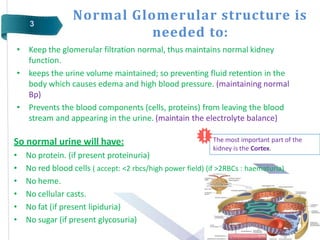
Normal Glomerular structure is
needed to:
• Keep the glomerular filtration normal, thus maintains normal kidney
function.
• keeps the urine volume maintained; so preventing fluid retention in the
body which causes edema and high blood pressure. (maintaining normal
Bp)
• Prevents the blood components (cells, proteins) from leaving the blood
stream and appearing in the urine. (maintain the electrolyte balance)
So normal urine will have:
• No protein. (if present proteinuria)
• No red blood cells ( accept: <2 rbcs/high power field) (if >2RBCs : haematuria)
• No heme.
• No cellular casts.
• No fat (if present lipiduria)
• No sugar (if present glycosuria)
The most important part of the
kidney is the Cortex.
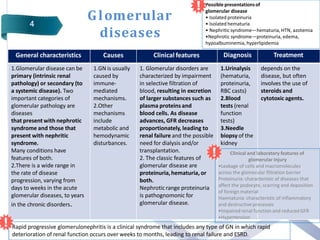
General characteristics Causes Clinical features
1.Glomerular disease can be
primary (intrinsic renal
pathology) or secondary (to
a systemic disease). Two
important categories of
glomerular pathology are
diseases
that present with nephrotic
syndrome and those that
present with nephritic
syndrome.
Many conditions have
features of both.
2.There is a wide range in
the rate of disease
progression, varying from
days to weeks in the acute
glomerular diseases, to years
in the chronic disorders.
1.GN is usually
caused by
immune-
mediated
mechanisms.
2.Other
mechanisms
include
metabolic and
hemodynamic
disturbances.
1. Glomerular disorders are
characterized by impairment
in selective filtration of
blood, resulting in excretion
of larger substances such as
plasma proteins and
blood cells. As disease
advances, GFR decreases
proportionately, leading to
renal failure and the possible
need for dialysis and/or
transplantation.
2. The classic features of
glomerular disease are
proteinuria,hematuria, or
both.
Nephroticrange proteinuria
is pathognomonic for
glomerular disease.
1.Urinalysis
(hematuria,
proteinuria,
RBC casts)
2.Blood
tests (renal
function
tests)
3.Needle
biopsy of the
kidney
depends on the
disease, but often
involves the use of
steroids and
cytotoxic agents.
Possible presentationsof
glomerular disease
• Isolated proteinuria
• Isolated hematuria
• Nephritic syndrome—hematuria, HTN, azotemia
•Nephrotic syndrome—proteinuria, edema,
hypoalbuminemia, hyperlipidemia
Diagnosis Treatment
Glomerular
diseases
4
Clinical and laboratory features of
glomerular injury
•Leakage of cells and macromolecules
across the glomerular filtration barrier
Proteinuria: characteristic of diseases that
affect the podocyte, scarring and deposition
of foreign material
Haematuria: characteristic of inflammatory
and destructive processes
•Impaired renal function and reduced GFR
•Hypertension
Rapid progressive glomerulonephritis is a clinical syndrome that includes any type of GN in which rapid
deterioration of renal function occurs over weeks to months, leading to renal failure and ESRD.
5
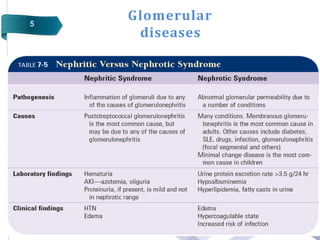
Glomerular
diseases
o A lot of times the exact cause is not really clear, but the result of the damage in the
glomerulus is telling how immune system is playing an important rule.
o Here we are talking about primary glomerular diseases that are mostly caused by immune
system dysfunction. :
1 Auto-antibodies targeting glomerular structure or
2 Immune-complexes (antigen-antibody) depositing and traumatizing the
glomerular components.
o The manifestations of a glomerular disease are usually indicative of which components of
glomerular capillary wall was affected at the most.
Affected
glomerular
component
Manifestation Syndrome caused Glomerular
filtration
status
Notes
Podocytes
(foot processes)
Proteinuria only Nephrotic Syndrome Normal No blood
components in the
urine
Endothelialcells,
GBM or
Mesangial cells
•Heamaturia
•Proteinuria
•Abnormal renal
function
Nephritic Syndrome Abnormal Blood components
appear due to
disruption of
glomerular filtration
wall
How glomerular diseases start?
6
How glomerular diseases start?
7
• Mesangium is very sensitive. It starts to proliferate when anything “not part of it”
attached to it “e.g. IgA” or when the glomerulus is irritated > disruption of
capillaries > protein and RBCs in urine.
• However, when podocyte dysfunction occurs >>its digitations(foot processes)
disappear “effacement”>> but that doesn’t cause blood components appearance
in the urine because podocytes are away from the blood stream >>so mainly
proteinuria occurs.
• Primary glomerular diseases are diagnosed by : Kidney biopsy
Why?! Because: Glomerular diseases are named based on their histo-pathological
characteristics seen under the microscope.
• When mesangial cells gets irritated it multiply, thus it damages the kidney.
• It is important to recognize that the manifestation of glomerular disease
depends on where the mechanism happened; if endothelial cells,
glomerular basement membrane and mesangial cells were damaged, the
results will be hematuria, proteinuria and dysfunction of the glomerulus,
because there is no filtration ability. However, if epithelial cells were only
damaged the integrity of the basement membrane will remain the same, so
there will be no hematuria, but proteinuria will be present
8
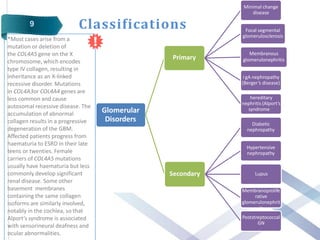
Glomerular
Disorders
Primary
Minimal change
disease
Focal segmental
glomerulosclerosis
Membranous
glomerulonephritis
I gA nephropathy
(Berger’s disease)
hereditary
nephritis (Alport’s
syndrome)*
Secondary
Diabetic
nephropathy
Hypertensive
nephropathy
Lupus
Membranoprolife
rative
glomerulonephrit
is
Poststreptococcal
GN
9 Classifications
*Most cases arise from a
mutation or deletion of
the COL4A5 gene on the X
chromosome, which encodes
type IV collagen, resulting in
inheritance as an X-linked
recessive disorder. Mutations
in COL4A3or COL4A4 genes are
less common and cause
autosomal recessive disease. The
accumulation of abnormal
collagen results in a progressive
degeneration of the GBM.
Affected patients progress from
haematuria to ESRD in their late
teens or twenties. Female
carriers of COL4A5 mutations
usually have haematuria but less
commonly develop significant
renal disease. Some other
basement membranes
containing the same collagen
isoforms are similarly involved,
notably in the cochlea, so that
Alport’s syndrome is associated
with sensorineural deafness and
ocular abnormalities.
Nephrotic Syndrome
• Podocytes abnormality is the primary finding in NS.
• Podocytes will sustain a structural dysfunction; making them lose their Foot-processes
(effacement).
• This will lead to significant amount of protein appearing in the urine (Proteinuria).
Clinical and laboratory features:
 Hypoalbuminemia (serum Albumin <30 g/L) Normal serum Alb: 35-55g/L
 Heavy proteinuria ( > 3.5 g/24 hours of urine collection)
 Peripheral or generalized edema (Low oncotic pressure and problem in regulating salt
within that makes water retention).
 Hyperlipidemia (Liver will try to synthesize lipoprotein, to composite for the low albumin).
Complications:
 Infections & sepsis. (due to loss of immunoglobulins in the urine)
 Thrombosis. (due to loss of the anticoagulant factors)
 Acute kidney injury. (BC nephrotic syndrome pt. have problems in regulating their body fluids
(Salt-Water retention), so when seeking medical help doctors prescribe diuretics to them >>
this will cause hypovolemia (kidneys become hypoperfused)>> AKI)
 End stage kidney disease (ESRD) if heavy proteinuria not going into remission (BC the
untreated nephrotic syndrome will cause chronic passage of protein/albumin in the renal
tubules , and the tubules are sensitive to protein ; they can’t tolerate its passage, so this will
cause tubular injury then fibrosis thus causing CKI and if severe enough ESRD)
10
• In nephrotic syndrome patients generalized edema occurs due to the following reasons:
1 decreased oncotic pressure ( hypoalbunemia >> fluid is shifted from the capillaries to the
interstitium)
2 Salt-Water retention (Nephrotic syndrome pt. have problems in regulating their body
fluids, because their kidneys reabsorb salt again)
• Why hyperlipidemia occurs in the nephrotic syndrome?
Due to hypoalbuminemia >> serum albumin <30 g/L (It is well known that liver is the main
factory for albumin synthesis with a capacity of 10 g/day , and normally the average albumin in
the body is 40mg, so if the albumin levels in the blood decreased to 30 g/L the liver will be
able to compensate the loss by the 10 g that he normally synthesizes, but if the serum albumin
decreased to less than 30g, unfortunately the liver will not be able to compensate by the 10
g of albumin that he synthesizes so instead the liver will produce lipoproteins in large
quantities to compensate for the albumin loss , but since these lipoproteins carry cholesterol
this will cause hyperlipidemia).
Nephrotic Syndrome
11
Proteinuria:
How many mgs of proteins are normally secreted in the urine per-
day?
< 150 mg/day of all kinds of proteins including on average 4-7mg/day
of Albumin that are secreted in the urine.
Urine Analysis in Nephrotic Syndrome:
• Heavy protein (Proteinuria) or called Nephrotic range proteinuria.
• No RBCs (few are occasionally seen).
• No RBCs casts.
• Lots of fat (Lipiduria) (Fatty casts, oval fat bodies & fat droplets).
• No WBCs (few may be seen).
Nephrotic Syndrome
12
• Generalized edema “ also called anasarca” due to :
1 Low serum albumin (low oncotic pressure)
2Increase Renal sodium retention Because of uncontrolled activation of the
epithelial sodium channels (ENaC channels in the renal tubules)
• Fatigue
• Frothy urine (froth persists for long time after voiding)
• Anorexia
• Nausea and vomiting
• Abdominal pain
• Weight gain due to fluid retention
• Shortness of breath if having pleural effusion
• Signs and symptoms of DVT and PE
Pitting edema
Pleural effusion Periorbital edema
Ascites
In the nephrotic
syndrome the
periorbital edema
appears in the
MORNING but then it
disappears when the
patient starts walking
due to the gravity
Clinical
Presentation
Nephrotic Syndrome
13
Glomerular Diseases present as
Nephrotic Syndrome
1-Focal Segmental GlomeruloSclerosis (FSGS)
2- Minimal Change Disease (MCD)
3- Membranous Nephropathy (MN)
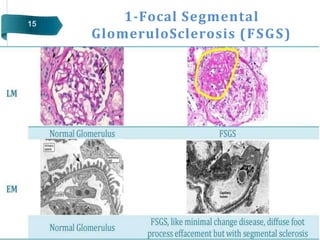
1-Focal Segmental GlomeruloSclerosis (FSGS)
The primary variant on light microscopy:
which may also show positive staining for deposits of C3 and IgM on immunofluorescence
Focal: some glomeruli are affected by sclerosis but the rest of them look normal.
Segmental: only a segment of the affected glomeruli is sclerosed
A common cause of Nephrotic syndrome in adults (12 – 35 %)
NB. All the glomeruli (whether sclerosed or normal ) will have a diffuse foot
processes effacement (thus Nephrotic syndrome appears)
Types of FSGS:
1 Primary FSGS
2 Secondary FSGS
1.This accounts for 25% of cases of nephrotic syndrome in adults and is more common
in blacks. Hematuria and HTN are often present.
2.It has a fair to poor prognosis. It is generally resistant to steroid therapy—patients
develop renal insufficiency within 5 to 10 years of diagnosis. The course is progressive.
3.The treatment regimen is controversial, but remission has been achieved in 50%
of patients with the use of cytotoxic agents, steroids, and immunosuppressive
agents. ACE/ARBs are also commonly indicated.
14
1-Focal Segmental
GlomeruloSclerosis (FSGS)
15
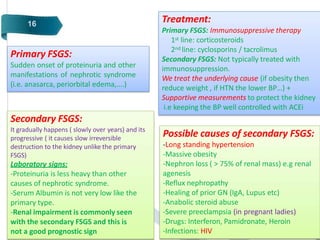
Primary FSGS:
Sudden onset of proteinuria and other
manifestations of nephrotic syndrome
(i.e. anasarca, periorbital edema,….)
Secondary FSGS:
It gradually happens ( slowly over years) and its
progressive ( it causes slow irreversible
destruction to the kidney unlike the primary
FSGS)
Laboratory signs:
-Proteinuria is less heavy than other
causes of nephrotic syndrome.
-Serum Albumin is not very low like the
primary type.
-Renal impairment is commonly seen
with the secondary FSGS and this is
not a good prognostic sign
Possible causes of secondary FSGS:
-Long standing hypertension
-Massive obesity
-Nephron loss ( > 75% of renal mass) e.g renal
agenesis
-Reflux nephropathy
-Healing of prior GN (IgA, Lupus etc)
-Anabolic steroid abuse
-Severe preeclampsia (in pregnant ladies)
-Drugs: Interferon, Pamidronate, Heroin
-Infections: HIV
Treatment:
Primary FSGS: Immunosuppressive therapy
1st line: corticosteroids
2nd line: cyclosporins / tacrolimus
Secondary FSGS: Not typically treated with
immunosuppression.
We treat the underlying cause (if obesity then
reduce weight , if HTN the lower BP…) +
Supportive measurements to protect the kidney
i.e keeping the BP well controlled with ACEi
16
2- Minimal Change Disease (MCD)
• No glomerular sclerosis (the most important difference
between MCD and the FSGS)
Called minimal because:
So called: nil disease.
BUT:
- electron microscopy: shows diffuse effacement of the
epithelial cells’ foot processes only.
- It is the main cause of nephrotic syndrome in children
-90 % of cases in children < 10 years old
-> 50 % of cases in older children
- It causes 10-25 % of Nephrotic syndrome in adults
In children with nephrotic syndrome manifestations, kidney
biopsy is not needed because they are mainly having MCD
and the treatment is given empirically for such cases.
But in adults kidney biopsy is very important to role out
other causes.
1. Nephrotic syndrome—most common
- light microscopy: is typically showing normal glomeruli. presentation
2.Most common in children—hodgkin’s
disease and non-Hodgkin’s lymphoma have
been associated with minimal change
disease.
3.No histologic abnormalities on light
microscopy; fusion of foot processes on
electron microscopy
4.Excellent prognosis; responsive to steroid
therapy (4 to 8 weeks), although
relapses may occur
5.Current evidence points to systemic T cell
dysfunction as the most likely root
cause of MCD.
17
Types
Primary Idiopathic
Secondary
Drugs
NSAIDS
Lithium
Sulfasalazine
Pamidronate
D-penicillamine
Some antibiotics
Neoplasm
Hodgkins lymphoma
Non-hodgkins
lymphoma
Leukemia
Infections TB, Syphilis
Allergy
Etiology of
MCD
• Clinical presentation of MCD:
Typically has a sudden onset Edema
BP may be normal or slightly elevated
Heavy proteinuria (Nephrotic range)
 Lipiduria
Hypoalbuminmia (usually very low serum Albumin)
Hyperlipidemia
Creatinine is always within the normal range or
slightly elevated and normalizes with remission
• Diagnosis:
Must do kidney biopsy in adult patients with this presentation
Diffuse effacement of foot process.
•Treatment: ( only for primary MCD , if secondary MCD then treat the underlying cause” )
First line: Corticosteroids, given x 3-4 months then taper over 6 months (1 mg/kg
prednisolone for 6 weeks)
Second line: oral Cyclophosphamide, Cyclosporin
2- Minimal Change Disease (MCD)
19
 Most common cause of nephrotic syndrome in adults (15% and 33%)
 Mostly secondary in children (hepatitis B antigenemia)
• Presentation: slowly developing nephrotic syndrome and Usually presents with
nephrotic syndrome; glomerular capillary walls are thickened.
• thickened.
3- Membranous Nephropathy (MN)
20
Primary (Commonest in adults) Secondary (common in children)
Etiology Idiopathic
It is caused by antibodies (usually
autoantibodies) directed at antigen(s)
expressed on the surface of podocytes.
Recent studies suggest that one such
antigen is the M-type phospholipase
A2 receptor 1.
Secondary: causes of MN:
Systemic lupus erythematosus (SLE)
Class V Lupus Nephritis (10-20%)
Drugs: penicillamine, gold, high dose
Captopril, and NSAIDs, Anti-TNF.
Infections: Hepatitis B, Hepatitis C, syphilis
Malignancy: solid tumors prostate, lung, or GI
track (undiagnosed)
Treatment -Corticosteroids plus
-Cyclophosphamide or cyclosporine
-May be Rituximab
Mainly target the primary disease that caused
MN, and treat the Nephrotic syndrome
manifestations.
The prognosis is fair to good. The course is variable; remission is common (in40% of cases), but renal failure develops in
33% of patients. Steroid therapy does not change the survival rate.
3- Membranous Nephropathy (MN)
21
Nephritic Glomerular diseases
When we say Nephritic; it means a clinical pattern of presentation for a group of GNs,
and not a syndrome like what we saw in Nephrotic causes.
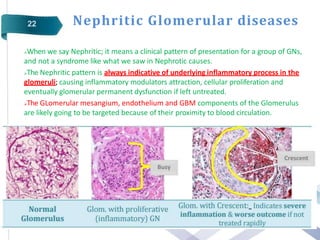
The Nephritic pattern is always indicative of underlying inflammatory process in the
glomeruli; causing inflammatory modulators attraction, cellular proliferation and
eventually glomerular permanent dysfunction if left untreated.
The GLomerular mesangium, endothelium and GBM components of the Glomerulus
are likely going to be targeted because of their proximity to blood circulation.
22
Nephritic urine analysis shows:
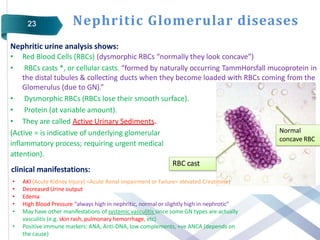
• Red Blood Cells (RBCs) (dysmorphic RBCs “normally they look concave”)
• RBCs casts *, or cellular casts. “formed by naturally occurring TammHorsfall mucoprotein in
the distal tubules & collecting ducts when they become loaded with RBCs coming from the
Glomerulus (due to GN).”
• Dysmorphic RBCs (RBCs lose their smooth surface).
• Protein (at variable amount).
• They are called Active Urinary Sediments.
(Active = is indicative of underlying glomerular
inflammatory process; requiring urgent medical
attention).
Normal
concave RBC
RBC cast
Nephritic Glomerular diseases
clinical manifestations:
• AKI (Acute Kidney Injury) =Acute Renal impairment or Failure= elevated Creatinine)
• Decreased Urine output
• Edema
• High Blood Pressure “always high in nephritic, normal or slightly high in nephrotic”
• May have other manifestations of systemic vasculitis since some GN types are actually
vasculitis (e.g. skin rash, pulmonary hemorrhage, etc)
• Positive immune markers: ANA, Anti-DNA, low complements, +ve ANCA (depends on
the cause)
23
1 IgA Nephropathy / HSP (Henoch-Schönlein purpura)
2 Post streptococcal glomerulonephritis (PSGN)
3 Lupus Nephritis
4 Anti-GBM (Goodasture’s disease)
5ANCA vasculitis ( e.g. Wegner’s Granulomatosis)
6- Membranoproliferative GN (MPGN)
Glomerular Diseases present as
Nephritic Syndrome
24
Important secondary causes of nephrotic
syndrome:
• Diabetes mellitus.
• Amyloidosis.
1- IgA Nephropathy
• Renal function is usually normal.
• Mesangial deposition of IgA and C3
are seen on electron microscopy.
• The prognosis in most patients is
good with preservation of renal
function (renal
• insufficiency may develop in 25%).
25
• History of upper respiratory tract infection (< one week )
• Most common type of 1ry GN in developed countries.
• crescent formation may be seen.
• Patient presents with dark urine (hematuria) and hypertension+/- proteinuria (1-3 days after URTI)
Found incidentally
• Diagnosed incidentally by renal biopsy that is done for other reason
• It has a chronic course that can progress to ESRD.
• Pathology: IgA deposit abnormally in the glomeruli; hence triggering a local inflammatory response
in the Glom mesangium (mesangial expansion)
• Treatment:
No effective immunosuppressing therapy except in severe cases where it can be tried.
Most important treatment is to control the blood pressure which also decreases the proteinuria.
1- Henoch-Schönlein purpura
• This condition most commonly occurs in children but can also be observed in adults.
• It is characterised by a systemic vasculitis that often arises in response to an infectious trigger.
• The presentation is with a characteristic petechial rash typically affecting buttocks and lower legs, and
abdominal pain due to the occurrence of vasculitis involving the gastrointestinal tract.
• The presence of glomerulonephritis is usually indicated by the occurrence of haematuria.
• Renal biopsy shows mesangial IgA deposition and appearances that are indistinguishable from acute IgA
nephropathy.
• Treatment is supportive in nature; in most patients,
• the prognosis is good, with spontaneous resolution, but some, particularly adults, progress to develop
ESRD.
2- Post streptococcal
glomerulonephritis (PSGN)
Streptococcus
• History of :
1. Sorethroat infection with Gram positive cocci (Group A beta-hemolytic
(GAS).
2. Soft tissue or bone infection in adults caused by Staphylococcus
• Patients present with frank hematuria *gives the urine a red or smoky appearance* usually
after one week and up to 3 weeks from the start of infection.
• Serum will show positive Antistreptolysin-O (ASO) titer.
• Low C3, Normal or slightly low C4 in the serum. (C3 will be consumed in the immuneocomplex,
that’s why the patients with PSGN will have low C3)
• May have positive throat culture.
• It is much more common in children than adults.
• Children have better and faster recovery than adults.
• Treatment is usually supportive= wait and see.
antihypertensives, loop diuretics for edema; the use of antibiotics is controversial. Steroids may
be helpful in severe cases.
• Remarkably, the renal lesion in almost all children and many adults seems to resolve
completely • most common cause of nephritic syndrome
• Features include hematuria, edema, HTN, low
complement levels, and proteinuria.
• It is self-limited (usually resolves in weeks to months)
with an excellent prognosis. Some cases develop into
rapidly progressive GN (more commonly in adults).
26
3- Lupus Nephritis
• Usually in young females with SLE and they present with haematuria and
proteinuria
• SLE patients
• Diagnosed by kidney biopsy
• Low complements (C3, C4) level along with the positive Lupus markers, abnormal
urine analysis & abnormal renal function
• Treatment: high degree of immunosuppressing medications.
27
Causes of glomerulonephritis associated with low
serum complement
• Post-infection glomerulonephritis
•Subacute bacterial infection: especially endocarditis
•Systemic lupus erythematosus
•Cryoglobulinaemia
•Mesangiocapillary glomerulonephritis, usually
complement type
4- Anti GBM antibody
disease
• Due to autoantibody against (alpha-3 chain) of type IV Collagen; found in Glomerular &
alveolar basement membrane.
• The manifestations will be: -
1. proliferative GN (usually crescentic) (can be the only presenting finding).
2. Pulmonary hemorrhage causing hemoptysis (if with GN; it is called: Goodpasture’s
disease). “With smoking”
3. Positive test for Anti-GBM antibodies in the serum.
• Kidney biopsy shows the diagnostic Immunofluorescence pattern: Linear stain of IgG and
C3.
• Treatment: is always started immediately by
1.Plasmapheresis (a process of removing the
plasma from the blood which has the
autoantibodies)
to remove the antibodies
2.Giving heavy immunosuppression
that includes corticosteroids and
cyclophosphamide << to prevent further
antibodies production
• Clinical features include rapidly
progressive renal failure,
hemoptysis, cough, and
dyspnea.
• Lung disease precedes kidney
disease by days to weeks. It is
associated with a variable
course.
28
5- ANCA Vasculitis
• Autoimmune disease that involves the presence of Neutrophils adhesion
enhancing molecule called ANCA=Anti-neutrophil cytoplasmic antibody
(its an autoimmune molecule that triggers neutrophils to attack blood vessels)
• They may present with hemoptysis+ hematuria+ high creatinine levels
• Diagnosis is made by kidney biopsy and positive ANCA titer in the serum.
• Crescent sign on renal biopsy
• Treatment: potent immunosuppressing medications (high dose corticosteroids &
cyclophosphamide).
C-ANCA P-ANCA
Cytoplasmic type Perinuclear type
Associated
disease
Granulomatous Polyangiitis= old name
Wegner’s Granulomatosis
Microscopic Polyangiitis &
Churg-Strauss syndrome
29
6- Membranoproliferative G N
(MPGN)
• It is a pathological description & has multiple causes.
• is characterised by an increase in mesangial cellularity with thickening of glomerular
capillary walls and subendothelial deposition of immune complexes and/or components
of the complement pathway
• It can be classified into two main subtypes.
1. is characterised by deposition of immunoglobulins within the glomeruli. This subtype is
associated with chronic infections, autoimmune diseases and monoclonal
gammopathy.
2. is characterised by deposition of complement in the glomeruli and is associated with inherited or
acquired abnormalities in the complement pathway. Within this category is so-called ‘dense deposit
disease’, which is typified by deposition of electron-dense deposits within the GBM.
3. is recognised, in which neither immunoglobulins nor complement are deposited in the glomeruli.
This is associated with healing following thrombotic microangiopathies, such as HUS and TTP.
• It may present with Nephritic picture or Nephrotic syndrome
• The primary (idiopathic) MPGN is mainly seen in children.
• The secondary type is seen in adults due to:
- Hepatitis B and C
- Endocarditis
- Lupus and Sjogren’s syndrome
- Cancer
- Complement deficiency
• Common association with cryoglobulinemia
• The prognosis is poor. Renal failure develops in 50% of
patients. Treatment is rarely effective.
30

Glomerular Diseases.pptx

  • 1.
  • 2.
    objectives Color index: Stepup to medicine , slide , Doctor’s note , Davidson , Extra Explanation 1. Classify Glomerular diseases. 2. Understand the pathophysiology is correlated with the clinical manifestation in Glomerular diseases. 3. Recognize the clinical manifestations in Glomerular diseases. 4. Recognize the most common causes of Nephritic glomerular disease.
  • 3.
    3 Normal Glomerular structureis needed to: • Keep the glomerular filtration normal, thus maintains normal kidney function. • keeps the urine volume maintained; so preventing fluid retention in the body which causes edema and high blood pressure. (maintaining normal Bp) • Prevents the blood components (cells, proteins) from leaving the blood stream and appearing in the urine. (maintain the electrolyte balance) So normal urine will have: • No protein. (if present proteinuria) • No red blood cells ( accept: <2 rbcs/high power field) (if >2RBCs : haematuria) • No heme. • No cellular casts. • No fat (if present lipiduria) • No sugar (if present glycosuria) The most important part of the kidney is the Cortex.
  • 4.
    General characteristics CausesClinical features 1.Glomerular disease can be primary (intrinsic renal pathology) or secondary (to a systemic disease). Two important categories of glomerular pathology are diseases that present with nephrotic syndrome and those that present with nephritic syndrome. Many conditions have features of both. 2.There is a wide range in the rate of disease progression, varying from days to weeks in the acute glomerular diseases, to years in the chronic disorders. 1.GN is usually caused by immune- mediated mechanisms. 2.Other mechanisms include metabolic and hemodynamic disturbances. 1. Glomerular disorders are characterized by impairment in selective filtration of blood, resulting in excretion of larger substances such as plasma proteins and blood cells. As disease advances, GFR decreases proportionately, leading to renal failure and the possible need for dialysis and/or transplantation. 2. The classic features of glomerular disease are proteinuria,hematuria, or both. Nephroticrange proteinuria is pathognomonic for glomerular disease. 1.Urinalysis (hematuria, proteinuria, RBC casts) 2.Blood tests (renal function tests) 3.Needle biopsy of the kidney depends on the disease, but often involves the use of steroids and cytotoxic agents. Possible presentationsof glomerular disease • Isolated proteinuria • Isolated hematuria • Nephritic syndrome—hematuria, HTN, azotemia •Nephrotic syndrome—proteinuria, edema, hypoalbuminemia, hyperlipidemia Diagnosis Treatment Glomerular diseases 4 Clinical and laboratory features of glomerular injury •Leakage of cells and macromolecules across the glomerular filtration barrier Proteinuria: characteristic of diseases that affect the podocyte, scarring and deposition of foreign material Haematuria: characteristic of inflammatory and destructive processes •Impaired renal function and reduced GFR •Hypertension Rapid progressive glomerulonephritis is a clinical syndrome that includes any type of GN in which rapid deterioration of renal function occurs over weeks to months, leading to renal failure and ESRD.
  • 5.
  • 6.
    o A lotof times the exact cause is not really clear, but the result of the damage in the glomerulus is telling how immune system is playing an important rule. o Here we are talking about primary glomerular diseases that are mostly caused by immune system dysfunction. : 1 Auto-antibodies targeting glomerular structure or 2 Immune-complexes (antigen-antibody) depositing and traumatizing the glomerular components. o The manifestations of a glomerular disease are usually indicative of which components of glomerular capillary wall was affected at the most. Affected glomerular component Manifestation Syndrome caused Glomerular filtration status Notes Podocytes (foot processes) Proteinuria only Nephrotic Syndrome Normal No blood components in the urine Endothelialcells, GBM or Mesangial cells •Heamaturia •Proteinuria •Abnormal renal function Nephritic Syndrome Abnormal Blood components appear due to disruption of glomerular filtration wall How glomerular diseases start? 6
  • 7.
    How glomerular diseasesstart? 7 • Mesangium is very sensitive. It starts to proliferate when anything “not part of it” attached to it “e.g. IgA” or when the glomerulus is irritated > disruption of capillaries > protein and RBCs in urine. • However, when podocyte dysfunction occurs >>its digitations(foot processes) disappear “effacement”>> but that doesn’t cause blood components appearance in the urine because podocytes are away from the blood stream >>so mainly proteinuria occurs. • Primary glomerular diseases are diagnosed by : Kidney biopsy Why?! Because: Glomerular diseases are named based on their histo-pathological characteristics seen under the microscope. • When mesangial cells gets irritated it multiply, thus it damages the kidney. • It is important to recognize that the manifestation of glomerular disease depends on where the mechanism happened; if endothelial cells, glomerular basement membrane and mesangial cells were damaged, the results will be hematuria, proteinuria and dysfunction of the glomerulus, because there is no filtration ability. However, if epithelial cells were only damaged the integrity of the basement membrane will remain the same, so there will be no hematuria, but proteinuria will be present
  • 8.
  • 9.
    Glomerular Disorders Primary Minimal change disease Focal segmental glomerulosclerosis Membranous glomerulonephritis IgA nephropathy (Berger’s disease) hereditary nephritis (Alport’s syndrome)* Secondary Diabetic nephropathy Hypertensive nephropathy Lupus Membranoprolife rative glomerulonephrit is Poststreptococcal GN 9 Classifications *Most cases arise from a mutation or deletion of the COL4A5 gene on the X chromosome, which encodes type IV collagen, resulting in inheritance as an X-linked recessive disorder. Mutations in COL4A3or COL4A4 genes are less common and cause autosomal recessive disease. The accumulation of abnormal collagen results in a progressive degeneration of the GBM. Affected patients progress from haematuria to ESRD in their late teens or twenties. Female carriers of COL4A5 mutations usually have haematuria but less commonly develop significant renal disease. Some other basement membranes containing the same collagen isoforms are similarly involved, notably in the cochlea, so that Alport’s syndrome is associated with sensorineural deafness and ocular abnormalities.
  • 10.
    Nephrotic Syndrome • Podocytesabnormality is the primary finding in NS. • Podocytes will sustain a structural dysfunction; making them lose their Foot-processes (effacement). • This will lead to significant amount of protein appearing in the urine (Proteinuria). Clinical and laboratory features:  Hypoalbuminemia (serum Albumin <30 g/L) Normal serum Alb: 35-55g/L  Heavy proteinuria ( > 3.5 g/24 hours of urine collection)  Peripheral or generalized edema (Low oncotic pressure and problem in regulating salt within that makes water retention).  Hyperlipidemia (Liver will try to synthesize lipoprotein, to composite for the low albumin). Complications:  Infections & sepsis. (due to loss of immunoglobulins in the urine)  Thrombosis. (due to loss of the anticoagulant factors)  Acute kidney injury. (BC nephrotic syndrome pt. have problems in regulating their body fluids (Salt-Water retention), so when seeking medical help doctors prescribe diuretics to them >> this will cause hypovolemia (kidneys become hypoperfused)>> AKI)  End stage kidney disease (ESRD) if heavy proteinuria not going into remission (BC the untreated nephrotic syndrome will cause chronic passage of protein/albumin in the renal tubules , and the tubules are sensitive to protein ; they can’t tolerate its passage, so this will cause tubular injury then fibrosis thus causing CKI and if severe enough ESRD) 10
  • 11.
    • In nephroticsyndrome patients generalized edema occurs due to the following reasons: 1 decreased oncotic pressure ( hypoalbunemia >> fluid is shifted from the capillaries to the interstitium) 2 Salt-Water retention (Nephrotic syndrome pt. have problems in regulating their body fluids, because their kidneys reabsorb salt again) • Why hyperlipidemia occurs in the nephrotic syndrome? Due to hypoalbuminemia >> serum albumin <30 g/L (It is well known that liver is the main factory for albumin synthesis with a capacity of 10 g/day , and normally the average albumin in the body is 40mg, so if the albumin levels in the blood decreased to 30 g/L the liver will be able to compensate the loss by the 10 g that he normally synthesizes, but if the serum albumin decreased to less than 30g, unfortunately the liver will not be able to compensate by the 10 g of albumin that he synthesizes so instead the liver will produce lipoproteins in large quantities to compensate for the albumin loss , but since these lipoproteins carry cholesterol this will cause hyperlipidemia). Nephrotic Syndrome 11
  • 12.
    Proteinuria: How many mgsof proteins are normally secreted in the urine per- day? < 150 mg/day of all kinds of proteins including on average 4-7mg/day of Albumin that are secreted in the urine. Urine Analysis in Nephrotic Syndrome: • Heavy protein (Proteinuria) or called Nephrotic range proteinuria. • No RBCs (few are occasionally seen). • No RBCs casts. • Lots of fat (Lipiduria) (Fatty casts, oval fat bodies & fat droplets). • No WBCs (few may be seen). Nephrotic Syndrome 12
  • 13.
    • Generalized edema“ also called anasarca” due to : 1 Low serum albumin (low oncotic pressure) 2Increase Renal sodium retention Because of uncontrolled activation of the epithelial sodium channels (ENaC channels in the renal tubules) • Fatigue • Frothy urine (froth persists for long time after voiding) • Anorexia • Nausea and vomiting • Abdominal pain • Weight gain due to fluid retention • Shortness of breath if having pleural effusion • Signs and symptoms of DVT and PE Pitting edema Pleural effusion Periorbital edema Ascites In the nephrotic syndrome the periorbital edema appears in the MORNING but then it disappears when the patient starts walking due to the gravity Clinical Presentation Nephrotic Syndrome 13
  • 14.
    Glomerular Diseases presentas Nephrotic Syndrome 1-Focal Segmental GlomeruloSclerosis (FSGS) 2- Minimal Change Disease (MCD) 3- Membranous Nephropathy (MN) 1-Focal Segmental GlomeruloSclerosis (FSGS) The primary variant on light microscopy: which may also show positive staining for deposits of C3 and IgM on immunofluorescence Focal: some glomeruli are affected by sclerosis but the rest of them look normal. Segmental: only a segment of the affected glomeruli is sclerosed A common cause of Nephrotic syndrome in adults (12 – 35 %) NB. All the glomeruli (whether sclerosed or normal ) will have a diffuse foot processes effacement (thus Nephrotic syndrome appears) Types of FSGS: 1 Primary FSGS 2 Secondary FSGS 1.This accounts for 25% of cases of nephrotic syndrome in adults and is more common in blacks. Hematuria and HTN are often present. 2.It has a fair to poor prognosis. It is generally resistant to steroid therapy—patients develop renal insufficiency within 5 to 10 years of diagnosis. The course is progressive. 3.The treatment regimen is controversial, but remission has been achieved in 50% of patients with the use of cytotoxic agents, steroids, and immunosuppressive agents. ACE/ARBs are also commonly indicated. 14
  • 15.
  • 16.
    Primary FSGS: Sudden onsetof proteinuria and other manifestations of nephrotic syndrome (i.e. anasarca, periorbital edema,….) Secondary FSGS: It gradually happens ( slowly over years) and its progressive ( it causes slow irreversible destruction to the kidney unlike the primary FSGS) Laboratory signs: -Proteinuria is less heavy than other causes of nephrotic syndrome. -Serum Albumin is not very low like the primary type. -Renal impairment is commonly seen with the secondary FSGS and this is not a good prognostic sign Possible causes of secondary FSGS: -Long standing hypertension -Massive obesity -Nephron loss ( > 75% of renal mass) e.g renal agenesis -Reflux nephropathy -Healing of prior GN (IgA, Lupus etc) -Anabolic steroid abuse -Severe preeclampsia (in pregnant ladies) -Drugs: Interferon, Pamidronate, Heroin -Infections: HIV Treatment: Primary FSGS: Immunosuppressive therapy 1st line: corticosteroids 2nd line: cyclosporins / tacrolimus Secondary FSGS: Not typically treated with immunosuppression. We treat the underlying cause (if obesity then reduce weight , if HTN the lower BP…) + Supportive measurements to protect the kidney i.e keeping the BP well controlled with ACEi 16
  • 17.
    2- Minimal ChangeDisease (MCD) • No glomerular sclerosis (the most important difference between MCD and the FSGS) Called minimal because: So called: nil disease. BUT: - electron microscopy: shows diffuse effacement of the epithelial cells’ foot processes only. - It is the main cause of nephrotic syndrome in children -90 % of cases in children < 10 years old -> 50 % of cases in older children - It causes 10-25 % of Nephrotic syndrome in adults In children with nephrotic syndrome manifestations, kidney biopsy is not needed because they are mainly having MCD and the treatment is given empirically for such cases. But in adults kidney biopsy is very important to role out other causes. 1. Nephrotic syndrome—most common - light microscopy: is typically showing normal glomeruli. presentation 2.Most common in children—hodgkin’s disease and non-Hodgkin’s lymphoma have been associated with minimal change disease. 3.No histologic abnormalities on light microscopy; fusion of foot processes on electron microscopy 4.Excellent prognosis; responsive to steroid therapy (4 to 8 weeks), although relapses may occur 5.Current evidence points to systemic T cell dysfunction as the most likely root cause of MCD. 17
  • 18.
    Types Primary Idiopathic Secondary Drugs NSAIDS Lithium Sulfasalazine Pamidronate D-penicillamine Some antibiotics Neoplasm Hodgkinslymphoma Non-hodgkins lymphoma Leukemia Infections TB, Syphilis Allergy Etiology of MCD
  • 19.
    • Clinical presentationof MCD: Typically has a sudden onset Edema BP may be normal or slightly elevated Heavy proteinuria (Nephrotic range)  Lipiduria Hypoalbuminmia (usually very low serum Albumin) Hyperlipidemia Creatinine is always within the normal range or slightly elevated and normalizes with remission • Diagnosis: Must do kidney biopsy in adult patients with this presentation Diffuse effacement of foot process. •Treatment: ( only for primary MCD , if secondary MCD then treat the underlying cause” ) First line: Corticosteroids, given x 3-4 months then taper over 6 months (1 mg/kg prednisolone for 6 weeks) Second line: oral Cyclophosphamide, Cyclosporin 2- Minimal Change Disease (MCD) 19
  • 20.
     Most commoncause of nephrotic syndrome in adults (15% and 33%)  Mostly secondary in children (hepatitis B antigenemia) • Presentation: slowly developing nephrotic syndrome and Usually presents with nephrotic syndrome; glomerular capillary walls are thickened. • thickened. 3- Membranous Nephropathy (MN) 20 Primary (Commonest in adults) Secondary (common in children) Etiology Idiopathic It is caused by antibodies (usually autoantibodies) directed at antigen(s) expressed on the surface of podocytes. Recent studies suggest that one such antigen is the M-type phospholipase A2 receptor 1. Secondary: causes of MN: Systemic lupus erythematosus (SLE) Class V Lupus Nephritis (10-20%) Drugs: penicillamine, gold, high dose Captopril, and NSAIDs, Anti-TNF. Infections: Hepatitis B, Hepatitis C, syphilis Malignancy: solid tumors prostate, lung, or GI track (undiagnosed) Treatment -Corticosteroids plus -Cyclophosphamide or cyclosporine -May be Rituximab Mainly target the primary disease that caused MN, and treat the Nephrotic syndrome manifestations. The prognosis is fair to good. The course is variable; remission is common (in40% of cases), but renal failure develops in 33% of patients. Steroid therapy does not change the survival rate.
  • 21.
  • 22.
    Nephritic Glomerular diseases Whenwe say Nephritic; it means a clinical pattern of presentation for a group of GNs, and not a syndrome like what we saw in Nephrotic causes. The Nephritic pattern is always indicative of underlying inflammatory process in the glomeruli; causing inflammatory modulators attraction, cellular proliferation and eventually glomerular permanent dysfunction if left untreated. The GLomerular mesangium, endothelium and GBM components of the Glomerulus are likely going to be targeted because of their proximity to blood circulation. 22
  • 23.
    Nephritic urine analysisshows: • Red Blood Cells (RBCs) (dysmorphic RBCs “normally they look concave”) • RBCs casts *, or cellular casts. “formed by naturally occurring TammHorsfall mucoprotein in the distal tubules & collecting ducts when they become loaded with RBCs coming from the Glomerulus (due to GN).” • Dysmorphic RBCs (RBCs lose their smooth surface). • Protein (at variable amount). • They are called Active Urinary Sediments. (Active = is indicative of underlying glomerular inflammatory process; requiring urgent medical attention). Normal concave RBC RBC cast Nephritic Glomerular diseases clinical manifestations: • AKI (Acute Kidney Injury) =Acute Renal impairment or Failure= elevated Creatinine) • Decreased Urine output • Edema • High Blood Pressure “always high in nephritic, normal or slightly high in nephrotic” • May have other manifestations of systemic vasculitis since some GN types are actually vasculitis (e.g. skin rash, pulmonary hemorrhage, etc) • Positive immune markers: ANA, Anti-DNA, low complements, +ve ANCA (depends on the cause) 23
  • 24.
    1 IgA Nephropathy/ HSP (Henoch-Schönlein purpura) 2 Post streptococcal glomerulonephritis (PSGN) 3 Lupus Nephritis 4 Anti-GBM (Goodasture’s disease) 5ANCA vasculitis ( e.g. Wegner’s Granulomatosis) 6- Membranoproliferative GN (MPGN) Glomerular Diseases present as Nephritic Syndrome 24 Important secondary causes of nephrotic syndrome: • Diabetes mellitus. • Amyloidosis.
  • 25.
    1- IgA Nephropathy •Renal function is usually normal. • Mesangial deposition of IgA and C3 are seen on electron microscopy. • The prognosis in most patients is good with preservation of renal function (renal • insufficiency may develop in 25%). 25 • History of upper respiratory tract infection (< one week ) • Most common type of 1ry GN in developed countries. • crescent formation may be seen. • Patient presents with dark urine (hematuria) and hypertension+/- proteinuria (1-3 days after URTI) Found incidentally • Diagnosed incidentally by renal biopsy that is done for other reason • It has a chronic course that can progress to ESRD. • Pathology: IgA deposit abnormally in the glomeruli; hence triggering a local inflammatory response in the Glom mesangium (mesangial expansion) • Treatment: No effective immunosuppressing therapy except in severe cases where it can be tried. Most important treatment is to control the blood pressure which also decreases the proteinuria. 1- Henoch-Schönlein purpura • This condition most commonly occurs in children but can also be observed in adults. • It is characterised by a systemic vasculitis that often arises in response to an infectious trigger. • The presentation is with a characteristic petechial rash typically affecting buttocks and lower legs, and abdominal pain due to the occurrence of vasculitis involving the gastrointestinal tract. • The presence of glomerulonephritis is usually indicated by the occurrence of haematuria. • Renal biopsy shows mesangial IgA deposition and appearances that are indistinguishable from acute IgA nephropathy. • Treatment is supportive in nature; in most patients, • the prognosis is good, with spontaneous resolution, but some, particularly adults, progress to develop ESRD.
  • 26.
    2- Post streptococcal glomerulonephritis(PSGN) Streptococcus • History of : 1. Sorethroat infection with Gram positive cocci (Group A beta-hemolytic (GAS). 2. Soft tissue or bone infection in adults caused by Staphylococcus • Patients present with frank hematuria *gives the urine a red or smoky appearance* usually after one week and up to 3 weeks from the start of infection. • Serum will show positive Antistreptolysin-O (ASO) titer. • Low C3, Normal or slightly low C4 in the serum. (C3 will be consumed in the immuneocomplex, that’s why the patients with PSGN will have low C3) • May have positive throat culture. • It is much more common in children than adults. • Children have better and faster recovery than adults. • Treatment is usually supportive= wait and see. antihypertensives, loop diuretics for edema; the use of antibiotics is controversial. Steroids may be helpful in severe cases. • Remarkably, the renal lesion in almost all children and many adults seems to resolve completely • most common cause of nephritic syndrome • Features include hematuria, edema, HTN, low complement levels, and proteinuria. • It is self-limited (usually resolves in weeks to months) with an excellent prognosis. Some cases develop into rapidly progressive GN (more commonly in adults). 26
  • 27.
    3- Lupus Nephritis •Usually in young females with SLE and they present with haematuria and proteinuria • SLE patients • Diagnosed by kidney biopsy • Low complements (C3, C4) level along with the positive Lupus markers, abnormal urine analysis & abnormal renal function • Treatment: high degree of immunosuppressing medications. 27 Causes of glomerulonephritis associated with low serum complement • Post-infection glomerulonephritis •Subacute bacterial infection: especially endocarditis •Systemic lupus erythematosus •Cryoglobulinaemia •Mesangiocapillary glomerulonephritis, usually complement type
  • 28.
    4- Anti GBMantibody disease • Due to autoantibody against (alpha-3 chain) of type IV Collagen; found in Glomerular & alveolar basement membrane. • The manifestations will be: - 1. proliferative GN (usually crescentic) (can be the only presenting finding). 2. Pulmonary hemorrhage causing hemoptysis (if with GN; it is called: Goodpasture’s disease). “With smoking” 3. Positive test for Anti-GBM antibodies in the serum. • Kidney biopsy shows the diagnostic Immunofluorescence pattern: Linear stain of IgG and C3. • Treatment: is always started immediately by 1.Plasmapheresis (a process of removing the plasma from the blood which has the autoantibodies) to remove the antibodies 2.Giving heavy immunosuppression that includes corticosteroids and cyclophosphamide << to prevent further antibodies production • Clinical features include rapidly progressive renal failure, hemoptysis, cough, and dyspnea. • Lung disease precedes kidney disease by days to weeks. It is associated with a variable course. 28
  • 29.
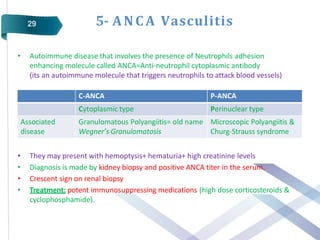
    5- ANCA Vasculitis •Autoimmune disease that involves the presence of Neutrophils adhesion enhancing molecule called ANCA=Anti-neutrophil cytoplasmic antibody (its an autoimmune molecule that triggers neutrophils to attack blood vessels) • They may present with hemoptysis+ hematuria+ high creatinine levels • Diagnosis is made by kidney biopsy and positive ANCA titer in the serum. • Crescent sign on renal biopsy • Treatment: potent immunosuppressing medications (high dose corticosteroids & cyclophosphamide). C-ANCA P-ANCA Cytoplasmic type Perinuclear type Associated disease Granulomatous Polyangiitis= old name Wegner’s Granulomatosis Microscopic Polyangiitis & Churg-Strauss syndrome 29
  • 30.
    6- Membranoproliferative GN (MPGN) • It is a pathological description & has multiple causes. • is characterised by an increase in mesangial cellularity with thickening of glomerular capillary walls and subendothelial deposition of immune complexes and/or components of the complement pathway • It can be classified into two main subtypes. 1. is characterised by deposition of immunoglobulins within the glomeruli. This subtype is associated with chronic infections, autoimmune diseases and monoclonal gammopathy. 2. is characterised by deposition of complement in the glomeruli and is associated with inherited or acquired abnormalities in the complement pathway. Within this category is so-called ‘dense deposit disease’, which is typified by deposition of electron-dense deposits within the GBM. 3. is recognised, in which neither immunoglobulins nor complement are deposited in the glomeruli. This is associated with healing following thrombotic microangiopathies, such as HUS and TTP. • It may present with Nephritic picture or Nephrotic syndrome • The primary (idiopathic) MPGN is mainly seen in children. • The secondary type is seen in adults due to: - Hepatitis B and C - Endocarditis - Lupus and Sjogren’s syndrome - Cancer - Complement deficiency • Common association with cryoglobulinemia • The prognosis is poor. Renal failure develops in 50% of patients. Treatment is rarely effective. 30