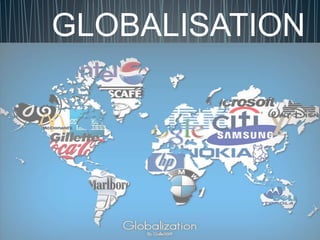
GLOBALISATION
MEANING OF GLOBALISATION
GLOBALISATION IS A PROCESS OF INTERACTING AND SHARING
TECHNOLOGY, SKILLS , KNOWLEDGE WITH OTHER COUNTRIES.
THROUGH VARIOUSE MODE LIKE
1. TRADE
2. CULTURE EXCHANGE
3. POLITICAL CO-OPERATION
4. SCIENCE.
5. MEDIA.
HISTORY
THOMAS.L.FRIEDMAN DIVIDES THE HISTORY OF
GLOBALISATION INTO THREE PERIODS
1 GLOBALISATION 1- (1492-1800)-
IT INCLUDES THE GLOBALISATION OF COUNTRIES
2 GLOBALISATION 2- (1800-2000)-
IT INCLUDES GLOBALISATION OF COMPANIES
3 GLOBALISATION 3- (2000-PRESENT)-
IT INCLUDES GLOBALISATION OF INDIVIDUALS
NEED FOR THE GLOBALISATION
 DEPRECIATION OF CURRENCY
 HIKE IN INFLATION TO 17%
 FISCAL DEFICIT
 BRINK ON BECOMING LOAN DEFAULTERS
Factors Influencing Globalisation
 Factors influencing globalisation include:
 Communications
 Transport
 Trade liberalisation
STEPS TAKEN TO GLOBALISE INDIAN ECONOMY
 DEVALUATION
 DISINVESTMENT
 NRI SCHEMES
 ALLOWING FDI
ADVANTAGES & DISADVANTAGES OF GLOBALISAT
 CORPORATES
 PEOPLE
 ECONOMY
 SOCIAL HARMONY
CULTURAL & TECHNOLOGICAL IMPACT
TELEVISION SECTOR
INTERNET
RESTAURANTS
MULTIPLEXS , MALLS
ENTERTAINMENT
IMPACT ON AGRICULTURAL SECTOR
 BETTER EQUIPMENTS
 ACQUIRED 15% GDP
 60% POPULATION DEPENDS UPON AGRICULTURE
 NEW TECHNIUES
 POLY FARMING
 GREEN HOUSES
 ORGANIC FARMING
IMPACT ON EDUCATION SECTOR
NOW EDUCATION IS BWCOMING ONE OF THE BASIC
NEEDS THROUGHT INDIA
FOREIGN COLLABRATIONS WITH UNIVERSITIES
DISTANCE EDUCATION
E LEARNING
TECHNOLOGY AIDED LEARNING
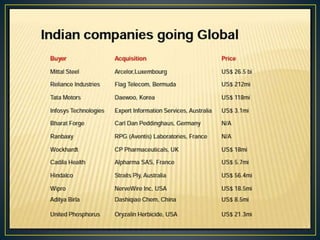
INDIAN COMPANIES GOING GLOBAL
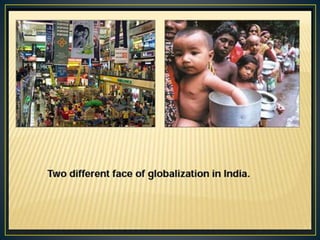
India‘s problem with Globalization
 Some section of people in India, basically poor and very
poor, tribal groups, they did not feel the heat of globalization
at all. They remain poor & poorest as they were.
 Increased gap between rich and poor
 Ethical responsibility of business has been diminished.
 Youth group of India leaving their studies very early and
joining Call centers to earn easy money thereby losing their
social life after getting habituated with monotonous work.
 High growth but problem of unemployment.
 Price hike of every daily usable commodities.
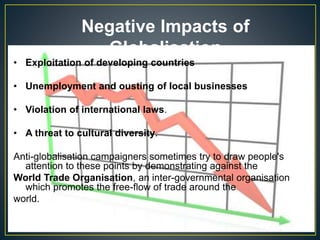
Negative Impacts of
Globalisation
• Exploitation of developing countries
• Unemployment and ousting of local businesses
• Violation of international laws.
• A threat to cultural diversity.
Anti-globalisation campaigners sometimes try to draw people's
attention to these points by demonstrating against the
World Trade Organisation, an inter-governmental organisation
which promotes the free-flow of trade around the
world.
THANKYOU

Globalisation

  • 1.
  • 2.
    MEANING OF GLOBALISATION GLOBALISATIONIS A PROCESS OF INTERACTING AND SHARING TECHNOLOGY, SKILLS , KNOWLEDGE WITH OTHER COUNTRIES. THROUGH VARIOUSE MODE LIKE 1. TRADE 2. CULTURE EXCHANGE 3. POLITICAL CO-OPERATION 4. SCIENCE. 5. MEDIA.
  • 3.
    HISTORY THOMAS.L.FRIEDMAN DIVIDES THEHISTORY OF GLOBALISATION INTO THREE PERIODS 1 GLOBALISATION 1- (1492-1800)- IT INCLUDES THE GLOBALISATION OF COUNTRIES 2 GLOBALISATION 2- (1800-2000)- IT INCLUDES GLOBALISATION OF COMPANIES 3 GLOBALISATION 3- (2000-PRESENT)- IT INCLUDES GLOBALISATION OF INDIVIDUALS
  • 4.
    NEED FOR THEGLOBALISATION  DEPRECIATION OF CURRENCY  HIKE IN INFLATION TO 17%  FISCAL DEFICIT  BRINK ON BECOMING LOAN DEFAULTERS
  • 5.
    Factors Influencing Globalisation Factors influencing globalisation include:  Communications  Transport  Trade liberalisation
  • 6.
    STEPS TAKEN TOGLOBALISE INDIAN ECONOMY  DEVALUATION  DISINVESTMENT  NRI SCHEMES  ALLOWING FDI
  • 7.
    ADVANTAGES & DISADVANTAGESOF GLOBALISAT  CORPORATES  PEOPLE  ECONOMY  SOCIAL HARMONY
  • 9.
    CULTURAL & TECHNOLOGICALIMPACT TELEVISION SECTOR INTERNET RESTAURANTS MULTIPLEXS , MALLS ENTERTAINMENT
  • 10.
    IMPACT ON AGRICULTURALSECTOR  BETTER EQUIPMENTS  ACQUIRED 15% GDP  60% POPULATION DEPENDS UPON AGRICULTURE  NEW TECHNIUES  POLY FARMING  GREEN HOUSES  ORGANIC FARMING
  • 11.
    IMPACT ON EDUCATIONSECTOR NOW EDUCATION IS BWCOMING ONE OF THE BASIC NEEDS THROUGHT INDIA FOREIGN COLLABRATIONS WITH UNIVERSITIES DISTANCE EDUCATION E LEARNING TECHNOLOGY AIDED LEARNING
  • 12.
  • 18.
    India‘s problem withGlobalization  Some section of people in India, basically poor and very poor, tribal groups, they did not feel the heat of globalization at all. They remain poor & poorest as they were.  Increased gap between rich and poor  Ethical responsibility of business has been diminished.  Youth group of India leaving their studies very early and joining Call centers to earn easy money thereby losing their social life after getting habituated with monotonous work.  High growth but problem of unemployment.  Price hike of every daily usable commodities.
  • 19.
    Negative Impacts of Globalisation •Exploitation of developing countries • Unemployment and ousting of local businesses • Violation of international laws. • A threat to cultural diversity. Anti-globalisation campaigners sometimes try to draw people's attention to these points by demonstrating against the World Trade Organisation, an inter-governmental organisation which promotes the free-flow of trade around the world.
  • 21.