GLOBALIZATION
GLOBALIZATION
of contents
of contents
01 INTRODUCTION
04
02
03 MAJOR AREAS OF
GLOBALIZATION
HISTORY OF
GLOBALIZATION 05
06
TABLE
TABLE
FACTORS DRIVING
GLOBALIZATION
ADVANTAGE OF
GLOBALIZATION
DISADVANTAGE OF
GLOBALIZATION
GLOBALIZATION
GLOBALIZATION
Globalization is a term used to describe
how trade and technology have made the
world into a more connected and
interdependent place.
GLOBALIZATION
GLOBALIZATION
the speedup of movements and exchanges (of
human beings, goods, and services, capital,
technologies or cultural practices) all over the
planet. It promotes and increases interactions
between different regions and populations
around the globe.
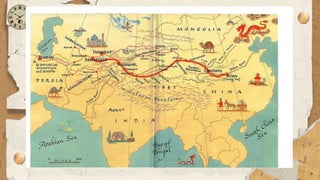
Silk roads (1st
century BC-5th
century AD, and
13th-14th
centuries AD)
Spice routes (7th-
15th centuries)
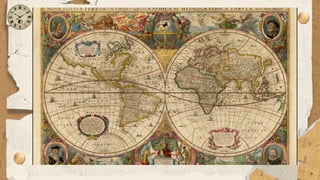
Age of
Discovery (15th-
18th centuries)
Muslim traders already
dominated Mediterranean
and Indian Ocean trade
European explorers
connected East and
West.
HISTORY OF
GLOBALIZATION
First wave of
globalization (19th
century-1914)
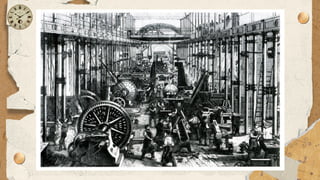
The “British” Industrial
Revolution. Innovations like
the steam engine, the
industrial weaving machine
and more
MAJOR AREAS OF
MAJOR AREAS OF
GLOBALIZATION
GLOBALIZATION
SOCIAL GLOBALIZATION
The sharing of ideas and information
between and through different countries.

The Internet and social media is at the heart of
this. Good examples of social globalization
could include internationally popular films,
books and TV series.
ECONOMIC GLOBALIZATION
Refers to the increasing interdependence
of world economies as a result of the
growing scale of cross-border trade of
commodities and services, flow of
international capital and wide and
rapid spread of technologies.
Economic globalization is commonly seen
as the import and export of goods. It
can also be trade agreements that make
barriers to trade easier to overcome. The
presence of foreign companies and goods
in another market is also an example.
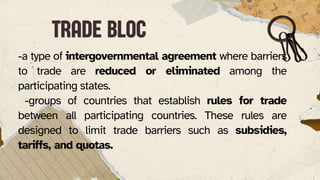
-a type of intergovernmental agreement where barriers
to trade are reduced or eliminated among the
participating states.
-groups of countries that establish rules for trade
between all participating countries. These rules are
designed to limit trade barriers such as subsidies,
tariffs, and quotas.
TRADE BLOC
TRADE BLOC
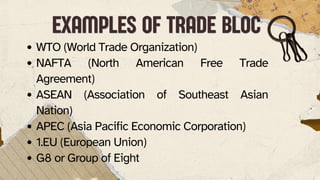
WTO (World Trade Organization)
NAFTA (North American Free Trade
Agreement)
ASEAN (Association of Southeast Asian
Nation)
APEC (Asia Pacific Economic Corporation)
1.EU (European Union)
G8 or Group of Eight
EXAMPLES OF TRADE BLOC
CULTURAL GLOBALIZATION
Refers to the spread of a culture throughout
the world.
Involves the spread of language, the arts,
food, business ideas, and technology, and
therefore, its impact is felt by almost
everybody in the world.
ECOLOGICAL GLOBALIZATION
The interconnectedness of the environment
and human activities across the globe.
Internationally coordinated practices and
regulations regarding environmental protection
POLITICAL GLOBALIZATION
Political globalization refers to the
intensification and expansion of political
interrelations across the globe.
Political globalization is the growth of the
worldwide political system, both in size
and complexity.
The creation and existence of the United
Nations has been called one of the classic
examples of political globalization. Political
actions by non-governmental organizations
and social movements, concerned about
various topics such as environmental
protection, is another example.
FACTORS DRIVING
FACTORS DRIVING
GLOBALIZATION
GLOBALIZATION
TECHNOLOGY
TECHNOLOGY
One of the primary factors that has accelerated the
globalization process is rapid technological
advancement. This has allowed for considerably
speedier and more cost-effective distribution of
commodities over great distances.
TRADE LIBERALIZATION
The process of removing government-imposed trade
obstacles or limitations.
The government can employ trade barriers to
control or enhance international trade, as well as
decide what sorts of goods and how much of each
should be imported. Import taxes are an example of
a trade barrier.
FOREIGN INVESTMENT POLICY
A company's considerable investments in a
foreign enterprise are known as foreign direct
investments (FDI).
The investment could be used to acquire a
material source, expand a company's territory, or
establish an international presence.
ADVANTAGE OF
ADVANTAGE OF
GLOBALIZATION
GLOBALIZATION
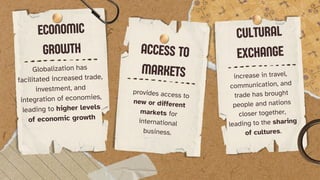
ECONOMIC
GROWTH
Globalization has
facilitated increased trade,
investment, and
integration of economies,
leading to higher levels
of economic growth
ACCESS TO
MARKETS
provides access to
new or different
markets for
international
business.
CULTURAL
EXCHANGE
increase in travel,
communication, and
trade has brought
people and nations
closer together,
leading to the sharing
of cultures.
SHARING
TECHNOLOGY
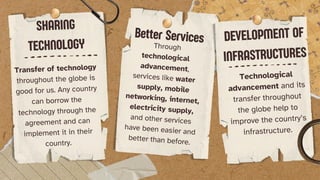
Transfer of technology
throughout the globe is
good for us. Any country
can borrow the
technology through the
agreement and can
implement it in their
country.
Better Services
Through
technological
advancement,
services like water
supply, mobile
networking, internet,
electricity supply,
and other services
have been easier and
better than before.
DEVELOPMENT OF
INFRASTRUCTURES
Technological
advancement and its
transfer throughout
the globe help to
improve the country’s
infrastructure.
Increase in employment opportunities
Education
Increase in free trade
Faster flow of information
Increase in quality of goods and services
Decrease in prices of goods and services
Reduction in cultural barriers
DISADVANTAGE OF
DISADVANTAGE OF
GLOBALIZATION
GLOBALIZATION
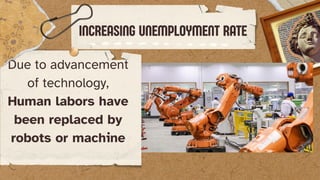
Due to advancement
of technology,
Human labors have
been replaced by
robots or machine
INCREASING UNEMPLOYMENT RATE
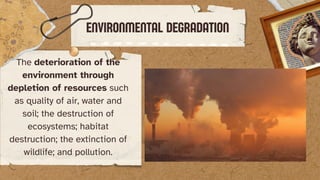
The deterioration of the
environment through
depletion of resources such
as quality of air, water and
soil; the destruction of
ecosystems; habitat
destruction; the extinction of
wildlife; and pollution.
ENVIRONMENTAL DEGRADATION
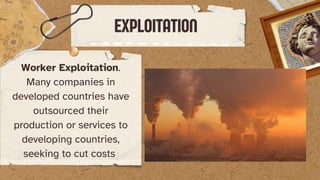
Worker Exploitation.
‍
Many companies in
developed countries have
outsourced their
production or services to
developing countries,
seeking to cut costs
EXPLOITATION
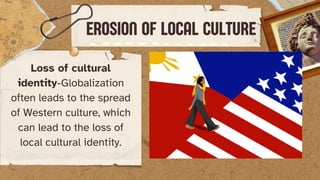
Loss of cultural
identity-Globalization
often leads to the spread
of Western culture, which
can lead to the loss of
local cultural identity.
EROSION OF LOCAL CULTURE
Unfair working conditions
Growing disparity
Rapid spread of diseases
How important is
Globalization in your daily
life?
Thank
Thank
you!
you!
www.reallygreatsite.com

GLOBALIZATION IN CONTEMPORARY WORLD PPT

  • 1.
  • 2.
    of contents of contents 01INTRODUCTION 04 02 03 MAJOR AREAS OF GLOBALIZATION HISTORY OF GLOBALIZATION 05 06 TABLE TABLE FACTORS DRIVING GLOBALIZATION ADVANTAGE OF GLOBALIZATION DISADVANTAGE OF GLOBALIZATION
  • 3.
    GLOBALIZATION GLOBALIZATION Globalization is aterm used to describe how trade and technology have made the world into a more connected and interdependent place.
  • 4.
    GLOBALIZATION GLOBALIZATION the speedup ofmovements and exchanges (of human beings, goods, and services, capital, technologies or cultural practices) all over the planet. It promotes and increases interactions between different regions and populations around the globe.
  • 5.
    Silk roads (1st centuryBC-5th century AD, and 13th-14th centuries AD) Spice routes (7th- 15th centuries) Age of Discovery (15th- 18th centuries) Muslim traders already dominated Mediterranean and Indian Ocean trade European explorers connected East and West. HISTORY OF GLOBALIZATION First wave of globalization (19th century-1914) The “British” Industrial Revolution. Innovations like the steam engine, the industrial weaving machine and more
  • 9.
    MAJOR AREAS OF MAJORAREAS OF GLOBALIZATION GLOBALIZATION
  • 10.
    SOCIAL GLOBALIZATION SOCIAL GLOBALIZATION Thesharing of ideas and information between and through different countries. The Internet and social media is at the heart of this. Good examples of social globalization could include internationally popular films, books and TV series.
  • 13.
    ECONOMIC GLOBALIZATION ECONOMIC GLOBALIZATION Refersto the increasing interdependence of world economies as a result of the growing scale of cross-border trade of commodities and services, flow of international capital and wide and rapid spread of technologies.
  • 14.
    Economic globalization iscommonly seen as the import and export of goods. It can also be trade agreements that make barriers to trade easier to overcome. The presence of foreign companies and goods in another market is also an example.
  • 15.
    -a type ofintergovernmental agreement where barriers to trade are reduced or eliminated among the participating states. -groups of countries that establish rules for trade between all participating countries. These rules are designed to limit trade barriers such as subsidies, tariffs, and quotas. TRADE BLOC TRADE BLOC
  • 16.
    WTO (World TradeOrganization) NAFTA (North American Free Trade Agreement) ASEAN (Association of Southeast Asian Nation) APEC (Asia Pacific Economic Corporation) 1.EU (European Union) G8 or Group of Eight EXAMPLES OF TRADE BLOC EXAMPLES OF TRADE BLOC
  • 17.
    CULTURAL GLOBALIZATION CULTURAL GLOBALIZATION Refersto the spread of a culture throughout the world. Involves the spread of language, the arts, food, business ideas, and technology, and therefore, its impact is felt by almost everybody in the world.
  • 18.
    ECOLOGICAL GLOBALIZATION ECOLOGICAL GLOBALIZATION Theinterconnectedness of the environment and human activities across the globe. Internationally coordinated practices and regulations regarding environmental protection
  • 19.
    POLITICAL GLOBALIZATION POLITICAL GLOBALIZATION Politicalglobalization refers to the intensification and expansion of political interrelations across the globe. Political globalization is the growth of the worldwide political system, both in size and complexity.
  • 20.
    The creation andexistence of the United Nations has been called one of the classic examples of political globalization. Political actions by non-governmental organizations and social movements, concerned about various topics such as environmental protection, is another example.
  • 21.
  • 22.
    TECHNOLOGY TECHNOLOGY One of theprimary factors that has accelerated the globalization process is rapid technological advancement. This has allowed for considerably speedier and more cost-effective distribution of commodities over great distances.
  • 23.
    TRADE LIBERALIZATION TRADE LIBERALIZATION Theprocess of removing government-imposed trade obstacles or limitations. The government can employ trade barriers to control or enhance international trade, as well as decide what sorts of goods and how much of each should be imported. Import taxes are an example of a trade barrier.
  • 24.
    FOREIGN INVESTMENT POLICY FOREIGNINVESTMENT POLICY A company's considerable investments in a foreign enterprise are known as foreign direct investments (FDI). The investment could be used to acquire a material source, expand a company's territory, or establish an international presence.
  • 25.
  • 26.
    ECONOMIC GROWTH Globalization has facilitated increasedtrade, investment, and integration of economies, leading to higher levels of economic growth ACCESS TO MARKETS provides access to new or different markets for international business. CULTURAL EXCHANGE increase in travel, communication, and trade has brought people and nations closer together, leading to the sharing of cultures.
  • 27.
    SHARING TECHNOLOGY Transfer of technology throughoutthe globe is good for us. Any country can borrow the technology through the agreement and can implement it in their country. Better Services Through technological advancement, services like water supply, mobile networking, internet, electricity supply, and other services have been easier and better than before. DEVELOPMENT OF INFRASTRUCTURES Technological advancement and its transfer throughout the globe help to improve the country’s infrastructure.
  • 28.
    Increase in employmentopportunities Education Increase in free trade Faster flow of information Increase in quality of goods and services Decrease in prices of goods and services Reduction in cultural barriers
  • 29.
  • 30.
    Due to advancement oftechnology, Human labors have been replaced by robots or machine INCREASING UNEMPLOYMENT RATE
  • 31.
    The deterioration ofthe environment through depletion of resources such as quality of air, water and soil; the destruction of ecosystems; habitat destruction; the extinction of wildlife; and pollution. ENVIRONMENTAL DEGRADATION
  • 32.
    Worker Exploitation. ‍ Many companiesin developed countries have outsourced their production or services to developing countries, seeking to cut costs EXPLOITATION
  • 33.
    Loss of cultural identity-Globalization oftenleads to the spread of Western culture, which can lead to the loss of local cultural identity. EROSION OF LOCAL CULTURE
  • 34.
    Unfair working conditions Growingdisparity Rapid spread of diseases
  • 35.
    How important is Globalizationin your daily life?
  • 36.